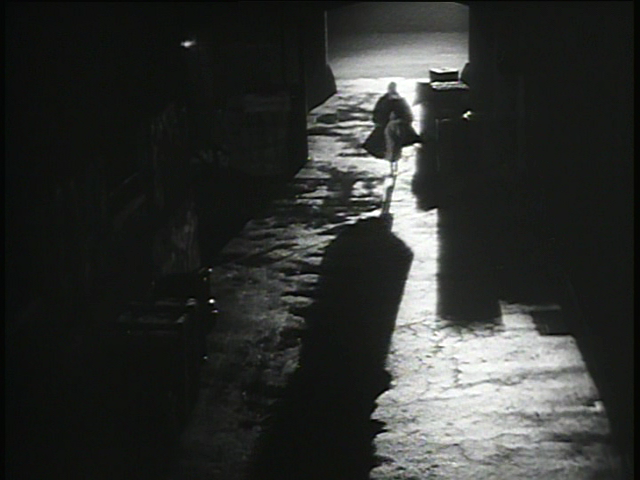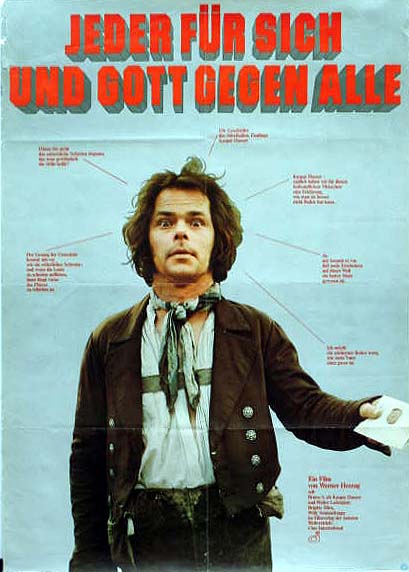
Mystery of Kaspar Hauser, The / Enigma of Kaspar Hauser, The / Every Man For Himself and God Against All (1974)

Mystery of Kaspar Hauser, The / Enigma of Kaspar Hauser, The / Every Man For Himself and God Against All (1974)

“It seems to me that my coming into this world was a very hard fall.”

Synopsis:
A mysterious young man (Bruno S.) named Kaspar Hauser arrives in a German village in 1828, where he’s cared for by a kind professor (Walter Ladengast) who teaches him to read, write, and play music.

Genres, Themes, Actors, and Directors:

  • Character Arc
  • German Films
  • Historical Dramas
  • Werner Herzog Films

Response to Peary’s Review:
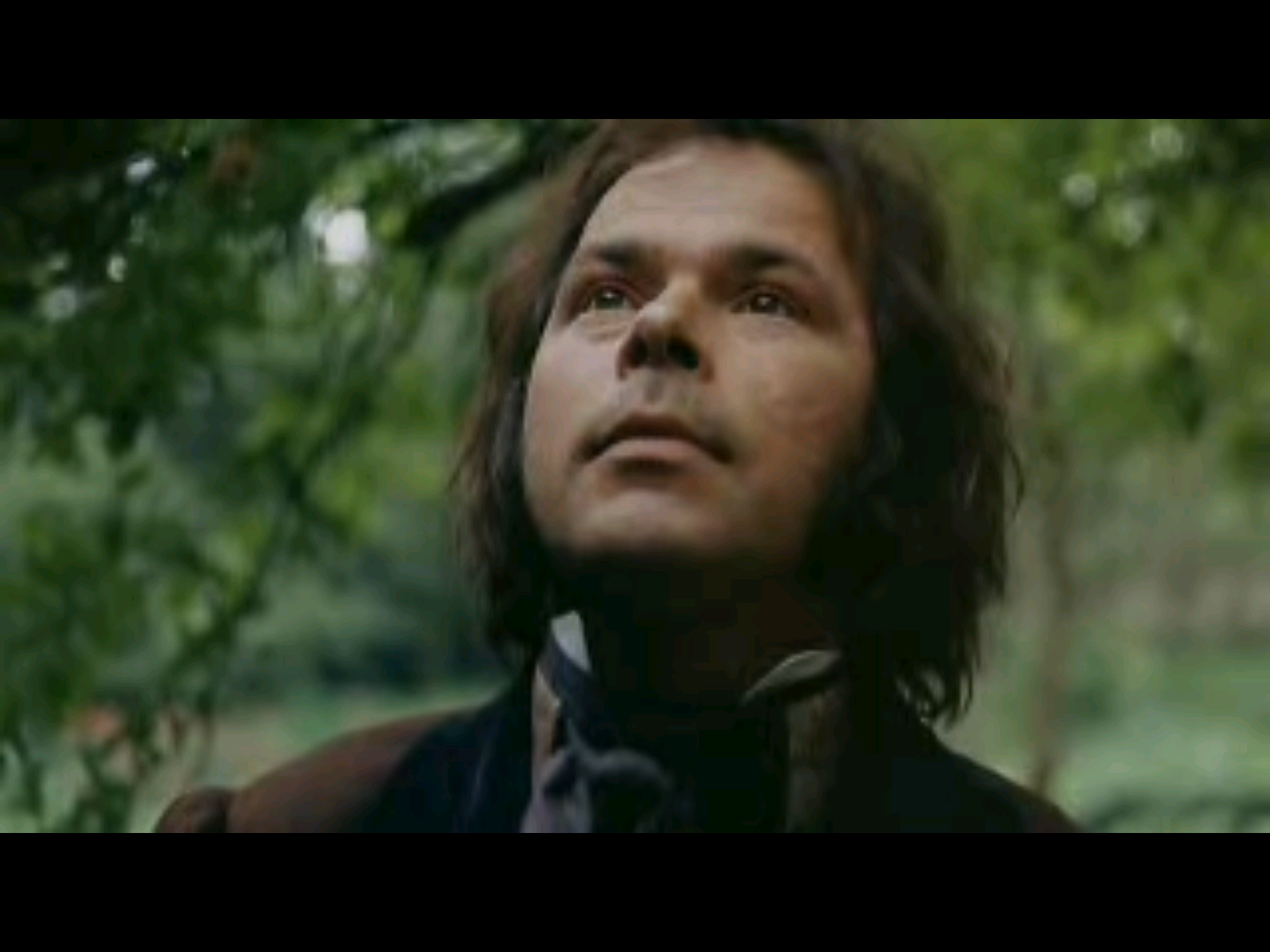
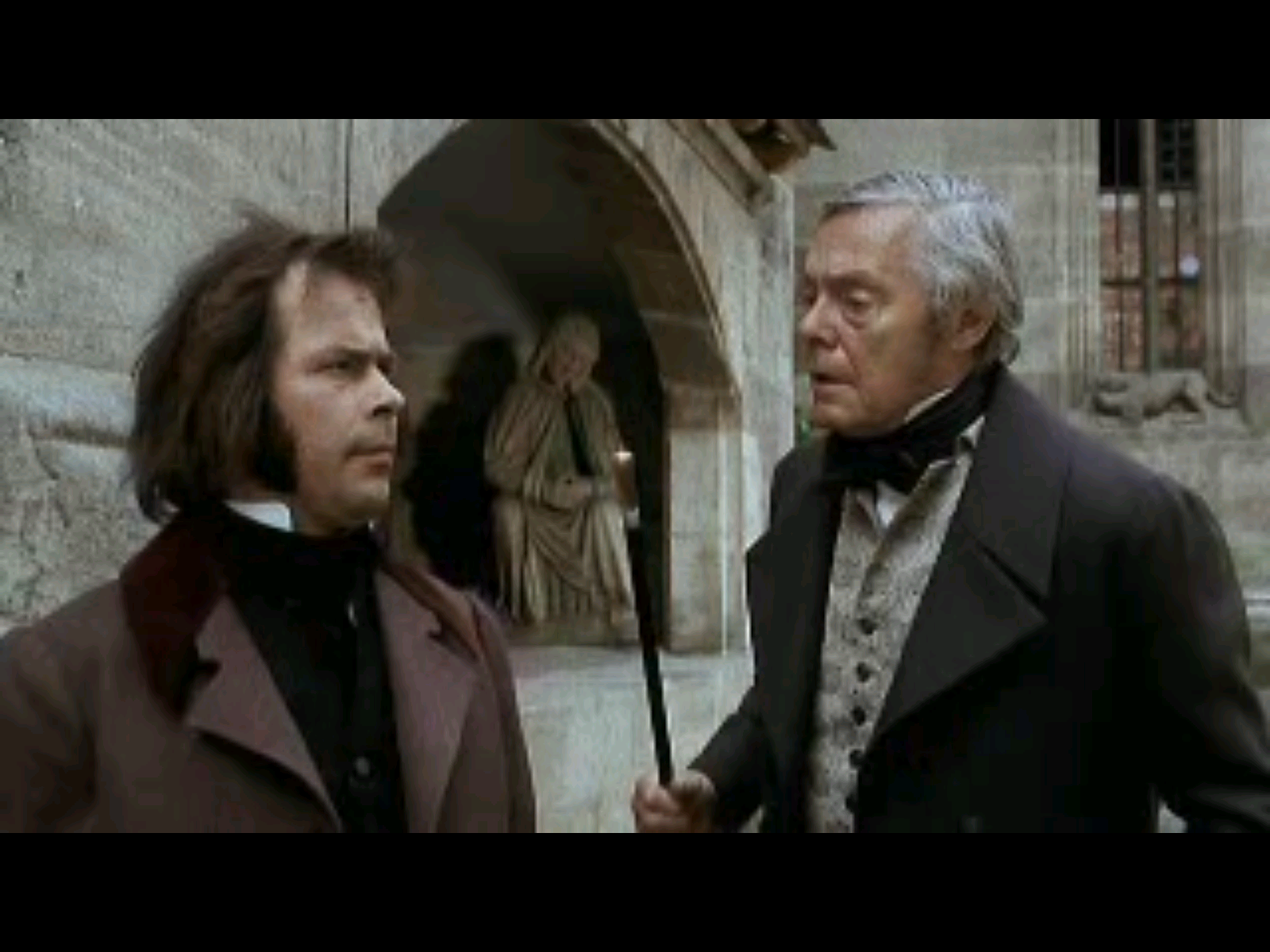
Widely regarded by many (including Peary) as one of Werner Herzog’s “most compelling films”, The Mystery of Kaspar Hauser is in the “same subgenre as The Wild Child and The Elephant Man” yet “completely different from those pictures.” As Peary notes, Herzog wisely refrains from positing the real-life Hauser as either a saint (a la the Elephant Man) or a Tarzan-figure (a la Truffaut’s “wild child”), instead portraying him simply as “an outsider, a naturalist, whose presence causes everyone to question their orderly vision of their world, their faith in God, [and] their orderly way of leading their lives.” The inspired casting of non-actor Bruno S. (a former mental institute inmate) as Hauser plays a key role in the film’s success — it’s remarkably easy to believe that Bruno is Kaspar, with his cynical yet child-like attitude marking him as one who is truly seeing life in a unique way. Several of his statements — such as when he remarks with sadness to Ladengast that hearing music “feels strong in his heart”, and wonders aloud why he can’t play piano with automaticity, the way he breathes — are heartbreaking in their naive wisdom.

Redeeming Qualities and Moments:

  • Bruno S. as Kaspar Hauser
  • Walter Ladengast as Hauser’s kindly caretaker, Professor Daumer
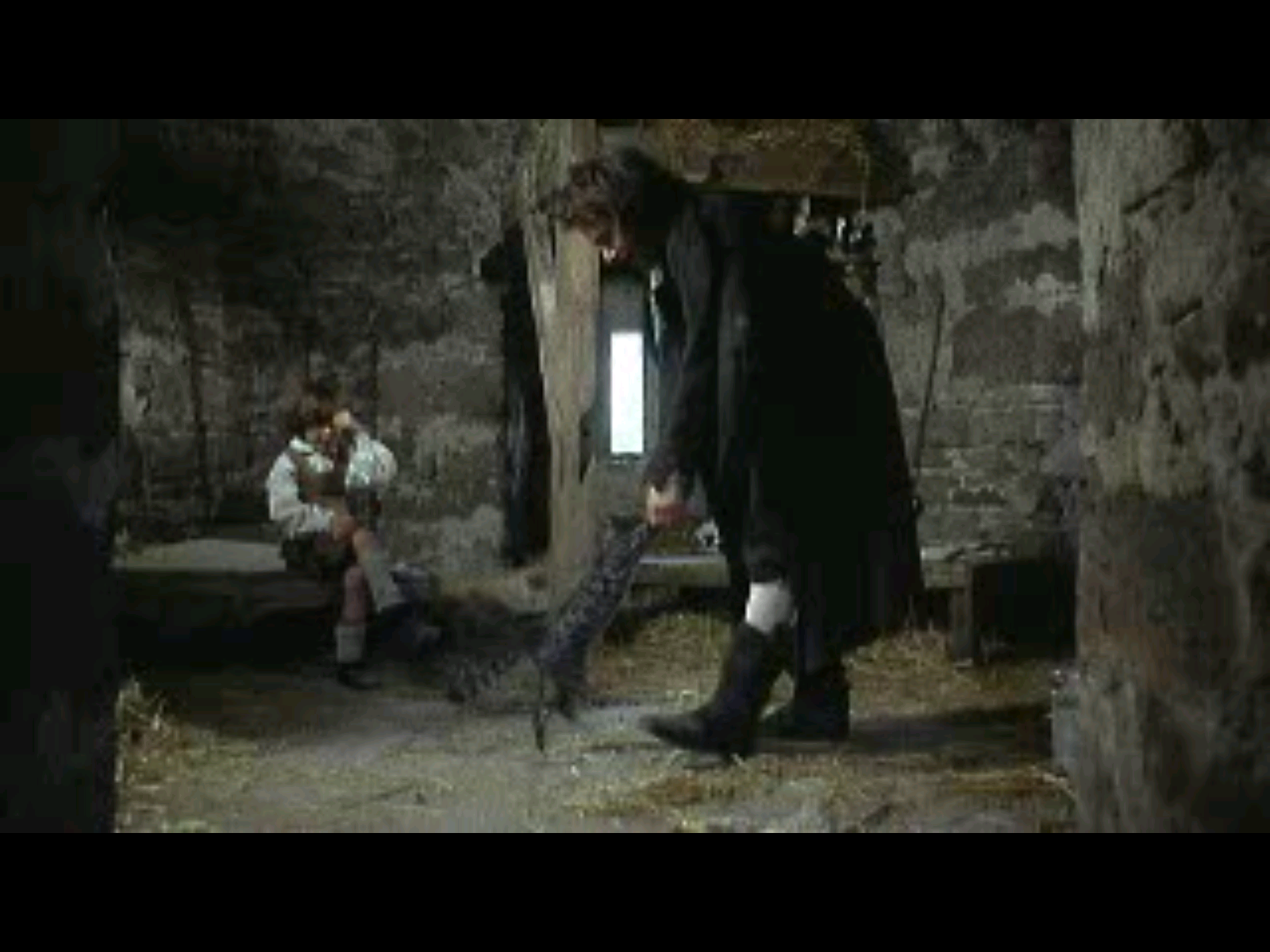
  • Kaspar trying to teach a cat to walk on its hind legs
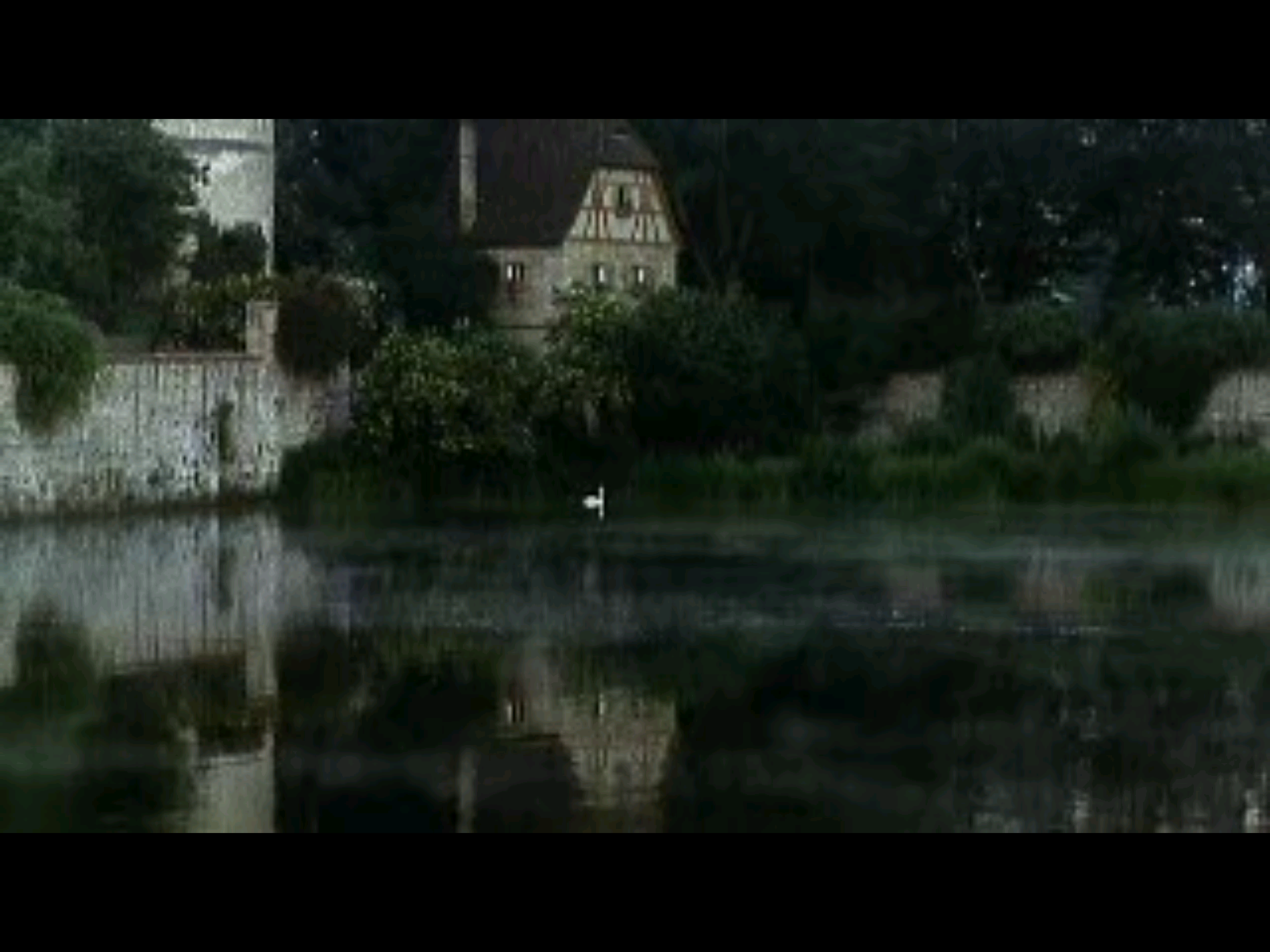
  • Beautiful cinematography of German countryside

Must See?
Yes, as the film which propelled Werner Herzog to international prominence.

Categories

  • Historically Relevant
  • Important Director

Links:

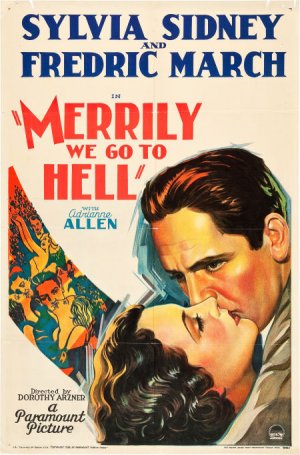
Merrily We Go to Hell (1932)

Merrily We Go to Hell (1932)

“I’m afraid as a rule I prefer the company of men… Particularly if they’re bartenders.”

Synopsis:
An aspiring playwright (Fredric March) with a drinking problem marries an heiress (Sylvia Sidney) whose father (George Irving) is skeptical of March’s intentions. When March carries on an affair with a former flame (Adrianne Allen), Sidney despairs, but resolves to take revenge by living a “free” marriage herself.

Genres, Themes, Actors, and Directors:

  • Alcoholism and Drug Addiction
  • Cross-Class Romance
  • Dorothy Arzner Films
  • Fredric March Films
  • Heiresses
  • Marital Problems
  • Sylvia Sidney Films

Review:
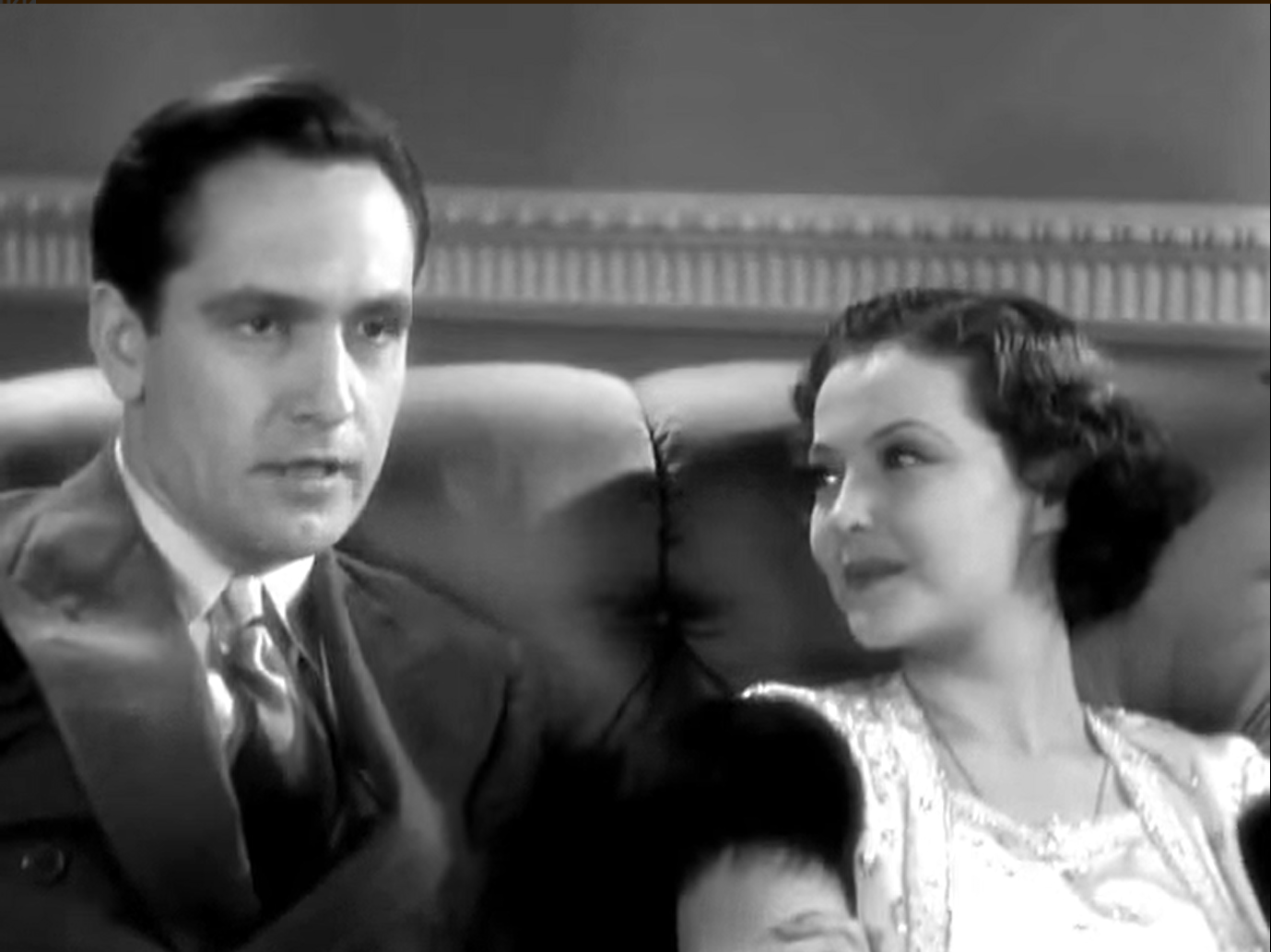
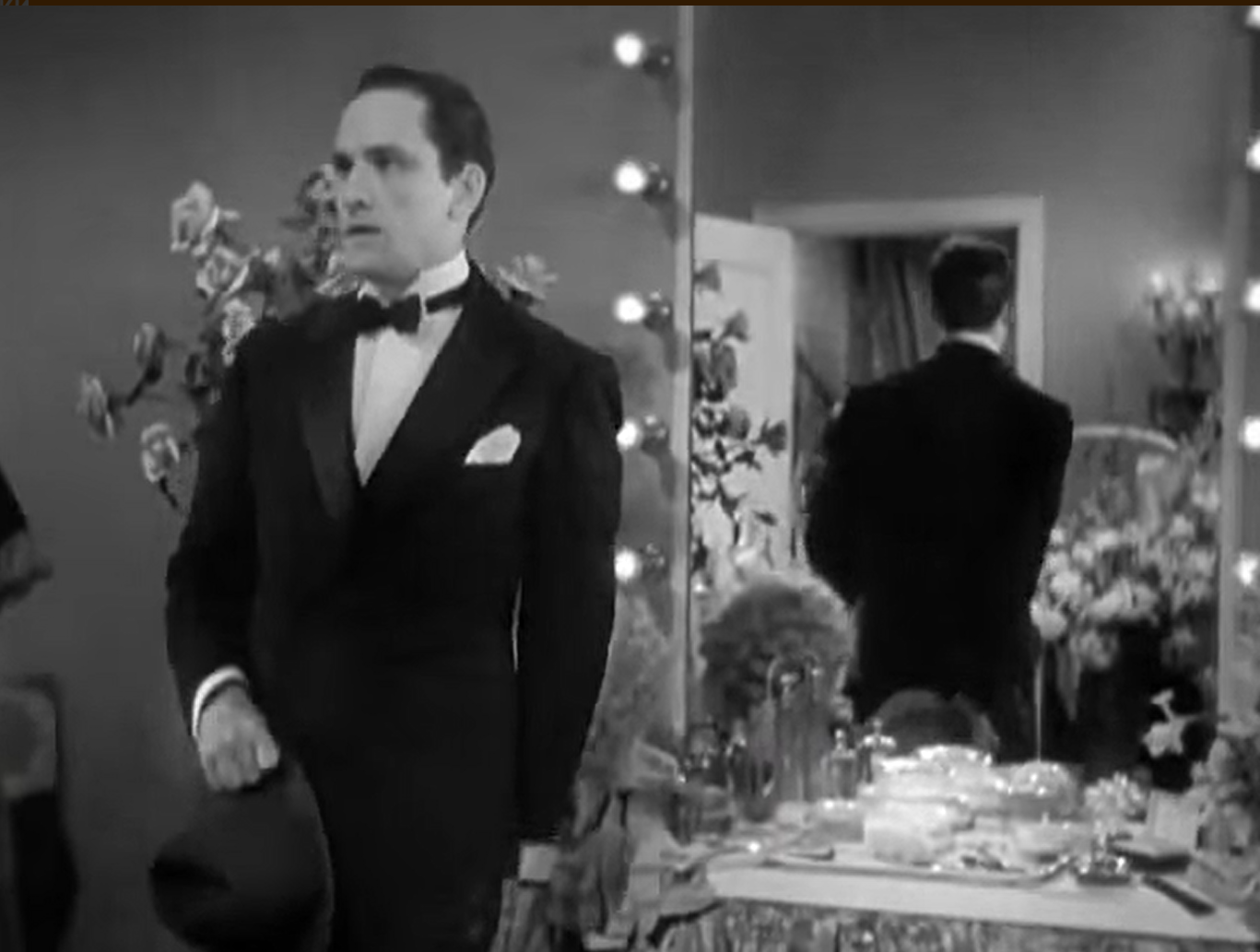
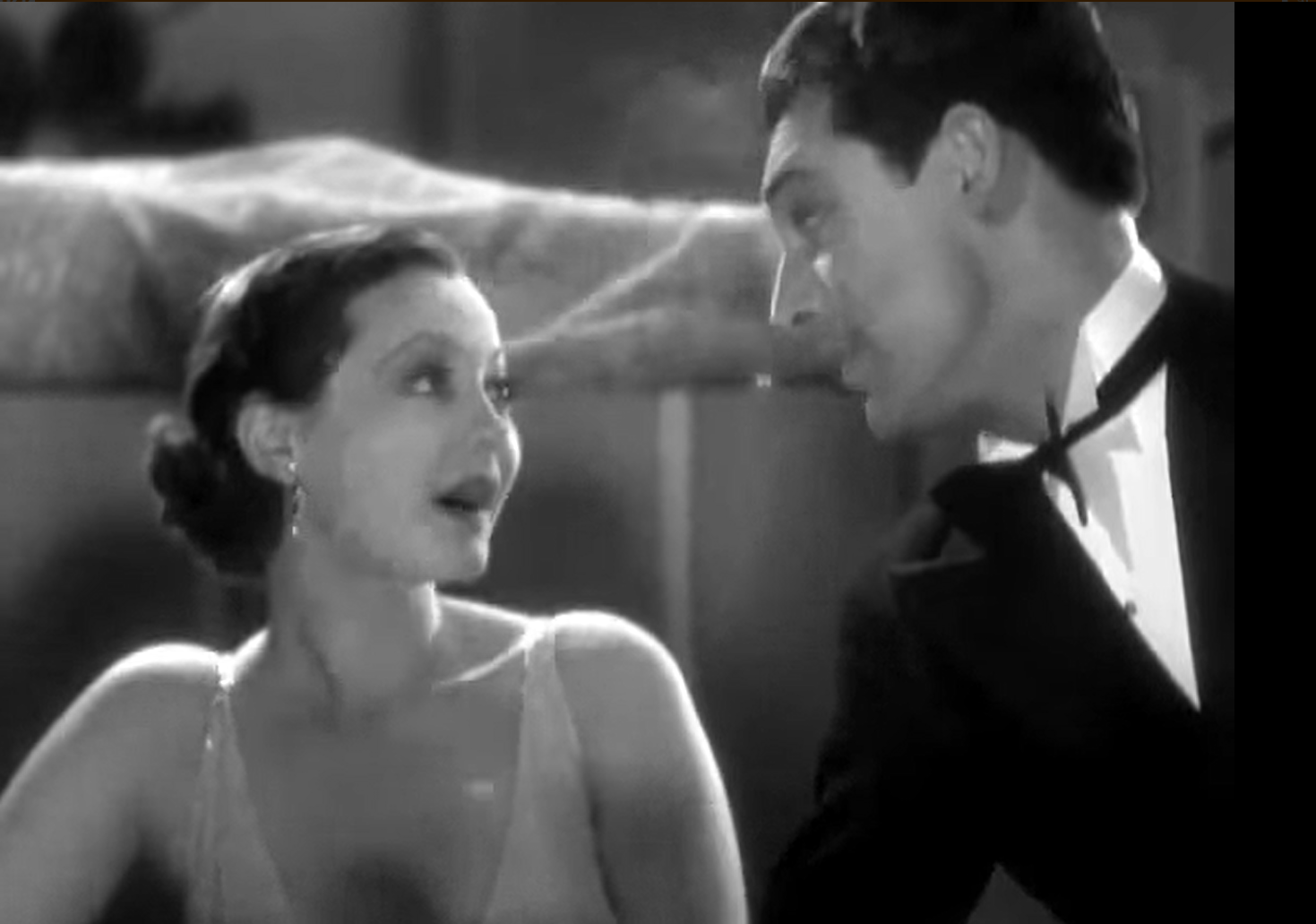
Possessing one of the best titles in early Hollywood history, Merrily We Go to Hell is — perhaps almost inevitably — a bit of a disappointment. Helmed by famed female director Dorothy Arzner, it tells the rather predictable tale of cross-class lovers marrying on a whim and discovering that life isn’t nearly as easy or idyllic as they might have hoped. Sidney is typecast as a sweet yet determined heiress who refuses to let either March’s lack of income or his glaringly obvious drinking problem get in the way of her love for him; March is an unwitting heel but as handsome and dapper as his role requires.

The title itself is based on a refrain March throws out several times before taking a drink, one which Sidney herself eventually adopts out of desperation — indeed, Sidney’s decision to try to meet March halfway in his cavalier attitude towards life and marriage constitutes the most interesting aspect of the story, as we see one of the earliest examples of a “swinging couple” on-screen (with Cary Grant showing up for a bit role as Sidney’s new lover). Unfortunately, the storyline eventually devolves into predictable melodrama, with traditional morality reasonably — albeit unrealistically — restored.

Note: The best line in the film is probably made when March sheepishly admits to Sidney early on that he “prefers the company of men”; this comment is never explored in more detail, but knowing that Arzner was a lesbian gives one occasion to pause.

Redeeming Qualities and Moments:

  • Sylvia Sidney as Joan
  • Fredric March as Jerry
  • A brave, early look at an “open relationship” as a response to marital infidelity
  • Cary Grant in a very brief early appearance

Must See?
No, but it’s worth a look.

Links:

Prowler, The (1951)

Prowler, The (1951)

“If you were just a dame, Susan, it’d be different. But you’re special.”

Synopsis:
A cynical cop (Van Heflin) falls for a wealthy woman (Evelyn Keyes) he meets on a house call, and concocts a plan to “accidentally” shoot her husband so they can get married. After Heflin is declared innocent in court, he and Keyes are married, with nobody suspecting that they previously had an affair — but things become more complicated when Keyes reveals that she’s four months pregnant, and clearly not with her first husband’s child…

Genres, Themes, Actors, and Directors:

  • Evelyn Keyes Films
  • Infidelity
  • Joseph Losey Films
  • Plot to Murder
  • Police
  • Van Heflin Films

Review:
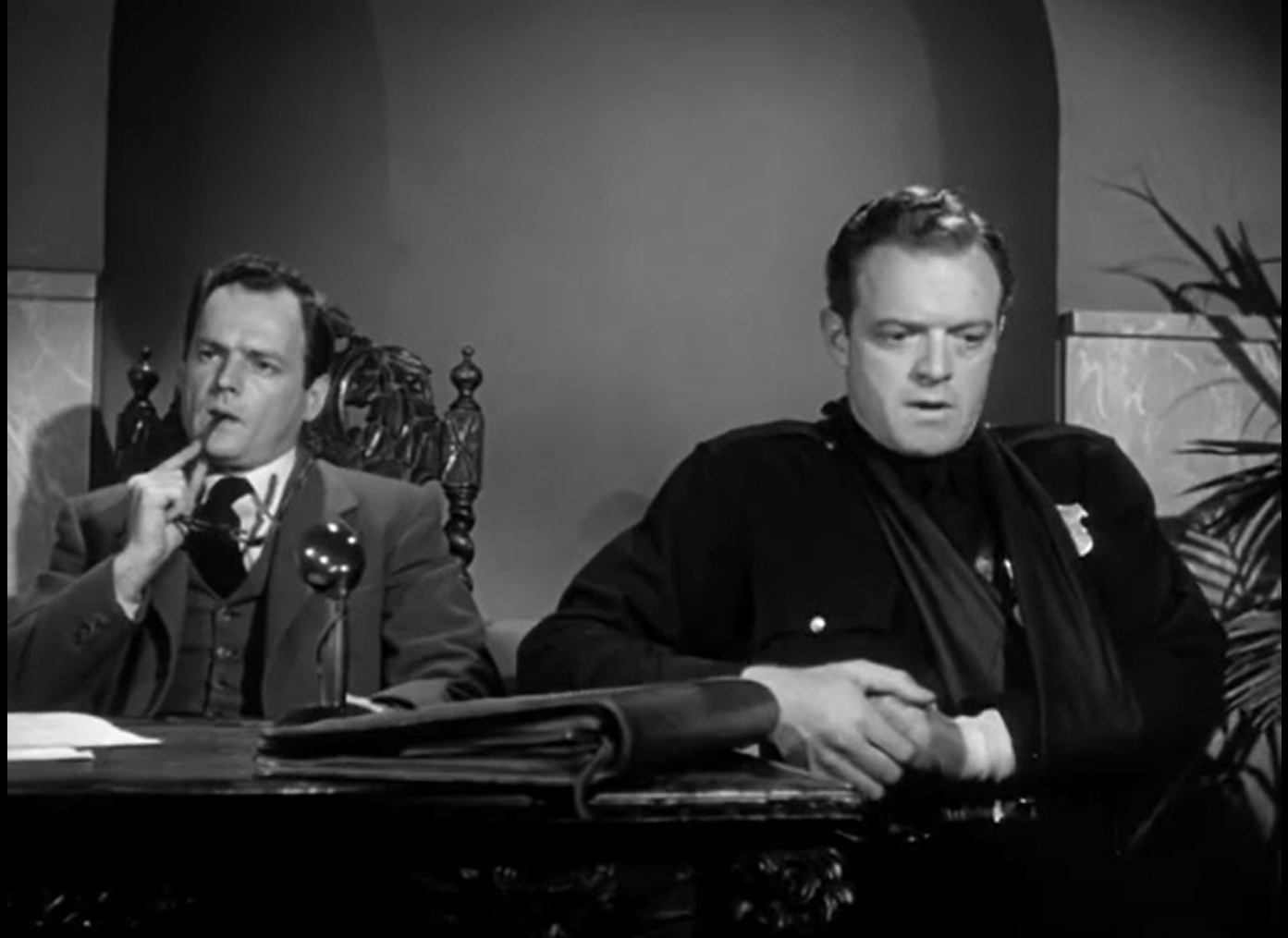
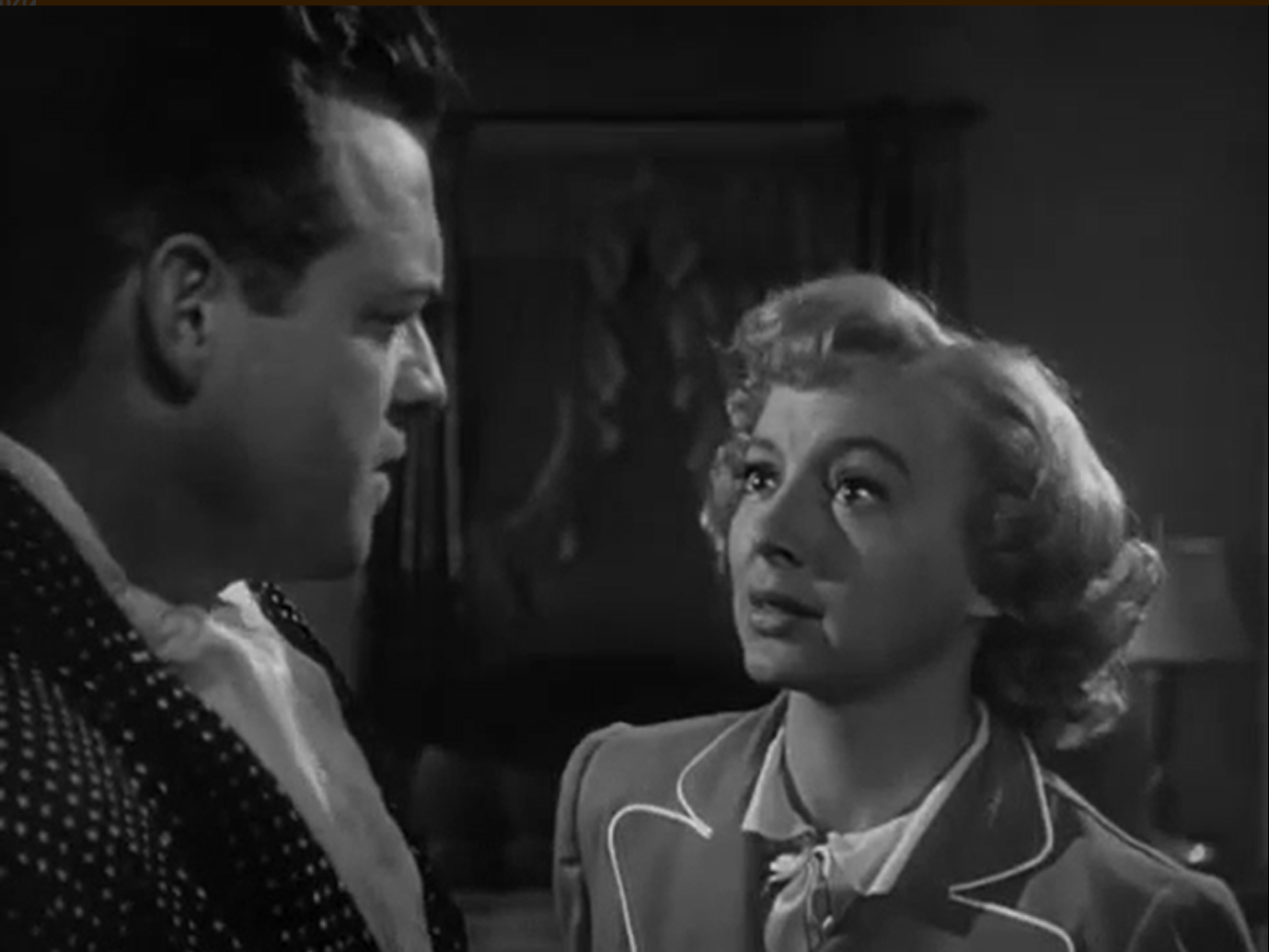
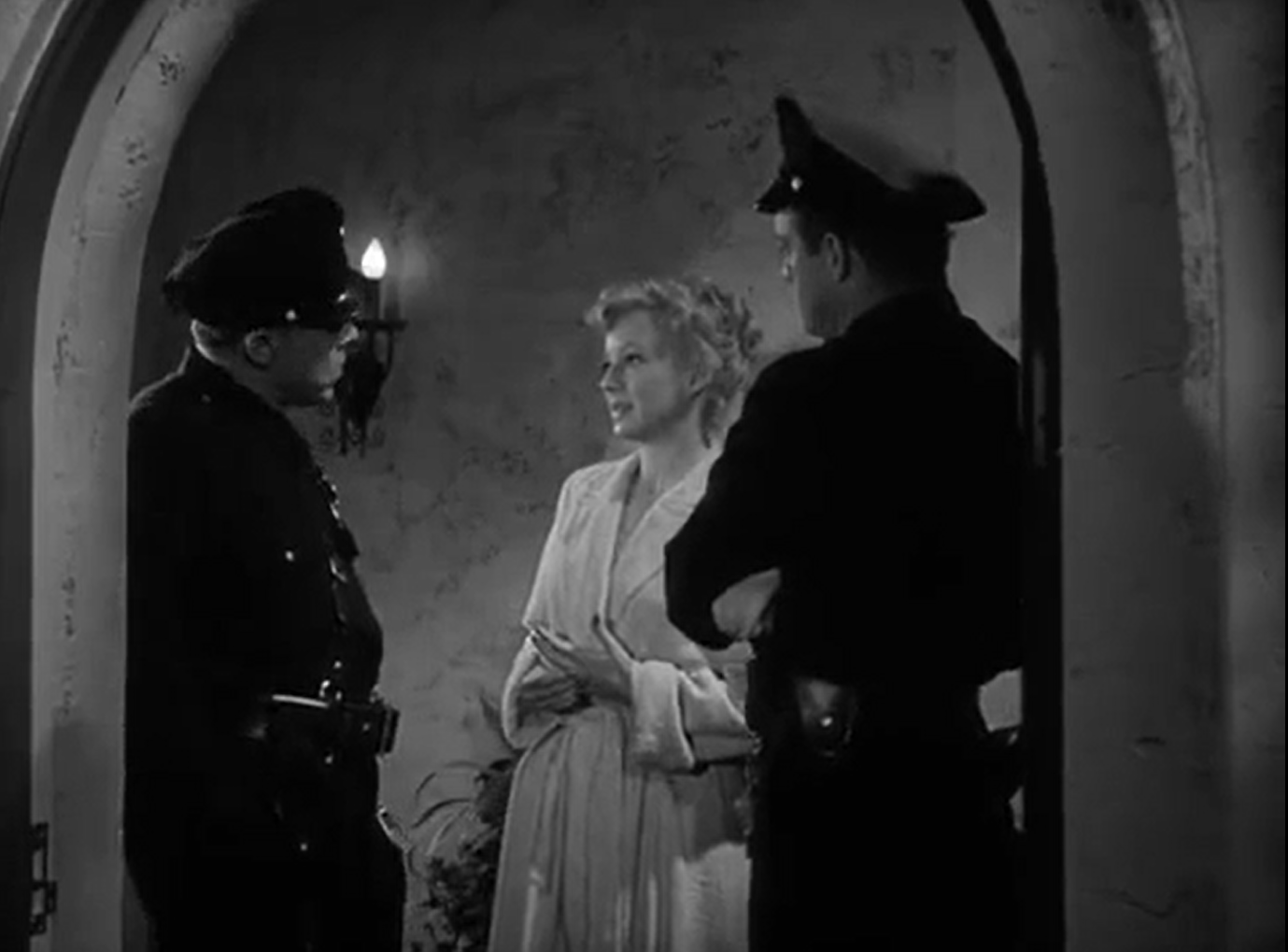
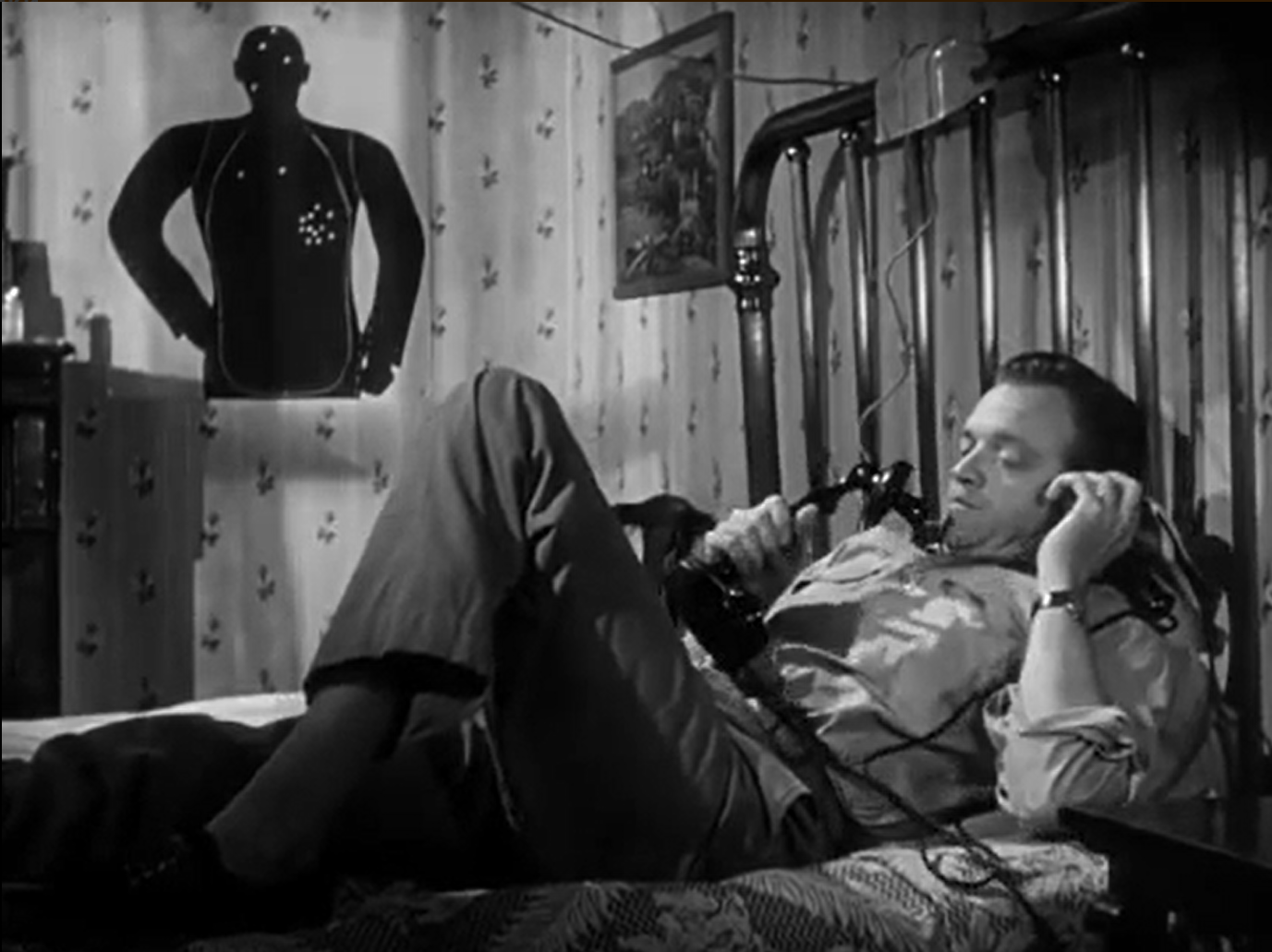
This punchy thriller by director Joseph Losey offers an enjoyable twist on the traditional noir storyline, with Heflin perfectly cast as a deviously womanizing scoundrel (an “homme fatale”) who nonetheless isn’t all bad inside, and Evelyn Keyes equally effective as a lonely wife who allows herself to be taken in (against her better judgment) by Heflin’s advances.

The plot takes several satisfying twists, with Keyes’ “predicament” particularly unexpected and shocking — the fact that this “sin” is named out loud in an early-’50s film tells us that someone will be paying for their transgression against society — though it’s not clear who, or how.

Redeeming Qualities and Moments:

  • Van Heflin as Webb Garwood
  • Evelyn Keyes as Susan Gilvray
  • Arthur Miller’s cinematography
  • A satisfying “homme fatale” storyline

Must See?
Yes, as an all-around good show by Losey.

Categories

  • Good Show
  • Important Director

Links:

Brute Force (1947)

Brute Force (1947)

“Those gates only open three times: when you come in, when you’ve served your time, or when you’re dead.”

Synopsis:
A group of prisoners — led by Burt Lancaster — rebel against a sadistic prison captain (Hume Cronyn) who is hell-bent on making their lives miserable.

Genres, Themes, Actors, and Directors:

  • Ann Blyth Films
  • Burt Lancaster Films
  • Charles Bickford Films
  • Ella Raines Films
  • Escape
  • Hume Cronyn Films
  • Jules Dassin Films
  • Prisoners
  • Ruthless Leaders
  • Yvonne De Carlo Films

Review:
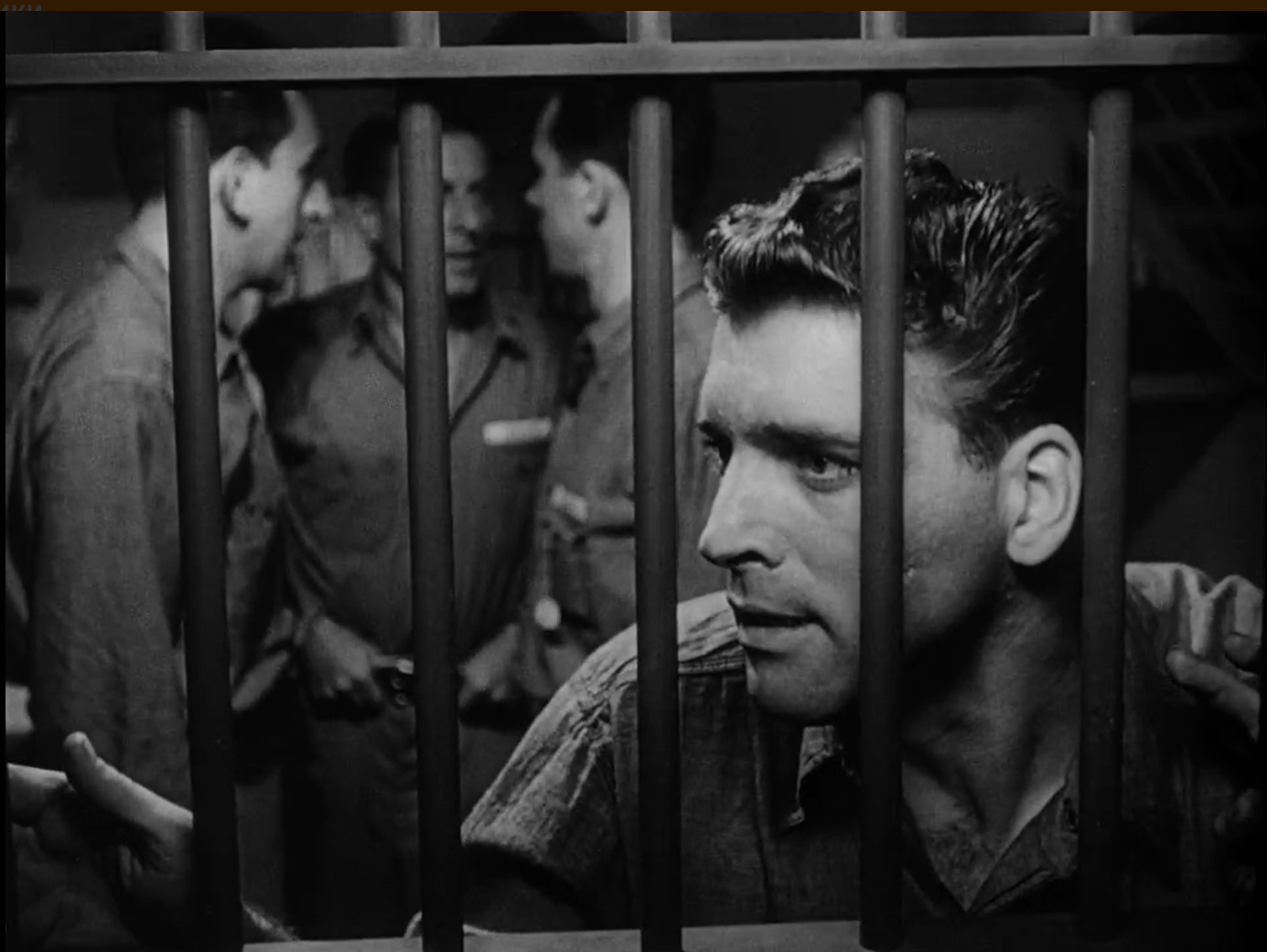
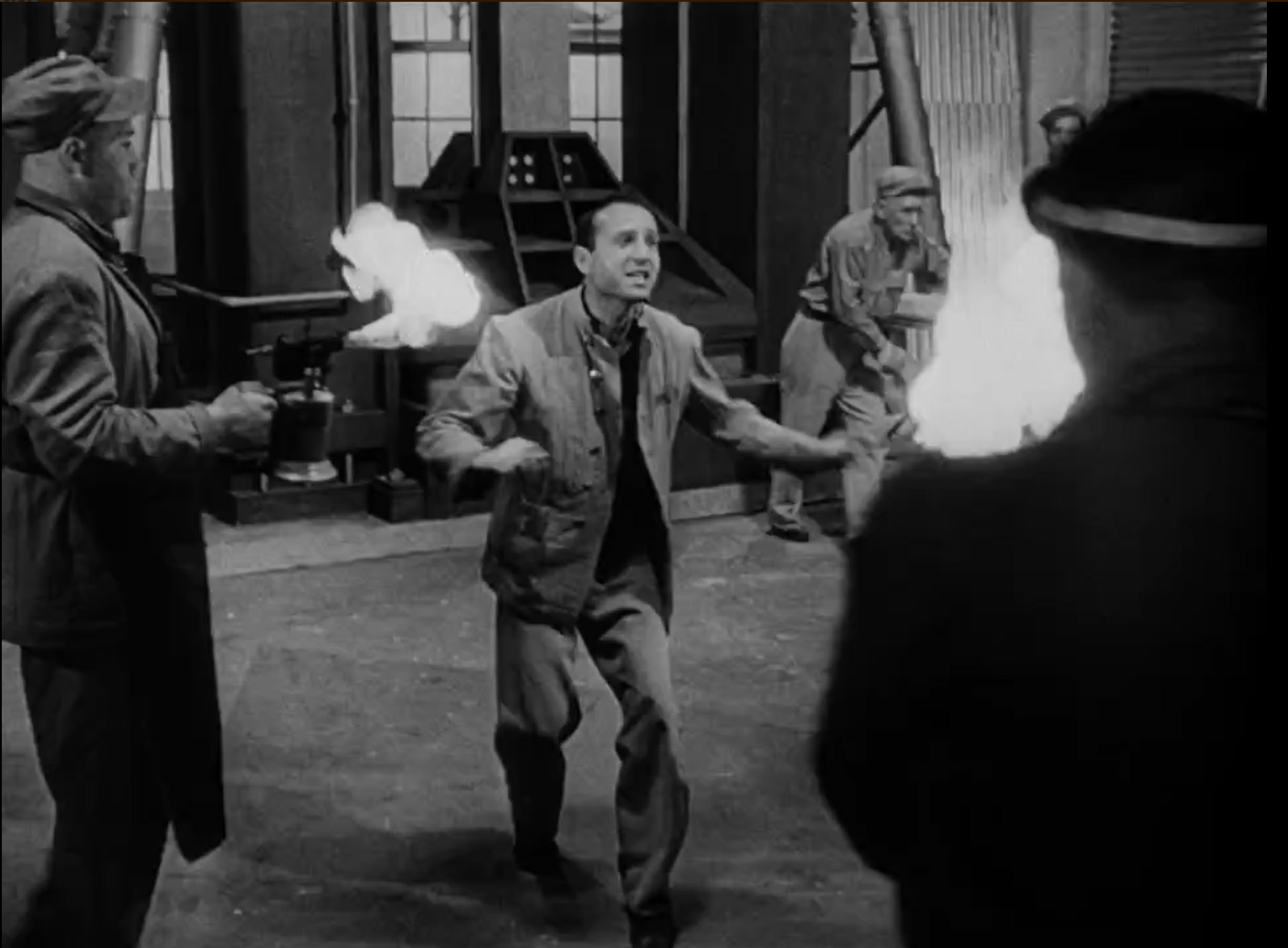
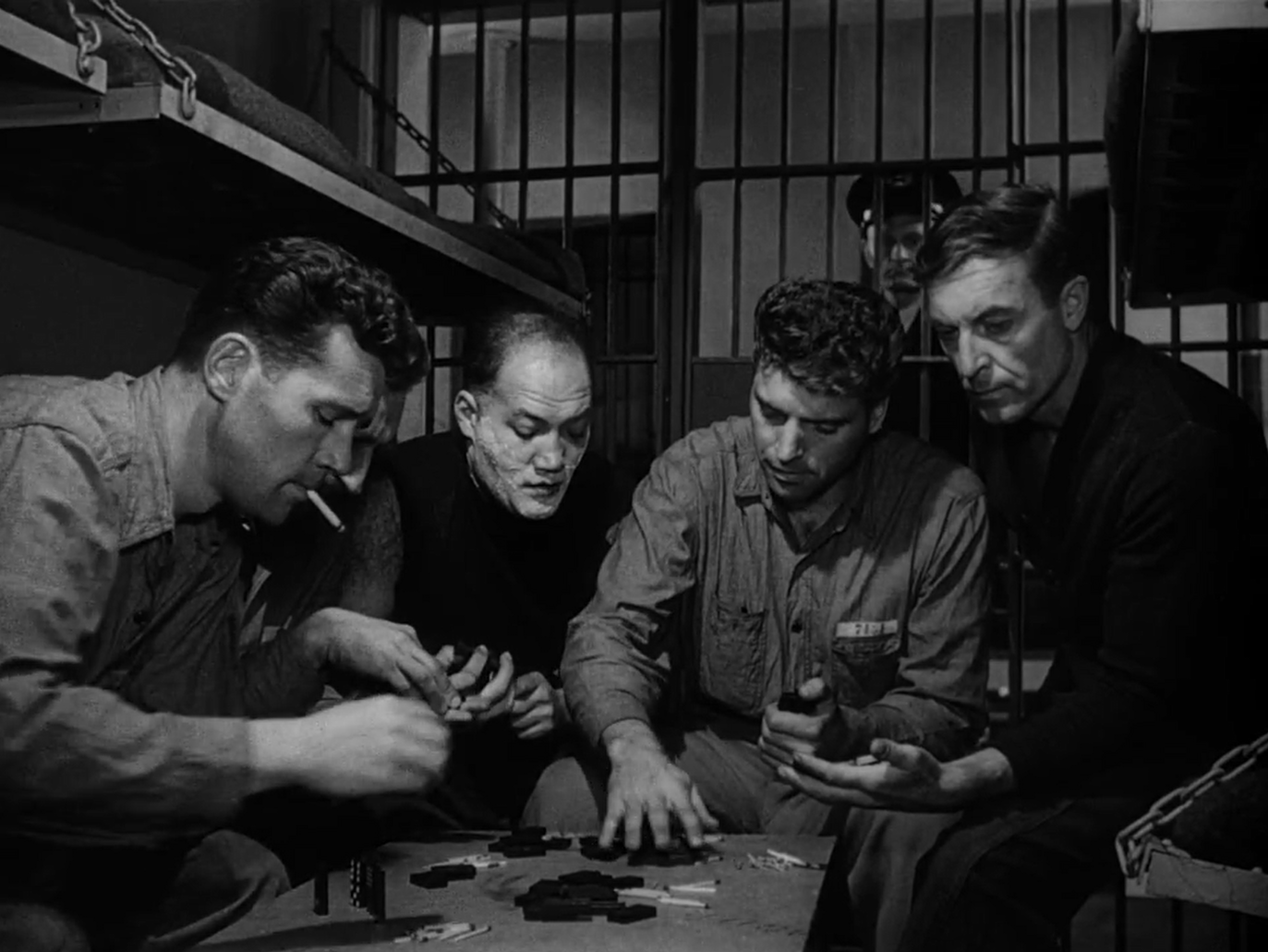
Prison breaks have been a cinematic mainstay for decades, and this relatively early outing by French director Jules Dassin is regarded by many as one of the best. However, other than featuring hunky-yet-stoic Burt Lancaster in a star-making role:

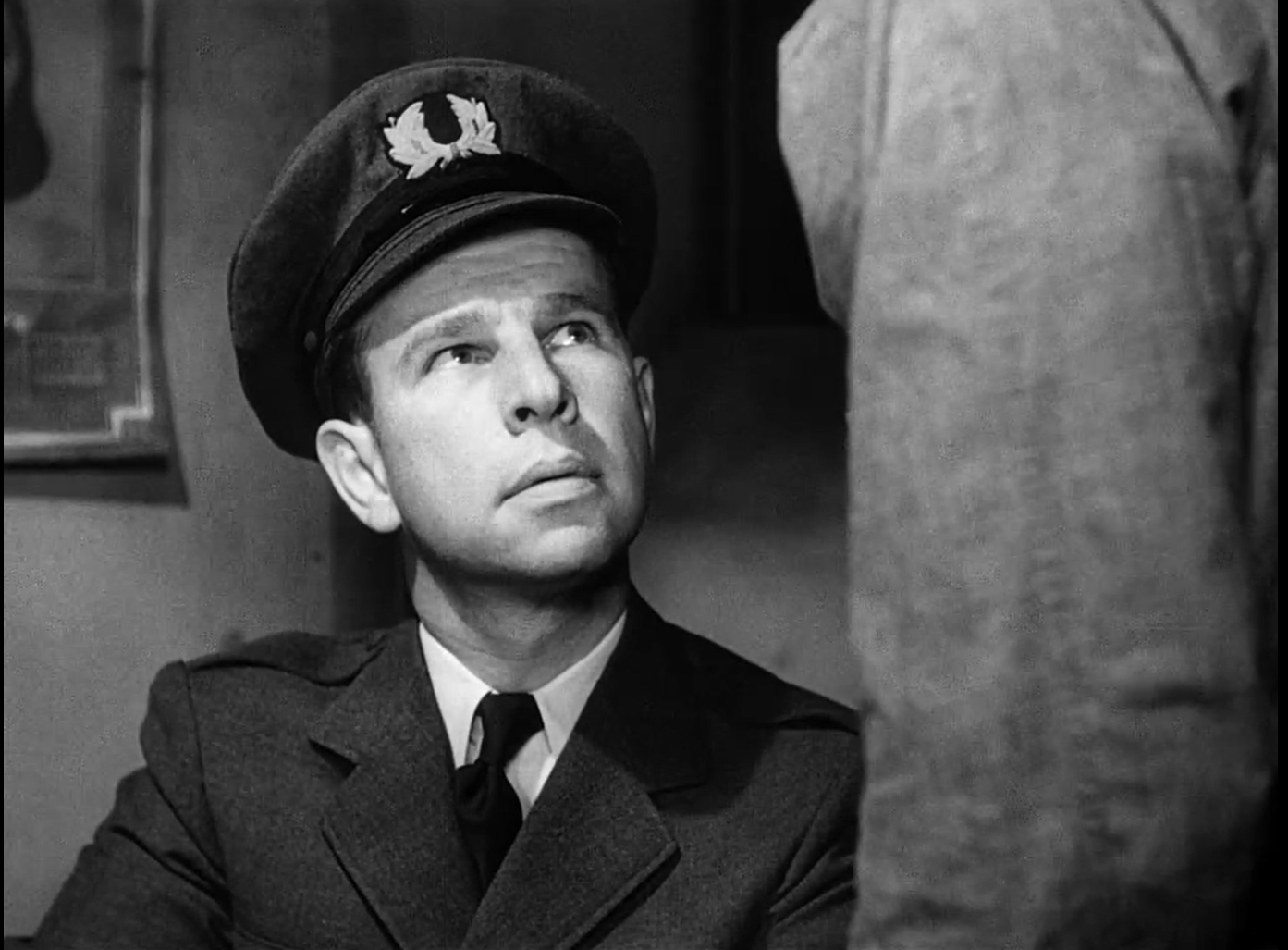
and Hume Cronyn in an atypically sadistic performance:

it doesn’t offer anything new to an overly familiar narrative trope. In order to successfully convince audiences to root for Lancaster and his cellmates, the prisoners are all presented as sympathetic and/or wrongly accused, while Cronyn himself is simply a power-tripping Hitler-stand-in (clearly meant to appeal to post-war audiences). The film’s primary redeeming feature is William Daniels’ atmospheric cinematography, which successfully positions this as a prime example of prison-drama-as-noir.

Redeeming Qualities and Moments:

  • The powerful early scene in which a stoolie (James O’Rear) is crushed to death in a prison workroom
  • William Daniels’ noir-ish cinematography

Must See?
No. Listed as a film with Historical Importance in the back of Peary’s book.

Links:

Mind of Mr. Soames, The (1970)

Mind of Mr. Soames, The (1970)

“We are witnessing an operation that may bring to life a man who — for all normal intents and purposes — has been dead for thirty years.”

Synopsis:
30-year-old John Soames (Terence Stamp) is awakened from a lifelong coma by Doctors Bergen (Robert Vaughn) and Maitland (Nigel Davenport), who quickly teach him to move and speak. While Dr. Bergen believes John should experience the outside world, Dr. Maitland refuses, and soon the childlike John runs away, putting his life in grave danger.

Genres, Themes, Actors, and Directors:

  • Character Arc
  • Robert Vaughn Films
  • Runaways
  • Science Fiction
  • Terence Stamp Films

Review:
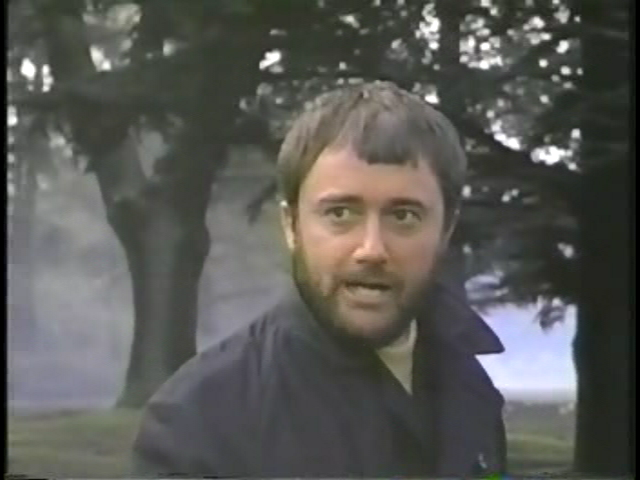
This cult sleeper is based on an undeniably intriguing premise: what if a lifelong coma victim were miraculously awoken and given a chance at life? Unfortunately, however, it falls flat on every count. To begin with, it’s more of a fantasy than strict sci-fi, given that the developmental stages Soames whizzes through upon his “awakening” would be neurologically impossible (mind and body work together to grow and develop; trying to impose learning onto a physically “mature” brain simply couldn’t work). The primary prurient interest of the film lies in watching a grown man act like an infant — much like David Manzy would do to more humorous effect in the twisted black comedy The Baby (1973) three years later — then a toddler, then a young child, then a petulant adolescent, with Soames finally “breaking free” from the restraints of his overbearing guardian and attempting (in typical ’60s/’70s fashion) to “find himself”. The redeeming qualities of … Mr. Soames remain the performances by Stamp and Vaughn, and a couple of unexpectedly amusing moments (see below).

Redeeming Qualities and Moments:

  • Terence Stamp as John Soames
  • Robert Vaughn as Dr. Bergen
  • Soames running around the streets in a furry pink onesie
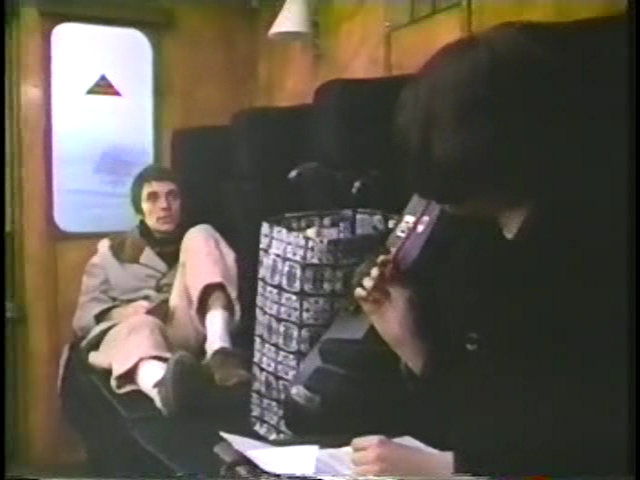
  • Soames scaring a young girl half to death on a train: “There are many trees at the institute… I do not like the institute.”

Must See?
No; despite its intriguing premise, this one isn’t worth seeking out. Listed as a Sleeper in the back of Peary’s book.

Links:

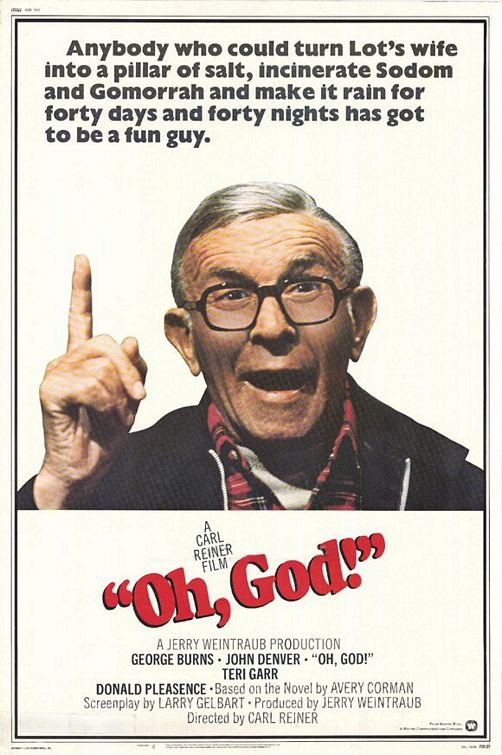
Oh, God! (1977)

Oh, God! (1977)

“I took this form because if I showed myself to you as I am, you wouldn’t be able to comprehend me.”

Synopsis:
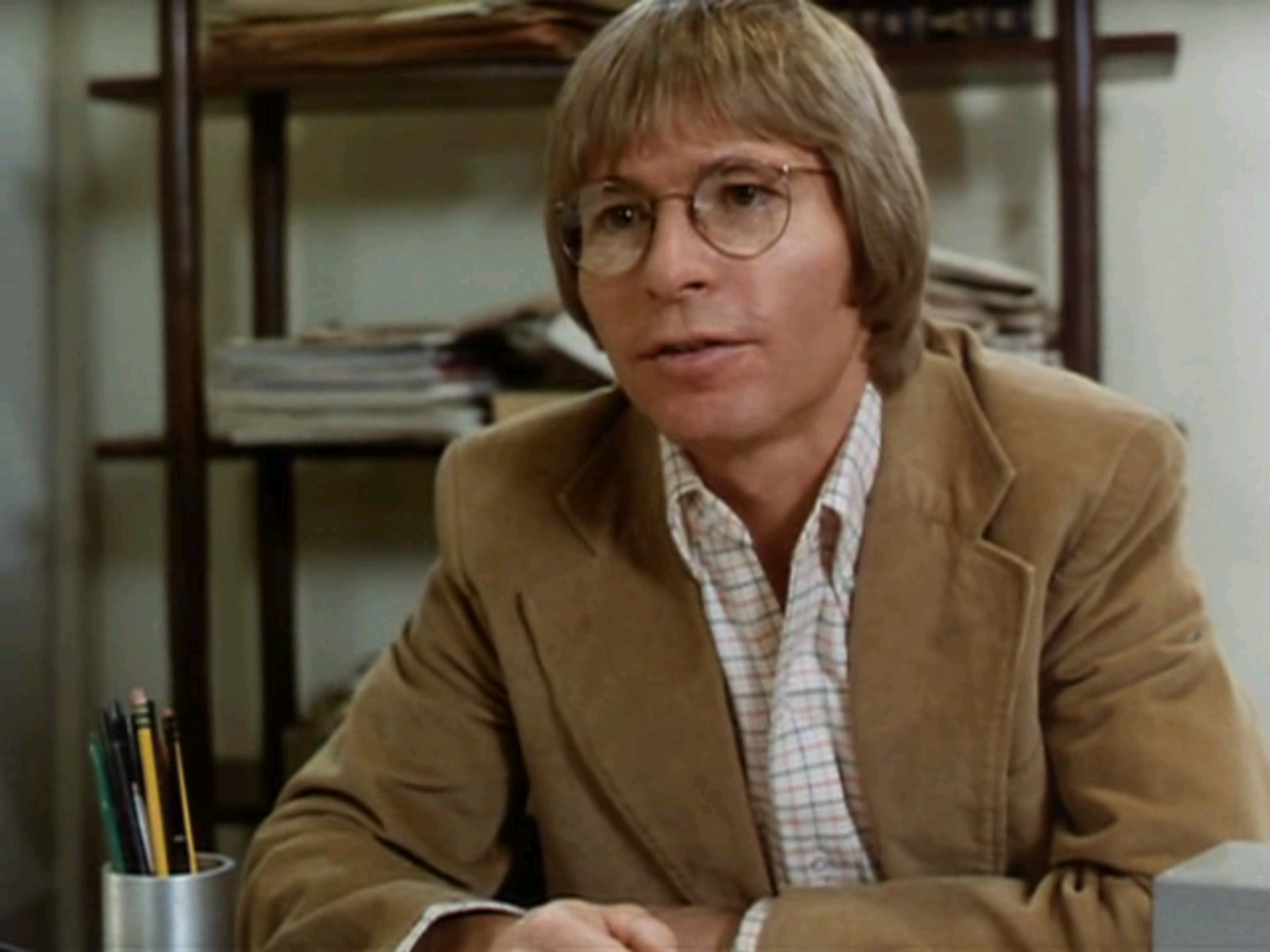
A humble supermarket manager (John Denver) is visited by God (George Burns) in the form of an older man, and told to spread the word about His hopes for mankind.

Genres, Themes, Actors, and Directors:

  • Carl Reiner Films
  • Comedy
  • Donald Pleasence Films
  • Fantasy
  • George Burns Films
  • “No One Believes Me!”
  • Ralph Bellamy Films
  • Religious Faith
  • Teri Garr Films

Review:
This immensely popular ’70s comedy — which sparked two sequels and a current remake — is, unfortunately, a tedious bore. The central casting decision, considered a “coup” by many, is one problem (Burns-as-God simply doesn’t work), but the primary issue is the decidedly unfunny script, which is littered with throw-away lines like God in a courtroom stating, “So help me Me,” or God insisting that he doesn’t normally work miracles (“The last miracle I did was the 1969 Mets; before that, I think you have to go back to the Red Sea.”) Ha ha. Denver is, fortunately, both appealing and believable in the lead role, and Teri Garr turns in yet another compassionate performance as the wife of a man going slowly around the bend (a la Richard Dreyfuss in the same year’s Close Encounters) — but even their performances can’t save this clunker from sinking, and fast.

Redeeming Qualities and Moments:

  • John Denver as Jerry
  • Teri Garr as Jerry’s compassionate wife
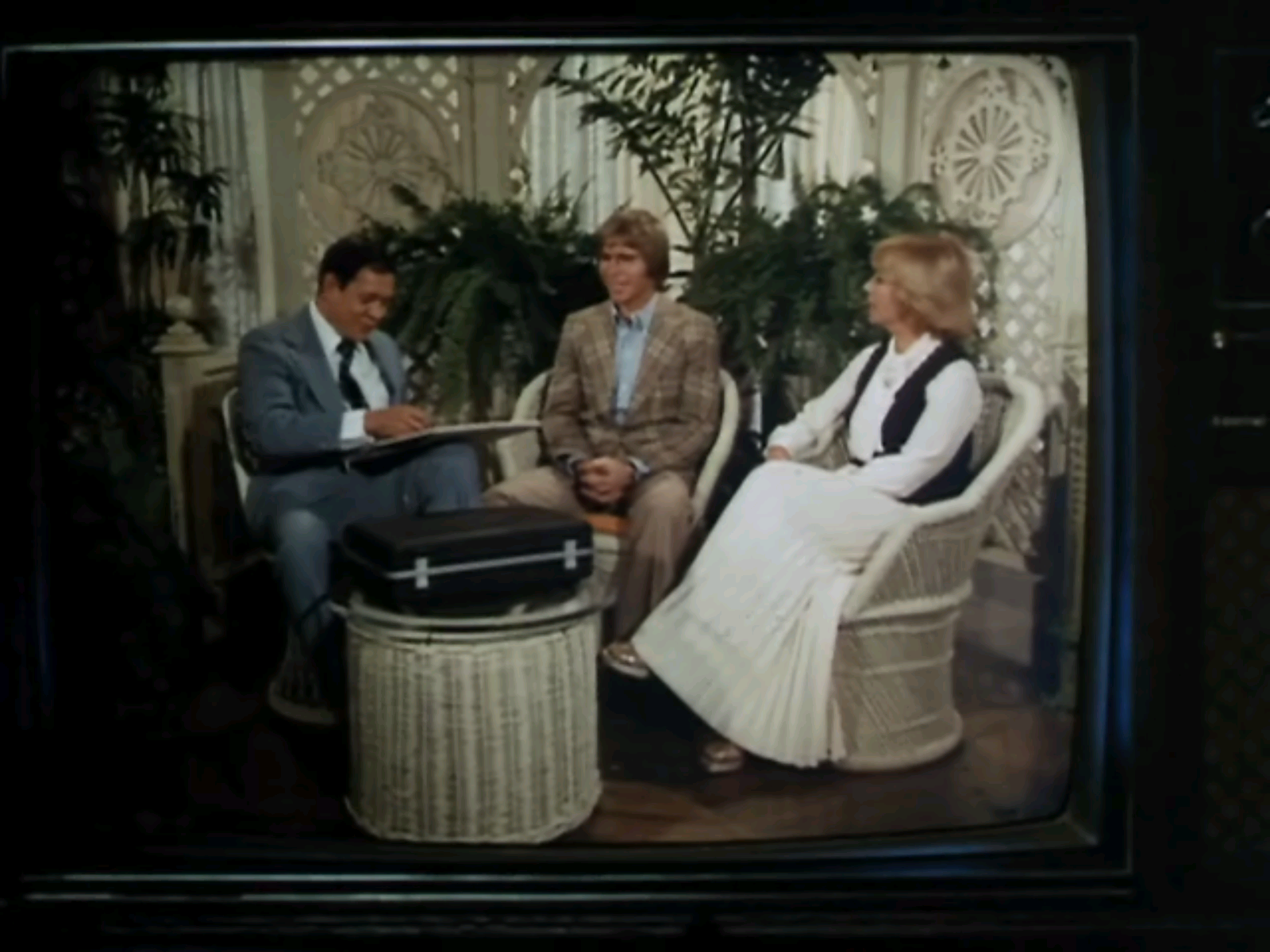
  • Jerry on the Dinah Shore show explaining to a police sketch artist what God looks like

Must See?
No; this well-meaning but strained comedy is only for certain tastes.

Links:

Cabinet of Dr. Caligari, The (1920)

Cabinet of Dr. Caligari, The (1920)

“I must know everything. I must penetrate the heart of his secret. I must become Caligari!”

Synopsis:
A high-strung youth (Friedrich Feher) relates the story of mad Dr. Caligari (Werner Krauss) and his sideshow act, a gaunt somnambulist (Conrad Veidt) named Cesare who commits murders while sleepwalking. But is Dr. Caligari really who Feher says he is?

Genres, Themes, Actors, and Directors:

  • Carnivals and Circuses
  • Conrad Veidt Films
  • Flashback Films
  • German Films
  • Horror
  • Living Nightmare
  • Mad Doctors and Scientists
  • Mental Illness
  • Mind Control and Hypnosis<
  • Mistaken or Hidden Identities
  • Silent Films

Response to Peary’s Review:
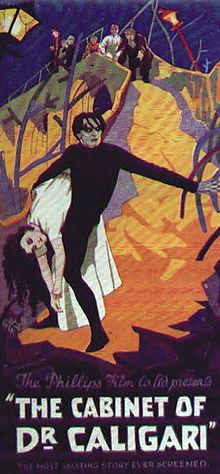
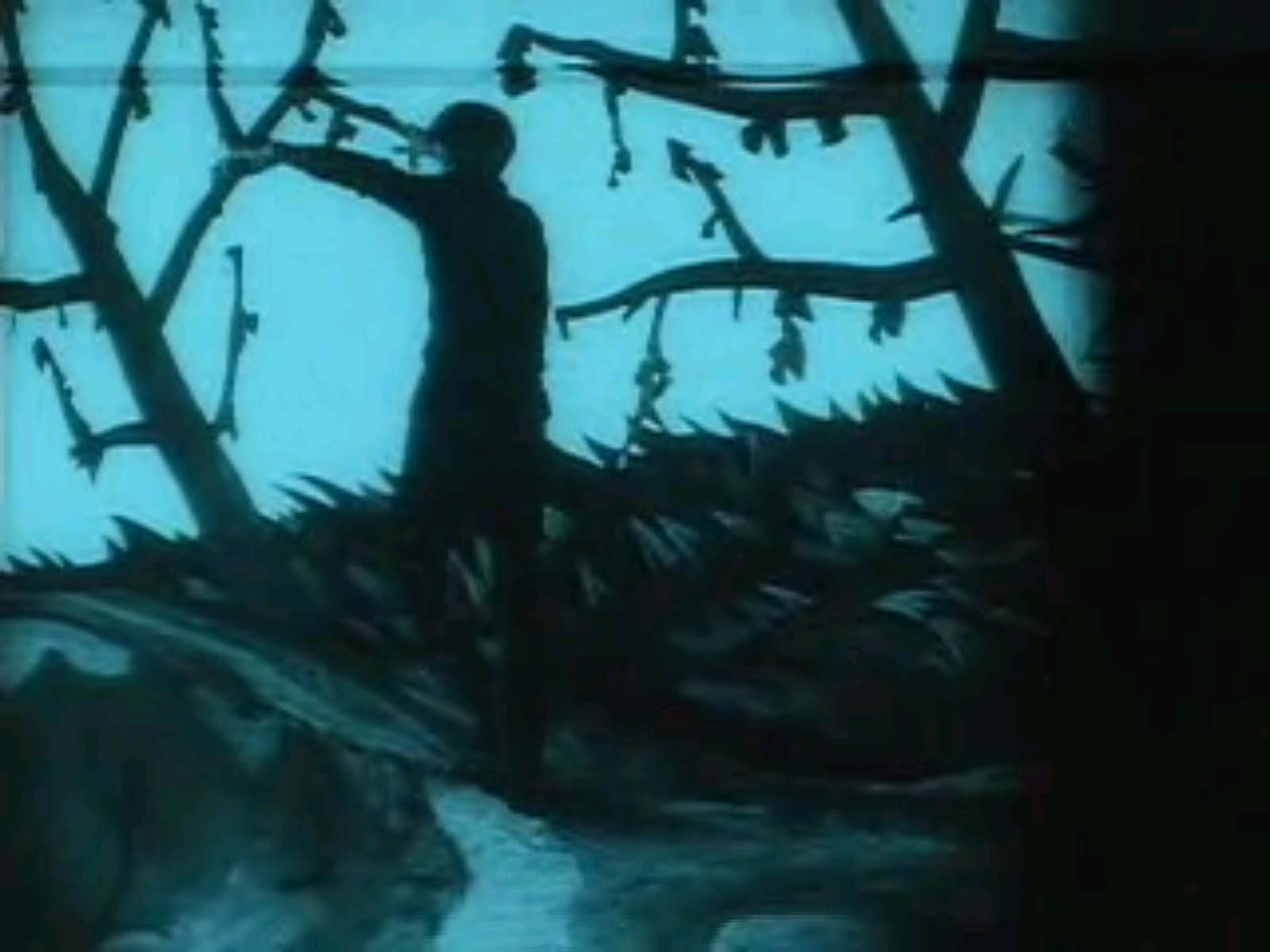
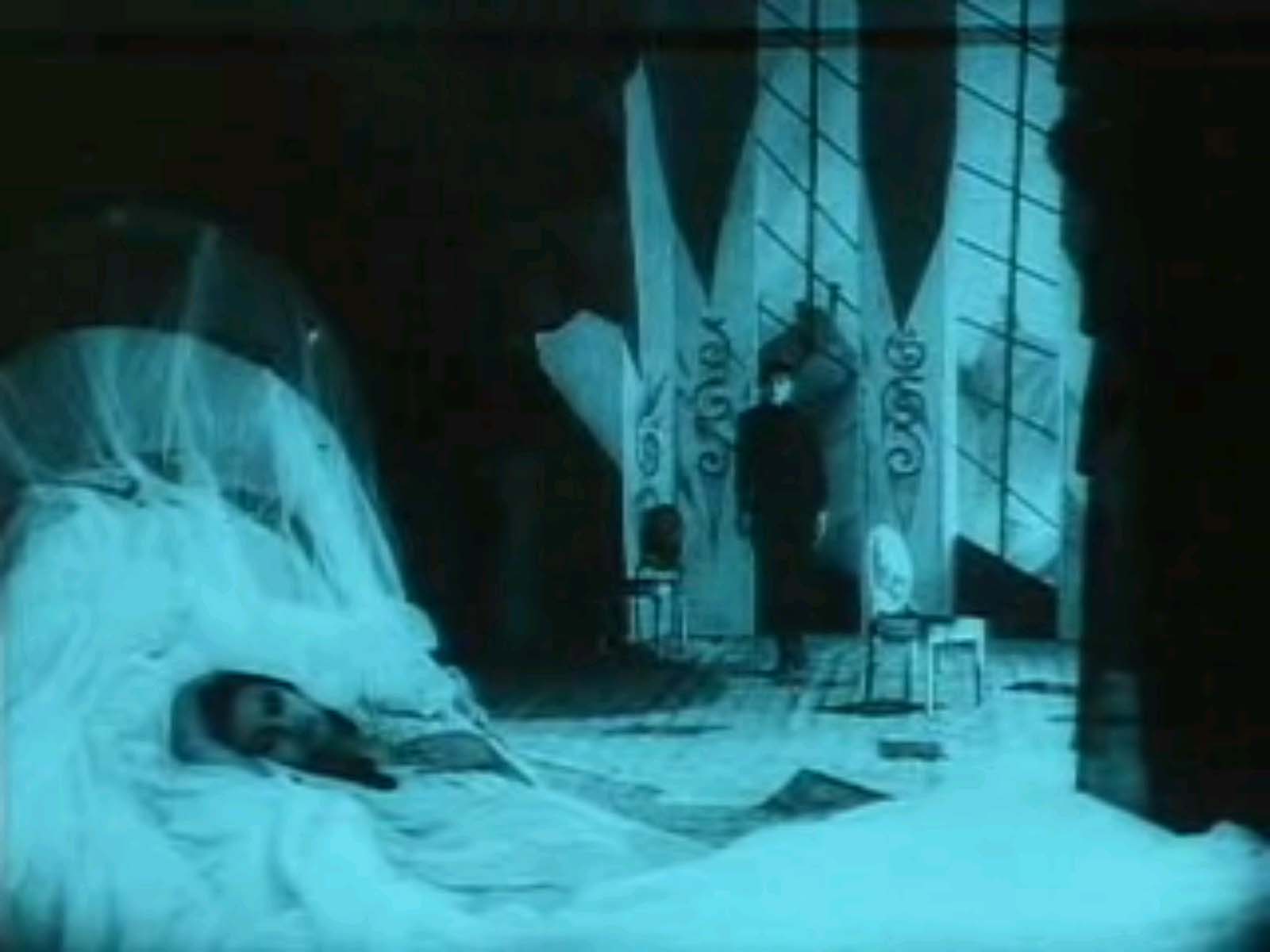
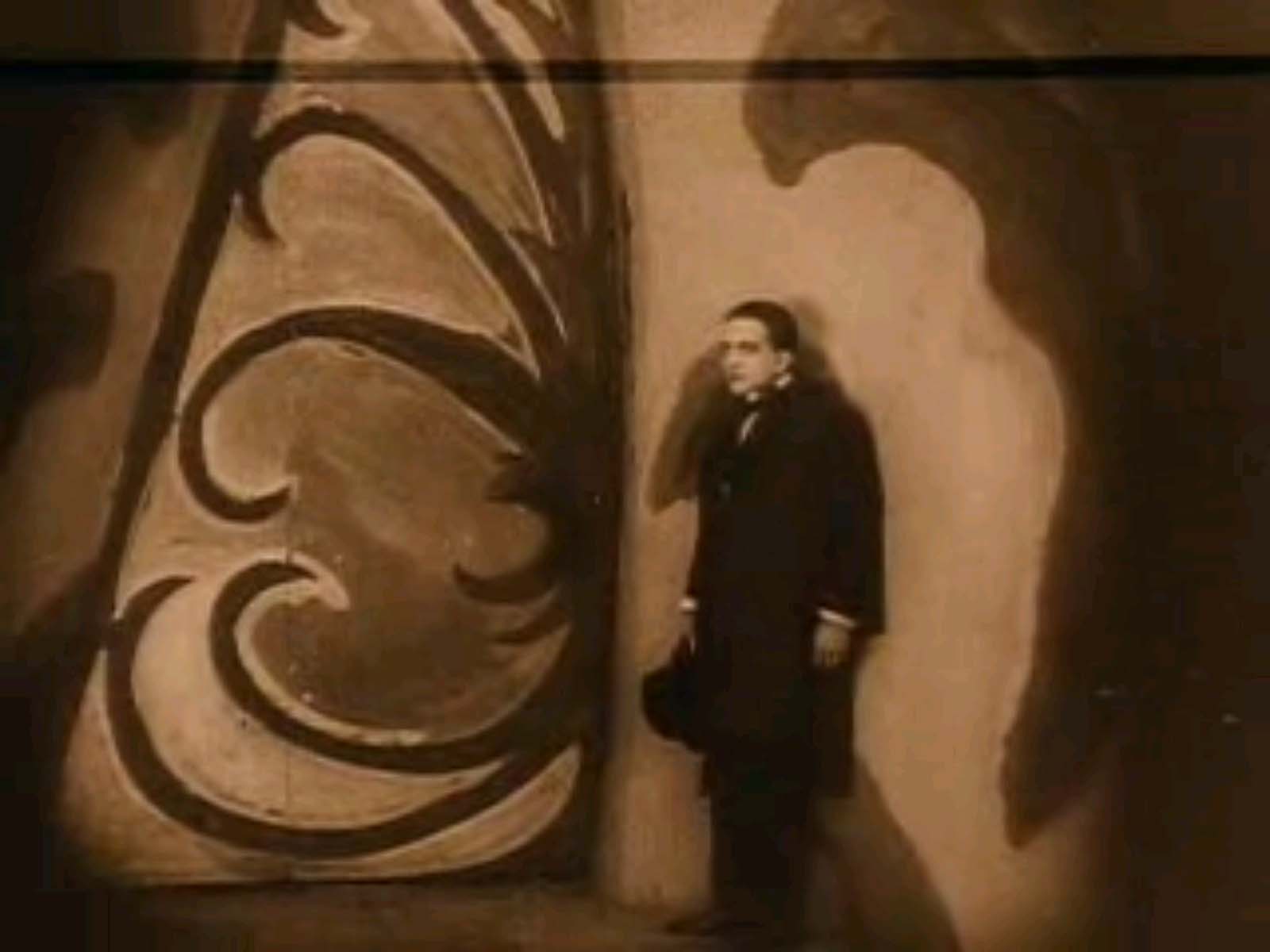
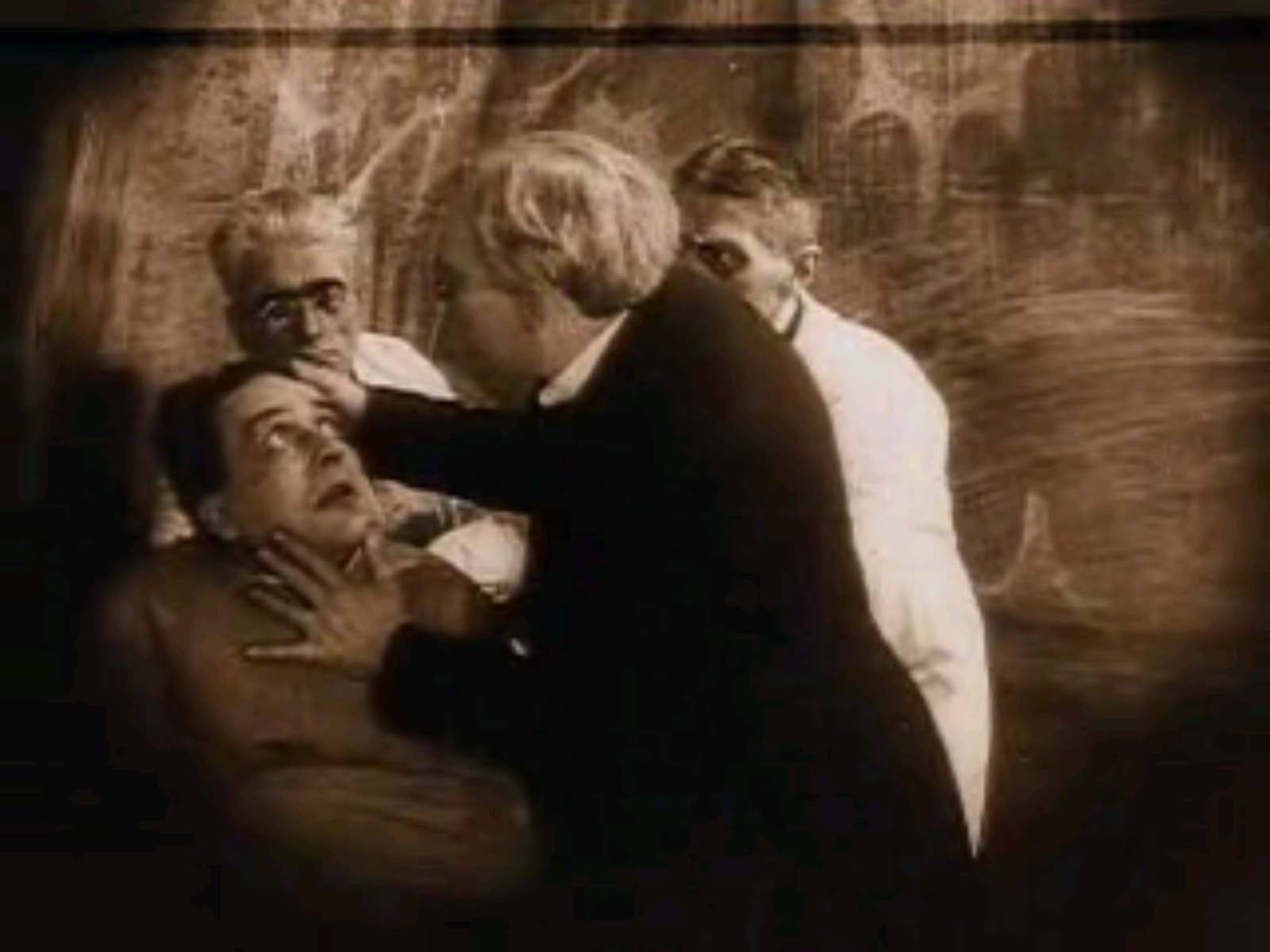
In his analysis of this indisputable “masterpiece of the silent cinema”, Peary notes that The Cabinet of Dr. Caligari was the first film to advance “the theory that what goes on in the mind, psychological horror, can be as frightening as physical shocks” — and that “one could express the emotional and/or mental states of characters through the design of the sets they walk through.” To that end, nothing looks real here; the “backgrounds are obviously painted” and “everything … zigzags at odd angles so that the frame looks out of whack”, giving one the impression of watching an Expressionistic play rather than a film.

Apart from its truly unique sets, what’s most distinctive about Caligari is its twisted narrative structure, in which our comprehension of what we’re seeing is continually shaken; a quick glance at the genres listed above indicates that this short film goes in many different directions throughout its scant hour-plus running time. There’s essentially a story within a story within a story here; to that end, Caligari is a film which nearly demands multiple viewings in order to “get” what exactly is happening. Indeed, Peary notes that Caligari was likely “the first ‘cult’ movie”, given that it played “in one French theater for seven consecutive years” — for this reason alone, no film fanatic can afford to miss it.

Redeeming Qualities and Moments:

  • Surreal Expressionist set designs
  • Conrad Veidt as Cesare the Somnambulist
  • The classic kidnapping sequence
  • A groundbreaking script (by Hans Janowitz), which posits that what’s seen on-screen isn’t necessarily “real”
  • The shocking twist-upon-twist ending

Must See?
Yes, most definitely. Discussed at length in Peary’s Cult Movies 3 (1988).

Categories

  • Cult Movie
  • Historically Relevant

(Listed in 1001 Movies You Must See Before You Die)

Links:

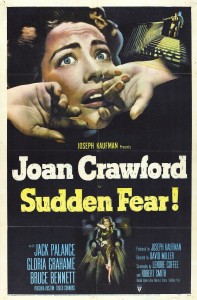
Sudden Fear (1952)

Sudden Fear (1952)

[Note: The following review is of a non-Peary title; click here to read more.]

“I was just wondering what I’d done to deserve you.”

Synopsis:
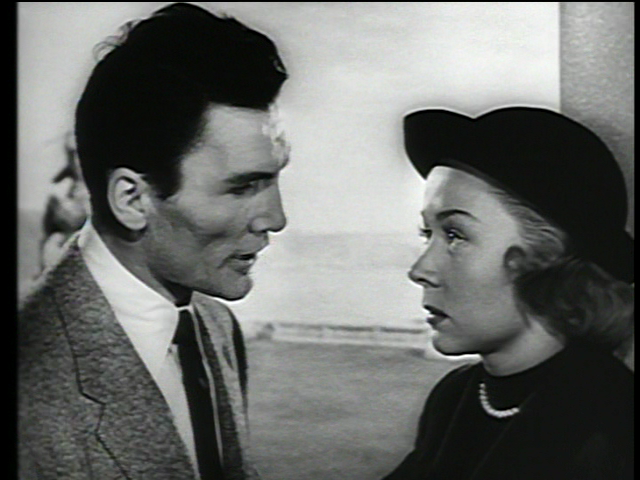
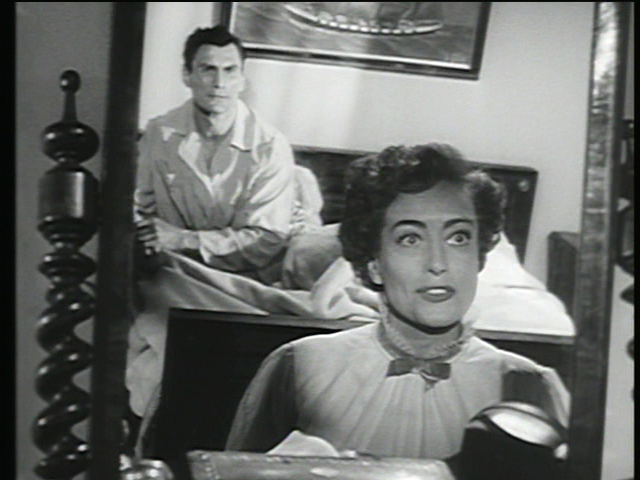
A wealthy playwright (Joan Crawford) marries an actor (Jack Palance) who she recently fired from her play, not realizing that his love for her is a sham, and that, together with an old girlfriend (Gloria Grahame), he plans to murder her for her money.

Genres, Themes, Actors, and Directors:

  • Gloria Grahame Films
  • Homicidal Spouses
  • Jack Palance Films
  • Joan Crawford Films
  • Plot to Murder
  • Writers

Review:
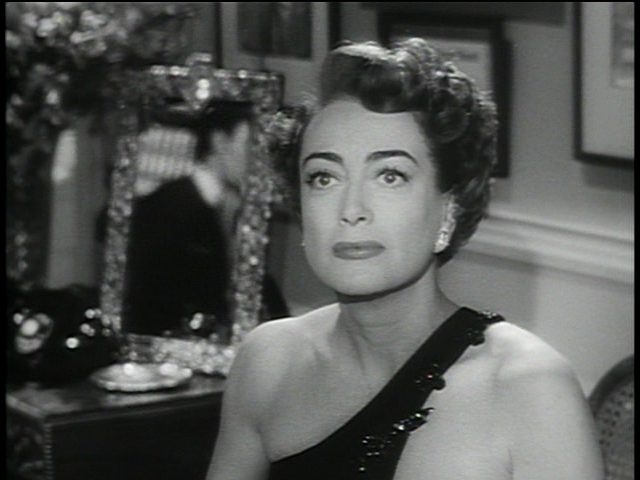
In the long list of Joan Crawford titles inexplicably missing from Peary’s book, Sudden Fear is perhaps the oddest omission, given its status as both an Oscar nominee and one of Crawford’s signature flicks. It’s a taut, well-crafted thriller with atmospheric b&w cinematography, excellent use of San Francisco locales, a jazzy score by the inimitable Elmer Bernstein, several lengthy visual sequences that would do Hitchcock proud, and fine performances by the entire cast — particularly Crawford, who’s in nearly every scene. At the time of the film’s release, Crawford’s performance wasn’t very well received, with Bosley Crowther of the NY Times complaining that “a viewer not entirely a slave to Miss Crawford’s brand of histrionics might argue that an excessive amount of footage is given to close-ups of the lady in the throes of mental traumas and other emotional disturbances.” Today, however, it’s clear that Crawford is actually giving one of the best performances of her career: other than her later turn in What Ever Happened to Baby Jane? (1962), she’s never appeared so genuinely frightened or emotionally vulnerable (the sweat and tears she produces are copious).

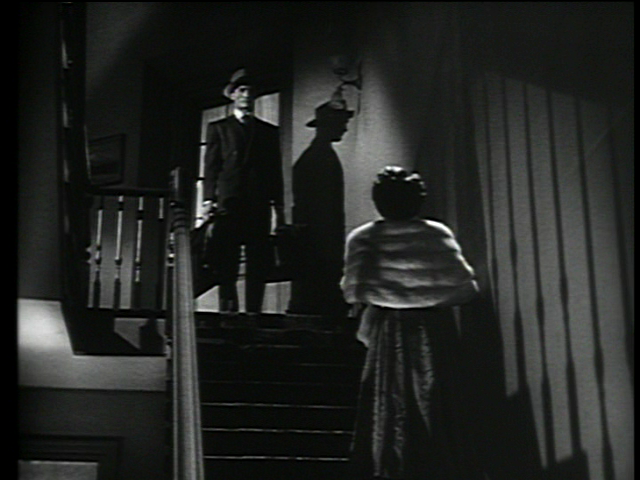
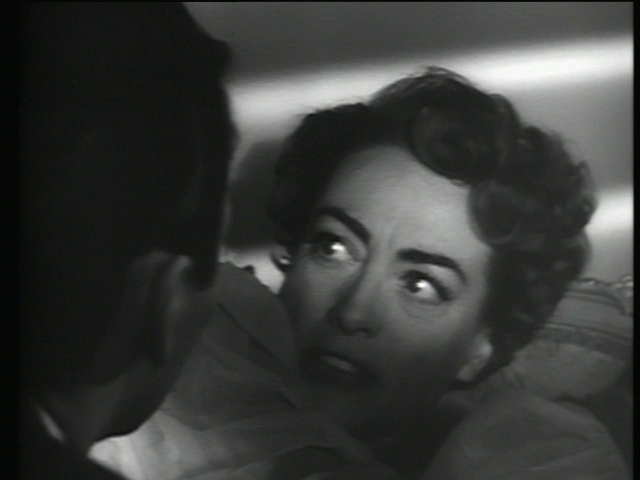
The infamous sequence during which Myra (Crawford) accidentally overhears Palance and Grahame’s plans to murder her is particularly wrenching; Myra’s not only afraid for her life, but heartbroken and stunned to learn that her beloved husband is nothing close to what he appears. It’s a hell of a thing to learn in one fell swoop that your husband is not just deceitful but a homicidal psychopath as well. Once this “plot twist” occurs, the remainder of the film plays out with remarkable tension and suspense: while we know that Myra’s concocted a plan, and that it will likely be a good one (Myra is, after all, a renowned playwright), we have no idea exactly how the machinations of her elaborate scheme will work. To her credit, even once she learns of her husband’s untold treachery, Crawford’s Myra is rarely bitter or cynical; she dreams of revenge, but only as a means of personal survival — and we can’t help rooting for her until the film’s exciting climax.

Redeeming Qualities and Moments:

  • Joan Crawford as Myra (Hudson) Blaine
  • Jack Palance as Myra’s homicidal husband
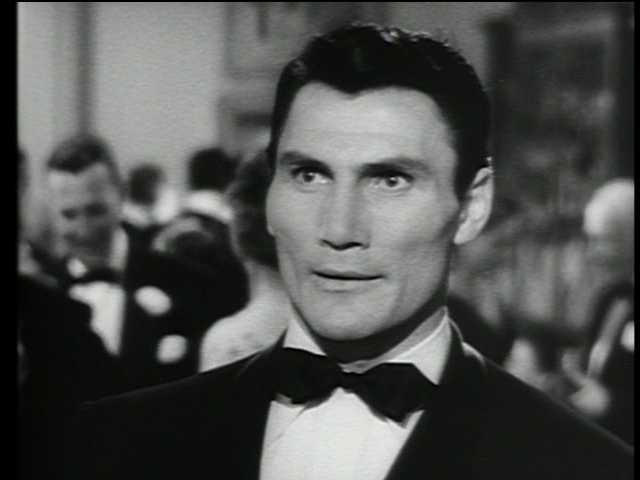
  • Gloria Grahame as Irene
  • The infamous Dictaphone revelation sequence
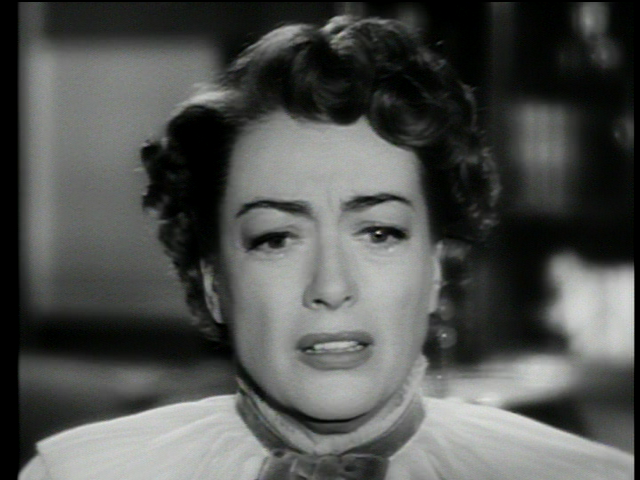
  • Charles Lang’s noirish cinematography
  • Fine direction by David Miller
  • The exciting final chase sequence
  • Excellent use of hilly San Francisco locales
  • A remarkably frightening depiction of spousal deception
  • Elmer Bernstein’s distinctive score

Must See?
Yes, as one of Crawford’s best flicks.

Categories

  • Noteworthy Performance(s)
  • Oscar Winner or Nominee

Links:

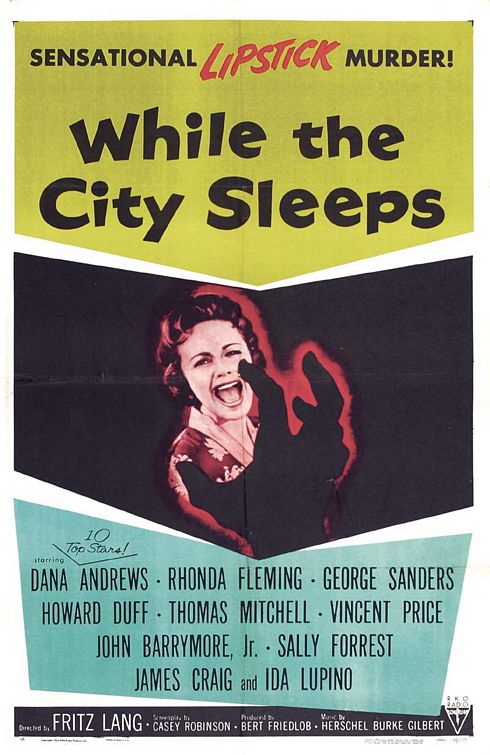
While the City Sleeps (1956)

While the City Sleeps (1956)

“The man who gets the killer lands the job.”

Synopsis:
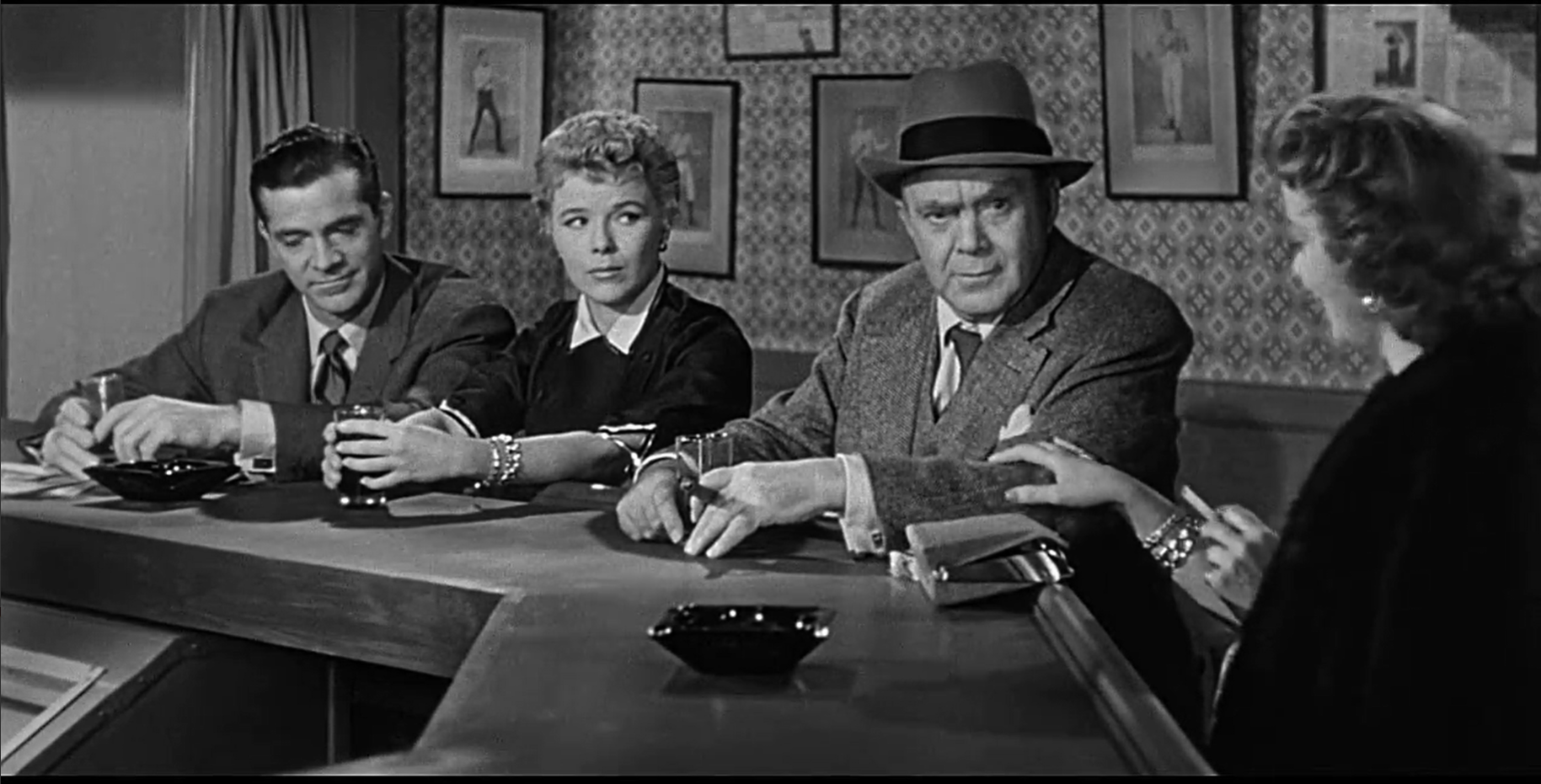
When media magnate Amos Kyne (Robert Warwick) dies, his spoiled son and heir (Vincent Price) offers to promote whichever one of three ambitious newspaper men — George Sanders, Thomas Mitchell, or James Craig — can break a story about a recent rash of murders sweeping the city. Meanwhile, tippling journalist Ed Mobley (Dana Andrews) helps his friend Griffith (Mitchell) try to solve the case, while simultaneously trying to convince his no-nonsense girlfriend (Sally Forrest) to marry him; Kritzer (Craig) is having an affair with Price’s leggy wife (Rhonda Fleming); Loving (Sanders) asks his co-worker and paramour Mildred (Ida Lupino) to help him rise to the top; and the psychotic murderer (John Barrymore, Jr.) keeps killing young women in their apartments.

Genres, Themes, Actors, and Directors:

  • Dana Andrews Films
  • Fritz Lang Films
  • George Sanders Films
  • Ida Lupino Films
  • Journalists
  • Murder Mystery
  • Serial Killers
  • Rivalry
  • Thomas Mitchell Films
  • Vincent Price Films

Response to Peary’s Review:
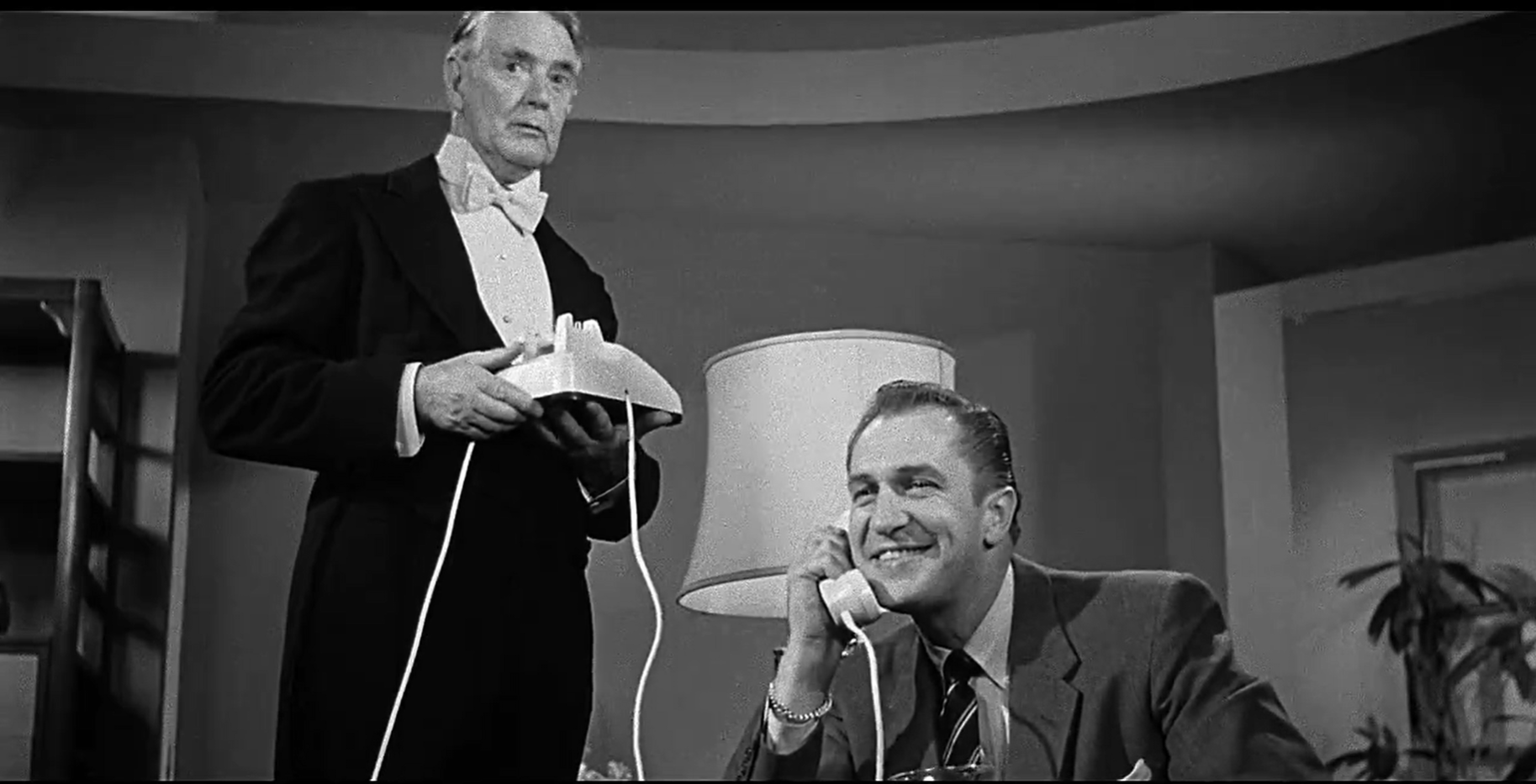
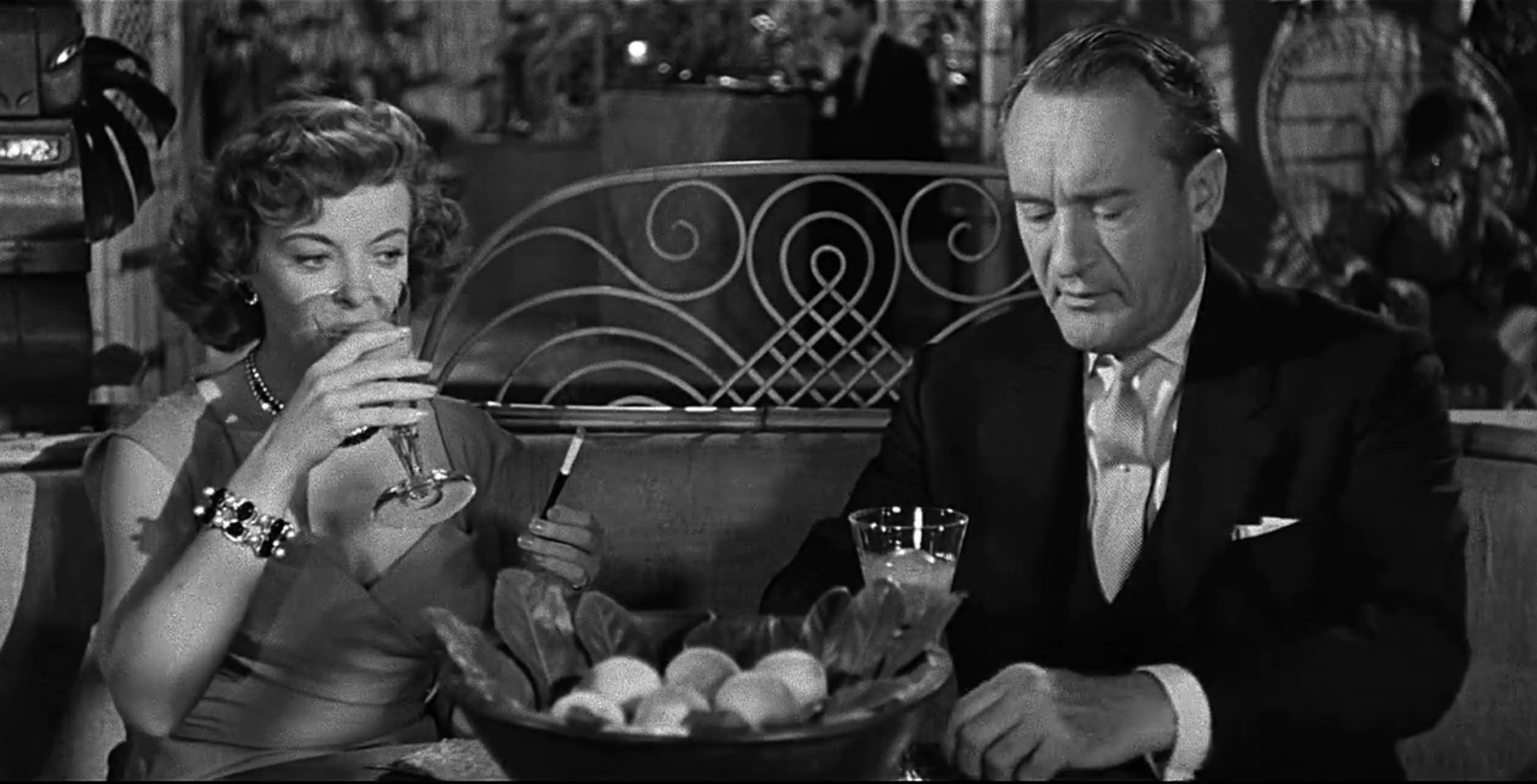
Peary refers to this all-star melodrama — Fritz Lang’s final American film, and purportedly a personal favorite — as “silly but diverting”, which just about sums it up. There isn’t much substance to the tale — essentially a trussed up sex soaper with a serial-killer search as a backdrop (Peary argues “the simple case should take about one minute to solve”) — but it’s enjoyable watching cinematic favorites such as Vincent Price:

Ida Lupino, George Sanders:

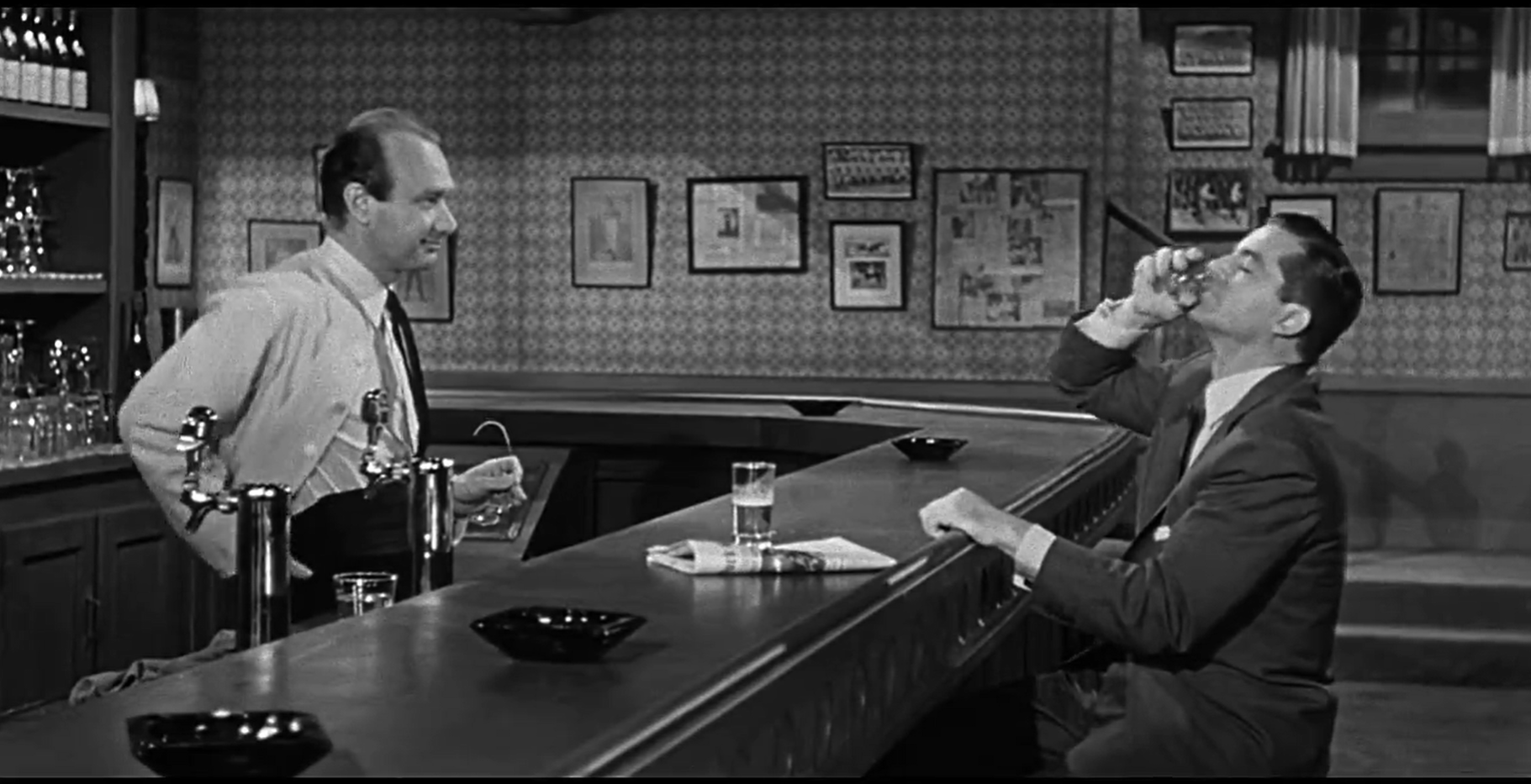
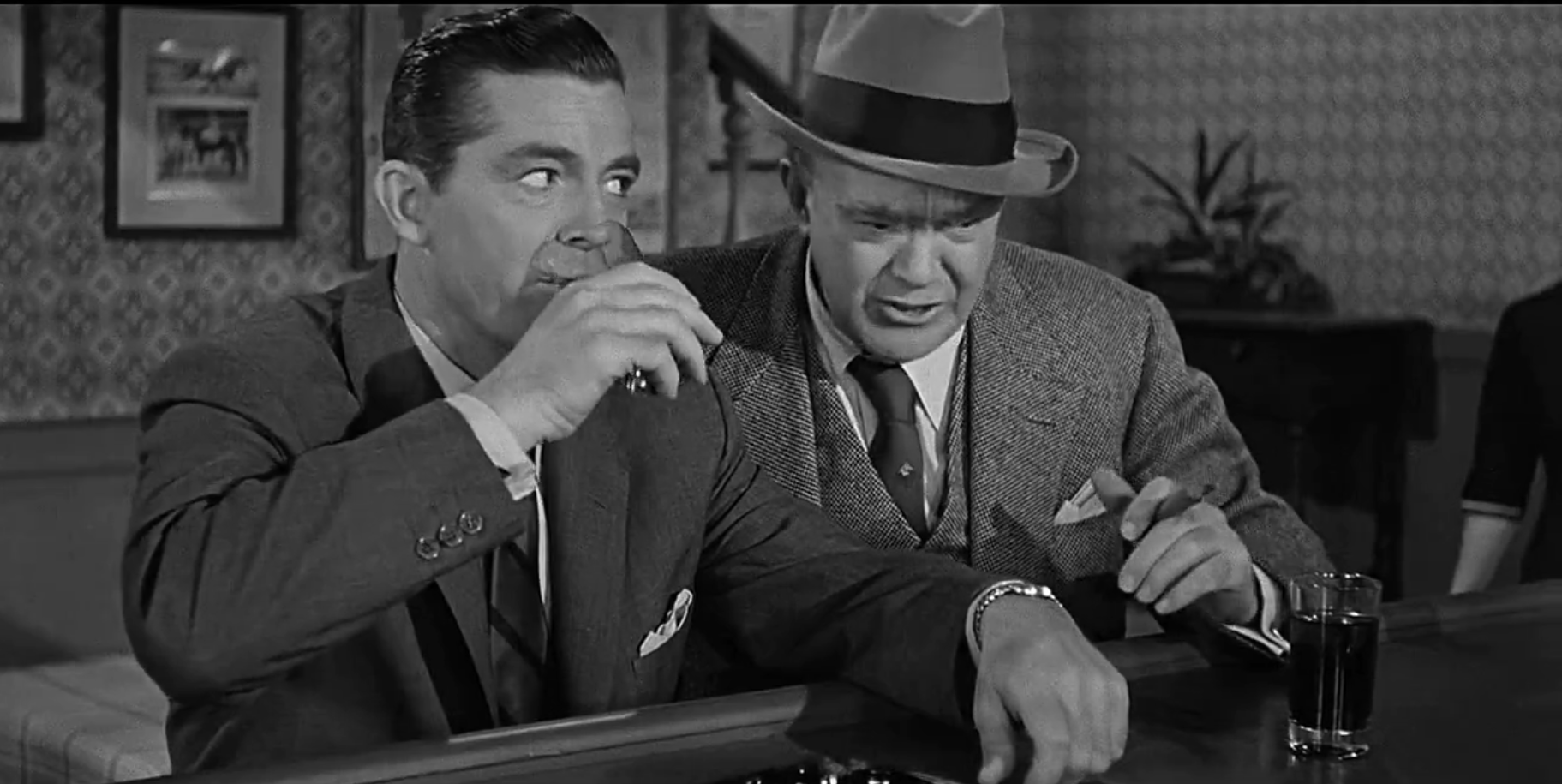
… Dana Andrews (constantly drinking, as in real life):

… Thomas Mitchell:

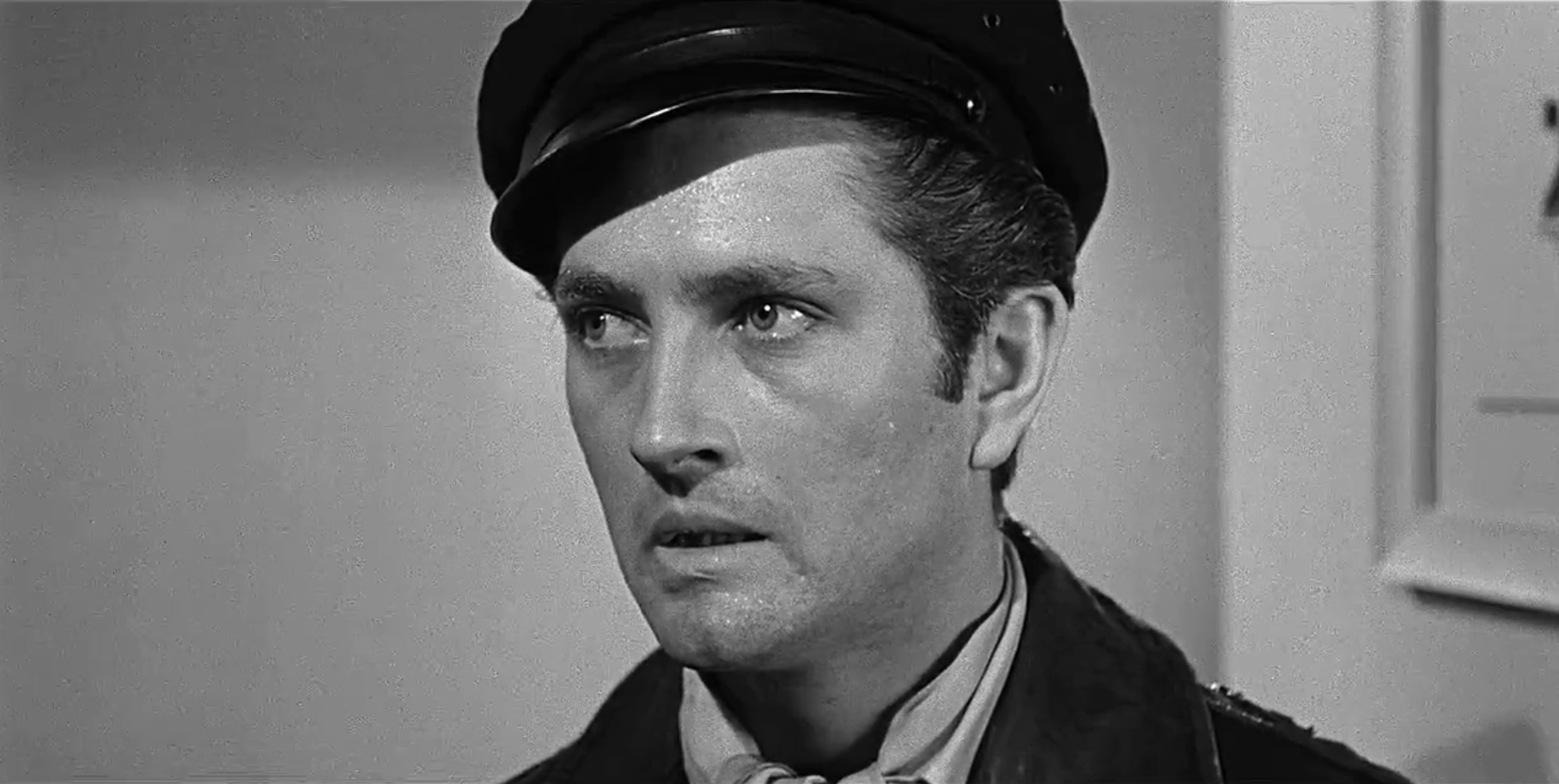
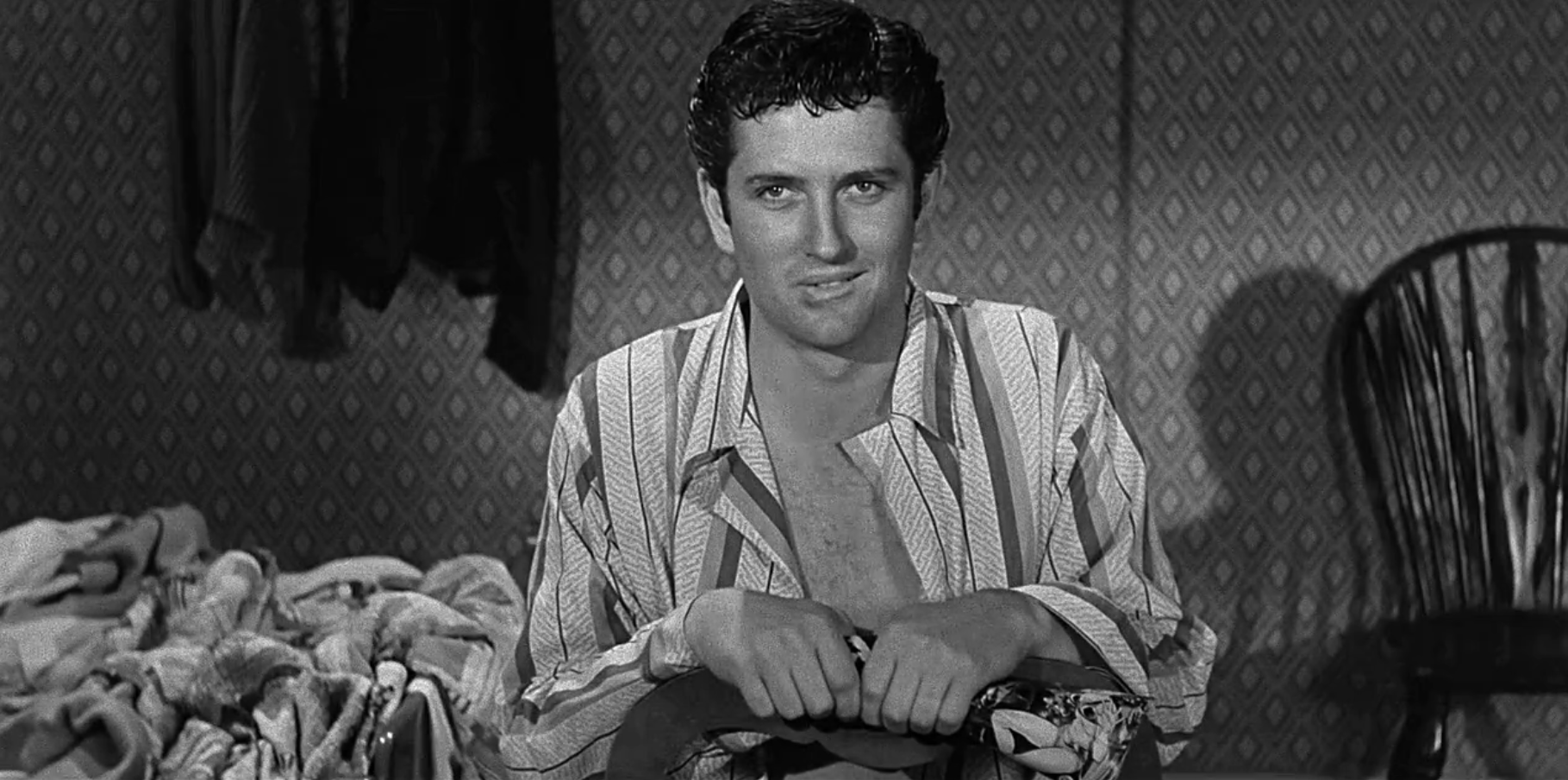
… and others working together in one flick. Also of interest is John Barrymore, Jr. (Drew’s troubled dad) in what was perhaps his best-known minor role, playing a whacked-out Mama’s-boy killer in black leather gloves — he’s no great actor, but very convincing in the part.

Note: Peary adds that this “film has [the] distinction of having [the] most alcohol consumed by characters since The Lost Weekend” — and while I doubt a formal tally has been done, I’ll admit to noticing glasses in hand time and again while perusing the film for stills.

Redeeming Qualities and Moments:

  • The all-star ensemble cast

  • John Barrymore, Jr. (Drew’s father!) as the Lipstick Killer

Must See?
No, but it’s recommended for one-time viewing.

Links:

Trog (1970)

Trog (1970)

[Note: The following review is of a non-Peary title; click here to read more.]

“I have to see it! Malcolm, I must go into that cave before the police!”

Synopsis:
An anthropologist (Joan Crawford) discovers a “missing link” troglodyte (Joe Cornelius) living deep inside a cave, and tries her best to humanize him. Meanwhile, her efforts are sabotaged by an evil land developer (Michael Gough) who wants nothing more than to obliterate Trog.

Genres, Themes, Actors, and Directors:

  • Joan Crawford Films
  • Primates
  • Science Fiction
  • Scientists

Review:
While Peary lists Berserk! (1967) — Joan Crawford’s tepid next-to-last picture — in the back of his book as “must see”, for some reason he fails to include its infinitely more notorious counterpart, Trog: a film so hideous it purportedly sent Joan herself scurrying away from Hollywood for good. (“If I weren’t a Christian Scientist, and I saw Trog advertised on a marquee across the street, I think I’d contemplate suicide”, she declared.) Indeed, Trog is one of the ultimate “bad movies” — a film so bad it’s campily good, with a nonsensical “scientific” basis, awful low-budget effects, and a cliched storyline. It’s Joan’s game participation which makes it worth a look: as always, she’s a consummately earnest and classy actress, voicing her lines like she’s in a high-brow melodrama rather than a Z-grade primate flick. Seeing her interact with Trog is priceless, and makes up for the rest of this truly lousy pic.

Note: Joan’s performance in Trog is so beloved that San Francisco’s LGBT Theatre Rhino produced a theatrical parody of the film back in 2006.

Redeeming Qualities and Moments:

  • It’s all about Joan, giving it her damndest


  • Laughably awful special effects and make-up
  • Hilariously cliched dialogue (especially as voiced by Joan):

    “Malcolm, get me my hypo-gun — quickly!”

Must See?
Yes, simply to see Joan Crawford in her final flick.

Categories

  • Historically Relevant

Links: