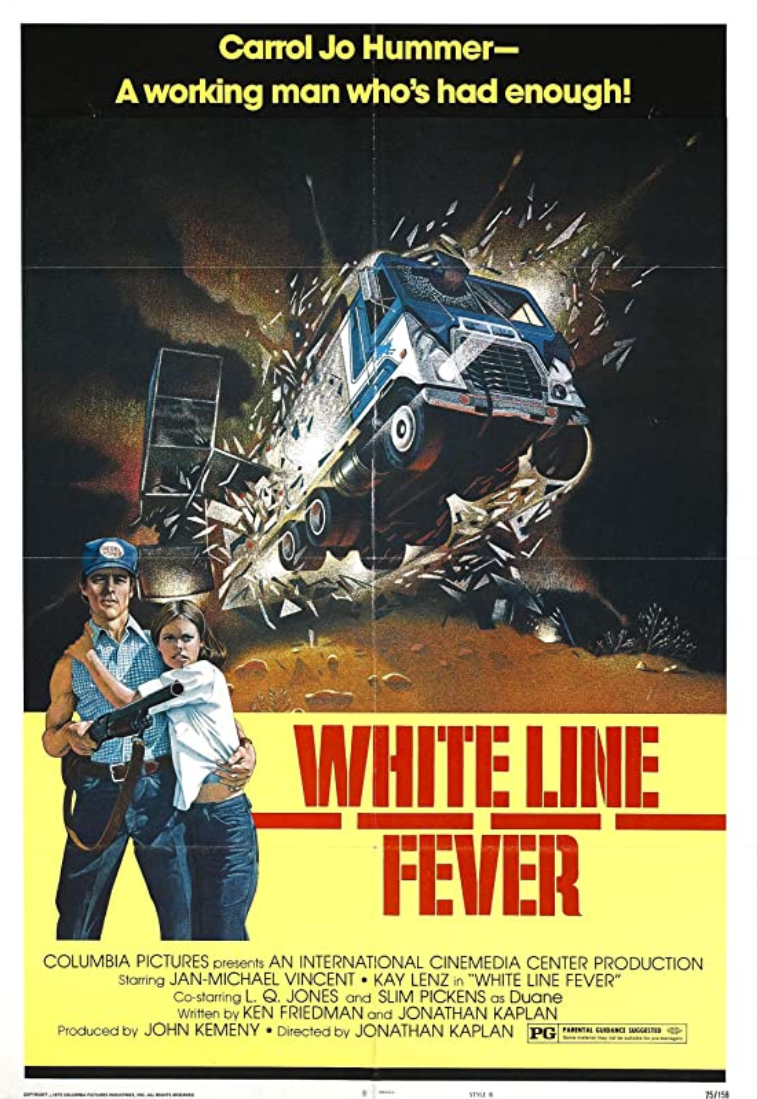
White Line Fever (1975)

White Line Fever (1975)

“They all think they got the God given right to haul what they want to, when they want to!”

Synopsis:
After leaving the Air Force, a pilot (Jan-Michael Vincent) marries his sweetheart (Kay Lenz) and the couple buy a big rig — but after going to see a family friend (Slim Pickens) about work, Vincent quickly learns that the entire trucking industry is corrupt.

Genres, Themes, Actors, and Directors:

  • Corruption
  • Dick Miller Films
  • Revenge
  • Truckers

Review:
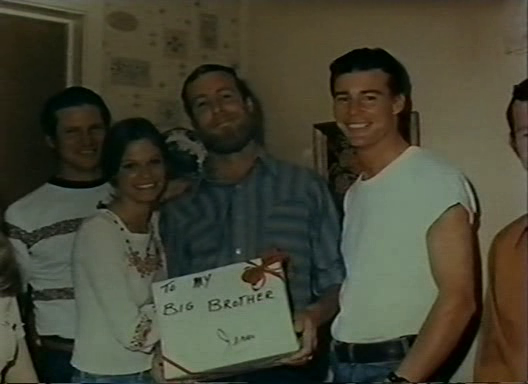
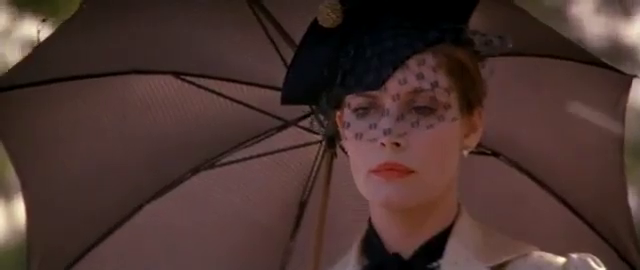
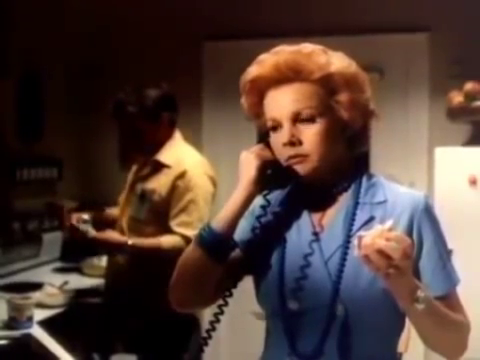
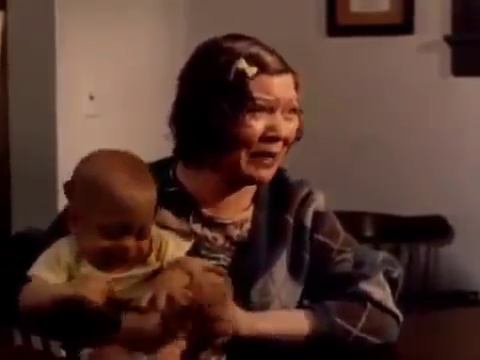
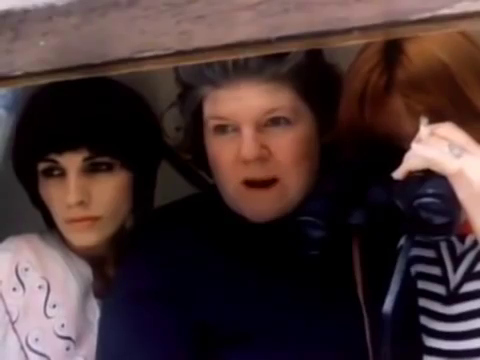
Named for the phenomenon experienced by long-haul truckers who enter a state of “highway hypnosis” (also known as “white line fever”), this exploitation flick by writer-director Jonathan Kaplan is a disappointment on every count. After an opening musical photo montage depicting Vincent and Lenz’s happy newlywed life together — including friendship with Lenz’s older brother (Jamie Anderson) (you can tell he’s her older brother from the package below):

… Vincent and Lenz are quickly (within the first five minutes of the movie) spending money they don’t yet have to invest in a long-haul truck.

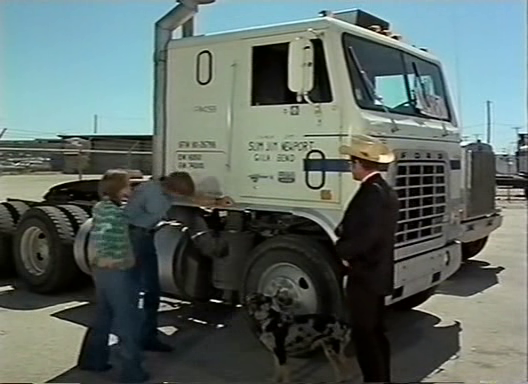
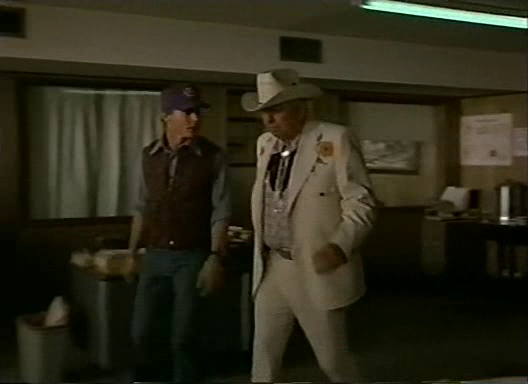
However, after going to see an old family “friend” (Slim Pickens) for work:

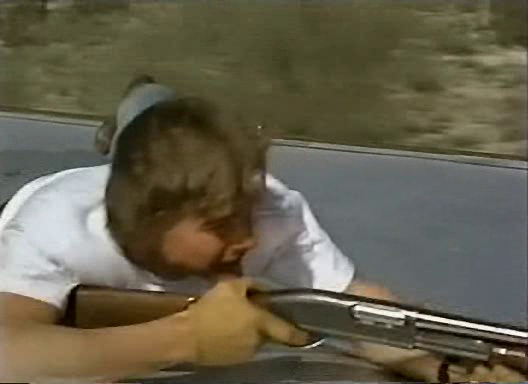
… Vincent is astonished — astonished! — to learn that corruption is rampant in trucking, and in order to get any jobs at all, he must be willing to transport undercover cigarette machines. Our plucky protagonist refuses even to consider this, and thus starts the remainder of his bold but tragic journey, which includes the sudden brandishing of a powerful weapon (is this considered “logical”, given his military past?):

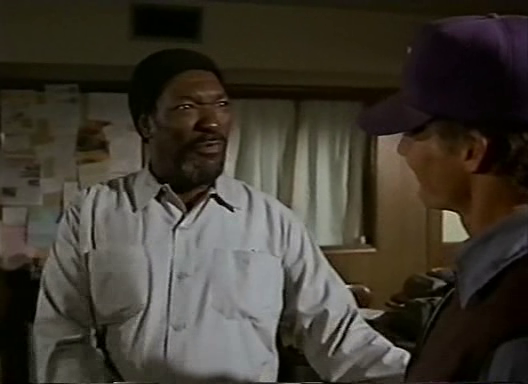
… and an ensuing cat-and-mouse tale between The Bad White Guys in Power and righteous Vincent, helped occasionally by those “on his side” — including an older Black man (Sam Laws):

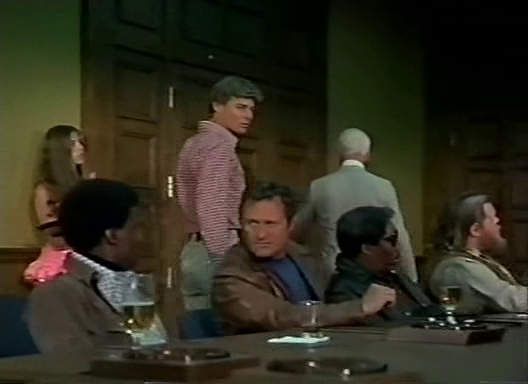
whose son disapproves of his dad being friendly with a white guy. Laws endures racist slurs hurled at him by The Bad White Guys in Power, who also happen to be sexist pigs.

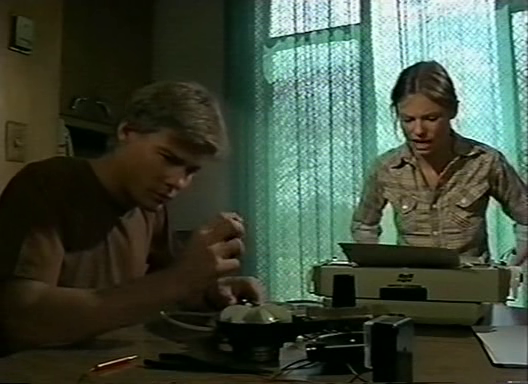
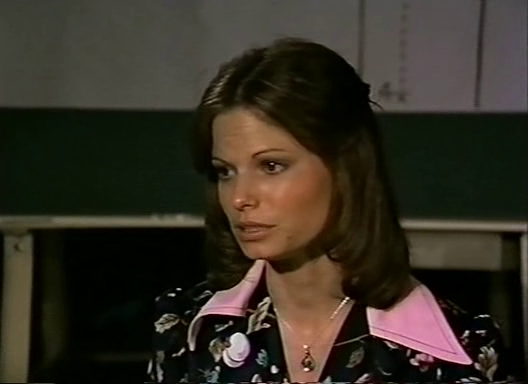
Meanwhile, Lenz — who hates her factory job but doesn’t have any other training or education — glibly falsifies her resume in an attempt to get a more interesting job:

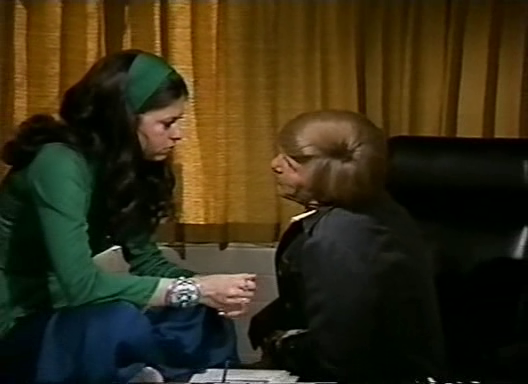
… and then we see her in a so-sad “family planning clinic” due to becoming pregnant before she and Vincent are ready to be parents. (Clearly they don’t really know the meaning of love — and the clinic doesn’t know that you can’t just cram two shorter words together to make a longer word.)

The drama continues.

(SPOILER ALERT)

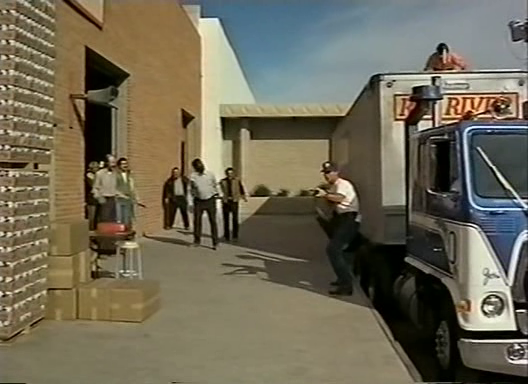
After engaging in a bold top-of-truck shootout with henchmen of the Bad White Men in Power:

… Vincent is tricked into hauling a truck full of overripe avocados (worth nothing at his final destination).

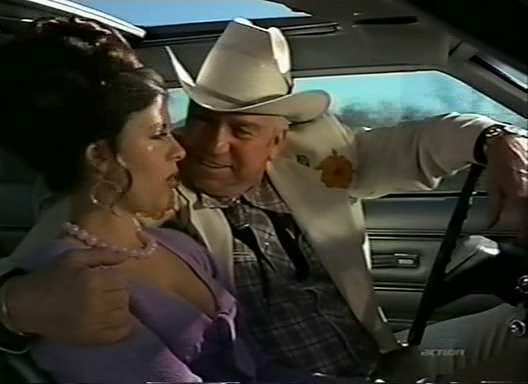
He’s justifiably pissed, and the vendetta continues. Eventually he’s framed for the murder of an increasingly unsympathetic Pickens (seen here about to offer his tarty date a box of “European chocolates”):

Within the span of just a few minutes, however, Lenz (still secretly pregnant) testifies on Vincent’s behalf and saves his life.

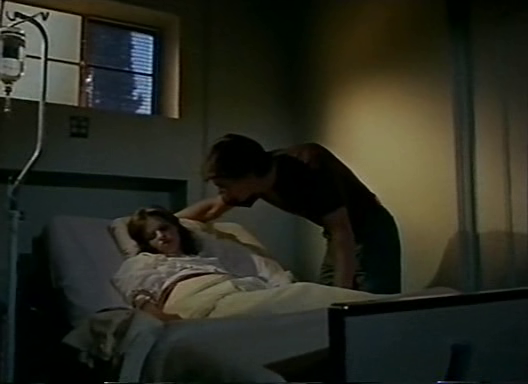
All of this happens before Lenz gets up the courage to finally tell Vincent she’s pregnant, only to walk immediately into her bedroom and discover Laws brutally murdered on their bed.

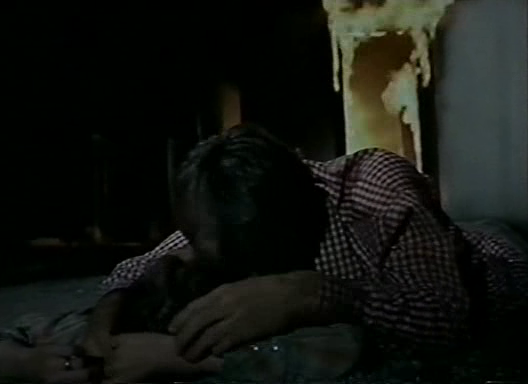
After this, the couple is nearly burned alive in a retributive house fire:

which causes Lenz to miscarry, never able to bear children again.

(You’d be forgiven for assuming you’d dropped into a movie-length soap opera by this point. And yes, there are more details I’m not including.)

While there’s clearly a valuable story to be told about the challenges of trucking, the nobility of Standing Up to the Man, and the importance of unionizing, this isn’t it. Given that Kaplan went on to make Over the Edge (1979), Heart Like a Wheel (1983), Project X (1987), and The Accused (1988), his talents and tastes clearly evolved.

Oh, and Dick Miller appears a couple of times, presumably to reassure you that you are indeed in exploitation-film land, despite this film being made for a major studio (Columbia Pictures).

Redeeming Qualities and Moments:

  • Pretty landscape footage across America

Must See?
Oh boy, no. Listed as a Cult Movie in the back of Peary’s book.

Links:

Careful, He Might Hear You (1983)

Careful, He Might Hear You (1983)

“Were you listening, P.S.?”

Synopsis:
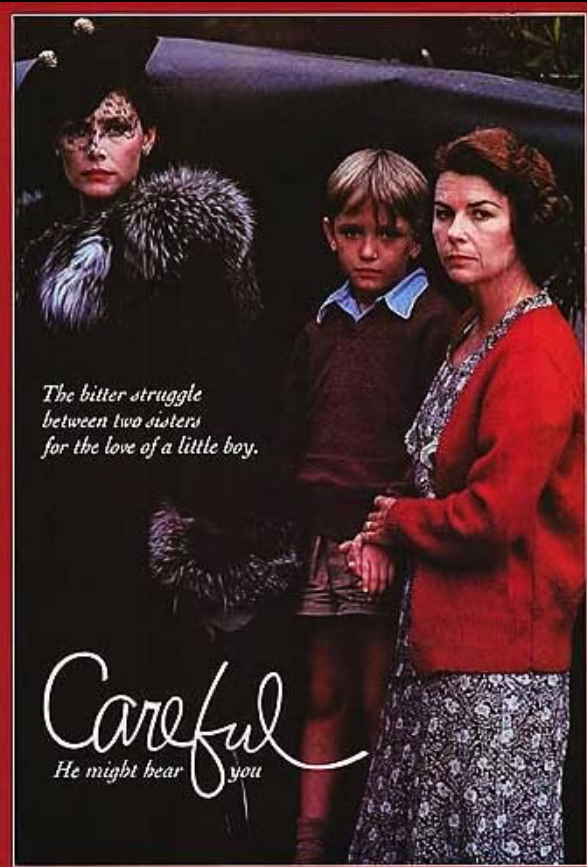
A 7-year-old orphan named P.S. (Nicholas Gledhill) who has lived with his poor but kind aunt (Robyn Nevins) and uncle (Peter Whitford) for years is forced to go spend time with his wealthy, emotionally reserved Aunt Vanessa (Wendy Hughes) when his absentee father (John Hargreaves) decides this may be best for him — but P.S. misses his old life, and struggles to make his wishes known to the adults around him.

Genres, Themes, Actors, and Directors:

  • Adoption
  • Australian Films
  • Class Relations
  • Orphans
  • Raising Kids

Response to Peary’s Review:
Peary writes that this “sleeper from Australia” — which “seems to have profoundly affected everyone who has seen it” — “effectively conveys the trauma suffered by a child who is shuttled back and forth between two homes, without having any say in what is best for him… Everything he is told is biased; nothing he does is correct in either household… [and] he is told by each aunt to keep secrets from the other”, leading to him being “confused, scared, and miserable.” Peary points out that the “tragedy is that everyone acts at their worst”, with “even the sweet little boy resort[ing] to cruel manipulation of the adults by the film’s end” (one doesn’t blame him in the slightest). Peary argues that this “important subject matter has, surprisingly, never been handled well until this film” (really?), and that the picture features “excellent acting — young Gledhill will capture your heart — and solid direction by Carl Schultz.” I’m in agreement with Peary’s review, and was pleasantly surprised to revisit this evocatively filmed historical drama, filled with unusual characterizations — “Hughes’s character is… well-meaning in regard to her nephew, but is incapable of expressing love or warmth” — and deep empathy for a child’s perspective on life. One could easily imagine Joan Crawford in Hughes’s role, and other elements of the film — including its rather melodramatic final half-hour — hearken back to the golden age of classic cinema as well.

Redeeming Qualities and Moments:

  • Nicholas Gledhill as P.S.
  • Wendy Hughes as Aunt Vanessa
  • Robyn Nevins as Aunt Lila
  • Beautiful cinematography and production design
  • Fine direction

Must See?
Yes, as a unique and satisfying film.

Categories

  • Good Show

Links:

Over the Edge (1979)

Over the Edge (1979)

“When you’re 16, you start playing for real.”

Synopsis:
When a teenager (Michael Kramer) and his buddy (Matt Dillon) witness an acquaintance (Vincent Spano) shooting the windshield of a car driven by a vengeful cop (Harry Northup), a chain of events is set off in their boring planned community, where there is nothing for kids to do except hang out, take drugs, and engage in petty crime.

Genres, Themes, Actors, and Directors:

  • Generation Gap
  • Juvenile Delinquents
  • Teenagers

Response to Peary’s Review:
Peary writes that this “excellent youth film” — a “social drama that’s set in Grenada, a planned community in California” (based on similar real-life occurrences that took place in Foster City) — “has a cult following”. He notes that “director Jonathan Kaplan and writers Charles Haas and Tim Hunter (the director of Tex) are in total sympathy with these teens”, whose “wasteland environment” gives them ample reason to rebel — and he points out that the “filmmakers have no pat answers for the problem of juvenile delinquency in planned communities”, but rather “want to make it clear that such a setting creates the kind of teenagers that made adults want to move away from where they had been.” He adds that the “scenes with the kids are very believable” and “the kids are an interesting lot”, but he wishes “the adults weren’t all one-dimensional” (I agree).

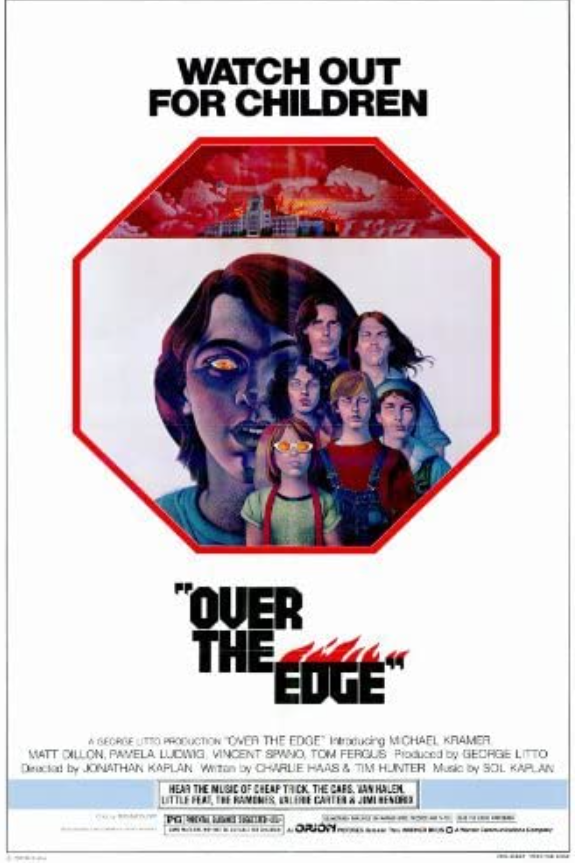
In Cult Movies 3, Peary discusses the film’s production and release history in greater detail, explaining that “after it received excellent reviews in such test markets as Chicago, Cincinnati, and Kansas City, it became almost impossible to see, sparking interest and word-of-mouth.” However, “since it was promoted as a horror(!) film” (see the movie poster above), Warner Brothers “shelved it”, defending “its decision with claims that no one would book a ‘gang picture’ after the heavily publicized incidents of violence at theaters showing The Warriors (1979) and Boulevard Nights (1979).” In addition, the “drug scenes” meant no network television stations were willing to air it, so “its audience would not grow until it turned up on cable more than a year later, began to play in repertory theaters, and became available on cassette.”

Peary goes on to compare Over the Edge to Rebel Without a Cause (1955), noting that while “both films deal with the same subject, Over the Edge is more disheartening, indicating that it has gotten much worse for America’s youth since 1955″. Indeed, “Kaplan’s brutally realistic film” — a “terrifying warning — with no resolution — about what is happening to American’s best resource” — “makes Rebel Without a Cause seem optimistic.” Peary further associates Over the Edge with a handful of other films that are “completely in sympathy with teenagers”, including The Blob (1958), Foxes (1980), The Outsiders (1979), and The Breakfast Club (1986).

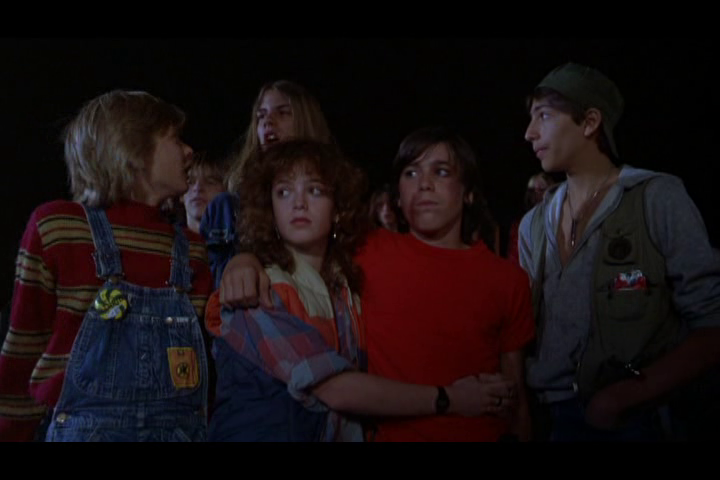
Despite the ongoing issue of how to keep teens and pre-teens meaningfully engaged, when watching Over the Edge today one is definitely struck by how time-bound it feels: in the pre-internet era presented here, kids must gather physically somewhere in order to hang out — and as Peary writes, “they remind [one] of rats and other night creatures that come out when people are gone”, gathering “in the dark by the rec center, sitting on the ground or in little improvised hovels”. In “the party scene, their clutching bodies fill up the halls, the basement stairwell, and the basement of a house whose adult owners are away (it’s like an underground tunnel system inhabited by rodents)” — and “they run out of the house en masse as the cops arrive, as rats or roaches would do if the lights went on; they vandalize the school and like scavengers destroy and steal from the cars in the parking lot.” Indeed, while this film may be sympathetic to its teenage protagonists, it’s hard to actually like these characters, who are so damaged by their (privileged but insufficient) upbringing that violence and drugs seem to them to be their only option. Director Kaplan has stated, “I happen to believe these kids are potentially dangerous. A good demagogue comes along and he’s got his troops. And that scares the shit out of me.” Kaplan’s right to take this stance: these kids are dangerous, and one despairs for humanity when watching his depressing film.

Redeeming Qualities and Moments:

  • Fine performances by the natural young cast
  • Effective cinematography

  • The eerie civic building set

Must See?
Yes, once, for its former cult status.

Categories

  • Cult Movie

Links:

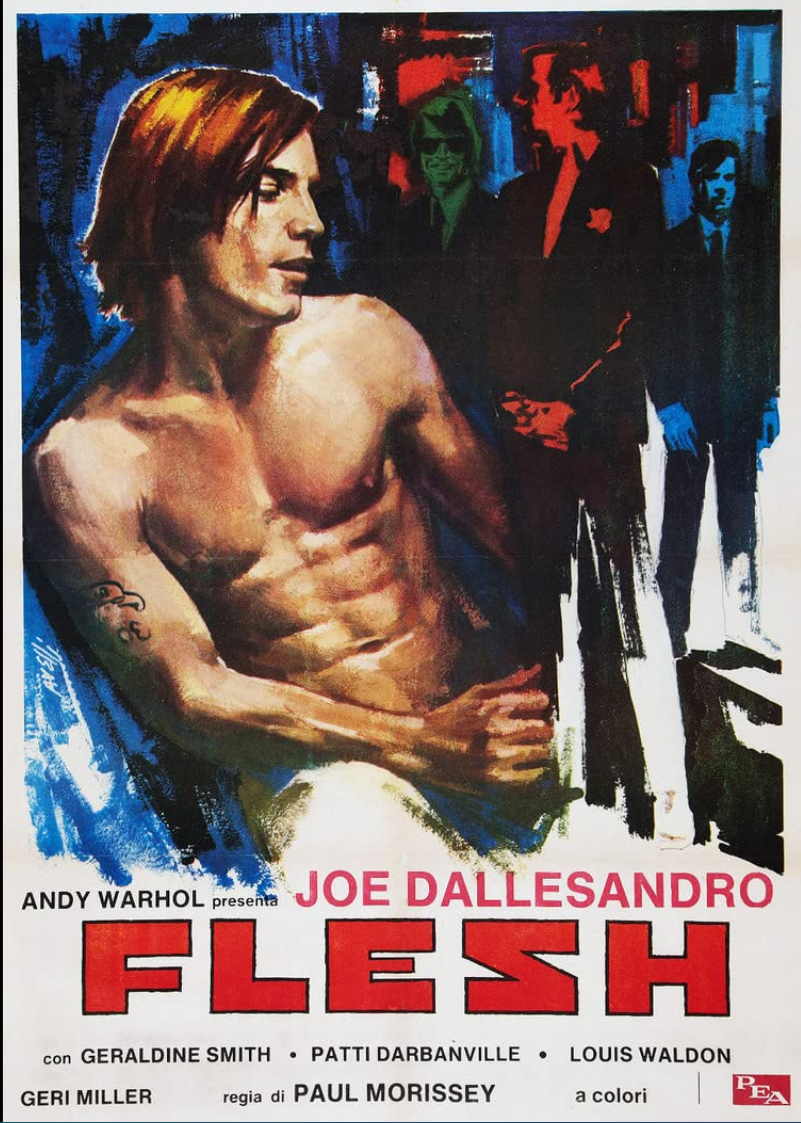
Flesh (1968)

Flesh (1968)

“You just do whatever you have to do.”

Synopsis:
A hustler (Joe Dallesandro) whose wife (Geraldine Smith) has requested money for an abortion for her girlfriend (Patti D’Arbanville) engages in numerous adventures throughout the day, including hooking up with a young john (John Christian), posing nude for an older artist (Maurice Barddell), giving advice to a new hustler (Barry Brown), making out with his former girlfriend (Geri Miller), and requesting money from a friendly Korean War vet (Louis Waldron).

Genres, Themes, Actors, and Directors:

  • Counterculture
  • Paul Morrissey Films
  • Prostitutes and Gigolos

Response to Peary’s Review:
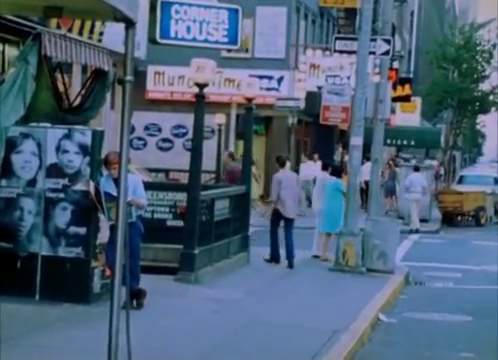
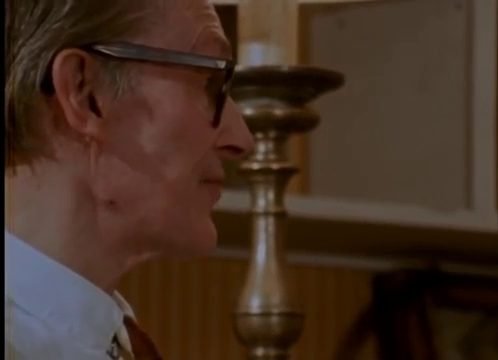
Peary writes that this “early attempt by Andy Warhol” (directed by Paul Morrissey) “to cross over from strictly underground to more commercial movies” features “no real story” but is instead “just a series of vignettes shot on New York streets and inside apartments, with Warhol regular Joe Dallesandro either hustling gays in order to get money for his disgruntled wife… or meeting and having sex with his weird friends.” He points out that it’s filled with techniques — including “a cinema verite camera style, improvisation, [and] intentionally sloppy jump-cut editing — that were unique in the commercial cinema of the day”, and equally “unusual” were the film’s themes: “homosexuality, transvestitism, casual sex, [and] male prostitution”, all meant to “subvert bourgeois sensibilities.” Peary writes that Dallesandro — who “is his young, likable self” — has “several amusing scenes with oddball characters, particularly a sequence with a philosophical artist” and “a sex scene with his wife when she asks what he wants her to do most and he says his laundry”. I’ll admit to quickly tiring of Morrissey’s “sloppy jump-cut editing”, but otherwise becoming oddly absorbed by this glimpse into “the peculiar lifestyle of a fringe element of the counterculture.”

Redeeming Qualities and Moments:

  • Some effective neo-realist footage in New York
  • Joe’s encounters with a Greek-loving artist

Must See?
No, though it’s worth a look as Warhol’s breakthrough feature film.

Links:

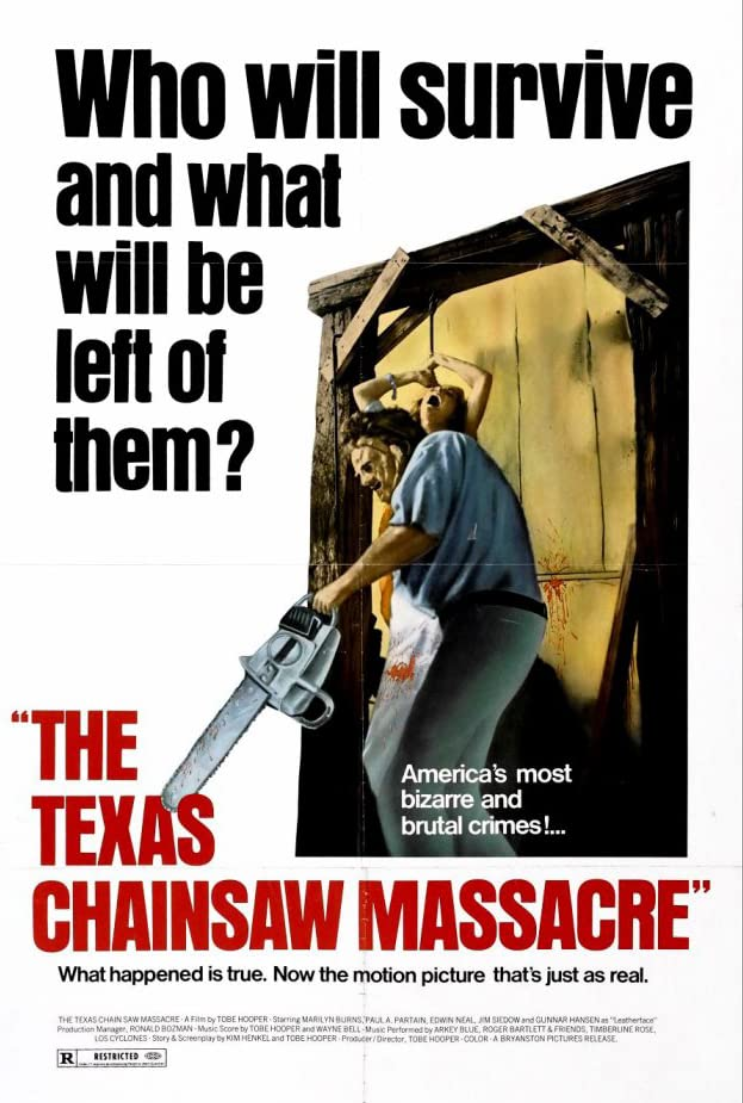
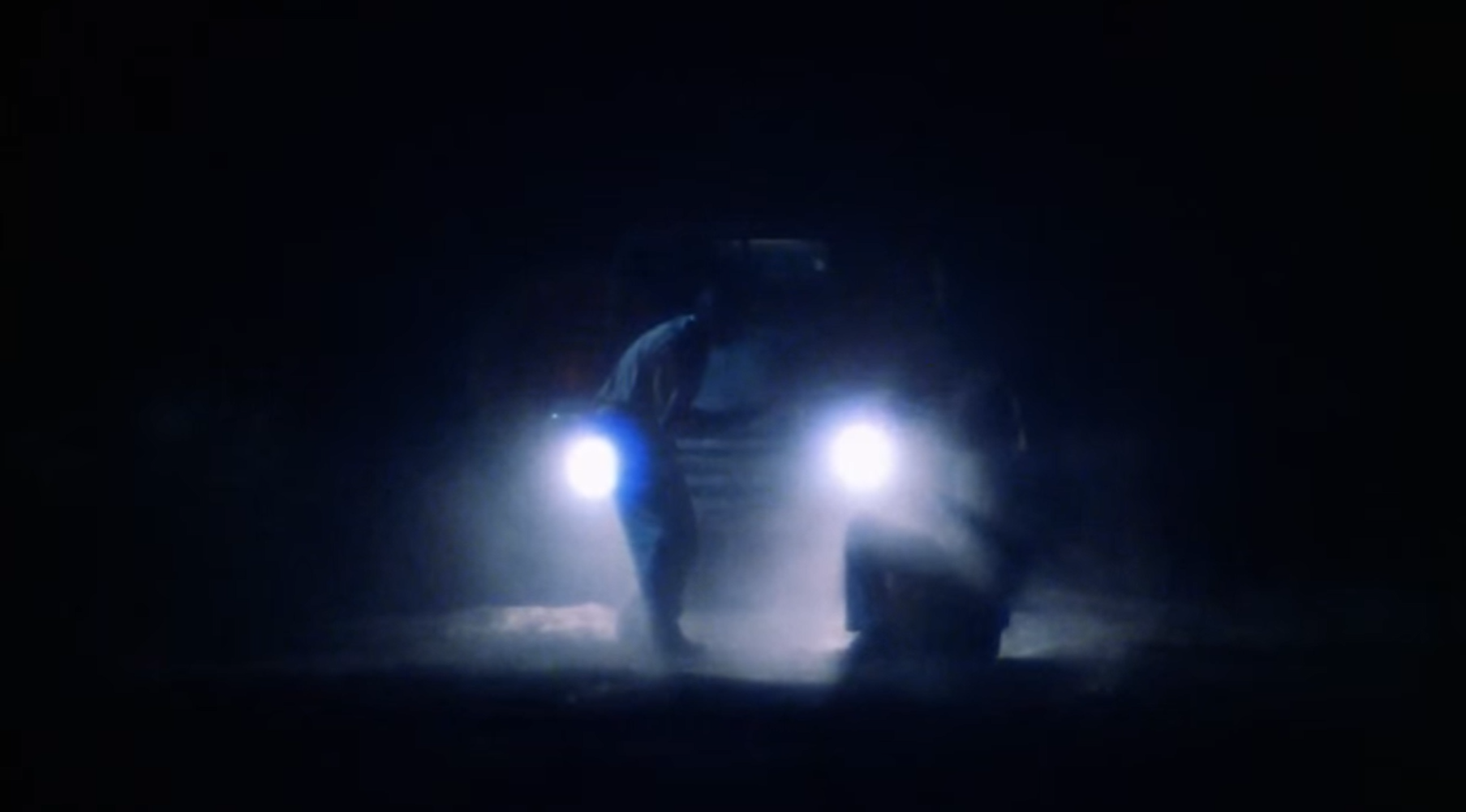
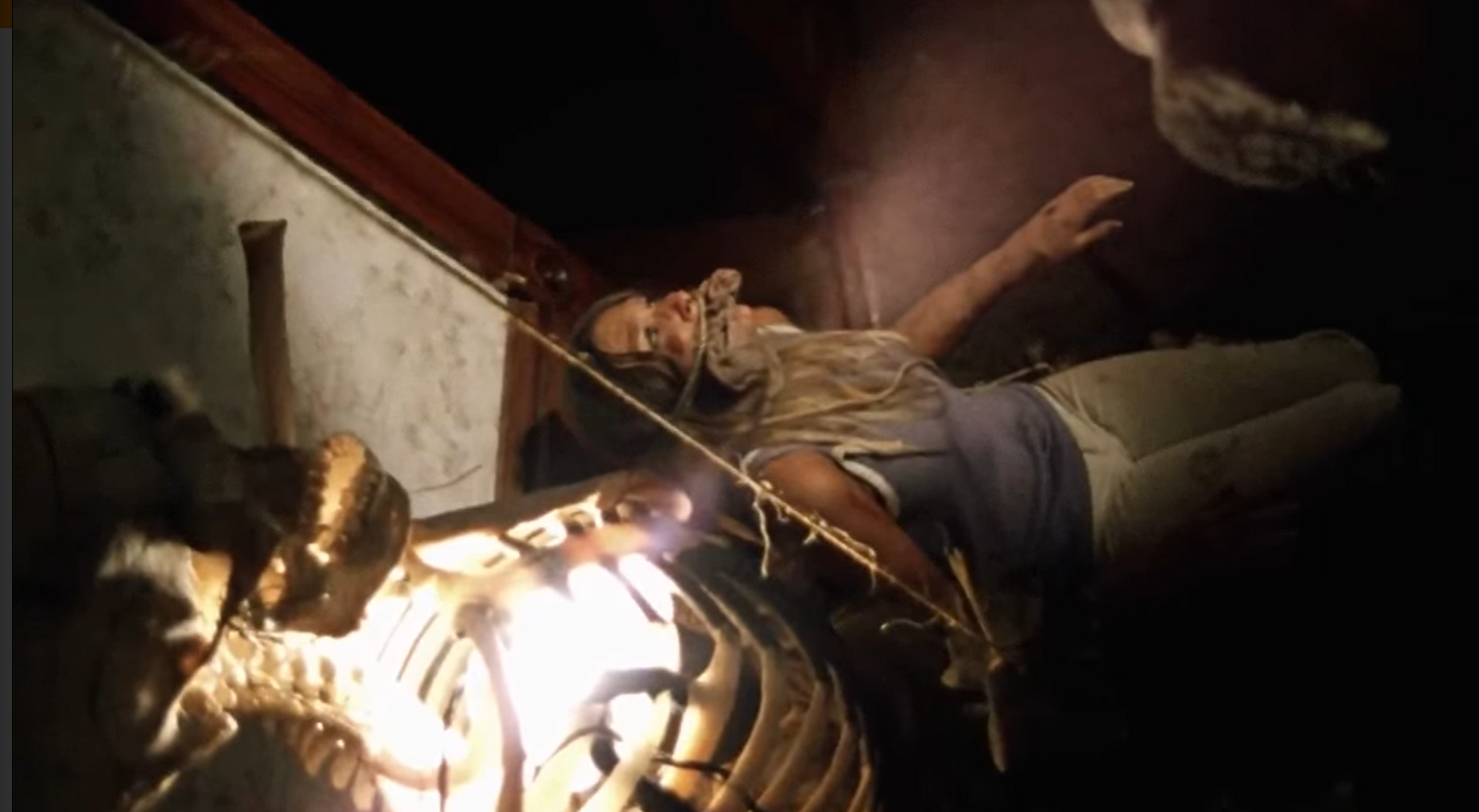
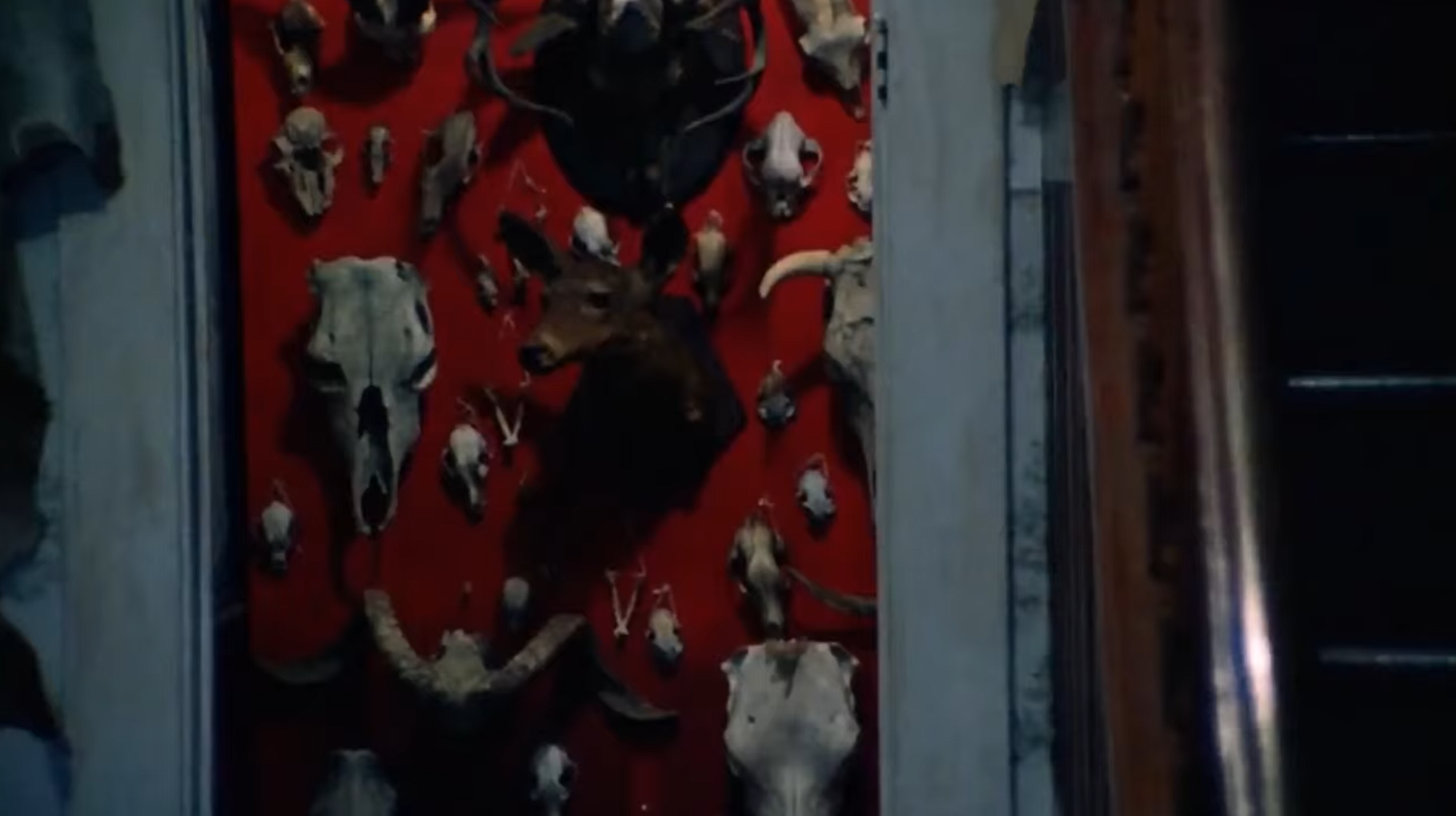
Texas Chain Saw Massacre, The (1974)

Texas Chain Saw Massacre, The (1974)

“Everything means something, I guess.”

Synopsis:
While on a trip to visit their grandfather’s grave, a young woman (Marilyn Burns) and her wheelchair-bound brother (Paul A. Partain) — along with three friends (Allen Danziger, William Vail, and Teri McMinn) — encounter an unsettling hitchhiker (Edwin Neal), then the rest of his family of psychopathic cannibals: Leatherface (Gunnar Hansen), the Old Man (Jim Siedow), and “Grandpa” (John Dugan).

Genres, Themes, Actors, and Directors:

  • Cannibalism
  • Horror Films
  • Living Nightmare
  • Psychopaths

Response to Peary’s Review:
Peary writes that this “ferocious, independently made cult horror film by Tobe Hooper” — which led “to his Poltergeist assignment in Hollywood” — is “well-made but unpleasant”, filled with “quirky humor, bizarre characters…, and terrifying, brutally violent sequences.” He points out that “in the weird cannibalism subgenre,” it is “the most striking example of a picture that emphasizes the slaughter of human beings for ‘meat’ rather than for outright feast.” His suggestion that it might have been “made by vegetarians and animal lovers who wanted to make viewers identify with poor animals in a slaughterhouse that have their heads crushed by sledgehammers…, are hung on meat hooks…, are put in freezers…, [and] are sliced up into little chunks by chain saws in preparation for human consumption” seems right on the mark. Peary points out that the “film duplicated the nightmarish effect of Herschell Lewis’s Two Thousand Maniacs“, and notes that while “Hooper claimed Hitchcock influenced him greatly”, their “styles are dissimilar except for their shared ability to get viewers to imagine there is more blood on the screen than is actually shown.” Finally, Peary notes that while “Hitchcock builds suspense“, “Hooper prefers having one shock after another to achieve terror” — and while “Hitchcock reminds us we’re watching a movie, Hooper strives for reality.”

In his Cult Movies book, Peary goes into further detail about the legacy of Texas Chainsaw — including the fact that during its sneak preview in San Francisco, some unsuspecting moviegoers “threw up; others stormed the lobby to protest what they (and their children) were being subjected to”; and “when no money was refunded, punches were thrown” and “two city officials in attendance that night threatened to sue the theater on behalf of themselves and other irate viewers.” Thus, Peary writes, “began the bizarre history of the seventies’ most controversial cult horror film.” He adds that the film “kept doing great business wherever it played”, and “as its cult grew, so did its reputation for quality.” He notes that “the main differences between Chain Saw and both Psycho and Deranged” — also loosely based on the real-life exploits of Wisconsin serial killer Ed Gein — is that “its villains are completely unsympathetic”. Ultimately, this film “perfectly reproduces our worst nightmares — being in a strange locale where we are attacked for no reason at all by homicidal maniacs we have never seen before”; and while it’s most definitely not for everyone’s tastes (certainly not for mine), it should be seen once simply for its place in cinematic horror history.

Redeeming Qualities and Moments:

  • Effective cinematography and direction

  • Memorable sets

Must See?
Yes, but only once, for its infamy and cult status.

Categories

  • Cult Movie
  • Historically Relevant

(Listed in 1001 Movies You Must See Before You Die)

Links:

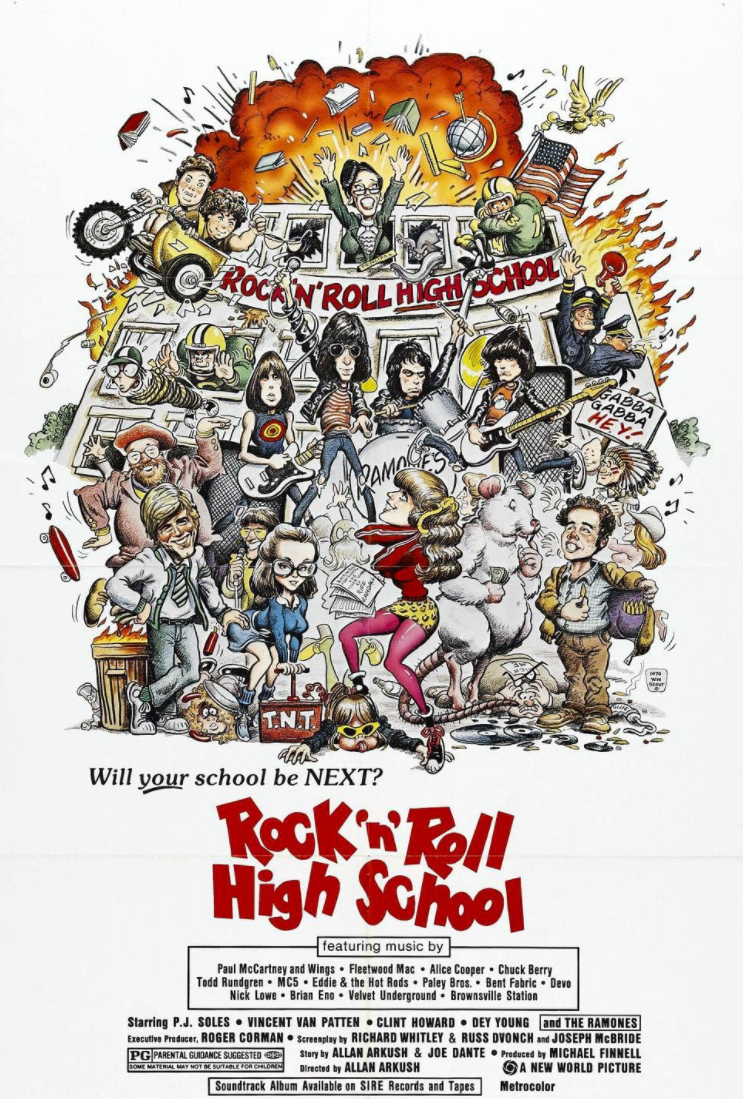
Rock ‘n’ Roll High School (1979)

Rock ‘n’ Roll High School (1979)

“Oh, wow! This is the happiest day of my life!”

Synopsis:
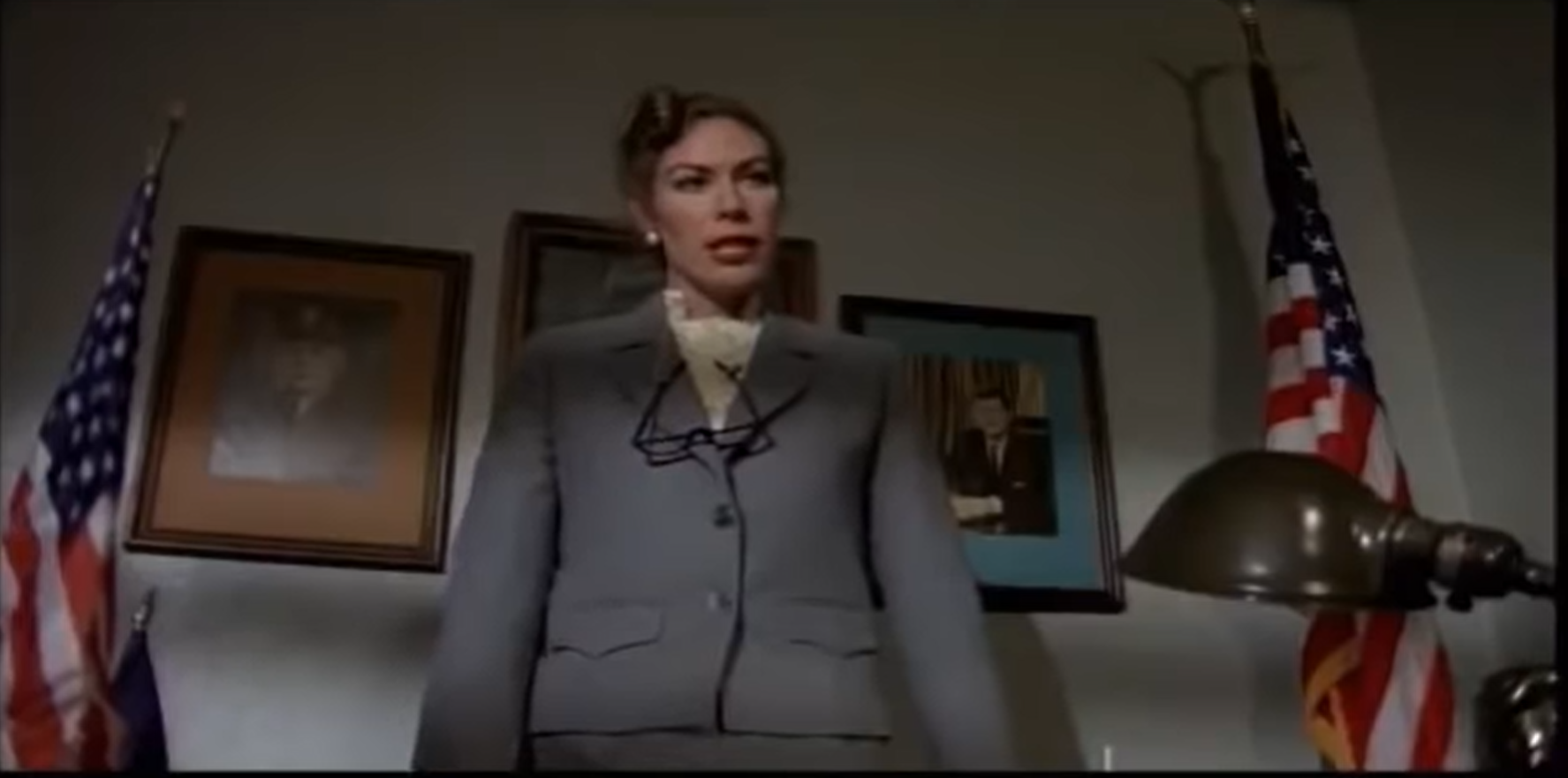
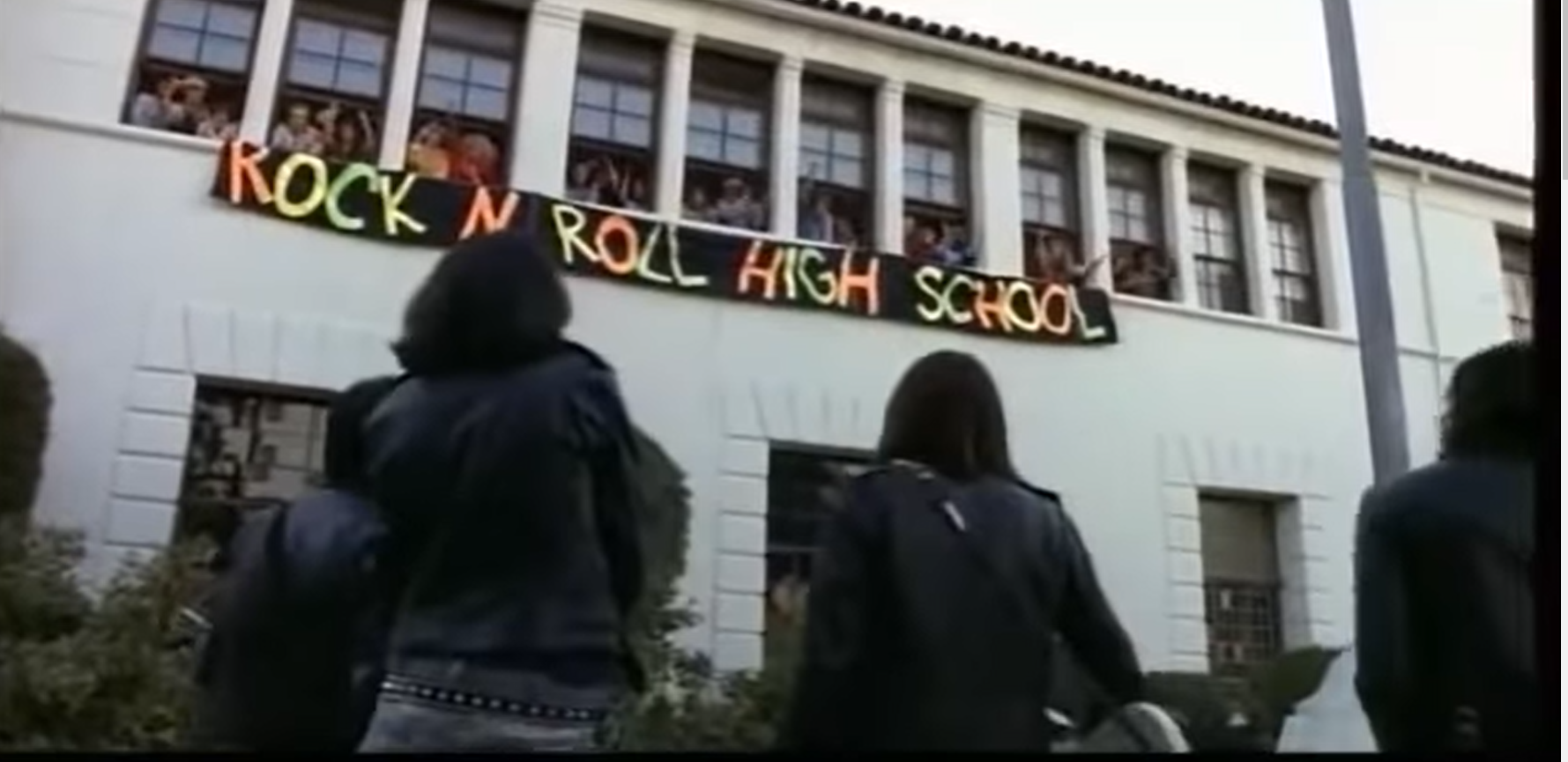
When a new principal (Mary Woronov) arrives at a rock ‘n roll-obsessed high school, she vows to make life even stricter and less pleasant for its students — especially Riff Randall (P.J. Soles), a hardcore Ramones lover. Meanwhile, a “love broker” (Clint Howard) promises to help a socially awkward football team captain (Vincent Van Patten) get a date, while also helping Riff’s nerdy best friend (Dey Young) to catch Van Patten’s eye.

Genres, Themes, Actors, and Directors:

  • Comedy
  • Dick Miller Films
  • Generation Gap
  • High School
  • Obsessive Fans
  • Rock ‘n Roll

Response to Peary’s Review:
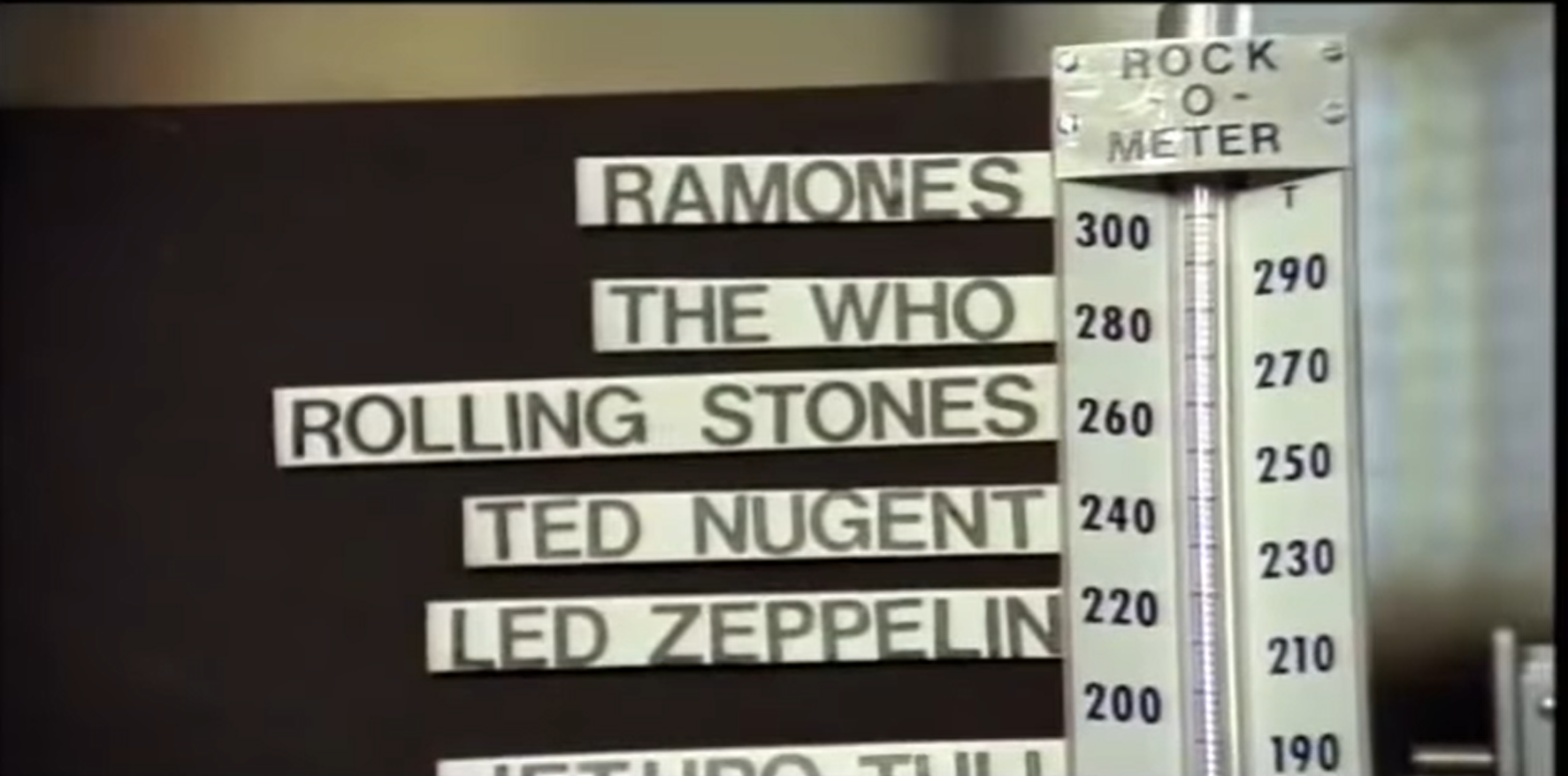
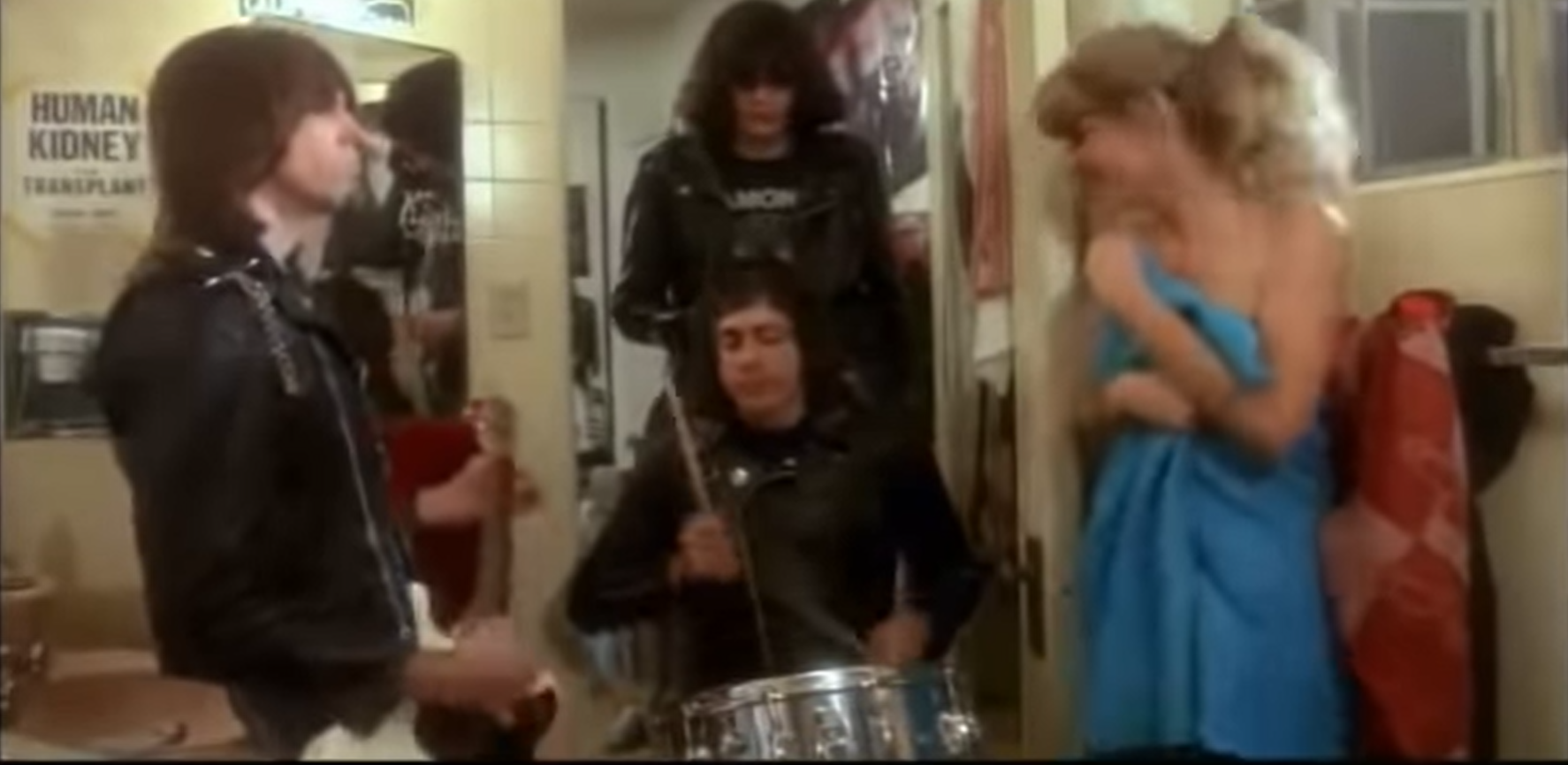
Peary writes that Rock ‘n’ Roll High School — “directed by Allan Arkush and [uncredited] Joe Dante” — is the “prime example of a picture that was designed to be a cult movie,” given that “New World [Pictures] premiered it as a midnight movie, hoping that it would attract fans of its musical stars… as well as college-age viewers who were curious about any midnight movies”. He writes that “a strong following has kept it one of the most popular of the midnight movies”, but I’m curious if that designation still stands. Peary notes that the film is “full of nonsensical humor”, but “lacks diabolically conceived outrageousness and sick humor” — indeed, he argues it “needs more bawdiness and, better, raunchiness in spots”: while it’s “fun watching fascist monitors demand hall passes, watching rebellious students throwing ‘Tuesday Surprise’ at the cooks, and Woronov threatening Soles with ‘detention for life!'”, there’s “not enough of this.” He asserts that the “best thing about this film is the high-spirited cast headed by Soles, bebopping and high-kicking non-stop,” and notes that the Ramones “are amusing in this film and fun to watch while performing”. Discussed in further detail in Peary’s first Cult Movies book.

Redeeming Qualities and Moments:

  • A colorful and energetic satire


Must See?
No, though it’s certainly worth a one-time look for its cult status.

Links:

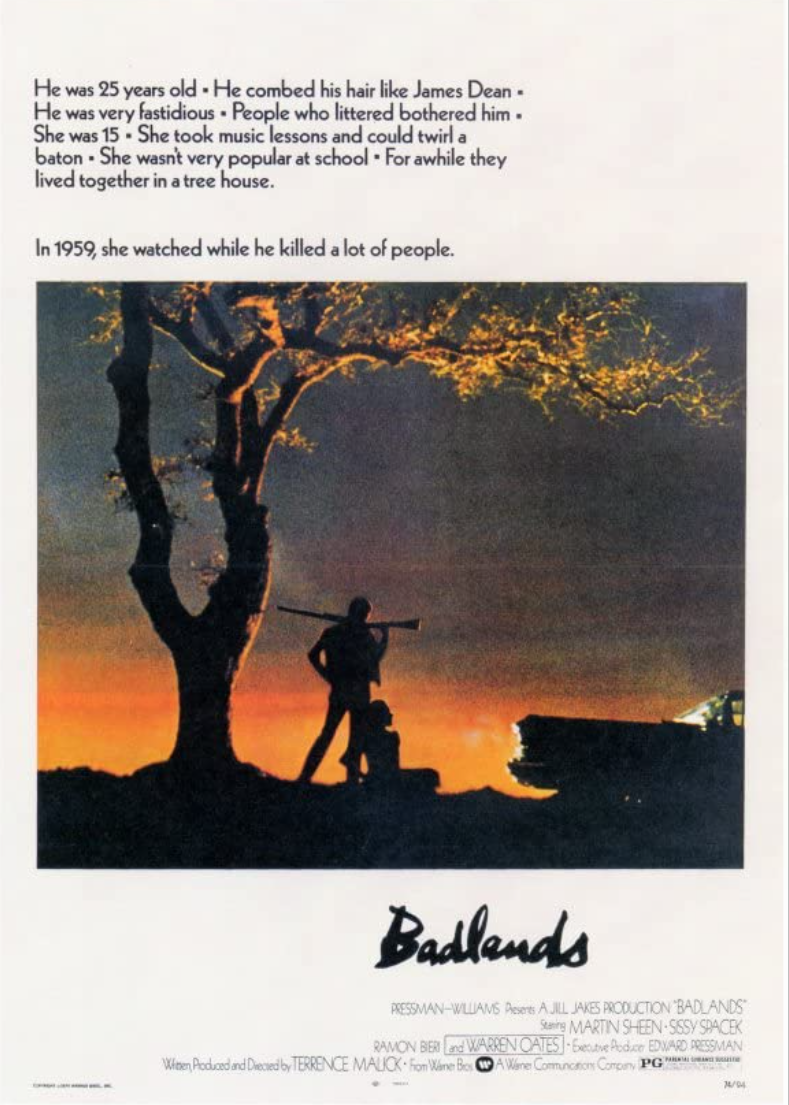
Badlands (1973)

Badlands (1973)

“He needed me now more than ever — but something had come between us.”

Synopsis:
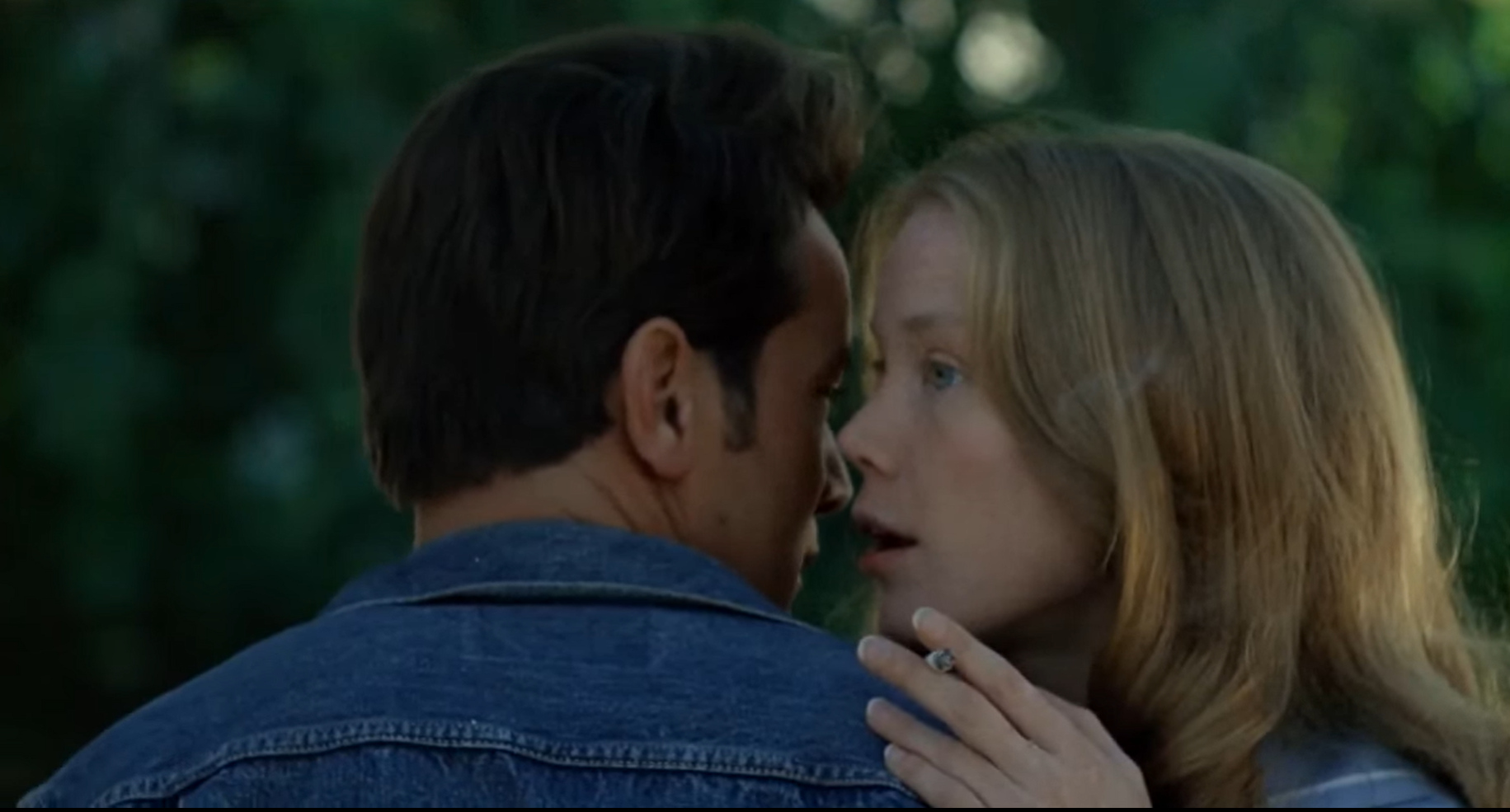
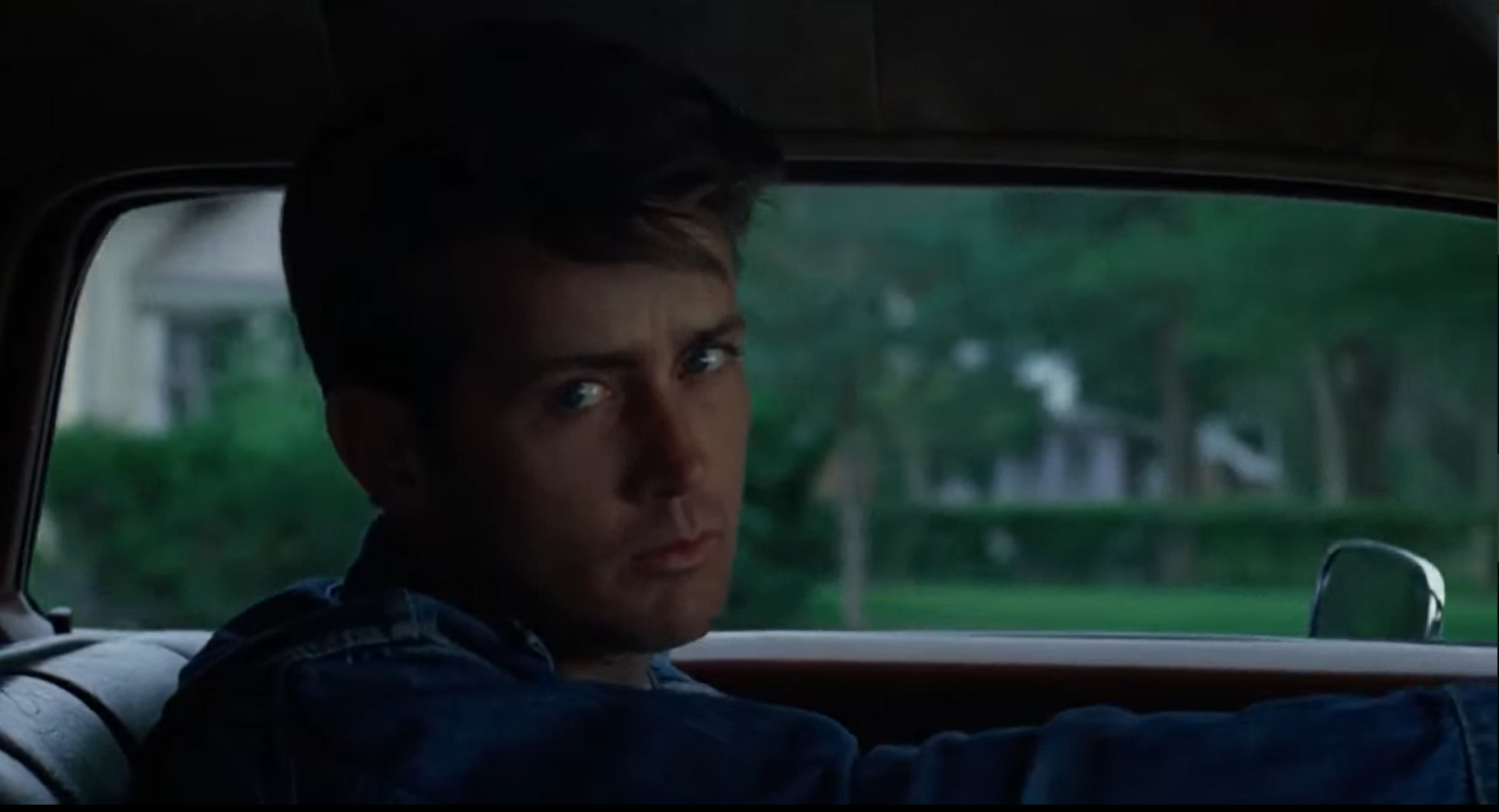
A sociopathic James Dean-wannabe (Martin Sheen) falls for a baton-twirling 15-year-old (Sissy Spacek), and kills her father (Warren Oates) when he refuses to allow them to date one another. Soon the couple are on the lam, but the killings continue.

Genres, Themes, Actors, and Directors:

  • Criminal Couple On the Run
  • Martin Sheen Films
  • Outlaws
  • Serial Killers
  • Sissy Spacek Films
  • Warren Oates Films

Response to Peary’s Review:
Peary is not a big fan of this “meticulously directed” but “too self-consciously arty” debut film by Terence Malick — based on the “intriguing real-life story” of “the infamous and unmotivated Charles Starkweather–Caril Fugate murder spree of 1958″ — about “an impressionable 15-year-old from Fort Dupree, South Dakota, who accompanies her new, older boyfriend… on his Midwest murder spree and becomes [the] object of a nationwide manhunt”. He writes that while it’s a “trifle boring”, it does feature “captivating performances by Spacek and Sheen” and “stunning photography of the rugged landscape”. In his analysis, Peary focuses primarily on the first-person perspective of Holly (Spacek), who “has no capacity for distinguishing between reality and fantasy or right and wrong”, and “is in essence an unformed character, willing to be led in any direction, by anyone who pays attention to her.” He posits that her “haunting, emotionless, bizarre purple-prose narration makes it appear as if she were trying to compose a story of her own life that’s fitting for one of [the] magazines she reads”, and adds that “nothing that happens on their journey… is real to her — even the people Kit [Sheen] murders are just characters in her story”.

Peary argues that this film “is a grim study of two… products of an American society that, during the apathetic, lethargic Eisenhower era, is so emotionally, morally, and culturally bankrupt that it not only spawns and nurtures killers but makes them folk heroes as well.” (However, given that every era seems to spawn such warped individuals, I’m not sure this analysis is quite accurate.) He writes that the murders are “properly deglamorized” by Malick, and are “a function of their yearning to escape the vacuum that is their world.” Indeed, Kit’s “obsession with leaving behind a record of his life at every stop” (a nice narrative touch) “is his misguided attempt to remind people he was special in an era of conformity.” Peary concludes his review by noting the film is “more than worthwhile” and “has a cult among critics who consider it an important, original film”. In his Cult Movies book, he further praises Malick’s “wonderful attention not only to the plants and trees of the landscape but to nature’s sounds, like the swirling breezes and even the chirping crickets”, and reiterates again that “the visuals are extraordinary: the enormous sky and the large full moon and red clouds that fill it; indoor settings lit by the sun filtering through the windows; great gobs of dust sweeping across the barren land at twilight.”

In Cult Movies, Peary also provides an extended comparative analysis of Badlands with Pretty Poison (1968) — a connection I wouldn’t necessarily have made (I’m more apt to think of Bonnie and Clyde), but does make sense given they’re both films “in which a director intends his characters to embody a sociological ‘sickness’ that is spreading through America’s heartland.” As Peary writes, both girls are first seen doing something innocent and all-American (baton twirling, marching while carrying a flag), and are attracted to an older stranger to whom they lose their virginity. Both “have strict single parents who order [the] male suitors to stay away from their daughters or face harsh consequences”, and “the murder sequences” of these parents “begin much the same way.” However, after this, the films clearly diverge, with Kit and Holly not “wavering in the least from what we already know about them and expect of them.” He argues they “lack the unpredictability, the intelligence, the spark, and the emotion that make” the characters in Pretty Poison “so interesting to watch.” Indeed, as Peary writes, we find out by the end of Badlands that these two murderous individuals are simply “dull, empty people.”

Redeeming Qualities and Moments:

  • Beautiful cinematography

  • Fine location shooting
  • George Tipton’s score

Must See?
Yes, as a visually impressive debut by an expressive director.

Categories

  • Important Director

(Listed in 1001 Movies You Must See Before You Die)

Links:

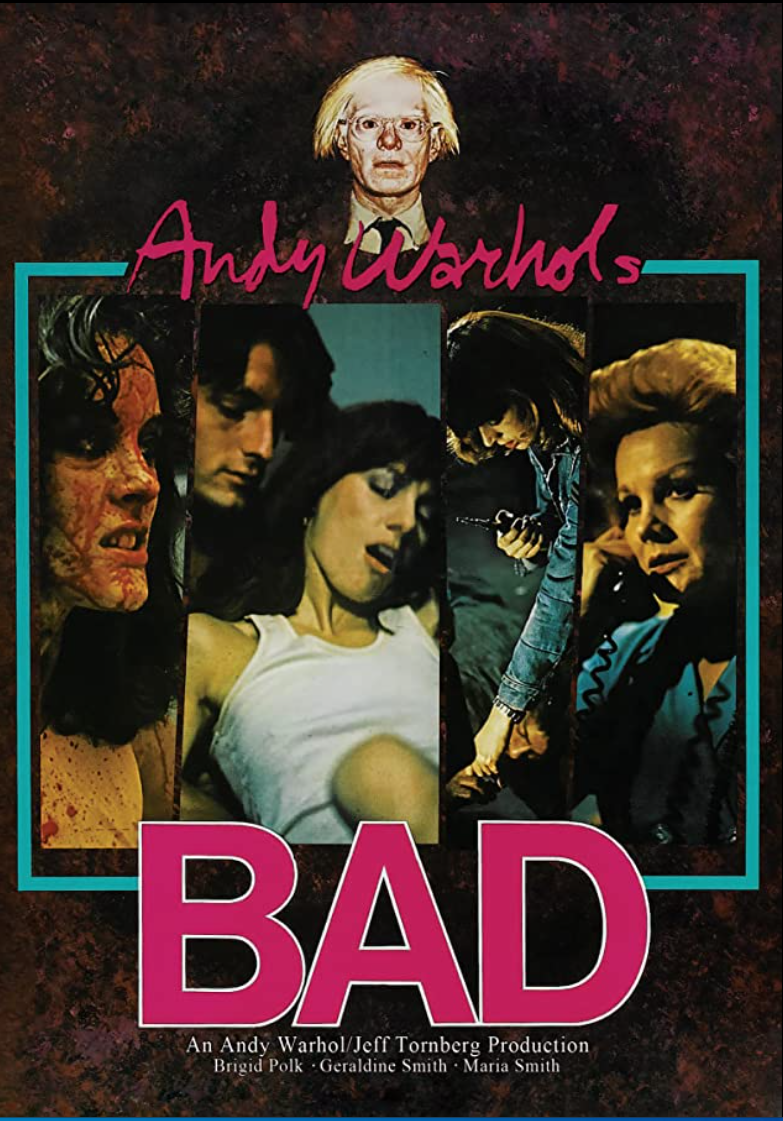
Andy Warhol’s Bad / Bad (1977)

Andy Warhol’s Bad / Bad (1977)

“People are so sick. The more you see ’em, the sicker they look. You could be so nice, if you didn’t wanna be a creep!”

Synopsis:
When a male assassin (Perry King) arrives at her house, a housewife (Carroll Baker) running an electrolysis trade and an all-female murder-for-hire business out of her home finds her life disrupted, as her dumpy daughter-in-law (Susan Tyrell) with a fussy baby becomes increasingly distressed about the level of meanness and violence all around her, and a corrupt cop (Charles McGregor) pressures Baker into giving him the name of a perpetrator.

Genres, Themes, Actors, and Directors:

  • Black Comedy
  • Carroll Baker Films
  • Hit Men

Response to Peary’s Review:
Peary writes that this “satirical look at a completely rotten society” — “perhaps the most ridiculous film ever distributed by a Hollywood company (Roger Corman’s New World Pictures)” — is “also the only Andy Warhol film to at least ‘look’ like a mainstream film.” He points out that 26-year-old director “Jed Johnson wisely kept his characters under tight control, making sure they delivered their preposterous dialogue… in a very off-key manner,” and as a result, “this absurd black comedy” — which “deserves more of a cult than it has” — “beats the odds and works beautifully”. He notes that “the main thrust of the humor has less to do with the overtly outrageous violent acts than with characters’ simply being mean to one another or pulling cruel jokes to intimidate those people they don’t like.” Interestingly, “nothing is taken seriously except a poignant scene between King and an autistic boy,” leading Peary to argue that “unlike John Waters, Warhol doesn’t treat truly sensitive subjects irresponsibly” (well, it’s all relative, I guess!).

Peary goes into further detail about this absurdly dark comedy in his first Cult Movies book, where he points out “it has always been the intention of Warhol and his directors to ‘disturb’ the American audience’s movie-watching sensibilities as conditioned over the years by the dominant Hollywood product.” Warhol forces us “to accept his redefinition of cinema” — indeed, his characters “are so nasty that they’d give that Richard Widmark villain of Kiss of Death (1947), who kicks an old lady in a wheelchair down a flight of stairs, a good run for his money.” For instance, “working on a contract for Mrs. Aiken, P.G. [Stefania Casini] lowers a car on a garage mechanic’s legs”; a mother (Susan Blond) who’s “too impatient to wait for the hired assassins” “tosses her crying baby out the window herself; Glenda [Geraldine Smith] and Marsha [Maria Smith] even go so far as to stab a dog with a sharp knife.” And that’s not even mentioning the wanton pyromania that goes on in both a movie house and a car. I’m curious how many film fanatics these days are familiar with and/or interested in Warhol’s work, given that more recent directors have continued to push the envelop in terms of what’s “acceptable” to put on screen or not — however, Warhol’s film-making factory remains an important enough part of underground cinema history that I believe his major films (like this one) should continue to be one-time must-see viewing.

Redeeming Qualities and Moments:

  • Carroll Baker as Mrs. Aiken
  • Susan Tyrrell as Mary Aiken
  • Many bizarrely memorable scenes

Must See?
Yes, once, for its cult status.

Categories

  • Cult Movie

Links:

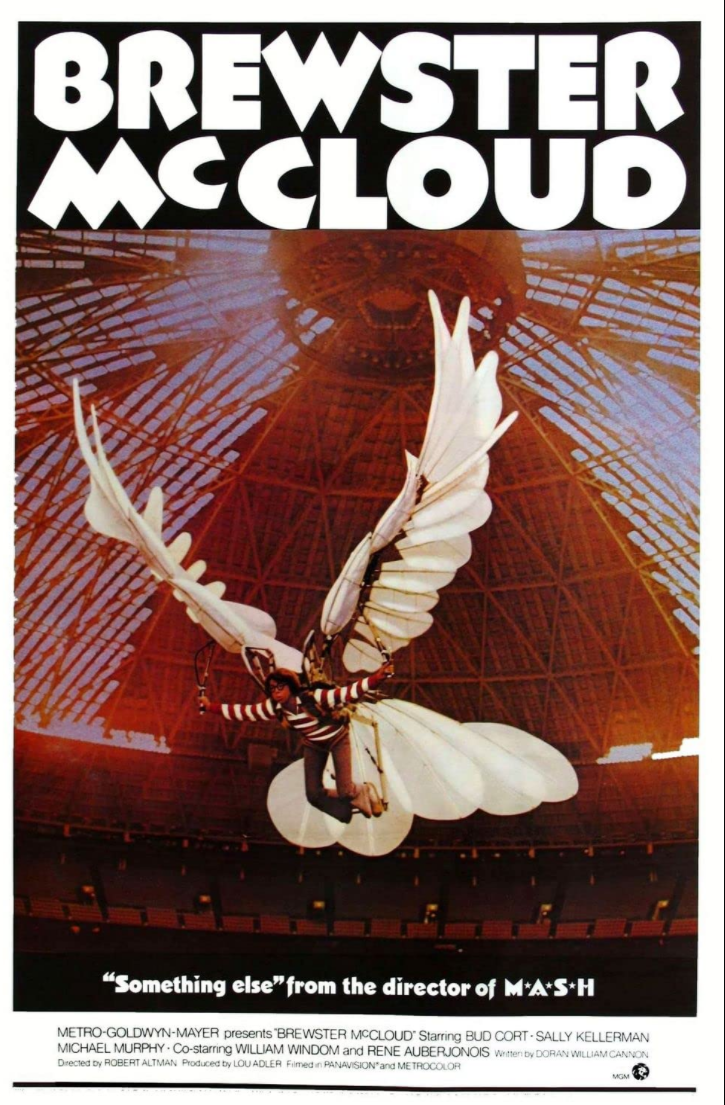
Brewster McCloud (1970)

Brewster McCloud (1970)

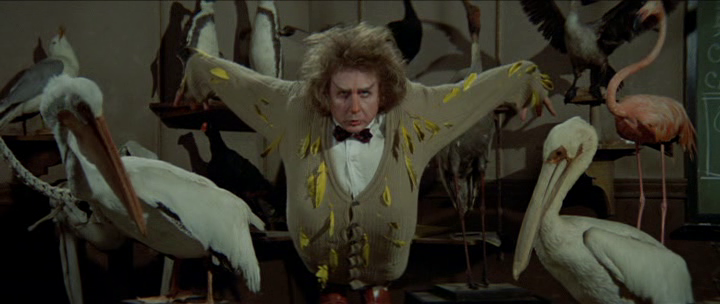
“I know bird shit when I see it.”

Synopsis:
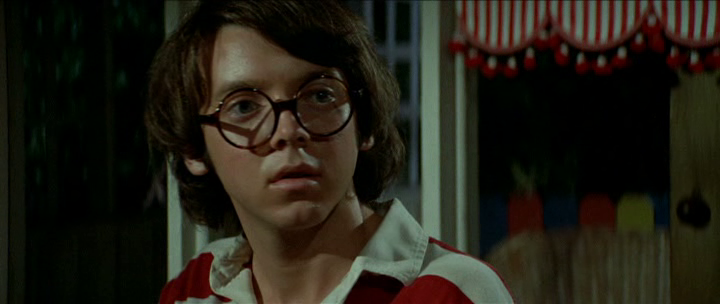
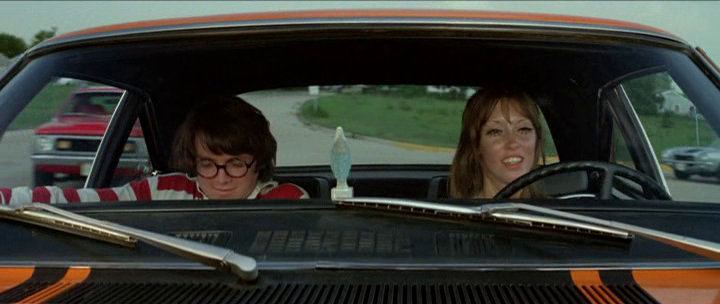
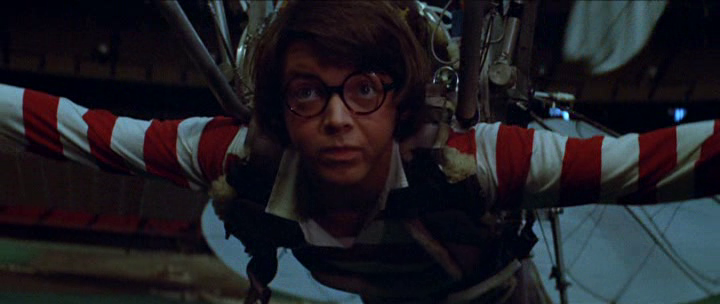
A virginal young man (Bud Cort) living in a bomb shelter in the Houston Astrodome receives support from his guardian angel (Sally Kellerman) to build a pair of wings that will allow him to fly. Meanwhile, a rash of strange murders — all involving bird shit splatted on awful people — occurs across the city, leading a California detective named Shaft (Michael Murphy) to be called in to help. When an Astrodome tour guide (Shelley Duvall) with a cool racing car meets Brewster (Cort) and initiates a romance with him, events take an even stranger turn.

Genres, Themes, Actors, and Directors:

  • Black Comedy
  • Bud Cort Films
  • Detectives and Private Eyes
  • Inventors
  • Michael Murphy Films
  • Robert Altman Films
  • Sally Kellerman Films
  • Serial Killers
  • Shelley Duvall Films
  • Virginity

Response to Peary’s Review:
Peary writes that “prior to his success in Harold and Maude, Bud Cort had the title role in this earlier cult comedy,” a “twisted fairytale” by Robert Altman (scripted by Doran William Cannon of Skidoo infamy) “about a gentle young man” whose “mother-protector (Sally Kellerman) … has brought him up to believe that the way for him to achieve ‘freedom’ (what all young people wanted in 1970) is to learn to fly.” He notes that this “crazy black comedy-satire doesn’t hold up as well as Altman’s other early films”, and that “much of the sick humor seems tasteless where once it was funny”; however, he concedes it’s “still an original, full of enjoyable quirky moments”, and points out that “Altman’s unusual storytelling methods, including the intertwining storylines, anticipated Nashville.” I’m not personally a fan of Brewster McCloud — which, as DVD Savant writes, “is less of a story than a collection of ideas flying in loose formation”; however, the overall quirkiness and uniqueness of the film — including Duvall’s inimitable debut presence — make it worth a one-time look by all film fanatics.

Redeeming Qualities and Moments:

  • Quirky performances across the board


  • Many memorable scenes and images


  • The final flight sequence

Must See?
Yes, once, simply as a unique cult favorite.

Categories

  • Cult Movie
  • Important Director

Links:

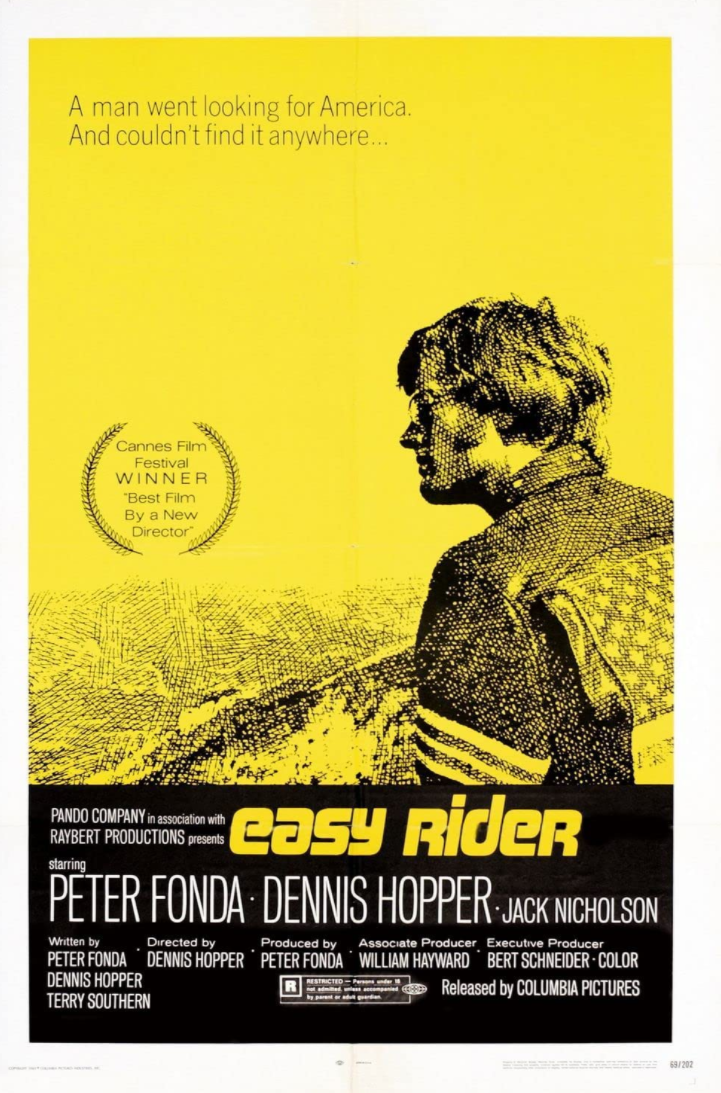
Easy Rider (1969)

Easy Rider (1969)

“You know, this used to be a hell of a good country.”

Synopsis:
After making a drug deal in Mexico, two motorcyclists (Peter Fonda and Dennis Hopper) ride across the United States to New Orleans, first picking up a hippie (Luke Askew) who brings them to his commune, then riding with an alcoholic ACLU lawyer (Jack Nicholson) they meet in jail. Will they make it safely across the Deep South without being harassed by bigoted anti-hippies?

Genres, Themes, Actors, and Directors:

  • Counterculture
  • Deep South
  • Dennis Hopper Films
  • Drug Dealers
  • Jack Nicholson Films
  • Karen Black Films
  • Motorcyclists
  • Peter Fonda Films
  • Road Trip

Response to Peary’s Review:
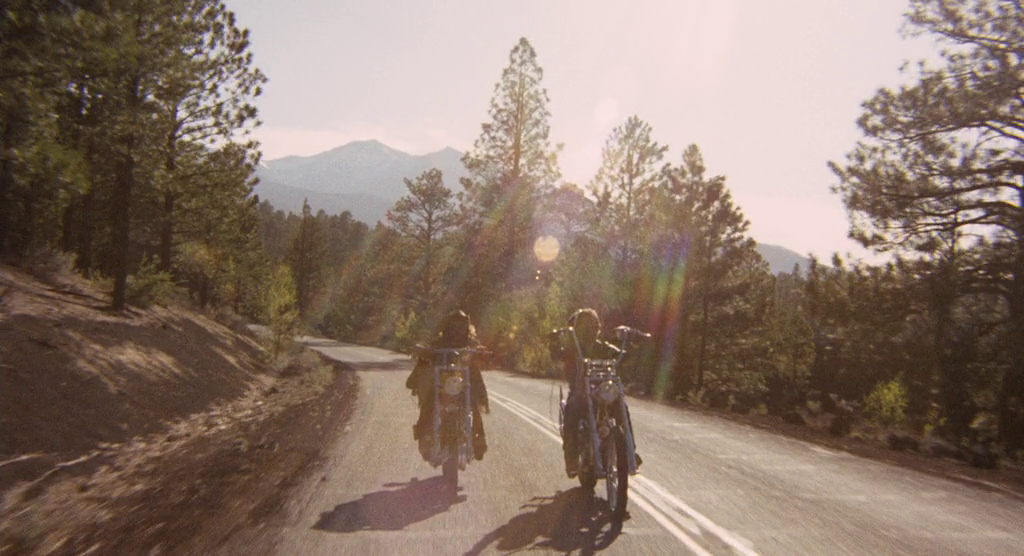
Peary argues that this “low-budget commercial blockbuster” — about a pair of motorcyclists who “make a big dope sale (to Phil Spector!), hop on their flashy motorcycles, and begin an odyssey across American’s Southwest and South” — “makes no real statement, political or otherwise, other than to tell us longhairs of the period not to travel through the South.” He writes that the film’s cinematic relevance lies in how it “changed the face of Hollywood for years to come”, given that “every studio would begin producing low-budget ‘personal’ films geared for the youth market.” However, “many in its target audience were disappointed, preferring films like Medium Cool because of their obvious leftwing politics.” He notes that while audience members “loved the great background music (including the Byrds and the Band), adored the lively, drawling performance by Nicholson (who grins from ear to ear under his football helmet in the role that caused his career to take off):

… admired Hopper’s bizarre editing techniques, and packed their knapsacks after seeing Laszlo Kovacs’s stunning photography of the southwestern landscape… they objected to the females being mere sex objects” and were upset by “the flimsiness of the script,” including the “thoroughly depressing rather than progressive finale.”

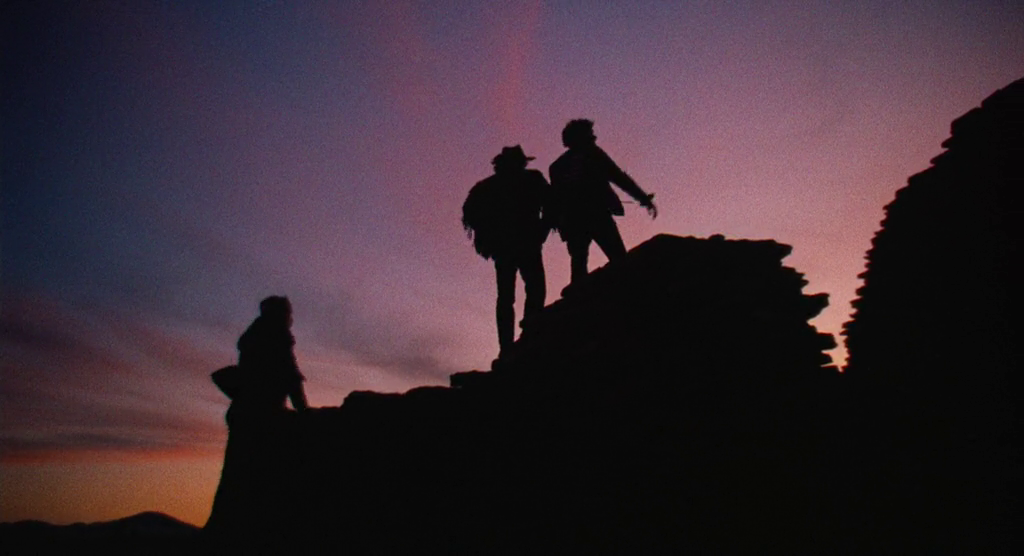
In Cult Movies 3, Peary expands his discussion of this film, which he writes has become “legendary” — a “celluloid symbol of freedom.” However, while it “has been romanticized” by those who want to “just chuck it all and ride free and easy across our beautiful land,” he notes that these viewers “refuse to acknowledge/remember that Wyatt [Fonda] and Billy [Hopper] discover there is no real freedom in our cemetery-lined ‘land of the free’.” Peary adds that “one forgets that the ‘personal’ films of the late sixties and early seventies were almost all pessimistic, and that Easy Rider was the biggest downer of them all.”

I agree with Peary’s overall assessment, and was surprised upon my revisit of this film to see how aimless and unsatisfying it really is. The pacing is odd (perhaps due to Hopper originally envisioning it as many hours long): we never have a sense of where things will go or what will happen to these characters, who might be infinitely more sympathetic than the bigoted Southerners who hurl invectives at them simply for having “long hair”, but are not exactly people you want to spend time with (they’re cocaine smugglers, after all). Nicholson remains the bright light in the storyline, showing the vibrant lunacy that would serve him so well in coming films. Otherwise, as Peary points out, “the other characters in the film are as insufferable as Wyatt and Billy.” For instance, “the obnoxious, lamebrain male and female commune dwellers — dummies in the desert — are a sorry lot”, and “Hopper, Fonda, and co-writer Terry Southern (added to give the film class) give no indication there were also more admirable, more socially involved members of the counterculture.” Film fanatics should definitely check this film out once, given its iconic relevance in American movie history — but prepare to be disappointed.

Redeeming Qualities and Moments:

  • László Kovács’ cinematography

  • Jack Nicholson as George
  • A fine soundtrack

Must See?
Yes, once, simply for its historical and cult value.

Categories

  • Cult Movie
  • Historically Relevant

Links: