Forbidden Games (1952)

Forbidden Games (1952)

“What’s a cemetery?”

Synopsis:
After witnessing the death of her parents and pet dog during an air raid in the French countryside, five-year-old Paulette (Brigitte Fossey) befriends a young boy named Michel (Georges Poujouly) and is taken to live on his family farm. Paulette and Michel soon become obsessed with burying dead animals, and engage in the “forbidden game” of stealing crosses from the local church for their pet cemetery.

Genres, Themes, Actors, and Directors:

  • Childhood
  • French Films
  • Orphans
  • Rene Clement Films
  • World War Two

Response to Peary’s Review:
This “anti-war classic” (based on a novel by Francois Boyer) earns my vote as one of the most devastating movies about childhood ever made. Its “horrifying, unforgettable opening scene” — in which five-year-old Paulette loses both her parents and her beloved pet dog within the space of a few heart-stopping minutes:

— is nearly beyond belief, as are the incredibly distressing, albeit realistic, final moments of the storyline (which, by the way, are “spoiled” in Peary’s review). Writer-director Rene Clement films Forbidden Games from a child’s perspective, and is primarily concerned with exploring how children cope with the chaos of wartime. While Peary expresses ambivalence about the meaning of the children’s obsession with burials (“I’ve never been able to figure out the significance of the children’s death-burial-prayer fascination”), to me the symbolism is crystal clear: in a world where unspeakable death surrounds them, children must find some way to regain a sense of personal agency. Peary also points out the disparity between the hypocritical “Christian” adults in this film — who are “habitually at odds with one another” — and the innocent simplicity of Paulette and Michel’s friendship. Rarely has a film so effectively portrayed the disparities between the fantasy-laden survival of children, and the brutish animosity of adults.

Redeeming Qualities and Moments:

  • Brigitte Fossey as Paulette
  • George Poujouly as Michel, Brigitte’s protective young “partner in crime”
  • Much memorable imagery
  • Fine cinematography

Must See?
Definitely, but be prepared for total emotional devastation.

Categories

  • Foreign Gem
  • Genuine Classic

(Listed in 1001 Movies You Must See Before You Die)

Links:

Breezy (1973)

Breezy (1973)

“Why should a young girl like that love an old fart like me? I’d be a meal ticket for her, and nothing more.”

Synopsis:
A 17-year-old hippie named Breezy (Kay Lenz) falls in love with a divorced, middle-aged real estate broker (William Holden).

Genres, Themes, Actors, and Directors:

  • Clint Eastwood Films
  • Counterculture
  • Cross-Cultural Romance
  • May-December Romance
  • William Holden Films

Response to Peary’s Review:
It’s too bad this early Clint Eastwood film remains so obscure, because it “remains one of the few films that have effectively explored a romance between people so different”. In his second directorial effort, Eastwood deftly examines what it’s like for two “souls” to meet and fall in love across the chasms of age and lifestyle. If two people this different can fall in love and make it work, then maybe there’s hope for our motley world after all! It’s a toss-up whether you’ll find Kay Lenz’s performance to be cloying or appealing, but I vote for the latter: her fresh-faced presence adds a perfect sensibility to the title role. William Holden — giving “an earnest portrayal” as a “lonely, middle-aged real-estate dealer” — is equally effective in a role seemingly tailor-made for him.

Redeeming Qualities and Moments:

  • Kay Lenz’s appealing performance as the good-hearted Breezy
  • William Holden as Frank
  • An excellent examination of the difficulties inherent in a cross-age, cross-cultural romance

Must See?
No, but it’s recommended as an unusual entry in Clint Eastwood’s impressive directorial oeuvre, and definitely worth a look.

Links:

Mondo Cane (1963)

Mondo Cane (1963)

“It enters a hundred incredible worlds, where the camera has never gone before!”

Synopsis:
Bizarre cultural traits from around the world are showcased in this early “shockumentary” film.

Genres, Themes, Actors, and Directors:

  • Documentary
  • Native Peoples

Response to Peary’s Review:
Peary labels this “once notorious film” as “exploitative” and “repellent”, but I disagree. As noted in a DVD Verdict review (no longer available online), the “Mondo” films (this is the first of several) actually “paved the way for opening up society to the difference in cultures, customs, and traditions amongst the citizens of the world.” Through nifty mise en scene, the directors force western viewers to recognize the strangeness of their own society, and to acknowledge the cultural relativity of beauty, food, death, and other universal experiences. Indeed, when cultures from all parts of the world and all social strata are equally “exposed” — as they are in this film — it’s difficult to argue that the material is truly exploitative.

Redeeming Qualities and Moments:

  • Expert mise en scene — as when obese Tabarese women show off their portly beauty, in juxtaposition with westerners attempting to jiggle their flab away in fitness machines

Must See?
Yes. While dated, it retains an important place in cinematic history.

Categories

  • Controversial Film
  • Historically Relevant

(Listed in 1001 Movies You Must See Before You Die)

Links:

Sanjuro (1962)

Sanjuro (1962)

“Killing people is a bad habit.”

Synopsis:
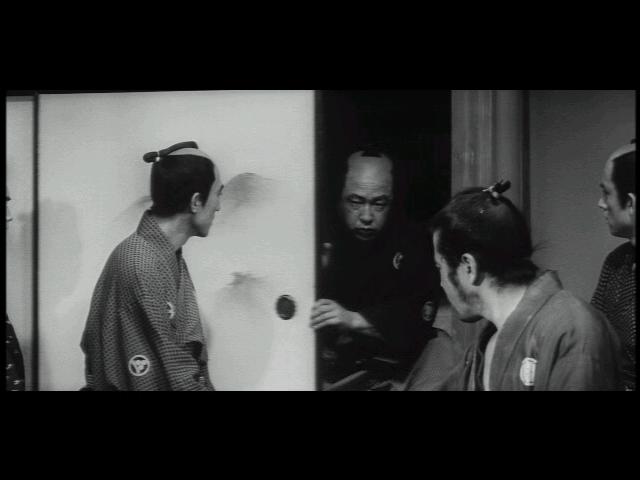
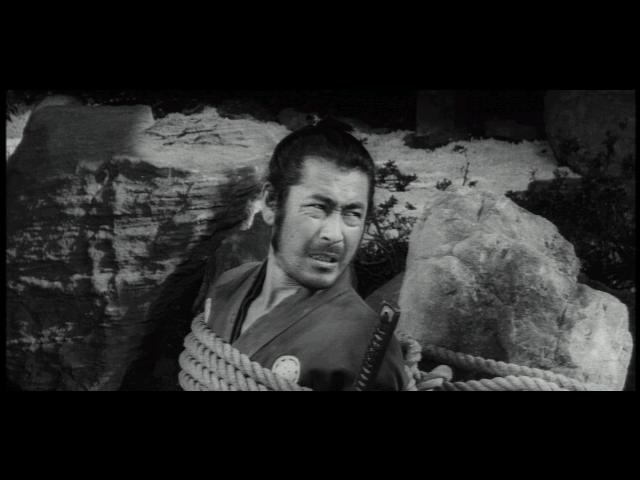
An older samurai (Toshiro Mifune) assists a group of naive young clansmen in rescuing a kidnapped political official.

Genres, Themes, Actors, and Directors:

  • Akira Kurosawa Films
  • Japanese Films
  • Kidnapping
  • Political Corruption
  • Samurai
  • Toshiro Mifune Films

Response to Peary’s Review:
As Peary notes, Kurosawa’s follow-up to Yojimbo (1961) isn’t quite as masterful or well-known as its predecessor (he argues it’s “not as ambitious… or as impressively photographed”), but still has much to recommend it. It’s “much funnier” and less cynical in its approach, and contains at least two valuable lessons: that violence should be avoided when possible, and that strength and cunning can come in unexpected packages. Mifune — portraying a “hero who does care about those who need help and is affected emotionally by what transpires around him” — is as compelling as always; he conveys more worldly wisdom in his right pinky than most other movie actors combined.

Redeeming Qualities and Moments:

  • Beautiful imagery
  • Plenty of unexpected humor (including Keiju Kobayashi as the captured spy who hides in the closet but pops out every now and then to express his opinion)
  • Toshiro Mifune’s powerful yet subtly comedic performance

Must See?
Yes. While not traditionally ranked among the top of Kurosawa’s oeuvre, it’s nonetheless critical viewing for any true film fanatic.

Categories

  • Important Director

Links:

Way Out West (1937)

Way Out West (1937)

“I think we’ve given that deed to the wrong woman!”

Synopsis:
Laurel and Hardy head to Brushwood Gulch to deliver a gold mine deed to the daughter (Rosina Lawrence) of a dead prospector. Once there, however, they find themselves swindled by the girl’s bosses (Jimmy Finlayson and Sharon Lynn), and must do what they can to return the deed to its rightful owner.

Genres, Themes, Actors, and Directors:

  • Comedy
  • Con-Artists
  • Laurel & Hardy Films
  • Westerns

Response to Peary’s Review:
As Peary notes, this classic Laurel and Hardy flick is “consistently funny”, “well-paced”, and full of “sight gags, slapstick, and witty verbal repartee”. Along with Sons of the Desert (1933) and Block-Heads (1938) (both also recommended by Peary), it is required Laurel and Hardy viewing for any film fanatic.

Redeeming Qualities and Moments:

  • Hardy forcing a tearful Laurel to eat his hat
  • Lynn tickling Hardy into giving her the will
  • Laurel and Hardy’s soft-shoe dance number

Must See?
Yes. This is one of Laurel and Hardy’s best works, and not to be missed.

Categories

  • Genuine Classic

Links:

Babes in Toyland/March of the Wooden Soldiers/Revenge is Sweet (1934)

Babes in Toyland/March of the Wooden Soldiers/Revenge is Sweet (1934)

“I thought you said 100 soldiers six feet high!”

Synopsis:
Oliver Dee (Oliver Hardy) and Stanlee Dum (Stan Laurel) attempt to rescue Little Bo Peep (Charlotte Henry) from the evil clutches of Silas Barnaby (Harry Kleinbach).

Genres:

  • Folk Tales, Fairy Tales, and Mythology
  • Fantasy
  • Laurel & Hardy Films
  • Musical
  • Revenge

Response to Peary’s Review:
As Peary notes, this imaginative operetta — which has “always been a favorite of children” but has recently “become a cult favorite of adults as well” — has much to recommend it: multiple familiar fairy tale friends; “nifty” costumes; an exciting story of good versus evil; and the wonderful comedic team of Laurel and Hardy. He argues that this “MGM production is one of the best fantasies of the pre-Wizard of Oz days,” given the “storybook characters are fun, [and the] battle between the soldiers (whose march is animated) and the Bogeyman is as exciting as anything that would turn up in Flash Gordon.” As Peary notes, however, some of the songs could probably have been cut; unlike the highly memorable roster of tunes in The Wizard of Oz (1939), Victor Herbert’s operatic arias here are sappy and instantly forgettable.

Redeeming Qualities and Moments:

  • Laurel and Hardy as the infinitely clueless Dum and Dee
  • Inventive sets and costumes

  • Fun incorporation of multiple fairy tale characters into one story

Must See?
Yes, as a cult favorite.

Categories

  • Cult Movie

Links:

Birth of a Nation, The (1915)

Birth of a Nation, The (1915)

“This is an historical presentation of the Civil War and Reconstruction Period, and is not meant to reflect on any race or people of today.”

Synopsis:
After the defeat of the South in the American Civil War, the Ku Klux Klan fights against what it perceives as the emergence of black supremacy.

Genres, Themes, Actors, and Directors:

  • African Americans
  • Civil War
  • Deep South
  • D.W. Griffith Films
  • Lillian Gish Films
  • Racism
  • Silent Films
  • Slavery

Response to Peary’s Review:
Peary refers to this groundbreaking, highly controversial silent movie as “the birth of the feature film”. Indeed, as Roger Ebert argues in his “Great Movies” review, in Birth of a Nation, director “[D.W.] Griffith demonstrated to every filmmaker and moviegoer who followed him what a movie was, and what a movie could be.” Peary notes that the film — “based on the Reverend Thomas Dixon’s racist Reconstruction play The Clansman, which celebrated the KKK for restoring the politics and life-style of the antebellum South” — will “astonish you with its visuals” (see here for an extensive list of the cinematic techniques Griffith brought to the film) yet “repulse you with its content”. Peary chastises Griffith for promoting a narrative in which “the klansmen become our heroes when they rescue whites who are about to be killed by black militiamen”, and concludes his review by arguing that Birth… is “a great film… marred by a reprehensible viewpoint”. He concedes, however, that it’s “too important to miss, if only to see what once passed as history.”

Redeeming Qualities and Moments:

  • An abundance of exciting new cinematic techniques — including cross-cutting, night photography, the “iris shot”, and color tinting
  • Highly realistic Civil War battle recreations

Must See?
Yes. While difficult to watch, this film is nonetheless too historically important for any film fanatic to miss.

Categories

  • Controversial Film
  • Historically Relevant

(Listed in 1001 Movies You Must See Before You Die)

Links:

Hallelujah! (1929)

Hallelujah! (1929)

“Look, son: the Lord has sent an angel to show you the way.”

Synopsis:
A humble cotton farmer (Daniel Haynes) is seduced by a gambling vamp (Nina Mae McKinney), then repents for his sins by becoming an itinerant preacher.

Genres, Themes, Actors, and Directors:

  • African Americans
  • Christianity
  • Deep South
  • Femmes Fatales
  • Gambling
  • King Vidor Films
  • Musicals

Response to Peary’s Review:
As Peary notes, this landmark all-black film — made and financed by white director King Vidor — is actually rather dull. In addition, it “established many negative black stereotypes that would become common in the white cinema”, and “was the first to contend that black people were happy living in isolation (from whites), in ignorance, and in poverty because they have religion to fall back on.”

Nonetheless, the film is worth checking out for its historical status, as well as to see Nina Mae McKinney’s truly electric performance as a wily femme fatale — a “hip-swaying, sexually uninhibited tigress” who “would serve as [a] model for numerous black vamps in years to come, including those played by Dorothy Dandridge.”

Redeeming Qualities and Moments:

  • Nina Mae McKinney as the beautiful, seductive, deceptive Chick
  • Mammy Johnson (Fannie Belle DeKnight) singing a lullaby as she rocks one of her children to sleep

Must See?
Yes, simply for its status as the first all-black film to come out of Hollywood.

Categories

  • Historically Relevant

Links:

Hang ‘Em High (1968)

Hang ‘Em High (1968)

“How many men are you going to have to hang to heal your scar?”

Synopsis:
Jed Cooper (Clint Eastwood), wrongly accused of cattle rustling, is hung by a group of vigilantes and left to die. When he survives, Cooper becomes a marshal for the local judge (Pat Hingle), and vows to seek revenge on the men who nearly killed him.

Genres, Themes, Actors, and Directors:

  • Ben Johnson Films
  • Bruce Dern Films
  • Clint Eastwood Films
  • Courtroom Drama
  • Ed Begley Sr. Films
  • Falsely Accused
  • Pat Hingle Films
  • Revenge
  • Vigilantes
  • Walter Brennan Films
  • Westerns

Response to Peary’s Review:
Peary doesn’t seem to like this western much, calling it “derivative”, “stilted”, and “cliche-ridden”. I suspect, however, that the film suffers primarily from guilt-by-comparison, since it was made immediately after Sergio Leone’s string of brilliant “Man With No Name” westerns. In reality, Hang ‘Em High is actually an enjoyable revenge tale, one which manages to comment on the public thirst for bloody spectacle without coming to any neat-and-tidy conclusions. In addition, Judge Fenton is played with surprising nuance by Hingle; his struggle to bring justice to the vast, untamed Oklahoma Territory makes for an interesting contrast with Walter Brennan’s more humorously sadistic Judge Roy Bean in The Westerner (1940).

Redeeming Qualities and Moments:

  • Pat Hingle as the frustrated, hard-nosed Judge Fenton
  • Bruce Dern in an early villainous role
  • The “Hanging Circus” scene, which makes public corporal punishment come across as a viable entertainment alternative to the County Fair

Must See?
No, but it’s recommended.

Links:

Lenny Bruce Performance Film, The (1967)

Lenny Bruce Performance Film, The (1967)

“I am not a comedian… I am Lenny Bruce.”

Synopsis:
Lenny Bruce debunks the obscenity charges made against him in New York City.

Genres, Themes, Actors, and Directors:

  • Stand-Up Comedy

Response to Peary’s Review:
Peary notes that Lenny Bruce’s second-to-last live performance — “filmed in San Francisco in August of 1965 in San Francisco, the one place in the states where he could get bookings” — is crudely shot (the director “keeps a nervous camera focused on Bruce at all times”) and only intermittently funny (“one wishes his material were a bit stronger”). Nonetheless, Bruce still manages to come across as both highly intelligent and naturally witty; it’s easy to catch glimpses of his genius through the haze of his (legitimate) obsession with the “politics of obscenity”. As Peary writes, Bruce was “a comedian who relied on his intelligence and natural wit rather than a memorized set of irrelevant jokes,” and it’s clear he “seems amused by life’s sad ironies.” Most enjoyable for me was seeing what a master Bruce was at voice characterizations — watch how easily and convincingly he’s able to switch from character to character during his running jokes.

Redeeming Qualities and Moments:

  • Bruce’s improvisatory discussion of the obscenity charges made against him
  • The skewering “How the Jew and the Negro Got Into Show Business” schtick (much less offensive than it sounds)
  • If you’re renting the DVD, don’t miss the oddly hilarious short “Thank You Mask Man”, in which one of Bruce’s most famous running jokes is set to animation

Must See?
Yes. As Lenny Bruce’s only live performance preserved on film, it holds a special place in cultural history.

Categories

  • Historically Relevant

Links: