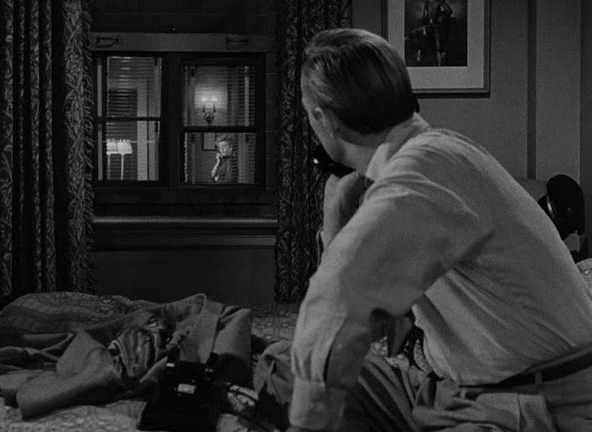
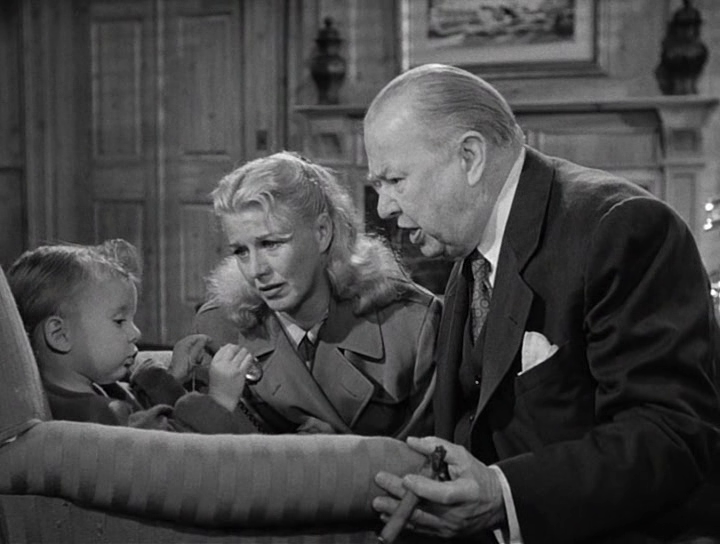
Don’t Bother to Knock (1952)
“I should have known better — you’re not cured!”
|
Synopsis: |
|
Genres, Themes, Actors, and Directors:
Review: Favorite (throwaway) exchange early in the film:
Redeeming Qualities and Moments:
Must See? Links: |
“I should have known better — you’re not cured!”
|
Synopsis: |
|
Genres, Themes, Actors, and Directors:
Review: Favorite (throwaway) exchange early in the film:
Redeeming Qualities and Moments:
Must See? Links: |
“It looks like St. Mary’s is in a bad way.”
|
Synopsis: |
|
Genres, Themes, Actors, and Directors:
Response to Peary’s Review: The fact that this dated, overly sentimental film still remains of interest at all rests solely on the capable shoulders of Bergman, who, “more beautiful than ever — whether teaching a young boy to box or just reacting to good news from Crosby or Travers — is simply magnificent”. Her performance is head-and-shoulders above the material she’s given to work with, which unfortunately simply involves more of the cloying do-gooder vignettes evidenced in Going My Way. Here, Crosby and Bergman are committed (in different ways) to helping the teenage daughter (Joan Carroll) of a “single mother” (Martha Sleeper) whose musician-husband (William Gargan) walked out on them years earlier; will Crosby locate said “missing father”, and help facilitate an unrealistically happy reunion? What do you think? Meanwhile, the entire subplot revolving around Travers’ sudden change of heart simply defies belief. Regardless, film fanatics may want to check this one out once, simply for Bergman. She’s marvelous. Redeeming Qualities and Moments:
Must See? Links: |
“I’m beginning to wonder if ‘being young’ is all it’s cracked up to be.”
|
Synopsis: |
|
Genres, Themes, Actors, and Directors:
Review:
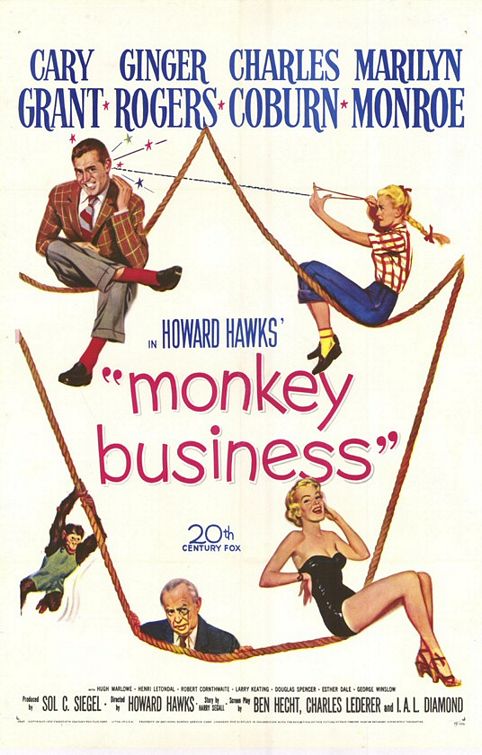
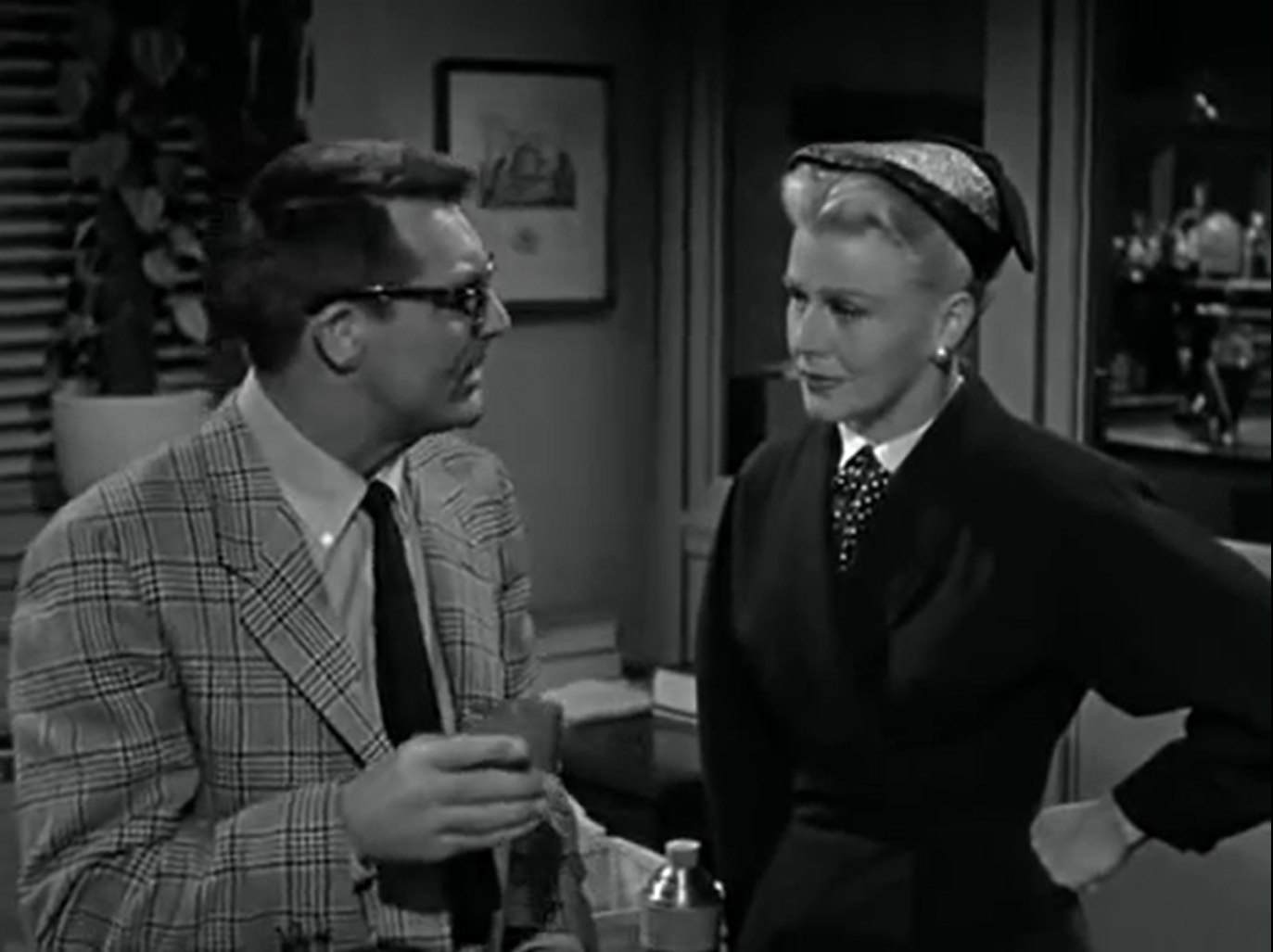
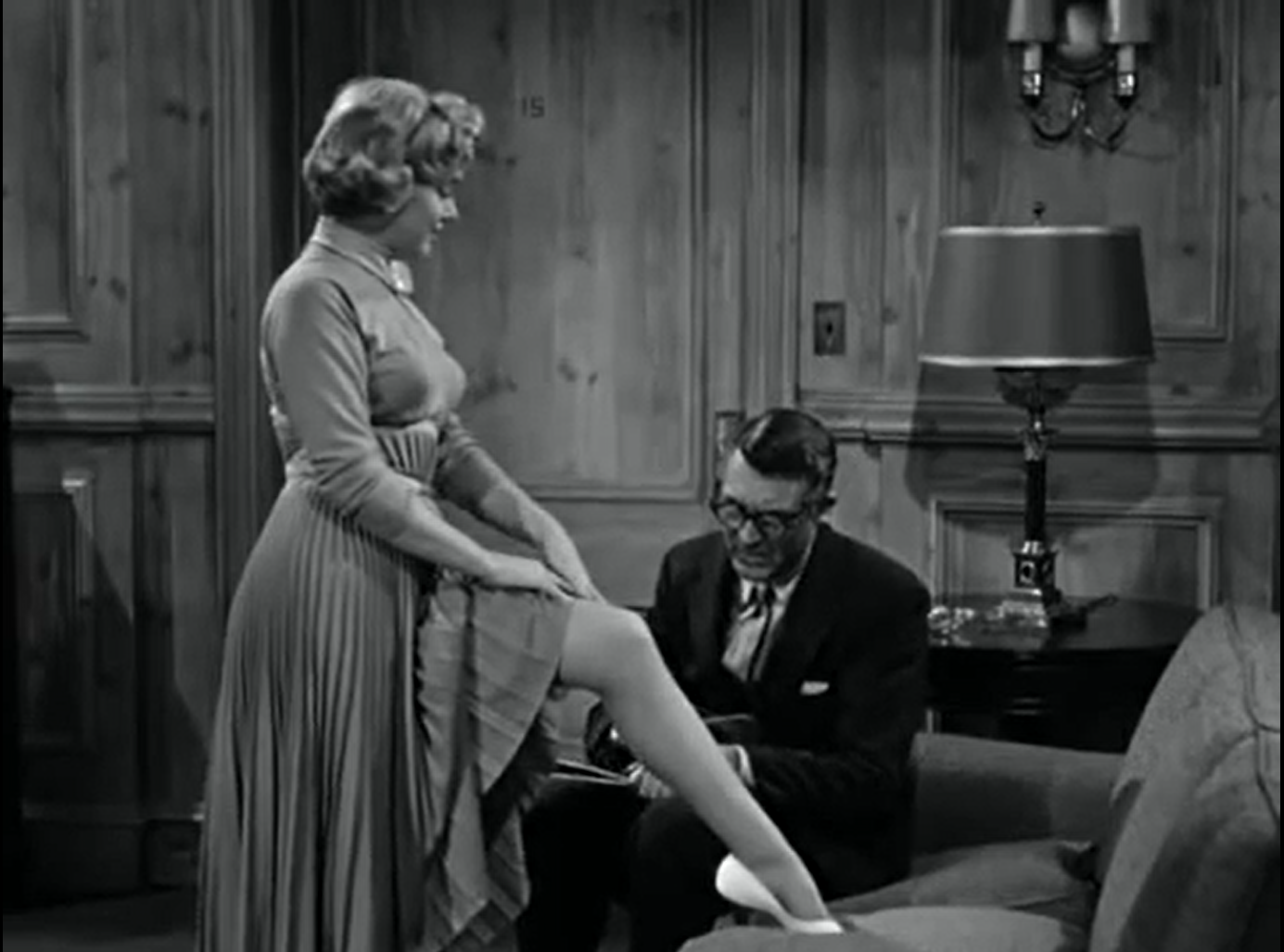
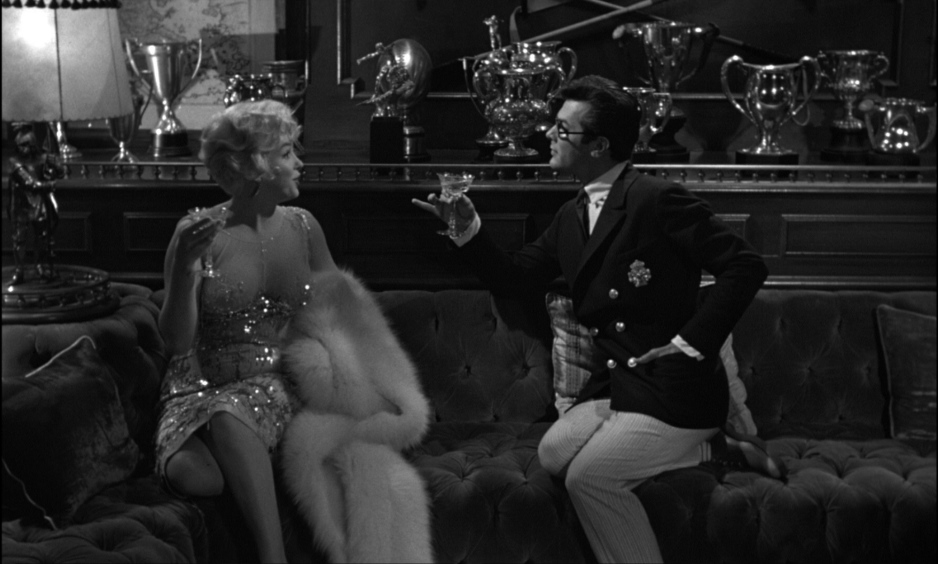
While Peary nominates both Grant and Rogers as Best Actor and Actress of the Year in his Alternate Oscars, I find their depictions as increasingly regressive adolescents silly rather than engaging. It is fun to see Monroe in an early sexpot role as Coburn’s secretary-in-name-only (she can’t even type):
Her freeway drive with Grant makes one wonder where their flirtation may go, but her character sadly fizzles into the background.
The best part of the film comes during its final half-hour, when true chaos has erupted and the pace picks up enough to carry us along in its true silliness. Redeeming Qualities and Moments:
Must See? Links: |
“Oh, there’ll be children… Lots of children!”
|
Synopsis: |
|
Genres, Themes, Actors, and Directors:
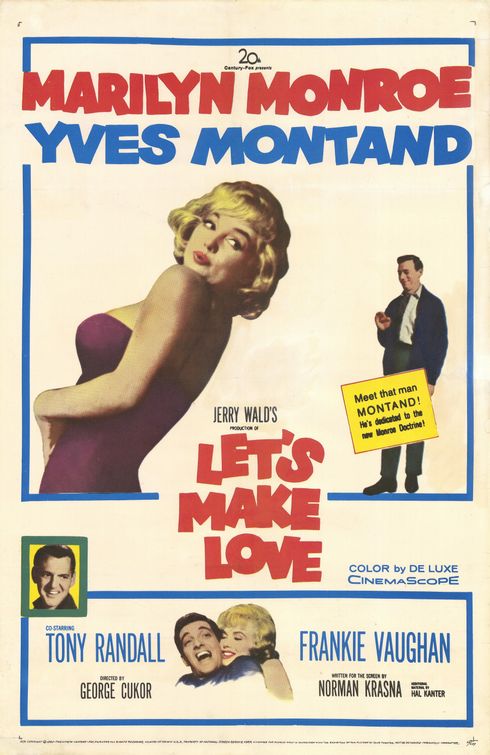
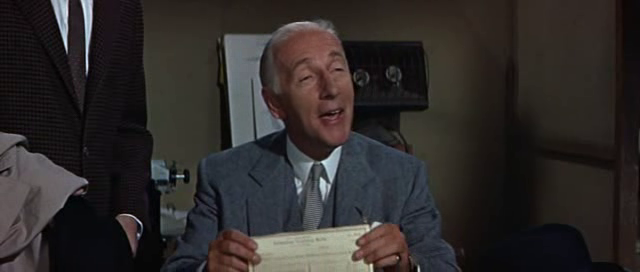
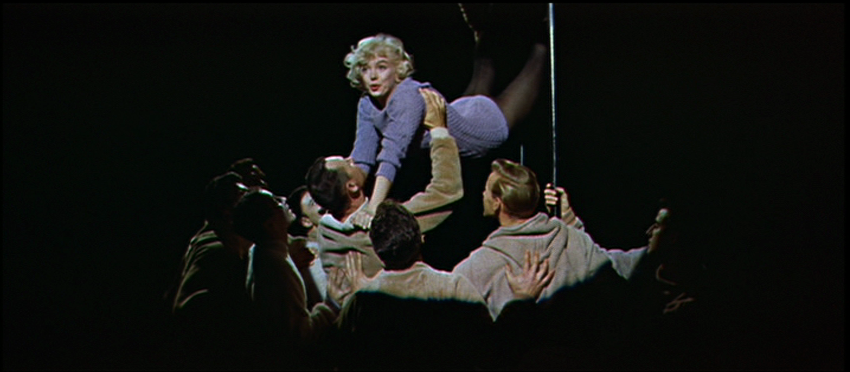
Review: Meanwhile, Montand is surprisingly well-cast as a billionaire needing to be coached on his performance style (by Milton Berle, Bing Crosby, and Gene Kelly in brief cameos) in order to win Monroe’s heart. Despite his reputation as an unrepentant ladies’ man, one gets the genuine impression that he really does want to find someone who will love him for himself — thus turning him into somewhat of a blithering idiot when faced with the woman he hopes will become his life-partner. Indeed, we feel a surprising amount of compassion for him as he finds himself (nicely) rejected time and again, once he’s distanced from the comfortable trappings of his money and reputation. Meanwhile, he and Monroe possess a natural chemistry together that makes sense, given the real-life affair they embarked upon for a brief while. With all that said, the film is certainly not without its flaws, and most critics view it as a decidedly lesser entry in both actors’ oeuvres. Randall’s character barely registers at all, while Monroe’s romance with Vaughan is given far too little depth to help us understand his character as anything other than the conveniently plot-driven “romantic rival” Montand must defeat. Meanwhile, the cameos by Berle et al. come across as somewhat contrived. However, the strength of the two lead performances — as well as some knock-out numbers performed by Monroe (most notably her pole-dance rendition to Cole Porter’s “My Heart Belongs to Daddy”), and a fine supporting performance by Wilfrid Hyde-White as Montand’s no-nonsense business front — make this one worth at least a one-time look. Redeeming Qualities and Moments:
Must See? Links: |
“John, everyday you act worse — but today you’re acting like tomorrow.”
|
Synopsis: |
|
Genres, Themes, Actors, and Directors:
Response to Peary’s Review: Redeeming Qualities and Moments:
Must See? Links: |
“We’re about the only two people in the world who don’t think we’re married.”
|
Synopsis: |
|
Genres, Themes, Actors, and Directors:
Response to Peary’s Review: Redeeming Qualities and Moments:
Must See? Links: |
“She’s untapped… Why, she’s got everything wrong with her!”
|
Synopsis: |
|
Genres, Themes, Actors, and Directors:
Response to Peary’s Review: Redeeming Qualities and Moments:
Must See? Links: |
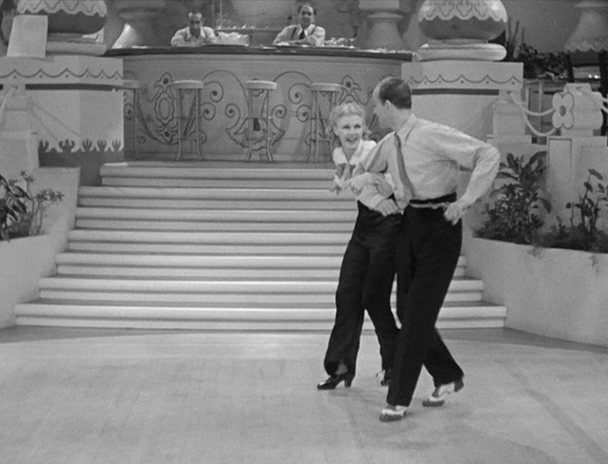
“What have these South Americans got below the equator that we haven’t?”
|
Synopsis: |
|
Genres, Themes, Actors, and Directors:
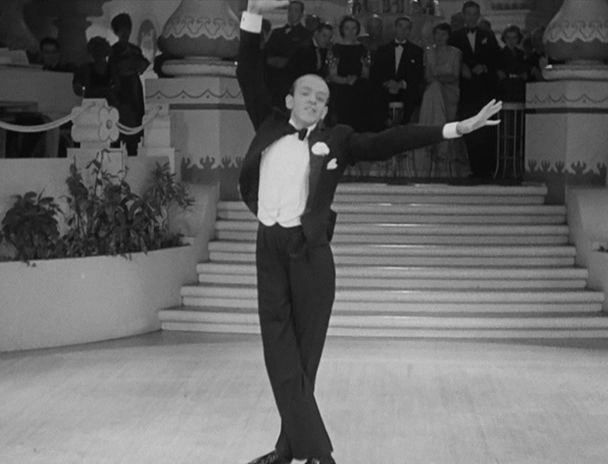
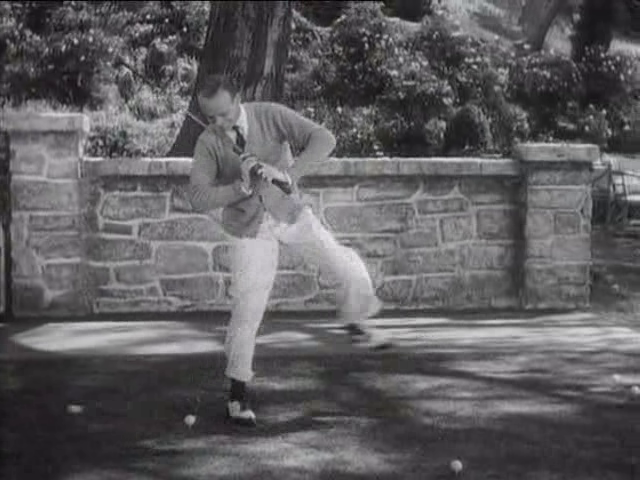
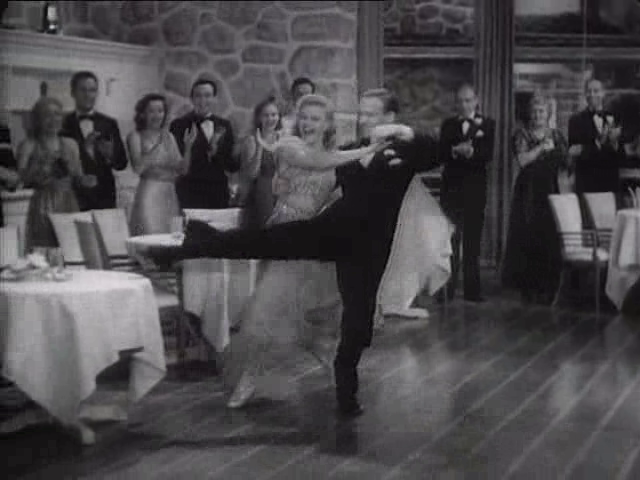
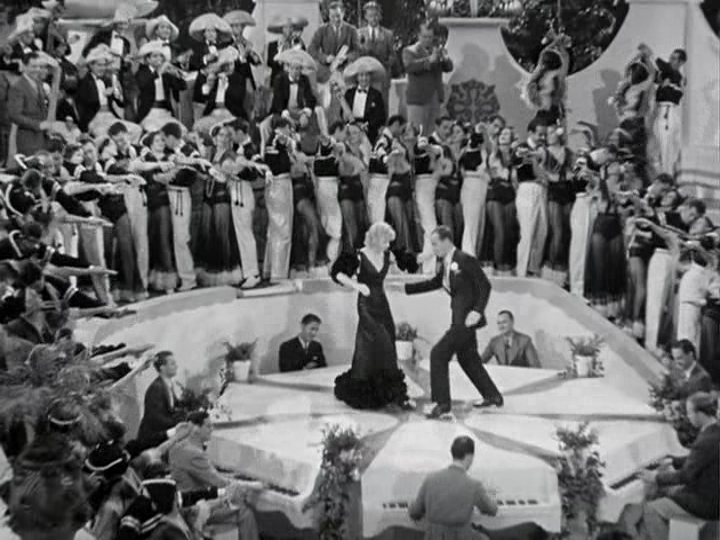
Response to Peary’s Review: Indeed, while “Rogers and Astaire are the main reason this film” has remained in film lovers’ consciousness (most know of it simply as the movie that sparked Astaire and Rogers’ lengthy onscreen partnership), it’s ultimately more “bizarre” than “innocuous”, and offers some unexpected pleasures here and there — such as the use of shadowy silhouettes (accompanied by an unforgettably wonky musical theme) to represent the three “evil” bank members, or the surreal outcome of Del Rio and Raymond’s overnight island stay. Meanwhile, the culminating aerial sequence (complete with one chorine nearly falling to her death!) is certainly worth a look for curiosity-value alone — though it’s not quite enough to raise the film as a whole to the level of “must see” viewing. Redeeming Qualities and Moments:
Must See? Links: |
“Now you know how the other half lives.”
|
Synopsis: |
|
Genres, Themes, Actors, and Directors:
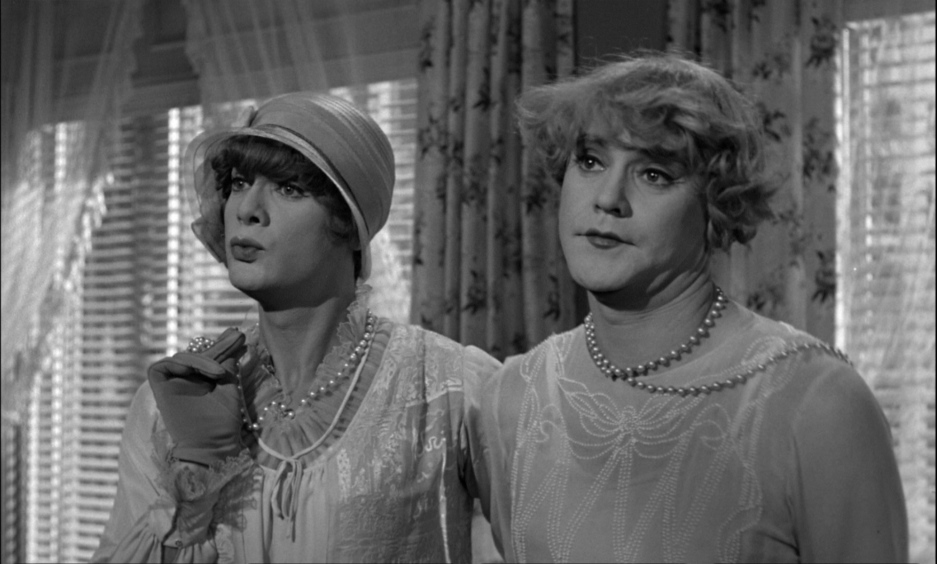
Response to Peary’s Review: Peary argues that SLIH features “Marilyn Monroe’s most delectable performance”, and names her Best Actress of the Year in Alternate Oscars, where he notes that while she “plays a character who has been pushed around in life… [she] doesn’t try to win audience sympathy or pass herself off as lovable, as she does in other films”. Instead, he posits, she “concentrated on comedy”, and comes across as “truly funny in this film”. Indeed, there’s truly no evidence of the infamous inter-personal conflicts between Monroe and others that plagued the film’s production. Meanwhile, Peary names Jack Lemmon Best Actor of the Year in Alternate Oscars, where he notes that Lemmon is “howlingly funny” playing a “character who is excitable, frantic, flustered, argumentative, cynical, sarcastic, curious, horny, and slightly mischievous”. What’s most impressive about Lemmon’s characterization is the way he “jumps into the zaniness [of his “insane predicament”] and allows himself to become screwy and happy”. Peary notes that “as in all of his most successful comedies, he’s appealing here because, in addition to his immense talent, he seems to be enjoying himself so much”. In his analysis of the film for GFTFF (elaborated upon in his more extensive reviews for Cult Movies 2 and Alternate Oscars), Peary notes that “in Wilder’s screen world, people are identified by what they wear, carry, or own, but by [the] film’s end, [the] characters will be identified by who they are”. He notes that “interestingly, Jerry and Joe don’t become silly movie females when they don women’s clothing”, instead becoming “tough, smart, fun-to-be-with broads who take guff from no man and are loyal friends to other women”. He points out that “like Sylvia Scarlett, [the movie’s] theme is that when a person lives as the other sex, he or she has the opportunity to explore previously latent aspects of the personality”; to that end, he argues that “Daphne and Josephine aren’t the alter egos of Jerry and Joe” so much as they are “more (extensions) of the two men”. Ultimately, SLIH remains the best and smartest of countless cross-dressing comedies to come out of Hollywood, offering an enduring treat to both first-time viewers as well as those returning for repeat visits. Redeeming Qualities and Moments:
Must See? Categories
(Listed in 1001 Movies You Must See Before You Die) Links: |
“Everybody is somebody’s fool.”
|
Synopsis: |
|
Genres, Themes, Actors, and Directors:
Response to Peary’s Review: I’m in complete agreement with Peary’s assessment of this convoluted yet consistently enjoyable and creatively filmed noir, which — like most of the titles in Welles’ oeuvre — never fails to keep one engaged on (at the very least) a visual level. Welles-the-actor has been criticized for his attempt at an Irish brogue here in the lead role, but I find it convincing enough, and a nice change from his typically sonorous boom. It’s remarkably easy to buy his characterization as a chump who’s fully aware he’s being taken advantage of by Hayworth and her crew, yet can’t seem to find a way out of the nightmare he’s pulled into. The screenplay (co-written by Welles) is full of zingy one-liners (“I’ve always found it very sanitary to be broke”), and will certainly keep you on your toes throughout — though I actually don’t find it quite so difficult to follow as others claim. Meanwhile, Hayworth is as gorgeous as ever, easily convincing us that she’s someone Welles would lose his head over. Redeeming Qualities and Moments:
Must See? Categories
(Listed in 1001 Movies You Must See Before You Die) Links: |