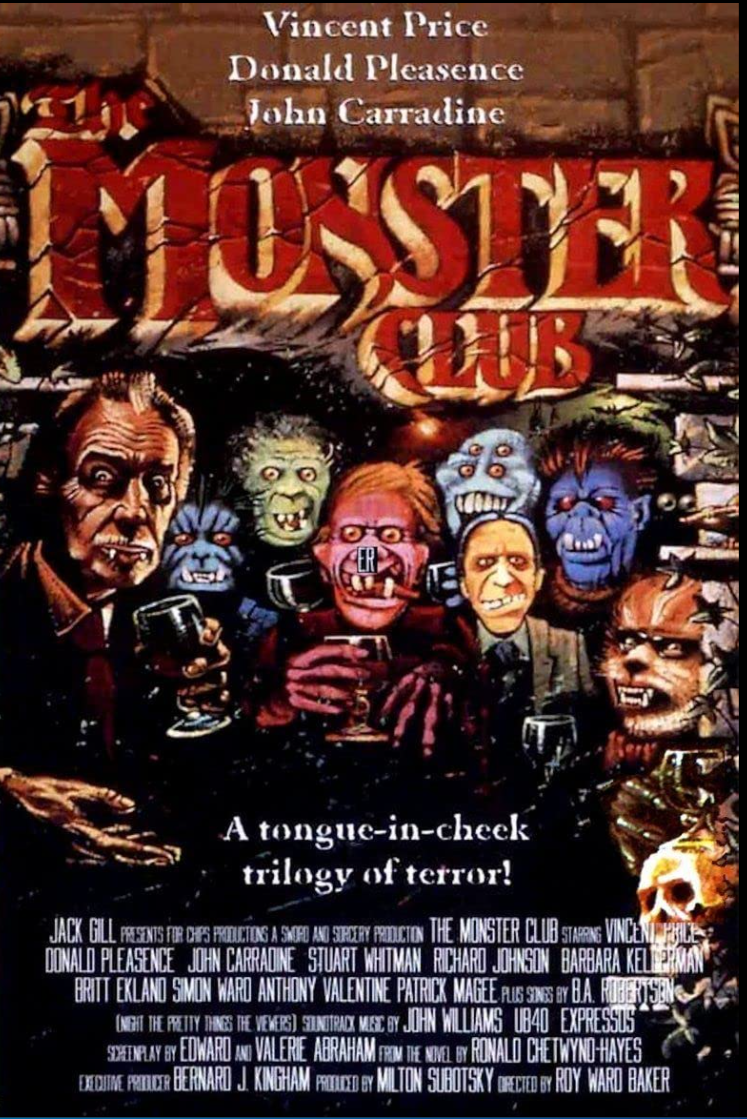
Monster Club, The (1981)
“There’s nothing sadder than the tender-hearted grief of a monster.”
|
Synopsis: |
|
Genres, Themes, Actors, and Directors:
Review:
Redeeming Qualities and Moments:
Must See? Links: |
“There’s nothing sadder than the tender-hearted grief of a monster.”
|
Synopsis: |
|
Genres, Themes, Actors, and Directors:
Review:
Redeeming Qualities and Moments:
Must See? Links: |
“There are mysterious parts in that book — but the only true mystery is that our very lives are governed by dead people.”
|
Synopsis: |
|
Genres, Themes, Actors, and Directors:
Review:
Redeeming Qualities and Moments:
Must See? Links: |
“It’s perfectly normal for insects to be slightly telepathic.”
|
Synopsis: |
|
Genres, Themes, Actors, and Directors:
Response to Peary’s Review:
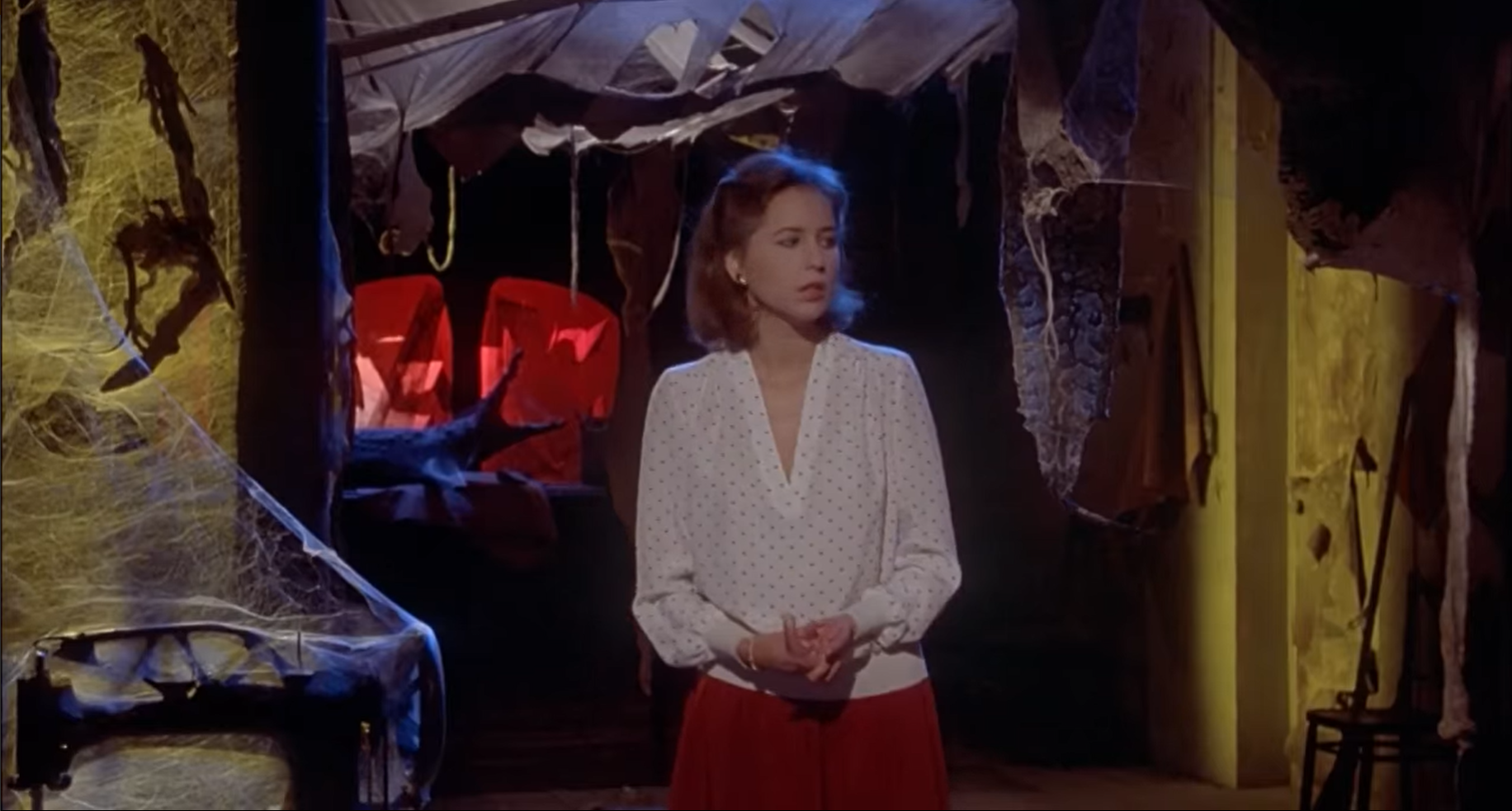
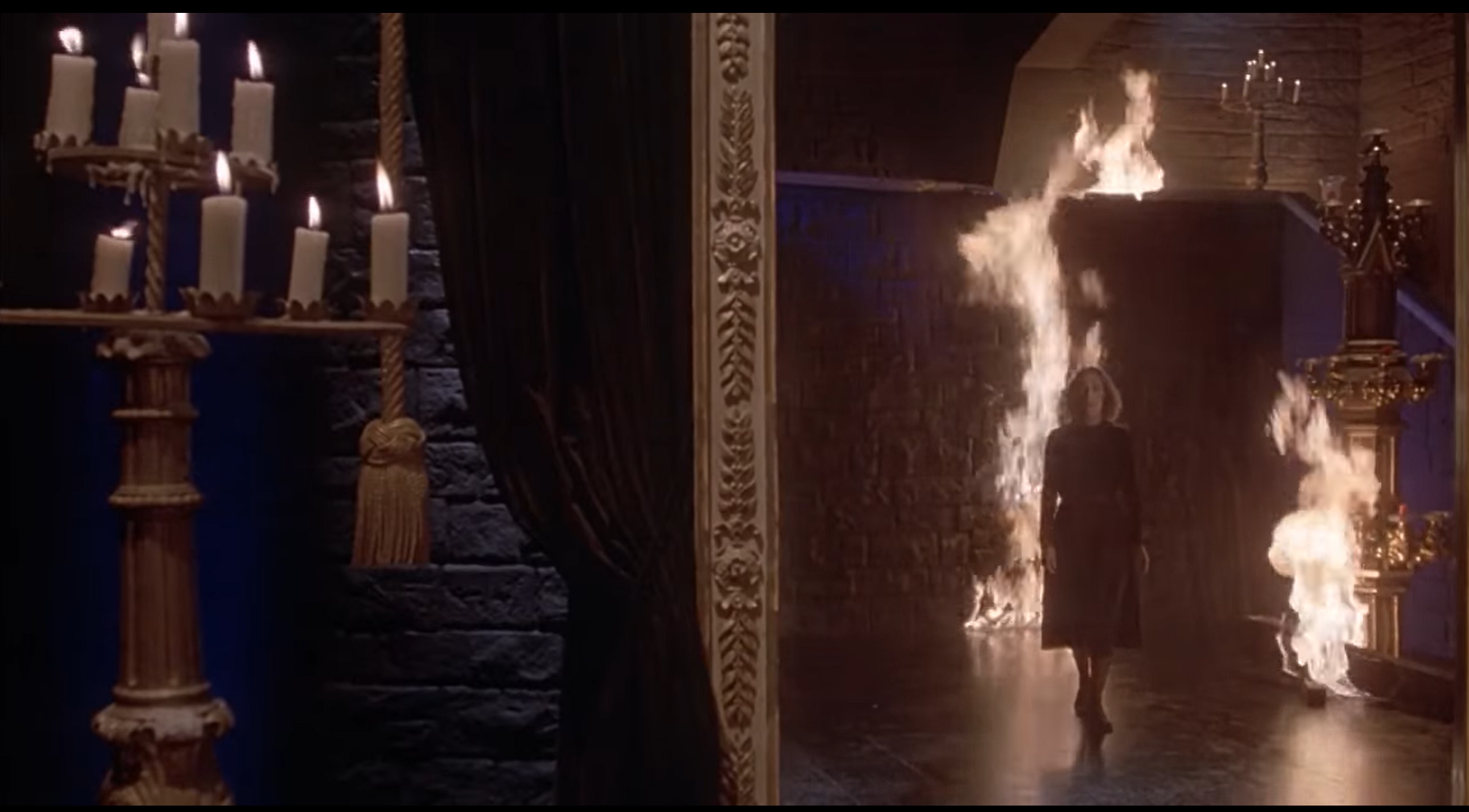
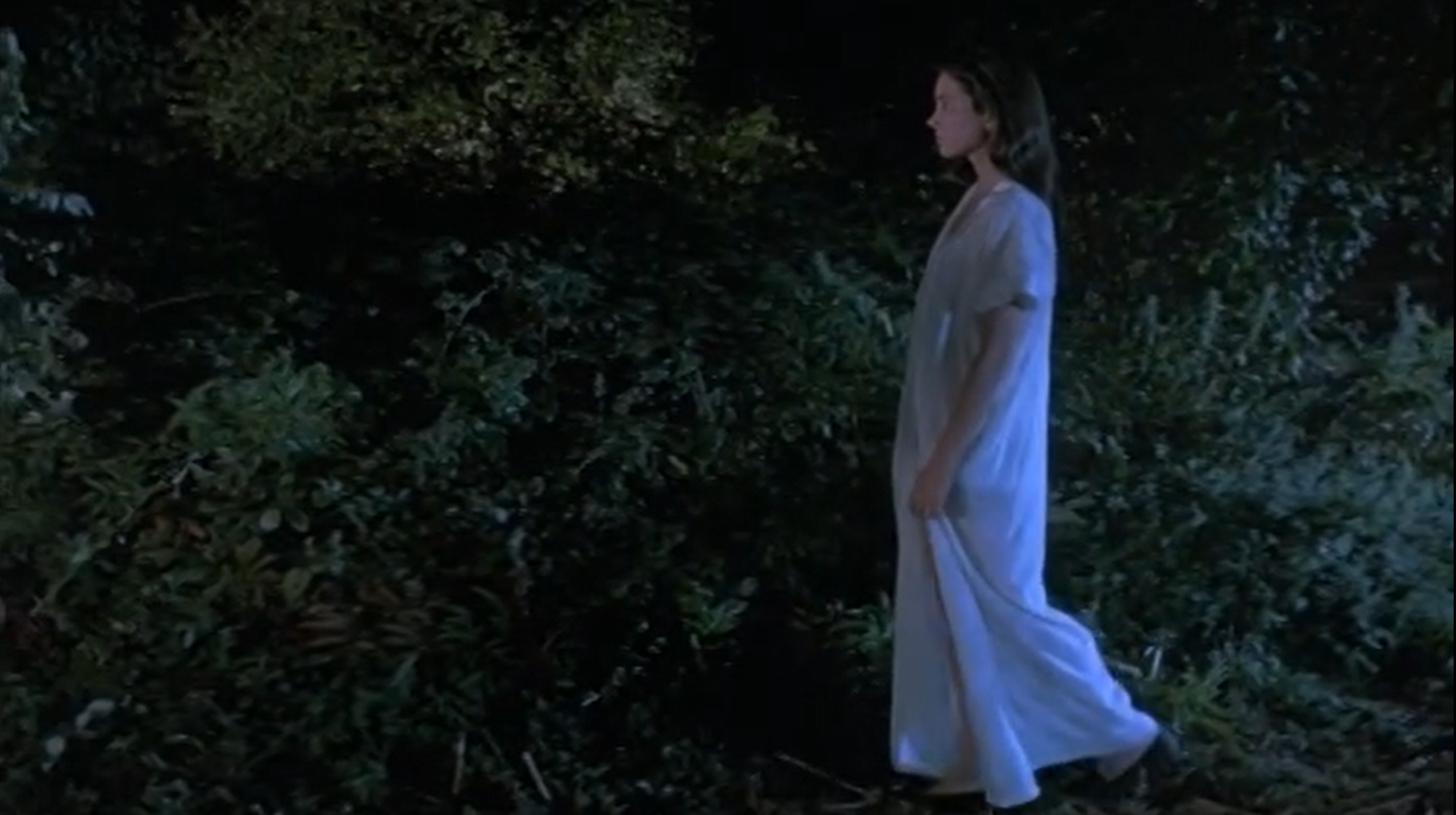
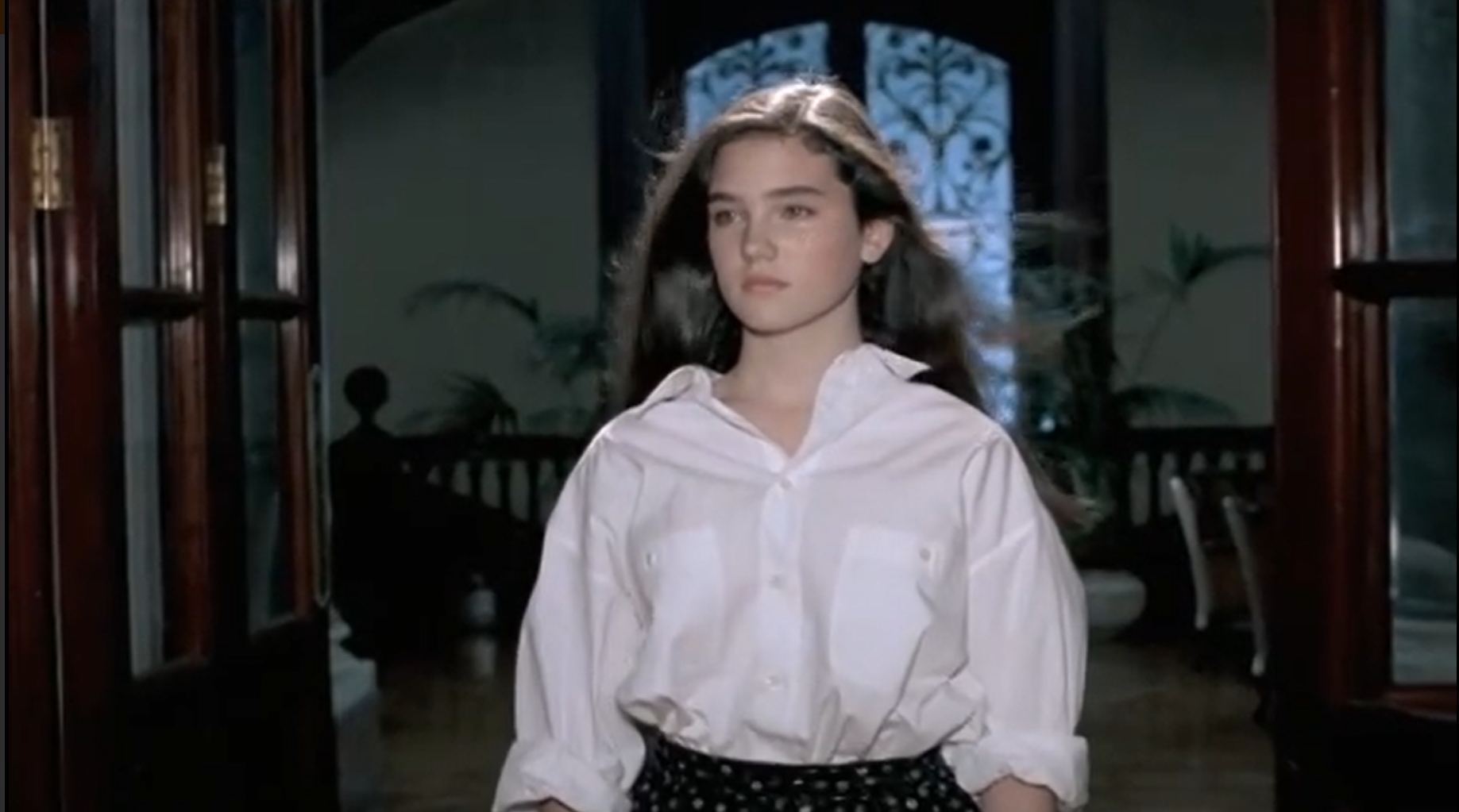
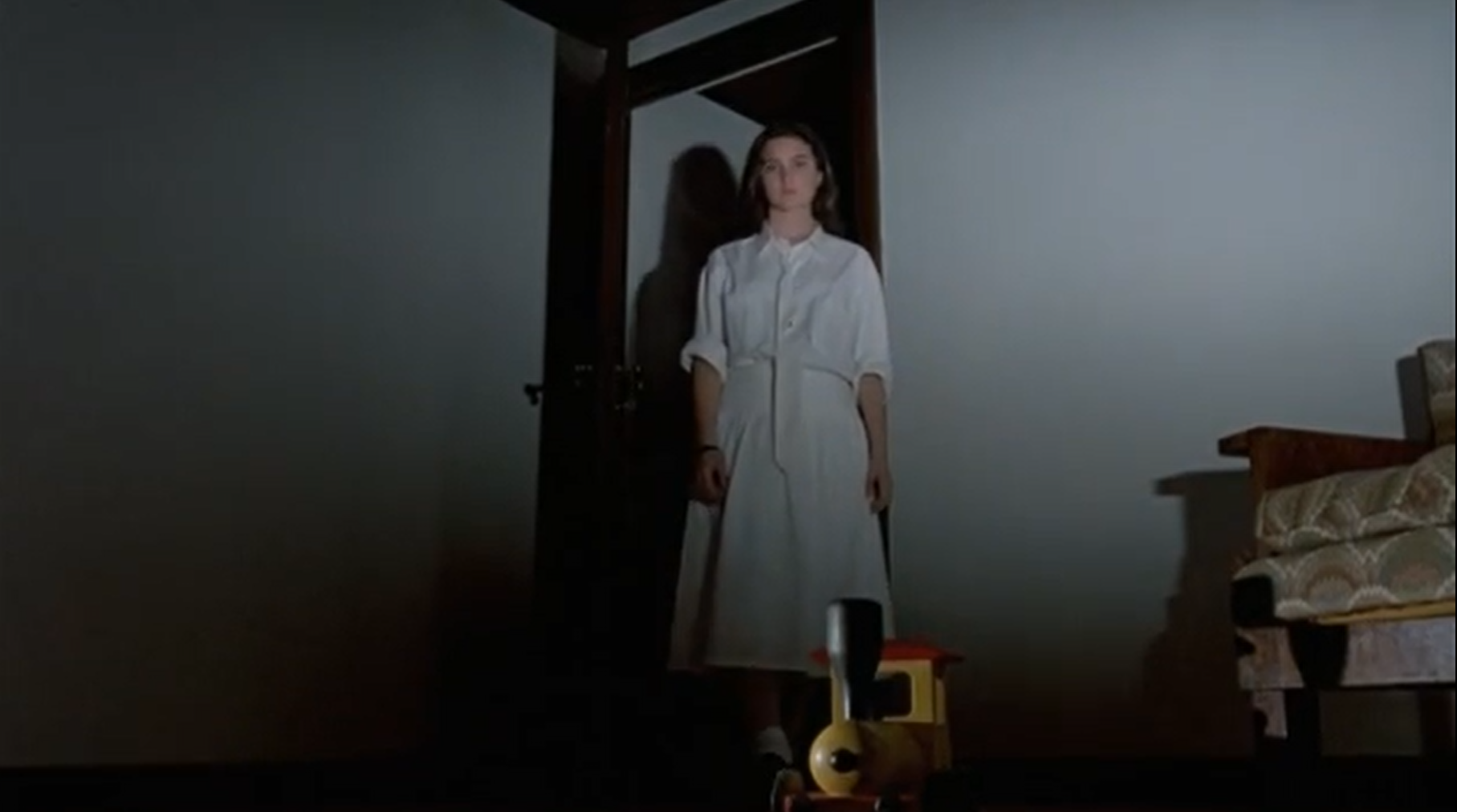
… and even her control over insects smack[ing] of writer’s ‘convenience’; in fact, the insect premise has such little effect on what happens that they could easily be eliminated without serious damage being done to the film.” Indeed, everything about the screenplay is awkwardly handled, clumsily plotted, occasionally illogical, and woodenly acted. To that end, Peary points out that Pleasence’s chimp “gives the film’s most impressive performance” (!). While 15-year-old Connelly is undeniably stunning:
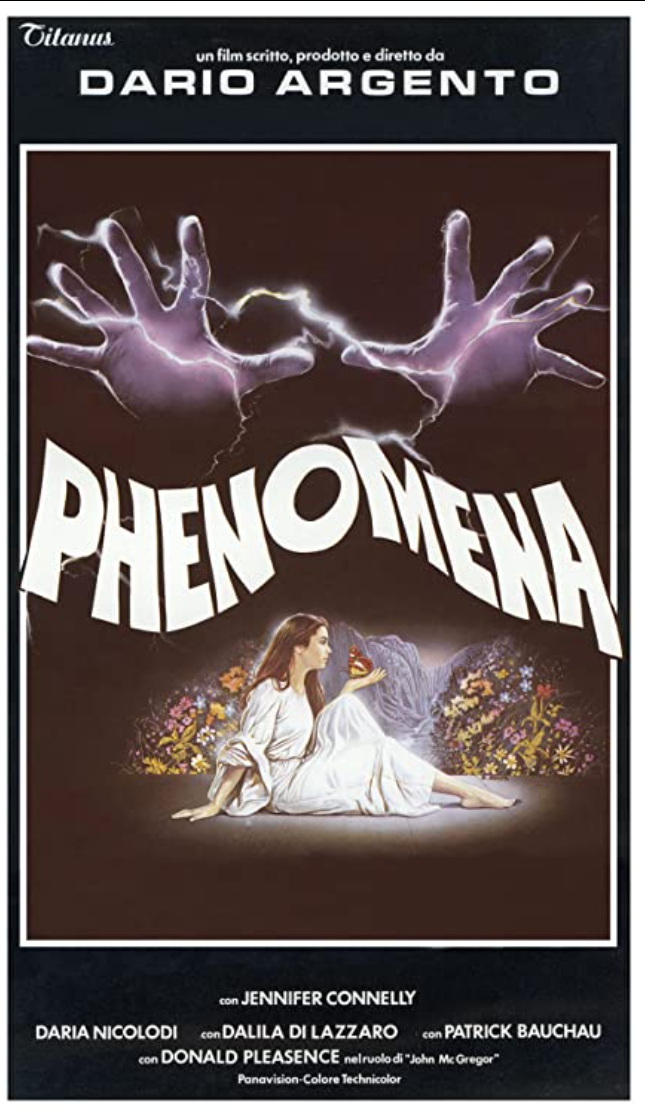
… she’s given terribly lame dialogue and situations to play out. Feel free to skip this one. To watch a humorous overview by a fan of this film (who generously points out its many laughably bad moments: “It’s time for another Donald Pleasence monologue…”), click here. Note: For this review, I’ve used the American-release title of the film as referenced in Guide For the Film Fanatic, which had 20+ minutes removed. This is likely the version Peary saw, though I watched the 116 minute version known as Phenomena. Redeeming Qualities and Moments:
Must See? Links: |
“Why not breed a parasite that can do something useful?”
|
Synopsis: |
|
Genres, Themes, Actors, and Directors:
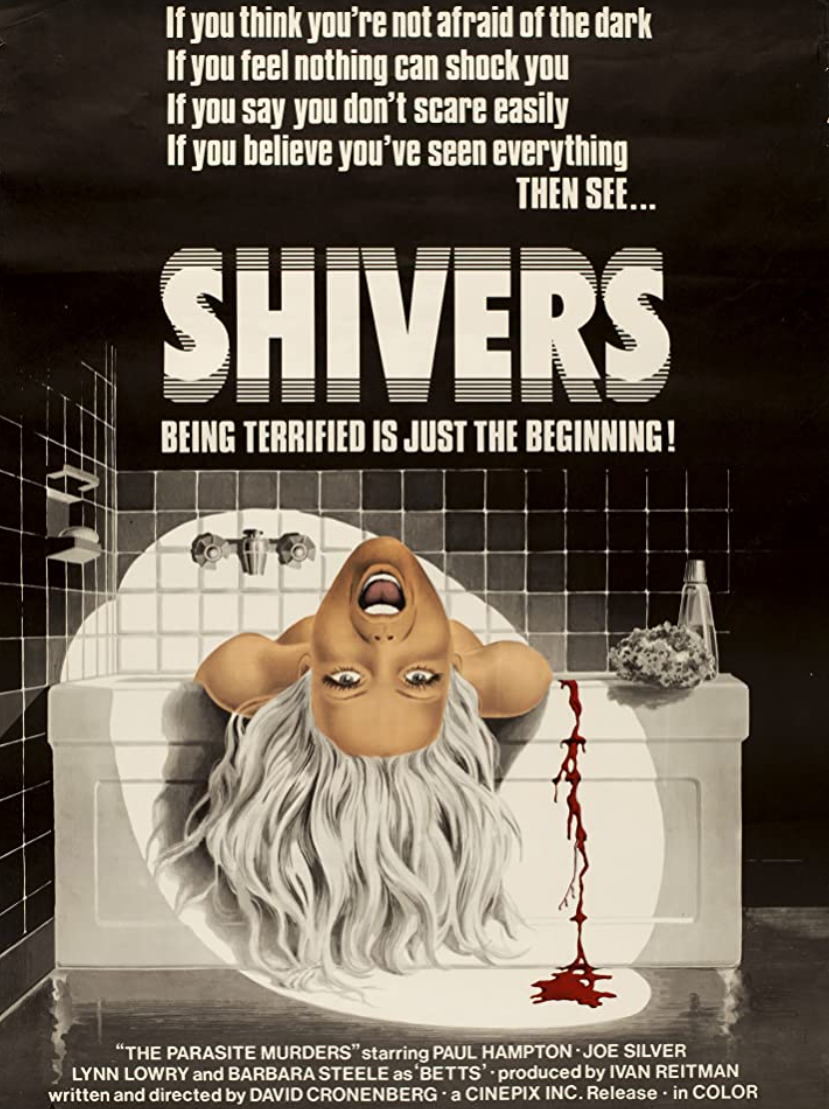
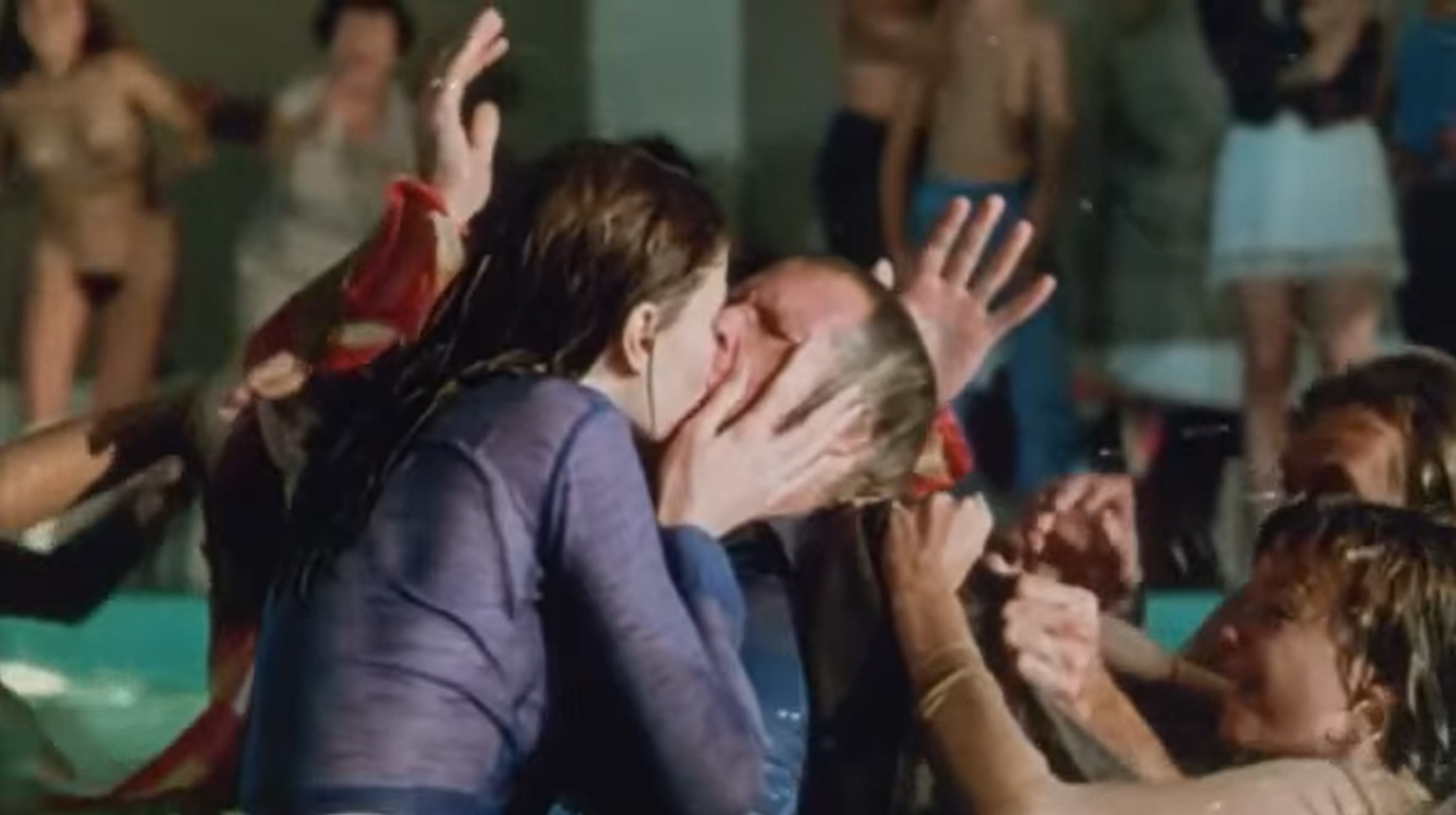
Response to Peary’s Review: Peary writes that while this “exploitation picture is too violent and crude”, the “special effects (i.e., creatures moving beneath the skin) by Joe Blasco anticipated those that would appear in future big-budget SF and horror films” — like Alien (1979). Because the sub-genre of “sci fi body horror” films isn’t a personal favorite, it’s hard for me to comment on whether Cronenberg’s film goes off the rails or simply continues along its own perversely logical trajectory; I can say that things certainly build to a tense fever pitch by the end, leading to a sense of claustrophobia and despair.
As Richard Scheib of Moria writes, “Shivers is Night of the Living Dead construed as a satire on the 1970s swinger lifestyle” — a very apt analogy indeed. Redeeming Qualities and Moments:
Must See? Links: |
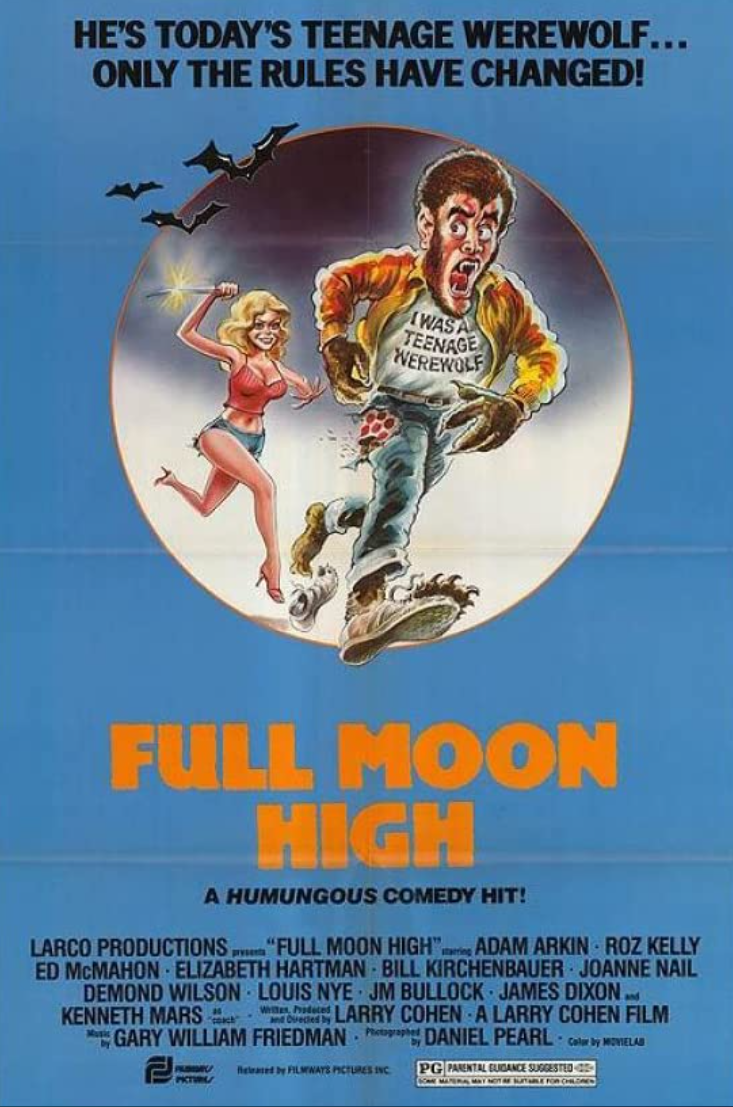
“I know all about werewolves and their little problems.”
|
Synopsis: |
|
Genres, Themes, Actors, and Directors:
Review:
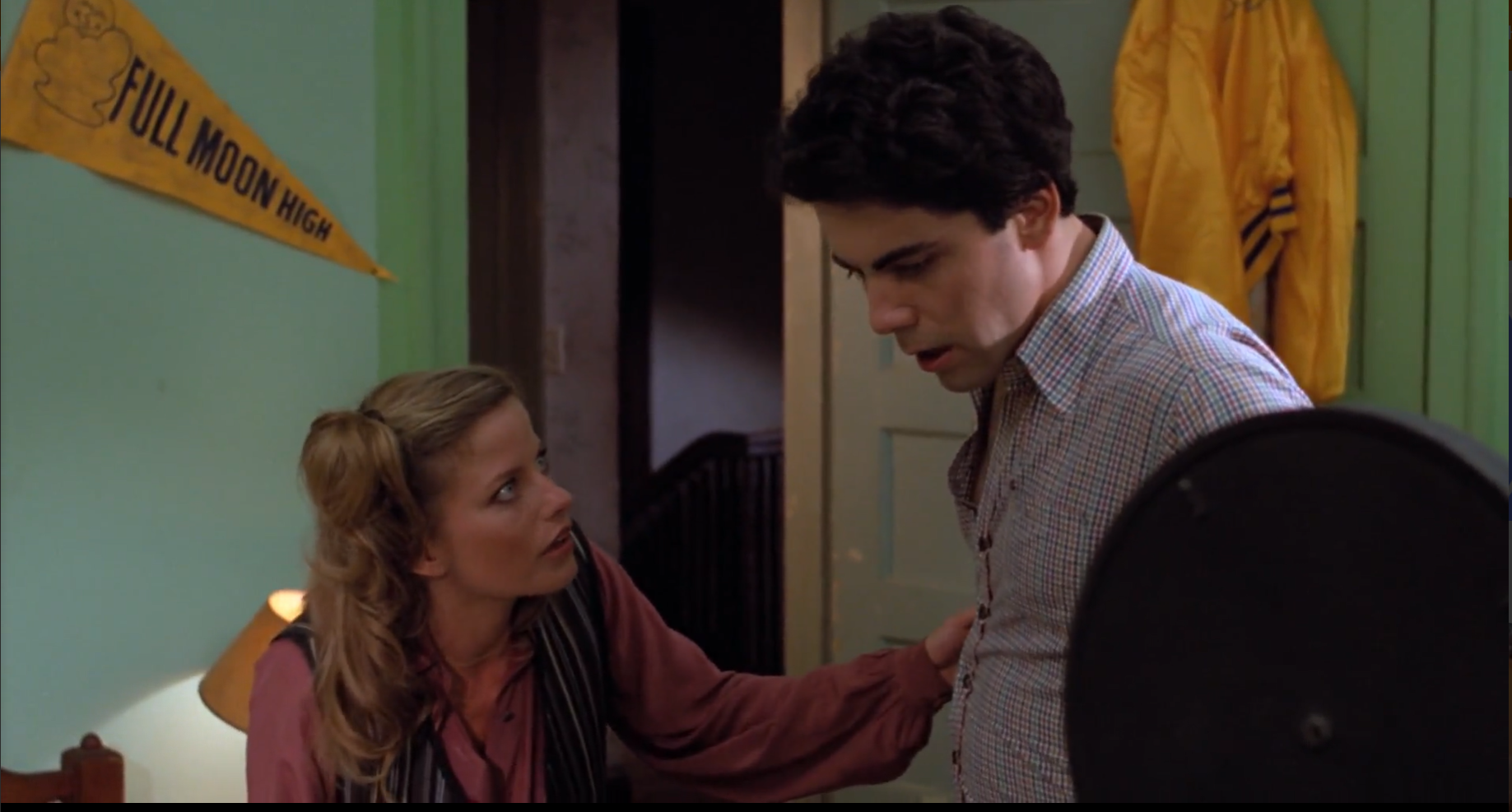
Watch for Alan Arkin (Arkin’s real-life dad) in a bit role as an “insults-based” therapist called in to try to help.
Redeeming Qualities and Moments:
Must See? Links: |
“A wolf may be more than he seems.”
|
Synopsis: |
|
Genres, Themes, Actors, and Directors:
Response to Peary’s Review:
— and while “it could be called a ‘suspense’ film or a ‘terror’ film,” it’s “more accurately… a film about sexual anxiety and a young virgin’s fear of and fascination about crossing the sexual threshold.” He notes that Jordan and Carter “have brought new sexual meaning to the fairytale” of Little Red Riding Hood:
… “by making the girl-wolf relationship a metaphor for all male-female relationships and by having the girl’s fairytale walk through the woods to Grandma’s house be the centerpiece of a frenzied dream of a young girl.”
Peary describes the movie as “wondrously photographed (its ‘look’ is unique)”, representing a “netherworld” that “is magical, enchanting, yet mysterious and foreboding. It’s a world filled with insects, snakes and toads, and warm-blooded animals; twisted trees, spider webs, and all kinds of sexual imagery.”
While Rosaleen is warned by her grandmother (in “a delightful bit by Angela Lansbury”) to “stay away from men”:
… and she “believes her grandmother speaks the truth about men and fears sexual contact”, she “does not run from the stranger she meets in the forest.”
Peary adds that “even more than Picnic at Hanging Rock, this film expresses the painful and confusing sexual yearnings of young girls.” He ends his review by noting that while this movie is “not for all tastes”, it’s “definitely worth a look” — and in the years since Peary’s GFTFF was published, it’s developed a cult following, as has his phenomenal thriller The Crying Game (1992) (which happens to be one of my top-ten personal favorite films — but my review of that will have to wait until I have time to resume writing about post-GFTFF must-see titles…) What most impresses me about The Company of Wolves (other than its incomparable other-worldly sensibility) is how strongly it empowers females: while Peary focuses on Patterson’s sexual development, I see this as primarily a movie about a girl daring to venture out into the (admittedly scary) world on her own, imagining the worst that might happen to a female at the hands of men (dealing with an insistent suitor; being attacked; being impregnated and/or abandoned) and also how she might handle and survive such a fate. Redeeming Qualities and Moments:
Must See? Categories
Links: |
“The law believes in motherhood.”
|
Synopsis: |
|
Genres, Themes, Actors, and Directors:
Response to Peary’s Review:
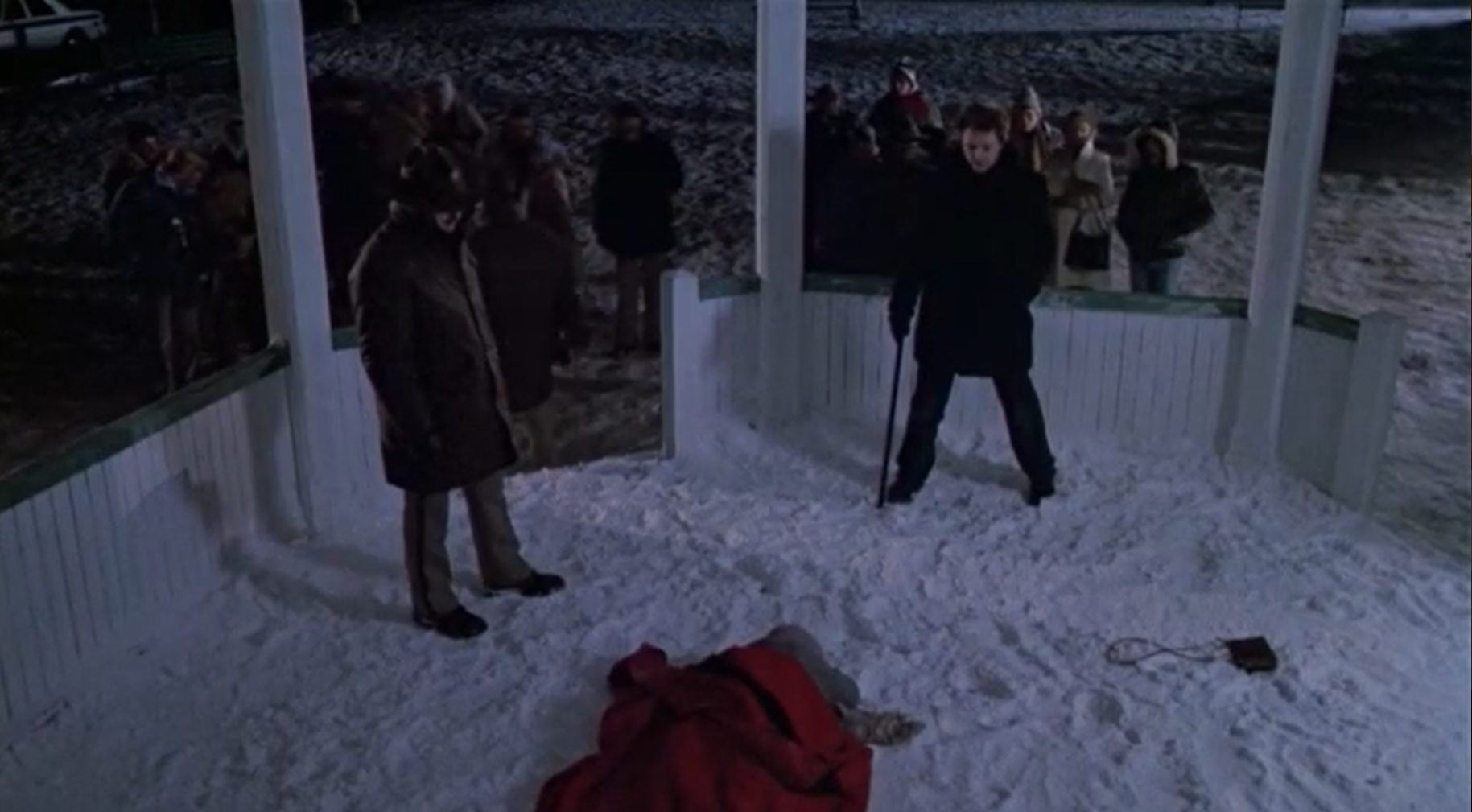
While he feels the “film often has repulsive imagery and much in the climactic scene is illogical,” there “are several terrifying scenes” and he posits that the picture has “a cold, other-worldly feel” which is “heightened by the fact that many of the characters’ surnames… can’t be found in your local telephone book” (!). Peary elaborates upon his review in his first Cult Movies book, where he admits to being “intrigued by the premises of all of Cronenberg’s film” but questioning “his judgments and directorial maturity”, given that he gets “juvenile pleasure from trying to jolt viewers by repelling them with blatant, often ridiculous images”, and gets “kicks trying to disgust us.” (In a “making of” documentary about this movie, Eggar concedes that it was hard not to laugh while filming the infamous scene in which she reveals her deformed body to Hindle…) Peary writes that among the “terrifying sequences” are “the murders of Julianna [Nuala Fitzgerald] and Barton [Henry Beckman]” (Eggar’s parents); he accurately notes that “when Julianna enters her mysteriously ramshackle kitchen, looks up toward the ceiling, and spots a little crouched figure in red atop the cupboards about to leap on her, or when Candy sees the hooded figure (who may remind you of the dwarf assassin in Don’t Look Now, 1973) hiding on the stairwell, you are likely to jump.” Meanwhile, “the most chilling” scenes are when two of the dwarf-like creatures “brazenly enter Candy’s classroom pretending to be her classmates:
… and when they walk with Candy hand in hand along the highway in the snow.” Peary writes that “perhaps what is most remarkable about The Brood is the sinister quality that Cronenberg establishes,” by “staging intense psychodramas between Raglan and Nola” (and, in the opening scene, with another troubled patient):
… as well as “by creating a restrictive atmosphere around the Psychoplasmics Institute; by making his characters humorless and setting the picture in cold, snowy weather (where everyone wears coats and scarves, and walks under gray skies)”:
… “by giving the autocratic Raglan a henchman; [and] by making us aware of the history of child abuse in Nola’s life.” While Peary doesn’t think the final sequence makes sense, he concedes that “at least it’s spooky, lively, and comes after about an hour and a half of absorbing, solid cinema.” Redeeming Qualities and Moments:
Must See? Categories
Links: |
“You said forever — never ending. Do you remember?”
|
Synopsis: |
|
Genres, Themes, Actors, and Directors:
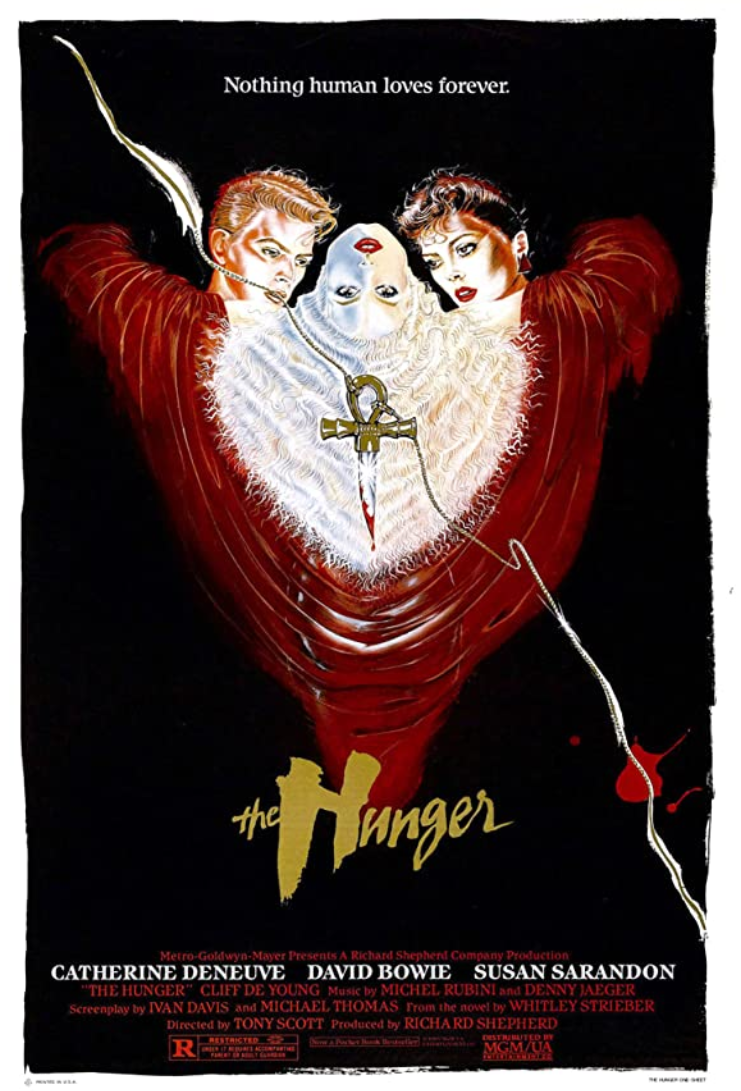
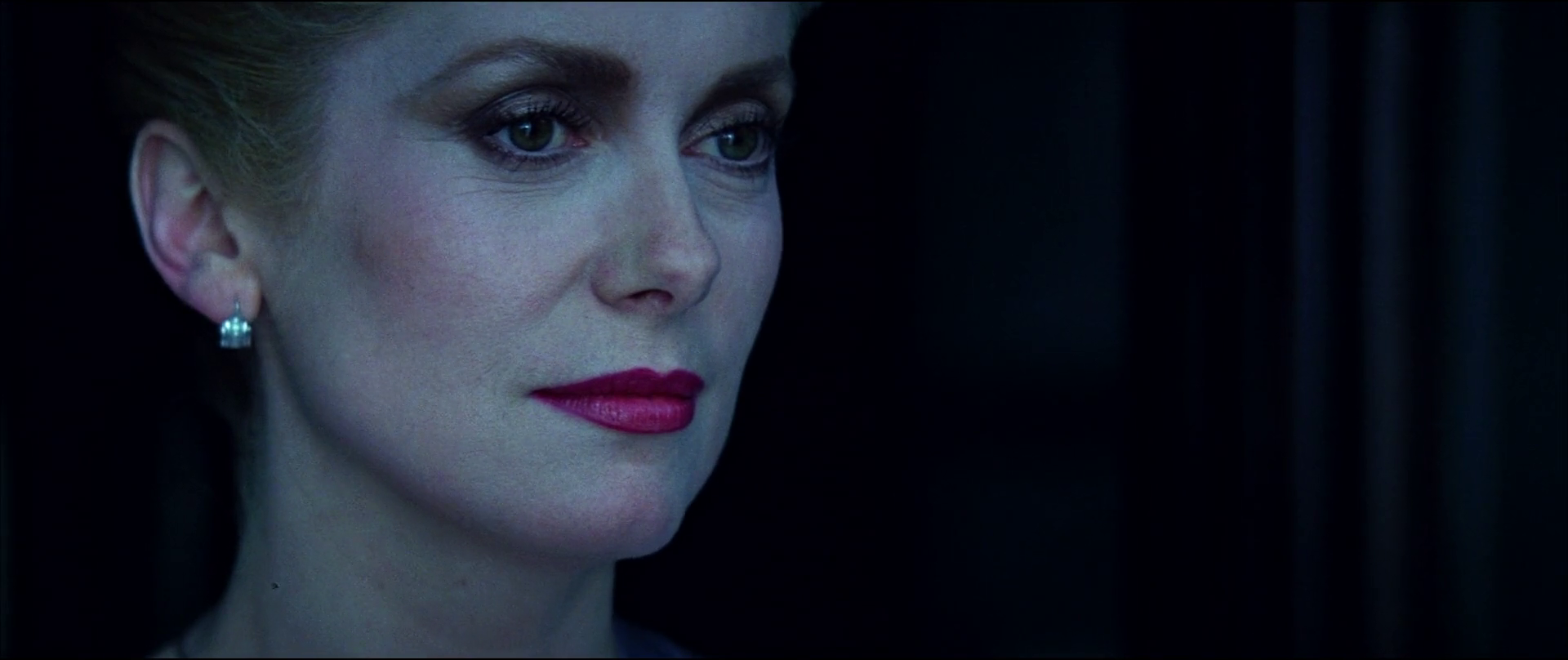
Response to Peary’s Review: (SPOILER ALERT) … by positing that “the trite, horrible scene in which all of Deneuve’s former lovers rise from their coffins and revolt against her is the worst horror-movie finale since the ghost attack in The Sentinel.” I’m less disappointed by this highly stylized cult vampire flick than Peary obviously is. While some aspects of the screenplay — i.e., nearly everything taking place in Sarandon’s laboratory — are insufficiently explained, the overall mood is (appropriately) one of sensuous horror amidst grandeur and deception. Deneuve and Bowie are perfectly cast as (nearly) ageless vampires who live for seduction (and classical music), and Sarandon is both sexy and believable as a doctor strangely attracted to Deneuve. The ending works okay for me, though (again) I wish some elements were explained more clearly, and I’m not sure what to make of the (deliberately?) ambiguous coda. Meanwhile, Denny Jaeger and Michel Rubin’s score makes excellent use of music by Ravel, Schubert, and Delibes (I’m a sucker for his “Flower Duet”). Redeeming Qualities and Moments:
Must See? Links: |
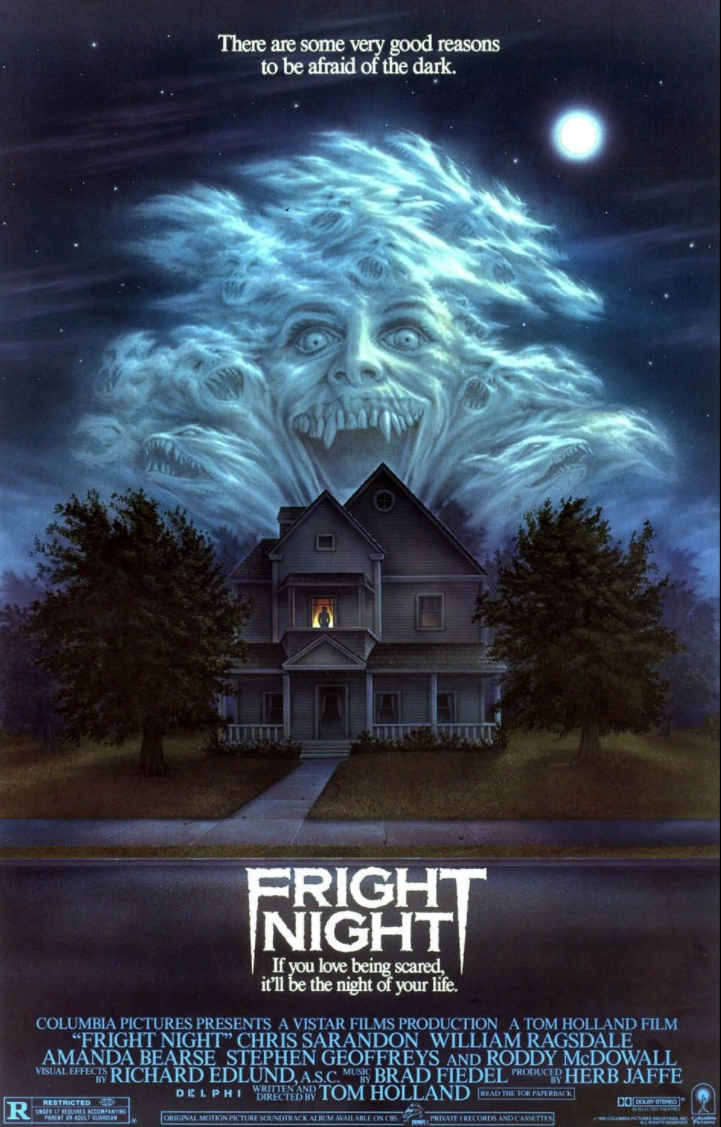
“I have a vampire living next door to me — and he’s going to kill me if I don’t protect myself.”
|
Synopsis: |
|
Genres, Themes, Actors, and Directors:
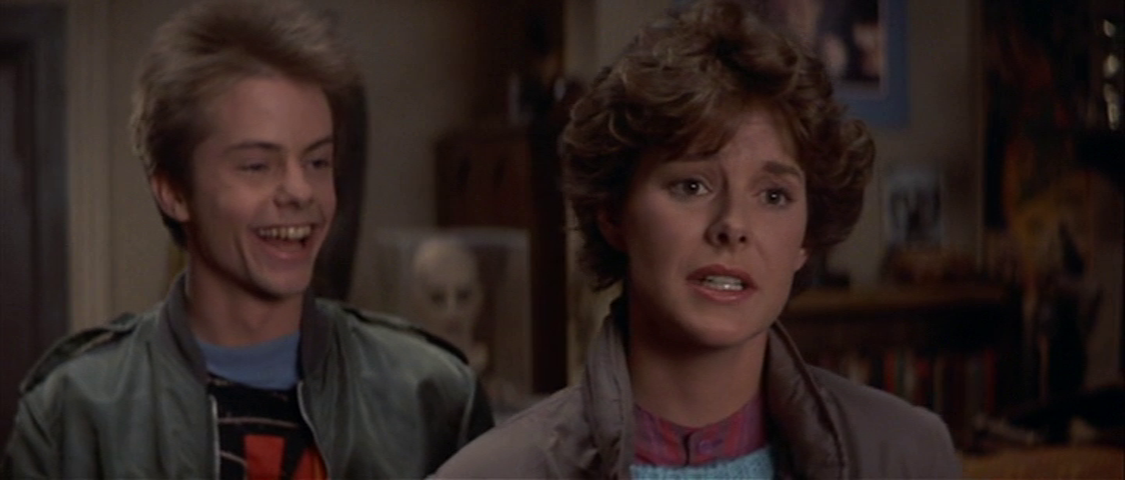
Review: (MINOR SPOILER ALERT) … both Geoffreys and Bearse ultimately fall under his spell.
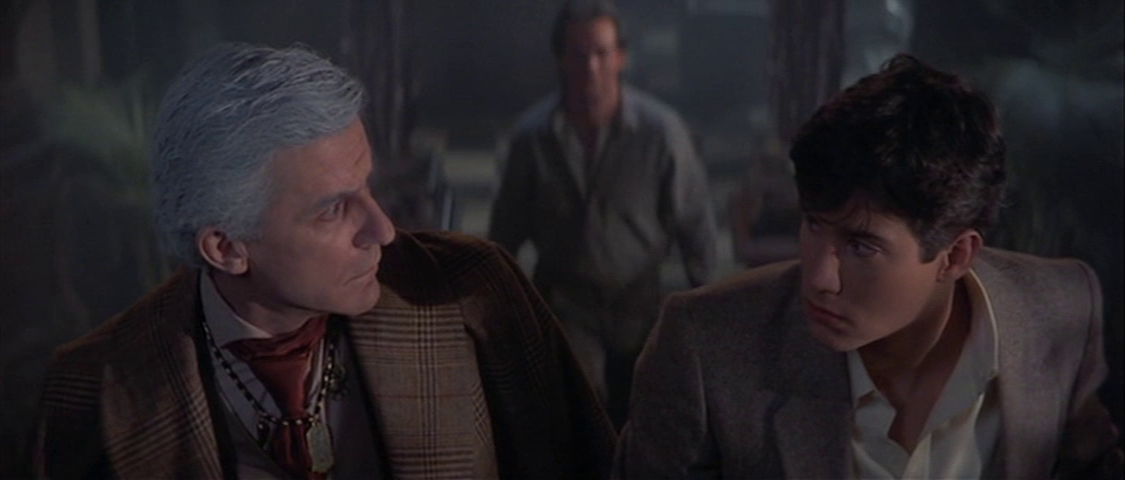
Much less convincing is McDowall, who displays only a couple of different expressions throughout the film, seemingly stuck in a perpetual state of shock and disgust (and his terrible hairpiece is awfully distracting):
To the film’s credit, it’s highly atmospheric, and features a number of pretty spectacular special effects for the time. It was followed by a sequel, a remake, and a sequel to the remake, and has maintained a small cult following — but it isn’t must-see viewing for all film fanatics. Redeeming Qualities and Moments:
Must See? Links: |
“That is your dead zone — the possibility of altering the outcome.”
|
Synopsis: |
|
Genres, Themes, Actors, and Directors:
Response to Peary’s Review:
Peary notes that the “film’s theme is that a man should face up to his moral responsibilities”: in this case, while Walken originally “feels that he should live as an outcast”, he eventually realizes he “must come out of his self-imposed exile and use his rare power to help humanity” — first by exposing “the identity of the Castle Rock Killer”, and later in outing a politician (Martin Sheen) with diabolical intentions.
Peary writes that “both sequences are extremely atmospheric and build to gripping conclusions”, and that the picture as a whole “is strongly acted… and full of unusual moments — including a great, inspired, tasteful scene which has Adams and Walken finally consummating their love.”
Peary ultimately argues that this is “Cronenberg’s best film” and “also the best screen adaptation of Stephen King” — assertions which many fans of both Cronenberg and King will likely take issue with, but he’s right in naming what a satisfying tale this remains. Redeeming Qualities and Moments:
Must See? Categories
Links: |