Targets (1968)

Targets (1968)

“I don’t know what’s happening to me. I get funny ideas.”

Synopsis:
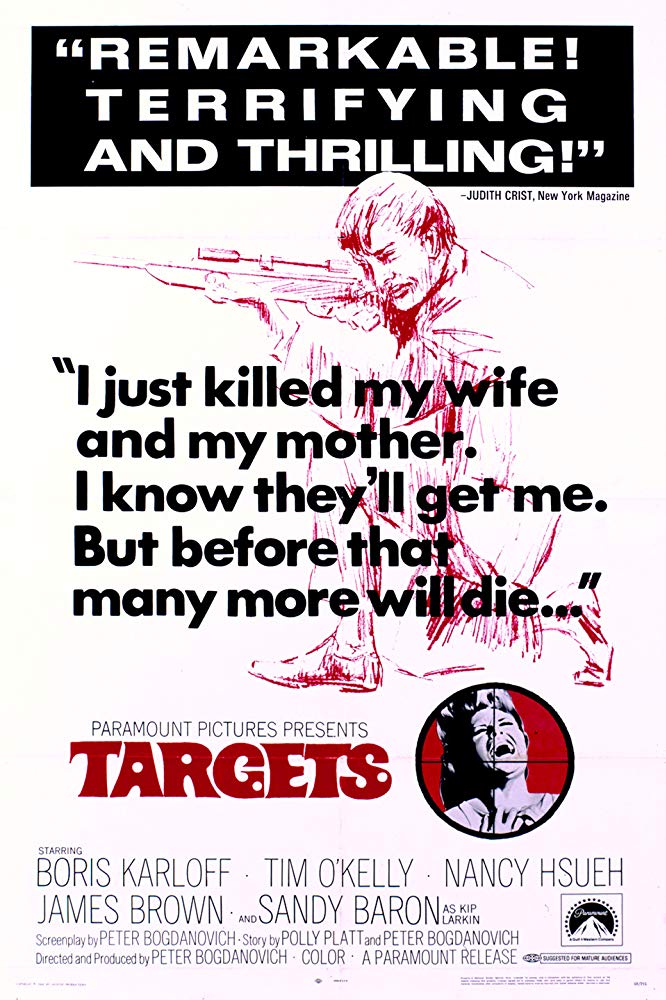
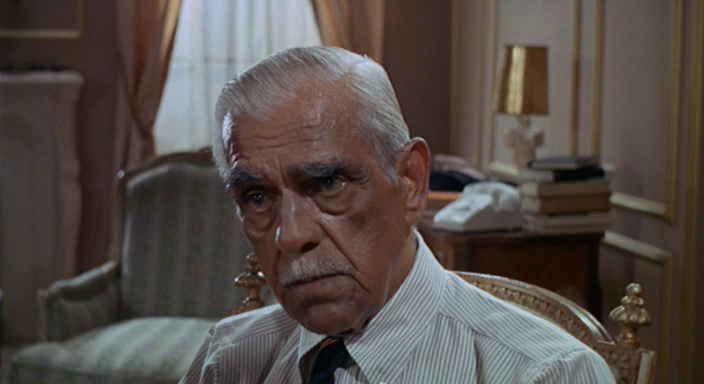
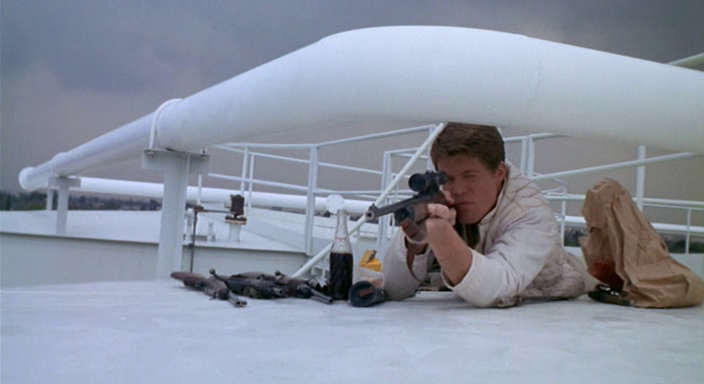
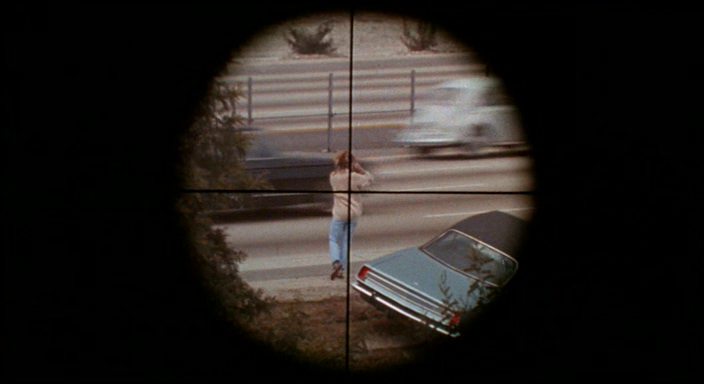
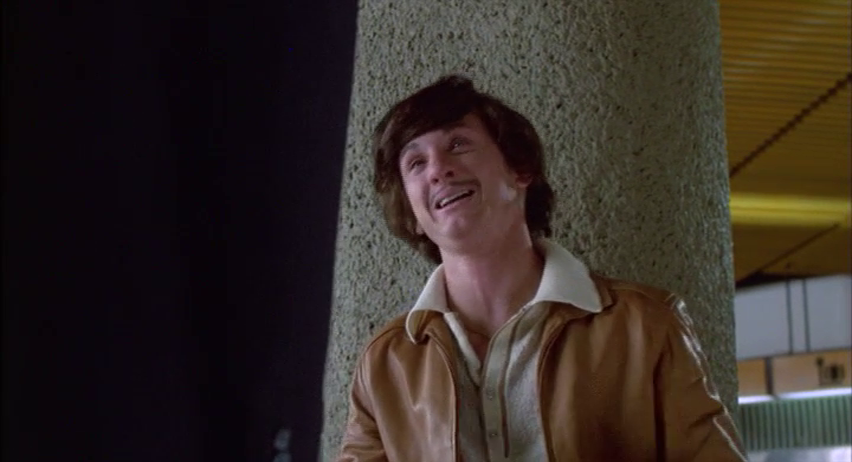
An aging horror star (Boris Karloff) is convinced by his personal assistant (Nancy Hsueh) and a young director (Peter Bogdanovich) to star in one more film after making an appearance at a drive-through screening of his latest flick. Meanwhile, a deranged insurance salesman (Tim O’Kelly) kills his wife (Tanya Morgan), mother (Mary Jackson), and a delivery boy (Warren White) before climbing a water tower and shooting random targets on the freeway below. He then escapes the police and flees to the drive-in theatre where Karloff will be appearing, continuing his sniper massacre and causing massive chaos.

Genres, Themes, Actors, and Directors:

  • Actors and Actresses
  • Boris Karloff Films
  • Horror Films
  • Movie Directors
  • Peter Bogdanovich Films
  • Psychopaths
  • Serial Killers

Response to Peary’s Review:
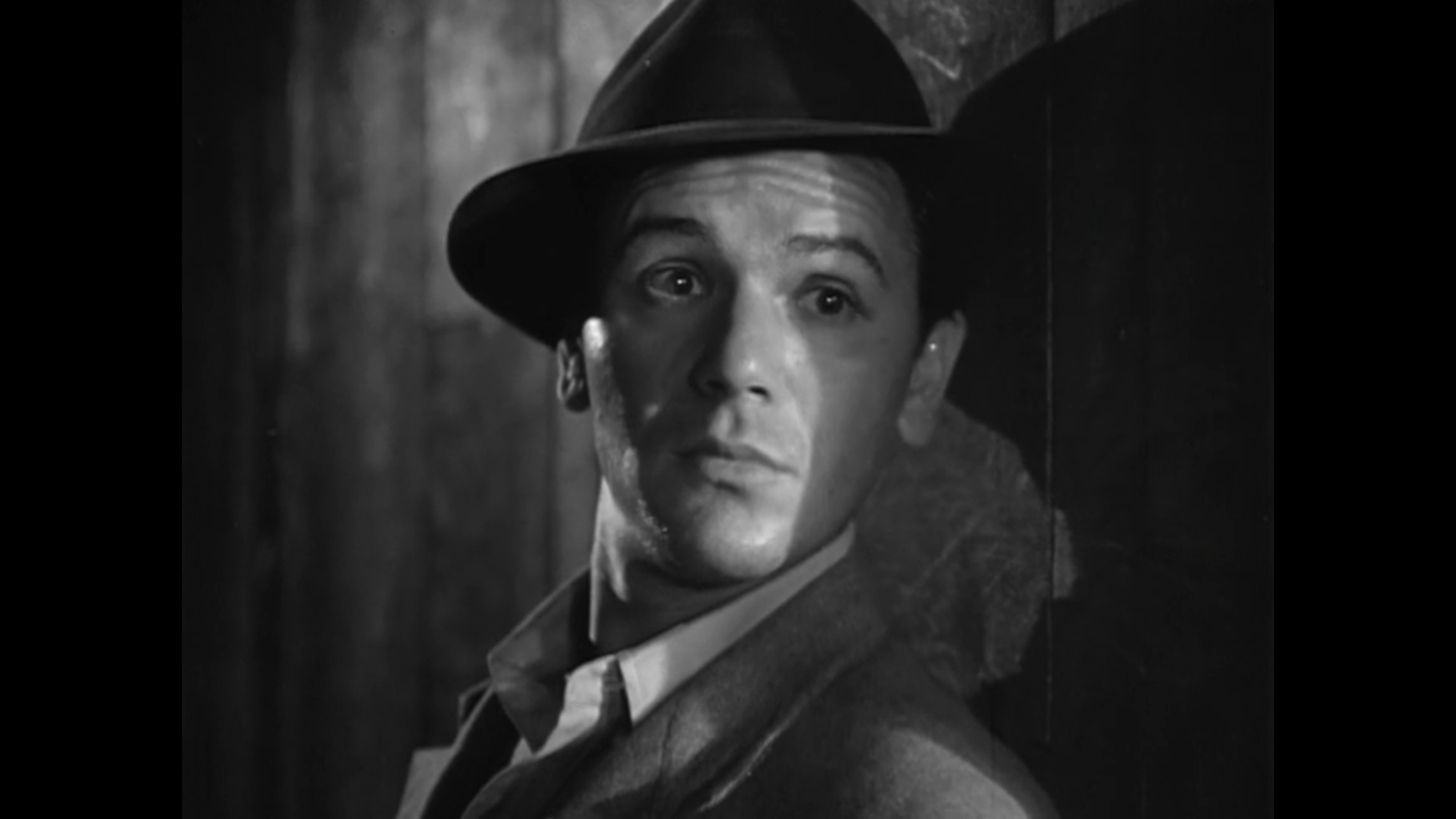
Peary writes that “Peter Bogdanovich’s debut film is remarkable not only because of the sophisticated camera work (by Laszlo Kovacs) but because it is a Hollywood picture daring enough to have both an anti-Hollywood bias and a strong social message.” He adds that “this picture is such a strong indictment of the proliferation of guns in America’s private sector that one would guess that Bogdanovich is calling for more than gun control” — but he notes that “Bodanovich denied he wanted to make a ‘message’ picture.” Regardless, the film remains a “unique picture… full of movie references, interesting offbeat touches, [and] frightening scenes” — especially the seemingly endless real-time takes showing “Bobby kill his wife and gun down innocent people (who could be us!)”. Bogdanovich and his screenwriting partner (then-wife Polly Platt) based the sniper story on both UT Tower killer Charles Whitman, and on the 1965 highway sniper attack in California; suffice it to say that this picture couldn’t resonate more profoundly today (perhaps most specifically recalling the 2017 Las Vegas massacre, in which the deeply disturbed killer’s motives remain unknown).

Targets’ narrative structure — with “two seemingly unrelated storylines that come together at the end” (Bogdanovich received behind-the-scenes assistance from Samuel Fuller) — works surprisingly well, demonstrating that explicit constraints can occasionally yield fruitful cinematic marriages. In this case, Bogdanovich was tasked by (uncredited) producer Roger Corman with: 1) incorporating footage from The Terror (1963); 2) utilizing Boris Karloff’s final two days under contract with Corman (Karloff ended up working five days without extra pay); and 3) staying within budget. As Peary notes in his lengthy essay on this “little-seen picture” for his Cult Movies book, “The Byron Orlok story is woven into the film quite well. The scenes between Sammy [Bogdanovich] and Orlok are entertaining and provide levity in an otherwise unrelentingly bleak film” — and it’s truly heart-warming seeing Karloff in “a picture which allowed him to play a real character rather than his one millionth bogeyman in succession.”

Note: Interested viewers should definitely check out a brilliantly animated documentary on the UT Tower shootings, called simply Tower (2016) — it’s must-see. Click here to read more about the presence of a brain tumor which likely impacted Whitman’s behavior.

Redeeming Qualities and Moments:

  • Boris Karloff as Byron Orlok
  • Tim O’Kelly as Bobby Thompson
  • Laszlo Kovacs’ cinematography
  • Strong direction, with many powerful scenes and sequences
  • Expert editing (both visual and sound)
  • An engaging script which cleverly mixes and matches diverse clips, genres, and storylines:

    “I have an appointment with him tonight… in Samarra.”

Must See?
Yes, as a deserved cult classic.

Categories

  • Cult Movie

(Listed in 1001 Movies You Must See Before You Die)

Links:

Falcon and the Snowman, The (1985)

Falcon and the Snowman, The (1985)

“I had no idea the extent of the lie — the level of deception.”

Synopsis:
The son (Timothy Dalton) of an FBI employee (Pat Hingle) becomes disenchanted in his new job as a military contract clerk when he learns about America’s direct interference in Australian politics, and enlists the help of his childhood friend (Sean Penn) in selling secrets to a Soviet agent (David Suchet) at an embassy in Mexico.

Genres, Themes, Actors, and Directors:

  • Friendship
  • John Schlesinger Films
  • Pat Hingle Films
  • Spies

Review:
Based on the true story of Christopher Boyce and Andrew Daulton Lee (former altar boys who became the youngest convicted spies in American history), this espionage thriller plays like a direct precursor to the travails of Edward Snowden* — albeit with less immediate relevance to current generations of film fanatics, and less sympathetic characters. As noted by DVD Savant:

“The disorganized and thoughtless way [Boyce and Lee] went about their ‘business’ makes them amateur spies, thoughtless traitors and tragic fools.”

The film itself, however, is a well-directed tale (by John Schlesinger) of how these privileged — and, in the case of Boyce, well-intentioned — kids got caught up in something much bigger than they anticipated, and how their families struggled to make sense of their choices. Interested viewers will want to check out a Dateline interview with Boyce, who was released in 2002 and now primarily spends his time with falconry. He’s admitted:

“You know, you’re not so smart when you’re 21 years old. You’re not that wise. And yeah, I was mad as hell and full of myself — and preposterous in a lot of ways. Decided to start my own one-man war against Central Intelligence. What sense does that make?”

* Snowden… Snowman… Hmmmm. Weird coincidence. Actually, “snowman” refers to Lee’s cocaine use.

Redeeming Qualities and Moments:

  • Sean Penn as Daulton Lee (nominated by Peary as one of the Best Actors of the Year in his Alternate Oscars)

Must See?
No, though it’s worth a one-time look. Listed as a Sleeper and a Personal Recommendation in the back of Peary’s book.

Links:

Old Maid, The (1939)

Old Maid, The (1939)

“I can’t imagine not waiting forever.”

Synopsis:
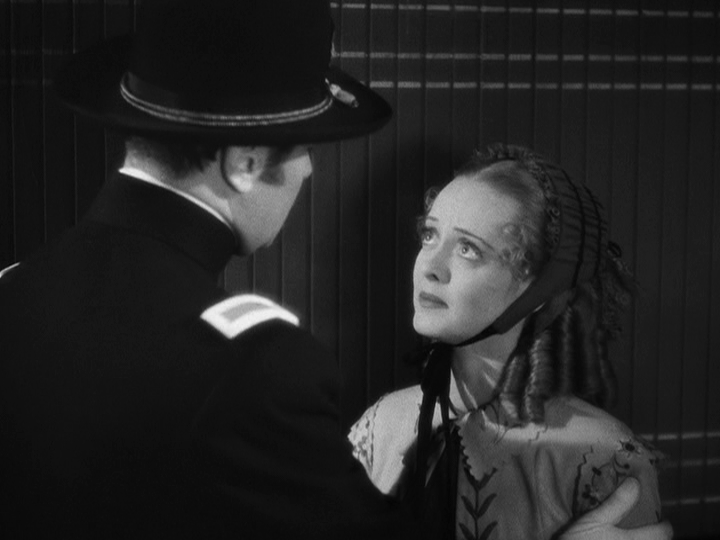
When her cousin (Miriam Hopkins) marries a wealthy man (James Stephenson) rather than waiting for her fiance (George Brent) to return home, Charlotte (Bette Davis) — who’s loved Brent all her life — has an affair with him before he heads to the Civil War and is killed. Davis secretly gives birth to a girl named Tina (Marlene Burnett), whose identity she conceals by managing an orphanage. When Hopkins learns the truth about Tina, she prevents Davis from marriage with her husband’s brother (Jerome Cowan), and convinces Davis to let her adopt the girl — but soon Davis’s resentment begins to build, especially as grown Tina (Jane Bryan) cares more for Hopkins than her strict “Aunt Charlotte”.

Genres, Themes, Actors, and Directors:

  • Bette Davis Films
  • Donald Crisp Films
  • Edmund Goulding Films
  • George Brent Films
  • Miriam Hopkins Films
  • Mistaken or Hidden Identities
  • Spinsters
  • Suffering Mothers

Response to Peary’s Review:
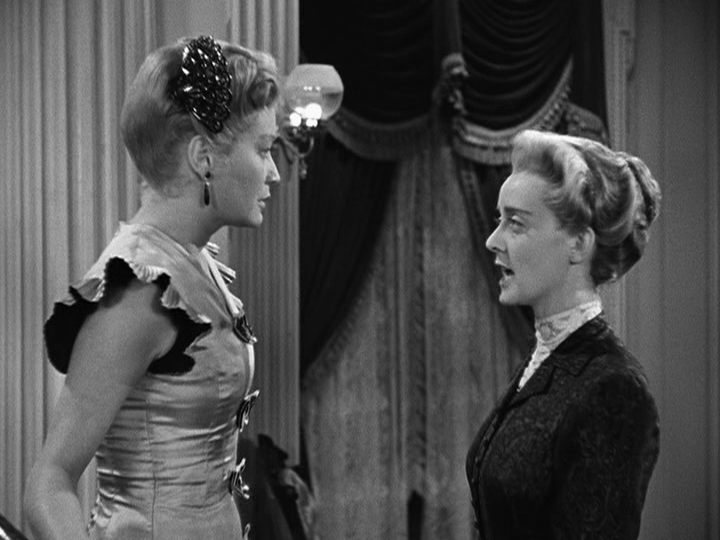
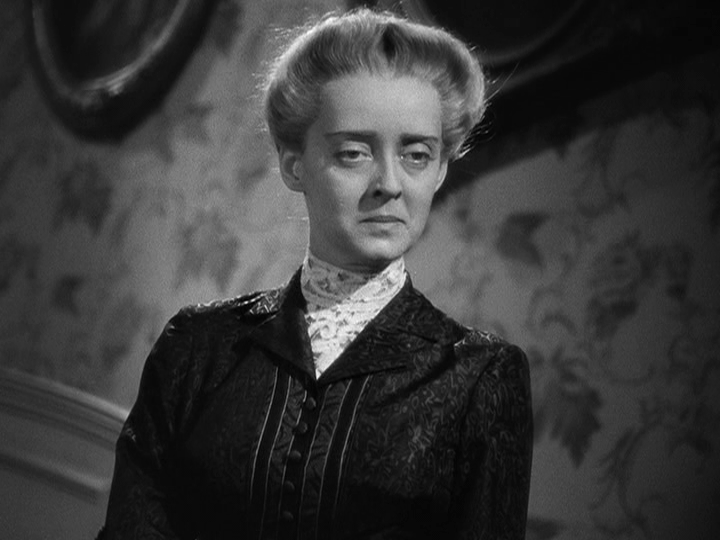
Peary writes that this “standard Victorian soap opera about unrequited love, sexual frustration, female rivalry, class obligations, and other sacrifices” benefits — “it goes without saying” — “from the casting of the two classy stars”. He notes that while he wishes “the two would have at least one hysterical screaming session” — and that “Davis in particular is just too restrained” — it’s fun watching Davis “young, in hoop dress and blond curls:

and old in her severe old-maid hairstyle”. (I’m not quite sure why he refers to this as fun, other than comparing how Davis aged in real life with how she’s “cinemagically” aged here.) Peary adds that “you’ll smile watching the two females resolve their problems”:

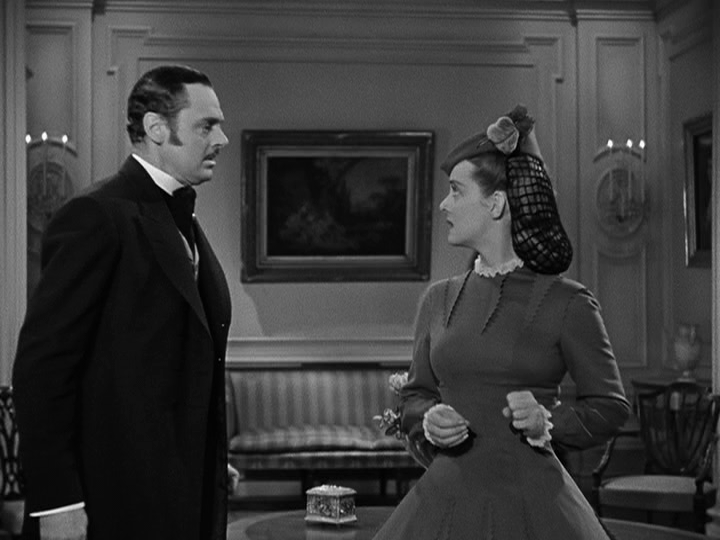
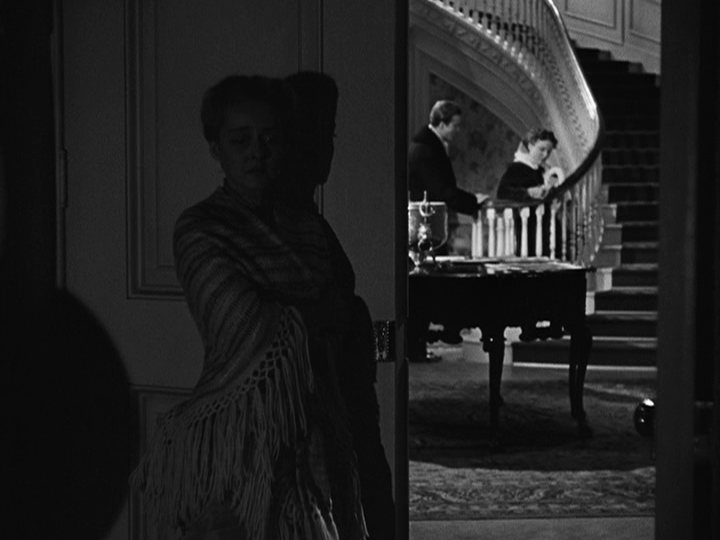
… and it’s true that the “final few scenes — for which you should have your hankies handy”, are touching. However, this dated “suffering mama” story — based on a novella by Edith Wharton, which was turned into a Pulitzer Prize-winning play by Zoe Akins — is only must-see for fans of Davis and/or Hopkins (whose performance is refreshingly restrained).

Redeeming Qualities and Moments:

  • Bette Davis as “Aunt Charlotte”

  • Tony Gaudio’s cinematography

Must See?
No, but it’s worth a look.

Links:

Dont Look Back (1967)

Dont Look Back (1967)

“I’ve got my friends… I’m well-situated.”

Synopsis:
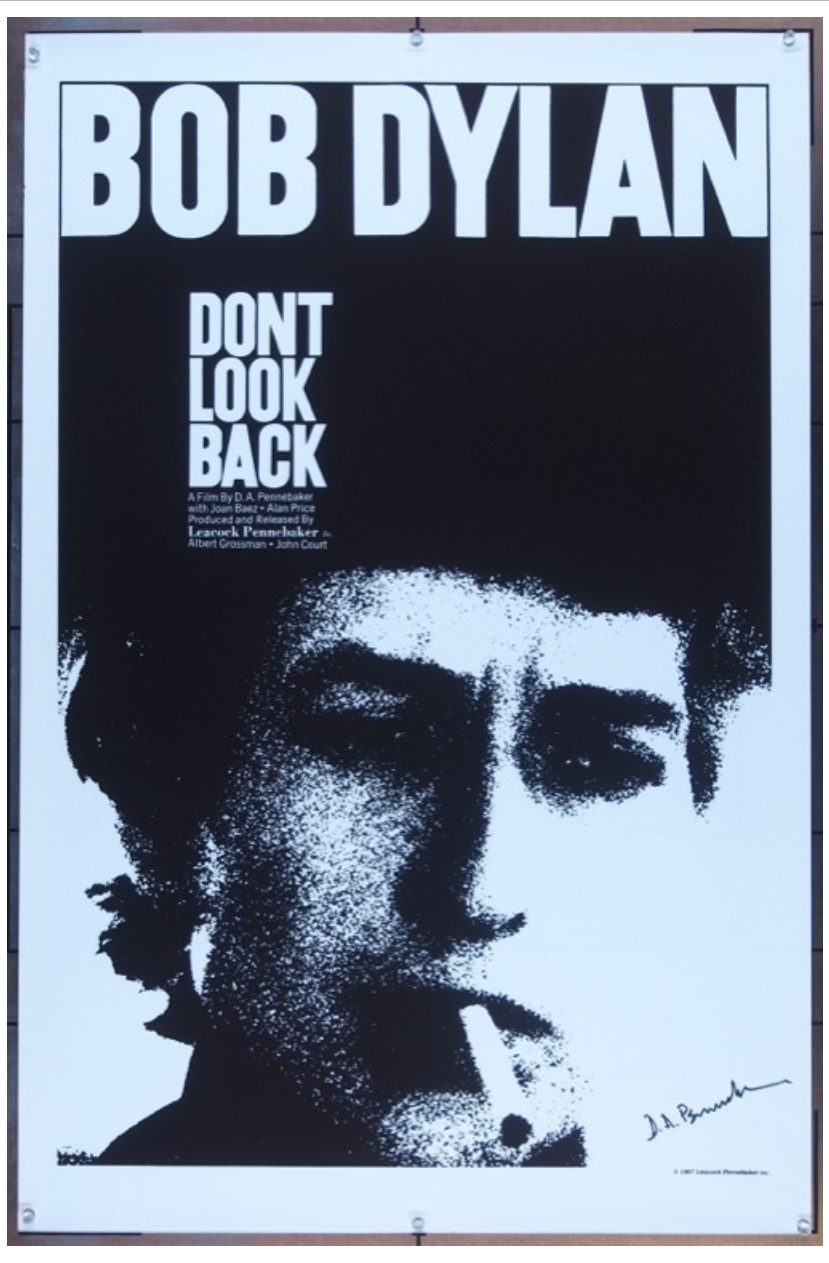
Young Bob Dylan is filmed both on stage and off during his final acoustic tour in England.

Genres, Themes, Actors, and Directors:

  • Documentary
  • Musicians

Review:
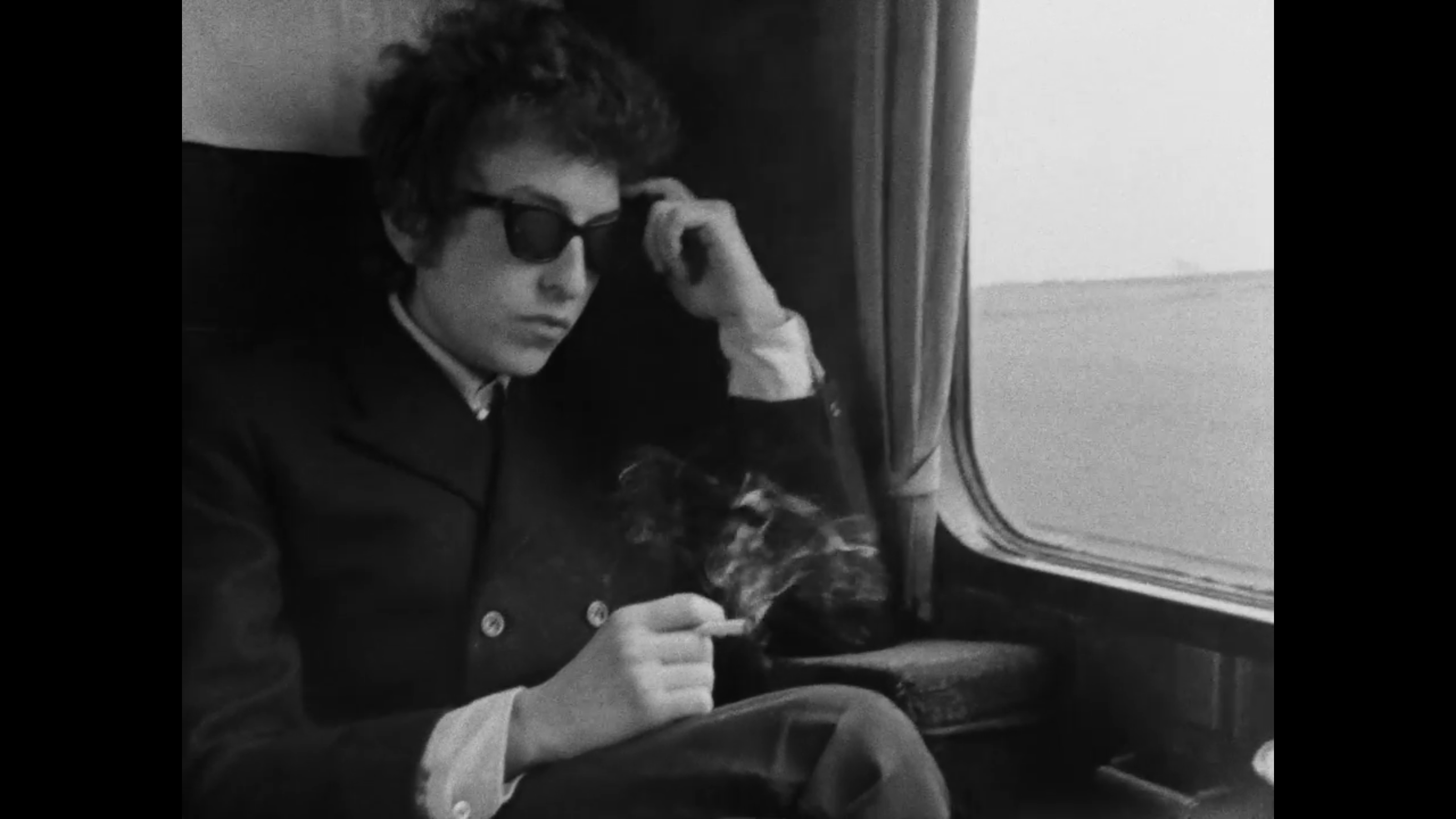
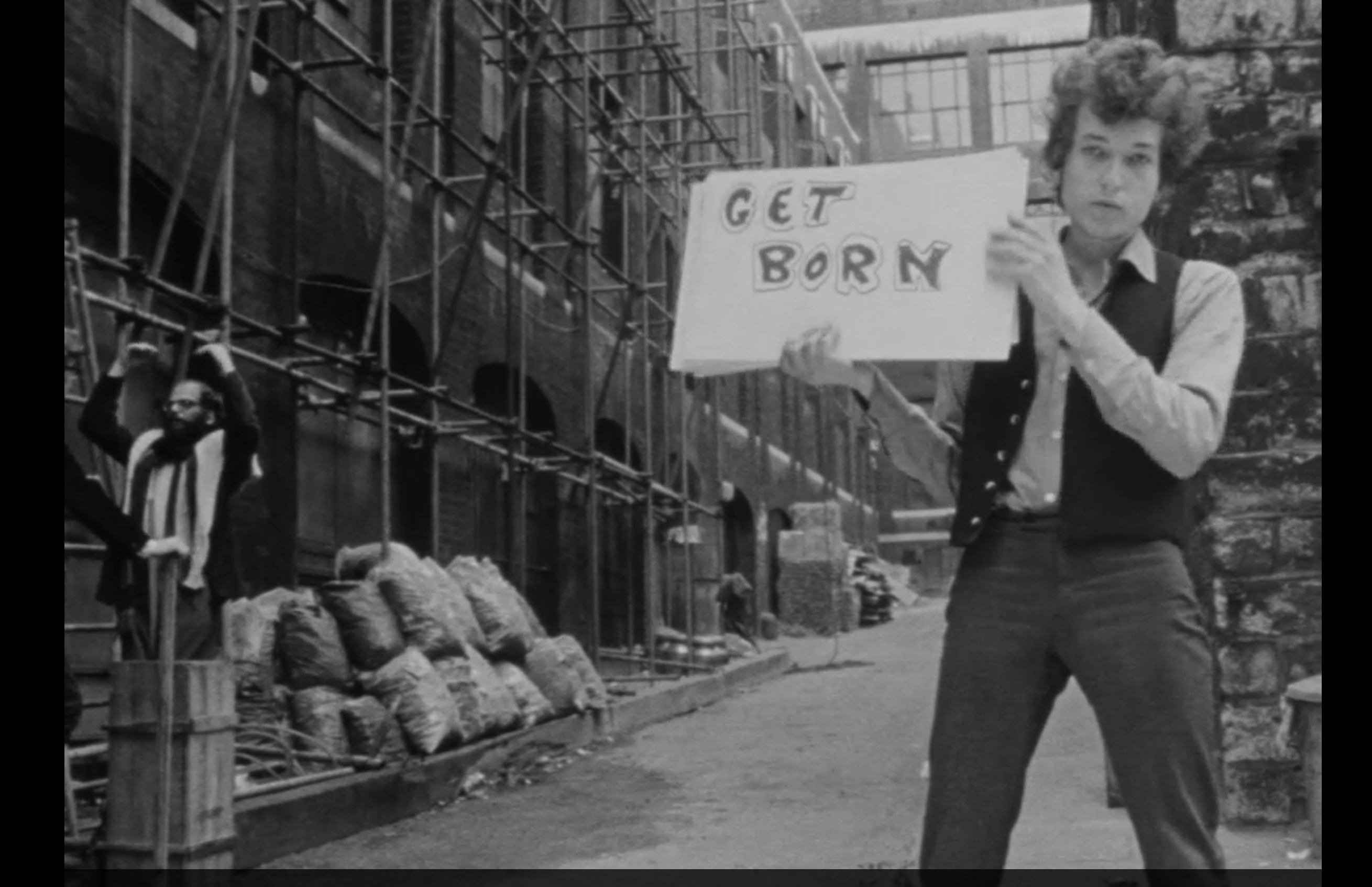
D.A. Pennebaker’s cinéma vérité documentary about Bob Dylan on tour in England remains a unique and rare glimpse into his early career. From the opening sequence (essentially a music video for “Subterranean Homesick Blues”), in which Dylan flashes homemade lyric cards while Allen Ginsberg lurks in the background, it’s clear that Dylan’s subcultural roots were strong — which is not to say he necessarily comes across as a nice or noble person. As DVD Savant writes in his review:

Dylan definitely ‘performed’, or as Pennebaker tells it, ‘was on’ every time the camera rolled… The Dylan we do see is far from flattering. He’s quiet one moment and pushy the next. He openly baits reporters who ask vague questions in vain hope of ‘drawing him out.’ He can be something of a bully, and there’s definitely a macho tone to the way he and his hepcats hold court.

At least there’s something refreshing in knowing we’re not seeing a sanitized version of Dylan. He may be performing — that is what he does — but he allows us a glimpse inside his world (including scenes with an impossibly young Joan Baez) for a few weeks, which is worth it.

Redeeming Qualities and Moments:

  • Fine cinéma vérité filming and cinematography
  • Many memorable moments

Must See?
Yes, as an engrossing cult documentary. Listed as a Cult Movie and a Personal Recommendation in the back of Peary’s book.

Categories

  • Cult Movie
  • Historically Relevant

Links:

Arrowsmith (1931)

Arrowsmith (1931)

“Bugs don’t commit suicide… What killed them?”

Synopsis:
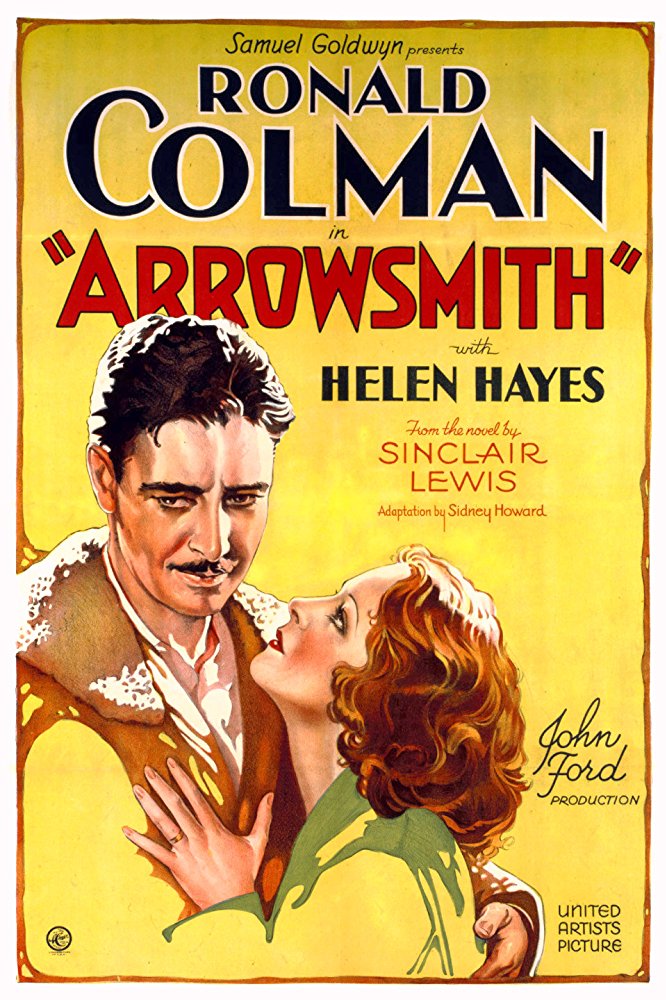
A doctor (Ronald Colman) and his new wife (Helen Hayes) move to her small town, where he starts a practice — but he’s soon wooed by his mentor (A.E. Anson) to New York for a research position, and begins work on a revolutionary serum. When he is called to the West Indies to scientifically test his serum on victims of the bubonic plague, his wife insists on accompanying him, with dire results.

Genres, Themes, Actors, and Directors:

  • Doctors and Nurses
  • Helen Hayes Films
  • John Ford Films
  • Myrna Loy Films
  • Ronald Colman Films
  • Scientists

Review:
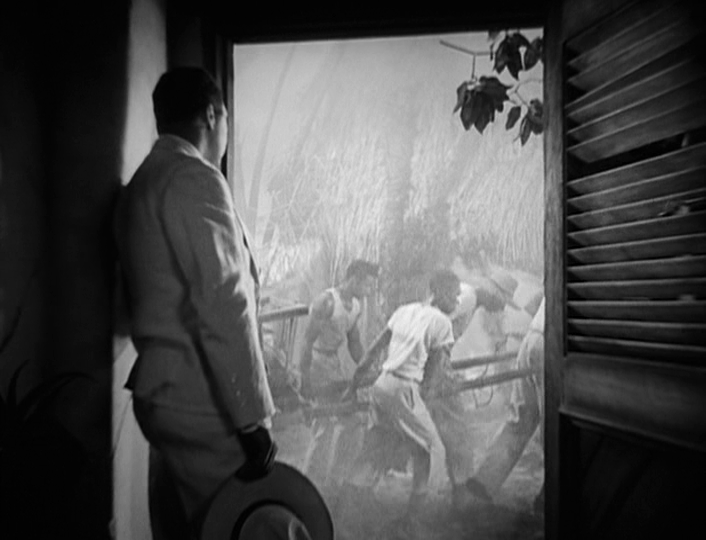
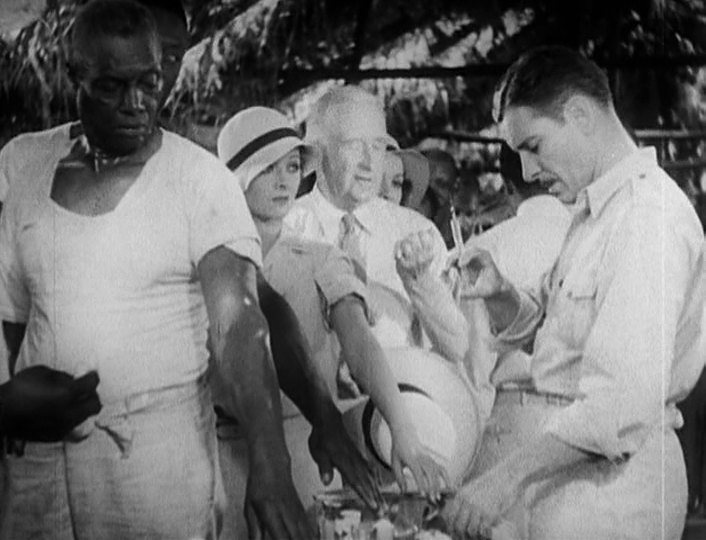
John Ford’s Oscar-nominated adaptation of Sinclair Lewis’s Pulitzer Prize winning novel was likely of much greater interest to audiences of the day — presumably those who had read the novel — than it will be for modern viewers. Much about the storyline feels dated, beginning with the fact that a funded research career is so entirely out of the question for Colman (apparently that issue is explained in greater nuance in the novel). Most egregious is the (inevitably) racist depiction of black West Indies natives as less-than whites, and primitive in their rituals.

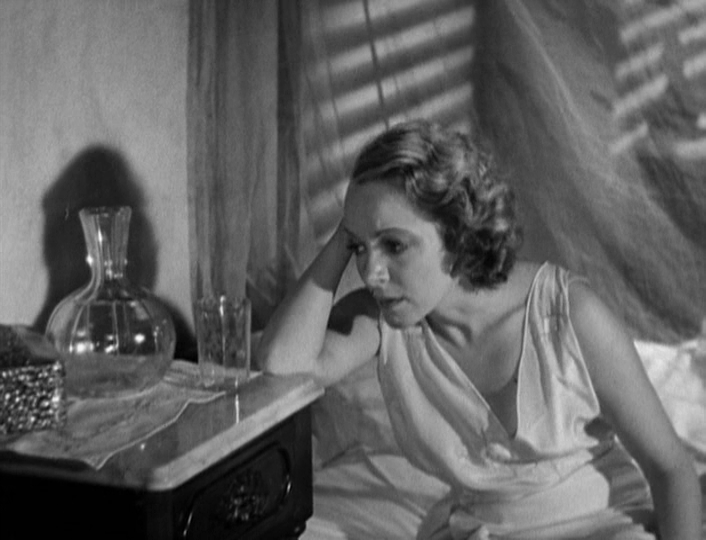
The one black native (Clarence Brooks) presented as civilized has, naturally, been educated in the United States, and is lighter-skinned. Meanwhile, Colman’s infatuation (affair?) with Loy’s undeveloped character is thoroughly unexplained — again, it’s dealt with more realistically in the novel, and sanitized for the screen:

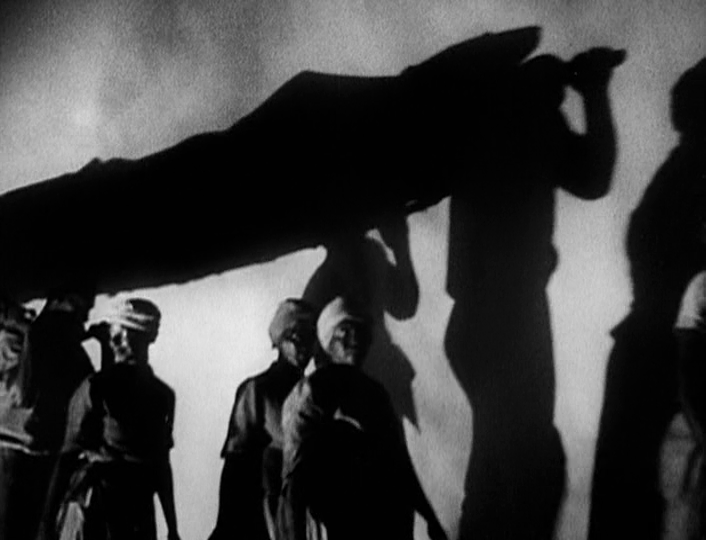
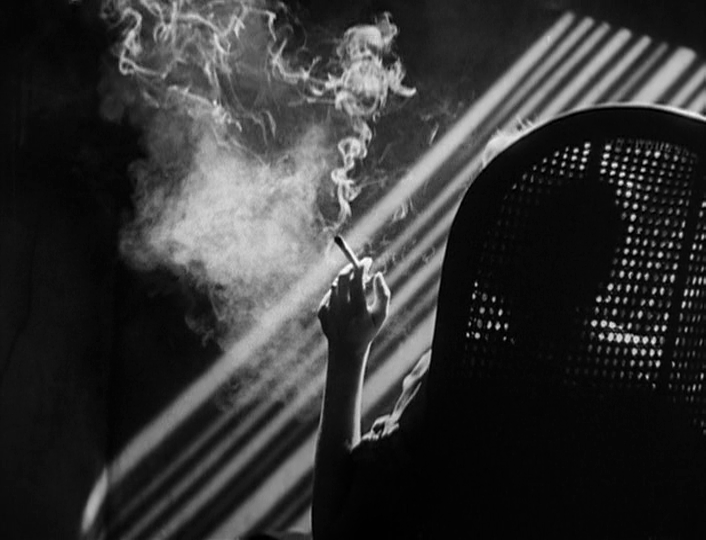
… and the pivotal moment when Colman makes a deadly mistake on the island is laughable in its (his) unrealistic carelessness. On the plus side, Ray June’s black-and-white cinematography is stunning throughout (there are many memorable visual sequences), and Hayes’ performance is notable as well; she imbues her challenging role with humanity.

Redeeming Qualities and Moments:

  • Helen Hayes as Leora Arrowsmith
  • Ray June’s cinematography


Must See?
No; skip this one unless you’re curious.

Links:

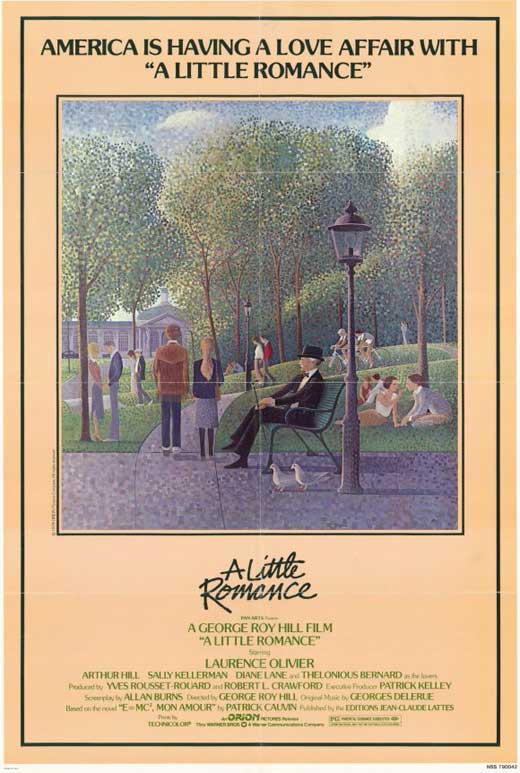
Little Romance, A (1979)

Little Romance, A (1979)

“I used to think, maybe a long time ago, like — like in the time of the pharaohs or Louis the 13th — that there was somebody made just perfect for me.”

Synopsis:
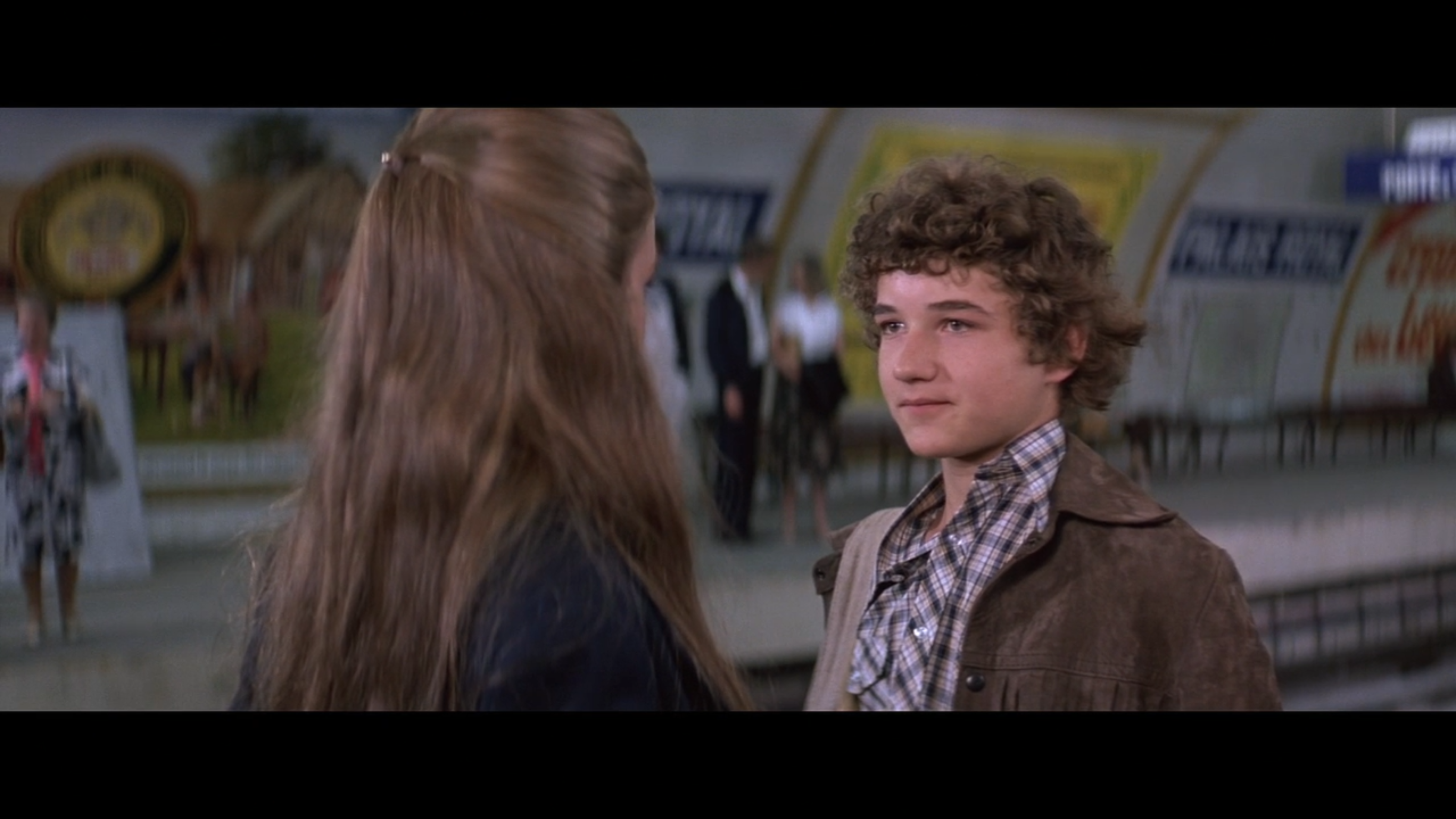
A precocious teen (Diane Lane) living in Paris with her self-absorbed mother (Sally Kellerman) and kind stepfather (Arthur Hill) meets a young movie-lover (Thelonious Bernard), and the two like-minds immediately bond. With the help of an elderly widow (Laurence Olivier), they make plans to kiss at a certain spot in Venice during sunset — but can they successfully elude their parents?

Genres, Themes, Actors, and Directors:

  • Broderick Crawford Films
  • Diane Lane Films
  • George Roy Hill Films
  • Laurence Olivier Films
  • Runaways
  • Sally Kellerman Films
  • Teenagers

Review:
Reviews of this youthful romantic adventure, directed by George Roy Hill and taking place on the picturesque streets of Paris and canals of Venice, have been decidedly mixed over the years, with some considering it a personal favorite, but the New York Times calling it “so ponderous it seems almost mean-spirited.” While elements of the screenplay verge on caricature — particularly Kellerman’s infatuation with a narcissistic movie director (David Dukes), and a pair of clueless American tourists (Andrew Duncan and Claudette Sutherland) who show up in the last portion of the film — I’ll admit to being intrigued by Lane, and completely caught up in her desire for meaningful interactions with a peer who “gets her”. Her loyal friendship with a flibbertigibbet schoolmate (Semple) helps to humanize her as someone more interested in quirkiness and following her own path than anything else, and it’s easy to relate to how isolated she feels being forced to live wherever her flighty mother’s whims (and latest marital decisions) take her. Bernard’s performance is a bit rough around the edges, but he’s believable as a movie-obsessed teen who knows a good catch when he sees one — and he treats Lane with appropriate respect and classiness. (See? Classic movies do teach you something!) Georges Delerue’s score is lovely, and the on-location sets are charming.

Redeeming Qualities and Moments:

  • Diane Lane as Lauren
  • Ashby Semple as Natalie
  • Good use of location shooting in Paris and Venice
  • George Delerue’s score

Must See?
No, but it’s recommended (by me, at least). Listed as a Personal Recommendation in the back of Peary’s book.

Links:

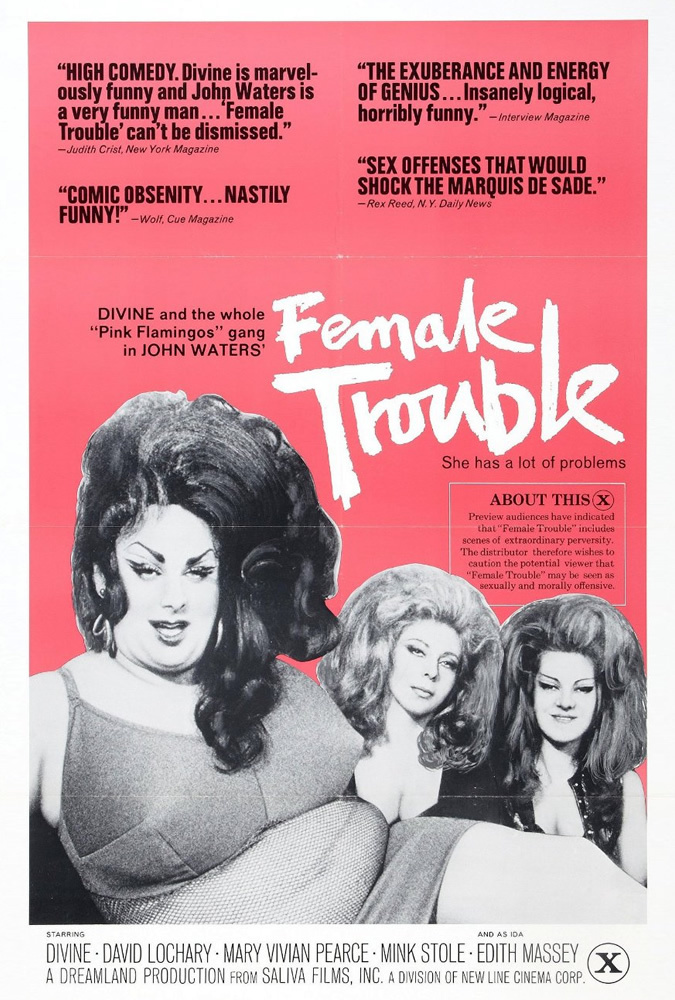
Female Trouble (1974)

Female Trouble (1974)

“We have a theory that crime enhances one’s beauty.”

Synopsis:
A former juvenile delinquent (Divine) is impregnated and promptly abandoned by a man (Divine) she hitches a ride with, then raises an insufferable daughter (Mink Stole) while surviving on her own as a prostitute and thief. After marrying a hairdresser (Michael Potter) whose aunt (Edith Massey) wishes he was gay, Divine is offered work as a model by hair salon owners (Mary Vivian Pearce and David Lochary) obsessed with capturing her unique “beauty” during criminal acts — but Divine soon becomes enraptured by her own fame, and loses all sight of reality.

Genres, Themes, Actors, and Directors:

  • Black Comedy
  • John Waters Films
  • Kidnapping
  • Mental Breakdown
  • Models
  • Rise-and-Fall
  • Single Mothers
  • Thieves and Criminals

Response to Peary’s Review:
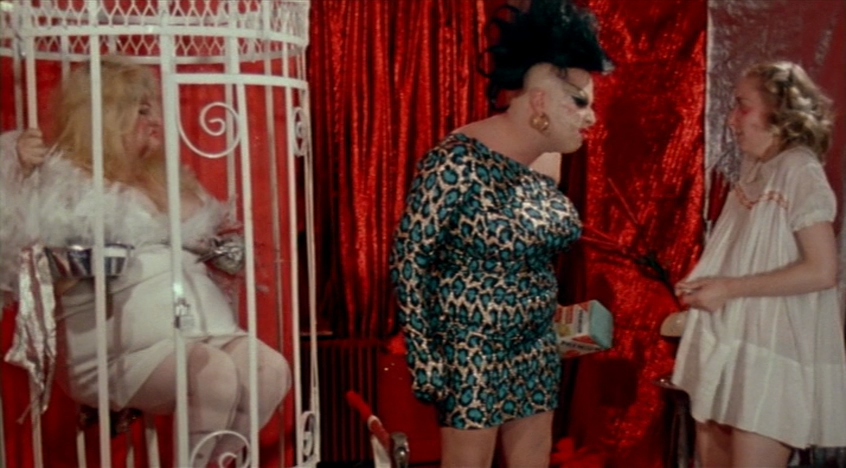
Peary writes that “John Waters’s wickedly funny cult film is a celebration of Crime and Beauty, both personified by Divine”. He notes that the “comedy contains child abuse, a hand being hacked off, acid thrown in Divine’s face (she’s told she looks better afterward):

… rapes, a woman being kept in a cage, [and] attempted incest”, but that “the really bad taste is evident in Waters’s well-chosen costumes, hairdos, furniture, decor, and, of course, cast members.” He argues that while “the picture is not consistently funny, and… Waters goes too far too often”, he appreciates that “this is the picture in which Divine really broke loose”: she is “not only unique but genuinely hilarious — even doing a deadpan tumbling act that would have made the great silent comics proud.” I don’t share Peary’s fondness for this film, or for Divine’s performance, and don’t consider it “wickedly funny” at all — though I suppose I can see how its fans might. My favorite moment is when Stole finally finds peace with the Hare Krishnas — this is the first and only movie I’ve seen where joining that brainwashing cult is made to seem like a smart and life-affirming choice.

Redeeming Qualities and Moments:

  • Typically outrageous and colorful sets, scenes, costumes, and make-up

Must See?
Nope; skip it unless you’re a Waters fan.

Links:

Pink Flamingos (1972)

Pink Flamingos (1972)

“I love you even more than my own filthiness!”

Synopsis:
When a murderous rivalry ensues between the Filthiest Human in the World (Divine) and her competitors (David Lochary and Mink Stole), no action is too low or disgusting to enter the fray. Babs (Divine), her companion Cotton (Mary Vivian Pearce), and her son Crackers (Danny Mills) retaliate against a spy (Cookie Mueller) sent by Lochary and Stole — who employ a cross-dressing butler (Channing Wilroy) to impregnate women they kidnap in order to sell their babies to lesbian couples — to scope out their trailer, then celebrate Divine’s birthday in trashy style while Babs’ obese, baby-like mother (Edith Massey) is romanced by The Egg Man (Paul Swift), who wants to marry her — but Lochary and Stole are so consumed with envy and fury, they resort to fiery revenge.

Genres, Themes, Actors, and Directors:

  • Black Comedy
  • John Waters Films
  • Kidnapping
  • Revenge
  • Rivalry
  • Serial Killers

Response to Peary’s Review:
Peary writes that “John Waters’s cult classic, one of the most successful midnight movies and arguably his best film, is a movie you can’t believe was actually scripted, storyboarded, acted in, shot, and shown in legitimate theaters.” He notes that “the ‘King of Sleaze’ wants to shock people out of their complacent viewing habits”, and “invariably succeeds by writing the most obscene storylines, shooting the most vulgar images, and presenting the most repulsive characters imaginable.” Peary argues that Waters “can make you laugh uncontrollably even when you’re repelled”, and that “you’ve got to respect a guy who can make ‘stars’ out of the weirdos who stock his Baltimore repertory company”. However, he concedes that “you have to be disturbed by his anything-different-is-positive theme and by the fact that he succeeds in making people laugh by depicting pain, destruction of property, and strong violence.”

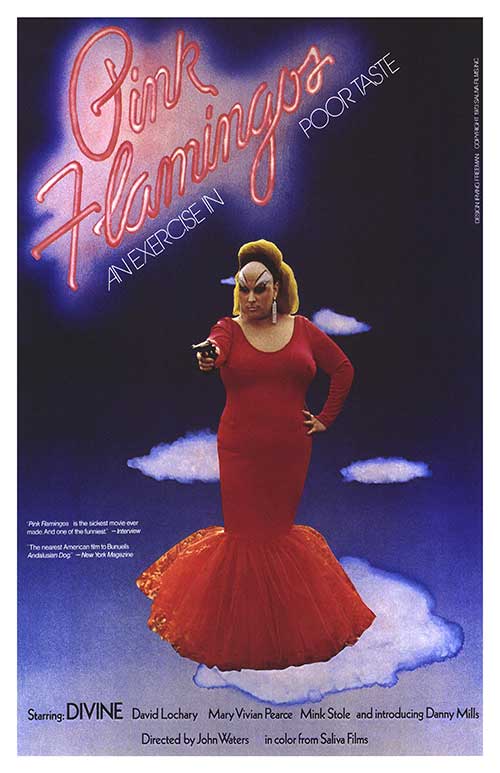
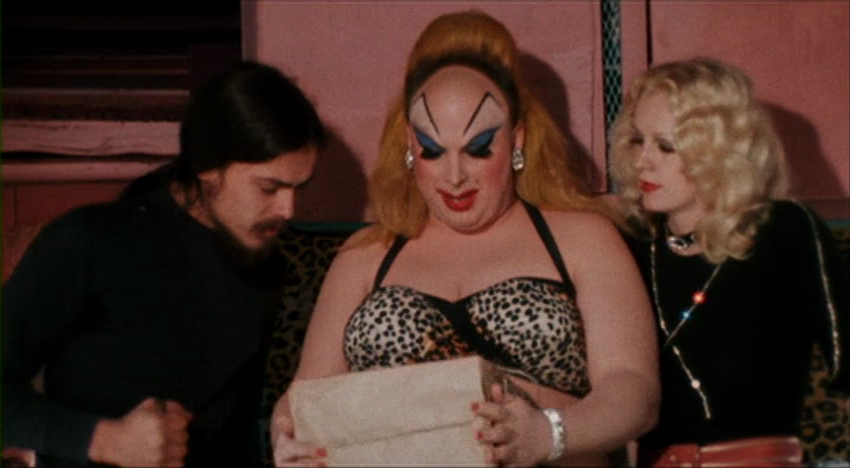
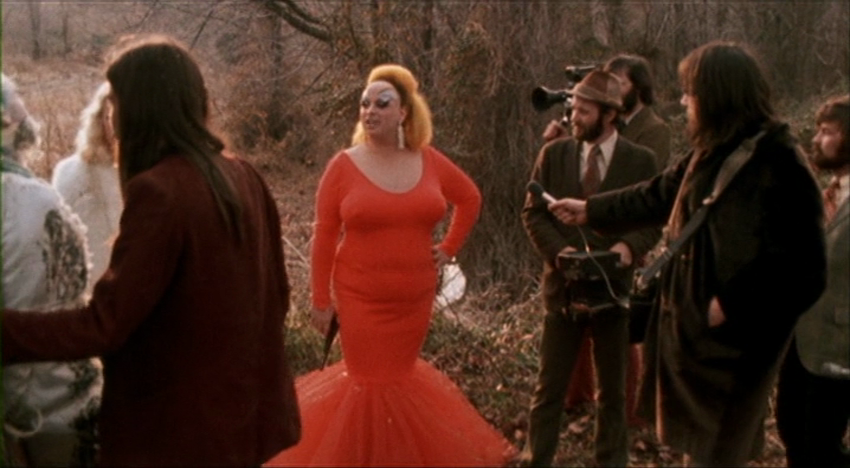
So, is Pink Flamingos worth sitting through? Yes, for its cult status. However, don’t expect to be entertained, simply disgusted — again, and again, and again. As I’ve noted about Waters’ earlier films, degeneracy for its own sake — or, in this case, “filth”, defined by Merriam Webster as “moral corruption or defilement” — doesn’t offer any inherent value. The characters are ridiculous and loathsome, and one shudders to think of them existing anywhere close to real life. What’s the point? However, I don’t think film fanatics will want to miss seeing Divine (who Peary nominates as one of the Best Actors of the Year in his Alternate Oscars!) in his infamously outrageous wig, make-up, and gowns (his red mermaid dress is perhaps the most memorable). Speaking of memorable… Yes, the final scene remains as disgusting as ever; once you’ve seen it, you can’t unsee it. Be forewarned. Discussed at length in Peary’s Cult Movies book.

Redeeming Qualities and Moments:

  • Many classically outrageous, colorful, memorable scenes


Must See?
Yes, once, as a cult favorite.

Categories

  • Cult Movie

(Listed in 1001 Movies You Must See Before You Die)

Links:

They Made Me a Criminal (1939)

They Made Me a Criminal (1939)

“From now on, you’ve got to be afraid!”

Synopsis:
A prizewinning boxer (John Garfield) whose shady manager (Robert Gleckler) accidentally kills a snoopy reporter (John Ridgely) and is then killed in a fiery car crash while making off with Garfield’s girlfriend (Ann Sheridan) is falsely accused of murder and presumed dead. Garfield goes undercover and finds refuge in a farm owned by a woman (May Robson) overseeing a group of juvenile delinquents, where he soon falls for the older sister (Gloria Dickson) of one of the boys (Billy Halop) — but will a detective (Claude Rains) hot on his trail sleuth him out?

Genres, Themes, Actors, and Directors:

  • Ann Sheridan Films
  • Boxing
  • Busby Berkeley Films
  • Claude Rains Films
  • Detectives and Private Eyes
  • Falsely Accused
  • John Garfield Films
  • Juvenile Delinquents
  • Mistaken or Hidden Identities

Review:
Busby Berkeley directed this Depression-era saga of hard luck, mistaken identities, redemptive love, and the chance for new beginnings. Garfield stars in a role seemingly tailor-made for him: an innocent man caught up in events beyond his control that send him spiraling into a life on the run. He’s fine in the role, but the script (other than intermittent doses of harsh cynicism) is primarily hokum. Thankfully, James Wong Howe’s cinematography makes the entire film gorgeous to look at. The best scenes are those involving boxing, which naturally becomes Garfield’s downfall once again (or is it his saving grace?). See also the similarly themed Dust Be My Destiny (1939), which I was equally disappointed by.

Redeeming Qualities and Moments:

  • James Wong Howe’s cinematography


Must See?
No; feel free to skip this one.

Links:

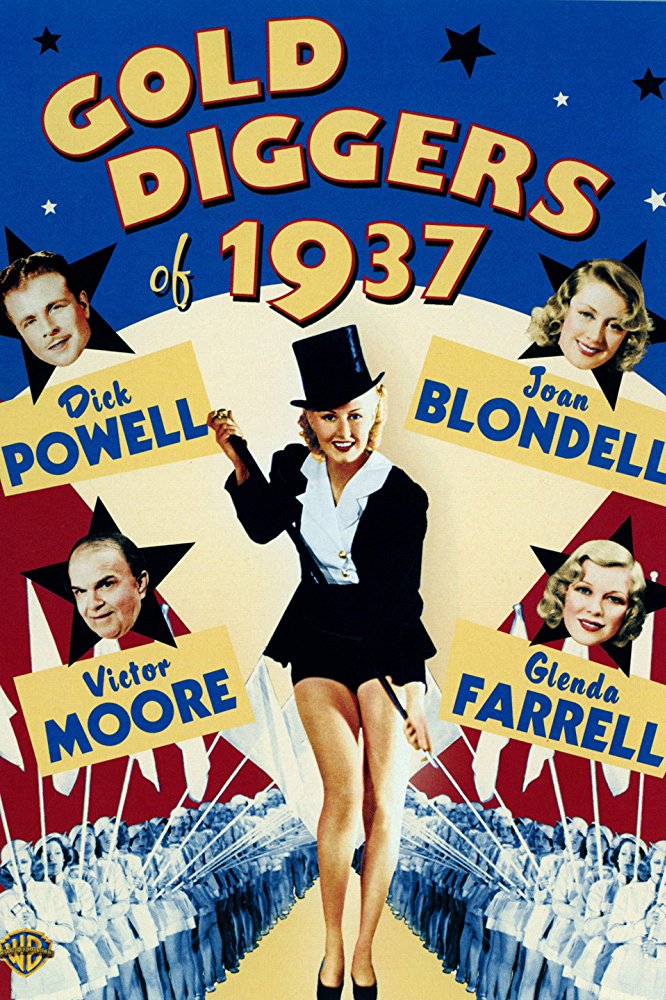
Gold Diggers of 1937 (1936)

Gold Diggers of 1937 (1936)

“I’ve promised him that we’re going to put this show on!”

Synopsis:
A hypochondriac millionaire (Victor Moore) whose business managers (Osgood Perkins and Charles D. Brown) have gambled away his savings convince him to purchase an insurance policy — secretly hoping he will die soon so they can cash in — from an agent (Dick Powell) who has just fallen in love with the new secretary (Joan Blondell) at his office. Meanwhile, a golddigger (Glenda Farrell) falls for Moore despite knowing he’s broke, and Powell wants to keep Moore alive at any cost to maintain his monthly premiums, so he can afford to marry Powell.

Genres, Themes, Actors, and Directors:

  • Busby Berkeley Films
  • Dick Powell Films
  • Gold Diggers
  • Joan Blondell Films
  • “Let’s Put On a Show!”
  • Millionaires
  • Musicals

Review:
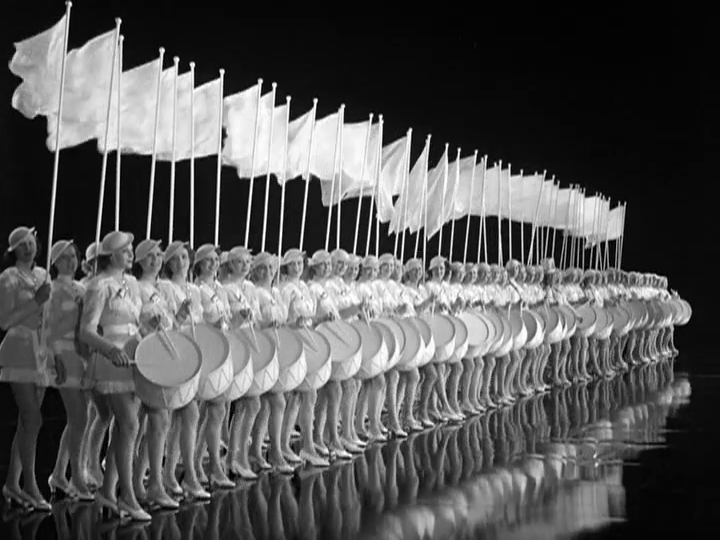
So, who ARE 1937’s golddiggers — and how, exactly, are they different from those of 1935 or 1933? According to this third entry in Busby Berkeley’s series for Warner Brothers, they’re essentially good-hearted gals who actually prefer to earn their own keep (Blondell) and/or don’t truly care about a man’s wealth (Farrell) — a good thing, given that the rather unsavory storyline has two men (Perkins and Brown, effectively sinister) out to literally kill their boss (Moore) to cover up their gambling debts, and another man (Powell) incentivized to keep Moore alive for his own personal benefit. Thank goodness we’re given a fun musical break midway through (“With Plenty of Money and You”), and a typically spectacular Busby-esque finale (“All’s Fair in Love and War”). Upon its release, the New York Times was rather uncharitable in its review of this film, writing that “Mr. Powell suffers from spells of laryngeal and facial cuteness” and that “Miss Blondell” — who “combines the ox-eyed beauty of a duchess by Lely with the gratifying smoothness and symmetry of a piece of gleaming metal tubing” (!?!?) — “not only cannot sing but doesn’t” (for which we should be grateful, apparently). Ouch!

Redeeming Qualities and Moments:

  • The Busby Berkeley musical numbers, naturally!

Must See?
No, though it’s an innocent enough outing if you’re in the mood.

Links: