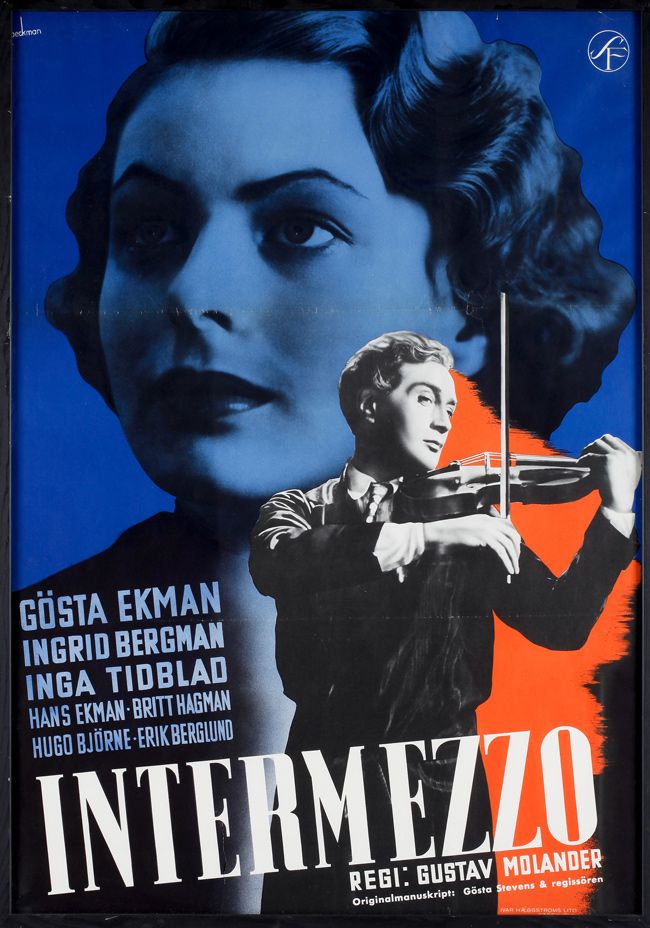
Intermezzo (1936)
“Is it a crime to realize I can’t live without you?”
|
Synopsis: |
|
Genres, Themes, Actors, and Directors:
Review: Redeeming Qualities and Moments:
Must See? Links: |
“Is it a crime to realize I can’t live without you?”
|
Synopsis: |
|
Genres, Themes, Actors, and Directors:
Review: Redeeming Qualities and Moments:
Must See? Links: |
“They’re all mine — and believe me, it’s no picnic!”
|
Synopsis: |
|
Genres, Themes, Actors, and Directors:
Review:
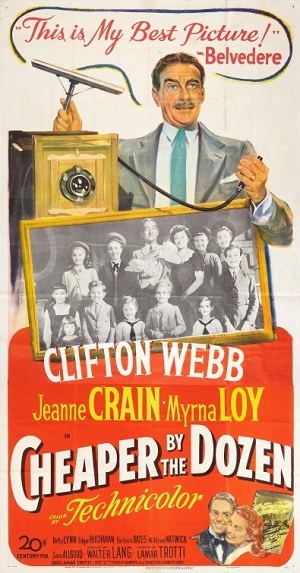
The primary problem with the film is the unfortunate casting of Clifton Webb as the Gilbreth patriarch. Webb — who previously starred to great effect in directer Walter Lang’s Sitting Pretty (1948) (and whose character, Belvedere, endorses this film in the poster above!) — might appear to be a logical choice as an efficiency expert, but (sadly) he lacks the charisma of the real-life Frank Gilbreth Sr., who is described in the book as “like a breath of fresh air when he walked into a room”, and someone who people “couldn’t be around without liking”. Webb is many things — i.e., droll and bright — but an intrinsically likeable breath of fresh air he is not (at least not here). Viewing short (silent) clips of the real Gilbreth family reveals a ruddy, larger-than-life patriarch who was a rare breed of kid-loving, extroverted control freak. Webb tries hard to convey a loving paternal presence on screen, but there’s no denying that one can’t realistically imagine him as the happily married father of twelve.
With that said, the film moves along pleasantly enough, and will appeal to those who prefer their historical dramas heavily dripping in nostalgia; as noted by Bosley Crowther in his original review for the New York Times: “…this is far from a picture of real and believable family life. This is a picture of illusions — happy, sentimental, even absurd.”
Most enjoyable are the occasional zingy lines in the screenplay — i.e., Webb noting that Crain’s short-statured, Mickey-Rooney-esque date (Benny Bartlett) “looks like what might happen if a pygmy married a bobtail penguin.” However, this turns out to be taken almost directly from the book, which contains infinitely more enjoyable one-liners:
Ultimately, I only recommend this film for diehard fans of the book who are curious to see how it was adapted. Note: For the record, I have not seen the Steve Martin remake (2003), and don’t plan to unless I’m convinced it’s significantly better than this version… Redeeming Qualities and Moments:
Must See? Links: |
A friend shared this still from a three-part BBC documentary called Sound of Cinema: The Music That Made the Movies.
Check out the shiny blue spine behind the man being interviewed!

This is also a good time to remind readers that a documentary about Peary is in the works — click here to read more!
“I never in my wildest dreams imagined that I would be the object of so much genuine affection.”
|
Synopsis: |
|
Genres, Themes, Actors, and Directors:
Response to Peary’s Review: In his Alternate Oscars, Peary names Hoffman Best Actor of the Year, and describes how Hoffman spent no less than a year experimenting with the characterization, finally stating, “I’m not going to try to do a character; I’m just going to be myself behind this and see what happens”. It’s refreshing that while Michael is certainly flawed, self-absorbed, and deceptive, he’s not “the biggest sexist pig around”, and thus “we see that even the average man must change”. Hoffman’s excellent performance undeniably anchors the film (it’s hard to imagine anyone else in the role!), but the supporting cast is all fine as well — most notably Lange (who won a Best Supporting Actress award for her performance):
… and Durning as her widowed father, who we feel genuine pity for as we watch him falling hard for Dorothy while being taken for an embarrassing ride.
Adding welcome levity in the midst of so much narrative tension is the hilarious subplot involving “a lecherous actor” (Gaynes) whose character (unlike Lange and Durning) is so buffoonish we don’t mind seeing him duped.
Redeeming Qualities and Moments:
Must See? Categories
(Listed in 1001 Movies You Must See Before You Die) Links: |
“Old Yeller just saved your life — and Elizabeth’s, too!”
|
Synopsis: |
|
Genres, Themes, Actors, and Directors:
Response to Peary’s Review: Peary points out that “Disney’s first film about a dog” — the “best of its kind” — is “well acted by the four stars and the talented Spike” (as well as a fine cast of supporting actors, including Chuck Connors), “sensitively directed by Robert Stevenson, [and] nicely photographed by Charles P. Boyle”. Dorothy McGuire solidly grounds the film, adding a sense of calm assurance to a situation fraught with troubles — including a trampled fence, a bear attack, rampaging wild hogs, and the worthless pseudo-assistance of a lazy neighbor (Jeff York), who gets his sweet daughter (Beverly Washburn) to take on tasks he should be doing himself. Naturally, Old Yeller is there throughout all these misadventures, proving his mettle and earning our loyalty. Easing the burden of the film’s outcome are two additional factors: Old Yeller’s mate quickly gives birth to a son who looks much like him; and Stevenson uses restraint in not anthropomorphizing Yeller through frequent facial close-ups (as is so often done in films with a personable animal as a central character — i.e., Down and Out in Beverly Hills). Yeller is a “smart, brave (fabulous!) dog” — but when he loses his mind from “hydrophobia”, it’s plain to see that Kirk is actually putting the poor animal out of his misery. Old Yeller is certainly worth a look by all film fanatics — though I can’t say for sure when I’ll allow my own kids to see it… And be forewarned that the catchy title song will stick in your head long after the movie is over. Redeeming Qualities and Moments:
Must See? Categories
Links: |
“We are here just as observers — and, if they will let us be, as friends.”
|
Synopsis: |
|
Genres, Themes, Actors, and Directors:
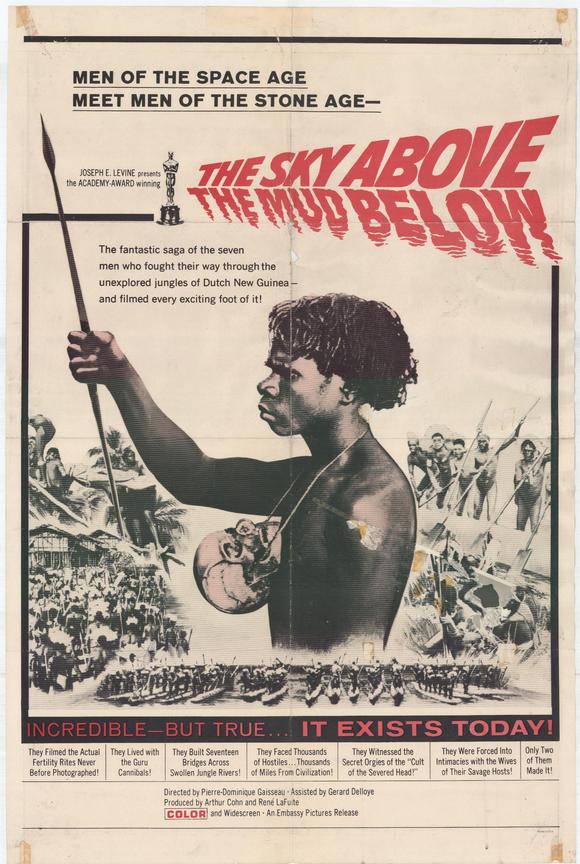
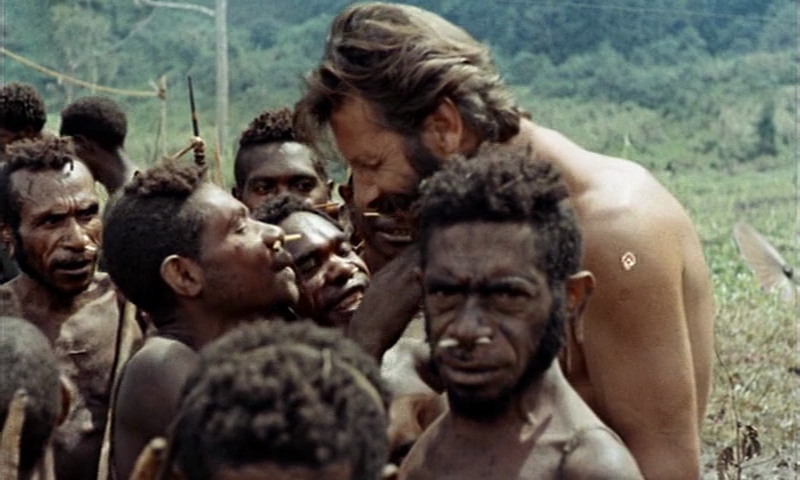
Review: At the same time, it’s hard not to feel at least mildly distressed by the exoticizing tone of both the solemn voiceover (“They say in the jungle, only fools and children ask questions.”) and many of the scenes — beginning with a staged introduction as the adventurers and a pretty stewardess smile while pointing to various locations on a globe (good thing they had that with them on the plane). As nudity, dramatic body piercings, and unsettling tribal customs (i.e., bare-breasted women suckle not just human babies but animals and adult guests) are put on display, we wish it were less obvious how superior the explorers feel to their “stone age” counterparts. Yet the filmmakers are nothing if not direct in their explanation of how and why the journey (funded by Dutch royalty) took place, making it easier for modern audiences to place the film within historical context and forgive some patronizing elements. Audiences at the time were surely enthralled by the opportunity to glimpse the lives of fellow humans so completely untouched by global influence — and modern film fanatics will likely be, too. Note: Viewers interested in this subject matter and area of the world might want to check out the more recent documentary The Search for Michael Rockefeller (2011), which weaves similar footage from the same era into an investigation of the famous heir’s mysterious disappearance. Also recommended is the National Geographic documentary series based on Gerald Diamond’s Guns, Germs and Steel (2005). Redeeming Qualities and Moments:
Must See? Categories
Links: |
“You’re the best time I’ve ever had.”
|
Synopsis: |
|
Genres, Themes, Actors, and Directors:
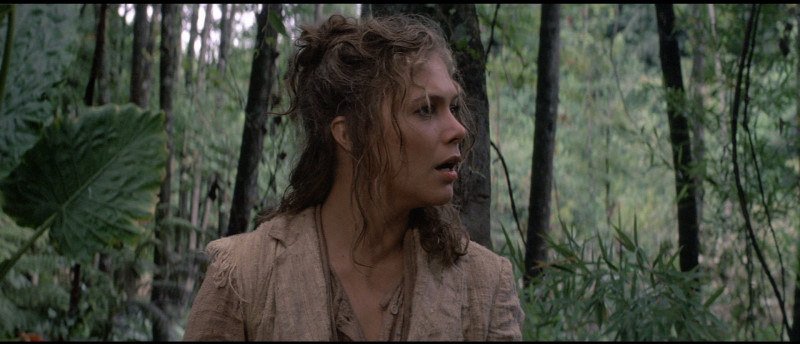
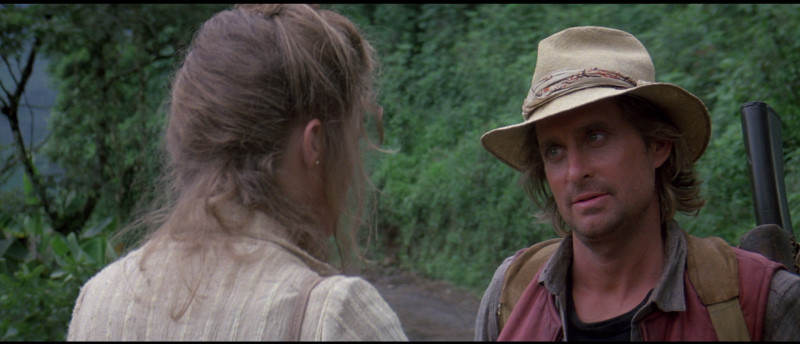
Response to Peary’s Review: Interestingly, Peary’s review(s) focus almost exclusively on Turner rather than going into detail about the storyline itself. He does note that one of the film’s highlights involves “a horde of mean peasant-highwaymen [who] turn out to be… fanatics” of Wilder’s romance novels (this scene is gut-tickling), but the entire screenplay is surprisingly engaging, full of nicely played comedic touches and heart-racing plot twists. The on-location shooting — helmed by director Robert Zemeckis and DP Dean Cundey — effectively transports us to a world of exotic danger and excitement, and Douglas is well-cast as Turner’s reluctant (at first) compatriot and lover. It’s too bad that the film’s sequel — The Jewel of the Nile (1985), not scripted by Thomas or directed by Zemeckis — is purportedly a disappointment; it’s not listed in GFTFF. Note: Thomas’s untimely death just before the release of The Jewel of the Nile was quite tragic; click here for more details. Redeeming Qualities and Moments:
Must See? Categories
Links: |
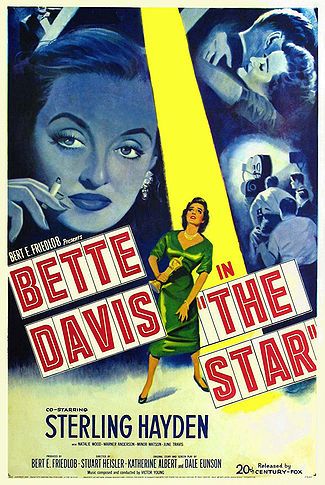
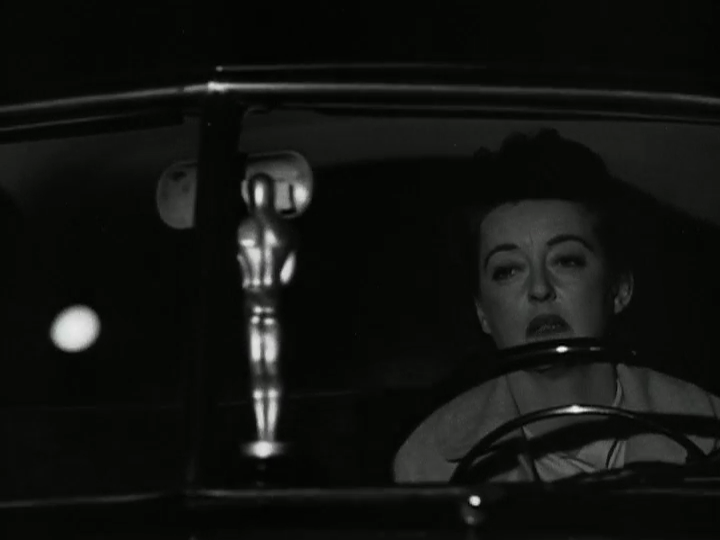
“If you’re a star, you don’t stop being a star.”
|
Synopsis: |
|
Genres, Themes, Actors, and Directors:
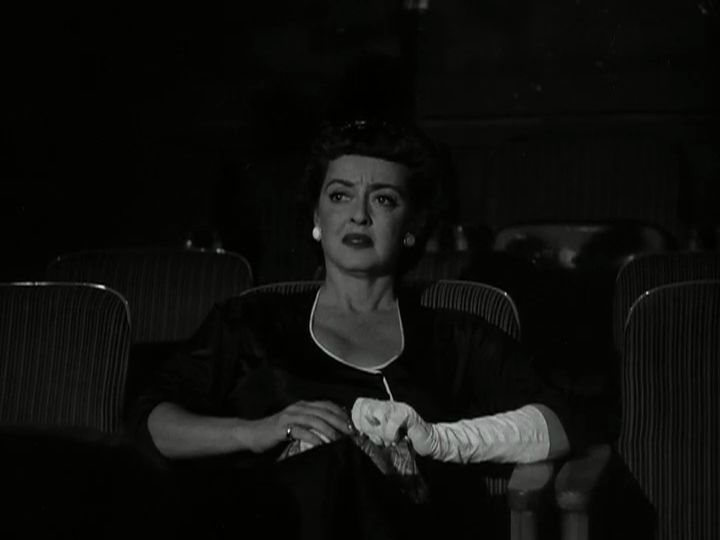
Review: Davis — who purportedly had Joan Crawford in mind when playing Elliott — gives a nuanced, sympathetic performance as a woman unable to face the reality of her circumstances. The scene in which she watches herself in a screen-test, cringing in horror at the results of her vain refusal to accept her director’s guidelines, is masterful:
… and her interactions with her ungrateful sister (Fay Baker) and brother-in-law (Herb Vigran) are nicely handled.
However, the screenplay is ultimately a disappointment in comparison with the two classic titles referenced above, and it’s hard not to feel frustrated by what could have been done with this juicy set-up. The trajectory of the storyline — particularly Elliott’s romance with Hayden:
… is too predictable, and some patently overwrought dialogue (“I once thought you were a woman. I was wrong; you’re nothing but a career.”) — place the film squarely in the realm of “women’s dramas”. However, Davis’s performance is strong enough to recommend The Star for at least one-time viewing. Trivia Note: Fourteen-year-old Natalie Wood plays a small role as Davis’s daughter, with one scene — taking place on Hayden’s boat — eerily foreshadowing the circumstances of her untimely death-by-drowning at the age of 43.
Redeeming Qualities and Moments:
Must See? Links: |
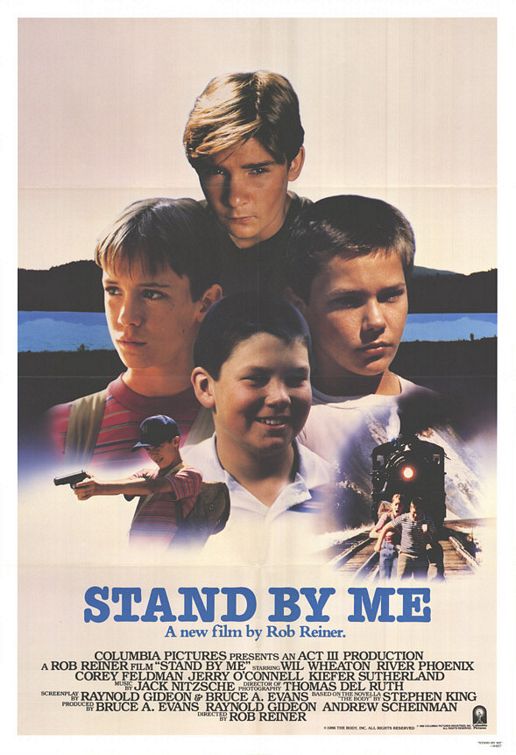
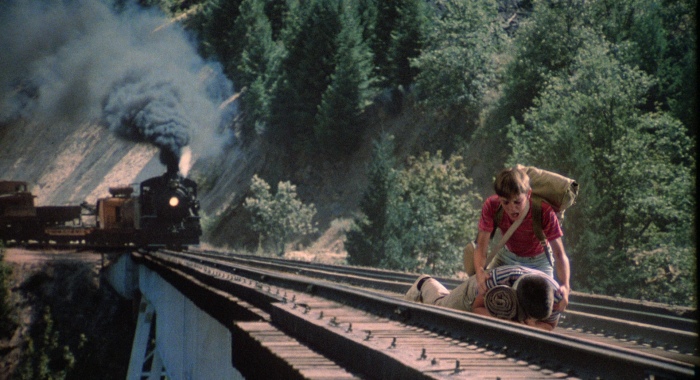
“I never had any friends later on like the ones I had when I was twelve.”
|
Synopsis: |
|
Genres, Themes, Actors, and Directors:
Review: Redeeming Qualities and Moments:
Must See? (Listed in 1001 Movies You Must See Before You Die) Links: |
“It’s not our way.”
|
Synopsis: |
|
Genres, Themes, Actors, and Directors:
Response to Peary’s Review: Peary further notes that “the major problem with the film is that it has trouble mixing commercial Hollywood elements with the mysterious elements that usually dominate Weir’s films”, specifically in its glorified emphasis on “violent action sequences” — though I believe this is intentional; indeed, Weir and “screenwriters Earl W. Wallace and Bill Kelley” seem to bank on audiences’ shock at the collision of these two radically different cultures (Amish country life and an urban homicide squad). Witness is ultimately a romantic thriller at heart — and my primary complaint is that its stock villains (sociopathically corrupt cops) are too predictably one-dimensional. However, what’s primarily at stake here are the lives of Haas and McGillis — and to that end, the film cleverly keeps us in suspense, all while bathing our senses in a uniquely pastoral late-20th-century setting. Redeeming Qualities and Moments:
Must See? Categories
Links: |