Don’t Bother to Knock (1952)

Don’t Bother to Knock (1952)

“I should have known better — you’re not cured!”

Synopsis:
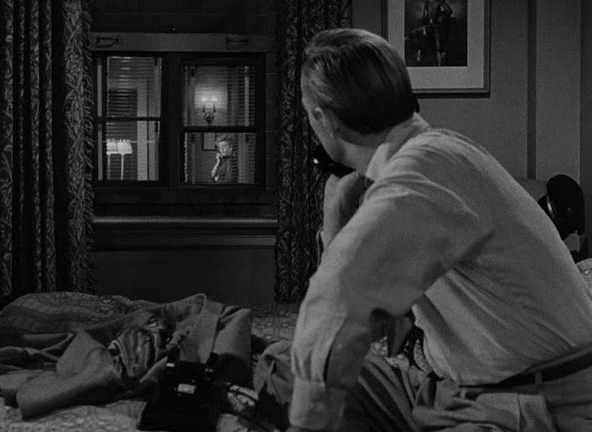
The elevator operator (Elisa Cook, Jr.) for a fancy hotel enlists his niece (Marilyn Monroe) to babysit for the daughter (Donna Corcoran) of a couple (Jim Backus and Lurene Tuttle) attending an awards event at the hotel. Soon Monroe begins flirting with an embittered guest (Richard Widmark) who is reeling from a recent breakup with his girlfriend (Anne Bancroft) — but their flirtation quickly turns dangerous as disturbed Monroe begins to believe Widmark is actually her deceased fiance.

Genres, Themes, Actors, and Directors:

  • Anne Bancroft Films
  • Governesses and Nannies
  • Marilyn Monroe Films
  • Mental Breakdown
  • Richard Widmark Films
  • Roy Ward Baker Films

Review:
Don’t Bother to Knock is best known for featuring young Marilyn Monroe in an uncharacteristically dark leading role, playing a nuanced character with more to her than mere sex appeal. To that end, her performance is impressive (we believe her pitiful “Nell” is psychotically disturbed), but the film as a whole suffers from a strange lack of authentic tension — perhaps because we never really sense a character played by MM could commit murder, or perhaps because Widmark’s character isn’t sufficiently developed. The claustrophobic events — all taking place in “real time” within the hotel — speed by at a fast-paced clip; ironically, however, this short-changes the pivotal “change-of-heart” supposedly experienced by Widmark’s character, whose real love interest (a young and beautiful Bancroft, singing several songs in her charismatic screen debut) has broken up with him because she claims he lacks sufficient empathy for others. With that said, Roy Ward Baker’s direction is solid, the economic script (just 76 minutes long) makes good use of the setting, and one does stay involved throughout.

Favorite (throwaway) exchange early in the film:

Widmark: You married?
Will Bouchey (as bartender): Sure. Who isn’t.
Widmark: You and your wife fight?
Bouchey: [beat, while he stirs a drink] Sometimes she sleeps.

Redeeming Qualities and Moments:

  • Marilyn Monroe as Nell Forbes
  • Anne Bancroft as Lyn Lesley
  • Some creative direction by Roy Ward Baker

Must See?
No, though it’s definitely worth a look simply to see Monroe (and Bancroft)’s impressive “early” performances.

Links:

Bells of St. Mary’s, The (1945)

Bells of St. Mary’s, The (1945)

“It looks like St. Mary’s is in a bad way.”

Synopsis:
When sent to help manage the inner city school of St. Mary’s, Father O’Malley (Bing Crosby) clashes on certain issues with the school’s director, Sister Benedict (Ingrid Bergman). However, they both want the best for their students, and work hard to convince a stingy local businessman (Henry Travers) to donate his new building to the school.

Genres, Themes, Actors, and Directors:

  • Bing Crosby Films
  • Ingrid Bergman Films
  • Leo McCarey Films
  • Nuns
  • Priests and Ministers

Response to Peary’s Review:
Peary argues that while this “sentimental sequel” to Leo McCarey’s Going My Way (1944) “doesn’t reach the glorious heights of the original”, it “improves with repeated viewings and certainly deserves its status as a Christmas perennial.” He concedes that “the story is a bit flimsy, the con-man tactics of Crosby and Bergman are a bit disturbing, and there are a couple of ludicrous plot twists… that were designed solely to manipulate viewers into shedding tears” — but he posits that “the picture is ultimately heartwarming”, and that “the pairing of Crosby and Bergman works like a charm”.

The fact that this dated, overly sentimental film still remains of interest at all rests solely on the capable shoulders of Bergman, who, “more beautiful than ever — whether teaching a young boy to box or just reacting to good news from Crosby or Travers — is simply magnificent”. Her performance is head-and-shoulders above the material she’s given to work with, which unfortunately simply involves more of the cloying do-gooder vignettes evidenced in Going My Way. Here, Crosby and Bergman are committed (in different ways) to helping the teenage daughter (Joan Carroll) of a “single mother” (Martha Sleeper) whose musician-husband (William Gargan) walked out on them years earlier; will Crosby locate said “missing father”, and help facilitate an unrealistically happy reunion? What do you think? Meanwhile, the entire subplot revolving around Travers’ sudden change of heart simply defies belief. Regardless, film fanatics may want to check this one out once, simply for Bergman. She’s marvelous.

Redeeming Qualities and Moments:

  • Ingrid Bergman as Sister Benedict

Must See?
No, though it’s worth a look for Bergman’s performance.

Links:

Monkey Business (1952)

Monkey Business (1952)

“I’m beginning to wonder if ‘being young’ is all it’s cracked up to be.”

Synopsis:
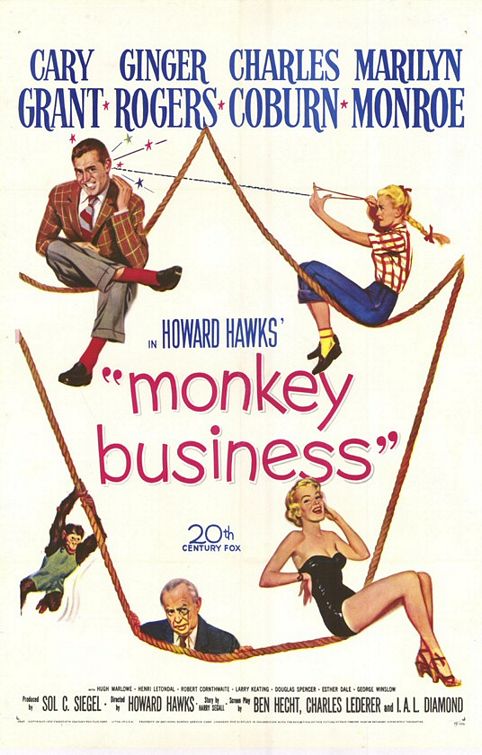
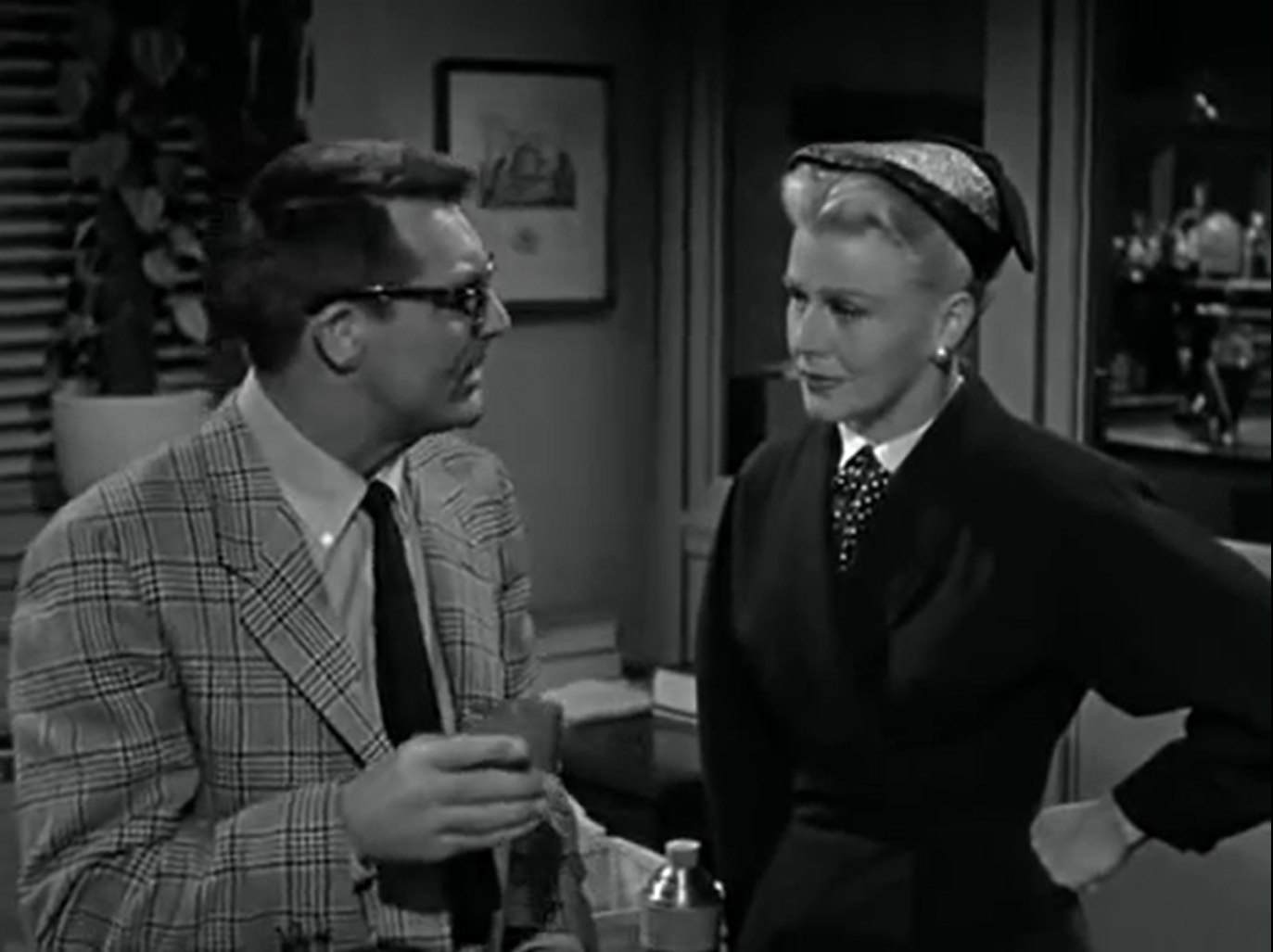
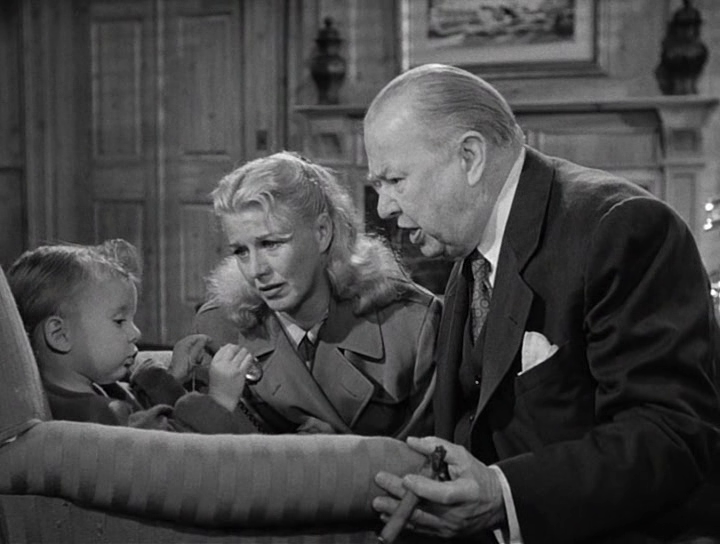
A scientist (Cary Grant) experimenting with a potion to restore youth and vitality tries it on himself and is shocked to discover how effective it suddenly is — not realizing that one of his lab chimpanzees accidentally got into his supplies and tainted the water supply with the secretly powerful new brew. Meanwhile, Grant’s wife (Ginger Rogers) insists on trying the potion herself, while his boss (Charles Coburn) is desperate to determine exactly what is making the new mixture work so well.

Genres, Themes, Actors, and Directors:

  • Cary Grant Films
  • Charles Coburn Films
  • Comedy
  • Ginger Rogers Films
  • Howard Hawks Films
  • Hugh Marlowe Films
  • Marilyn Monroe Films
  • Scientists

Review:
With Howard Hawks at the helm, a script by Ben Hecht, Charles Lederer, and I.A.L. Diamond, and a cast including Cary Grant, Ginger Rogers, and Marilyn Monroe, one can’t help expecting more from this somewhat disappointing screwball farce. The premise is an overly simple one and doesn’t really go anywhere interesting, other than to reveal the subconscious marital tensions behind the oh-so-perfect façade of Grant and Rogers’ “ideal” 1950s marriage (he’s the genius, she lovingly supports him even when he’s infuriatingly distracted).

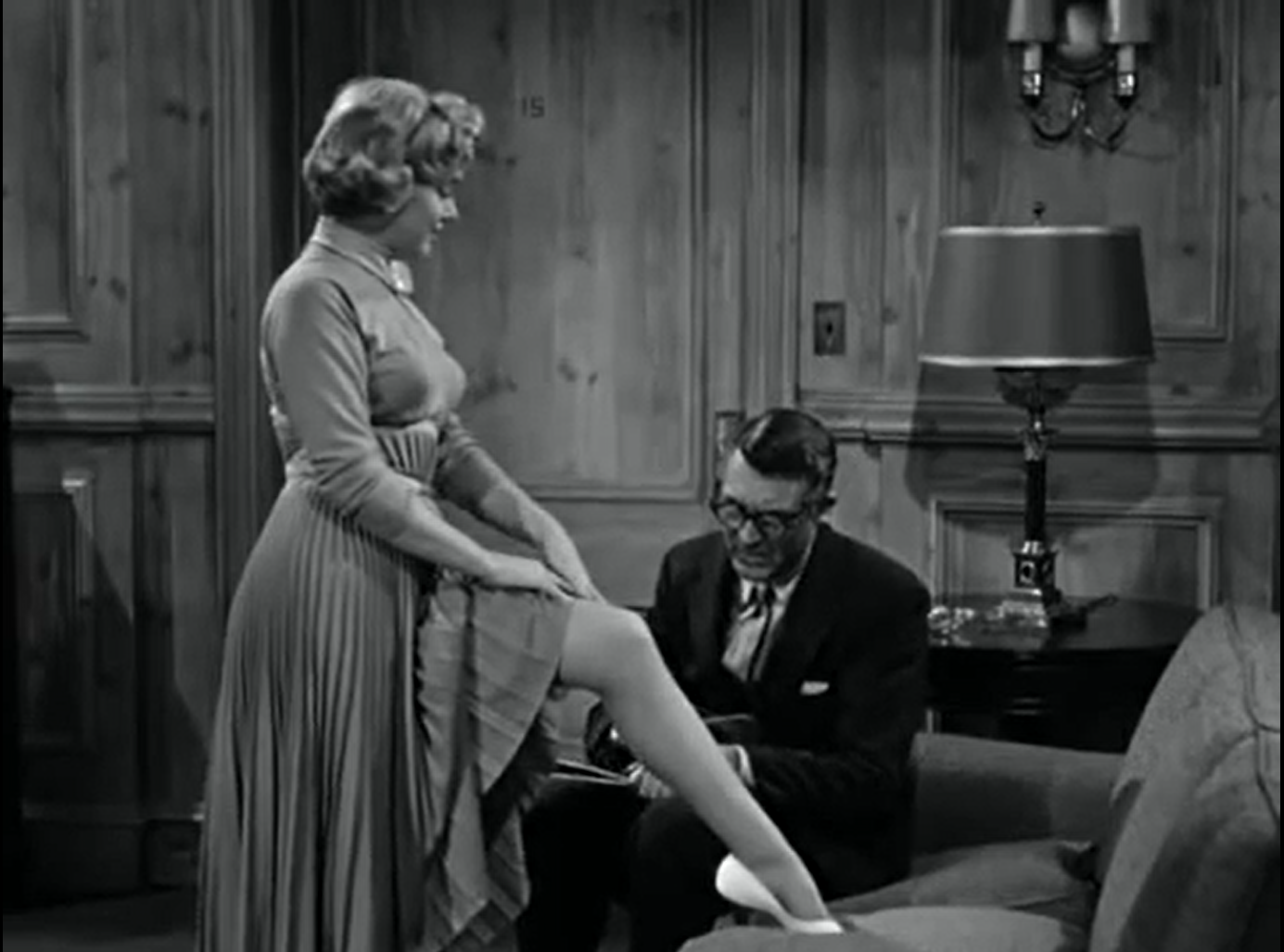
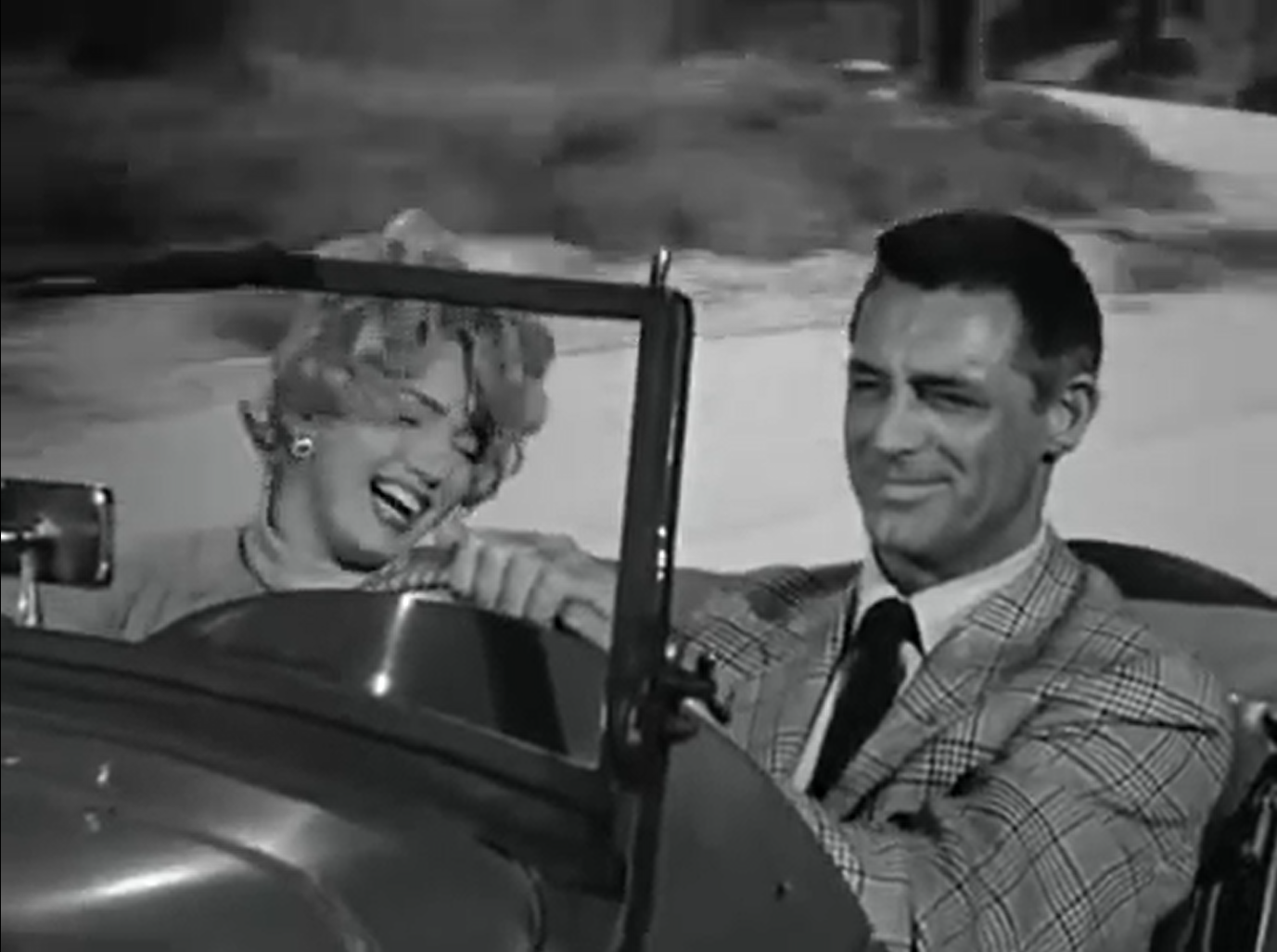
While Peary nominates both Grant and Rogers as Best Actor and Actress of the Year in his Alternate Oscars, I find their depictions as increasingly regressive adolescents silly rather than engaging. It is fun to see Monroe in an early sexpot role as Coburn’s secretary-in-name-only (she can’t even type):

Her freeway drive with Grant makes one wonder where their flirtation may go, but her character sadly fizzles into the background.

The best part of the film comes during its final half-hour, when true chaos has erupted and the pace picks up enough to carry us along in its true silliness.

Redeeming Qualities and Moments:

  • The absurdly slapstick final half-hour

Must See?
No; while many find it amusing, it’s ultimately not must-see. Listed as a Personal Recommendation in the back of Peary’s book.

Links:

Let’s Make Love (1960)

Let’s Make Love (1960)

“Oh, there’ll be children… Lots of children!”

Synopsis:
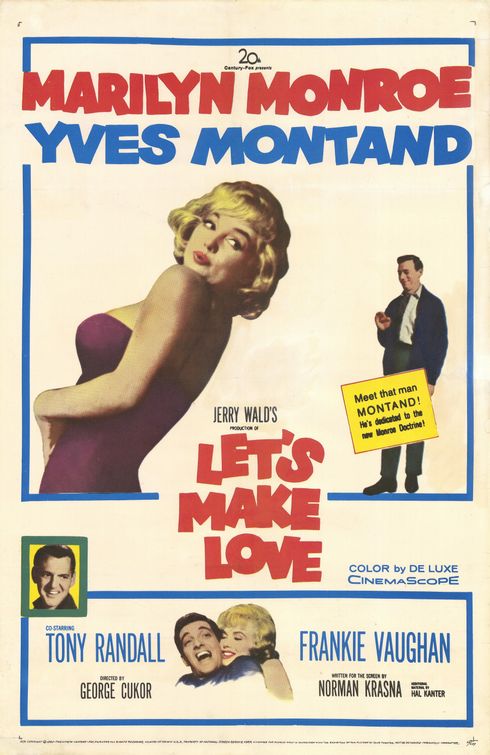
On the advice of a consultant (Tony Randall), billionaire Jean-Marc Clement (Yves Montand) attends a rehearsal of a musical show mocking his image, intending to shut it down — but he immediately becomes smitten with its star, sexy singer Amanda Dell (Marilyn Monroe), and decides instead to go along with her assumption that he’s a Clement-impersonator hoping for a bit part in the show.

Genres, Themes, Actors, and Directors:

  • Actors and Actresses
  • George Cukor Films
  • Love Triangle
  • Marilyn Monroe Films
  • Millionaires
  • Mistaken or Hidden Identities
  • Tony Randall Films
  • Yves Montand Films

Review:
Marilyn Monroe’s second-to-last feature — made between Some Like it Hot (1959) and The Misfits (1961) — shows clear evidence of her growing comfort with fully inhabiting a nuanced role. While she’s still indubitably a sex-symbol first and foremost (she wears some of her most revealing outfits throughout the film, including body stockings and leotards), she’s also very much playing a real person here — someone with genuine compassion for both her current boyfriend (a troubled singer played by Frankie Vaughan) and the man (Montand) she believes is an out-of-work actor needing pointers on how to break into show business. She’s neither dumb (she attends night school) nor a gold-digger — and while she might represent too much of an archetypal “mother figure” for modern feminist tastes, she’s someone we can’t help feeling empathy with throughout the storyline.

Meanwhile, Montand is surprisingly well-cast as a billionaire needing to be coached on his performance style (by Milton Berle, Bing Crosby, and Gene Kelly in brief cameos) in order to win Monroe’s heart. Despite his reputation as an unrepentant ladies’ man, one gets the genuine impression that he really does want to find someone who will love him for himself — thus turning him into somewhat of a blithering idiot when faced with the woman he hopes will become his life-partner. Indeed, we feel a surprising amount of compassion for him as he finds himself (nicely) rejected time and again, once he’s distanced from the comfortable trappings of his money and reputation. Meanwhile, he and Monroe possess a natural chemistry together that makes sense, given the real-life affair they embarked upon for a brief while.

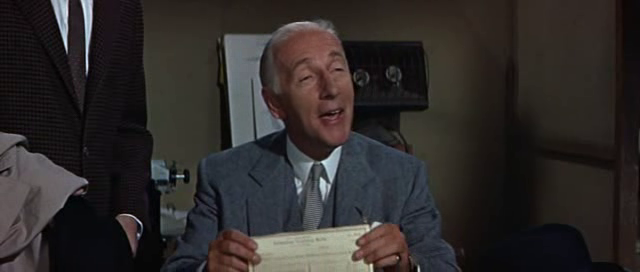
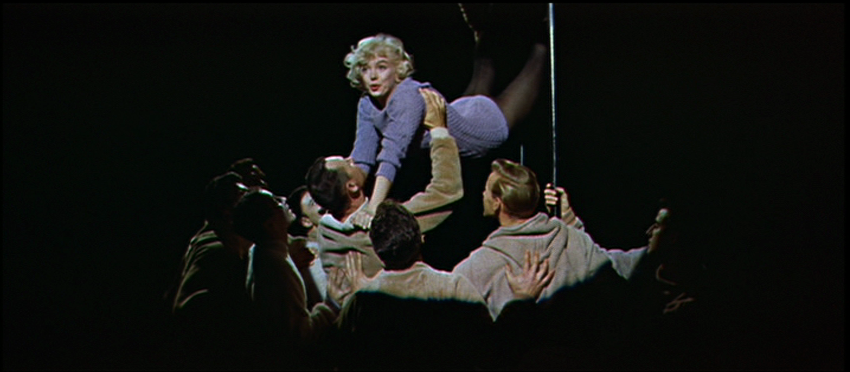
With all that said, the film is certainly not without its flaws, and most critics view it as a decidedly lesser entry in both actors’ oeuvres. Randall’s character barely registers at all, while Monroe’s romance with Vaughan is given far too little depth to help us understand his character as anything other than the conveniently plot-driven “romantic rival” Montand must defeat. Meanwhile, the cameos by Berle et al. come across as somewhat contrived. However, the strength of the two lead performances — as well as some knock-out numbers performed by Monroe (most notably her pole-dance rendition to Cole Porter’s “My Heart Belongs to Daddy”), and a fine supporting performance by Wilfrid Hyde-White as Montand’s no-nonsense business front — make this one worth at least a one-time look.

Redeeming Qualities and Moments:

  • Yves Montand as Jean-Marc Clement
  • Marilyn Monroe as Amanda
  • Wilfrid Hyde-White as George Welch
  • Monroe performing several enjoyably provocative numbers

Must See?
No, though I personally recommend it.

Links:

Roberta (1935)

Roberta (1935)

“John, everyday you act worse — but today you’re acting like tomorrow.”

Synopsis:
An American football player (Randolph Scott) visits his aunt (Helen Westley) at the Parisian design house she manages (known as “Roberta”), and begins to fall for her lovely young assistant (Irene Dunne); meanwhile his bandleader-friend (Astaire) meets up with his childhood sweetheart (Ginger Rogers), a singer posing as a Polish countess.

Genres, Themes, Actors, and Directors:

  • Fred Astaire Films
  • Ginger Rogers Films
  • Irene Dunne Films
  • Love Triangle
  • Musicals
  • Play Adaptations
  • Randolph Scott Films

Response to Peary’s Review:
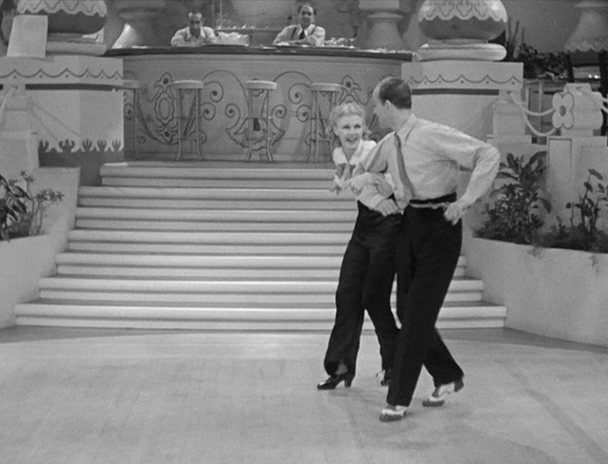
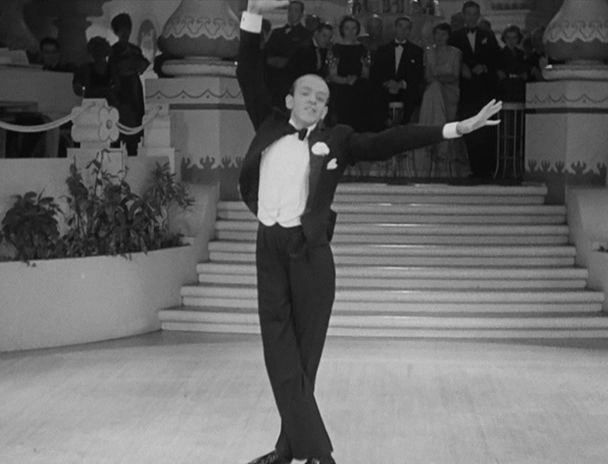
Peary accurately advises viewers to “forget the dull, convoluted Dunne-Scott plotline” of this “third Astaire-Rogers musical” — based on a Broadway play by Jerome Kern and Otto Harbach, which was itself based on a novel by Alice Duer Miller — and instead “watch [the] supporting players”. He argues that Astaire’s “Huck… is the least abrasive, most likable character he played in his films with Rogers”, and that “Rogers’s fake Polish countess… is refreshingly not deceitful or antagonistic”; he points out that “the two are actually playful and seem to be enjoying each other — even when they are not dancing”. He enumerates some of the film’s dancing/musical highlights, including their duet to “I’ll Be Hard to Handle” (“during which Rogers wears pants for the first time” — not something I would have really paid much attention to!), and their “magical reprise of ‘I Won’t Dance’, to which Astaire did a simply marvelous solo tap earlier”. Unfortunately, while there’s no arguing that the Astaire/Rogers dance scenes are quite enjoyable, the overlong movie spends far too much time with Scott (playing an annoying, incomprehensible character) and Dunne (whose operatic solos seem entirely out of place here).

Redeeming Qualities and Moments:

  • Astaire and Rogers improv dancing to “I’ll Be Hard to Handle”
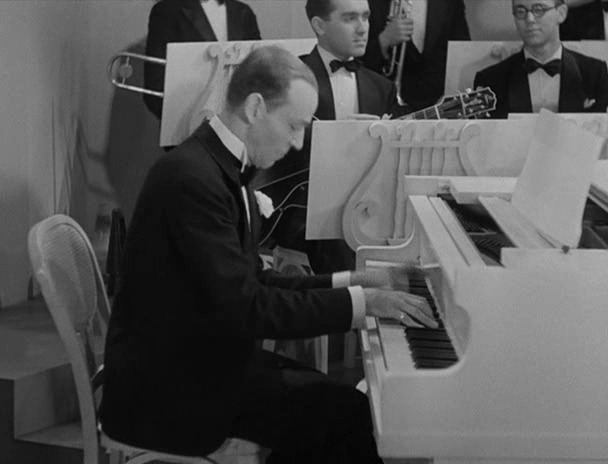
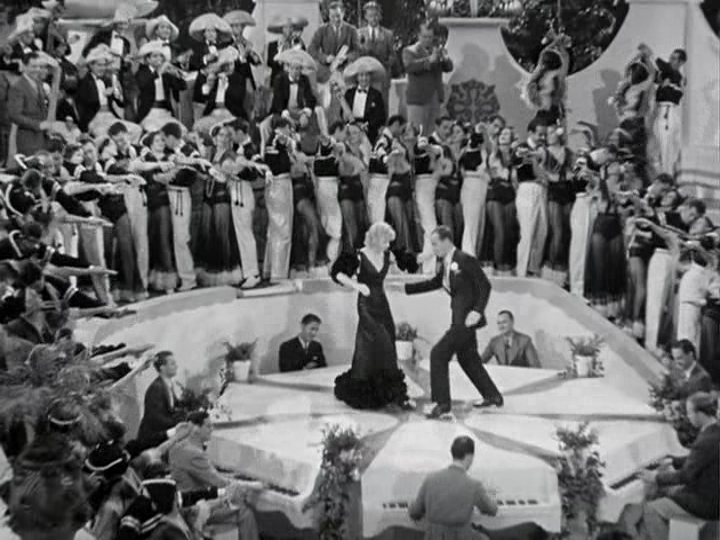
  • Astaire’s piano solo and dance to “I Won’t Dance”

  • Astaire and Rogers dancing to “Smoke Gets In Your Eyes”
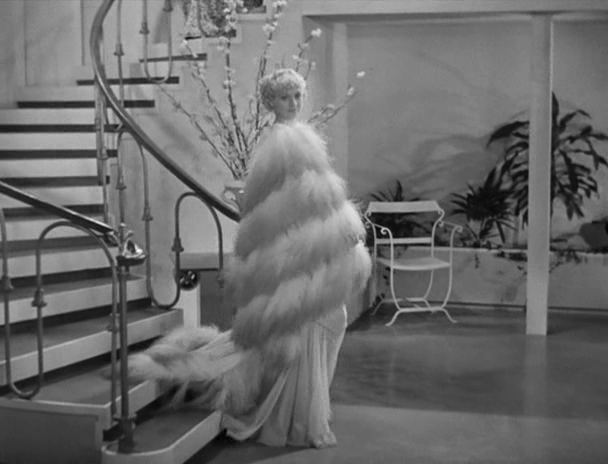
  • Some lovely ’30s gowns (the feathery one below is showcased by none other than young RKO starlet Lucille Ball)

Must See?
No; despite some fun dance numbers, this one is only must-see for Astaire-Rogers completists.

Links:

Shall We Dance (1937)

Shall We Dance (1937)

“We’re about the only two people in the world who don’t think we’re married.”

Synopsis:
A ballet dancer (Fred Astaire) smitten with a popular musical comedy star (Ginger Rogers) pursues her onboard an ocean liner, where the pair are mistakenly identified as married.

Genres, Themes, Actors, and Directors:

  • Dancers
  • Fred Astaire Films
  • Ginger Rogers Films
  • Mistaken or Hidden Identities
  • Musicals

Response to Peary’s Review:
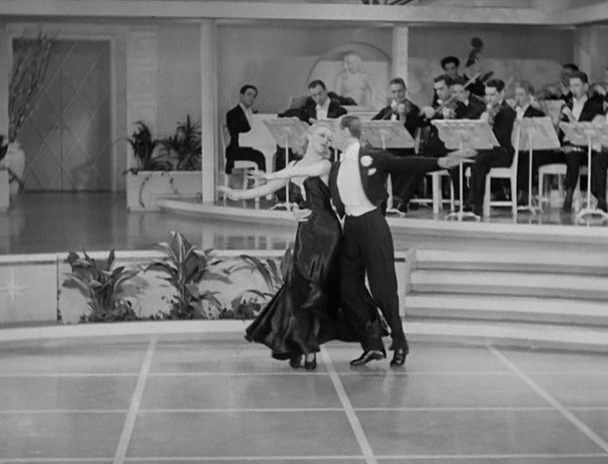
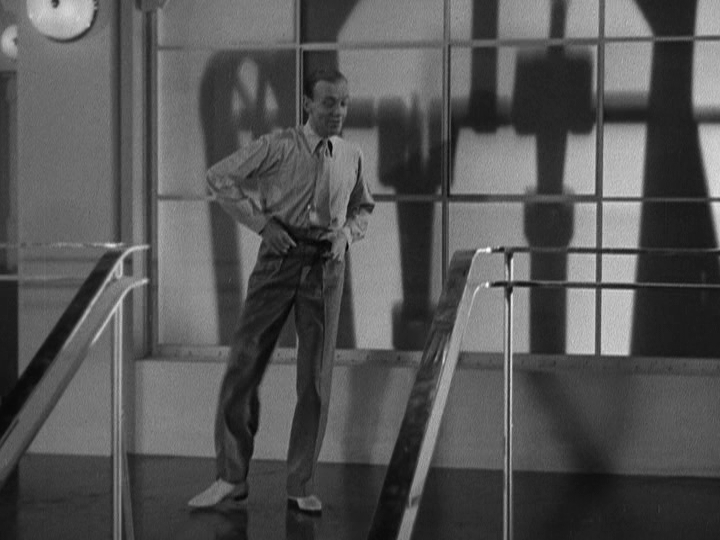
Peary accurately notes that this seventh on-screen pairing of Fred Astaire and Ginger Rogers — featuring a “silly plot” about dancers “mistaken for marrieds” — is “not great, but… enjoyable”. Edward Everett Horton’s performance (as Astaire’s manager) almost satirically epitomizes the type of flustered character he became known for in the series, while Eric Blore has fun in a bit role as a moralistic hotel manager valiantly attempting to determine whether Astaire and Rogers really are married or not. The film’s highlights, naturally, are when Astaire and Rogers dance and/or sing “to the songs of George and Ira Gershwin”, including “‘They All Laughed’, ‘They Can’t Take That Away From Me’…, ‘Let’s Call the Whole Thing Off’ — during which Astaire and Rogers are on roller skates — and ‘Shall We Dance’.” Indeed, the score itself almost makes it must-see from a cultural perspective (though I suppose one could simply watch clips of each song or dance separately on YouTube). While it’s hard to choose, I’d say my all-time favorite of the bunch is Astaire’s solo dance to “Slap That Bass”, taking place in a boiler room; watching just a few seconds of rehearsal footage from this number made me appreciate all over again exactly how much of a joyfully limber-footed genius Astaire really was.

Redeeming Qualities and Moments:

  • Creative opening titles
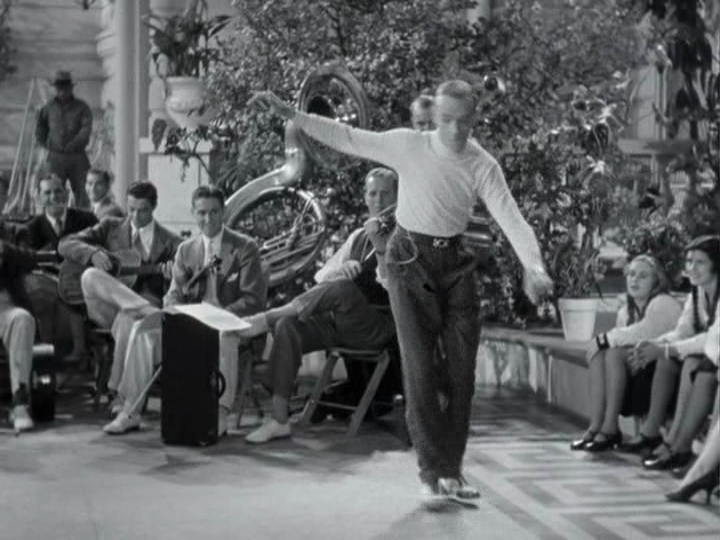
  • Astaire’s solo dance to “Slap That Bass”
  • Astaire and Rogers’ dance to (and duet of) “Let’s Call the Whole Thing Off”
  • Astaire crooning “They Can’t Take That Away From Me” to Rogers
  • Typically fine Art Deco sets by Van Nest Polglase
  • George and Ira Gershwin’s incomparable score

Must See?
No, though it’s definitely worth a look just for the songs and dances (naturally).

Links:

Carefree (1938)

Carefree (1938)

“She’s untapped… Why, she’s got everything wrong with her!”

Synopsis:
A man (Ralph Bellamy) experiencing troubles with his fiancee (Ginger Rogers) asks his psychiatrist-friend (Fred Astaire) to help Rogers overcome her reluctance to marry him. Soon, however, Rogers falls in love with Astaire, and he attempts to rectify the sticky situation through the use of hypnosis.

Genres, Themes, Actors, and Directors:

  • Fred Astaire Films
  • Ginger Rogers Films
  • Jack Carson Films
  • Love Triangle
  • Mind Control and Hypnosis
  • Psychotherapy
  • Ralph Bellamy Films
  • Romantic Comedy

Response to Peary’s Review:
In his review of Fred Astaire and Ginger Rogers’ eighth onscreen pairing, Peary writes that they “somehow got stuck in [a] second-rate screwball comedy where songs and dances are an afterthought” (Irving Berlin’s score is merely serviceable), and accurately notes that “the storyline would be offensive if it weren’t so stupid”. Indeed, the entire love triangle premise — involving Rogers acting silly and reckless while under hypnosis, and changing allegiances back and forth between potential partners — is both tiresome and tasteless. Peary points out that while the “picture is brief”, it “seems to drag because there are only four dances”, and notes that the “musical highlight” of the film (a welcome relief!) is when Astaire and Rogers (both “in a cheery mood”) dance “The Yam” — which “becomes breathtaking as Astaire repeatedly puts a foot on a tabletop (several tables are used) and swings Rogers over his leg”. Given my full agreement with Peary’s review, I was astonished to find that Carefree seems to be highly regarded by just about every other critic, with the New York Times referring to it as “in excellent musical comedy taste”, DVD Savant labeling the script “exceptionally clever”, and Time Out relegating it simply to the ranks of “not quite as unrelievedly marvelous as the earlier films”. Apparently each film fanatic will have to decide for him/herself whether this one is a clunker or a worthy entry in Astaire and Rogers’ oeuvre.

Redeeming Qualities and Moments:

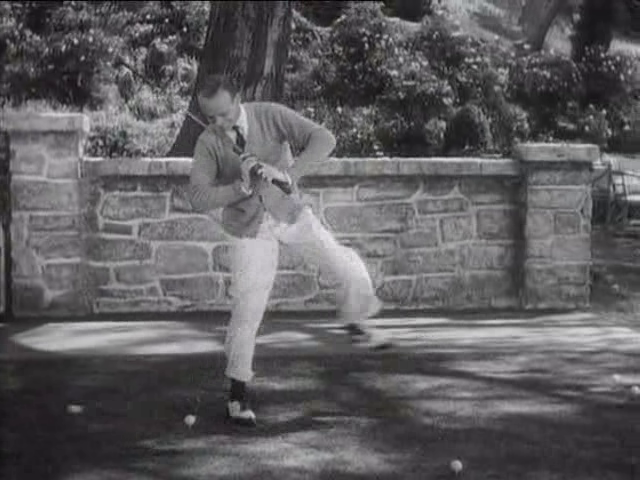
  • Astaire’s golf club “dance”
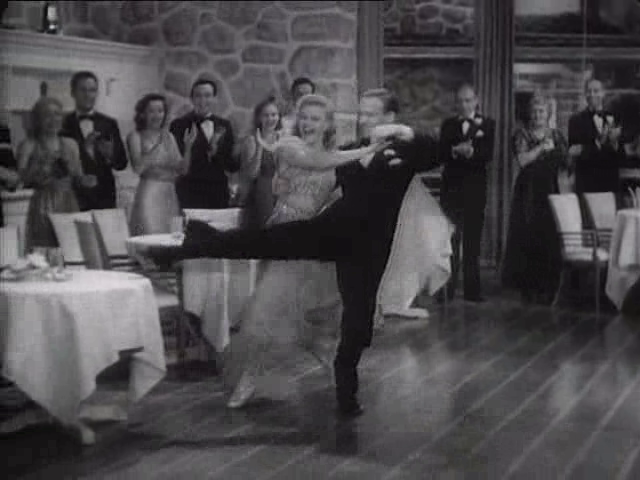
  • Fred and Ginger doing “The Yam”

Must See?
No; in my opinion, this one is only must-see for diehard Astaire-and-Rogers completists.

Links:

Flying Down to Rio (1933)

Flying Down to Rio (1933)

“What have these South Americans got below the equator that we haven’t?”

Synopsis:
Flirtatious bandleader Roger Bond (Gene Raymond) falls in love with a beautiful Brazilian socialite named Belinha (Dolores Del Rio), unaware that she’s already engaged to his friend Julio (Raul Roulien). Meanwhile, when Bond brings his band — including dancers Fred (Fred Astaire) and Honey (Ginger Rogers) — to Rio for a gig at Belinha’s father’s hotel, he discovers that members of a powerful bank eager to take over the hotel are determined to stop the show from taking place.

Genres, Themes, Actors, and Directors:

  • Dolores Del Rio Films
  • Fred Astaire Films
  • Ginger Rogers Films
  • Love Triangle
  • Musicals
  • Romantic Comedy

Response to Peary’s Review:
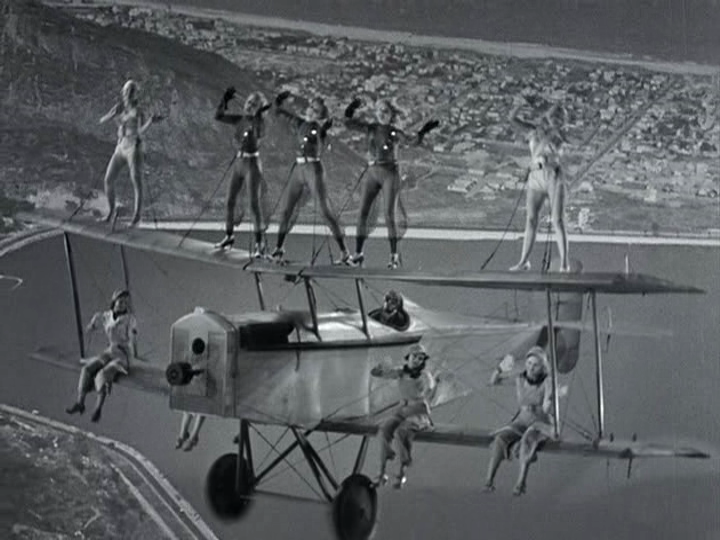
Peary argues that despite being fourth- and fifth-billed in their first onscreen pairing (behind top-billed romantic leads Dolores Del Rio and Gene Raymond), Rogers and Astaire “steal [this] film” as they “do their one duet” together, dancing “The Carioca” and “giving off electricity that Raymond and… Del Rio are unable to equal”. He notes that “despite some dull spots and a flimsy plot”, the picture remains “romantic, sexy, and delightfully and inventively kitschy”, with “some tricky camera work, unusual art design by Van Nest Polglase and Carroll Clark, and some creative production numbers” — most notably the “unforgettable” aerial ballet finale featuring “scantily clad chorus girls strik[ing] provocative pre-Hollywood poses on the wings of airplanes in flight”.

Indeed, while “Rogers and Astaire are the main reason this film” has remained in film lovers’ consciousness (most know of it simply as the movie that sparked Astaire and Rogers’ lengthy onscreen partnership), it’s ultimately more “bizarre” than “innocuous”, and offers some unexpected pleasures here and there — such as the use of shadowy silhouettes (accompanied by an unforgettably wonky musical theme) to represent the three “evil” bank members, or the surreal outcome of Del Rio and Raymond’s overnight island stay. Meanwhile, the culminating aerial sequence (complete with one chorine nearly falling to her death!) is certainly worth a look for curiosity-value alone — though it’s not quite enough to raise the film as a whole to the level of “must see” viewing.

Redeeming Qualities and Moments:

  • Astaire and Rogers dancing the Carioca
  • Astaire finding himself unable NOT to dance when he hears band music starting up
  • The justifiably infamous “aerial ballet” scene
  • Some fun pre-code zingers (see quote at beginning of review)

Must See?
No, though of course anyone interested in the evolution of the Astaire-Rogers films will want to check it out.

Links:

Some Like It Hot (1959)

Some Like It Hot (1959)

“Now you know how the other half lives.”

Synopsis:
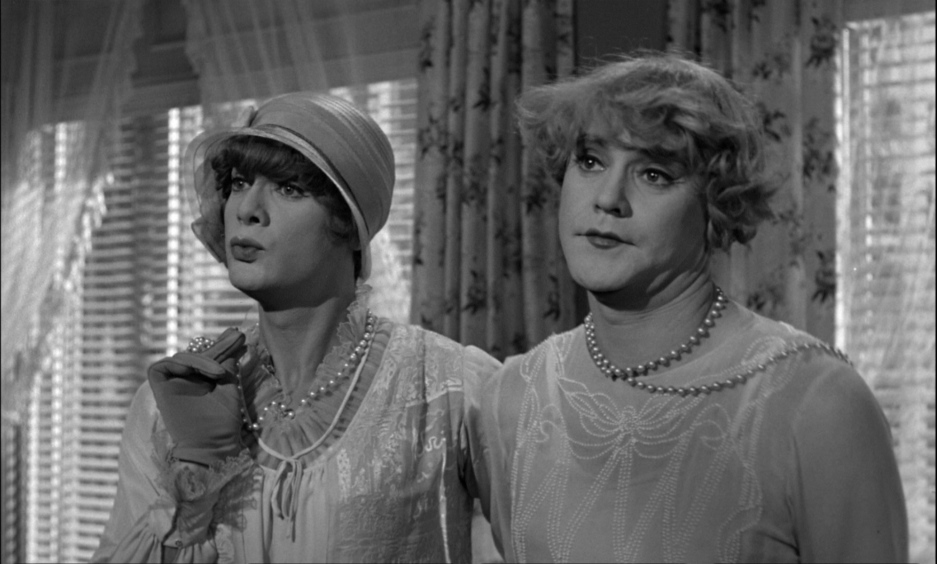
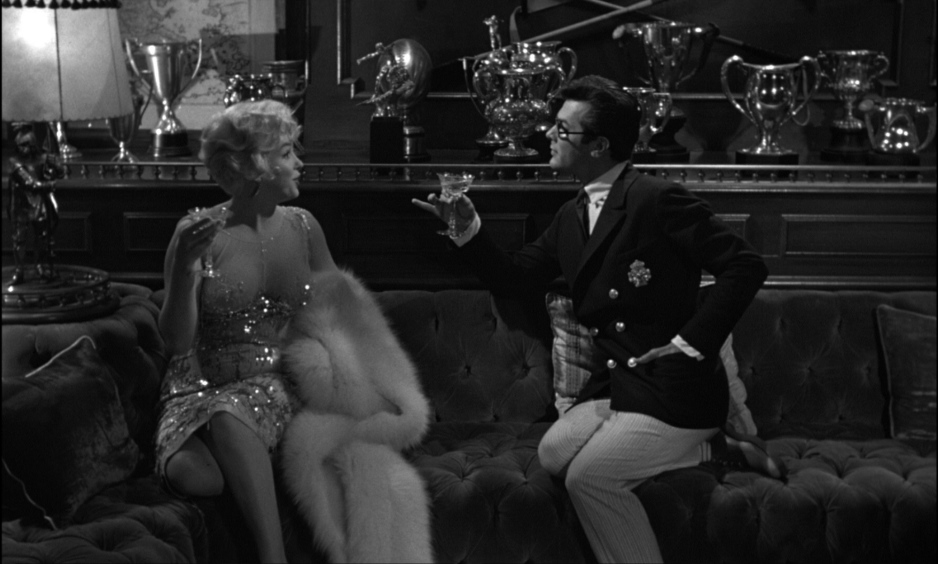
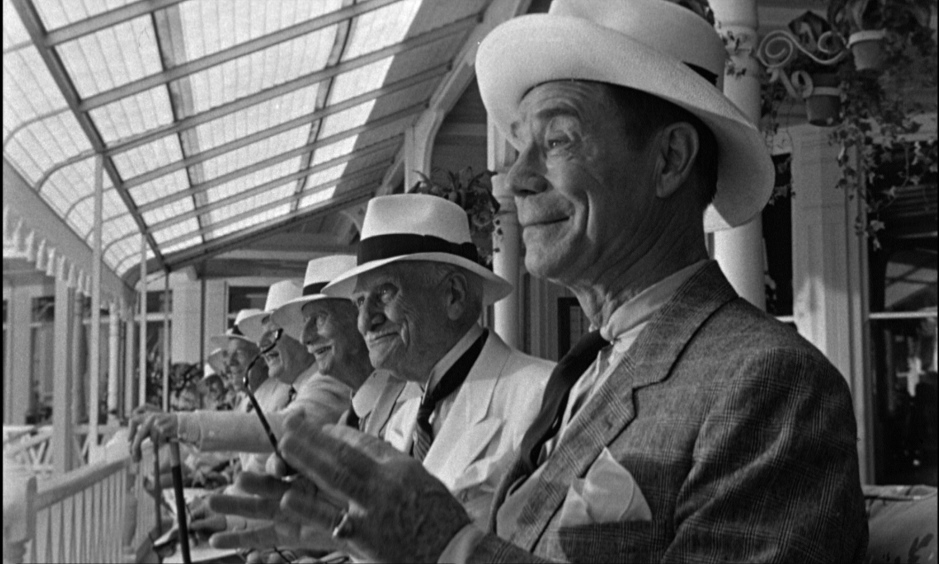
In 1920s Chicago, a pair of struggling musicians (Jack Lemmon and Tony Curtis) who accidentally witness a murder committed by mob boss Spats Colombo (George Raft) flee to Florida in disguise as members of an all-girl band. “Josephine” (Curtis) soon adopts the persona of a wealthy oilman to seduce sexy bandmate Sugar Kane (Marilyn Monroe), while “Daphne” (Lemmon) is wooed by an older millionaire (Joe E. Brown) who has no idea Daphne is actually a man.

Genres, Themes, Actors, and Directors:

  • Billy Wilder Films
  • Comedy
  • Fugitives
  • Gender Bending
  • George Raft Films
  • Jack Lemmon Films
  • Marilyn Monroe Films
  • Millionaires
  • Mistaken or Hidden Identities
  • Pat O’Brien Films
  • Tony Curtis Films

Response to Peary’s Review:
In his Alternate Oscars — where he votes Some Like It Hot the Best Film of the Year — Peary accurately notes that this classic farce by director Billy Wilder features “sparkling, high-energy comic performances by Marilyn Monroe, Jack Lemmon, Tony Curtis, and Joe E. Brown”, as well as “a dazzling array of lead and secondary characters, all with quirky, aggressive personalities”, and “hilarious, furious, and often sexy interplay among those characters”. He points out the film’s “enlightened ahead-of-its-time sexual-identity theme”, its “frenetic pacing”, and its “consistently clever, daring, and provocative” script — by Wilder and I.A.L. Diamond — which is perpetually “straddling the boundaries of bad taste”. He names some of its “many wonderful moments”, including “such classic scenes as Monroe’s Sugar [Kane] sexily wiggling up the train compartment aisle singing ‘Running Wild’; Sugar sharing secrets and a train berth with the increasingly titillated ‘Daphne’; … ‘Daphne’ dancing into the night with Osgood [Brown], a flower moving from mouth to mouth on their deadpan faces; [and] ‘Josephine’ reminding ‘Daphne’ of the reasons why s/he can’t marry Osgood”.

Peary argues that SLIH features “Marilyn Monroe’s most delectable performance”, and names her Best Actress of the Year in Alternate Oscars, where he notes that while she “plays a character who has been pushed around in life… [she] doesn’t try to win audience sympathy or pass herself off as lovable, as she does in other films”. Instead, he posits, she “concentrated on comedy”, and comes across as “truly funny in this film”. Indeed, there’s truly no evidence of the infamous inter-personal conflicts between Monroe and others that plagued the film’s production. Meanwhile, Peary names Jack Lemmon Best Actor of the Year in Alternate Oscars, where he notes that Lemmon is “howlingly funny” playing a “character who is excitable, frantic, flustered, argumentative, cynical, sarcastic, curious, horny, and slightly mischievous”. What’s most impressive about Lemmon’s characterization is the way he “jumps into the zaniness [of his “insane predicament”] and allows himself to become screwy and happy”. Peary notes that “as in all of his most successful comedies, he’s appealing here because, in addition to his immense talent, he seems to be enjoying himself so much”.

In his analysis of the film for GFTFF (elaborated upon in his more extensive reviews for Cult Movies 2 and Alternate Oscars), Peary notes that “in Wilder’s screen world, people are identified by what they wear, carry, or own, but by [the] film’s end, [the] characters will be identified by who they are”. He notes that “interestingly, Jerry and Joe don’t become silly movie females when they don women’s clothing”, instead becoming “tough, smart, fun-to-be-with broads who take guff from no man and are loyal friends to other women”. He points out that “like Sylvia Scarlett, [the movie’s] theme is that when a person lives as the other sex, he or she has the opportunity to explore previously latent aspects of the personality”; to that end, he argues that “Daphne and Josephine aren’t the alter egos of Jerry and Joe” so much as they are “more (extensions) of the two men”. Ultimately, SLIH remains the best and smartest of countless cross-dressing comedies to come out of Hollywood, offering an enduring treat to both first-time viewers as well as those returning for repeat visits.

Redeeming Qualities and Moments:

  • Marilyn Monroe as Sugar Kane (named Best Actress of the Year in Alternate Oscars)
  • Jack Lemmon as Jerry/Daphne (named Best Actor of the Year in Alternate Oscars)
  • Tony Curtis as Joe/Josephine (nominated as one of the Best Actors of the Year in Alternate Oscars)
  • Joe E. Brown as Osgood Fielding III
  • A memorable, clever script, full of plenty of one-liners: “I always get the fuzzy end of the lollipop.”

Must See?
Yes, of course — as a most enjoyable comedy classic.

Categories

  • Genuine Classic
  • Important Director
  • Noteworthy Performance(s)
  • Oscar Winner or Nominee

(Listed in 1001 Movies You Must See Before You Die)

Links:

Lady From Shanghai, The (1948)

Lady From Shanghai, The (1948)

“Everybody is somebody’s fool.”

Synopsis:
An Irish drifter (Orson Welles) immediately becomes smitten with a beautiful woman (Rita Hayworth) he helps rescue from a rape attempt. Soon he’s invited to serve as a ship’s mate on a yacht trip hosted by Hayworth’s wealthy, crippled husband (Everett Sloane), where Sloane’s business partner (Glenn Anders) attempts to convince Welles to take the rap for a murder he won’t actually commit.

Genres, Themes, Actors, and Directors:

  • Femmes Fatales
  • Framed
  • Orson Welles Films
  • Plot to Murder
  • Rita Hayworth Films

Response to Peary’s Review:
Peary writes that this “longtime cult favorite” — infamous as the movie “held back for two years by Columbia chief Harry Cohn, who was horrified that Welles would chop off the flowing red hair of Rita Hayworth” in addition to going “way over budget on a film that [he] couldn’t understand” — may be “Orson Welles’s most enjoyable film”. He notes that “the film has always given critics trouble because it’s hard to categorize”, given that the “story itself” (based on Sherwood King’s novel If I Die Before I Wake) “is classic film noir material”, but it could also be seen as “more of a twist on Gilda,” and “anticipates Beat the Devil” because of its “tongue-in-cheek humor, the improvisation, the bizarre characters, the blonde (played by an actress known for a different hair color) who is a habitual liar, [and] the sense that the director is having a grand time behind his camera”. Indeed, as Peary points out, “Welles has fun simply by setting his significant scenes in such unusual places as an aquarium (for a love scene), a Chinese theater, and an amusement-park Crazy House”, which serves as the location for Welles’ justifiably “celebrated shootout in the Hall of Mirrors”.

I’m in complete agreement with Peary’s assessment of this convoluted yet consistently enjoyable and creatively filmed noir, which — like most of the titles in Welles’ oeuvre — never fails to keep one engaged on (at the very least) a visual level. Welles-the-actor has been criticized for his attempt at an Irish brogue here in the lead role, but I find it convincing enough, and a nice change from his typically sonorous boom. It’s remarkably easy to buy his characterization as a chump who’s fully aware he’s being taken advantage of by Hayworth and her crew, yet can’t seem to find a way out of the nightmare he’s pulled into. The screenplay (co-written by Welles) is full of zingy one-liners (“I’ve always found it very sanitary to be broke”), and will certainly keep you on your toes throughout — though I actually don’t find it quite so difficult to follow as others claim. Meanwhile, Hayworth is as gorgeous as ever, easily convincing us that she’s someone Welles would lose his head over.

Redeeming Qualities and Moments:

  • Orson Welles as Michael O’Hara
  • Everett Sloane as Arthur Bannister
  • Glenn Anders as George Grisby
  • Innovative direction by Welles

  • Atmospherically noir-ish cinematography

  • Fine location footage in the Bay Area of California

  • The justifiably famous “hall of mirrors” finale

Must See?
Yes, as one of Welles’ best films.

Categories

  • Genuine Classic
  • Important Director

(Listed in 1001 Movies You Must See Before You Die)

Links: