High Noon (1952)
“I think I ought to stay.”
|
Synopsis: |
|
Genres, Themes, Actors, and Directors:
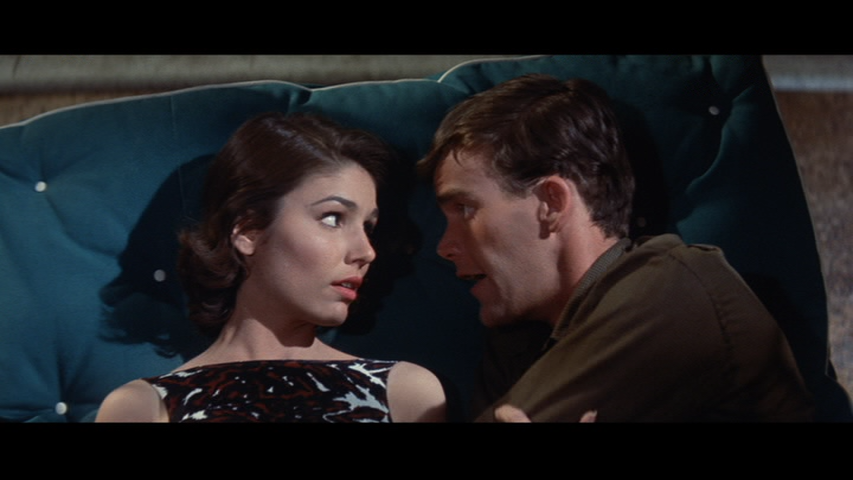
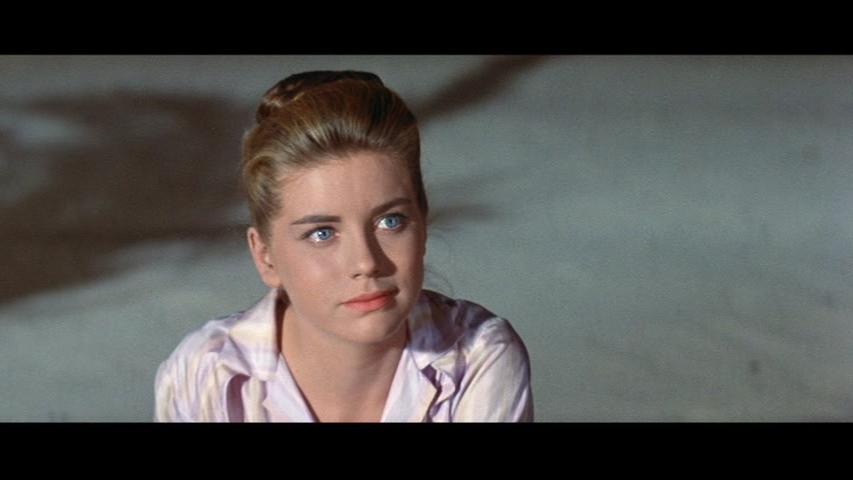
Response to Peary’s Review: Regarding the “fairly clunky, faux-profound” script, the film’s moral compass remains notoriously challenging to grasp, with critics continuously debating whether it more accurately represents a liberal or a conservative viewpoint. While many see Cooper’s “Will Kane” as a stand-in for Foreman himself (abandoned by friends and colleagues during his blacklisting in the HUAC era), others see him as a staunch version of America, unafraid to fight and stand up to Communist threats. Personally, I choose to view the film on a much simpler and more human level — as the tale of a man who knows he’ll be followed for the rest of his life unless he confronts the menace that’s out to get him. To that end, Cooper’s Kane makes a pragmatic but life-altering choice in what seems like an instant, despite the fact that it means the disruption of his brand-new marriage to beautiful (pacifist) Kelly; indeed, given that the film is basically “told in real time”, we’re plunged immediately into Kane’s dilemma, without much of a chance to learn more about his character or what might have caused him to make such a seemingly reckless decision. Peary writes, “Personally, I think Cooper should have left town… but I’m glad he doesn’t because the final shootout is one of the western’s most exciting sequences”, since “Cooper finally displays strength” and “because of the way Floyd Crosby’s striking images are edited to fit the music”. Indeed, regardless of whether one believes Cooper is being foolhardy or not by staying in town (and I personally disagree that he shows anything but “strength” all along), the storyline itself — including the enjoyably taut final shootout — remains intrinsically compelling, simply given the threat of an ever-looming deadline, and the question of whether or how Cooper will be able to pull together enough support to stay alive. Interestingly, Peary points out that High Noon is “one of the few westerns that are favorites of viewers who dislike the genre”, perhaps because of its strategically thriller-like structure — or perhaps because of its unconventional storyline, which is ultimately more of an allegorical morality tale than a standard western. Who are the “good guys” here, and who (other than the obvious four gunmen) are the “bad”? That’s ultimately left up to viewers to decide. Speaking of personal takes on the film, Peary writes that apparently “Howard Hawks was so infuriated by Cooper’s whimpering [sic] that he made Rio Bravo to show that a professional lawman like Cooper’s wouldn’t ask common folk for help against the gunmen”. While I don’t agree with Hawks’ interpretation of Cooper’s character, I’m not upset that Rio Bravo was the result of his dissatisfaction. Note: Watch for Lon Chaney, Jr. in a brief supporting role as the town’s former sheriff; it’s lovely to see him given such a dignified moment in a highly-regarded film. Redeeming Qualities and Moments:
Must See? Categories
(Listed in 1001 Movies You Must See Before You Die) Links: |