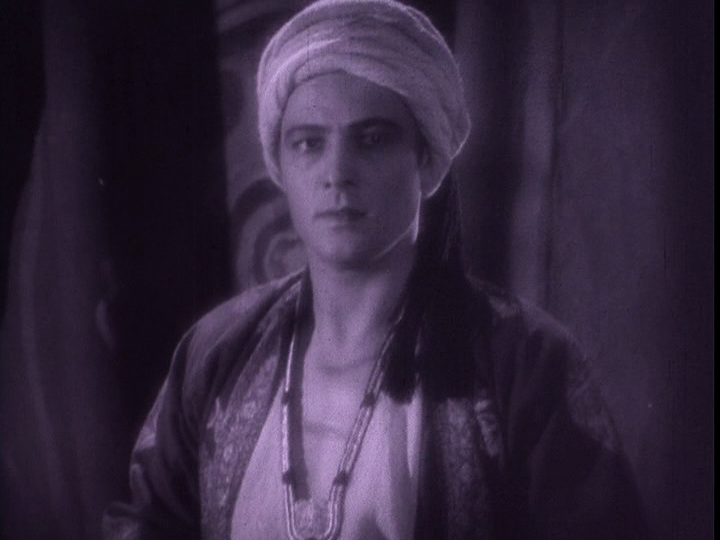
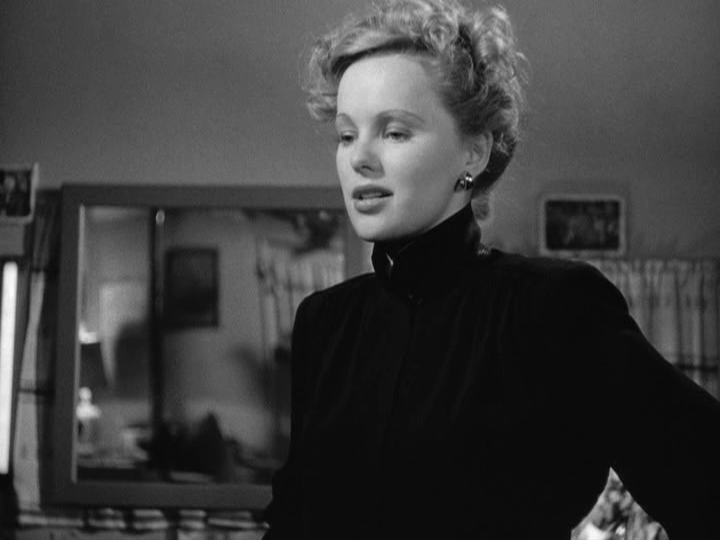
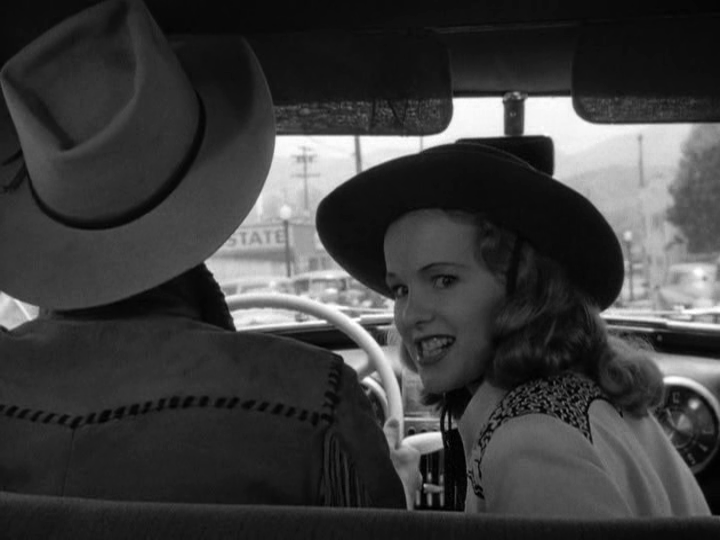
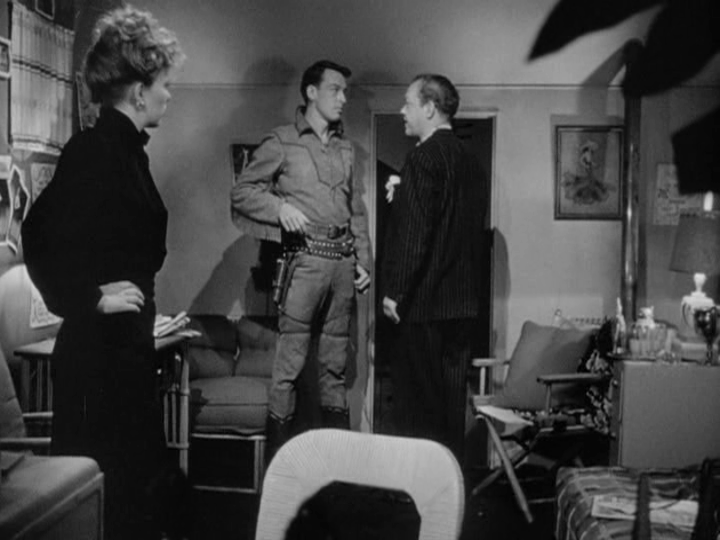
For Heaven’s Sake (1926)

For Heaven’s Sake (1926)

“We’ll just kidnap Manners and argue it out with him back at the Club.”

Synopsis:
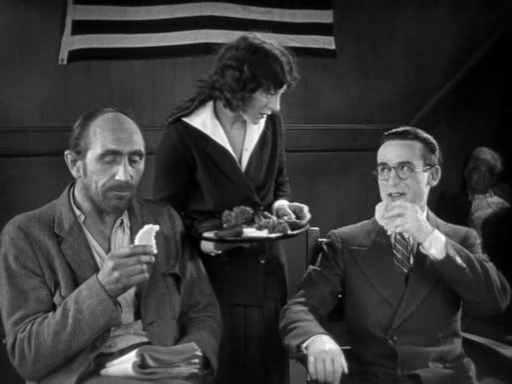
A carefree millionaire (Harold Lloyd) falls in love with the daughter (Jobyna Ralston) of a missionary (Paul Weigel), and helps fund the construction of their new mission; but when he proposes to Ralston, his wealthy pals decide to save him from his “mistake” by kidnapping him.

Genres, Themes, Actors, and Directors:

  • Comedy
  • Cross-Class Romance
  • Harold Lloyd Films
  • Kidnapping
  • Millionaires
  • Missionaries and Revivalists
  • Silent Films

Review:
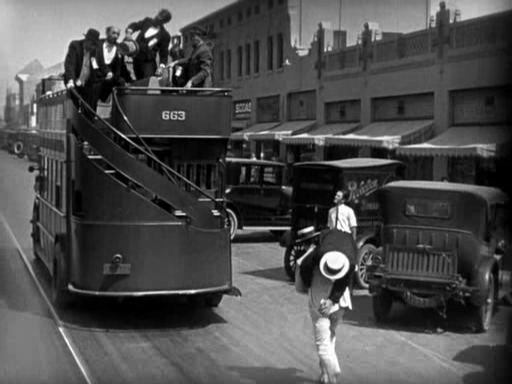
Made in between two of Harold Lloyd’s most beloved features — The Freshman (1925) and The Kid Brother (1927) — For Heaven’s Sake was reportedly not one of Lloyd’s personal favorites among his oeuvre; he cut it down in length to just under an hour in response to initial audience reactions, yet was “still so unhappy that he offered to buy the film back from the studio”. There’s actually some truth to Lloyd’s dissatisfaction, given that the overly simplistic narrative doesn’t really allow much room for development: Lloyd’s character shifts too quickly from self-absorbed playboy to magnanimous mission worker, and the kidnapping subplot comes literally out of nowhere, with a posse of “friends” suddenly showing up who we’ve never seen before. However, this merely serves as the narrative springboard for the film’s stunning finale, which begins with a series of amusingly conceived drunken antics by Lloyd’s “rescuers”, and leads to a handful of daringly accomplished physical stunts involving numerous moving vehicles. Ultimately, however, this one is only must-see for Lloyd fans; others will want to stick with watching his most celebrated successes.

Redeeming Qualities and Moments:

  • Several amusing sequences
  • The stunningly executed finale

Must See?
No, though of course it’s a must for fans of Harold Lloyd.

Links:

Thief of Bagdad, The (1924)

Thief of Bagdad, The (1924)

[Note: The following review is of a non-Peary title; click here to read more.]

“I am less than the slave who serves you — a wretched outcast — a thief.”

Synopsis:
In ancient Bagdad, a thief (Douglas Fairbanks) — aided by his trusted companion (Snitz Edwards) — vies against other suitors — including an Indian Prince (Noble Johnson), a Persian prince (Mathilde Comont), and an evil Mongol prince (Sojin) — to win the heart of a princess (Julanne Johnston). When his true identity is revealed, he embarks on a magical journey, while his competitors set out to seek the rarest treasure possible to bring back to the princess.

Genres, Themes, Actors, and Directors:

  • Cross-Class Romance
  • Douglas Fairbanks Films
  • Fantasy
  • Raoul Walsh Films
  • Royalty and Nobility
  • Silent Films
  • Thieves and Criminals

Review:
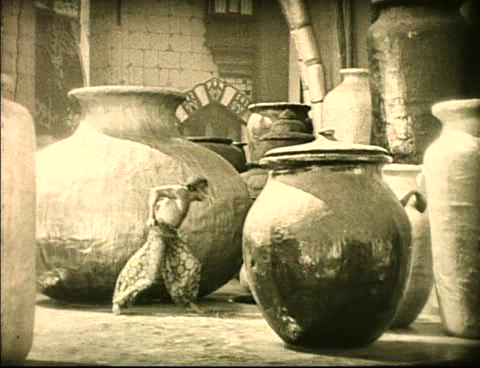
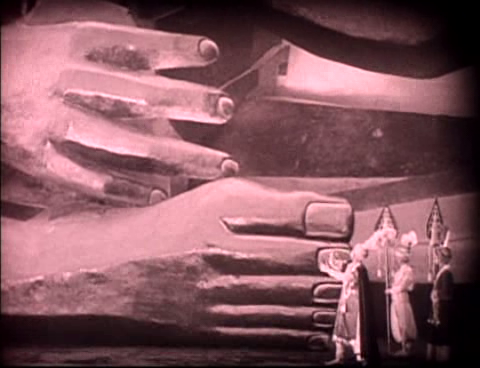
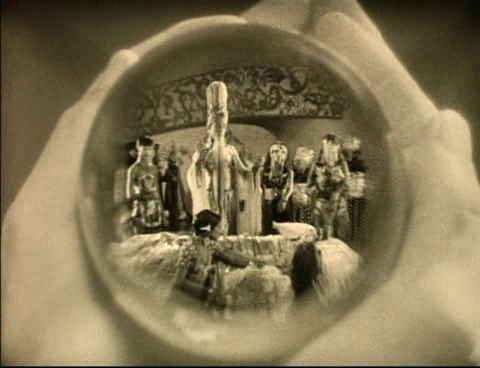
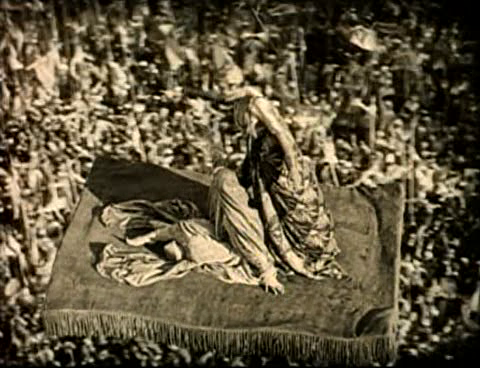
Peary only lists two films with silent-era swashbuckler Douglas Fairbanks in his GFTFF — The Mark of Zorro (1920) and The Black Pirate (1926) — thus curiously neglecting what may be Fairbanks’ most celebrated movie, The Thief of Bagdad. 40-year-old Fairbanks is at his most fit here, leaping across the screen in bare chest, clambering up and down ropes, standing on his head to shake stolen coins out of his kerchief; he perfectly embodies the title character’s scampish romanticism and unending thirst for adventure. However, it’s William Cameron Menzies’ truly astonishing sets — Baroque, fantastical environments which literally dwarf Fairbanks and his supporting cast — that make this film a must-see spectacle; combined with creative special-effects (including, of course, a flying carpet), we really feel we’ve entered into the magical world of ancient Bagdad and its environs. The film’s primary downfall is its length: at 2 hours and 20 minutes, it goes on for a bit too long; meanwhile, those offended by culturally insensitive depictions of “Asian menace” will be discouraged by the presence of sexy Anna May Wong as the evil accomplice to a Mongol despot (Sojin) with plans to take over Bagdad by force. However, it’s easy enough to ignore these concerns while marveling at the consistently innovative visuals, and appreciating just how athletically impressive Fairbanks really was.

Redeeming Qualities and Moments:

  • Douglas Fairbanks as the Thief of Bagdad
  • William Cameron Menzies et al.’s truly magnificent sets and art design

  • Impressive special effects

Must See?
Yes, as an iconic silent film.

Categories

  • Historically Relevant

(Listed in 1001 Movies You Must See Before You Die)

Links:

Eagle, The (1925)

Eagle, The (1925)

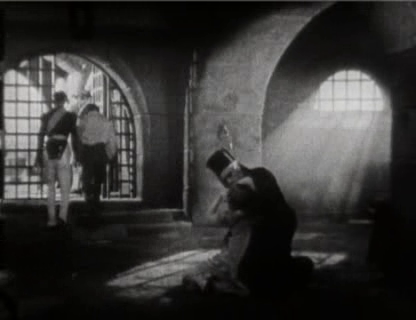
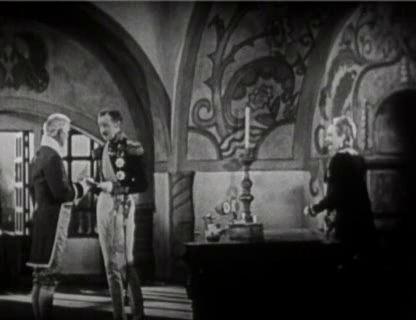
“I enlisted for war service only.”

Synopsis:
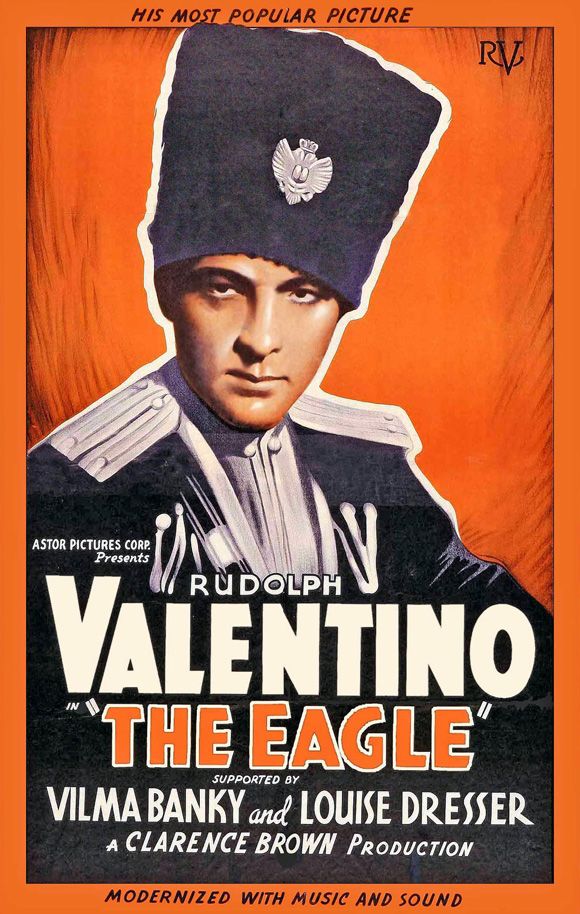
When a handsome young Cossack (Rudolph Valentino) rebuffs the romantic advances of Catherine the Great (Louise Dresser), he must flee to safety; meanwhile, after learning that his father (Spottiswoode Aitken) has been fleeced by a notorious thief (Albert Conti) — whose beautiful daughter (Vilma Banky) Valentino recently saved from a runaway carriage — he dons a mask to become an avenger known as the Black Eagle.

Genres, Themes, Actors, and Directors:

  • Clarence Brown Films
  • Historical Drama
  • Mistaken or Hidden Identities
  • Revenge
  • Royalty and Nobility
  • Rudolph Valentino Films
  • Silent Films

Review:
Loosely based on an unfinished novel by Alexander Pushkin, this historical romantic adventure (directed by Clarence Brown) was one of Rudolph Valentino’s final films before his death at the age of 31. It’s the type of material that seems perfectly suited for Valentino’s cinematic “rival”, Douglas Fairbanks, Sr. — indeed, Valentino’s donning of a mask to become a Robin Hood-like avenger hearkens back immediately to Fairbanks’ work in The Mark of Zorro and its sequel. Unfortunately, The Eagle‘s storyline doesn’t offer much that’s new or particularly noteworthy; the most astonishing scene occurs early on, as the Czarina Catherine (Dresser) bids Valentino’s Lt. Dubrovsky to kneel and kiss her hand, then seems to want him to stay down in that location for much longer than he’s comfortable with… One wishes the rest of the narrative focused on Catherine’s May-December lustiness for young Valentino; instead, we’re given a fairly standard tale of vengeance and concealed identities, with obligatory romantic tensions thrown in for good measure. (Hungarian-born Banky is as beautiful as ever, though her erotic appeal is exploited much more effectively in her follow-up film with Valentino — Son of the Sheik).

Redeeming Qualities and Moments:

  • Solid direction by Clarence Brown

  • William Cameron Menzies’ sets

Must See?
No, unless you happen to be a Valentino fan.

Links:

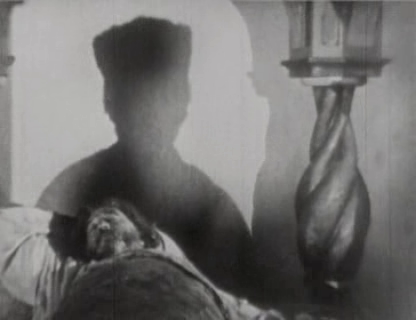
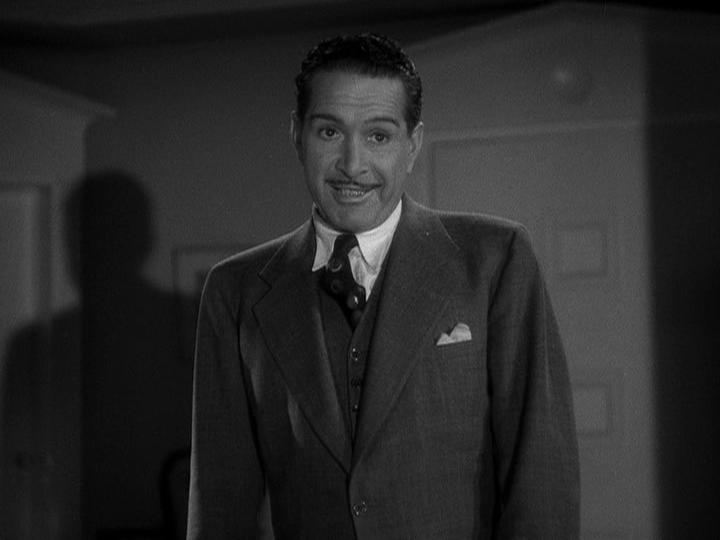
Calling Dr. Death (1943)

Calling Dr. Death (1943)

“I have no alibi — don’t even know where I was.”

Synopsis:
When his faithless wife (Ramsay Ames) is found murdered, a neurologist (Lon Chaney, Jr.) who is perhaps overly fond of his beautiful nurse (Patricia Morison) becomes the prime suspect. Soon Ames’s lover (David Bruce) is accused instead, but the investigating detective on the case (J. Carrol Naish) refuses to leave Chaney alone.

Genres, Themes, Actors, and Directors:

  • Amnesia
  • Detectives and Private Eyes
  • Falsely Accused
  • Lon Chaney, Jr. Films
  • Murder Mystery

Review:
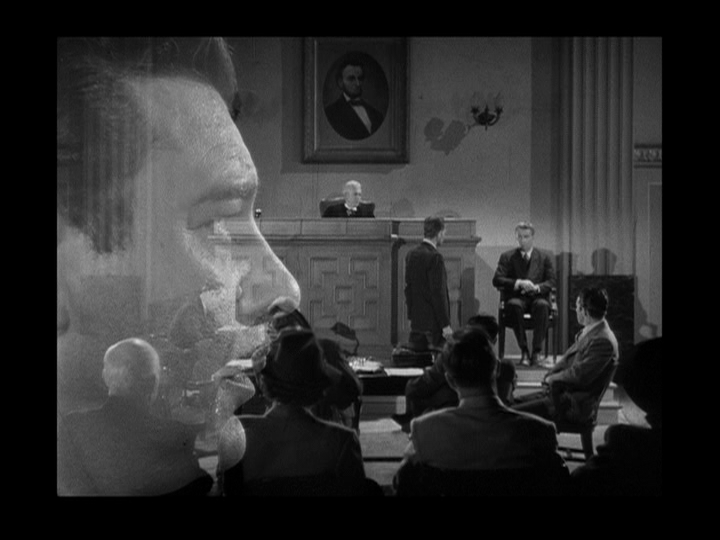
The first of Universal Studios’ “Inner Sanctum” films (inspired by the popular radio series of the same name), this surprisingly dull murder mystery stars Lon Chaney, Jr. as an unhappily married doctor who suffers from an inconvenient bout of amnesia during just the weekend his philandering wife is killed. Despite some creative visual touches (thanks primarily to effective use of double exposure), the storyline plods along creakily, without generating much interest; it ultimately feels much longer than its 63 minutes. A snappy performance by J. Carroll Naish as the omnipresent detective on the case simply highlights how tepid all the other actors are: Chaney is his usually plodding, tortured self, and while Morison is lovely to look at, her performance never rises above adequate (though her talents are head-and-shoulders above those of Ames, who is mercifully only on screen for a couple of short scenes before her death).

Redeeming Qualities and Moments:

  • J. Carrol Naish as Inspector Gregg
  • Creative visual touches

  • The inspired final flashback scene

Must See?
No; this one is only must-see for Inner Sanctum fans.

Links:

Weird Woman (1944)

Weird Woman (1944)

“I’m a scientist, but I’m not immune — you can’t be surrounded by fear and not be infected.”

Synopsis:
A highly rational professor (Lon Chaney, Jr.) marries a superstitious woman (Anne Gwynne) he meets while travelling in the South Seas. When they return to his college campus, his former flame (Evelyn Ankers) immediately becomes jealous of his new wife, and plots to make Chaney’s life miserable.

Genres, Themes, Actors, and Directors:

  • Jealousy
  • Lon Chaney, Jr. Films
  • Professors
  • South Seas Islands
  • Voodoo and Black Magic

Review:
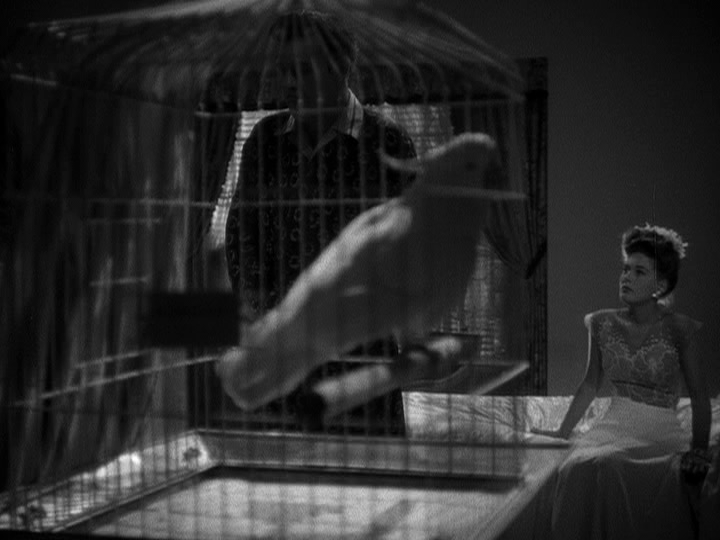
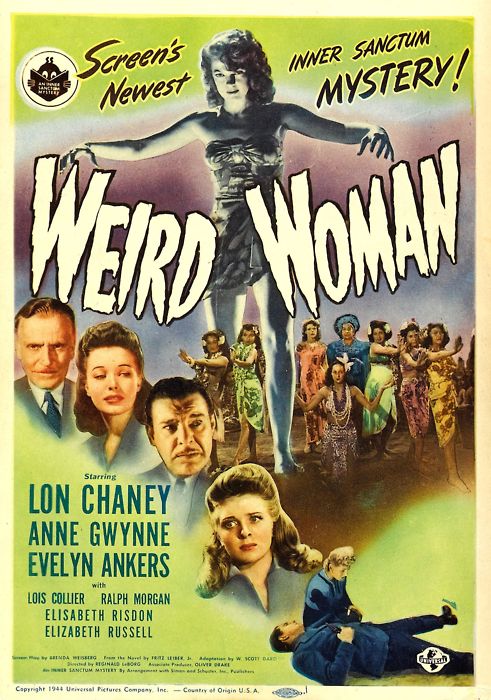
In the 1940s, Universal Studios produced six low-budget horror films based on the popular “Inner Sanctum” radio series (all starring Lon Chaney, Jr.); Peary lists two of these titles in his GFTFF: Calling Dr. Death (1943) and Weird Woman, an early adaptation of Fritz Leiber’s 1942 novel Conjure Wife (filmed again by Sidney Hayers in 1962 as Burn, Witch, Burn!). It strains credibility (to put it mildly) to imagine Chaney, Jr. as a man so brilliant and so appealing to women that elaborate plots of vengeance and backstabbing are concocted on his behalf — but once you accept this questionable bit of casting, it’s relatively easy to get caught up in this hour-long psychological horror flick, which features committed performances by both Ankers (deliciously vengeful) and Gwynne (perpetually fearful). Fans of Burn, Witch, Burn! will be especially interested to watch for parallels and differences between the two adaptations; while BWB remains a highly atmospheric cult classic (and is clearly the much better film), WW does a fine job within its limited budget and visionary scope.

Redeeming Qualities and Moments:

  • Game performances by the B-level cast

Must See?
No, though diehard fans of Burn, Witch, Burn! will certainly be curious to check it out.

Links:

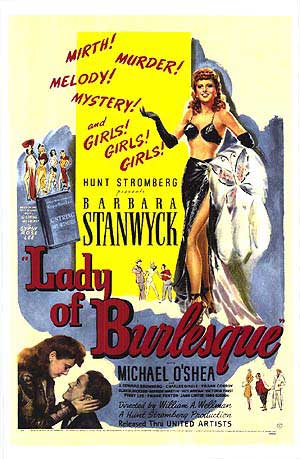
Lady of Burlesque (1943)

Lady of Burlesque (1943)

“Three people get crowded at a table for two.”

Synopsis:
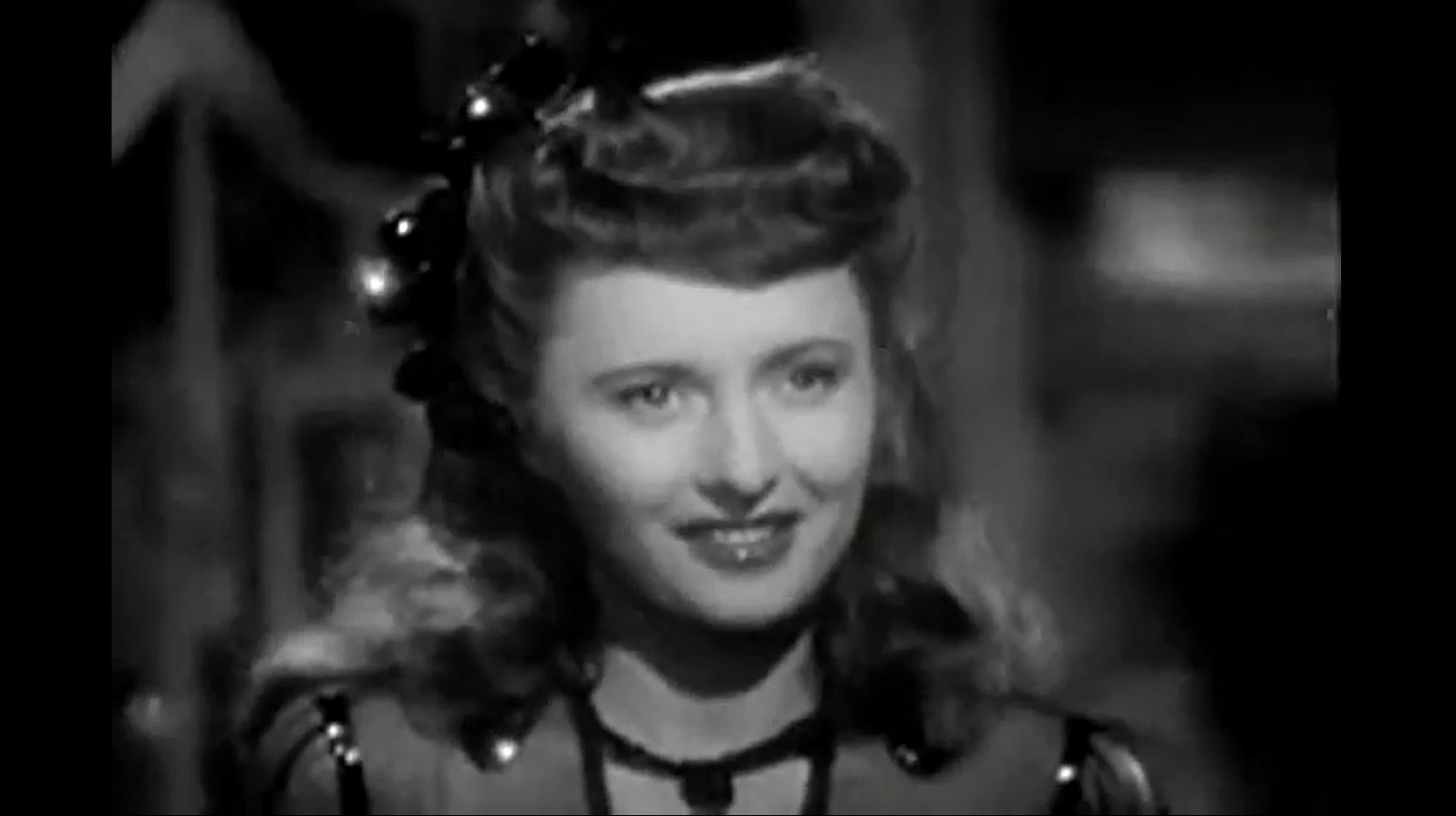
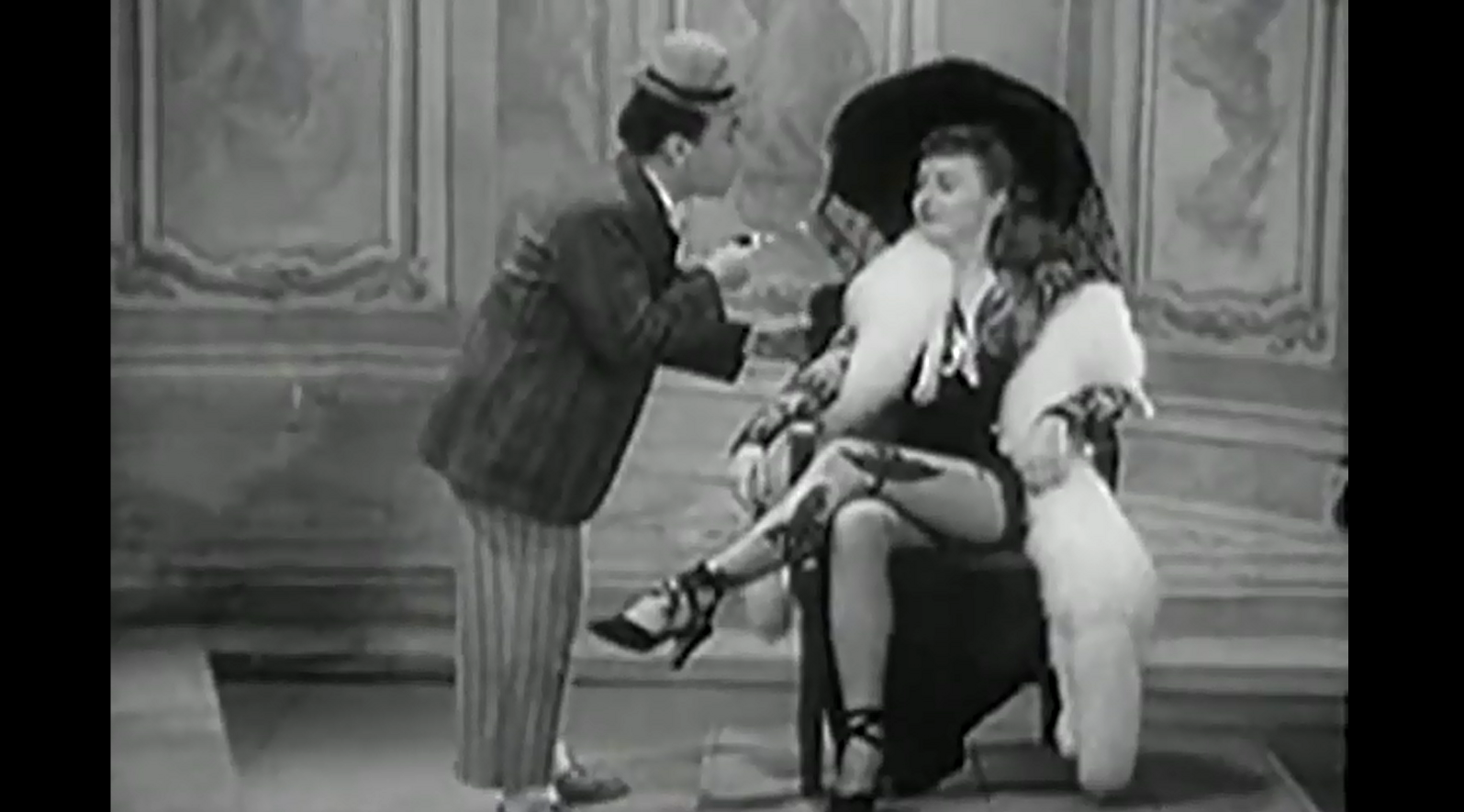
When ambitious burlesque dancer Lolita La Verne (Victoria Faust) is murdered, her gangster lover (Gerald Mohr) as well as all her fellow performers — including new arrival Dixie Daisy (Barbara Stanwyck), a comic romantically pursuing Dixie (Michael O’Shea), and a snooty rival known as the Princess Nirvena (Stephanie Bachelor) — are under suspicion.

Genres, Themes, Actors, and Directors:

  • Amateur Sleuths
  • Barbara Stanwyck Films
  • Murder Mystery
  • Vaudeville and Burlesque
  • William Wellman Films

Review:
Barbara Stanwyck is a class act the entire way in this censor-tamed adaptation of Gypsy Rose Lee‘s best-selling mystery thriller The G-String Murders (whose title, naturally, was changed for the big screen). The storyline itself is little more than a standard whodunit, with nearly all the film’s motley characters under suspicion at one point or another (and a second murder thrown in for good measure). What really counts here is the setting in which the entire affair takes place — a relatively faithful if highly sanitized recreation of the behind-the-scenes mayhem, camaraderie, romance, and rivalry that constituted the rapidly fading world of burlesque. Directed by William Wellman (who helmed the much more serious literary adaptation The Ox-Bow Incident the same year), the film holds interest throughout, thanks to a sincere performance by Stanwyck and game turns by the supporting cast. You may be surprised by the identity of the murderer — though I’ll admit I guessed correctly for once (albeit without an accurate assessment of motive).

Redeeming Qualities and Moments:

  • Barbara Stanwyck as Dixie Daisy
  • A fine tribute to the quickly-fading world of burlesque

Must See?
No, though it’s recommended. As a public domain title, it’s available for free viewing at www.archive.org.

Links:

Shanghai Gesture, The (1941)

Shanghai Gesture, The (1941)

“It smells so incredibly evil… I didn’t know such a place existed, except in my imagination.”

Synopsis:
The thrill-seeking daughter (Gene Tierney) of a wealthy businessman (Walter Huston) becomes a regular patron at a gambling house in Shanghai owned by “Mother” Gin Sling (Ona Munson), who is upset that Huston is trying to force her to move her establishment to another district.

Genres, Themes, Actors, and Directors:

  • Gambling
  • Gene Tierney Films
  • Josef von Sternberg Films
  • Play Adaptations
  • Victor Mature Films

Response to Peary’s Review:
Peary refers to this Josef von Sternberg-directed outing — a “much cleaner” adaptation of John Colton’s 1926 Broadway play — as “an absolutely ridiculous film”, citing this as the “reason that it has a cult”. He notes that the “extremely weird, overwritten, often dull script” — which is “full of awkward introductions, lectures, people yelling at each other, [and] double entendres” — “comes across like a clumsy first draft that was filmed only because the next 20 drafts were lost”. He insists that “performances by the entire cast — including Victor Mature as a poetry-reciting Arab — are outrageous”, and “so is the ending”. He concludes his review by noting that the “strangest [fact] of all is that von Sternberg didn’t recognize his folly and inserted a few inspired touches along the way that might have been saved for a better picture”.

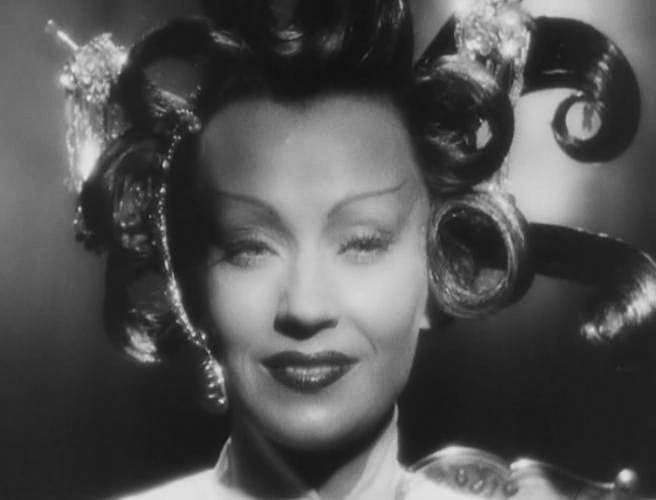
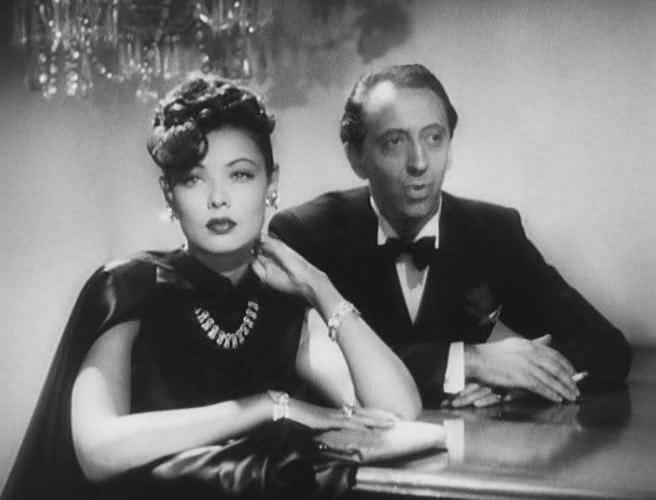
As evidenced by comments on IMDb, The Shanghai Gesture has retained its cult status, with one user referring to it (with notable delight) as a “campy trainwreck”. Fans seem to especially enjoy both Gene Tierney’s rather nuance-free performance as the spoiled young heiress (whose addiction to gambling is here used as a stand-in for drug addiction, as depicted in the original play), and the presence of Una Munson’s truly outrageous hairpieces; as Peary cheekily notes, she “obviously had hair done by someone who had learned to tie shoelaces”. Indeed, an entire thesis could likely be written on what, exactly, Munson’s — wigs? can you call them that? — give away about her character’s state of mind, particularly as they become literally unbalanced near the end of the story (see still below). Regardless, Munson’s central performance as ‘Mother’ Gin Sling remains the film’s dominant force: she so fully inhabits this archetypal “Dragon Lady” that we’re immediately willing to suspend all disbelief about a white woman portraying an Asian.

Redeeming Qualities and Moments:

  • Ona Munson as Mother Gin Sling
  • Fine cinematography

  • Oscar-nominated art direction
  • An enjoyably pulpy script: “I have no country; and the more I see of countries, the better I like the idea!”

Must See?
Yes, for its cult status.

Categories

  • Cult Movie
  • Important Director

Links:

Son of the Sheik, The (1926)

Son of the Sheik, The (1926)

“Like all youths, he loved a dancing girl. Like all dancing girls, she tricked him.”

Synopsis:
The son (Rudolph Valentino) of an Arabian sheik (also Valentino) falls in love with a dancer (Vilma Banky) whose father (George Fawcett) and his cronies are thieves. When young Ahmed (Valentino) is mistakenly led to believe Banky seduced him as a front for her father’s gang, he feels terribly betrayed, and kidnaps her in revenge.

Genres, Themes, Actors, and Directors:

  • Father and Son
  • Kidnapping
  • Middle East
  • Rudolph Valentino Films
  • Silent Films

Review:
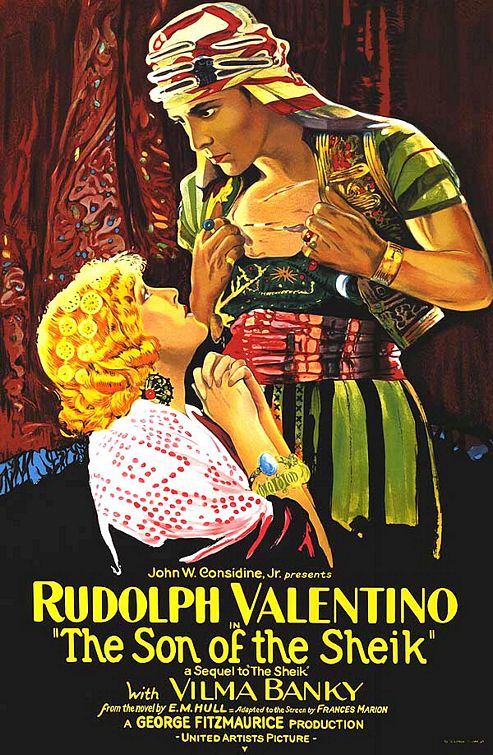
The Son of the Sheik — notable as one of Hollywood’s first sequels — was released just two weeks after Rudolph Valentino’s premature death from appendicitis at the age of 31, and was one of his biggest hits with audiences; it’s now widely considered by critics to be his best film. Indeed, it shows clear evidence of how far Valentino’s acting range had evolved since his laughably one-dimensional performance in The Sheik (1921) (which consisted of little more then leers and melodramatic eyebrow-raising); here, playing both the Sheik and his son, his expressions are much subtler — it’s not just the elder Sheik’s graying hair that allows us to differentiate between father and son. Meanwhile, the original film’s disturbing premise of love borne from captivity has been replaced by a refreshingly mutual attraction between young Valentino and Banky; their sexual chemistry together is palpable, and makes for enjoyable eye candy. With all that said, The Son of the Sheik is ultimately little more than escapist fare; the fact that it’s more palatable than its awful predecessor isn’t saying a whole lot. However, I am recommending it as a “must see” title to film fanatics, simply to see Valentino in his final role.

Redeeming Qualities and Moments:

  • Rudolph Valentino in dual roles as the Sheik and his son

  • Plenty of sexual chemistry between Valentino and Banky
  • Fine cinematography

Must See?
Yes, simply to see Valentino in his last — and arguably his best — role(s).

Categories

  • Historically Relevant

Links:

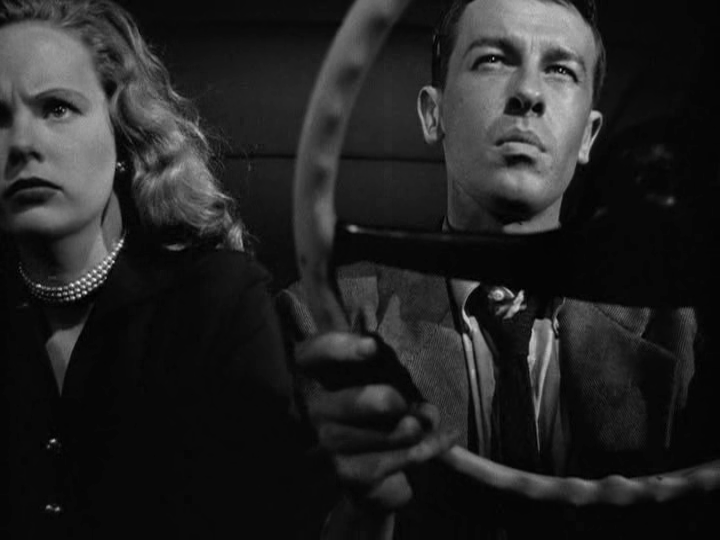
Gun Crazy / Deadly is the Female (1950)

Gun Crazy / Deadly is the Female (1950)

“Some guys are born smart about women, and some guys are born dumb.”

Synopsis:
A gun-loving but peaceful veteran (John Dall) falls in love with a sharpshooting carnival performer (Peggy Cummins) who convinces him to assist her in a series of hold-ups. Soon they’re on the run from the law, desperate to do one last job before retiring.

Genres, Themes, Actors, and Directors:

  • Criminal Couples on the Run
  • Femmes Fatales
  • John Dall Films
  • Joseph H. Lewis Films

Response to Peary’s Review:
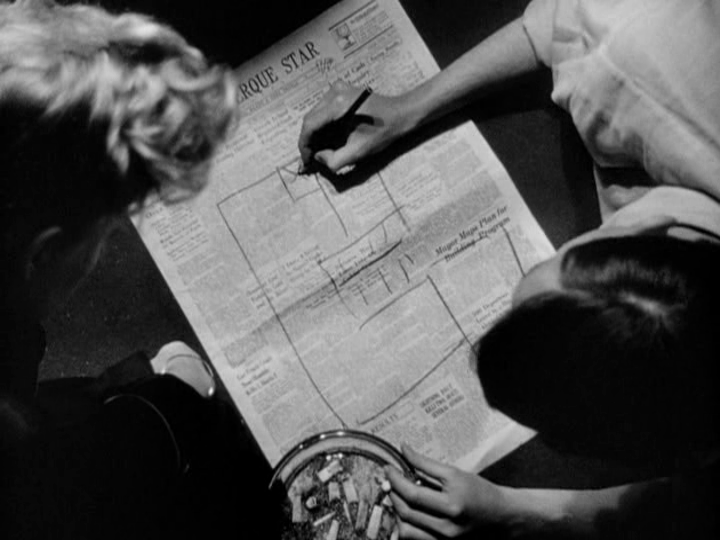
Peary argues that while “there have been many fine movies about young couples driving across the country with the police on their trail, including Arthur Penn’s Bonnie and Clyde, which this film surely influences”, “none is more fascinating or exciting than” Gun Crazy (a.k.a. Deadly is the Female). He notes that this “low-budgeter” by director Joseph H. Lewis is “supercharged with energy, non-stop action, violence, passion, and sex”, and, despite being “set against a backdrop of poor, insensitive, smalltown America of the forties”, remains “remarkably contemporary, especially in its portrayal of a country turned on by speed, violence, and crime”. He points out that “Lewis’s achievements are great, ranging from maintaining a terrific pace throughout to attaining a distinct sense of time and place”; a cinéma vérité-like bank hold-up taking place in the middle of the movie — shot in one long take (Lewis’s idea), without informing nearby pedestrians they were filming — is merely the most famous example of his creative genius.

Peary notes, however, that Lewis’s “more inspired contribution was giving his leads to the relatively unknown Cummins (a British actress) and Dall”. In his review of the film for his first Cult Movies book, Peary elaborates on this point by writing that “they both prove to be highly skilled actors who lend an intelligence to the proceedings and express such a complex array of emotions so honestly that it is truly hard to believe that they are not playing themselves”; in sum, “they are simply terrific”. Dall — who most film fanatics will only know from one other movie, Hitchcock’s Rope (1948) — was particularly inspired casting; Peary notes that in an interview with Lewis, he learned Lewis specifically wanted to cast a gay male in the lead because of the inner tension he felt such a man (in mid-century America) would inevitably bring to the role. Meanwhile, unknown Cummins is simply a revelation as (in Lewis’s own words) a “beautiful demon who no man can resist or help forgiving when she does wrong”.

To that end, Peary points out that he actually differs from Lewis’s own interpretation of Laurie (Cummins); Peary sees her as “the victim of a world that doesn’t forgive past sins” — a woman who may “play men for suckers” and “lead a bad life” but who “is sincere when she apologizes to Bart [Dall] for being unable to control her mean temper”. He likens her thrill-seeking tendencies to “a fiend who needs a fix or an alcoholic unable to control the urge to drink” — and this is exactly how I interpret her, too. Indeed, it’s fascinating to see a character who so clearly fits the femme fatale mold, yet remains oddly sympathetic throughout; we really do get the sense she can’t help herself, and wants to (in her words) “be good”. Adding to our sympathy is the fact that she and Dall are (eventually) so obviously in love with each other: as Peary notes, “Even when they flee police on foot through rough terrain, are soaking wet, dirty, bruised, exhausted, and in a panic because they can hear the bloodhounds, he still calls her ‘honey’, and they still take a moment to hug and kiss”.

Redeeming Qualities and Moments:

  • Peggy Cummins as Annie (nominated as one of the Best Actresses of the Year in Alternate Oscars)
  • John Dall as Bart (nominated as one of the Best Actors of the Year in Alternate Oscars)
  • The justifiably lauded “one-shot” hold-up sequence
  • Consistently creative direction by Joseph Lewis


  • Russell Harlan’s cinematography


  • MacKinlay Kantor and Dalton Trumbo’s screenplay

Must See?
Yes, as an enormously enjoyable cult classic. Voted the Best Picture of the Year in Peary’s Alternate Oscars.

Categories

  • Cult Movie
  • Genuine Classic

(Listed in 1001 Movies You Must See Before You Die)

Links:

Adventures of Prince Achmed, The (1926)

Adventures of Prince Achmed, The (1926)

[Note: The following review is of a non-Guide for the Film Fanatic title; click here to read more.]

“Where is the magic lamp?”

Synopsis:
Prince Achmed accidentally trades his sister to a wicked magician in exchange for a flying horse, who takes him to the island of Wak-Wak, where he falls in love with a bird princess named Pari Banu. When demons steal Pari Banu away from Achmed, his only chance to rescue her is with the help of Aladdin’s magic lantern.

Genres, Themes, Actors, and Directors:

  • Animated Features
  • Folk Tales, Fairy Tales, and Mythology
  • German Films
  • Royalty and Nobility
  • Silent Films
  • Witches and Wizards

Review:
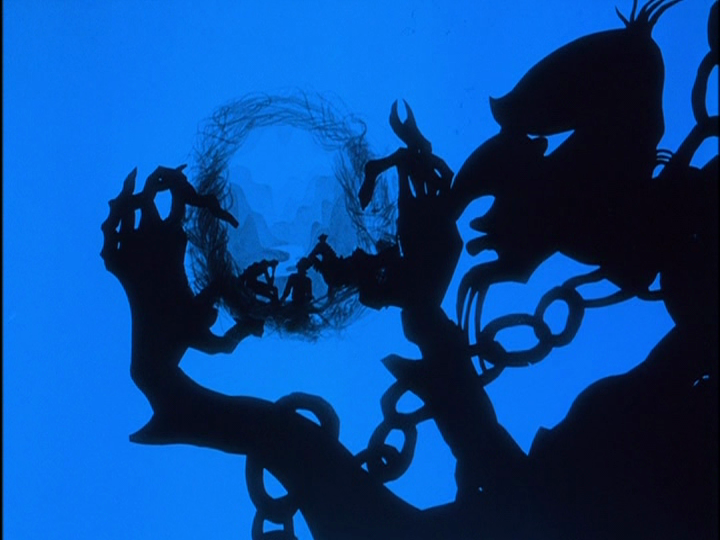
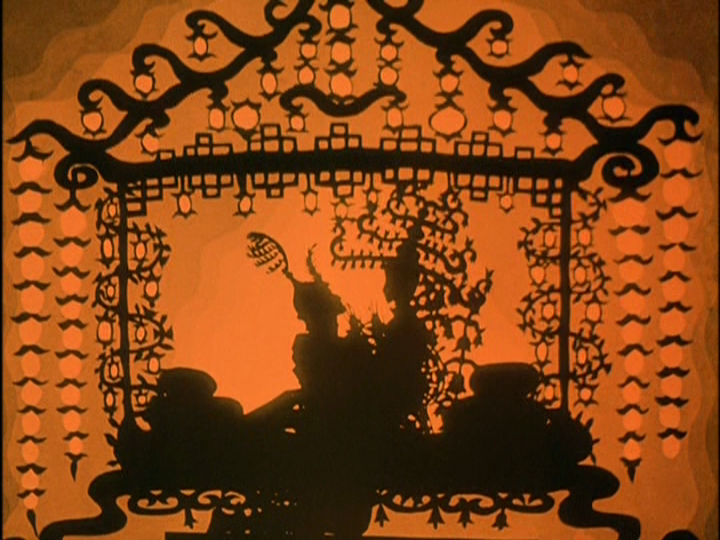
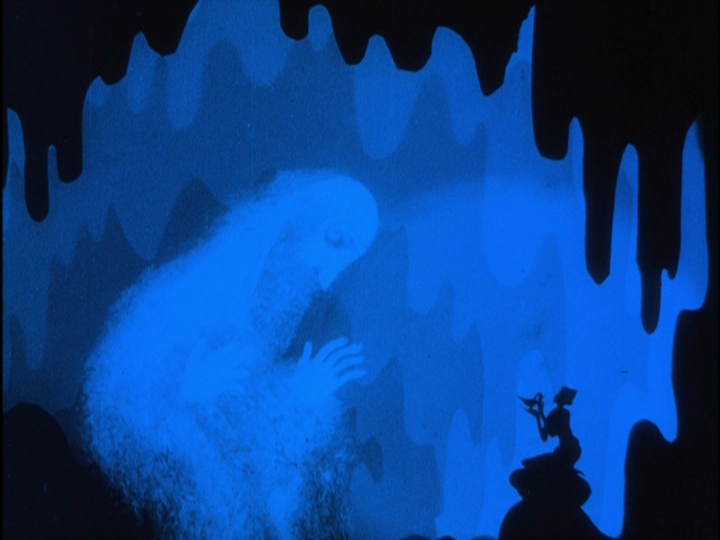
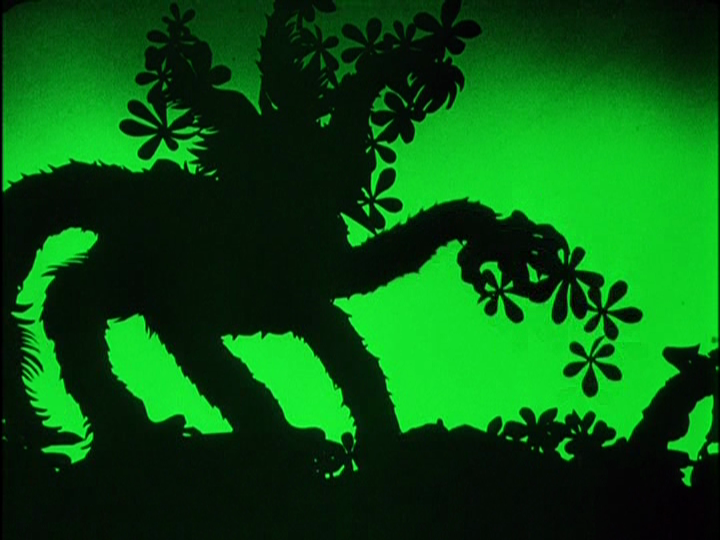
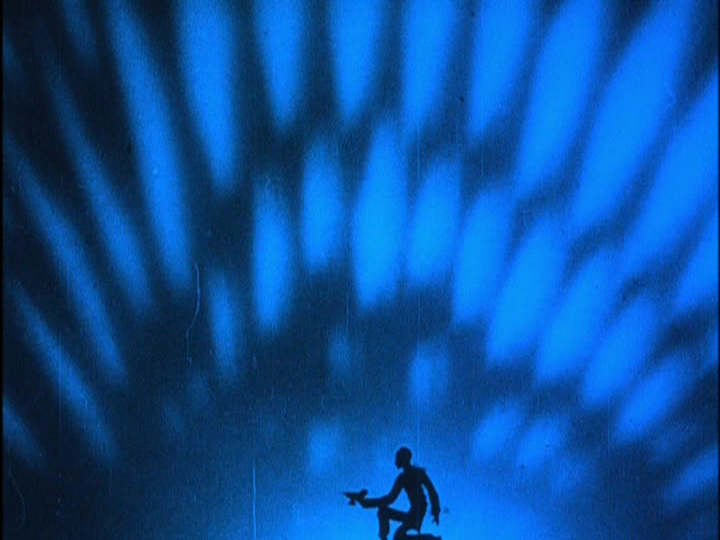
Lotte Reiniger’s The Adventures of Prince Achmed — considered to be the first surviving animated feature film — is a classic example of a Missing Title which Peary can’t be blamed for omitting from his GFTFF, given that it wasn’t restored and made available for viewing until 1999. While it clearly holds an indubitable place in cinema history, it also happens to be an enormously enjoyable fantasy film, one which maintains interest from beginning to end simply from the sheer, giddy inventiveness of its groundbreaking animation. Working in a self-made studio on the property of a benefactor, Reiniger — just 23 at the time — collaborated with her husband, Carl Koch, to create this “silhouette film” by cutting intricate jointed silhouettes out of black paper, then painstakingly moving them across artfully conceived backdrops to create the illusion of motion (much like stop-motion animators would do with clay).

Reiniger was a consummate storyteller, using as her inspiration the Arabian folk tale collection One Thousand and One Nights — but one gets the feeling she could have chosen just about any source material and created a similarly breathtaking masterpiece. Indeed, while the episodic story itself is reasonably compelling, it’s Reiniger’s artwork which really holds one’s attention: watch the intricate movements and interactions of the characters with their environment and with each other, as objects and people shift shape, and the landscape is kept in constant motion; it’s simply a fascinating process to see unfolding. Sadly, the film didn’t earn enough money to satisfy her benefactor, who considered his patronage a monetary investment; add to this the complications of an approaching World War, and it’s unfortunately easy to see how Reiniger’s promising career became compromised. With that said, she continued to make shorter silhouette films throughout the rest of her life, and fans can now easily view many of them — including a commercial for Nivea (!), as well as numerous European fairy tale adaptations. However, Prince Achmed (her only feature) remains her undisputed masterpiece.

Redeeming Qualities and Moments:

  • Lovely, intricate animation


Must See?
Absolutely; this historically ground-breaking animation gem should be seen by all film lovers.

Categories

  • Genuine Classic
  • Historically Relevant

Links: