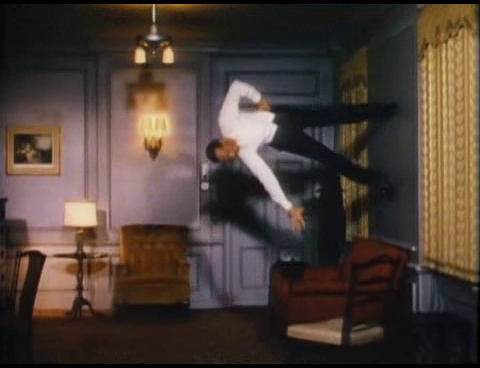
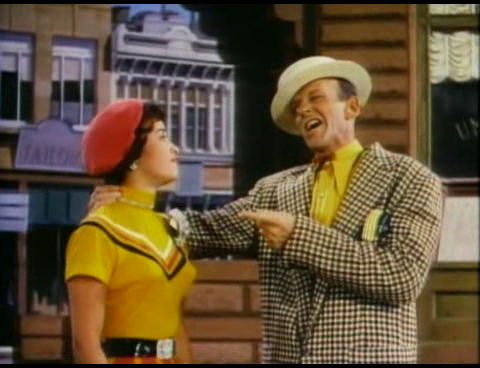
Affair to Remember, An (1957)

Affair to Remember, An (1957)

“Winter must be cold for those with no warm memories.”

Synopsis:
When a playboy (Cary Grant) engaged to an heiress (Neva Patterson) falls in love with a beautiful singer (Deborah Kerr), they decide to test their romance by meeting in six months at the top of the Empire State Building — but a tragic accident puts a kink in their plans.

Genres, Themes, Actors, and Directors:

  • Blindness
  • Cary Grant Films
  • Deborah Kerr Films
  • Disabilities
  • Leo McCarey Films
  • Romance
  • Star-Crossed Lovers

Review:
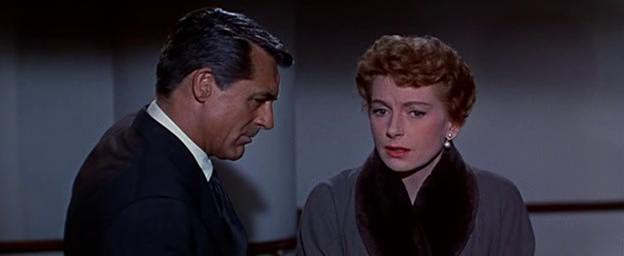
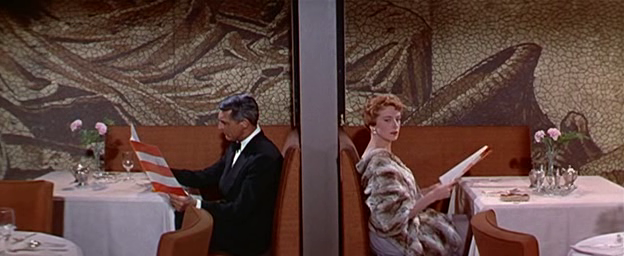
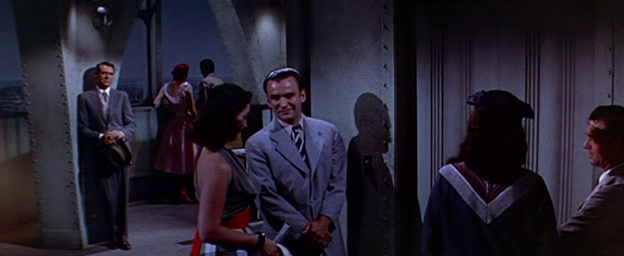
This cult romance — which received renewed interest when it was referenced in Nora Ephron’s 1993 romantic comedy Sleepless in Seattle — was actually the second iteration of a story written and directed by Leo McCarey 18 years earlier, starring Charles Boyer and Irene Dunne. This later version — in many instances a word-for-word recreation of the original, down to McCarey’s choice of camera placements — is primarily notable for taking advantage of Cinemascope and Technicolor cinematography to expand the visual palette of the story, and to that end, it succeeds quite well (see stills below). However, in every other regard it pales in comparison with its predecessor: it’s poorly paced (scenes are needlessly drawn out), about half an hour too long, and chock-full of hopelessly contrived dialogue (like the following), played with completely straight faces:

Kerr: “We’re headed into a rough sea, Nickie.”
Grant: “I know. We changed our course today.”

The first line actually exists in the original film as well, but as spoken by Dunne (without the pun-worthy retort by her lover), it works — unlike here, where (despite valiant attempts by Kerr and Grant to “keep it real”) it’s simply groan-worthy. Indeed, much about An Affair to Remember reminds one of Douglas Sirk’s similarly overblown ’50s melodramas, but without the sassy heat; McCarey’s sentimental tendencies completely overwhelm this “affair”, as epitomized by the inclusion of two utterly gratuitous musical numbers involving a diverse group of moppets (er, children), both of which feel like they were taken straight out of McCarey’s Going My Way (1944) or The Bells of St. Mary’s (1945).

With that said, there’s a reason why this film remains such an enduring favorite: Kerr (always a consummate actress) and Grant have decent chemistry together, and one can’t help getting caught up in their romance simply given how neatly it represents one of our most entrenched fantasy scenarios — giving up “everything” (in this case, a current “good enough” lover, as well as easy wealth) for the sake of true love. I’m recommending AATR as must-see one-time viewing simply given its cult status, but it will only be of enduring interest to those who don’t mind their romances served with a heavy dose of manipulation.

Redeeming Qualities and Moments:

  • Deborah Kerr as Terry
  • Fine use of Cinemascope and Technicolor cinematography


Must See?
Yes, once, simply for its cult status. Listed as a Cult Movie in the back of Peary’s book.

(Listed in 1001 Movies You Must See Before You Die)

Links:

Love Affair (1939)

Love Affair (1939)

“My father used to say that wishes are dreams we dream when we’re awake.”

Synopsis:
A French playboy (Charles Boyer) meets an American singer (Irene Dunne) on board a ship and the two fall in love, despite being engaged to others. They agree to meet in six months at the top of the Empire State Building, but when tragedy befalls one of them, their plans are changed forever.

Genres, Themes, Actors, and Directors:

  • Charles Boyer Films
  • Disabilities
  • Irene Dunne Films
  • Leo McCarey Films
  • Romance
  • Star-Crossed Lovers

Review:
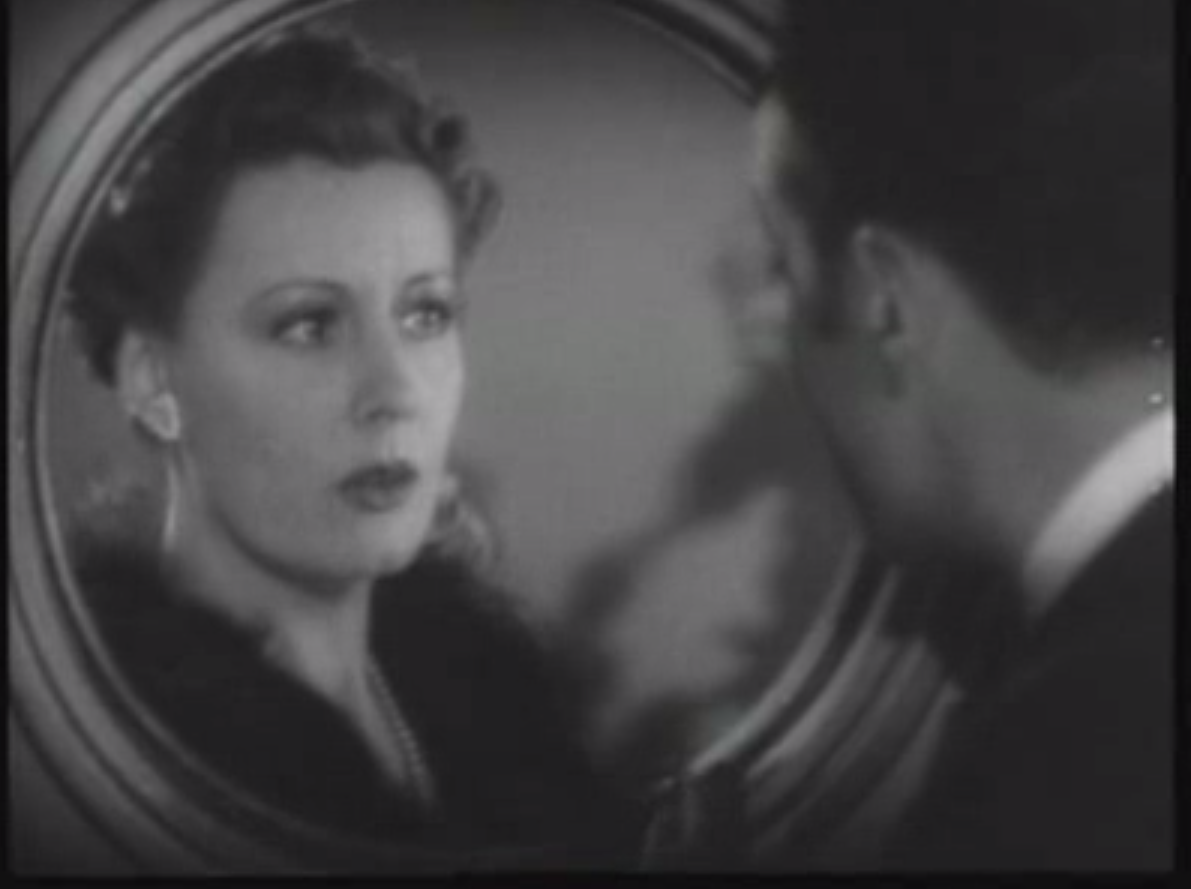
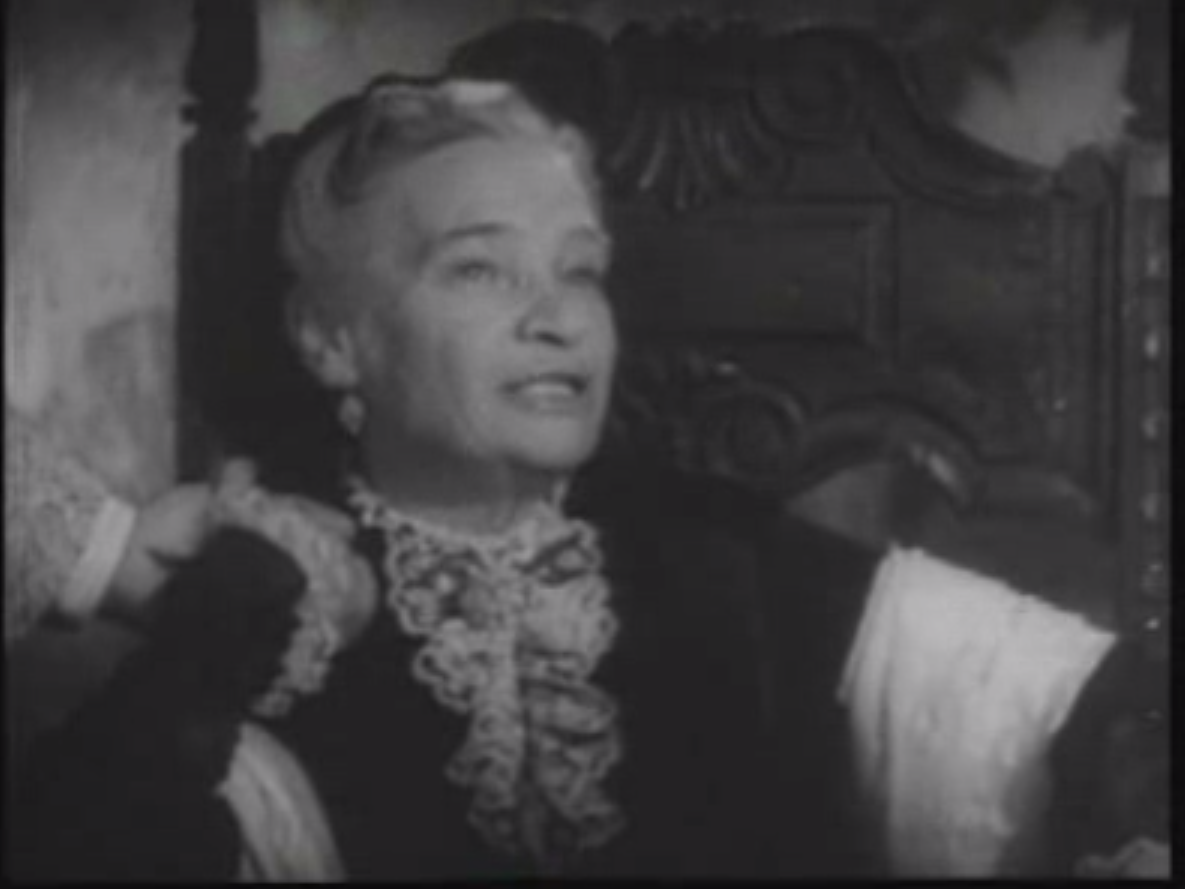
Leo McCarey’s classic tearjerker is perhaps best known as the original version of his later cult classic, An Affair to Remember (1957) — but it’s actually the better of the two films. While the storyline is undeniably hokey and contrived, Dunne and Boyer have enough star-power and genuine chemistry to make us believe in their shipboard romance, as well as their desire to reunite once/if the stars are aligned. Given that it’s almost impossible to discuss Love Affair without explicit comparisons to its remake, I’ll proceed by reiterating that this version is superior on nearly every account — except production design and cinematography. At just 87 minutes long, the storyline zips by at an appropriate pace, leaving us with blessedly little time to ponder the logistics of what’s happening, and instead simply enjoy the fine performances by Dunne (lovely and charming), Boyer (convincing as a smitten playboy), and Maria Ouspenskaya (as Boyer’s sentimental grandmother). While we can’t help groaning at some of McCarey’s narrative choices — would Dunne and Boyer’s previous lovers really take the betrayal so easily? would “the tragedy” really result in such a facile separation? — we’re rooting for Dunne and Boyer all the way, which is exactly the point in an escapist romance like this.

Redeeming Qualities and Moments:

  • Irene Dunne as Terry McKay
  • Charles Boyer as Michel
  • Maria Ouspenskaya as Boyer’s grandmother

Must See?
Yes, as a tearjerker classic.

Categories

  • Genuine Classic

Links:

Show People (1928)

Show People (1928)

[Note: The following review is of a non-Peary title; click here to read more.]

“I didn’t know that they made them that green.”

Synopsis:
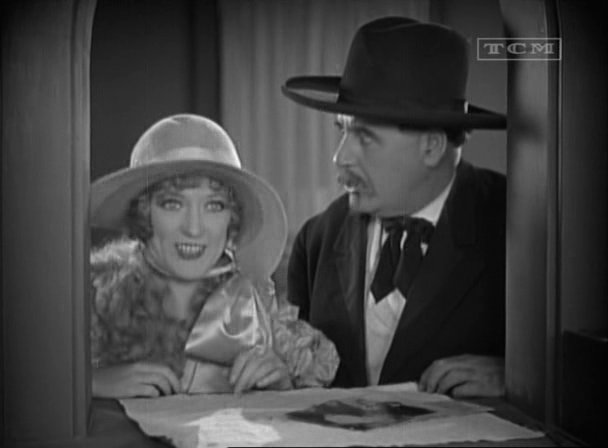
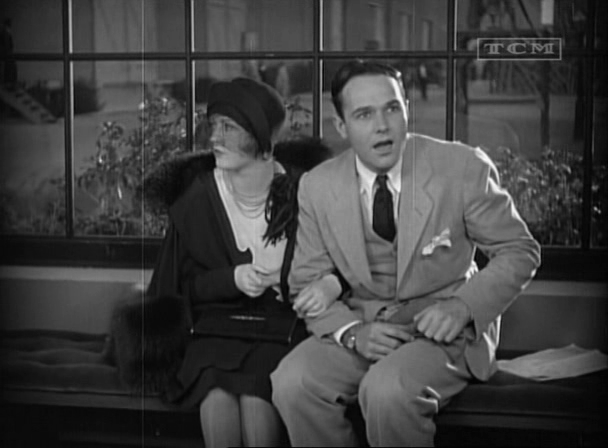
Accompanied by her father (Dell Henderson), a naive aspiring actress (Marion Davies) arrives in Hollywood and befriends a kind actor (William Haines) who helps her break into slapstick comedies. Soon, however, she’s lured into making “highbrow” pictures, and rejects Haines in favor of her new leading man (Paul Ralli).

Genres, Themes, Actors, and Directors:

  • Aspiring Stars
  • Comedy
  • Hollywood
  • King Vidor Films
  • Marion Davies Films
  • Silent Films

Review:
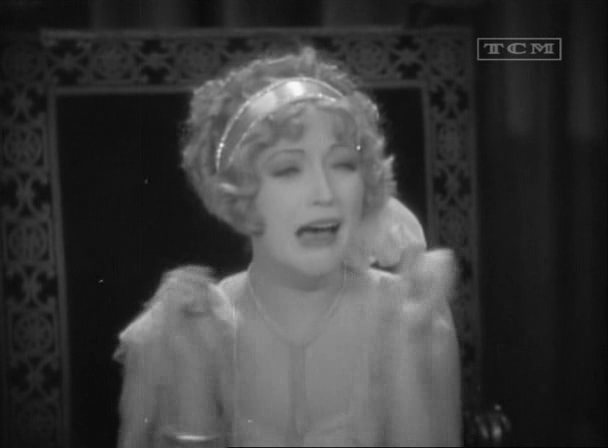
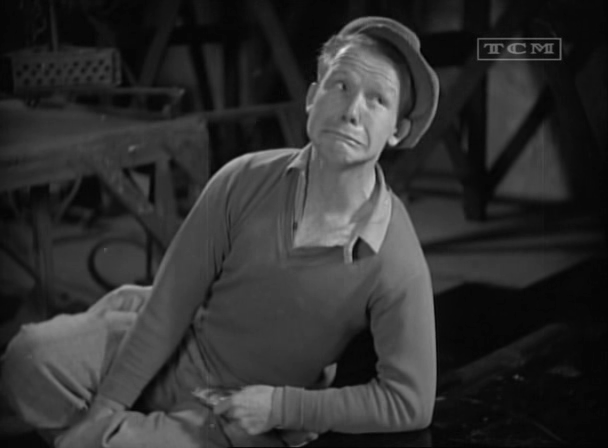
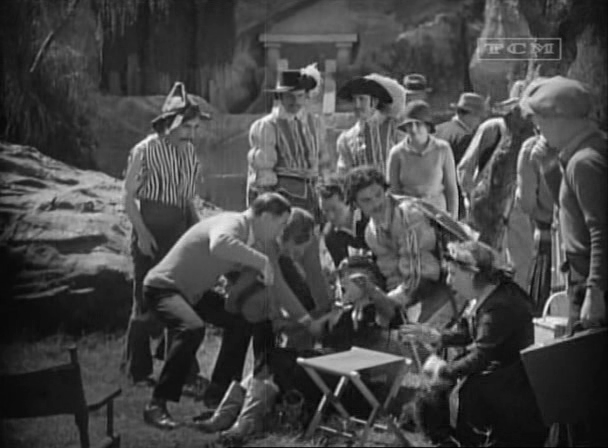
Although Peary doesn’t list this King Vidor-directed silent comedy in his GFTFF, he nominates Marion Davies as one of the Best Actresses of the Year in his Alternate Oscars, so I’m reviewing it briefly here. Fortunately, while Davies’ performance is indeed a lot of fun — what a gifted, no-holds-barred comedienne she was! — the film itself is also worth a look by all film fanatics, given its insightful skewering of silent-era Hollywood (it would make a great double-bill with Singin’ in the Rain). An especially delightful scene shows us Davies attempting to cry on cue, with “Hearts and Flowers” (so that infamously sentimental ditty has a name!) playing in the background, and a helpful assistant peeling onions nearby. Watch for a host of cameos by famous stars of the day — including Charlie Chaplin, Douglas Fairbanks, and Vidor himself.

Note: Show People is also of interest given the presence of William Haines, an openly gay man in early Hollywood who gave up his career when he refused L.B. Mayer’s request to engage in a “lavender” (sham) marriage to camouflage his homosexuality.

Redeeming Qualities and Moments:

  • Marion Davies as Peggy
  • William Haines as Billy Boone
  • Peggy’s strained attempt to produce tears

  • A fun skewering of silent-era Hollywood

Must See?
Yes, for Davies’ performance, and as a fun Hollywood satire.

Categories

  • Good Show
  • Noteworthy Performance(s)

Links:

Singin’ in the Rain (1952)

Singin’ in the Rain (1952)

“Well of course we talk. Don’t everybody?”

Synopsis:
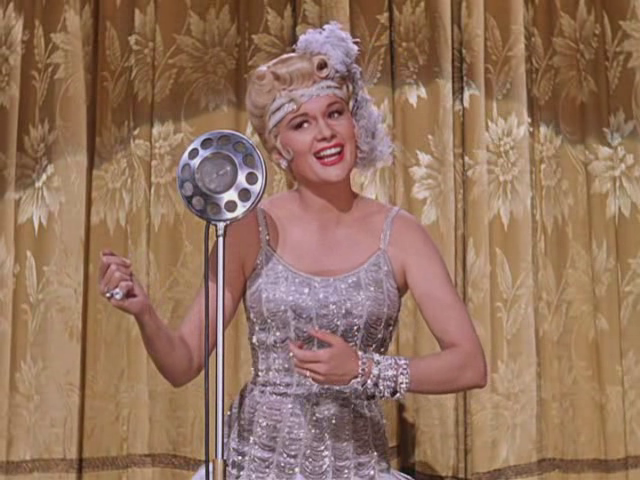
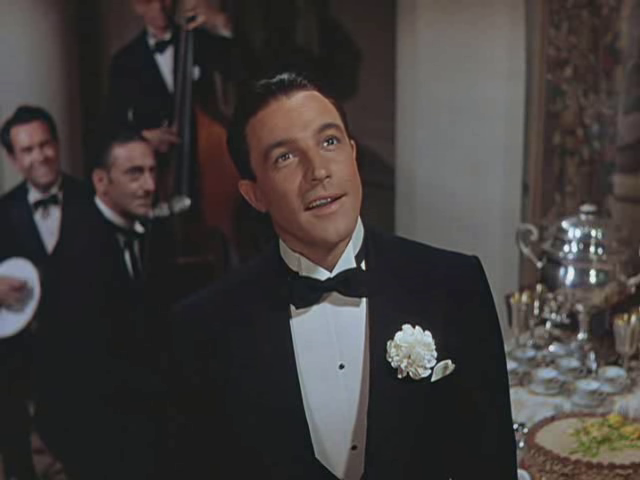
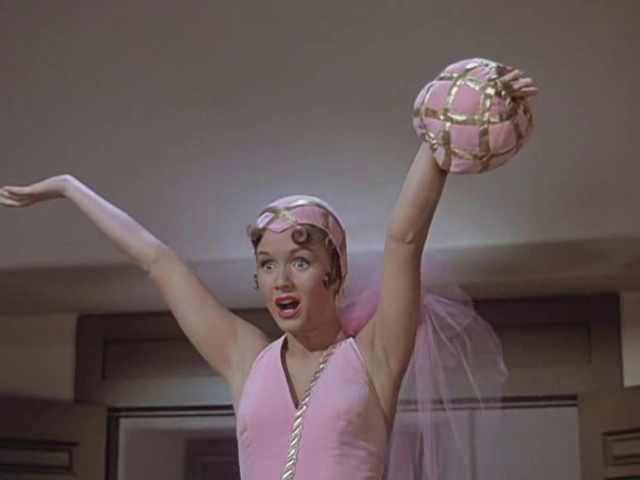
During the advent of talkies in Hollywood, a conceited movie star (Jean Hagen) with a terrible voice struggles to make the transition; meanwhile, her costar (Gene Kelly) falls in love with a young ingenue (Debbie Reynolds) who begins dubbing Hagen’s voice, invoking Hagen’s wrath and jealousy.

Genres, Themes, Actors, and Directors:

  • Actors and Actresses
  • Cyd Charisse Films
  • Debbie Reynolds Films
  • Gene Kelly Films
  • Hollywood
  • Jean Hagen Films
  • Musicals
  • Romantic Comedy
  • Stanley Donen Films

Response to Peary’s Review:
Peary argues that this “most uplifting of films” remains “one of the great joys of the cinema”, and is the “ultimate musical for lovers of the film medium”. He notes that “not only do innovative directors Gene Kelly and Stanley Donen use ‘film’ (color, lighting, editing, special effects, camera placement and movement, and sound) to enhance the fabulous songs and dances, but, as scripted by Adolph Green and Betty Comden, [it’s] also one of the best, funniest, most perceptive and informative pictures ever made about the movie industry”. He notes that “Green and Comden beautifully spoof numerous Hollywood types: suicidal stuntmen who’ll do anything to be in pictures; starlets with pretensions of being serious thespians who will jump out of cakes to be part of show biz; brainless gossip columnists; tough directors who think the set is a battlefield; smug diction coaches; confused producers; flaky music coordinators; cocky actors who know the importance of ‘image’ to stardom…; and stupid, conceited actresses who believe their own press”. The gamut is covered!

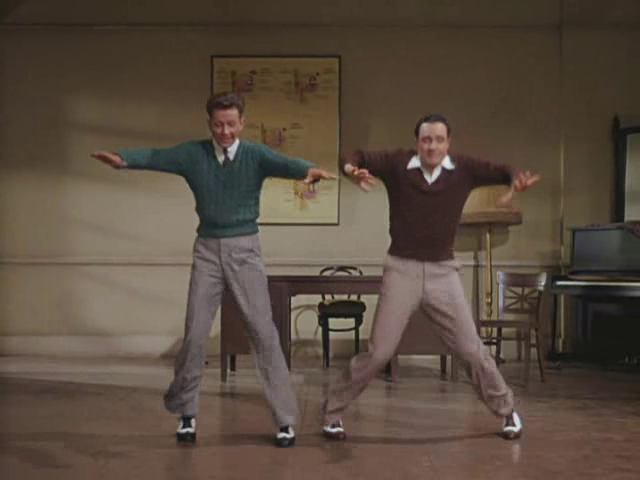
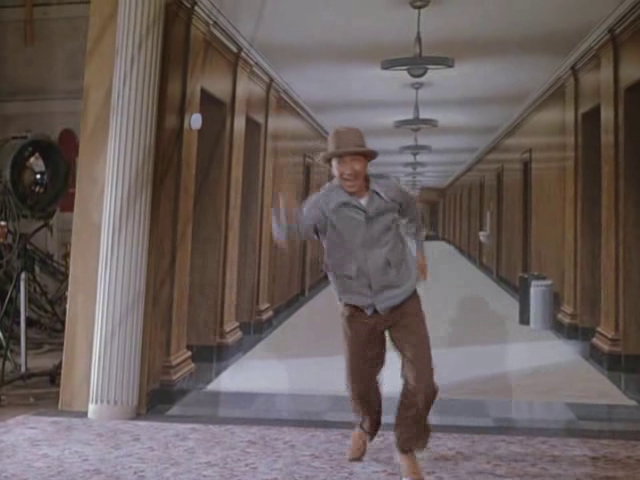
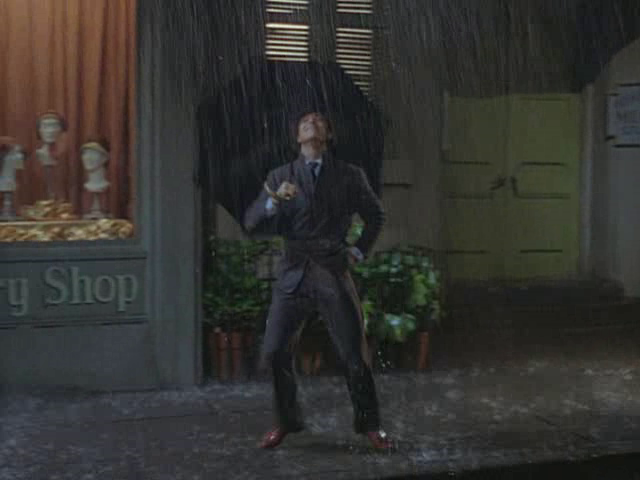
Peary accurately argues that the “musical numbers are all outstanding, with Kelly, [Donald] O’Connor [as Kelly’s friend], and Reynolds displaying amazing athletic dancing skills”. He points out that some “unforgettable highlights include the three dancing on furniture and singing ‘Good Morning’; O’Connor running up walls and flipping during ‘Make ‘Em Laugh'” (an astonishing number no matter how many times you’ve seen it!); “the ‘Broadway Rhythm’ number, especially when Kelly and Cyd Charisse perform a dreamlike ballet; and the [incomparable] title number, which has Kelly happily dancing through puddles”. Peary notes that “in the film’s great[est] moment, the camera moves directly over Kelly’s beaming face for a close-up just as he sings ‘There’s a smile on my face’.” In his Cult Movies book, he lists several other musical highlights; a personal favorite is “Don and Cosmo [O’Connor] bewildering their diction teacher with some tongue twisters and flying feet in the ‘Moses’ number” (I’d forgotten how fun that one is!).

Meanwhile, Peary writes that “the scenes without music are [also] delightful”, and in Cult Movies he points out some specific ones: “Don’s [Kelly’s] hilarious movie stunts which somehow he survives; the knife-in-the-back squabbling between Don and Lina [Hagen]; Lina’s unsuccessful diction lessons, where she can’t learn to properly pronounce the letter a in the phrase ‘I can’t stand it’; the fascinating film at [a producer’s] party in which a weird man explains the ‘sound film’; the many humorous incidents with microphones; [and] the finale…”. I agree that each of these scenes or sequences are gems — masterfully written, directed, and acted; indeed, the entire fast-paced screenplay is “delightful movie fare”, as Peary writes.

In his Alternate Oscars (where he votes the film Best Picture of the Year), Peary nominates Kelly as one of the Best Actors of the Year, and Reynolds as one of the Best Actresses (in Cult Movies he writes “how absolutely great, how bubbly, how vivacious she is!”). However, he rightfully acknowledges that Kelly “allows Jean Hagen ample opportunity to walk away with acting honors” — indeed, while her role is perhaps not quite large enough to be considered in the “Best Actress” category, you could argue that her consistently hilarious, memorable performance plays an enormous part in the film’s overall success. Peary writes that “from this picture, we see that Hagen was never allowed the chance to be the fine comedienne… she was obviously capable of being”, and credits “Kelly, the star, the codirector, [for] willingly shar[ing] his picture with his costars.” He argues that “it is not by mere chance that Reynolds, O’Connor, and Hagen have never been better” — and one can’t help agreeing.

Redeeming Qualities and Moments:

  • Jean Hagen as Lina Lamont
  • Gene Kelly as Don Lockwood
  • Debbie Reynolds as Kathy Selden
  • Donald O’Connor’s phenomenal “Make ‘Em Laugh” number
  • Kelly’s iconic “Singin’ in the Rain” number
  • Kelly, O’Connor, and Reynolds performing “Good Morning”
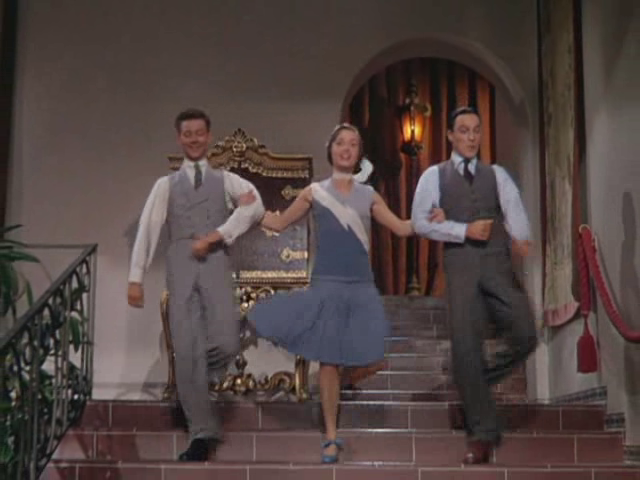
  • Kelly and O’Connor performing “Moses”
  • A hilarious, incisive satire of early Hollywood’s transition to talkies
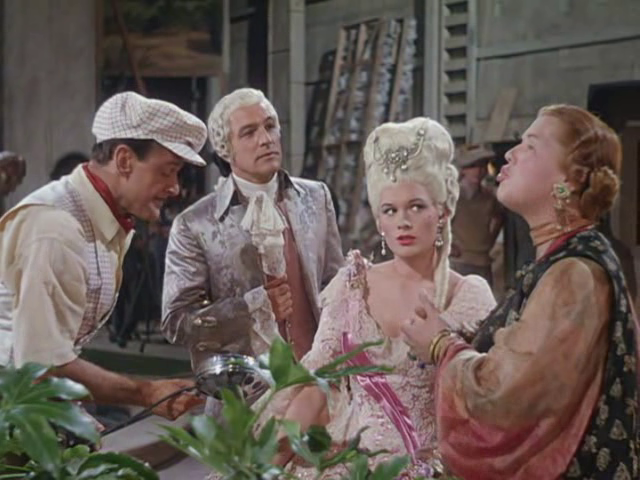
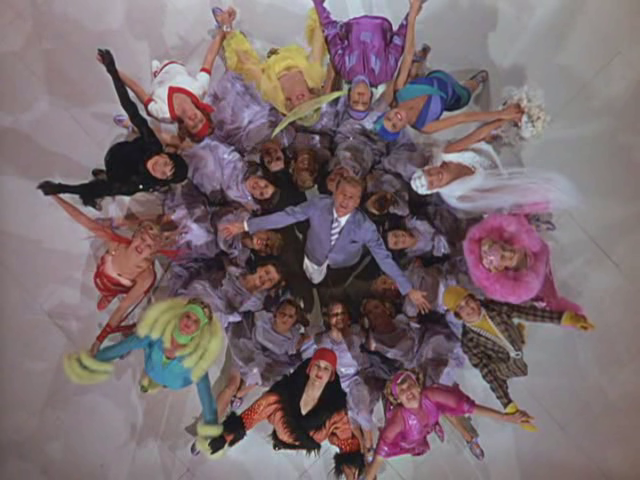
  • Vibrant Technicolor cinematography (by Harold Rosson)
Must See?
Yes, of course!

Categories

  • Genuine Classic

(Listed in 1001 Movies You Must See Before You Die)

Links:

Gigi (1958)

Gigi (1958)

“They’ve pounded into my head I’m backward for my age — but I know what all this means.”

Synopsis:
In turn-of-the-century Paris, a teen (Leslie Caron) living with her grandmother (Hermione Gingold) is groomed by her great-aunt (Isabel Jeans) to be a courtesan — but when a family friend (Louis Jourdan) takes a romantic interest in young Gigi (Caron), she begins to question her future.

Genres, Themes, Actors, and Directors:

  • Coming-of-Age
  • Cross-Class Romance
  • Historical Drama
  • Leslie Caron Films
  • Louis Jourdan Films
  • Maurice Chevalier Films
  • May-December Romance
  • Musicals
  • Vincente Minnelli Films

Response to Peary’s Review:
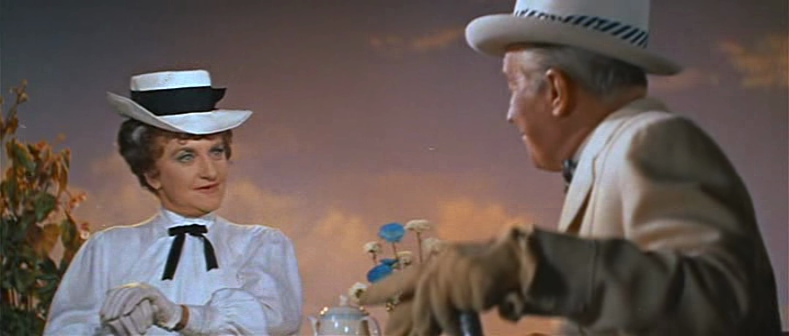
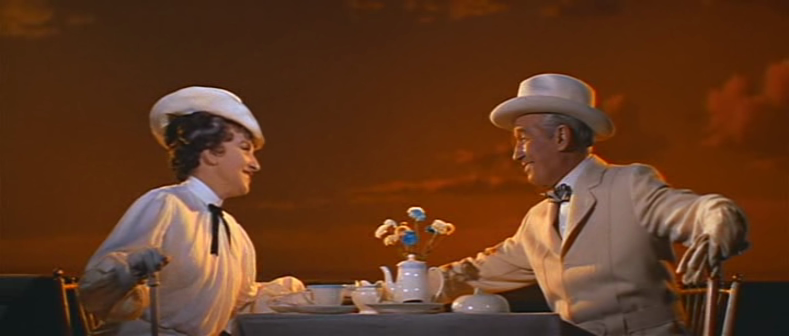
Peary writes — and I agree — that Vincente Minnelli’s “exuberant musical, the winner of nine Academy Awards including Best Picture”, features a “bright and witty” script (based on Colette’s 1944 novella), “appealing” stars, “colorful costumes and sets [evocative of] Paris [in] 1900”, and “some charming songs” — including Peary’s (and my) favorite, “I Remember It Well”, as Gingold and Maurice Chevalier “warmly sing of their long-ago romance”. Indeed, I was pleasantly surprised to revisit this film for the first time in over 20 years (I last saw it as a teenage ff), and to find that I appreciate it much more now that I’m better able to understand the nuances of its social milieu. Without a grasp of the “Belle Epoque” societal norms that Colette was depicting in her story, it’s difficult to understand the basic premise of the story, or to fully appreciate the type of dilemma faced by Gigi and Jourdan’s “Gaston” — so younger film fanatics should be duly forewarned.

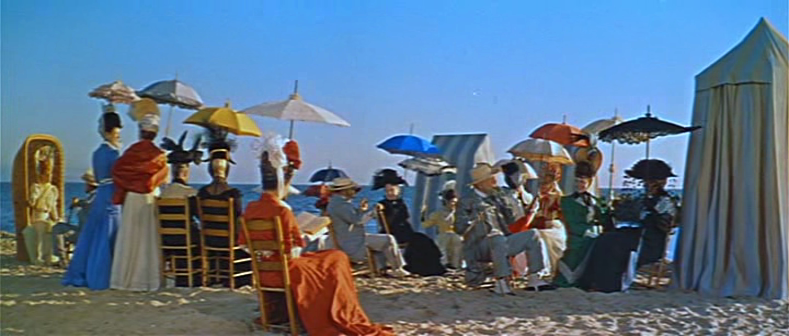
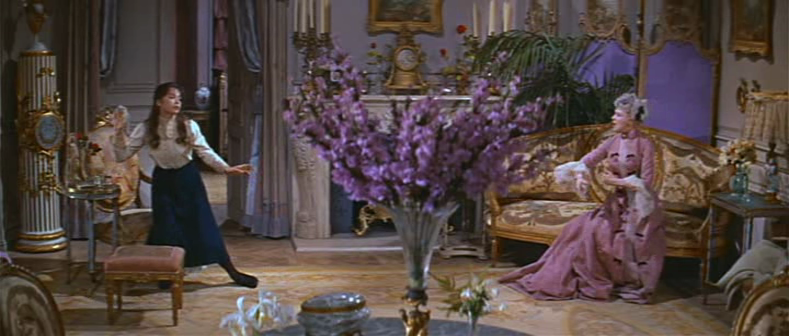
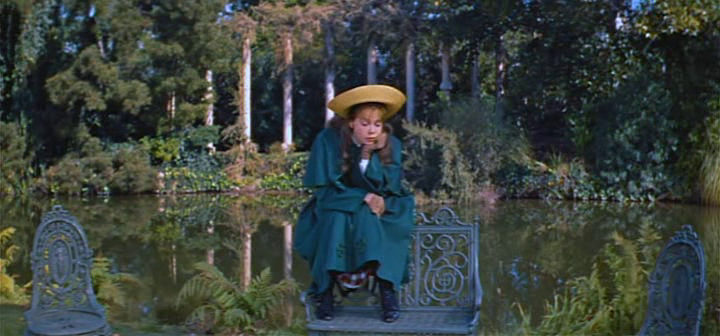
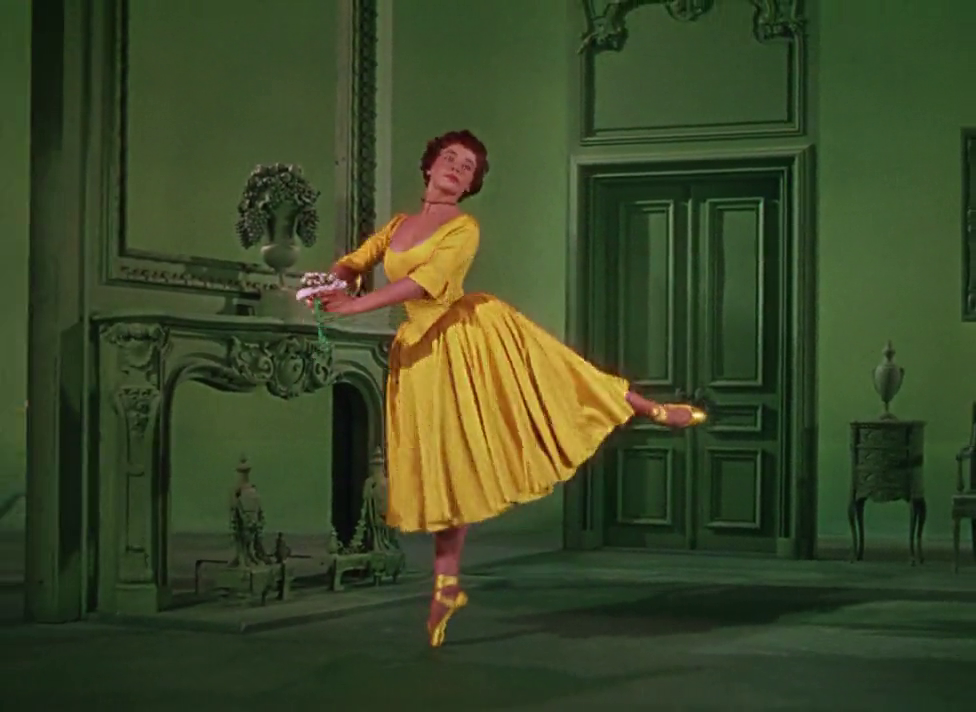
Storyline aside, however, the film — often designated as the last great MGM musical — works on nearly all other levels. To elaborate on Peary’s points above, it also features excellent use of authentic outdoor locales in France, vibrant Technicolor cinematography, and songs that are integrated seamlessly into the narrative (I’m especially fond of how “Waltz at Maxim’s [She’s Not Thinking of Me]”, with Eva Gabor as Jourdan’s mistress, is handled). Meanwhile, most of the cast is top-notch, with Caron in particular demonstrating a tremendous leap in acting ability since her 19-year-old debut in Minnelli’s An American in Paris (1951). She manages to effectively portray Gigi both as an innocent adolescent and as an emergent courtesan; we can easily understand why Jourdan would fall for her. Jourdan (second choice after Dirk Bogarde, who would have been wonderful) capably embodies bored Gaston (his clever duet with Chevalier — “It’s a Bore” — allows us to understand his character within just a few minutes); but I’ll admit I find Chevalier — especially as he sings “Thank Heaven for Little Girls” (my least favorite number) — a tad creepy.

Redeeming Qualities and Moments:

  • Leslie Caron as Gigi
  • Hermione Gingold as Madame Alvarez
  • Lovely musical numbers — especially Gingold and Chevalier’s duet “I Remember It Well”
  • Fine period production design and costumes
  • Vibrant Technicolor cinematography
  • Excellent use of authentic Parisian locales

Must See?
Yes, as an Oscar-winning classic.

Categories

  • Genuine Classic
  • Oscar Winner or Nominee

(Listed in 1001 Movies You Must See Before You Die)

Links:

American in Paris, An (1951)

American in Paris, An (1951)

“What gets me is, I don’t know anything about her.”

Synopsis:
An aspiring painter (Gene Kelly) in post-WWII Paris, living in the same building as his piano-playing buddy (Oscar Levant), is discovered by a beautiful patroness (Nina Foch) who hopes Kelly will become her new lover; meanwhile, Kelly falls in love with a shopgirl (Leslie Caron) he spies in a restaurant, not realizing that she’s engaged to the man (Georges Guétary) who kept her safe during the war.

Genres, Themes, Actors, and Directors:

  • Artists
  • Expatriates
  • Gene Kelly Films
  • Leslie Caron Films
  • Love Triangle
  • Musicals
  • Oscar Levant Films
  • Romance
  • Vincente Minnelli Films

Response to Peary’s Review:
As Peary writes, it’s too bad that the “potentially interesting storyline” for this “lavish M-G-M musical” is “given short shrift by Alan Jay Lerner”, who fails to exploit what should be the “intriguing relationships” between the four romantic leads. He argues that “instead of a steamy, complicated love affair between Kelly and Caron… their romance is movie-musical predictable” and “too proper”, and he notes that “Caron’s character, who no doubt had an interesting past, is very artificial”. He accurately points out that while “it’s nice to see her dance” (she’s given a clever introduction in a colorful montage early in the film), she “doesn’t yet look like a romantic lead”; he quips that “they hadn’t figured out her makeup, I suppose”, which isn’t all that far off the mark, given that she’s not nearly as attractive as she appears in her later films.

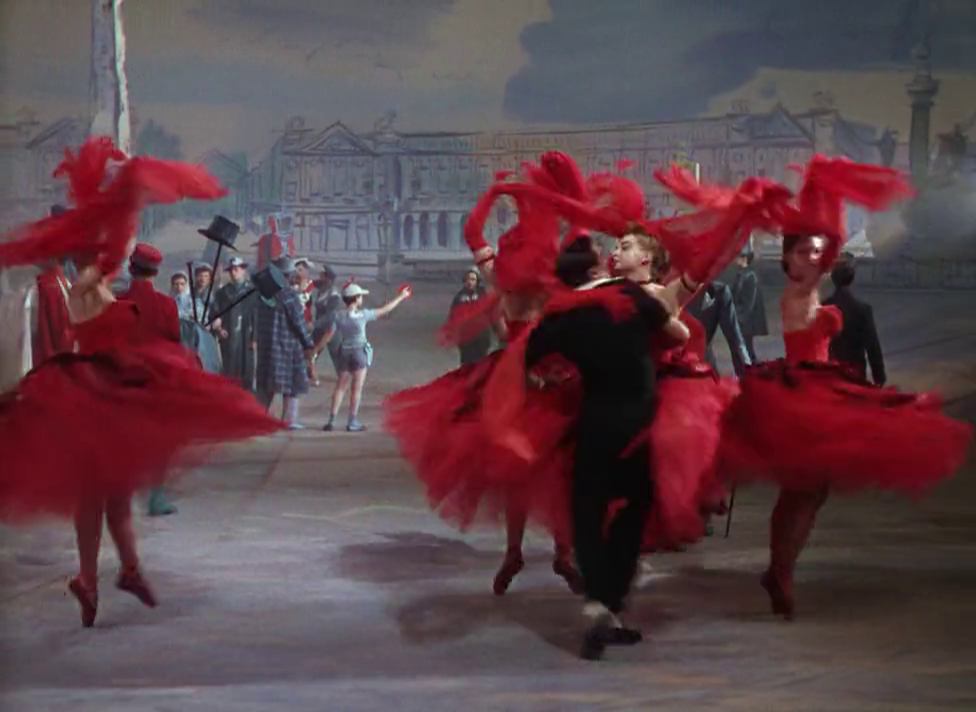
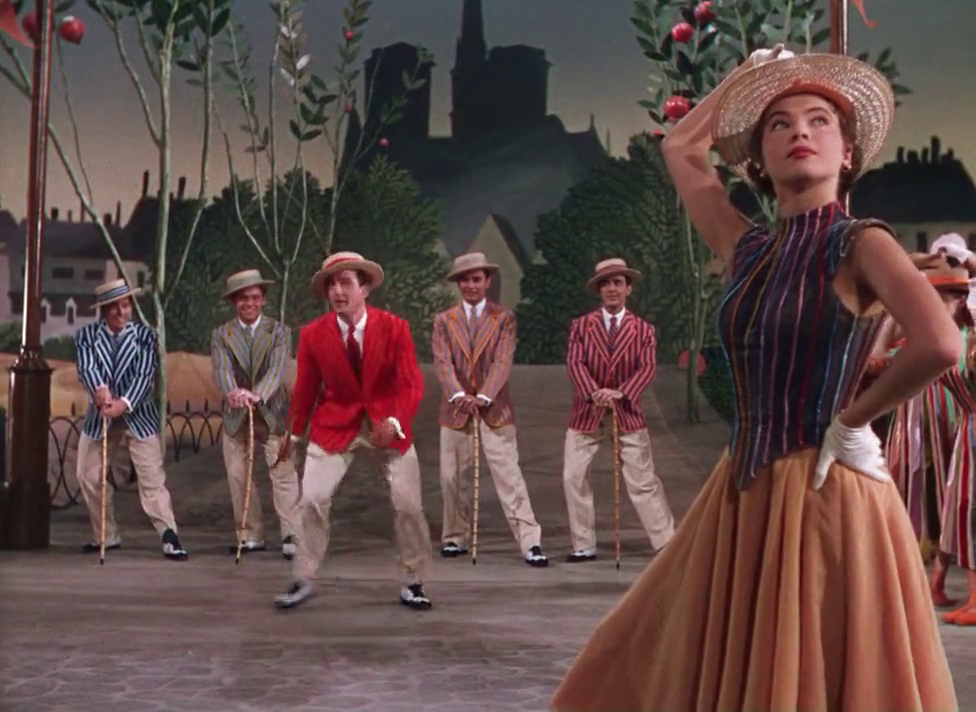
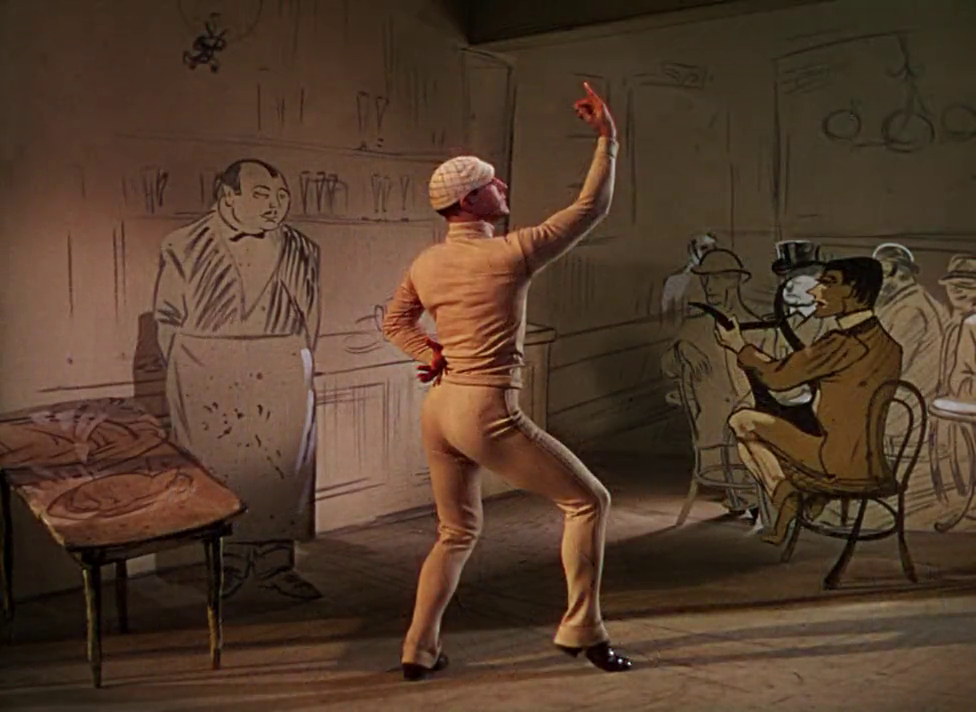
Peary further posits that “Minnelli’s elegant balletic style of dancing is too tame for [Kelly]” — though he concedes that Kelly is finally allowed to “let loose in the extravagant 20-minute musical finale” which features “several striking ballet interludes”; he notes that with its “imaginative use of color, costumes, and sets to create scenes in the styles of French artists … it is [indeed] one of the best production numbers in cinema history”. He argues that “the other, shorter song-and-dance numbers shouldn’t suffer so badly in comparison” — but I don’t quite agree with this sentiment; I’m fond of Kelly performing “I Got Rhythm” with a group of street kids, as well as his joy-filled tap dance routine to “Tra-la-la (This Time It’s Really Love)” in his friend Jerry’s apartment.

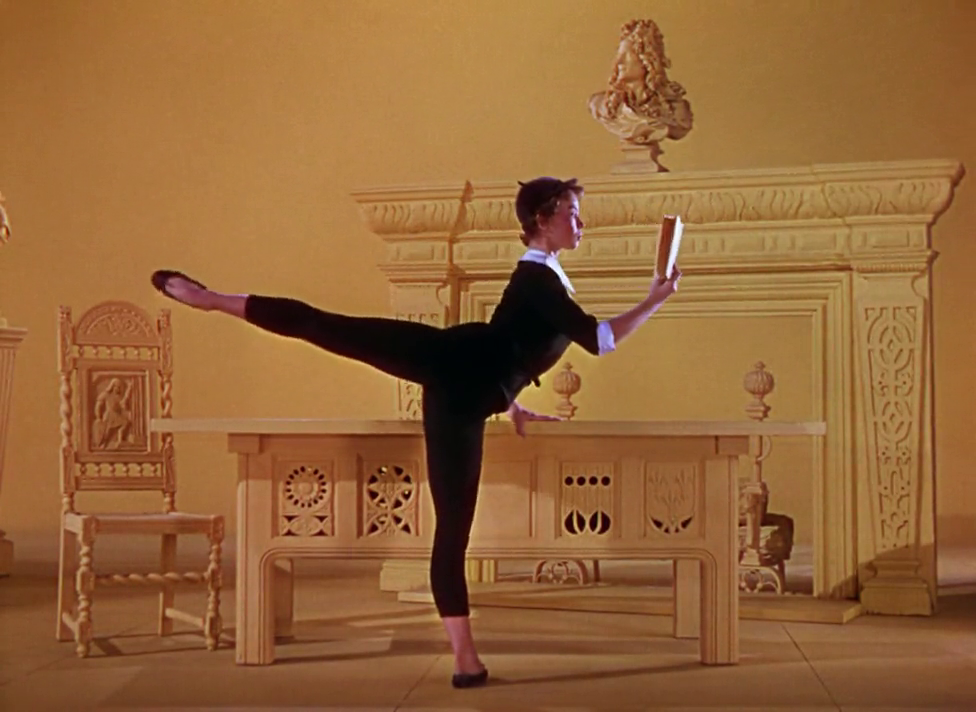
The primary problem with An American in Paris is its insufficiently developed storyline. Kelly’s crush on Caron is so paper-thin (especially given, as noted above, that she’s not particularly stunning — and he doesn’t see her opening dance sequence, as we do) that we simply can’t understand his instant obsession; meanwhile, Levant’s character is little more than a standard comedic foil, and Guetary is essentially a one-dimensional sap. What we’re left to enjoy are the stunningly vibrant Technicolor sound stage sets, fun costumes (particularly during the black-and-white ball), the Gershwin brothers’ incomparable score, and world-class dance routines — but without a suitable narrative to back all this up, An American in Paris comes up sadly short. It’s certainly worth at least a one-time look, but hasn’t endured as one of the best MGM musicals.

Redeeming Qualities and Moments:

  • Caron’s impressive dancing in her cinematic “introduction”
  • Kelly performing “I Got Rhythm”
  • Vibrant Technicolor cinematography
  • Impressive sets and costumes
  • The justifiably lauded ballet finale

Must See?
Yes, once, as an Oscar-winning (if flawed) classic.

Categories

  • Genuine Classic
  • Oscar Winner or Nominee

(Listed in 1001 Movies You Must See Before You Die)

Links:

Sadie Thompson (1928)

Sadie Thompson (1928)

[Note: The following review is of a non-Peary title; click here to read more.]

“Sadie Thompson, you are an evil woman!”

Synopsis:
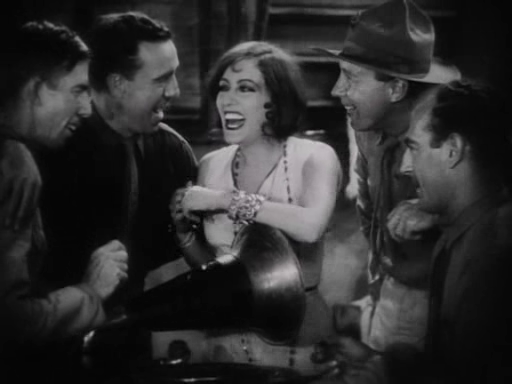
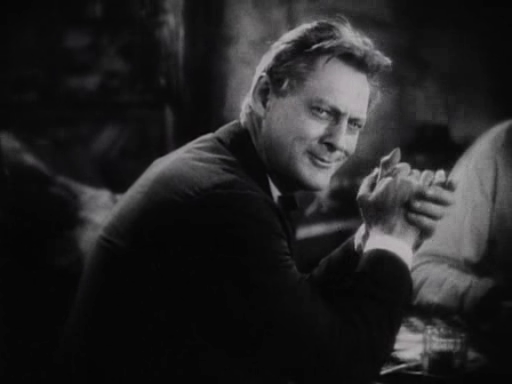
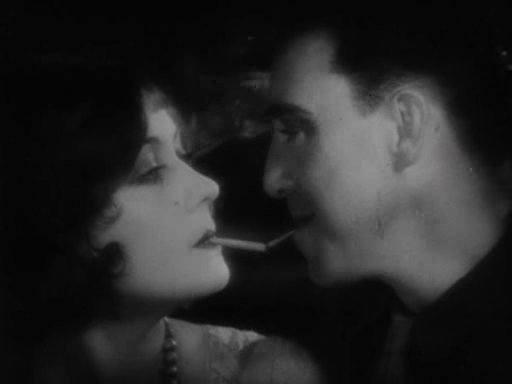
A fun-loving woman (Gloria Swanson) fleeing from San Francisco arrives in Pago-Pago, where a judgmental missionary (Lionel Barrymore) tries to convince her to repent her sins, and a handsome soldier (Raoul Walsh) tempts her with the prospect of a new life in Australia.

Genres, Themes, Actors, and Directors:

  • Gloria Swanson Films
  • Lionel Barrymore Films
  • Literature Adaptation
  • Morality Police
  • Prostitutes and Gigolos
  • Raoul Walsh Films
  • Silent Films
  • South Sea Islands

Review:
W. Somerset Maugham’s short story “Rain” was adapted for the screen three times — most famously in 1932 with Joan Crawford, and later as Miss Sadie Thompson (1953) with Rita Hayworth. However, this early silent version — directed by and co-starring Raoul Walsh — remains worth a look on its own merits, both as an atmospheric adaptation of the story, and for Swanson’s iconic performance as Sadie. As I noted in my review of Cecil B. DeMille’s Male and Female (1919), Peary only includes three Gloria Swanson titles in his GFTFF, none of which portray her at her silent-era best — this title, I think, fits that bill. Given that Peary nominates both Swanson and Barrymore (nicely epitomizing moral hypocrisy) in his Alternate Oscars, it seems especially suitable to include here as a “missing must-see” title; however, be forewarned that its final reel is missing. Check out Wikipedia’s article to read more about the film’s troubled birth and production history.

Redeeming Qualities and Moments:

  • Gloria Swanson as Sadie (nominated by both Peary and the official Academy as Best Actress of the Year)
  • Lionel Barrymore as Mr. Davidson
  • Fine cinematography

Must See?
Yes, simply to see Swanson’s Oscar-nominated performance, and for its general historical interest.

Categories

  • Noteworthy Performance(s)
  • Oscar Winner or Nominee

Links:

Darby O’Gill and the Little People (1959)

Darby O’Gill and the Little People (1959)

“I declare my soul, when I tell ’em this down at the pub, they won’t believe a word of it.”

Synopsis:
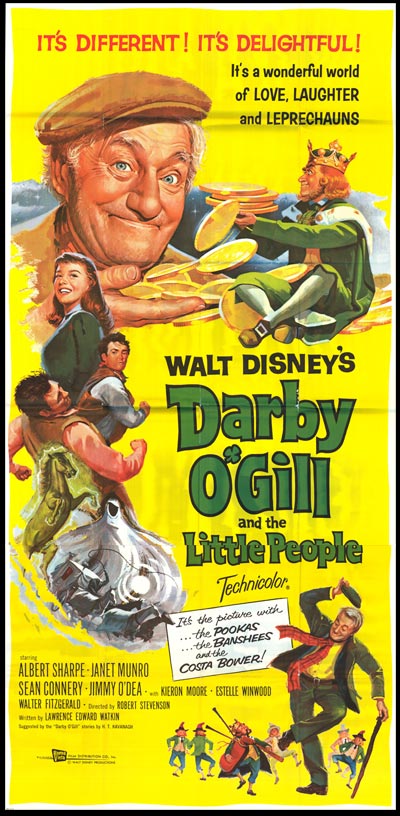
An elderly Irishman (Albert Sharpe) whose livelihood is about to be taken over by a strapping young stranger (Sean Connery) earns three wishes from the king of the leprechauns (Jimmy O’Dea), but struggles to determine how he can best guarantee the happiness of his grown daughter (Janet Munro), who is being pursued by a bullying local (Kieron Moore).

Genres, Themes, Actors, and Directors:

  • Cat-and-Mouse
  • Fantasy
  • Folk Tales, Fairy Tales, and Mythology
  • Ireland
  • Leprechauns
  • “No One Believes Me!”
  • Sean Connery Films

Review:
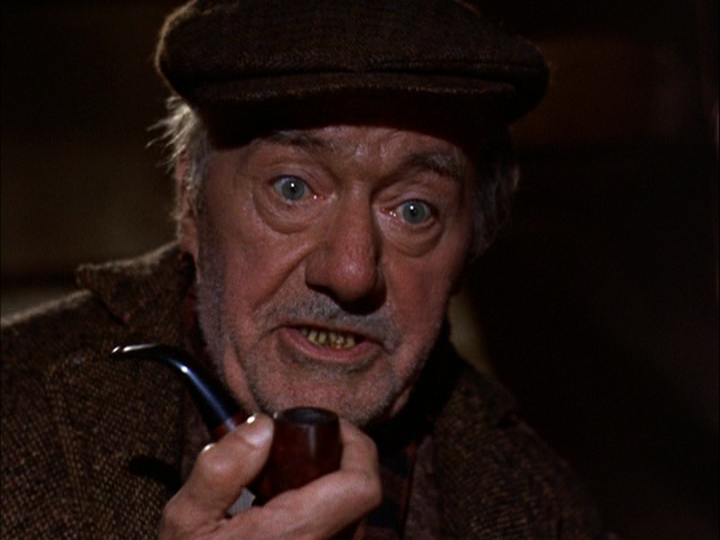
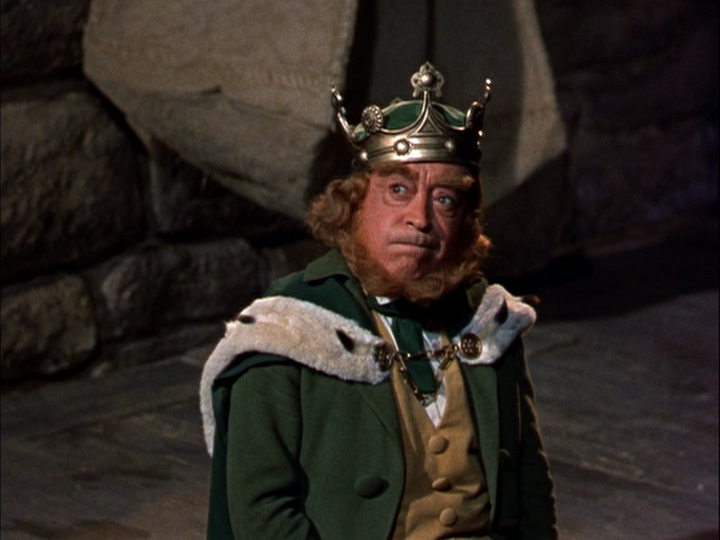
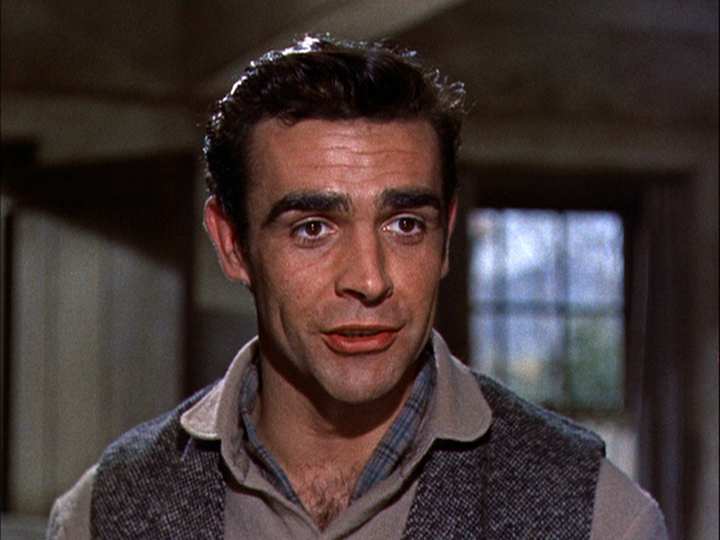
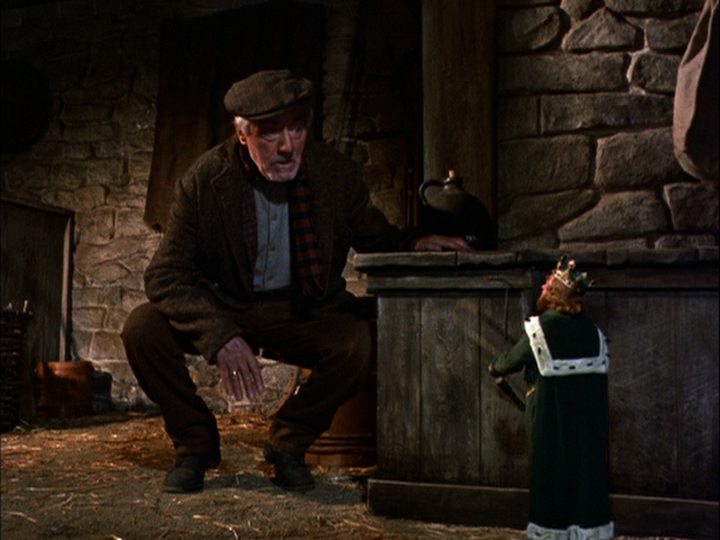
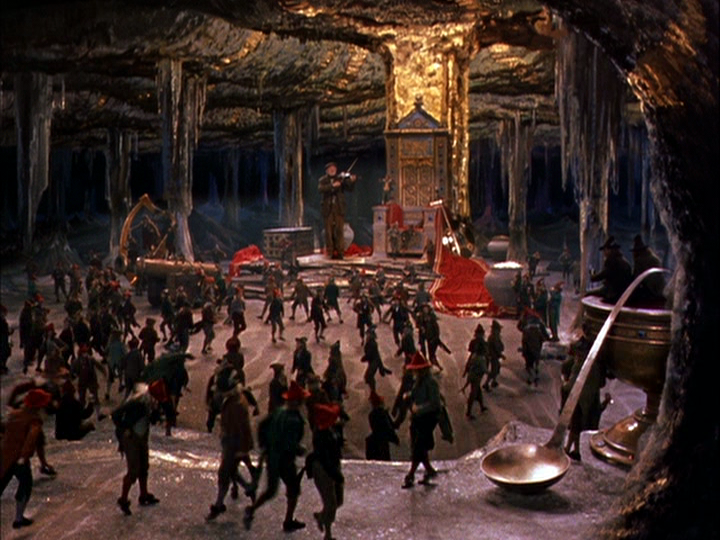
I was pleasantly surprised to visit this live-action Disney film for the first time recently, and to learn that it fully deserves its status as one of the best in its genre. The clever, dialect-filled script (based on early-20th-century stories by Herminie Templeton Kavanagh) will appeal to adults as well as kids, bringing ancient legends of leprechauns to life within the realistic context of a garrulous old man who may or may not simply be spinning tall tales. The performances are top-notch across the board — most notably Albert Sharpe as wily Darby O’Gill (I’m glad he was cast rather than Disney’s first choice, Barry Fitzgerald), and an entirely convincing Jimmy O’Dea as pint-sized King Brian; we never tire of seeing these two interacting with one another in a relentless yet consistently respectful game of cat-and-mouse. Janet Munro, meanwhile, sparkles as Sharpe’s strong-willed daughter, and Sean Connery is suitably handsome as her would-be lover; smaller supporting roles (i.e., Estelle Winwood as a meddling old neighbor) are also nicely filled.

But it’s the truly stunning special effects which really impress, as full-sized Darby interacts seamlessly with tiny King Brian, and the leprechaun kingdom is brought to magical life. A special “must-see” documentary on the DVD goes behind the scenes of the film’s production to reveal the genius of Peter Ellenshaw’s special effects, which ranged from labor-intensive use of forced perspective to strategic integration of gorgeous matte backgrounds (meticulously painted by Ellenshaw himself). The later presence of a menacing banshee and “death coach” floating in the air are a bit less spectacular, but still quite spooky (as attested by legions of viewers who recall being scared witless by them as children). Thankfully, the film’s impressive special effects are put to good use within a story that remains engaging and suspenseful until the very end; you will likely find yourself believing just a tiny bit in leprechauns yourself by the time the film is over.

Note: I recommend watching this one with subtitles running, to catch all the nuances of the rich dialect spoken by the characters.

Redeeming Qualities and Moments:

  • Albert Sharpe as Darby O’Gill
  • Jimmy O’Dea as King Brian
  • Janet Munro as Katie O’Gill
  • Sean Connery as Michael McBride
  • Truly stunning special effects and sets


  • Oliver Wallace and Lawrence E. Watkin’s lilting score

Must See?
Yes, as an unsung gem from Disney’s vaults.

Categories

  • Good Show
  • Historically Relevant

Links:

Waitress! (1981)

Waitress! (1981)

“Admit it — you’re a chauvinist! You hate the idea that my career is just as important as yours.”

Synopsis:
An aspiring actress (Carol Drake) working as a waitress at a hectic restaurant owned by her boyfriend (Jim Harris) will stop at nothing to convince a producer (Ed Fenton) to cast her as Joan of Arc; meanwhile, her naive co-worker (Carol Bevar) — an aspiring journalist — does “research” for a story on how to catch a man, while a young new colleague (Renata Hickey) resents being put to work by her wealthy father.

Genres, Themes, Actors, and Directors:

  • Comedy
  • Feminism and Women’s Issues

Review:
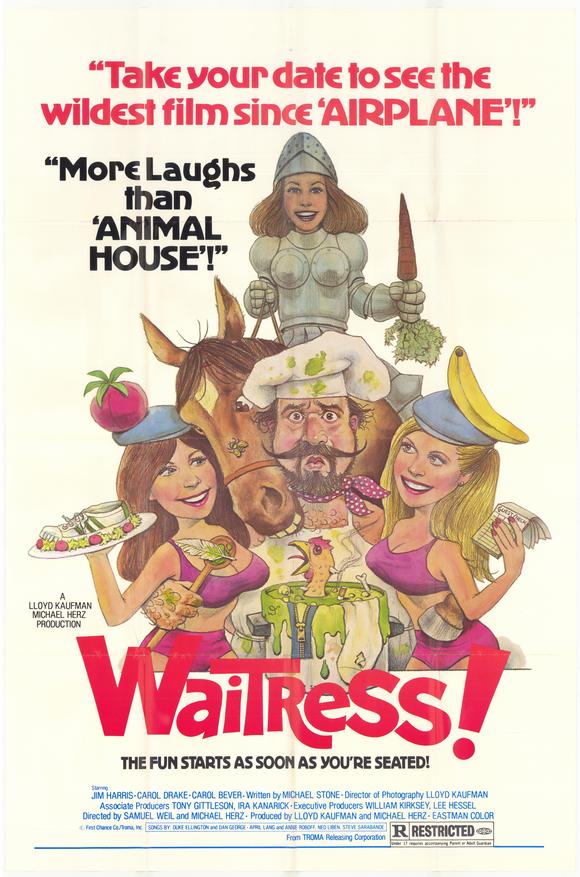
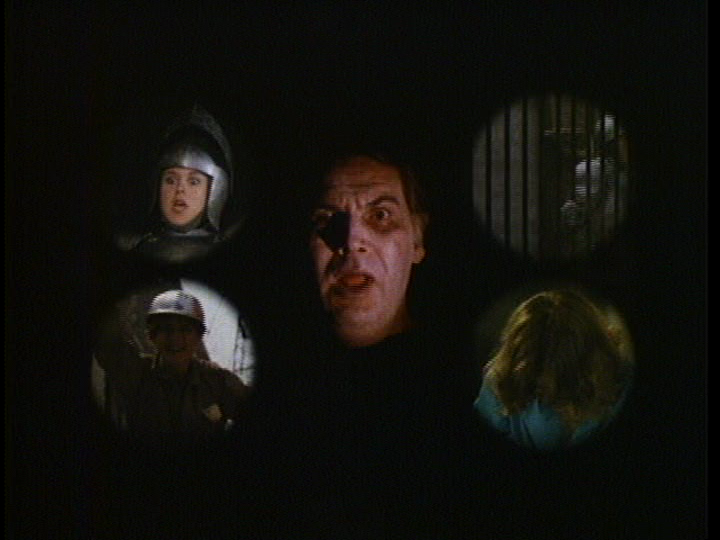
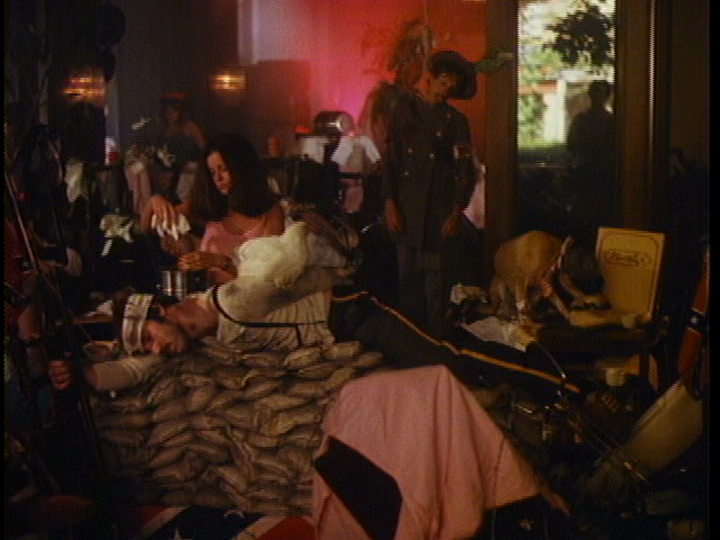
Troma Studios is an independent production and distribution company whose B-films are “known for their surrealistic … nature, along with their use of shocking imagery”. The company’s most beloved cult hit is The Toxic Avenger (1985), but they’ve released quite a few other titles over the decades, including this excruciatingly unfunny “comedy” centering on the travails of three sexy waitresses. Purportedly written with a feminist sensibility in mind — two of the three women have bigger career goals, and must fight off either sexual aggression or unwanted male enabling — the movie is really little more than a trashy low-budget exploitation flick. To its credit, no matter how consistently awful the script is, it’s never exactly boring; the pace is truly relentless, and there’s always something going on in some corner of the screen to catch one’s attention (i.e., two bystanders using cables to jump-start a man who’s just had a heart attack on the street). But the humor throughout is far too low-brow to appeal to most film fanatics.

Redeeming Qualities and Moments:

  • A relentlessly zany sensibility

Must See?
No; skip this one.

Links:

Royal Wedding (1951)

Royal Wedding (1951)

“This is a pretty box of pickles!”

Synopsis:
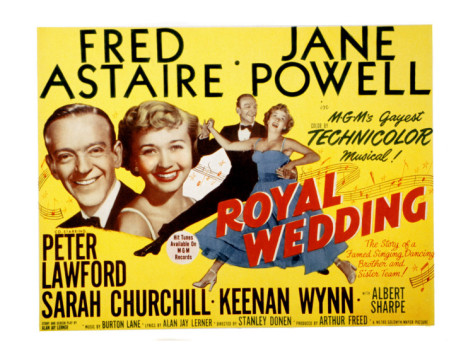
A successful brother (Fred Astaire) and sister (Jane Powell) dancing team head to London just as a royal wedding is about to take place. Once there, Astaire falls in love with a dancing ingenue (Sarah Churchill), while Powell pursues romance with a lord (Peter Lawford) she met on board the ship.

Genres, Themes, Actors, and Directors:

  • Fred Astaire Films
  • Jane Powell Films
  • Keenan Wynn Films
  • Musicals
  • Peter Lawford Films
  • Siblings
  • Stanley Donen Films

Review:
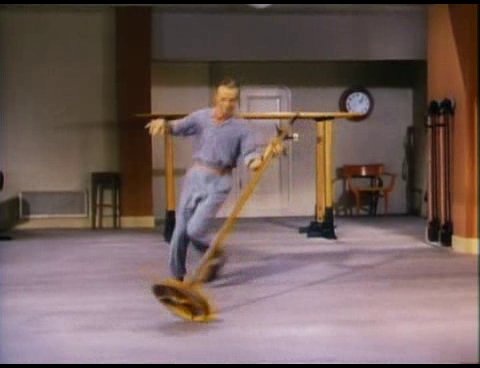
This innocuous MGM musical — loosely inspired by Fred Astaire’s dancing partnership with his sister Adele, as well as the upcoming real-life nuptials of Princess Elizabeth and Philip Mountbatten — is perhaps best known as the film that features Fred Astaire dancing on the ceiling and walls (see TCM’s article for more information on how these nifty effects were achieved). Judy Garland was originally slated to co-star with Astaire, but due to her infamous health concerns was replaced by Powell, who (fortunately) does a fine job portraying Astaire’s spunky younger sister, and more than keeps up with Astaire during their dance numbers together — especially during the wonderfully named, energetically performed “How Could You Believe Me When I Said I Loved You When You Know I’ve Been a Liar All My Life?” (purportedly the longest-titled song in MGM’s musical history). Unfortunately, the storyline itself is negligible at best, and Astaire’s romantic interest — Churchill, the daughter of Winston himself — is utterly bland. The primary reason to check this one out is for the fun musical-dance sequences.

Redeeming Qualities and Moments:

  • Astaire’s hatrack dance
  • Astaire’s fun ceiling-and-wall dance number
  • Astaire and Powell performing “How Could You Believe Me When I Said I Loved You When You Know I’ve Been a Liar All My Life?”

Must See?
No, but the three musical numbers listed above make it worth a one-time look. As a public domain title, this one is available for free viewing on www.archive.org.

Links: