American Madness (1932)

American Madness (1932)

“I’m not interested in profit. I’m interested in the bank — in the depositers; they’re my friends. They’re looking to me for protection, and I’m not walking out on them!”

Synopsis:
Warm-hearted banker Thomas Dickson (Walter Huston) is pressured by his Board of Directors to stop giving loans so freely, but he refuses on principle. When one of his debt-ridden employees (Gavin Gordon) facilitates a heist led by a group of gangsters, however, panicked depositors mob the bank to cash their savings, and Dickson must find a way to save his bank before it’s too late.

Genres, Themes, Actors, and Directors:

  • Depression Era
  • Do-Gooders
  • Frank Capra Films
  • Heists
  • Naive Public
  • Pat O’Brien Films
  • Walter Huston Films

Review:
It’s easy to see shades of Capra’s later films in this fable-like story about a magnanimous banker (wonderfully played by Huston) who refuses to let anything stand in the way of his devotion to “the people”; indeed, fans of It’s a Wonderful Life (1946) will immediately recognize the familiar plot device of panicked townspeople descending upon a bank and demanding their money back. These crowd scenes are handled impressively, as are the more quiet moments between Huston and his wife (Kay Johnson); less enjoyable, however, is the script’s heavy handed morality, which insults our intelligence. Fortunately, the film is redeemed by excellent performances from nearly all the actors (Gordon is an exception), stunning art deco set designs inside the bank, and a fascinating look at Depression-era mentality about money.

Note:Although it comes across as a naively optimistic alternative to traditional banking methods, Huston’s philosophy about loans actually makes some sense, and can be seen in Bangladesh’s famous microcredit program run by Grameen Bank.

Redeeming Qualities and Moments:

  • Walter Huston as the people-trusting banker
  • Kay Johnson as Huston’s frustrated wife
  • Pat O’Brien as Huston’s loyal right-hand-man
  • Constance Cummings as O’Brien’s fiancee
  • Gorgeous art deco set designs
  • Effective use of rapid-fire editing, fast-paced action, and overlapping dialogue

Must See?
Yes. As the first film to demonstrate Capra’s unique style and thematic interests, most film fanatics will want to see this movie at least once. Peary lists it in the back of his book as a Personal Recommendation.

Categories

  • Important Director

Links:

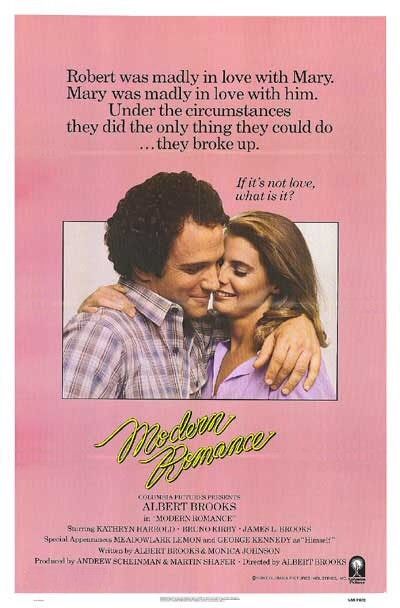
Modern Romance (1981)

Modern Romance (1981)

“One, two, three! And-I-don’t-even-miss-her, two, three!”

Synopsis:
After breaking up with his beautiful girlfriend Mary (Kathryn Harrold) for the umpteenth time, self-absorbed Hollywood editor Robert Cole (Albert Brooks) wallows in self-pity before trying to woo Mary back.

Genres, Themes, Actors, and Directors:

  • Albert Brooks Films
  • Dating
  • George Kennedy Films
  • Los Angeles
  • Romantic Comedy
  • Winning Him/Her Back

Response to Peary’s Review:
Critical opinions seem squarely divided on this early romantic comedy by Albert Brooks, which Peary inexplicably labels as “often brilliant” and “much underrated”. One’s ability to enjoy Modern Romance rests on how easily you can relate to the lead character — Peary finds him “sympathetic yet obnoxious”, but I think he is, quite simply, insufferable. Indeed, it’s impossible to have any sympathy for someone as “completely oblivious to his awful traits” as Robert is; one can’t help comparing him with Woody Allen, but at least Allen’s characters always exhibited a healthy dose of neurotic self-deprecation.

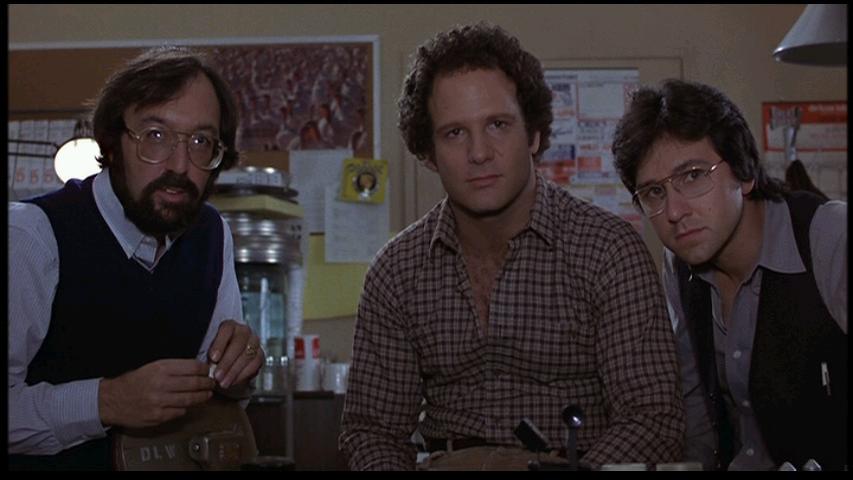
Kathryn Harrold does a fine job as Robert’s girlfriend, but it’s difficult to enjoy her performance simply because we can’t figure out why she’d want to be with this loser in the first place — let alone after the way we see him treating her again and again. The only mildly enjoyable scenes focus on Robert’s work as a film editor for real-life director James L. Brooks — yet these have nothing to do with the primary story, and could easily be from a different movie entirely. Read DVD Savant’s review instead of Peary’s to get a much better indication of what you’re likely in store for with this clunker.

Redeeming Qualities and Moments:

  • Bruno Kirby as Robert’s long-suffering friend and colleague
  • A clever inside look at the politics of filmmaking and editing
  • Robert being pressured into buying far too much running gear
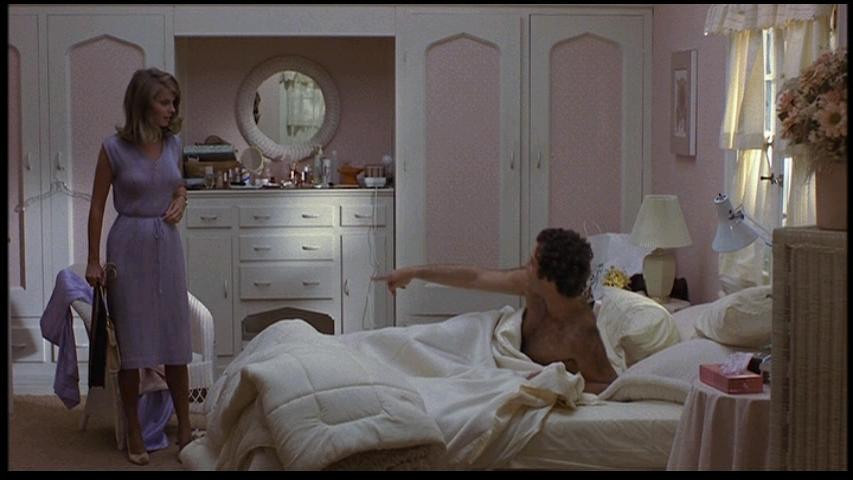
  • A few mildly amusing moments between Robert and Mary — such as when Robert eyes Mary’s revealing knit dress with jealous disapproval, and tells her it makes her nipples look like eyeballs

Must See?
No. While some would argue this is an essential film in Brooks’s early oeuvre, I can’t in good conscience recommend it as must-see viewing for anyone but fans of Brooks.

Links:

No Sad Songs for Me (1950)

No Sad Songs for Me (1950)

“Once in a while, when I stop fighting it, I get a flash of — I’d guess you’d call it philosophy. Suddenly I realize that what really matters isn’t how long we live, but how.”

Synopsis:
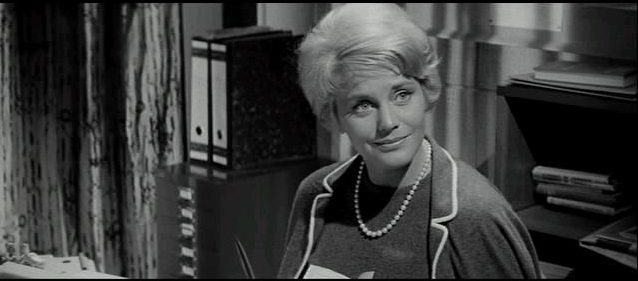
When Mary Scott (Margaret Sullavan) discovers she only has a few months left to live, she decides to keep it a secret from her husband (Wendell Corey) and daughter (Natalie Wood). Meanwhile, she learns that her loyal husband is falling for his beautiful co-worker (Viveca Lindfors).

Genres, Themes, Actors, and Directors:

  • Death and Dying
  • Illness
  • John McIntire Films
  • Margaret Sullavan Films
  • Marital Problems
  • Natalie Wood Films
  • Wendell Corey Films

Review:
No Sad Songs for Me could easily be dismissed as a schmaltzy tearjerker, but it’s too well-acted — and too smartly written — to deserve this label. Margaret Sullavan (in what would tragically be her last screen role) brings a level of pathos to her character which transcends the limitations of the material, and makes us genuinely care for this selfless, philosophical woman. Viveca Lindfors and Wendell Corey do an equally fine job as co-workers who recognize the folly of their growing attraction to each other, and it’s fun to see Natalie Wood in a role midway between her appearances in The Miracle on 34th Street (1947) and Rebel Without a Cause (1955). There aren’t any major revelations or surprises here — after all, we know the film’s outcome from the very beginning — but be forewarned: the final scene remains quietly devastating.

Redeeming Qualities and Moments:

  • Margaret Sullavan’s heartfelt performance as the dying wife and mother who wants nothing but the best for her family
  • Wendell Corey as Mary’s unsuspecting husband
  • Viveca Lindfors as Corey’s beautiful new co-worker
  • Natalie Wood as Sullavan’s young daughter

Must See?
No, but it’s recommended, especially for fans of Sullavan.

Links:

Phenix City Story, The (1955)

Phenix City Story, The (1955)

“There are enough decent men here to wipe Fourteenth Street off the map — if you’ll tell ’em to!”

Synopsis:
A lawyer (John McIntire), his son (Richard Kiley), and other concerned citizens fight back against the insidious corruption in their Southern town.

Genres, Themes, Actors, and Directors:

  • Assassination
  • Collective Activism
  • Corruption
  • Deep South
  • John McIntire Films
  • Phil Karlson Films

Review:
Based on a true story, this gritty docudrama depicts the events leading to the National Guard’s takeover of a mob-ridden Southern town in 1954. Director Phil Karlson spends ample time establishing the extent of the corruption in Phenix City, so that we understand why even our likable protagonist refuses to take sides at first: the mob’s influence is so systemic — and retribution so quick — that to speak up means, quite literally, to risk your life. And the violence isn’t pretty: the first murder depicted — in which an African-American girl is run over, then brutally tossed from a car onto the front lawn where Kiley’s children are playing — is like nothing else in 1950s American cinema.

Unfortunately, the inclusion of a 13-minute newsreel at the beginning of the movie — featuring interviews with real people from Phenix City — lessens the impact of the docudrama somewhat, simply because it’s impossible not to notice their strong accents, which the actors make no attempt to imitate. Indeed, when compared with Paul Greengrass’s recent docudramas — which are filmed so authentically you truly feel you’re there — Phenix City comes across as stagy and heavyhanded. Nonetheless, this remains a well-acted, heartfelt movie, one which tells an important American story with bravery and grit, and deserves a wider audience.

Redeeming Qualities and Moments:

  • Bespectacled John McIntire as the elderly lawyer who experiences a drastic change of heart
  • Richard Kiley as McIntire’s determined son
  • Edward Andrews as the ringleader of the town’s corrupt forces
  • Lenka Peterson, doing an excellent job in a thankless role as Kiley’s concerned wife
  • A shocking use of realistic violence

Must See?
Yes. While dated in some ways, this remains a powerful early docudrama. Peary lists it in the back of his book as a Cult Movie and a Personal Recommendation. It’s also notorious as one of Martin Scorsese’s favorite films.

Categories

  • Historically Relevant

(Listed in 1001 Movies You Must See Before You Die)

Links:

Mark, The (1961)

Mark, The (1961)

“I knew that sooner or later you’d be taking that little girl off alone.”

Synopsis:
A man (Stuart Whitman) imprisoned for intent to molest a ten-year-old girl tries to start a new life for himself, with the help of his psychiatrist (Rod Steiger). Things seems to be looking up for him when he secures a good job and falls in love with a widowed single mother (Maria Schell); however, when a reporter (Donald Houston) writes a story accusing him with intent to abuse Schell’s 10-year-old daughter (Amanda Black), he finds himself damned to relive his past.

Genres, Themes, Actors, and Directors:

  • Ex-Cons
  • Falsely Accused
  • Maria Schell Films
  • Pedophiles
  • Psychotherapy
  • Rod Steiger Films

Review:
This earnest depiction of a pedophile attempting to live a “normal” life ultimately bites off more than it can chew. Despite featuring fine performances by its two leads (Stuart Whitman and Maria Schell), the movie is done in by its vapid Freudian analysis, a cliched performance by Rod Steiger as Whitman’s Scottish-brogued psychiatrist, and a script which refuses to deal honestly with the messy reality of pedophilia. Unlike in the book it’s based upon, Whitman’s character (Jim) never actually molests a girl here, thus complicating our notion of his guilt; and, because his urges are explained away as stemming from a dysfunctional childhood, we are meant to understand that Jim is truly a “good man” who simply strayed from the path of righteousness.

In the second half of the film, when Jim finds himself the unfair object of a scathing witch hunt, we are clearly meant to sympathize with him — yet it’s difficult to feel warmly towards a pedophile, and thus, our loyalties are divided. If only life were as nice and neat as in the movies, every “Jim” in the world would deserve a second chance, and there would be no need to penalize a sex criminal for his past crimes; unfortunately, however, this is merely wishful thinking. For a much more authentic look at a pedophile struggling with life after prison, see Kevin Bacon in The Woodsman (2004).

Redeeming Qualities and Moments:

  • Maria Schell as Whitman’s sympathetic love interest
  • Stuart Whitman as the world-weary ex-con

Must See?
No. This dated psychodrama — while daring in its intent — remains an unsatisfying and disappointing film overall.

Links:

Heartaches (1981)

Heartaches (1981)

“I’m pregnant, and I have to go to the city to have an abortion. It’s not my husband’s baby, and he doesn’t know!”

Synopsis:
When Bonnie (Annie Potts) finds out she’s pregnant by someone other than her husband (Robert Carradine), she heads to the big city to have an abortion. Along the way, she meets an eccentric woman (Margot Kidder) named Rita, who quickly becomes a supportive friend.

Genres, Themes, Actors, and Directors:

  • Friendship
  • Margot Kidder Films
  • Pregnancy
  • Romantic Comedy

Review:
This disappointing Canadian “buddy flick” — starring Margot Kidder in a blonde fright wig and a ditzy young Annie Potts — starts off with an interesting premise, but quickly falls flat.

Potts’s character is whiny and annoying, and her dilemma — while interesting — is quickly overshadowed by a lame subplot about Rita’s crush on an Italian named Marcello (Winston Rekert). We are meant to root for these ladies, but they’re simply not sympathetic: Potts cuckolded her unsuspecting husband, and Rita is downright obnoxious in her pursuit of an unavailable man. Peary probably lists Heartaches in the back of his book because of Kidder, whose performance he nominates as one of the best of the year in his Alternate Oscars (1991); but I don’t find it all that impressive. While Kidder has lots of energy, her character comes across as a cliche of working class eccentricity rather than someone we really care about.

Redeeming Qualities and Moments:

  • Robert Carradine as Bonnie’s cuckolded husband

Must See?
No. This disappointing Canadian indie film is only must-see viewing for fans of Margot Kidder.

Links:

Sex Kittens Go to College / Beauty and the Robot, The (1960)

Sex Kittens Go to College / Beauty and the Robot, The (1960)

“I’m so far out already, I’m on another planet!”

Synopsis:
A platinum blonde (Mamie Van Doren) with an IQ of 268 faces prejudice, lust, and jealousy when she begins her new job as head of a college science department.

Genres, Themes, Actors, and Directors:

  • College
  • Comedy
  • John Carradine Films
  • Mamie Van Doren Films
  • Robots
  • Teachers
  • Tuesday Weld Films

Review:
From the opening strains of its title song — “Sex-pot goes to co-llege!” chants a taunting male voice — Albert Zugsmith’s campy sex comedy reveals its misogynist attitude towards BBB (Brainy but Beautiful) women. Poor BBB Dr. West (Van Doren): despite her eminent intelligence and multiple (13!) college degrees, she can’t seem to get respect anywhere. Male undergrads (such as the painfully unfunny football star, “Woo Woo”) faint in her presence; married male colleagues invite her out for dance and drinks instead of academic conversation; and nearly all females (including beautiful undergrad Tuesday Weld) feel hopelessly threatened. Van Doren — who, fortunately, is a delight to watch — tries her best with the sub-par material, but is ultimately done in by the film’s hopelessly offensive gender politics. Not even a smattering of slightly amusing lines — “You make every woman in the world feel positively… flat-chested!” wails Weld — can rescue this clunker from its egregious failings, which include a dated subplot about a robot named “Thinko” accurately predicting the results of future horse races, and a blatantly offensive denouement. Whenever Van Doren’s not on the screen, this film sinks — and fast, daddy-o.

Redeeming Qualities and Moments:

  • Mamie Van Doren as the brilliant sexpot professor with “13 degrees”
  • Van Doren demonstrating “velocity” by shooting off two revolvers

Must See?
No. Although Peary lists this in the back of his book as a Camp Classic, it’s really only “must see” viewing for fans of Mamie Van Doren.

Links:

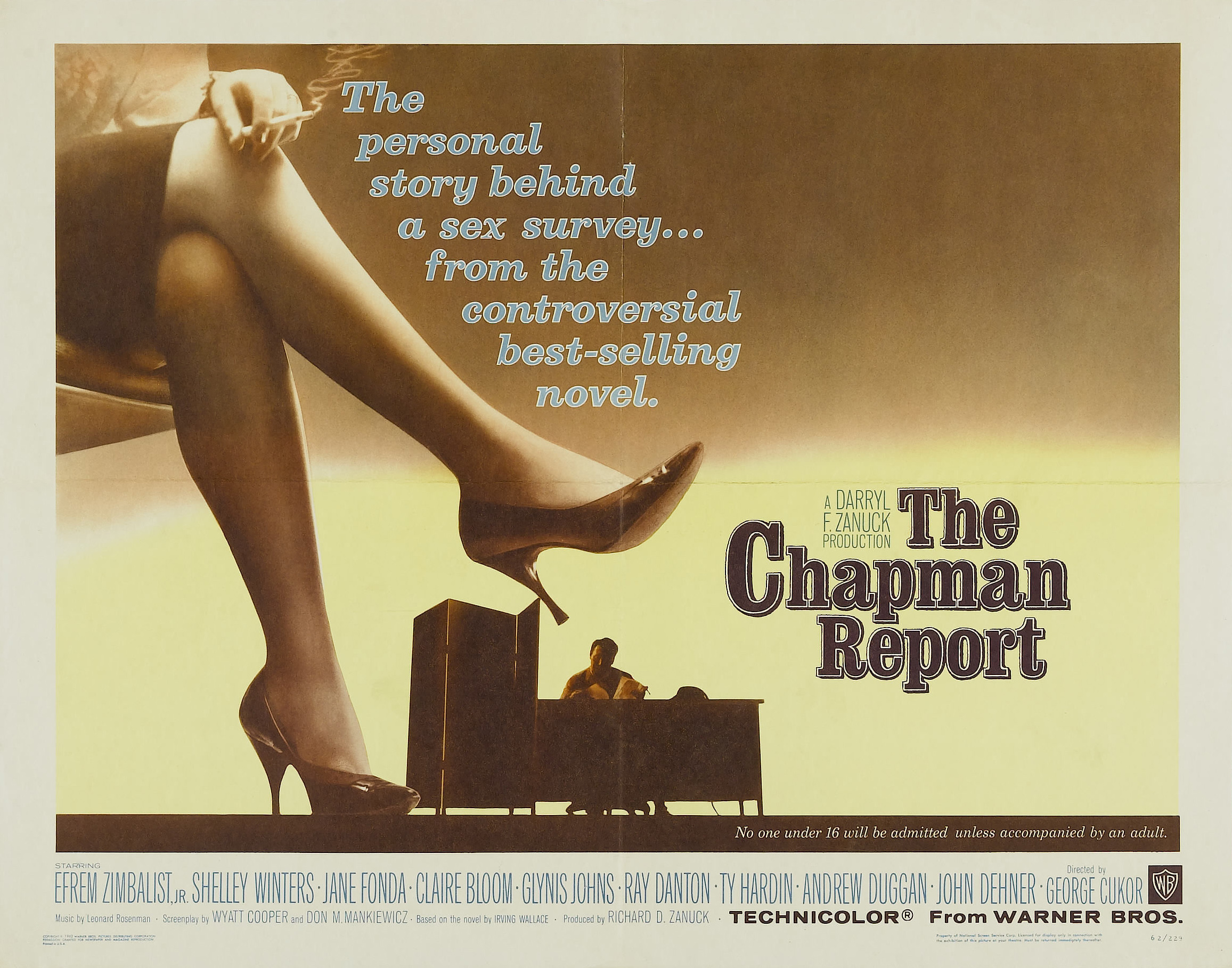
Chapman Report, The (1962)

Chapman Report, The (1962)

“Help me — I don’t want to be half a woman!”

Synopsis:
Four suburban women — a frigid widow (Jane Fonda), a sexually active divorcee (Claire Bloom), an aspiring sculptress (Glynis Johns), and an adulterous housewife (Shelley Winters) — find themselves questioning their sexual practices when they participate in a Kinsey-esque survey.

Genres, Themes, Actors, and Directors:

  • Claire Bloom Films
  • Cloris Leachman Films
  • Ensemble Cast
  • George Cukor Films
  • Glynis Johns Films
  • Housewives
  • Jane Fonda Films
  • Sexuality
  • Shelley Winters Films

Review:
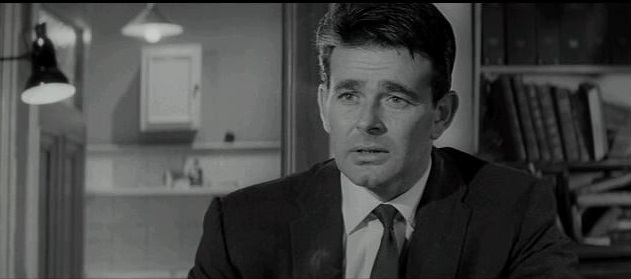
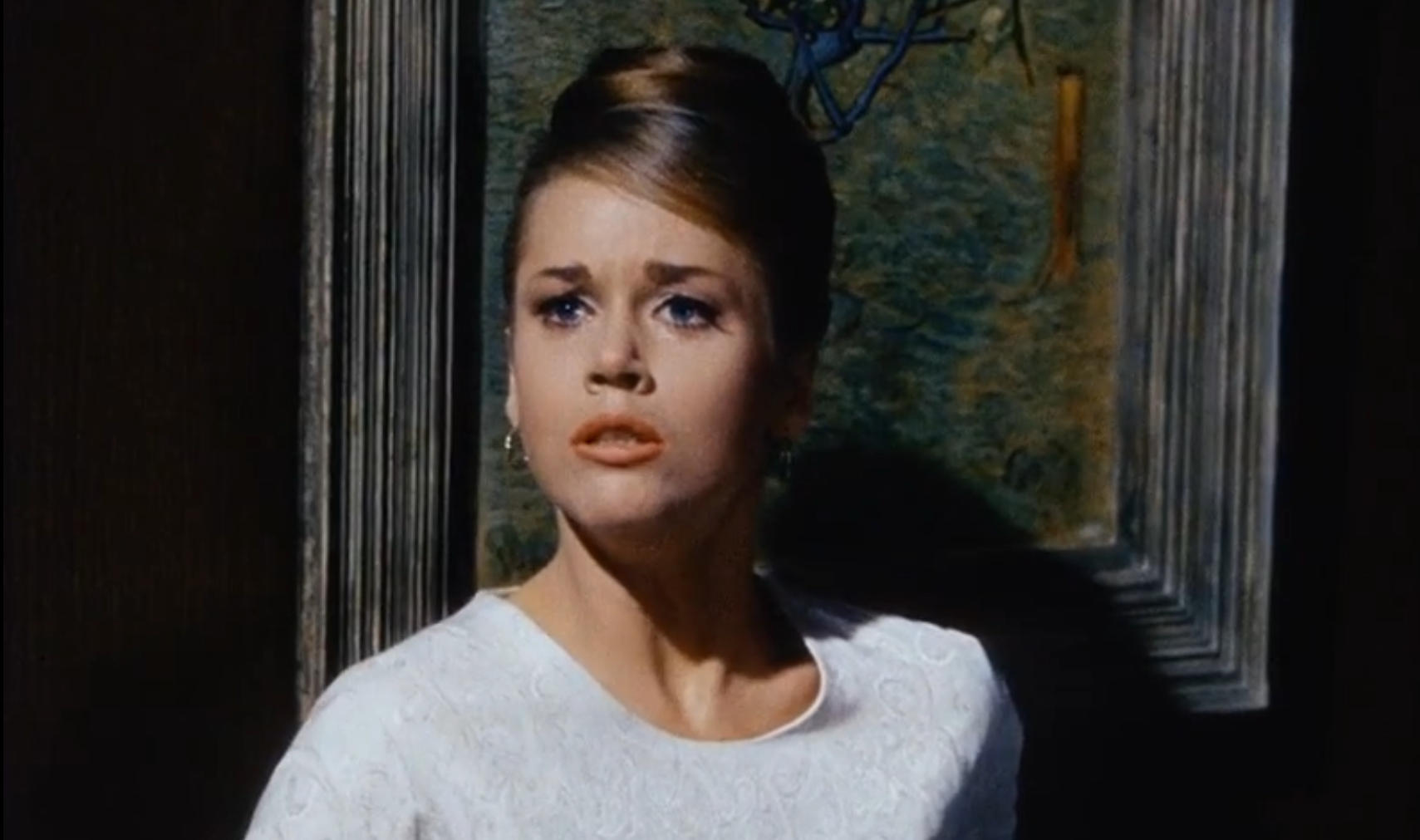
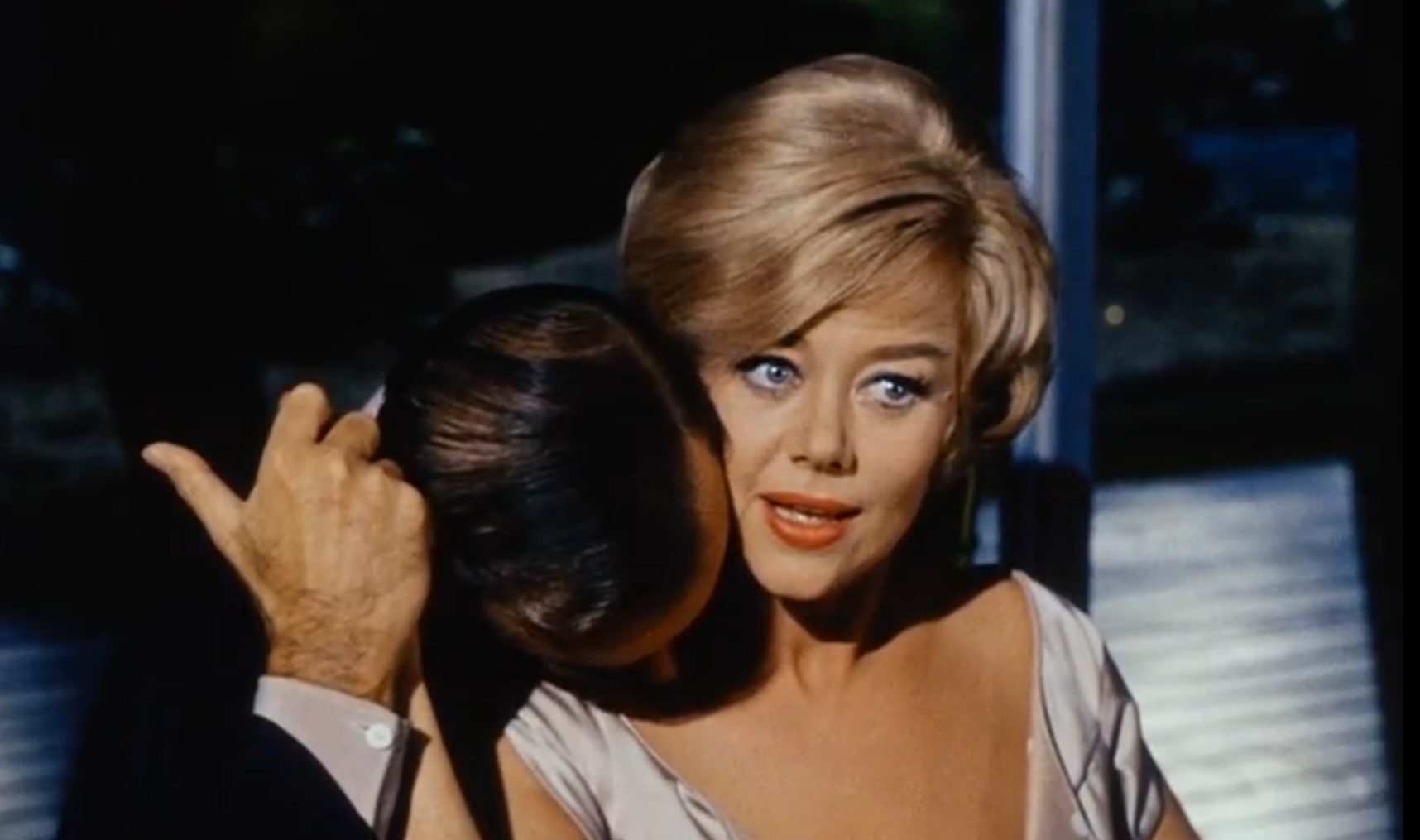
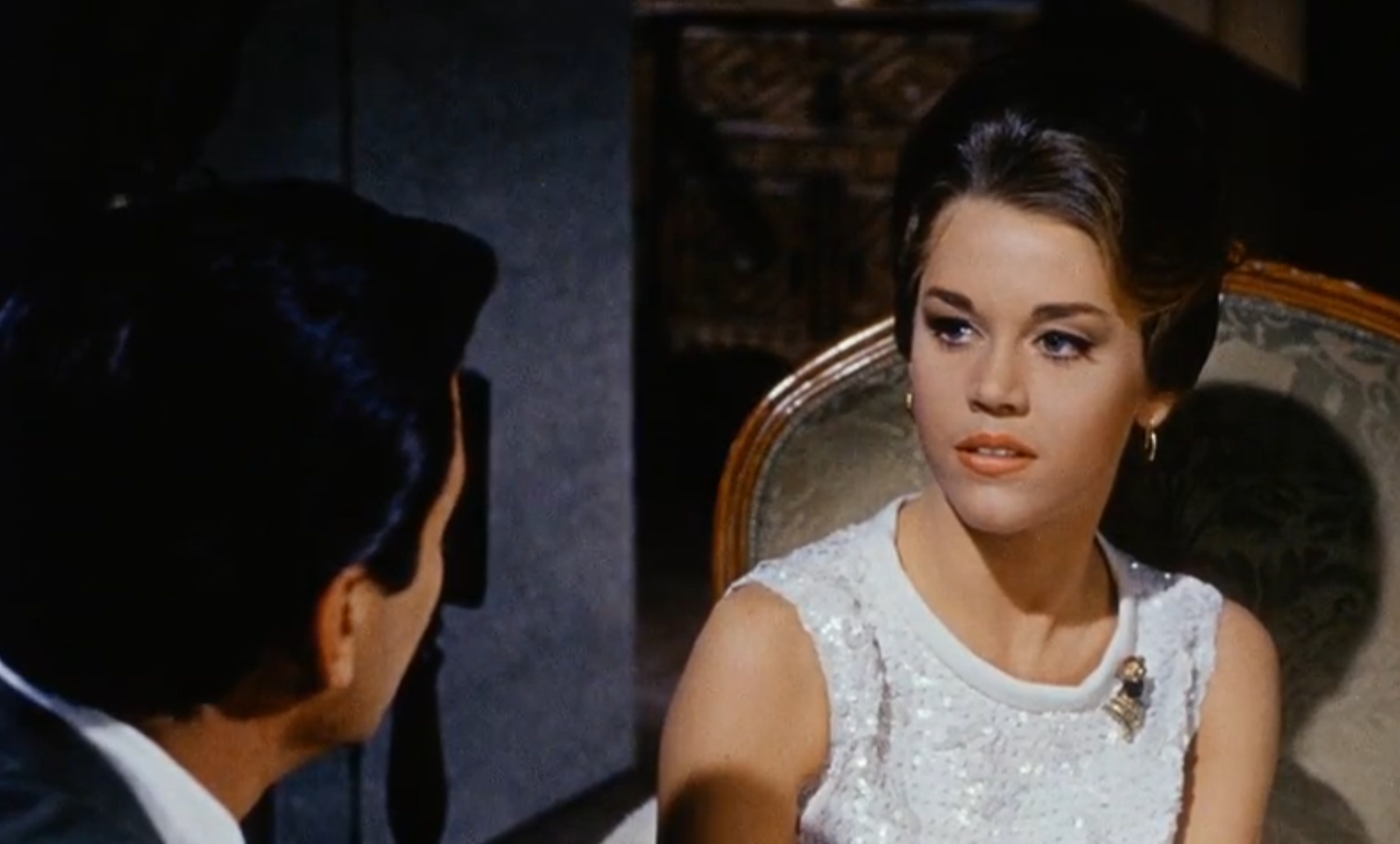
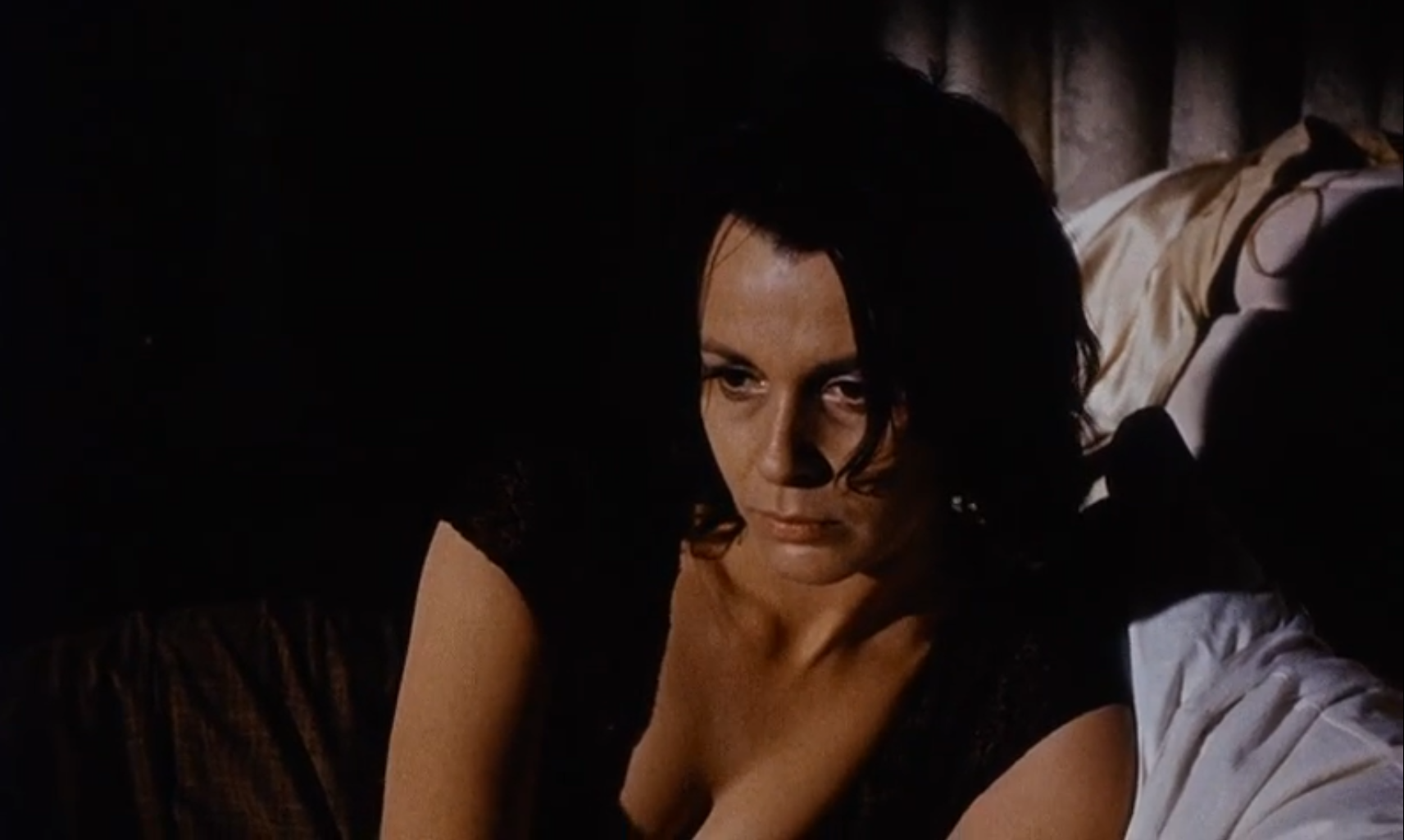
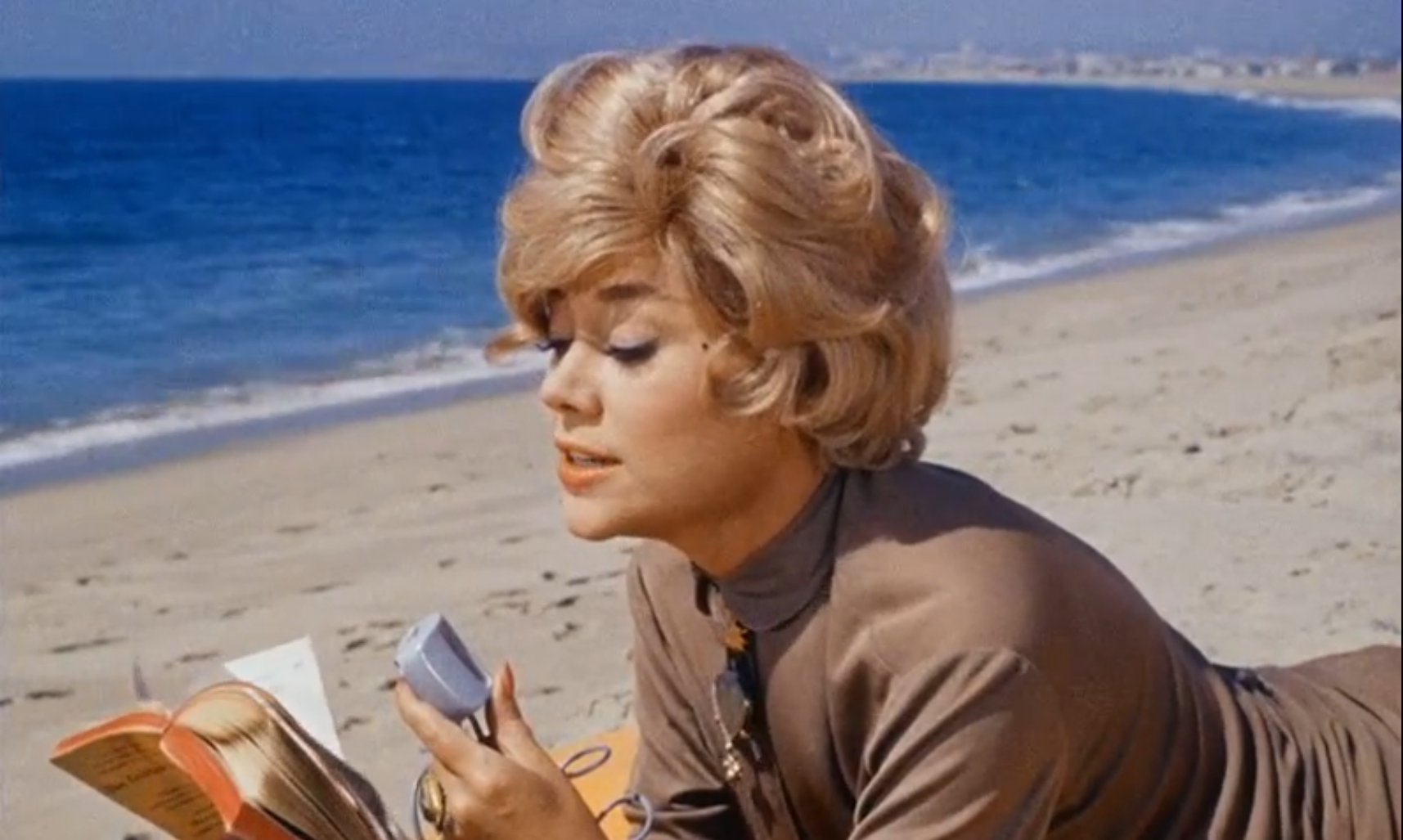
Lambasted by most reviewers as “unforgivably cheap and trashy”, this star-studded melodrama — based on a novel by Irving Wallace — is actually a tame, thinly veiled attempt to capitalize on the popularity of Dr. Kinsey’s infamous sex reports. Ironically, despite Kinsey’s valiant attempt to make “sex” a household term, the word itself is rarely used in this film; characters instead refer to sex as “the physical act”, as when interviewer Efren Zimbalist Jr. says to Fonda’s character: “You’re not the first woman to be afraid — to find the physical act repellent.” Unfortunately, director George Cukor’s choice to cover the gamut of possible sexual issues facing “average” American women makes it difficult for us to care very much about any one of them. Yet the actresses do their best with the screenplay’s limited material: young Jane Fonda isn’t nearly as bad here as most seem to think:

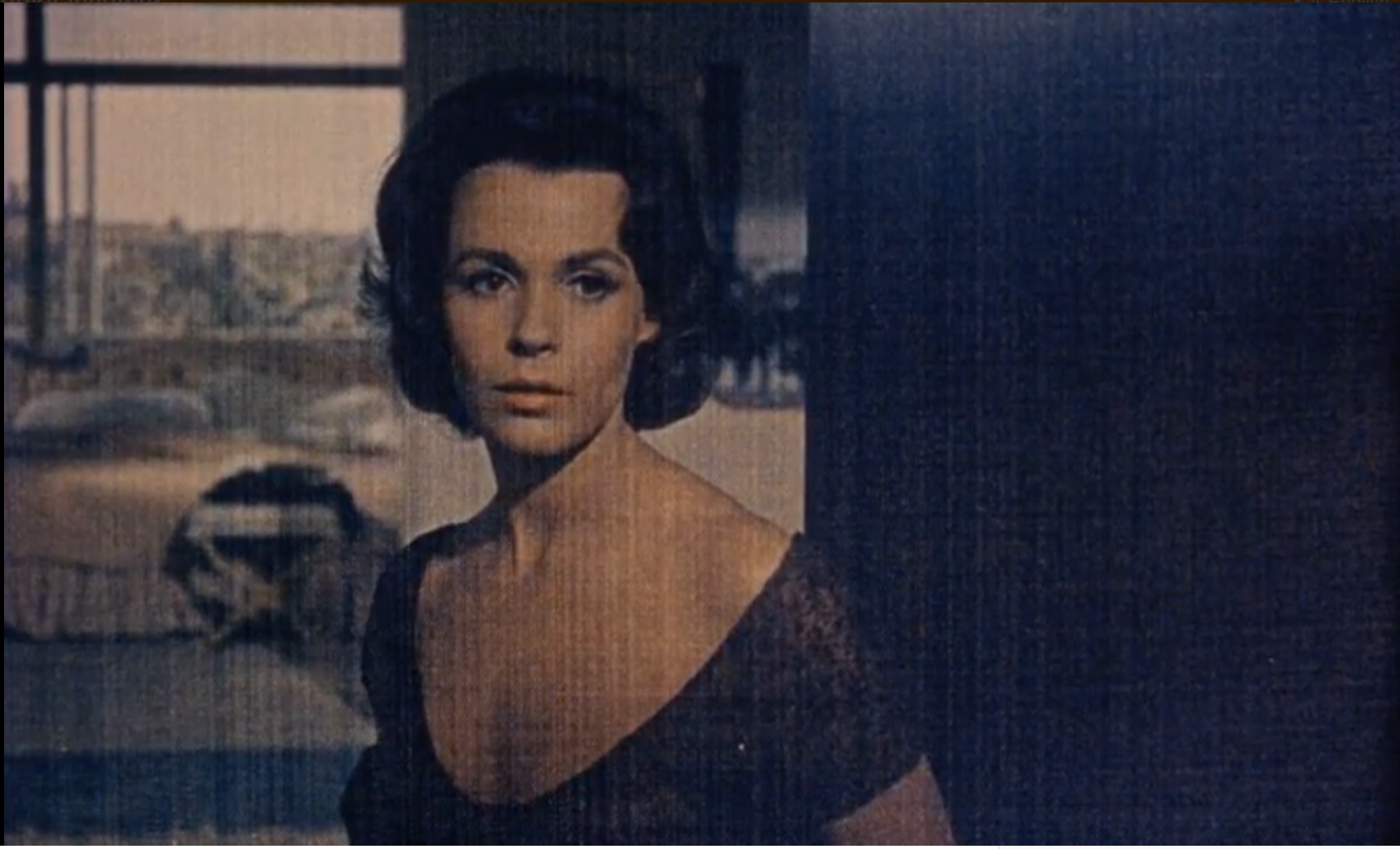
Claire Bloom (always the consummate actress) gives a nuanced performance with hints of unrevealed depth:

and Glynis Johns provides welcome comedic relief.

Winters’ performance alone is rather half-hearted, but this seems to be primarily a function of her under-written character.

Indeed, the film’s worst scenes are those when the women aren’t present — nearly every interaction between the researchers themselves, for instance, comes across as dry and stiffly written.

At first glance, The Chapman Report appears to be preaching heavy-handedly against sex surveys in general — since, rather than remaining a “neutral” collection of data, Dr. Chapman’s work (as predicted by a concerned “member of society”) stirs up deeply uncomfortable feelings in each of its leading participants. Yet this moral attitude gradually shifts, once we realize that participating in the interviews simply pushed these women to confront what was buried not-so-deeply inside of themselves all along. By the end — in typical mid-century fashion — the ideal of marriage in America prevails, with sex put in its “rightful” place as an act of love between man and wife.

Redeeming Qualities and Moments:

  • Jane Fonda’s unfairly maligned performance as the “frigid” widow
  • Claire Bloom as the sultry, suicidal divorcee
  • Glynis Johns in the film’s “comic relief” role

Must See?
No. This “infamously bad” melodrama now holds curiosity appeal, but is ultimately not must-see viewing.

Links:

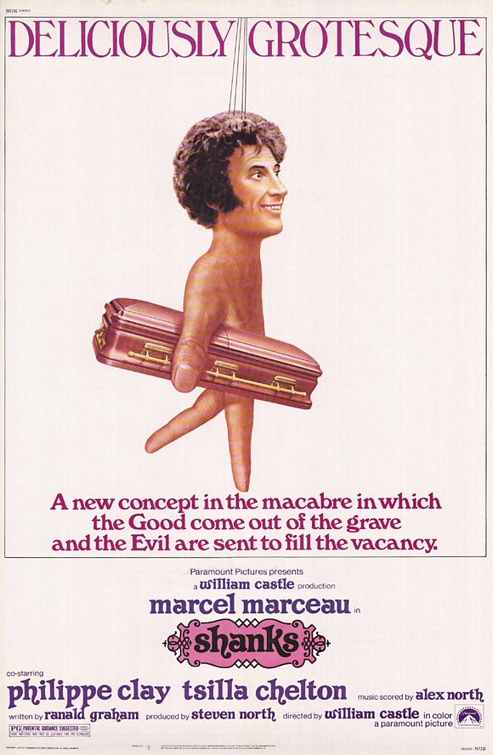
Shanks (1974)

Shanks (1974)

Synopsis:
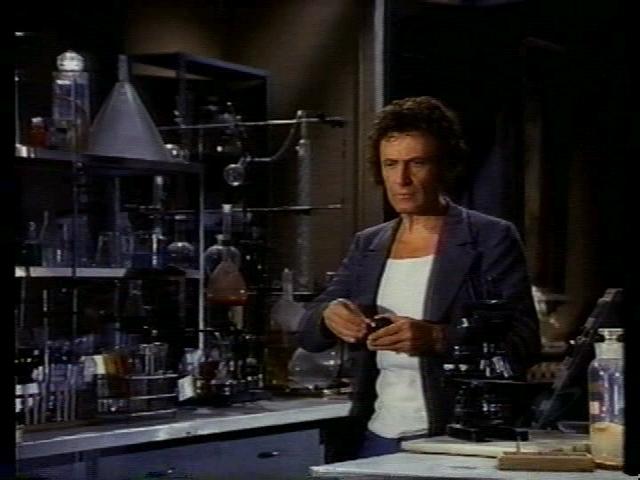
A mad scientist (Marcel Marceau) teaches a deaf-mute puppeteer named Malcolm Shanks (also Marceau) how to revive and manipulate the dead.

Genres, Themes, Actors, and Directors:

  • Deafness
  • Horror
  • Mad Doctors and Scientists
  • Puppets and Ventriloquism
  • William Castle Films
  • Zombies

Review:
This odd curio — William Castle’s final directorial effort, and Marcel Marceau’s lone starring role — is a disappointment with patches of brilliance. Marceau and his fellow mimes (Tsilla Chelton and Philippe Clay as his manipulative sister- and brother-in-law) aren’t very good as “straight” actors; but once their characters have died and are forced to perform as puppets, they’re simply wonderful. Unfortunately, the sloppy screenplay is a distraction, with poorly written characters, a weird friendship between Shanks and a young girl (Cindy Eilbacher), and the inexplicable arrival of a motorcycle gang in the final fourth of the film (which does nothing but show off Castle’s seeming desire to have “marionettes” fighting hoodlums). The concept behind Shanks is a clever one, but ultimately too limited in narrative scope; the story would have worked better as either a ballet or a short film. Watch for a cameo by Castle as the grocery store owner.

Redeeming Qualities and Moments:

  • Many cleverly choreographed and performed “live action” puppet sequences
  • A truly bizarre — albeit disappointingly executed — premise for a horror film

Must See?
Yes, simply for its historical relevance as Castle’s last movie and Marceau’s only leading role in a film.

Categories

  • Historically Relevant

Links:

13 Frightened Girls (1963)

13 Frightened Girls (1963)

“The cover’s unbelievable — it’s a natural, the dream of a lifetime. The daughter of a diplomat can go anywhere she wants!”

Synopsis:
The daughter (Kathy Dunn) of an American diplomat (Hugh Marlowe) acts as a spy in order to protect the job of her secret agent crush, Wally (Murray Hamilton).

Genres, Themes, Actors, and Directors:

  • Amateur Sleuths
  • Cold War
  • Hugh Marlowe Films
  • Spies
  • Teenagers
  • William Castle Films

Review:
Three years after directing the gimmicky horror flick 13 Ghosts (1960), schlockmeister William Castle returned to the selling power of this infamously unlucky number with his 13 Frightened Girls — strictly a marketing ploy, since the “13 girls” (beautiful daughters of diplomats from around the world) don’t make a meaningful appearance en masse until the final moments of the film, at which point they’re giddy rather than frightened. Instead, 13 Frightened Girls turns out to be an unrealistic yet fluffily enjoyable tale of a teenage Mata Hari — code name “Kitten” — who is conveniently able to discover one valuable state secret after the other through her friends.

Kathy Dunn — Louisa in the original Broadway version of “The Sound of Music” — is excellent in the lead role: her cheery good looks, blonde tresses, and all-around pluck are reminiscent of her more famous counterpart, Hayley Mills. Though she finds herself in a heap of trouble again and again — and some scenes are genuinely tense — the film’s cartoonish score fortunately reassures us that our heroine won’t ever suffer serious harm. If you’re able to accept the improbable details of the story (why are all the diplomats’ children teenage girls of the same age?); awful performances by the “girls” (most of their acting careers went nowhere after this film); and occasionally stilted dialogue (“Candy, you must go– There is much danger!”), you might find yourself guiltily enjoying this innocuous Cold War trifle.

Redeeming Qualities and Moments:

  • Kathy Dunn’s appealing, energetic performance in the lead role
  • A fun, if highly unrealistic, “Nancy Drew” premise

Must See?
No. It’s not clear why Peary includes this enjoyable yet minor title in the back of his book, other than its status as a film directed by William Castle.

Links: