Wuthering Heights (1954)
“A minute after you left, you were already back with me for good.”
|
Synopsis: |
|
Genres, Themes, Actors, and Directors:
Review: Redeeming Qualities and Moments:
Must See? Links: |
“A minute after you left, you were already back with me for good.”
|
Synopsis: |
|
Genres, Themes, Actors, and Directors:
Review: Redeeming Qualities and Moments:
Must See? Links: |
“What a perfect relationship: I can’t see him, he can’t see me!”
|
Synopsis: |
|
Genres, Themes, Actors, and Directors:
Response to Peary’s Review:
— is “overlong and not particularly smooth”; but he argues that “Holliday, even below her peak, is well worth watching”. He notes that “one interesting point is that Holliday’s ‘dumb blonde’ is much more stable than the men in the film — however, her support for them, including Martin, comes more out of her need to be a mother than a friend or lover”.
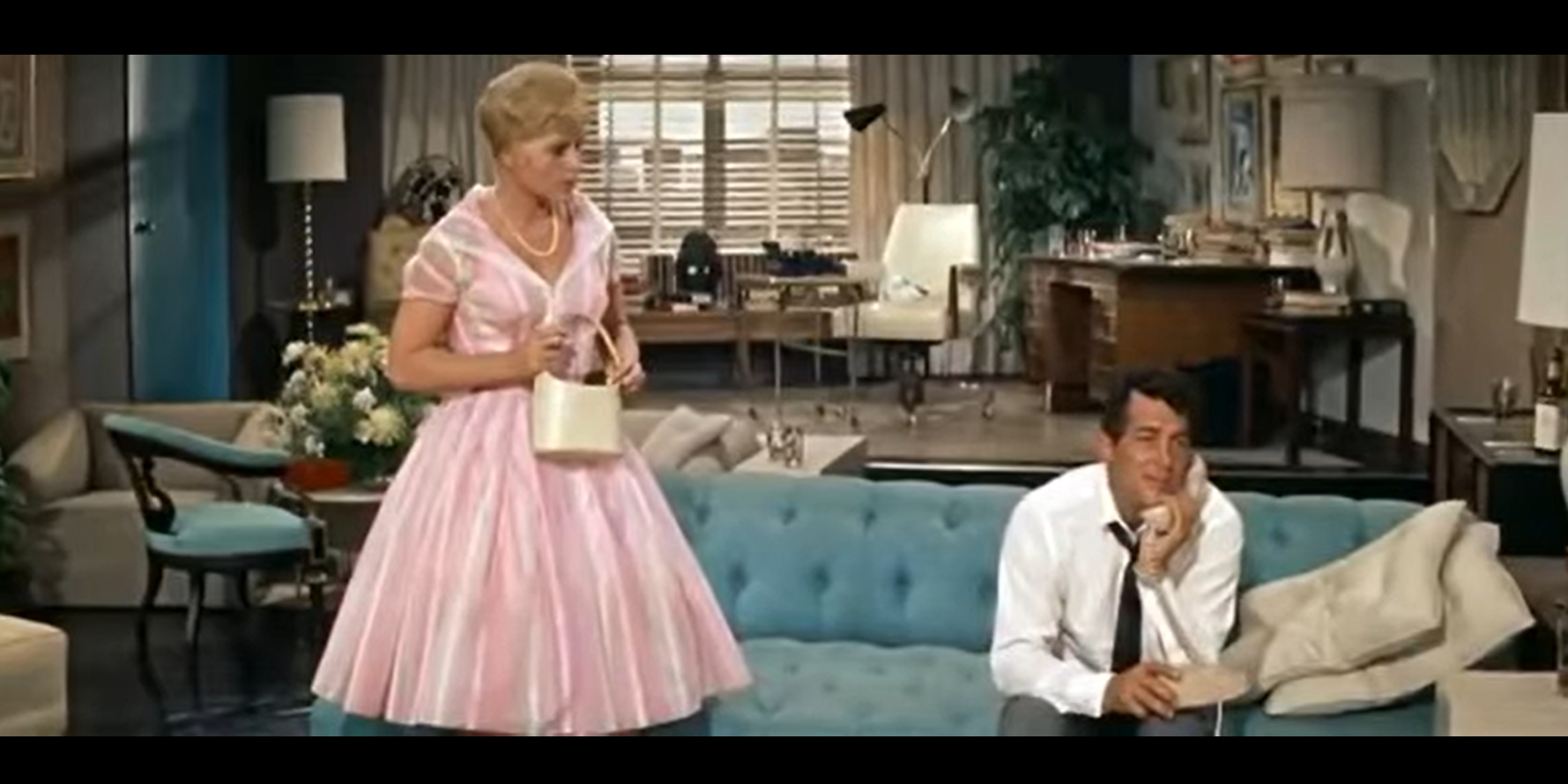
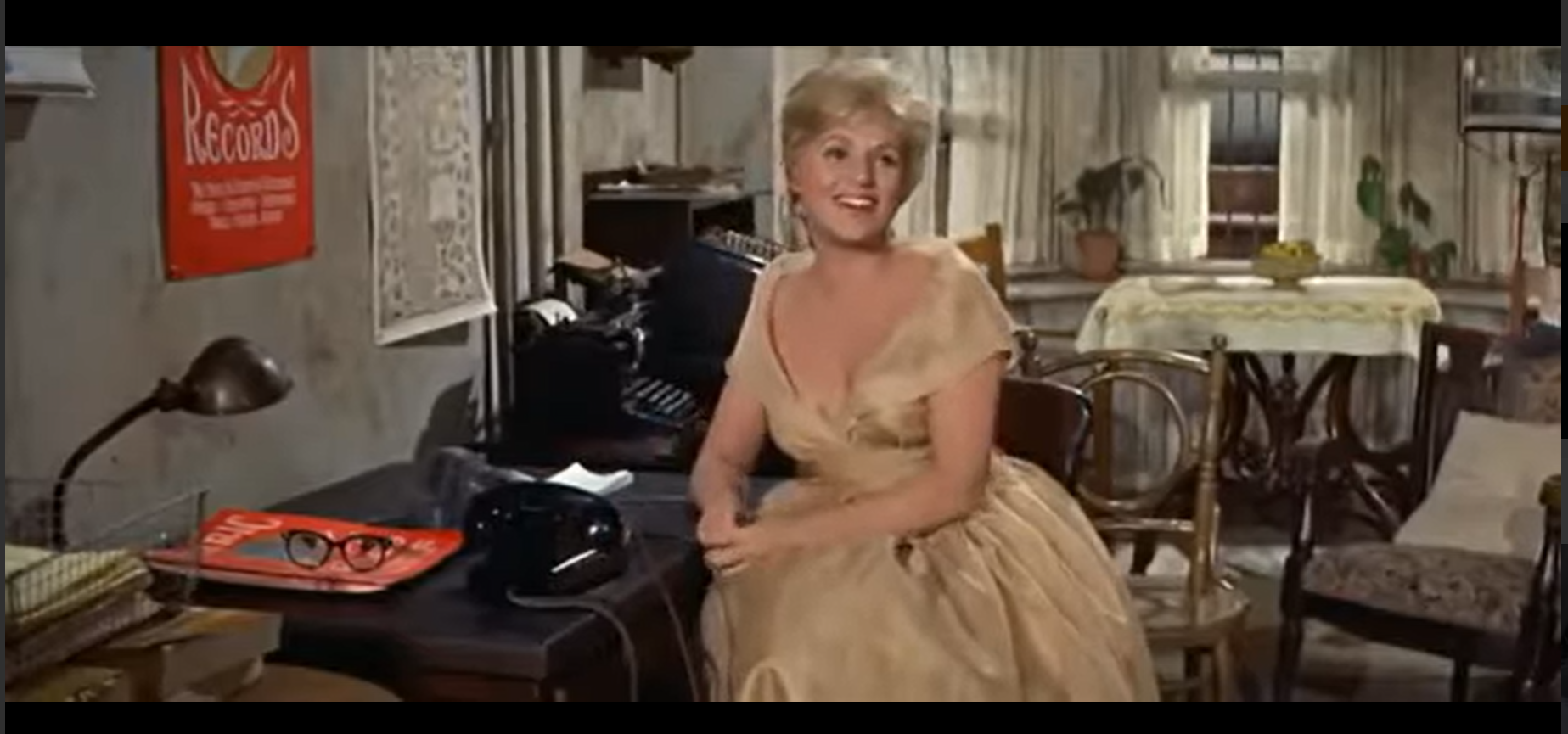
I’ll admit to finding this Vincente Minnelli-directed musical (with songs by Betty Comden, Adolph Green, and Jules Styne) one of the least compelling Holliday vehicles listed in Peary’s GFTFF; even Holliday’s naturally engaging presence can’t do much to elevate the storyline. The primary problem, as Peary hints, is that Martin and Holliday lack any real romantic tension: their “meet cute” (with Holliday crawling around Martin’s apartment after surreptitiously trying to wake him up for an important appointment) is poorly handled (why does he accept her presence so easily?), and Martin only seems to fall in love with Holliday because of her power as a muse. Meanwhile, the subplot involving thick-headed Clark’s pursuit of Holliday comes across as equally inane. This one is only must-see for diehard fans of Holliday and/or musicals. Redeeming Qualities and Moments:
Must See? Links: |
“There is no fence nor hedge around time that is gone. You can go back and have what you like of it, if you can remember.”
|
Synopsis: |
|
Genres, Themes, Actors, and Directors:
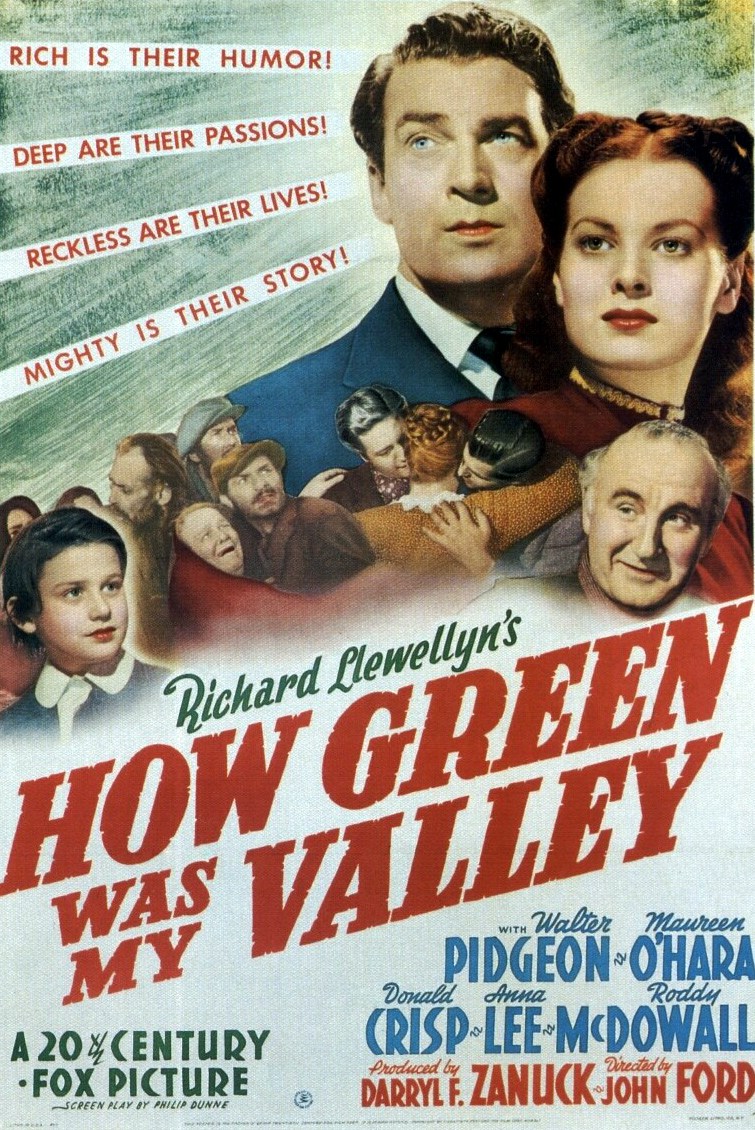
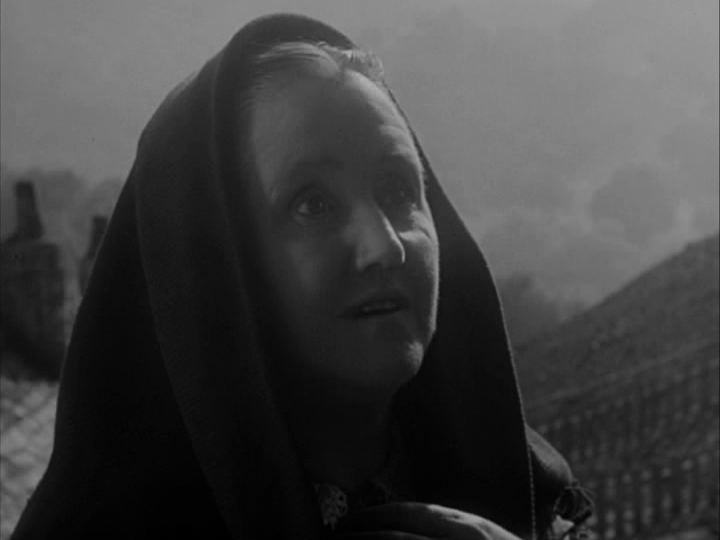
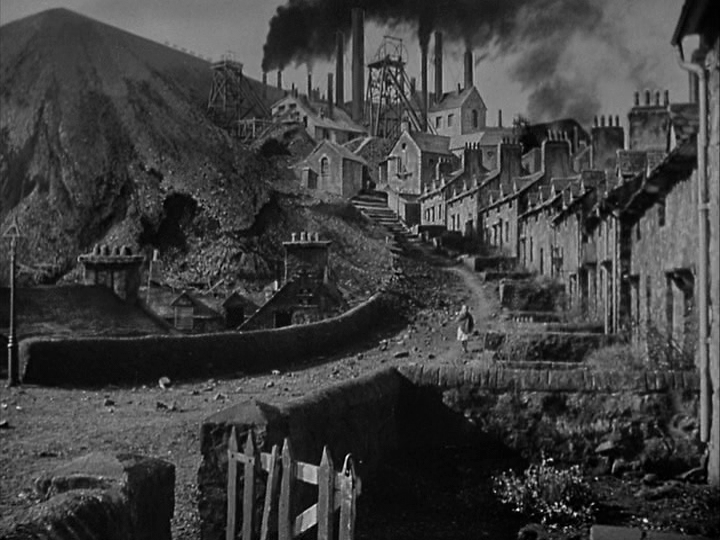
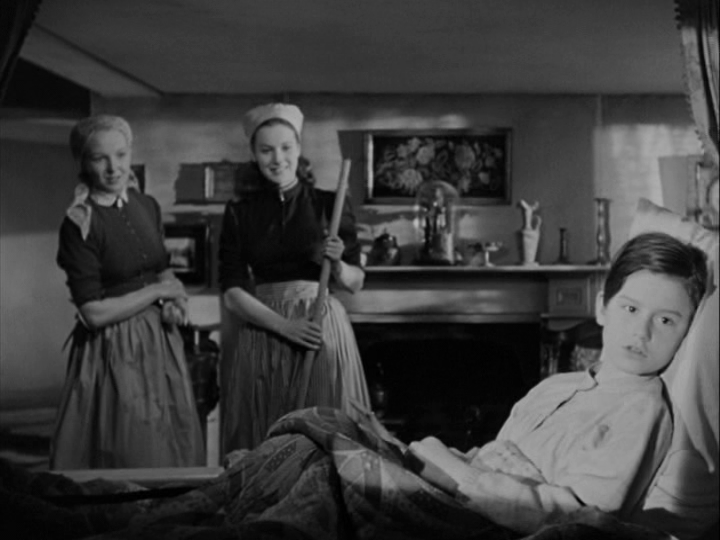
Review: As the film opens, the Morgans are represented in an idealized fashion: McDowall’s brothers are strapping, his sister gorgeous, his parents stern but loving, and coal mining is viewed as a beloved, honorable profession. However, it’s quickly revealed that life will present an unending series of challenges for this group of strong-minded individuals. Crisp and his sons don’t see eye-to-eye on issues of unionization; O’Hara is asked to set aside her love for Pidgeon in order to marry (unhappily) for money; and McDowall, while clearly gifted (and, as the youngest child, somewhat spoiled) suffers from a debilitating injury, and must ultimately make a difficult decision regarding his future livelihood. Indeed, for a nostalgic historical drama, HGWMV is filled with a surprising number of genuinely distressing scenes; it’s to Ford’s credit that HGWMV remains so lighthearted in overall spirit while simultaneously avoiding designation as a “feel good” film. It should also be noted that Ford mostly avoids his general tendency to incorporate comedic supporting actors for levity; the only instance of this is in the character of Dai Bando (Rhys Williams), McDowell’s boxing teacher, and his presence does indeed provide some welcome relief. The production values for HGWMV — shot in the hills of Malibu, given wartime climate in Europe — are uniformly stellar. Arthur C. Miller’s b&w cinematography is consistently stunning, and Ford frames each scene with his characteristically considerate eye. Scene after scene has lasting visual impact, from the image of Welsh coal miners singing as they wend their way to and from work, to the strategically choreographed wedding scene between O’Hara and her wealthy suitor (Marten Lamont), to crippled McDowell’s attempts to walk to Pidgeon on the hillside. The performances are equally top-notch: Crisp and Allgood are perfectly cast as the heads of the Morgan clan; O’Hara is stunning in her breakthrough role; and it’s difficult to imagine anyone but McDowell in the lead role (though a different actor should perhaps have been considered to play his character in the final scenes of the film, given how many formative years have supposedly passed, and how youthful McDowall still looks). But this is a minor complaint about a film that remains surprisingly poignant all these years later, despite its enduringly bad rap as the film that “stole” Citizen Kane‘s award. (And yes, Citizen Kane — one of my top-five favorite films — DID ultimately deserve the award. But that’s beside the point.) Redeeming Qualities and Moments:
Must See? Categories
(Listed in 1001 Movies You Must See Before You Die) Links: |
“You don’t seem to remember anything — and when you do, you remember it all wrong.”
|
Synopsis: |
|
Genres, Themes, Actors, and Directors:
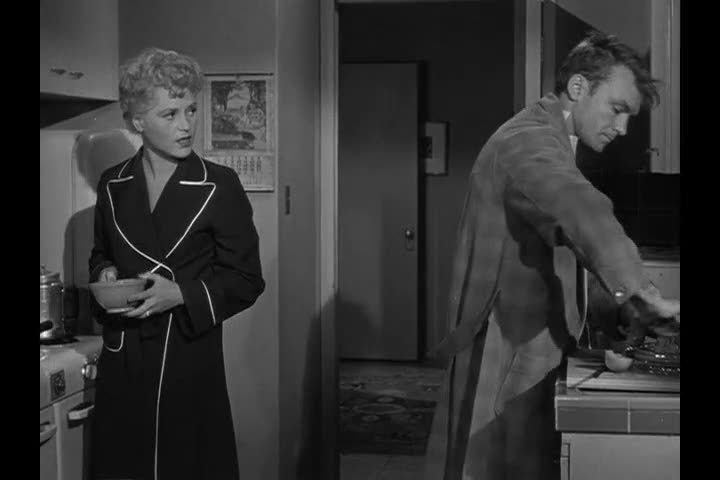
Response to Peary’s Review: I actually don’t find this scene particularly painful, given Holliday’s loving attempts to smooth the situation over: “Money you get that way doesn’t do you any good”, she reassures her depressed husband. It’s a later, tragic scene — one following on the heels of Holliday singing a delightful ditty (“Dolores”) while strumming a ukelele — that tears me up inside each time I think of it (though I won’t say more at risk of spoiling).
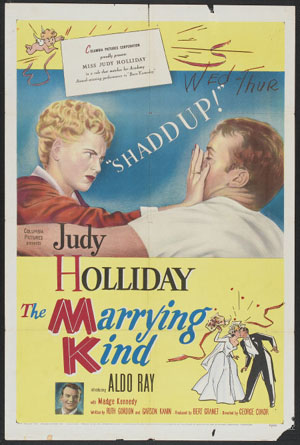
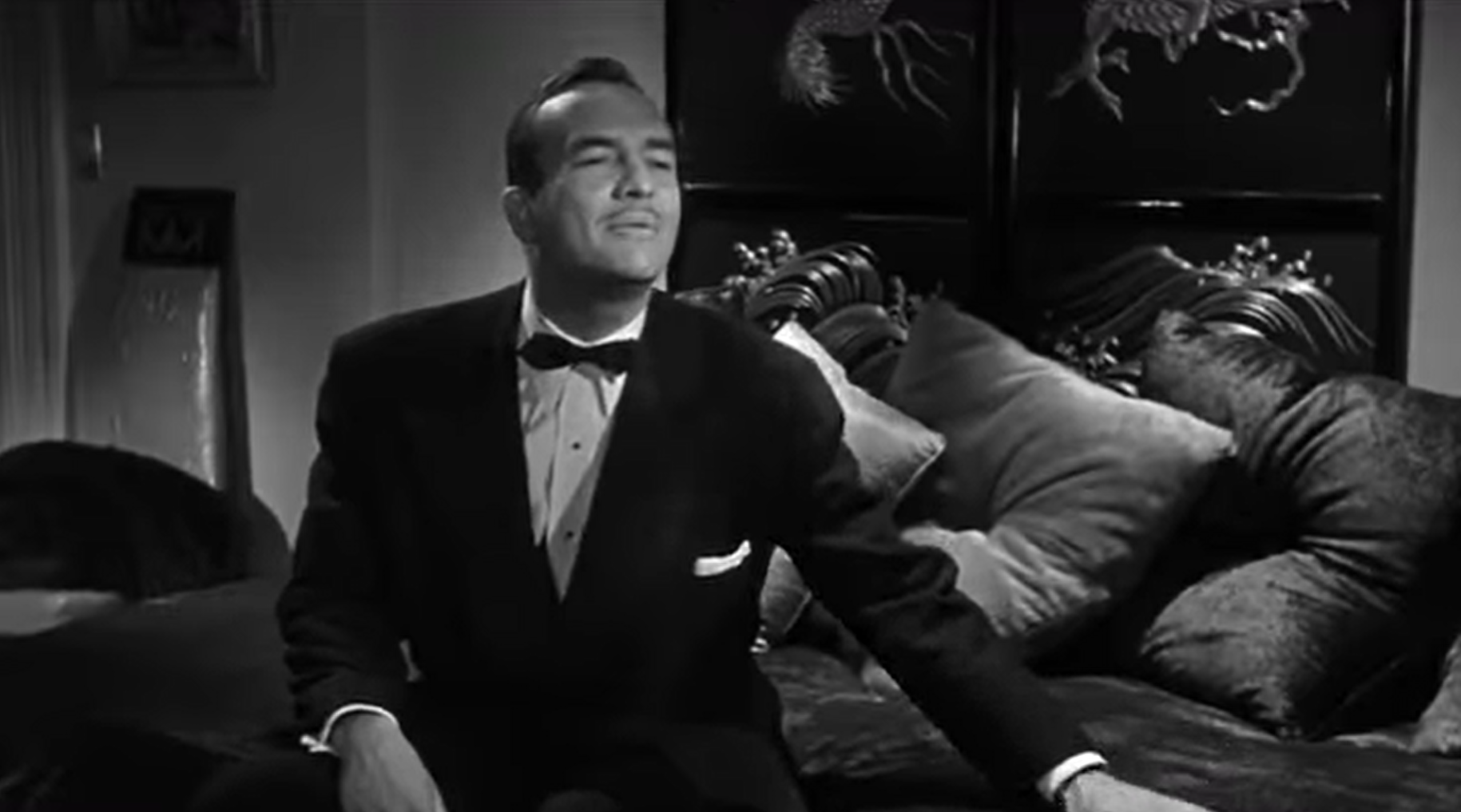
Indeed, Kanin and Gordon’s willingness to include truly hard-hitting scenes such as this one is part of what sets The Marrying Kind apart from other romantic comedies of its era. Equally innovative is their incorporation of voice-overs during flashback scenes, as we hear either Ray or Holliday telling their version of what happened while we simultaneously watch the “truth” unfold in front of us; it’s a remarkably effective strategy, shaking us out of our complacency as viewers. Hunky newcomer Aldo Ray was an interesting choice to play Holliday’s postman-husband, Chet. While he suits the bill nicely in many ways (he’s believable as a blue collar worker, and seems invested in his role), his acting lacks nuance at times. More than making up for this, however, is Holliday, who gives a typically stellar performance as Florence (a.k.a. Florrie). In Alternate Oscars, Peary names Holliday Best Actress of the Year, noting that the role “was designed as a showcase for her, to prove that she had enough versatility to play in all kinds of films and that she could play a real character”. He writes that “like other Holliday characters, Florence is funny and endearing, and has a singular logic about life, which completely befuddles everyone else, including Chet… She seeks happiness along a rocky road, stubbornly refusing to compromise her way of doing things”. Yet he points out that “she can be extremely aggravating, insensitive, unsupportive, unforgiving, even selfish” — in other words, she’s an equal partner in the dissolution of her marriage. Holliday’s performance makes this film must-see viewing at least once, though the film itself is also a hidden gem. Redeeming Qualities and Moments:
Must See? Categories
Links: |
“I’m Sean Thornton and I was born in that little cottage. I’m home, and home I’m going to stay.”
|
Synopsis: |
|
Genres, Themes, Actors, and Directors:
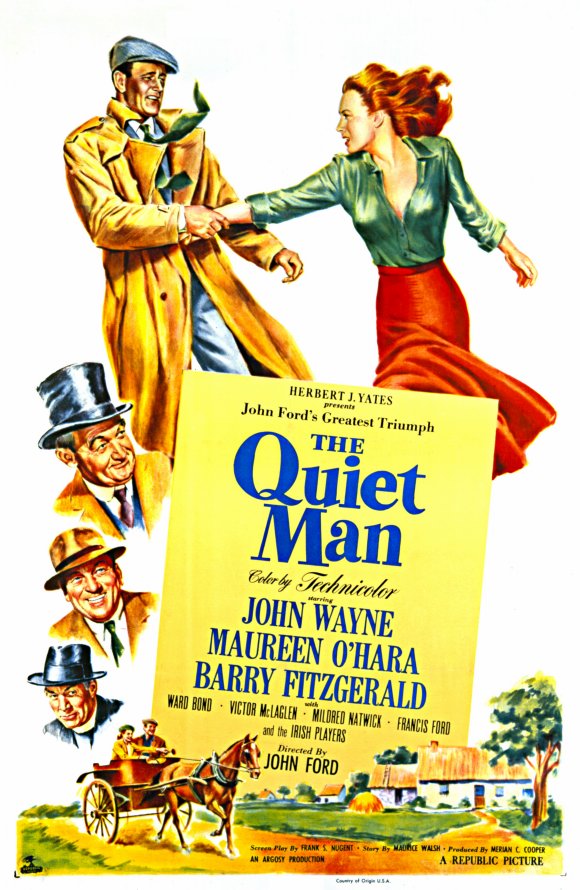
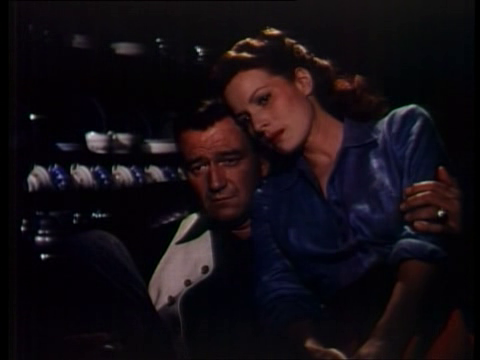
Response to Peary’s Review: In his GFTFF, Peary analyzes the film’s sexual politics, noting that Mary Kate’s refusal to “consummate [her] marriage if she doesn’t have the dowry” makes her like a “modern woman”, given that she “doesn’t want to enter a relationship unless it’s on equal terms”. He writes how refreshing it is that, despite their obvious challenges, Mary Kate and Sean ultimately both view each other with maturity, love, and respect. Mary Kate “decides to have sex with Sean although he has not come through for her”, given that she “senses that he has reasons for not challenging her brother, although she herself may not understand them”. Similarly, Sean “challenges Will for Mary Kate’s sake”, conceding “that her reasons for wanting the dowry are not trivial, although he doesn’t understand them”. Peary goes on to note that “there’s so much Irish humor in this film and so many quirky characters that one tends to overlook that just below the surface there is much seriousness, hurt, and guilt; both Sean and Mary Kate are tormented in real ways and we feel for them”. Finally, Peary points out that while “Ford was never known for ‘love scenes’… the silent passage in which Sean and O’Hara hold hands, race for shelter from the sudden rain, and then stop, clutch (he drapes his sweater over her), and kiss as the rain soaks through their clothing is incredibly sexy”; I agree. Wayne and O’Hara are both in top form here, and are indeed — as Peary notes — “one of the screen’s most romantic couples”. In Alternate Oscars, Peary names Wayne Best Actor of the Year for The Quiet Man, and provides a detailed analysis of why this performance was one of Wayne’s best and “most relaxed”. He notes that Sean “is Wayne’s gentlest character”, that he’s “formidable” but without McLaglen’s “need to be a bully or braggart”. As Peary writes, “He has such confidence in his masculinity that he is polite, emotional, sentimental, and sweet enough to plant roses”, never “hid[ing] his love from Mary Kate, [and] never assum[ing] a paternal or authoritarian stance with her”. Indeed, it’s easy to see why O’Hara would fall in love with him — though naturally, she’s equally appealing, for her own reasons. This romantic couple is one we truly enjoy watching on screen. Redeeming Qualities and Moments:
Must See? Categories
(Listed in 1001 Movies You Must See Before You Die) Links: |
“I’m no longer interested in beds.”
|
Synopsis: |
|
Genres, Themes, Actors, and Directors:
Review:
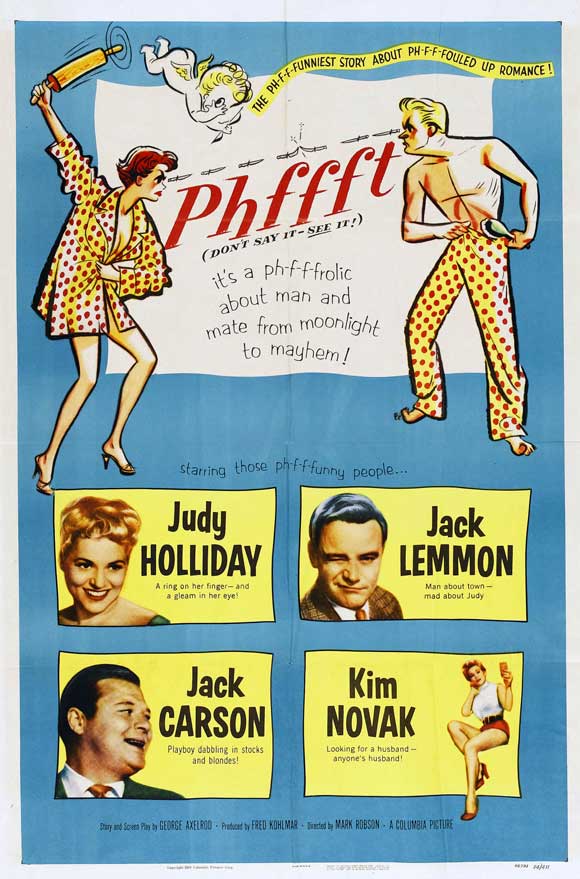
… but her scenes with the inimitable Jack Carson (as Lemmon’s playboy roommate) go in unexpected directions:
… and Lemmon’s dalliance with a sexy young student (Kim Novak, having fun channeling Marilyn Monroe):
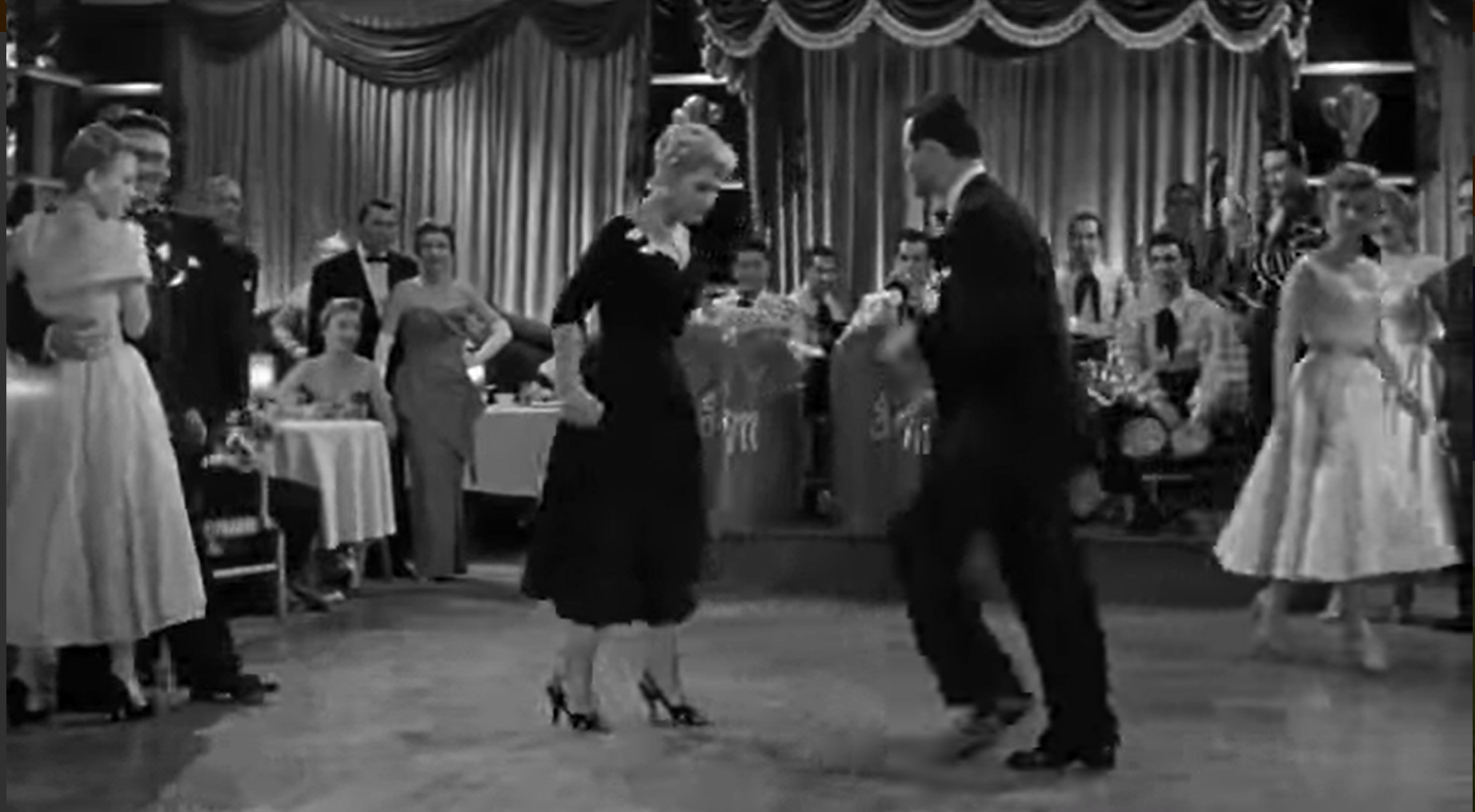
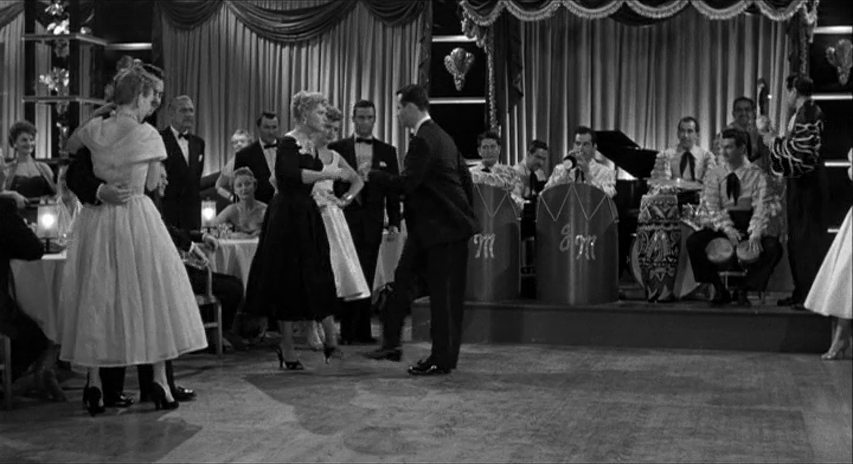
… is an interesting foreshadowing of his scenes as traumatized Oscar Madison interacting with the Pigeon sisters in The Odd Couple (1968). My favorite scenario, however, is a wordless one in which Holliday and Lemmon meet each other unexpectedly on the dance floor, flaunting their new moves (they’ve both taken dance lessons) while doing the mambo; one wonders how long it took them to coordinate their physical timing, and to learn to dance so perfectly awkwardly.
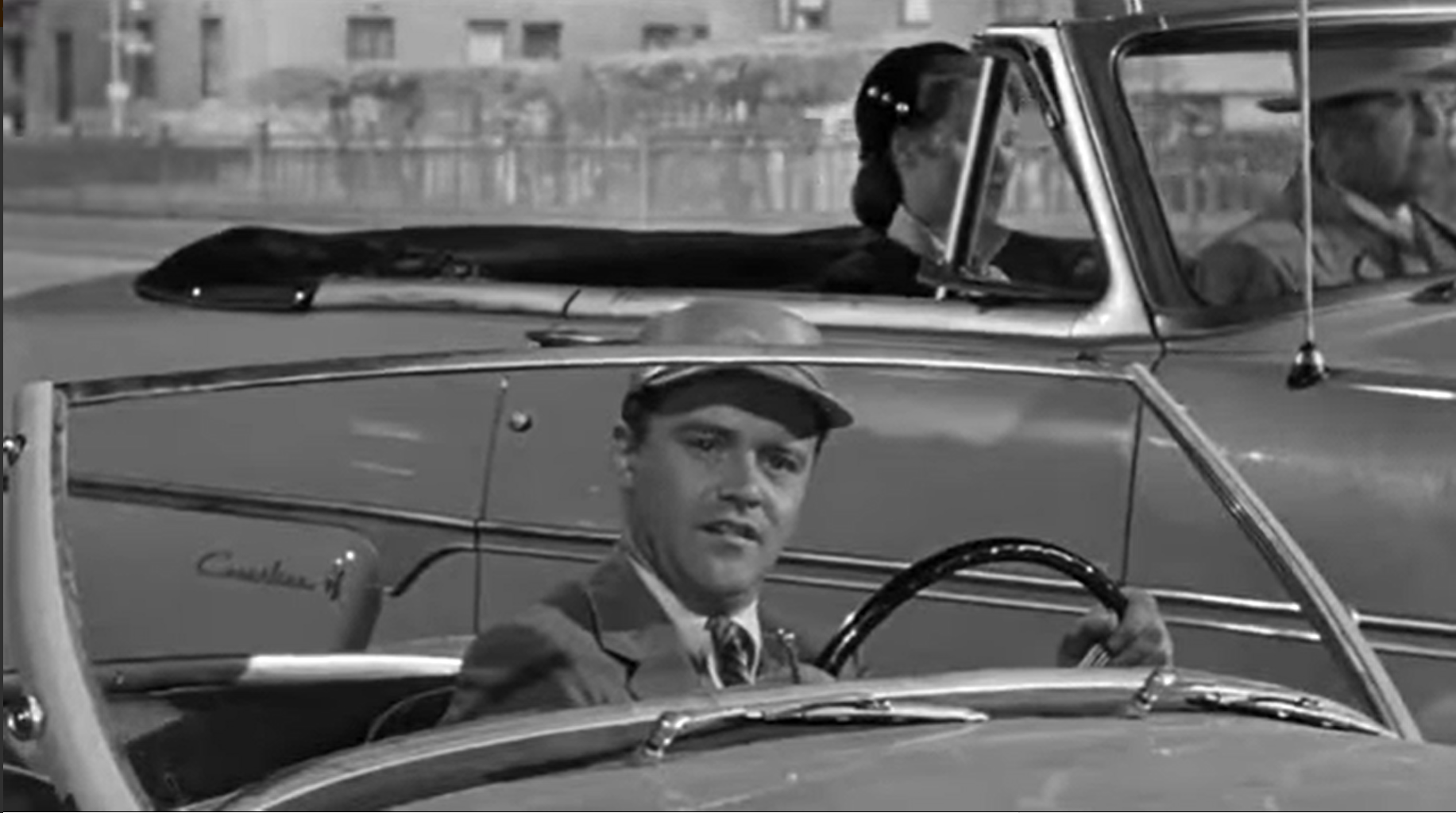
(All of this is made doubly impressive knowing that Holliday was sick as a dog throughout most of the shooting, and reported feeling like she was sleep-walking through many of her scenes.) Another fun scene has Lemmon — cautiously exercising his newly single muscles while driving a sporty car — attempting to flirt with a sexy woman on the sidewalk, only to have her turn around and reveal she’s Holliday.
Silly? Yes. Unrealistic? Sure. But Holliday and Lemmon are such gifted comedians that we can’t help enjoying their work together throughout this light-hearted romp. If only all divorces were so easily remedied. Redeeming Qualities and Moments:
Must See? Links: |
“We are like two trains, halted for a moment at the same station, but we are going in different directions. We can’t change our course, any more than we can hold back the dawn.”
|
Synopsis: |
|
Genres, Themes, Actors, and Directors:
Review:
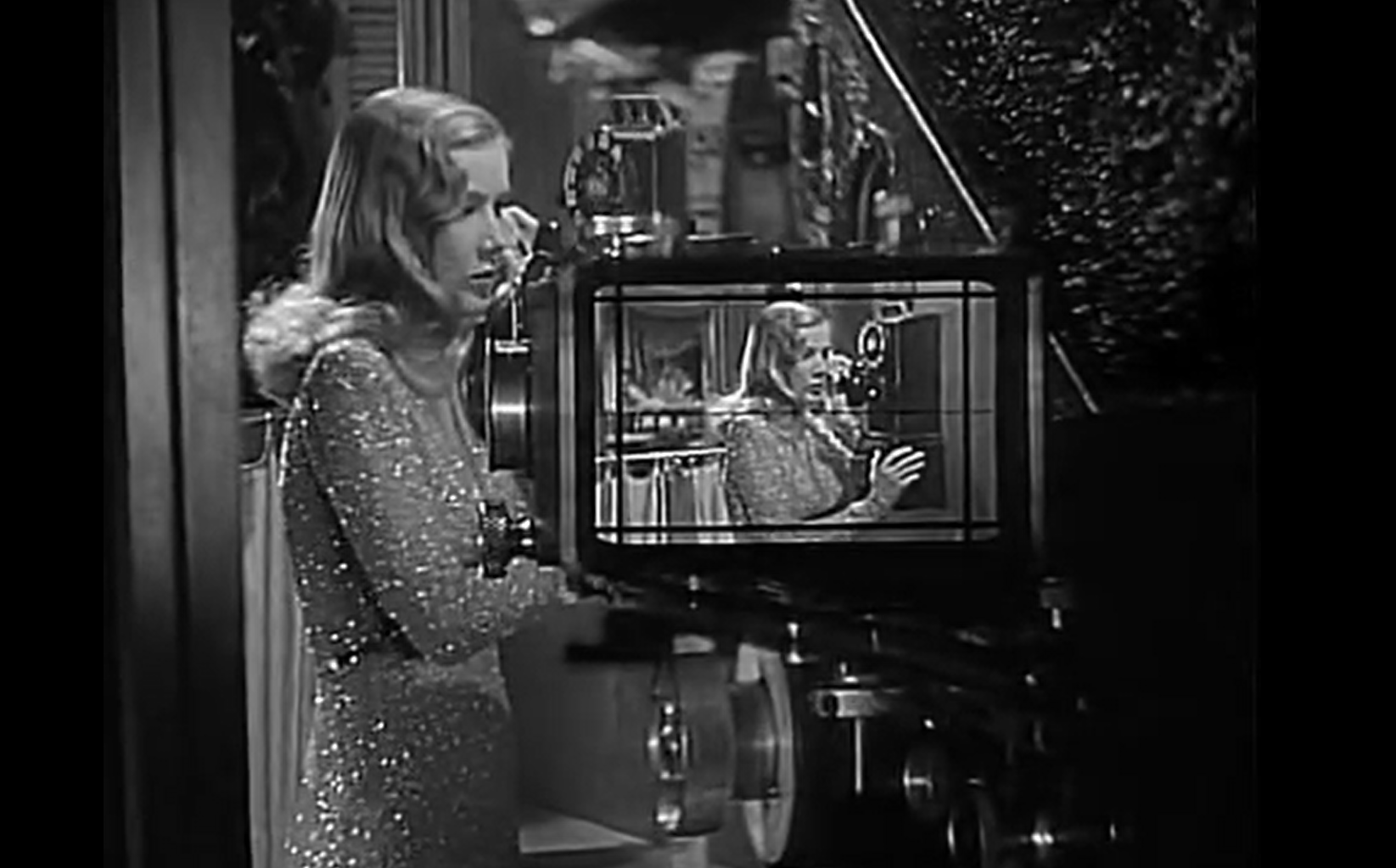
(And why in the world was beautiful de Havilland so consistently cast in “plain Jane” roles?) Regardless, Hold Back the Dawn is meant to function purely as Hollywood escapist fare, and to that end it works reasonably well. Despite knowing that de Havilland is being duped, we can’t help enjoying the blossoming of her romance with Boyer, given our conviction that Boyer will surely come to see the folly of his ways. The screenplay is nicely book-ended by Boyer’s character visiting a Hollywood studio and attempting to sell his story to a director (Leisen himself, in cameo); watch for fun cameos as well by Veronica Lake and Richard Webb, shown rehearsing a clip from Leisen’s I Wanted Wings (1941).
Redeeming Qualities and Moments:
Must See? Links: |
“Somebody better listen to somebody about Liberty Valance!”
|
Synopsis: |
|
Genres, Themes, Actors, and Directors:
Response to Peary’s Review: While I appreciate much about how …Valance is constructed, I’ll admit it’s not a personal favorite. Ford’s characteristic inclusion of comedic supporting characters — most specifically Andy Devine’s cowardly sheriff, presumably meant to provide some levity to the proceedings — simply feels forced and out of place here; and Stewart’s idealistic, stubborn “young” lawyer comes across as merely another iteration of his earlier starring roles for Frank Capra. With that said, I admire the craftsmanship of the script (based on a story by Dorothy M. Johnson), which manages to evoke a surprising amount of tension despite the fact that we can guess the truth behind the title from the beginning; however, it starts to bog down a bit towards the end, when Stewart goes head-to-head with Marvin in a contrived, Capra-esque town hall scene, and Wayne (“Think back, pilgrim.”) conveniently saves the day. Speaking of Marvin, he deserved the notoriety he gained for his key role here as Liberty Valance; he represents everything corrupt and vile about a lawless west in which might overtakes right every time. Redeeming Qualities and Moments:
Must See? Categories
(Listed in 1001 Movies You Must See Before You Die) Links: |
“Give me the child until he is seven and I will give you the man.”
|
Synopsis: |
|
Genres, Themes, Actors, and Directors:
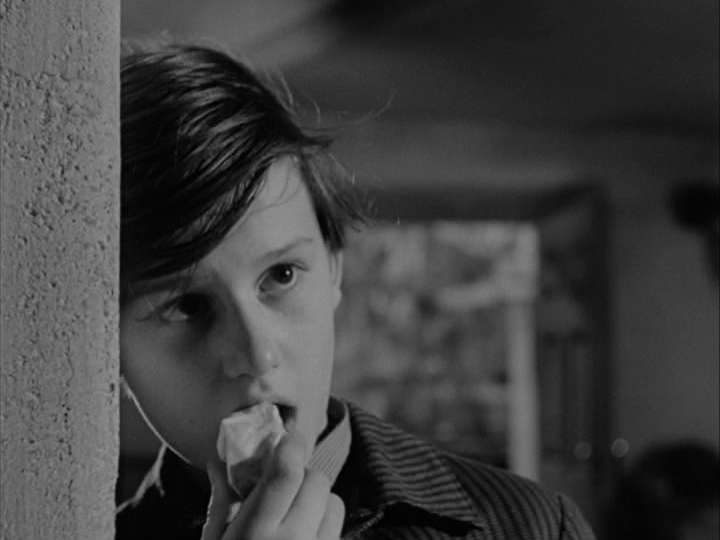
Response to Peary’s Review: Peary further asserts that in 28 Up, “the ‘successes’ we see are those subjects who have somehow achieved some freedom” — such as Nick, “the science researcher who… fled with his wife to Wisconsin” and Paul, “the bricklayer who is raising a family in Australia”; but he pities both Neil, the “near-genius who has dropped out altogether and lives on welfare” and “a cabbie [Tony] who is satisfied with [the] ‘freedom’ he gets from his job and his close family life, but whose poor education deprived him of what a person of his natural intelligence and warmth deserves”. He argues that the “picture leaves you sad”, but notes that “surely a documentary on any seven [sic] subjects taken over 20 [sic] years would have the same result because, let’s face it, kids look happier, cuter, and more enthusiastic than adults”. Interestingly, seeing the participants at later ages (specifically 56, as in the most recent entry) allows one to feel a little less melancholy about the inevitability of both heredity and class, as nearly every participant seems to have achieved some measure of happiness and contentment — whether through (re)marriage, grandchildren, and/or career. Few, for instance, would feel sorry at this point for Tony, who has actually achieved an enviable measure of financial success (he owns a second home in Spain); and while Neil has continued to struggle with his mental challenges, he’s been able to pursue his dream of a career in politics. Apted’s series has been rightfully praised over the years as an invaluable longitudinal document of humanity itself — regardless of its specificity in following Britons from a certain generation (and mostly white males, an initial “casting” choice Apted apparently regrets). While there’s nothing particularly innovative about the way in which Apted films his subjects, or the questions he asks them, his devotion in tracking down the participants like clockwork every seven years (or occasionally in between, as when he filmed a participant’s wedding) is an impressive feat in itself. (Apted is reportedly so devoted to this project that he’s said he hopes someone else will take up the mantle in the event of his own death; he’d like to follow the participants to the ends of their lives.) One also feels appreciation for the dedication of the participants, all but one of whom have chosen to reappear in most (or all) of the episodes; long before the advent of “reality T.V.”, they have graciously allowed at least portions of their lives to be on public display. Most film fanatics will eagerly await the next installment, and hope that all the “children” — Andrew, Bruce, Jackie, John, Lynn, Neil, Nick, Paul, Peter, Sue, Suzy, Symon, and Tony — will still be alive and well at the age of 63 and beyond. Note: Devoted followers will enjoy watching the entire “Up Series” (as the DVD set is referred to); others may simply want to watch 56 Up and work backwards as desired. Update (1/9/21): Rest in Peace, Michael Apted. Thank you for your contributions to cinema and our understanding of humanity. Redeeming Qualities and Moments:
Must See? Categories
Links: |
“There are some things a man just can’t run away from.”
|
Synopsis: |
|
Genres, Themes, Actors, and Directors:
Response to Peary’s Review: I believe this was the film that sparked my admiration for character-actress Claire Trevor as a teenage film fanatic; I recall learning that she considered herself merely a “working stiff” in Hollywood, trying to survive as a single mother, and that I felt intense admiration for her no-nonsense approach to a notoriously ego-filled field. She’s top-billed among the ensemble cast here, and deserves this status, given that she’s the emotional glue holding the stagecoach passengers together. When Platt suddenly gives birth along the journey (during the film’s most heartfelt extended sequence), Trevor selflessly cares for the newborn while Platt recovers; and when she’s given the unprecedented opportunity (by Wayne) to turn her life around, she cares more about his safety than her own future. Speaking of Wayne, he’s never been more charismatic or appealing than he is here (as Peary points out, “What an entrance Ford gave him!”); and the rest of the “marvelously cast” supporting players — Mitchell, Meek, Carradine, unknown Platt, and others — are excellent as well. I especially like how nearly every character in the story is given an arc of some kind, and allowed to emerge by the film’s end as someone much more nuanced than we could ever have expected. All this in a “mere” western! — one which, on the surface, seems like simply a conglomeration of conventional characters and situations, yet comes together so seamlessly it’s been studied as a masterwork by countless famed directors (most notably Orson Welles). Indeed, Stagecoach is an excellent example of a solid genre flick which simultaneously functions as a vehicle for deeper musings on human nature. To that end, Peary notes that “the coach serves as an arena for a clash between those who represent society” (the banker, the doctor, the married woman, and the salesman) and “those whom society considers outsiders” (the escaped prisoner, the prostitute, the gambler) — with nearly all the former passengers (the corrupt banker being a key exception) “won over” by the latter, and the driver and sheriff remaining “outside on the ride through the wilderness” (they represent “neutral figures who are part of civilization but have open minds towards those who don’t fit in”). While I’m not generally a fan of Ford’s characteristic incorporation of humor throughout his films (usually in the form of buffoonish characters), in this case he uses humor as a starting point for some surprisingly heartwarming revelations: Mitchell’s tippling doctor, for instance, eventually sobers up enough to deliver Platt’s baby (and to be of genuine help during the pivotal, excitingly directed Indian attack); Meek may initially stand “meekly” by while Mitchell downs his supply, but he ultimately proves he’s more than merely a spineless sap; Devine’s whimpering ninny of a stagecoach driver keeps going despite his own worst fears (which come true); etc. Regardless of whether one chooses to view this film as part of Ford’s broader oeuvre — or merely as an engaging flick in its own right — it remains a must-see classic, one worthy of multiple enjoyable visits. Note: Interestingly, at the time he directed Stagecoach, Ford — who’s largely remembered these days for helming countless classic westerns — hadn’t made one in 13 years, since the silent western Three Bad Men (1926). Redeeming Qualities and Moments:
Must See? (Listed in 1001 Movies You Must See Before You Die) Categories
Links: |