|
Genres, Themes, Actors, and Directors:
- Aliens
- Astronauts
- Richard Jaeckel Films
- Rivalry
- Science Fiction
Review:
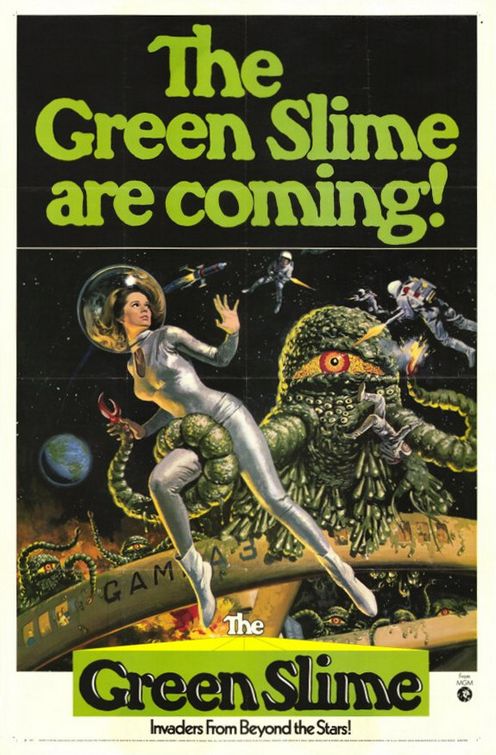
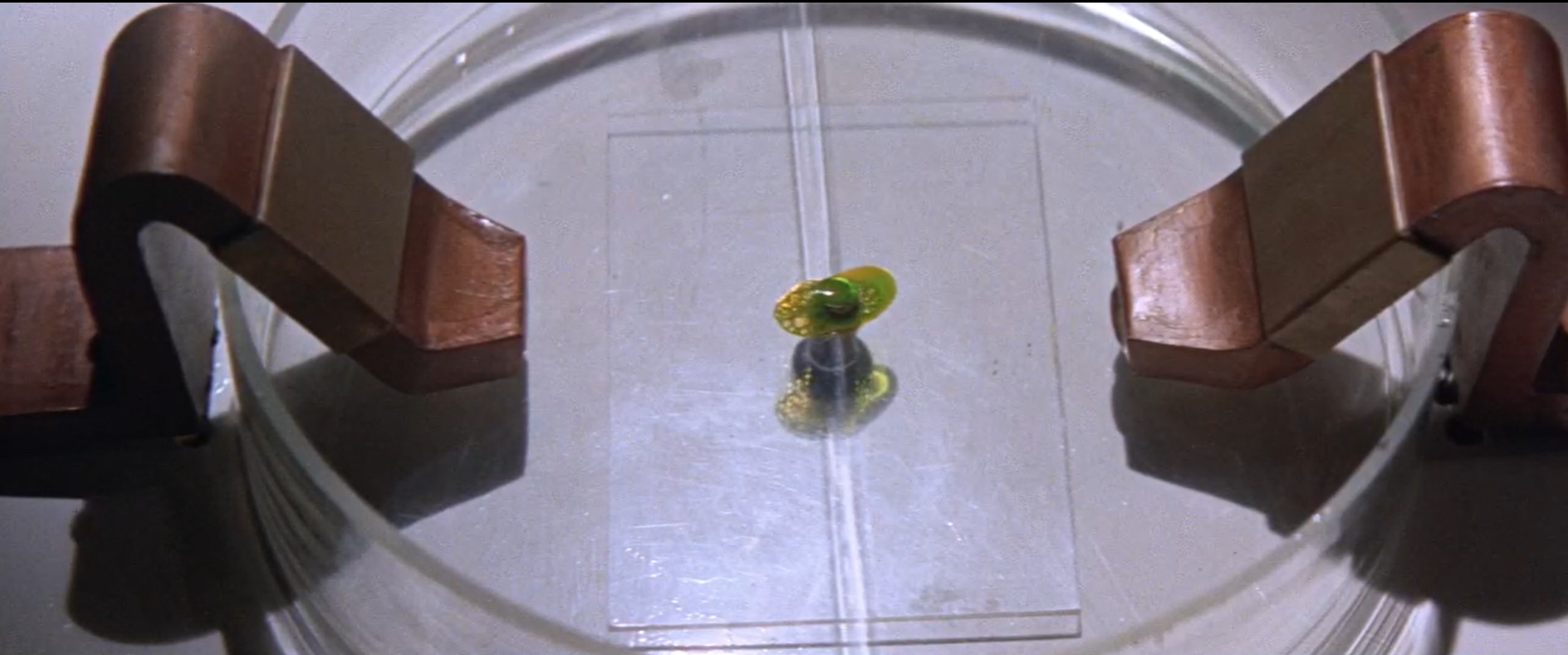
The fact that the first half-hour of this decidedly campy Japanese-American sci-fi thriller is competently executed makes the ensuing tedium that much more disappointing. Working on what was clearly an ultra-low budget, director Kinji Fukasaku and his crew try their best to evoke the fear and tension inherent in stopping a hurtling asteroid in mid-air, and Fukasaku ably transitions the story into its new central threat once the bubbly green slime makes its dastardly appearance:

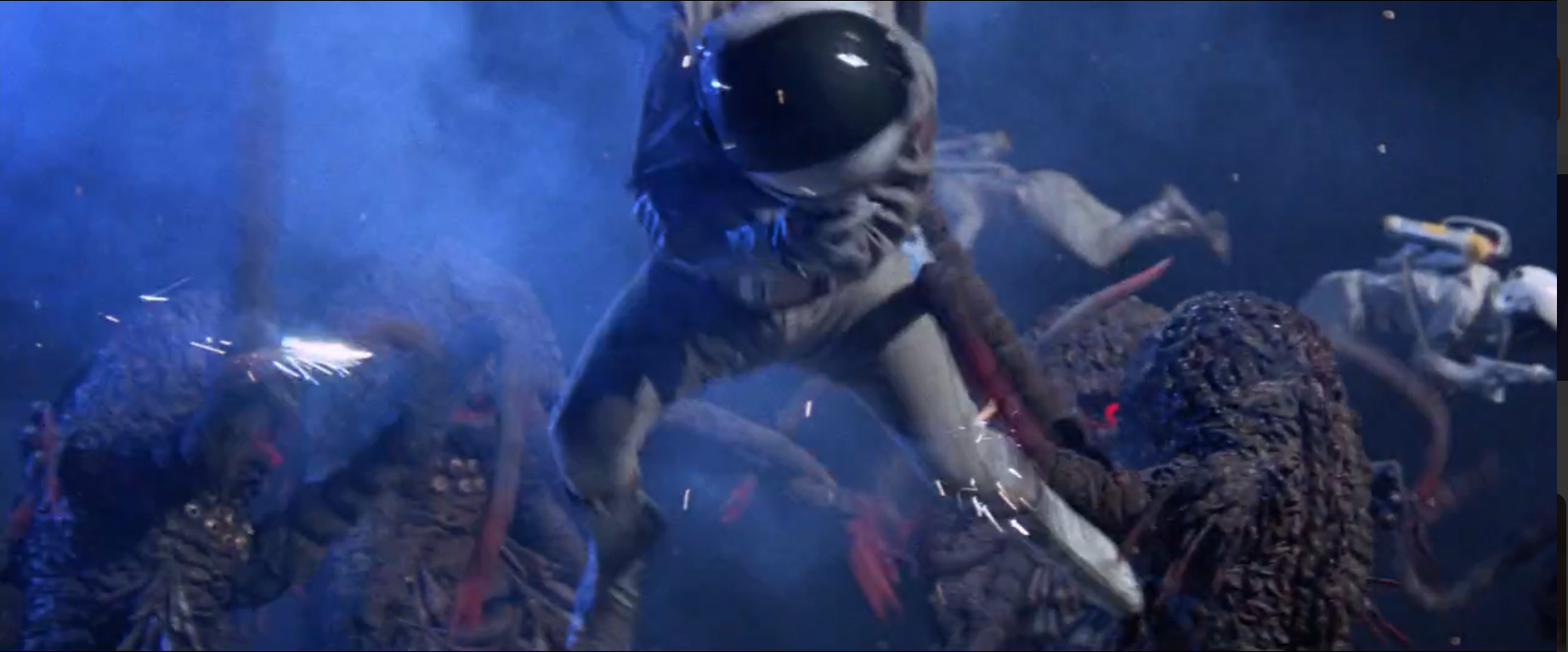
(Indeed, given recent threats of airborne pathogens and unknown substances beyond our control, the notion of killer slime isn’t really all that far-fetched.) Unfortunately, however, once the slime auto-magically morphs into humanoid creatures (likened by one reviewer to Sigmund the Sea Monster), all credibility is thrown out the window, and Camp becomes the operative word.

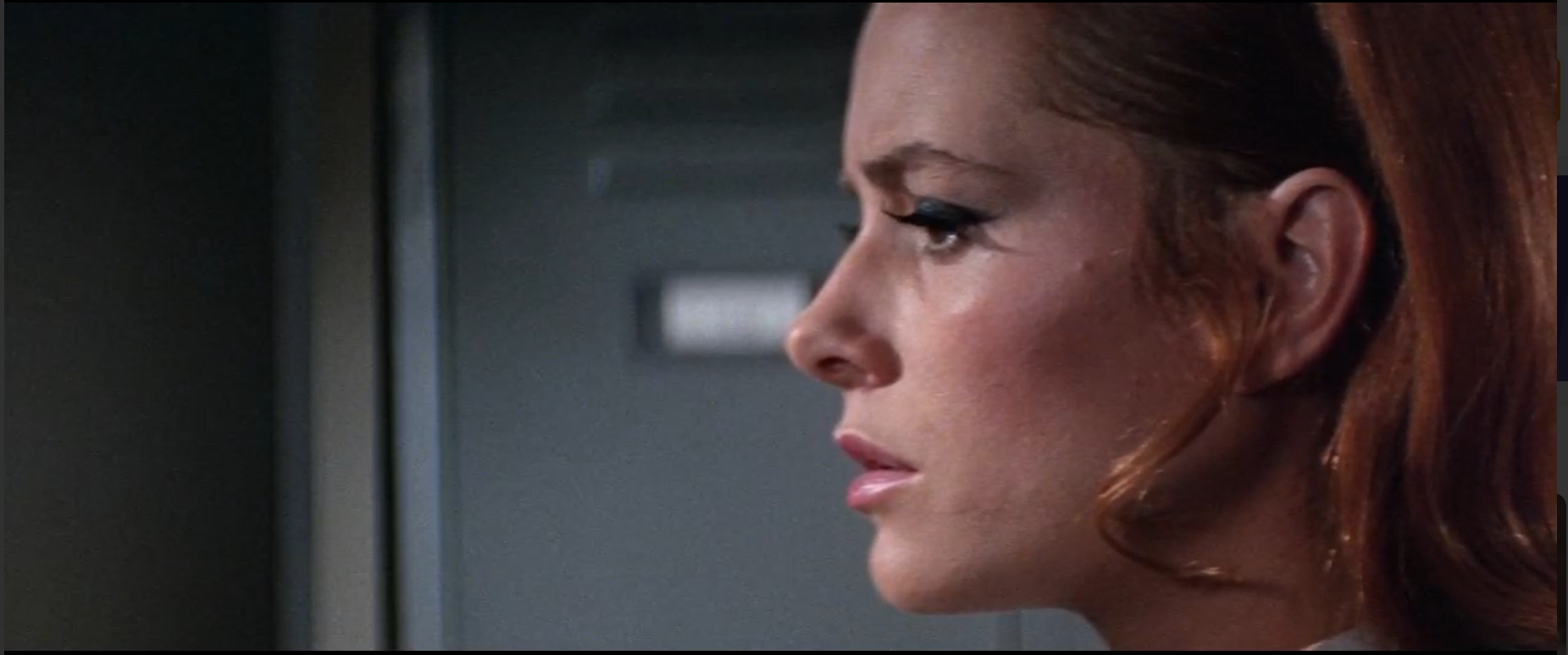
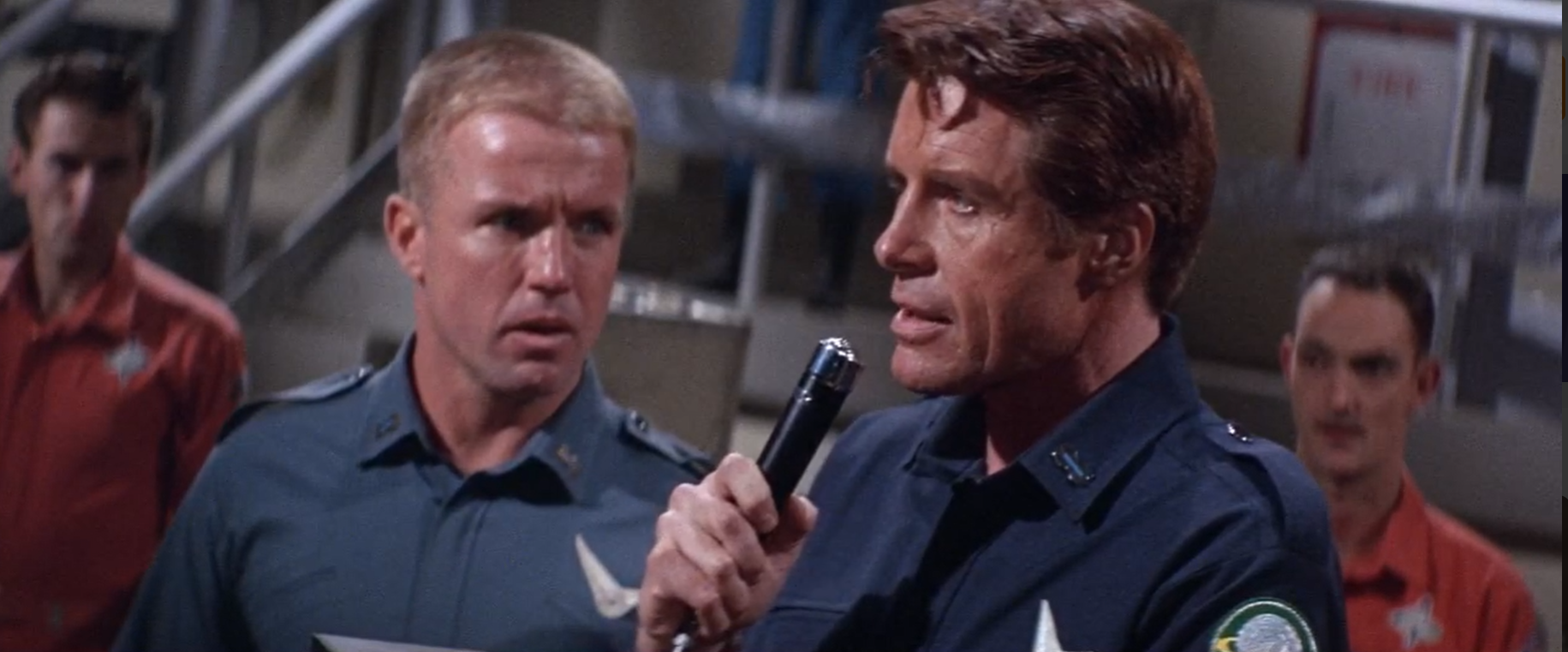
Making matters much worse is the insipid love triangle between Horton, Jaeckel, and the super-sexy (naturally) female doctor on board the ship (Luciana Palazzi, Fiona Volpe in 1965’s Thunderball).

This truly inane subplot distracts us from the real emergency on hand, instead shifting the central narrative thrust towards which commander can prove his “manly” worth in front of Palazzi, and thus win her hand. Who cares? To their credit, Jaeckel and Horton take their roles extremely seriously, never breaking concentration despite the fact that they’re basically doing battle with walking Halloween costumes — but even their best efforts can’t save this bomb from sinking.

Skip this one unless you’re a true fan of the genre.
Redeeming Qualities and Moments:
- Richard Jaeckel gamely making the best of his strictly B-level role

- The endearingly amateur “special effects” models

Must See?
No. While it holds some minor historical importance as the first Japanese-American cinematic collaboration — and as an early film by director Kinji Fukasaku (Battle Royale, 2000) — it’s really only must-see for fans of the genre. Listed as a Camp Classic in the back of Peary’s book.
Links:
|