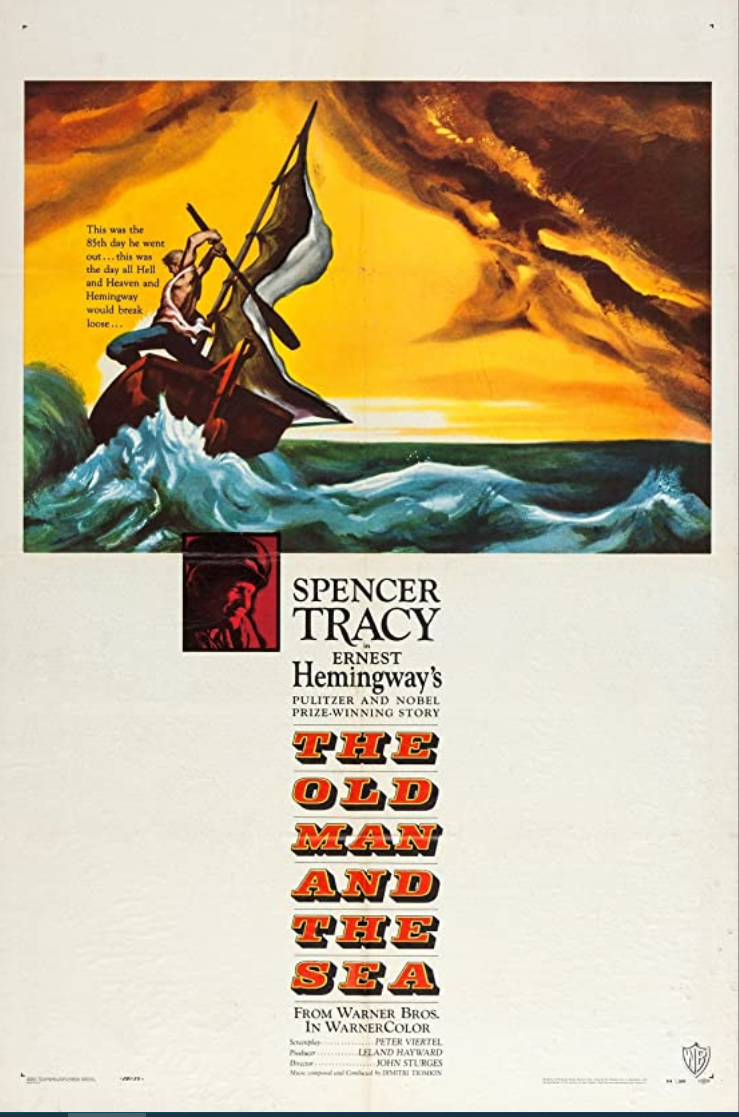
Old Man and the Sea, The (1958)

Old Man and the Sea, The (1958)

“Never have I had such a strong fish – or one that acted so strangely.”

Synopsis:
An aging Cuban fisherman (Spencer Tracy) attempts to score the biggest fish of his life on a lengthy trip at sea.

Genres, Themes, Actors, and Directors:

  • At Sea
  • Character Studies
  • Fishermen
  • John Sturges Films
  • Spencer Tracy Films

Review:
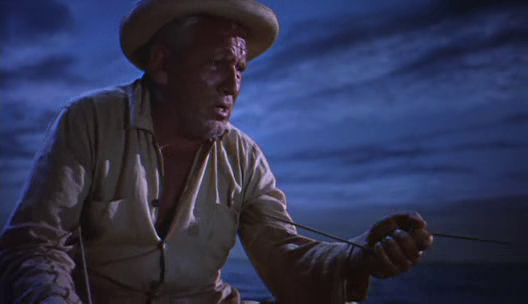
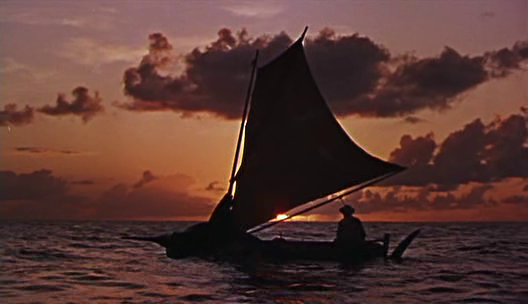
According to TCM’s article, this adaptation of Ernest Hemingway’s 1952 Pulitzer Prize-winning novella — “two years in development and two years in production” — was an expensive challenge to bring to the screen. Indeed, one wonders about the wisdom in attempting to turn a one-character allegory into a cinematic tale — and this skepticism is borne out in the movie, which relies far too heavily on voice-over narration (by Tracy himself), displays inconsistent footage of Tracy’s lengthy battle with a huge marlin (scenes done in a sound stage are pretty obvious), and features a fairly wooden performance from the only other talking character in the film (Felipe Pazos as “The Boy”). With that said, Oscar-nominated Tracy is fine in the central role, and James Wong Howe’s color cinematography is often luminous — so at least it’s a beautiful and (mostly) well-acted venture.

Redeeming Qualities and Moments:

  • Spencer Tracy as the Old Man
  • Beautiful on-location cinematography

Must See?
No; this one is only must-see for diehard Hemingway or Tracy fans. Listed as a film with Historical Importance in the back of Peary’s book.

Links:

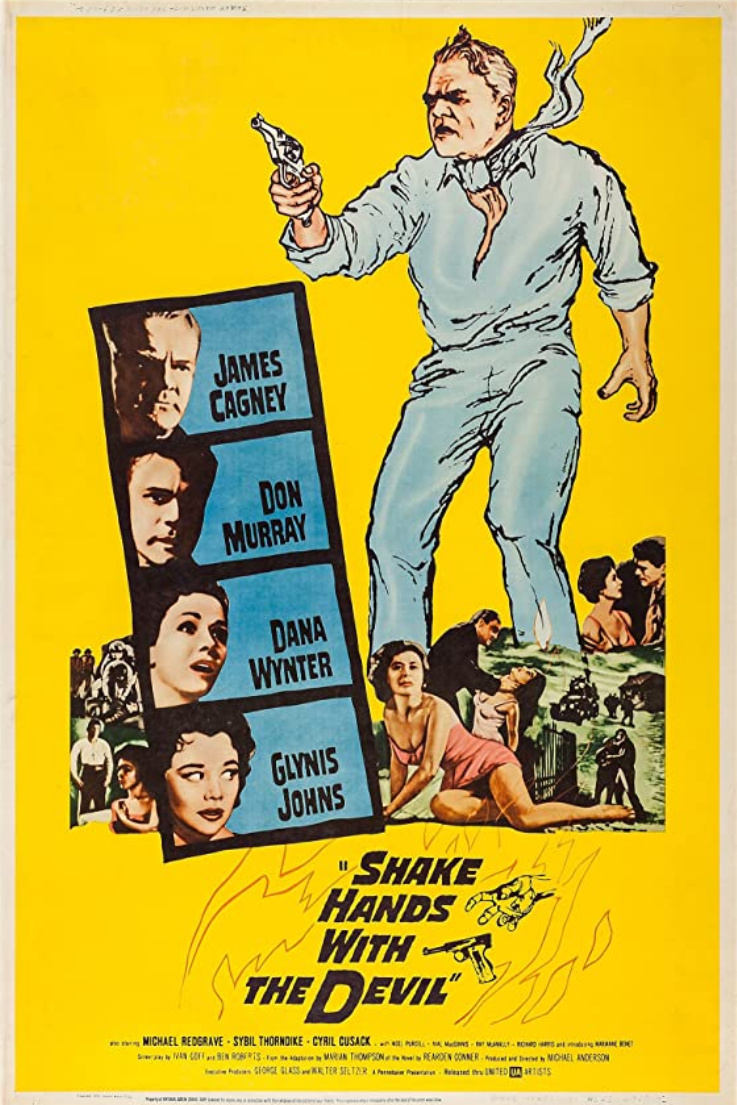
Shake Hands With the Devil (1959)

Shake Hands With the Devil (1959)

“In time you’ll come to believe as we do. We’re not fighting faces — we’re fighting uniforms, row after row, standing between Ireland and freedom; remember that.”

Synopsis:
An Irish-American medical student (Don Murray) studying in 1921 Dublin becomes unwittingly involved with members of the IRA, which turns out to be led by one of his professors (James Cagney). Tensions become even higher when Cagney discovers that a sympathetic barmaid (Glynis Johns) has been consorting with his men, and when the daughter (Dana Wynter) of a British advisor is kidnapped in retaliation for the imprisonment of a local noblewoman (Sybil Thorndike).

Genres, Themes, Actors, and Directors:

  • Don Murray Films
  • Glynis Johns Films
  • Historical Drama
  • Ireland
  • James Cagney Films
  • Kidnapping
  • Michael Redgrave Films
  • Niall MacGinnis Films
  • Revolutionaries

Review:
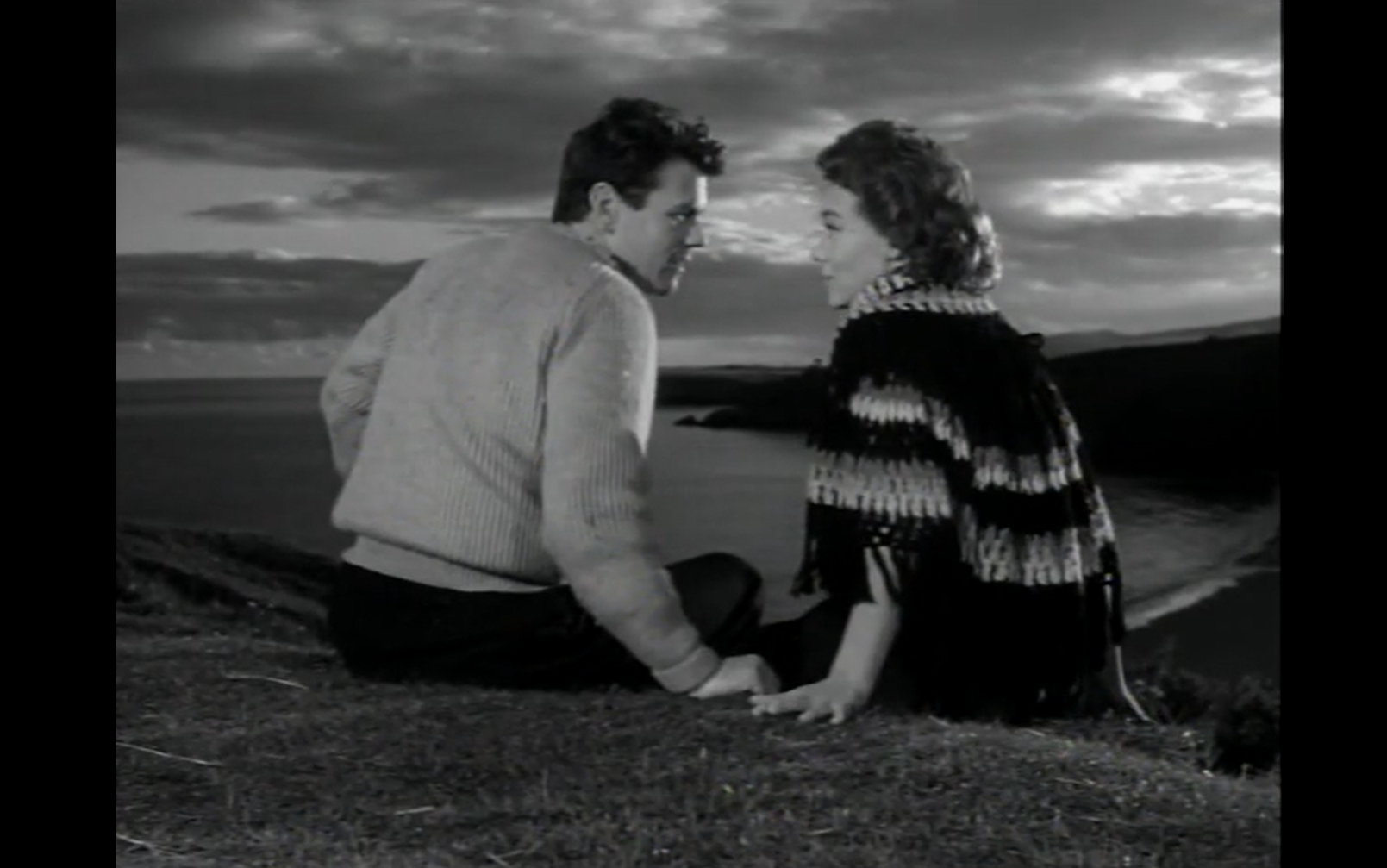
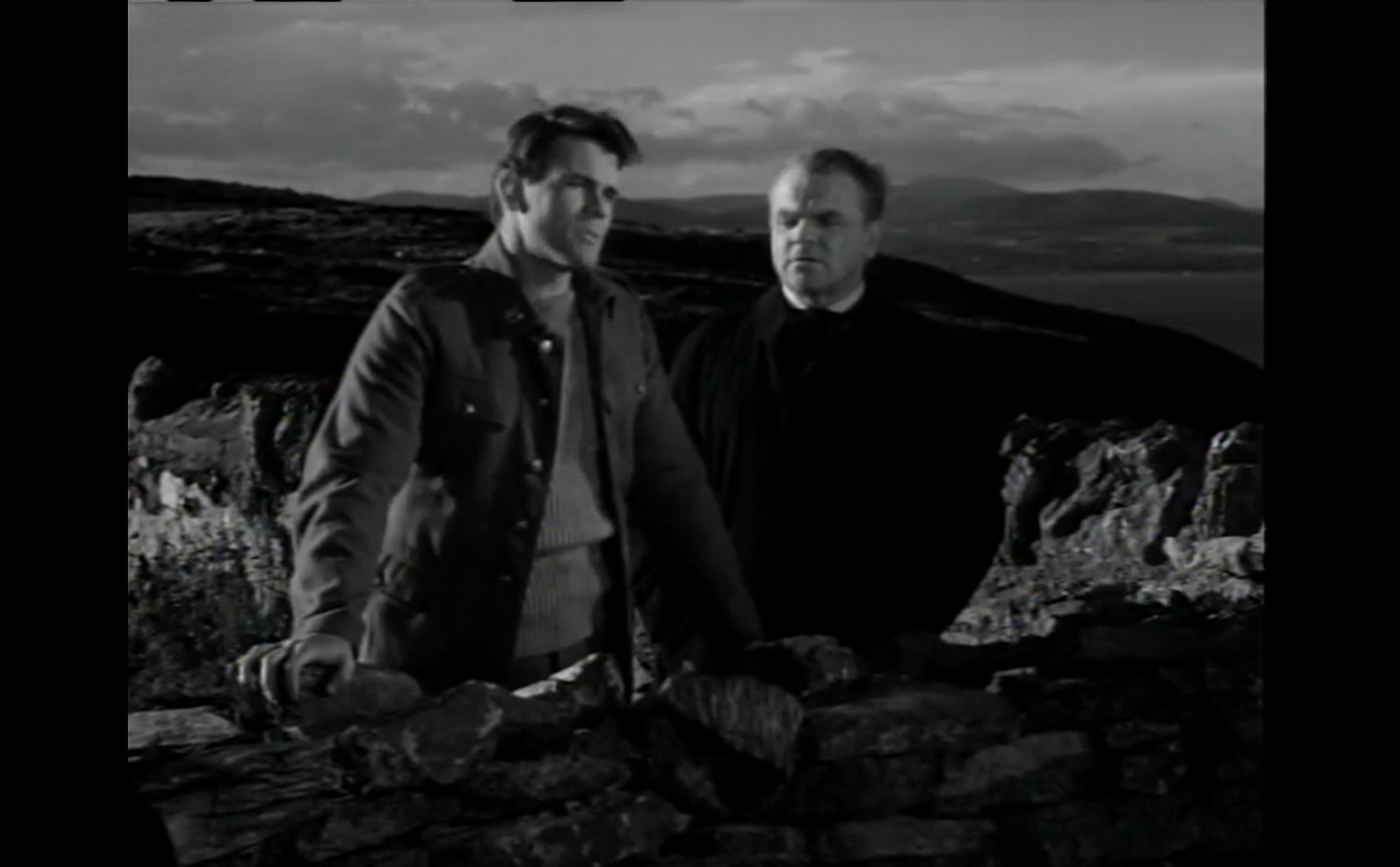
James Cagney gives a fine later-in-life performance in this effectively told tale of the Irish Republican Army battling the Black and Tans.

While Murray isn’t exactly a charismatic protagonist, he’s sufficient as a player in the broader context of Ireland’s underground fight for independence.

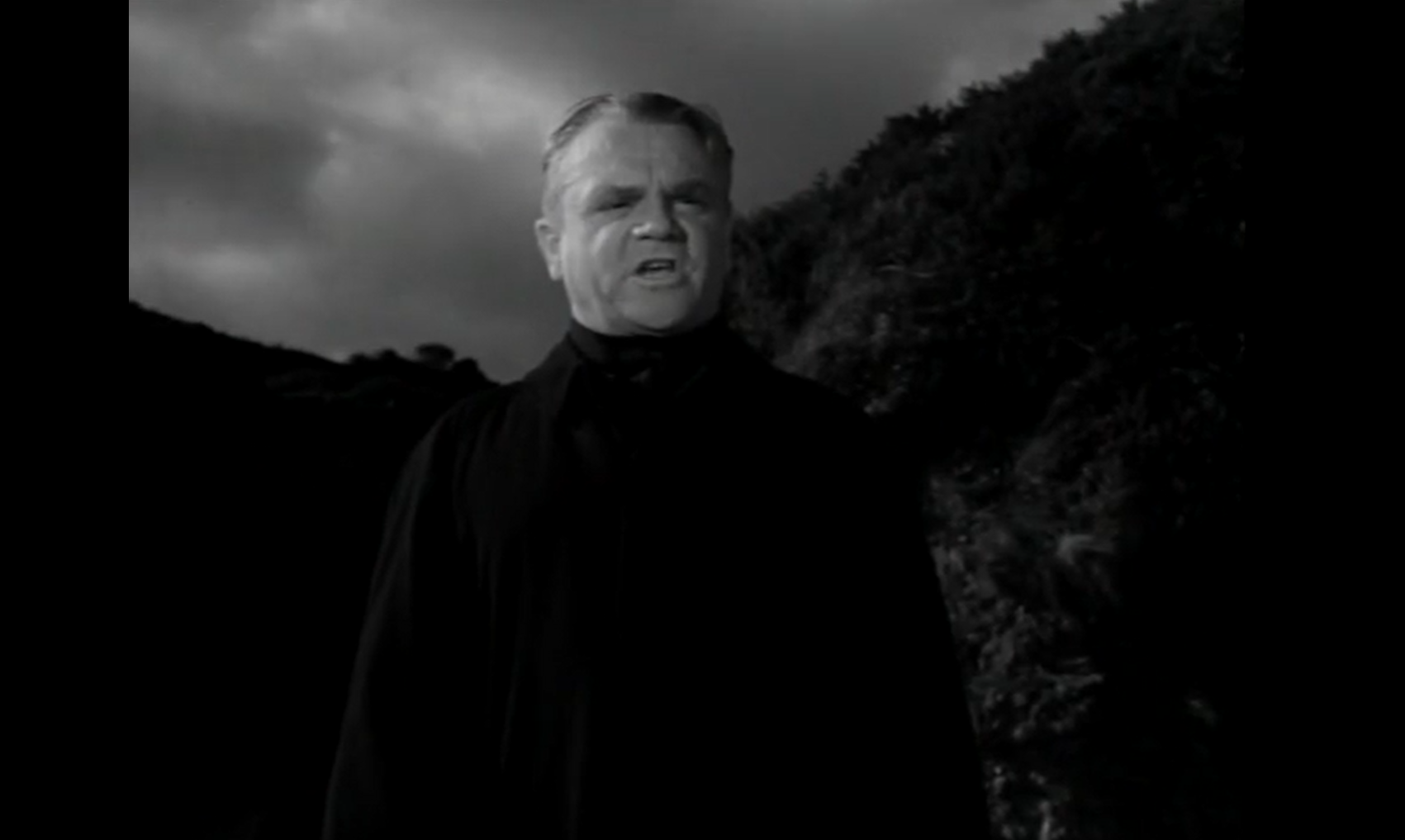
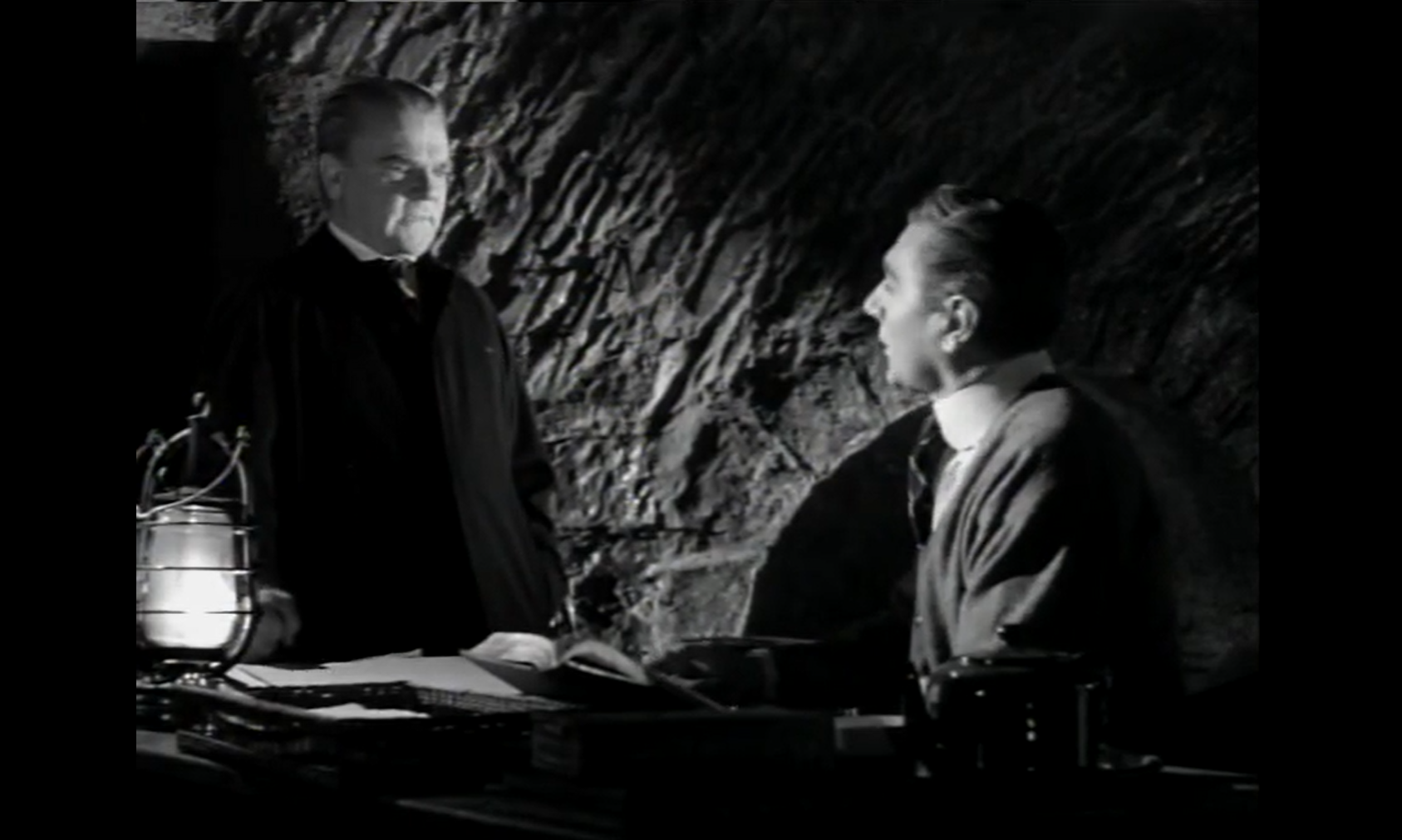
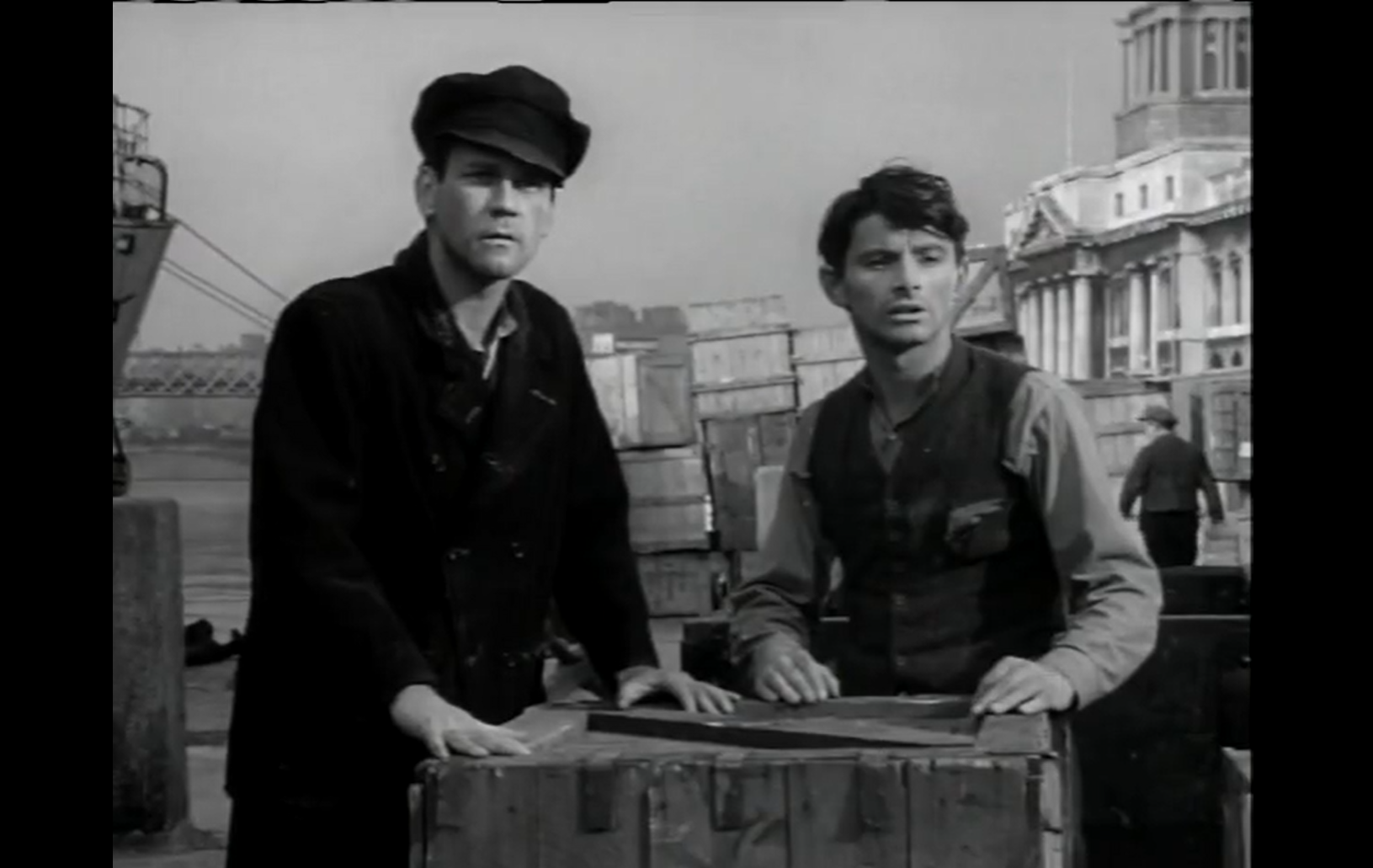
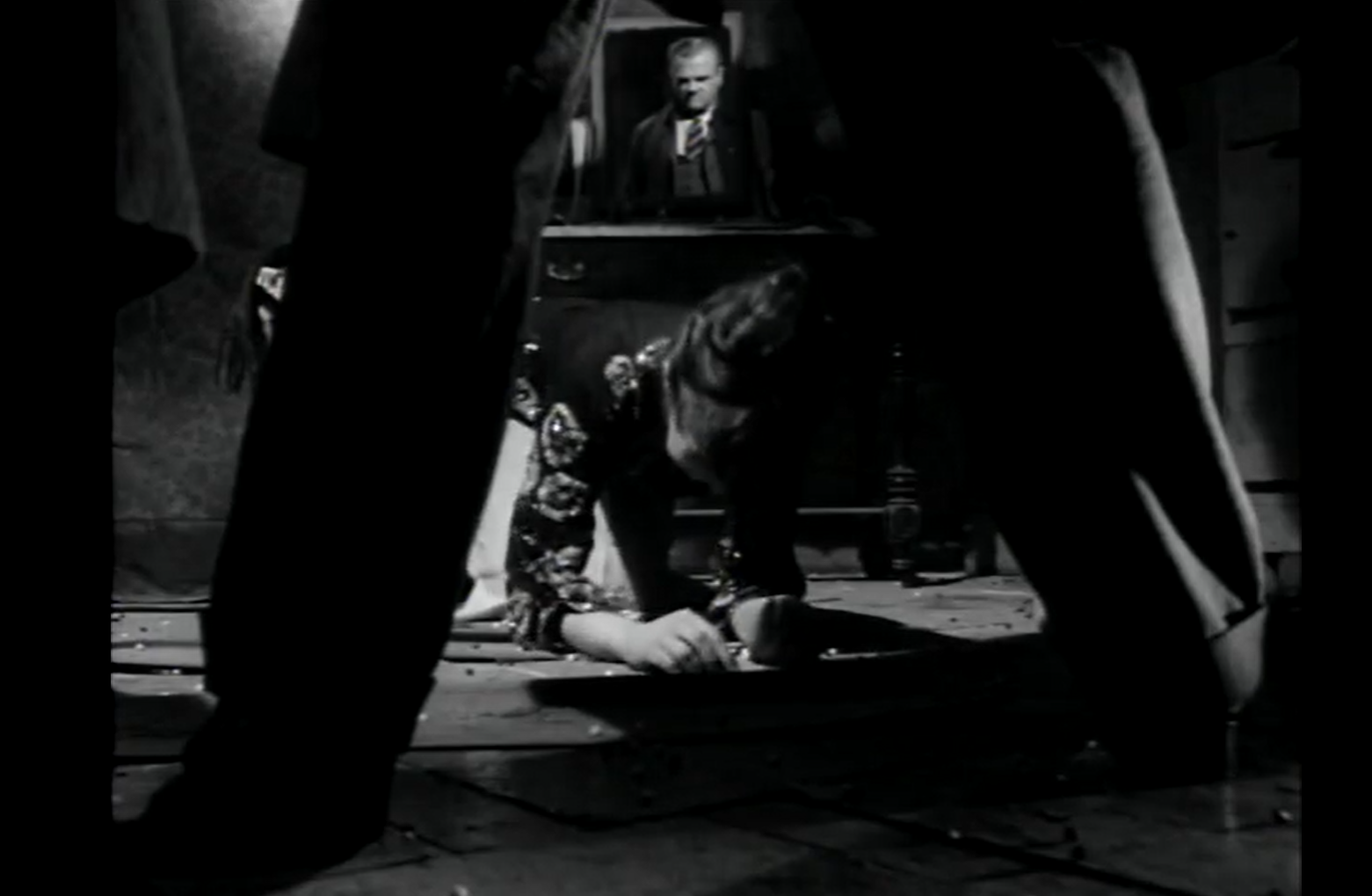
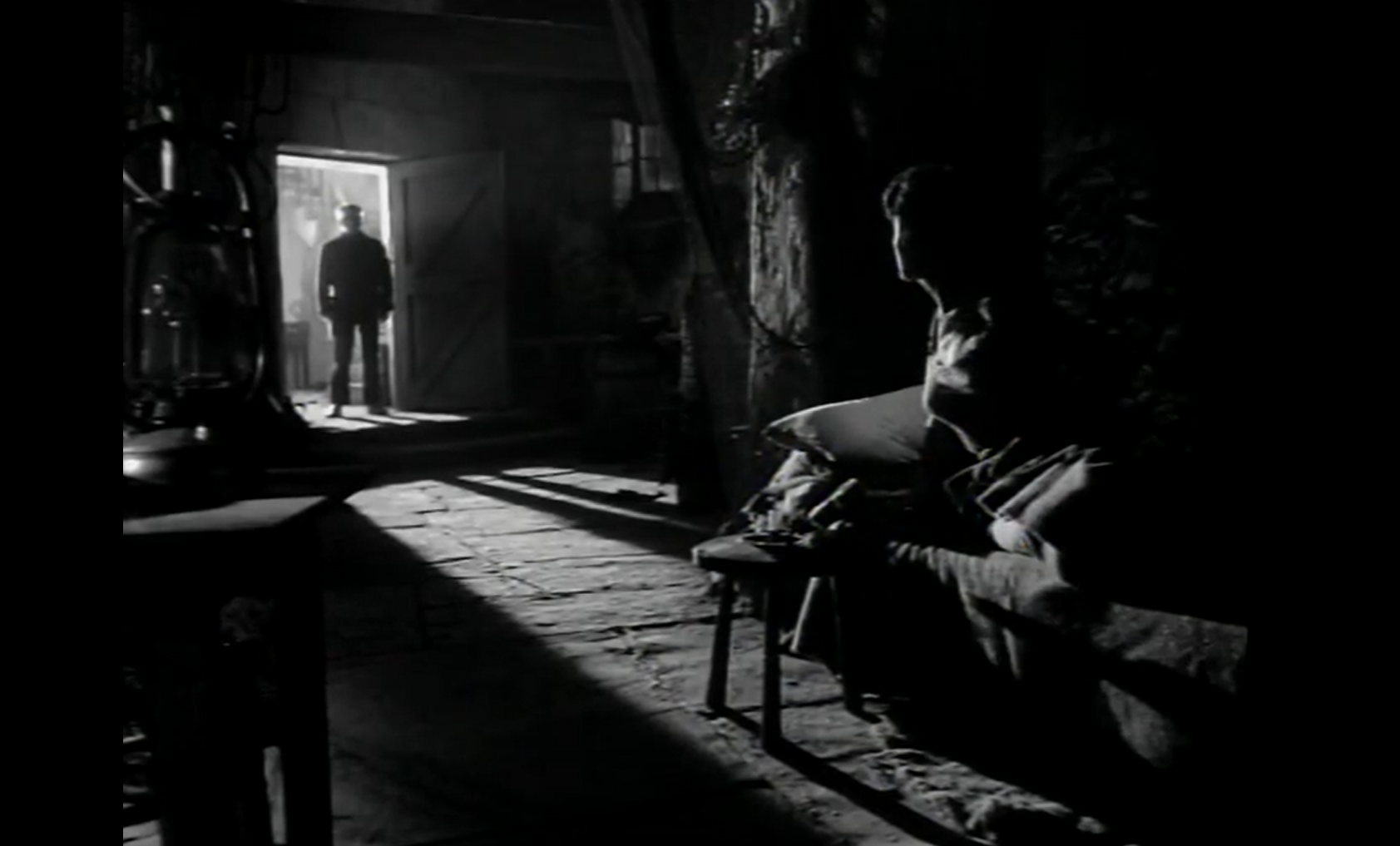
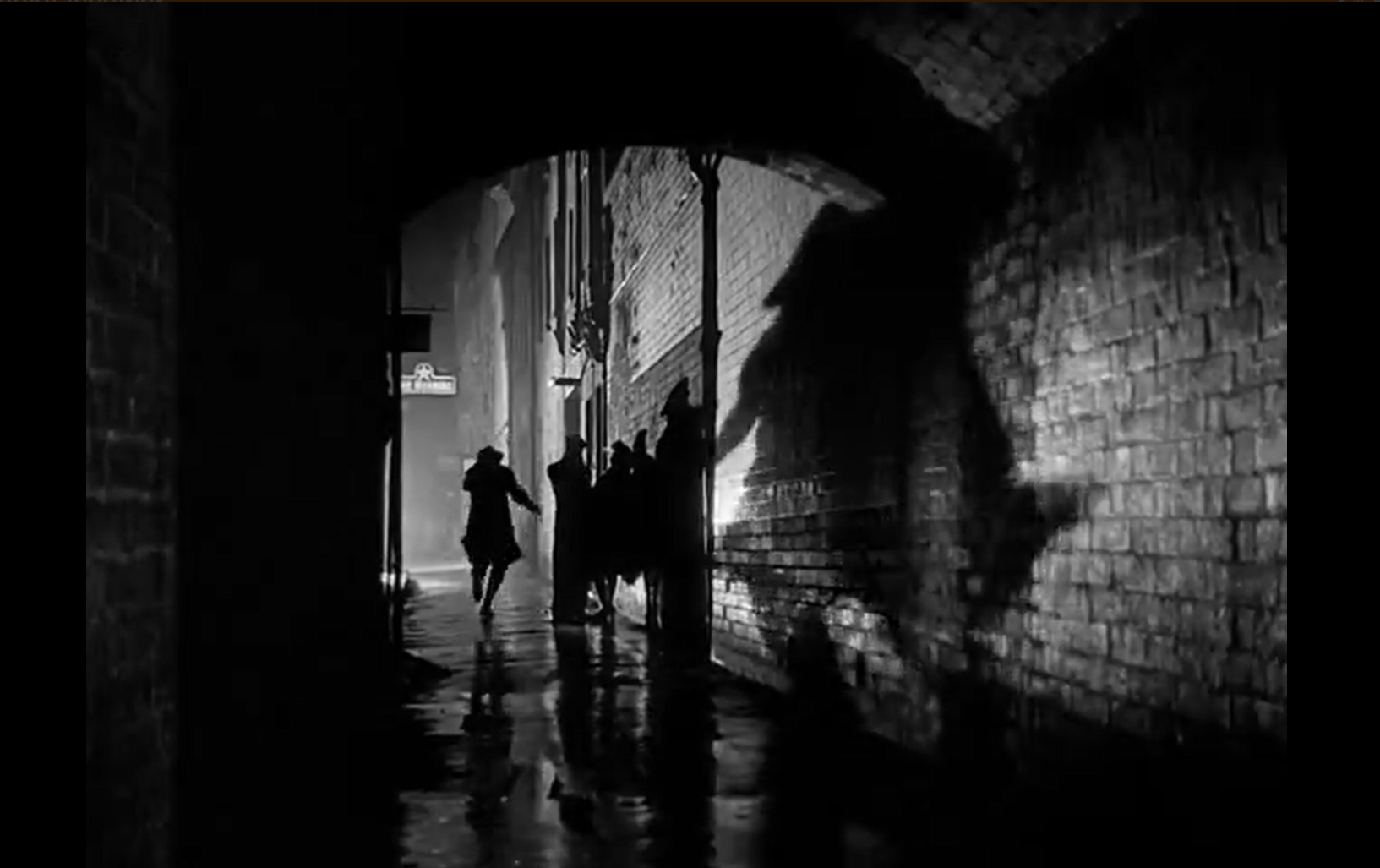
Erwin Hillier’s cinematography is highly atmospheric throughout, showcasing a world in which revolutionary operations must necessarily take place in shadowy spaces:


… and the possibility of violence is ever-present.

Cagney’s character is gradually revealed to be a diehard fanatic for his cause, which comes with a cost — particularly as his prejudice against women plays out and becomes his eventual undoing.


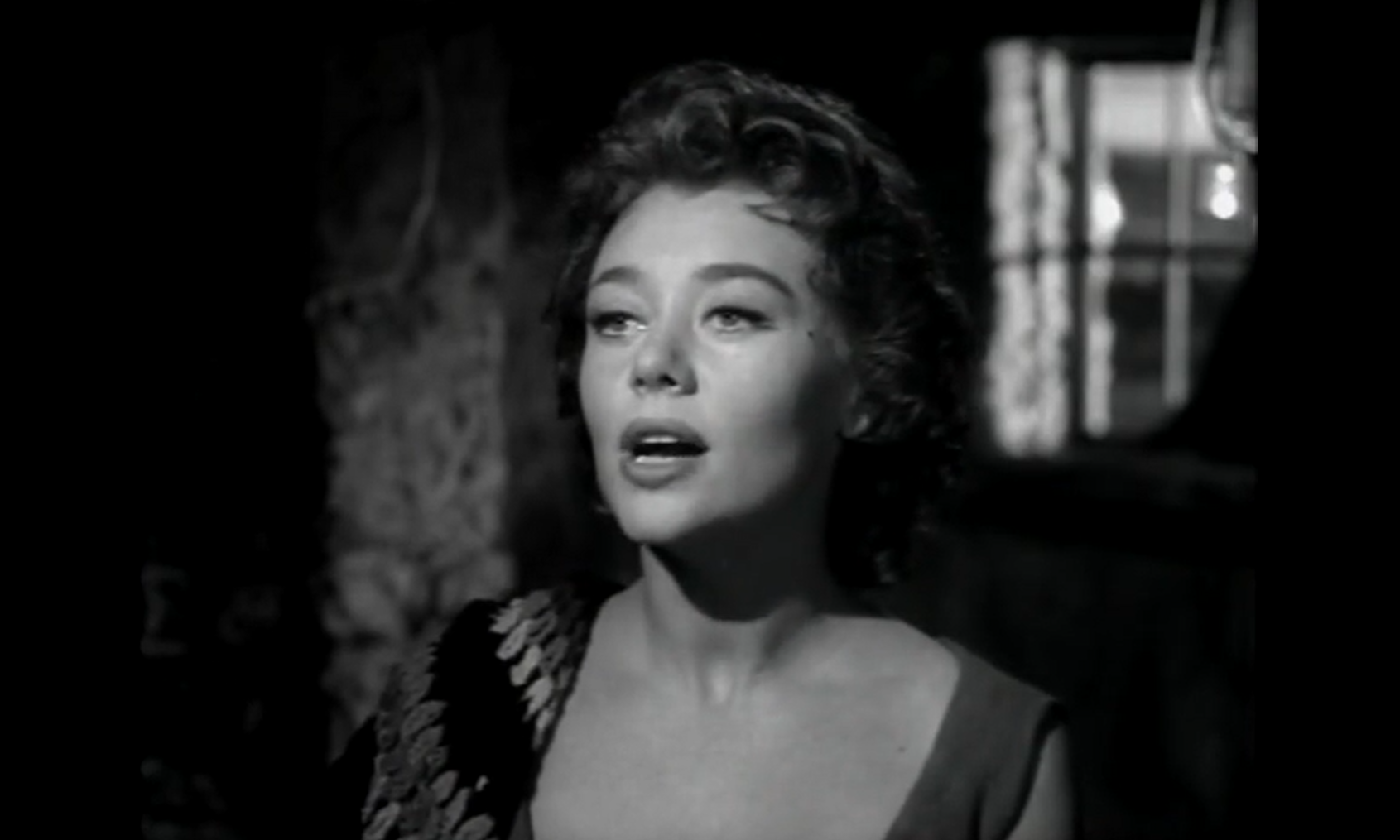
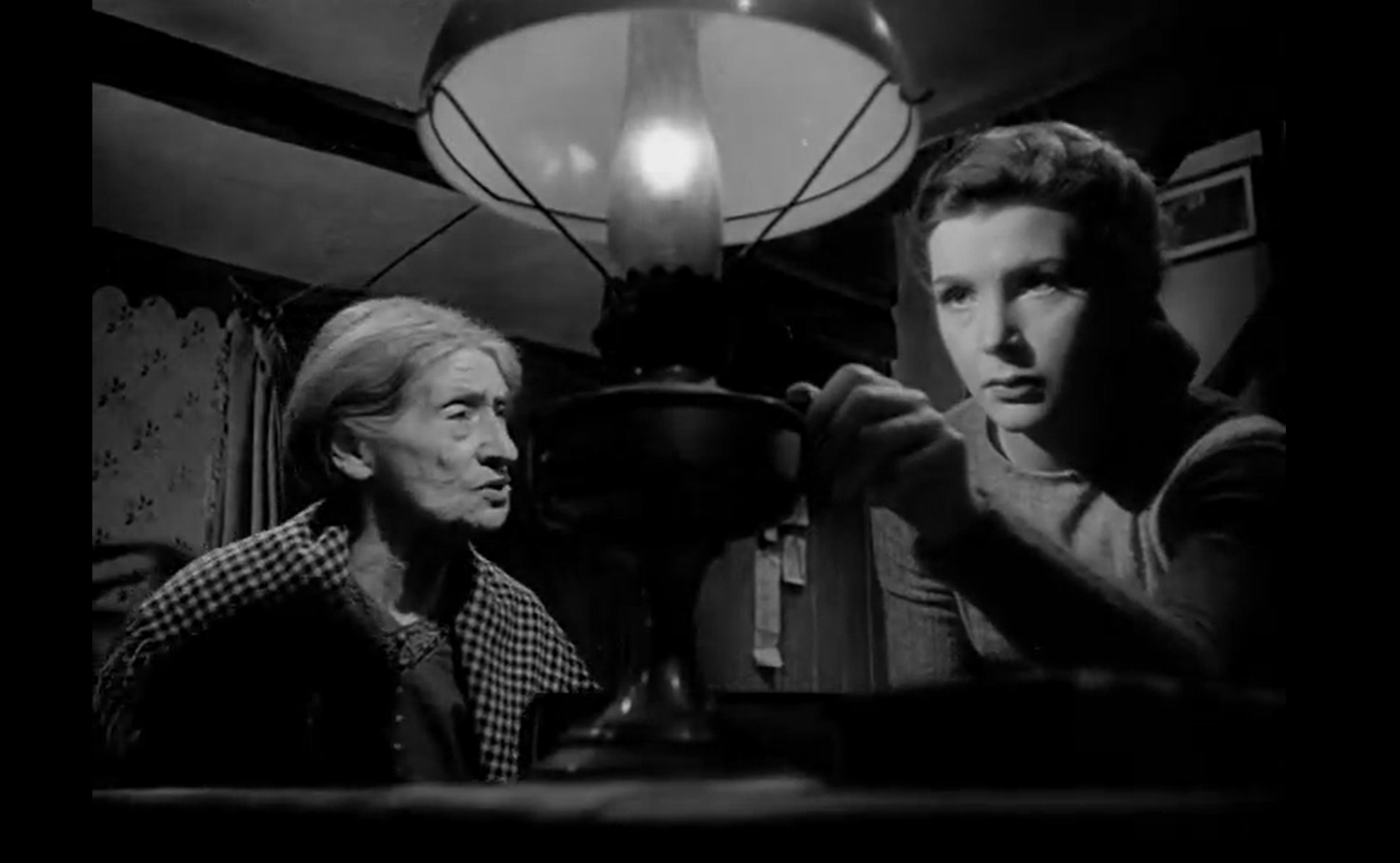
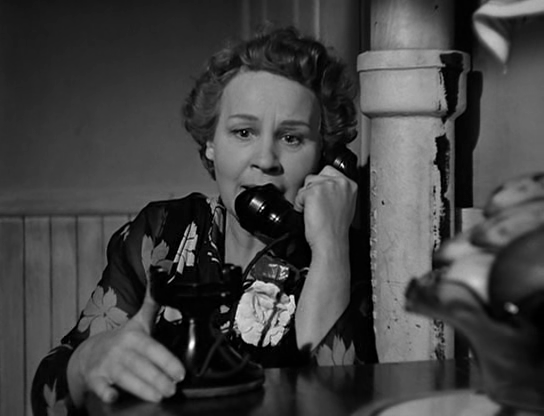
Johns is excellent in a supporting but pivotal role as a barmaid eager to stay involved:

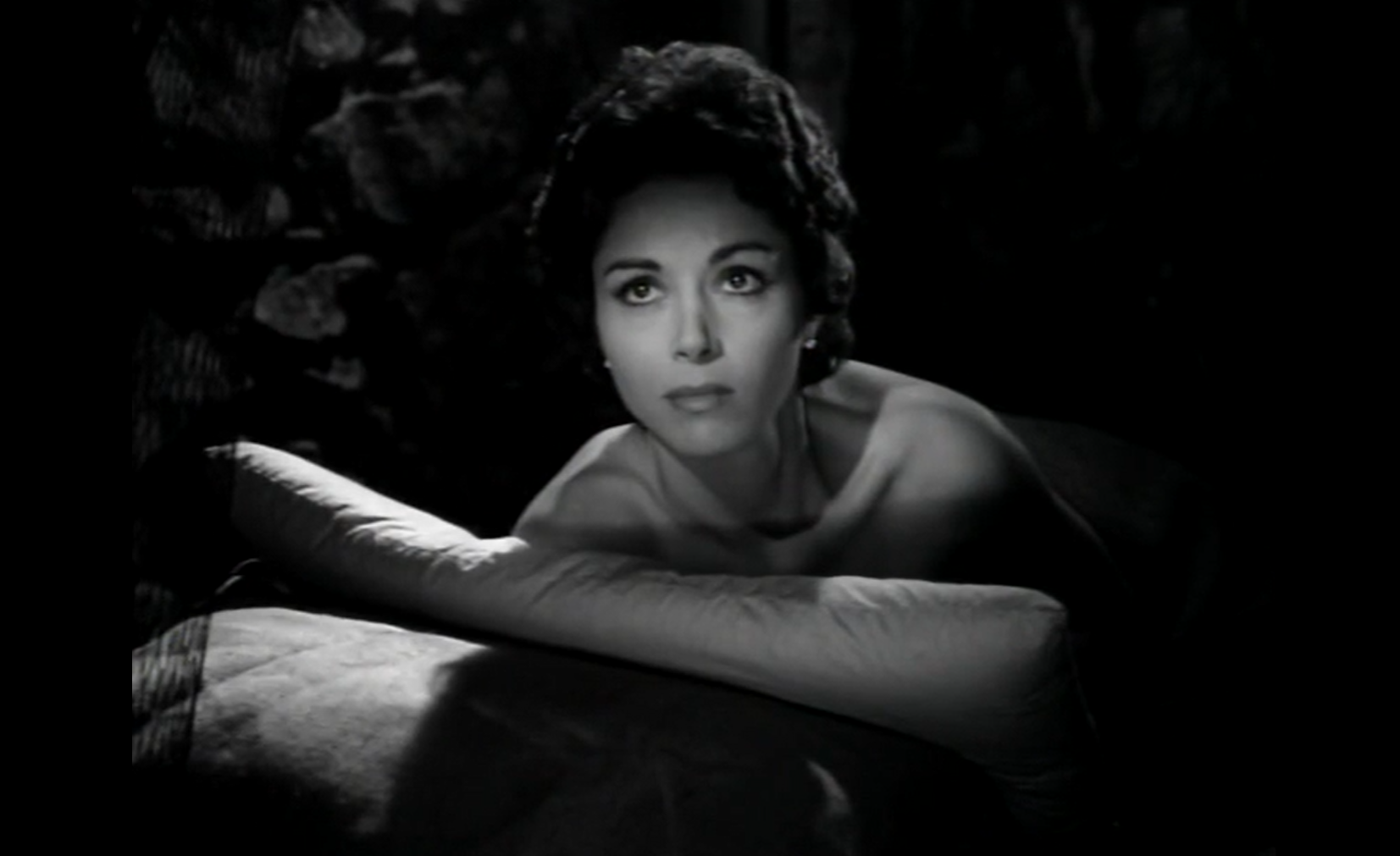
… and Wynter is quietly effective as a kidnapped woman who recognizes the power of her beauty and intelligence to (potentially) influence outcomes.

Redeeming Qualities and Moments:

  • Highly atmospheric cinematography
  • James Cagney as Sean Lenihan
  • Glynis Johns as Kitty Brady

Must See?
No, though it’s certainly worth a one-time look, especially if you’re interested in this period of history.

Links:

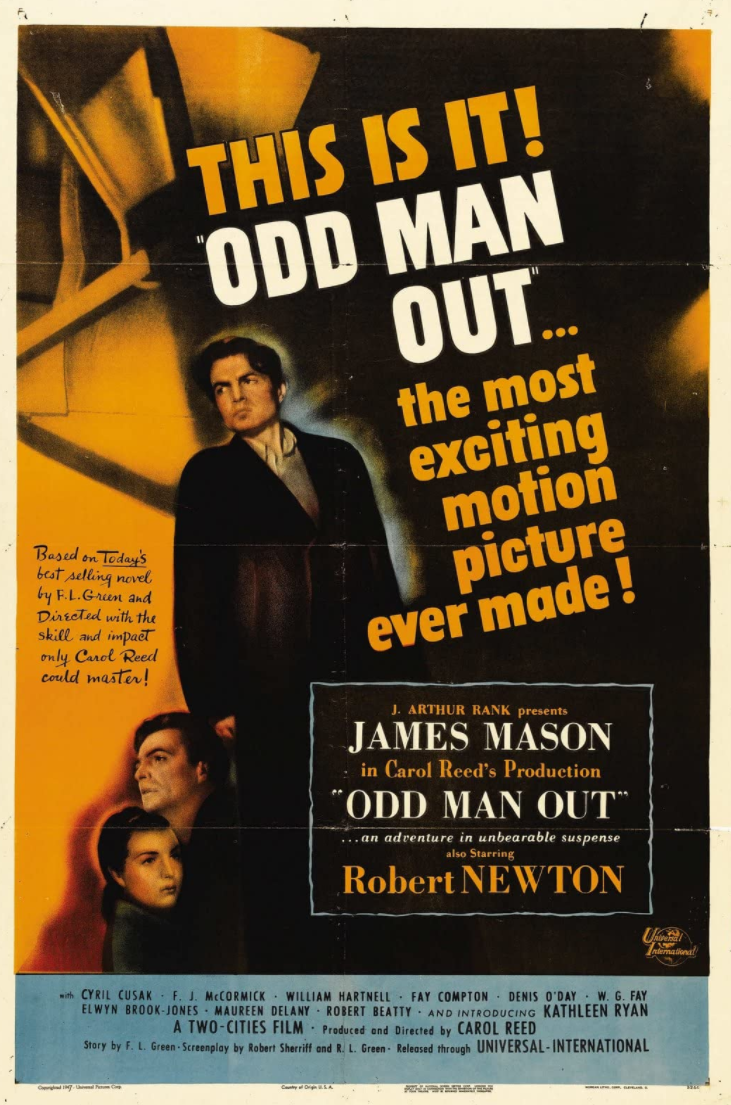
Odd Man Out (1947)

Odd Man Out (1947)

“As long as he lives, he’ll belong to the organization.”

Synopsis:
An IRA leader (James Mason) shot during a robbery get-away wanders the streets of Belfast, becoming increasingly delirious as he loses blood and the night gets colder.

Genres, Themes, Actors, and Directors:

  • Carol Reed Films
  • Fugitives
  • Historical Drama
  • Ireland
  • James Mason Films
  • Revolutionaries
  • Robert Newton Films

Response to Peary’s Review:
Peary’s review of this Carol Reed film (based on F.L. Green’s novel) is surprisingly dismissive — though upon reading other reviews, I’ve come to understand that for some reason, the film deeply divides viewers. Peary writes that while Odd Man Out is “dated” (I disagree), it “works best in the early scenes, when it is strictly a suspense thriller (although it would have been more effective if the politics of Johnny’s band were made clearer)” — again, I disagree, especially given that the film was made during a time when it was prudent to (as DVD Savant puts it) “neutralize a touchy political subject”. Peary argues that “when the emphasis switches from Johnny to the characters who cross his path, the film falters badly”, noting that “the storyline begins to resemble Lassie Come Home” and it “becomes a pretentious religious allegory (with Johnny as the Christ figure) and morality play.” He also posits that “it drags on intolerably,” noting wryly that “perhaps it could end if Johnny didn’t fall down every two or three minutes or wander away from where someone left him to be picked up later.” Finally, he states that the “film’s once innovative use of lighting and sharp camera angles is still interesting, but some of Reed’s trickery now seems absurd (e.g., Johnny imagines faces in the bubbles of his spilled drink.”

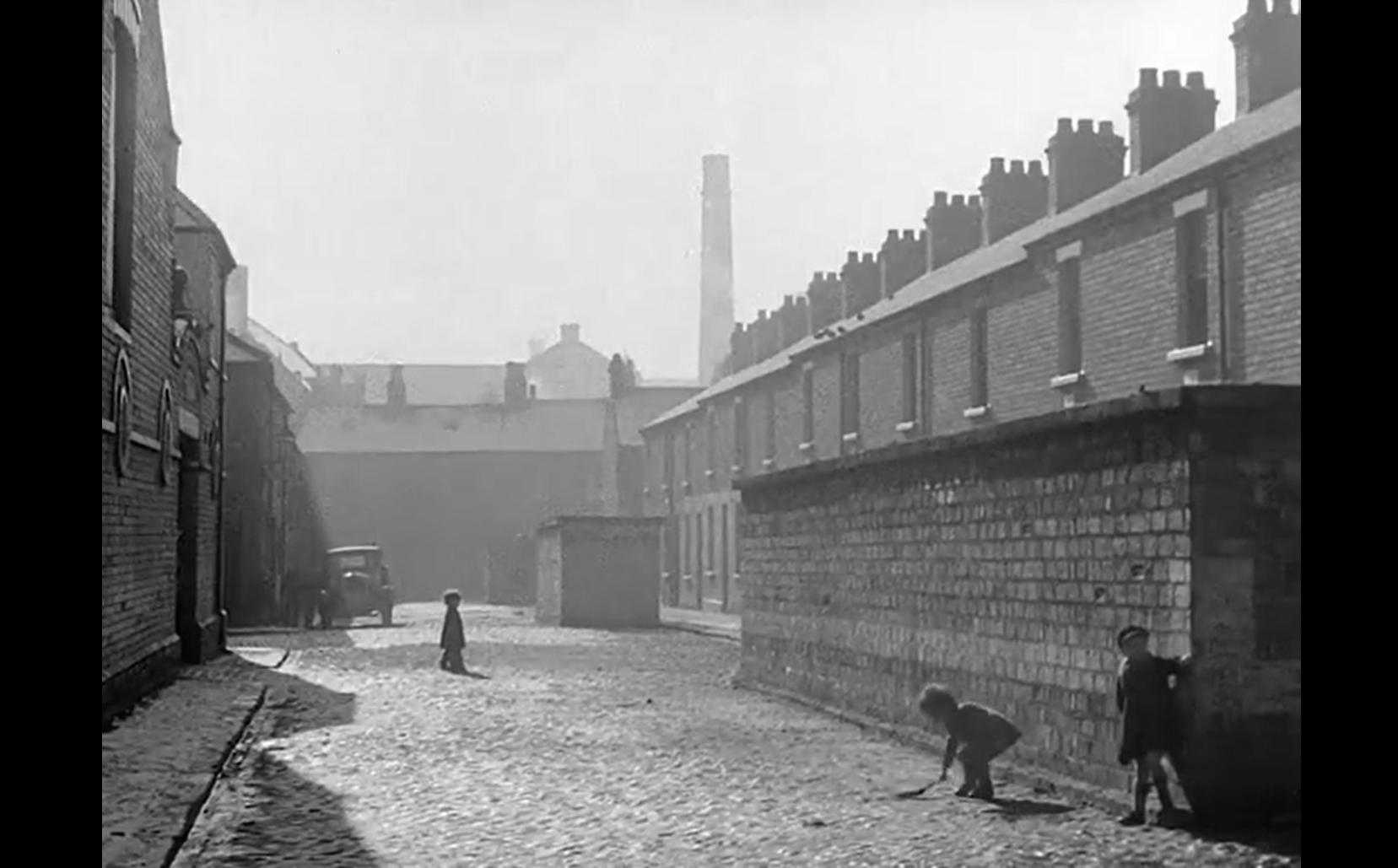
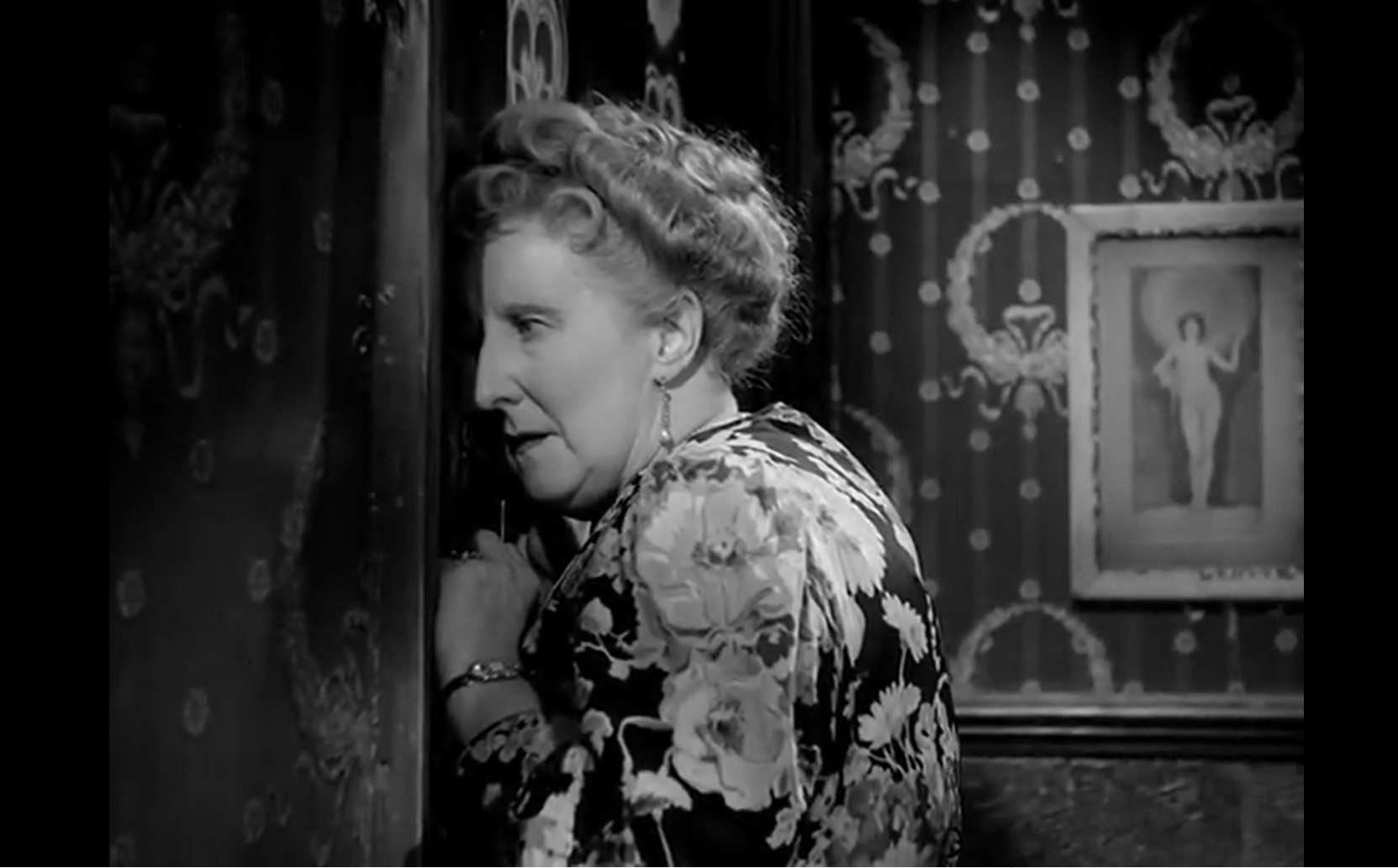
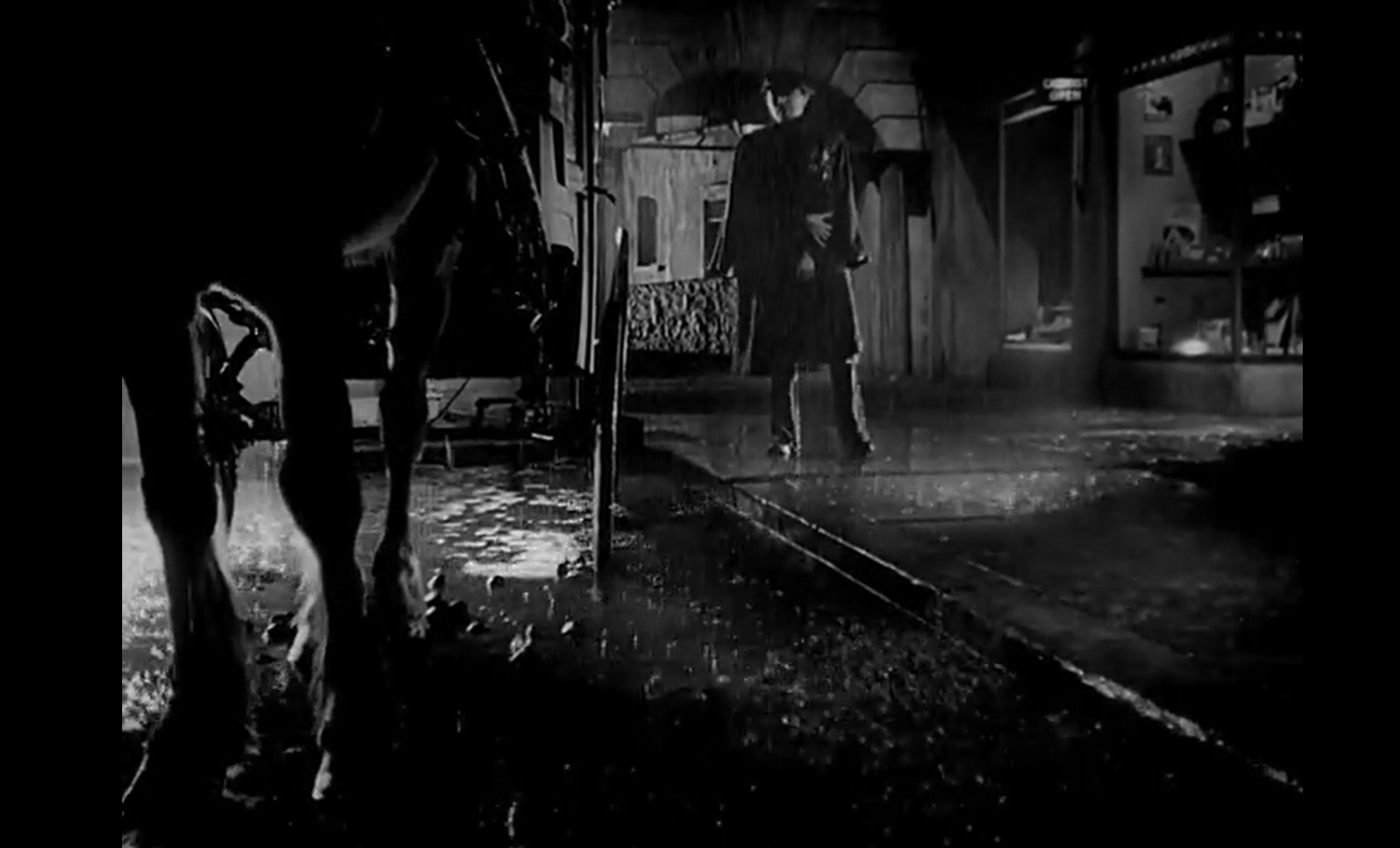
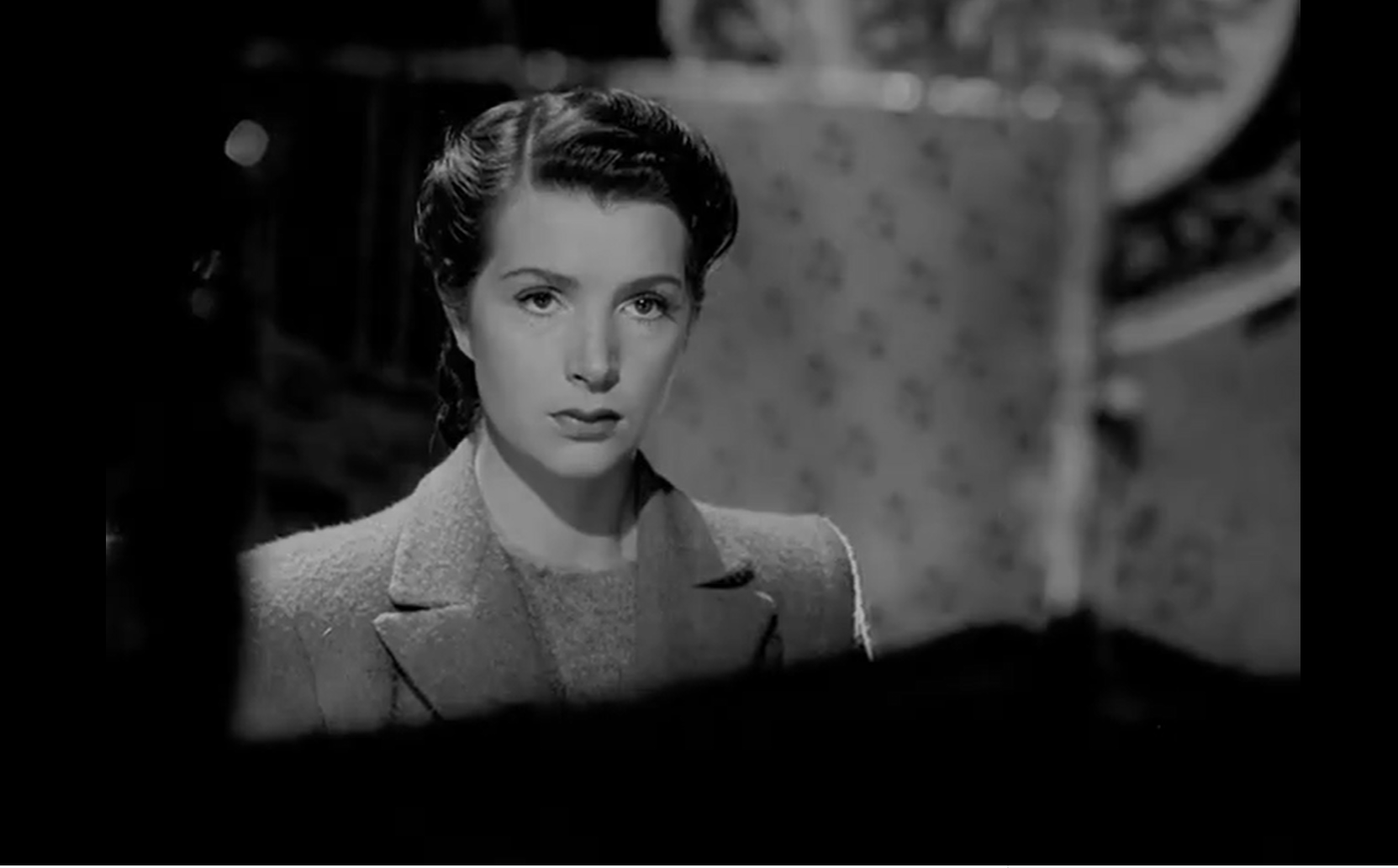
I couldn’t diverge more from Peary’s assessment and overall regard for this film, which I find consistently engaging, innovative, and touching. Robert Krasker’s cinematography is simply stunning (especially so in the new Blu-Ray transfer): one feels instantly dropped into a nightmarish yet all-too-real world of policemen on every corner:

… kids playing innocently while refugees flee:

and (nearly) everyone keeping an eye out for their own needs and goals while also offering a tentative hand of support.

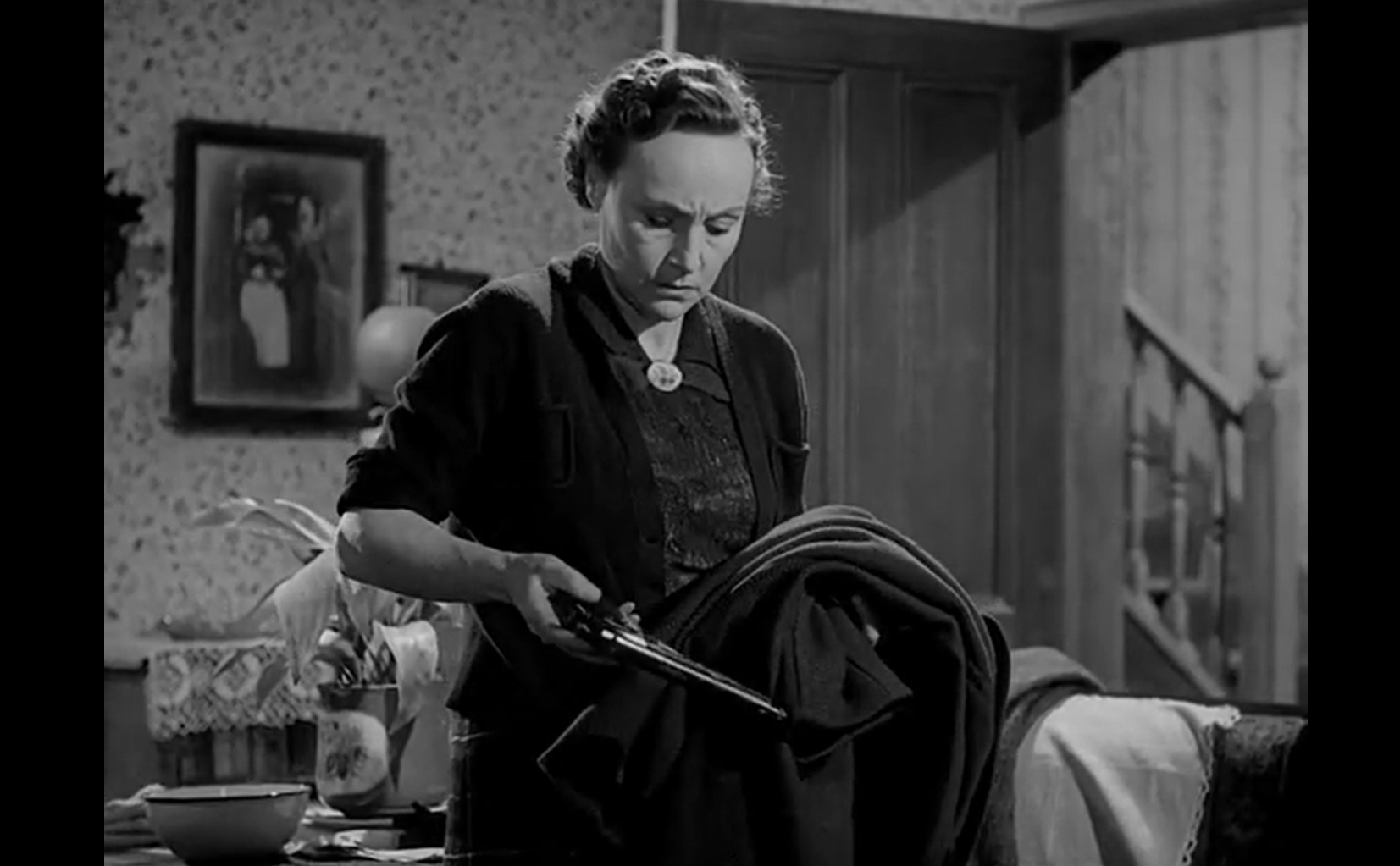
(A notable exception is Maureen Delaney’s creepy portrayal of “Theresa O’Brien”, a supposed IRA supporter whose twitchy eye belies her innate corruption.)

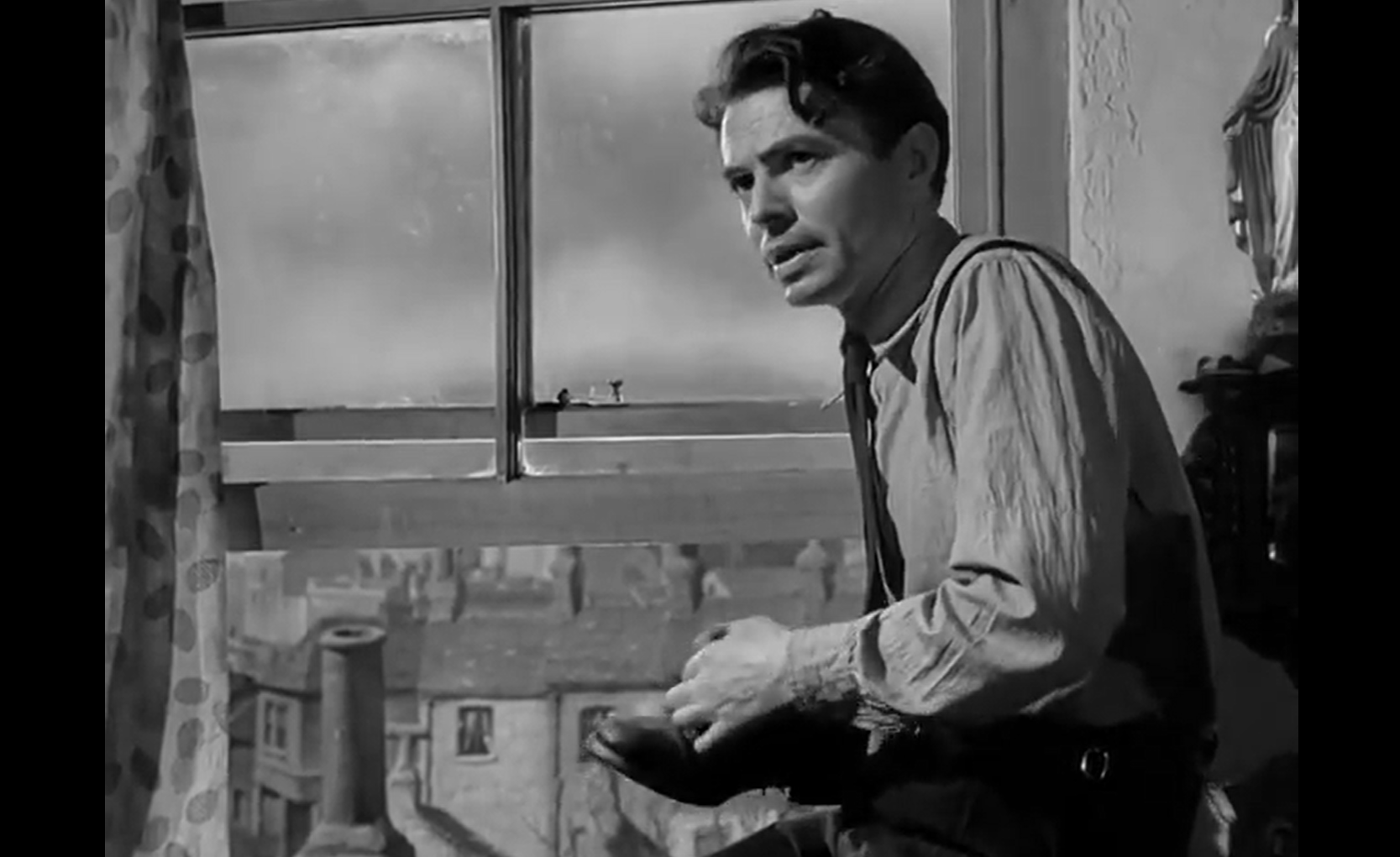
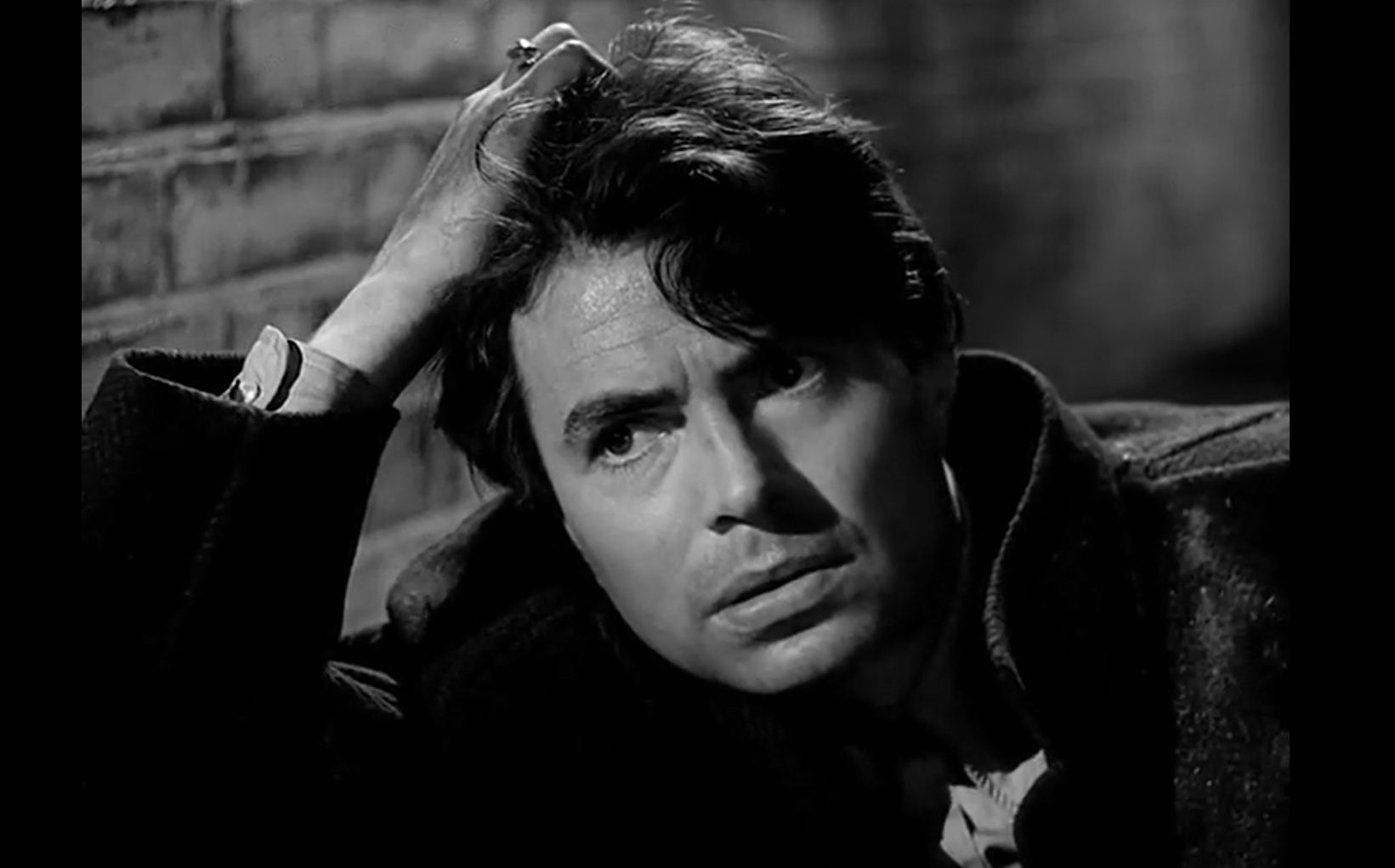
Mason’s performance is top-notch throughout: yes, he “falls down” again and again, but this is clearly because he’s mortally wounded and simply trying to stagger his way to the next reasonable haven.

Rather than a Christ-like figure, one could easily argue that he’s a fatally flawed protagonist, given his unwillingness in opening scenes to cede his power and authority to a capable colleague (Robert Beatty) who is ready and willing to take over —


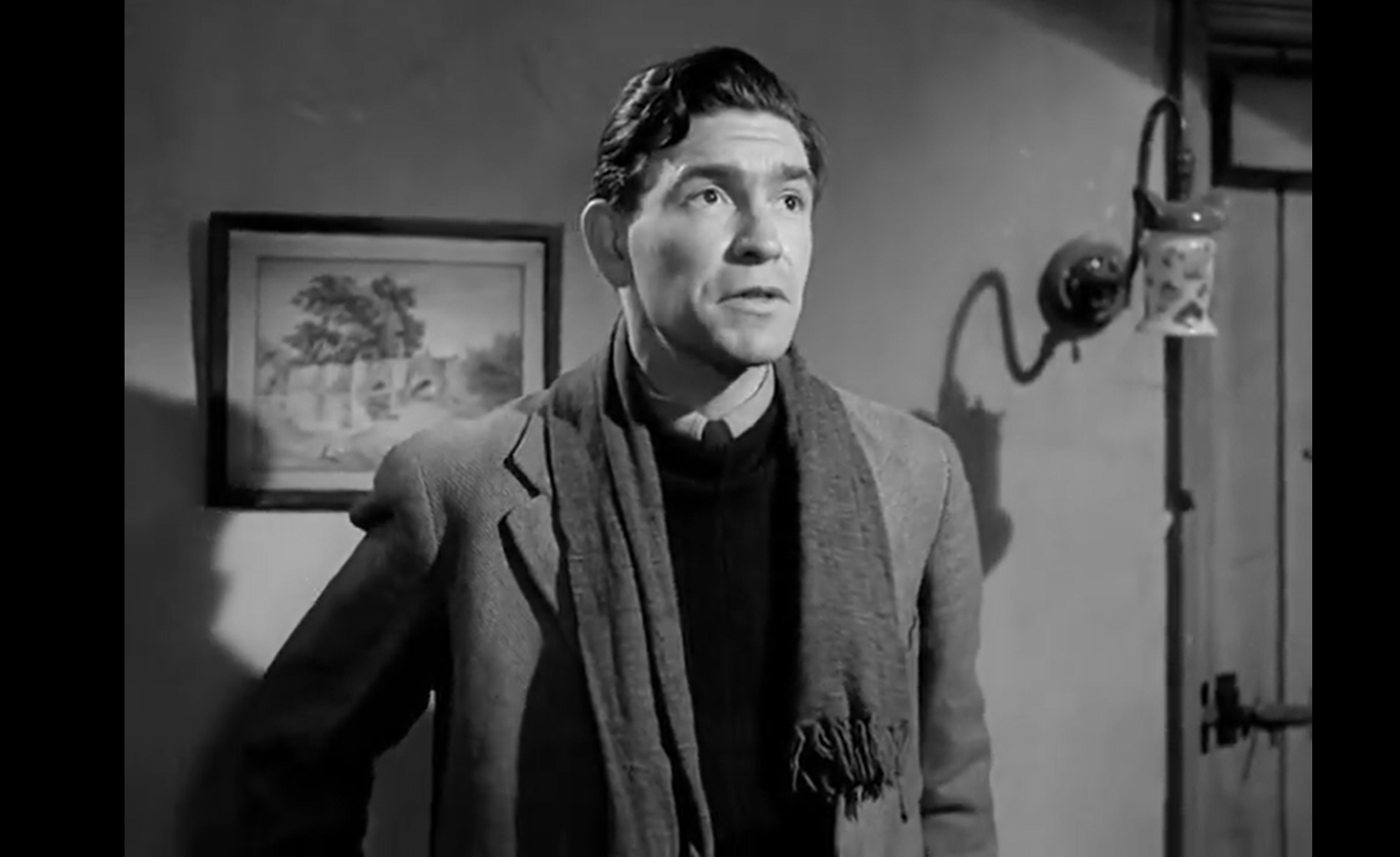
and his men (Dan O’Herlihy, Roy Irving, and Cyril Cusack) are right to (respectfully) question his fitness for the job.

The other supporting characters — including “his girlfriend (Kathleen Ryan) [who] wants to spend his last hours with him;

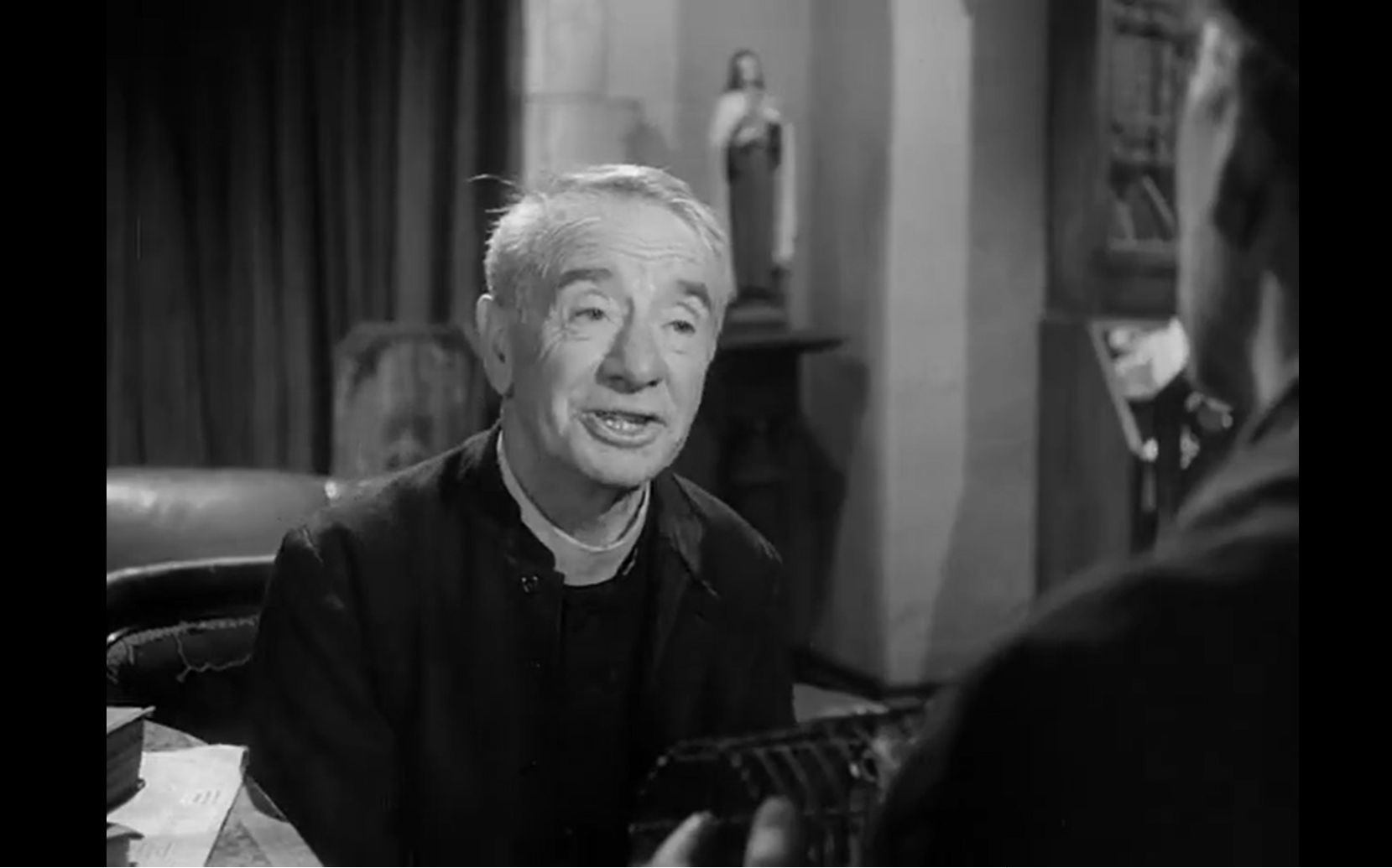
a priest (W.G. Ray) [who] wants to hear his confession;

a derelict (F.J. McCormick) [who] wants to hand him to either the priest or the police, whoever can offer him more;

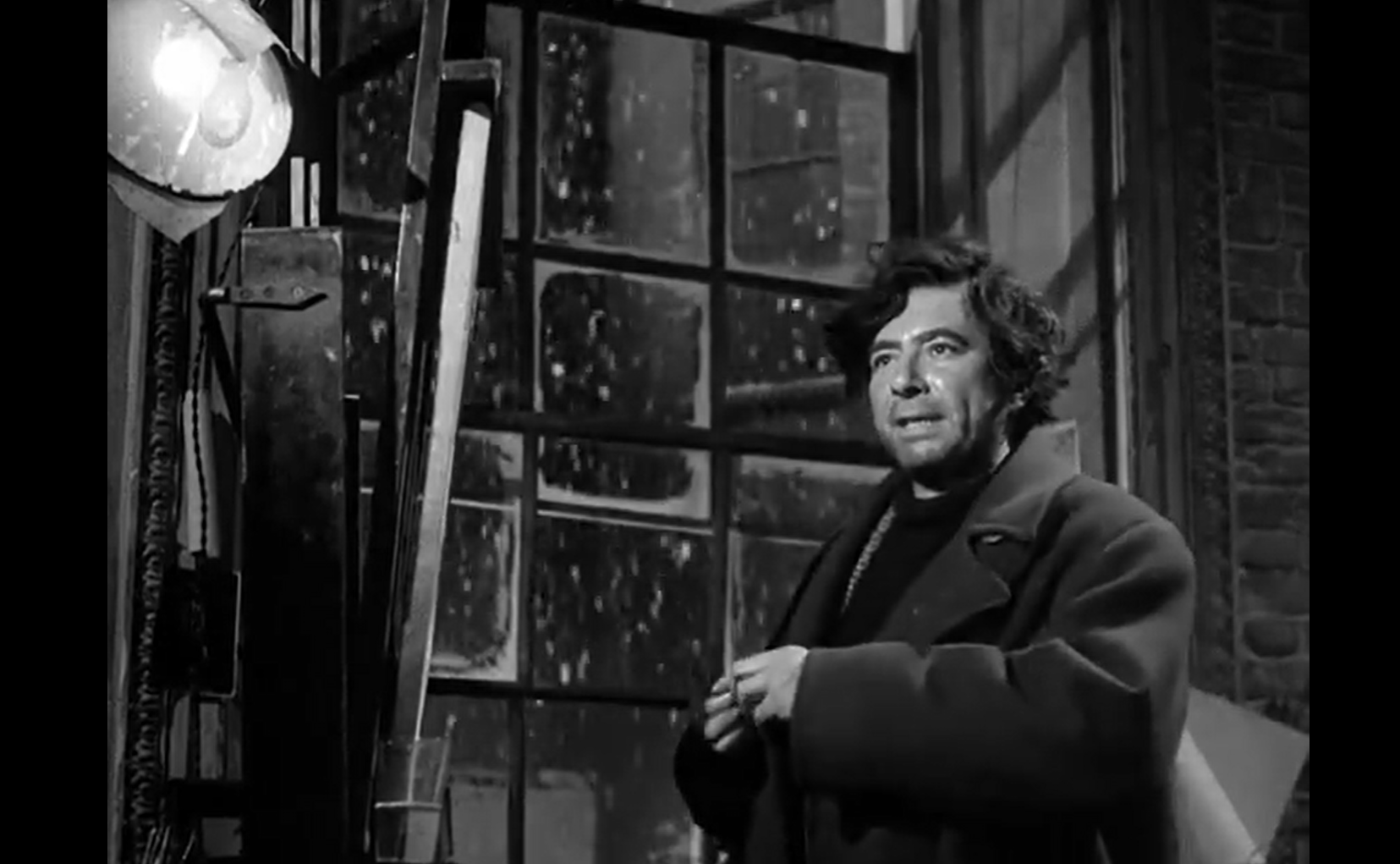
[and] a mad artist (Robert Newton) [who] wants to use him as a model because he has the eyes of a dying man” —

are all part of the surreal cityscape in which the “Irish troubles” play out, with tragic results.

Redeeming Qualities and Moments:

  • James Mason as Johnny
  • Fine supporting performances
  • Robert Krasker’s cinematography

Must See?
Yes, as a still-powerful classic.

Categories

  • Genuine Classic

(Listed in 1001 Movies You Must See Before You Die)

Links:

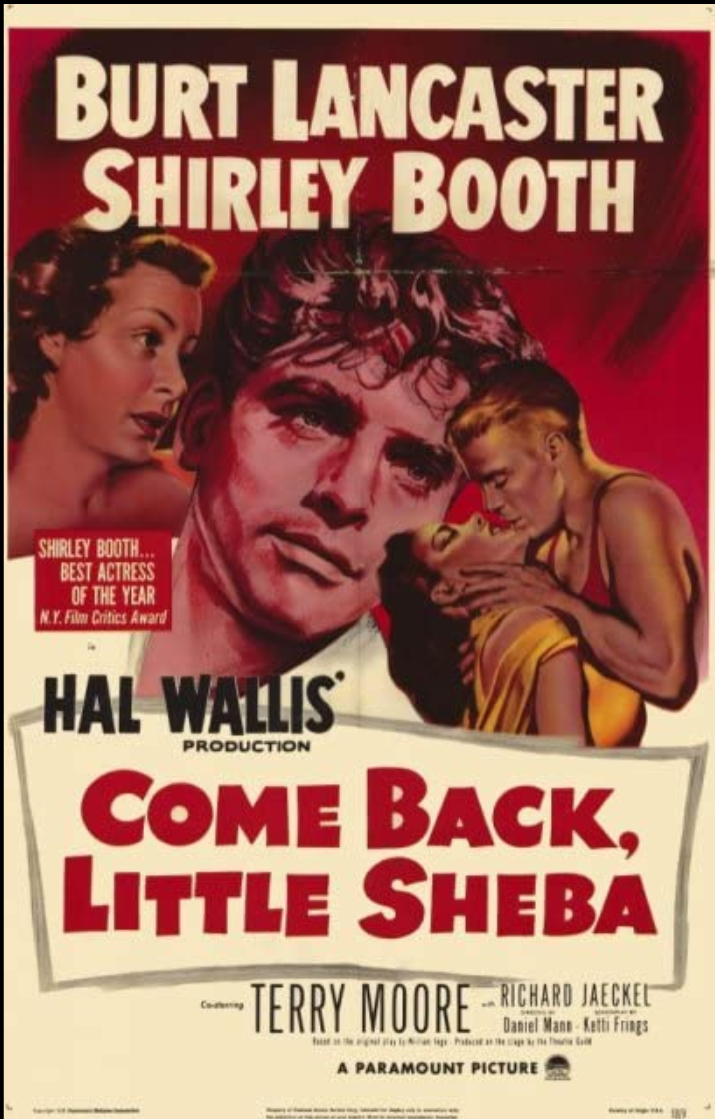
Come Back, Little Sheba (1952)

Come Back, Little Sheba (1952)

“I can’t give up just because I made a few mistakes; I’ve gotta keep going!”

Synopsis:
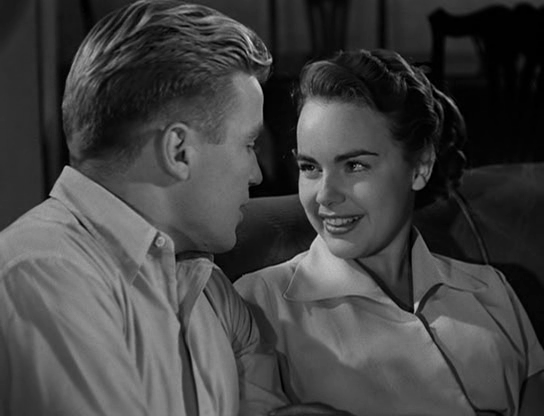
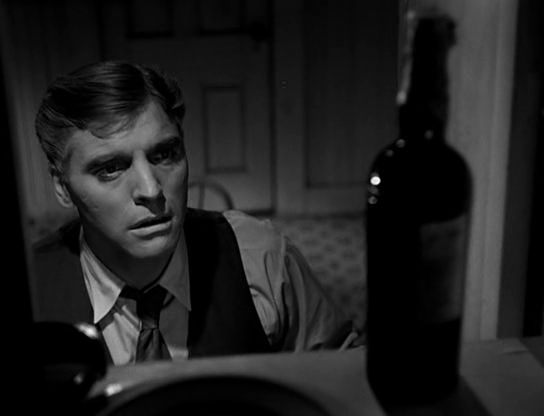
A frumpy housewife (Shirley Booth) looks after her one-year-sober husband (Burt Lancaster) while welcoming a college-age boarder (Terry Moore) to their house — but Moore’s dalliances with an amorous athlete (Richard Jaeckel) upset Lancaster’s hard-won equilibrium.

Genres, Themes, Actors, and Directors:

  • Alcoholism and Drug Addiction
  • Burt Lancaster Films
  • Housewives
  • Marital Problems
  • Play Adaptations
  • Richard Jaeckel Films
  • Terry Moore Films

Review:
Theatrical director Daniel Mann made his cinematic debut with this adaptation of William Inge’s play, earning Booth an Oscar in her first significant screen role. It tells a compact, quietly tense tale of a childless woman eager for company and stimulation of any kind, and a man struggling to stay “dry” by attending AA meetings, going to work as a chiropractor, and co-existing with his kind yet desperately lonely and insecure wife. The introduction of Moore into this couple’s predictable lives most definitely tips the balances — though not necessarily in ways we’d expect. As DVD Savant writes, in addition to providing an intriguing “early look at the AA culture, with its positive method for helping alcoholics through support groups”, it shows us how “Doc Delaney [Lancaster] goes through his days dour and methodical, conscious of everything he does and says as if convinced some invisible demon will appear to send him back to the bottle” — in other words, engaging in the highly tenuous work of staying sober moment to moment. All the key players give fine performances, and while we sense that things are headed in a bad direction, we’re kept authentically invested in how they will ultimately resolve.

Redeeming Qualities and Moments:

  • Shirley Booth as Lola
  • Terry Moore as Marie
  • Burt Lancaster as Doc Delaney/”Daddy”
  • Atmospheric cinematography

Must See?
Yes, once, for the performances.

Categories

  • Oscar Winner or Nominee

Links:

Hot Tomorrows (1977)

Hot Tomorrows (1977)

“That’s what’s so great about old movies: you get to enter the land of the dead.”

Synopsis:
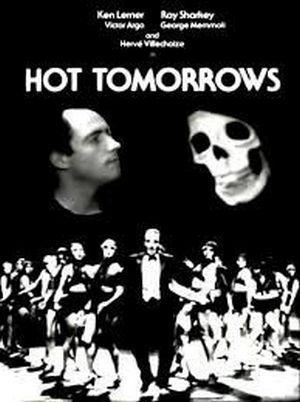
A death-obsessed aspiring writer (Ken Lerner) goes out on the town with his buddy (Ray Sharkey) and has a series of odd adventures across Los Angeles.

Genres, Themes, Actors, and Directors:

  • Death and Dying
  • Los Angeles
  • Writers

Review:
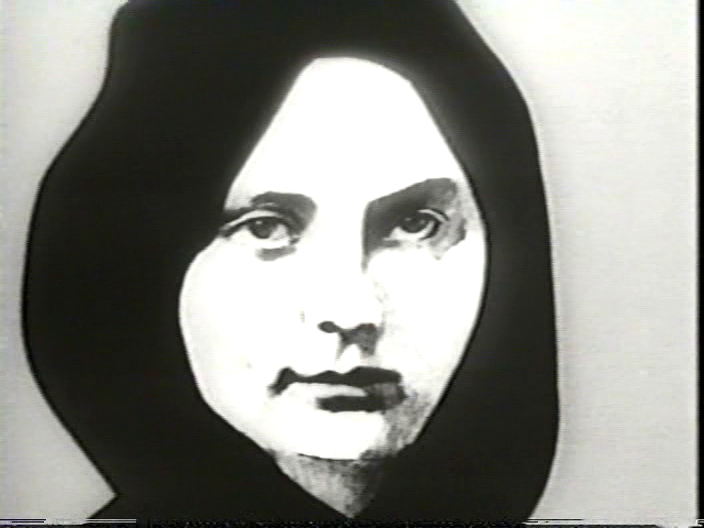
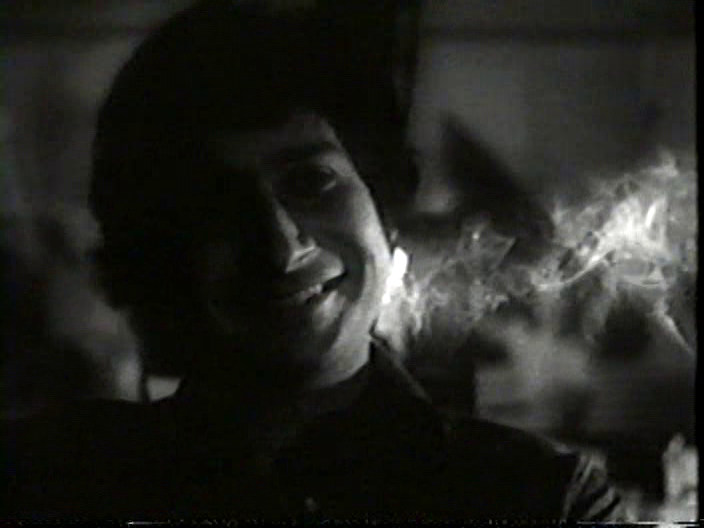
Writer-director Martin Brest’s feature debut is, unfortunately, little more than a slightly-higher-budget b&w student film. There is nothing at all inherently interesting about the protagonist, who fantasizes about his great-aunt’s death to a morbid degree:

… hangs out watching Laurel and Hardy films with a clueless friend (Sharkey):

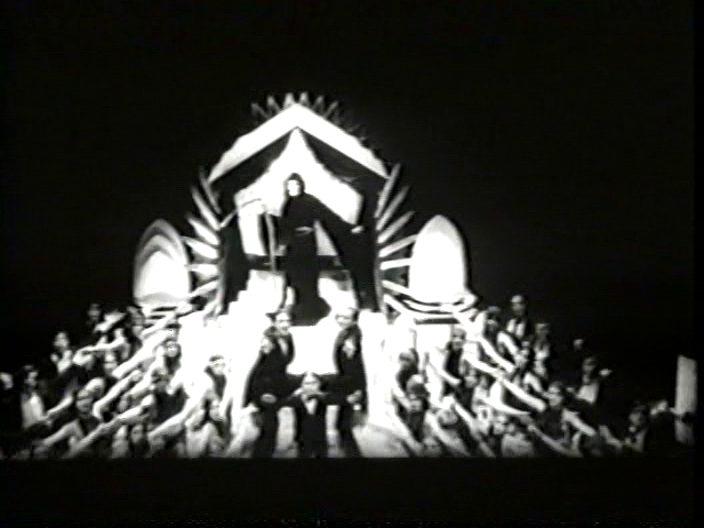
… gets to know tiresome strangers — including a sullen, drunken dwarf (Hervé Villechaize) — at a night club:

… visits a morgue just for kicks (and free coffee):

… and obsesses over the elderly women he sees around him.

This one will strictly be of interest to hardcore devotees of Brest.

Redeeming Qualities and Moments:

  • The unexpectedly creative closing sequence

Must See?
Nope; you can definitely skip this one. Listed as a Sleeper and a Personal Recommendation in the back of Peary’s book.

Links:

She Wore a Yellow Ribbon (1949)

She Wore a Yellow Ribbon (1949)

“Never apologize; it’s a sign of weakness.”

Synopsis:
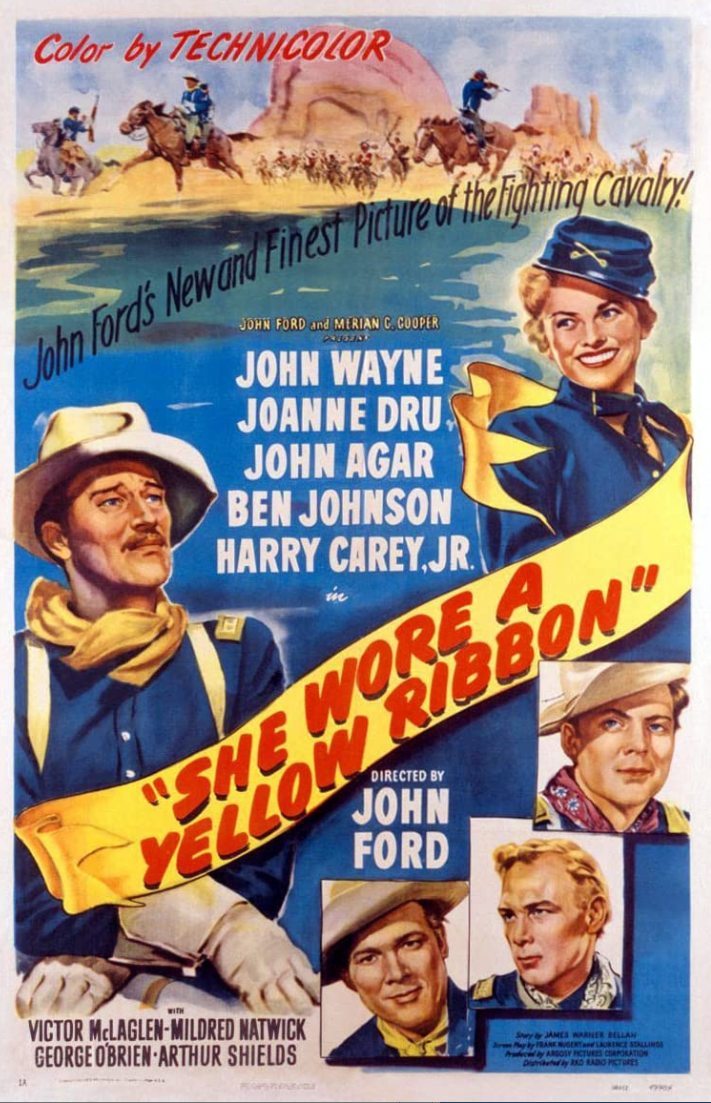
Just after the Battle of Little Bighorn, a nearly-retired Cavalry officer (John Wayne) whose first sergeant (Victor McLaglen) can’t stay away from liquor is tasked with preventing an uprising by local Cheyenne and Arapaho tribes, while also escorting an officer’s wife (Mildred Natwick) and niece (Joanne Dru) — who is being courted by two different officers (John Agar and Harry Carey, Jr.) — to a stagecoach station. Will Wayne be able to broker peace with his old friend Chief Pony That Walks (Chief John Big Tree) before massive killing ensues?

Genres, Themes, Actors, and Directors:

  • Ben Johnson Films
  • Cavalry
  • Joanne Dru Films
  • John Agar Films
  • John Ford Films
  • John Wayne Films
  • Love Triangle
  • Native Americans
  • Retirement
  • Victor McLaglen Films
  • Westerns

Response to Peary’s Review:
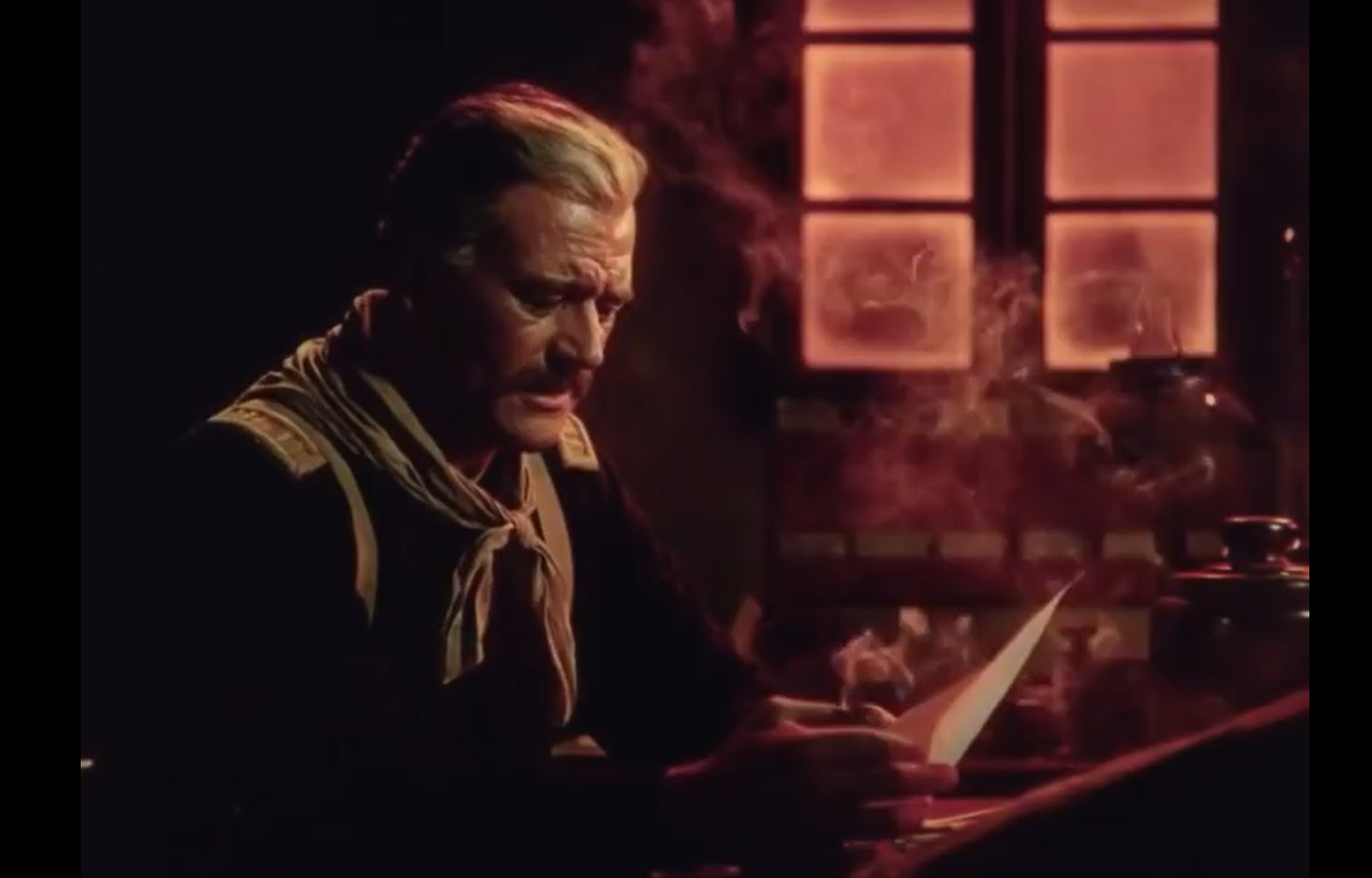
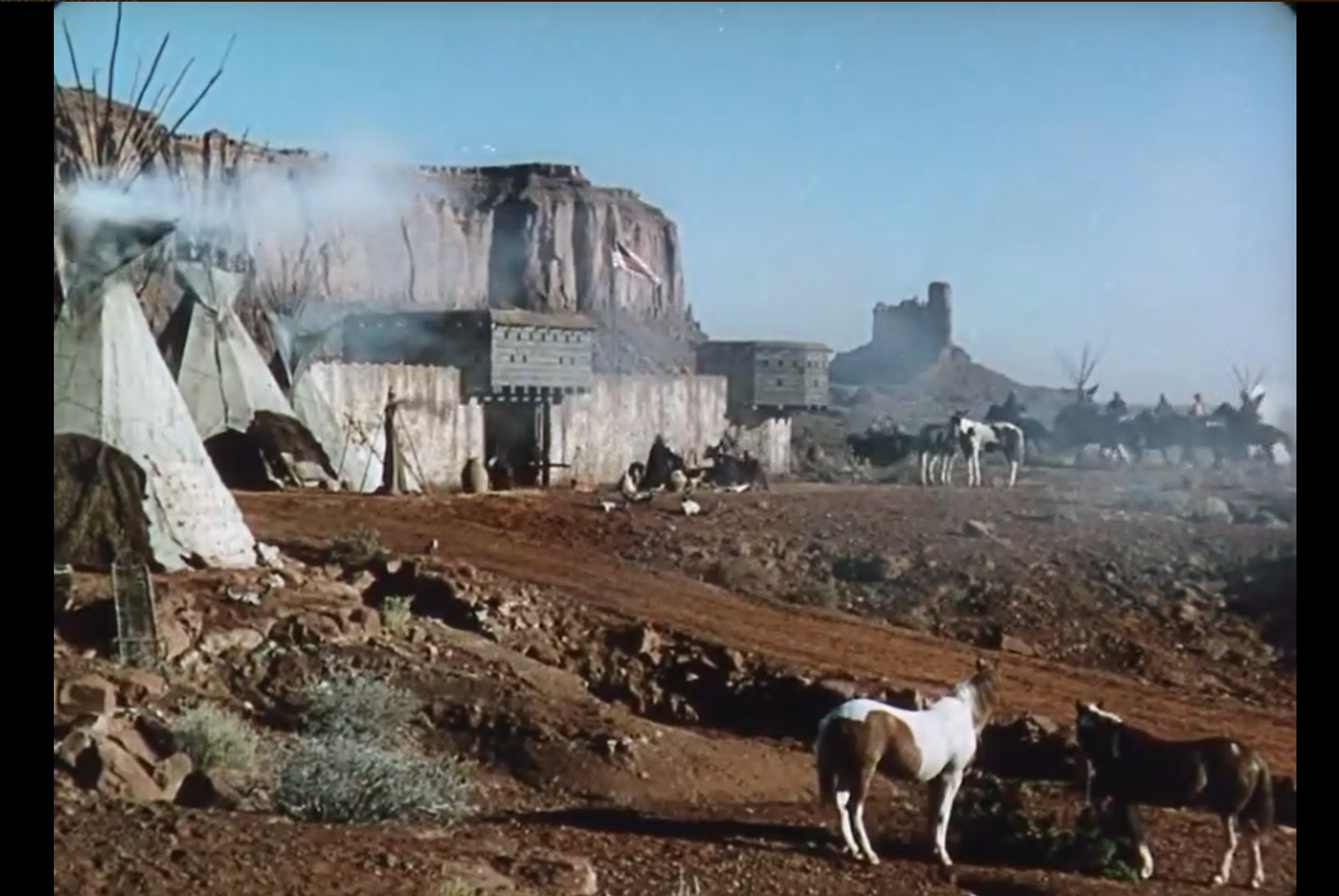
Peary writes that while “this isn’t the film with which to introduce friends to John Ford westerns”, “if you’re already a Ford fan, you’ll love the second picture in his cavalry trilogy, made between Fort Apache and Rio Grande.” He notes that it’s a “tribute to the old guard/old soldiers/the old cavalry,” focusing on the fact that while Lieutenant Cahill (Agar) “is not sufficiently prepared to assume… command at such a vital time,” Captain Brittles (Wayne) will have to accept that “a captain’s job is never done,” and “therefore there will come a time, a crucial time, when Brittles will have to leave his post in the hands of an inexperienced officer.” Peary writes that while “Wayne gives a fine performance,” the “film’s real star is cinematography Winton C. Hoch, who captured the Remington look” while filming “in Monument Valley”.

Peary argues that while “there are too many false endings… and a silly romantic triangle,” “once the cavalry start singing the title song, you’ll get emotional (if you’re a Ford fan) and forget all the film’s flaws” — which include a running gag about McLaglen’s tippling nature (culminating in a silly bar-room brawl), and a demeaning “cameo appearance” by Chief John Big Tree (who mimics some of his limited lines from Drums Along the Mohawk). Peary ultimately argues that while this is “not as good as Fort Apache,” it remains “essential Ford” — and with reluctance I would agree, simply for the incredible imagery.

Redeeming Qualities and Moments:

  • John Wayne as Captain Brittles (nominated by Peary as one of the
  • Stunning Technicolor cinematography by Winton C. Hoch


  • Incredible location shooting in Monument Valley

Must See?
Yes, once, for the Oscar-winning cinematography.

Categories

  • Oscar Winner or Nominee

Links:

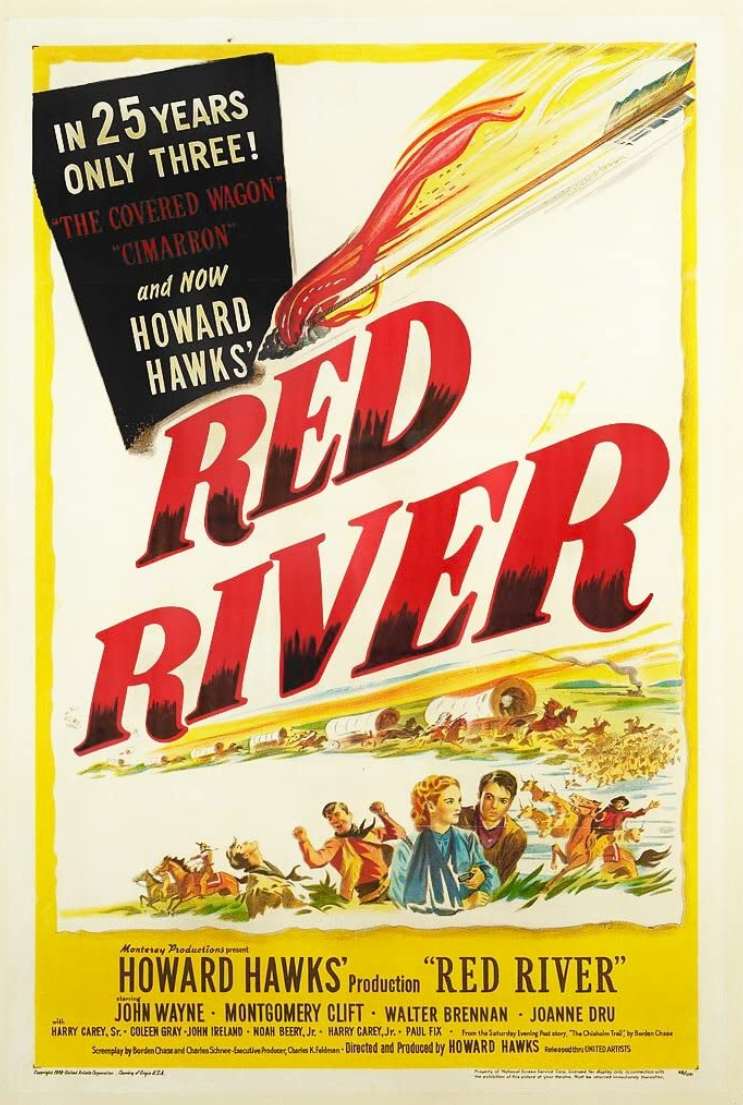
Red River (1948)

Red River (1948)

“I don’t like quitters — especially when they’re not good enough to finish what they start.”

Synopsis:
After his fiancee (Coleen Gray) is killed in a wagon raid, an ambitious rancher (John Wayne) raises an orphan from the raid (Mickey Kuhn) like his own son. Years later, Wayne — accompanied by his cook (Walter Brennan), his now-grown “son” (Montgomery Clift), a loyal gunfighter (John Ireland), and many other hired hands — begins a lengthy cattle drive from Texas to Missouri, but quickly finds his tolerance lagging after one of his men (Ivan Parry) accidentally sets off a stampede that kills another (Harry Carey, Jr.). Soon Wayne becomes so unreasonable about “deserters” that Clift must take over the drive — but Wayne vows revenge; and when he encounters a beautiful young woman (Joanne Dru) Clift has fallen for, she becomes embroiled in their feud as well.

Genres, Themes, Actors, and Directors:

  • Coleen Gray Films
  • Cowboys
  • Howard Hawks Films
  • Joanne Dru Films
  • John Ireland Films
  • John Wayne Films
  • Mentors
  • Montgomery Clift Films
  • Mutiny
  • Ranchers
  • Ruthless Leaders
  • Walter Brennan Films
  • Westerns

Response to Peary’s Review:
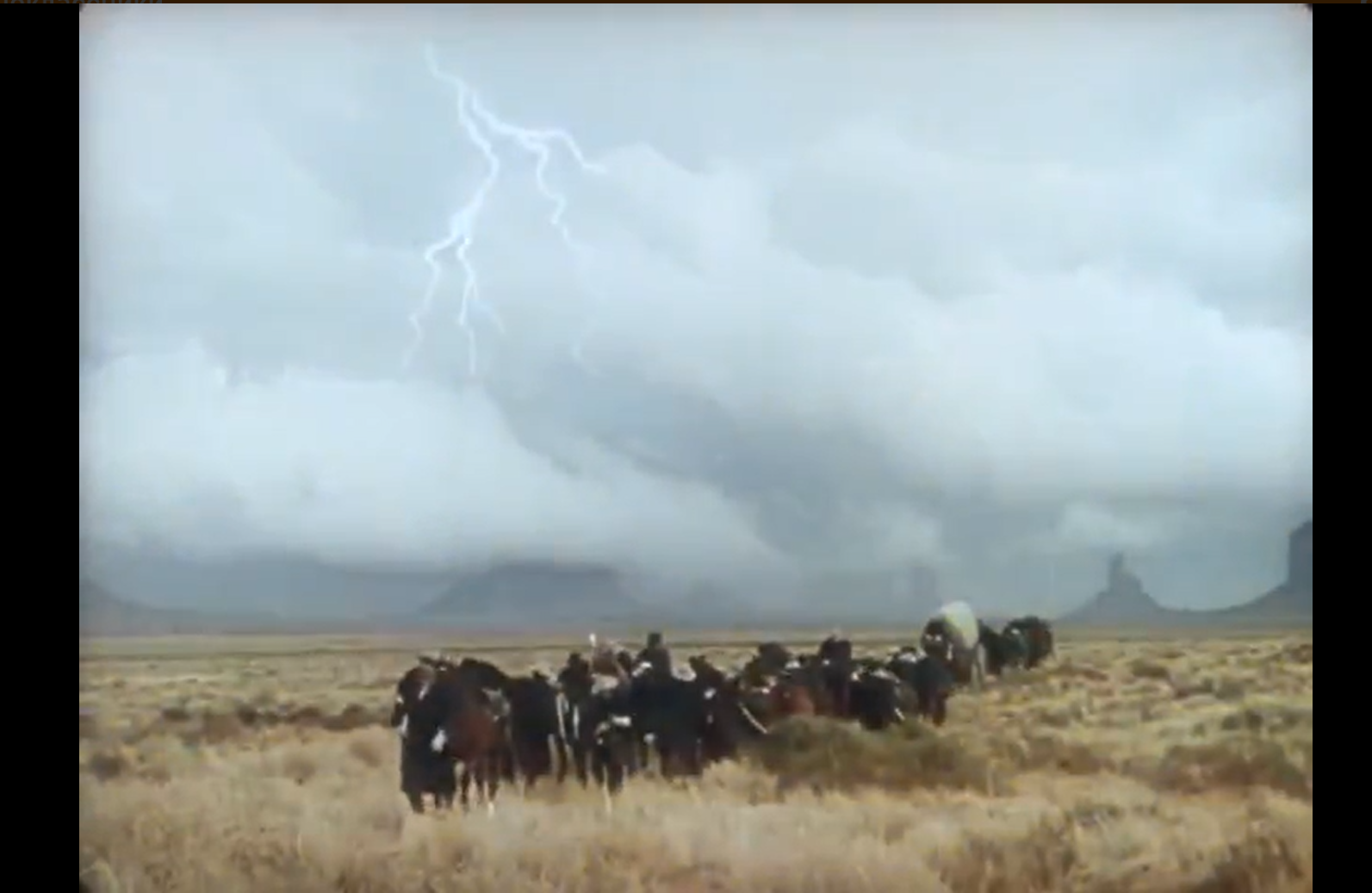
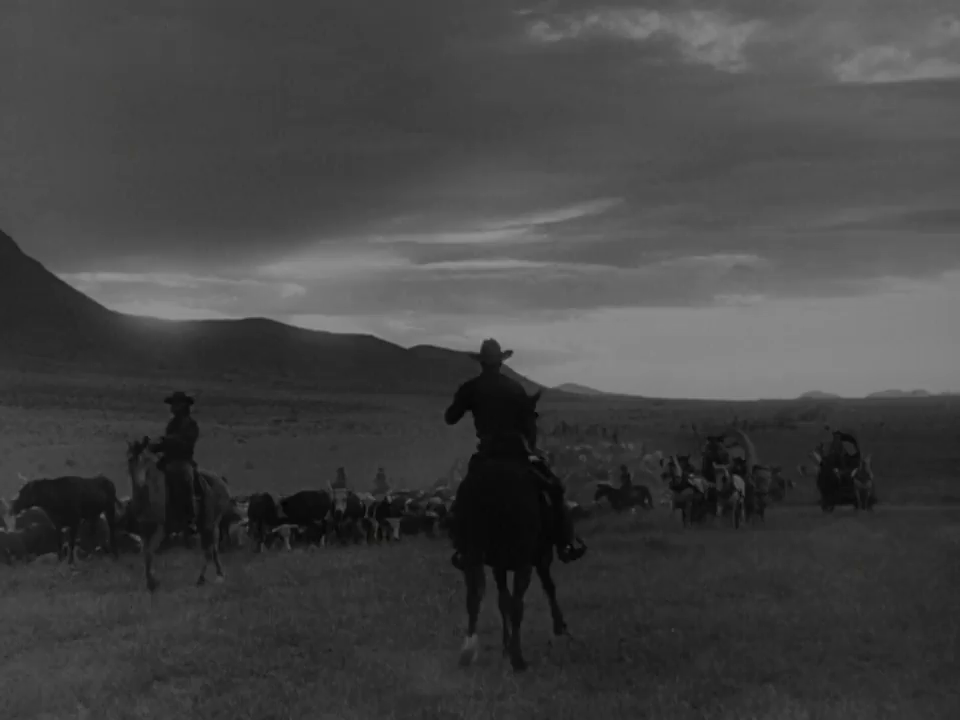
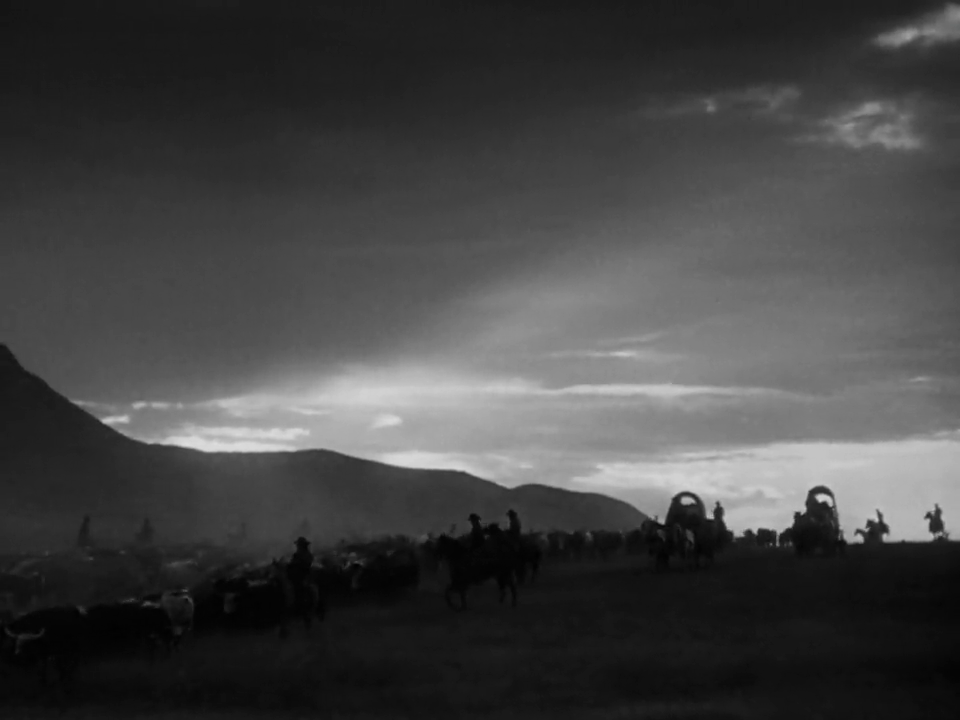
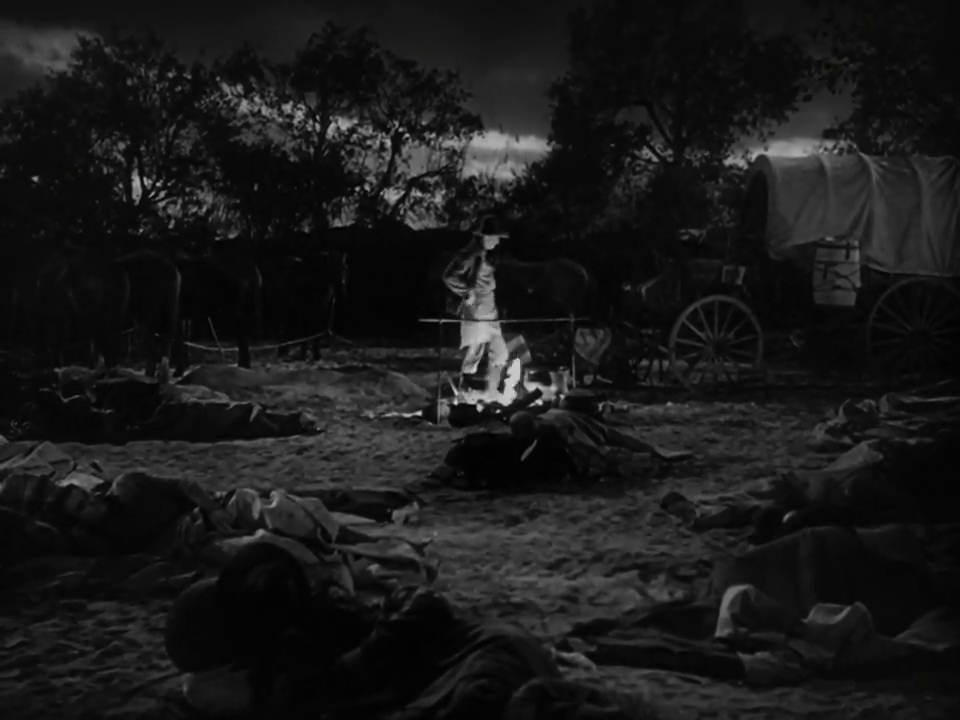
Peary writes that this “monumental first western” by Howard Hawks — “scripted by Borden Chase and Charles Schnee from Chase’s [story] “The Chisholm Trail” — is a “westernized Mutiny on the Bounty that advanced the possibility that the Bligh-Christian conflict was Oedipal in nature” (I wouldn’t go that far). Peary points out that this “unromanticized western has remarkable authenticity” and “beautiful black-and-white photography by Russell Harlan, with [an] emphasis on cloudy skies, barren terrain, [and] darkness that makes night oppressive”, thus giving a “harsh feel to the West”.

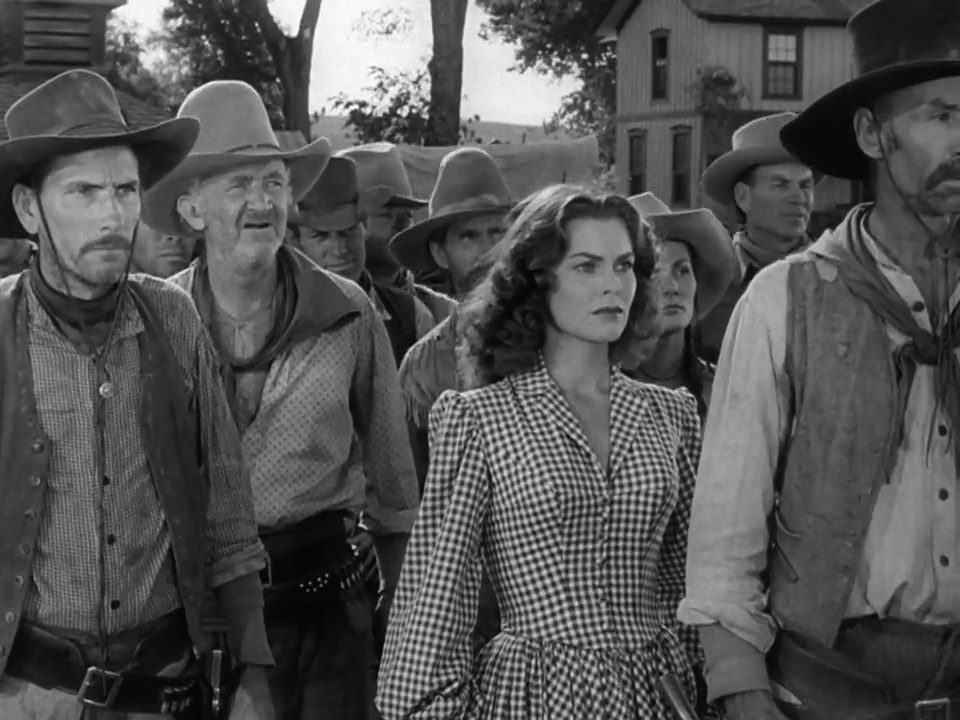
He notes that “Hawks deals with emotions rarely explored in westerns, including Wayne’s uncharacteristic interrelated senses of fear (of failure) and paranoia” — indeed, “this is Wayne’s only character whose sense of morality becomes clouded, who can’t tell the difference between right and wrong.” Peary adds that “Clift, who makes a passable cowboy in his debut, displays sensitivity and tenderness that were almost nonexistent among western heroes” — but he complains (I agree) that miscast Dru’s role — given she comes “in so late in the film and [has] such an important part” to play — changes the picture’s tone, making the ending “momentarily satisfying” but “more suitable for a comedy.”

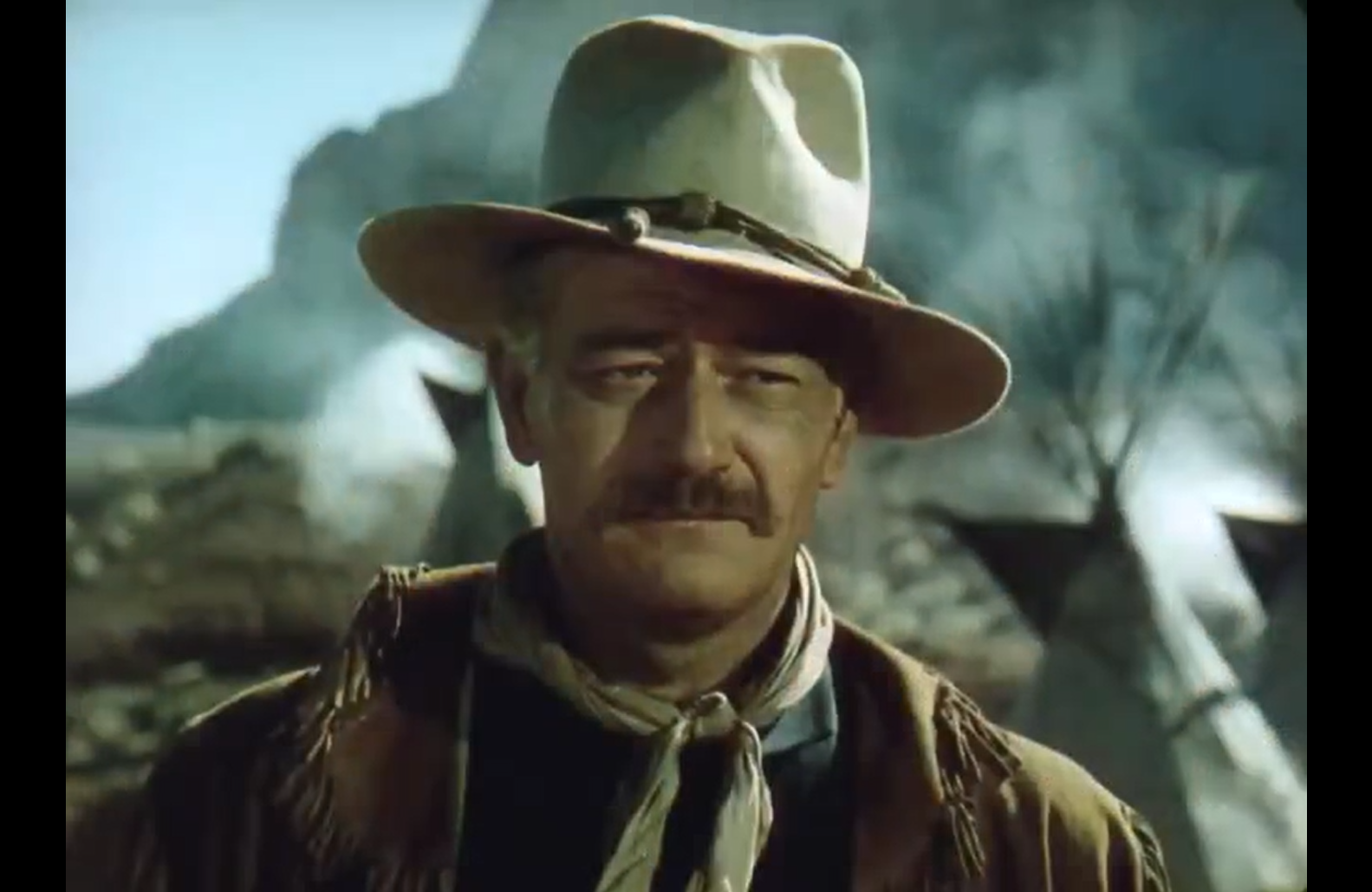
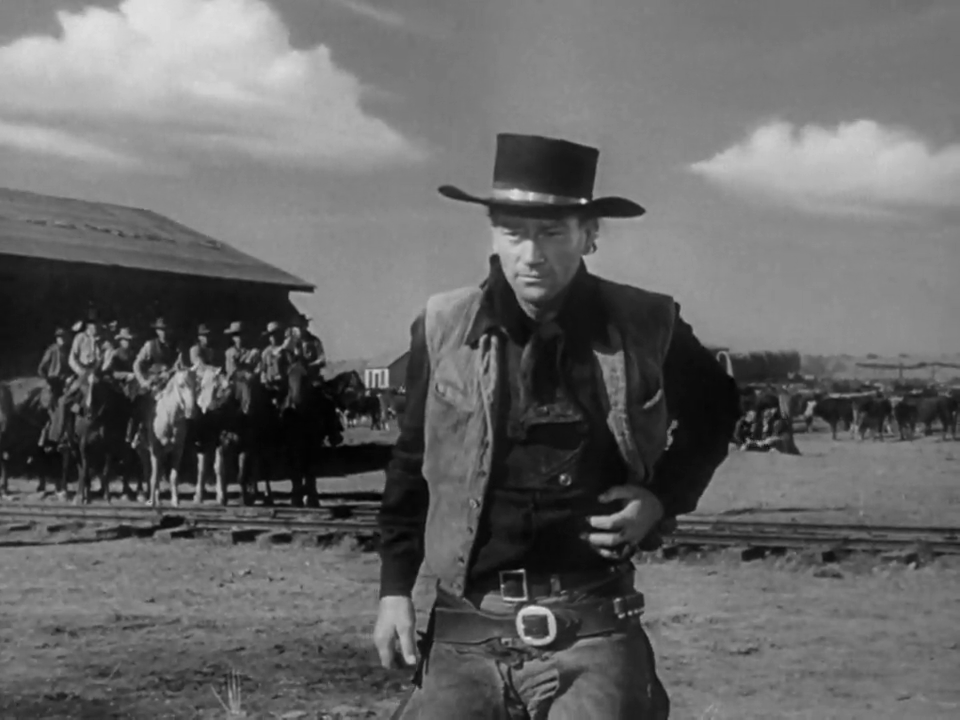
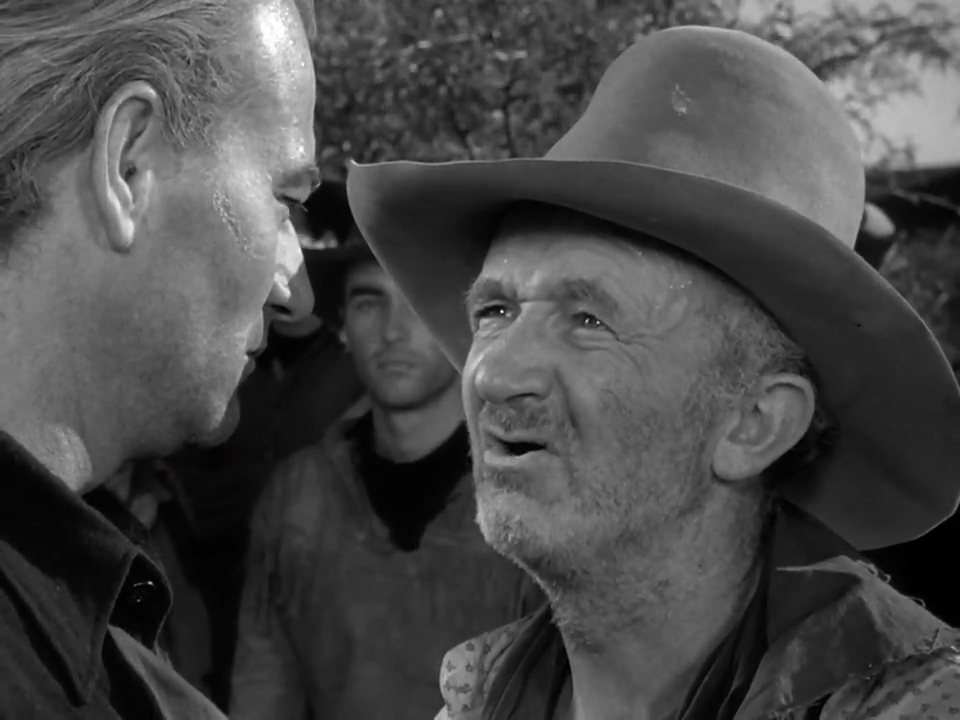
Peary’s review covers many of the essentials of this classic western, which has stood the test of time quite nicely and remains an enjoyable, exciting tale. As Peary points out, “Wayne and Clift are both excellent”, and “their different acting styles work to emphasize their characters’ different attitudes.” Wayne’s willingness to play a Bligh-like character (albeit one we feel some sympathy for) is impressive, and speaks to the acting range he was allowed to display after this point. Clift — in his almost-screen debut, after The Search (1948) — couldn’t be more gorgeous:

… and is entirely credible in his role, bringing nuance to an undeniably challenging situation: needing to take over the reins from one’s beloved but now-unstable “parent”.

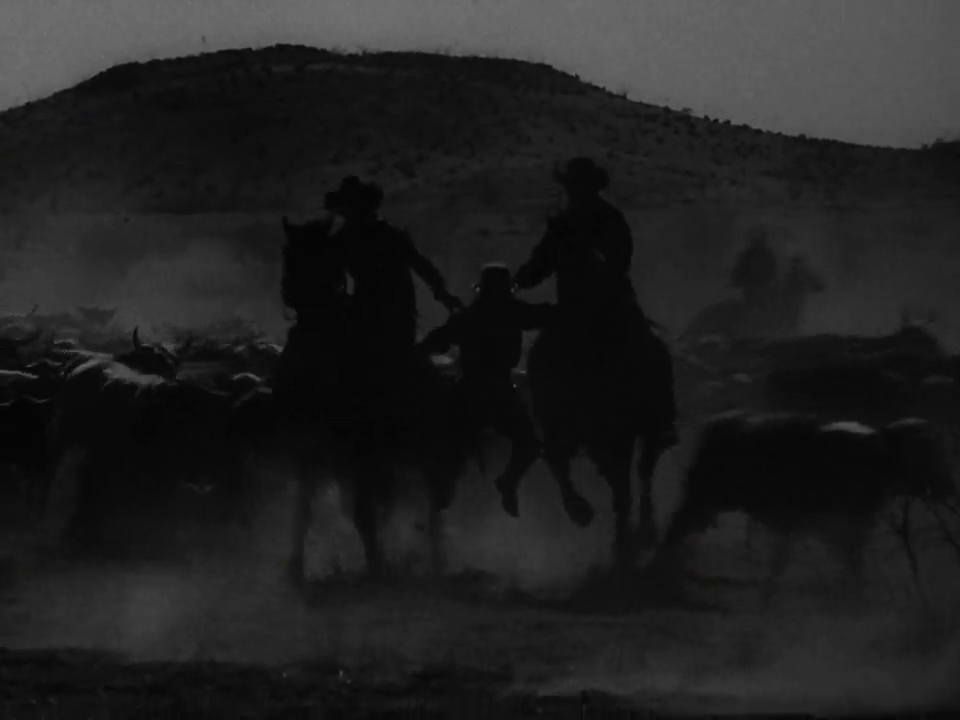
Harlan’s cinematography is indeed gorgeous, and the many sequences involving thousands of cattle are truly impressive.

Redeeming Qualities and Moments:

  • John Wayne as Dunson (nominated by Peary as one of the Best Actors of the Year in Alternate Oscars)
  • Montgomery Clift as Matt Garth
  • Fine supporting performances
  • Russell Harlan’s cinematography


  • Many impressive sequences

Must See?
Yes. Named by Peary as one of the Best Movies of the Year in his Alternate Oscars, and named as one of the Top 10 Westerns by the AFI.

Categories

  • Genuine Classic

(Listed in 1001 Movies You Must See Before You Die)

Links:

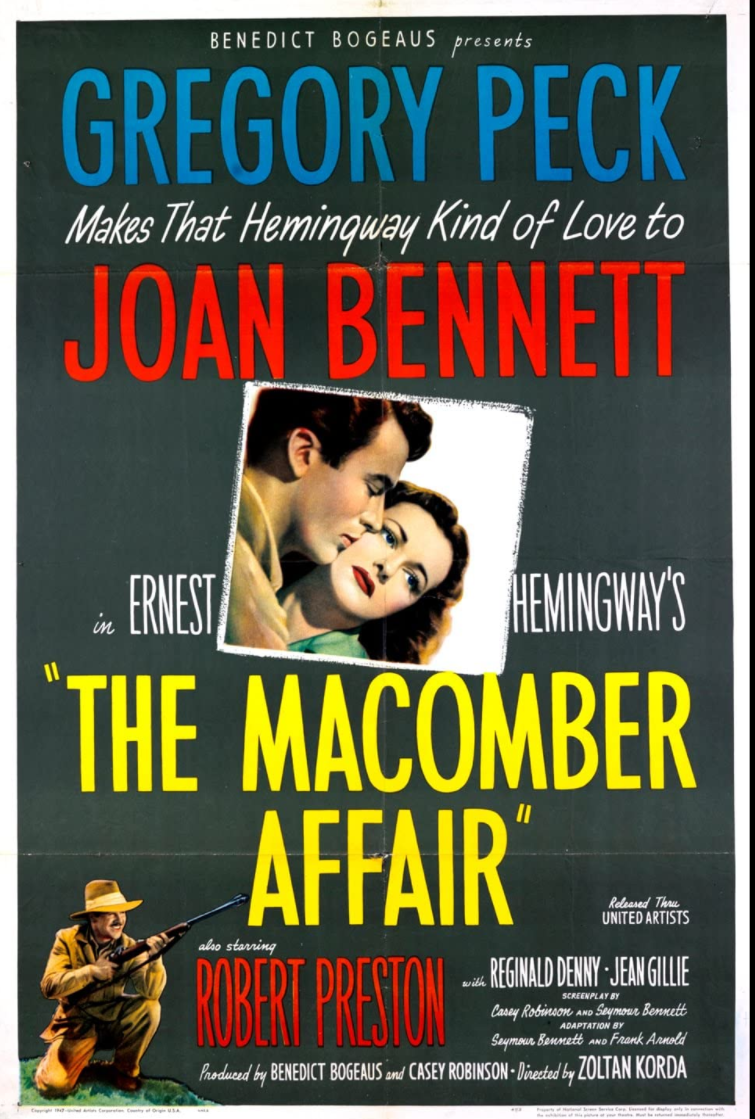
Macomber Affair, The (1947)

Macomber Affair, The (1947)

“He was an odd one, Mr. Macomber.”

Synopsis:
A hunting guide (Gregory Peck) in East Africa reflects back on an accident in which a woman (Joan Bennett) kills her husband (Robert Preston) during a safari.

Genres, Themes, Actors, and Directors:

  • Africa
  • Flashback Films
  • Gregory Peck Films
  • Hunting
  • Joan Bennett Films
  • Love Triangle
  • Marital Problems
  • Masculinity
  • Robert Preston Films
  • Zoltan Korda Films

Review:
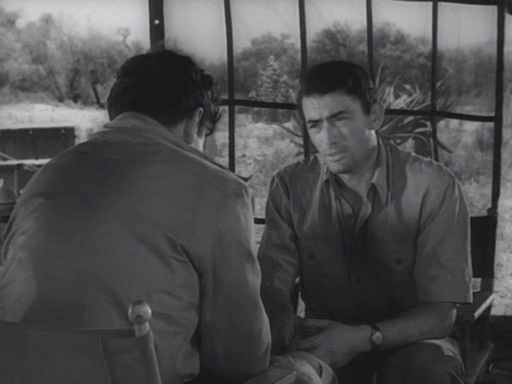
Zoltan Korda directed this adaptation of a short story by Ernest Hemingway, about the impact of a hunting safari on an already-tense marriage. The narrative structure of Preston and Bennett off in the wilderness with only their guide (Peck) and two assistants available offers a convenient framework for peeking into the couple’s troubles: Bennett is there to assess her husband’s every move, and unfortunately, he doesn’t measure up. By the time a critical interaction with a lion occurs (and Preston reacts with fear rather than bravery), it’s clear Bennett’s disdain for Preston cannot be salvaged — especially with handsome, intrepid Peck as a counterpoint.

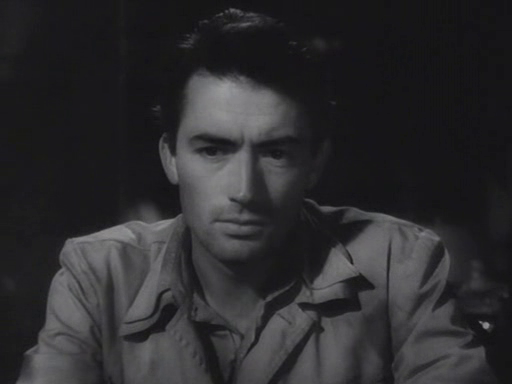
Peck (who co-produced) gives an excellent performance as a man thoroughly versed in the “code” of big game hunting, who tries to help Preston see that his protestations and apologies are not only unnecessary but unseemly. (Apparently, while it’s okay to “chicken out” and allow one’s guide to take over at any moment, it’s not acceptable to make a fuss over this and allow one’s insecurities to show too prominently.) This film isn’t must-see viewing, but is a fine adaptation.

Redeeming Qualities and Moments:

  • Gregory Peck as Robert Wilson
  • Atmospheric cinematography

Must See?
No, though it’s worth a one-time look. Listed as a Sleeper and a Personal Recommendation in the back of Peary’s book.

Links:

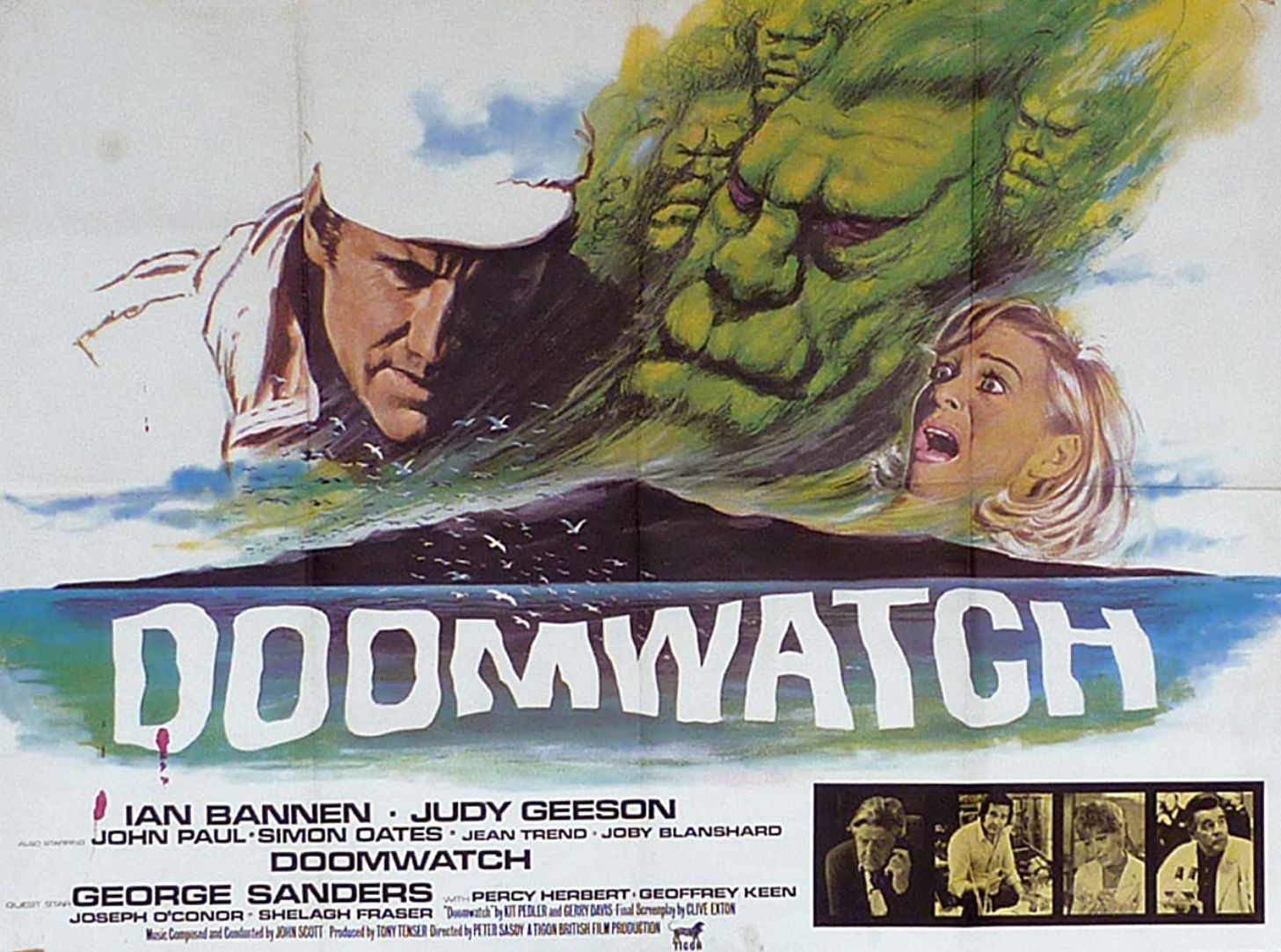
Doomwatch (1972)

Doomwatch (1972)

“This island has trouble enough of its own without you coming here and stirring up more!”

Synopsis:
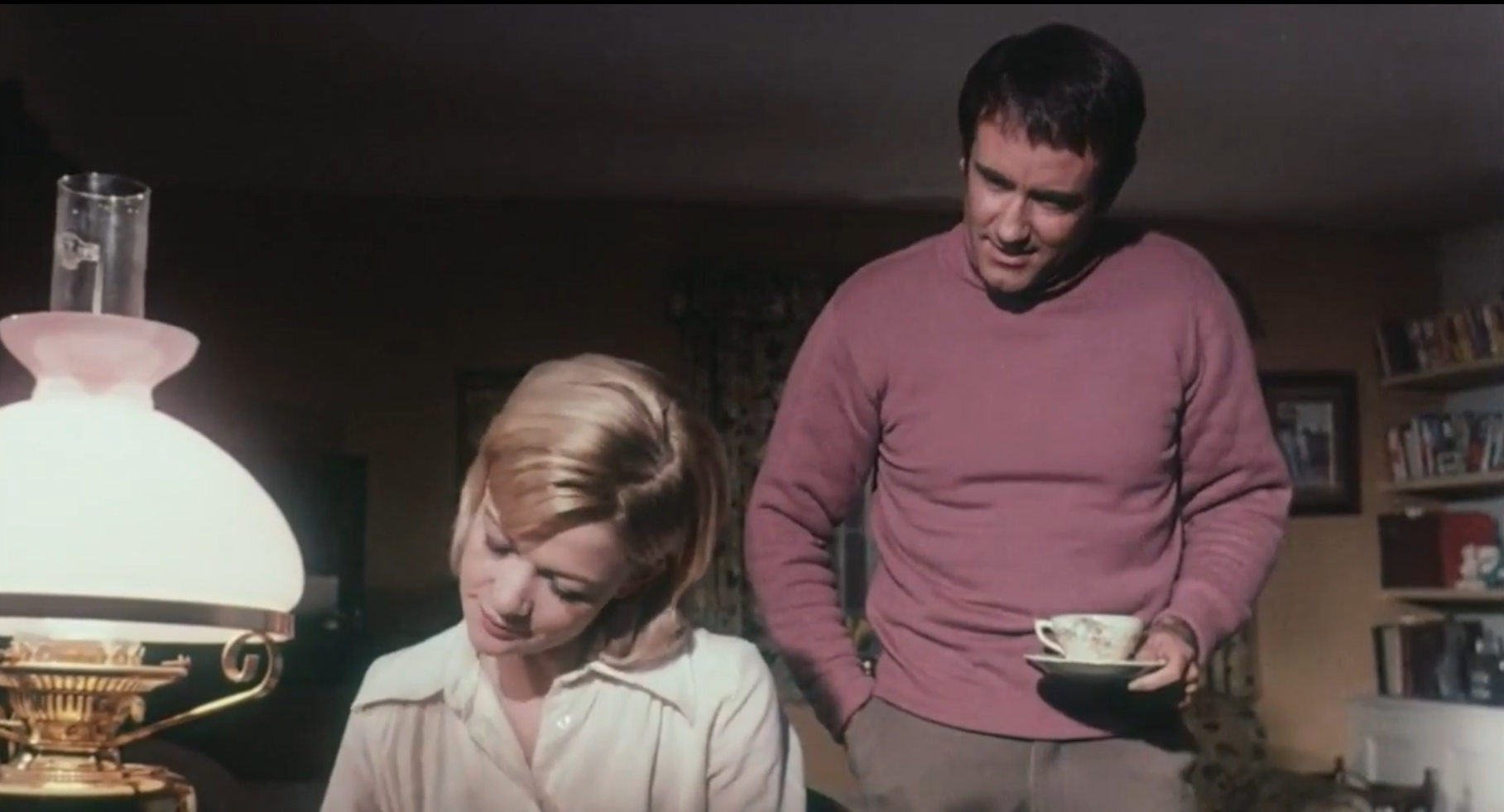
A scientist (Ian Bannen) with the British environmental watchdog group Doomwatch is concerned when he visits the island of Balfe and notices its residents acting both secretive and aggressive, with some appearing to suffer from acromegaly. With the help of a local schoolteacher (Judy Geeson) and his colleagues back in London (John Paul, Simon Oates, and Jean Trend), he investigates what might be happening to this tight-knit community — and why.

Genres, Themes, Actors, and Directors:

  • Amateur Sleuths
  • George Sanders Films
  • Science Fiction
  • Scientists

Review:
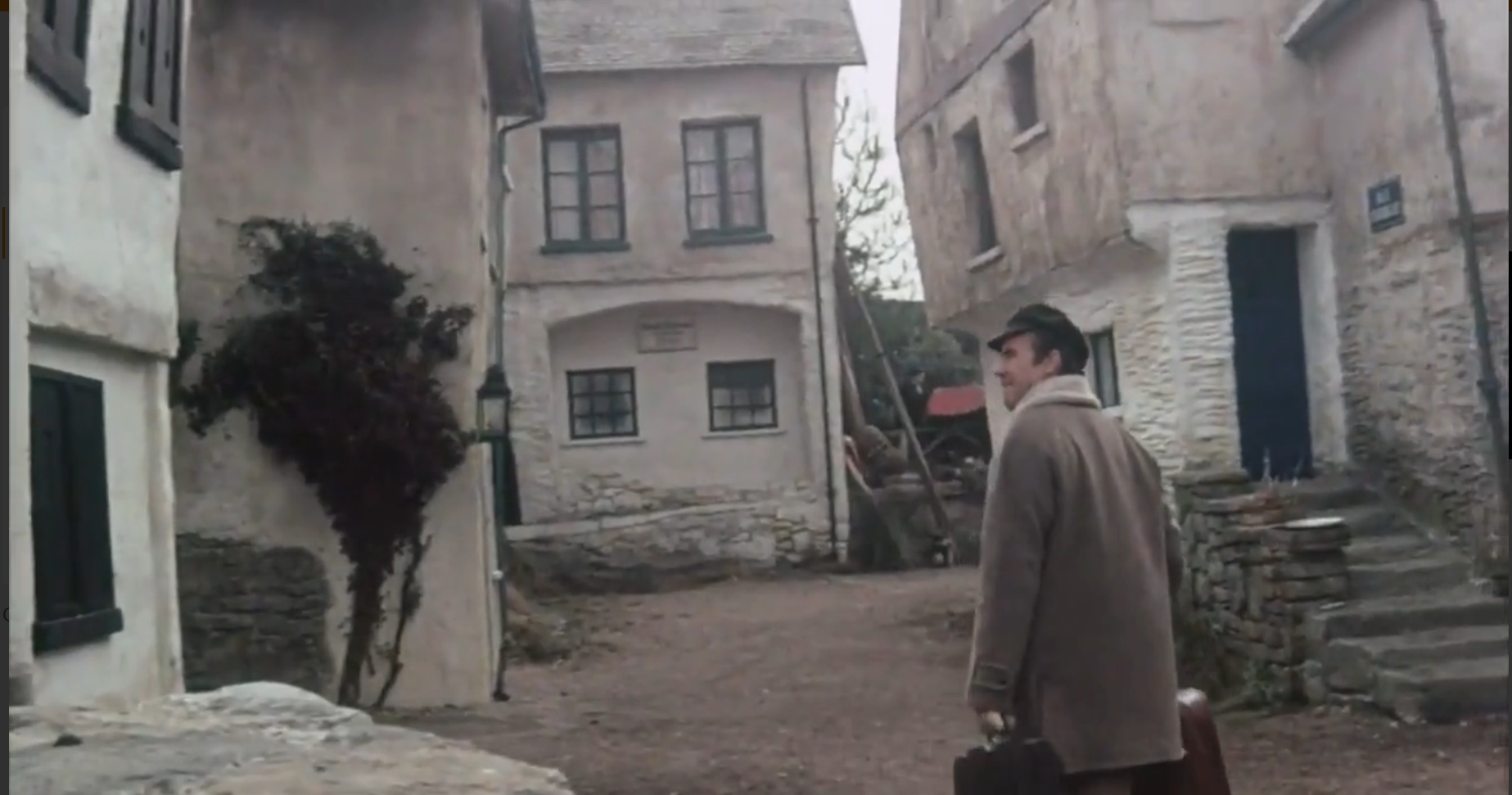
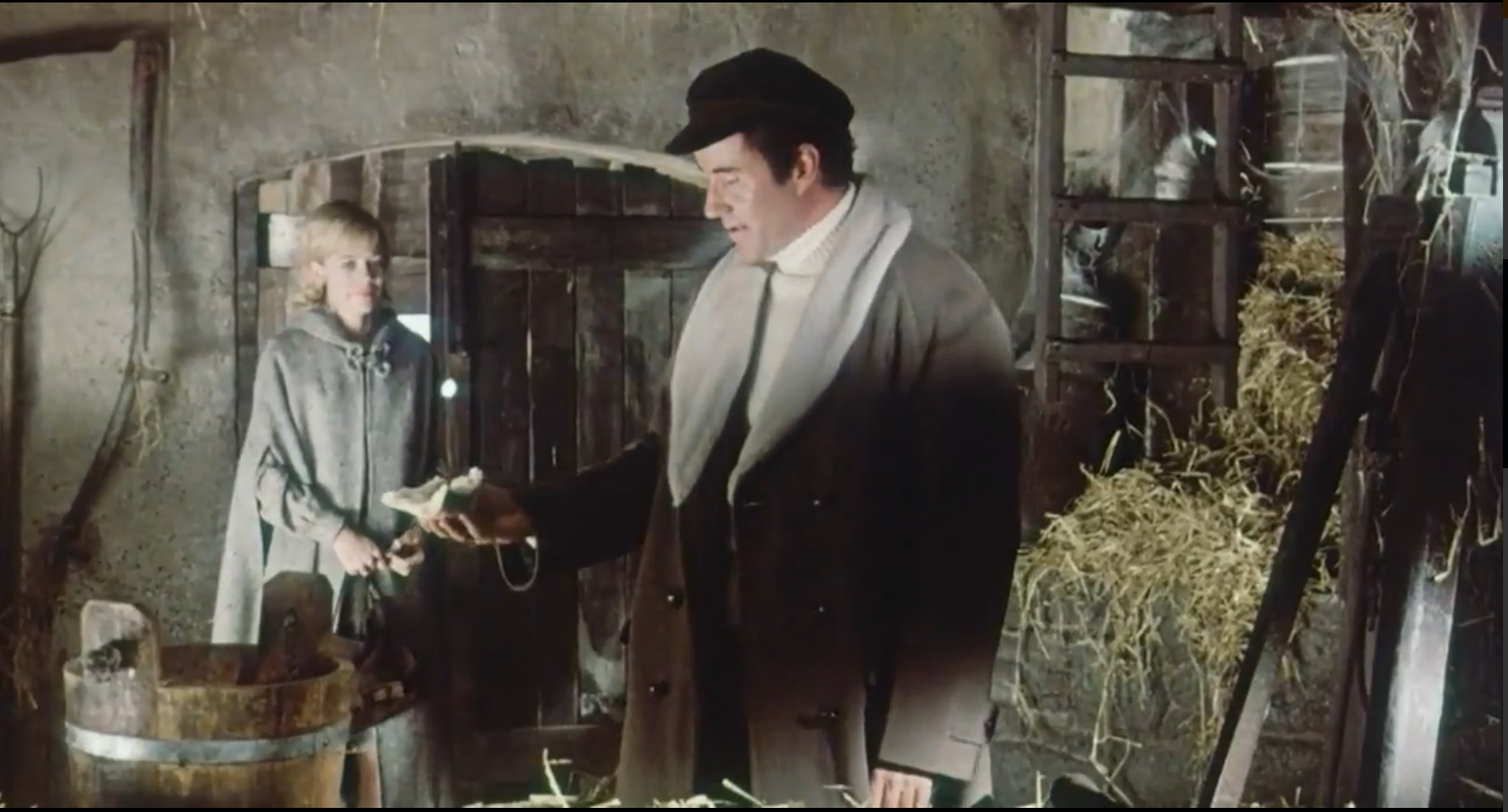
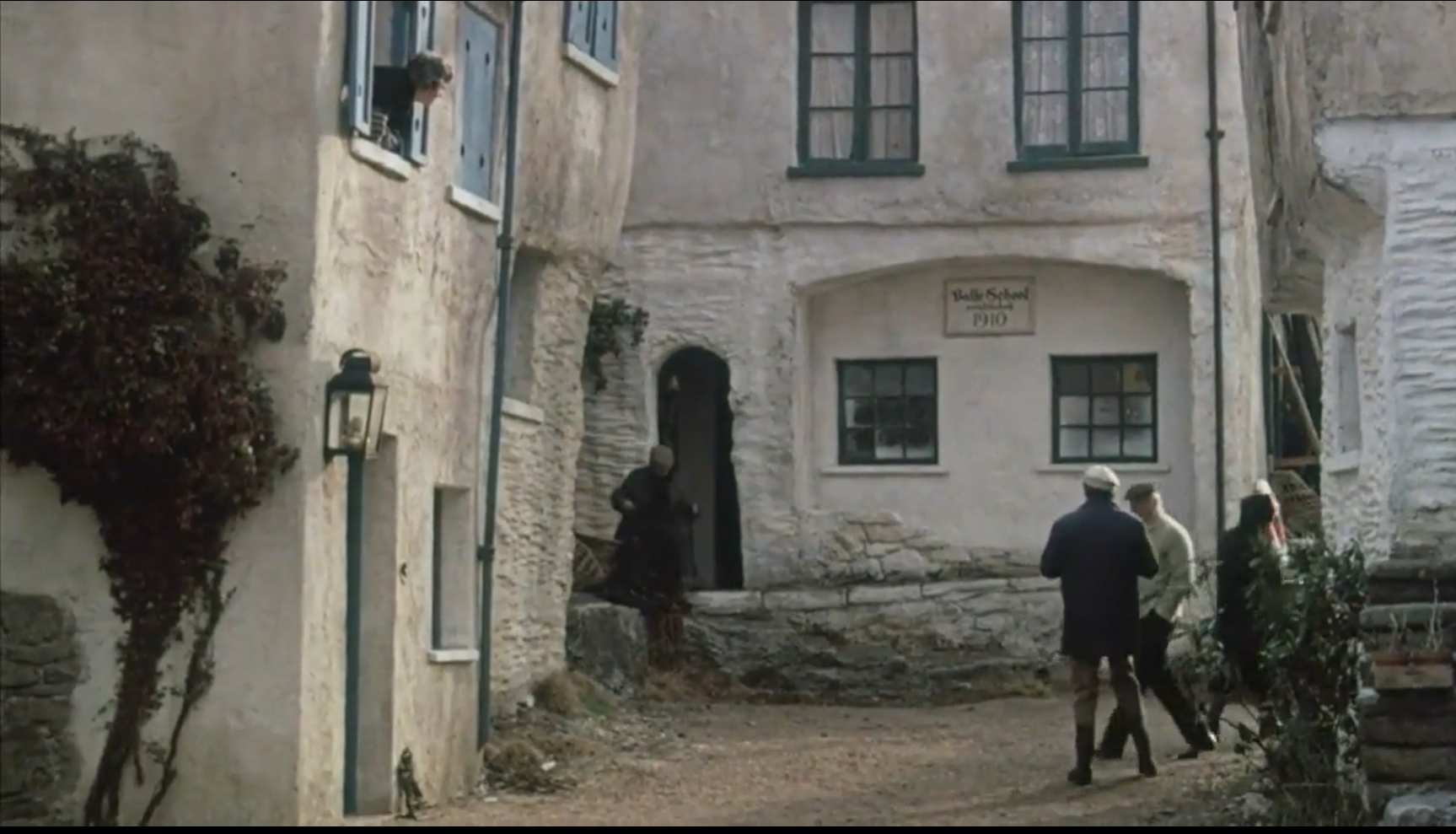
This follow-up to the similarly titled BBC TV series (1970-1972) is based on the intriguing premise of a (fictional) environmental protection agency discovering literally horrific after-effects of environmental catastrophes. Indeed, Doomwatch starts off very much like a horror film akin to The Wicker Man (1973), as an “outsider” visits a cloistered island where the residents refuse to share exactly what’s going on in their community.

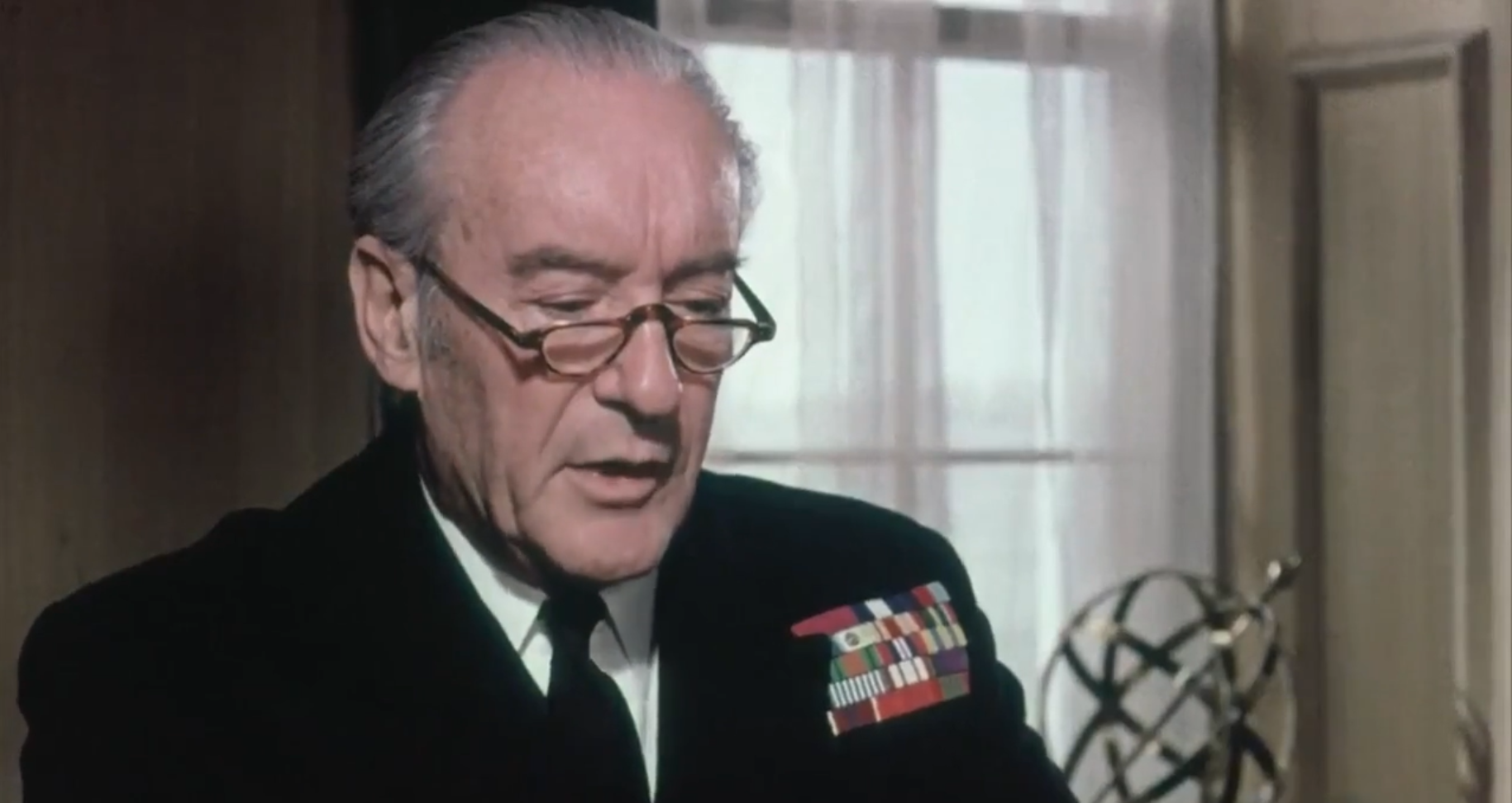
However, Bannen isn’t trapped on the island, and gets plenty of support from his colleagues back in London:

— so the feeling of anxiety and claustrophobia dissipates, turning the story into more of a procedural mystery: what in the world is impacting these people to the extent that they’re experiencing fear of their own loved ones? I’m not a fan of Bannen’s performance (he comes across as brash and smirky), and Geeson’s role is underdeveloped (how did she end up at the island in the first place?).

However, the inherent tension in solving the mystery at least keeps one reasonably engaged throughout.

Note: George Sanders appears in a thankless supporting role, one of his last before dying at the age of 65.

Redeeming Qualities and Moments:

  • Atmospheric cinematography and sets

  • Fine location shooting

Must See?
No, though it’s worth a one-time look if you’re curious. Listed as a Sleeper in the back of Peary’s book.

Links:

Hud (1963)

Hud (1963)

“The shape of the country changes depending on the men we believe in.”

Synopsis:
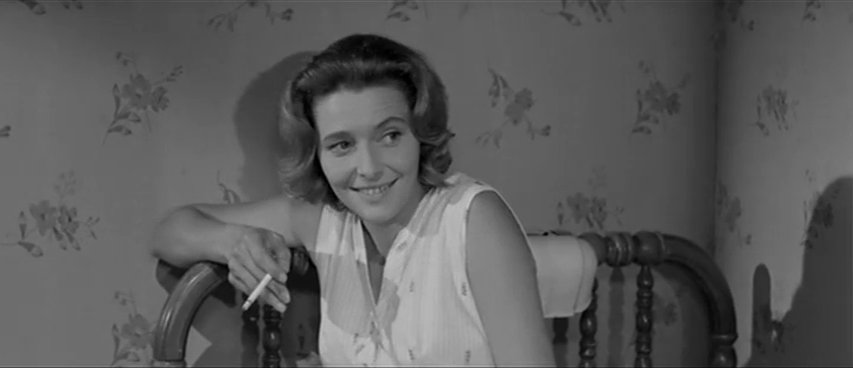
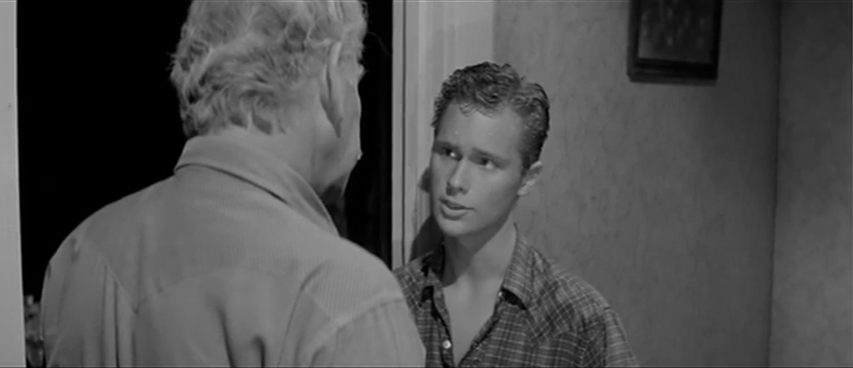
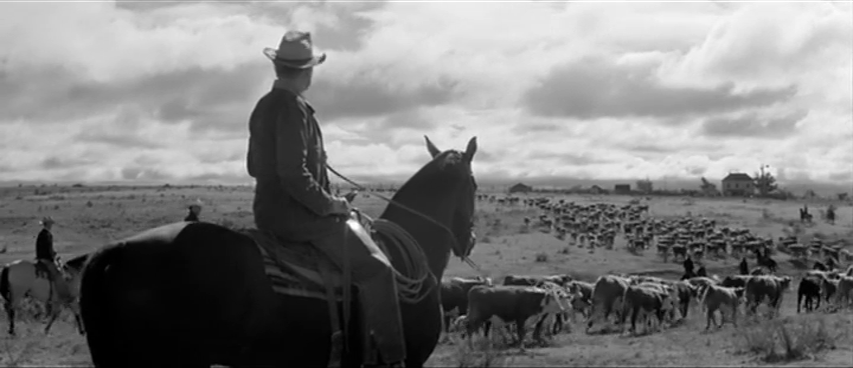
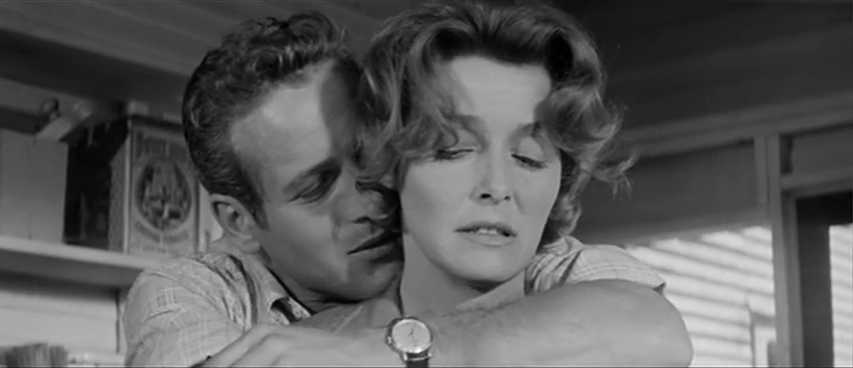
When an aging rancher (Melvyn Douglas) learns his cattle may have foot-and-mouth disease, tensions become even more heated with his selfish, womanizing son (Paul Newman), who pursues their housekeeper (Patricia Neal) while attempting to provide guidance to his good-hearted nephew (Brandon De Wilde).

Genres, Themes, Actors, and Directors:

  • Martin Ritt Films
  • Melvyn Douglas Films
  • Father and Child
  • Patricia Neal Films
  • Paul Newman Films
  • Ranchers
  • Westerns

Review:
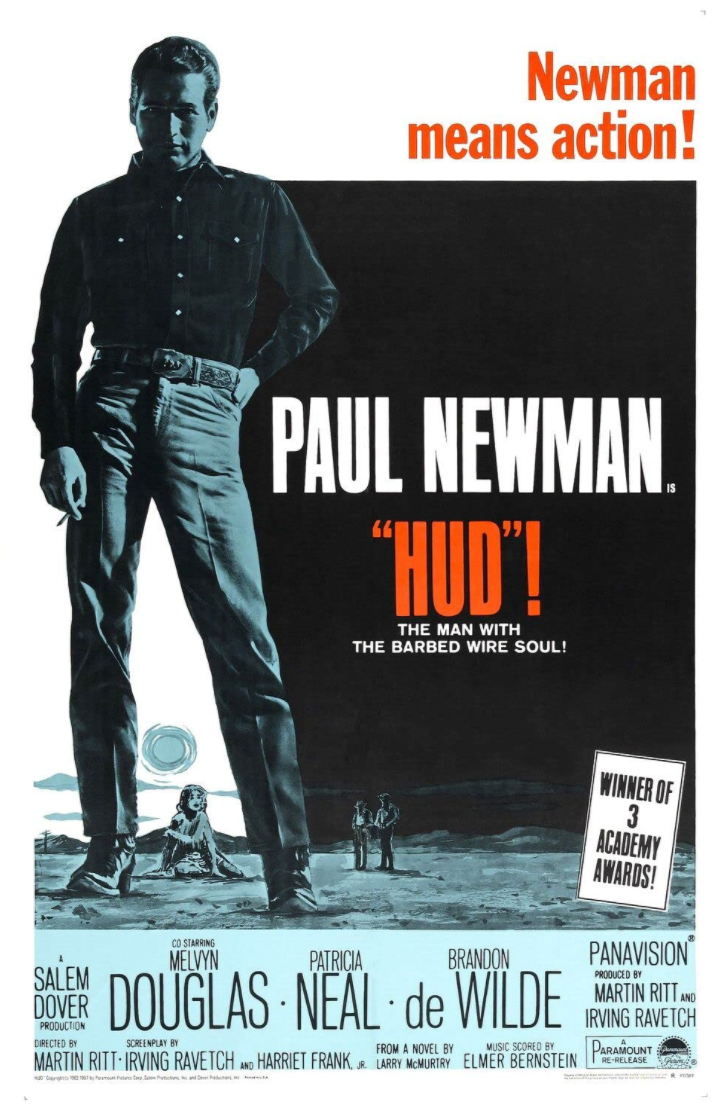
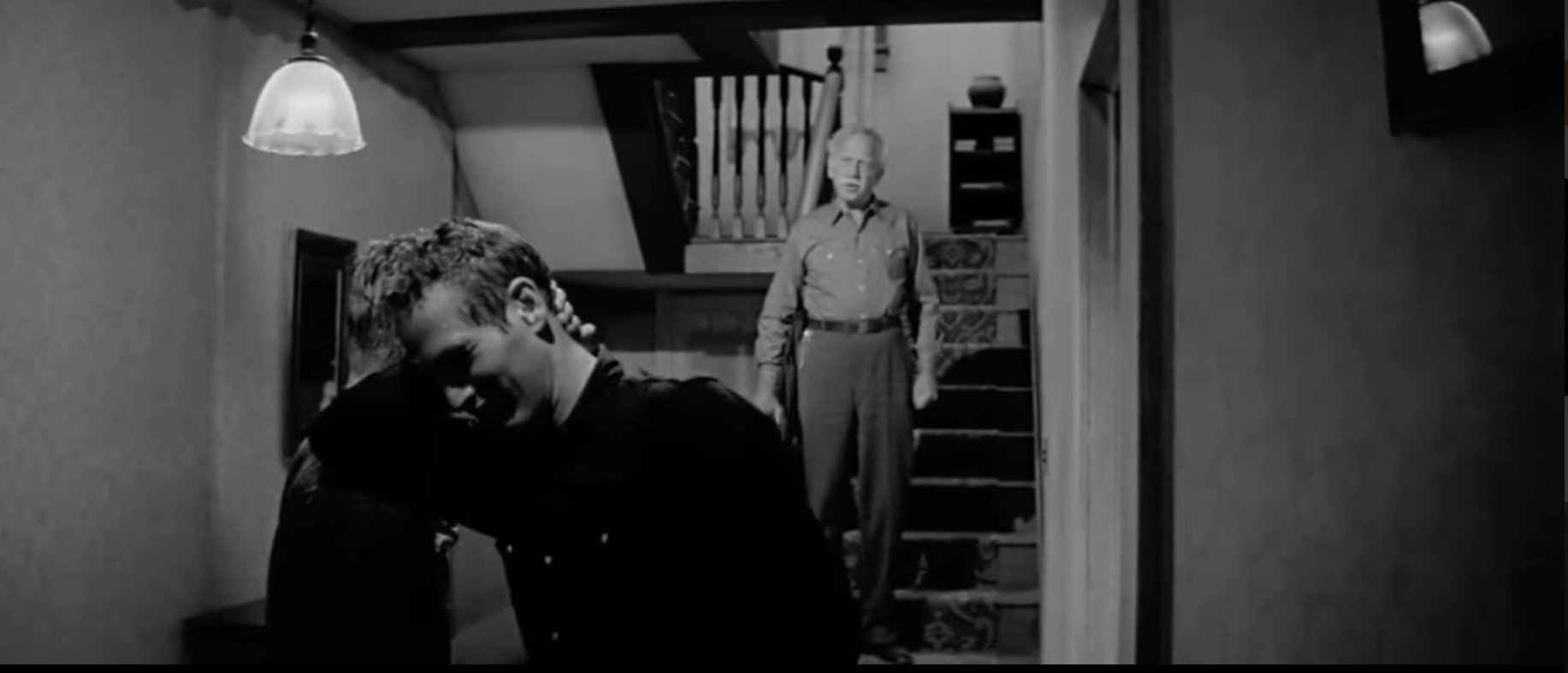
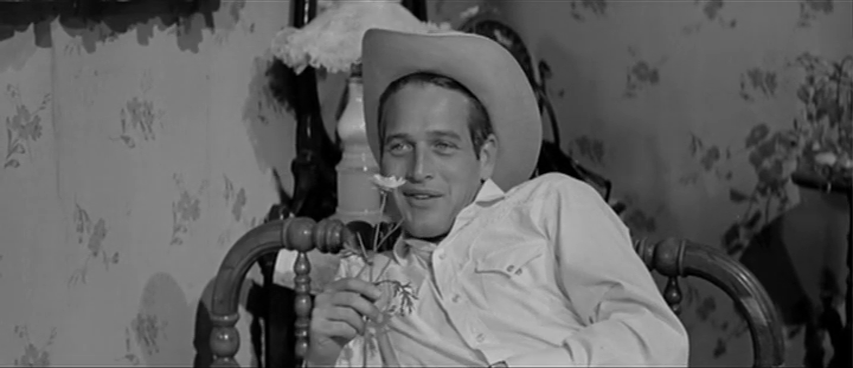
Patricia Neal won an Oscar for her small yet powerful performance in this bleak “modern western”, featuring an unmitigated cad as the central (title) character. Indeed, DVD Savant describes Newman’s Hud as a “genuine Texas heel” — someone who’s “got a big hole in him where companionship should be” and, “like much of the rest of the American spirit, no longer cares what he’s doing or who he does it to, just so long as the profit is still there and there’s beer in the fridge.”

Ouch.

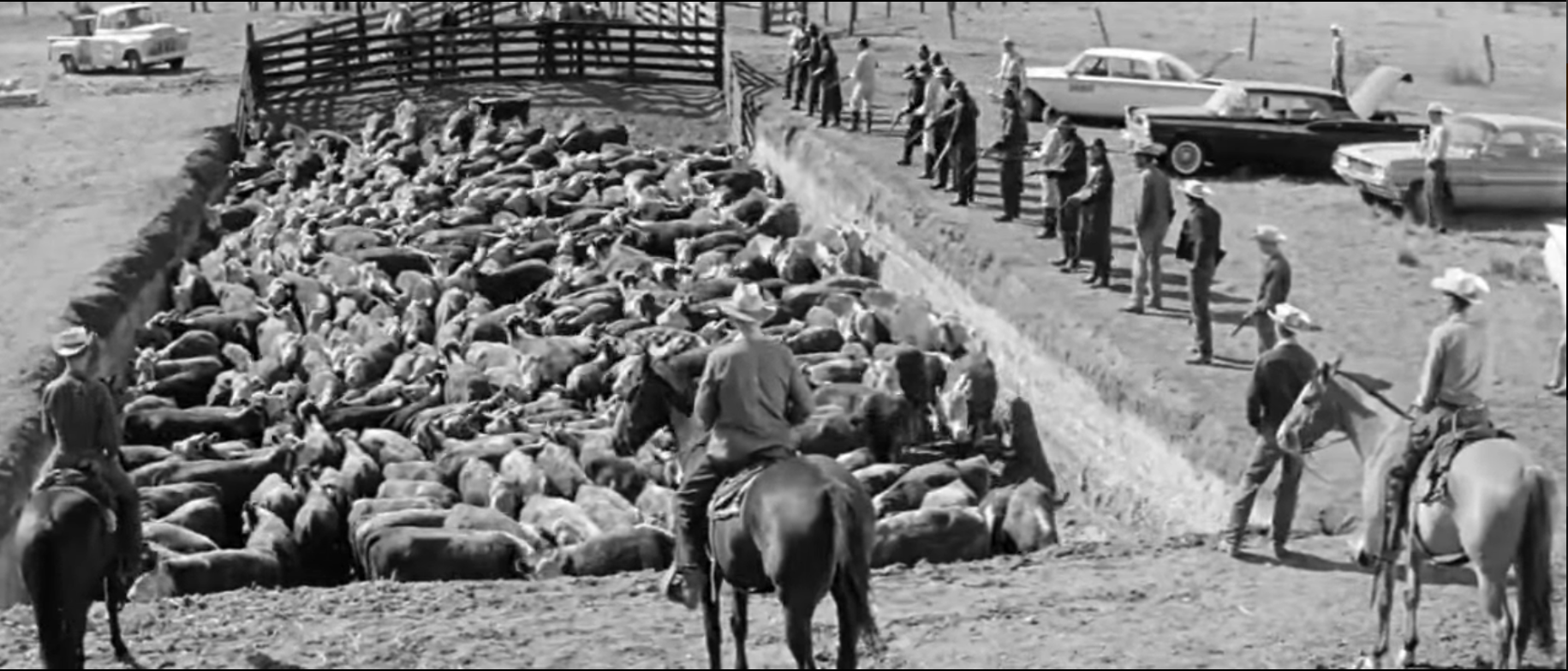
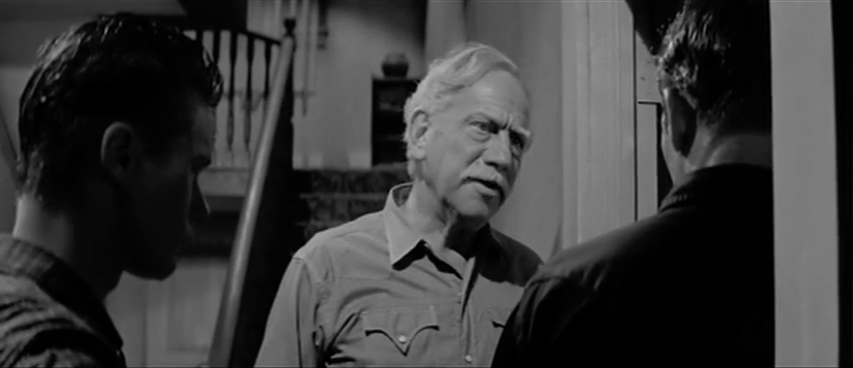
Thank goodness for De Wilde’s Lonnie, who represents a better hope for the future. Meanwhile, as we see Douglas grappling with life-altering news about his cattle — it’s nothing short of eerie seeing a “highly communicable viral disease” at the heart of a storyline right now — we can’t help wondering how in the world he developed such intense loathing for his own son. (Apparently Hud was changed from stepson to son when Larry McMurtry’s novel Horseman, Pass By was adapted, and Homer’s wife was removed from story — both of which could help fill in gaps about their relationship.)

Regardless, this is a film about alienation in all its forms — and both director Martin Ritt and DP James Wong Howe portray this sensibility magnificently. The actors are top-notch in their roles, perhaps thanks in large part to Ritt’s theatrically-grounded rehearsal process. It’s harsh knowing Newman was so in character that upon hearing about the recent death of Neal’s seven-year-old daughter, he simply said “Tough”, and walked away. I suppose kudos should be given to the storytellers for daring to show us the reality of such deep-seated self-absorption and disdain for humanity — though viewers should be forewarned that this is an enormously bleak tale on nearly every level; the final cattle scenes are especially brutal to watch.

Redeeming Qualities and Moments:

  • Paul Newman as Hud
  • Melvyn Douglas as Homer
  • Patricia Neal as Alma
  • Brandon De Wilde as Lonnie
  • James Wong Howe’s cinematography

Must See?
Yes, for the performances. Selected in 2018 for preservation in the United States National Film Registry by the Library of Congress as being “culturally, historically, or aesthetically significant”.

Categories

  • Noteworthy Performance(s)
  • Oscar Winner or Nominee

(Listed in 1001 Movies You Must See Before You Die)

Links: