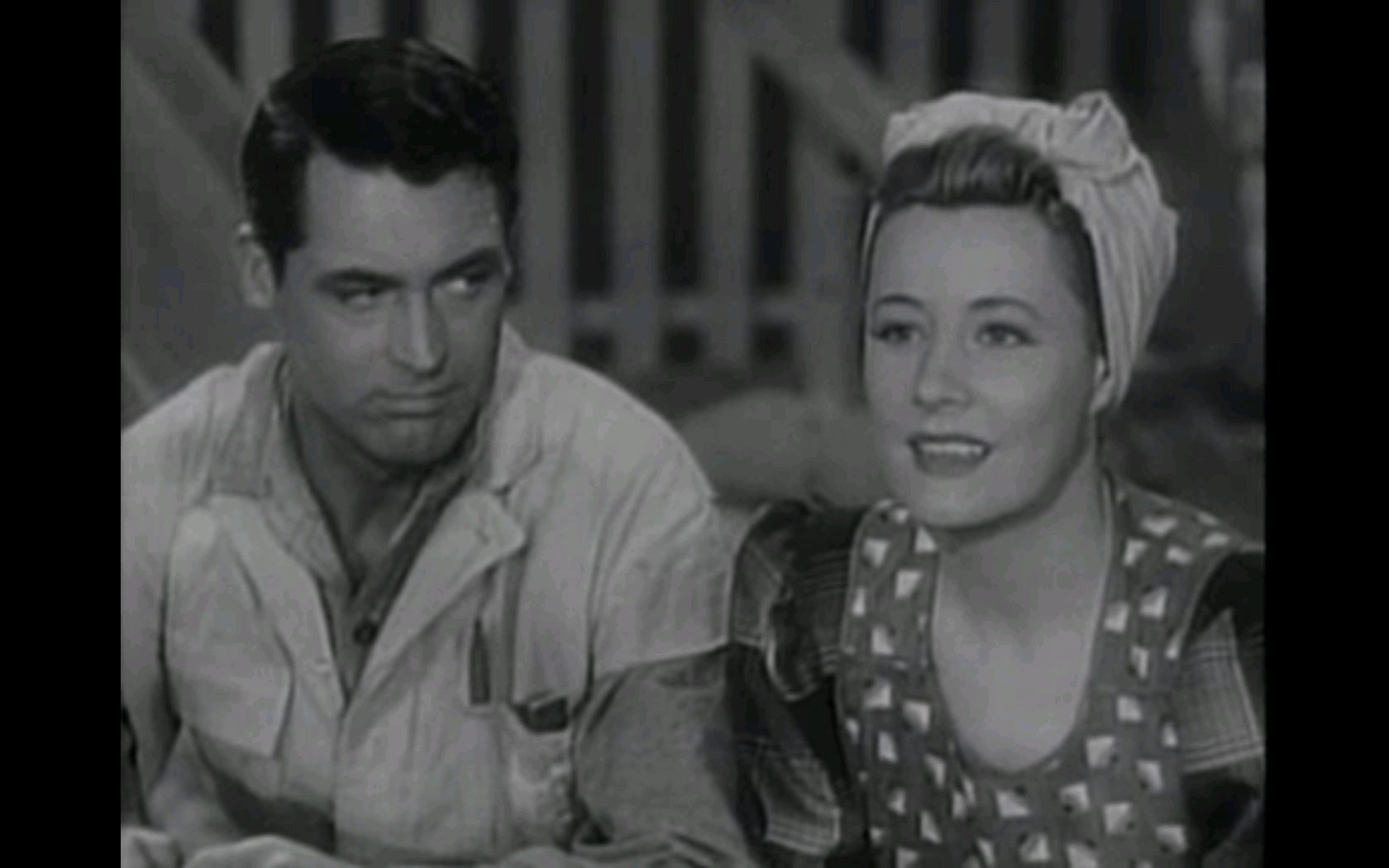
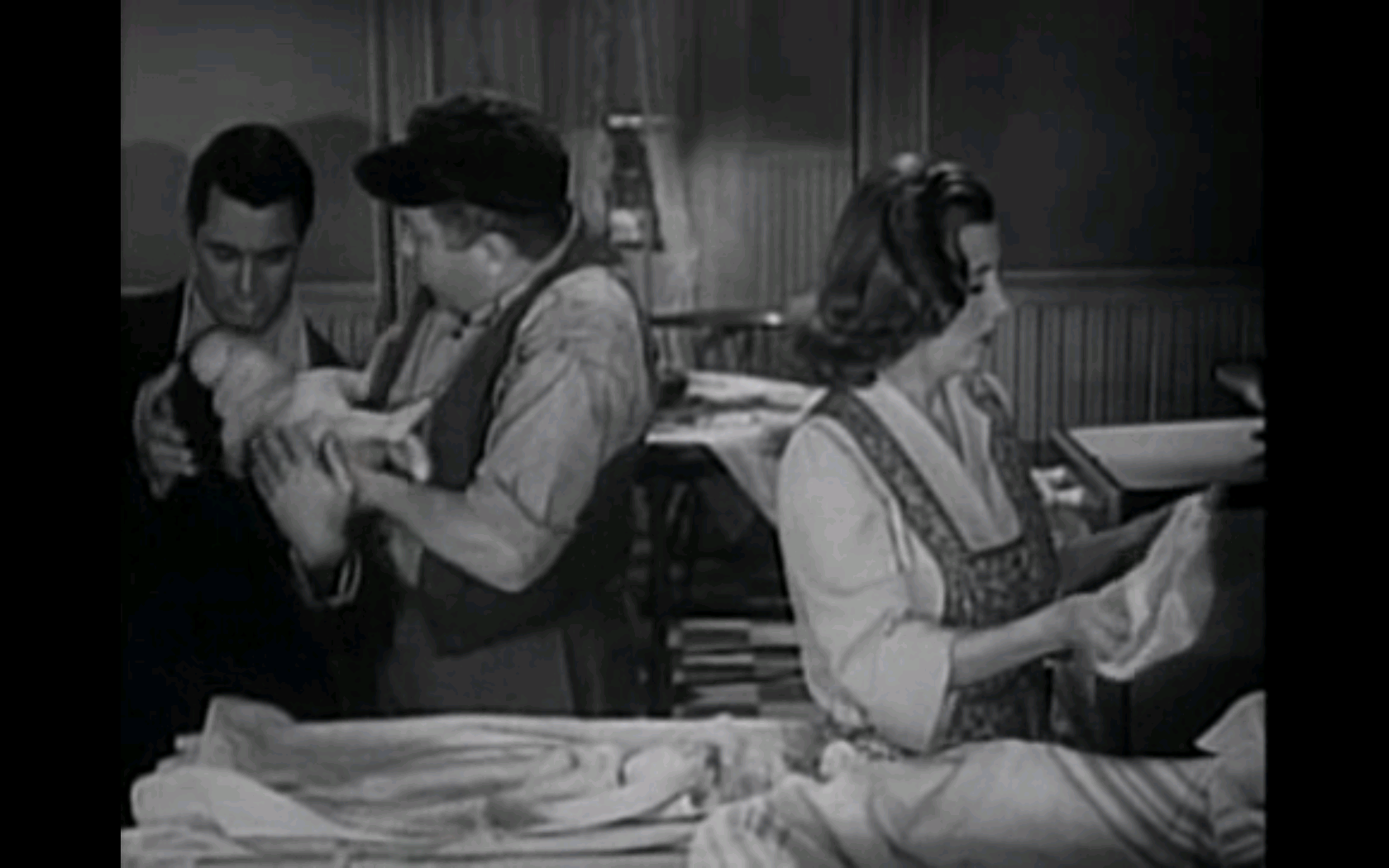
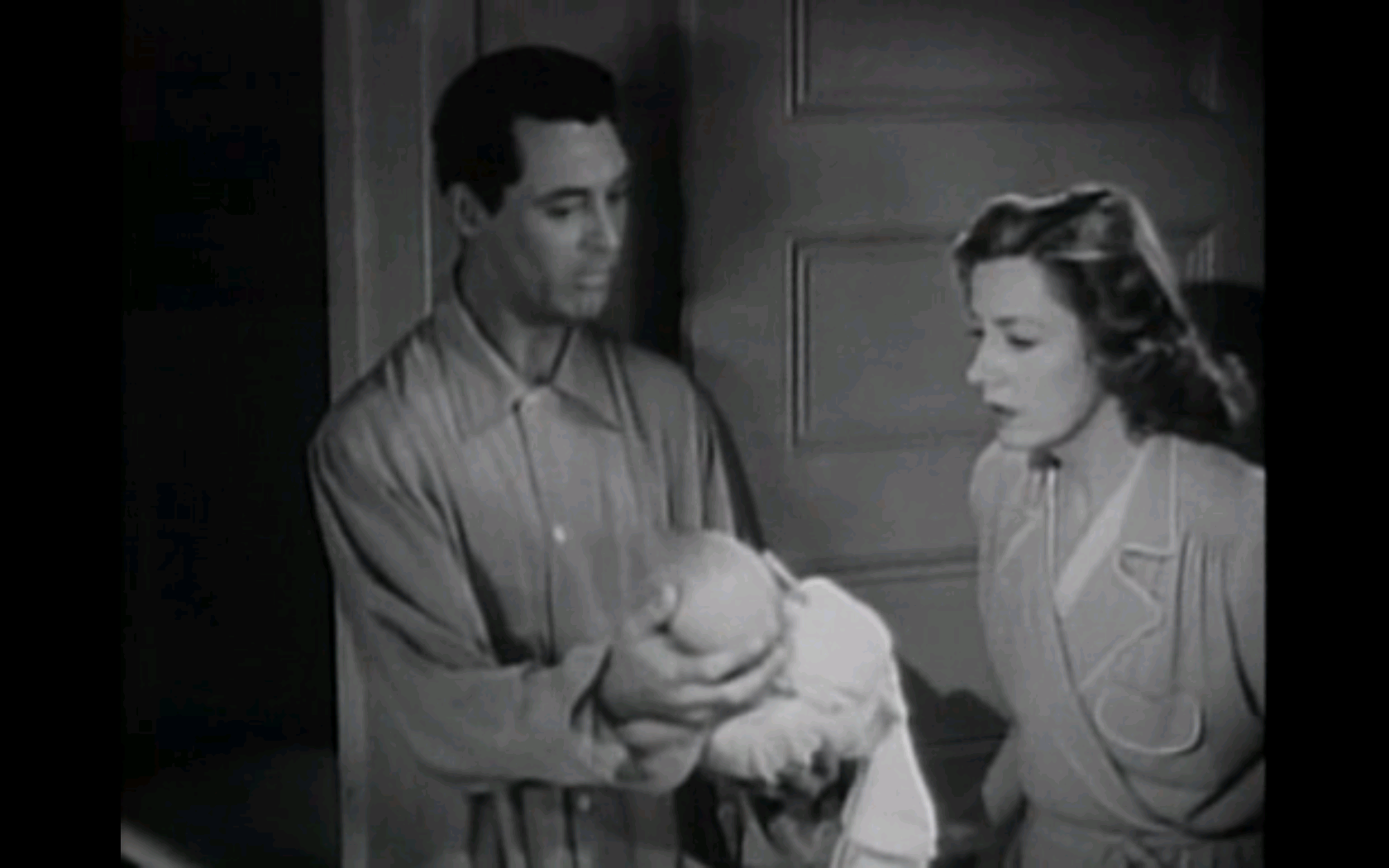
Penny Serenade (1941)
“We don’t need each other anymore. When that happens to two people, there’s nothing left.”
“I dislike children intensely — and yours, if I may say so, have peculiarly repulsive habits and manners.”
|
Synopsis: |
|
Genres, Themes, Actors, and Directors:
Review: Given that Mr. Belvedere is decidedly asexual (or, depending on how you look at it, secretly “coded” as homosexual), the fact that the film’s storyline eventually hinges on Robert Young’s jealous suspicions that his wife is engaging in a romantic dalliance with her nanny is simply ludicrous. Yet such narrative quibbles are somehow easily forgiven, given the overall outlandish flavor of the screenplay — which eventually takes an unexpected twist that places the entire story in a new context. And Webb is given so many delicious lines to spout that it’s pure fun simply waiting to hear how he’ll handle the next one. Watch for an enjoyable supporting turn by British comedic actor Richard Haydn (who played a dramatically different character in Preminger’s Forever Amber the previous year). Note: This film (or rather, Webb’s impersonation as Mr. Belvedere) was so popular that two sequels — Mr. Belvedere Goes to College (1949) and Mr. Belvedere Rings the Bell (1951) — quickly followed; while they get half-hearted ratings, I’ll admit I’m smitten enough by Webb-as-Belvedere to want to check them out. UPDATE, 12/9/11: I recently watched Mr. Belvedere Goes to College (1949) on YouTube (some kind soul uploaded it there), and thought I would write a quick capsule review here (especially given that no reviews at all are linked to this obscure little title on IMDb). As expected, it’s not nearly as “complete” a comedy as Sitting Pretty, and certainly isn’t must-see viewing for film fanatics — but fans of Webb won’t regret checking it out. His “Lynn Belvedere” remains in peak form in the sequel, responding to the rhetorical question, “You’re not serious…?!” with a resolute, “I’m grim.” (Only HE could make that retort sound convincing!) The film’s title explains itself: given that his formal education apparently consisted of no more than “two revolting weeks of Kindergarten”, Belvedere decides — for reasons I can’t name without spoiling the first picture a bit — to finally get a college degree. This allows the filmmakers ample opportunity to expose the hazards of freshman hazing — to which, interestingly enough, Mr. Belvedere allows himself to be subjected (to a certain extent, anyway). Unfortunately, far too little time is actually spent on Belvedere’s travails in the classroom; NONE, actually (we simply see him reading books wherever he goes). Instead, a rather insipid subplot is allowed to dominate the proceedings, involving a would-be romance between a grown-up Shirley Temple (whose annoying character possesses a significant secret identity) and Tom Drake (of boy-next-door Meet Me in St. Louis fame); as might be expected, whenever this narrative takes center stage, things grind to a deadening halt. Enter Mr. Belvedere again, however, and one’s energies are immediately restored: he’s just THAT delightful. As Bosley Crowther laudingly describes him in his review for the New York Times, he’s “brilliantly, classically clever and often delightfully droll, but he is also profoundly earnest”; in sum, he’s “a fellow who knows himself thoroughly and who has the good sense to realize that modesty would be false”. Indeed. Redeeming Qualities and Moments:
Must See? Categories Links: |
“We can only get rid of the Nazis if we lose the war.”
|
Synopsis: |
|
Genres, Themes, Actors, and Directors:
Review: Unlike in Sophie Scholl — which, as its name implies, is primarily concerned with showcasing the final days of Sophie herself — the screentime here is shared amongst a number of different White Rose protagonists, thus allowing us to learn a bit more about the group’s clandestine efforts to spread its urgent message. Through close attention to detail, the film effectively reminds us of the sobering truth, that during this infamous period of European history, one could lose one’s life for daring to write an anti-government missive — and that an act as simple as buying several dozen postage stamps could mark one immediately as a potential traitor to one’s country. Unfortunately, there are a few too many narrative threads hanging loose throughout the screenplay — such as a confusing subplot about Hans’s apparent romantic dalliances with two different women (Anja Kruse and Mechthild Reinders); but admirers of Sophie Scholl are sure to want to check out this essential cinematic counterpart, which fills in the gaps about an infamous, little told episode in German history. Redeeming Qualities and Moments: Must See? Links: |
“The princess was quite right: the name of Fontenoy was a magic word, the ‘Open Sesame’ of the war ministry.”
|
Synopsis: |
|
Genres, Themes, Actors, and Directors:
Review: Redeeming Qualities and Moments: Must See? Links: |
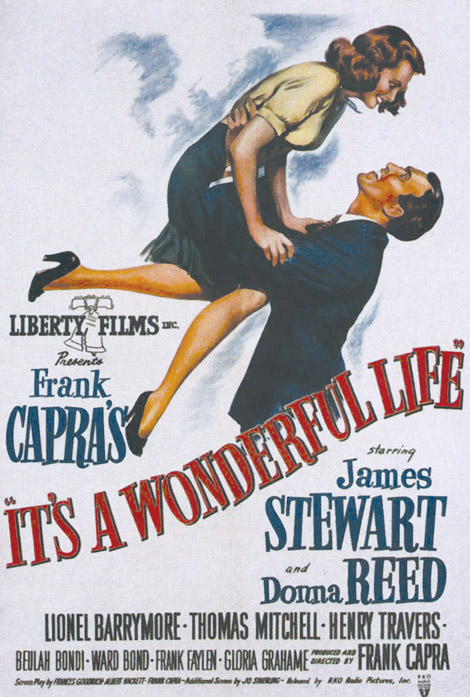
“No man is a failure who has friends.”
|
Synopsis: |
|
Genres, Themes, Actors, and Directors:
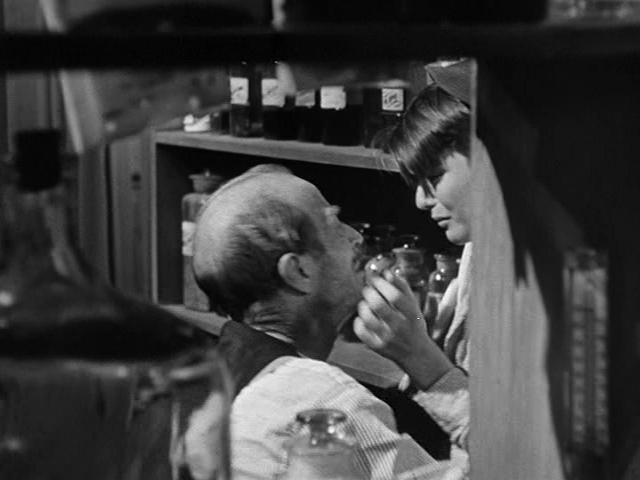
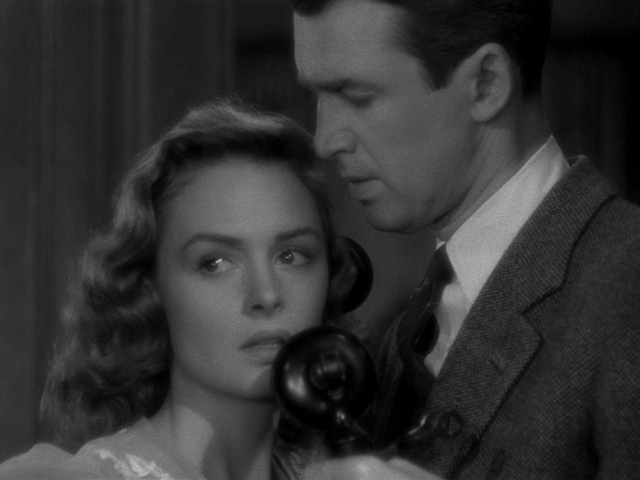
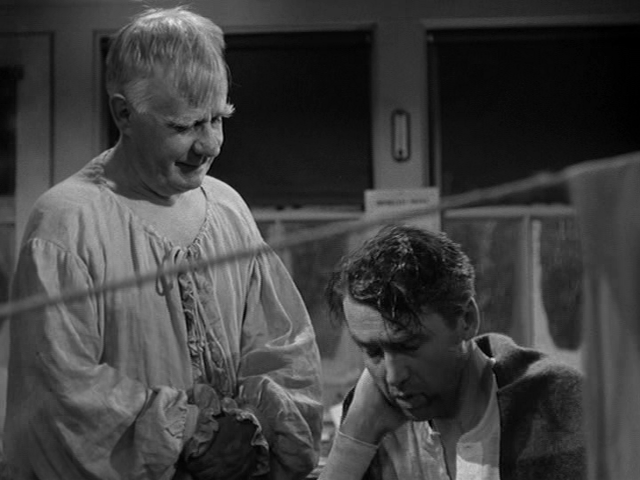
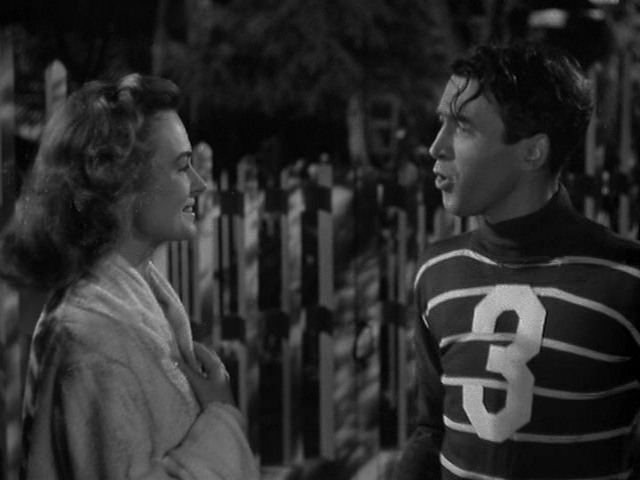
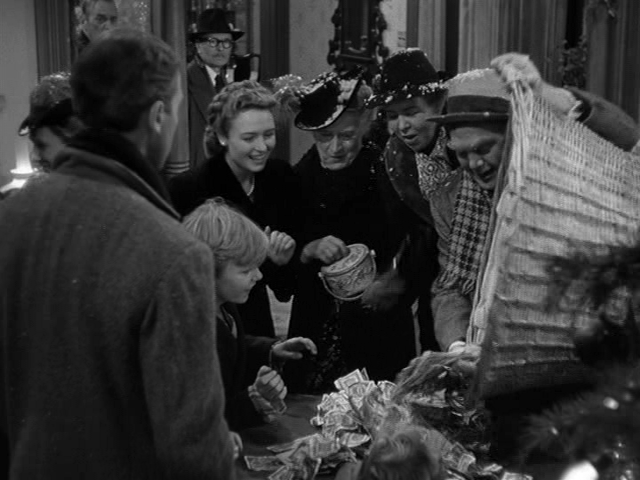
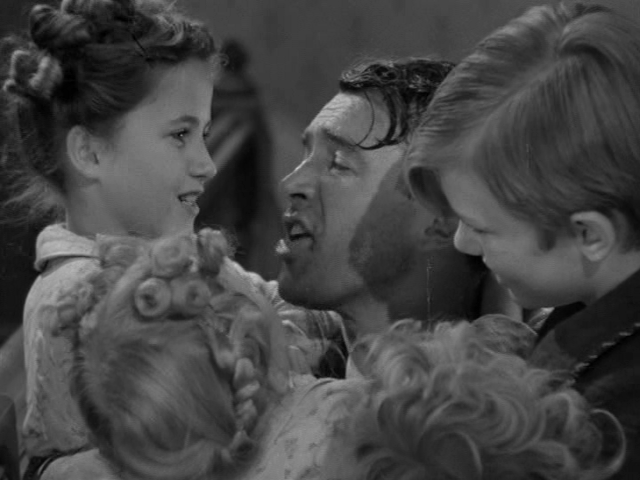
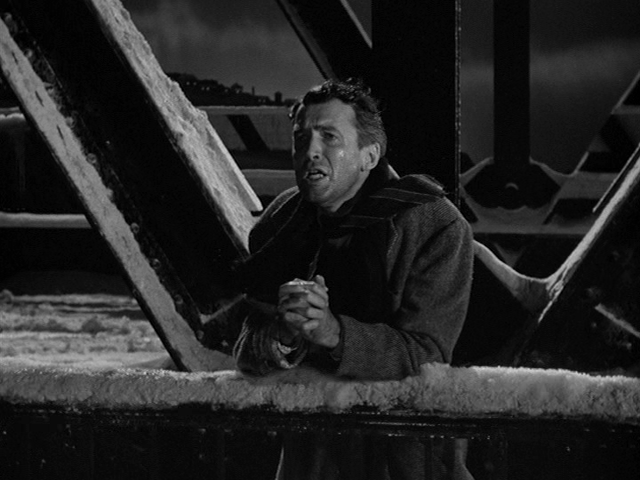
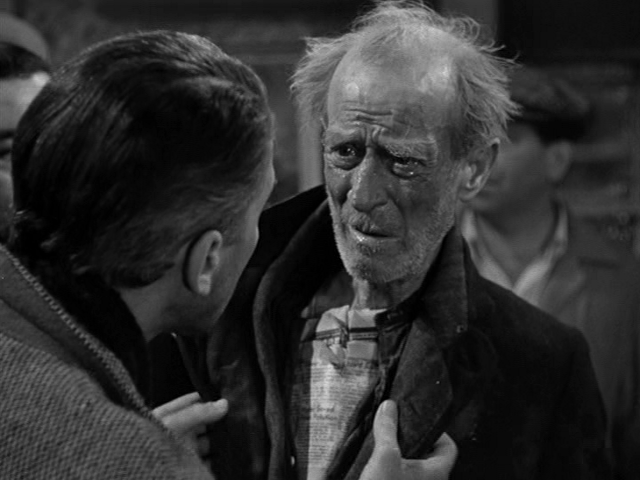
Response to Peary’s Review: To that end, as Peary notes, this was the film that finally allowed “Stewart to show how great an actor he was, as his character ranges from optimistic hick philosopher to the pessimistic postwar figure he’d play in Vertigo and [various] Anthony Mann westerns”. Stewart (who Peary names Best Actor of the Year in his Alternate Oscars book) never shies away from portraying George Bailey as a complex man with unmet needs. He “has sacrificed all his life for others’ happiness and security”, but not selflessly — rather, he fully recognizes that he’s had to give up on his own goal of traveling the world and living a life of adventure and discovery. We find our shoulders drooping in empathy as George is foiled time and again from actually leaving Bedford Falls; and yet each time, we understand why he makes the (sacrificial) choice he does. Indeed, as much of a fantasy as It’s a Wonderful Life is, it actually presents a very realistic view of the curveballs life throws out: who among us can’t remember a time when we’ve been forced by circumstances beyond our control (whether money, family, or something else entirely) to make a decision other than the one we most want for ourselves? And while it’s true that the “nightmarish sequence” in which George is shown “what a dreadful place Bedford Falls would have been without him” probably isn’t very realistic, it doesn’t need to be: it’s meant simply to help George realize “that every man makes a profound difference, and that a good man… can benefit countless people” in unimaginable ways. Stewart’s performance isn’t the only memorable one on display. Donna Reed takes the incredibly tricky role of Mary — someone who could easily be portrayed as merely a small-town “anchor” weighing George down — and turns her into someone we can’t help falling for ourselves; no wonder George decides to settle down and have a family with her. Travers is also “great” in another challenging role; he somehow manages to make us believe that guardian angels might actually exist. Meanwhile, there really are countless well-written (by Frances Goodrich and Albert Hackett) scenes and sequences scattered throughout the film, too many to name — though I must call out one early scene in particular (in which young George [Bobbie Anderson] prevents his employer [H.B. Warner] from making a fatal mistake while preparing a prescription for a family) as an emotionally loaded favorite. The story neatly builds to its celebrated finale, which is guaranteed to have you all choked up. Indeed, you’ll be surprised by how sincerely effective this notorious “Capra-corn” really is. Redeeming Qualities and Moments:
Must See? Categories
(Listed in 1001 Movies You Must See Before You Die) Links: |
“Your duty is to prepare yourself to do God’s work in the world.”
|
Synopsis: |
|
Genres, Themes, Actors, and Directors:
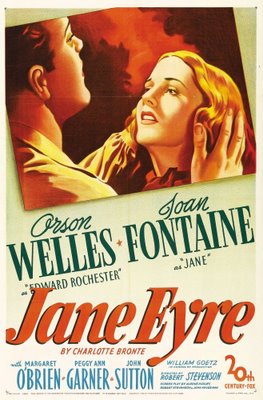
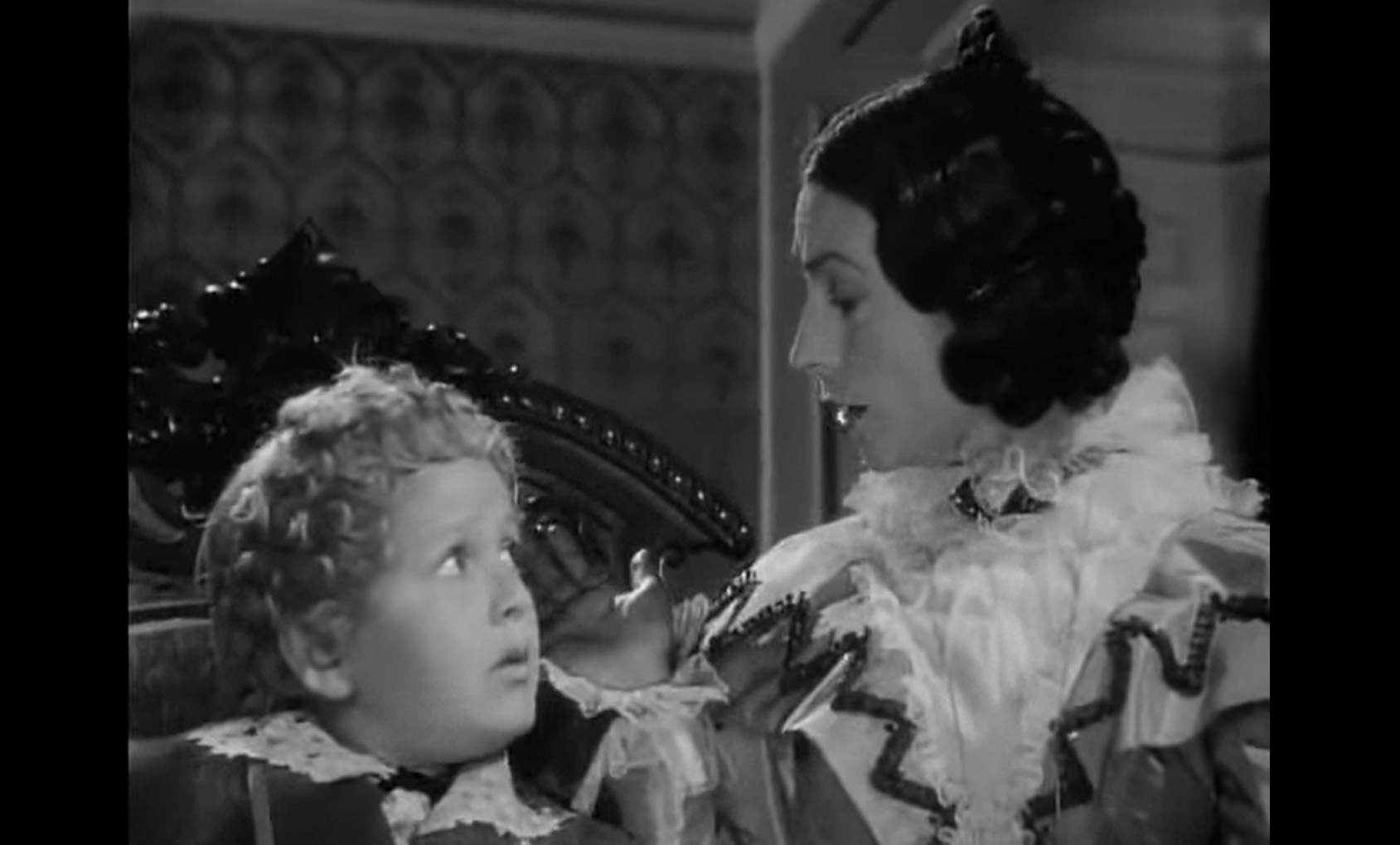
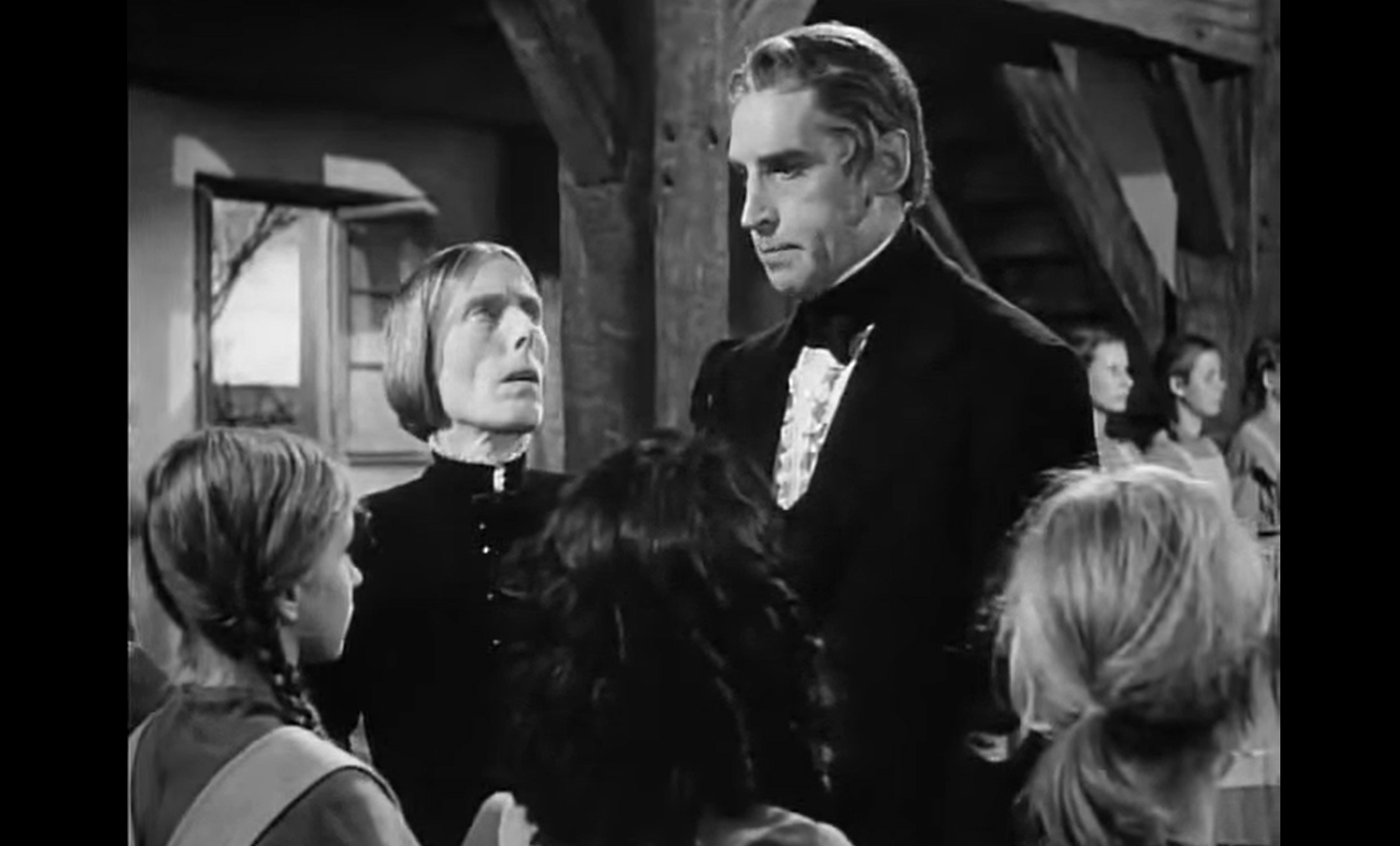
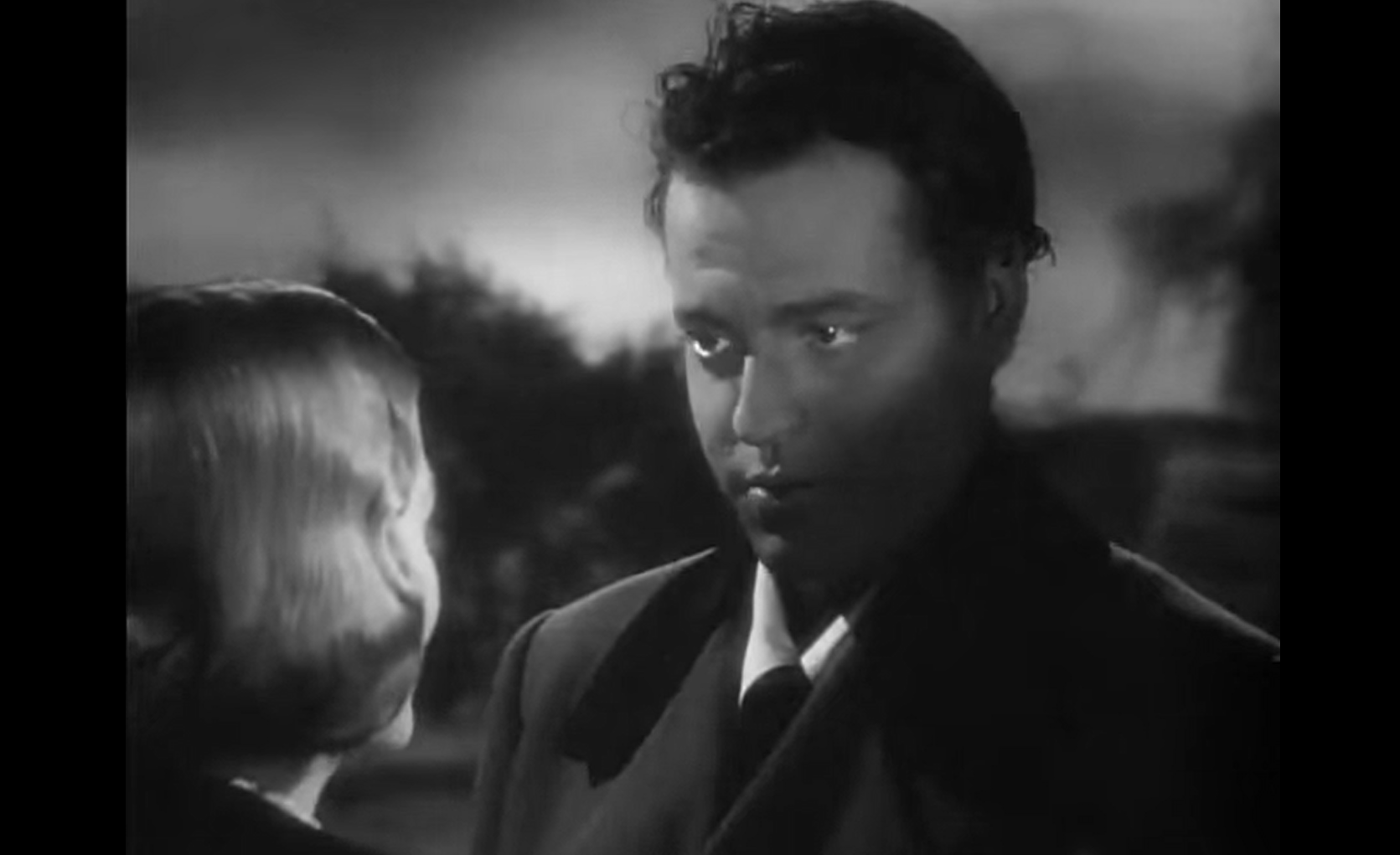
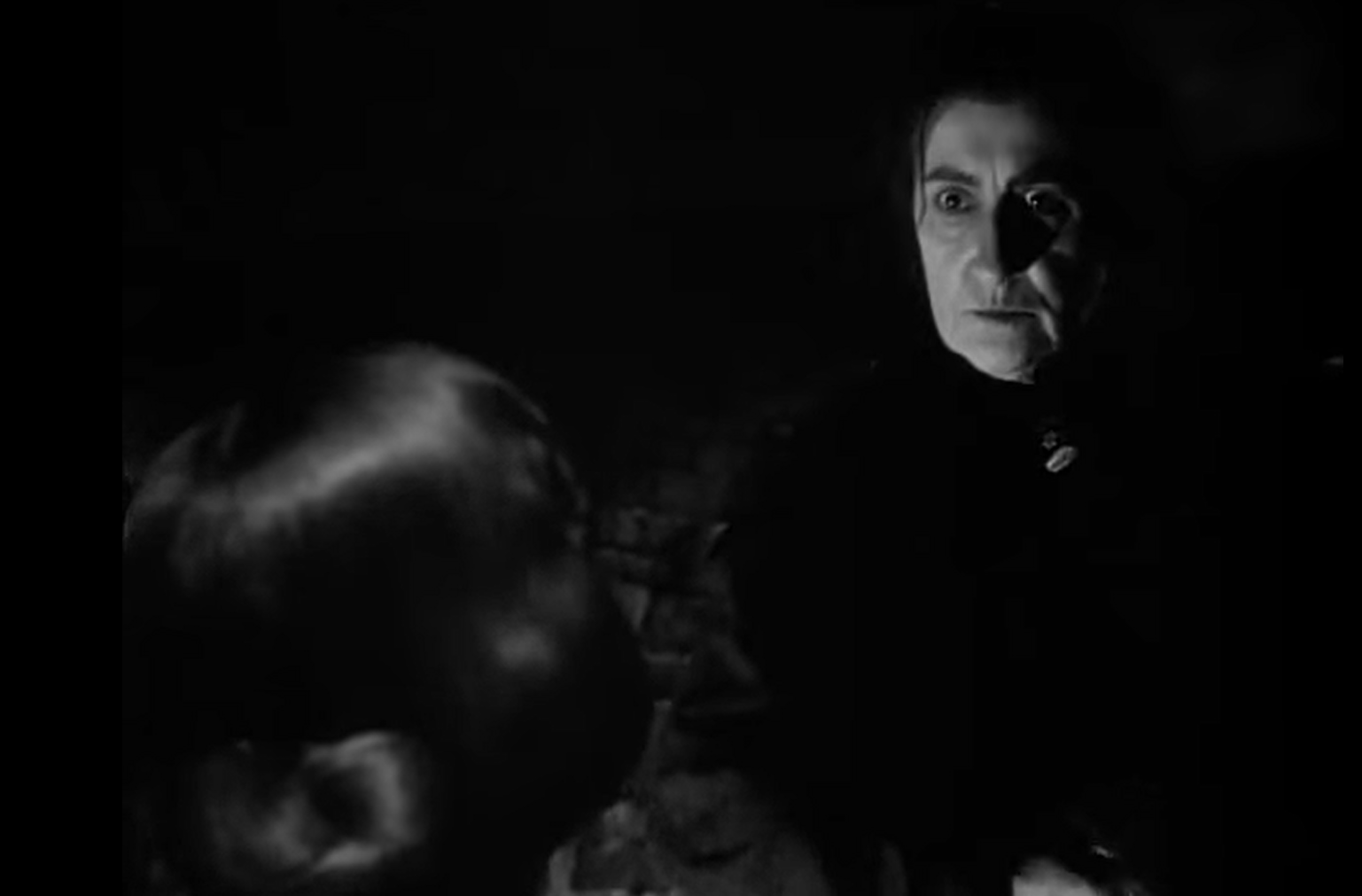
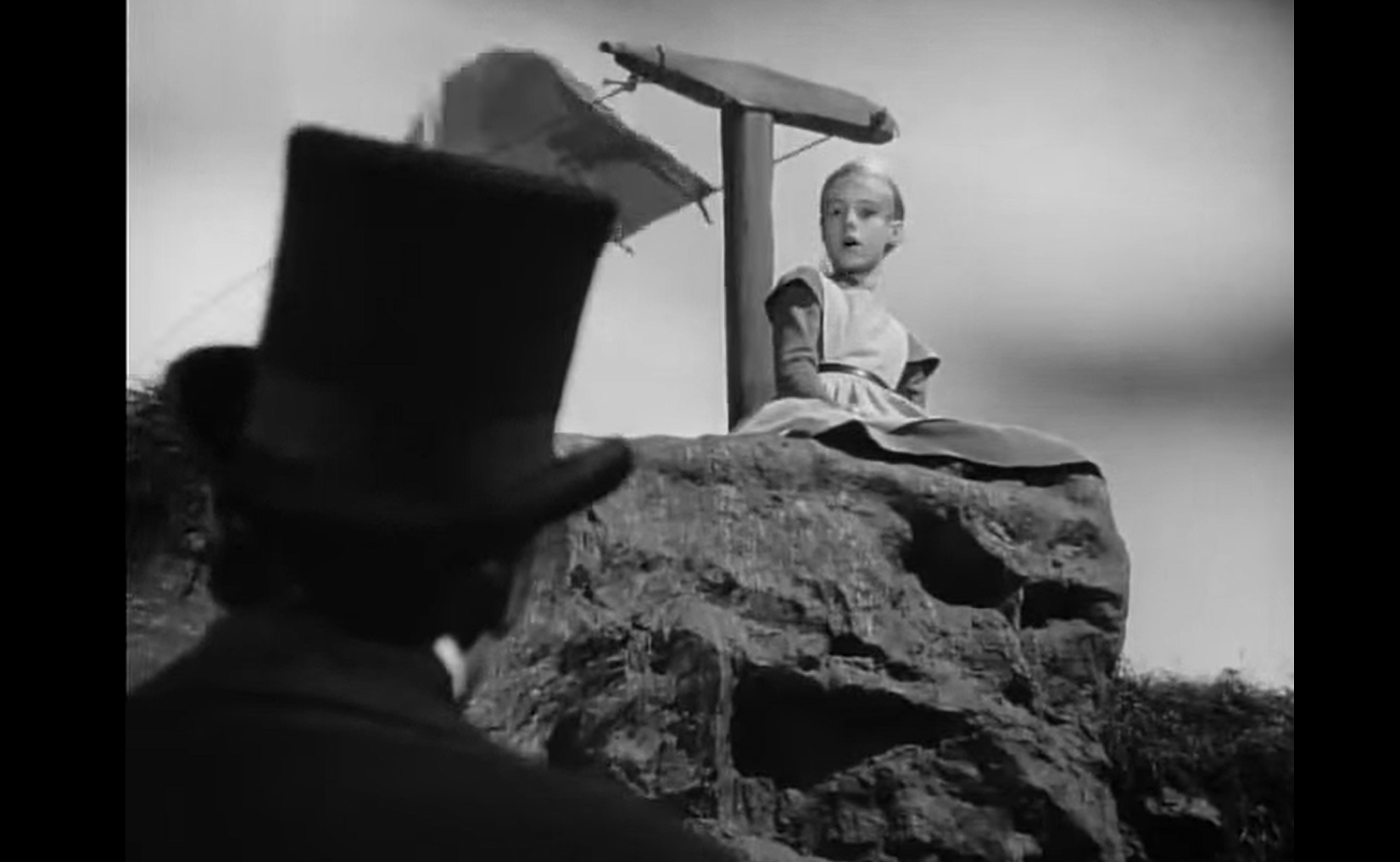
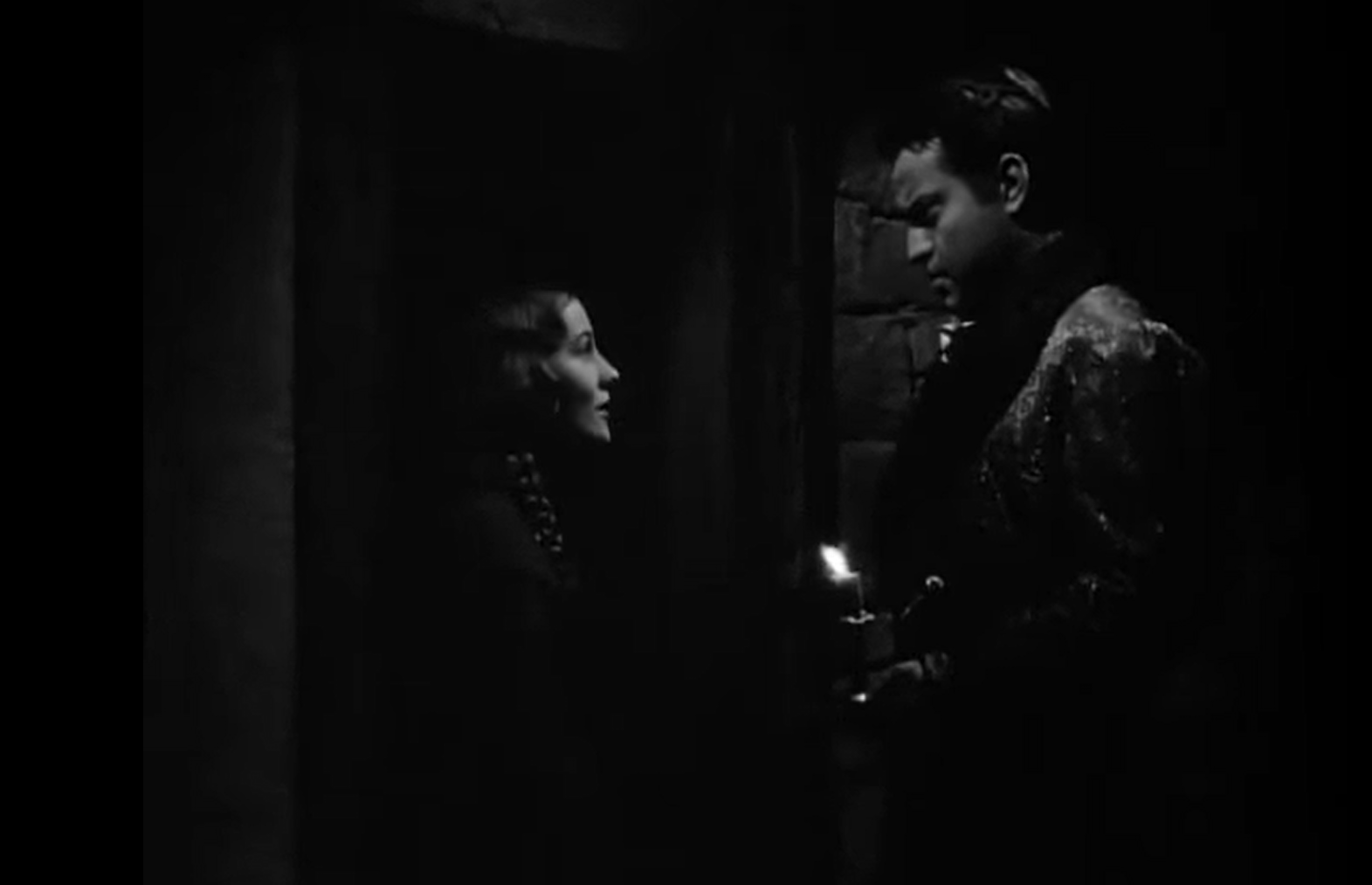
Review: is sent away by her forbidding aunt (Agnes Moorehead, also perfectly cast): to live in a boarding school, where she’s cruelly mistreated by its brutal headmaster (Henry Daniell): … yet manages to form a fleeting friendship with tragic Helen Burns (a young, beautiful, uncredited Elizabeth Taylor). Unfortunately, the second half of the film isn’t as convincing or compelling. While not all agree, Joan Fontaine’s grown Jane simply didn’t impress me as the “fiercely independent” heroine Bronte wrote her to be. Fontaine spends most of her screentime looking plaintively at “fearsome” Mr. Rochester (Orson Welles) — who, for his part, never quite manages to shed his own out-sized, Wellesian persona. (When Rochester bellows at the world, it’s Welles-as-Rochester making his presence known). Their budding relationship does gradually pull one in, but never really emerges as anything more complex than a schoolgirl crush made manifest. Meanwhile, the critical “subplot” concerning the mysterious woman locked away in Rochester’s home is given surprisingly short shrift, and is resolved far too quickly: … and the inevitable compression of the rest of the novel’s events towards the final half hour of the film presents another challenge for viewers hoping to feel more invested in Jane’s fate. With all those complaints aired (my, how hard we are on literary adaptations!), this remains solid filmmaking, with George Barnes’ moody camerawork particularly striking throughout. As noted in Slant Magazine’s review, in a nutshell, this is “a well-constructed piece of studio work” — and overall, it’s certainly worth a look, particularly given its historical interest as an early “Orson Welles film”. (While he didn’t officially direct, he undeniably had a hand in the production). Redeeming Qualities and Moments: Must See? Links: |
“Son, this is a Washington, D.C. kind of lie. It’s when the other person knows you’re lying, and also knows you know he knows.”
|
Synopsis: |
|
Genres, Themes, Actors, and Directors:
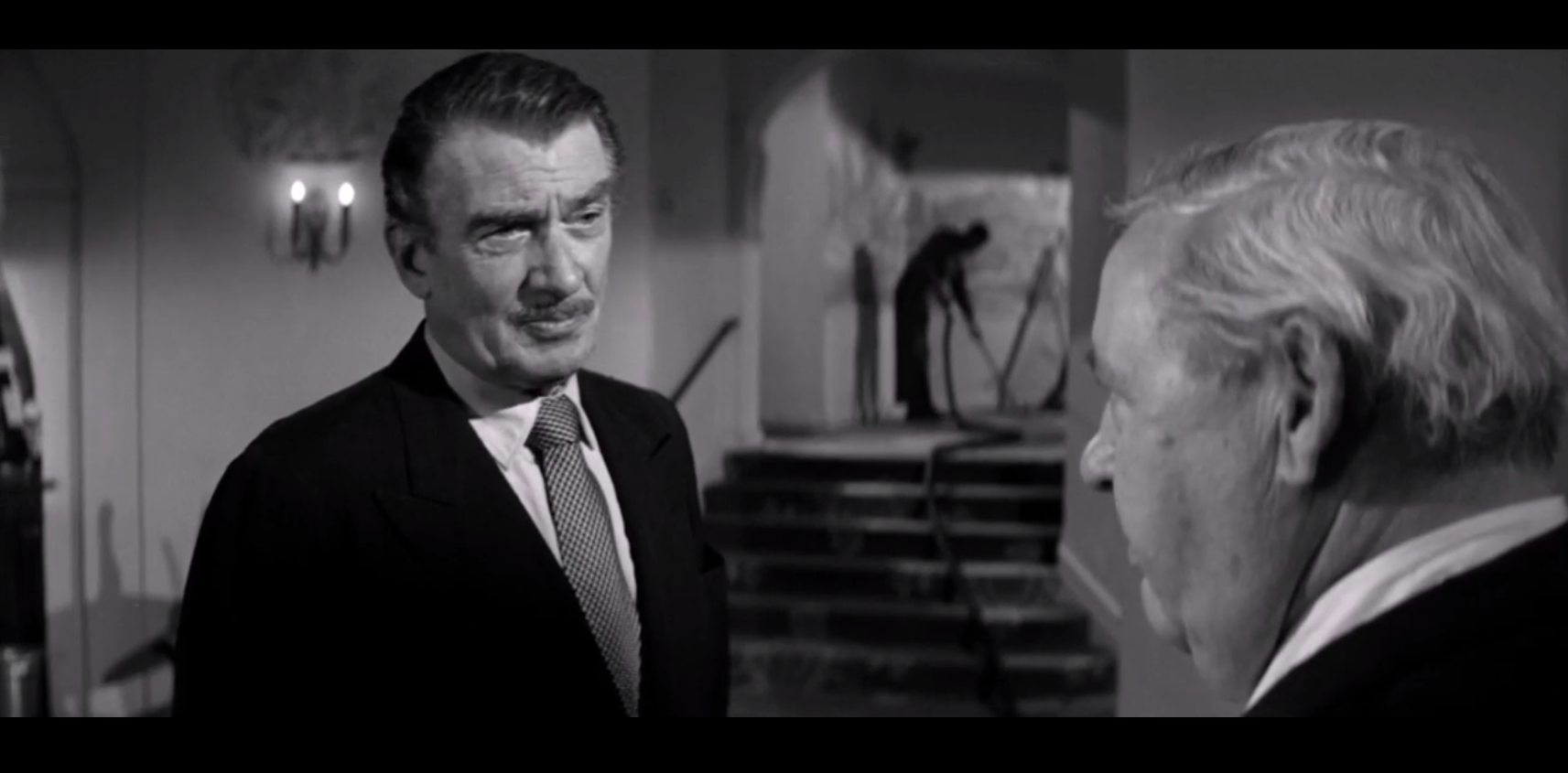
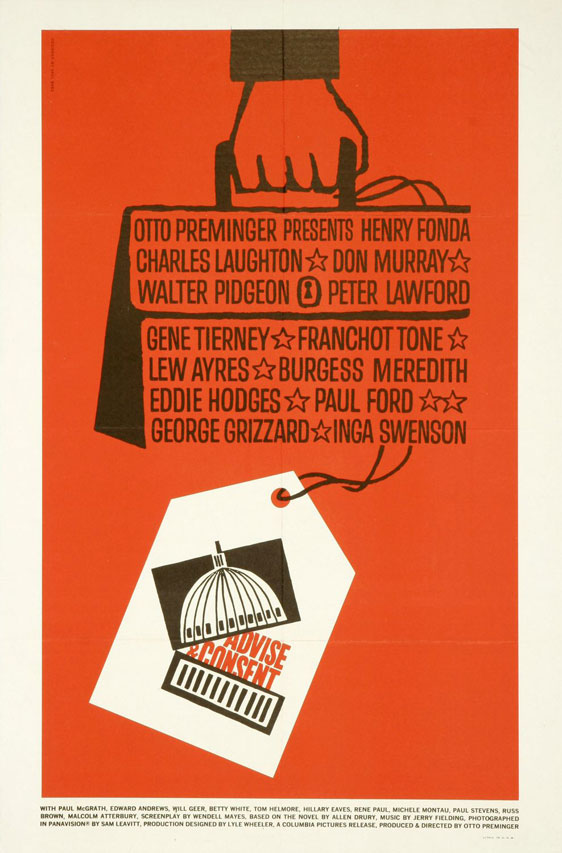
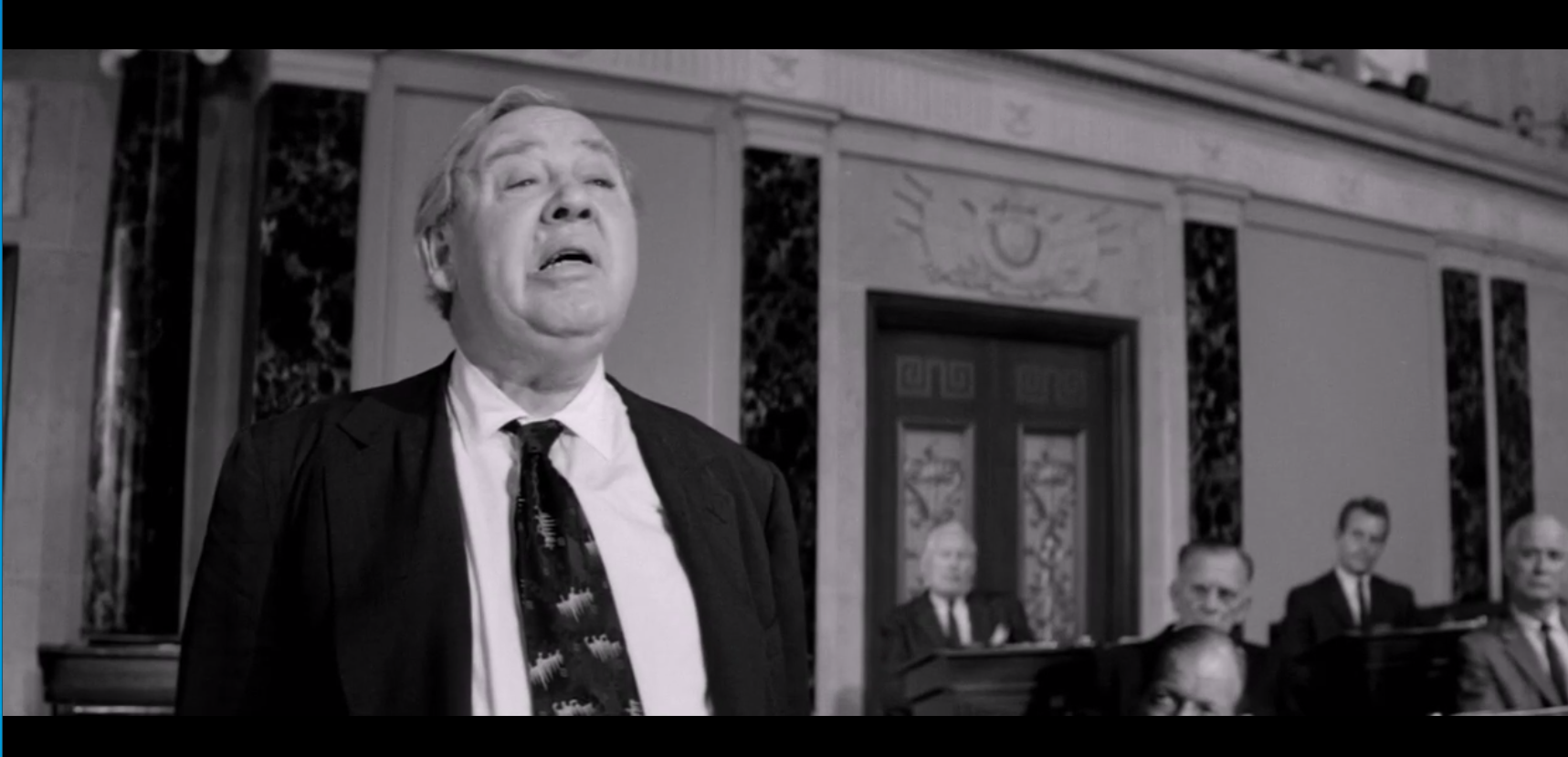
Review: Other than the slowly gripping storyline itself (which takes its time getting to the crux of the drama), what’s perhaps most memorable about Advise & Consent are the documentary-like glimpses it affords of Washington, D.C. at work, complete with underground shuttles taking the senators to and from their sessions, and highly realistic interactions on the senate floor (with the senators referring to each other in third person). And, as Eric Henderson writes in his review of the film for Slant Magazine, “Preminger’s filmed version of the novel makes up for the various excised subplots and legal-procedural nitty-gritty with a typically unerring sense of spatial intrigue” — in other words, it’s surprisingly visually arresting for a “courtroom” drama. Meanwhile, the ensemble performances throughout are largely top-notch, and feature some unexpected surprises (i.e., a young Betty White in her film debut as an outspoken senator). Don Murray (whose notable earlier roles included ‘Bo’ in Bus Stop, and Johnny in Hatful of Rain) is perfectly cast, and entirely believable, in what turns out to be the film’s tragic central role — that of Senator Brigham Anderson, a “family man” with a conflicted history he’s determined to keep hidden at all costs. In his final role (playing Southern Senator “Seab” Cooley), Charles Laughton gives a typically nuanced yet showy performance; and Walter Pidgeon is solidly effective in a smaller role as the Senate House Majority Leader. P.S. If you haven’t seen the film or read the novel, be careful reading reviews online; almost all give away the central plot “twist”, which I’ve only hinted at here. Redeeming Qualities and Moments:
Must See? Categories Links: |
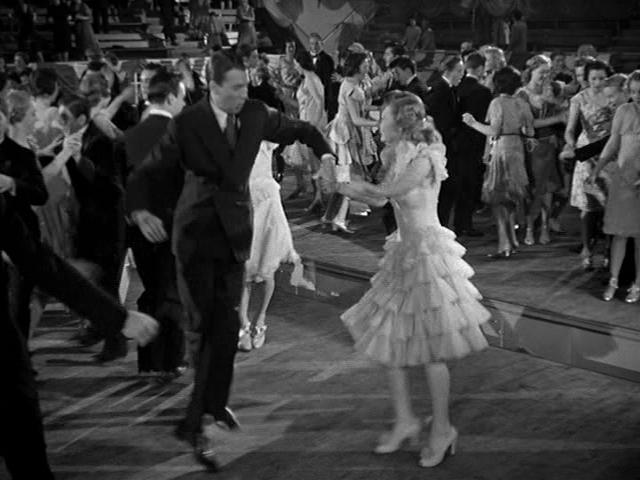
“You are a backwards step in the evolution of mankind!”
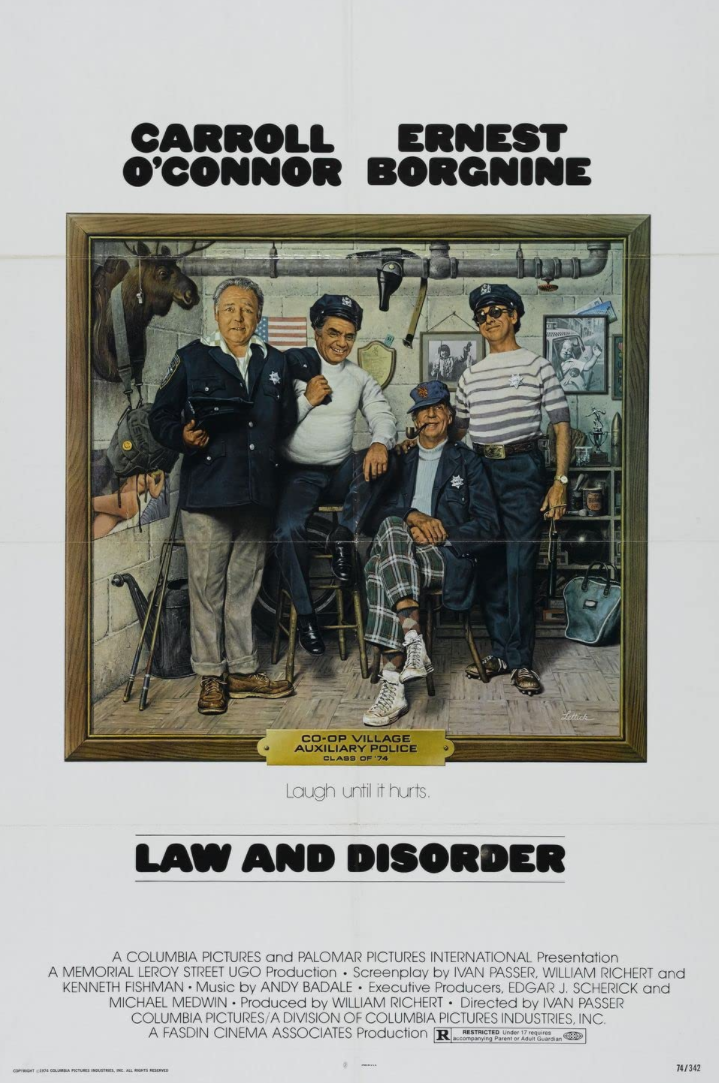
“If the police can’t protect us, then it’s our constitutional duty, under the Constitution of the United States, to protect ourselves!”
|
Synopsis: |
|
Genres, Themes, Actors, and Directors:
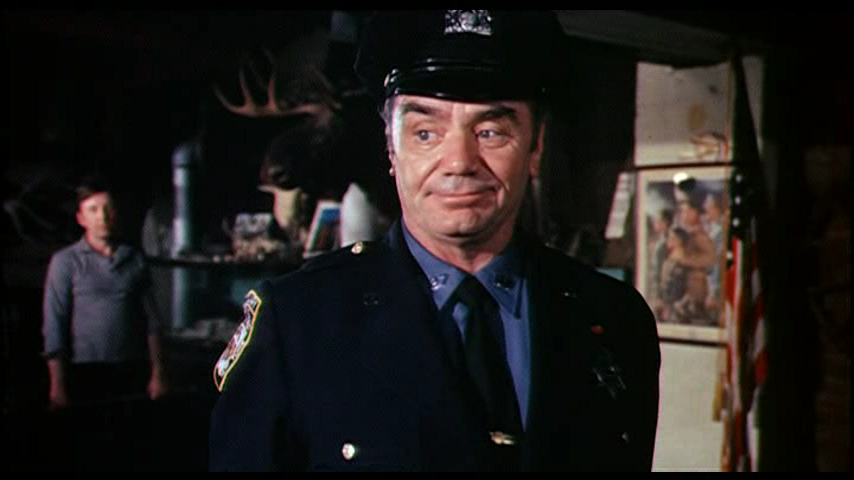
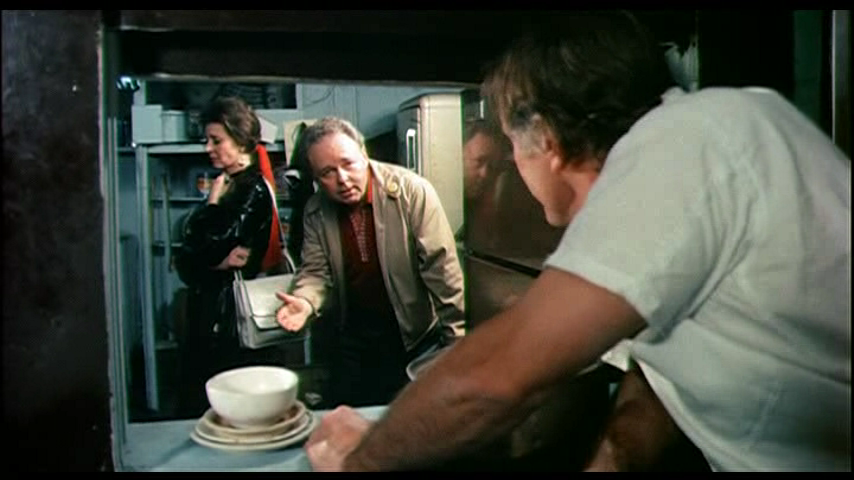
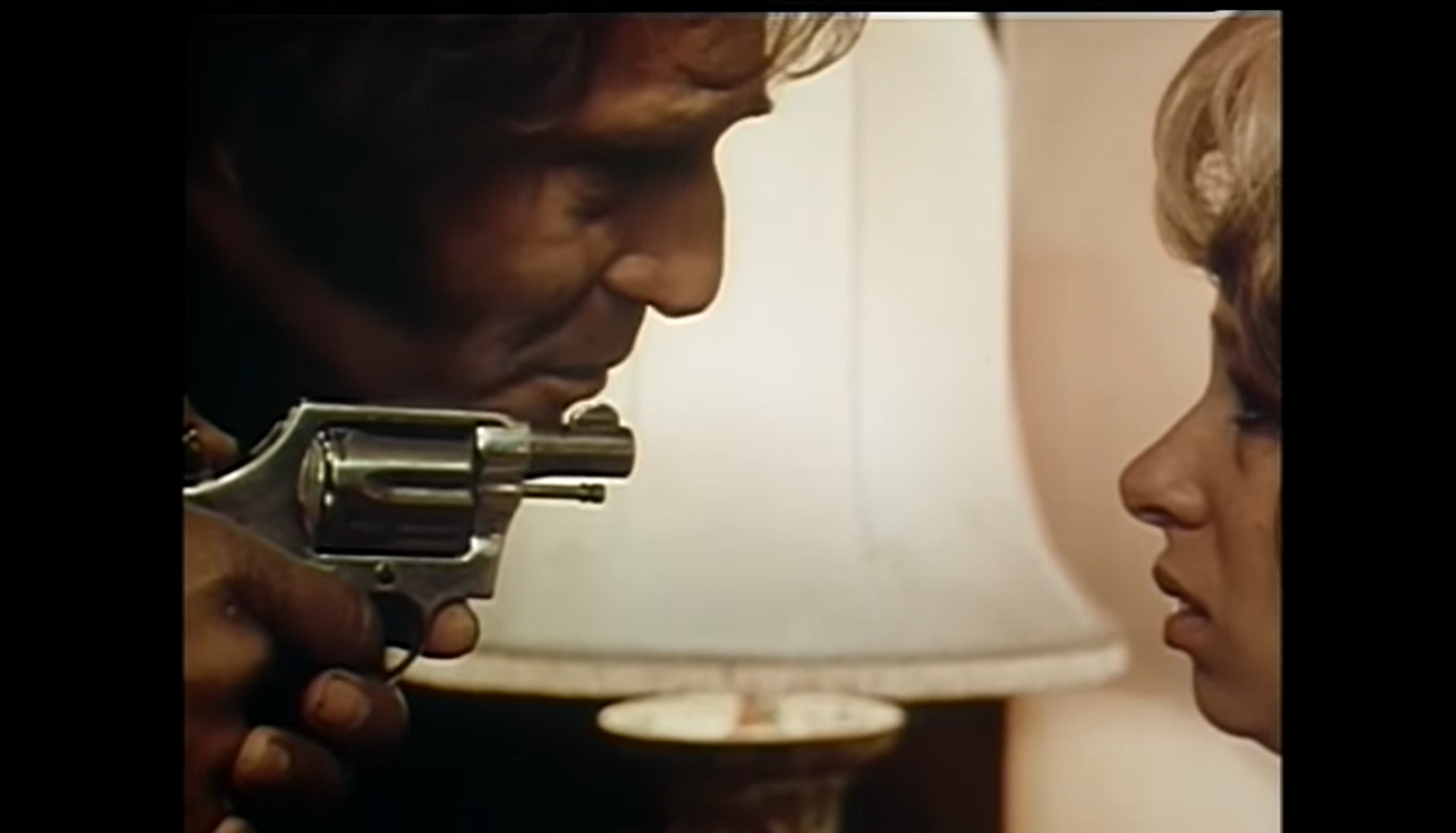
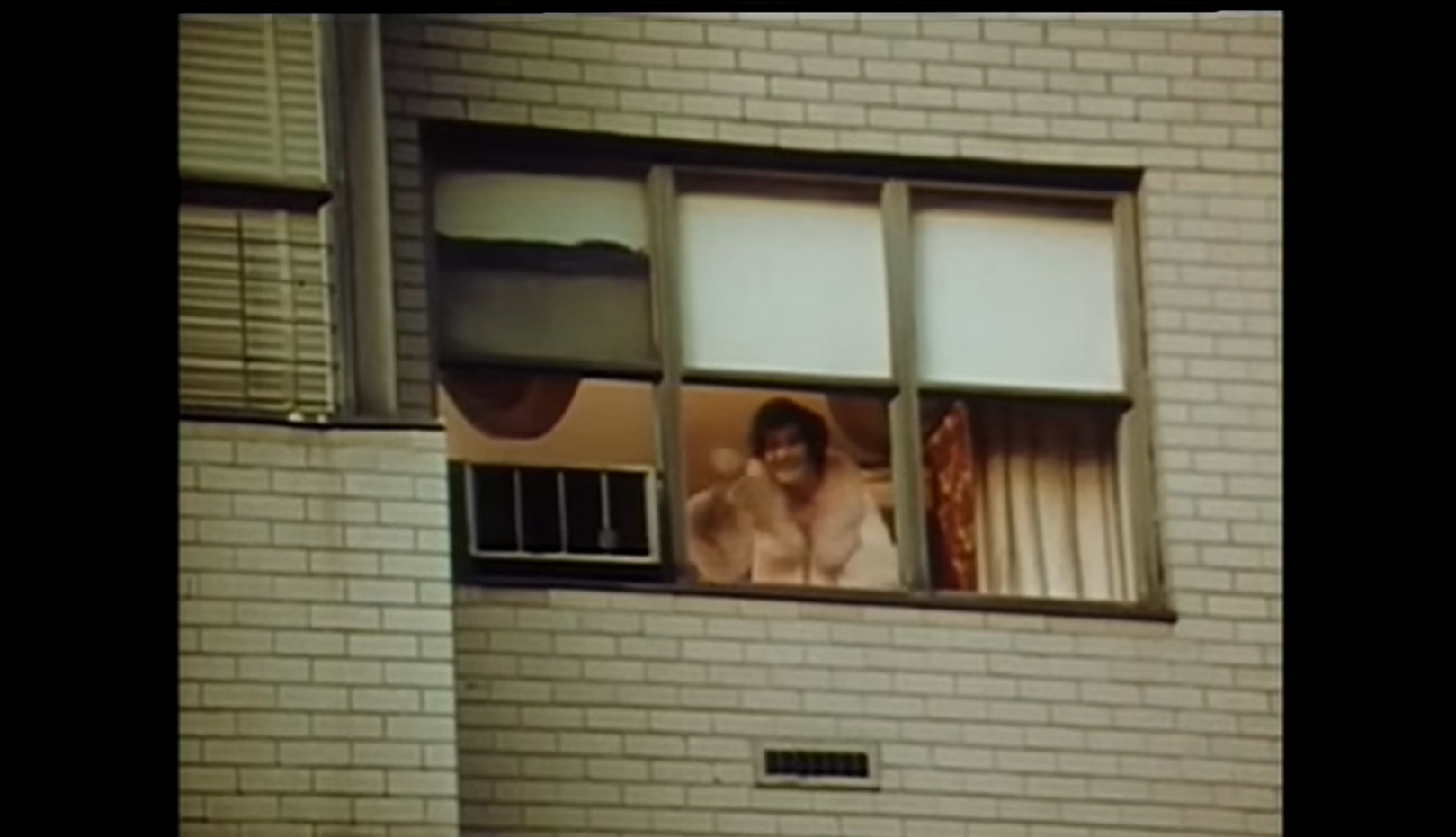
Review: Indeed, the film is frustratingly skimpy on details about what exactly goes into the duties and responsibilities of a volunteer policeman. The two central protagonists and their cronies are shown simply basking in the glory and fun of police accoutrement — uniforms and weapons and vehicles with sirens — rather than undergoing any kind of serious training. And once they do start patrolling the streets, we’re only shown a few instances of the types of dilemmas and situations they might encounter (including one particularly annoying “running gag” involving a young man who insists on drawling “f*** you” to every authority figure he encounters; not funny or insightful at all). Instead, the screenplay shifts its meandering focus onto the midlife crises of Borgnine and O’Connor, good friends who are both unhappy (to varying degrees) in their jobs. Borgnine is a hairdresser with a dwindling clientele and an obnoxious employee (Karen Black, giving a weird, ineffective caricature of a performance); O’Connor is a taxi driver who longs to own his own business, and feels deep regret over lost opportunities in the past. Yet for every scene that provides an authentic glimpse into these characters’ lives — i.e., O’Connor taking his wife to the diner he desperately hopes to purchase — there are countless others that feel either random or misguided. One of the film’s most awkwardly handled moments, for instance, shows O’Connor’s teenage daughter (Leslie Ackerman) — who has just been “attacked” on the street — berated by O’Connor for wearing a sexy shirt; a group of women sitting around the table (presumably all neighbors; we’re never told) proceed to advise her to wear a bra so her breasts don’t start to sag. The next time we see this girl, she’s out on the street with her sleazy boyfriend (Lionel Pina), looking for all the world like a prostitute. What’s the connection here? We’re not told. It’s narrative flaws like this that eventually detract from what seems to be Passer’s primary (worthy) goal: a desire to portray the motivations, disappointments, and daily challenges of working class life in New York. Redeeming Qualities and Moments: Must See? Links: |

“They say I’m a charmer — that I charm the people I hustle.”
|
Synopsis: |
|
Genres, Themes, Actors, and Directors:
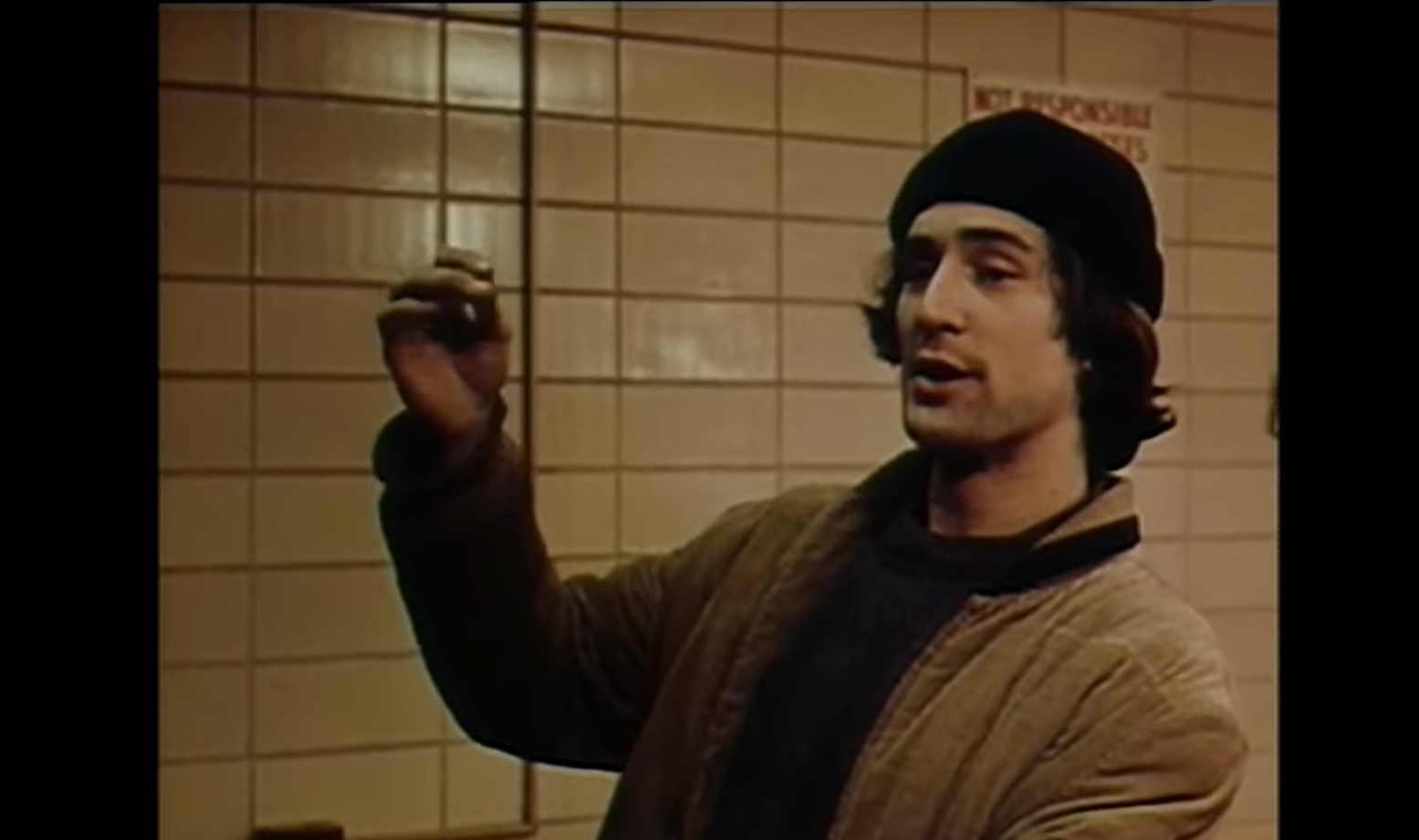
Review: He whines that nothing ever goes right for him in life, but why should it? Meanwhile, everything about his new relationship with Karen Black’s “Parm” feels contrived, starting from the moment she stupidly picks him up in her own car as he’s attempting to hijack it (hello? how DUMB can you get?). She insists almost immediately that she’s really “into him”, yet there’s absolutely no reason why she should be; while there’s potential here for portraying an interesting relationship between an addict and a non-addict who’s desperately curious about the life of drug use (Panic in Needle Park, anyone?), that’s merely hinted at rather than exploited fully. There are a few cleverly bizarre scenes throughout that elevate one’s interest temporarily, and show evidence of Passer’s absurdist sensibility: Segal attempting (unsuccessfully) to hide from a cop in a laundromat: … and Segal attempting (successfully) to escape from the clutches of some drug dealers through creative flashing. But ultimately, by the end of this inevitably bleak story, the main point one has taken away is that the world of drug addiction and dealing is brutally dog-eat-dog — not exactly an earth-shattering revelation. Note: Robert De Niro has all of maybe 10 minutes of screentime in a tiny role as one of two cops shadowing Segal: When the film went into public domain and random copies were produced for sale on DVD, De Niro’s face was marketed to fill the entire cover, leading would-be viewers (presumably De Niro fans) down the garden-path. Paula Prentiss has just as little screentime; she’s believable if underused as Segal’s sorry sack of an ex-wife. Redeeming Qualities and Moments:
Must See? Links: |