True Grit (1969)

True Grit (1969)

“She reminds me of me!”

Synopsis:
A stubborn teenager (Kim Darby) hires an alcoholic marshal (John Wayne) to track down and kill her father’s murderer (Jeff Corey).

Genres, Themes, Actors, and Directors:

  • Dennis Hopper Films
  • Fugitives
  • Henry Hathaway Films
  • John Wayne Films
  • Robert Duvall Films
  • Search
  • Strong Females
  • Westerns

Review:
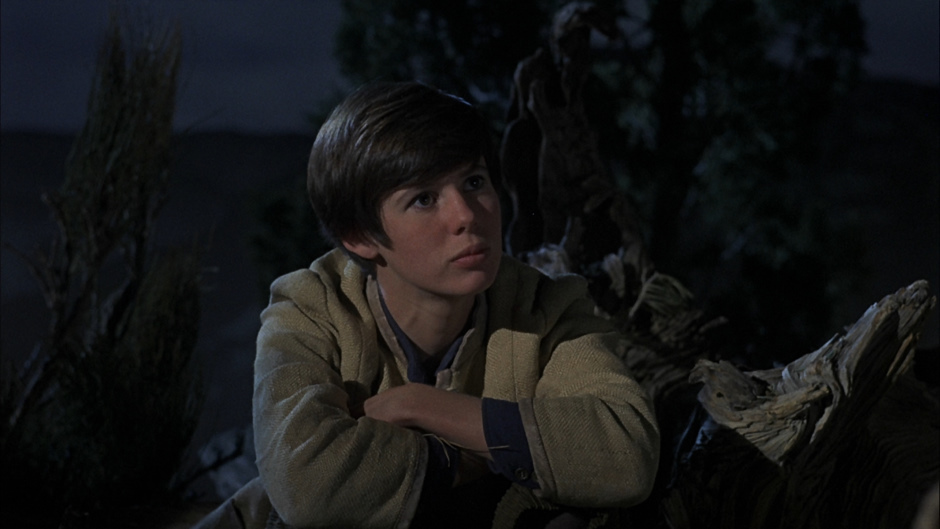
As the film which earned John Wayne his one and only Oscar, True Grit has remained an historically important movie for years; it’s now garnered renewed attention given the recent remake by the Coen brothers. Fortunately, both adaptations of Charles Portis’s cult 1968 novel are satisfying (if tonally diverse) westerns which complement rather than compete with each other. Twenty-year-old Kim Darby made an impressive cinematic debut in this earlier version as 14-year-old Mattie Ross, an intelligent, plucky teen determined to avenge her father’s murder at any cost; she has more spunk and “grit” than just about any comparable heroine in movies at the time. Indeed, it’s so unusual to see a young woman in the kind of adventurous role afforded to Darby that this novelty alone keeps us glued to the screen; we’re in constant suspense about what will befall Mattie and her compatriots next.

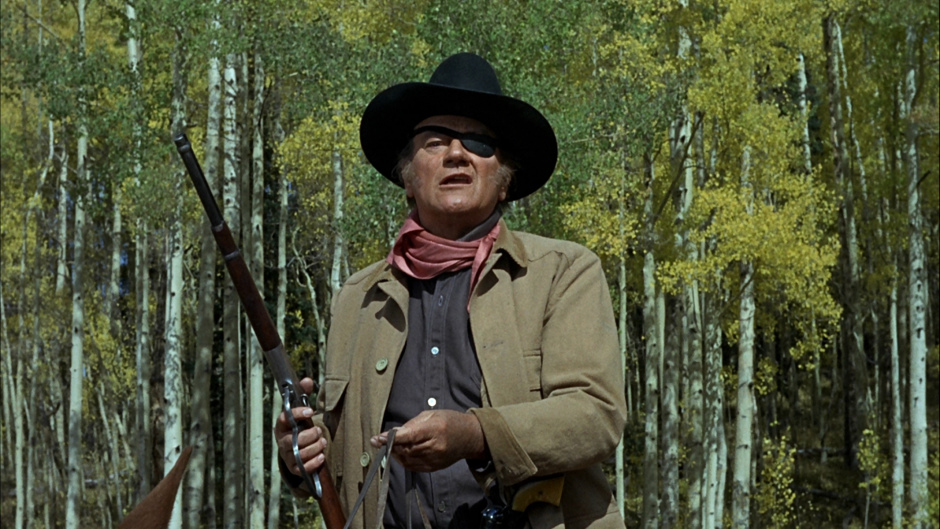
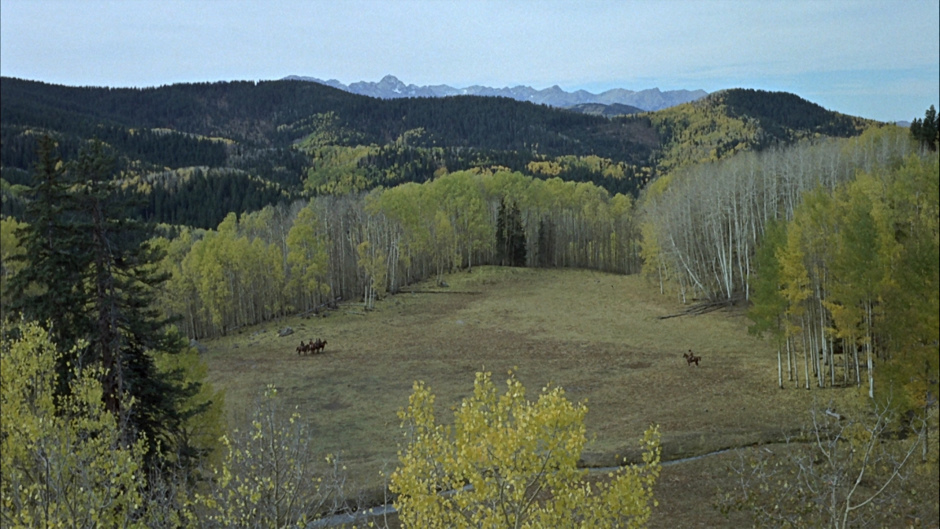
Wayne, for his part, is eminently memorable as drunken, one-eyed Rooster Cogburn, a lawman beyond his prime who nonetheless is exactly the man-for-hire Mattie aims to secure. He and Darby have such fine rapport together on-screen that it’s astonishing to learn he hated working with her, and considered her a poor actress. Their final scene together is particularly touching. As La Boeuf, the Texas Ranger who accompanies Cogburn and Mattie on their quest, country singer Glen Campbell, rounds out the odd trio nicely; he won a Golden Globe nomination as Most Promising Newcomer (though his film career never really took off). Meanwhile, Lucien Ballard’s expansive cinematography is consistently a widescreen treat to behold, and Marguerite Roberts’ screenplay is smart and literate, full of plenty of memorable dialogue. Watch for Robert Duvall and Dennis Hopper in small roles as gangster Ned Pepper and his henchman, Moon; they’re both quietly menacing.

Note: This film was followed in 1975 by Rooster Cogburn, an original sequel starring Wayne and Katharine Hepburn (though it’s not listed in Peary’s book, and I haven’t seen it, so I can’t vouch for it — yet — as any kind of Missing Title).

Redeeming Qualities and Moments:

  • Kim Darby as Mattie
  • John Wayne as Rooster Cogburn (nominated by Peary in Alternate Oscars as Best Actor of the Year)
  • Lucien Ballard’s cinematography
  • Enjoyable dialogue:

    “I call that bold talk for a one-eyed fat man!”

Must See?
Yes, as a classic of the genre. Listed as a film with Historical Importance in the back of Peary’s book.

Categories

  • Genuine Classic
  • Oscar Winner or Nominee

Links:

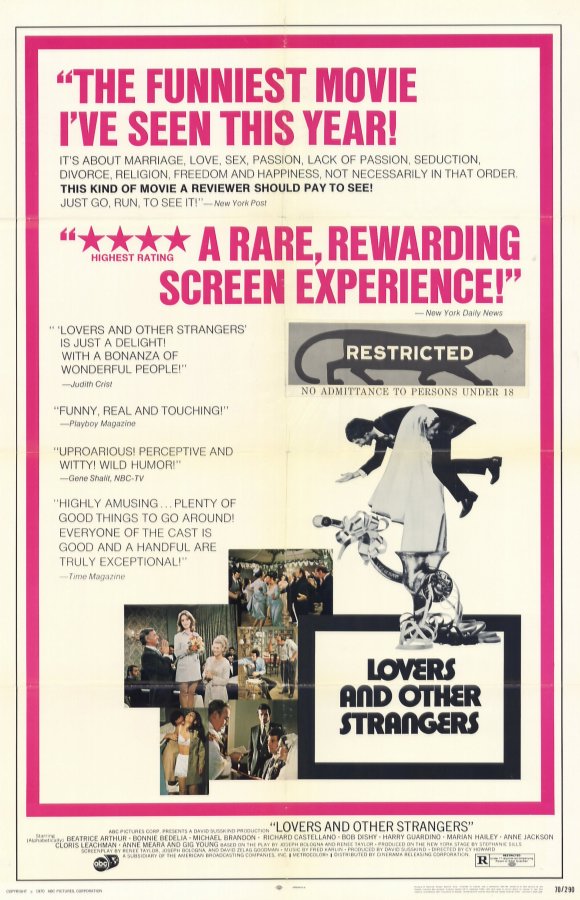
Lovers and Other Strangers (1970)

Lovers and Other Strangers (1970)

“I love weddings — they’re such a family thing.”

Synopsis:
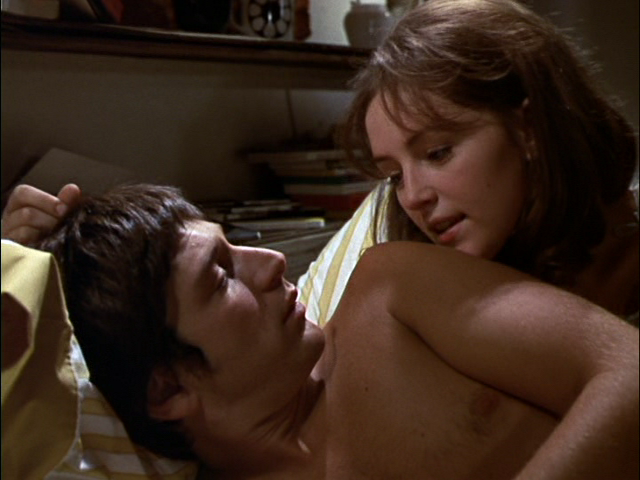
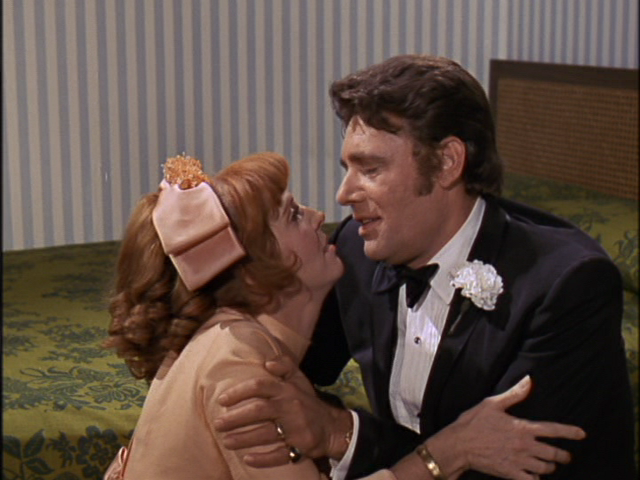
As Mike (Michael Brandon) and Susan’s (Bonnie Bedelia) wedding approaches and Mike experiences cold feet, their friends and family members struggle with relationship issues of their own.

Genres, Themes, Actors, and Directors:

  • Bonnie Bedelia Films
  • Diane Keaton Films
  • Ensemble Cast
  • Marital Problems
  • Play Adaptations
  • Romantic Comedy
  • Weddings

Review:
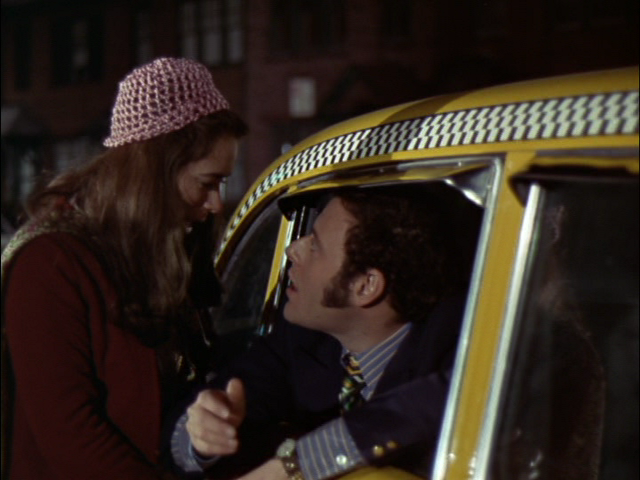
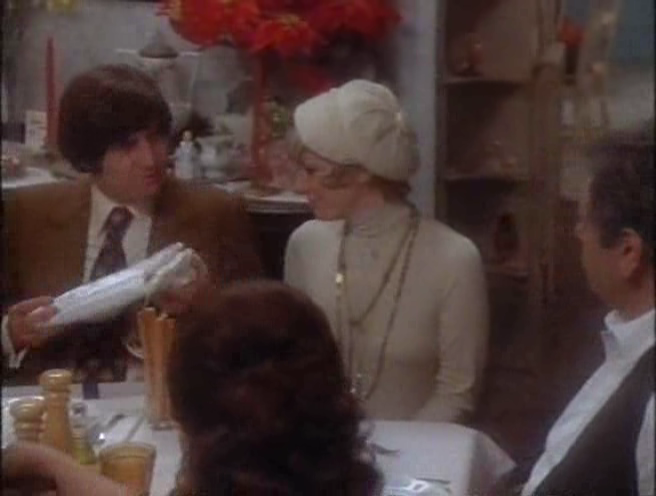
Based on a play by married writing team Renee Taylor and Joseph Bologna, this ensemble romantic comedy (featuring the Oscar-winning song “For All We Know”, popularized by Karen Carpenter) still retains much of its charm and relevancy. Shifting between numerous serio-comic storylines — all focusing on the challenges inherent in either initiating or maintaining a romantic relationship — it features a host of fine performances by both little-known actors (i.e., Marian Hailey, whose film career went nowhere) and actors who would shortly make bigger names for themselves (i.e., a baby-faced Diane Keaton in her film debut). The film nicely infuses humor into such weighty issues as divorce, sexual dissatisfaction, and infidelity; and while some subplots are (naturally) more satisfying than others, all seem crafted with care.

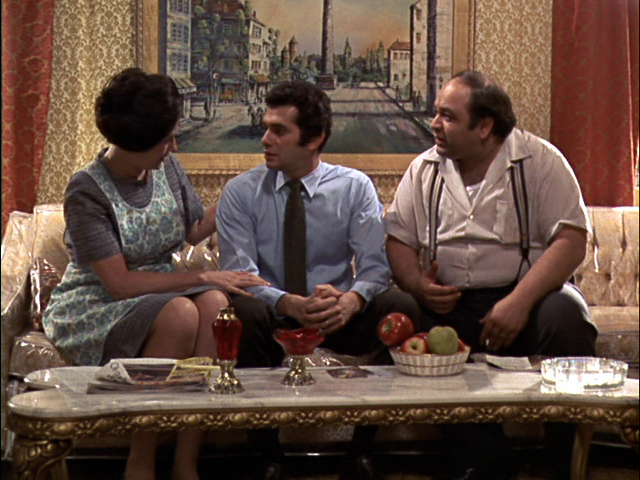
Bedelia is lovely as the bride-to-be who knows exactly how to handle her nervous groom; we sense that this couple will stick it out, and their interactions serve as an effectively grounded counterpoint to the rest of the movie. The most blatantly comedic storyline follows a horny friend-of-the-groom (Bob Dishy) determined to “score” with the bride’s ditzy cousin (Hailey); their cat-and-mouse courtship offers some giggle-worthy surprises. Bea Arthur and Richard Castellano are note-perfect as the devout Catholic parents of Brandon and Joseph Hindy; their deep distress and bafflement at the dissolution of Hindy’s marriage to Diane Keaton is sensitively handled. Much less humorous (and not given enough screentime) is the depiction of an ongoing affair between the father of the bride (Gig Young) and a family friend (Anne Jackson); this scenario ultimately comes across as simply tragic in its inevitability. The most dated subplot — though it still packs a disturbing punch in its own way — shows Anne Meara’s happily married but sexually neglected housewife attempting to assuage her insecure husband (Harry Guardino).

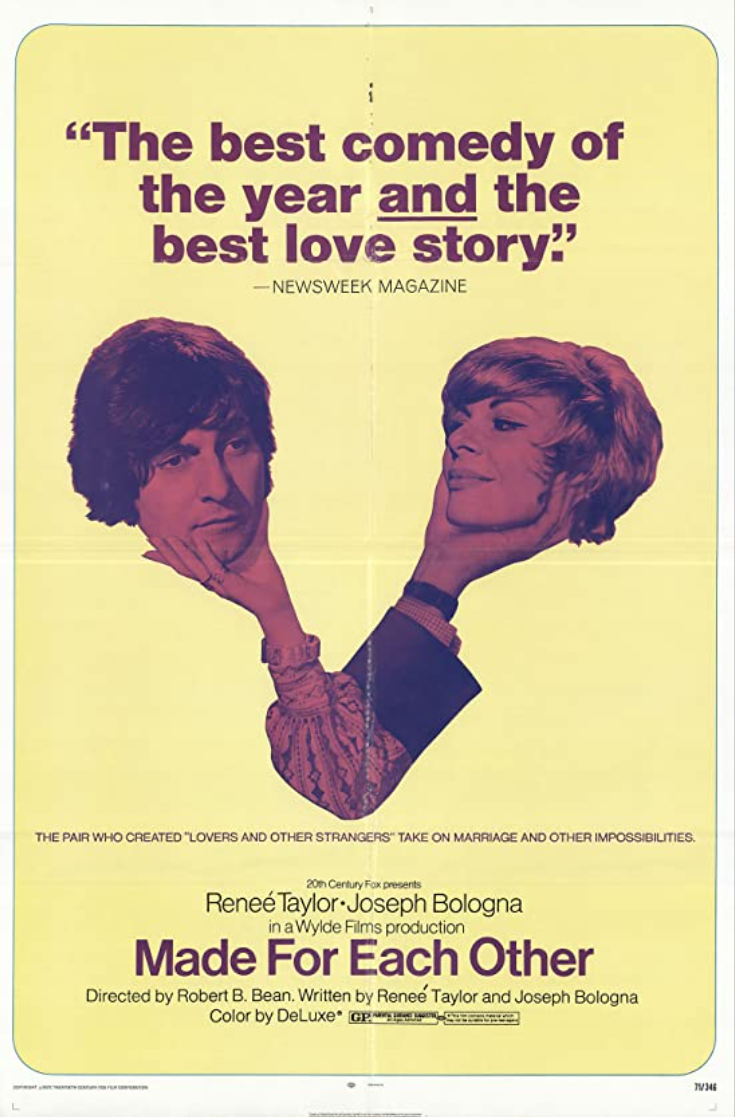
Note: Taylor and Bologna’s follow-up film was the 1971 sleeper Made For Each Other, which deals in an even more brutally incisive fashion with relationship issues; they would make an interesting, emotionally loaded double-bill.

Redeeming Qualities and Moments:

  • Fine performances by the entire ensemble cast


  • An often clever, still largely relevant screenplay

Must See?
No, but it’s recommended. Listed as a Sleeper in the back of Peary’s book.

Links:

Flirtation Walk (1934)

Flirtation Walk (1934)

“So he wants to desert because of me? I’ll fix that.”

Synopsis:
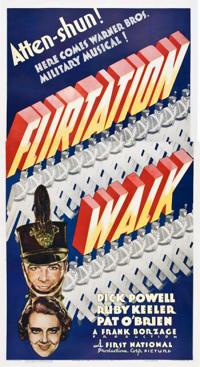
A private (Dick Powell) stationed in Hawaii falls for a general’s engaged daughter (Ruby Keeler), who feigns disinterest in order to keep him out of trouble. When he becomes a cadet at West Point, he is dismayed to see her showing up and agreeing to star in a student-run musical.

Genres, Themes, Actors, and Directors:

  • Cross-Class Romance
  • Dick Powell Films
  • Frank Borzage Films
  • “Let’s Put On a Show!”
  • Military<
  • Musicals
  • Pat O’Brien Films
  • Ruby Keeler Films

Review:
While some viewers refer to this escapist romantic musical as “utterly charming”, “spirited”, and “pleasant” (see comments on IMDb), I’m hard-pressed to find much of anything redeeming about it. Directed by Frank Borzage (though it might as well have been directed by Joe Schmoe, for all its distinctiveness), it was clearly meant to capitalize on the popularity of Powell and Keeler, who starred together as a romantic couple in no less than four films during the previous year-plus. Unfortunately, the storyline is not just innocuous (that’s to be expected in a film like this); it’s also inane, predictable, and (at times) insulting in its blatant anti-feminism. Cross-class romance? Fine, even if all Keeler gets to do is stand around and look charming. Glorifying West Point Academy? Well… okay, to a certain point (but a documentary would suit the bill much better). Showing every cadet at West Point going gaga for Keeler as soon as she appears? Now, come on; the girl’s cute, but not that cute. Inserting a “let’s put on a show” plot device to pull Keeler and Powell back together? Lame, lame, lame; this is when I finally tuned out completely.

Believe it or not, this clunker was nominated as one of the best pictures of the year (!!!!).

Redeeming Qualities and Moments:

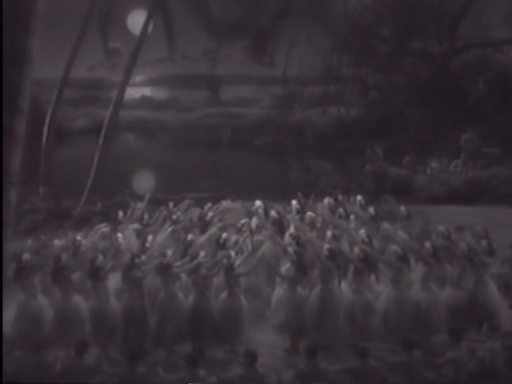
  • The Busby Berkeley-inspired Hawaiian dance number, as Powell woos Keeler at a luau

Must See?
No; definitely feel free to skip this one, unless you’re a diehard Oscar-nominee completist.

Links:

Forever Amber (1947)

Forever Amber (1947)

“She’s in love with her own ambitions; I’m only part of them.”

Synopsis:
An ambitious orphan (Linda Darnell) falls in love with a nobleman (Cornel Wilde) during the Stuart Restoration, but her desire for social advancement at any cost compromises their relationship.

Genres, Themes, Actors, and Directors:

  • Cornel Wilde Films
  • George Sanders Films
  • Historical Drama
  • Jessica Tandy Films
  • Linda Darnell Films
  • Obsessive Love
  • Otto Preminger Films
  • Richard Haydn Films
  • Royalty and Nobility
  • Social Climbers

Review:
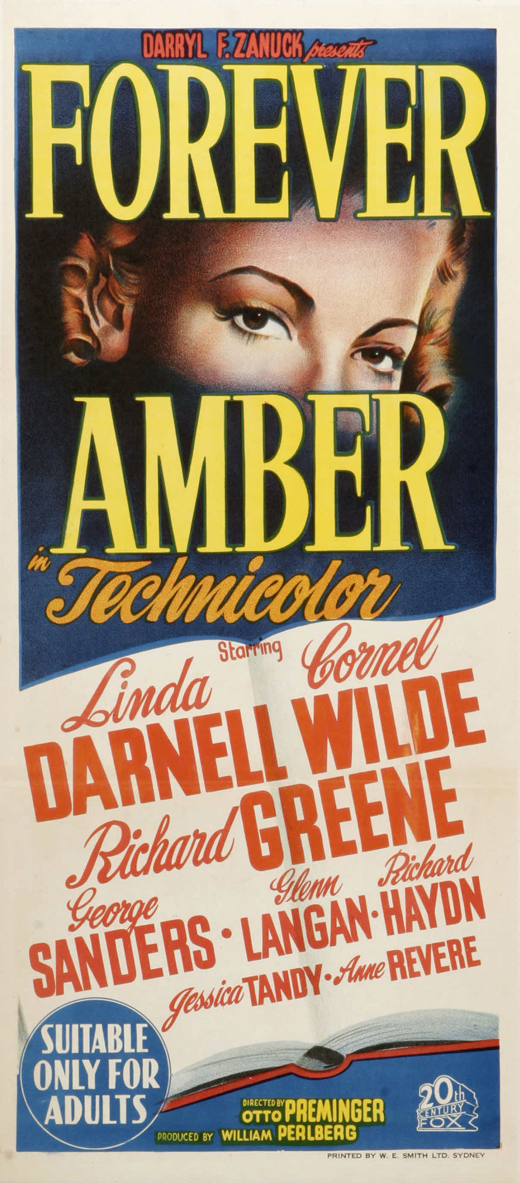
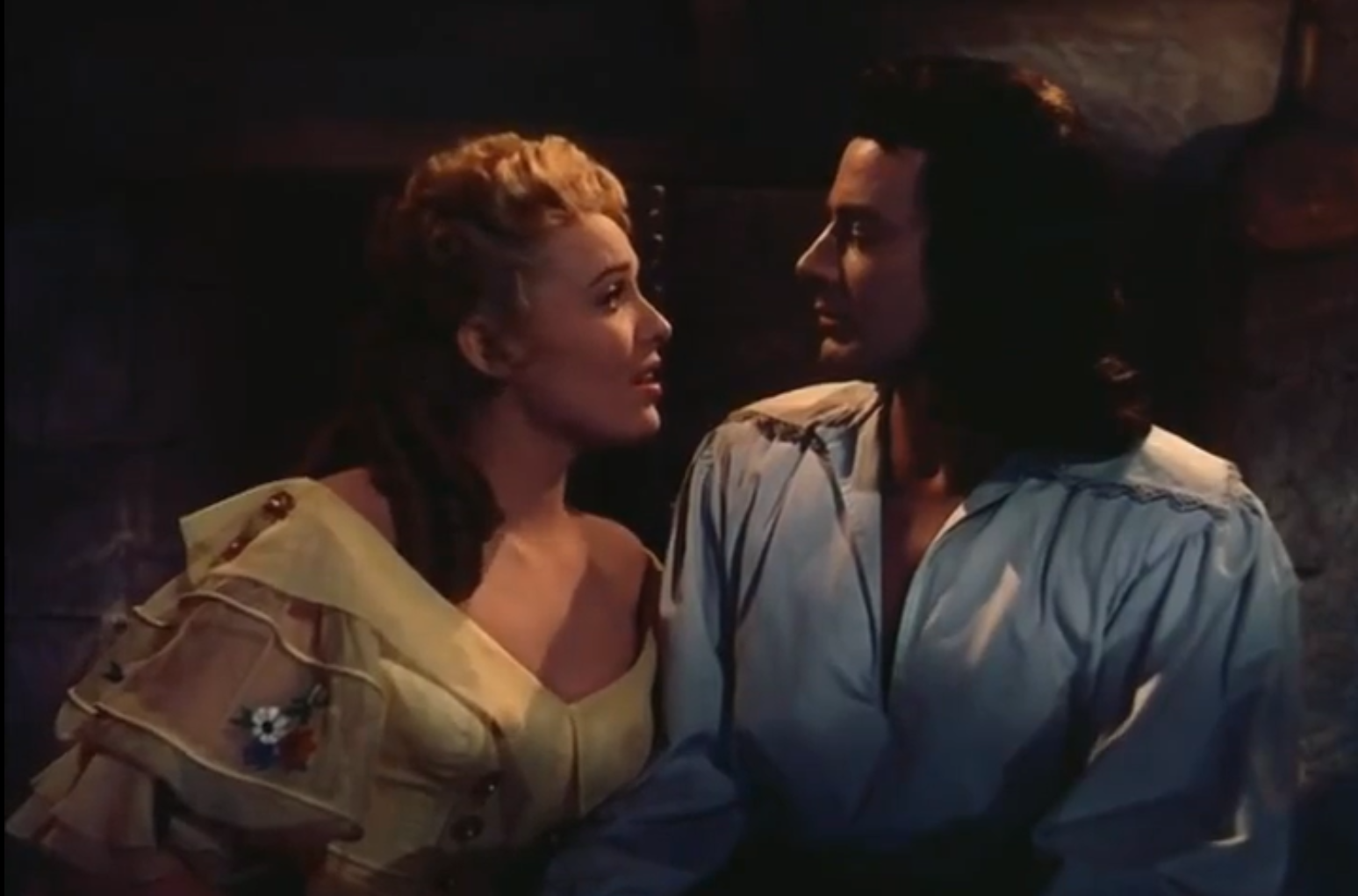
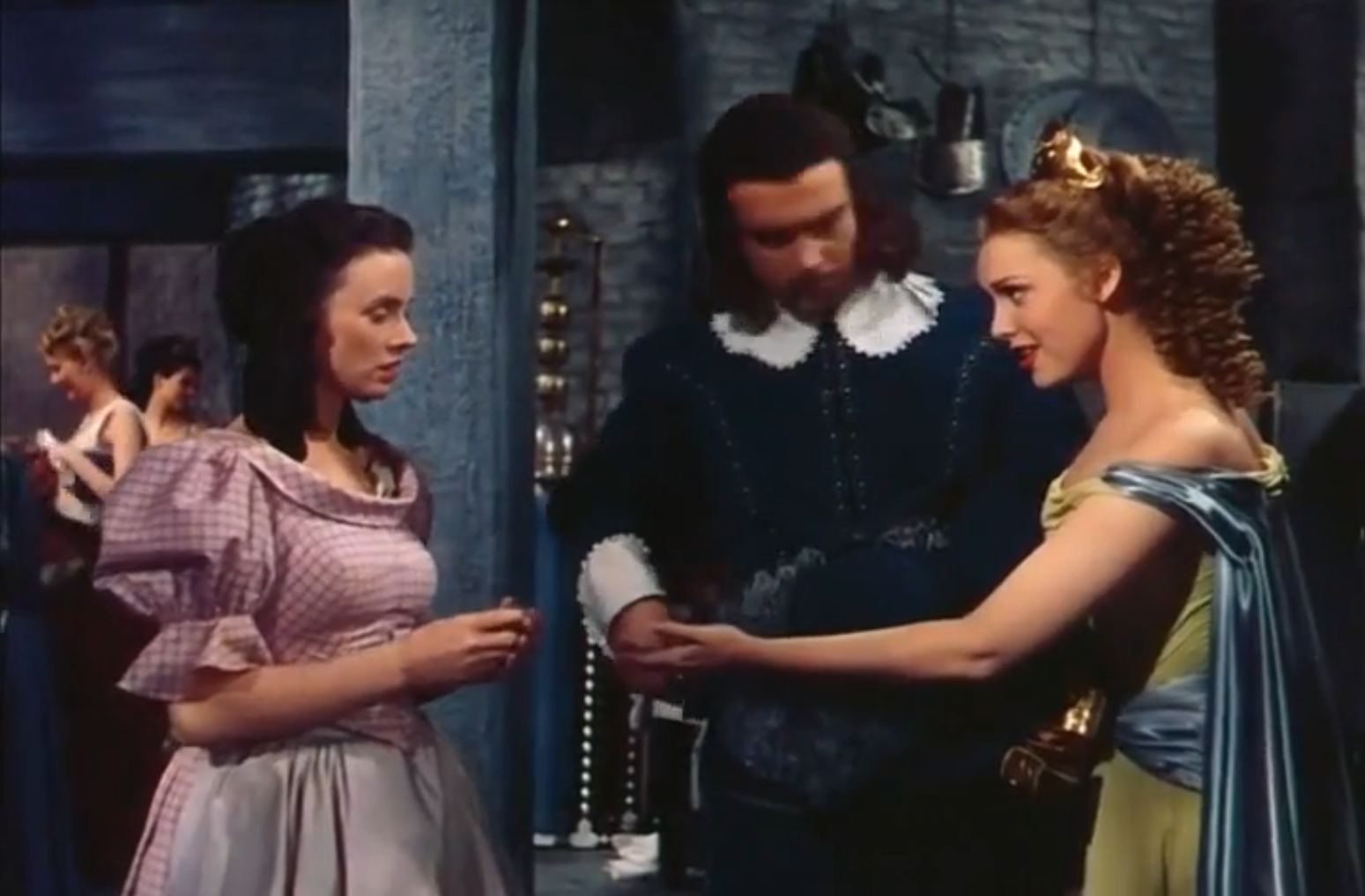
Linda Darnell replaced Peggy Cummins at the last minute as the title character in this big-budget historical epic, directed by Otto Preminger and based on Kathleen Winsor’s notoriously scandalous bestseller about a “wench” in 17th century England, a “loose” woman who bears a child out of wedlock and sleeps with various men as needed to achieve her goals. Darnell is surprisingly effective as Amber, a willful, self-reliant woman with one fatal flaw: an undying love for a man (Wilde) who simply doesn’t love her as much in return. But because Wilde’s character is a bit of a wet blanket — and because we don’t sense much chemistry between these two nominal romantic leads — Amber’s obsession with him never quite rings as true as it should.

Meanwhile, the lengthy, overblown script — which attempts to cover the novel’s 900+ pages in 138 minutes — often drags, leading one to concede that Amber DOES last “forever”. Yet I’ll admit that eventually (in classic “page-turner” fashion) I found myself caught up in Amber’s fate, and curious to see what situation she would get herself into (and out of) next.

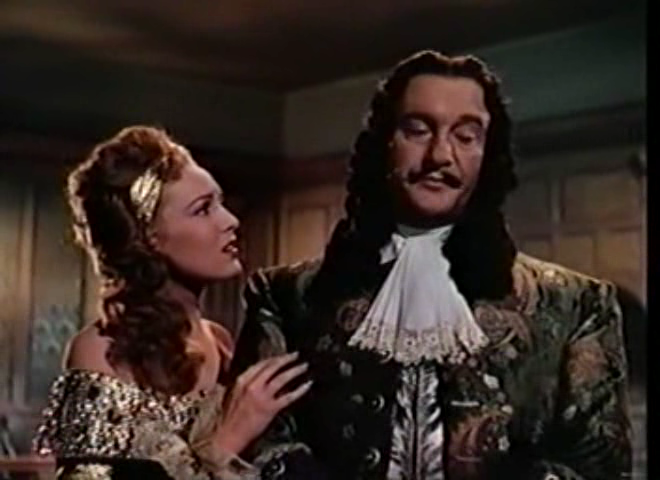
Watch for a couple of noteworthy supporting performances: George Sanders is perfectly cast as hedonistic King Charles II; while his screentime is limited, he’s given some pithy zingers, and pulls off a couple of memorable later scenes with typically droll panache. Richard Haydn is equally effective in a small role as the older titled man Amber ends up marrying, for better or for worse.

Note: Jessica Tandy appears in a small role as Amber’s prisonmate-turned-servant.

Redeeming Qualities and Moments:

  • Linda Darnell as Amber
  • George Sanders as King Charles II
  • Richard Haydn as the Earl of Radcliffe

Must See?
No; this one is only must-see for Preminger completists or fans of period epics.

Links:

Around the World in Eighty Days (1956)

Around the World in Eighty Days (1956)

“An Englishman never jokes about a wager.”

Synopsis:
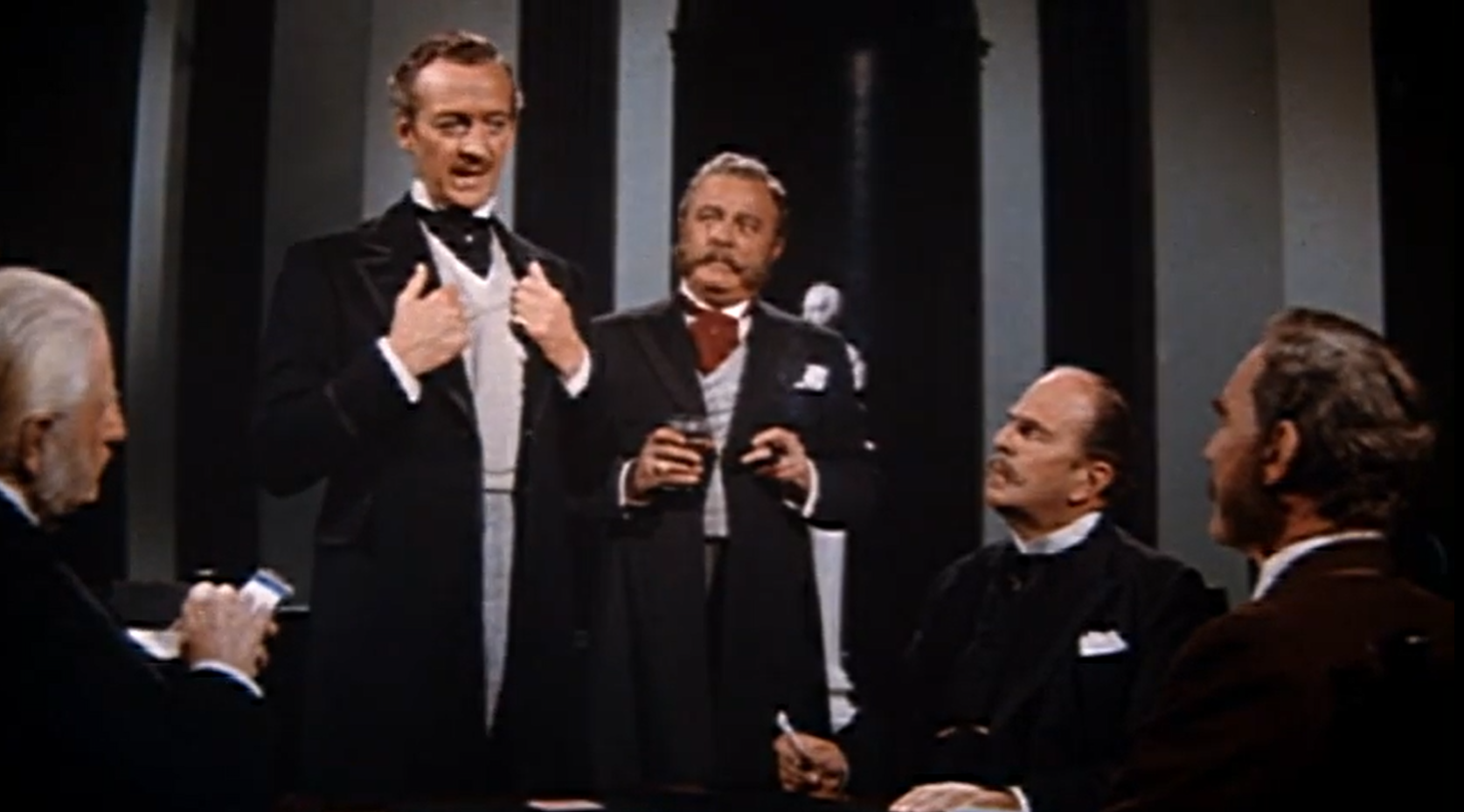
In Victorian England, a gentleman named Phileas Fogg (David Niven) wagers his entire fortune that he can travel across the world in 80 days.

Genres, Themes, Actors, and Directors:

  • Cat-and-Mouse
  • David Niven Films
  • Detective and Private Eyes
  • John Gielgud Films
  • John Mills Films
  • Jules Verne Adaptations
  • Race Against Time
  • Road Trip
  • Robert Newton Films
  • Shirley MacLaine Films

Review:
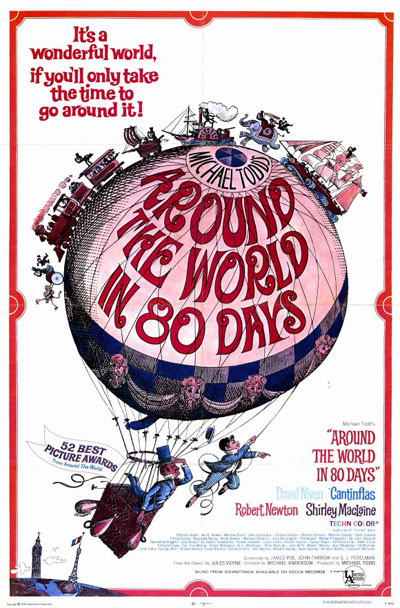
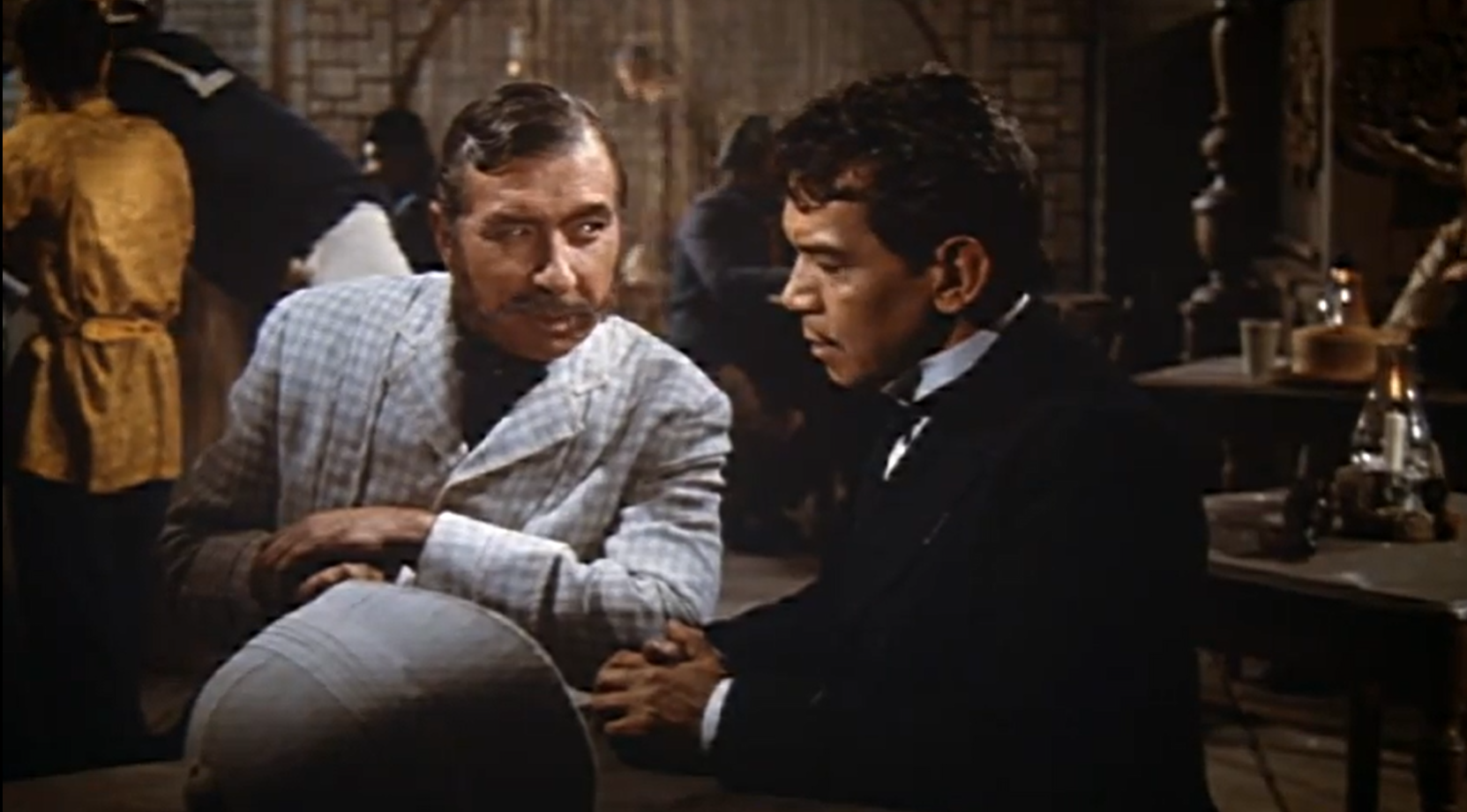
Despite its enormous popularity at the time of its release — it ran for three consecutive years in New York City, and won an Oscar as best picture of the year — Around the World in Eighty Days (based on the classic adventure novel by Jules Verne) is acknowledged by many these days as boring, too slow, and, quite frankly, not even close to best-picture-worthy material. Yet there’s no denying the visual impact of producer Michael Todd’s “Todd-AO” 70-mm cinematography — a direct result of his prior production work on Cinerama spectacles; and as a global travelogue (which is surely a part of what viewers at the time found appealing) it’s quite stunning. It’s actually rather mystical to look out the train window along with Fogg and his butler Passepartout (Mexican comedian Cantinflas) as they travel across the fields and plains of rural India, for instance.

As an adventure story, however, Around the World… falls surprisingly flat. Despite the built-in drama of Fogg literally racing against time to make it back to London (with his entire fortune at stake), the film takes its own sweet time stopping at sundry picturesque destinations, as various minor subplots are played out. A major narrative thread — involving a detective (Robert Newton, in his last film role) attempting to nab Fogg as a suspect in a bank robbery — is merely irritating, given that Newton literally shadows Fogg the entire trip, and should just arrest him already if he’s going to (though that would spoil the film’s infamous twist ending).
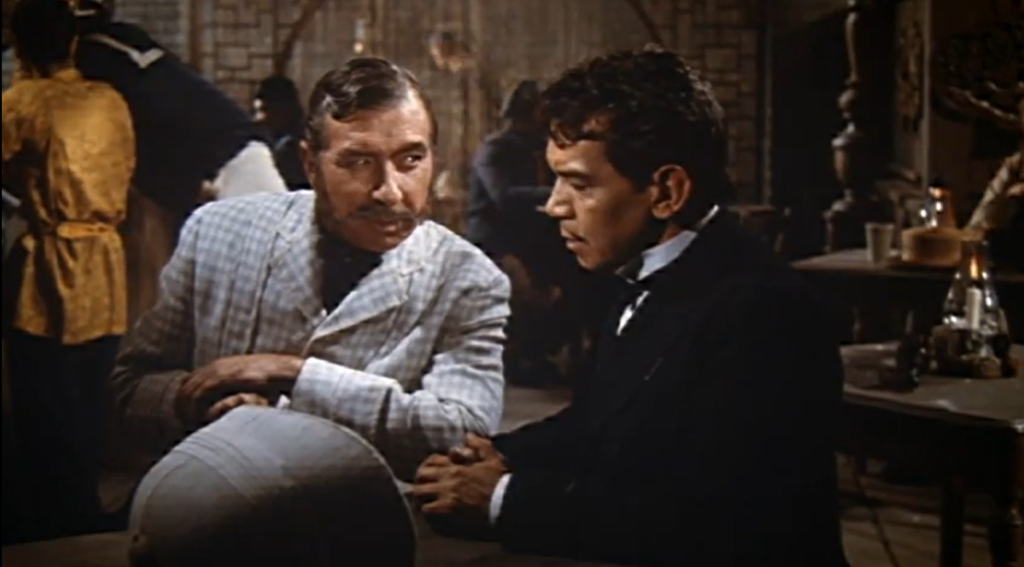
Meanwhile, Fogg’s growing romantic interest in a widowed Indian princess (Shirley MacLaine) rescued from a funeral pyre generates zero sparks, and is frustrating to watch given that it’s Passepartout, not Fogg, who risks his life to rescue her (but does she acknowledge him at all? not a chance!).

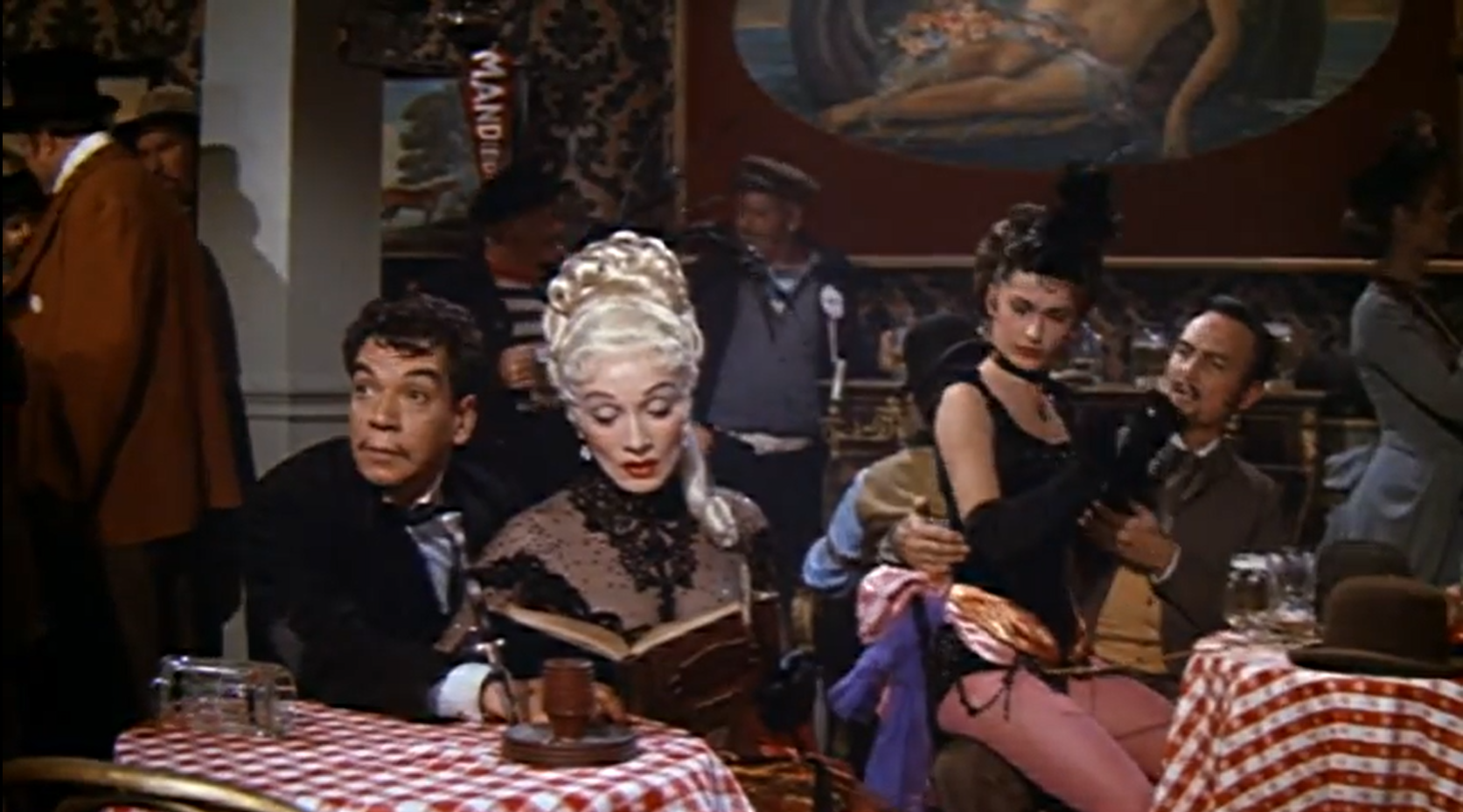
Speaking of Cantinflas — while there’s a certain historical interest in seeing the man who was the highest paid actor of his time (and I’m happy, as a Western viewer, to at least be acquainted with him), both his performance and his character are, to be blunt, irritating. (I’m sure he must have been more entertaining when filming in his native language in straight comedies — right?). Meanwhile, MacLaine — in skin-darkening make-up and Indian outfits — simply looks uncomfortable throughout, and barely registers (which is truly odd, given her notoriously quirky personality). And while Niven purportedly named this his favorite role of all time, his Fogg ultimately comes off as a rather bland (if undeniably resourceful and resilient) chap.
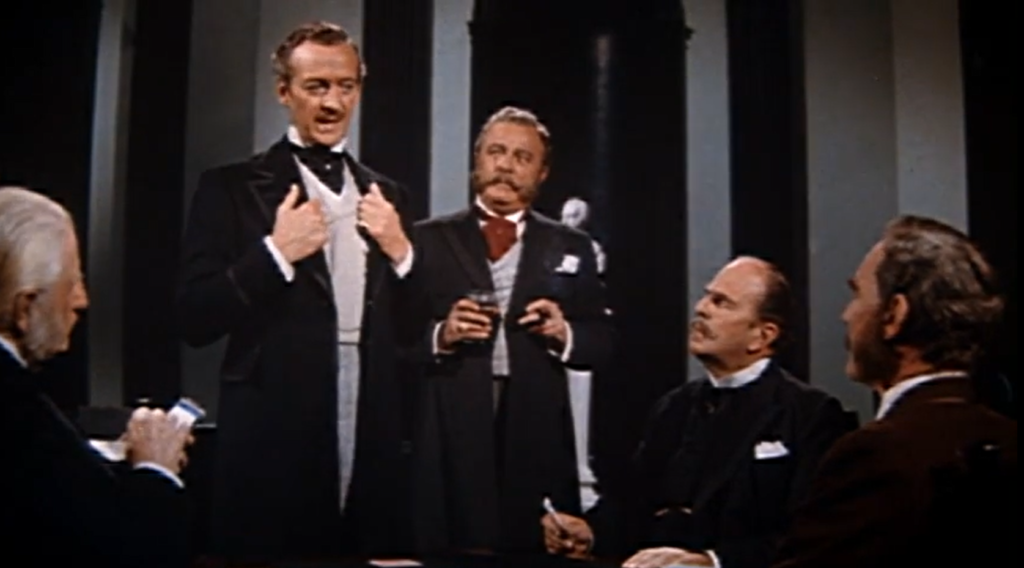
Niven, MacLaine, Newton, and Cantinflas are, of course, only a handful of the many “big name” stars who appear in the film — indeed, so many show up for cameos that this is credited as the movie that first popularized the term (and general concept) of a “cameo appearance”. And there is undeniably a certain amount of fun to be had in scanning for stars’ faces, given that they show up again and again; you may find yourself muttering out loud, “Could that be… Really? Yes, it is! But (s)he doesn’t even say a word!”
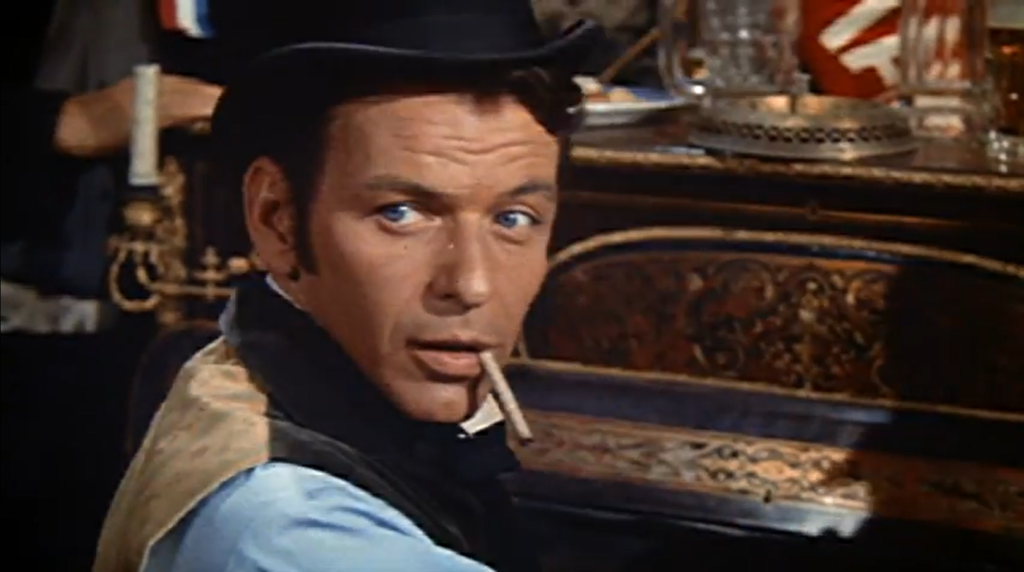
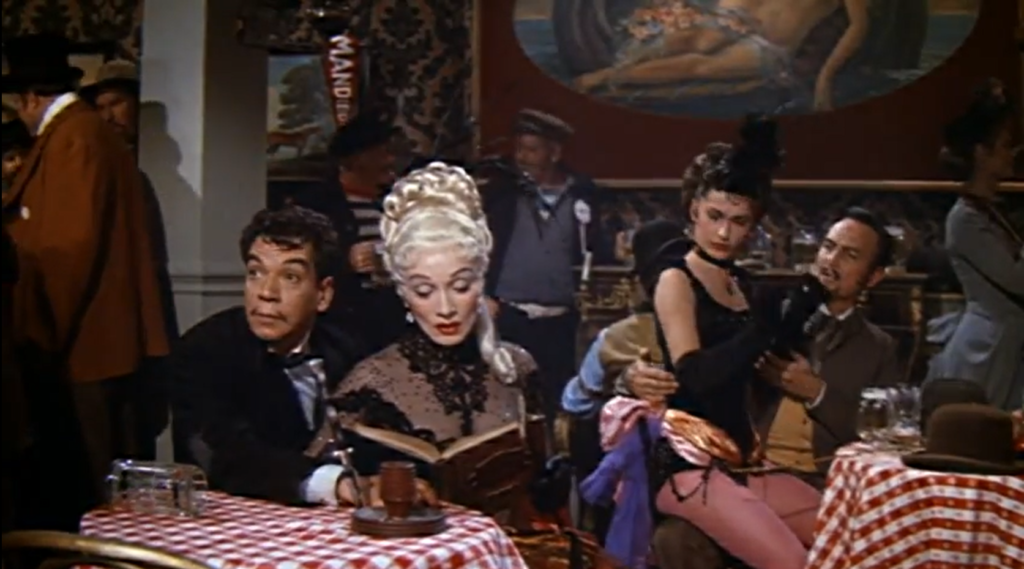
As Peary notes in his Alternate Oscars book, it was rather wise of Todd to offer “cameos to almost every actor in the universe”, since, as he notes, “How could the Academy members vote against their friends?” Touche.

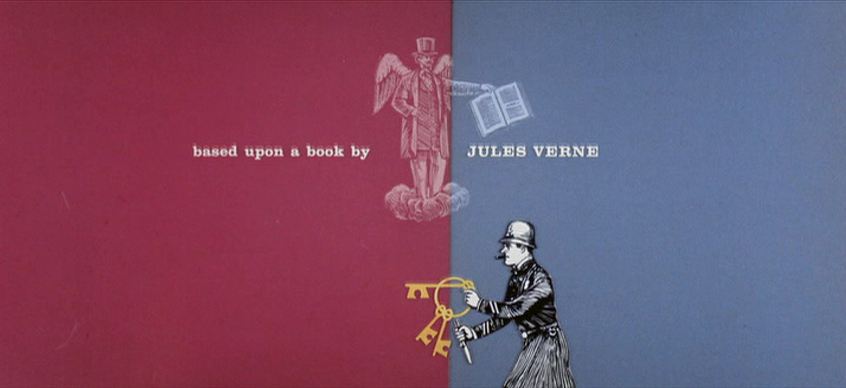
Note: Saul Bass’s immensely clever closing credits (which essentially summarize the film in creative caricatures) are a fabulous ending to this dauntingly long (183-minute running time) film. On that note, you can cut at least a little bit out if you watch it at home on DVD, given that there are Entr’acte and Exit musical sequences to fast-forward through (the musical score is catchy, but not THAT catchy!).

Redeeming Qualities and Moments:

  • Truly impressive wide-screen Todd-AO cinematography
  • Saul Bass’s inspired closing credits

Must See?
Yes, but only out of historical curiosity. Listed as a film with Historical Importance in the back of Peary’s book.

Categories

  • Historically Relevant
  • Oscar Winner or Nominee

Links:

Made For Each Other (1971)

Made For Each Other (1971)

“That’s why Gig and I are so good for each other: We’re two self-destructives confronting the life source.”

Synopsis:
A neurotic Jewish woman (Renee Taylor) and a womanizing Italian (Joseph Bologna) meet at a group therapy session and fall tentatively in love.

Genres, Themes, Actors, and Directors:

  • Cross-Cultural Romance
  • Romantic Comedy

Response to Peary’s Review:
Peary’s review of this “brutally insightful” romantic comedy by husband-and-wife team Joseph Bologna and Renee Taylor is spot on: he notes that while the “picture starts out awkwardly”, you should “stick with it because you’ll be rewarded” by scenes that “you may have seen previously only in your own life — never on the screen”. Indeed, it possesses a surprising number of “exceptional scenes… filled with pain and humor” — as Peary notes, it’s likely that “only an acting couple who are really in love and trust one another would dare play such emotionally devastating sequences” (and it’s especially heartwarming to know that they’re still together, in real life, after 40 years of marriage). At times, Taylor and Bologna’s script goes for laughs that are a little too obvious and easy (i.e., most of the initial group therapy scene) — yet slowly but surely, they allow their (semi-autobiographical?) characters to delve mercilessly into the flaws and neuroses that so often tear couples apart, and a surprising amount of honesty emerges. I’ll admit I didn’t expect myself to be so enmeshed in these characters’ fates by the film’s undeniably powerful ending.

Redeeming Qualities and Moments:

  • Renee Taylor as Pandora
  • Joseph Bologna as Gig
  • Fine supporting performances
  • A surprisingly smart and insightful screenplay

Must See?
No, but it’s certainly recommended, if you can locate a copy.

Links:

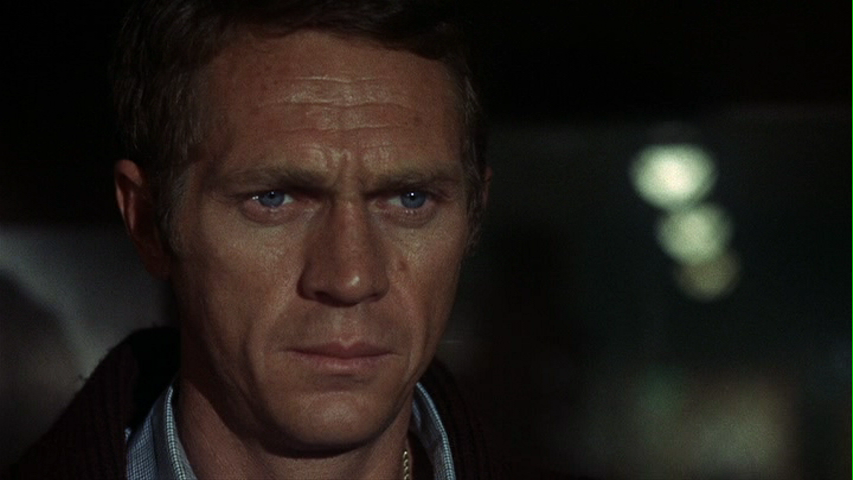
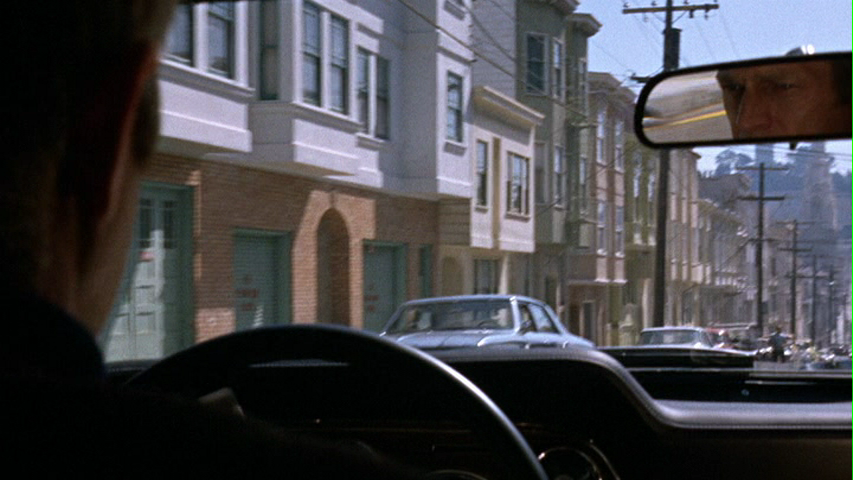
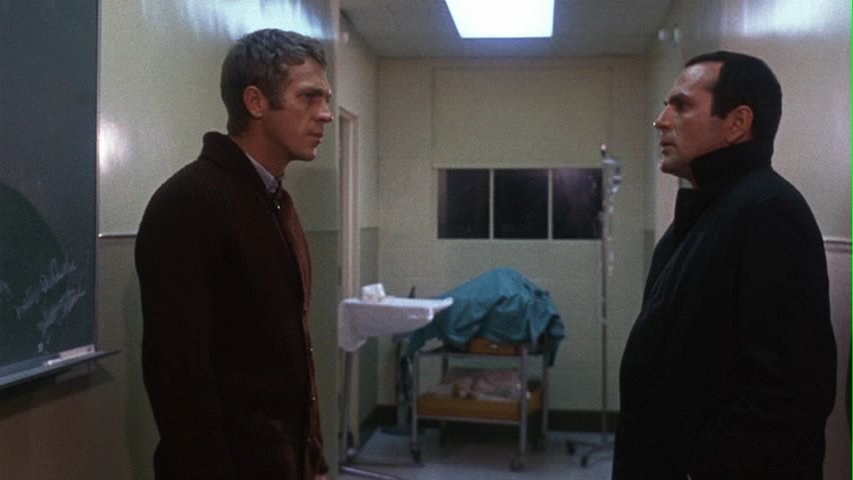
Bullitt (1968)

Bullitt (1968)

“You work your side of the street, and I’ll work mine.”

Synopsis:
A police detective (Steve McQueen) hired to protect a mafia informant (Pat Renella) investigates his ward’s brutal assassination.

Genres, Themes, Actors, and Directors:

  • Criminal Investigation
  • Detectives and Private Eyes
  • Jacqueline Bissett Films
  • Peter Yates Films
  • Robert Duvall Films
  • Robert Vaughn Films
  • Steve McQueen Films

Response to Peary’s Review:
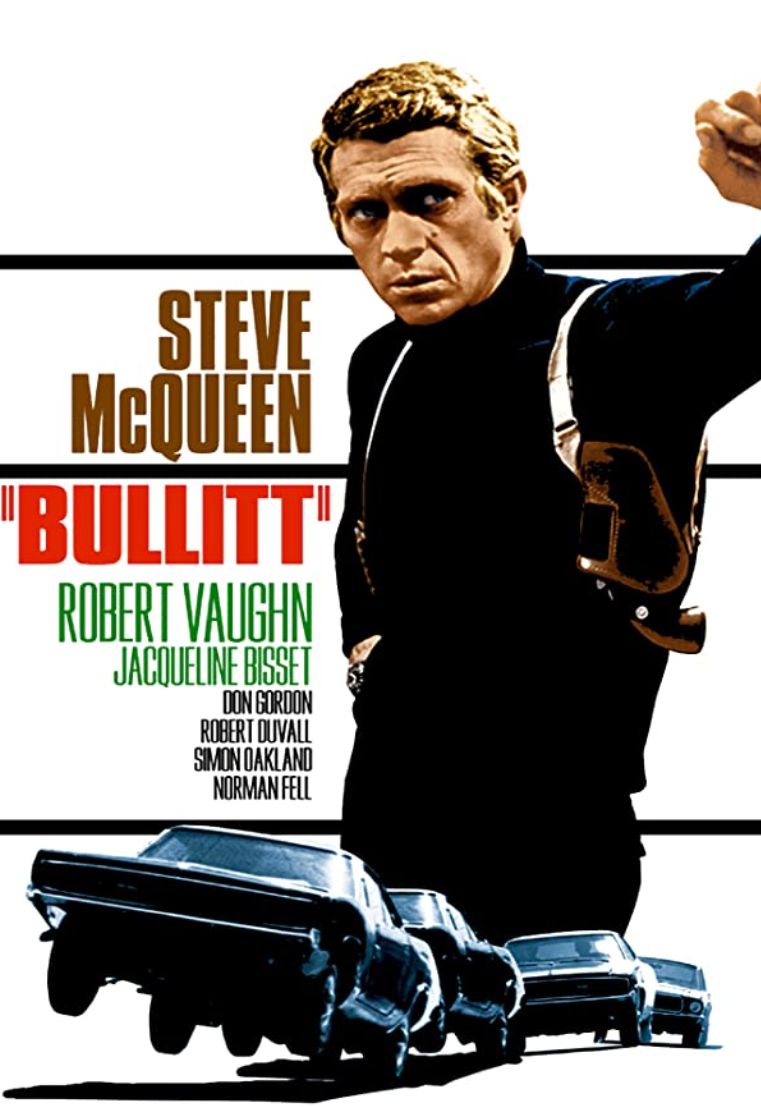
Peary accurately labels this iconic crime drama as “top-notch”, pointing out Peter Yates’ “extremely impressive” direction and “great use of San Francisco locations”. He notes that the “film has [an] authentic feel to it”, with the “street and crowd scenes… particularly believable”, and calls out the “several very exciting action sequences, including the influential, dizzying car chase… up and down the steep San Francisco streets”. He argues that “even more memorable”, however, “are all the bits of business that give us insight into Bullitt’s character”, including the brief yet revealing scene showing that his “shopping consists of buying six TV dinners without bothering to see what they are”. Bullitt did arguably afford Steve McQueen his “best role”, and I’ll agree with Peary that it’s “too bad there weren’t more films about Bullitt” (though I disagree with his assertion that they should “counter Dirty Harry” — I’m a fan of that series!).

Peary notes that this film “has never been given its due” — an interesting statement, since it’s most definitely remembered and revered by many as a cult hit. (In fact, just the other day on an L.A. freeway I was driving behind a Ford Mustang GT with “Bullitt” as its vanity plate, and “Steve McQueen” written on the plate frame). But perhaps that’s exactly Peary’s point: this film is so closely associated with McQueen’s car (and the justifiably lauded car chase it’s involved in) that it’s easy to overlook how enjoyable the film is as a police procedural and character study. The investigation is remarkably well-written, with the unexpected “plot twist” that occurs fairly early on (as McQueen’s ward is murdered) leaving us wondering what will come next. Indeed, the screenplay — which uncovers a “bizarre plot involving lookalike criminals” — almost never disappoints, with just one exception: the rather thankless role of Bullitt’s girlfriend (Jacqueline Bissett); Bissett tries her best but is saddled with such a god-awful speech at one point that it actually grinds things to a halt — temporarily. Despite this minor hiccup, however, Bullitt remains a must-see classic of the genre, one which merits multiple enjoyable viewings.

An interesting bit of trivia: according to TCM, Bullitt was “the first film shot entirely on location with an all-Hollywood crew”

Addendum (1/14/11): RIP, Peter Yates.

Redeeming Qualities and Moments:

  • Steve McQueen as Frank Bullitt (Peary votes him Best Actor of the year in his Alternate Oscars book, though he wasn’t even nominated by the Academy at the time)
  • The exciting car chase (and other action sequences)
  • A smart, taut script

Must See?
Yes, as an iconic classic of the genre.

Categories

  • Genuine Classic

Links:

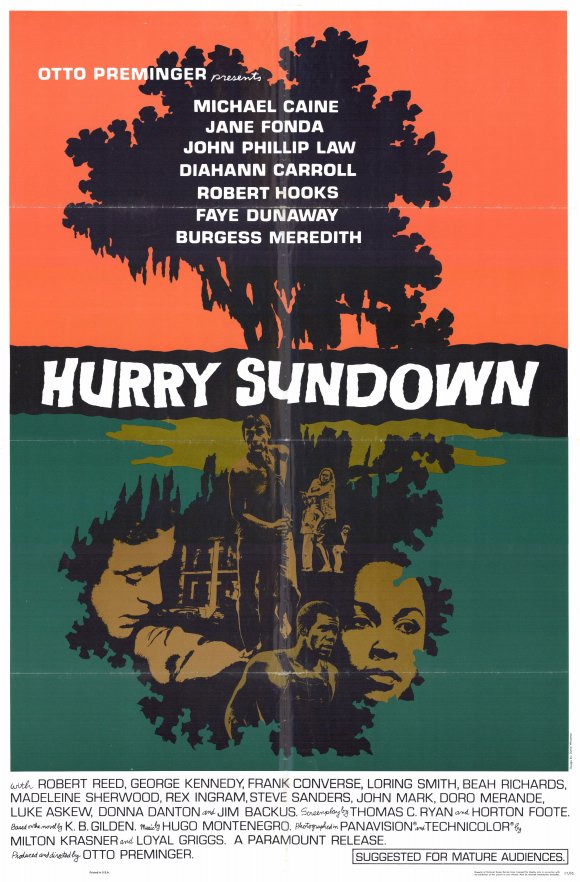
Hurry Sundown (1967)

Hurry Sundown (1967)

“Land lasts: you take care of it, and it’ll take care of you.”

Synopsis:
The unscrupulous husband (Michael Caine) of a land-owning Southern heiress (Jane Fonda) attempts to buy out two small plots of land: one owned by his poor cousin (John Phillip Law) and his wife (Faye Dunaway), the other by a black farmer (Robert Hooks) whose mother (Beah Richards) was Fonda’s wetnurse.

Genres, Themes, Actors, and Directors:

  • African Americans
  • Burgess Meredith Films
  • Deep South
  • Faye Dunaway Films
  • George Kennedy Films
  • Jane Fonda Films
  • Michael Caine Films
  • Otto Preminger Films
  • Race Relations
  • Rex Ingram Films

Review:
Notoriously lambasted by critics and viewers alike, Otto Preminger’s adaptation of K.B. Gilden’s novel is perhaps best remembered today for the hellacious time its cast and crew members had working with Preminger (who described the film as “his most important project”). Anecdotes abound, with Caine apparently reporting to film critic Rex Reed that Preminger was “only happy when everybody else [was] miserable”, and Faye Dunaway (in her screen debut) so distressed by working with Preminger — who she insisted didn’t know “anything at all about the process of acting” — that she went to court and paid a large sum of money to get out of her five-film contract with him. Meanwhile, the very process of filming on southern soil during the height of Jim Crow racial tensions was incredibly stressful for all involved, with Hooks noting, “All of us were convinced that we were surrounded by some of the dumbest and meanest people on the face of the earth, to say nothing of being the most cowardly.”

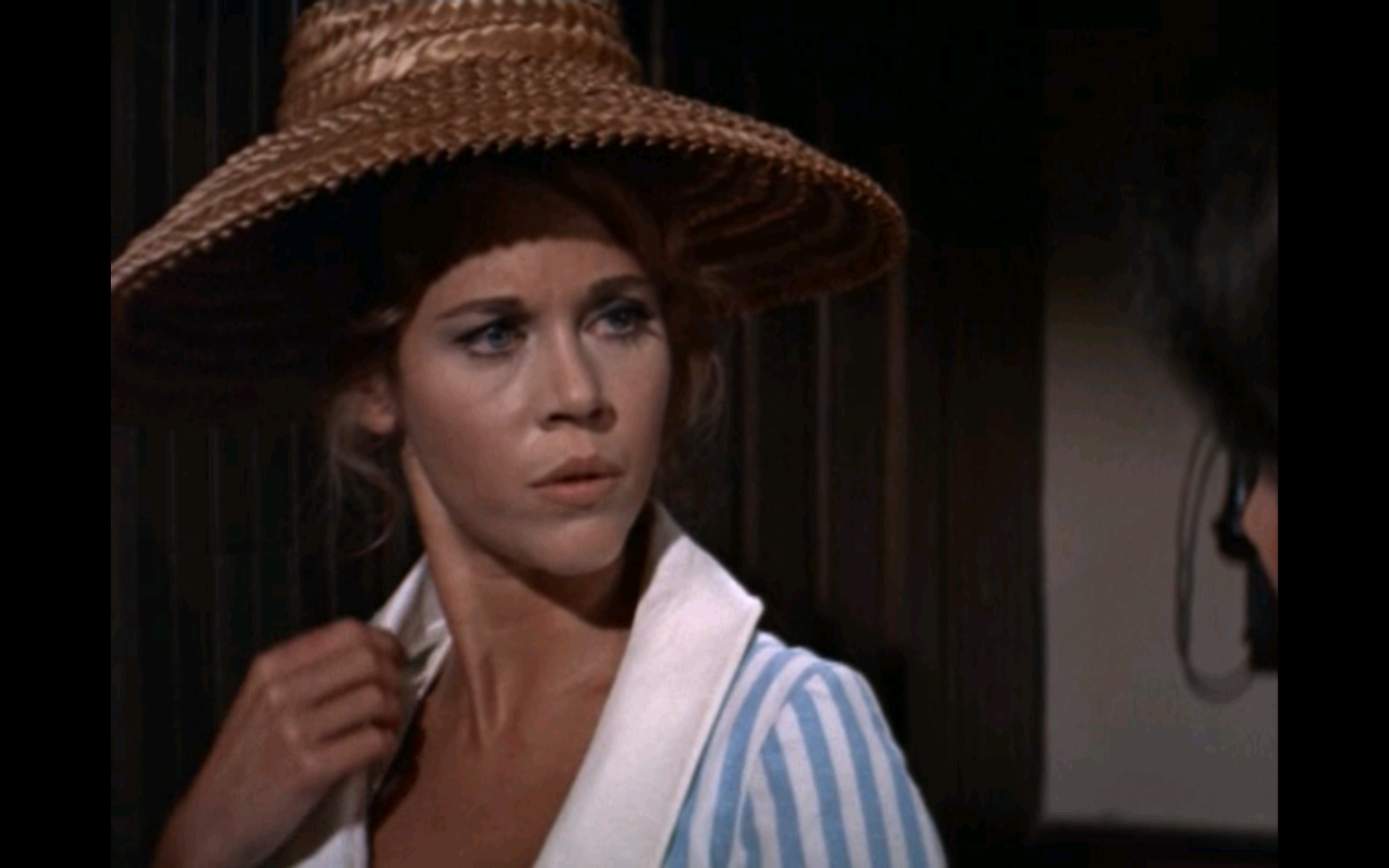
Interestingly, the film itself is not really as bad as its reputation warrants — and its inclusion in the Medved brothers’ The Fifty Worst Films of All Time (1978) seems highly suspect. By focusing on the intersecting fates of three “representative” southern households — one white and monied, one white and poor, one black and poor — the film does make (perhaps unintended) “statements” about class and race in the South, but the primary characters themselves are reasonably nuanced (though not all are provided with enough screentime for full development). Most impressive is Jane Fonda, giving a compelling performance in a pivotal role as an unhappily married woman forced to confront her husband’s deception and malpractice; the film eventually becomes her story, and she does a fine job investing viewers in the discomfort of her character’s increasing cognitive dissonance. Diahann Carroll is also noteworthy in a small role that should have been fleshed out more fully.

However, the film most definitely has its share of “bad movie” moments and performances. Both Burgess Meredith as a bigoted lawyer and George Kennedy as a buffoonish sheriff are laughably one-dimensional; Caine’s southern accent falters a bit too often (though he IS, naturally, believable as a caddish heel); and Richards (in a tiny, underdeveloped role) gives a sensitive, heartbreaking performance — up until the moment her heart LITERALLY “breaks”, and she melodramatically pantomimes an attack. Meanwhile, Fonda and Caine’s emotionally disturbed son (John Mark) is never convincing (nor is the lame back-story attempting to explain why he suddenly “became” the way he is), and a number of essential plot elements — such as Law’s unconvincing friendship with Hooks (why does he slip in and out of bigotry?) — are handled sloppily. Finally, Hugo Montenegro’s energetic film score is ultimately inappropriate (it sounds better suited for a western), and egregiously misused at times.

With all that said, this is one you’ll have to watch for yourself to determine whether you consider to be an entirely skippable clunker, or a flawed but well-intentioned and occasionally compelling misfire.

Redeeming Qualities and Moments:

  • Jane Fonda as Julie Ann Warren
  • Diahann Carroll as Vivian Thurlow

Must See?
No, though film fanatics may be curious to check it out, given its historical notoriety.

Links:

Wild Strawberries (1957)

Wild Strawberries (1957)

“Recently I’ve had the weirdest dreams — as if I must tell myself something I won’t listen to when I’m awake.”

Synopsis:
An elderly professor (Victor Sjostrom) travelling to an awards ceremony reflects upon the joys and pains of his past, attempting to understand why he is seen by many as cold and unforgiving.

Genres, Themes, Actors, and Directors:

  • Character Arc
  • Elderly People
  • Flashback Films
  • Ingmar Bergman Films
  • Max von Sydow Films
  • Road Trip
  • Scandinavian Films

Response to Peary’s Review:
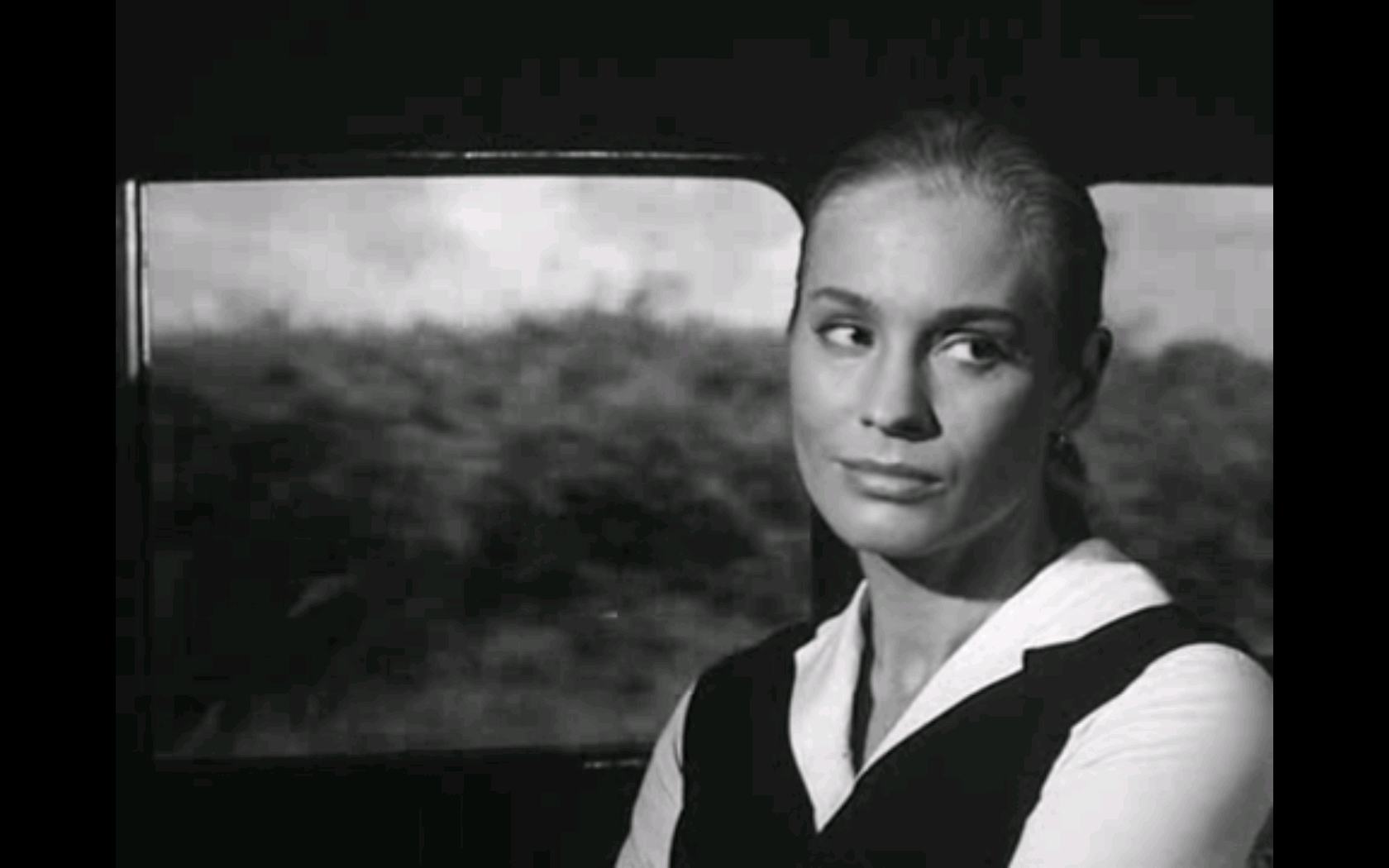
Peary accurately labels this enduring “journey of self-knowledge” by master writer/director Ingmar Bergman as “cinematic storytelling at its best” — a beloved film which “defies criticism” given how great its “impact [has] been on ‘art’-film lovers, film students, and filmmakers.” He notes that watching it is akin to being “with Scrooge on a look at Christmas Past“, as the film’s protagonist (Victor Sjostrom, giving a “captivating performance” as “cold” professor Isak Borg) slowly “begins to display traces of humanity and compassion”. Indeed, it’s impossible not to be moved by Borg’s haunting process of self-discovery, as he’s forced (through insistent dreams and visions) to acknowledge aspects of his personality that have caused him unspoken grief over the years.

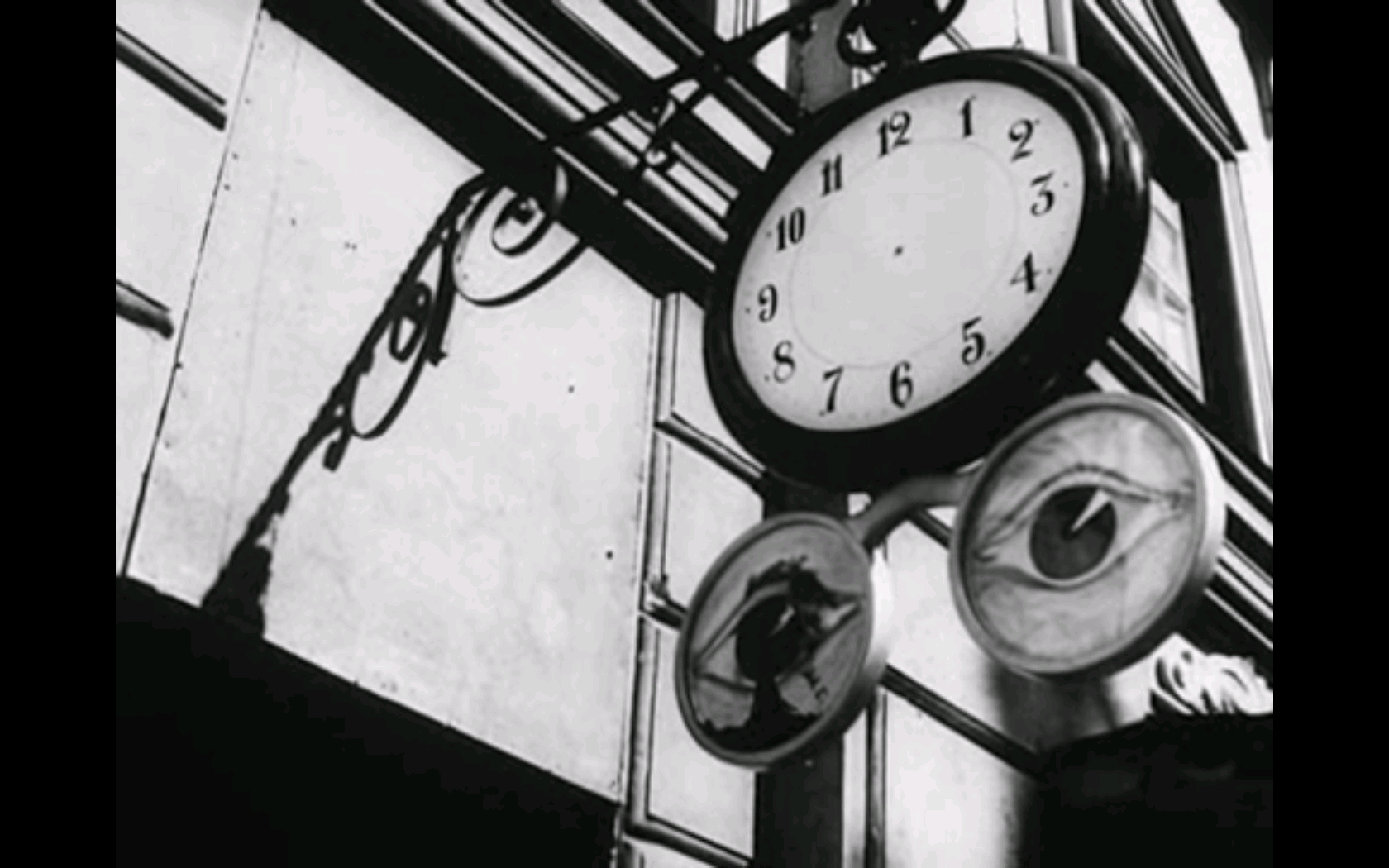
Wild Strawberries is, in essence, an elaborate “flashback film”, yet with a strategic thematic twist, given that Borg is privy to life-altering scenes he could never have seen in real life. Indeed, Bergman daringly plays with the viewer’s notion of cinematic continuity and integrity in a way that audiences at the time found either frustrating or thrilling (Bosley Crowther of the New York Times, for instance, referred to the film as “so thoroughly mystifying that we wonder whether Mr. Bergman himself knew what he was trying to say”.) Peary, however, argues in retrospect that “rather than being as intimidating as later Bergman films, [Wild Strawberries] is simple enough on the surface for viewers to have the energy to dig for the inner meanings and complexities” — and it’s certainly the best film to introduce to budding film fanatics interested in exploring Bergman’s esteemed oeuvre.

Redeeming Qualities and Moments:

  • Victor Sjostrom as Isak Borg
  • Ingrid Thulin as Marianne (Borg’s daughter-in-law)
  • The opening nightmare sequence
  • Gunnar Fischer’s cinematography

Must See?
Yes, as an undisputed foreign classic by a master director.

Categories

  • Foreign Gem
  • Important Director

(Listed in 1001 Movies You Must See Before You Die)

Links:

Navy vs. the Night Monsters, The (1966)

Navy vs. the Night Monsters, The (1966)

“Let’s not forget the penguins!”

Synopsis:
Residents on a South Seas Naval base are terrorized by acid-secreting monster trees transplanted from Antarctica.

Genres, Themes, Actors, and Directors:

  • Killer Plants
  • Mamie Van Doren Films
  • Military
  • Science Fiction

Review:
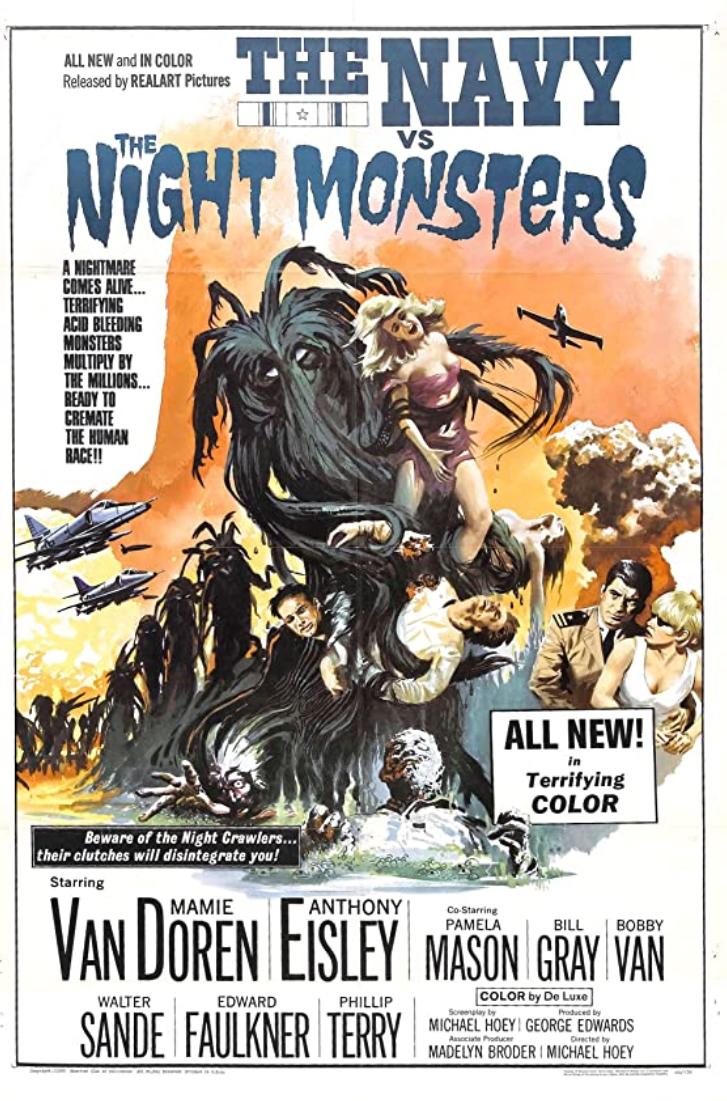
Rated just 2.4 stars by users on IMDb, this notoriously awful sci-fi horror flick offers stunningly few redeeming qualities, even for diehard bad-movie aficionados. Clearly inspired by both The Thing From Another World (1951) and The Day of the Triffids (1962), it attempts to bank upon the (questionable) cinematic trope of killer plants — yet the “monsters” that appear on-screen are simply laughably non-menacing walking tree costumes.

Other than its intriguing alliterative title, this film is probably best known for co-starring Mamie Van Doren as a naval nurse with a penchant for wearing tightly revealing au couture uniforms; but even she herself was highly dismissive of her work here.

This clunker is most definitely skippable.

Note: You WILL have to watch the film for yourself if you want to understand the significance of the quote selected above; seriously, I can’t help you on that one.

Redeeming Qualities and Moments:

  • Stanley Cortez’s cinematography

Must See?
No; definitely feel free to skip this one. Listed as a Camp Classic in the back of Peary’s book.

Links: