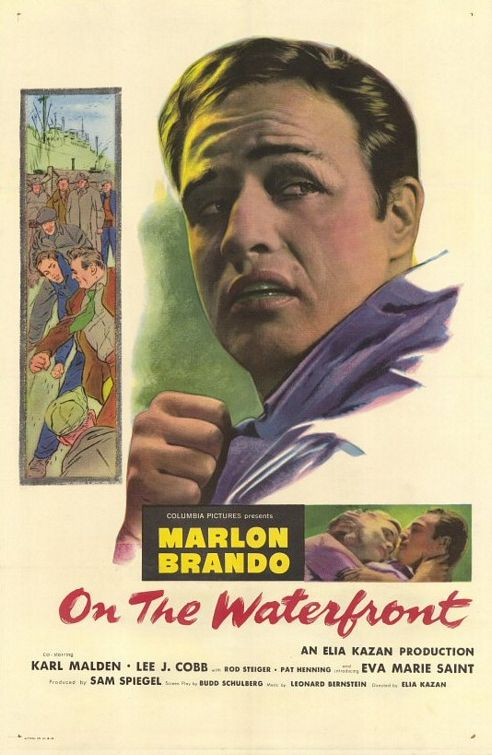
On the Waterfront (1954)
“I’ve been on the docks all my life, boy, and there’s one thing I’ve learned — you don’t ask no questions, you don’t answer no questions.”
|
Synopsis: |
|
Genres, Themes, Actors, and Directors:
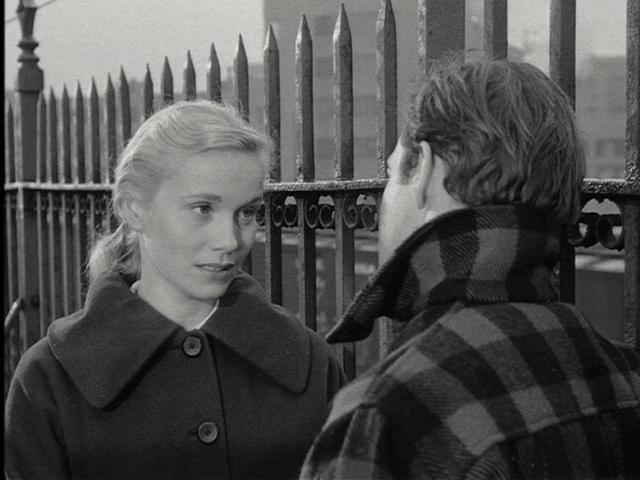
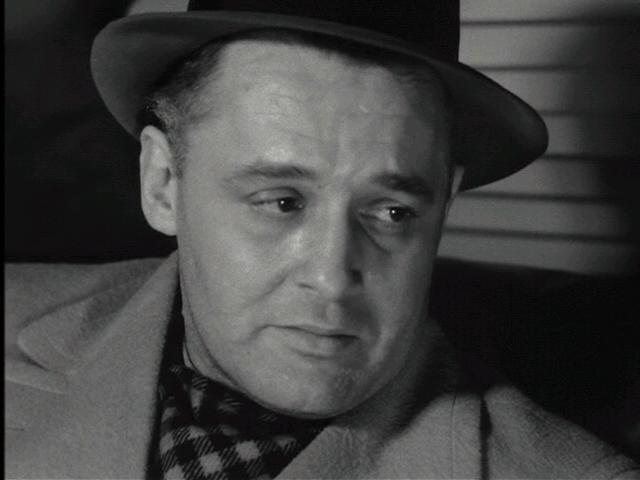
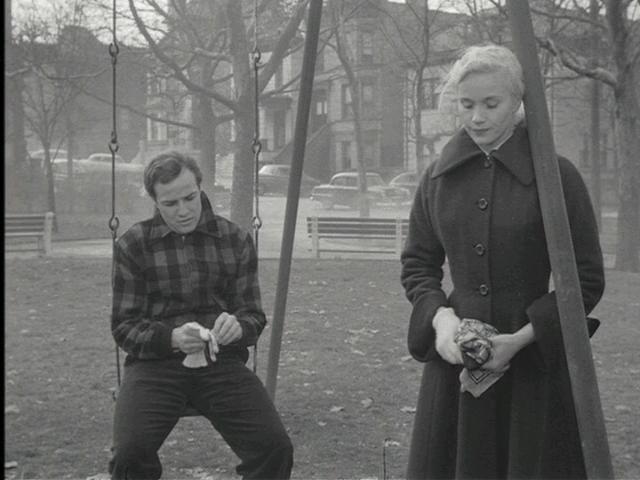
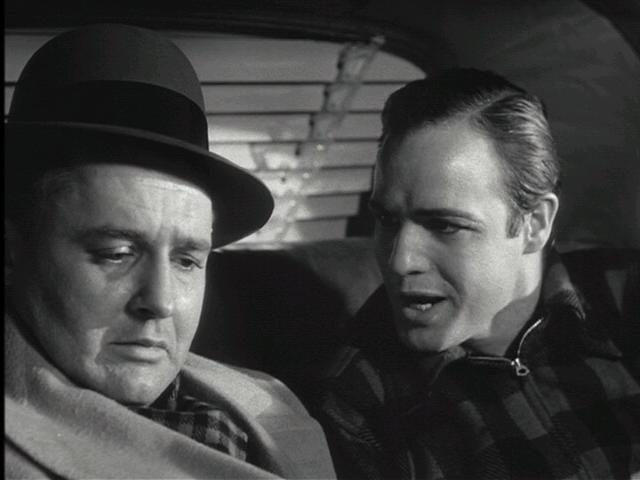
Response to Peary’s Review: On the Waterfront has been criticized on multiple fronts over the years: by those upset about its portrayal of the longshoreman’s union in the 1950s as corrupt; by those who claim On the Waterfront is essentially anti-union (I disagree); and — most famously — by those who believe Kazan was trying to offer Terry’s story as an apologetic for his own name-spilling to the House of Un-American Activities Commission (HUAC). Ultimately, however, I choose to view the film as a fable-like character study about personal redemption, rather than a polemic on unions, corruption, or Kazan himself. The film’s primary flaw (as noted by Peary) is the fact that “too much Christian morality is expounded by the overacting Karl Malden” — indeed, the scenes with Father Barry are a major distraction. Fortunately, there are enough memorable moments in On the Waterfront — Terry walking with Edie in the park; Terry’s poignant talk with Charlie in the taxi cab; the final climactic moments on the docks — to make up for those which don’t quite work. Also noteworthy are Leonard Bernstein’s majestic score (his first), and Boris Kaufman’s luminous black-and-white cinematography. Ultimately, On the Waterfront remains a glorious example of collaborative filmmaking, and merits multiple viewings by film fanatics. Redeeming Qualities and Moments:
Must See? Categories
(Listed in 1001 Movies You Must See Before You Die) Links: |