Member of the Wedding, The (1952)

Member of the Wedding, The (1952)

“We go around trying first one thing, then another. Yet we’re still caught, just the same.”

Synopsis:
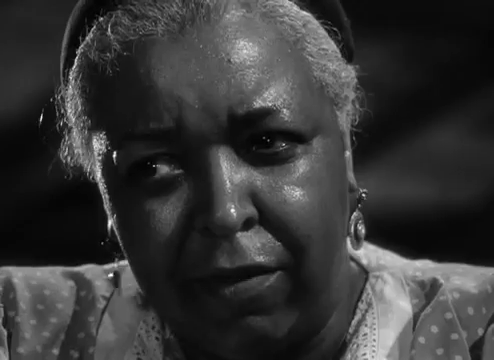
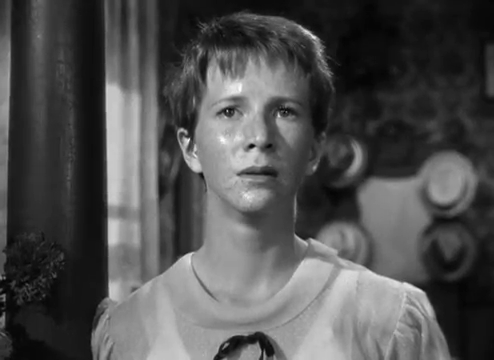
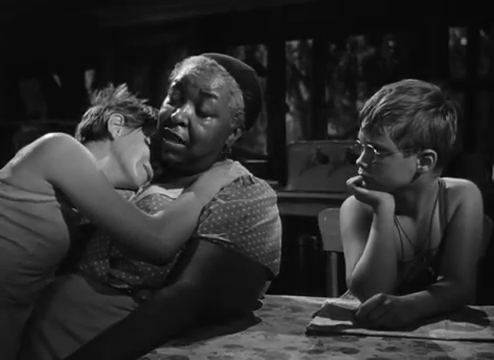
A housekeeper (Ethel Waters) cares for a sickly young boy (Brandon de Wilde) and his 12-year-old cousin Frankie (Julie Harris), who wants nothing more than to join in the excitement and romance of her brother’s (Arthur Franz) marriage to his fiancee (Nancy Gates).

Genres, Themes, Actors, and Directors:

  • African-Americans
  • Coming of Age
  • Deep South
  • Fred Zinnemann Films
  • Julie Harris Films
  • Play Adaptation

Review:
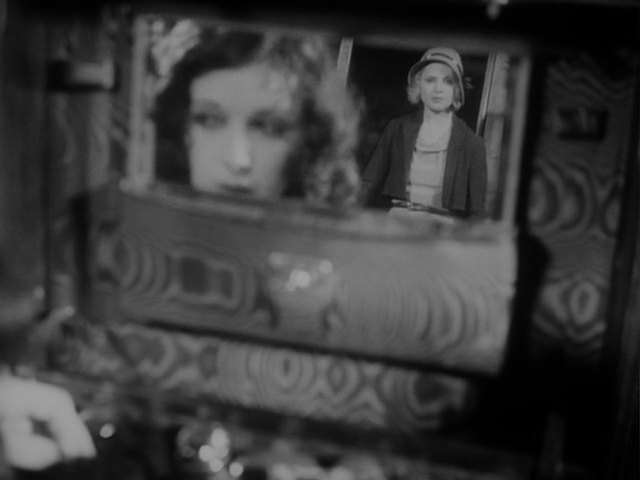
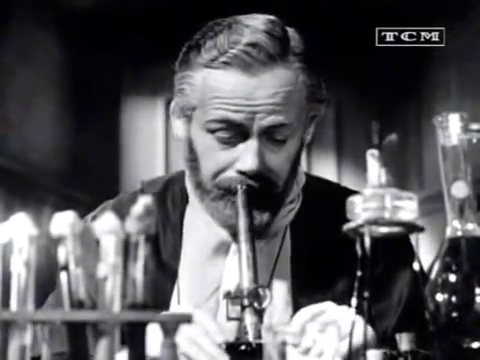
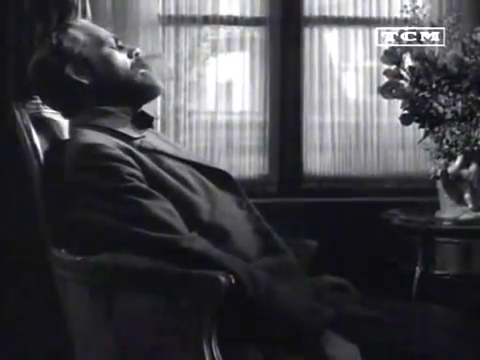
Carson McCullers adapted her own 1946 novel into a Broadway play, which was then turned into this screen adaptation, directed by Fred Zinnemann and starring much of the original cast. It’s notable both for the poignant screenplay — Frankie’s high-pitch coming-of-age angst is beautifully captured — and for 26-year-old Harris’s performance as a gangly 12 year old, which some considered a challenging translation to the scrutiny of the camera (though I think she remains sufficiently believable). However, what struck me most upon recent viewing is the richness of Waters’ role and performance; as noted in TCM’s excerpt from Donald Bogle’s book Blacks in American Film & Television: An Illustrated Encyclopedia:

“… there is more here of black lives in disarray and in control than in most films of the period: it’s hard to think of any other movie of that time in which black actors had a chance to relate so tenderly and sensitively with one another.”

While “some viewers may be put off by the fact that [Waters’] character Berenice expends most of her energies and wisdom on two white children”, she is a rich and full character in her own right, given a complicated past and a challenging current context — as well as the movie’s final image and words.

Redeeming Qualities and Moments:

  • Ethel Waters as Bernice
  • Julie Harris as Frankie
  • Fine direction and cinematography

Must See?
Yes, for the strong lead performances — especially Waters’.

Categories

  • Noteworthy Performance(s)

Links:

Camille (1936)

Camille (1936)

“Never be jealous again! Never doubt that I love you more than the world — more than myself.”

Synopsis:
In 19th century Paris, a sickly courtesan (Greta Garbo) whose bills are paid by a wealthy baron (Henry Daniell) falls in love with a young admirer (Robert Taylor) whose father (Lionel Barrymore) fears for his reputation.

Genres, Themes, Actors, and Directors:

  • Cross-Class Romance
  • Feminism and Women’s Issues
  • George Cukor Films
  • Greta Garbo Films
  • Henry Daniell Films
  • Historical Drama
  • Lionel Barrymore Films
  • Morality Police
  • Robert Taylor Films
  • Star-Crossed Lovers

Review:
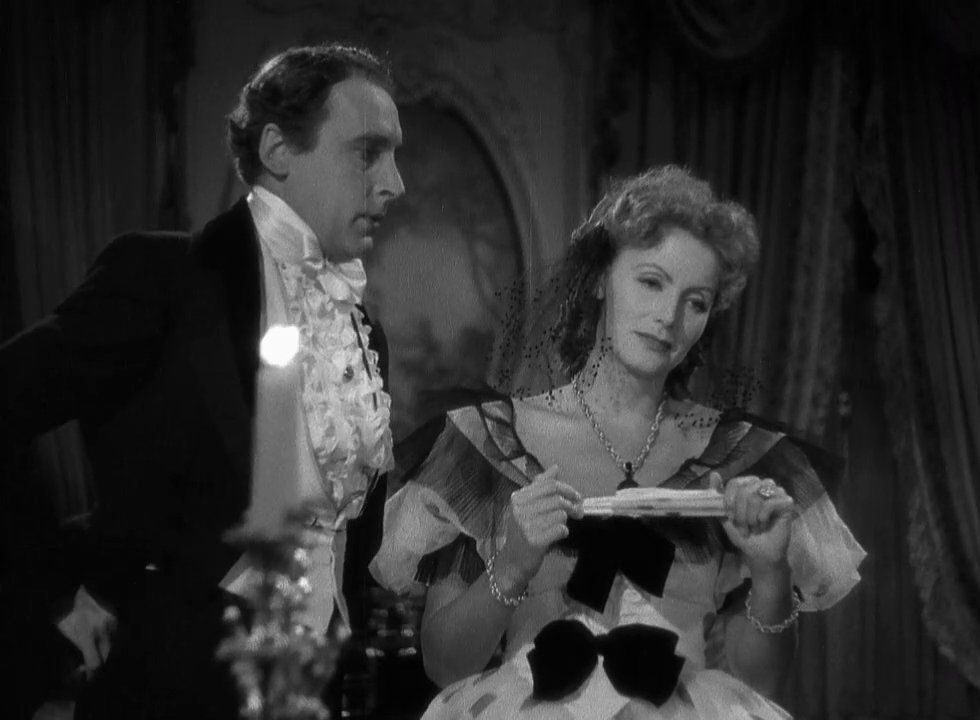
Greta Garbo inhabited one of her most iconic roles as the title character in this adaptation (by George Cukor) of Alexandre Dumas fils’ novel about the moral policing of love in a class-driven landscape of sexual politics. Garbo is continually reminded by her bawdy advisor (Laura Hope Crews):

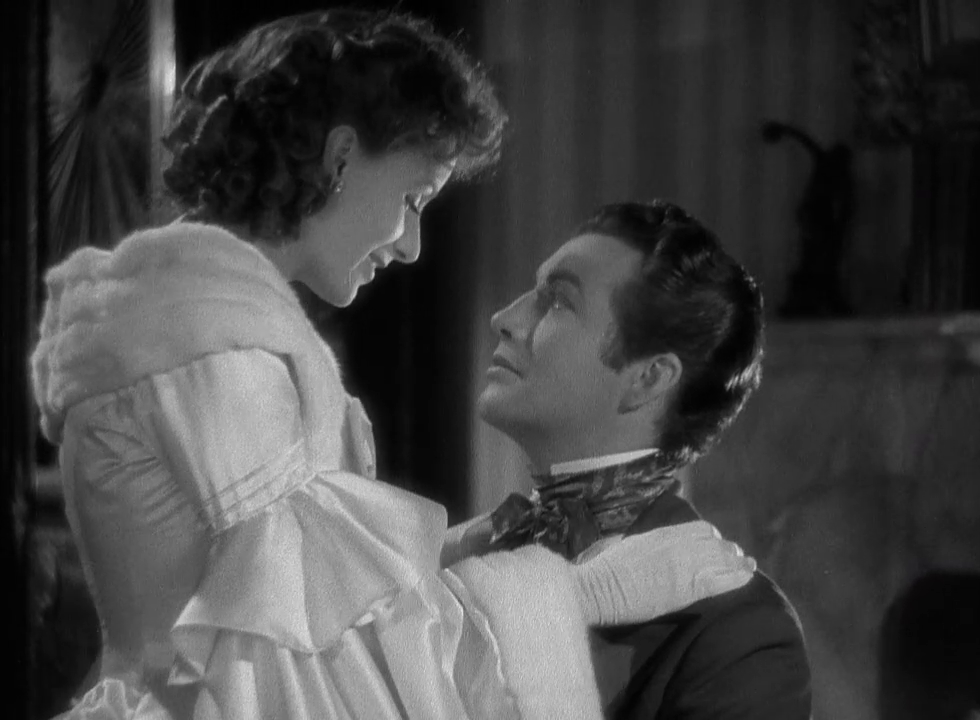
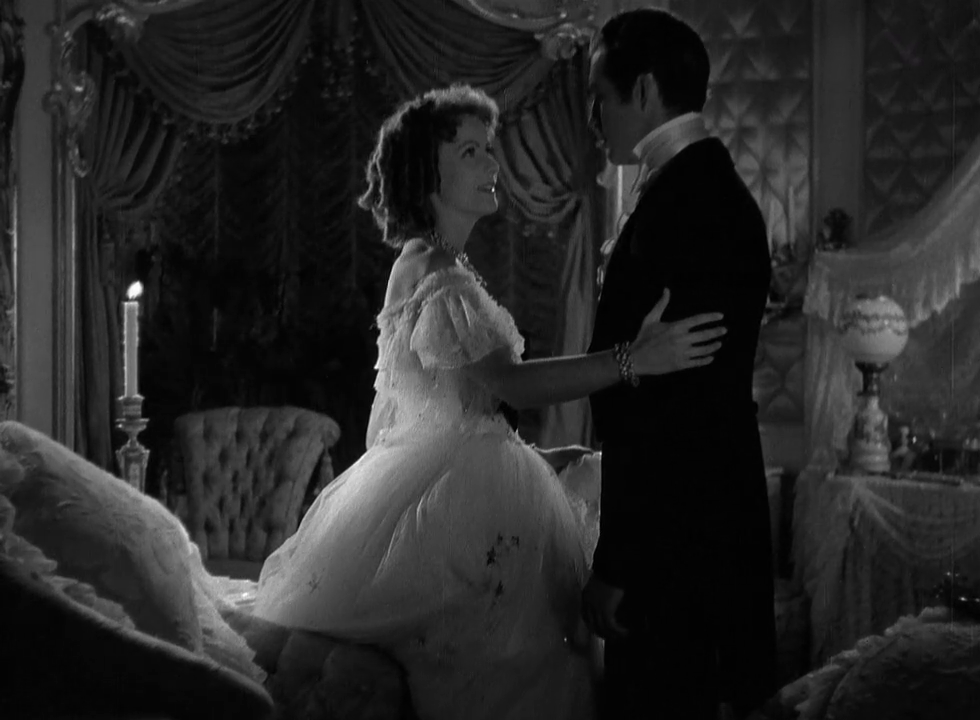
… that earning her keep through charm and allure while living in high fashion must be her aim — but when Taylor falls head over heels in love with the consumption-ridden Garbo and the couple experience an idyllic summer together in the countryside, Garbo knows her goals for life (albeit the limited amount she has left) have shifted irrevocably. Only her complete devotion to Taylor can convince her to give him up — supposedly for his own good, though that proves to be utterly wrong-headed on every count. Cukor nicely directs numerous scenes of the couple reveling in each other’s company:

It’s easy to believe in their mutual infatuation, and (of course) challenging to watch Camille sacrificing her future on behalf of propriety — though viewers should rest assured that this adaptation allows the lovers a sweet form of reconciliation.

Note: Watch for an unexpectedly powerful and startling moment, as Daniell responds to Garbo’s request for $40,000 to cover her expenses.

Redeeming Qualities and Moments:

  • Greta Garbo as Camille
  • Lush cinematography

Must See?
Yes, for Garbo’s Oscar-nominated performance. Listed as a film with Historical Importance and a Personal Recommendation in the back of Peary’s book.

Categories

  • Noteworthy Performance(s)
  • Oscar Winner or Nominee

(Listed in 1001 Movies You Must See Before You Die)

Links:

Eye of the Needle (1981)

Eye of the Needle (1981)

“Find him, Godliman — it could cost us the bloody war.”

Synopsis:
When a ruthless Nazi spy (Donald Sutherland) is shipwrecked on an isolated island, he embarks on an affair with the wife (Kate Nelligan) of a disabled sheepherder (Christopher Cazenove) — but what will happen when Nelligan finds out Sutherland’s true identity?

Genres, Themes, Actors, and Directors:

  • Donald Sutherland Films
  • Marital Problems
  • Nazis
  • Spies
  • World War II

Review:
Donald Sutherland gives an eerily memorable performance in this well-directed (by Richard Marquand) adaptation of Ken Follett’s bestselling spy novel. Sutherland’s cold-blooded dedication to transmitting information to Nazi Germany about Operation Fortitude‘s plans for D-Day landings leads him to ruthlessly kill (with a needle-like stiletto — hence his nickname “The Needle”) anyone who stumbles upon his secret identity. During the first third of the movie, we’re also introduced to the tragic collapse of a doomed marriage between the seemingly happy Lucy (Nelligan) and her RAF-husband (Cazenove), who loses his legs in a car accident as they’re leaving their own wedding. The middle portion of the narrative shows stoic Lucy raising her four-year-old son (Jonathan Nicholas Haley) on a rocky, isolated island, where her husband bitterly drinks and refuses to sleep with her. Nelligan’s performance is compassionate and nuanced enough that we believe what ensues next: she allows herself to fall for Sutherland when he washes up to shore in a shipwreck. Since we as audience members know what this sociopath is capable of, we watch their romance unfold with deep trepidation and interest — especially since Sutherland seems authentically enamored with Nelligan, rather than simply taking advantage of her vulnerability. Once Nelligan understands the truth about the enemy she’s been intimate with, the film turns into a high-octane thriller worthy of any horror fan’s attention.

Redeeming Qualities and Moments:

  • Donald Sutherland as Faber (nominated as one of the Best Actors of the Year in Peary’s Alternate Oscars)
  • Kate Nelligan as Lucy
  • Excellent use of location shooting and fine attention to period detail

Must See?
Yes, for Sutherland and Nelligan’s performances. Listed as a Personal Recommendation in the back of Peary’s book.

Categories

  • Noteworthy Performance(s)

Links:

Quiet American, The (1958)

Quiet American, The (1958)

“Don’t worry — I have no politics.”

Synopsis:
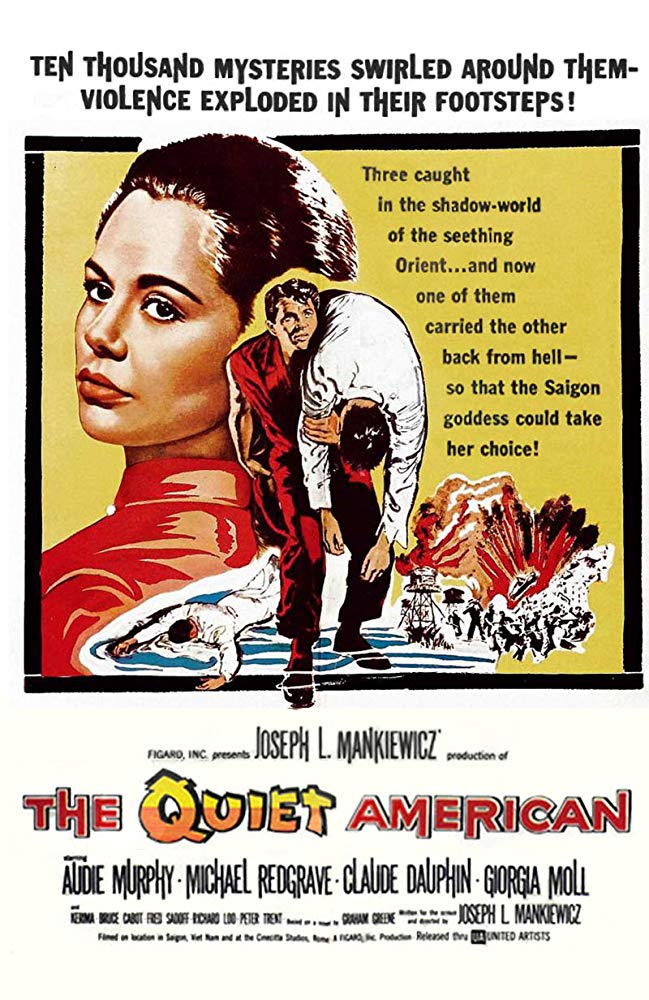
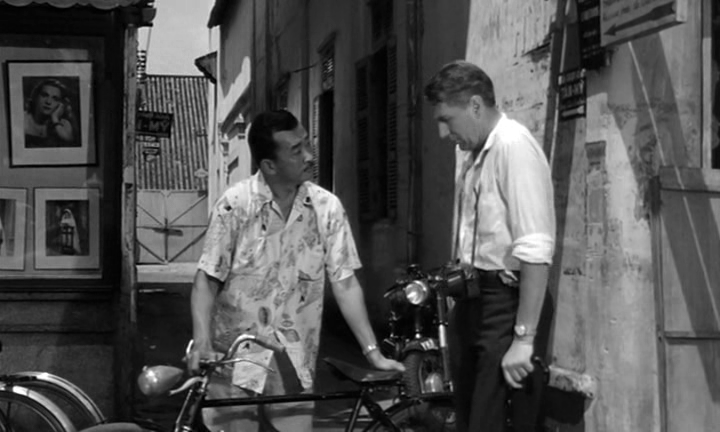
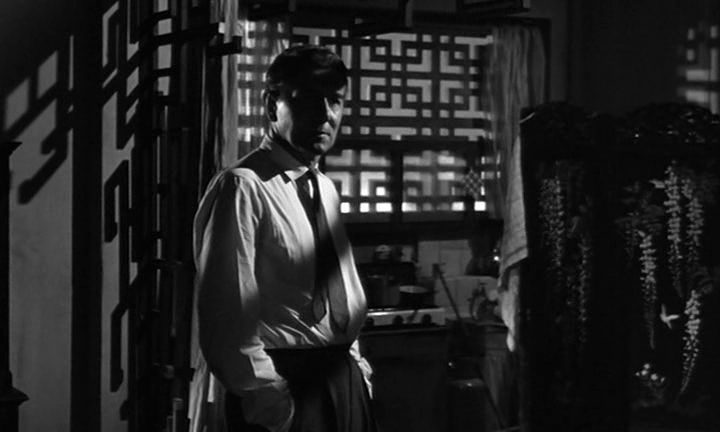
A British journalist (Michael Redgrave) in 1950s Vietnam is confronted by ethical dilemmas when an American CIA agent (Audie Murphy) arrives and falls in love with his mistress, Phuong (Giorgia Moll).

Genres, Themes, Actors, and Directors:

  • Audie Murphy Films
  • Joseph L. Mankiewicz Films
  • Journalists
  • Love Triangle
  • Michael Redgrave Films
  • Vietnam War

Review:
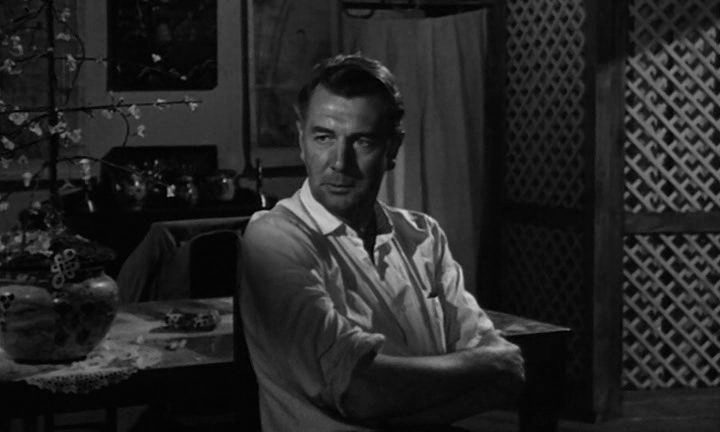
Joseph L. Mankiewicz’s adaptation of Graham Greene’s 1955 novel about the emergence of American interference in “Indo-Chine” remains a surprisingly mature and smart film about complicated geo-political and romantic maneuverings — albeit one that subverts Greene’s original anti-interventionist message in favor of a Communist conspiracy plot. Meek Phuong (Moll) serves as a clear proxy for Vietnam itself, treated like a mindless commodity that can be possessed and traded at will; it’s no surprise when her decision to leave Redgrave for Murphy sets off a chain of actions and reactions that lead to grave results. By centering the story on a self-absorbed middle-aged man (Redgrave) determined to keep his creature comforts above all else (he lies to Moll about his estranged wife’s willingness to divorce him, simply to prevent her from leaving), Mankiewicz shows how self-serving and short-sighted nations are — the fact that Redgrave is ultimately duped implies we must be wary of our well-intentioned but misguided involvement in foreign affairs. Sadly, Greene’s cautionary tale wasn’t heeded in the slightest. Watch for good use of on-location shooting in Saigon (this was the first American feature film shot in Vietnam). Remade in 2002 with Michael Caine in Redgrave’s role.

Redeeming Qualities and Moments:

  • Michael Redgrave as Thomas Fowler
  • Fine authentic location shooting
  • Robert Krasker’s cinematography

Must See?
No, but it’s worth viewing.

Links:

Tales of Ordinary Madness (1981)

Tales of Ordinary Madness (1981)

“Ever heard the sound of one mouth screaming? I had, for years — my own.”

Synopsis:
An alcoholic poet (Ben Gazarra) in Los Angeles hooks up with a random woman (Susan Tyrrell) on the bus, then falls for a beautiful but self-harming and suicidal prostitute (Ornella Muti).

Genres, Themes, Actors, and Directors:

  • Alcoholism and Drug Addiction
  • Ben Gazarra Films
  • Downward Spiral
  • Prostitutes and Gigolos
  • Writers

Review:
Marco Ferreri’s cinematic rendering of Charles Bukowski’s short story “The Most Beautiful Woman in Town” offers a rambling, self-indulgent look at a few days in the life of a hipster alcoholic who concludes that the only true existence (that is, one worth writing about) lies amongst society’s castaways. Gorgeous Muti definitely fits the title role of the source story, but she’s badly exploited like every other character Gazarra encounters. Those with a fondness for Bukowski may enjoy hearing a script littered with lines like these:

“I’ve always had a love affair with the streets.”
“Cass had that special look that got to me — like she’d been blown away by the winds of eternity and was swimming back against the current.”
“Now give it to me — take my soul with your c**k!”
“Cass, you bitch — I love you! You’re the most alive woman I ever met.”

However, all others can feel free to skip this one.

Redeeming Qualities and Moments:

  • At-times ethereal cinematography

Must See?
No. Listed as a Cult Movie in the back of Peary’s book.

Links:

Informer, The (1935)

Informer, The (1935)

“Where’d ya get it, Gypo? There’s enough there to choke a horse!”

Synopsis:
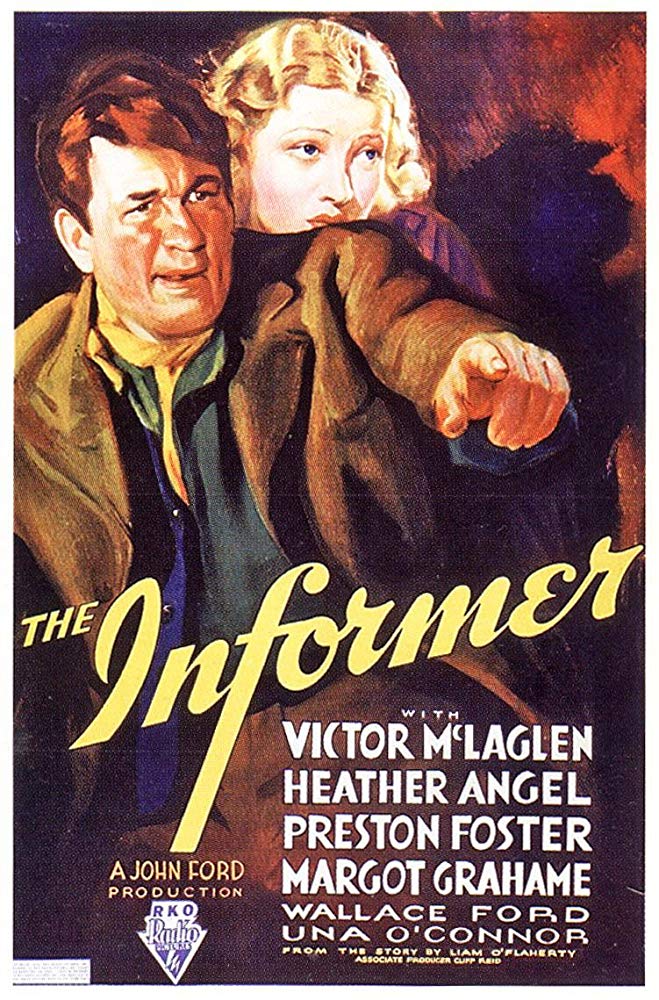
In 1920s Dublin, a former IRA member (Victor McLaglen) desperate to help his prostitute girlfriend (Margot Grahame) get off the streets and over to America betrays his best friend (Wallace Ford) to the Black and Tans for 20 pounds.

Genres, Themes, Actors, and Directors:

  • Betrayal
  • Informers
  • Ireland
  • John Ford Films
  • Preston Foster Films
  • Revolutionaries
  • Victor McLaglen Films

Review:
Peary doesn’t review this John Ford flick in his GFTFF, but he discusses McLaglen’s Oscar-winning performance in Alternate Oscars, where he gives the Best Actor award to W.C. Fields for The Man on the Flying Trapeze (1935) but nonetheless commends McLaglen’s performance, noting he “plays it straight and is quite moving as the impoverished Irishman who turns in his best friend for twenty pounds, and then drinks and gives away the money.” He adds that McLaglen “does a good job, barrelling through the misty Dublin sets, touching us with his final search for salvation.” While “Gypo was considered a villain”, he’s actually “a pathetic fellow, almost like a once good, but now dangerous dog that has to be shot.”

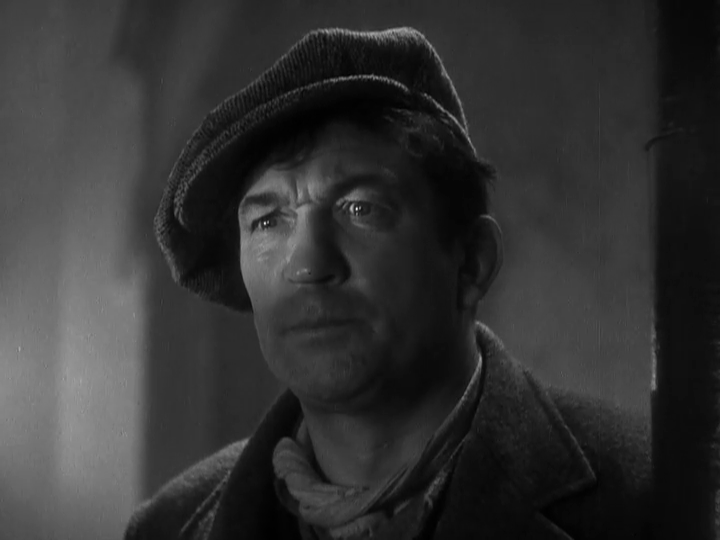
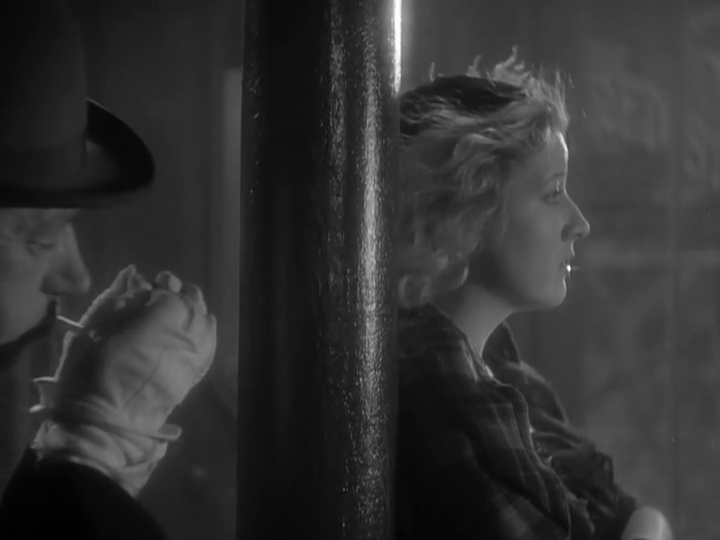
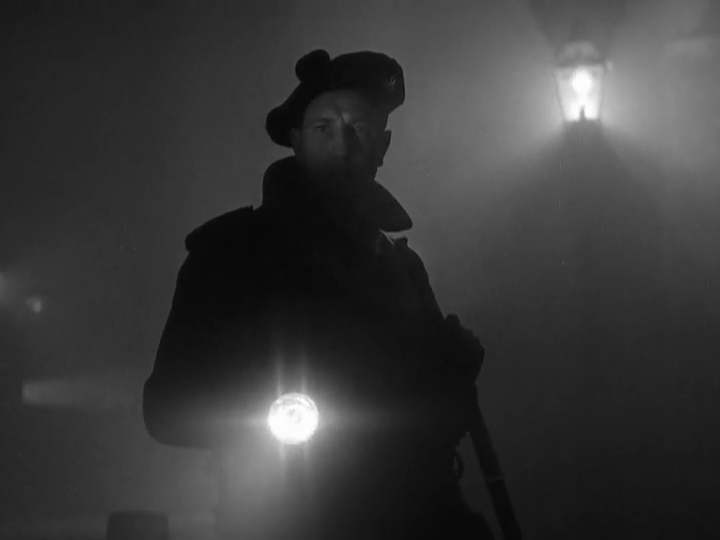
McLaglen’s performance is indeed a highlight (as Peary writes, this “was by far McLaglen’s finest performance”), but the entire film deserves note for its highly atmospheric, no-holds-barred portrayal of a doomed and conflicted man, digging his own grave one flawed decision at a time. The cinematography and sets place us not only in the shadowy world of the original IRA but within the tormented soul of a man who suffers instantly for his idiotic actions, and is dogged ruthlessly (perhaps appropriately) from that point forward. It’s somewhat challenging to watch this consistently depressing flick, but Ford’s directorial skill, strong performances across the board, and overall fine production values make it well worth a one-time look.

Redeeming Qualities and Moments:

  • Victor McLaglen as Gypo Nolan
  • Highly atmospheric cinematography and sets

Must See?
Yes, as a powerful and well-acted — albeit depressing — film. Listed as a film with Historical Importance and a Personal Recommendation in the back of Peary’s book, and nominated as one of the Best Films of the Year in Peary’s Alternate Oscars. Selected in 2018 for preservation in the United States National Film Registry by the Library of Congress as being “culturally, historically, or aesthetically significant.”

Categories

  • Oscar Winner or Nominee

Links:

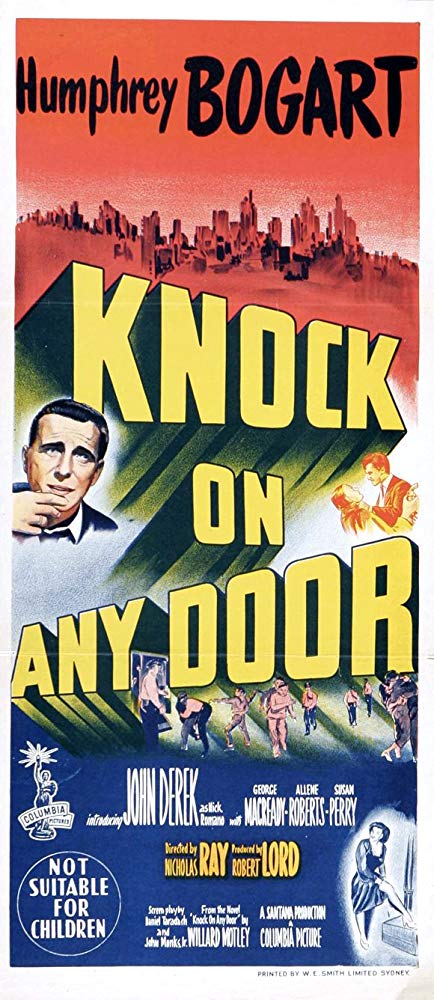
Knock on Any Door (1949)

Knock on Any Door (1949)

“Look, he’s a bad, weak kid!”

Synopsis:
A lawyer (Humphrey Bogart) recounts the story of a young man (John Derek) on trial for murder, whose challenging history in the slums has led him towards despair and criminality.

Genres, Themes, Actors, and Directors:

  • Courtroom Drama
  • Flashback Films
  • George Macready Films
  • Humphrey Bogart Films
  • Juvenile Delinquents
  • Lawyers
  • Nicholas Ray Films

Response to Peary’s Review:
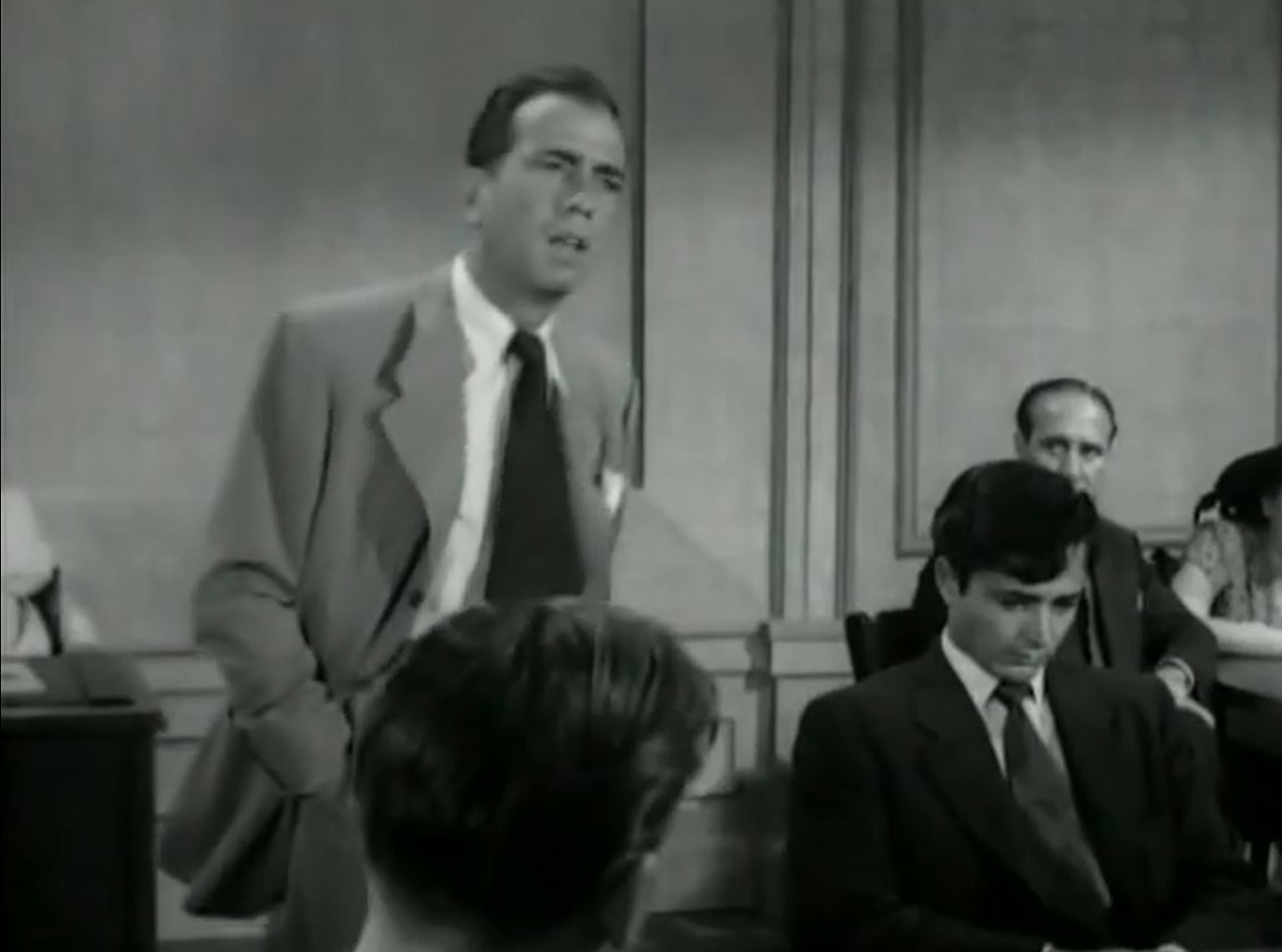
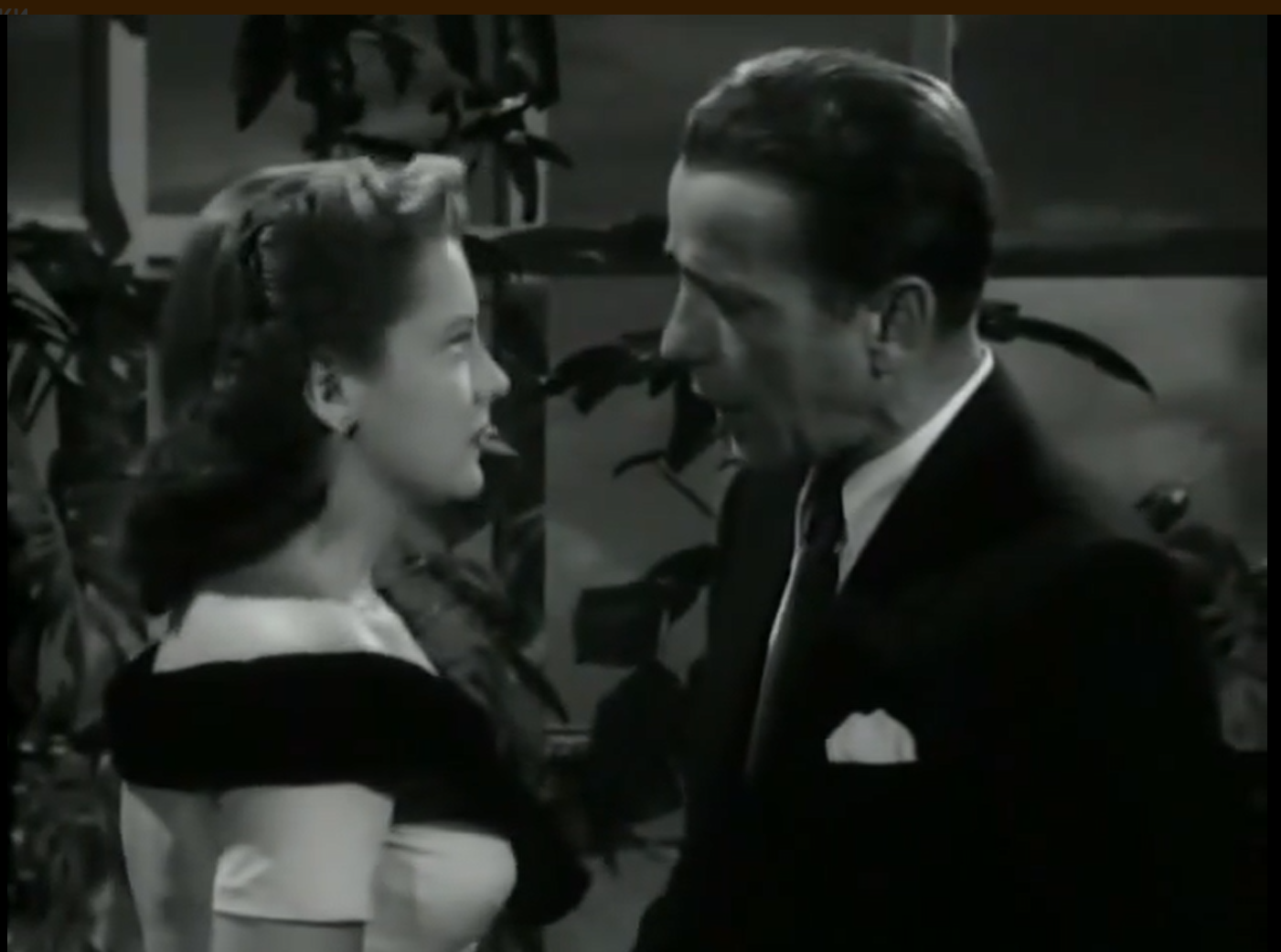
Peary writes that this “liberal social drama by Nicholas Ray” consists of lawyer Humphrey Bogart’s “flashbacks to a series of tragic incidents… that caused decent poor boy Derek to become a hardened criminal”.
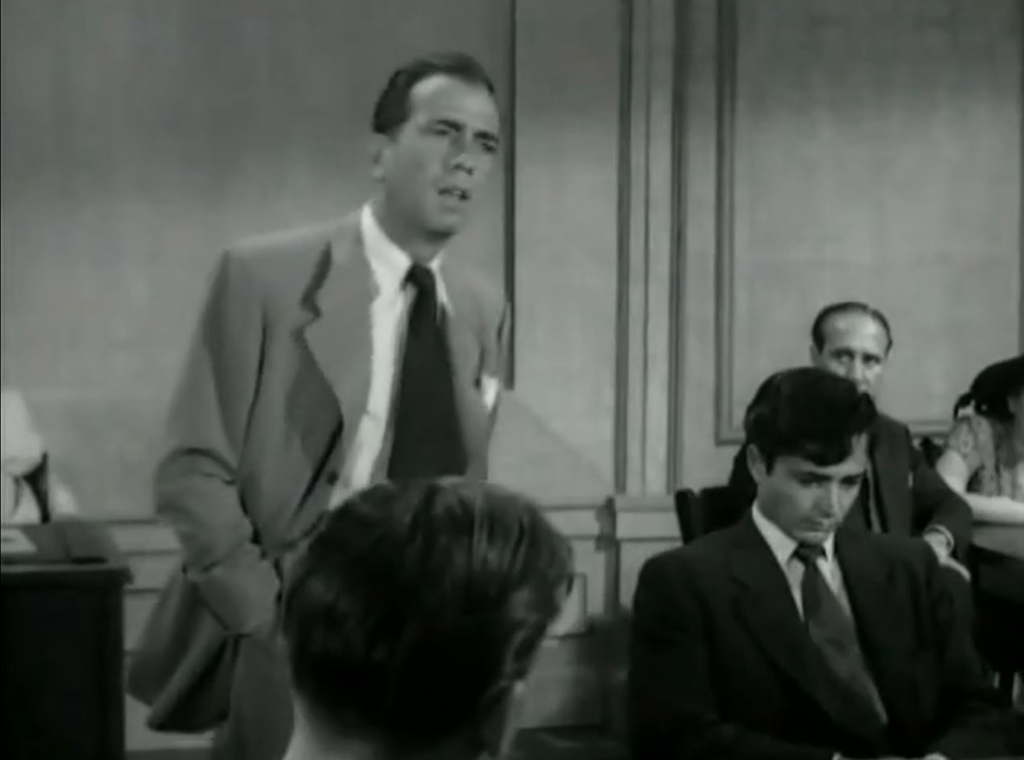
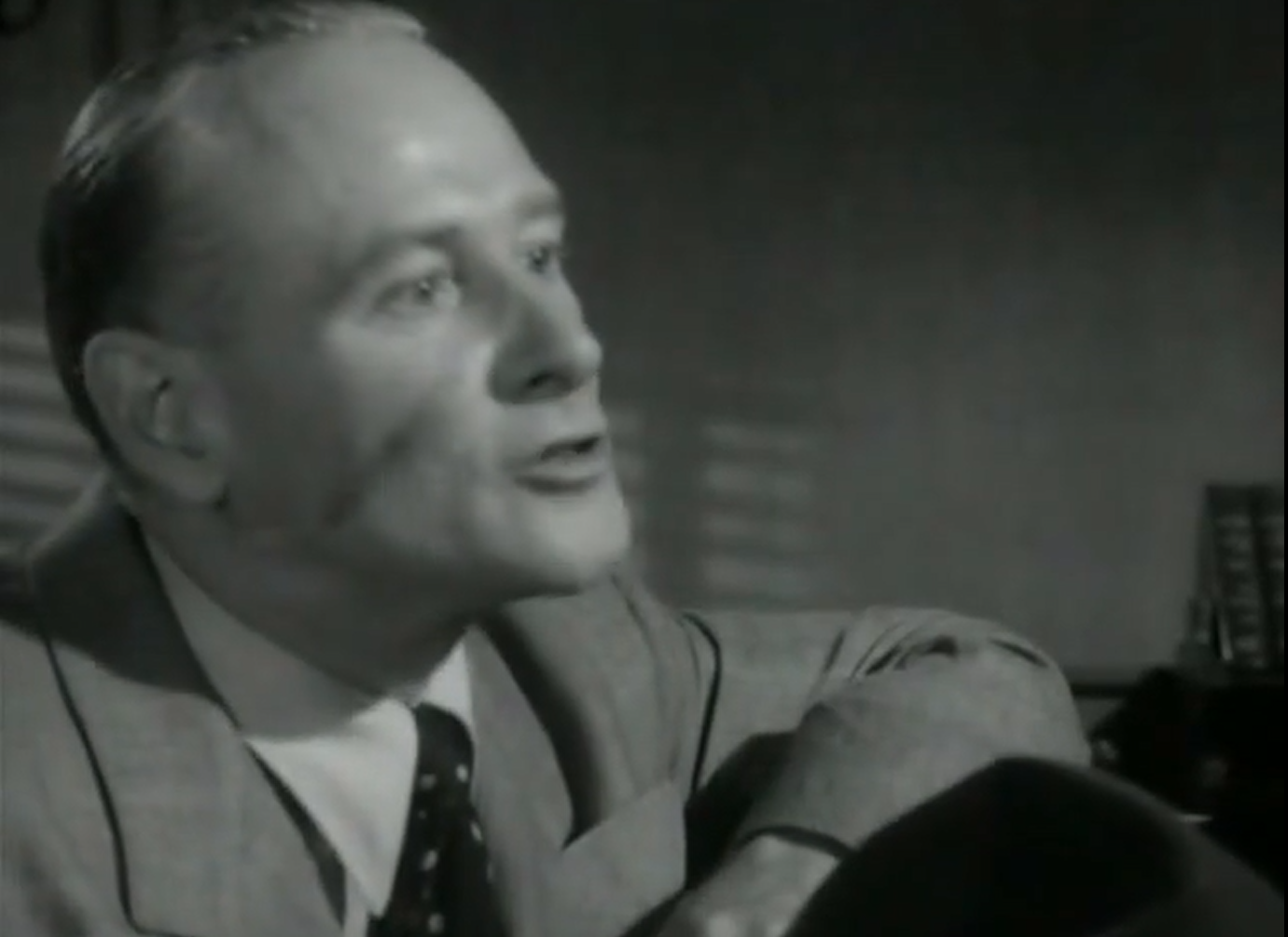
He notes that “it’s hard not to be on Bogart’s side, especially since the DA is a corrupt, vicious man with an ugly scar, played with extreme villainy by George Macready”:
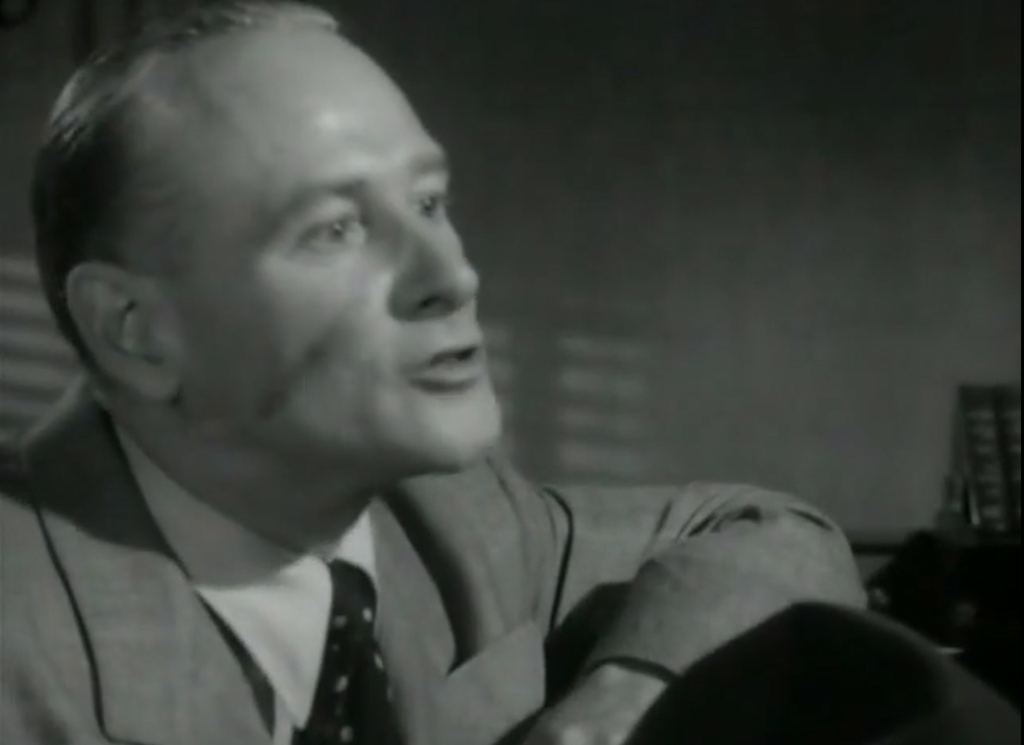
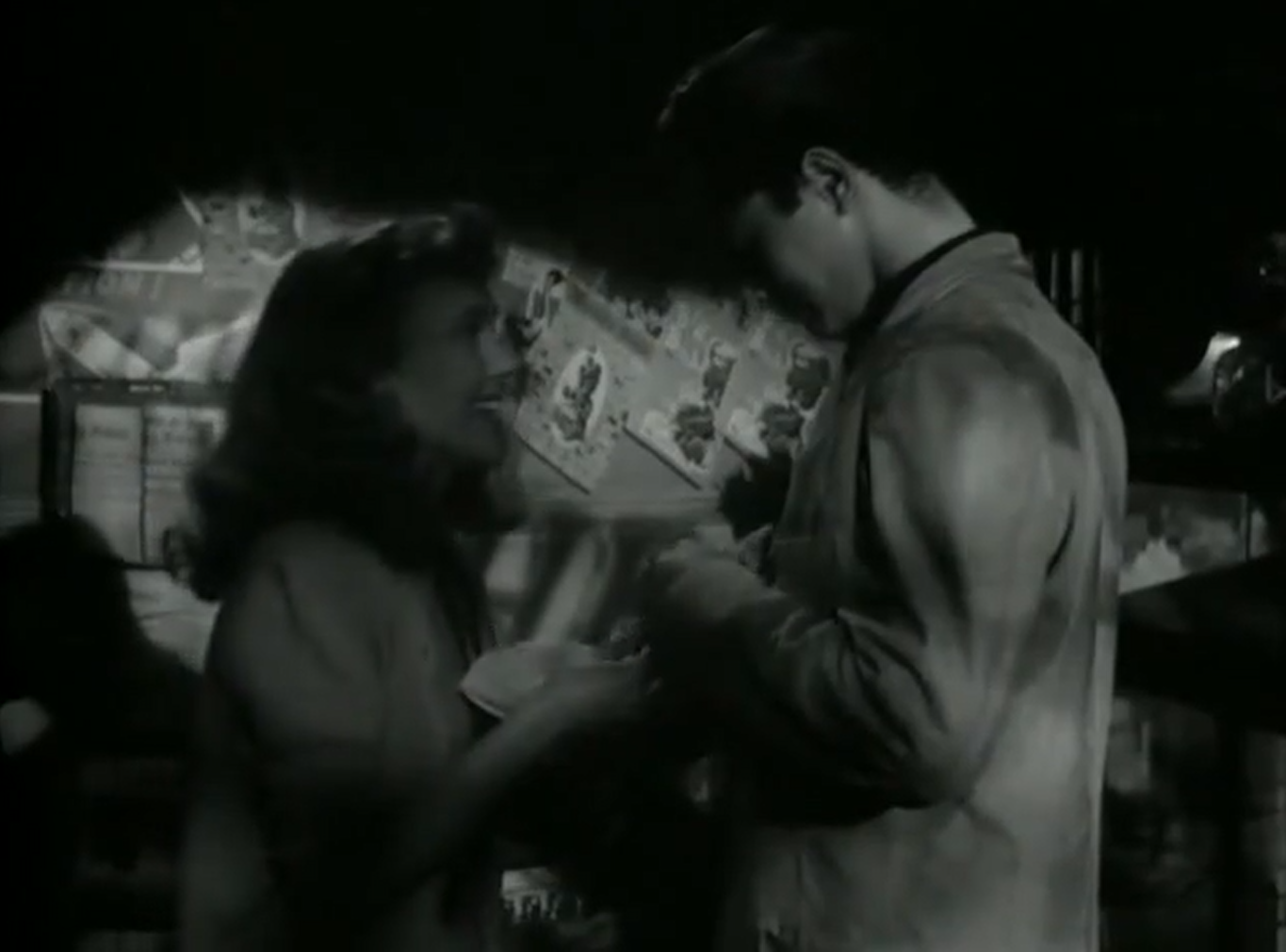
— but “it’s weird seeing this socially conscious lawyer browbeat some of the indigent witnesses”, and “Derek’s character [Nick Romano], whose motto is ‘live fast, die young, and have a good-looking corpse’:
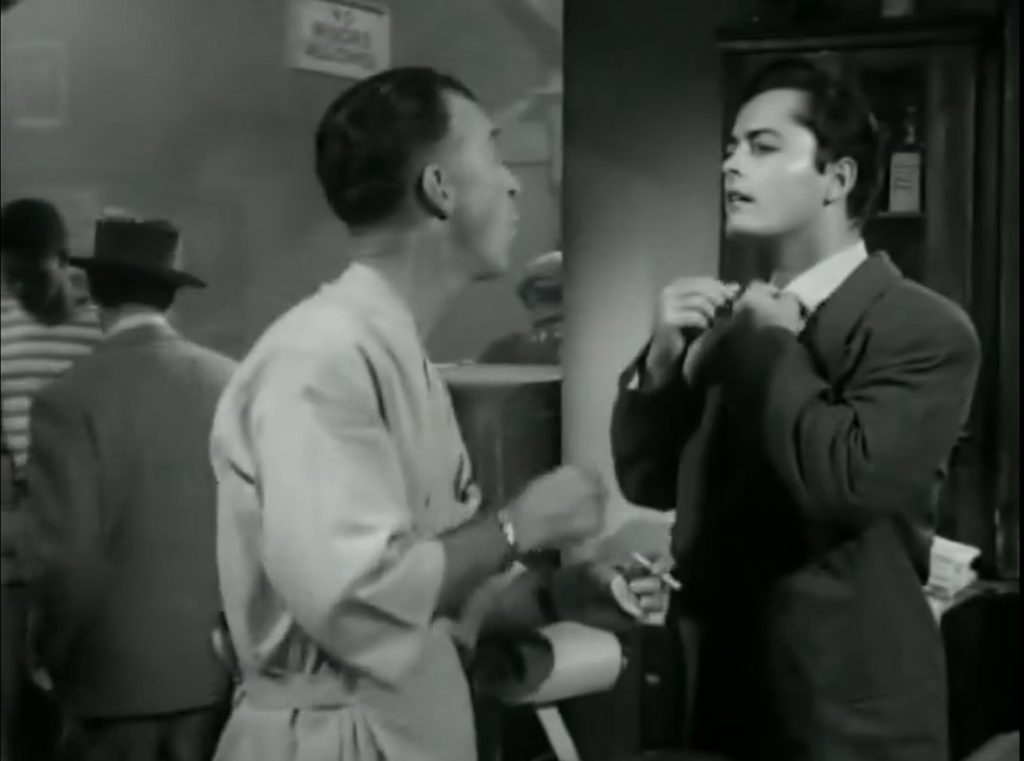
is too unpleasant to be used as an example by Bogart (or Ray) to arouse sympathy for real-life juveniles who are trapped by poverty and bad reputations into committing crimes.”

I’m in agreement with Peary’s assessment of this well-meaning flick, which nonetheless misses the mark in several key ways. Bogart’s character isn’t really solidified: all we know is that he came from a rough background himself and is being pressured by a couple of beautiful women to take Derek’s case — against the wishes of his firm.
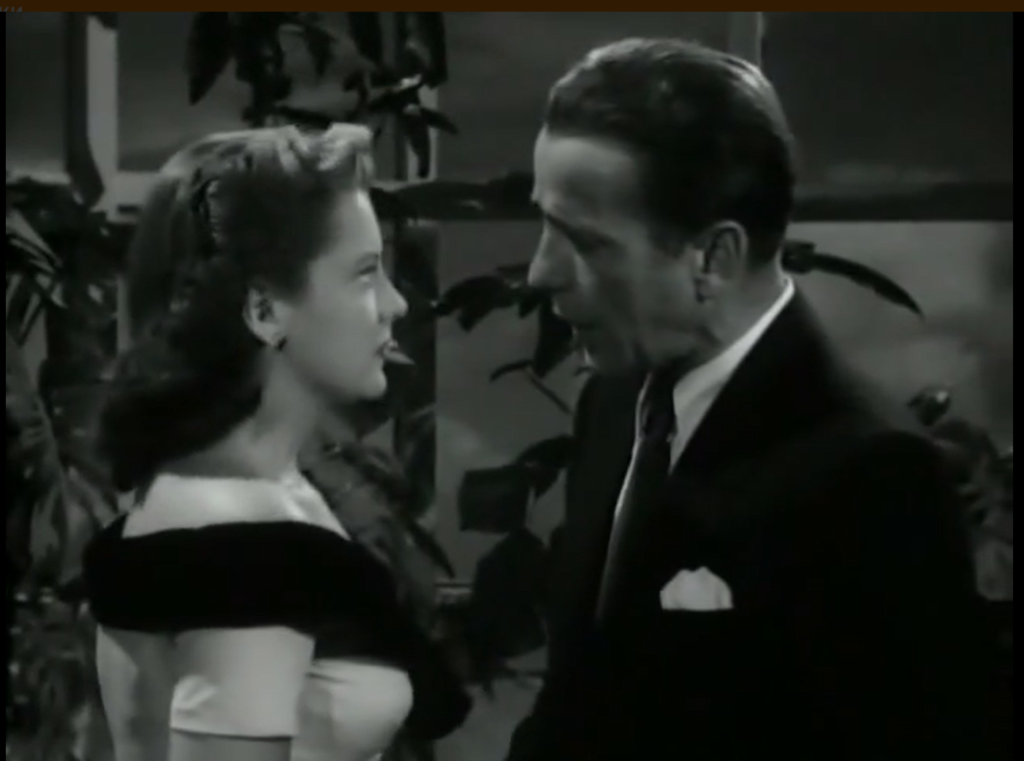
Meanwhile, “pretty boy” Derek’s background and challenges don’t seem particularly noteworthy — though I suppose that’s the point; as Bogart’s character intones near the end:

Until we do away with the type of neighborhood that produced this boy, ten will spring up to take his place, a hundred, a thousand. Until we wipe out the slums and rebuild them, knock on any door and you may find Nick Romano.

Speaking of the ending, I’m not a fan of the surprise twist — but I won’t say more at risk of spoiling. On the plus side, Burnett Guffey’s cinematography is solidly atmospheric throughout; Macready’s supporting performance is notable (check out his scar stroking); and Allene Roberts is sweet and sympathetic as Derek’s young wife.

Redeeming Qualities and Moments:

  • Atmospheric cinematography by Burnett Guffey
  • George Antheil’s score

Must See?
No, though it’s worth a one-time look.

Links:

Son of Kong, The (1933)

Son of Kong, The (1933)

“Believe it or not, there’s a little Kong!”

Synopsis:
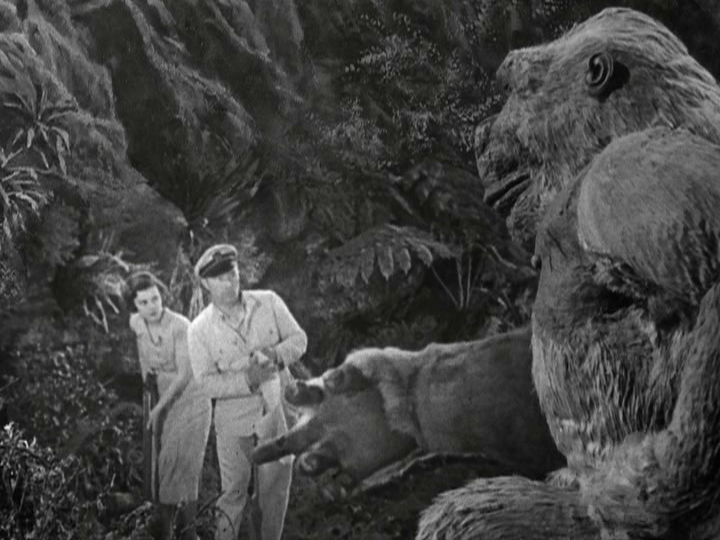
Wracked with guilt and looming debt, King Kong’s promoter (Robert Armstrong) joins his friend (Frank Reicher) on a sailing expedition, where he meets a beautiful runaway orphan (Helen Mack) and learns about hidden treasure on Skull Island from the unscrupulous man (John Marston) who gave him the original map. Little do they know they are about to encounter Kong’s friendly son on the island.

Genres, Themes, Actors, and Directors:

  • Fantasy
  • Hidden Treasure
  • Mutant Monsters

Response to Peary’s Review:
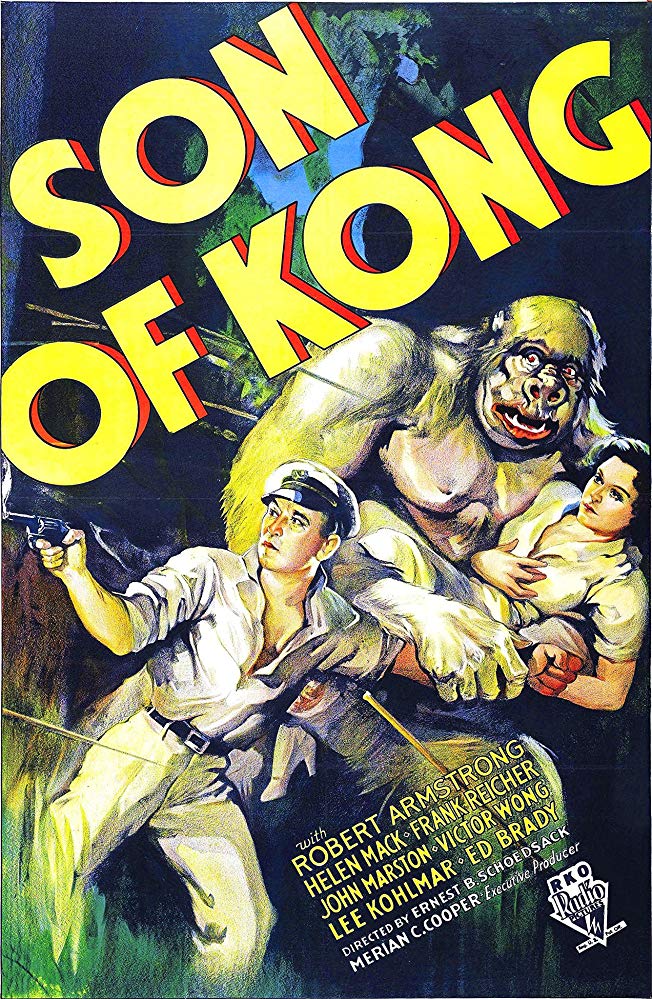
Peary writes that this “bargain-basement sequel to King Kong is a curio devoid of the original’s Freudian implications, mythic and dream elements” and notes that while “kids may like Kong, Jr.’s comical nature”, “fans of the original will be disappointed in most everything but the action finale.” He argues that the “picture is so rushed that one can’t even savor Willis O’Brien’s special effects”, but this isn’t quite true — there are a good handful of Kong-versus-beast battle scenes in the second half, though they don’t arrive until after an unnecessarily lengthy and unexceptional exposition. I agree with Peary that the “most interesting element as far as Kong lore goes is that Carl Denham [Armstrong] is very apologetic about what he felt he did to Kong in the original” — indeed, the entire movie is a form of apologia and redemption for Kong’s ignoble fate, with his son manifesting only his most helpful, playful, and silly qualities.

Redeeming Qualities and Moments:

  • Willis O’Brien’s special effects

Must See?
No; this one is for fans of the franchise.

Links:

Rich and Strange / East of Shanghai (1931)

Rich and Strange / East of Shanghai (1931)

“Damn the pictures and the wireless. I want some life — life, I tell you!”

Synopsis:
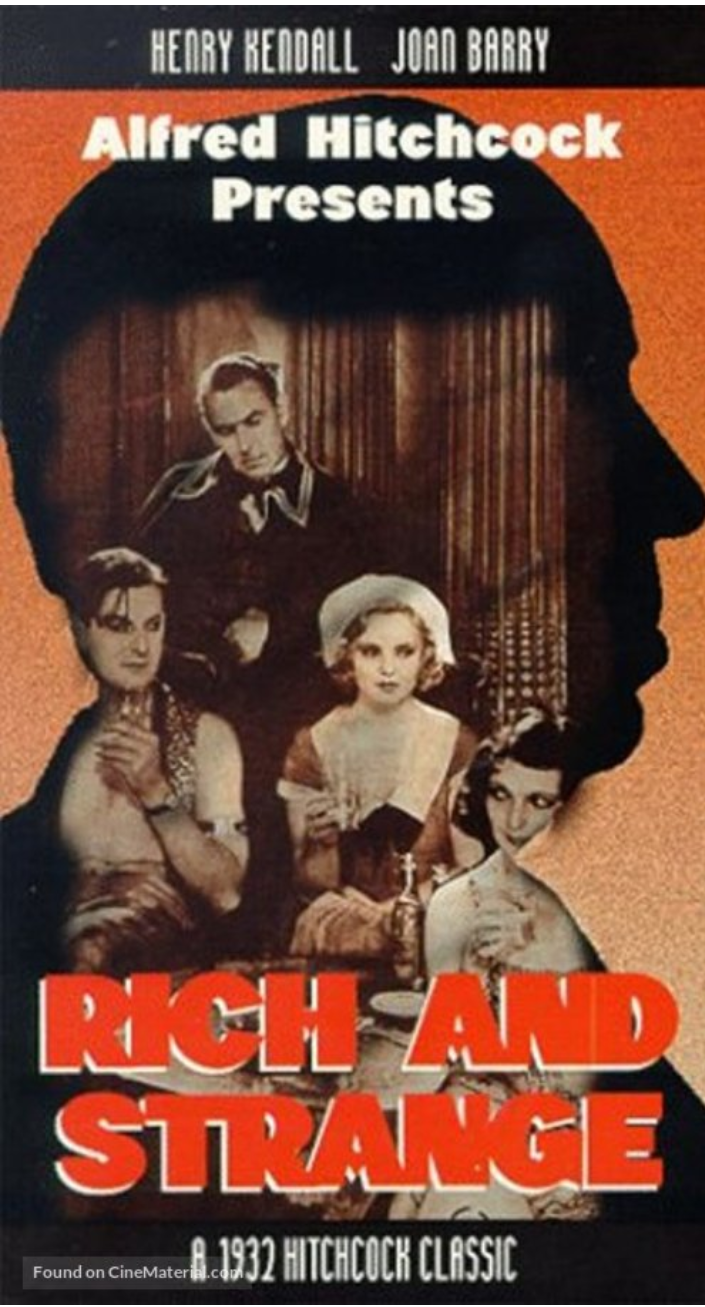
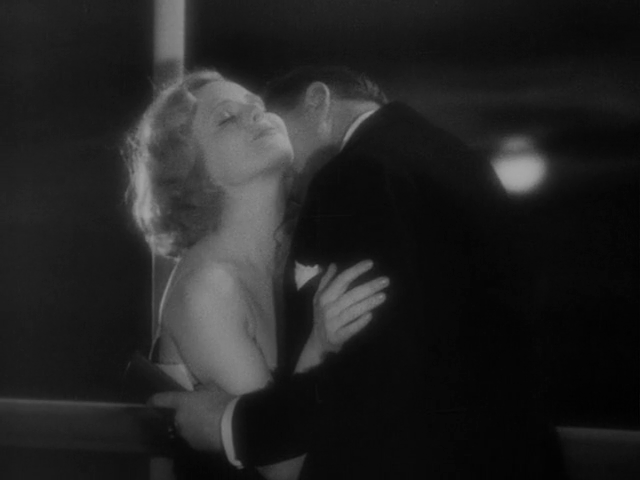
When a bored accountant (Henry Kendall) receives an unexpected inheritance, he and his wife (Joan Barry) travel to Paris and then on an ocean liner, where Kendall falls for a seductive princess (Betty Amann) and Barry becomes enamored with a wealthy bachelor (Percy Marmont).

Genres, Themes, Actors, and Directors:

  • At Sea
  • Hitchcock Films
  • Inheritance
  • Marital Problems
  • Romantic Comedy

Review:
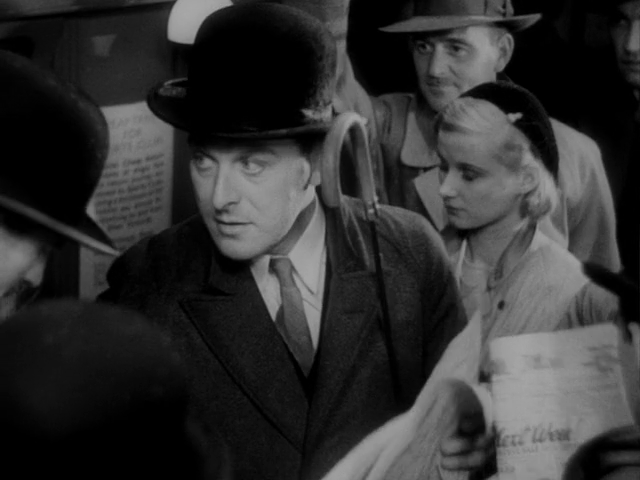
This early talkie by Alfred Hitchcock — scripted by his wife, Alma Reville — is an unevenly paced cautionary tale against the perils of sudden wealth (turns out money can’t buy you love or stability, and can wreak havoc with loyalty — who knew?). Since Kendall is an annoying ninny, we tend to automatically side with angel-faced Barry — but it’s simply not all that interesting watching their marriage disintegrate under the pressures of romantic distractions. In an unusual twist, the couple find themselves stranded at sea, and their dehumanizing attitude towards a group of Chinese crewmen (and one woman) simply highlights how out of touch with cosmopolitan reality this naive pair is. At least it’s clear they really do belong with one another.

Redeeming Qualities and Moments:

  • Some creatively filmed and edited opening sequences
  • Innovative cinematography

Must See?
No; this one is strictly must-see for Hitchcock fans.

Links:

Story of Louis Pasteur, The (1936)

Story of Louis Pasteur, The (1936)

“Remember our aim: find the microbe, kill the microbe!”

Synopsis:
In 18th century France, chemist Louis Pasteur (Paul Muni) — with support from his loving wife (Josephine Hutchins) and daughter (Anita Louise) — ignores the criticisms of a skeptical doctor (Fritz Leiber) while developing a vaccine against anthrax and a cure for rabies.

Genres, Themes, Actors, and Directors:

  • Akim Tamiroff Films
  • Biopics
  • Do-Gooders
  • Doctors and Nurses
  • “No One Believes Me!”
  • Paul Muni Films
  • Scientists
  • William Dieterle Films

Review:
Groundbreaking chemist Louis Pasteur is given full star treatment in this Oscar-nominated biopic which And You Call Yourself a Scientist!‘s reviewer has an openly “love-exasperation” relationship with. As she puts it, while she’s “delighted that this film was made, and that it paved the way for others of its kind”, “the fact remains that it is a fairly basic rendering of an important historical story” that “never really engages with its science” and “never acknowledges the extent to which Pasteur’s own work built upon that of others.” Well, biopics tend to do that, don’t they — so the question remains whether the story told here is a compelling one, but I’m afraid it’s mostly not. A side romance between Muni’s daughter and a young scientist (Donald Woods) merely distracts, and Pasteur’s foil — skeptical Dr. Charbonnet (Leiber) — is conveniently portrayed as uniformly combative until a pivotal narrative moment. With all that said, it’s easy to imagine 1930s audiences eager to learn more about this tenaciously brilliant man who was responsible for saving so many lives, and Muni is fine in the leading role.

Redeeming Qualities and Moments:

  • Paul Muni as Louis Pasteur
  • Tony Gaudio’s cinematography

Must See?
No, though Muni fans or Oscar-completists will of course want to check it out.

Links: