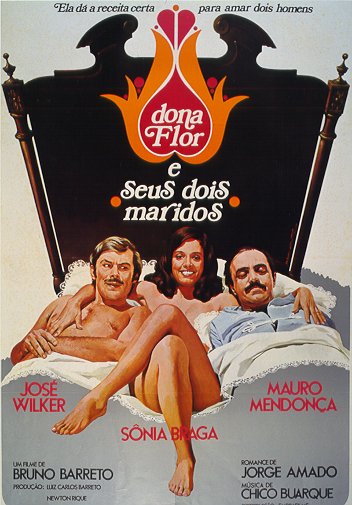
Dona Flor and Her Two Husbands (1976)

Dona Flor and Her Two Husbands (1976)

“He was a gigolo, a bum, and a shameless drunkard… A swindler, a penniless gambler, a cheap crook! A scoundrel!”

Synopsis:
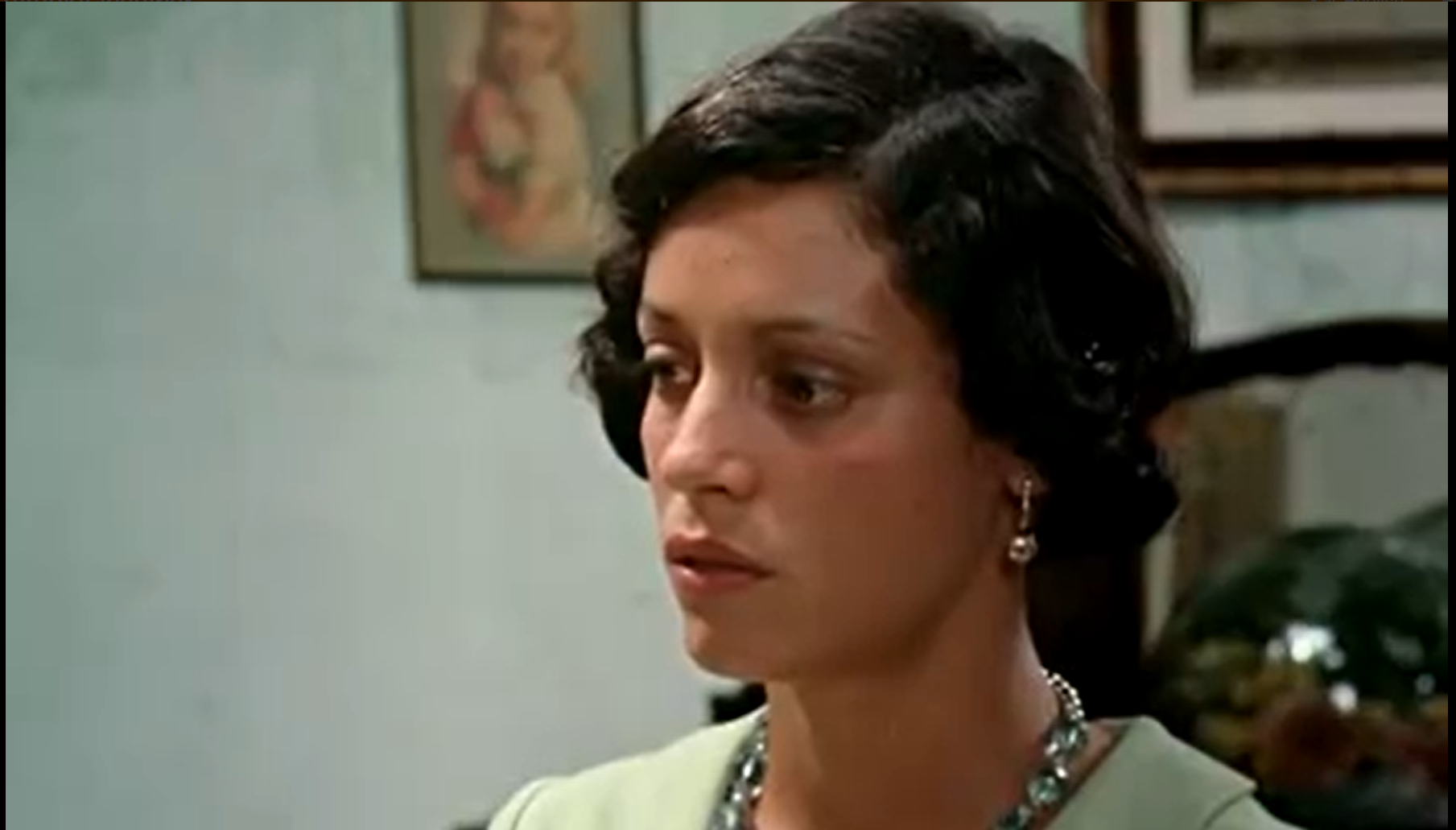
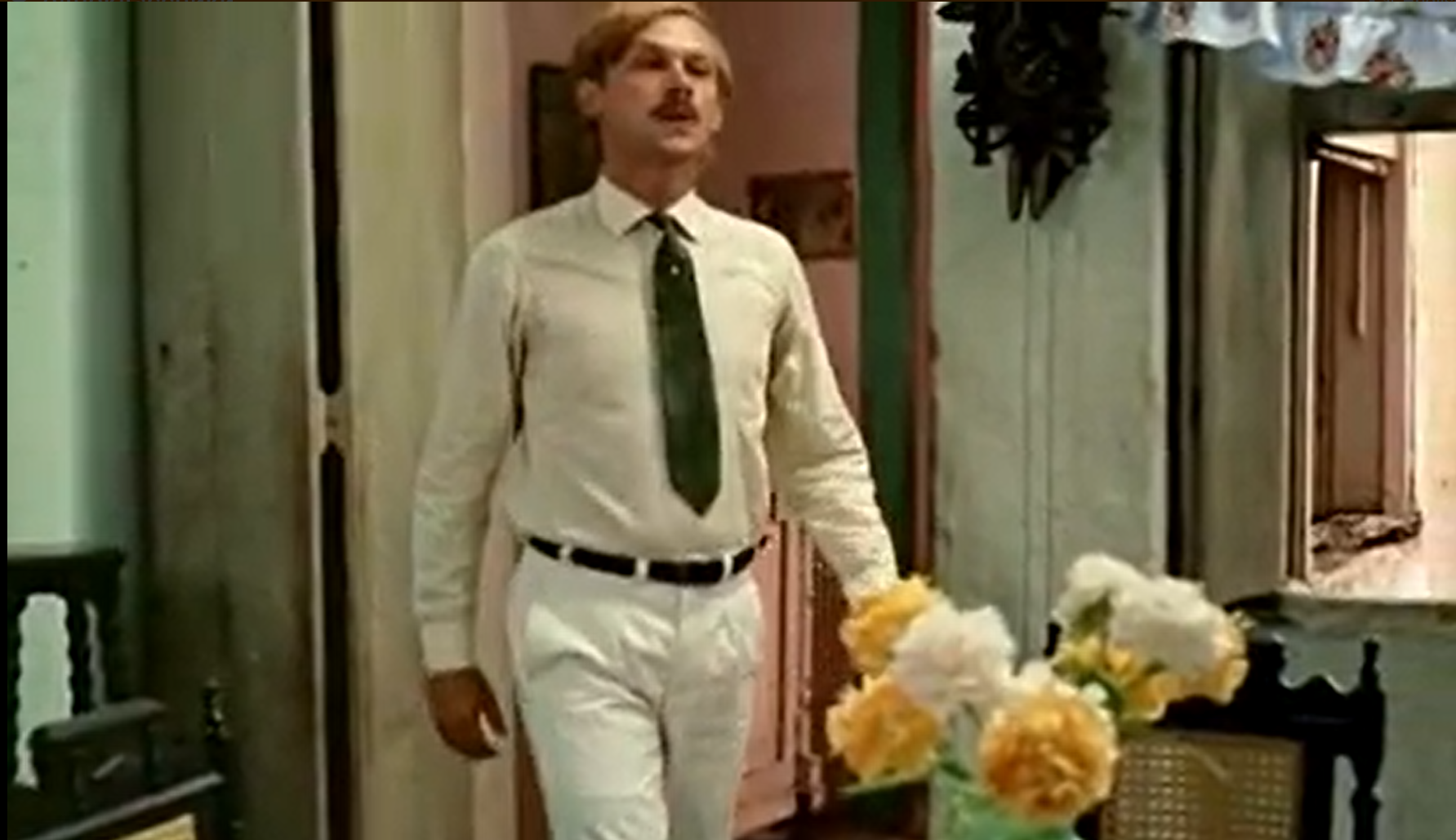
After the death of her womanizing husband (Jose Wilker), Dona Flor (Sonia Braga) marries a loyal yet boring pharmacist (Mauro Mendonca). But when Flor finds herself unconsciously lusting for her ex-husband, his sudden ghostly appearance complicates her new marriage.

Genres:

  • Ghosts
  • Love Triangle
  • Romantic Comedy
  • South and Central America
  • Womanizers

Response to Peary’s Review:
As Peary notes, this “tremendously popular” Brazilian sex comedy — which bears resemblance to both Noel Coward’s Blithe Spirit (1945) and Spike Lee’s She’s Gotta Have It (1986) — is actually rather serious, and contains “few humorous moments”; indeed, the entire first hour of the film is spent showing how badly Flor is treated by her no-good husband. On the other hand, there’s plenty of ribald sensuality to enjoy, and the film’s underlying theme of female sexual empowerment is a satisfying one. Peary correctly notes that both men and women will be able to relate to the lead characters here, whose messy, all-too-human desires cause them both conflict and joy.

Redeeming Qualities and Moments:

  • Sonia Braga as Dona Flor
  • Jose Wilker as Flor’s philandering husband
  • Chico Buarque’s infectious Brazilian score

Must See?
No, but it’s recommended as an enjoyable Brazilian comedy.

Links:

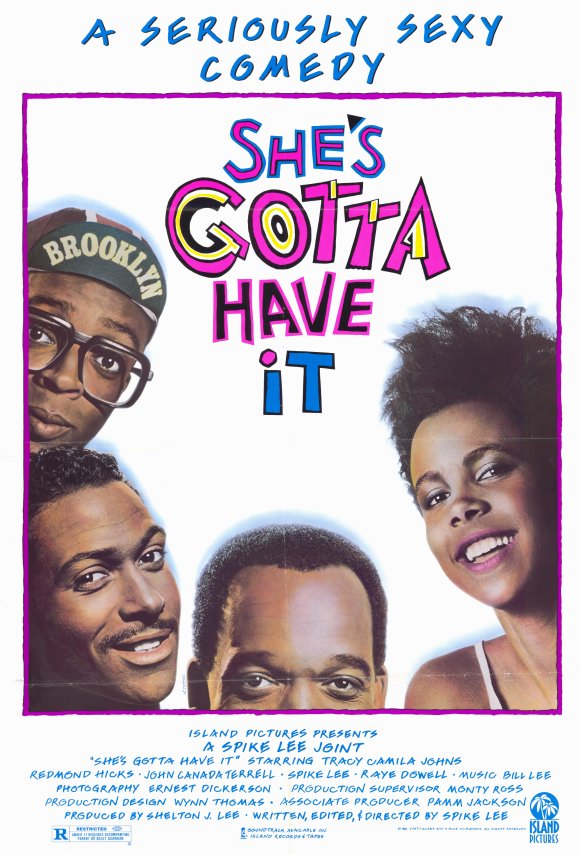
She’s Gotta Have It (1986)

She’s Gotta Have It (1986)

“I am not a one-man woman.”

Synopsis:
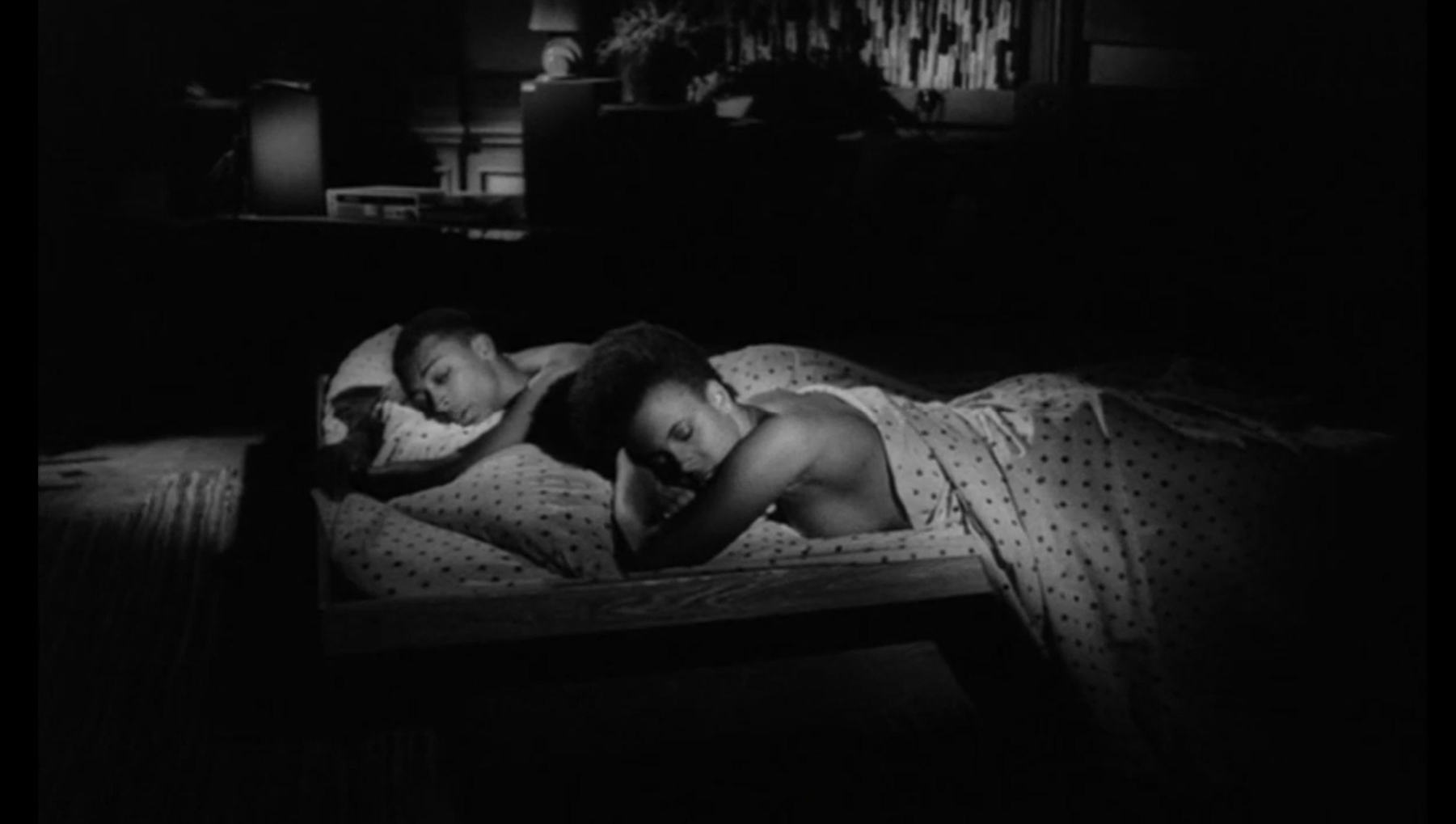
A woman (Tracy Camilla Johns) with three lovers (Spike Lee, Tommy Redmond Hicks, and John Canada Terrell) resists being faithful to any one of them.

Genres:

  • African-Americans
  • Jealousy
  • Love Triangle
  • Romantic Comedy
  • Sexuality
  • Strong Females

Review:
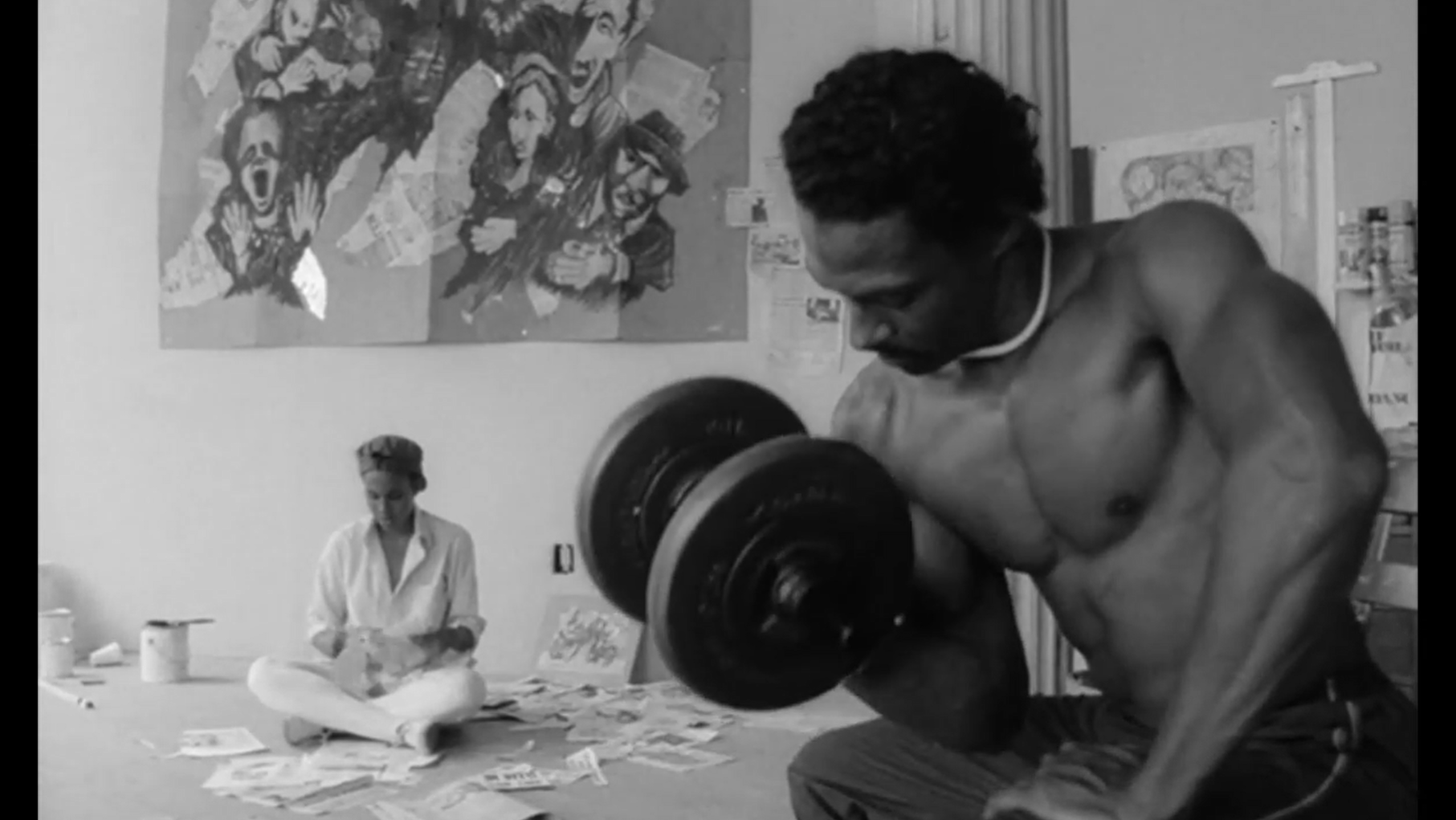
Spike Lee’s treatment of his female protagonist in his debut film, about an independent-minded woman (Johns) who finds cumulative sexual satisfaction through her triumvirate of disparate lovers — comedic Mars (Lee), narcissistic Greer (Terrell), and sincere Jamie (Hicks) — is refreshingly respectful. He portrays Nola (Johns) as nothing but honest in her desire for sex with many men, and while none of her lovers are happy with her decision, we admire Nola for being true to herself. While the acting in She’s Gotta Have It is clearly student-film quality, we remain invested in the story given the uniqueness of these characters. She’s Gotta Have It remains a worthy predecessor to Lee’s breakthrough movie of three years later (Do the Right Thing, 1989), and is worth a look by film fanatics.

Redeeming Qualities and Moments:

  • A humorous and insightful look at female sexuality
  • Creative camera work

Must See?
No, though it’s recommended for those curious to see early evidence of Lee’s talents as a director. Listed in the addendum of Peary’s book as a film with historical importance and as a Personal Recommendation.

(Listed in 1001 Movies You Must See Before You Die)

Links:

I Spit On Your Grave / Day of the Woman (1978)

I Spit On Your Grave / Day of the Woman (1978)

“Total submission. That’s what I like in a woman — total submission.”

Synopsis:
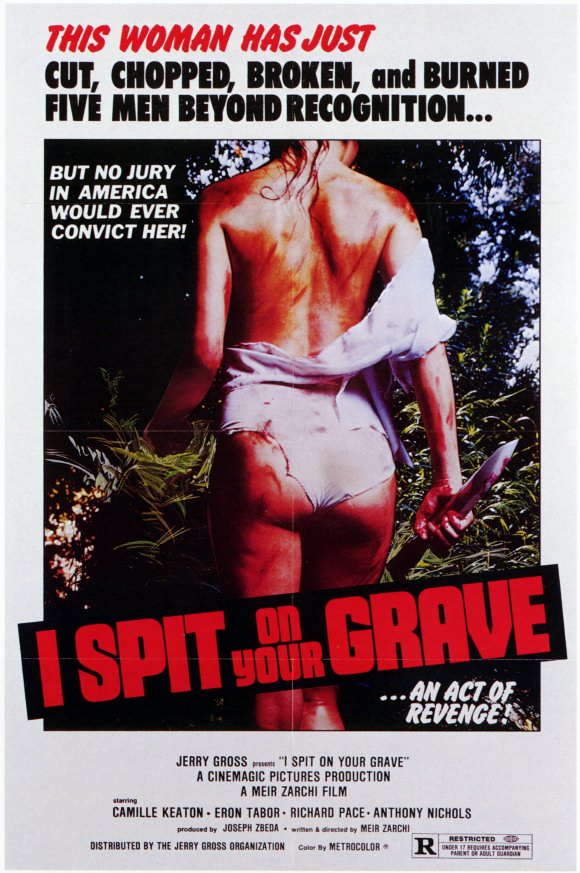
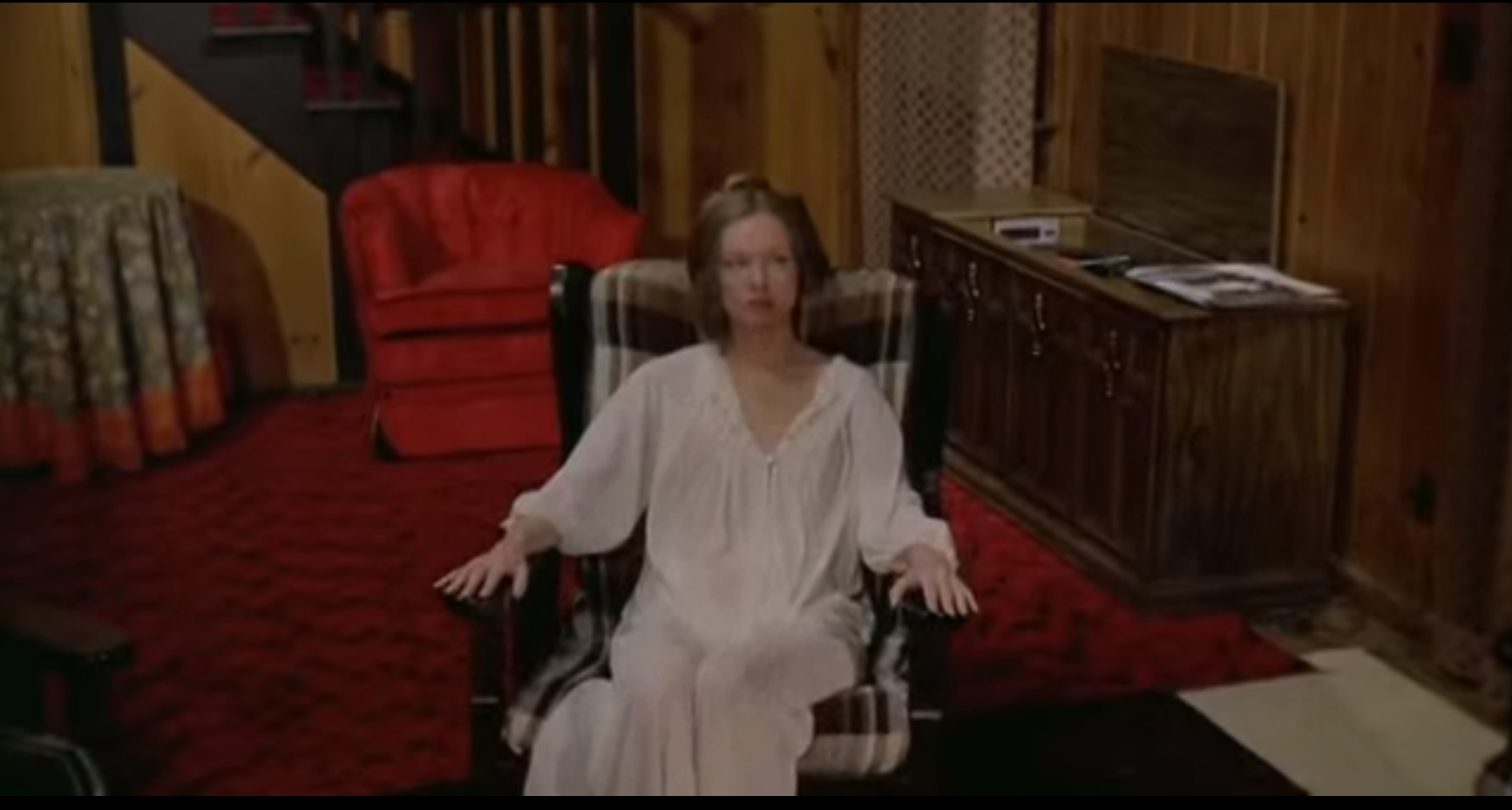
When a female writer from New York (Camille Keaton) is gang-raped by thugs on a remote island, she plots her revenge.

Genres:

  • Class Relations
  • Horror
  • Rape
  • Revenge
  • Writers

Response to Peary’s Review:
Peary is one among many reviewers who have argued that there is truly “no way to defend” this highly controversial, enormously discomfiting exploitation flick (starring Buster Keaton’s granddaughter, Camille — wife of the director). Indeed, the rape scenes in I Spit On Your Grave are so protracted (they last a total of 45 minutes), so realistic (there’s no film score), and so gruesome, that, as Peary points out, not even “male moviegoers [who] seemed to enjoy the mistreatment of the young girls in Last House on the Left… will identify with the rapists [here].” This leads one to question why such a film would be made in the first place. Although director Meir Zarchi manages to “[show the] pain, humiliation, and terror of a rape victim as few filmmakers have,” is this really such an estimable achievement? Apparently Zarchi had the noble intention of showing a woman taking personal revenge for her brutal mistreatment at the hands of men; yet Keaton’s systematic murders (she seduces each of the men, then leaves them to die) aren’t any easier to stomach. Indeed, the entire film is likely to be one of the most unpleasant movie-watching experiences you’ve ever had. Be strongly forewarned.

P.S. The theme of rape revenge was ultimately dealt with much more tastefully (and artfully) in Abel Ferrara’s Ms. 45/Angel of Vengeance (1982).

Redeeming Qualities and Moments:

  • Camille Keaton’s brave (foolhardy?) performance as the vengeful rape victim

Must See?
No, though film fanatics may be curious to check it out simply for its status as a controversial cult classic. But you have my permission to fast-forward through to the final half — and then to try to forget you ever saw it.

Links:

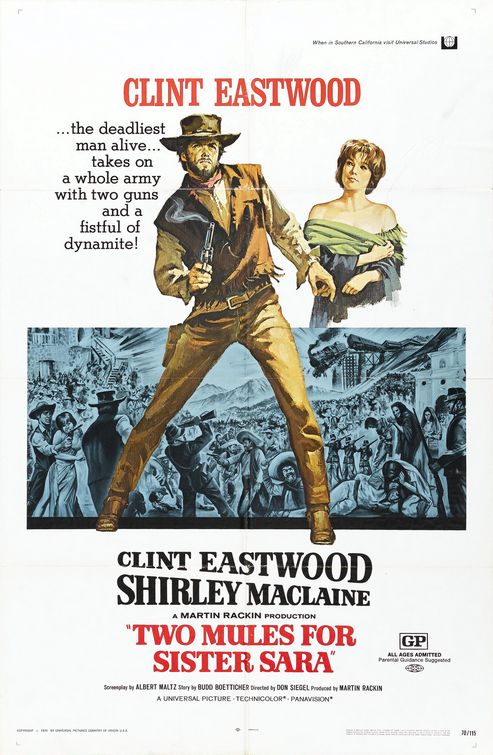
Two Mules for Sister Sara (1970)

Two Mules for Sister Sara (1970)

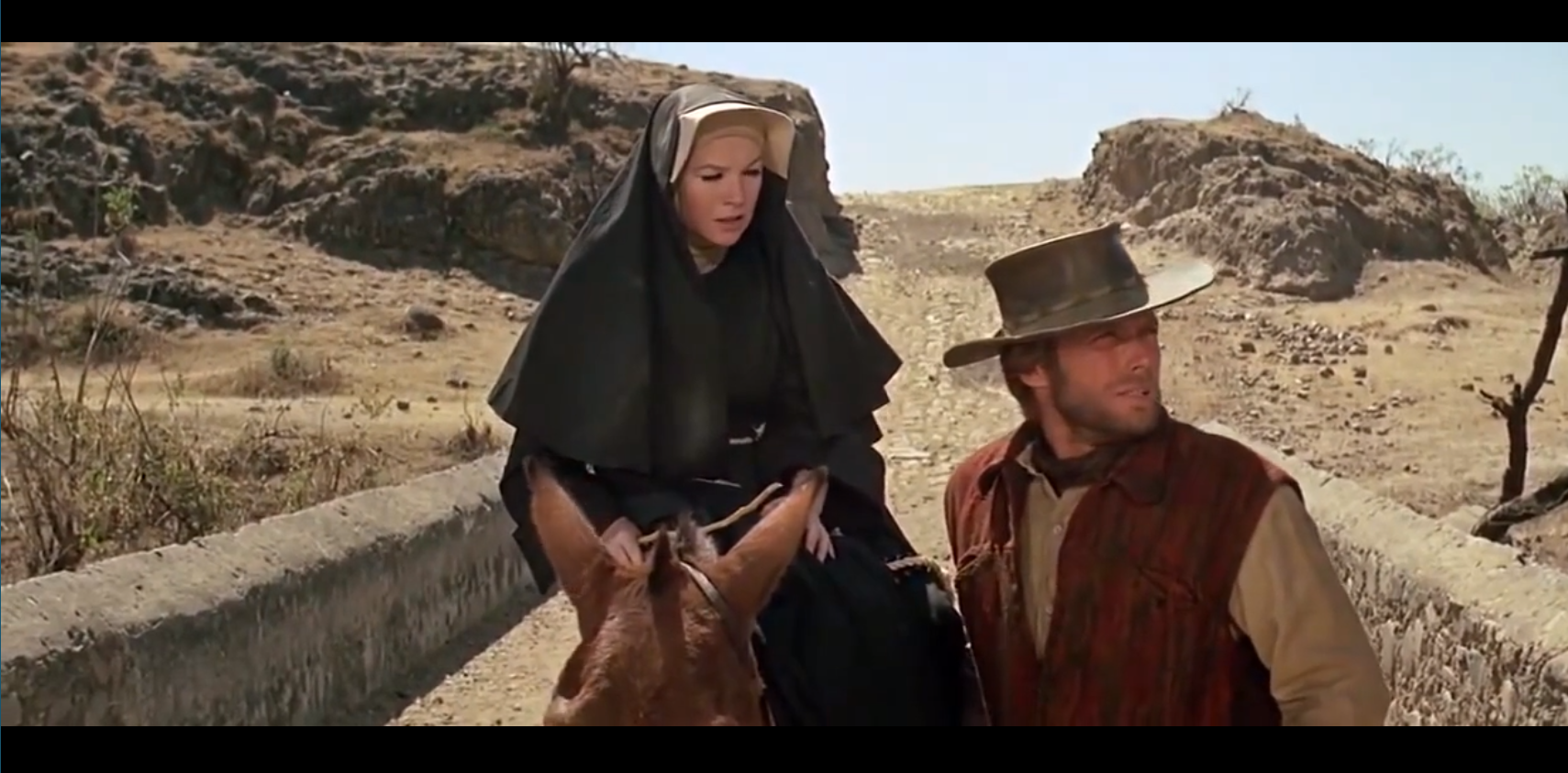
“What the hell is a nun doing out here?”

Synopsis:
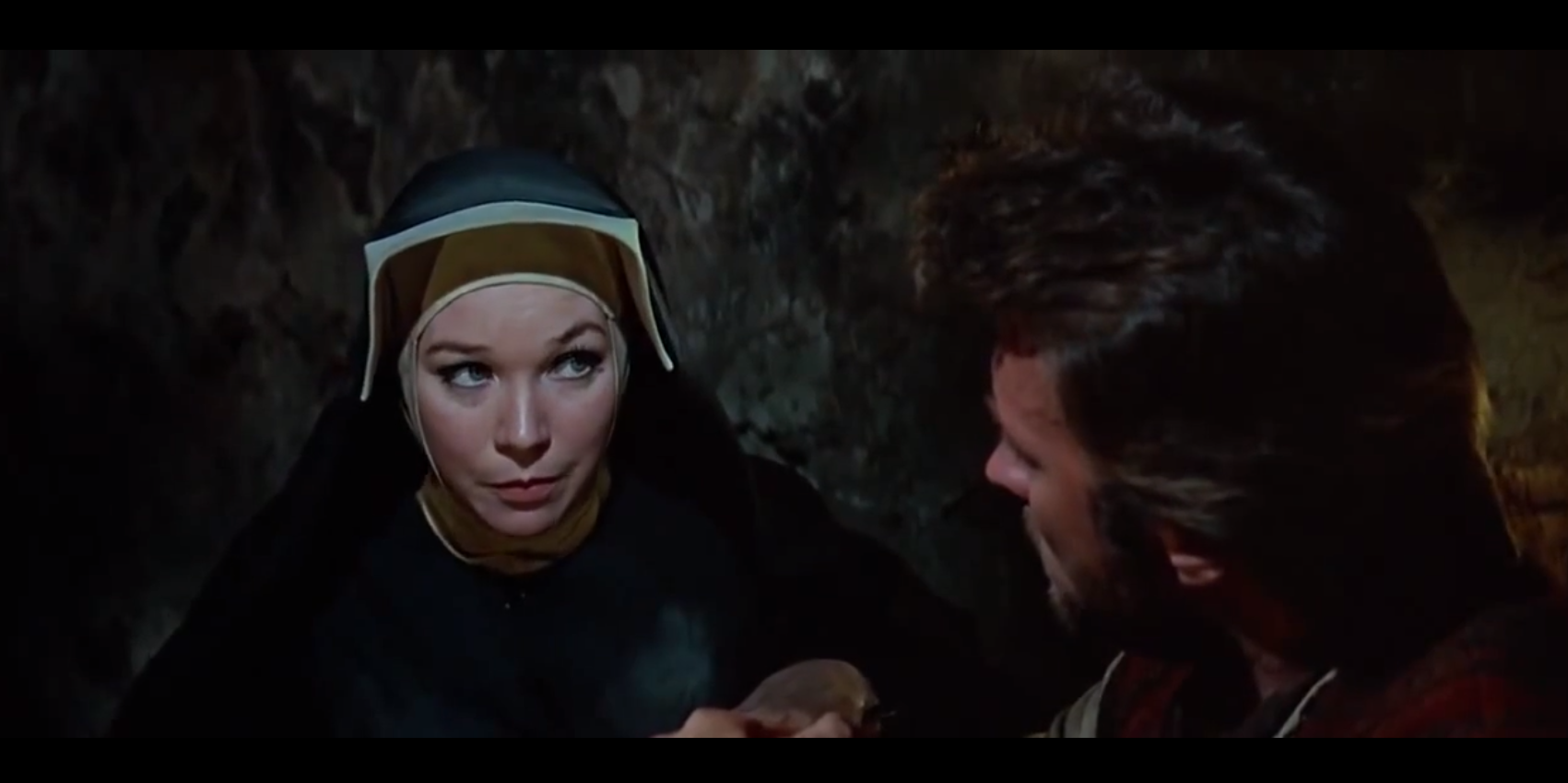
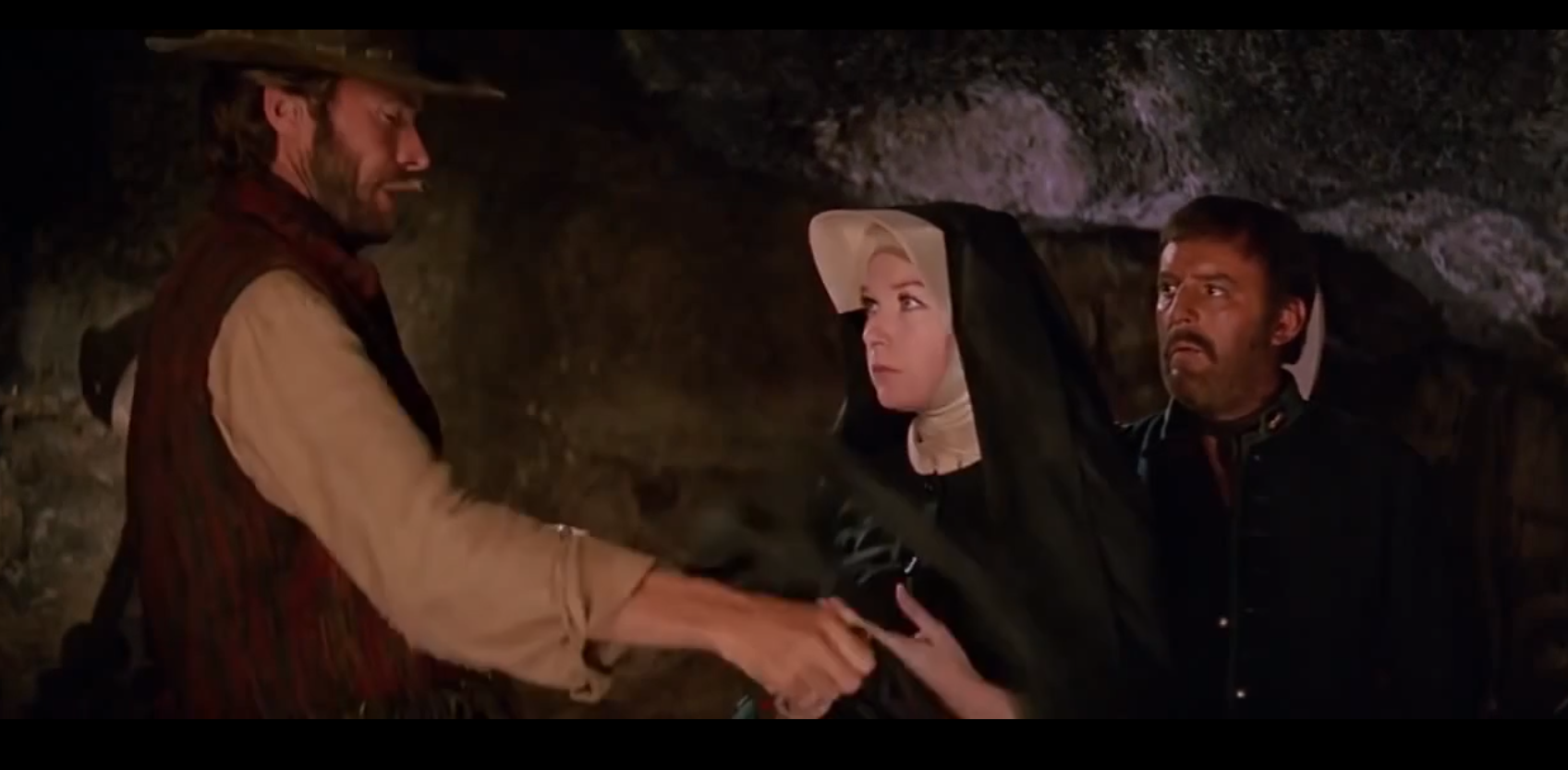
A mercenary gunfighter (Clint Eastwood) rescues a feisty nun (Shirley MacLaine) in the desert, and tries to bring her to safety. When he discovers that she’s on her way to help Mexican revolutionaries blow up a French fort, they find that their interests are aligned.

Genres, Themes, Actors, and Directors:

  • Battle of the Sexes
  • Clint Eastwood Films
  • Comedy
  • Deserts
  • Don Siegel Films
  • Mistaken or Hidden Identities
  • Nuns
  • Revolutionaries
  • Shirley MacLaine Films
  • Westerns

Response to Peary’s Review:
Don Siegel’s comedic western — based on a story by Budd Boetticher — has received mixed reviews over the years (see links below). For my part, I enjoyed the inspired pairing of MacLaine (one of my favorite actresses) and Eastwood, who has fun with his Spaghetti-western fame as “The Man With No Name”. In his review, Peary focuses primarily on Eastwood’s characterization, noting that this was the first time Eastwood played a tough guy who “intimidates men but has no idea how to handle women” — indeed, it’s the interplay between these two forces of nature (MacLaine is no passive nun!) which provides most of the fun.

Note: If you’ve never seen this film and don’t want its primary mystery given away, make sure not to read any online reviews; half of them shamelessly reveal spoilers.

Redeeming Qualities and Moments:

  • Shirley MacLaine’s wonderfully comedic performance as “Sister Sara”
  • Beautiful cinematography by D.P. Gabriel Figueroa

  • Clever dialogue:

    “All the women I’ve ever known were natural-born liars, but I never knew about nuns until now.”

  • Ennio Morricone’s film score

Must See?
No, but it’s highly recommended.

Links:

Angel (1984)

Angel (1984)

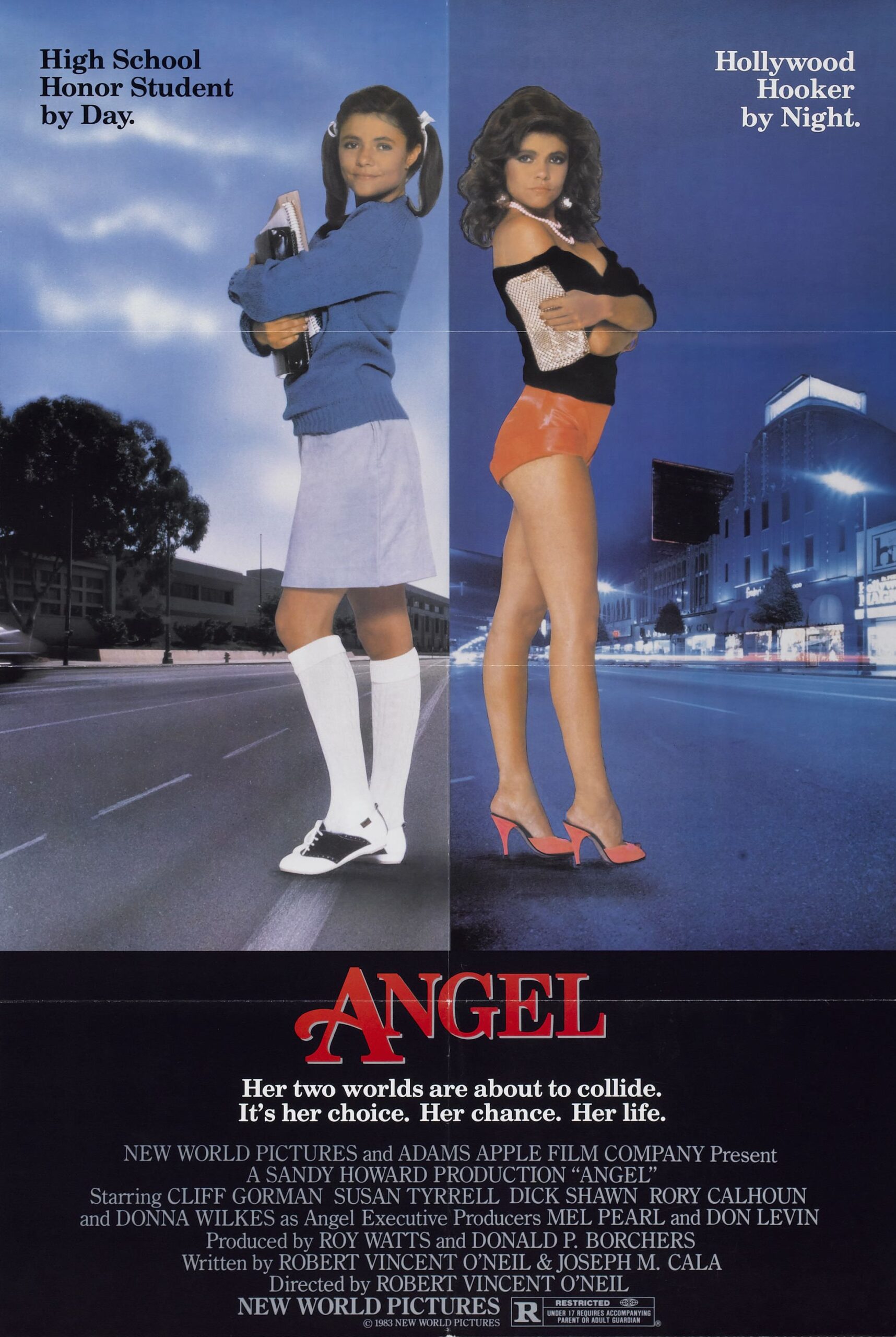
“You’re young, attractive, and healthy — and swimming in a toilet bowl!”

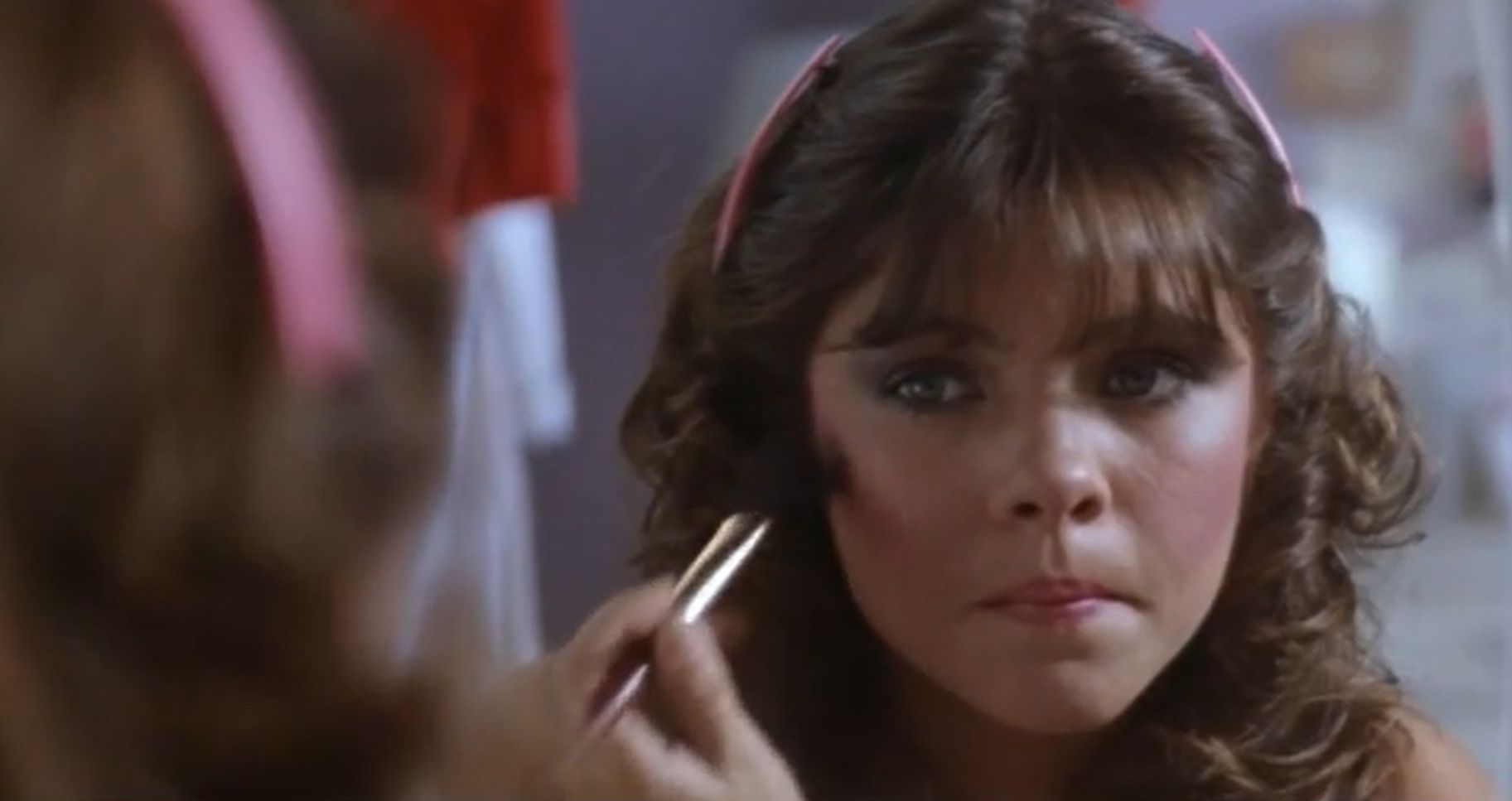
Abandoned by her mother, a 15-year-old (Donna Wilkes) is an honor student by day, and a Hollywood hooker (“Angel”) by night. When Angel witnesses one of her friends being murdered by a necrophilic serial killer (John Diehl), she gains protection from a detective (Cliff Gorman) who tries to convince her to get off the streets.

Genres, Themes, Actors, and Directors:

  • Detectives and Private Eyes
  • Mistaken Identities
  • Prostitution
  • Serial Killers
  • Survival

Response to Peary’s Review:
This infamous teenage exploitation flick by New World Cinema is much tamer than its well-publicized tagline — “High School Honor Student By Day, Hollywood Hooker By Night” — would suggest. As noted by Peary and others (see links below), Wilkes never takes her clothes off, and thus her work is implied rather than shown.

If it wasn’t for a deranged serial killer on the loose, it seems that Angel wouldn’t be in trouble at all — indeed, she’s surrounded by countless paternal figures, who we’re sure will keep her from lasting harm. Wilkes is okay here, but most enjoyable are the supporting performances by her “offbeat” friends — including Dick Shawn as a transvestite hooker (with a heart of gold, naturally), and Susan Tyrrell as her crotchety landlady. Angel‘s plot bears some similarity to The Little Girl Who Lives Down the Lane (1978): like Jodie Foster’s Rynn, Molly/Angel is dead set against anyone finding out that she’s surviving on her own. Three sequels followed this phenomenal money-maker: Avenging Angel (1985), Angel III: The Final Chapter (1988), and Angel 4: Undercover (1993).

Redeeming Qualities and Moments:

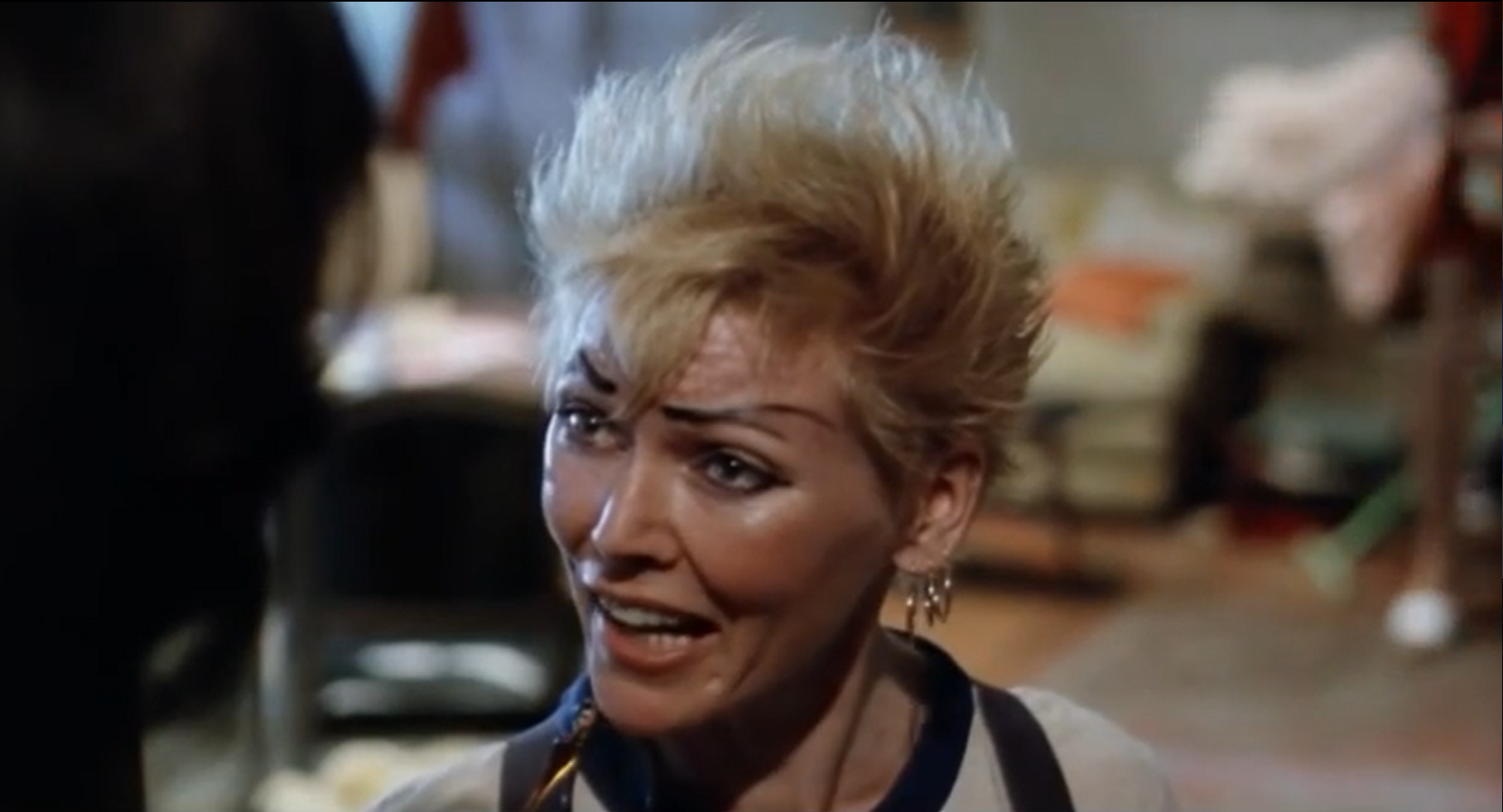
  • Susan Tyrrell as Angel’s foul-mouthed lesbian landlady
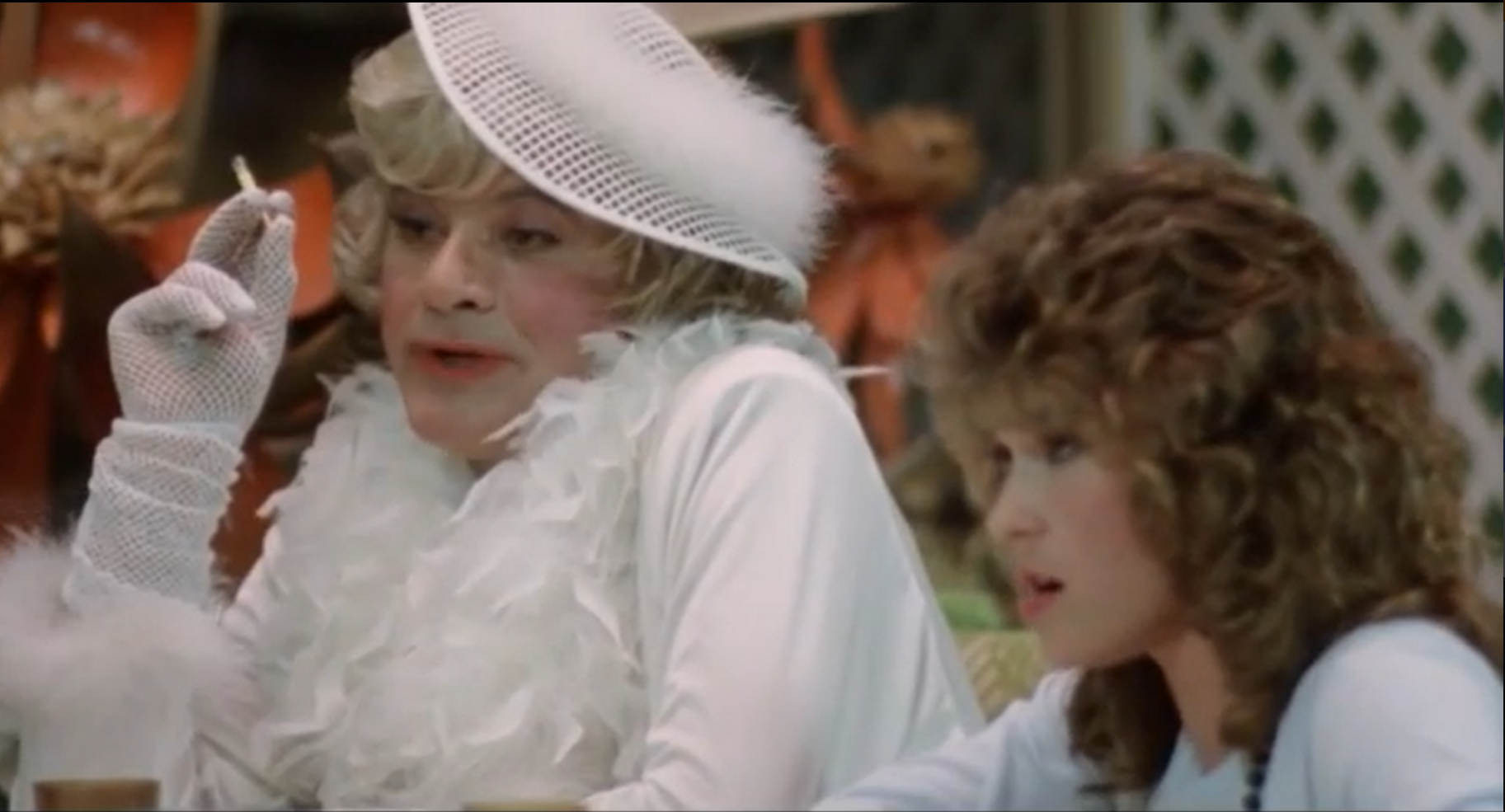
  • Dick Shawn as Angel’s transvestite-hooker friend

Must See?
No, but it’s worth a look simply for its infamous place in the history of exploitation cinema.

Links:

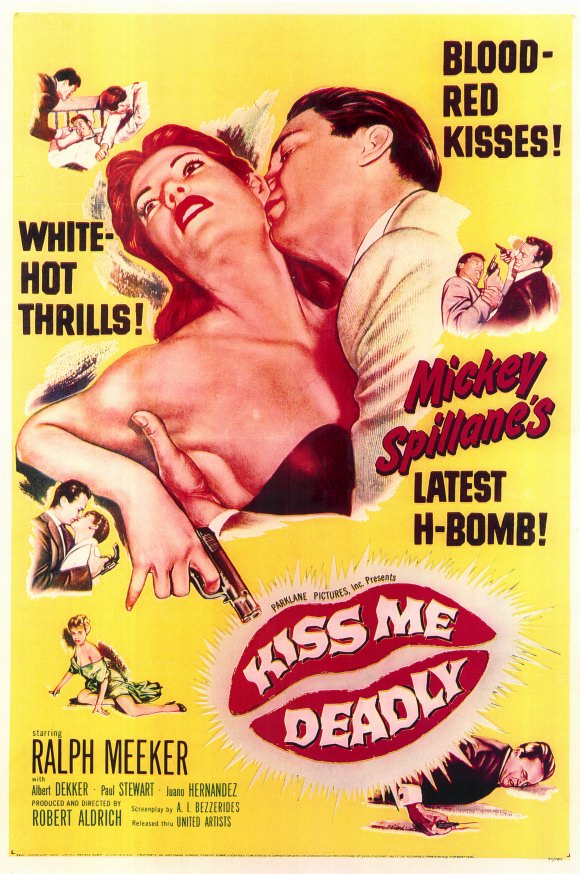
Kiss Me Deadly (1955)

Kiss Me Deadly (1955)

“First you find a little thread. A little thread leads you to a string, and the string leads you to a rope… And from the rope — you hang by the neck.”

Synopsis:
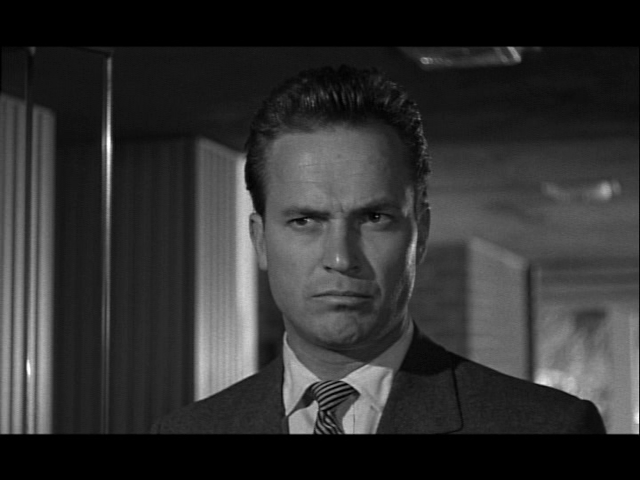
After narrowly escaping death, private detective Mike Hammer (Ralph Meeker) investigates the mysterious murder of a hitchhiker (Cloris Leachman), hoping he will stumble onto big money.

Genres, Themes, Actors, and Directors:

  • Cloris Leachman Films
  • Detectives and Private Eyes
  • Gangsters and Mafia
  • Juano Hernandez Films
  • Los Angeles
  • Murder Mystery
  • Nuclear Threat
  • Paul Stewart Films
  • Ralph Meeker Films
  • Robert Aldrich Films
  • Search

Response to Peary’s Review:
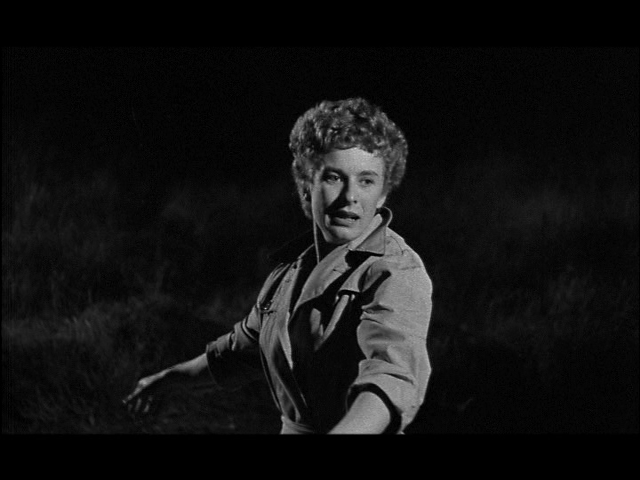
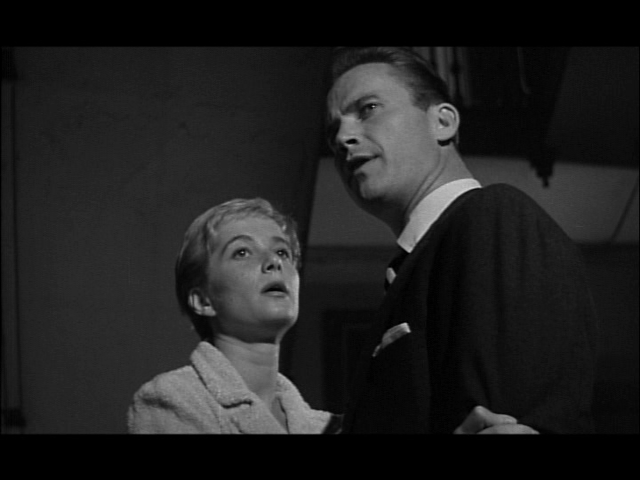
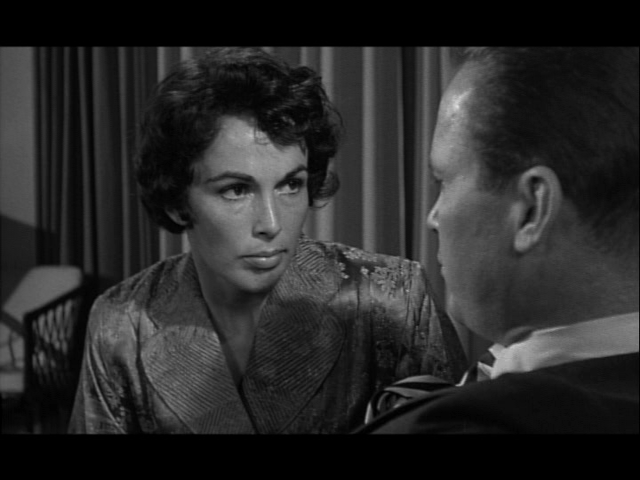
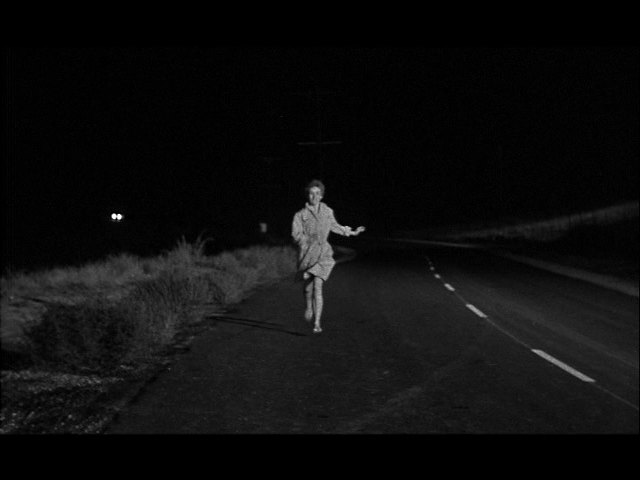
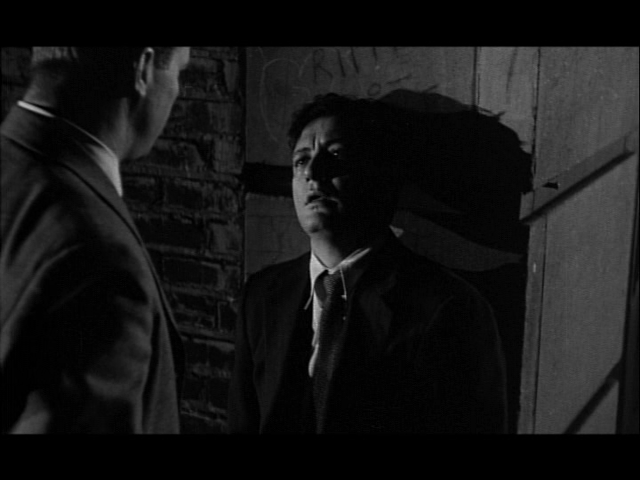
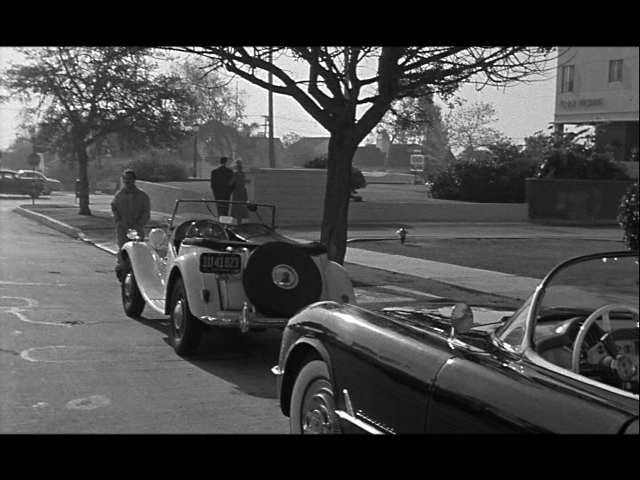
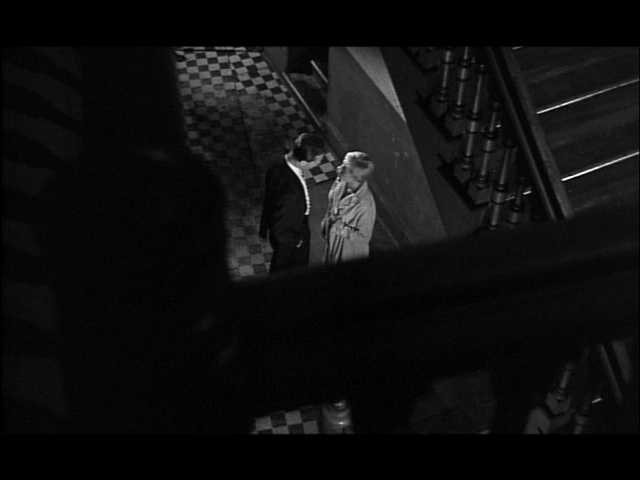
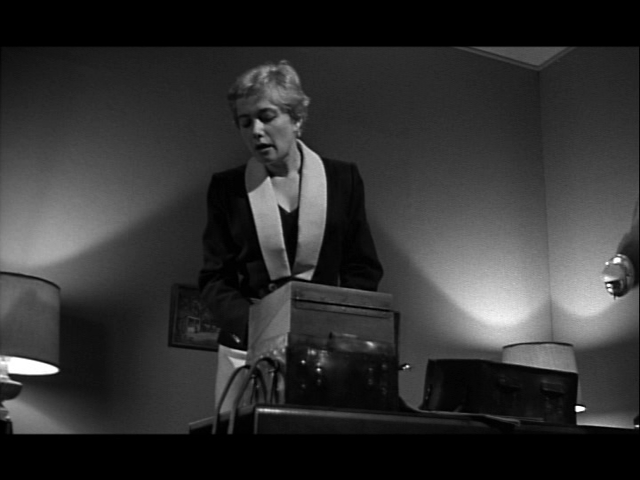
As Peary notes, this adaptation of Mickey Spillane’s 1952 detective novel remains “one of the most dazzling works of the fifties”. Director Robert Aldrich makes effective use of “wild camera angles and abrupt, jarring editing to symbolize a world out of orbit”: from the film’s opening sequence — in which breathless Cloris Leachman literally throws herself in front of Hammer’s car to get him to stop — we recognize that everyone in this universe is out for himself; indeed, Hammer pursues the mystery of Leachman’s death out of greed rather than a sense of decency, and readily prostitutes his adoring girlfriend (well played by Maxine Cooper) to earn a buck. Although none of the characters in Kiss Me Deadly are particularly appealing, we remain glued to our seats in anticipation of discovering what’s contained in the mysterious box Hammer (and top-level crooks) are after; the final scenes — which reveal the answer to this mystery — remain perhaps the most taut denouement of any detective thriller in cinematic history.

Redeeming Qualities and Moments:

  • Ralph Meeker as Mike Hammer
  • Cloris Leachman in her first (albeit far too brief) film role
  • Gaby Rodgers as Leachman’s manipulative roommate
  • Maxine Cooper as Hammer’s loyal girlfriend
  • The highly memorable opening sequence
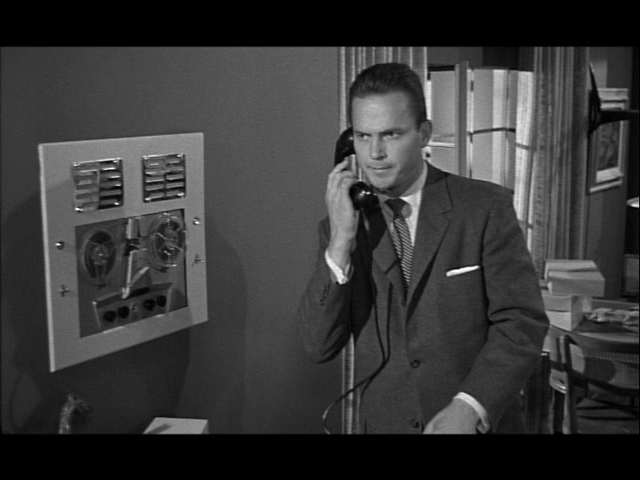
  • Hammer’s reel-to-reel answering machine — probably the first shown on-screen
  • Effectively brutal and realistic violence, without explicit gore
  • Good use of diverse Los Angeles locales
  • Ernest Laszlo’s noirish cinematography
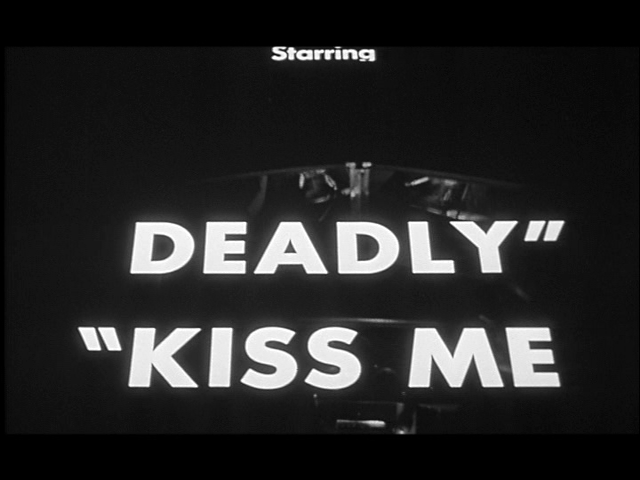
  • Creative opening titles, rolling backwards across the screen like painted words on asphalt
  • The truly frightening ending sequence

Must See?
Yes. Aldrich’s once-controversial noir classic — which, as Peary notes, was “a major influence on the French New Wave” — holds a special place in film history. Discussed at length in Peary’s Cult Movies (1981).

Categories

  • Controversial Film
  • Cult Movie
  • Genuine Classic
  • Historical Importance

(Listed in 1001 Movies You Must See Before You Die)

Links:

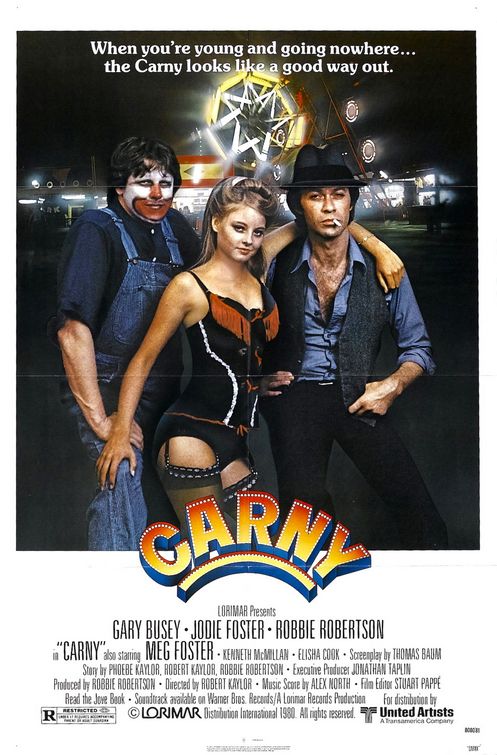
Carny (1980)

Carny (1980)

“A carnival ain’t even a real carnival without a sideshow — everyone knows that!”

Synopsis:
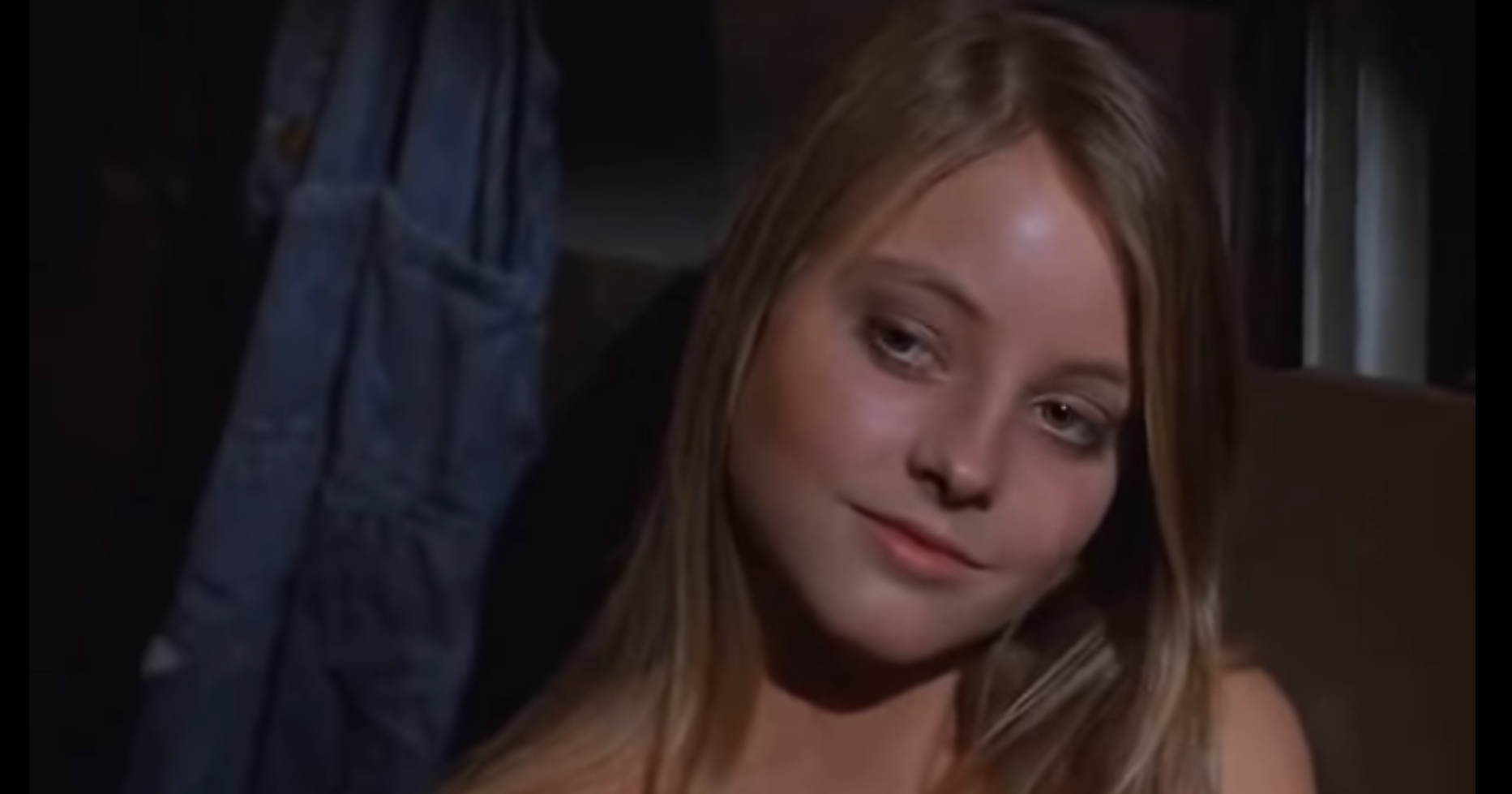
After falling for a carnival worker (Gary Busey), 18-year-old Donna (Jodie Foster) decides to run away from home and join the troupe.

Genres, Themes, Actors, and Directors:

  • Carnival and Circuses
  • Elisha Cook Jr. Films
  • Gary Busey Films
  • Jodie Foster Films
  • Love Triangle
  • Runaways

Review:
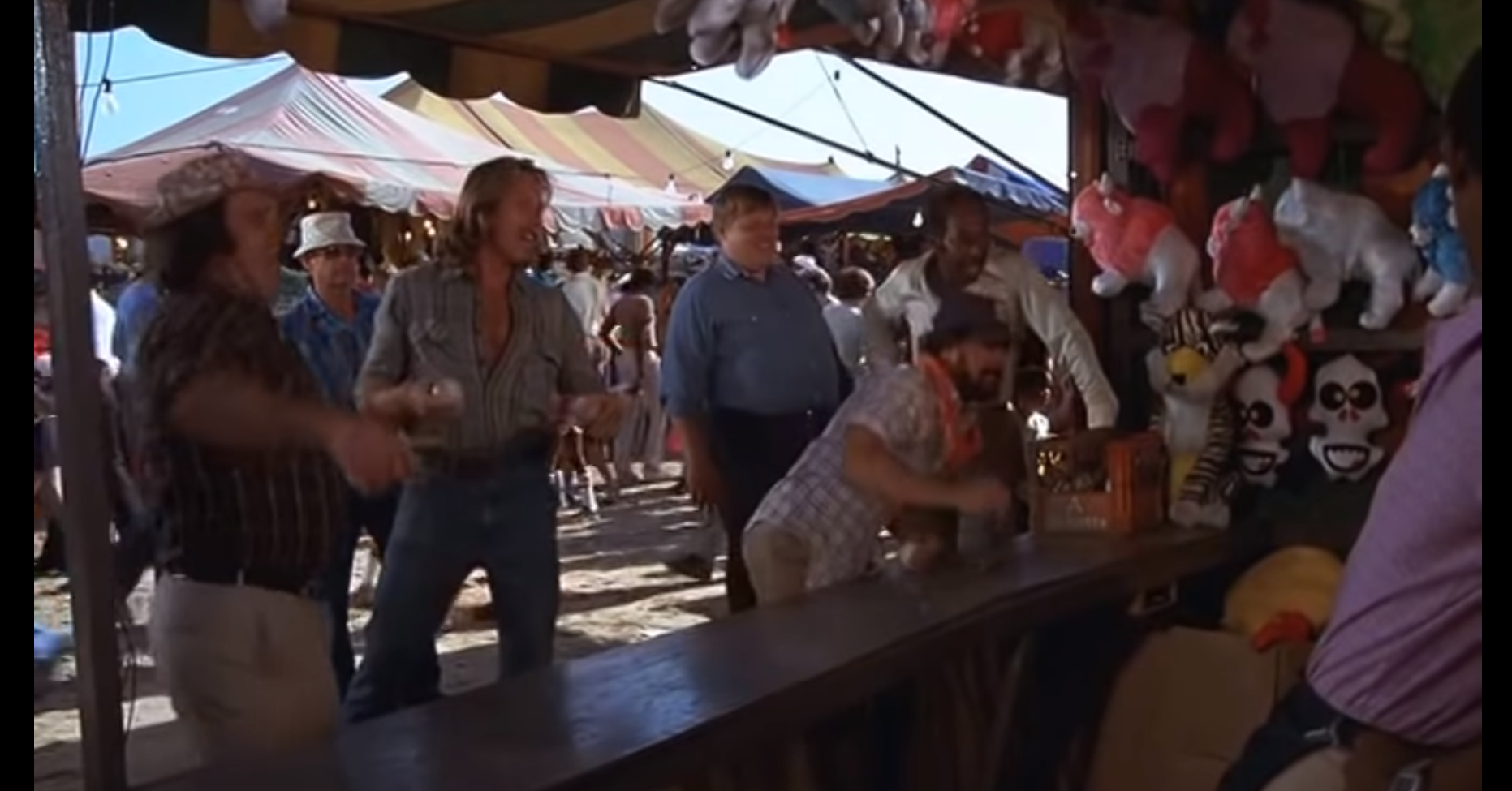
Jodie Foster turned in her second powerhouse performance of the year — see also Foxes (1981) — in this cult favorite about carnival life behind the scenes. Gary Busey is equally compelling as Frankie: he recognizes that his new relationship with Foster is troublesome to his longtime friend (Robbie Robertson), yet isn’t sure how to handle the “love” triangle that emerges. Director Robert Kaylor does an impressive job portraying both the authentic seaminess of carny life (carnies are shown openly conning customers), and the mundanity (we see workers pacing out where to set up stalls). Yet Carny‘s script leaves much to be desired. There are countless subplots which are never developed, and the film’s denouement is unsatisfying at best. Plus, unlike in Tod Browning’s masterful Freaks (1932), Kaylor doesn’t provide the remaining sideshow performers with well-rounded humanity; they seem present simply for atmosphere and “authenticity”. Despite its flaws, however, Carny makes for oddly compelling, visceral viewing.

Redeeming Qualities and Moments:

  • Jodie Foster as Donna
  • Gary Busey as Frankie
  • An authentic look at the seediness of carnival life
  • Alex North’s appropriately creepy score

Must See?
No, though it’s worth a look simply for its status as a cult favorite.

Links:

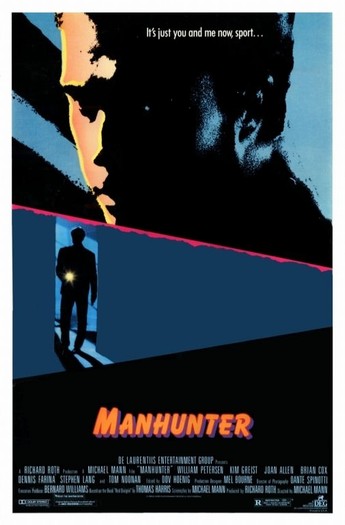
Manhunter (1986)

Manhunter (1986)

“It’s just you and me now, sport — and I’m going to find you, goddamn it!”

Synopsis:
When semi-retired FBI agent Will Graham (William Petersen) is hired to track down a serial killer nicknamed “The Tooth Fairy” (Tom Noonan), he seeks advice from notorious psychopath Dr. Hannibal Lecktor (Brian Cox).

Genres, Themes, Actors, and Directors:

  • Cat-and-Mouse
  • Detectives and Private Eyes
  • Murder Mystery
  • Psychopaths
  • Race-Against-Time
  • Serial Killers

Review:
Five years before Jonathan Demme directed Silence of the Lambs (1991), Michael Mann released this highly stylized, under-the-radar version of Thomas Harris’s novel Red Dragon. While both films remain taut, well-acted thrillers, I’ll admit I prefer this earlier one — and its cult following reveals that I’m not the only one who feels this way. The performances in Manhunter are uniformly excellent. Unlike Ted Levine’s freakish “Buffalo Bill” in SOTL, Tom Noonan manages to portray “the Tooth Fairy” as a psychotic soul who is haunted by the desire for normalcy. Brian Cox’s performance as Hannibal Lecktor is a masterpiece of understated acting — the scene in which he coolly makes a call from his cell to find out Graham’s home address is one of the most chilling in cinematic history. And while Jodie Foster deserved her Oscar for playing Clarice Starling in SOTL, William Peterson’s approach here is equally viable.

In addition to fine performances, Manhunter is a visual masterpiece, with highly stylized camera angles, sparse geometric sets, and gorgeous, hue-drenched cinematography. Michael Rubini’s memorable, heavily synthesized score — while clearly marking Manhunter as a product of the ’80s — adds to the overall stylized effect, relentlessly propelling this race-again-time thriller to its effective climax.

Redeeming Qualities and Moments:

  • William Petersen as the driven FBI agent

  • Tom Noonan’s sympathetic performance as the deranged serial killer
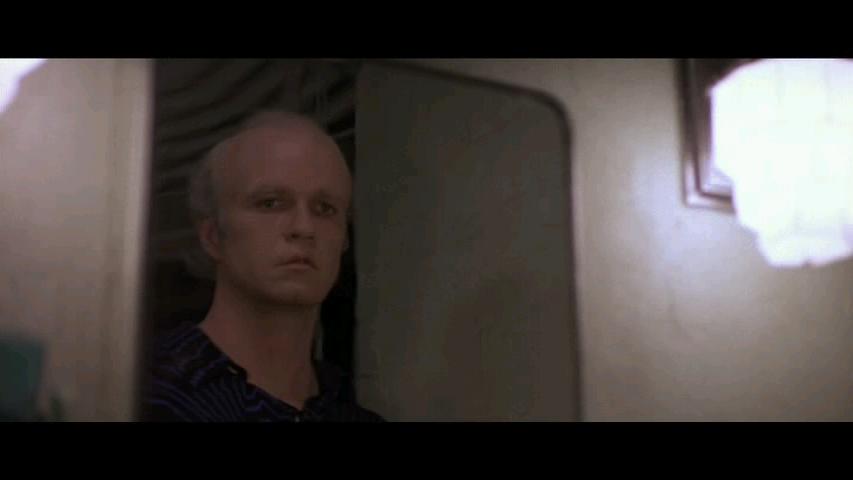
  • Joan Allen as Reba, Lecktor’s blind co-worker
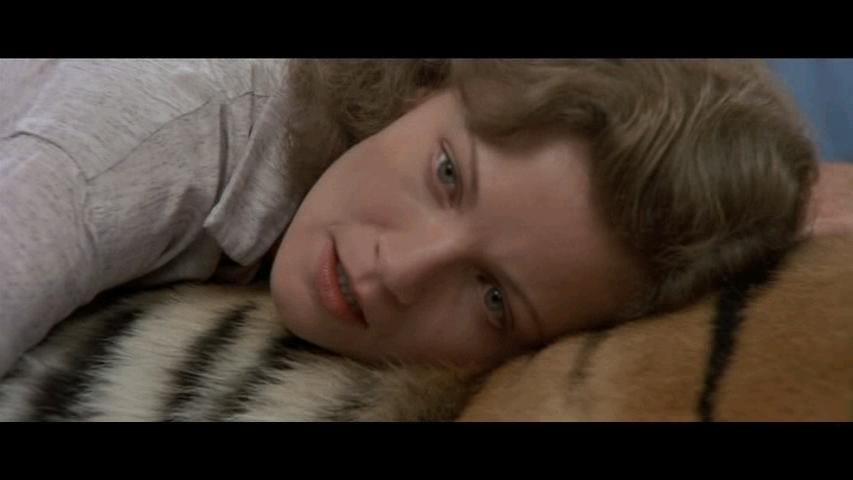
  • Brian Cox as the “original” Hannibal Lecktor
  • Effective use of stylized sets, camera angles, mirrors, and shadows

  • Evocative, hue-drenched cinematography by Dante Spinotti

  • Michael Rubini’s synthesized score

Must See?
Yes. This film — which has developed an underground cult following over the years — is a satisfying, well-made adaption of Thomas Harris’s Red Dragon, and should be seen by all film fanatics.

Categories

  • Cult Movie
  • Good Show

(Listed in 1001 Movies You Must See Before You Die)

Links:

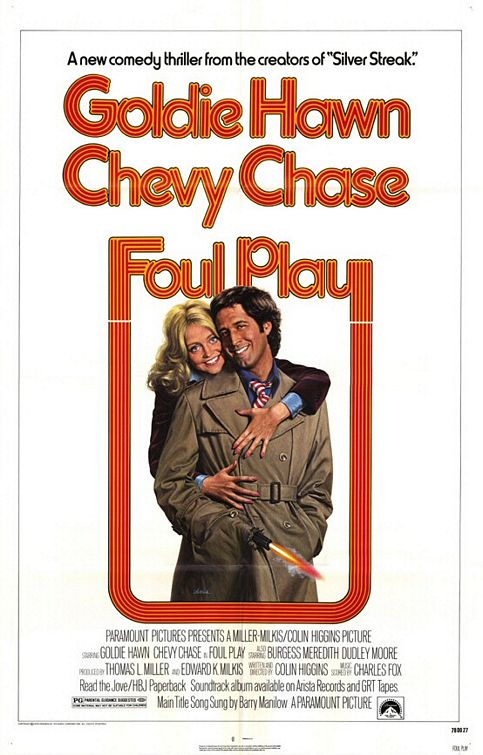
Foul Play (1978)

Foul Play (1978)

“Beware of the dwarf!”

Synopsis:
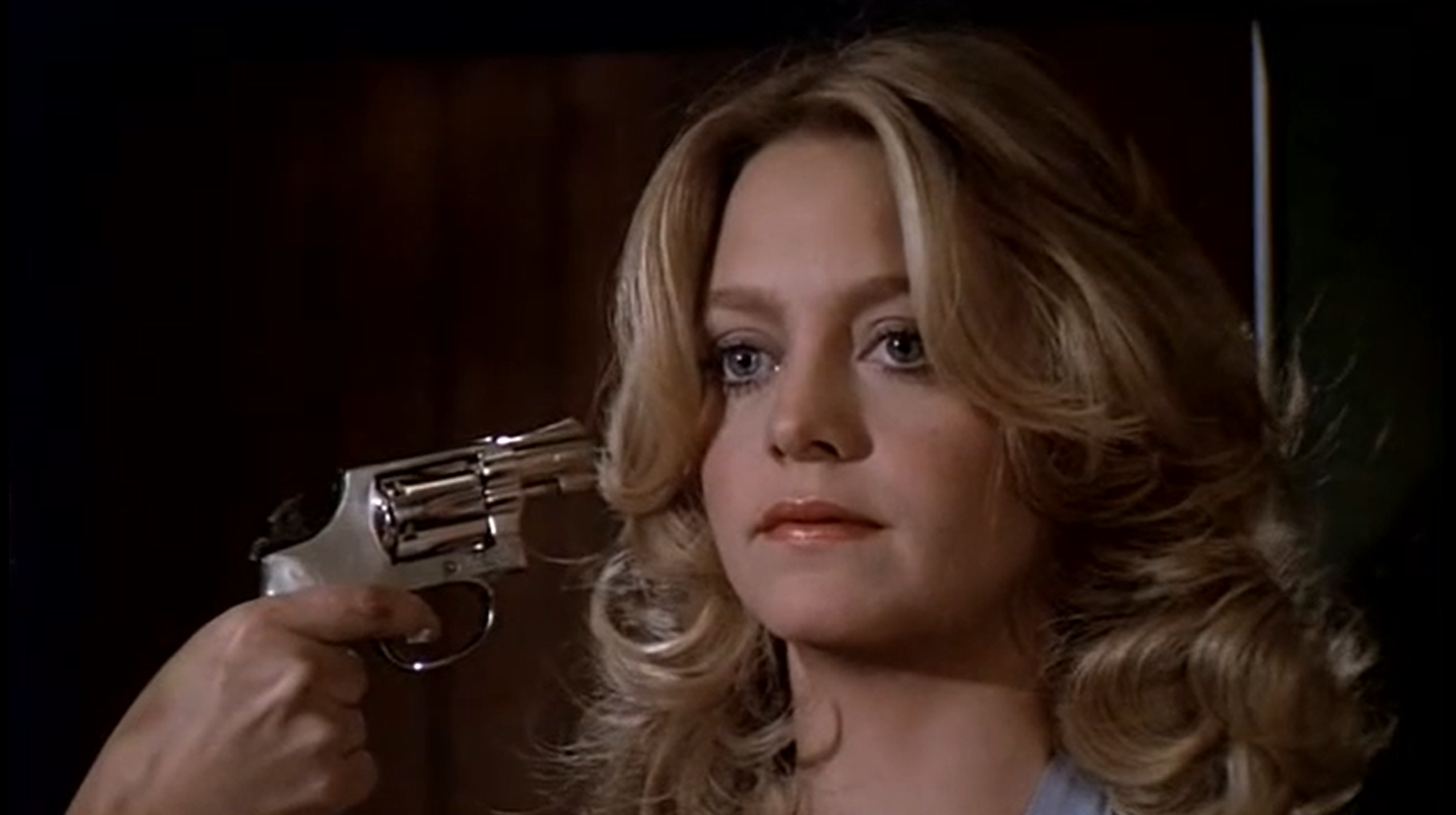
A divorced librarian (Goldie Hawn) finds herself unwittingly caught up in a plot to assassinate the Pope.

Genres, Themes, Actors, and Directors:

  • Burgess Meredith Films
  • Dudley Moore Films
  • Goldie Hawn Films
  • Murder Mystery
  • “No One Believes Me!”
  • Romantic Comedy
  • Satires and Spoofs

Review:
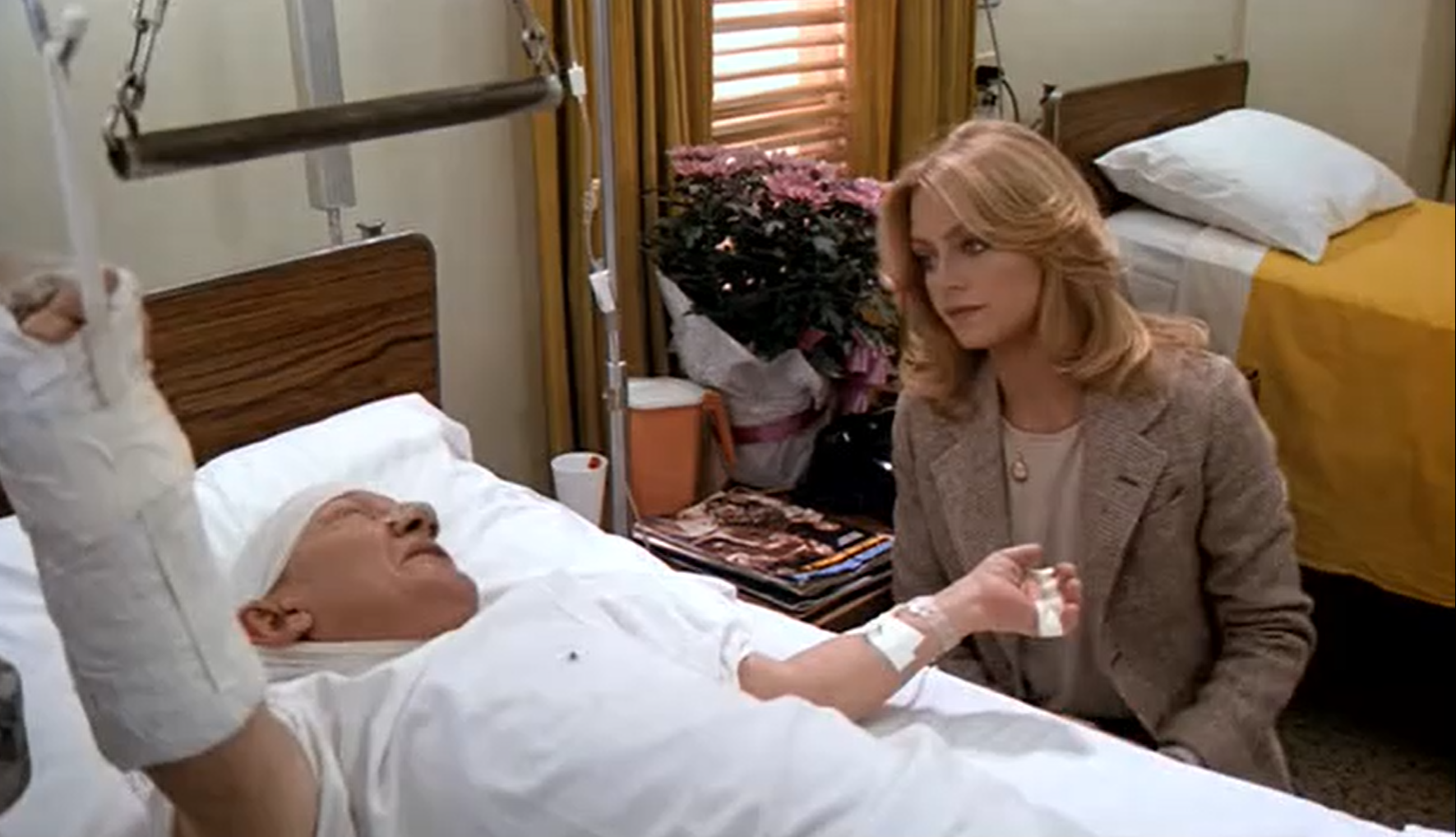
This comedic thriller starts out strong, introducing characters — Goldie Hawn’s wide-eyed Gloria and Chevy Chase’s clumsy detective — who are quite appealing. Unfortunately, the plot soon devolves into slapstick, with the attempts at humor becoming increasingly lame: when Gloria visits an innocent Bible-selling midget (Billy Barty) in the hospital, for instance, we’re meant to find it amusing that she mistook him for her assassin, and to laugh at the fact that he’s now scared even to be around her.

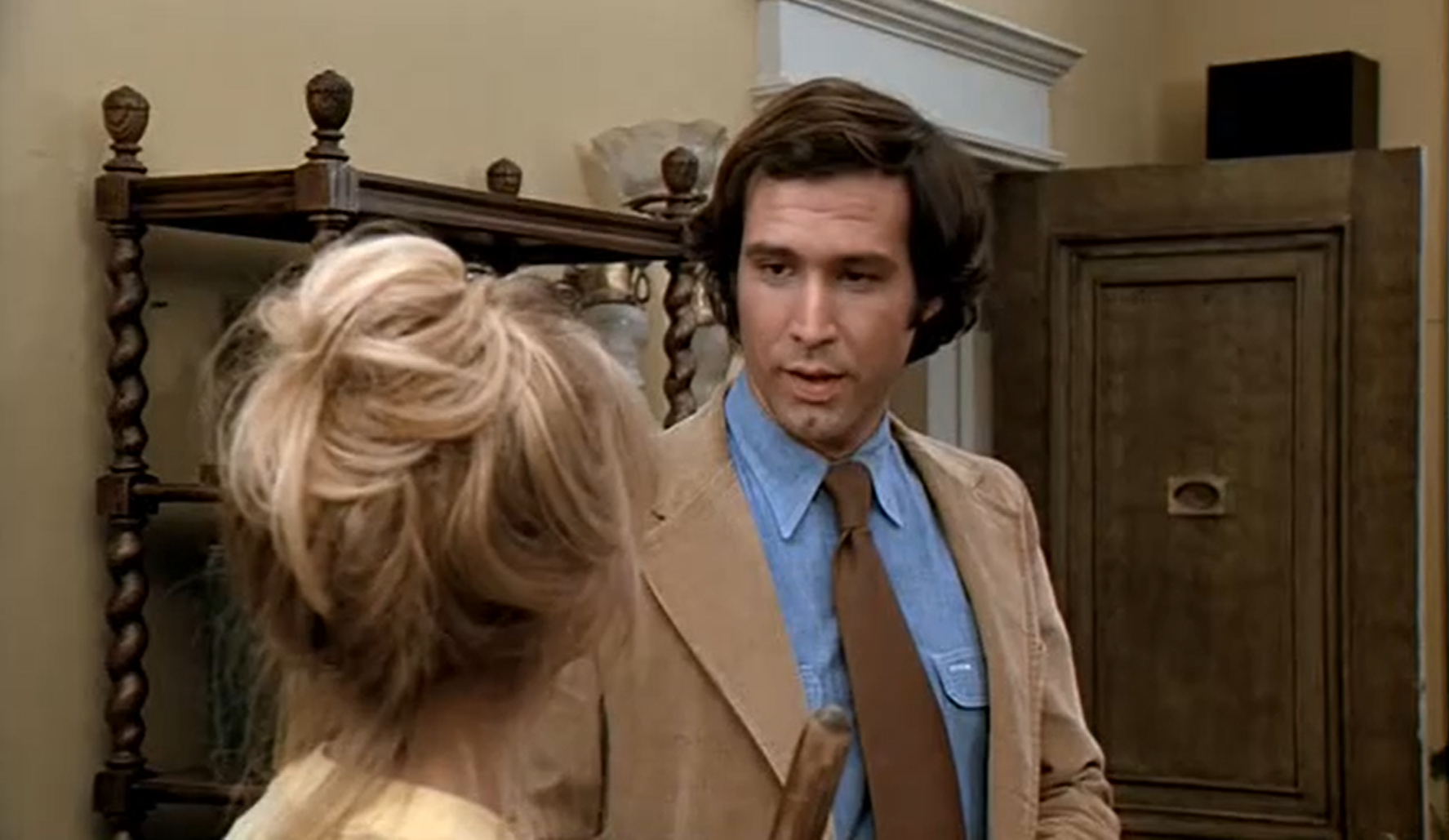
In addition, while Hawn’s character remains appealing throughout, Chevy Chase (in his first screen role) isn’t all that funny, and, other than his initial bumbling appearance, doesn’t make much of an impression.

While there are some moments of true hilarity — whenever Dudley Moore is on the screen, for instance — Foul Play is ultimately a missed opportunity.

Redeeming Qualities and Moments:

  • Goldie Hawn’s appealing performance in the lead role
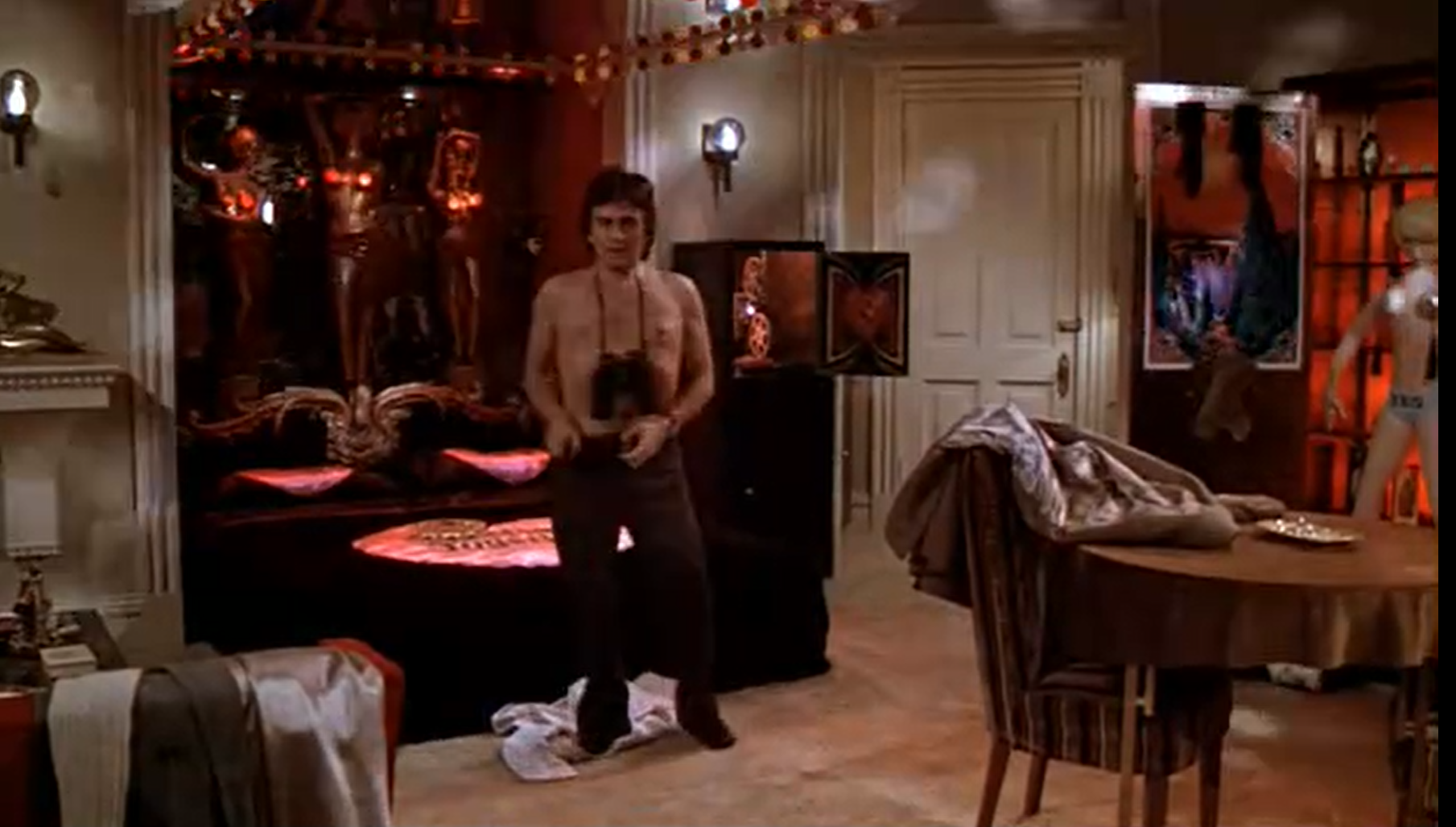
  • Dudley Moore getting his bedroom ready for a presumed night of kinky sex with Hawn
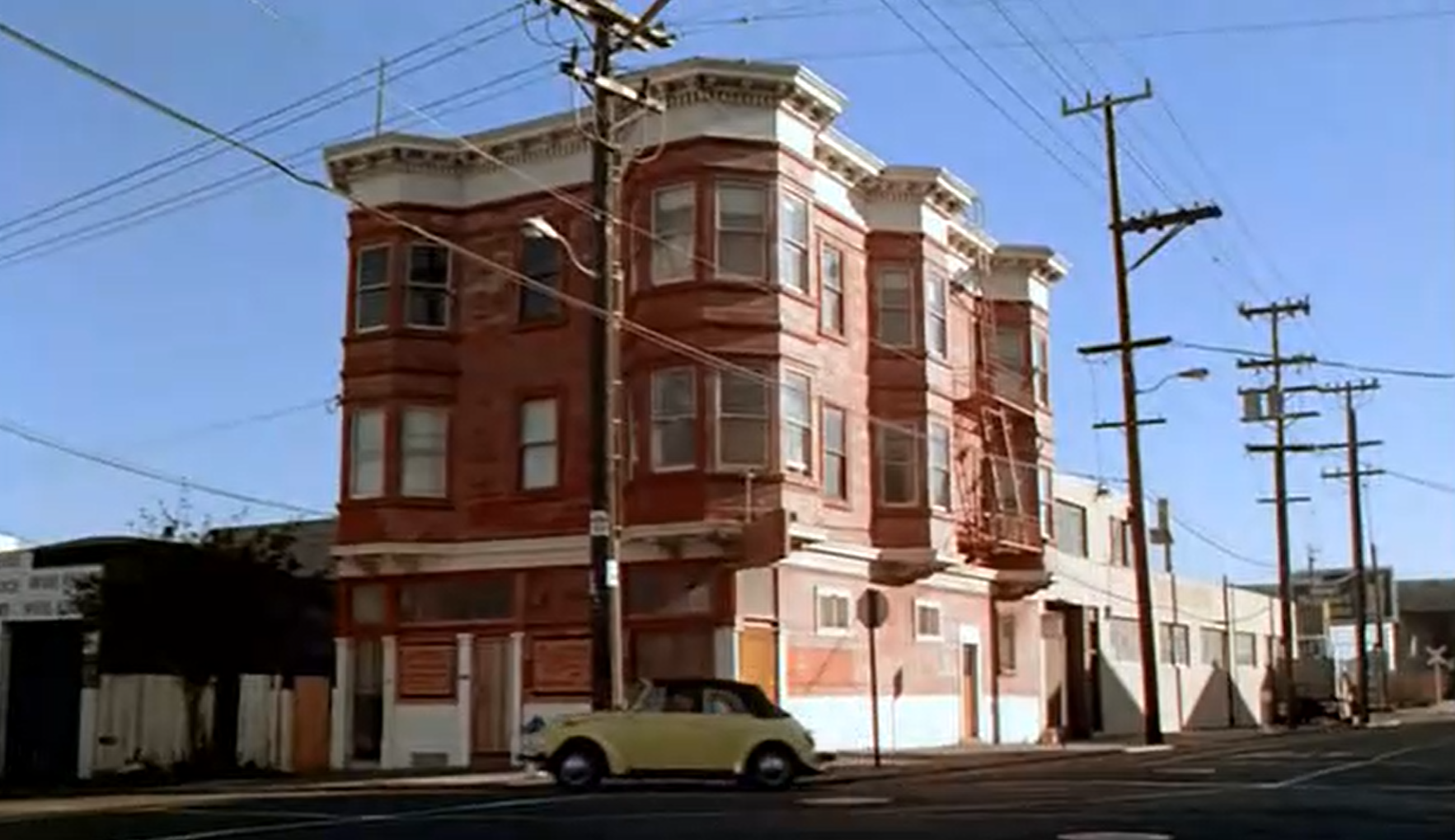
  • Good use of San Francisco locales

Must See?
No. While this comedic thriller starts out strong, it quickly becomes disappointing slapstick.

Links:

Adolescente, L’ (1979)

Adolescente, L’ (1979)

“Love is a neverending battle — the young, the old, in the same boat.”

Synopsis:
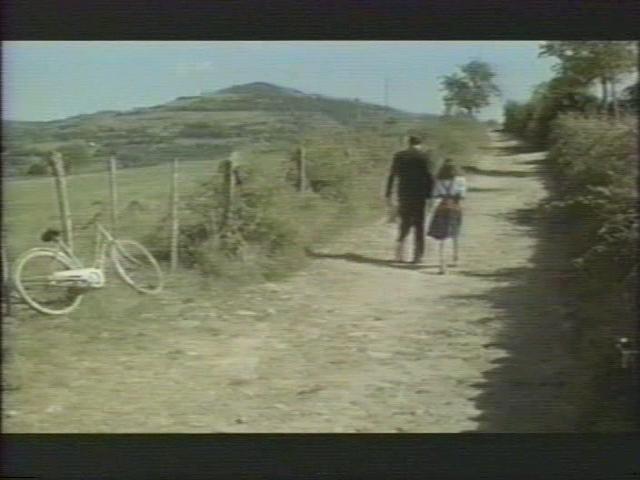
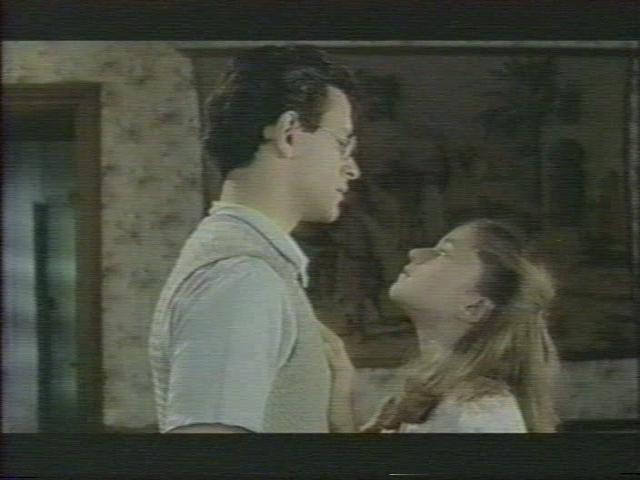
On the brink of WWII, 13-year-old Marie (Laetitia Chauveau) and her mother (Edith Clever) go to stay with Marie’s grandmother (Simone Signoret) in the French countryside. Marie develops a crush on a young doctor (Francis Huster), and is devastated when she finds out that her sensual mother is having an affair with him.

Genres, Themes, Actors, and Directors:

  • Coming-of-Age
  • French Films
  • Infidelity
  • Jeanne Moreau Films
  • Simone Signoret Films

Review:
Jeanne Moreau’s second directorial effort — after Lumiere (1976) — was this unassuming summer vacation tale, set in pre-WWII France. As is often the case with coming-of-age stories, L’Adolescente is ultimately more concerned with chronicling its teenage protagonist’s budding sexual awareness than with the plot itself. As a result, while Moreau does a fine, sensitive job portraying Marie’s transition from childhood to adolescence, we don’t learn nearly enough about Marie’s mother (well-played by Edith Clever) — a woman who appears happily married, yet doesn’t hesitate to carry out an affair which can only end badly for everyone involved.

Moreau also relies a bit too heavily on cliched characterizations, with one sequence in particular — an early montage of the sundry villagers (each “type” is represented) — detracting from the authenticity of Marie’s personal story. In addition, Philippe Sarde’s musical theme, while lilting and effective at first, soon becomes overused and annoying. Nonetheless, there are enough positive elements in L’Adolescente — including the welcome presence of Simone Signoret as Marie’s grandmother, and a fine performance by young Laetitia Chauveau — to make it worth seeking out.

Redeeming Qualities and Moments:

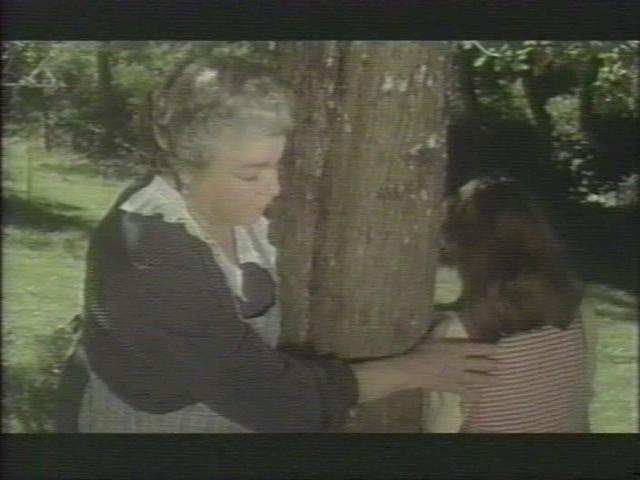
  • Simone Signoret as Marie’s wise grandmother
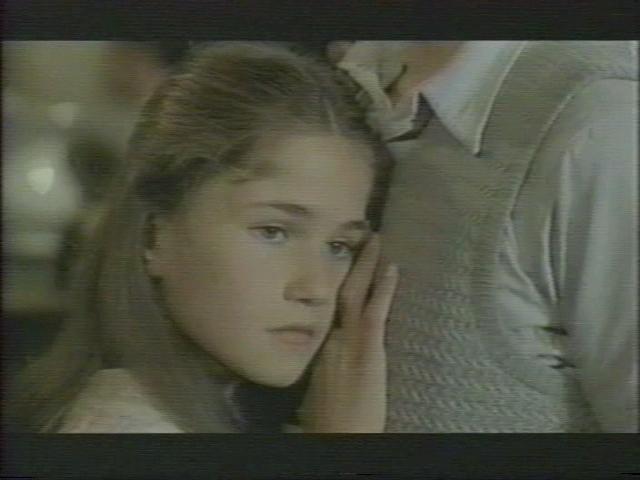
  • Laetitia Chauveau (who never made another film) as young Marie
  • Beautiful cinematography of the French countryside
  • An effective portrayal of a young girl’s first crush on an older man

Must See?
No, but it’s recommended.

Links: