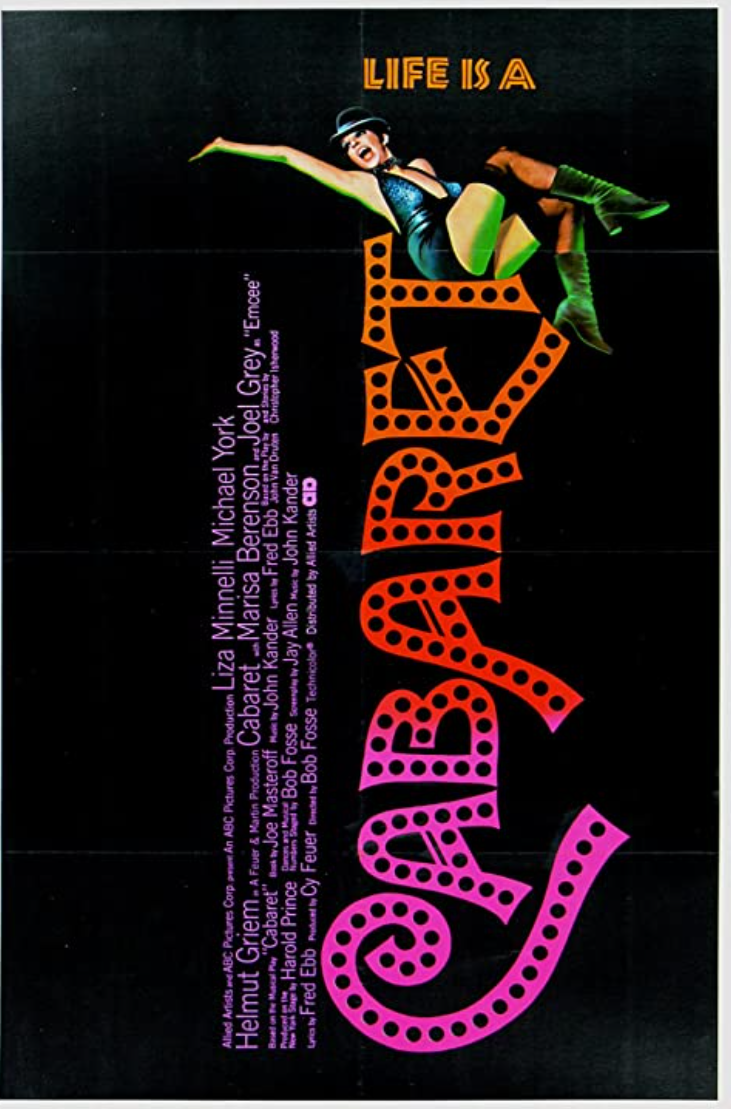
Cabaret (1972)
“That’s me, darling: unusual places, unusual love affairs. I am a most strange and extraordinary person.”
|
Synopsis: |
|
Genres, Themes, Actors, and Directors:
Response to Peary’s Review:
… “has a seductive power, that violence is a natural [?] outgrowth of perversion:” [?!?!?!?!]
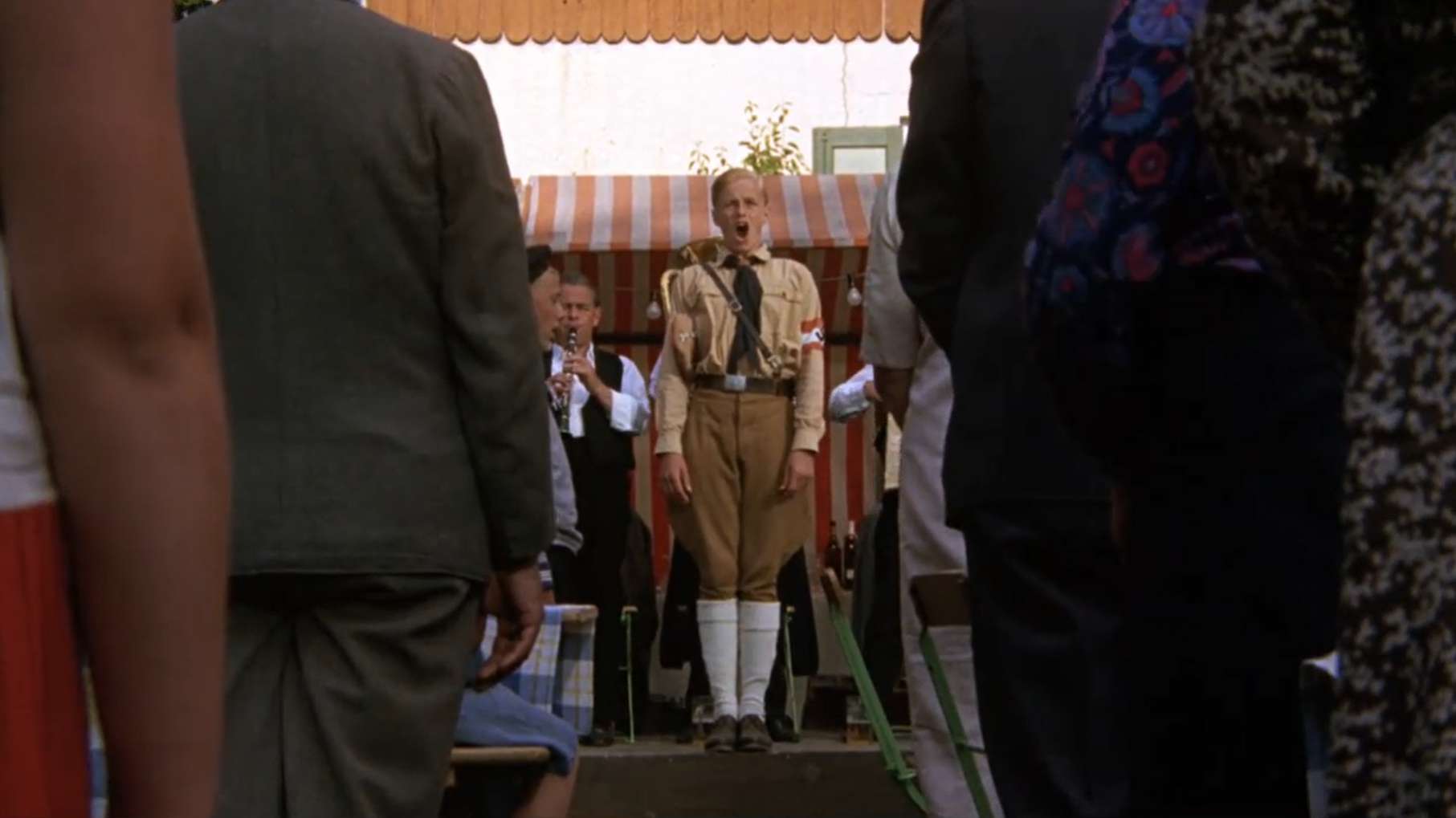
… and “that Nazism was nurtured by moral decay.” (Perhaps so, given society’s broader reactionary response to it; but he neglects to add the important caveat that this supposed ‘moral decay’ — actually LGBTQ+ sex-positivity — was far from innately harmful.) He adds that the “film went back to old-style musicals in that all the songs (Fred Ebb and John Kander won an Oscar) are performed on the cabaret stage, except ‘Tomorrow Belongs to Me,’ which is eerily sung in an open-air cafe by young Nazis and exuberant Germans who join in.”
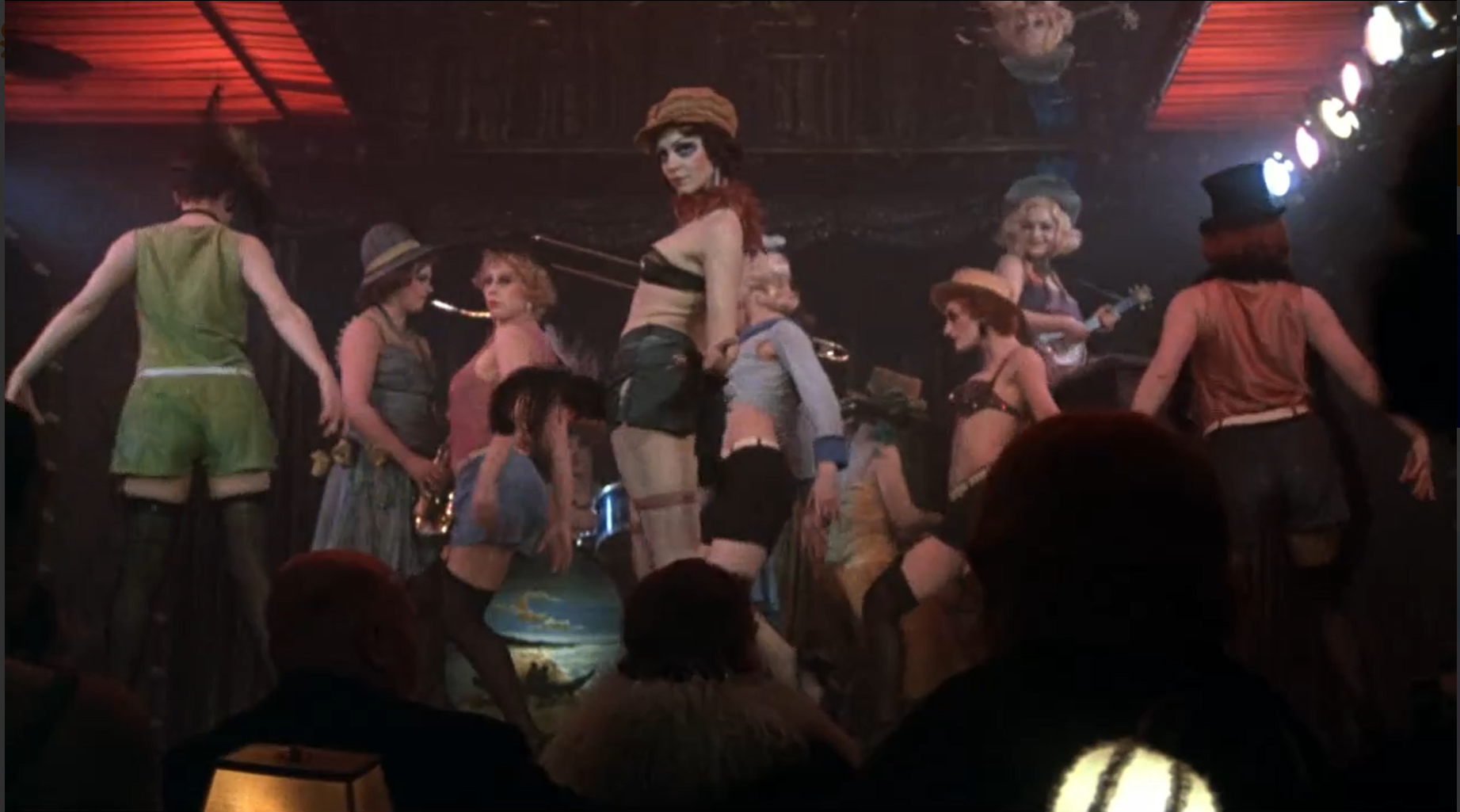
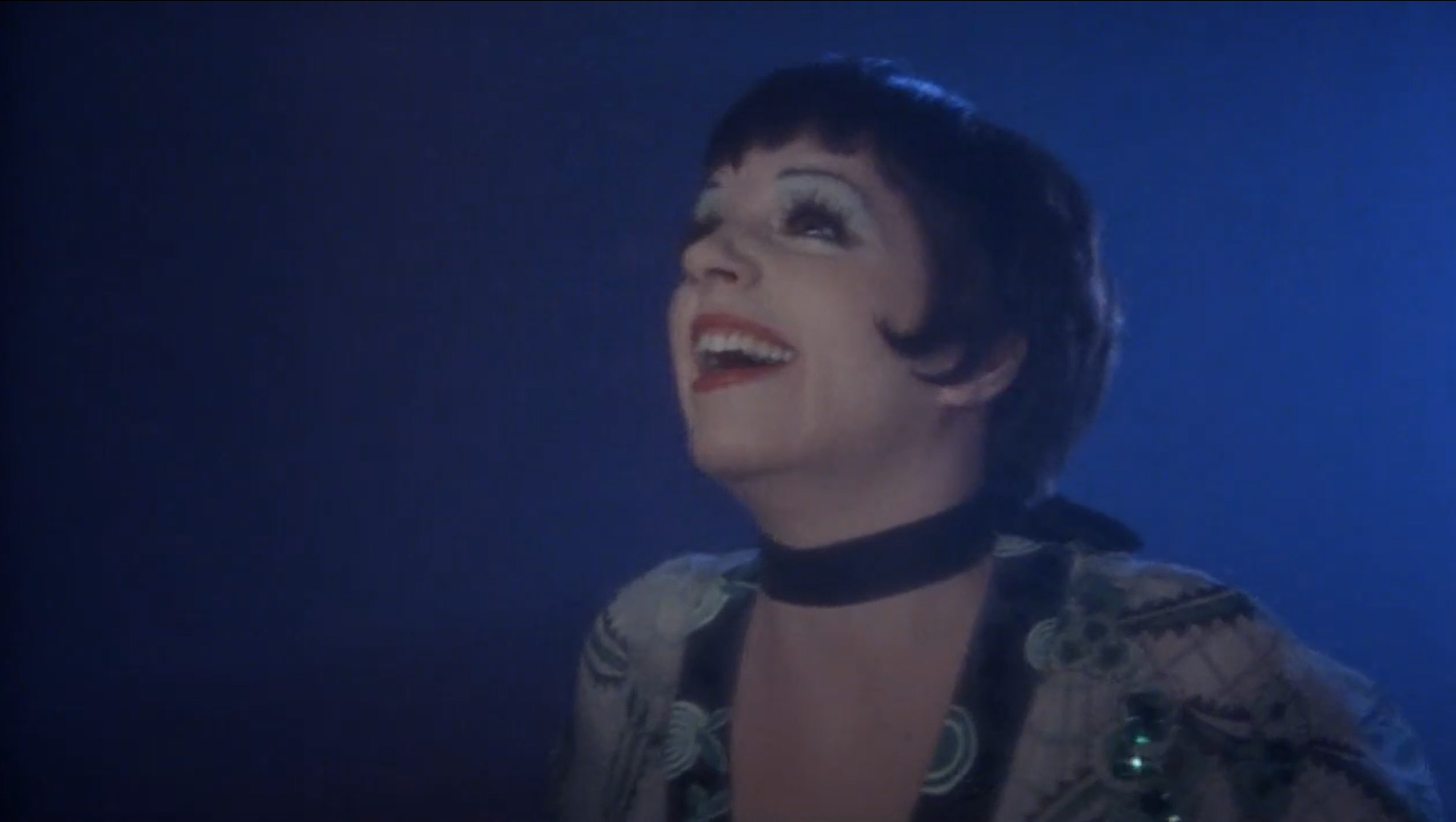
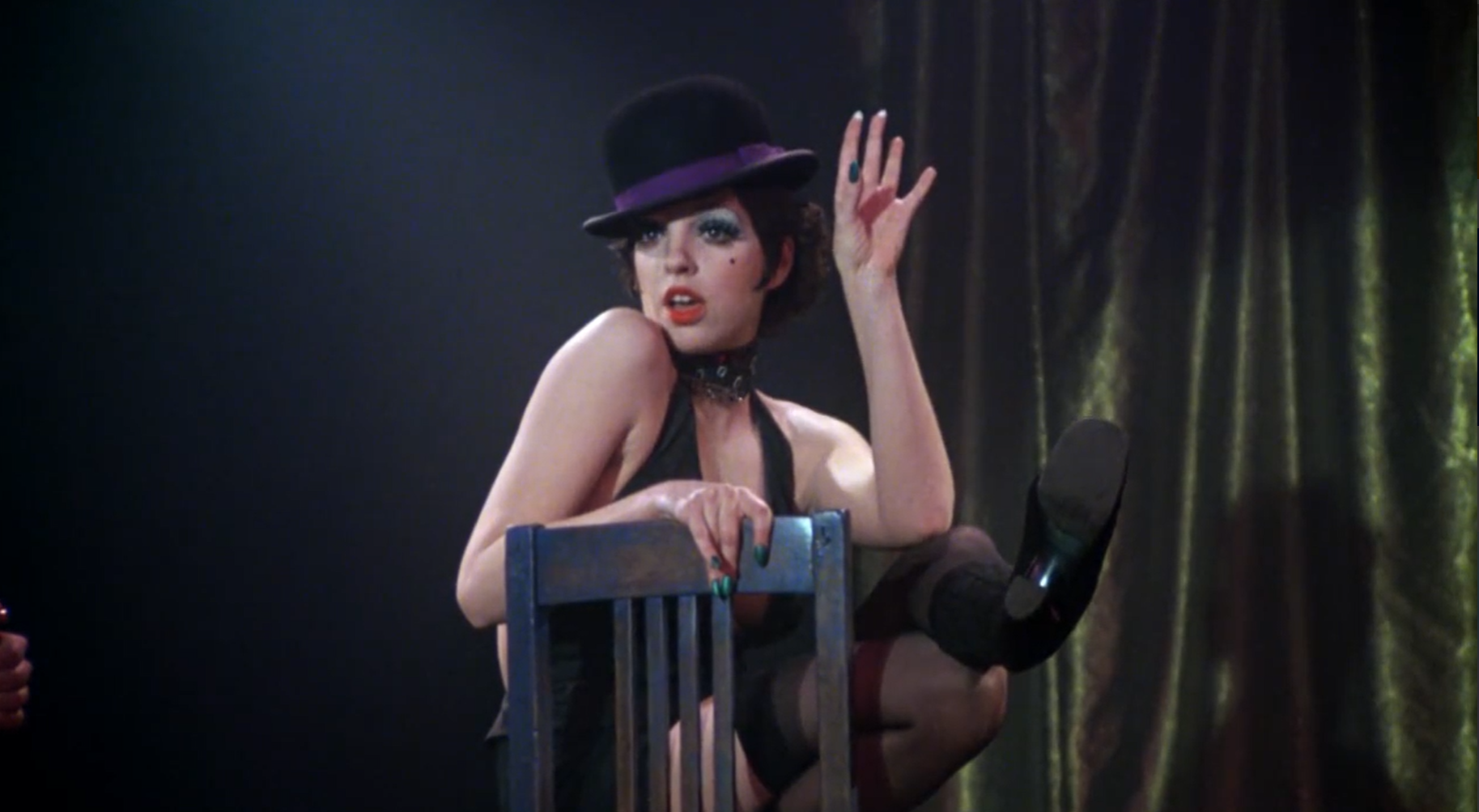
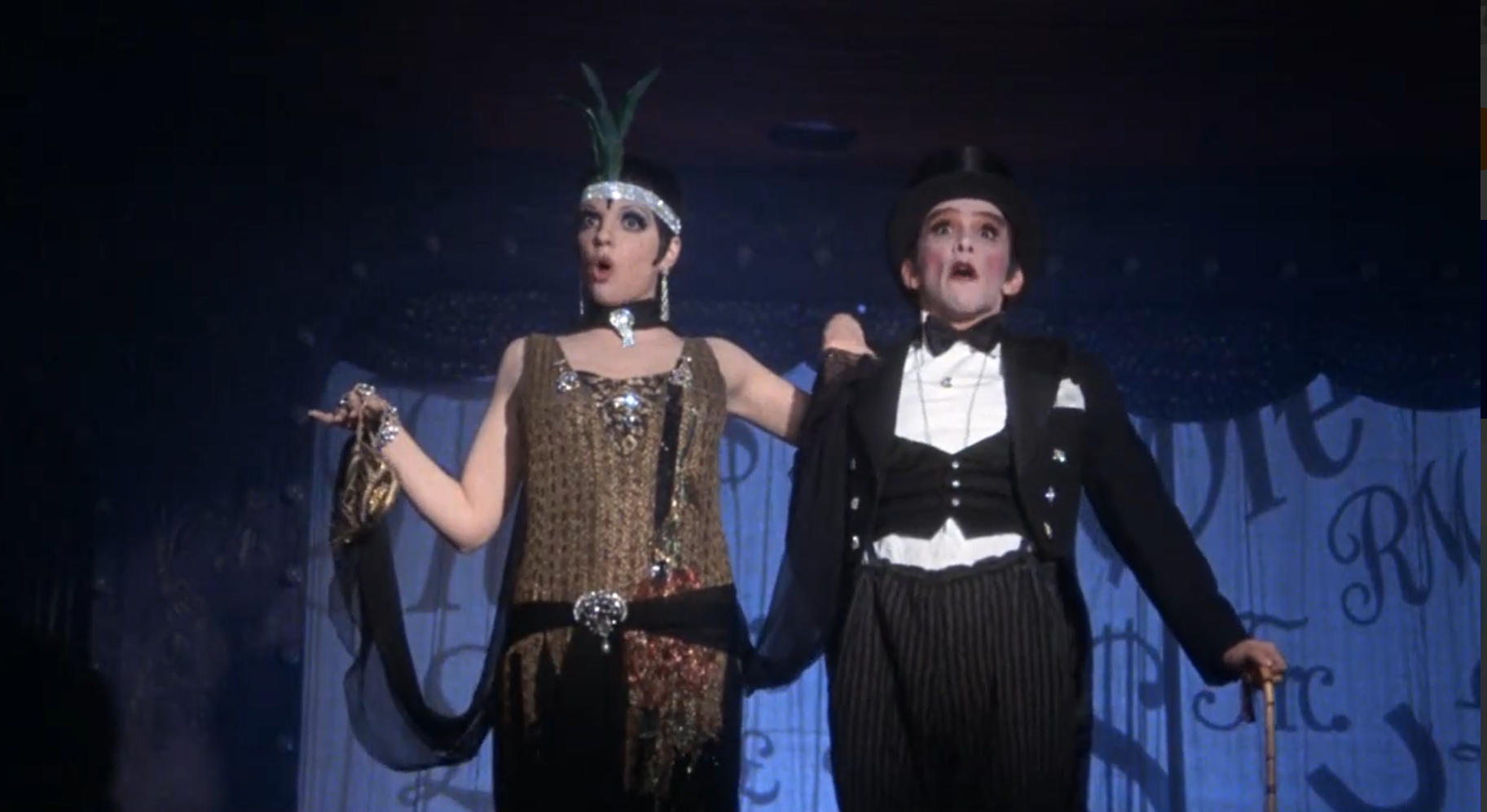
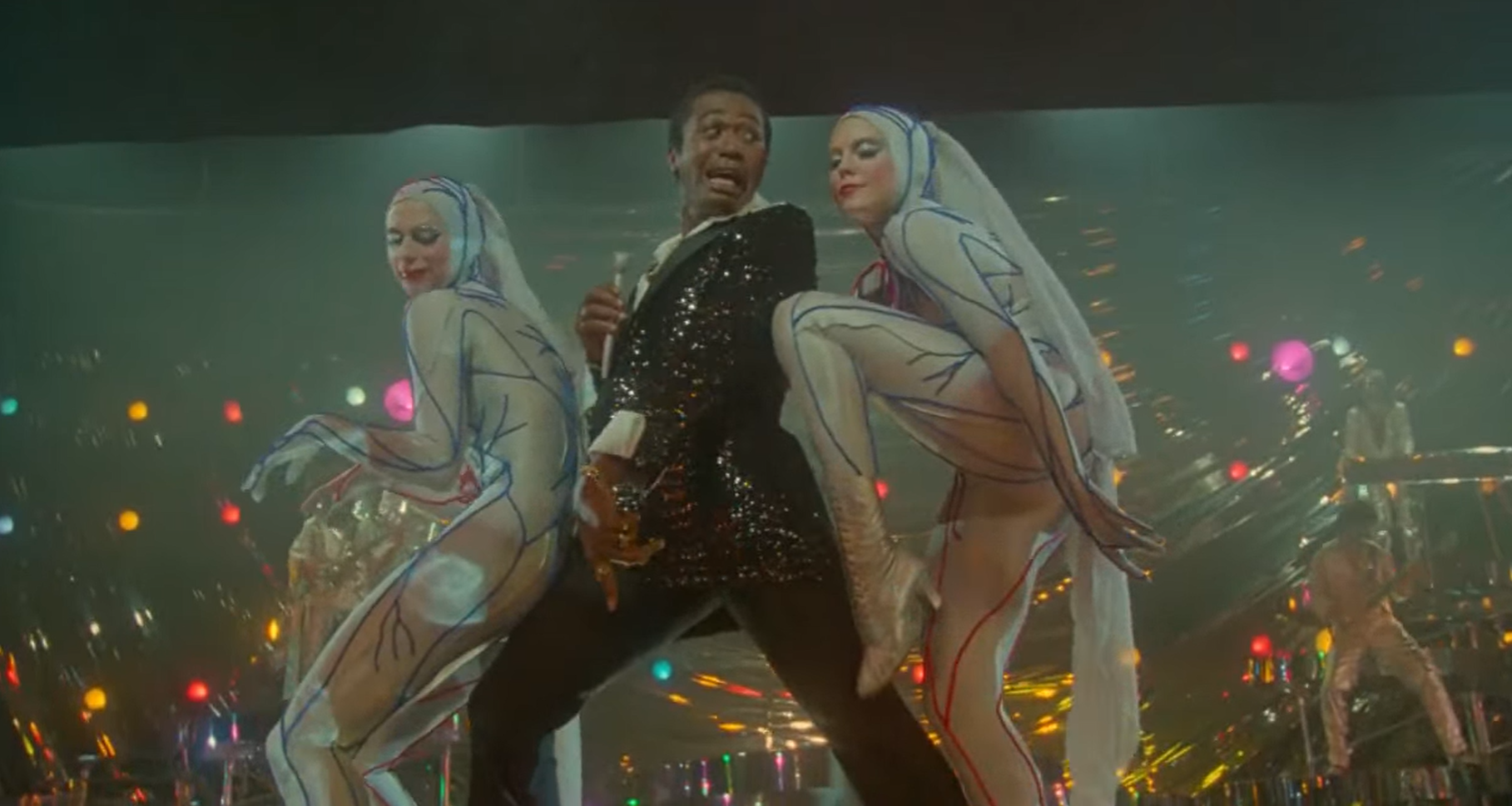
Peary points out that the songs — including “Cabaret,” “Money,” and “Two Ladies” — are “unforgettably performed by Minnelli and cabaret emcee Joel Grey (who won a Best Supporting Actor Oscar) and a group of gyrating chorus girls,” with “these stunningly choreographed numbers… photographed (by Geoffrey Unsworth, who won an Oscar) in a stylized manner that emphasizes the performers’ sexuality and lewdness.”
In Alternate Oscars, Peary agrees with the actual Academy in awarding Minnelli the Best Actress of the Year award, noting that while “it’s possible she would have won with just a mediocre performance because the Academy wanted to make up for its slight of her mother [Judy Garland],” “Minnelli gave such a dynamic performance that no one questioned her victory over a weak field of nominees.” He writes that “with those big, soulful eyes that flood her face with tears without need of a cue, a stunned, open-mouthed, little-girl pout, and a tries-too-hard-and-makes-a-fool-of-herself manner, Liza Minnelli was peerless at seducing audience pity for her characters,” as she had in The Sterile Cuckoo and would again in New York, New York. He adds that “it is during Fosse’s stylized musical numbers that Minnelli completely amazes us, whether singing marvelous solos, or duets with Joel Grey… We are jolted by these performances, suddenly remembering that her acting, as fine as it is, is only her second-best talent.”
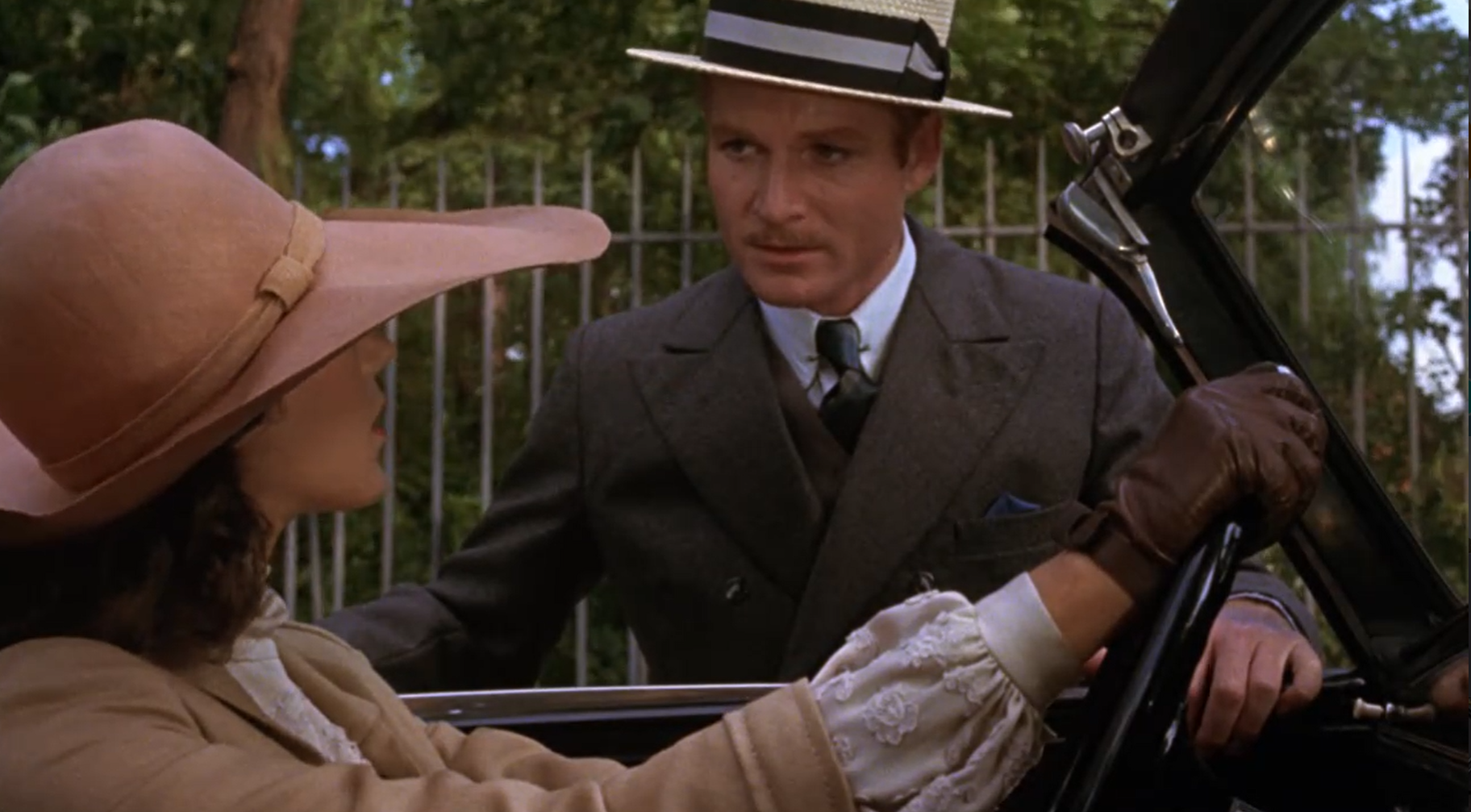
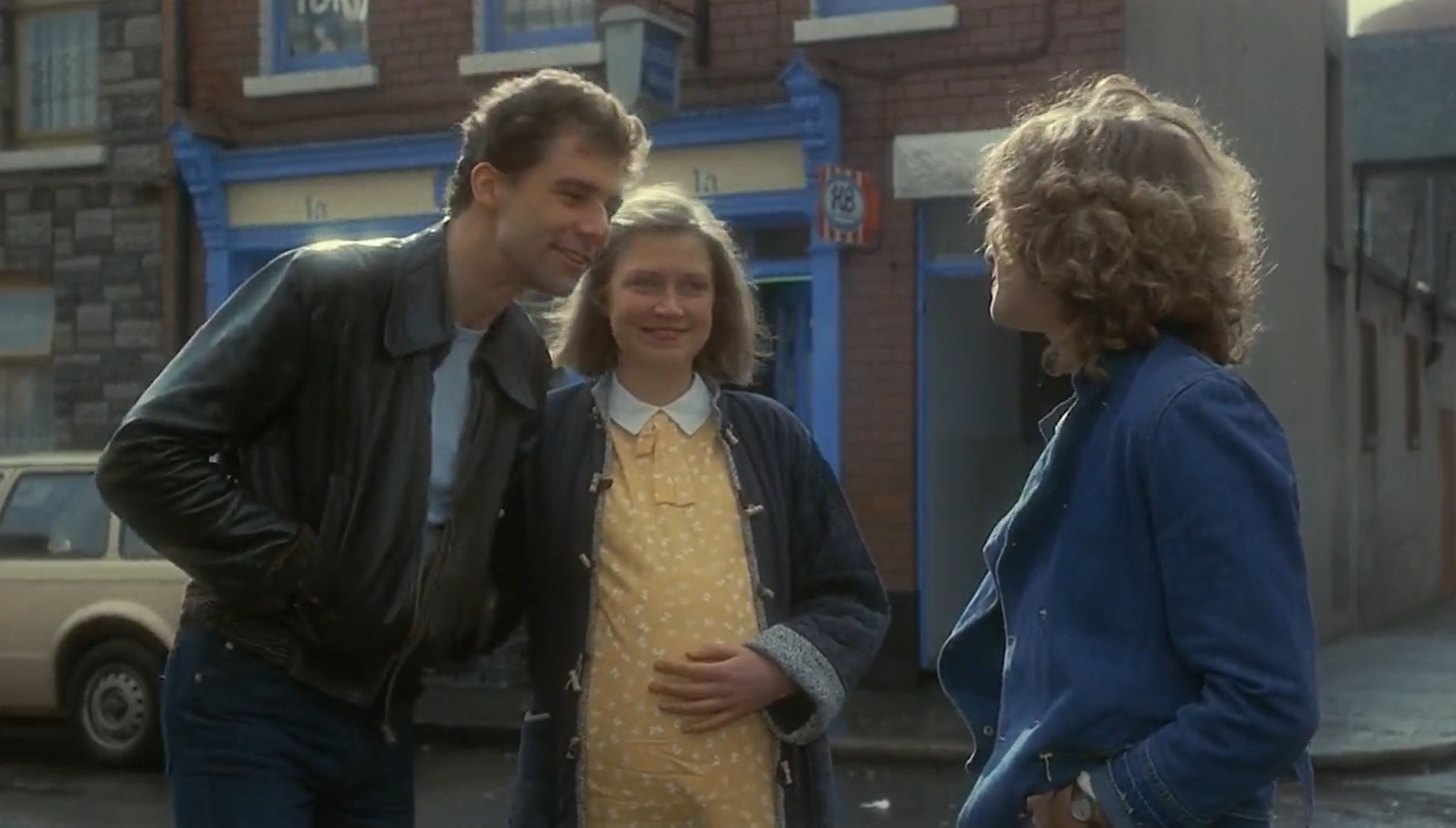
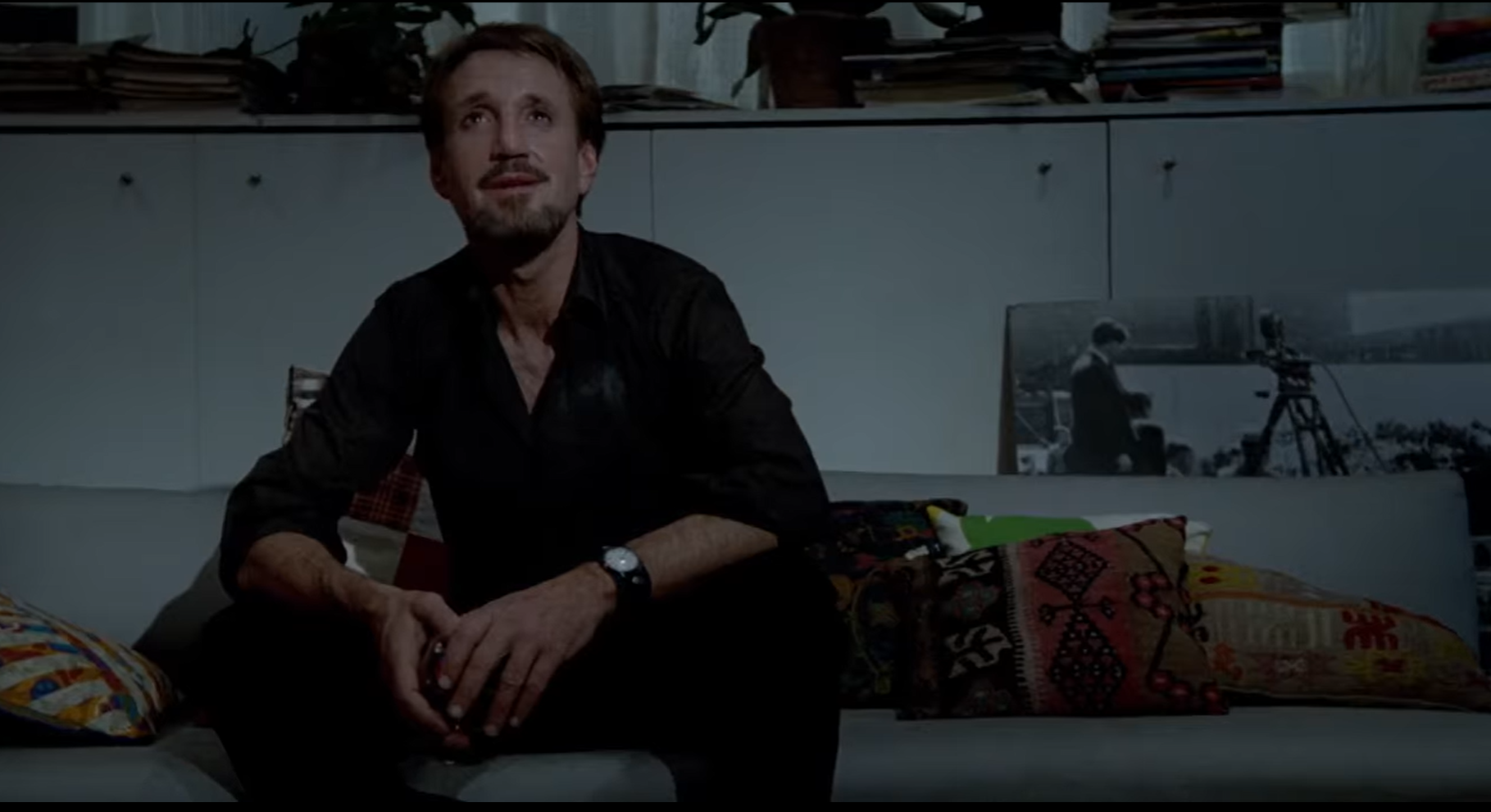
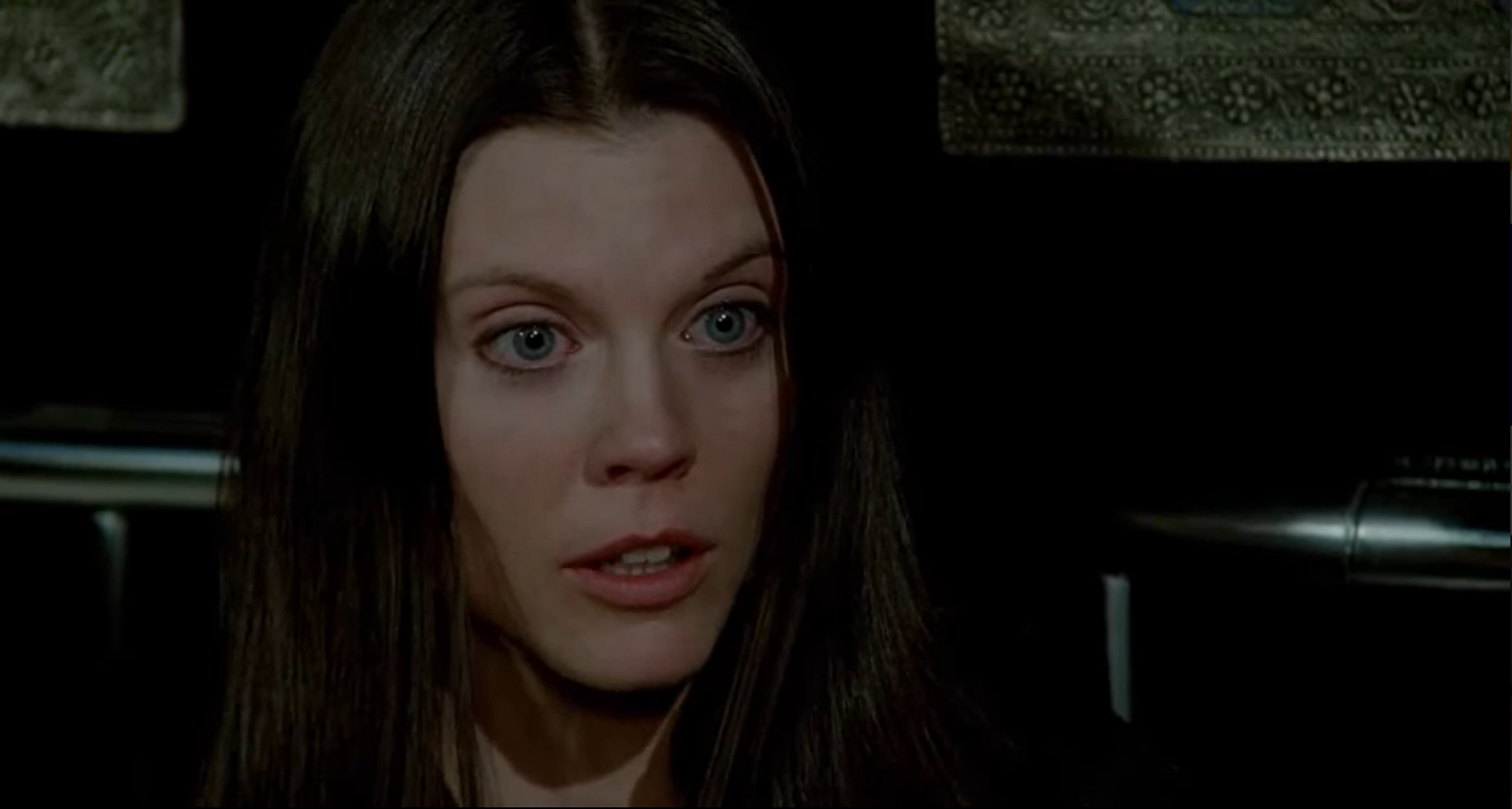
While I’m not particularly enamored by the sub-plots involving more peripheral players (i.e., Berenson and Wepper’s romance):
… the songs and visuals keep one consistently engaged, and better able to stomach the film’s sobering historical context. Notable Performances, Qualities, and Moments:
Must See? Categories
(Listed in 1001 Movies You Must See Before You Die) Links: |