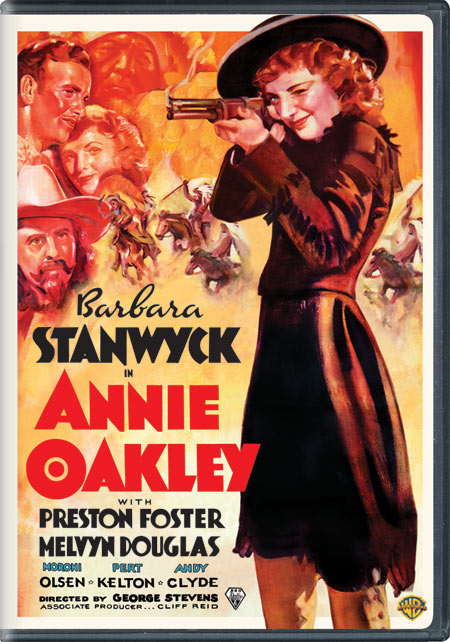
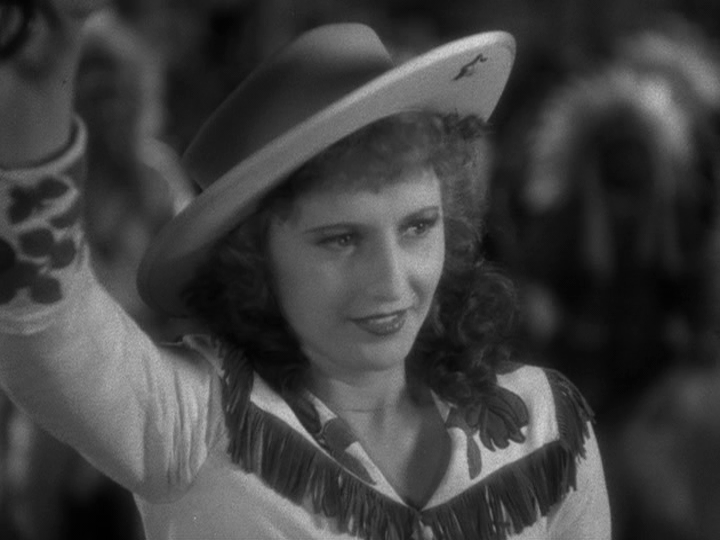
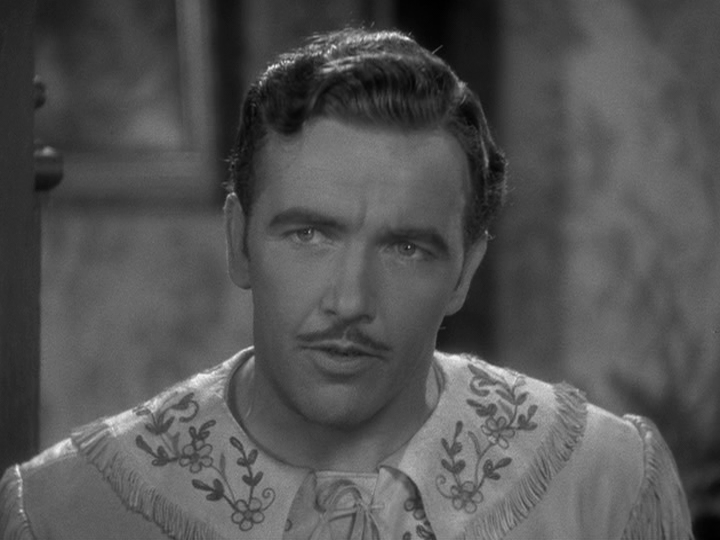
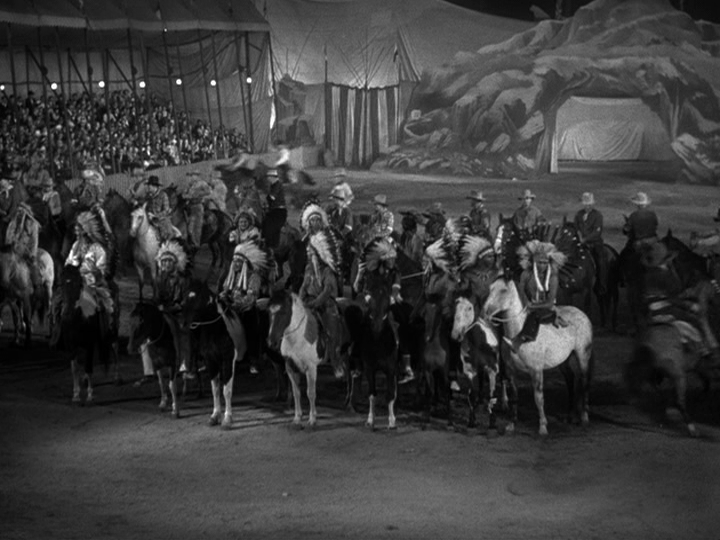
Annie Oakley (1935)
“I never knowed any woman could shoot good enough to join this outfit.”
|
Synopsis: |
|
Genres, Themes, Actors, and Directors:
Response to Peary’s Review: Redeeming Qualities and Moments:
Must See? Links: |
“I never knowed any woman could shoot good enough to join this outfit.”
|
Synopsis: |
|
Genres, Themes, Actors, and Directors:
Response to Peary’s Review: Redeeming Qualities and Moments:
Must See? Links: |
“Think of it all as romantic — it helps.”
|
Synopsis: |
|
Genres, Themes, Actors, and Directors:
Review:
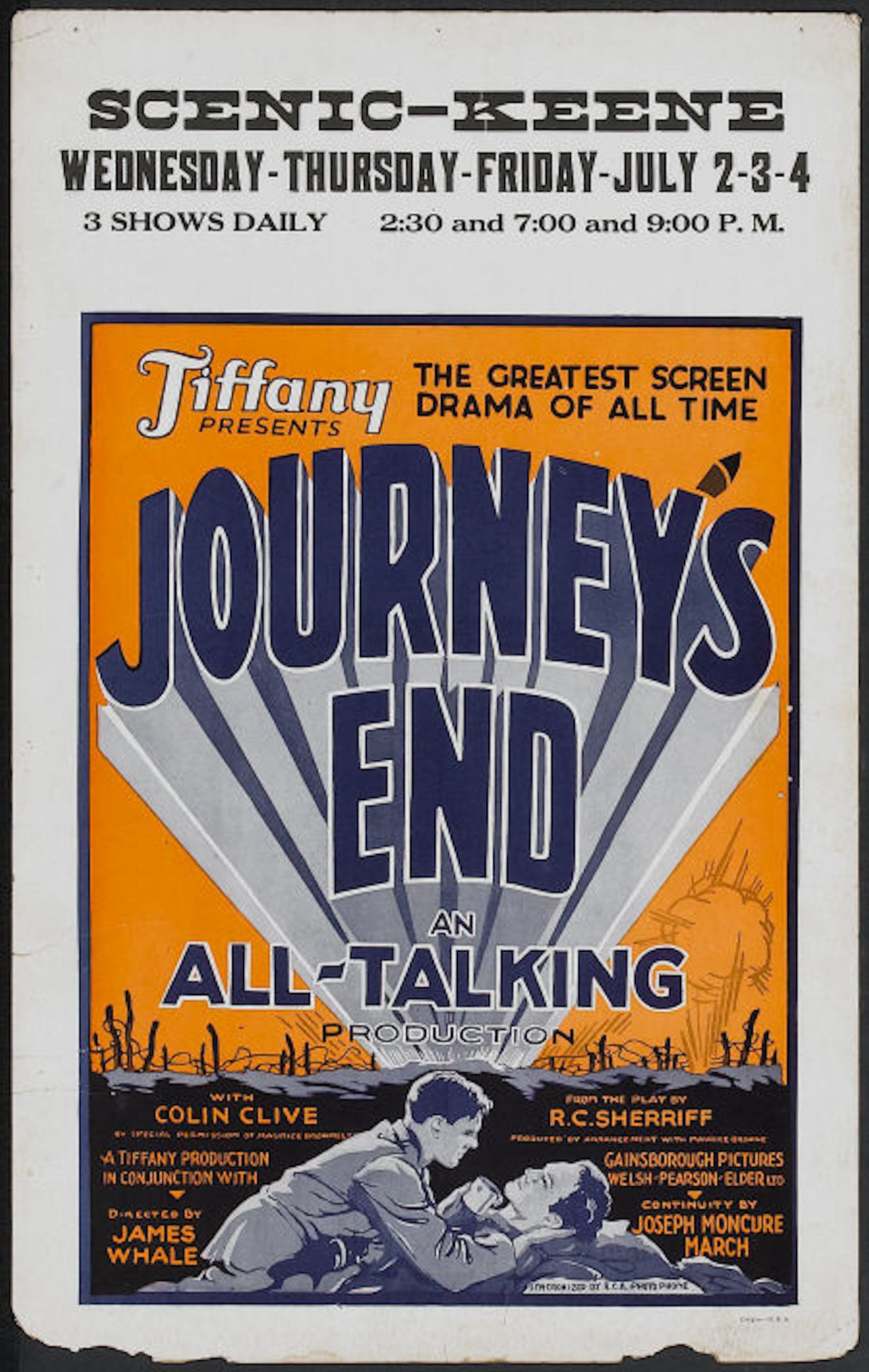
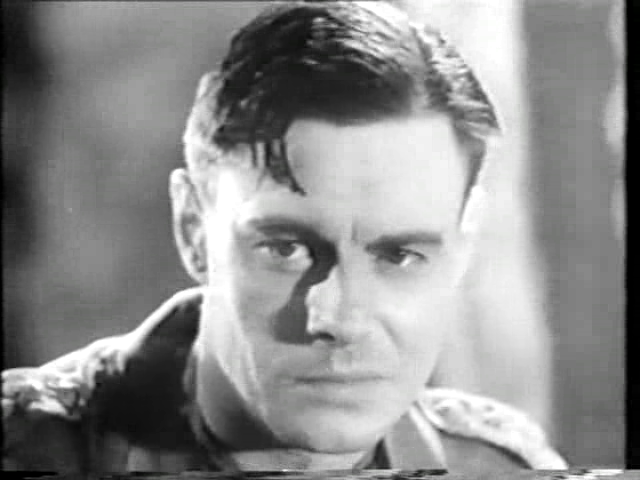
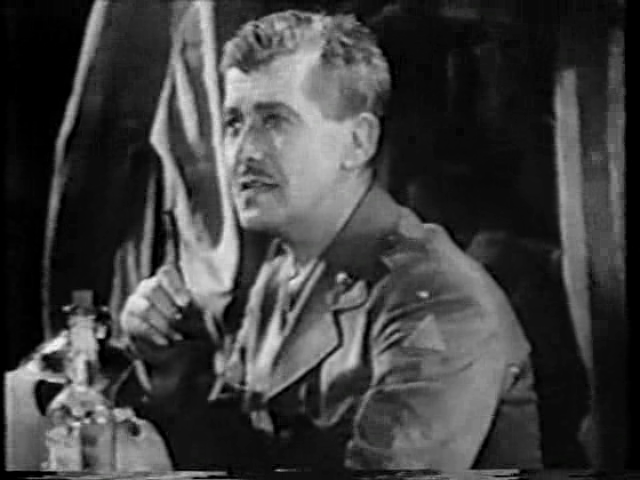
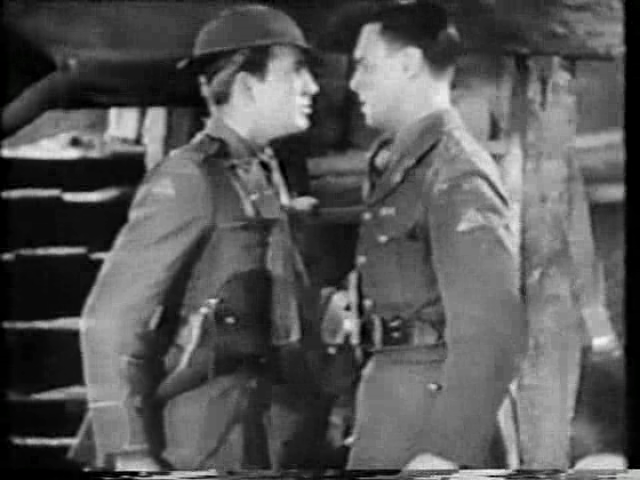
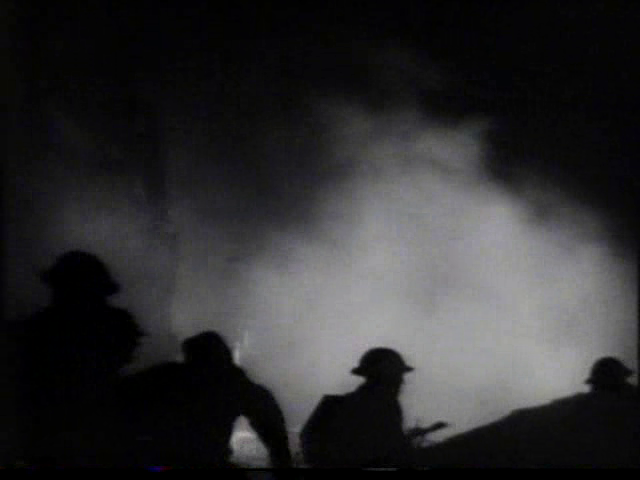
That damned, silly, necessary nuisance of a war, indeed! Meanwhile, in the midst of such civilized discussion, we witness a quietly powerful character study of a man (Clive is simply brilliant) struggling to reconcile the reality of his daily lived experiences with the stalwart persona he must maintain, for the sake of all his men. He lives in terror of the rumors he’s sure must be circulating about him (notably, that he’s taken to drinking at all hours of the day), but the storyline surprises us in its ultimate revelations about Clive’s reputation. Viewers willing to sit patiently through what may be the most “talky”, least-action-filled war film ever made will be rewarded by numerous instances of quiet authenticity. My favorite scene is one in which the seasoned Maclaren (affectionately known as “Uncle”) and the green, gung-ho Manners are about to go up into battle; Maclaren reads from Alice in Wonderland while enjoining Manners to use these precious final moments to think about anything at all other than their imminent task. Less successful are periodic snippets of “comedic relief” provided by the company’s clueless cook (Charles K. Gerrard) and a rotund lieutenant (Billy Bevan) who seems resolutely determined to care more about his next meal than the chaos surrounding him. However, it’s moments like all of these, taken together, which ultimately help viewers to understand the complex psychology behind warfare, as these men prepare themselves in a variety of ways to face truly unspeakable horrors. Redeeming Qualities and Moments:
Must See? Links: |
“It doesn’t mean anything. I want it to mean something — anything!”
|
Synopsis: |
|
Genres, Themes, Actors, and Directors:
Review:
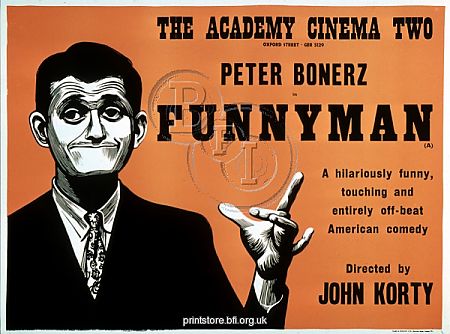
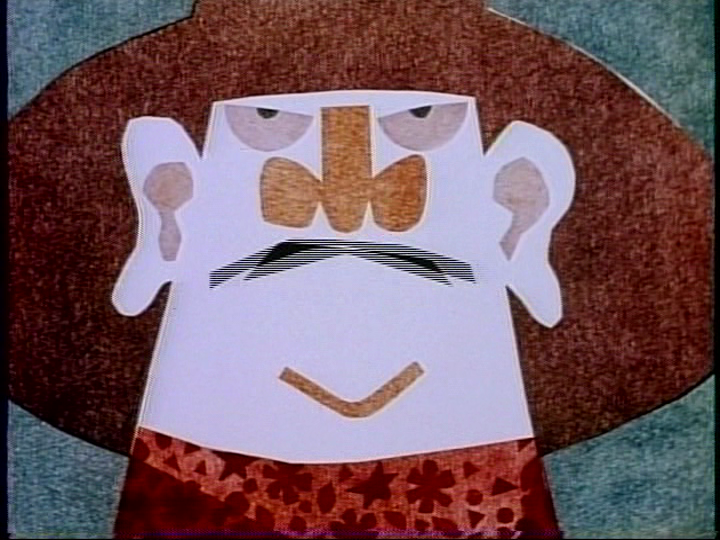
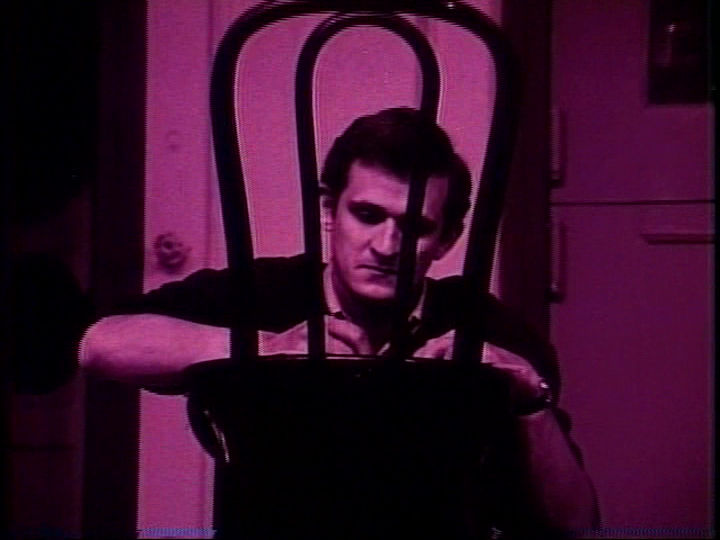
When Perry throws a tantrum and demands to be given a chance to put on a solo show, we’re curious to see what he’ll come up with — but the result is imminently forgettable. Meanwhile, the rest of the film turns into essentially a meandering road trip, as Bonerz leaves the city (to where, we’ve never sure) and encounters a variety of diverse individuals. I won’t say more, at risk of giving away too much of the plot, but suffice it to say that the final half-hour or so consists of a series of intriguingly cinéma vérité encounters without nearly enough narrative context to sustain them. Ultimately, the entire affair comes across as simply self-indulgent — which is not to say it doesn’t hold interest on some level. Korty is a strong enough director that even his overly experimental, New Wave-inspired cinematic palette — including frequent shifts from b&w cinematography to various tinted hues — can be forgiven as simply an attempt to bring a fresh perspective to the proceedings. However, while The Crazy-Quilt is a hidden must-see gem (buy a copy from Korty himself!), Funnyman is only worth seeking out if you have a strong interest in the early development of Korty’s unusual oeuvre. Note: Bonerz had supporting roles in a few big-name films after this — including What Ever Happened to Aunt Alice? (1969) (not listed in Peary’s book), Medium Cool (1969), and Catch-22 (1970) — and was the coke-sniffing psychiatrist in Serial (1980); his best-known role was probably as Dr. Jerry Robinson on “The Bob Newhart Show”. However, the bulk of his career has been spent as a director; see his listing at IMDb for more details. Redeeming Qualities and Moments:
Must See? Links: |
“My brain and your hands will make a working partnership!”
|
Synopsis: |
|
Genres, Themes, Actors, and Directors:
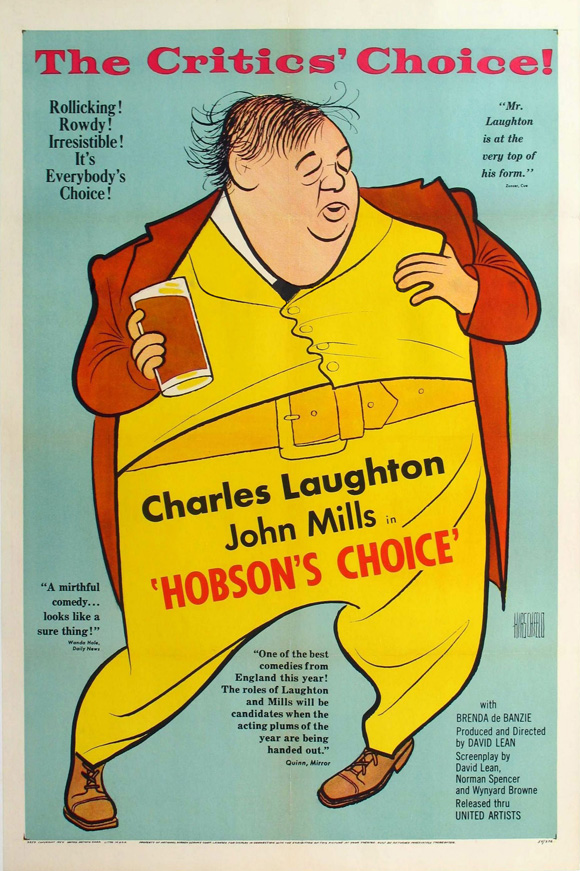
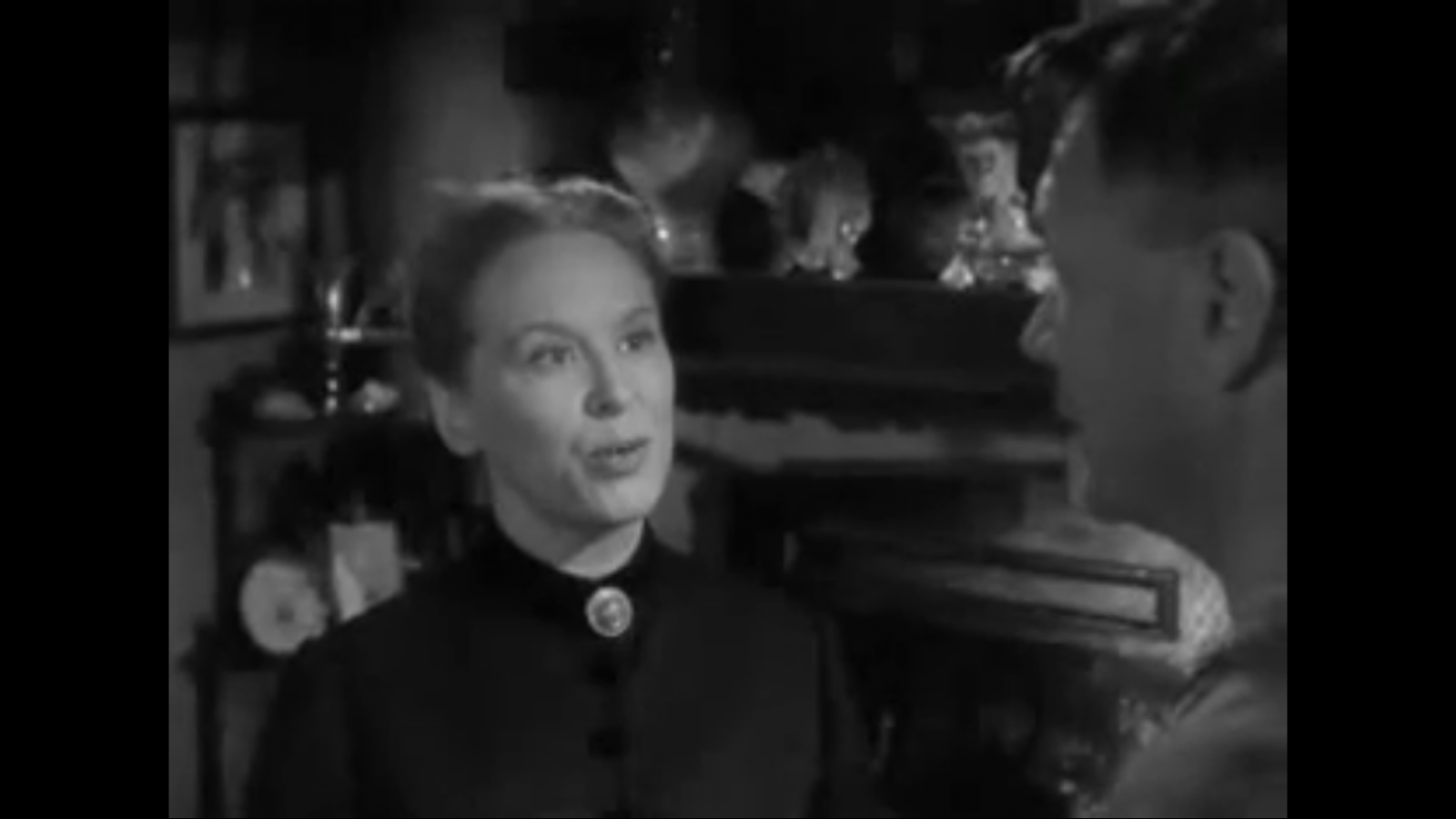
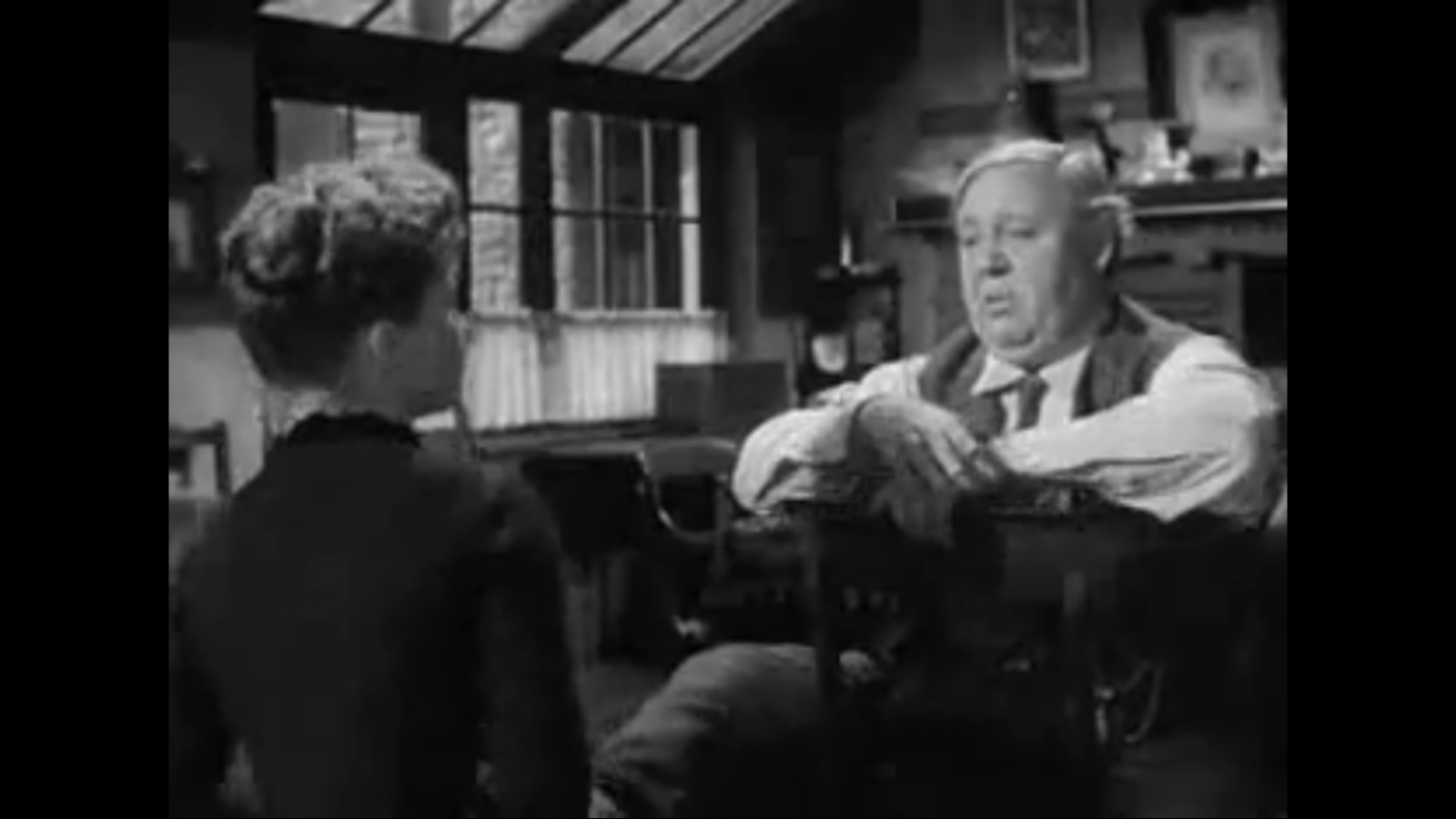
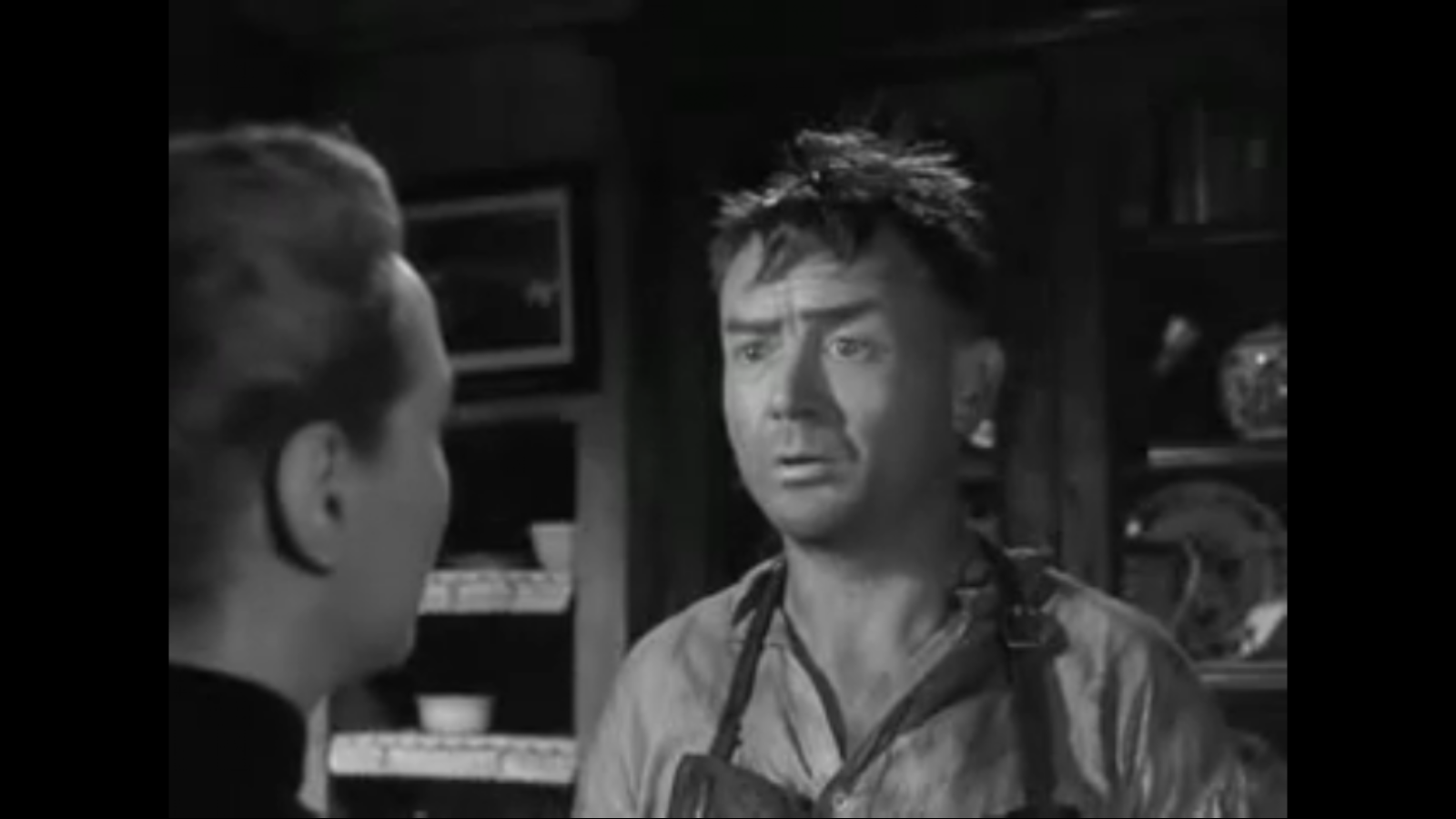
Review: The storyline centers on Hobson’s delicious come-uppance — with the title itself ultimately referring to the fact that Hobson really has no choice in mending his ways. Interestingly, while he’s the clear antagonist of the story, we can’t help feeling a bit of compassion for him, given how inevitable his downfall is — and how clueless he is about its coming. Meanwhile, de Banzie’s Maggie makes for a most unlikely protagonist, but that’s precisely the point: from the very beginning, she’s posited (by Laughton) as someone too old and too plain to marry or make anything more of her life than what she has; she spends the rest of the storyline proving him wrong. It helps that de Banzie herself is a somewhat unknown cinematic face: her only other notable (supporting) film roles were as a female baddie in Hitchcock’s second version of The Man Who Knew Too Much (1956), and as Laurence Olivier’s wife in The Entertainer (1960). This makes her emergence as an unexpectedly strong force-to-be-reckoned-with all the more pleasantly surprising. Peary nominates Laughton as one of the Best Actors of the Year for his work in this film, and it does remain one among many of his impeccable performances; no one was better at embodying grotesque disdain than Laughton. John Mills is equally delightful (if unexpectedly cast) in the pivotal role as Willie Mossop, a gifted yet intellectually challenged shoemaker who slowly comes into his own as a man of means. Every scene he’s in is delightful, but my favorite is probably the one showcasing the moments before and after his wedding night (with the night itself, naturally, cut out); with help from Lean, Mills masterfully conveys everything we need to know about this critical facet of his shifting relationship with de Banzie. Also worth pointing out is Malcolm Arnold’s instantly hummable score, which seems as much a part of the film experience as the visuals and storyline. This one is a true delight, and should be seen by all film fanatics at least once. Redeeming Qualities and Moments:
Must See? Categories
Links: |
|
|
That’s nine out of thirteen titles — plenty of must-see viewing for film fanatics to enjoy! Feel free to disagree with my choices by posting your own opinion.
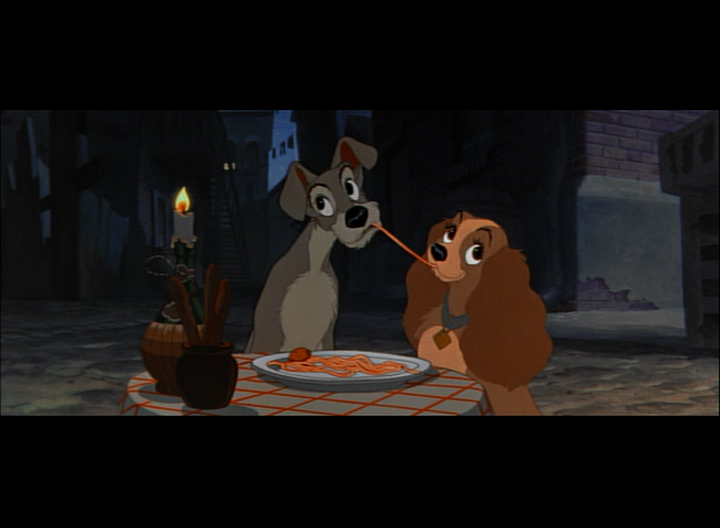
Just for the record, the following are all the pre-1986 Disney animated features NOT included in Peary’s GFTFF; as far as I know, none should be considered “Missing Titles”, though all are likely of interest to true Disney fans:
Finally, the following is a list of post-1986 Disney animated features, along with my tentative recommendations about which should be considered “Must See” (though I really need to go back and rewatch them to verify, and many I’ve never seen):
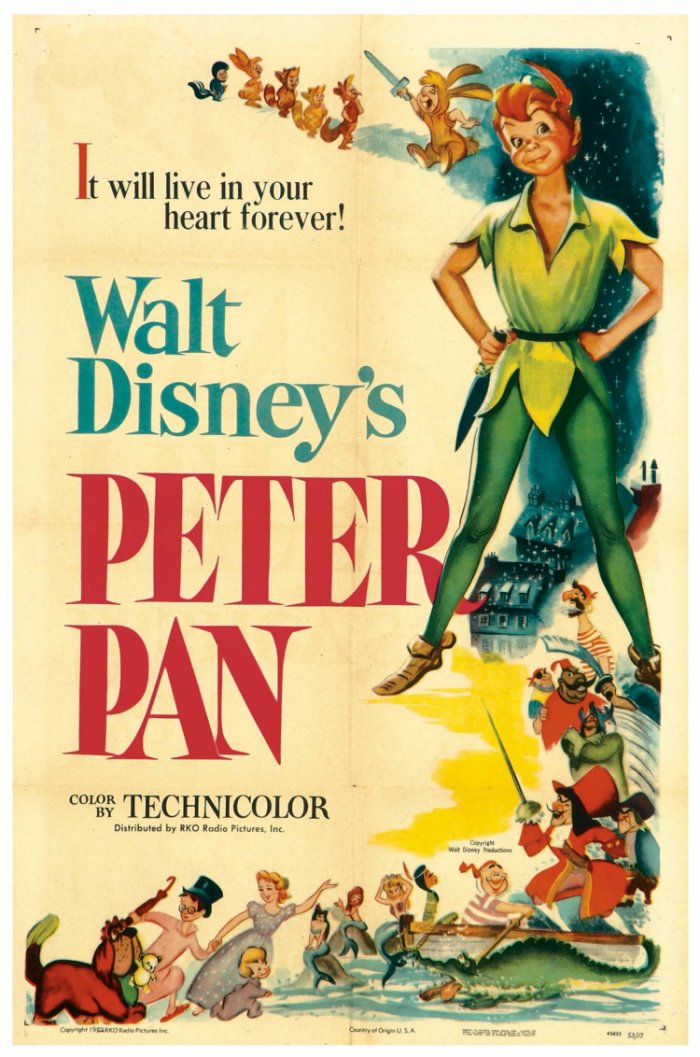
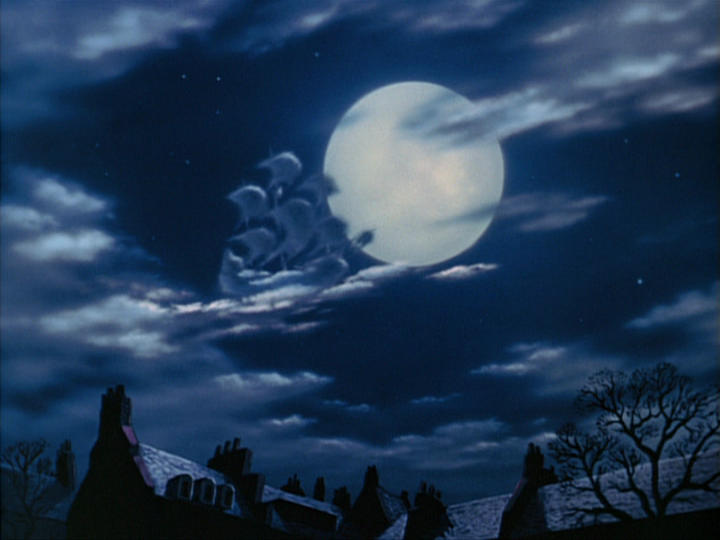
“That corner house over there is the home of the Darling family — and Peter Pan chose this particular house because there were people here who believed in him.”
|
Synopsis: |
|
Genres, Themes, Actors, and Directors:
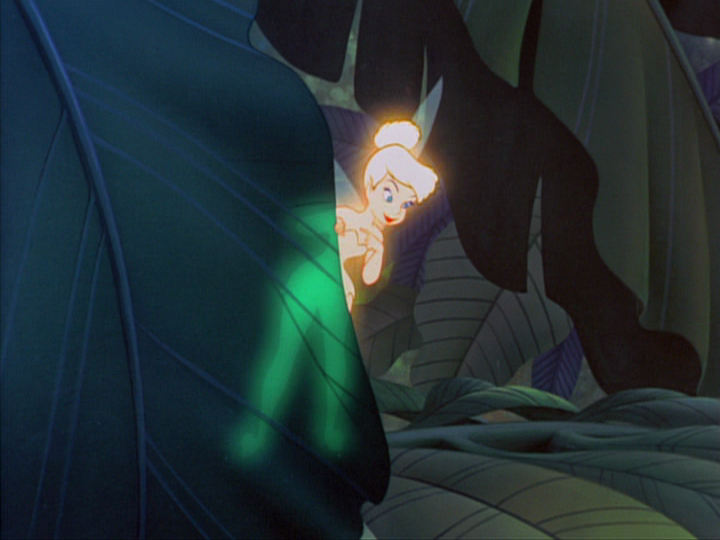
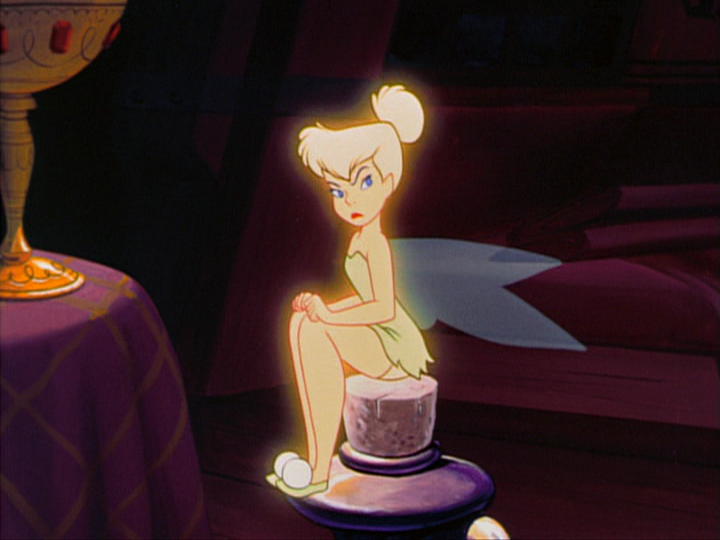
Review: Other characters, meanwhile, are simply disappointing and/or ill-conceived: as Richard Scheib of Moria Reviews puts it, “the Lost Boys look… like anthropomorphized fluffy bunnies and Smee [Hook’s right-hand-man] looks like he has strayed in from a casting call for one of the Seven Dwarves.” Meanwhile, Hook (wonderfully voiced by Hans Conried) is too buffoonish to represent a real threat; his interactions with both Peter and “The Crocodile” rely far too heavily on tiresome slapstick. The most intriguing character in the film by a long shot is Tinkerbell, who never says a word, but says PLENTY with her expressions, body language, and actions. Other than Tinkerbell, the most interesting aspect of this film for me (as a mom of two little kids) was the fact that young Michael Darling wears pink the entire time. This prompted me to do a bit of research, and I came upon this short article, which states: “Pink and blue arrived, along with other pastels, as colors for babies in the mid-19th century, yet the two colors were not promoted as gender signifiers until just before World War I—and even then, it took time for popular culture to sort things out.” Since the original Peter Pan was written (and takes place) near the turn of the century, this choice makes sense. Redeeming Qualities and Moments:
Must See? Links: |
[Note: The following review is of a non-Peary title; click here to read more.]
“I like him. He treats me like I’m a real person.”
|
Synopsis: |
|
Genres, Themes, Actors, and Directors:
Review: Much has been made about the assessment of Deborah as schizophrenic, a label the character herself uses several times throughout the screenplay; while this would appear at first glance to be a correct diagnosis (given that Deborah is plagued by unwanted voices and visions), experts ultimately determined that she probably suffered from extreme depression and somatization disorder rather than schizophrenia (which would explain why she could attempt to heal herself without the assistance of medications). Regardless, her intrusive visions are nicely handled by director Anthony Page; we see her slipping into her alternate reality at strategic times, but this is never overplayed. Overall, nearly everything about this film worked for me — thus, I’m labeling it a Missing Title, and recommending that film fanatics check it out. Note: Susan Tyrrell is nicely cast as one of the inmates; that was a fine, no-brainer choice. Watch also for Sylvia Sidney as an inmate Deborah becomes friendly with. Redeeming Qualities and Moments:
Must See? Categories
Links: |
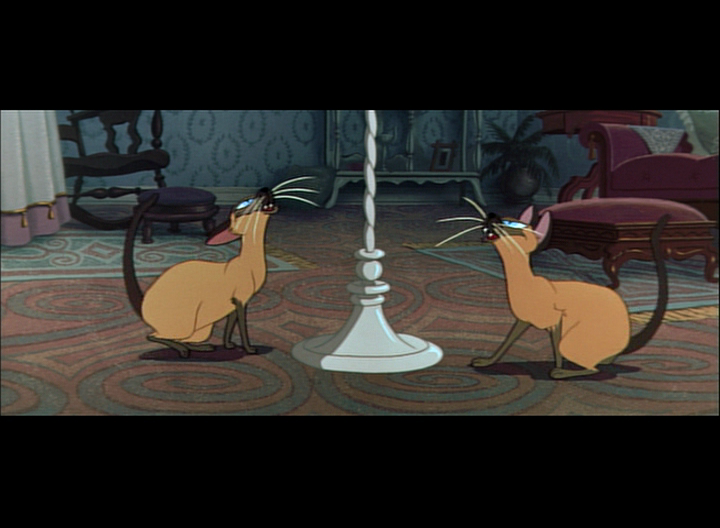
“Remember this, Pigeon: a human heart has only so much room for love and affection. When a baby moves in, the dog moves out.”
|
Synopsis: |
|
Genres, Themes, Actors, and Directors:
Response to Peary’s Review: Redeeming Qualities and Moments:
Must See? Links: |
“We’ve got to make the Bijou the best little cinema in this part of the country!”
|
Synopsis: |
|
Genres, Themes, Actors, and Directors:
Review:
… and the understated denouement is surprisingly discomfiting. Redeeming Qualities and Moments:
Must See? Links: |
“No man living today can predict exactly what the future holds.”
|
Synopsis: |
|
Genres, Themes, Actors, and Directors:
Review:
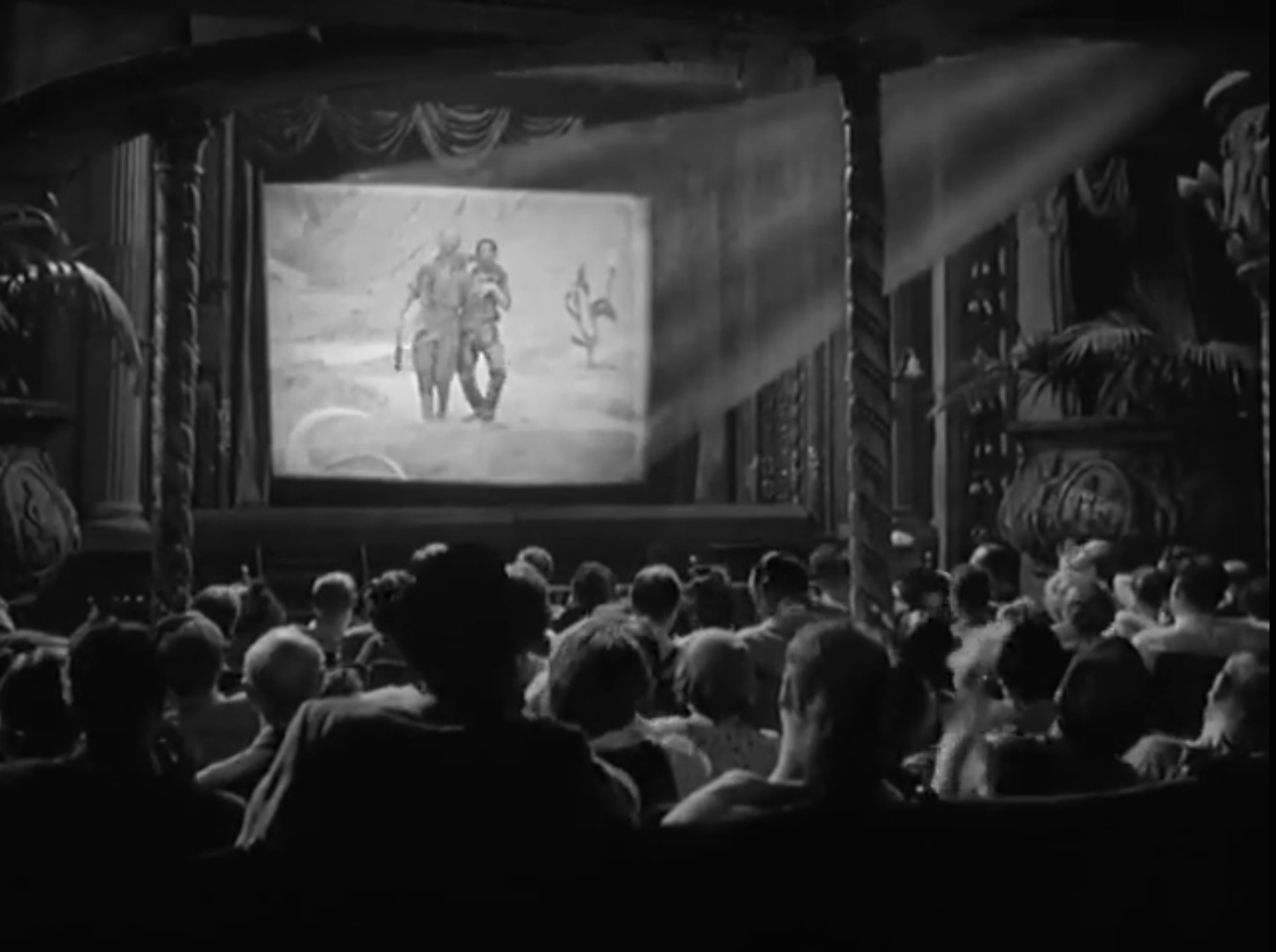
… and reacting with silent horror to the invasion of their planet. The two cohorts, naturally, never actually meet. It’s all frightfully sub-par — but interestingly enough, the storyline moves along at a quick enough pace that you’ll likely never be bored, exactly. You can’t help wondering what the astronauts are really saying (how closely is writer Henry Ney sticking to the original script?), and thinking about whether he was inspired at all by Woody Allen’s spoof What’s Up, Tiger Lily? (1966). My favorite exchange:
Same difference, naturally. Redeeming Qualities and Moments:
Must See? Links: |