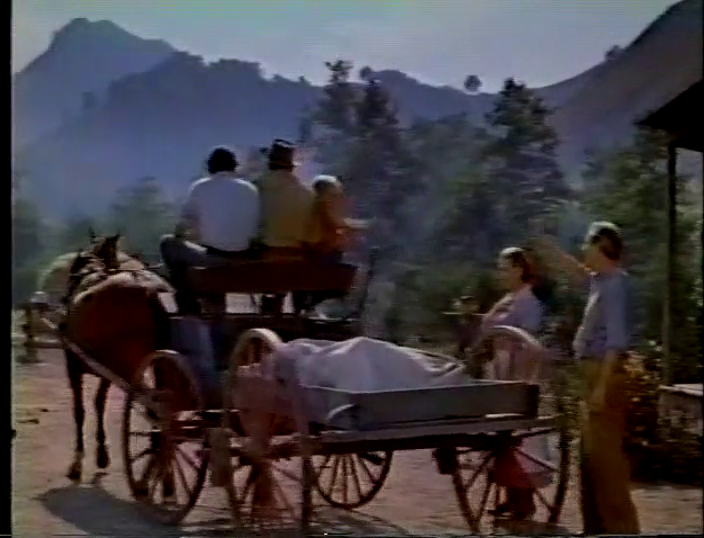
Crimson Kimono, The (1959)
“You can’t feel for me unless you are me.”
“A day can start out beautifully, yet end with misery.”
|
Synopsis: |
|
Genres, Themes, Actors, and Directors:
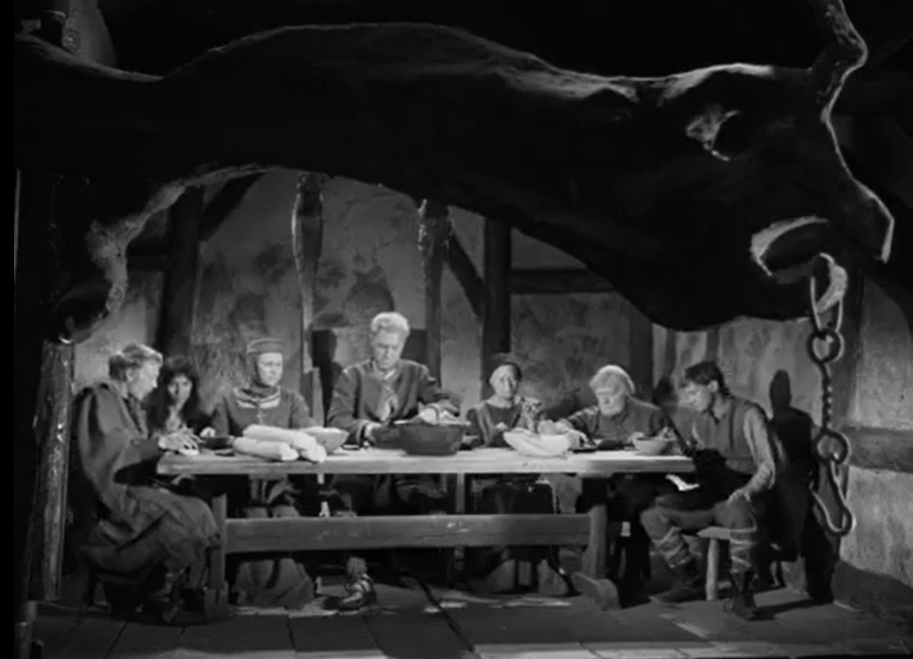
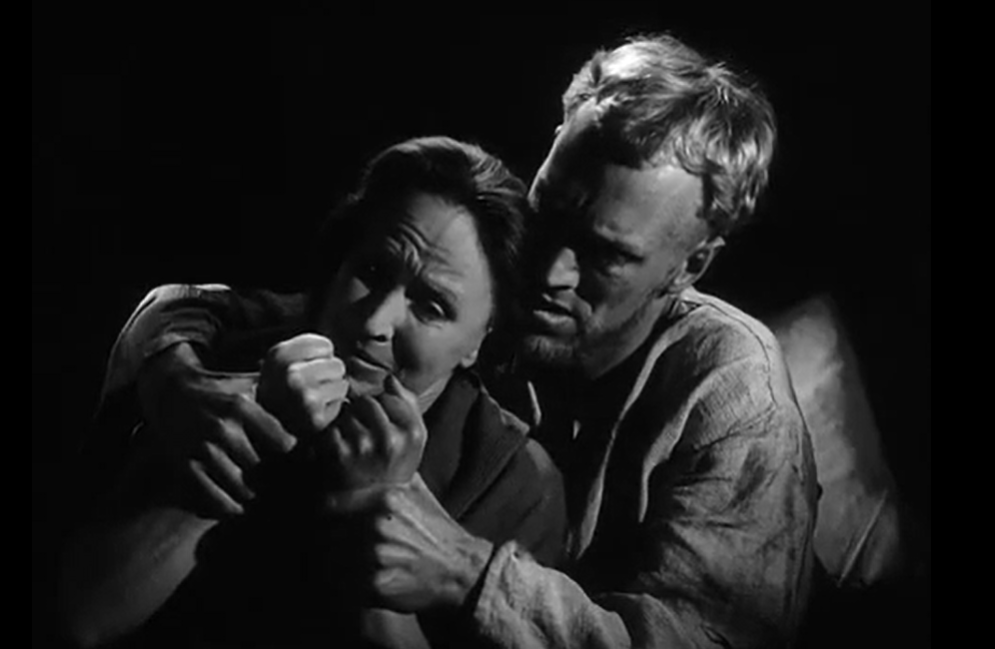
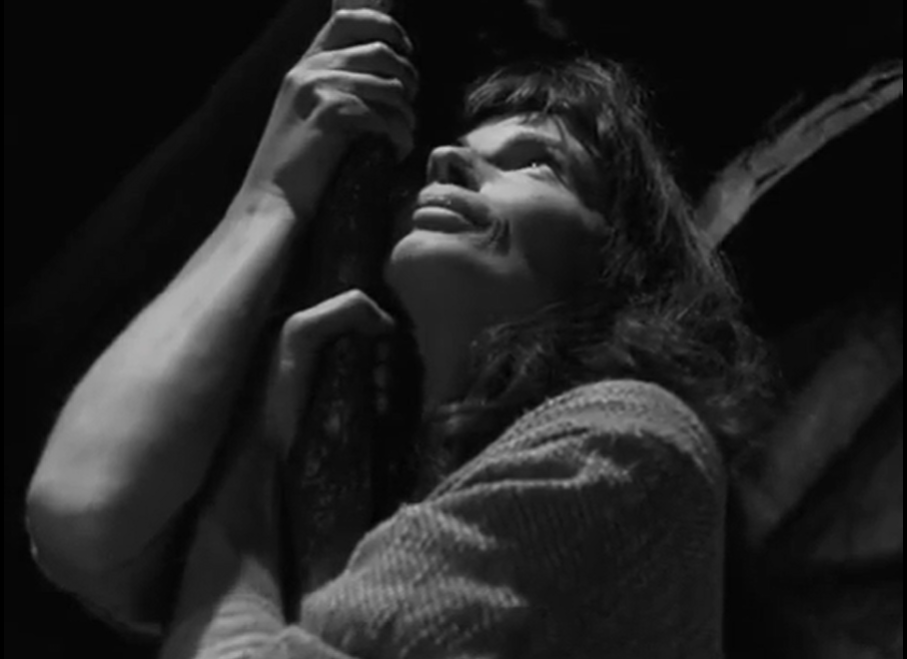
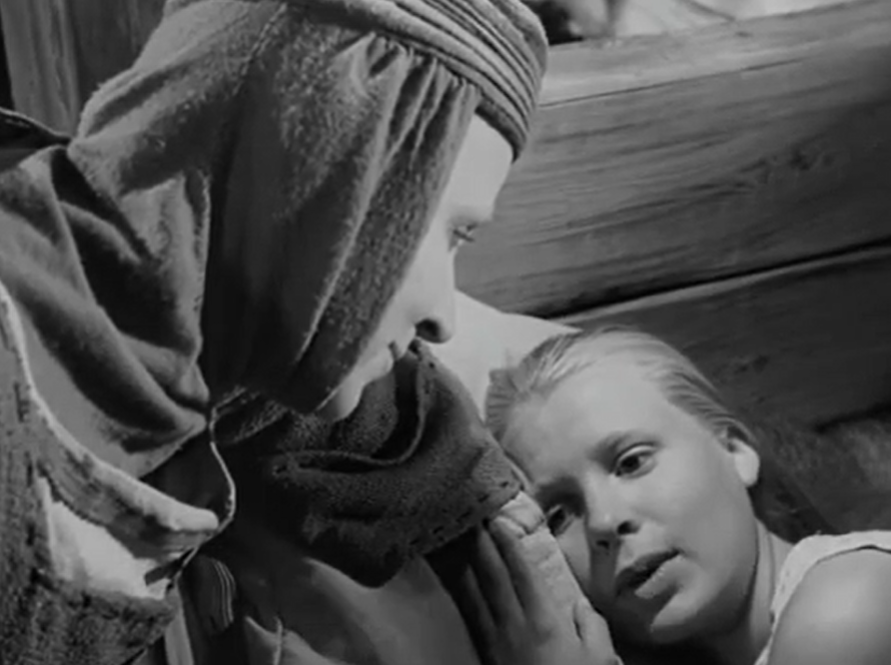
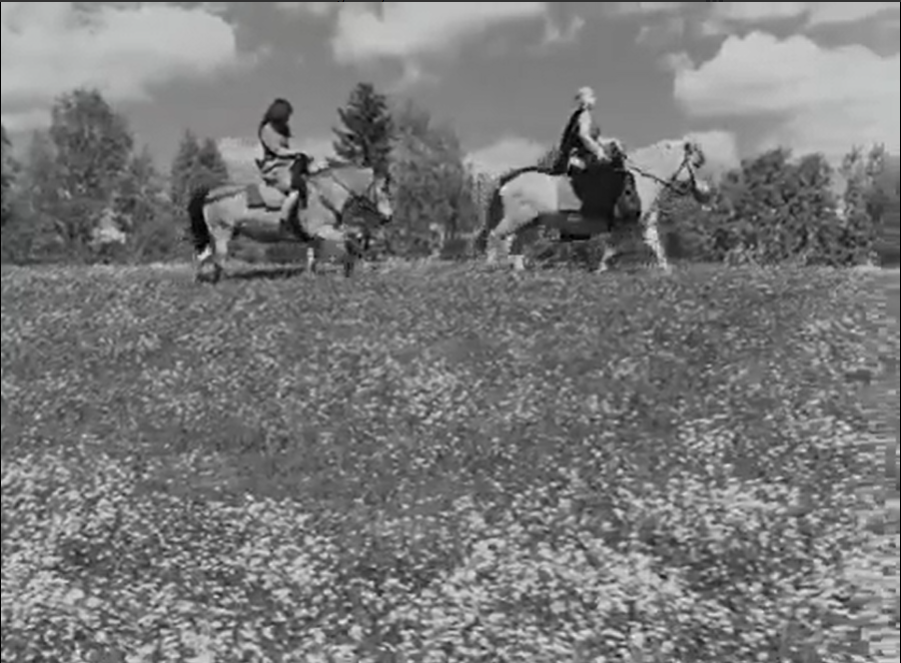
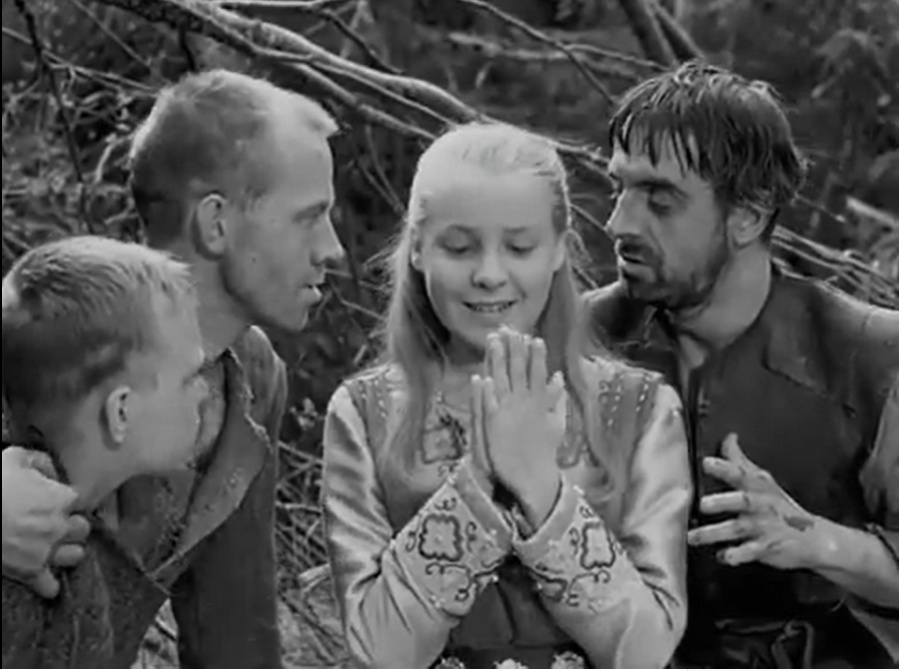
Review: The storyline is a dark tale of violence, revenge, and religion, with a rape scene so graphic (for the time) that it was subject to censorship in the U.S. (For better or for worse, this film was purportedly the inspiration for Wes Craven’s The Last House on the Left.) As the movie opens, we’re introduced to a fearful pregnant girl (Lindblom) praying to Odin: Lindblom’s “impure”, dark-haired Ingeri is posited as a clear contrast to the innocence of the spoiled young blonde mistress of the house, Karin (Pettersson), whose hyper-religious mother (Valberg) can’t resist giving into the whims of her daughter. Bergman presents us with an idyllically pastoral vision of life before tragedy strikes, as Pettersson is sent out on a beautiful day for a horseback trip to the local church to bring candles, accompanied by Lindblom. Her naive interactions and picnic with wily Düberg, mute Iseda, and their traumatized younger brother (Ove Porath) showcase her truly child-like innocence: … before her fatal violation. SPOILERS The next phase of the story shifts to the three brothers visiting von Sydow and Valberg’s house, not knowing that the fancy clothing they stole off of Pettersson’s corpse and are trying to pawn for money instantly gives away their crime. Von Sydow and Valberg’s shift to vengeance is swift and merciless — but it’s impossible to fault them, given what we’ve seen happening to their family. The film’s closing sequence — in which a “miraculous” spring emerges from where Pettersson’s body lies (per the original ballad) — brings us full circle to some kind of earthly yet spiritual closure. While this brutal film is not for the faint of heart, it’s beautifully shot and will likely linger in your memory. Notable Performances, Qualities, and Moments: Must See? Categories
Links: |
“What did you expect? A notarized guarantee that the baby would be born with eyes aimed your way?”
|
Synopsis: |
|
Genres, Themes, Actors, and Directors:
Review: Barry’s rejection of his own son based purely on his appearance is at least a refreshingly forthright depiction of white supremacy at its most insidious; but watching Dickinson try again and again to make things work with her estranged husband — simply for the opportunity to send her son to America, though we get the sense she still loves Barry for some reason — leaves us feeling decidedly icky. Adding some much-needed pathos to the storyline is Nat “King” Cole as a Black American mercenary named Goldie who is openly disgusted by Barry’s treatment of his son, and who is (thankfully) able to show this emotion without fear of racial reprisal. The bulk of the drama focuses on the group’s intrepid journey across a jungle of wilderness, using Dickinson as a decoy and featuring plenty of gritty violence along the way. Joseph Biroc’s atmospheric cinematography is top-notch throughout, effectively portraying the shadowy dangers this group undergoes: While this film isn’t must-see viewing, it will be of interest to Fuller fans, and is worth a one-time look. Notable Performances, Qualities, and Moments: Must See? Links: |
“Time is short; all men work!”
|
Synopsis: |
|
Genres, Themes, Actors, and Directors:
Response to Peary s Review: … “and viewers are deprived of an awkward situation in which they’d have to decide whether to cheer or root against the British soldiers who are trying to build the bridge.” I disagree with Peary’s complaints about this absorbing epic: the structure of the story — while lengthy — helps to weave together the original narrative from the camp: … and the critical drama involving Holden’s back-story and redeployment into action. Meanwhile, the ending is far from pointless; rather, it potently highlights the utter absurdity and waste of war — which none of us at this juncture in global history need any convincing of. Notable Performances, Qualities, and Moments:
Must See? Categories
(Listed in 1001 Movies You Must See Before You Die) Links: |
“War is the most horrible thing in life.”
|
Synopsis: |
|
Genres, Themes, Actors, and Directors:
Review: … and it’s satisfying seeing her romanced on-screen by her real-life husband Ferrer. Gassman — soon to star as a boxer in Big Deal on Madonna Street (1958) — is appropriately smarmy and charming as the man who manages to cruelly seduce Natasha away from her true love: … and Ekberg is likewise well-cast (in her breakthrough role) as a woman so sexy that Fonda throws all better sense out the window to marry her. Unfortunately, it’s universally agreed that middle-aged Fonda was not a good choice to play the central young protagonist Nikolai. Whenever he refers to Natasha as “Na-TASH-a” you hear Fonda’s folksy American roots — and his delivery of the line “Damn you, Napoleon; damn you to hell!” is appropriately lambasted. The biggest “stars” of this film, however, are Jack Cardiff’s consistently stunning cinematography and the fine historical sets and costumes, which are a pleasure to behold. Meanwhile, in a story entitled War and Peace, you can expect to see plenty of battles and troops, which are indeed on ample display here, all effectively framed in VistaVision. However, while Hepburn fans will surely want to see her in this central 1950s starring vehicle — made in between Sabrina (1954) and Funny Face (1957) — it’s not must-see for all film fanatics. Notable Performances, Qualities, and Moments: Must See? Links: |
“I will show you there is a difference between a Nazi and a German!”
|
Synopsis: |
|
Genres, Themes, Actors, and Directors:
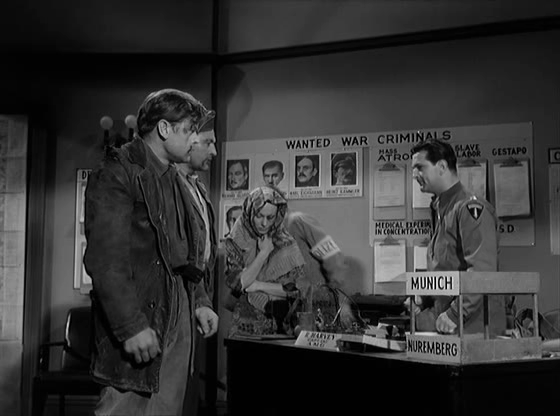
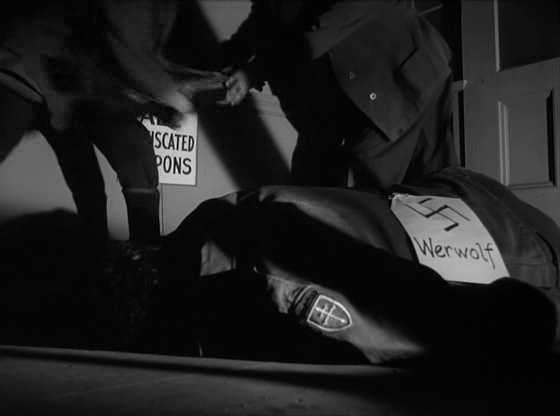
Review: Verboten! is notable for preceding Judgment at Nuremberg (1961) in its frank depiction of the atrocities of concentration camps, with ample use made of actual footage — and if Fuller is typically blunt in his handling of dramatic scenes, it’s in service of a story worth telling. This one is a must-see for Fuller fans, and recommended for others. Notable Performances, Qualities, and Moments: Must See? Links: |
“There comes a time when a boy can lay his belly to the ground and feel the heartbeats of the earth coming up to grass roots; that’s his time to prowl.”
|
Synopsis: |
|
Genres, Themes, Actors, and Directors:
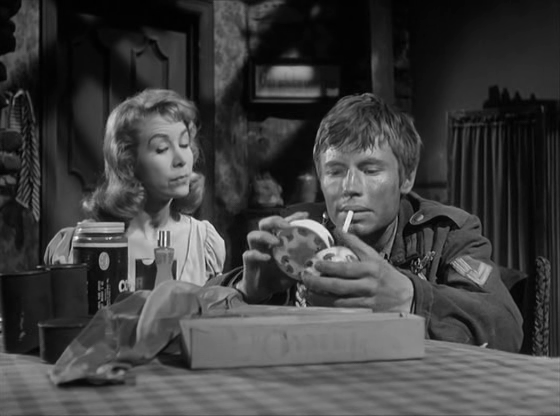
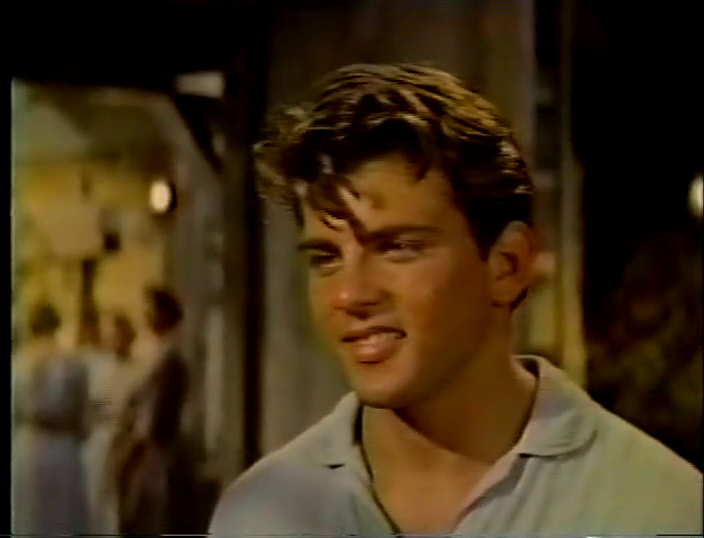
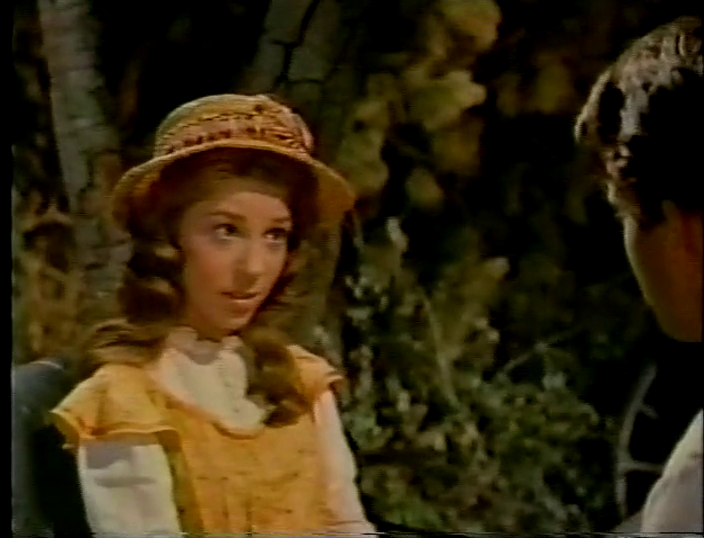
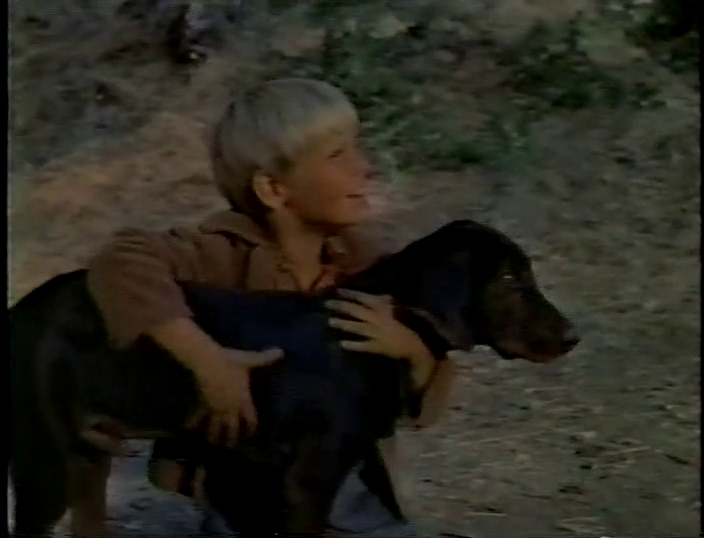
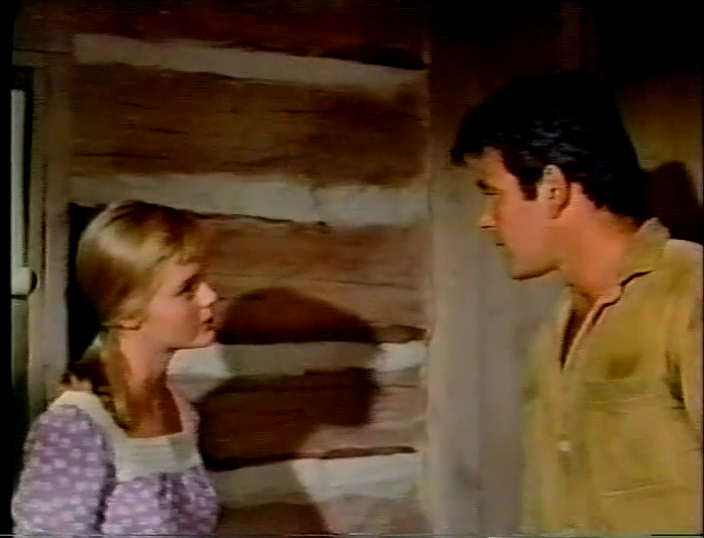
Review: … whose character has a crush on pop singer Dodie Stevens (similarly cast for her timely appeal). While this is purportedly a tale of a boy desperately wanting a dog: … much more narrative focus is placed on Lynley’s hope that Whitman will take her seriously as a romantic partner. It’s all innocuous enough but not very engaging — and the songs (other than the earworm refrain to the title song) aren’t all that memorable. Notable Performances, Qualities, and Moments: Must See? Links: |
“Shall I be plain? I wish the bastards dead.”
|
Synopsis: |
|
Genres, Themes, Actors, and Directors:
Review: He notes that Olivier’s Richard “is as straightforward with us as he is duplicitous with those in the English court,” and writes, “As he strides into a long shot so we can get a good look at his gnarled form or moves to within an inch of the camera, he reveals a sly wit, a frightening ferocity and egocentricity, and a snide superiority and vengeful anger toward the nondeformed world he wants to ‘bustle in’.” He adds, “What is jolting as he speaks to us is that he isn’t the typical madman lusting for power, but a clear-headed, ambitious schemer extraordinaire.” For those unfamiliar with the play (like me), it will take a bit of research to understand how all the specific characters fit into place — but the overall sense that no one will be spared from Richard’s evil is crystal clear. Peary writes that “Olivier’s Richard expresses the same amusement and amazement as we do that his bold plot works so smoothly, that he can eliminate his opposition one by one without anyone being the wiser, and that, in a creepy scene, he can seduce the virtuous Lady Anne [Claire Bloom] and have her kiss him lewdly although she wants him dead and is not physically attracted to him.” The supporting performances throughout are excellent; while Olivier wanted Orson Welles to play Buckingham, I think Richardson fits the bill nicely as his right-hand schemer: … and the VistaVision cinematography and historic sets are gorgeous. This film isn’t an easy watch, but it’s worth the effort. Notable Performances, Qualities, and Moments:
Must See? Categories
Links: |
“War isn’t exactly a civilized business.”
|
Synopsis: |
|
Genres, Themes, Actors, and Directors:
Review: It’s also noteworthy for featuring color-line-breaking tennis star Althea Gibson as Towers’ slave Lukey: … and for affording Towers — probably best known by film fanatics for her starring roles in Sam Fuller’s Shock Corridor (1963) and The Naked Kiss (1964) — her breakthrough leading role. Ford’s direction and cinematography (with support from DP William Clothier) is as top-notch as always: … but the storyline isn’t particularly memorable (other than showing us how very, very young — or old — so many Confederate soldiers were). Note: Watch for Anna Lee in a bit part as a Confederate mom desperate for her young son to stay behind when the only “men” left in town are sent to fight. Notable Performances, Qualities, and Moments: Must See? Links: |
“Say it, mister: I’m gonna move that toe!”
|
Synopsis: |
|
Genres, Themes, Actors, and Directors:
Review: … which, by gum, he manages to do. Ward Bond has fun impersonating a Ford-like director who gives Wayne his chance at success in Hollywood: … and O’Hara is ever-feisty as his disillusioned wife (who somehow thinks it’s okay to leave her young girls alone at home to fend for themselves while she’s off at a bridge club; what a different era that was). This one is only must-see for John Ford completists or diehard fans of the lead stars. Notable Performances, Qualities, and Moments: Must See? Links: |