It’s a Mad Mad Mad Mad World (1963)
“There’s money in this for all of us. Right?”
|
Synopsis: |
|
Genres, Themes, Actors, and Directors:
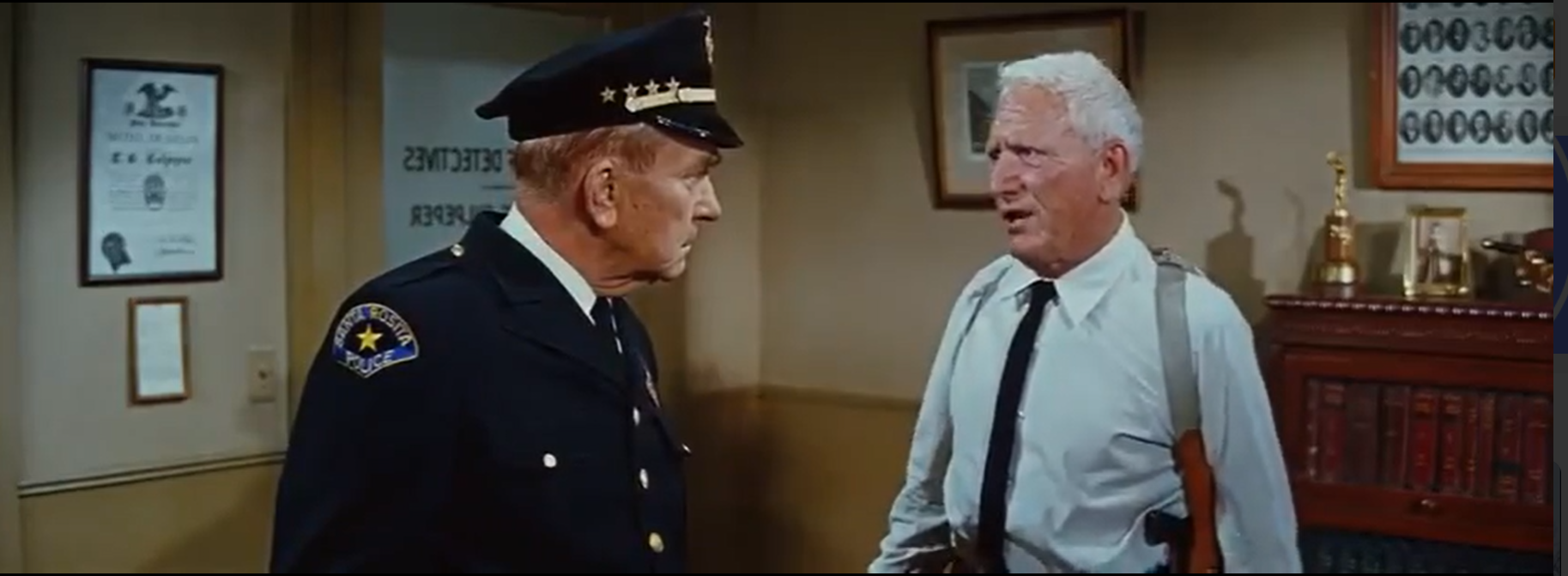
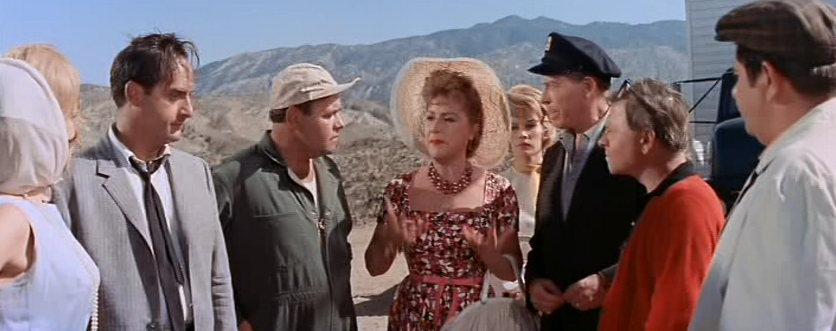
Response to Peary’s Review: In his later, more detailed analysis of the film written for Cult Movies 3, however, Peary is suddenly much more critical. He claims that … Mad World “makes a mockery of humanity” given that the individuals seeking the hidden money are either “stupid, loud, vulgar, mean, corrupt, shameless, and[/or] greedy”. He points out that we never really feel much “affection” for any of the characters — other than Spencer Tracy, for a little while:
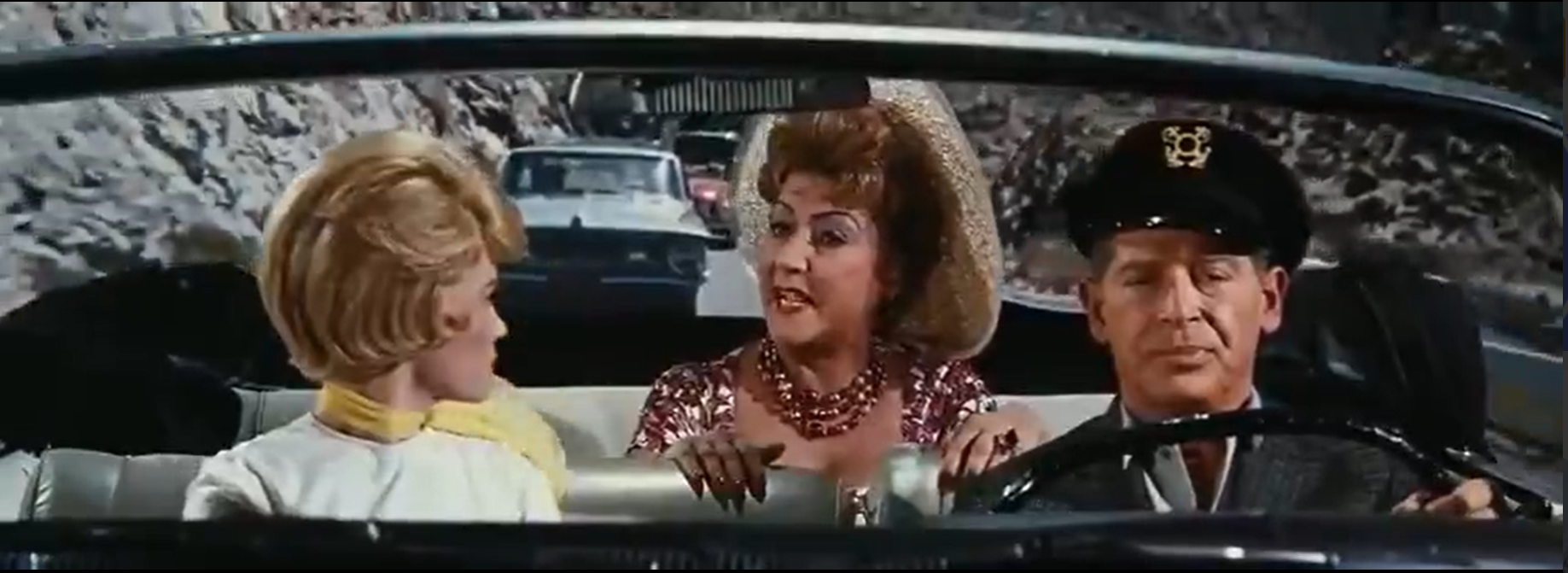
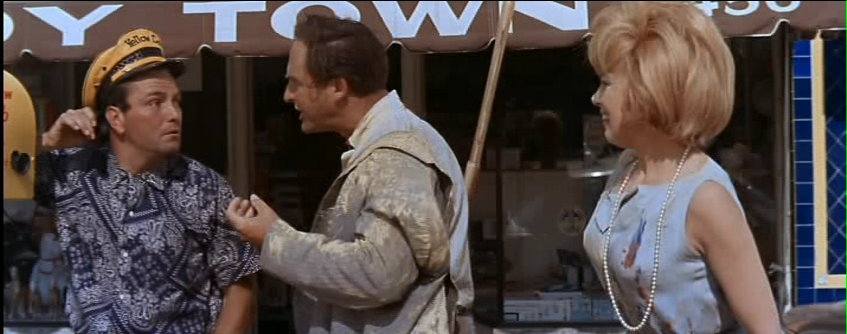
— and that “we miss a sympathetic character to root for, someone who has a noble purpose for acquiring the money”. In this review, he argues that despite its purported aim to serve as an homage to silent slapstick films, the film is “filled with superfluous dialogue” used “to camouflage… uninspired sight gags”, which in turn lack “intricate pacing” or any “build to a big-laugh payoff”. He posits that “the wrong types of comedians were cast” (he’s especially disparaging of Rooney and Hackett, who he claims “should have been replaced by… two much zanier performers”), and, in sum, refers to … Mad World as a “disappointing, wrongly conceived film” — though one which is “by no means a total disaster”. After reading both reviews – and scratching my head plenty over how one reviewer could offer such widely divergent takes on the same film — I found myself agreeing primarily with Peary’s Cult Movies 3 review. While I find the premise and plot twists remarkably clever — and enjoyed “watching for cameos from the likes of Jerry Lewis” and others — overall there’s little here to actively engage anyone but cult followers of the film. And while it’s true, as Peary notes, that the lengthy running time allows most of the stars ample time to shine, none of them are at their comedic best. Sid Caesar, just for instance — so brilliant in his sketch comedy series (see Ten From Your Show of Shows, 1973) — is merely serviceable here playing a married man trying to blast his way out of a locked hardware store; and despite Peary’s claims that Ethel Merman was a “good sport to play such a character”, her outrageously obnoxious mother-in-law is someone you desperately hope to see obliterated within a few moments of her arrival on-screen.
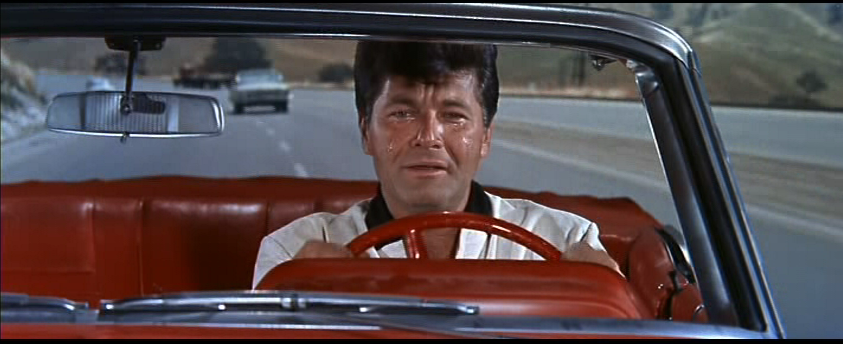
Meanwhile, all the stunts and sight gags go on for about three times as long as they need to — and I’ll agree with Peary that they’re mostly uninspired. The most amusing sequences — indeed, the only ones that had me giggling out loud — involve Dick Shawn as Merman’s grown son, who’s first seen dancing groovily with his robotic girlfriend (Barrie Chase), then sobbing protectively as he races to “rescue” his mother.
While I appreciate this film on multiple levels (including its historical value as a Cinerama production), it’s ultimately not one I’ll be returning to again any time soon. Click here for a fun set of comparative photos with actual locations of all major sequences revealed. Note: Interestingly, Peary points out that this “was one of the first films since Griffith’s 1916 Intolerance to cut back and forth between several story lines”; it’s strange to think that so many years went by before this practice began to become as commonplace as it is today. Redeeming Qualities and Moments:
Must See? Categories
Links: |