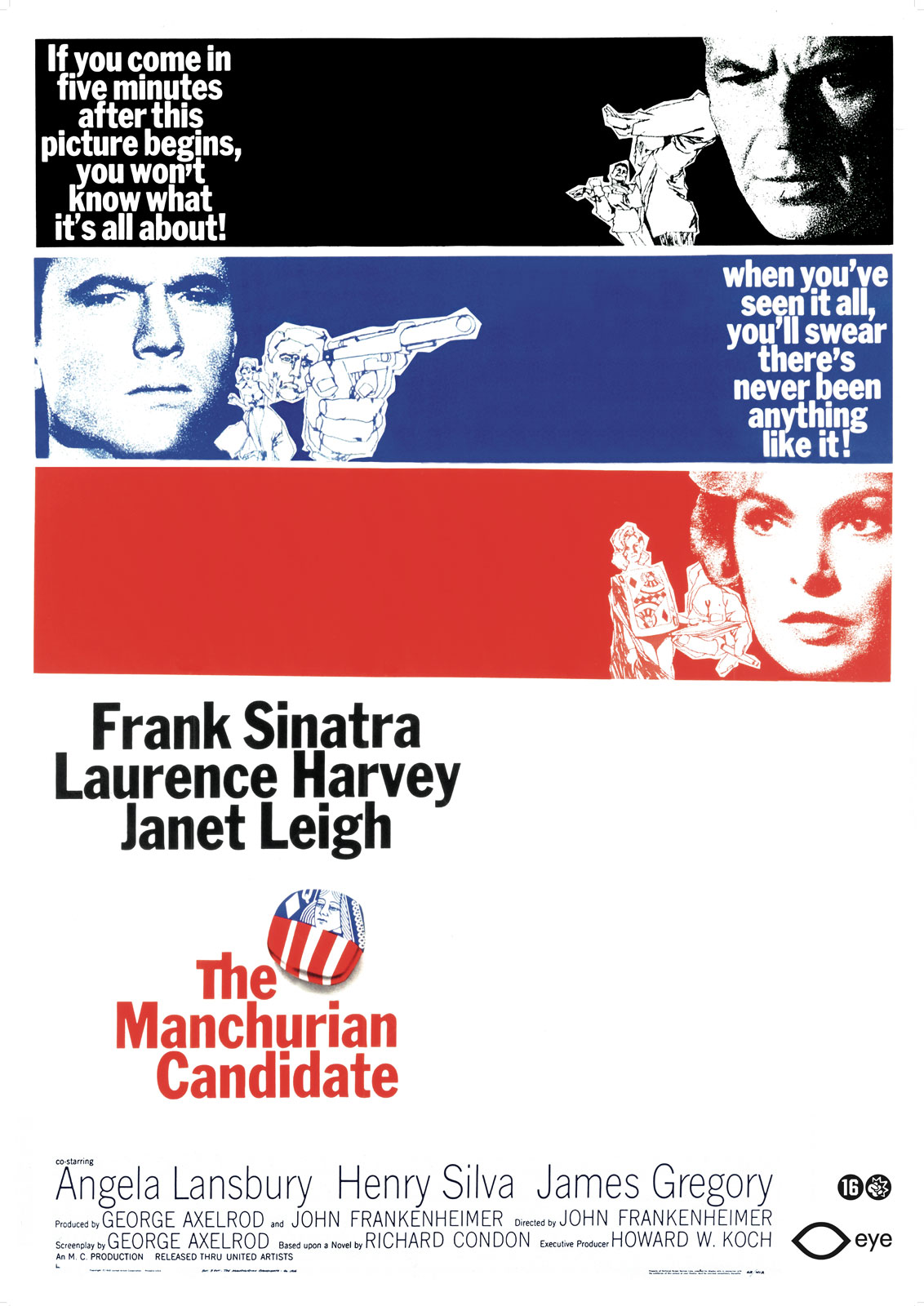
Manchurian Candidate, The (1962)

Manchurian Candidate, The (1962)

“Do you realize, comrade, the implications of the weapon that has been placed at your disposal?”

Synopsis:
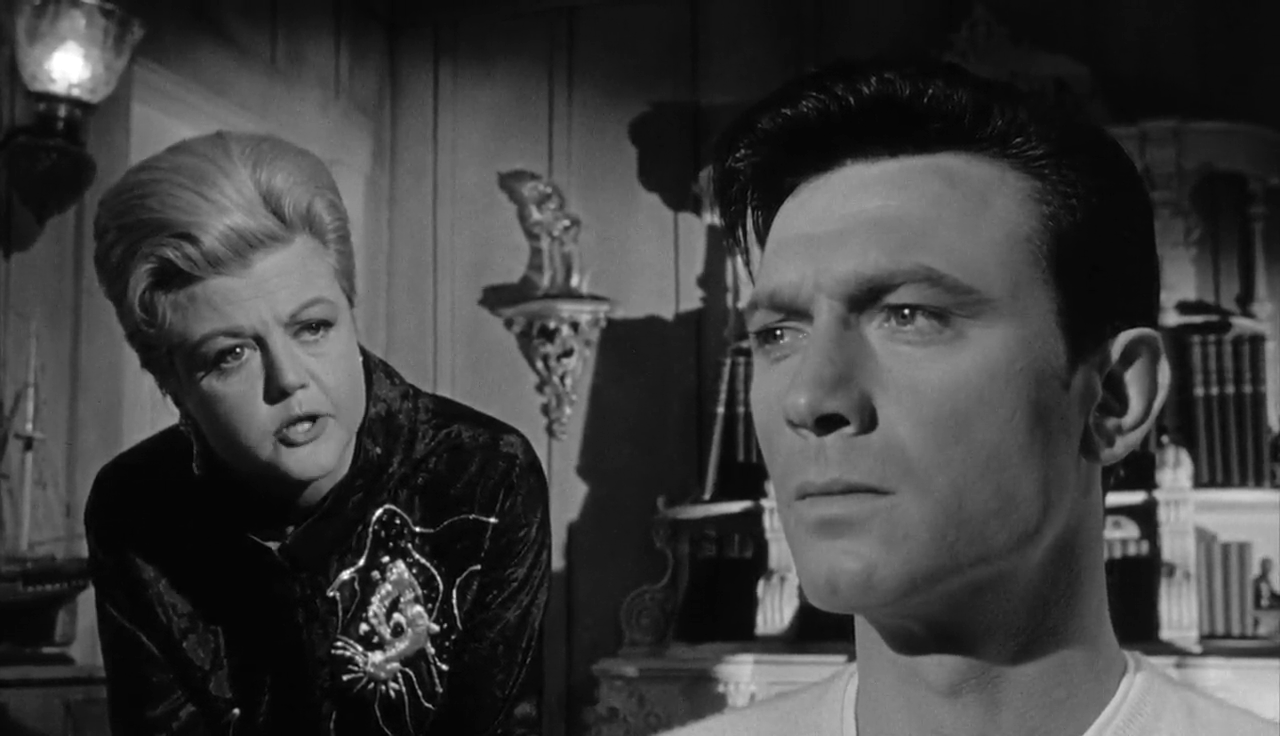
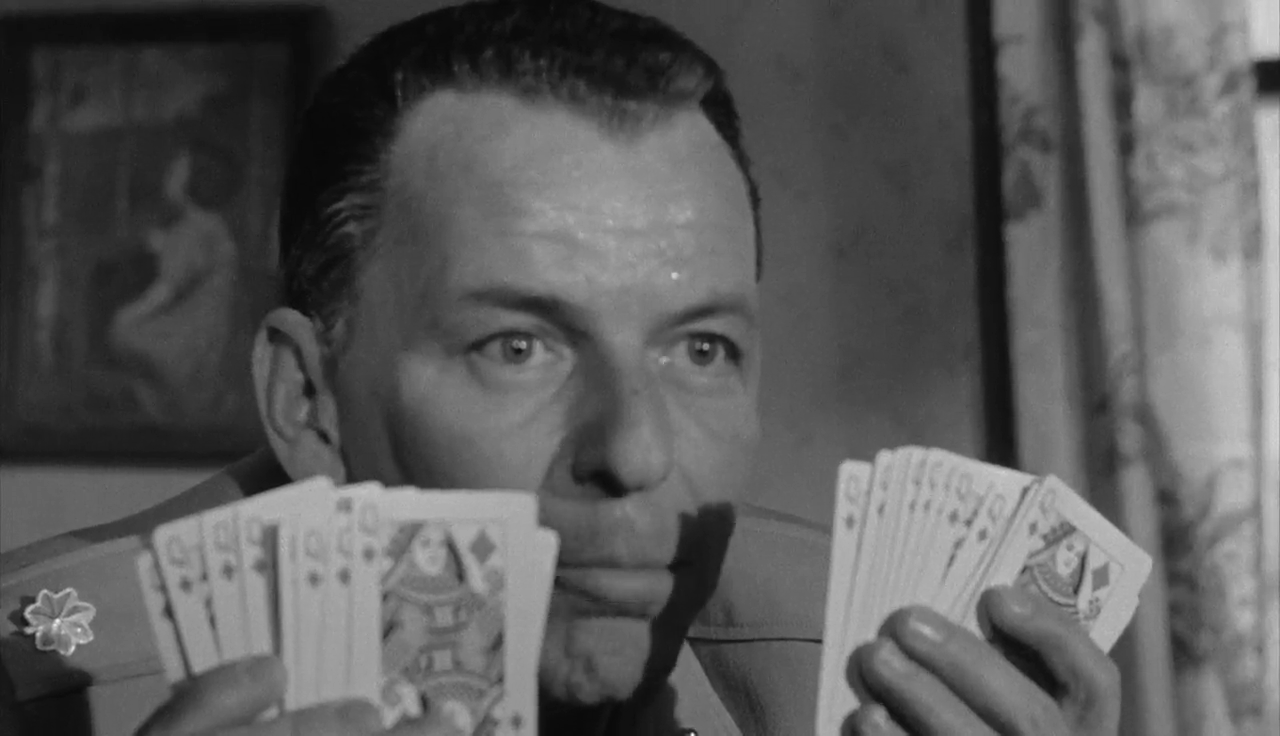
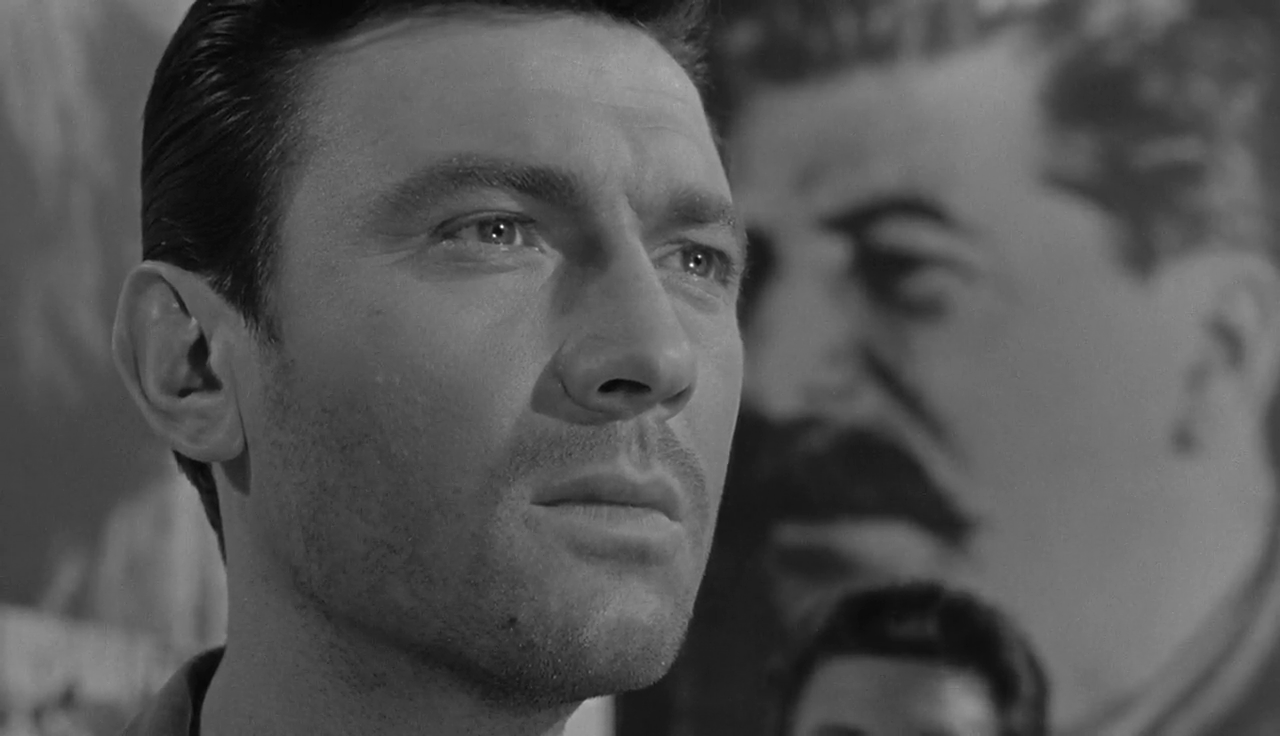
Upon his return from the Korean War, Sergeant Raymond Shaw (Laurence Harvey) is awarded a medal of honor and referred to by his men — including Major Bennett Marco (Frank Sinatra) — as “the kindest, bravest, warmest, most wonderful human being” they’ve ever known. But Marco is plagued by disturbing dreams about Shaw, and soon learns that Shaw is part of an elaborate Communist brainwashing conspiracy involving his scheming mother (Angela Lansbury) and her politician-husband, Senator Iselin (James Gregory).

Genres, Themes, Actors, and Directors:

  • Angela Lansbury Films
  • Cold War
  • Frank Sinatra Films
  • Janet Leigh Films
  • John Frankenheimer Films
  • Laurence Harvey Films
  • Mind Control and Hypnosis
  • Political Conspiracy
  • Veterans

Review:
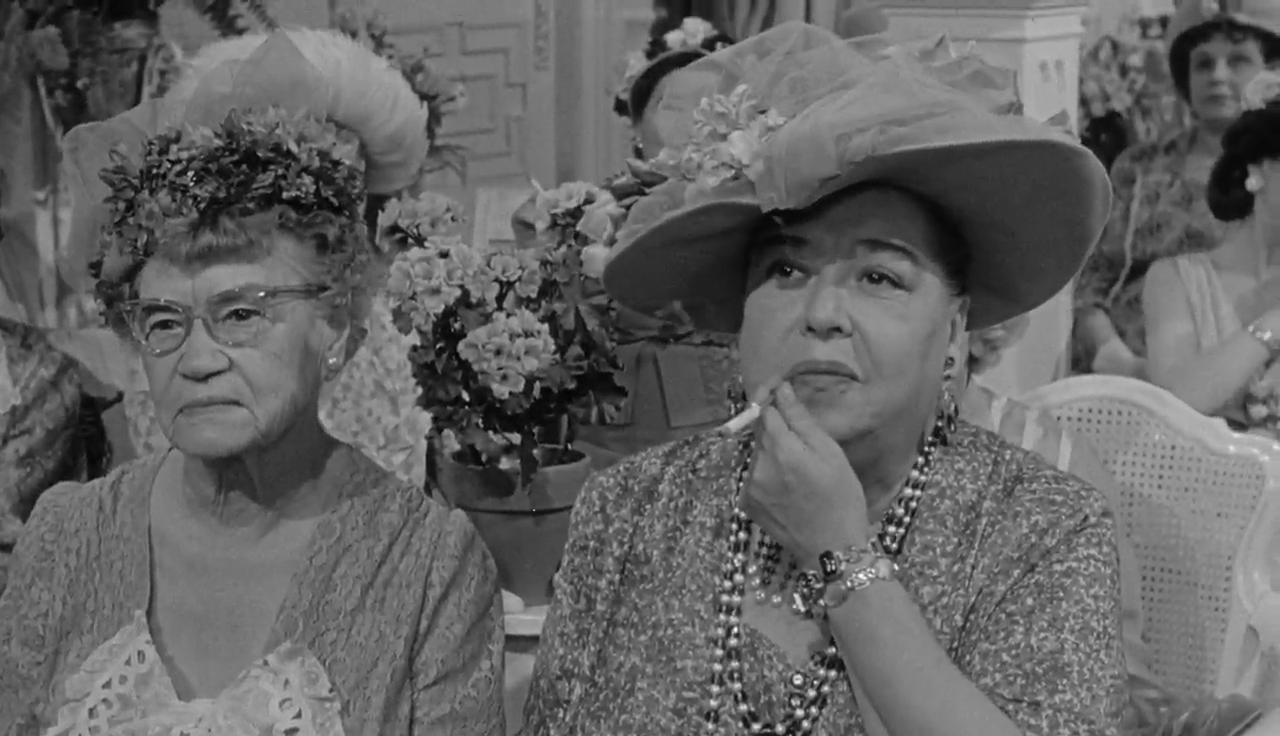
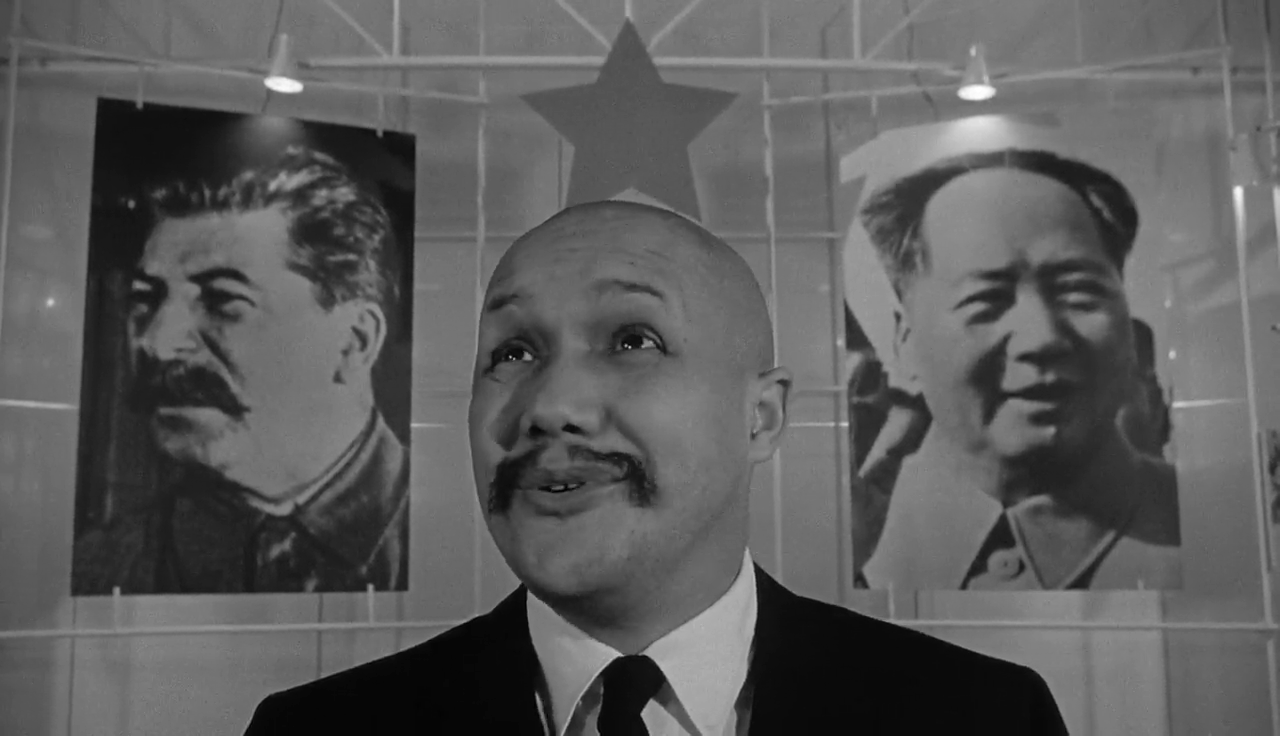
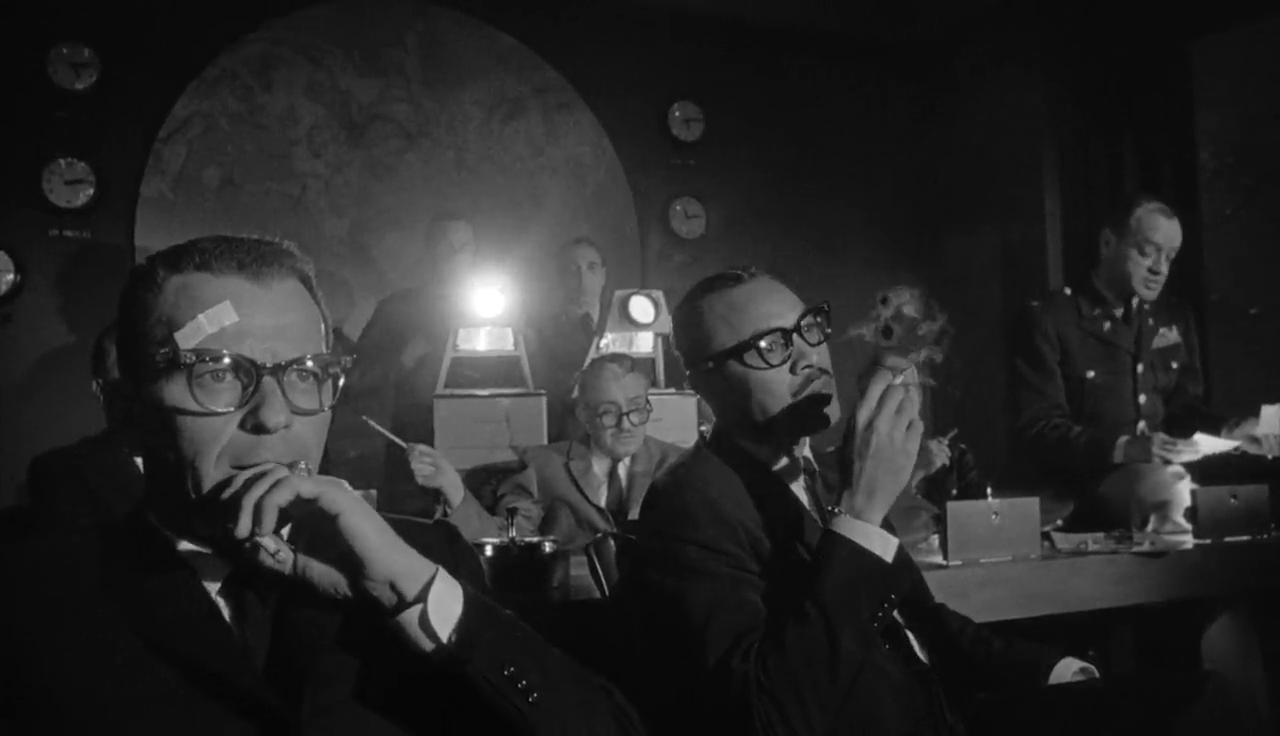
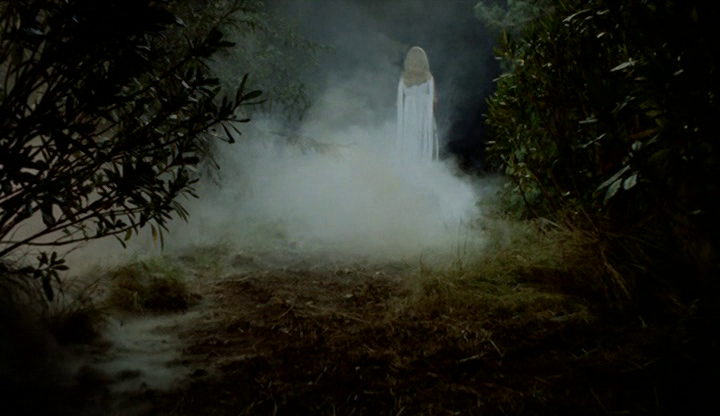
John Frankenheimer’s suspenseful political thriller — based on a 1959 novel by Richard Condon, and remade by Jonathan Demme in 2004 — was considered a flop at the time of its release, and remained mysteriously out of circulation for 20 years, but has since become a cult classic. Lansbury’s Academy Award-nominated performance as Mrs. Iselin — one of cinema’s most memorable sociopath mothers — is truly chilling, as is the lengthy, creatively filmed Manchurian “garden party”/brainwashing sequence, which effectively puts the audience on edge from the get-go. George Axelrod’s screenplay (hewing fairly closely to the novel) is at times perplexing, but likely intentionally so: I believe we’re not meant to fully understand what’s happening at times (is what we’re seeing flashback or dream?), and instead simply remain caught up in the suspense of the narrative as it unfolds.

With that said, the screenplay isn’t without flaws. My least favorite characters are Lansbury’s political rival (John McGiver) and his gorgeous daughter (Leslie Parrish), who Harvey is immediately smitten with; I can’t quite get a read on how they’re meant to be viewed, though they clearly serve an integral function in the storyline. Meanwhile, Janet Leigh as Sinatra’s love interest is oddly opaque: she approaches the distressed Sinatra with motherly compassion, speaking in what can only be interpreted as some sort of mysterious code — “I was one of the original Chinese workmen who laid the track on this train.” — then becomes simply a mother-figure Sinatra can lean on for unconditional support during a time of crisis. However, it’s likely she serves a more important function than appearances would indicate (see DVD Savant’s review for an outline of various theories about her character).

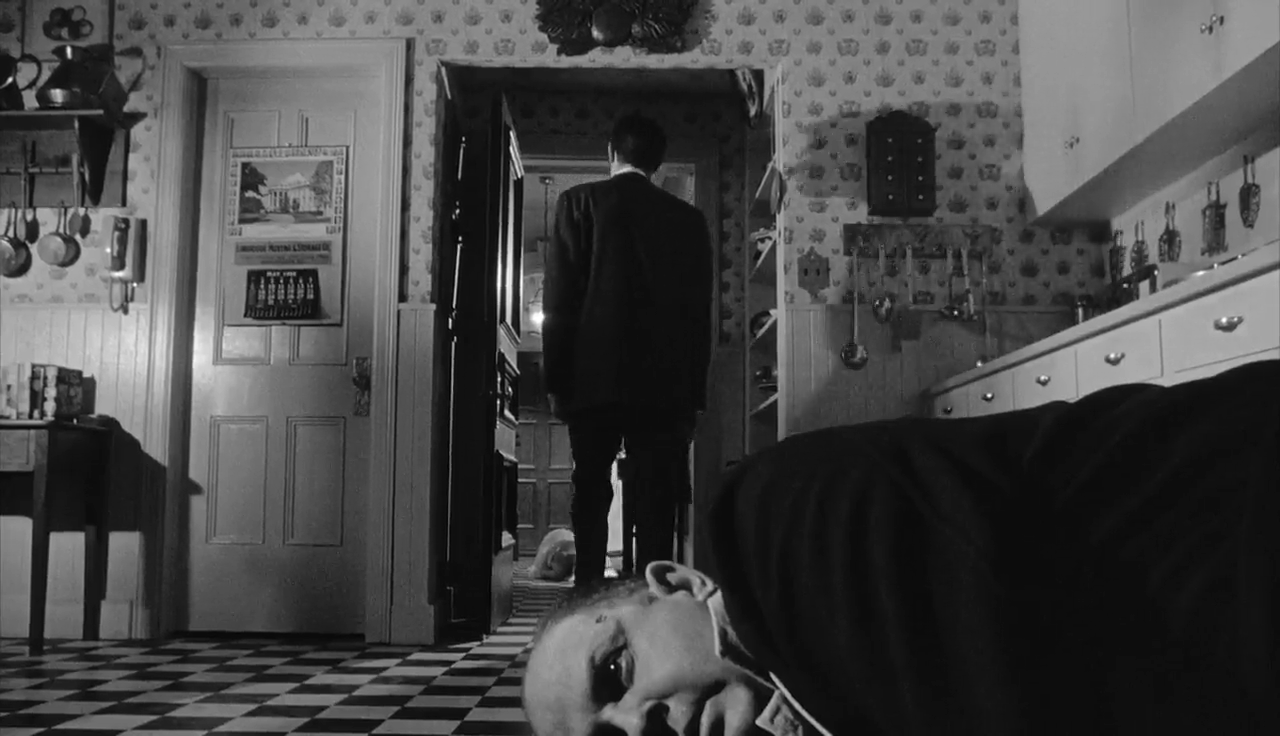
The film is quite dark — at times satirically so (as in the depiction of Gregory as a spineless political puppet), and at times much more violently (i.e., the disturbing finale to the brainwashing flashbacks, as well as the cold-blooded assassination scenes). This shifting between tones — along with the continuous edits back and forth in time and between perspectives — add to the overall sense of paranoia and unease. Also instrumental to the film’s success are atmospheric cinematography and strategic direction, including good use of extreme close-ups and deep focus to exaggerate the surrealism of the nightmarish situation. Sinatra’s real-life friendship with the Kennedy family simply adds to its historical intrigue.

Redeeming Qualities and Moments:

  • Many genuinely creepy, nightmarish moments
  • The “garden party” scene

  • Angela Lansbury as Mrs. Iselin
  • Frank Sinatra as Major Bennett Marco
  • Lionel Lindon’s cinematography


Must See?
Yes, as a well-made cult favorite. Listed as a Cult Movie in the back of Peary’s book. Selected in 1994 for preservation in the National Film Registry.

Categories

  • Cult Movie

Links:

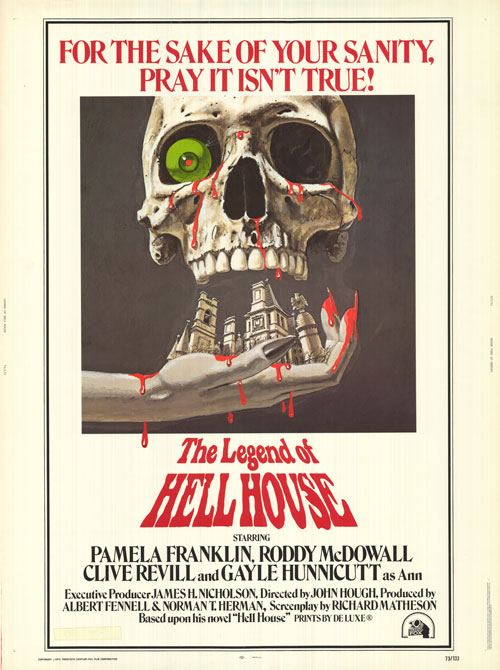
Legend of Hell House, The (1973)

Legend of Hell House, The (1973)

“This house… It knows we’re here.”

Synopsis:
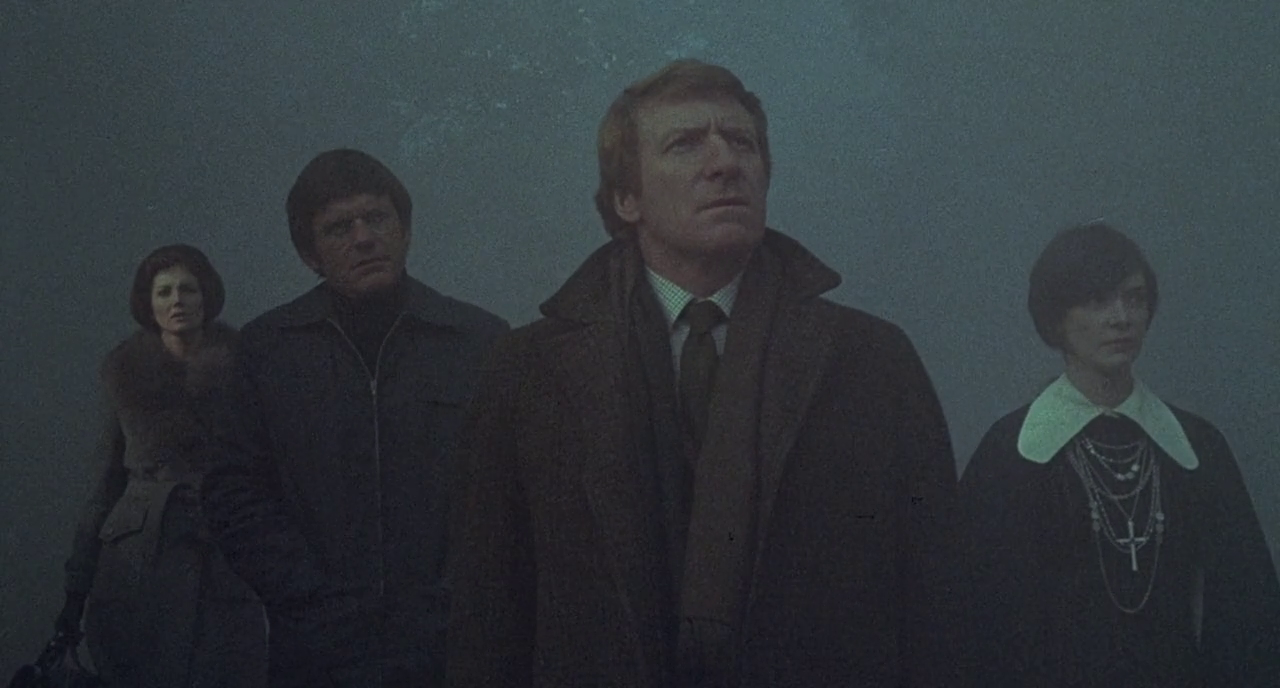
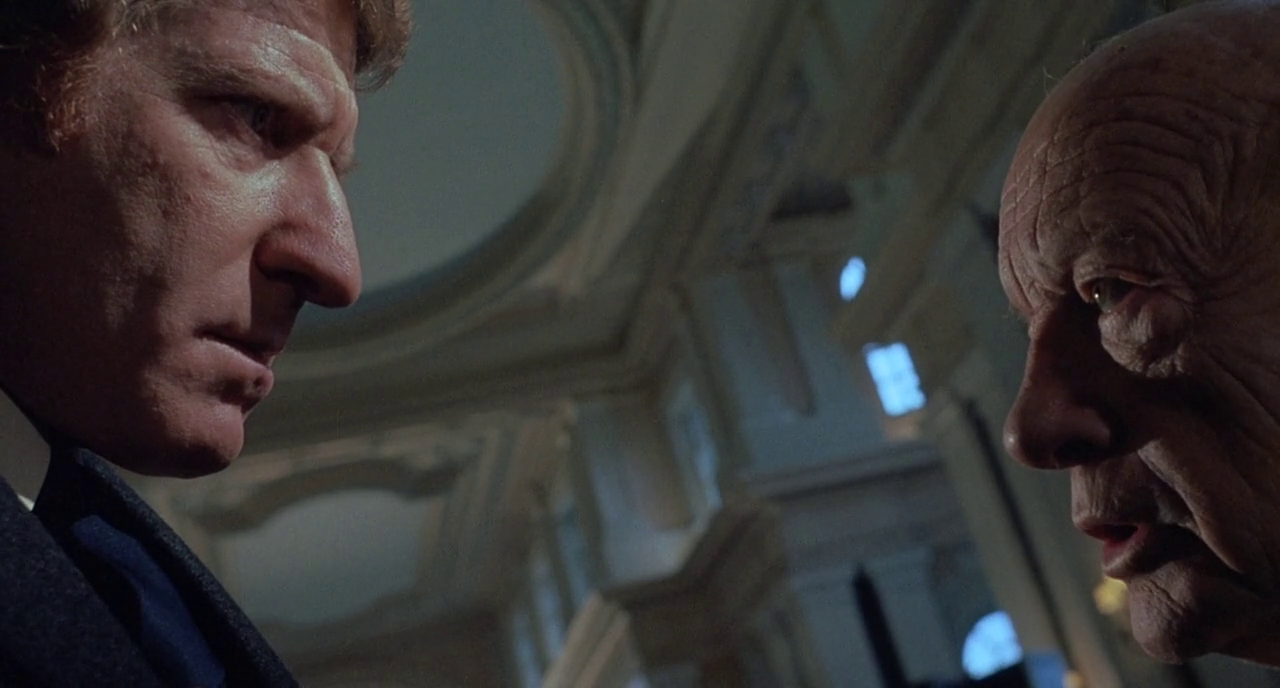
A physicist (Clive Revill), his wife (Gayle Hunnicutt), and two mediums (Pamela Franklin and Roddy McDowall) are solicited by a wealthy older man (Roland Culver) to visit an infamous haunted house and investigate the secrets it may possess about life after death.

Genres, Themes, Actors, and Directors:

  • Horror
  • Old Dark House
  • Possession
  • Psychic Powers
  • Roddy McDowall Films

Review:
Based on a novel by Richard Matheson, this highly atmospheric “old dark house” flick — a mash-up of The Haunting (1963) with The Exorcist (1973) — delivers plenty of bang for its buck. It’s creatively directed (by John Hughes and DP Alan Hume), finely acted, and genuinely suspenseful. Franklin is particularly effective in a challenging role: her self-possessed demeanor contrasts nicely with her youthful appearance, and her character transformations are both believable and shocking. The film’s main’s disappointment is its climactic “reveal”, which viewers have apparently been debating for years; but it’s easy enough to forgive in light of the satisfying tale we’ve witnessed until then. The score is exceptional, too.

Redeeming Qualities and Moments:

  • Pamela Franklin as Florence Tanner
  • Alan Hume’s cinematography

  • Fine direction
  • An effectively spooky electronic score by Brian Hodgson and Delia Derbyshire

Must See?
Yes, as a cult favorite.

Categories

  • Cult Movie

Links:

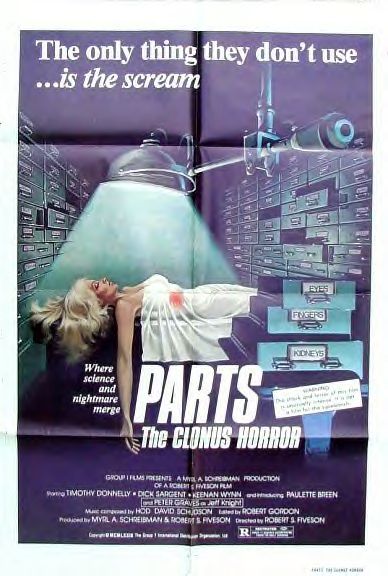
Clonus Horror, The / Parts: Clonus Horror (1979)

Clonus Horror, The / Parts: Clonus Horror (1979)

“This is your chance for immortality! You don’t need to worry, because there is a duplicate of you!”

Synopsis:
A physically fit young man (Tim Donnelly) living on a compound with guards and a patronizing doctor (Dick Sargent) begins to question the Utopian “America” he will eventually be sent to, and soon learns he and others — including his new girlfriend (Paulette Breen) — are being bred as clones for wealthy patrons wanting spare organs.

Genres, Themes, Actors, and Directors:

  • Androids and Clones
  • Escape
  • Horror
  • Keenan Wynn Films
  • Science Fiction

Review:
This low-budget sci-fi thriller is probably best known both for its spoofing by MST3K in 1999, and for the copyright infringement lawsuit brought by its producer against Dreamworks for making The Island (2005) without acknowledging its similarity to this film. Unfortunately, despite a provocative premise, The Clonus Horror comes across as amateurish and poorly acted; even cameo roles by Keenan Wynn and Lorene Tuttle as concerned citizens who try to help Donnelly are laughably overdone.

Redeeming Qualities and Moments:

  • A provocative and creepy premise

Must See?
No, though it’s worth a one-time look if you’re curious.

Links:

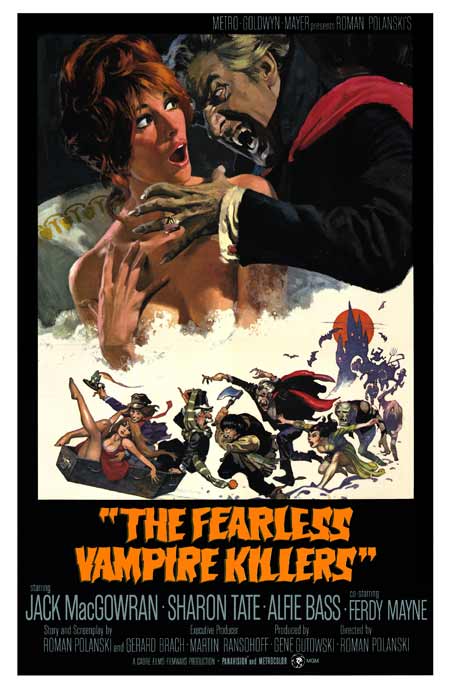
Fearless Vampire Killers, The or: Pardon Me, But Your Teeth Are in My Neck (1967)

Fearless Vampire Killers, The or: Pardon Me, But Your Teeth Are in My Neck (1967)

“I am a night bird; I am not much good in the daytime.”

Synopsis:
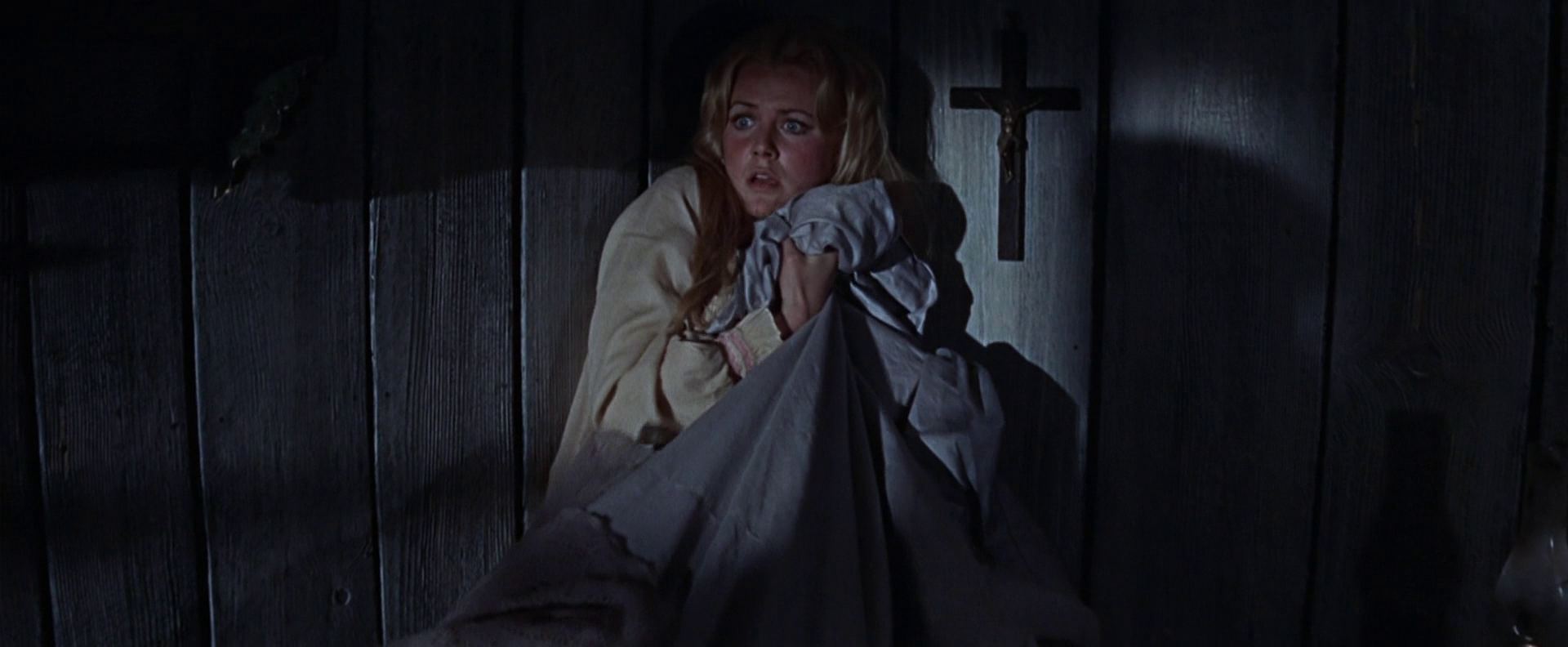
Vampire-hunting Professor Abronsius (Jack MacGowran) and his nebbishy assistant Alfred (Roman Polanski) arrive in a small Transylvanian town where Alfred falls for the beautiful, bath-loving daughter (Sharon Tate) of an innkeeper (Alfie Bass) and his wife (Jessie Robins). When Tate is bitten and kidnapped, Professor Abronsius and Alfred travel to the castle of Count Von Krolock (Ferdy Mayne), who is hosting a gala vampire ball.

Genres, Themes, Actors, and Directors:

  • Roman Polanski Films
  • Satires and Spoofs
  • Vampires

Review:
Critical and popular opinions seem to be enormously divided on this “genre outing” by Roman Polanski, who both starred and directed. Cult-like fans adore its quirky sensibilities, while detractors are annoyed by its over-reliance on slapstick and find its fame incomprehensible. Polanski himself apparently disowned the film (also known as Dance of the Vampires) when it was cut down from its original 148-minute running time to just 107 or 91 minutes. (Missing from the version I watched was this animated opening sequence, though I’m not sure what else was taken out.) Peary is clearly a fan, given that he lists it as a Personal Recommendation in the back of his book — but I happen to fall in the camp of detractors. I find the lead protagonists insufferable, and grow weary of the physical “knock-about” humor almost immediately.

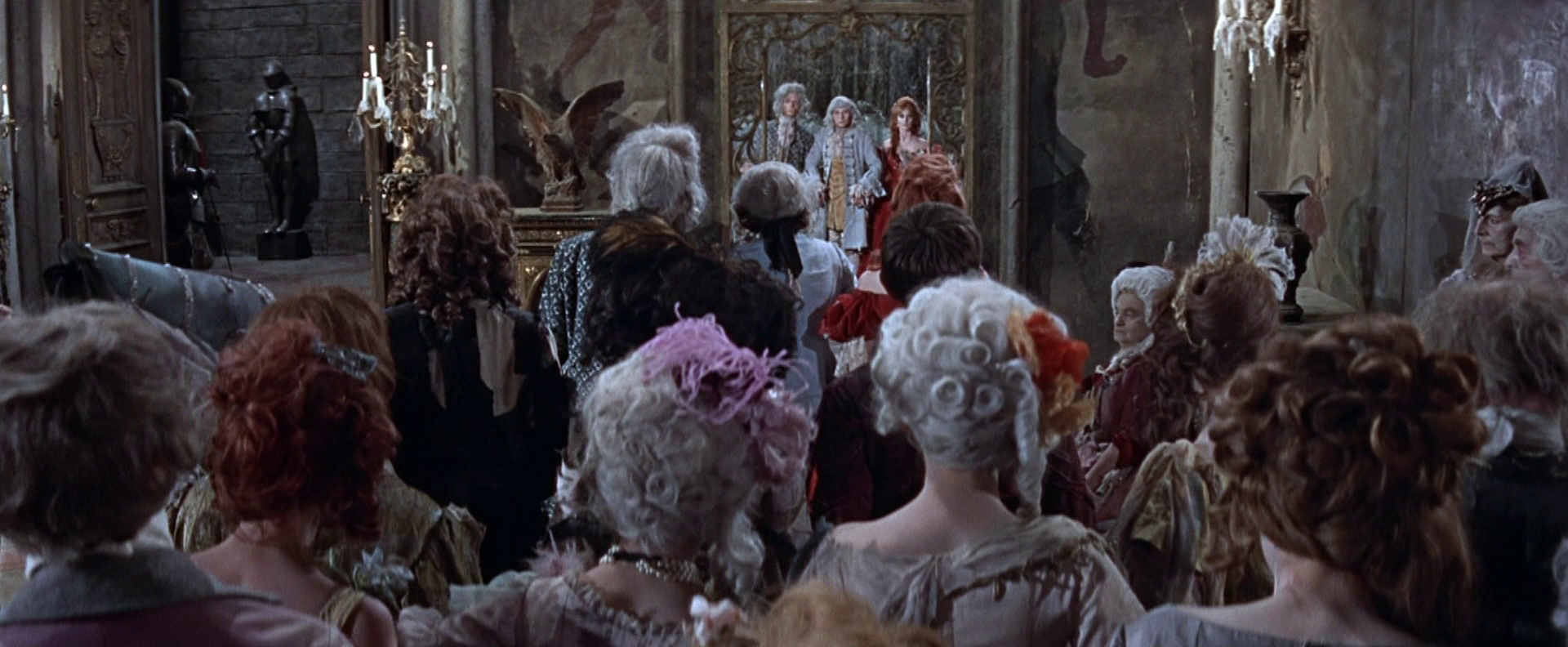
With that said, I do appreciate Douglas Slocombe’s gorgeous cinematography — much shot in the snowy outdoors, which lends a unique atmosphere to the proceedings — and I also admire Polanski’s attempts at satirizing a beloved genre. The culminating vampire ball is quite a sight to behold, with the presence of decrepit and decaying aristocrats making one question the trope of vampires as invariably gorgeous young men and women. And Krystov Komeda’s score is mesmerizing. But none of this can make up for the inane slapstick and nincompoop leads. As a final thought, I will cite Time Out’s reviewer, who writes that “With all its faults, [it’s] an engaging oddity”; ultimately, all film fanatics should see it once to craft their own opinion.

Redeeming Qualities and Moments:

  • Douglas Slocombe’s cinematography
  • The creepy yet humorous vampire ball sequence


  • Krystov Komeda’s score

Must See?
Yes, as a cult favorite.

Categories

  • Cult Movie

Links:

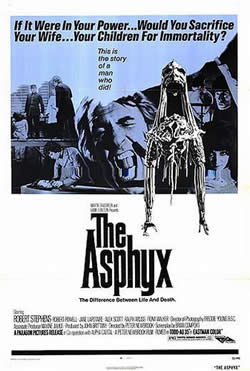
Asphyx, The (1972)

Asphyx, The (1972)

“Having lost Clyde, your brother, I must never lose you.”

Synopsis:
After the tragic loss of his son (Ralph Arliss) and fiancee (Fiona Walker), a British squire (Robert Stephens) becomes obsessed with the notion that a mythological spirit known as an asphyx can be viewed and captured at the moment someone is about to die. With the help of his daughter (Jane Lapotaire) and adopted son (Robert Powell), he conducts increasingly risky experiments in the name of achieving immortality for himself and the remains of his family.

Genres, Themes, Actors, and Directors:

  • Flashback Films
  • Historical Drama
  • Horror
  • Life After Death
  • Mad Doctors and Scientists
  • Science Fiction

Review:
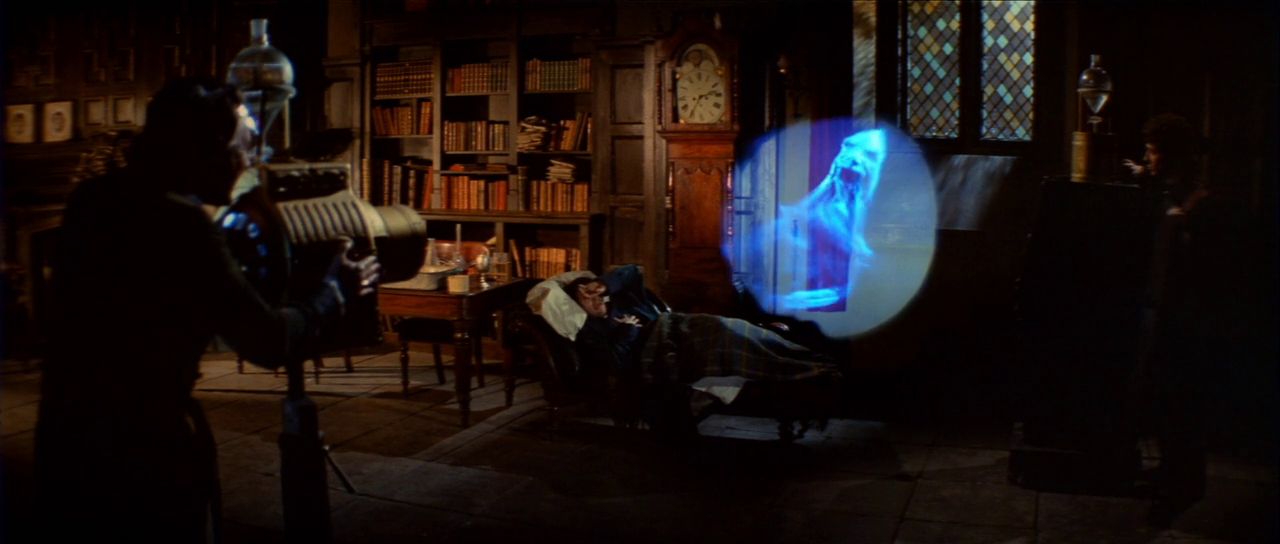
This Victorian-era sci-fi/horror flick is based on an unusual and provocative premise, but suffers from a few too many gaps in logic. The titular entity itself — an “asphyx” (spirit) that arrives just as a person is dying and can somehow be trapped, thus leading to immortality — doesn’t really make much sense, and neither do the workings of the contraption used to view and secure the asphyx (which inexplicably involves blue crystals and a water supply). Even if we accept this odd process and phenomenon as part of the movie’s unique logic, the behavior of the primary character doesn’t convince, either: Stephens is clearly suffering from post-traumatic stress after losing his son and fiancee, fixating on the mystery of the asphyx to gain a sense of control over the whims of mortality — but his actions are extreme, and hint at deeper psychological issues that aren’t sufficiently explored. Meanwhile, Powell’s overly stoic performance (think Buster Keaton) prevents us from empathizing with him; while it’s clear he’s under the sway of his beloved foster father’s influence, this can’t quite explain the extreme risks he takes with his fiancee.

Speaking of risks, the presence of a guillotine at one point is explained away as allowing the (immensely likable) would-be victim to “feel fear” (!) — but couldn’t another, less vicious method have been secured for her near-death experience? In the film’s favor are lovely sets, vibrant Todd-AO cinematography, and some nifty special effects — but overall, this one is a disappointment.

Redeeming Qualities and Moments:

  • Freddie Young’s cinematography
  • Fine period sets and special effects

Must See?
No, though it’s worth a look as an unusual horror outing.

Links:

Twins of Evil (1971)

Twins of Evil (1971)

“They are all slaves to Count Karnstein — and he is their evil master!”

Synopsis:
A recently orphaned set of identical twins — timid Maria (Mary Collinson) and adventurous Frieda (Madeleine Collinson) — come to live with their kind aunt (Kathleen Byron) and puritanical uncle (Peter Cushing), who leads a viciously ruthless brotherhood of witchhunters. When Frieda becomes enamored by Count Karnstein (Damien Thomas) — a hedonistic vampire who has recently resurrected Carmilla (Katya Wyeth) from her coffin — she becomes her uncle’s newest target; meanwhile, Mary falls for a visiting schoolteacher (David Warbeck) who is confused about which twin he longs for.

Genres, Themes, Actors, and Directors:

  • Horror
  • Morality Police
  • Peter Cushing Films
  • Twins
  • Vampires

Review:
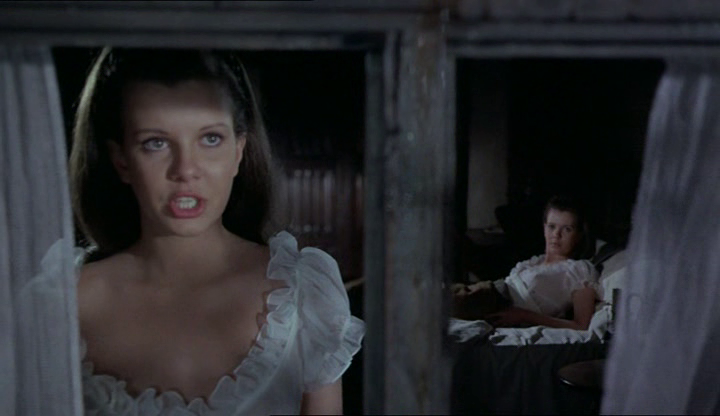
Following The Vampire Lovers (1970) and Lust for a Vampire (1971), Twins of Evil was the third and final installment in Hammer Studios’ “Karnstein trilogy”, and is primarily notable as the first movie to feature twin Playboy centerfolds (!). The Collinson sisters — while not great actors — are pretty, charming, and do a decent job embodying facets of “good and evil” in one visage (much like Olivia De Haviland in The Dark Mirror).

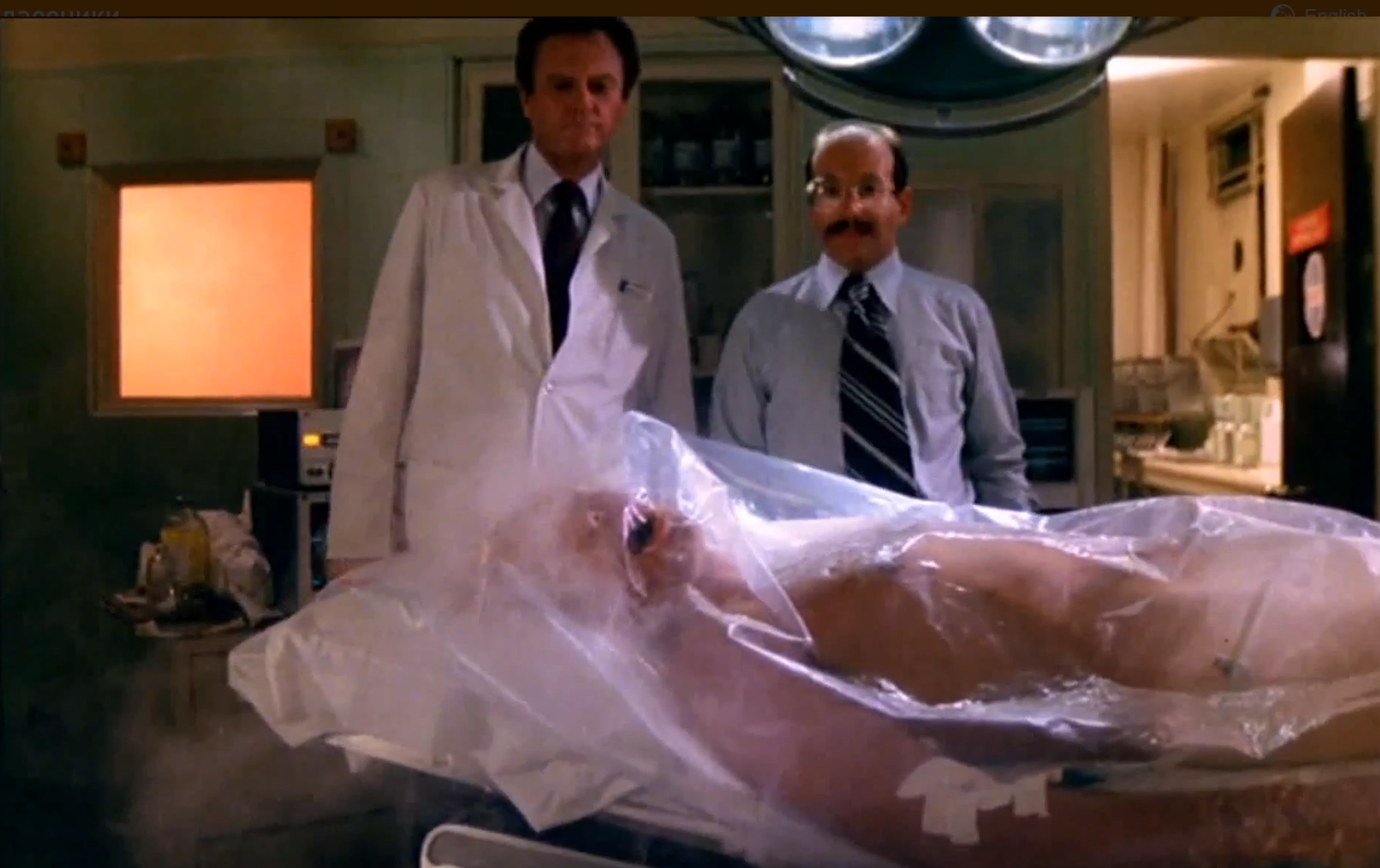
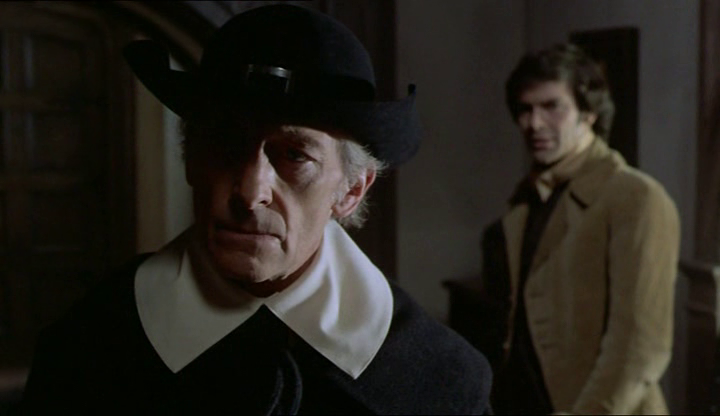
Meanwhile, Cushing has never been more sober or skeletal:

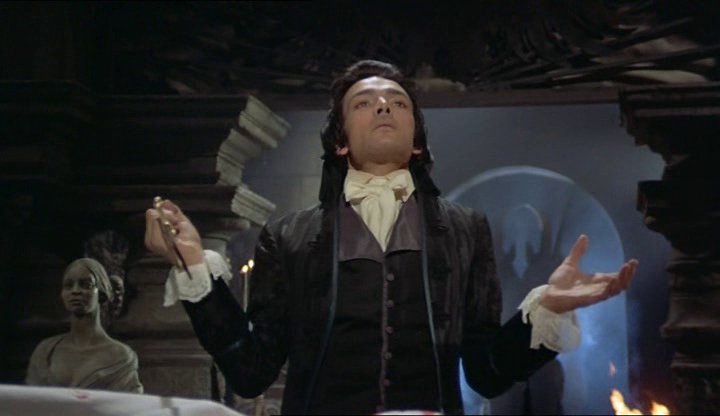
and Thomas is effectively sociopathic as a playboy count with truly sadistic tastes.

Given its atmospheric sets and fine cinematography, Twins of Evil will certainly appeal to fans of period horror flicks, though the script fails to elevate the material above predictable fare with plenty of gaps in logic. Watch the extended documentary The Flesh and the Fury: X-posing Twins of Evil (2012) for more background information than you ever thought possible about this cult flick (and its two predecessors).

Redeeming Qualities and Moments:

  • Dick Bush’s cinematography

  • Atmospheric sets and direction

Must See?
No, though it’s certainly worth a look for its cult status.

Links:

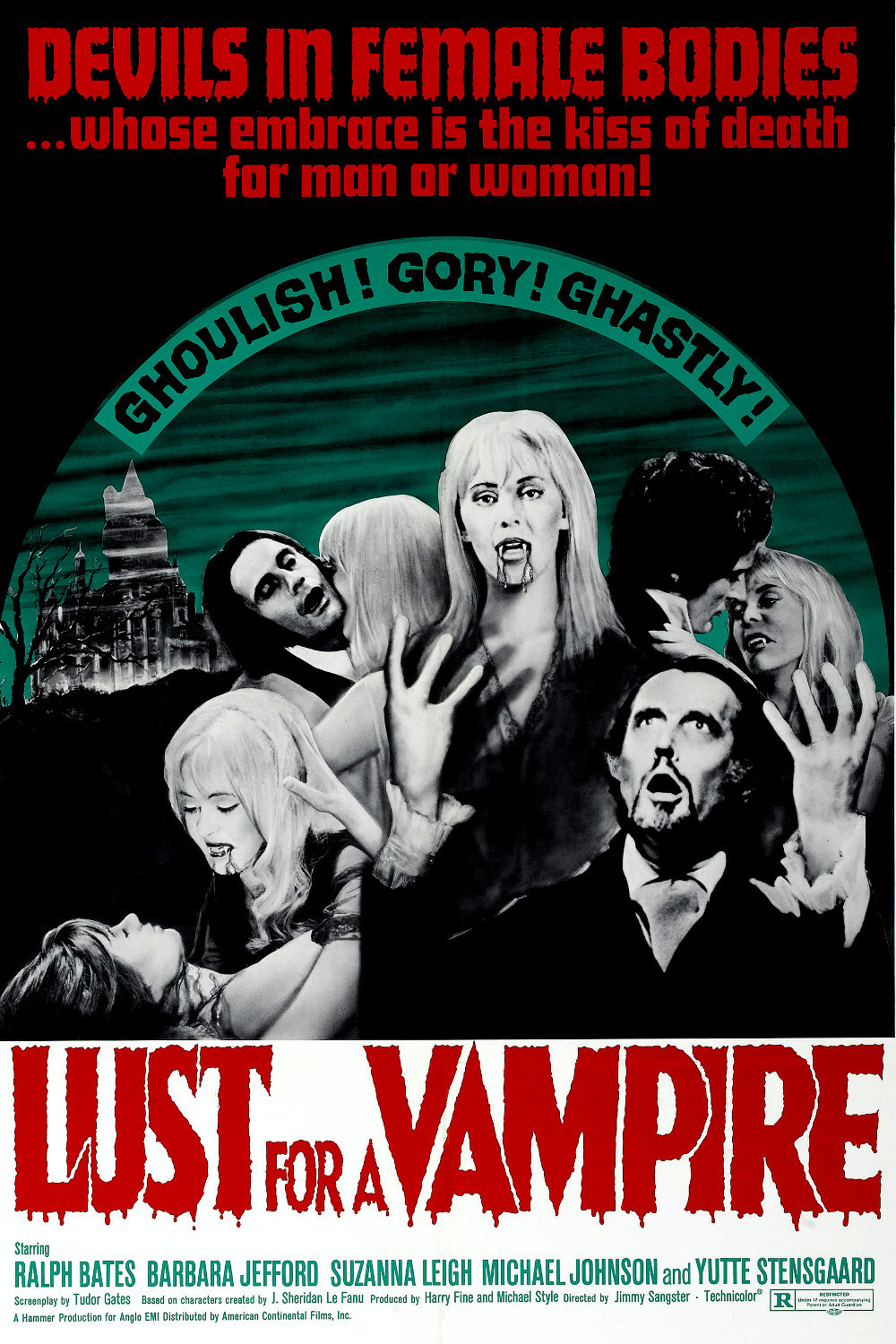
Lust for a Vampire / To Love a Vampire (1971)

Lust for a Vampire / To Love a Vampire (1971)

“Do you know who it was, Mircalla? The portrait of Carmilla Karnstein — it was you!”

Synopsis:
An author (Michael Johnson) visiting a finishing school becomes enchanted with Mircalla (Yutte Stensgaard), a resurrected vampire from the nearby Karnstein castle. Meanwhile, a sycophantic instructor (Ralph Bates) uncovers Mircalla’s secret identity and is determined to become her disciple, while a concerned gym teacher (Suzanna Leigh) worries about the mysterious disappearance of Mircalla’s beautiful roommate (Pippa Steele).

Genres, Themes, Actors, and Directors:

  • Horror
  • Vampires

Review:
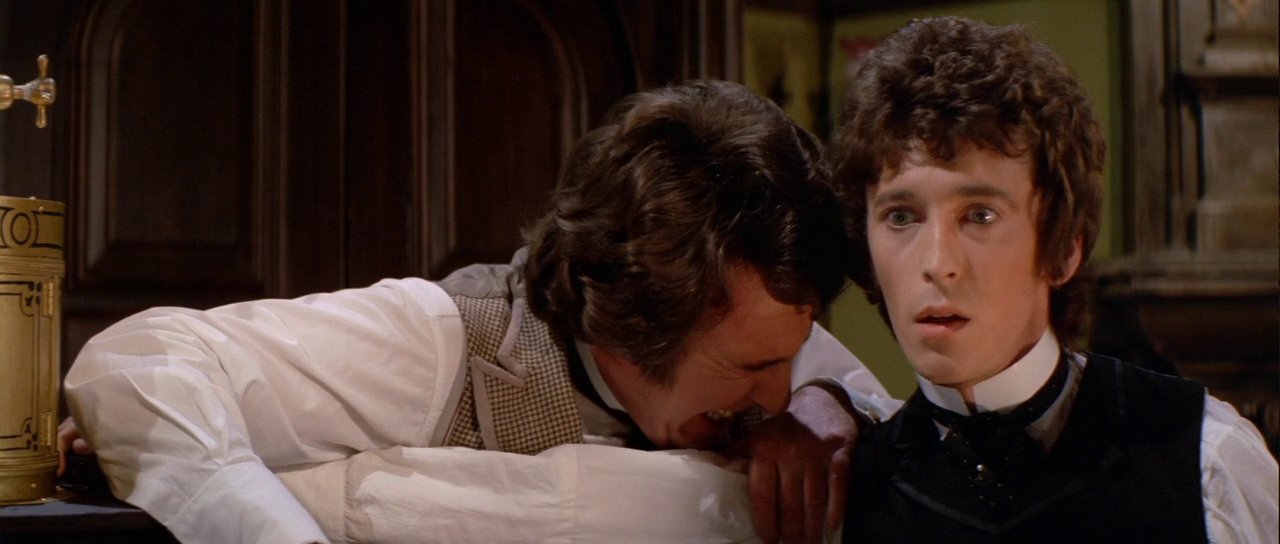
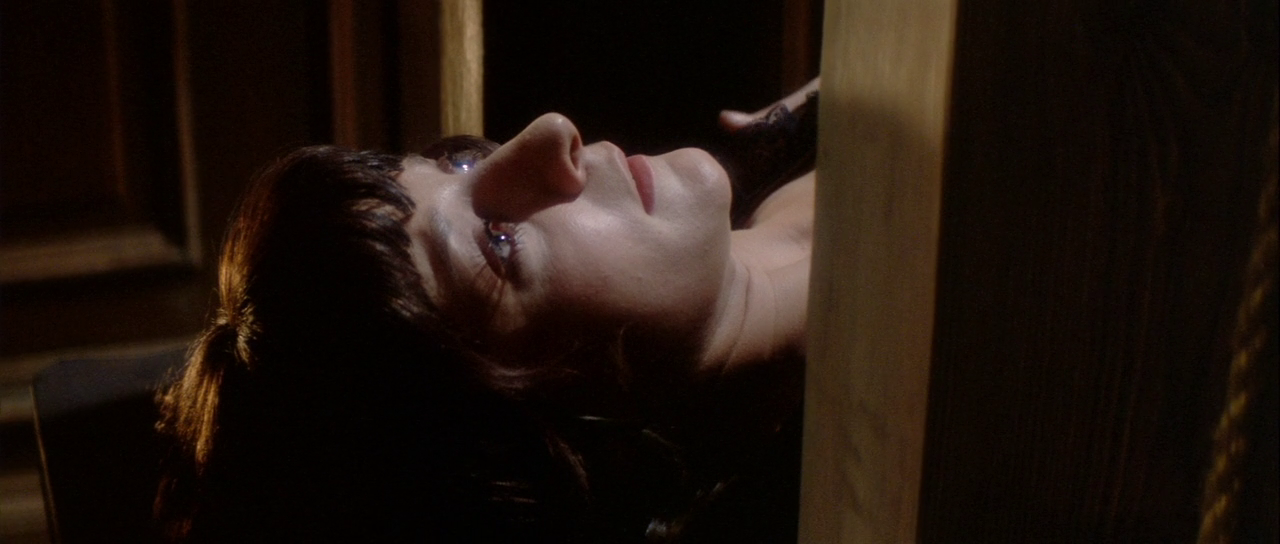
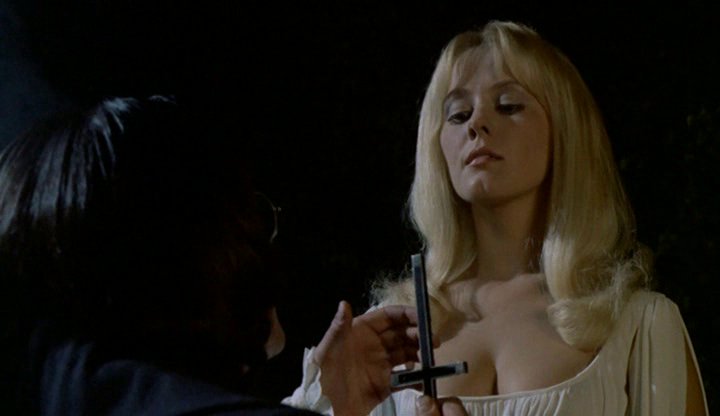
Following in the footsteps of Roy Ward Baker’s The Vampire Lovers (1970), Lust for a Vampire was the second of Hammer Studios’ three “Karnstein vampire flicks”, based on the novella by Sheridan Le Fanu. As many have noted, Danish beauty Yutte Stensgaard is sexy but lacks charisma:

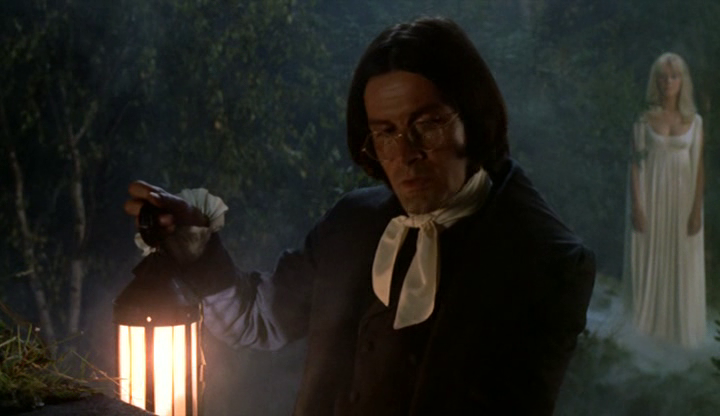
and her character pales in comparison to Ingrid Pitt’s more nuanced portrayal as Carmilla in The Vampire Lovers. Meanwhile, Bates — so compelling in the same year’s Dr. Jekyll and Sister Hyde (1971) — simply comes across as silly:

and the film’s obvious replacement for Christopher Lee (Mike Raven as Count Karnstein) merely lurks menacingly in the shadows.

The entire film is essentially an extended excuse to show off nubile young women with heaving bosoms in various states of skimpy dress and undress. The most laughable moment by far: Johnson and Stensgaard get romantic (he cares not a whit about her inconvenient status as a vampire) while a ballad entitled “Strange Love” suddenly begins playing in the background.

Redeeming Qualities and Moments:

  • Lush cinematography

Must See?
No; this one is only must-see for vampire-flick completists. Listed as a Cult Movie in the back of Peary’s book.

Links:

20 Million Miles To Earth (1957)

20 Million Miles To Earth (1957)

“Why is it always, always, so costly for man to move from the present to the future?”

Synopsis:
When a spaceship crashes into the Mediterranean, two fishermen (George Khoury and Don Orlando) and a boy (Bart Braverman) rescue two of the passengers, of whom only one (William Hopper) survives. While a beautiful doctor-in-training (Joan Taylor) treats Hopper’s wounds, Braverman secretly sells a Venusian specimen that washed ashore to Taylor’s zoologist-grandfather (Frank Puglia) — but once the creature hatches, it soon grows into an enormous monster that terrorizes Rome.

Genres, Themes, Actors, and Directors:

  • Aliens
  • Mutant Monsters
  • Ray Harryhausen Films
  • Science Fiction

Response to Peary’s Review:
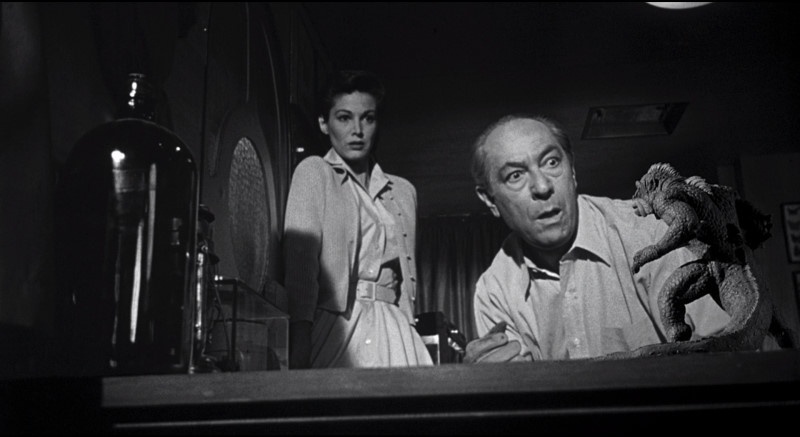
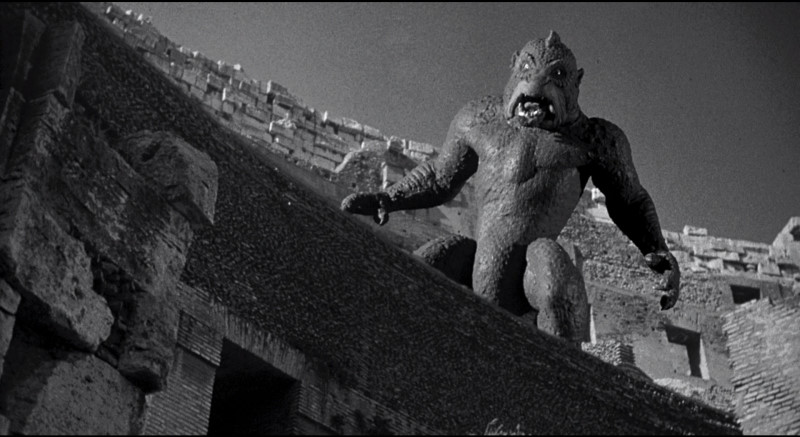
Primarily known for showcasing “the first of special-effects expert Ray Harryhausen’s Dynamation creatures”, this “lively film” features “an impressive monster — one that would serve as [a] model for future Harryhausen creations”. Unfortunately, beyond the admittedly impressive animation — including a lengthy finale in which the monster ravages Rome (chosen as the location because Harryhausen wanted to take a vacation there!) — the film itself lacks a narrative leg to stand on. It’s truly a “monster flick”, with a misunderstood creature vainly attempting to elude capture while the film’s handsome male and female protagonists inevitably fall in ’50s love (after hating each other first, naturally). The most interesting scene takes place right away, as a Sicilian fisherman (uncredited Khoury) bravely insists to his companion (cowardly Orlando, also uncredited) that they must enter the sinking spaceship to locate any survivors; why in the world is Khoury’s noble character immediately discarded and forgotten? But, as DVD Savant argues, “a monster movie with a good monster is a good monster movie”, and one (perhaps) shouldn’t take the movie “to task for its cinematic deficiencies.” Perhaps.

Redeeming Qualities and Moments:

  • Effective “dynamation” by Ray Harryhausen
  • Good use of Rome locales

Must See?
No, though of course it’s recommended for Harryhausen fans.

Links:

Born to Dance (1936)

Born to Dance (1936)

“He’s got a smile like concentrated vodka!”

Synopsis:
A trio of Navy sailors — Ted (James Stewart), ‘Mush’ (Buddy Ebsen), and ‘Gunny’ (Sid Silvers) — romance three girls while on leave: Stewart falls for an aspiring dancer (Eleanor Powell), Ebsen flirts unsuccessfully with a singer named Peppy (Frances Langford), and Silvers attempts to reunite with the woman (Una Merkel) he married four years earlier after a marathon dance session, not knowing they have a child (Juanita Quigley) together. Stewart and Powell’s romance gets more complicated when the scheming publicist (Alan Dinehart) for a Broadway diva (Virginia Bruce) cooks up a plan to have her fall for Stewart, who rescued her beloved Pekingese dog while she was visiting the sailors’ ship and schmoozing with its adoring captain (Raymond Walburn).

Genres, Themes, Actors, and Directors:

  • Aspiring Stars
  • Dancers
  • Jimmy Stewart Films
  • Musicals
  • Romance
  • Roy Del Ruth Films
  • Sailors

Response to Peary’s Review:
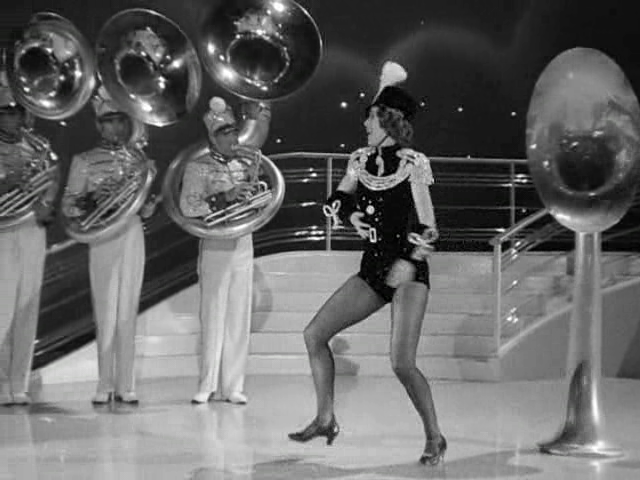
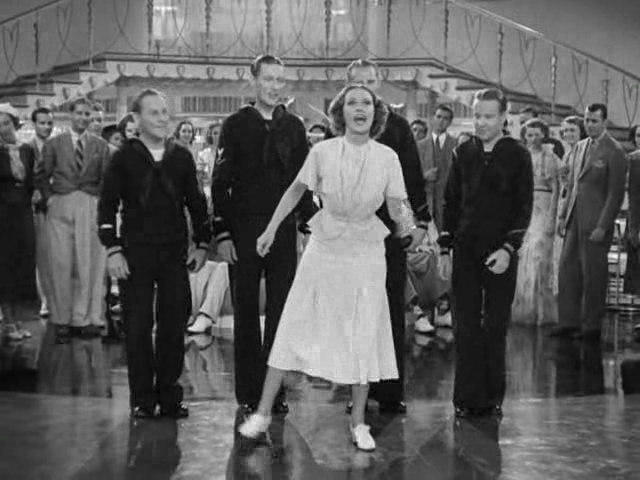
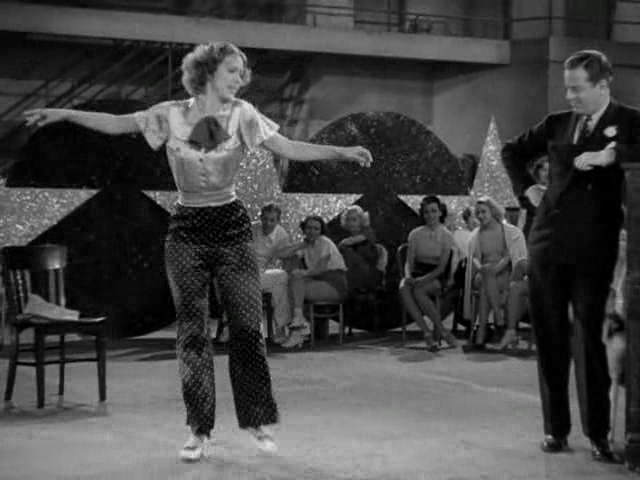
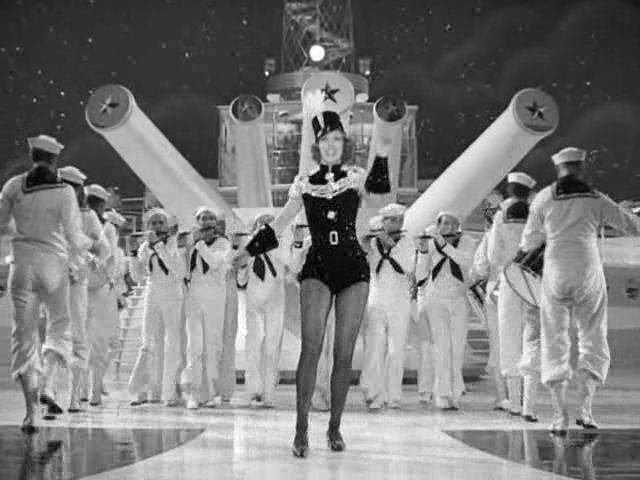
Peary writes that this “carefree Depression Era musical” — directed by Roy Del Ruth and starring tap dancing legend Eleanor Powell — “is corny and campy, yet enjoyable”. He points out that the story is “silly” (see the synopsis above) and possesses an “unconvincing plot twist” (most definitely true!), but notes that “there’s some okay comedy”, a “fine, varied Cole Porter score” (including “I’ve Got You Under My Skin”), and “absolutely terrific… tap routines” by Powell.

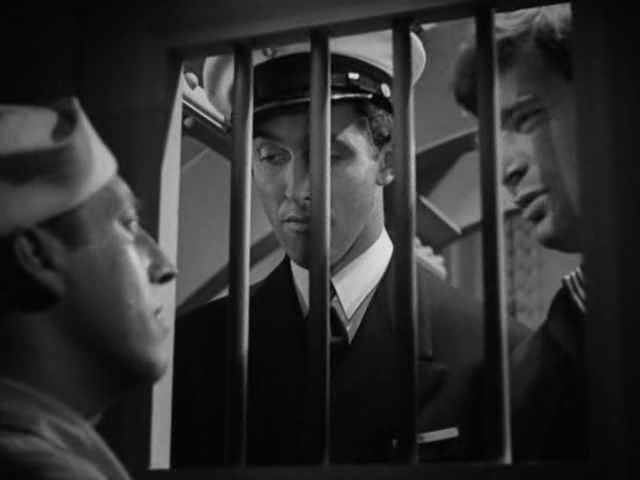
Unfortunately, while Powell is pretty and earnest, she isn’t the most nuanced of actors, and gravitates towards one facial expression (smiling, toothy mouth wide open) while dancing; Peary notes somewhat uncharitably that “when standing still” she “looks like she’d be a crummy Amateur Hour contestant”. But Stewart (apparently suggested for the part by Porter) is fine in one of his earliest roles:

and gets to warble “Easy to Love”.

Note: Of interest is the brief but memorably loopy scene with a “switchboard operator” (Helen Troy) “who anticipated by thirty years Lily Tomlin’s Ernestine:”

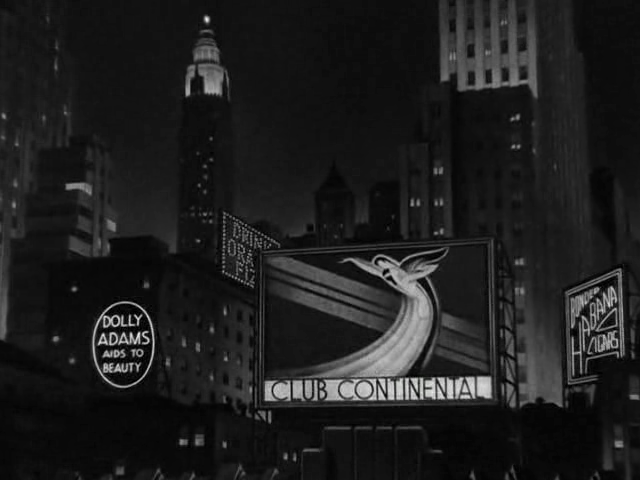
[describing Jimmy Stewart] “Oh, say — guess who I seen at Club Continental last night? Lucy James with that sailor she met through a Pekingese. Believe me, he’s a sea-goin’ thrill if I ever seen one. What’s he like? Well, tall — sort of the answer to a maiden’s prayer on stilts. Honest, he must be six feet four, and that’s just two inches shorter than a totem pole. Oh, but he’s got a smile like concentrated vodka! Vodka? Oh, it’s a Japanese drink made out of panther blood, I think.”

Redeeming Qualities and Moments:

  • Powell’s dancing


  • Fine cinematography and Art Deco sets


  • A couple of fun comedic interludes
  • Cole Porter’s score

Must See?
No, though it’s worth viewing simply as Powell’s iconic flick.

Links:

Day the Earth Stood Still, The (1951)

Day the Earth Stood Still, The (1951)

“I am fearful when I see people substituting fear for reason.”

Synopsis:
An alien named Klaatu (Michael Rennie) and his bodyguard-robot Gort (Lock Martin) land in Washington D.C. hoping to peacefully warn the Earth’s leaders that internecine violence will lead to the planet’s annihilation. When Rennie is immediately attacked, he goes undercover to learn more about the human race, befriending a widow (Patricia Neal) and her son (Billy Gray) as well as a brilliant scientist (Sam Jaffe) — but when Neal’s jealous fiance (Hugh Marlowe) learns Rennie’s true identity, he will stop at nothing to alert the authorities.

Genres, Themes, Actors, and Directors:

  • Aliens
  • Cold War
  • Hugh Marlowe Films
  • Michael Rennie Films
  • Mistaken Identities
  • Patricia Neal Films
  • Peacemakers
  • Ray Harryhausen Films
  • Robert Wise Films
  • Sam Jaffe Films
  • Science Fiction

Response to Peary’s Review:
Peary writes that this “extremely well-directed and -acted adult film” — Hollywood’s second alien invasion flick of the 1950s after Howard Hawks’ The Thing (From Another Planet) (1951) — features a “literate script” by Edmund H. North (“adapting a story by Harry Bates”), and an “excellent”, theremin-heavy “dramatic score by Bernard Herrman”. However, he says he would like to “exchange some of the moralizing for a couple more exciting scenes”, and notes that he doesn’t “know what to make of Klaatu’s peace plan”, given that it forces humans to “let robots like Gort patrol earth and keep the peace” as if we were grounded teenagers. He posits that the “most suspenseful scene” is the one in which “frightened Neal bravely [goes] to Gort with a message from Klaatu: ‘Klaatu barada nikto!'” — a line which remains one of the most famous in the annals of sci-fi cinema.

I’m ultimately a bigger fan of this cult flick than Peary: I like its intelligence, its deliberate pacing, and the crispness of Leo Tover’s atmospheric black-and-white cinematography (which is especially gorgeous in Blu-Ray). Unlike Anne Francis’s Altaira in Forbidden Planet (1956), Neal is a refreshingly savvy and nuanced female protagonist:

and Rennie is perfectly cast as an ultra-rational yet compassionate alien attempting to understand humans’ “illogical” bent towards violence.

The storyline may be a bit heavy in moralizing — with Rennie’s “Mr. Carpenter” clearly meant to symbolize a Jesus-like savior — but truthfully, we deserve it, given that our current world situation is nearly as dire now as during the Cold War. Thankfully, the film’s numerous “inconsistencies” — i.e., the fact that “Gort, a ten-foot metal Golem, scorches his way out of a solid block of plastic, marches across a major city, burns down the wall of a jail and carries kaput Klaatu back to the Mall – and nobody sees him!” — “only become obvious after repeated viewings”; see DVD Savant’s review for this example and others.

Note: This film was remade in 2008 with Keanu Reeves but I haven’t seen that version and probably won’t.

Redeeming Qualities and Moments:

  • Michael Rennie as Klaatu
  • Patricia Neal as Helen
  • Fine, precise direction by Wise
  • Leo Tover’s excellent b&w cinematography
  • Ray Harryhausen’s impressive special effects
  • Good use of Washington D.C. locales
  • Bernard Herrmann’s theremin-heavy score

Must See?
Yes, both for its historical value and as a classic of the genre.

Categories

  • Genuine Classic
  • Historically Relevant

(Listed in 1001 Movies You Must See Before You Die)

Links: