Pleasure Garden (1925)
“That girl knows exactly what she’s doing — and she likes it.”
|
Synopsis: |
|
Genres, Themes, Actors, and Directors:
Review: Redeeming Qualities and Moments:
Must See? Links: |
“That girl knows exactly what she’s doing — and she likes it.”
|
Synopsis: |
|
Genres, Themes, Actors, and Directors:
Review: Redeeming Qualities and Moments:
Must See? Links: |
“It is the middle of the dark ages — ages darker than anyone had expected…”
|
Synopsis: |
|
Genres, Themes, Actors, and Directors:
Review:
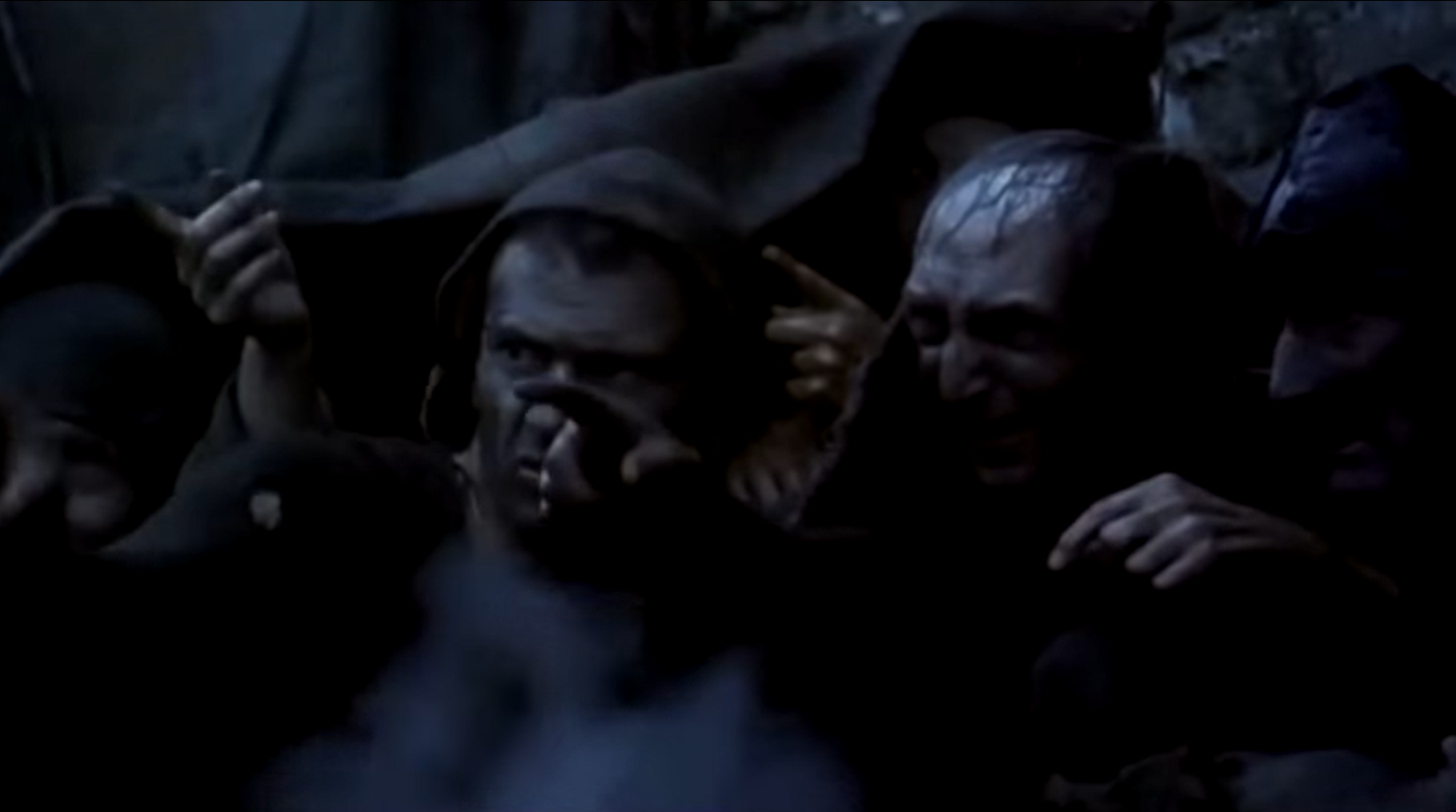
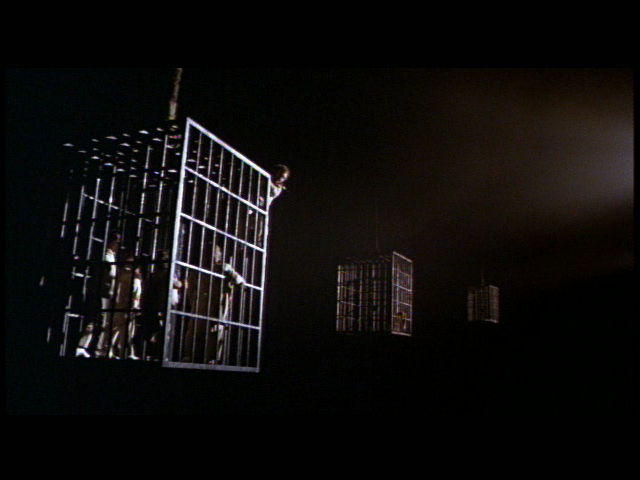
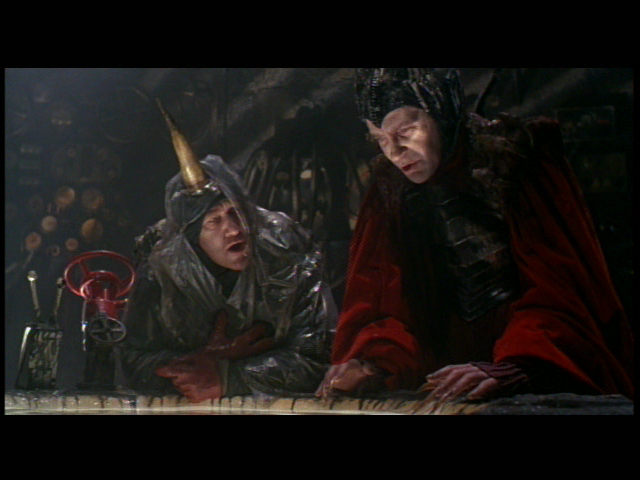
The rest of the movie is an almost unbearably muck-filled journey into what Gilliam clearly posits as the *real* Middle Ages, when Britain’s citizens lived a miserable life of dung and filth:
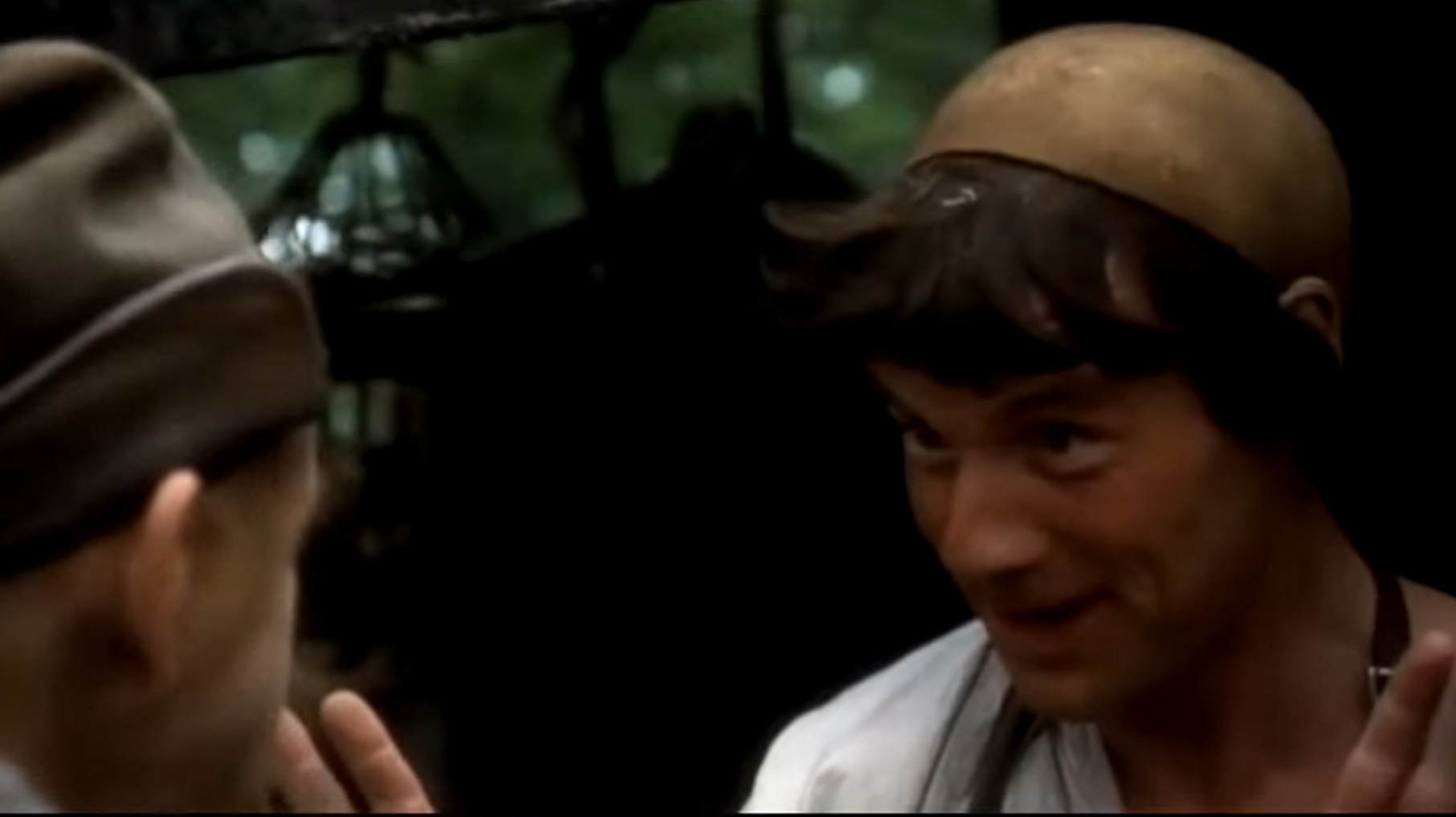
Only those “lucky” enough to see the world through rose-colored glasses, like Michael Palin’s clueless young cooper:
who is desperately in love with the spoiled, sullen, obese daughter (Annette Badland) of a fishmonger (Warren Mitchell):
are able to make their way through the perils of daily life with enough nervy stupidity to survive, simply through dumb luck. Meanwhile, there’s precious little humor to be had throughout the movie, leaving one to wonder what the point of it all really is. Perhaps most frustrating is that Palin’s protagonist is an utterly hapless and accidental “hero”, never really demonstrating growth in either intelligence or bravery; his final fate is thus both undeserved and under-appreciated. Redeeming Qualities and Moments:
Must See? Links: |
“Here, in this bachelor flat on Pacific, Professor can relax and get away from all those amorous college girls.”
|
Synopsis: |
|
Genres, Themes, Actors, and Directors:
Review:
… heartthrob Richard Beymer (a year after his leading role in West Side Story):
… and 18-year-old Tuesday Weld:
Tashlin does indeed keep the film moving quickly, and shows evidence of his skill at directing broad slapstick, but the storyline itself falls completely flat: Terry-Thomas’s “irresistible” appeal to women of all ages never once rings true (not even as a gag), and Weld’s rash decision to pawn herself off as a juvenile delinquent (rather than revealing that Terry-Thomas’s absentee fiancee is her mother) feels equally forced. If you enjoy this type of mindless, colorful piffle, certainly feel free to seek it out; otherwise, film fanatics should feel no obligation at all to watch it. Redeeming Qualities and Moments:
Must See? Links: |
“Wherever you go, I’m going with you.”
|
Synopsis: |
|
Genres:
Review:
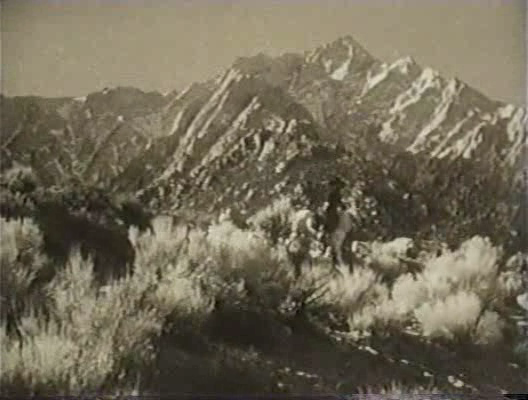
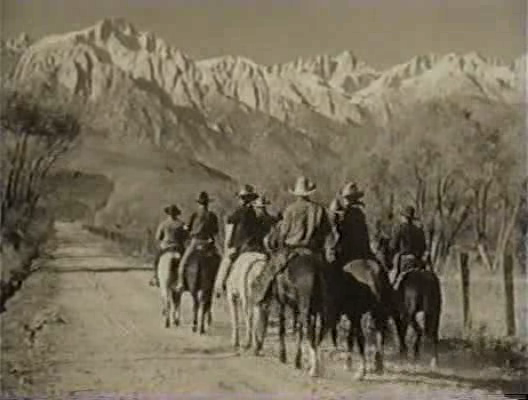
… and the beautiful location footage surrounding him (shot in Lone Pines, California).
Watch for Warner Oland in a pre-Charlie Chan role, and Anne Shirley in a small role as Burnham’s teenage daughter. Redeeming Qualities and Moments:
Must See? Categories
Links: |
“To be quite frank, Kevin, the fabric of the universe is far from perfect.”
|
Synopsis: |
|
Genres:
Response to Peary’s Review: Note: The “true” ending of the film — after Warnock returns home from his adventures and confronts his parents — is utterly bizarre; it will surely leave you scratching your head in wonder. Redeeming Qualities and Moments:
Must See? Categories Links: |
“I’m sick?! Well, take a look at yourself!”
|
Synopsis: |
|
Genres, Themes, Actors, and Directors:
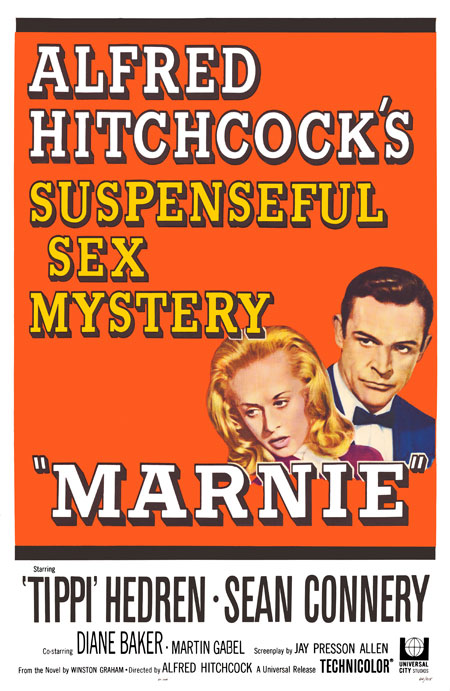
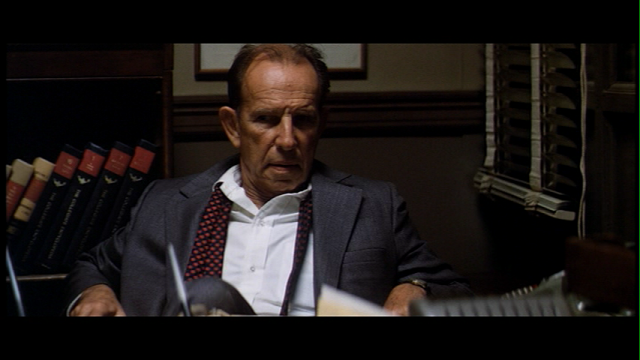
Response to Peary’s Review: The truth about this undeniably polarizing film probably lies somewhere in between these two sentiments. Yes, Hitchcock’s use of rear-view projections definitely looks and feels artificial at this point in cinematic history (but would a Hitchcock film be complete without them?). Ultimately, for those who give themselves over to Marnie’s predicament, and who are willing to accept the inevitable artificialities sprinkled throughout any Hitchcock film, Marnie eventually becomes (as Peary argues) an absorbing story of psychological sleuthing and marital growth — a film “about a woman with many aliases who is involved in a desperate search for identity“. The fact that Connery drolly admits to Marnie that he’s far from perfect (when she accuses him of being just as screwy as she is) allows us to accept these two individuals as uniquely flawed; and although Connery’s amateur psychoanalyzing may indeed come across these days as “too pat”, we admire his determination to help Marnie, and can’t help rooting for them as a couple. While Hedren’s acting doesn’t particularly impress during the earlier parts of the film (when her character in general is still a mystery to us), she eventually digs more deeply into her role, allowing us to clearly see Marnie’s vulnerabilities, and to understand that this is not a woman out to blithely take advantage of men — she has deep-seated “reasons” for acting the way she does. Connery’s casting is unconventional (and it’s true, as DVD Savant argues, that we never “believe that Sean Connery — looking his 007 best — is an American businessman”), but he’s appealing in an undeniably tricky role; and as Peary notes in his Cult Movies 2, the fact that “James Bond” — who’s “capable of seducing lesbian Pussy Galore” — is unable to seduce his own wife on his honeymoon speaks volumes about the depth of Marnie’s sexual neuroses. Supporting performances in the film are fine as well, with Louise Latham particularly impressive in a small but important role as Marnie’s mother — a woman we want to revile (since she’s clearly the cause of Marnie’s miseries) but are ultimately too intrigued by to simply hate. Note: Watch for Bruce Dern in a tiny role as the key figure in Marnie’s recurring nightmares (only revealed at the end of the film); 12 years later, Dern would return to star in Hitchcock’s final film, Family Plot (1976). Redeeming Qualities and Moments:
Must See? Categories (Listed in 1001 Movies You Must See Before You Die) Links: |
“I’ve heard about you, Gifford. First you go get yourself a silver star, then you get busted to private. Oh, it’s a rough war, ain’t it?”
|
Synopsis: |
|
Genres, Themes, Actors, and Directors:
Review:
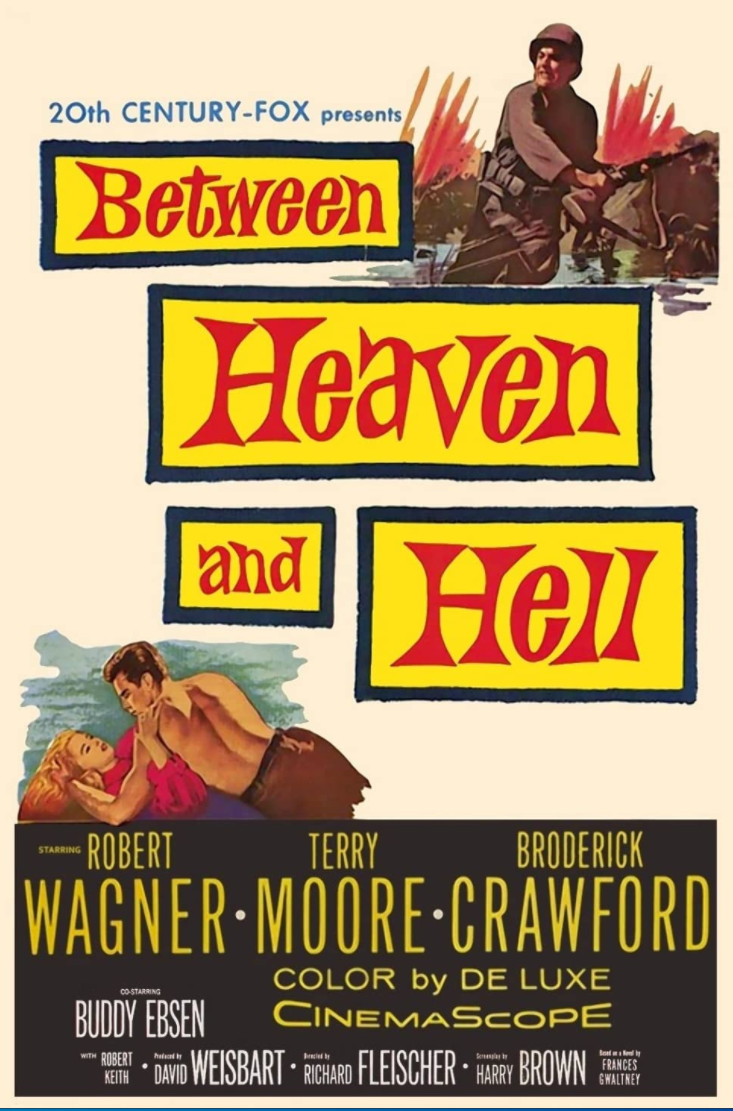
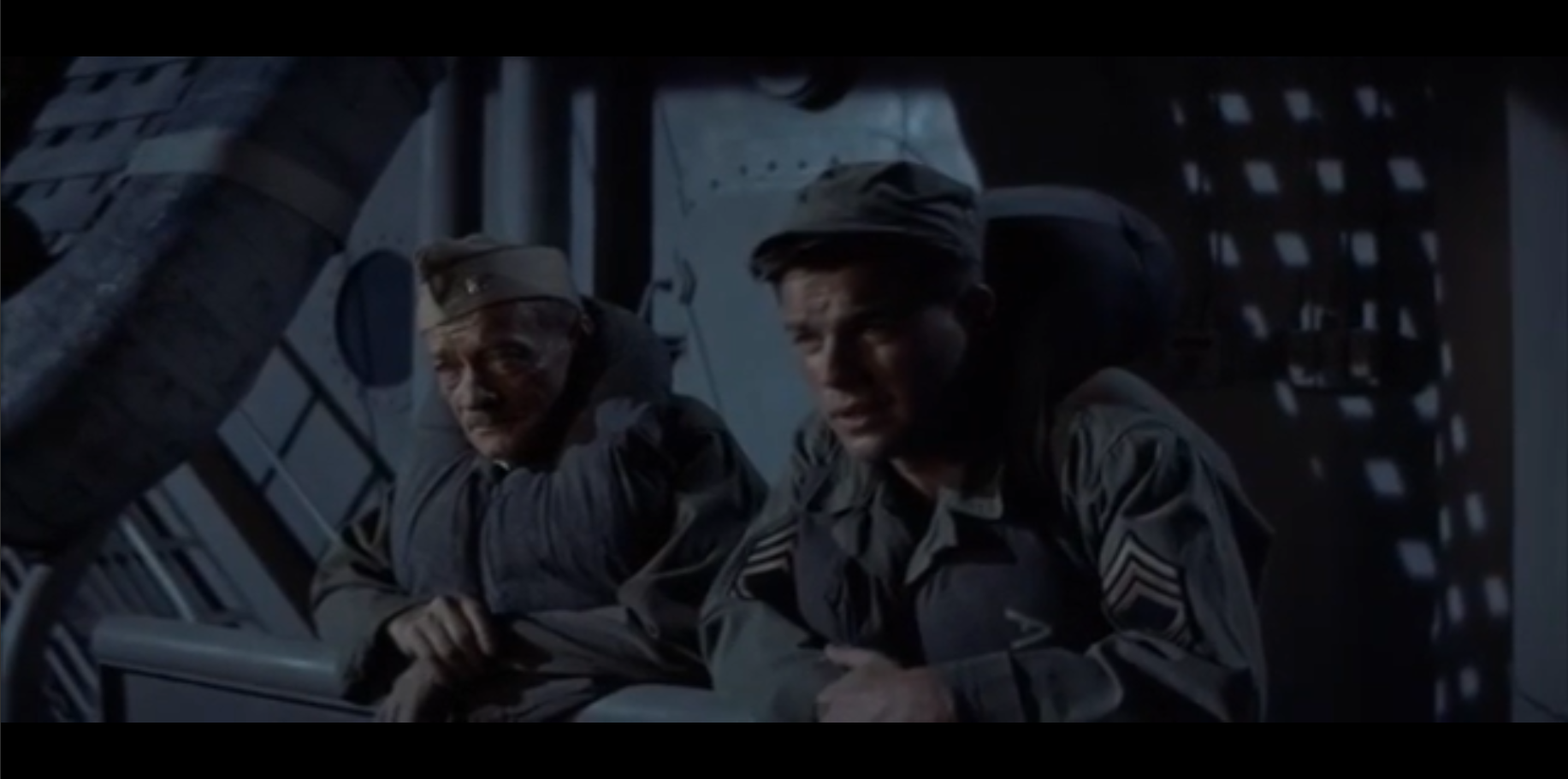
— comes across as somewhat heavy-handed, given that the brief flashbacks to his life as a callous plantation owner (married to Terry Moore) aren’t lengthy enough to give us a really good sense of who Gifford once was (or why).
Much more effective is director Richard Fleischer’s ability to show us how the random brutality of wartime violence — starting with the death of his beloved father-in-law (Robert Keith):
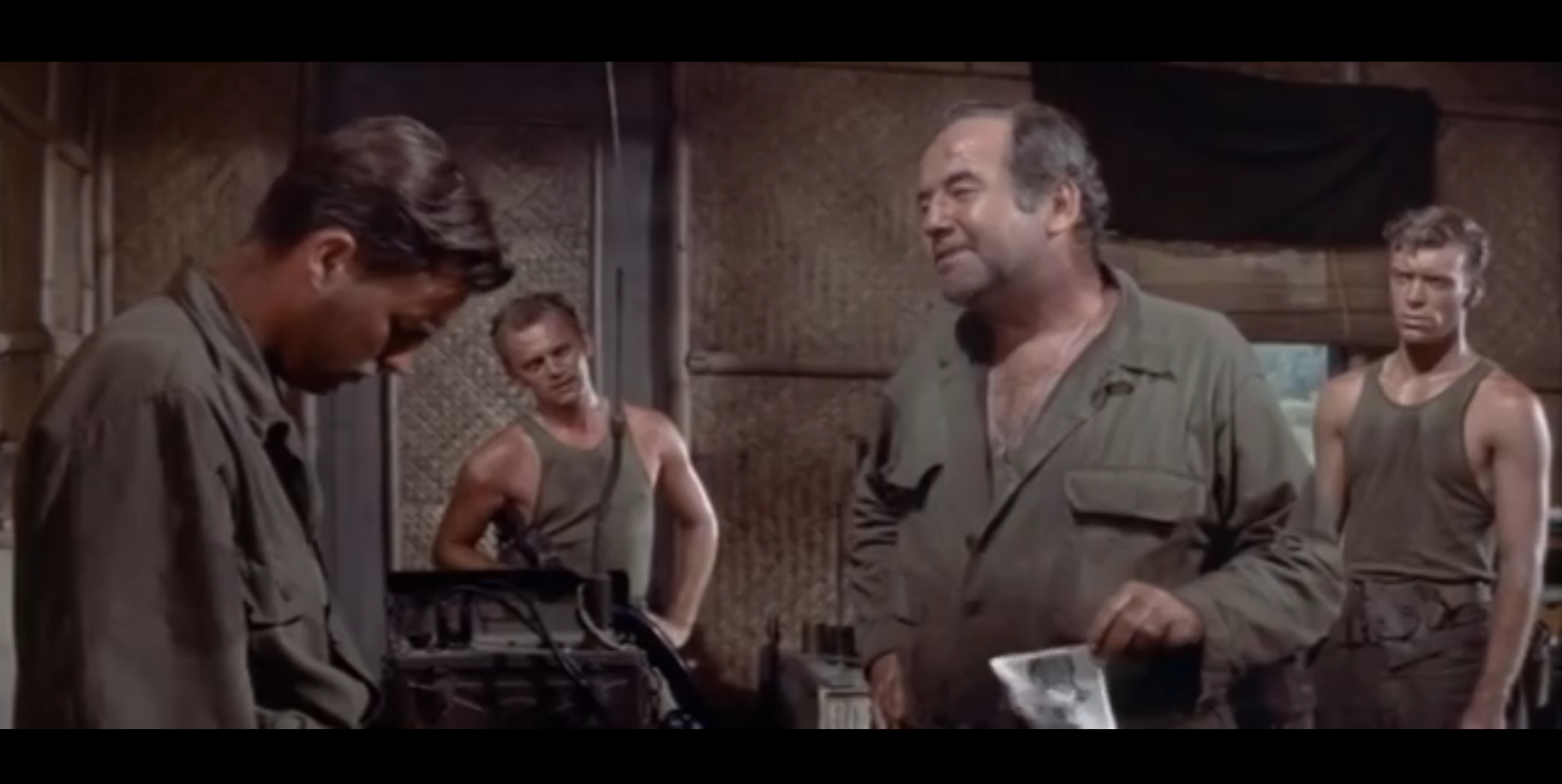
— has a deeply powerful effect on Wagner’s psyche; the type of PTSD he experiences wasn’t explored nearly enough in other wartime films of the era. Broderick Crawford is appropriately unhinged as a Kurtz-like commander slowly going off the deep end (with a weirdly homoerotic attachment to his two buff young henchmen, who often roam around shirtless):
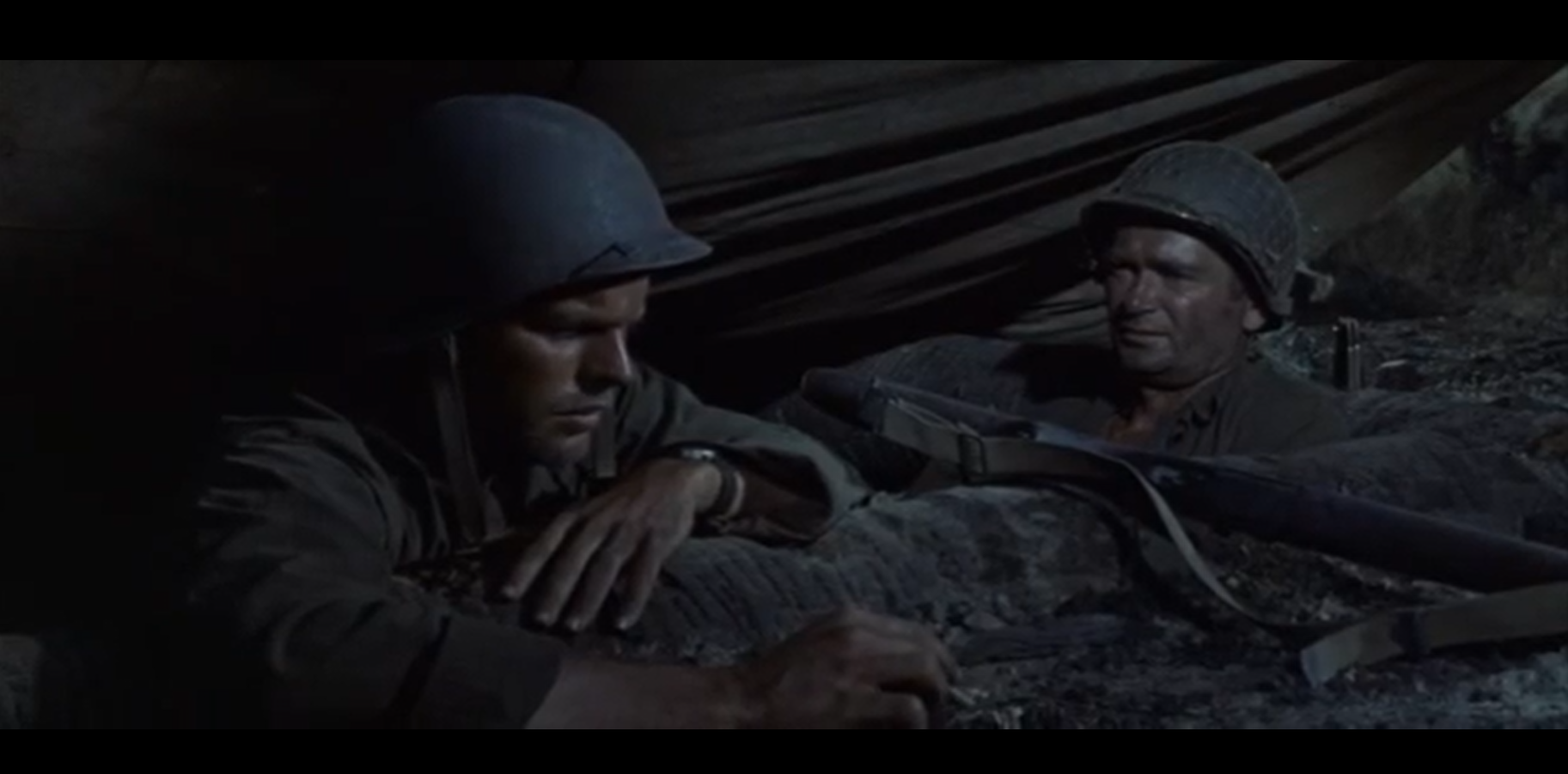
My favorite performance in the film, however, is given by Buddy Ebsen as Wagner’s lower-class “buddy”, who quietly befriends him and helps him see the good in himself.
Much less fortunate is the casting of Harvey Lembeck as — what else? — an obnoxious wiseacre; fortunately, his role is relatively small.
Note Hugo Friedhofer’s Oscar-nominated score, which draws heavily — and to nice effect — upon the “dies irae” motif. Redeeming Qualities and Moments:
Must See? Links: |
“Tell her they may soon be leaving us — leaving us for a long, long journey.”
|
Synopsis: |
|
Genres:
Response to Peary’s Review:
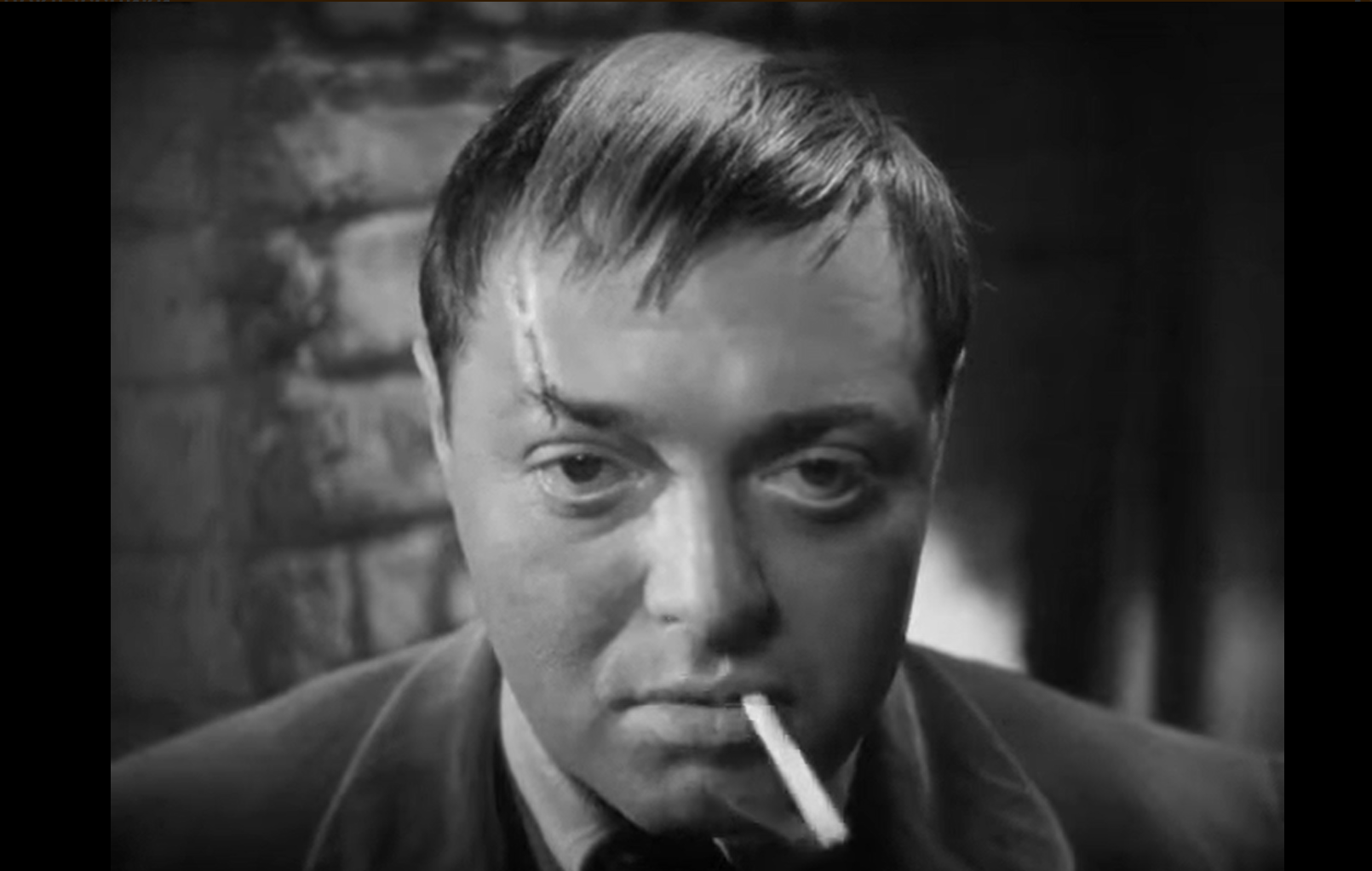
While I agree with Peary that the 1956 version is ultimately the more enjoyable of the two, certain elements of this earlier film work better — namely the setting of the opening sequences in Switzerland:
… rather than Morocco (I prefer Banks’ urbane Brit to Stewart’s “ugly American”):
… and the fact that Banks’ wife (Best) is a savvy sharpshooter rather than a ’50s housewife.
As Peary notes, however, 15-year-old Pilbeam (lovely as the central protagonist in Hitchcock’s The Young and Innocent, released three years later) “looks much too old for her part” — her age and gender imply the threat of something more egregious happening to her when she’s kidnapped, but these potential threats are simply ignored in the script.
Peary describes the “climactic shootout” — in which Best uses her shooting skills to rescue Pilbeam much like Day uses her singing skills to rescue Olsen — as something “straight out of American gangster films”:
… but it drags on for a bit too long. Much more rewarding is the earlier Albert Hall assassination sequence (with many shots duplicated in the 1956 version).
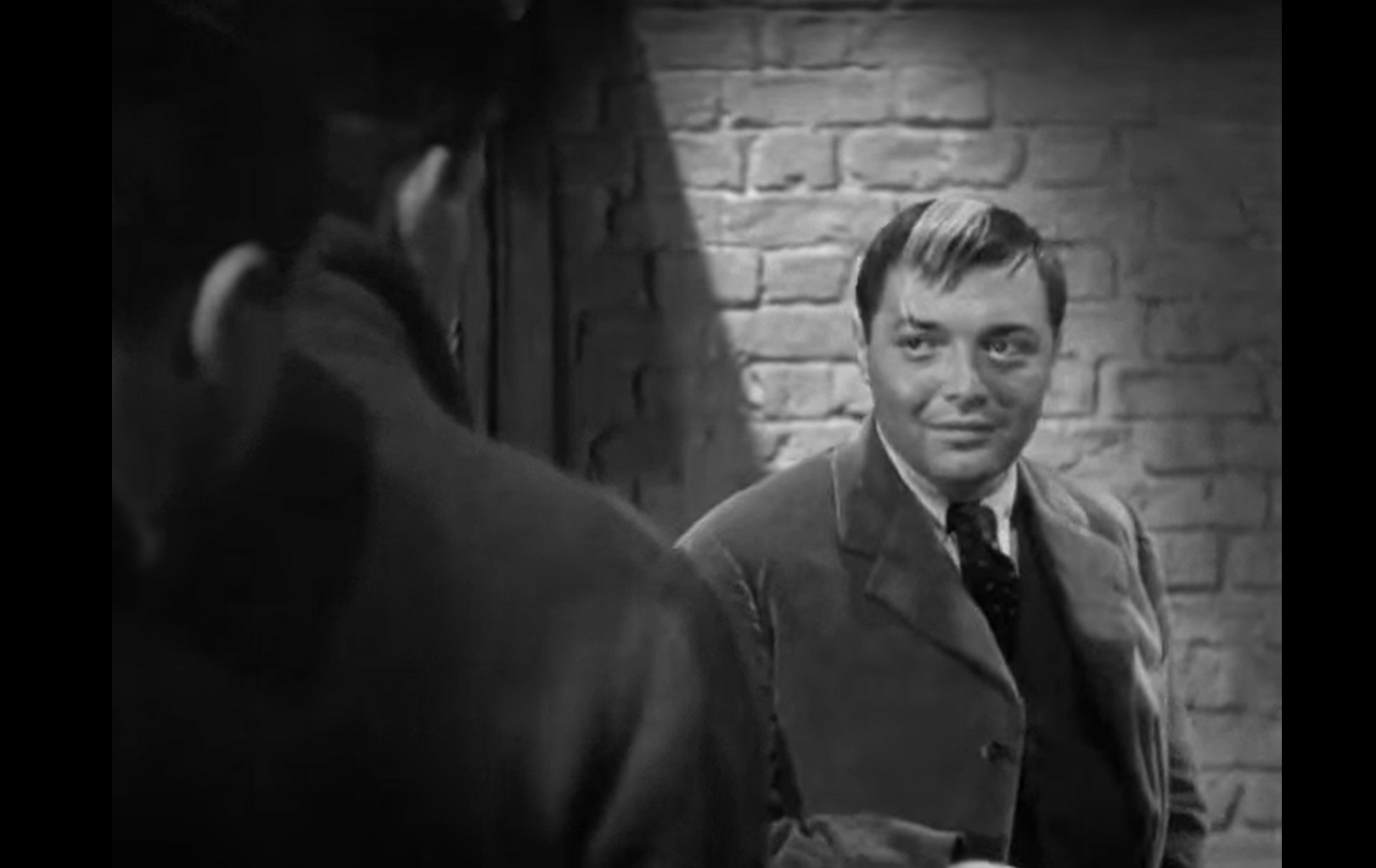
NB: This was Lorre’s first English-speaking role; accounts differ on whether he learned the language within three months, or recited most of his lines phonetically, but he does a remarkably polished job, and remains one of the film’s creepy highlights.
Redeeming Qualities and Moments:
Must See? Categories Links: |
“Don’t you realize that Americans dislike having their children stolen?”
|
Synopsis: |
|
Genres, Themes, Actors, and Directors:
Response to Peary’s Review:
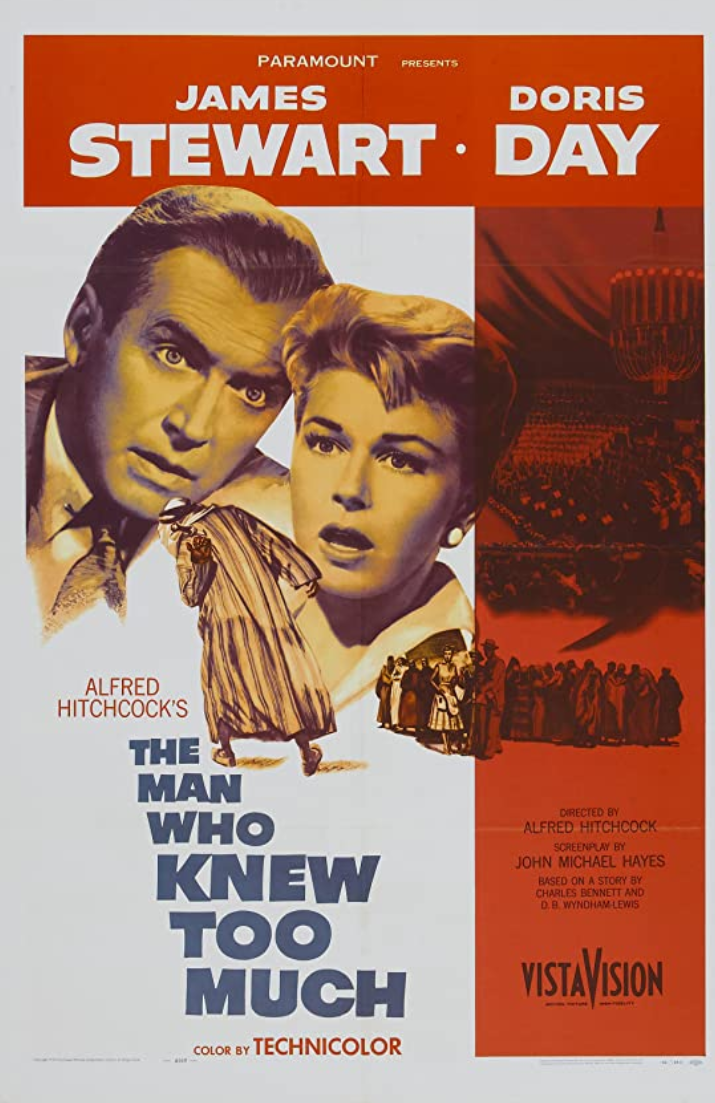
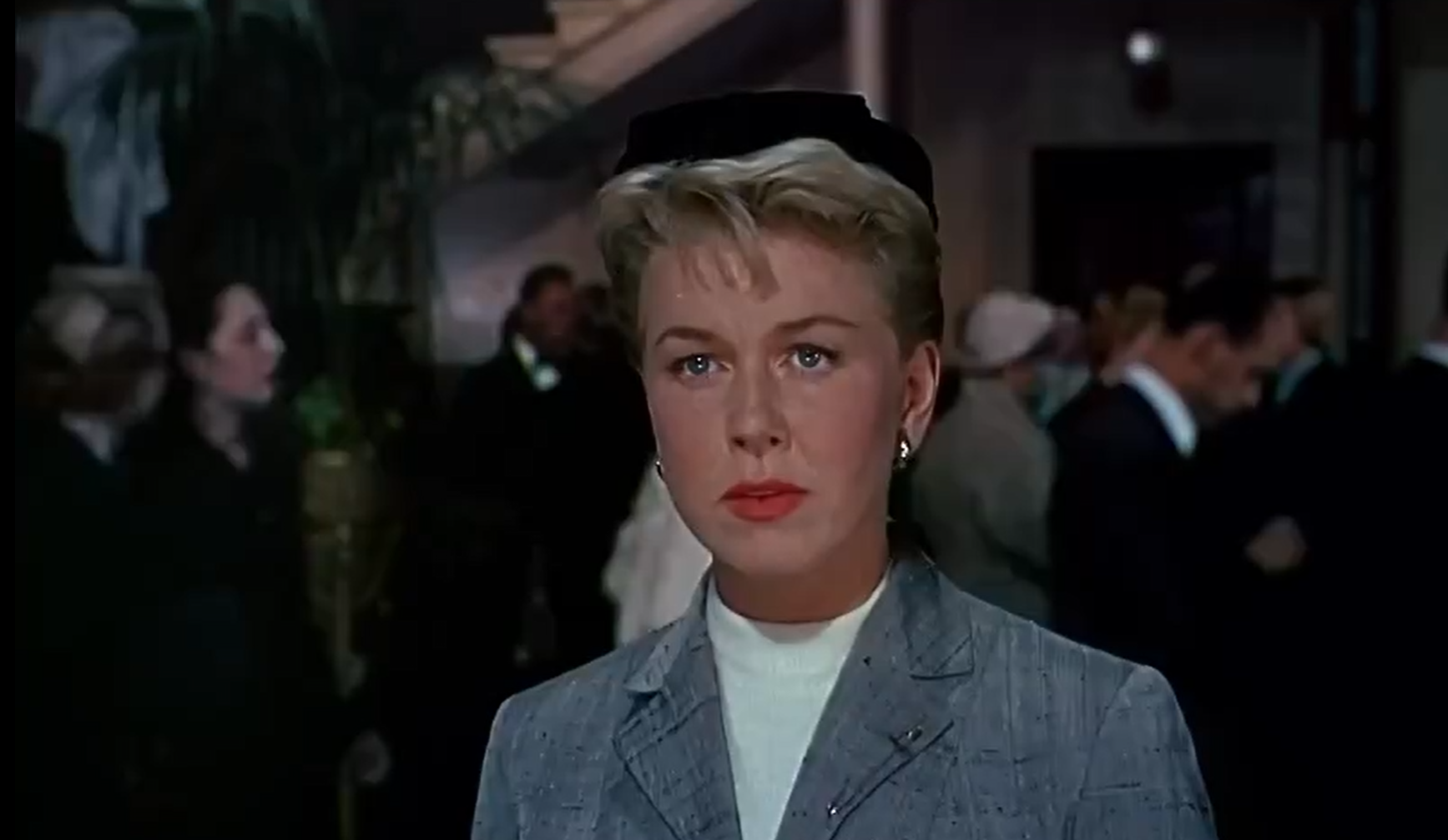
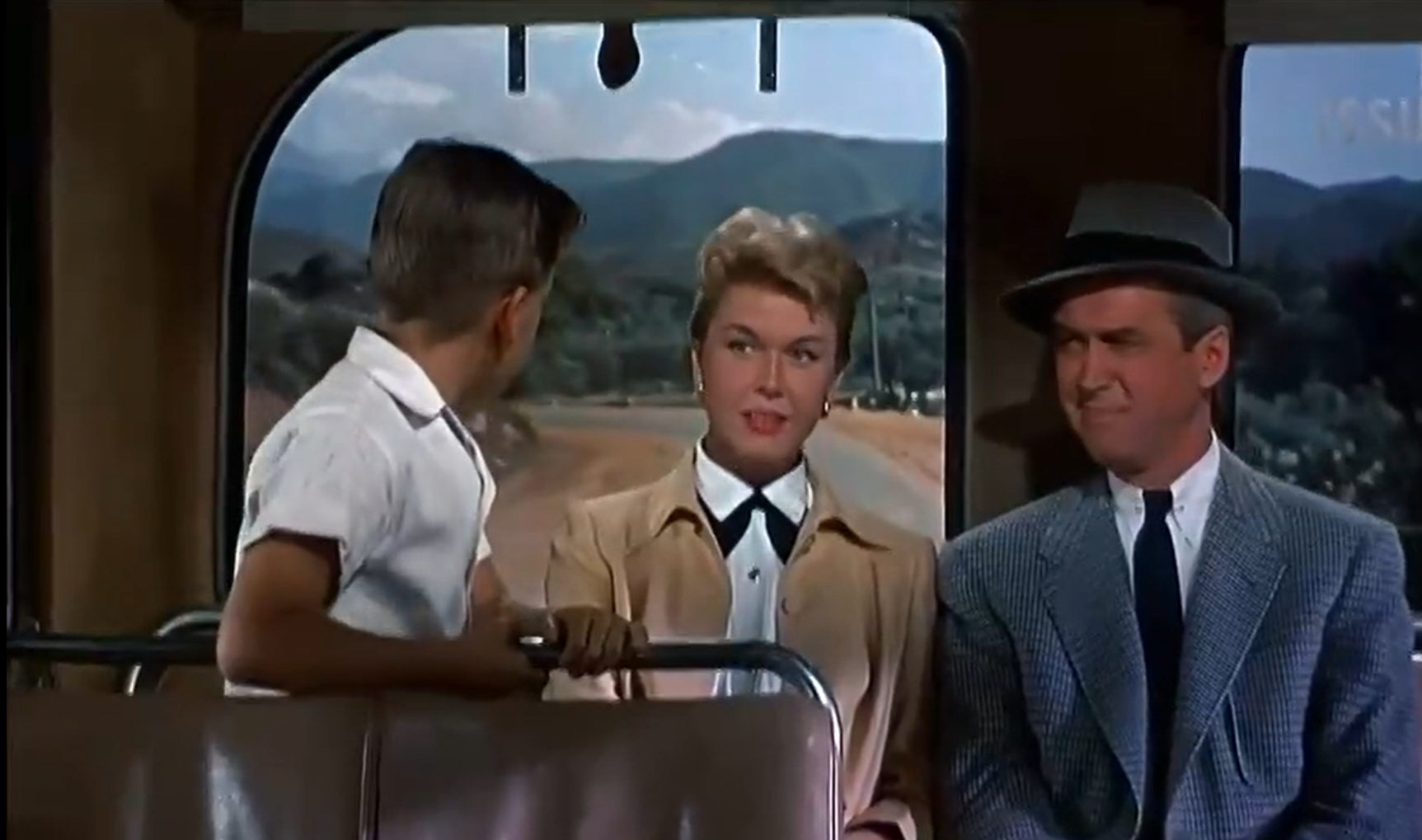
(NB: This song won the film an Oscar, but it’s actually a bit saccharine and repetitive; Hitchcock himself apparently hated it.) Stewart is serviceable but not particularly distinctive in the title role; his “Ugly American” treatment of Morocco during the film’s opening half-hour is truly off-putting:
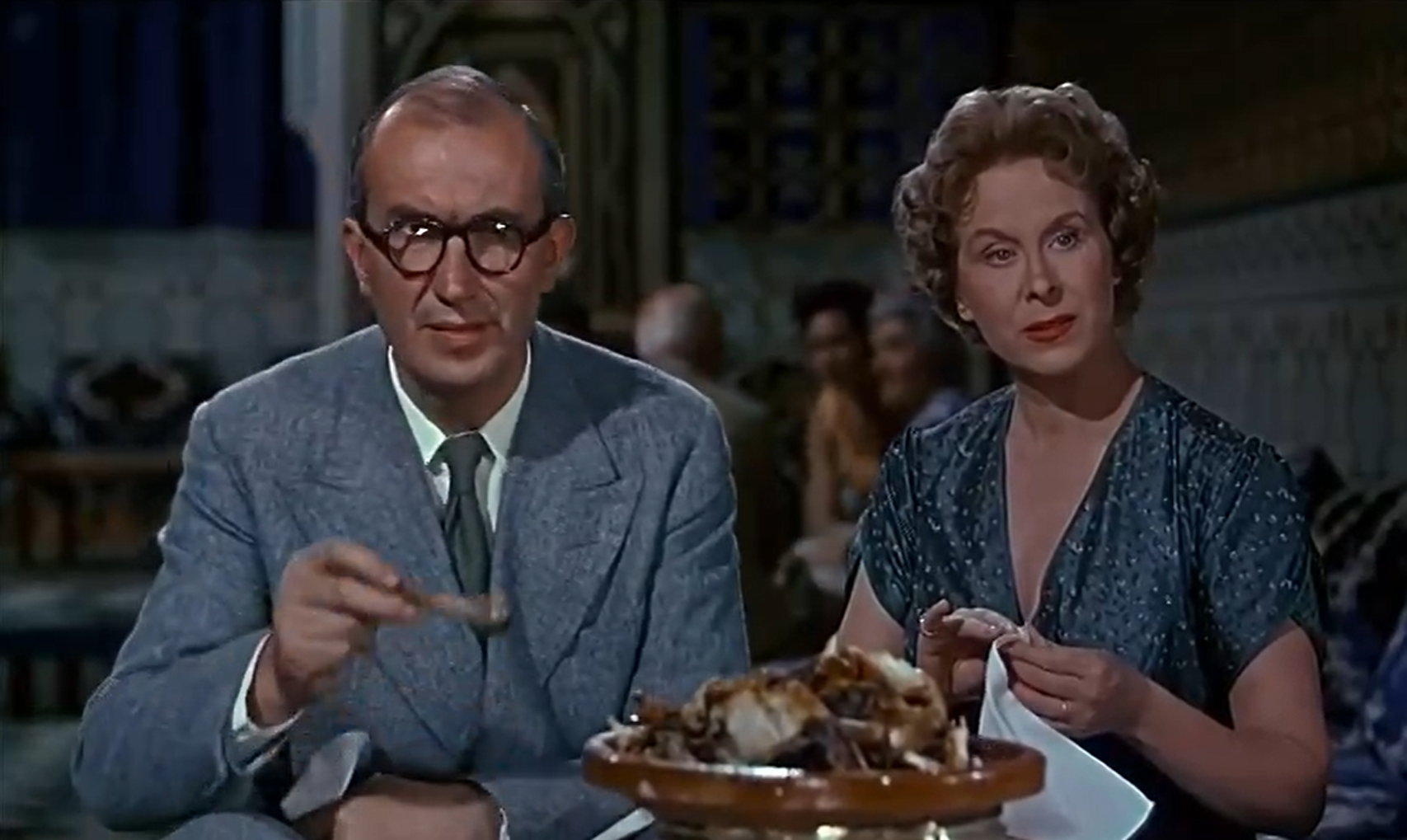
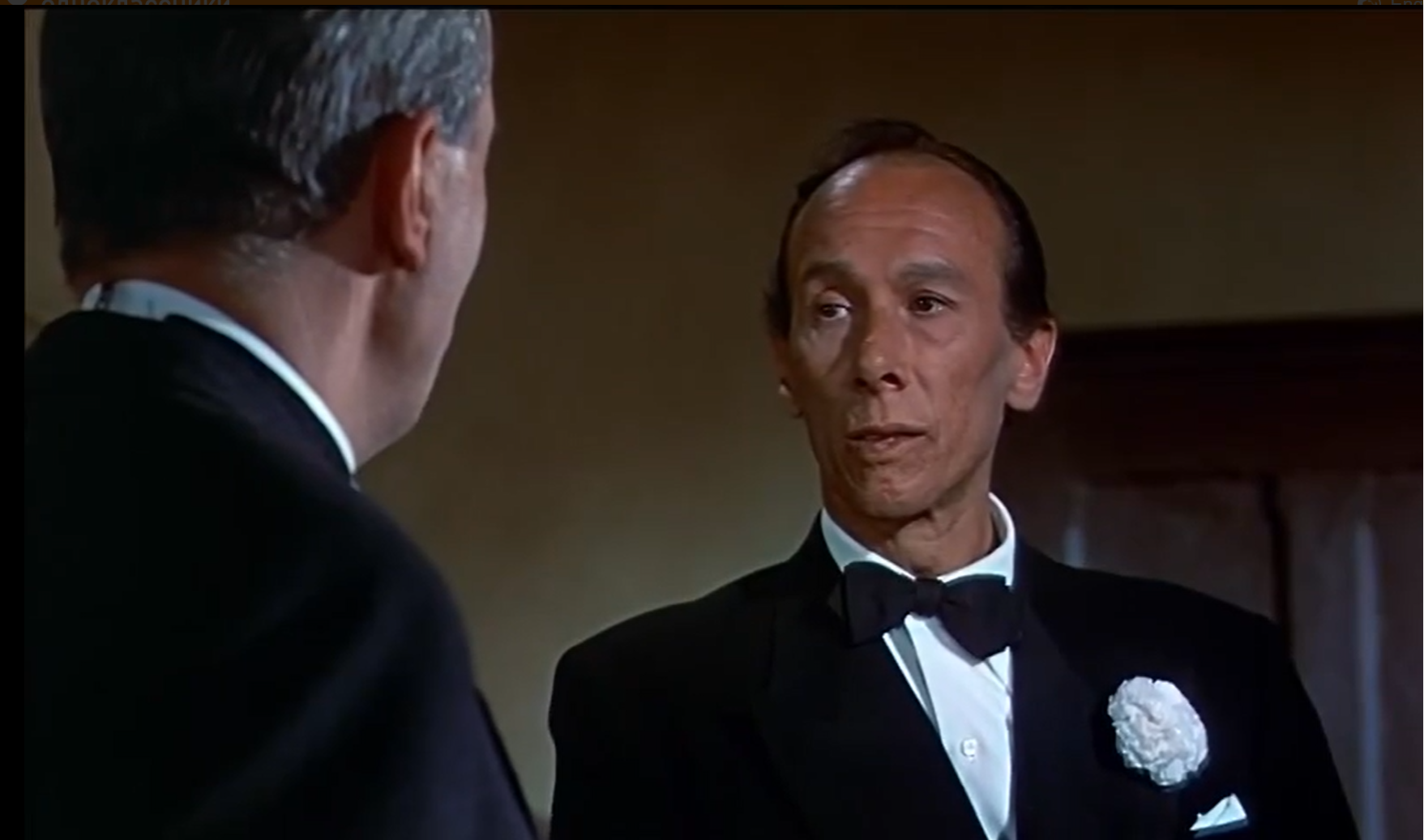
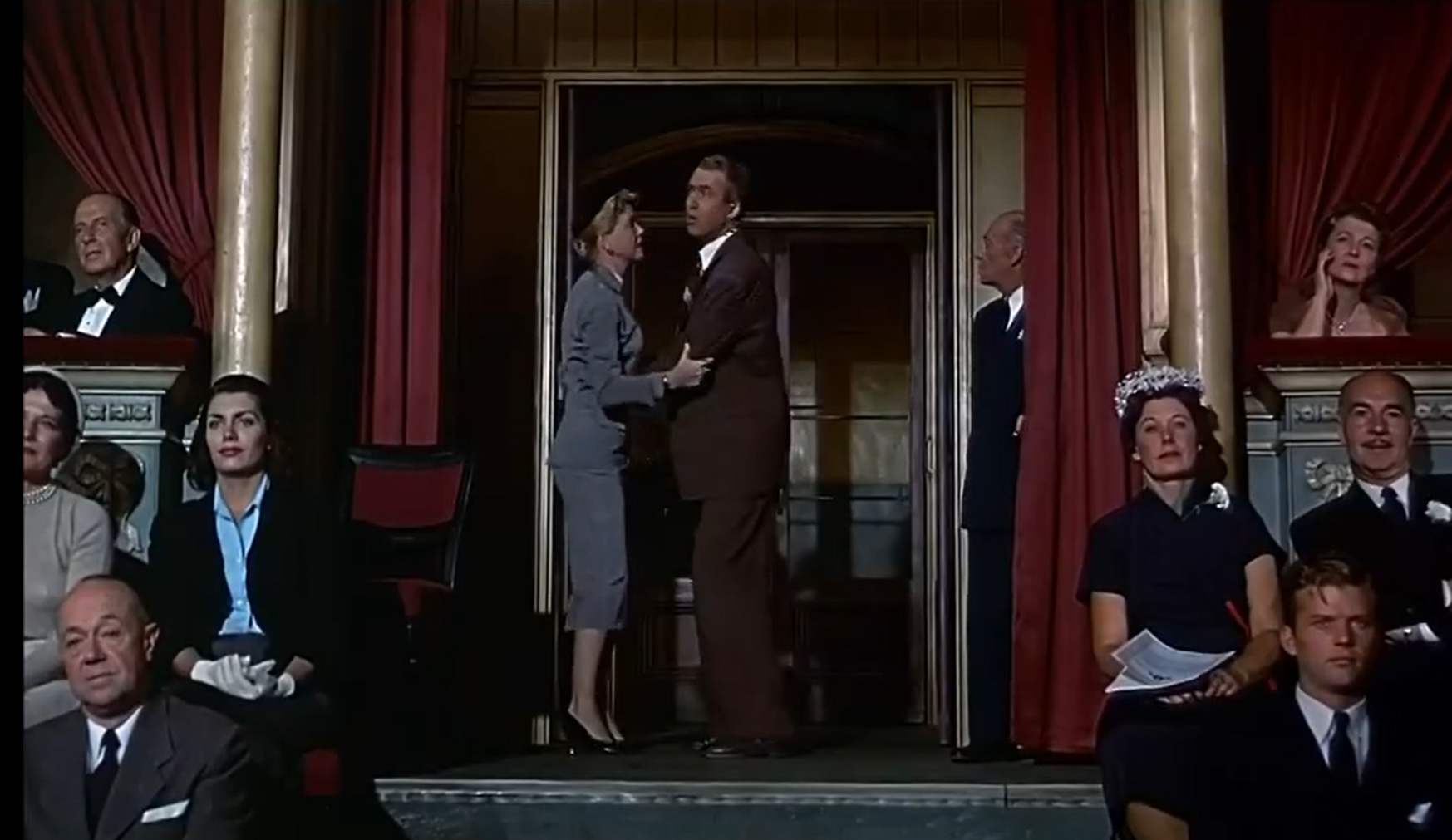
and makes it difficult to sympathize as much with his predicament as one otherwise would. In addition, while it’s somewhat pointless to quibble over plot holes in Hitchcock’s films (he was notoriously indifferent to their presence), I can’t quite get beyond the fact that Day and Stewart allow relative strangers (new “friends” they only just met the night before — Bernard Miles and creepy Brenda De Banzie):
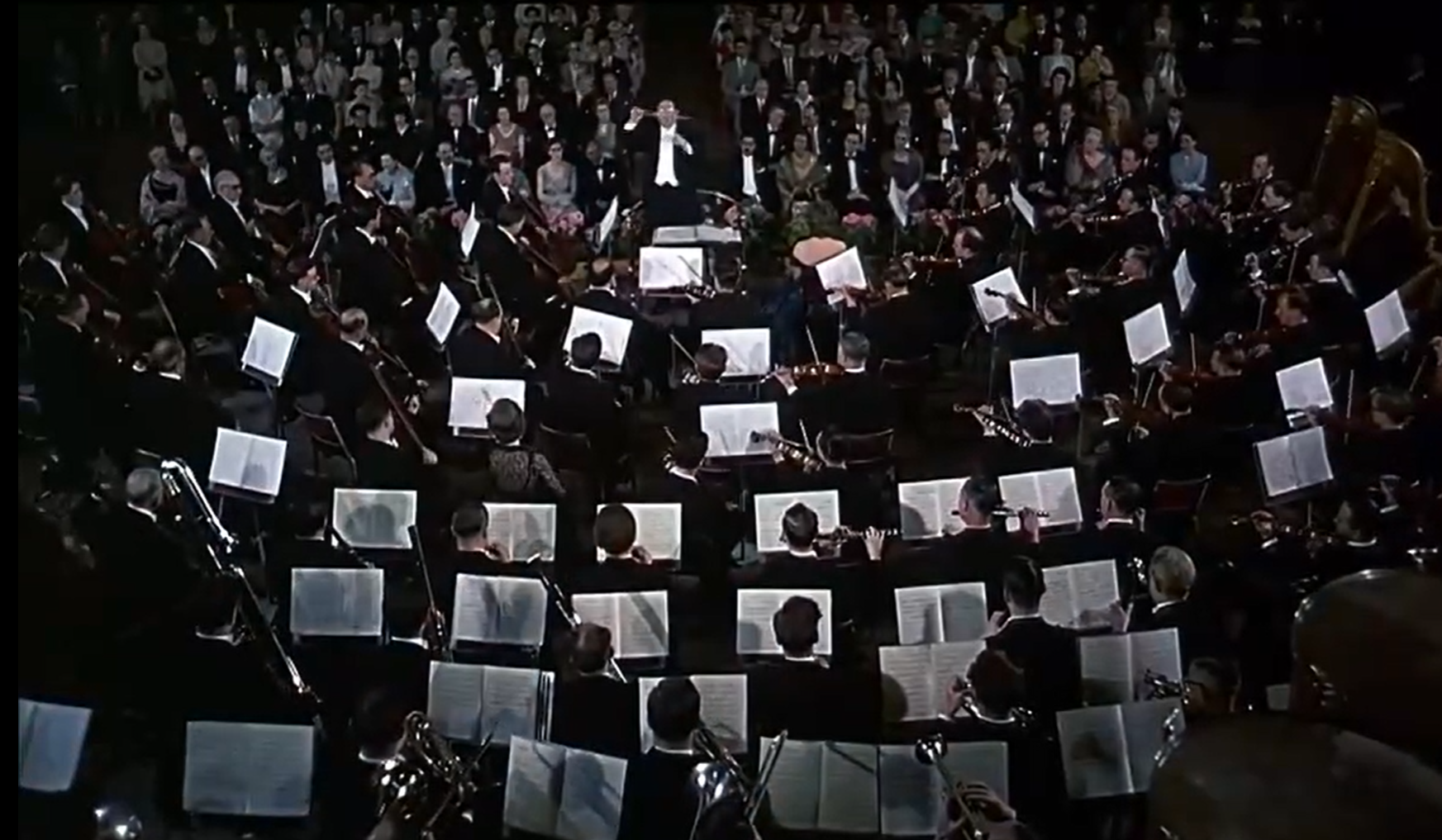
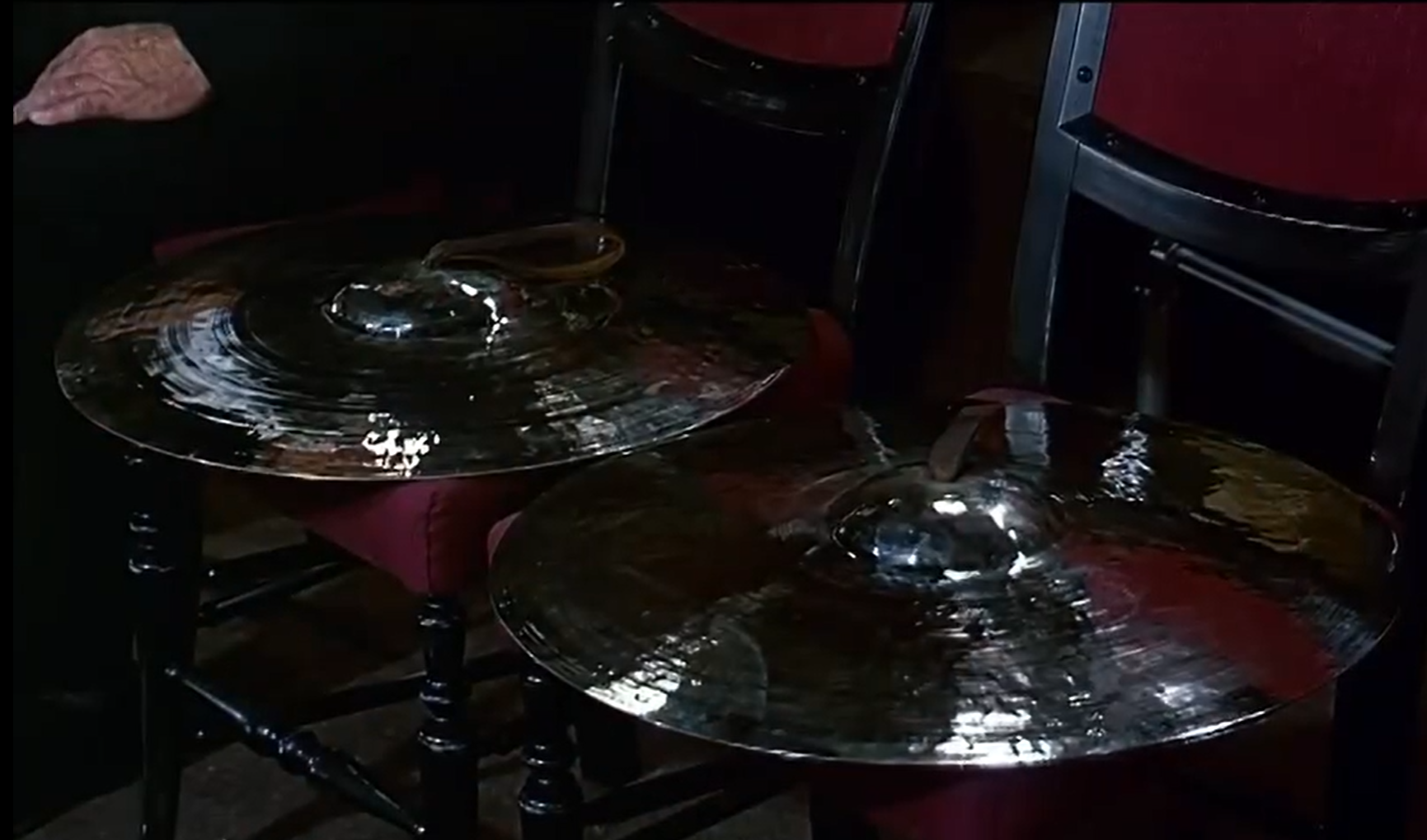
to take off with their child in a strange city; then again, without this pivotal plot twist, there would be no story. Watch for composer Bernard Herrmann in a cameo as the conductor at Albert Hall, where the film’s exciting, oft-studied climax takes place.
Also of note: skeletal Reggie Nalder as the assassin (has there been a creepier face in cinematic history?). Redeeming Qualities and Moments:
Must See? Categories Links: |
“There is no evidence of a conspiracy.”
|
Synopsis: |
|
Genres, Themes, Actors, and Directors:
Response to Peary’s Review: Redeeming Qualities and Moments:
Must See? Categories
Links: |