Triumph of the Will (1935)
“It is our will that this state shall endure for a thousand years. We are happy to know that the future is ours entirely!”
|
Synopsis: |
|
Genres, Themes, Actors, and Directors:
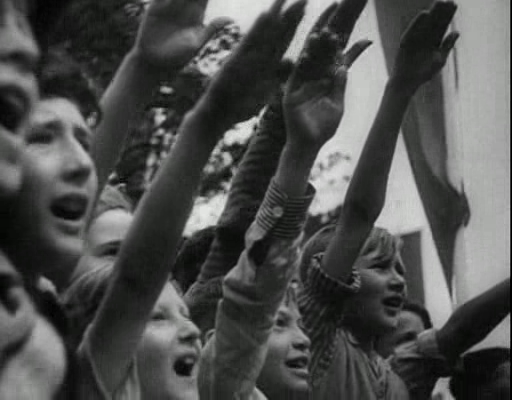
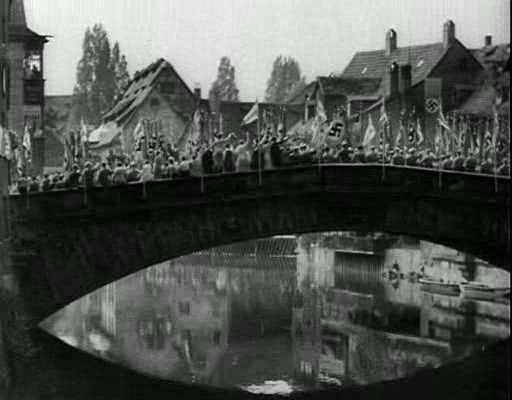
Response to Peary’s Review: In his review, Peary provides a useful overview of Riefenstahl’s many “expert” techniques in projecting “a positive image” of Hitler — including her “employment of symbols”, “camera movement (to keep potentially dry material from seeming static), camera placement (Hitler is always shot from below to make him seem heroic), and thematic use of light and darkness”. All of this is true — and yet Roger Ebert provides a slightly different perspective in his “Great Movies” review, where he argues that it’s actually “a terrible film, paralyzingly dull, simpleminded, overlong and not even ‘manipulative’, because it is too clumsy to manipulate anyone but a true believer.” However, Ebert’s perspective on the film seems to come from a modern viewing stance, rather than acknowledging its impact on those who were watching it at the time; while I’ll concede that I found it boring to sit through the entire two-hour film, I’m not its target audience — i.e., a German citizen in the 1930s wondering about the fate of my country. As Peary notes, the “film made [Aryan] Germans feel comfort about their future”, and to that end, Riefenstahl most definitely “succeeded” in her disturbing goals. In sum, though it’s tempting to “boycott [the film] strictly because of its ideology”, it’s worth sitting through once — though “ironically, you’ve probably seen most of the footage already”. Redeeming Qualities and Moments:
Must See? Categories
(Listed in 1001 Movies You Must See Before You Die) Links: |