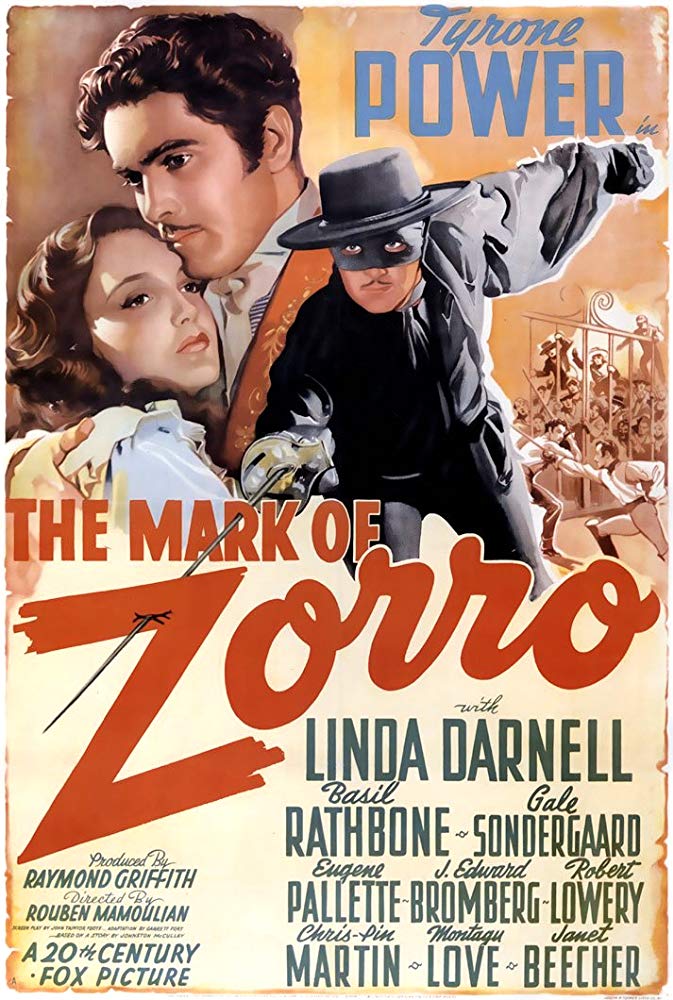
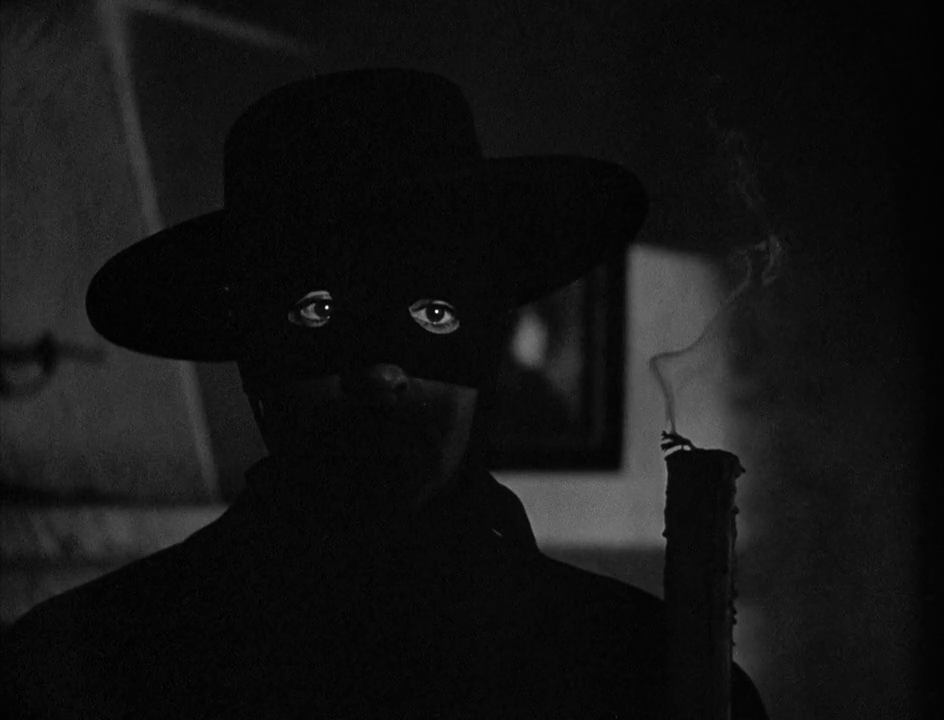
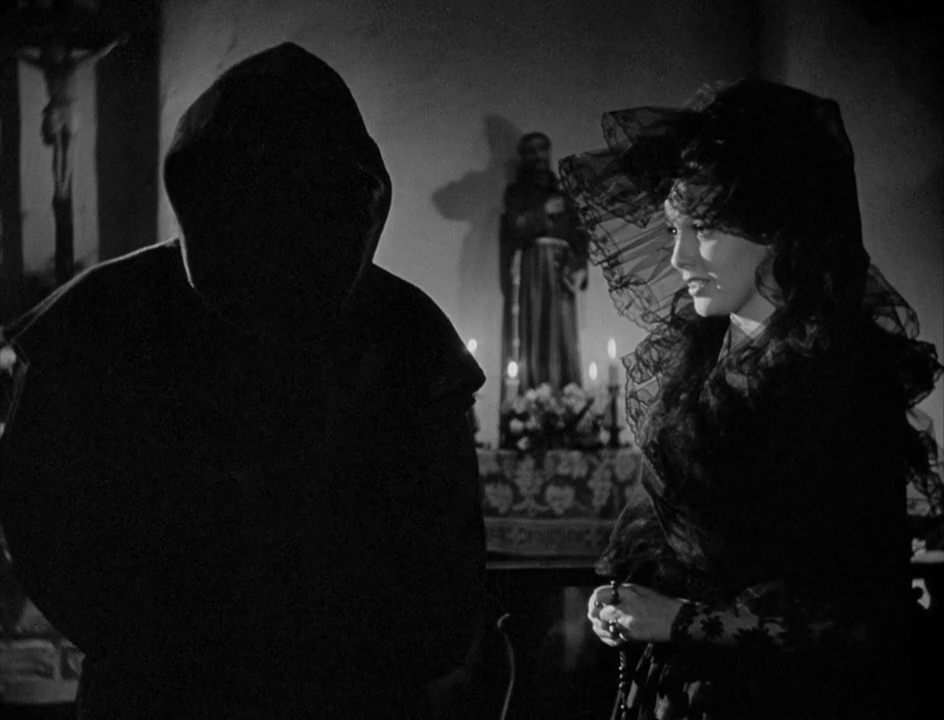
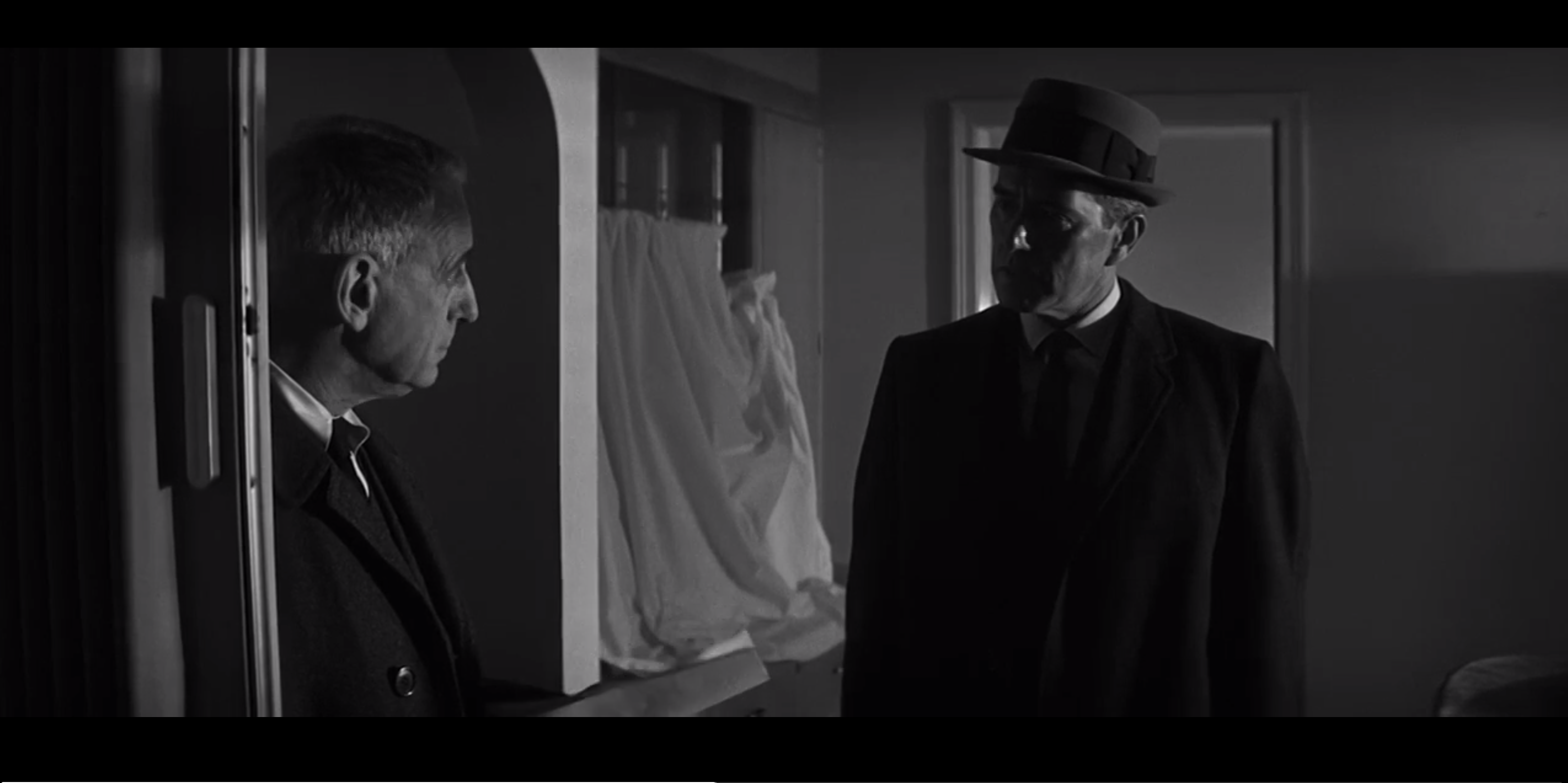
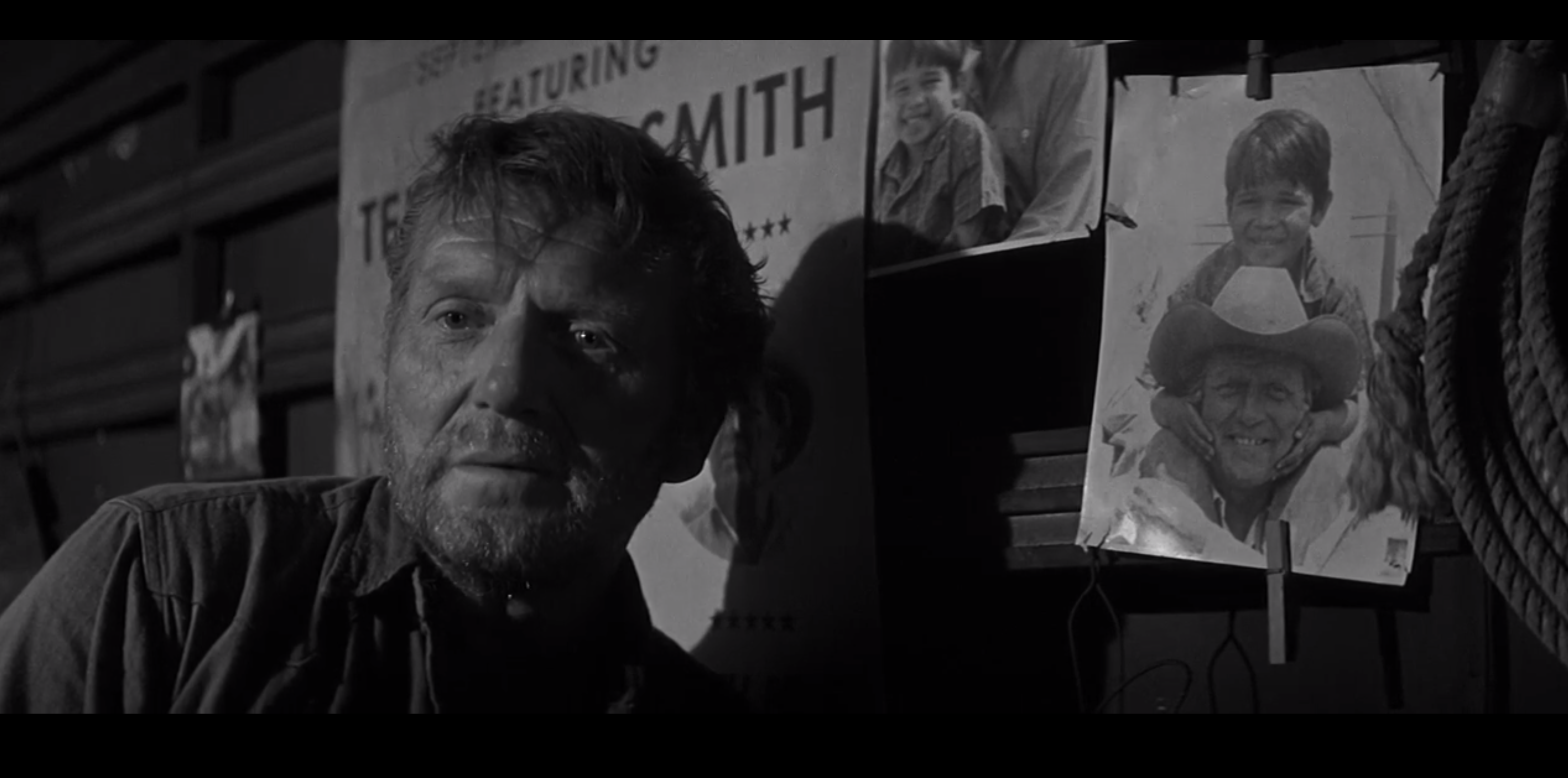
Mark of Zorro, The (1940)
“How could I refuse a man anything with a naked sword in his hand?”
|
Synopsis: |
|
Genres, Themes, Actors, and Directors:
Review: Redeeming Qualities and Moments:
Must See? Links: |
“How could I refuse a man anything with a naked sword in his hand?”
|
Synopsis: |
|
Genres, Themes, Actors, and Directors:
Review: Redeeming Qualities and Moments:
Must See? Links: |
“They’re a typical Hollywood audience: all the kids are on drugs and all the adults are on roller skates.”
|
Synopsis: |
|
Genres, Themes, Actors, and Directors:
Review: Redeeming Qualities and Moments:
Must See? Links: |
“Men sometimes have strange motives for the things they do.”
|
Synopsis: |
|
Genres, Themes, Actors, and Directors:
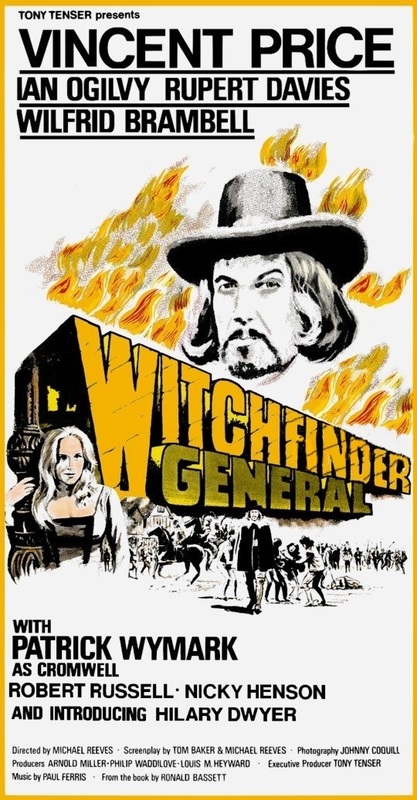
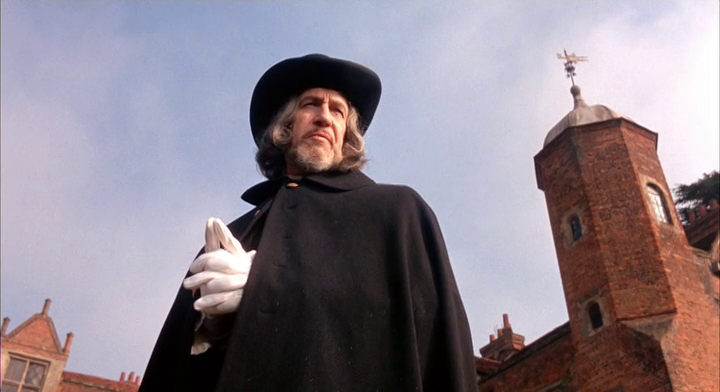
Response to Peary’s Review: Peary’s GFTFF review is lifted directly from his lengthier Cult Movies essay, where he contrasts this horror film (based in name only on a poem by Poe) with “all those enjoyable Poe films starring Vincent Price, like The House of Usher (1960), The Pit and the Pendulum (1961), and The Masque of the Red Death (1965)“, which were “intentionally claustrophobic, with almost everything taking place within secluded castles”, and evil — as “personified by the mad, hermitlike Vincent Price characters” — “confined to the castles themselves, so that if the castles are destroyed the evil within their walls will be destroyed as well.” In The Conqueror Worm, on the other hand, we “are presented with an evil that is overwhelming, invulnerable, and that will emerge victorious” — it is “not confined to a single castle but runs rampant across all of England, contaminating the people, wiping out whatever goodness exists and replacing it with a contagious sickness characterized by each ‘victim’s’ desperate need to be cruel to his fellow human beings.” Peary adds that two of Reeves’ greatest achievements with this film — his third and last after The She Beast (1961) and The Sorcerers (1967) — were managing “to keep Price from going into the ham actor routine that mars many of his performances”, and for keeping narrative tensions consistently high. He points out that the film starts with a “pre-credits sequence so powerful — a screaming woman being led to a scaffold where she is hanged — that the film must be kept at a high level of intensity in order to avoid a dramatic letdown”, but notes that Reeves is successful in maintaining “an extraordinary momentum throughout”. Viewers should be forewarned that “along the way there is much violence — executions, tortures, a nerve-wracking soldier-ambush sequence” — and “whenever there is a chance that the hectic pace might be slowing a bit, Reeves automatically has Marshall [Ogilvy] jump on his mighty steed and race it across the countryside”, thus never giving the audience “a chance to relax”. I agree with Peary’s closing statement that “by the end of the film it is as if you have just run the gauntlet”. With that said, this film’s relentless violence has a (sadly relevant) purpose, showing how easily mankind can descend into joy of torture — or at least mindless acceptance of it as commonplace and necessary. Reeves includes plenty of tracking shots showing villagers calmly watching as “witches” are burnt to death; minor facial expressions demonstrate that they likely believe the heretics deserve their fate.
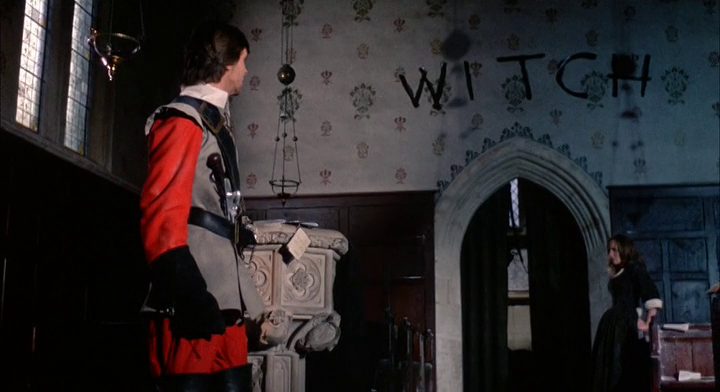
Also of note is the film’s gorgeous cinematography, showcasing real-life horror taking place in an atmospheric landscape of Gothic forests, meadows, village squares, and dank interiors. With his expert directorial hand, Reeves makes powerful visual statements throughout: for instance, as Ogilvy comes back to Dwyer and listens to her “confession” about what she’s done to try to save her uncle, she is framed by the word “WITCH” scrawled on the wall of a church behind her — but when Ogilvy brings her down to her knees with him to pray and ask God to marry them, the term neatly disappears from our view. In another notable instance, crashing waves at the seashore (freedom) turn into the fiery flames that will put an innocent victim to death. Reeves’ film is both brutal and brilliant, a worthy culmination to his far-too-short career. Redeeming Qualities and Moments:
Must See? Categories Links: |
“There’s nothing a man can’t get through to be free!”
|
Synopsis: |
|
Genres, Themes, Actors, and Directors:
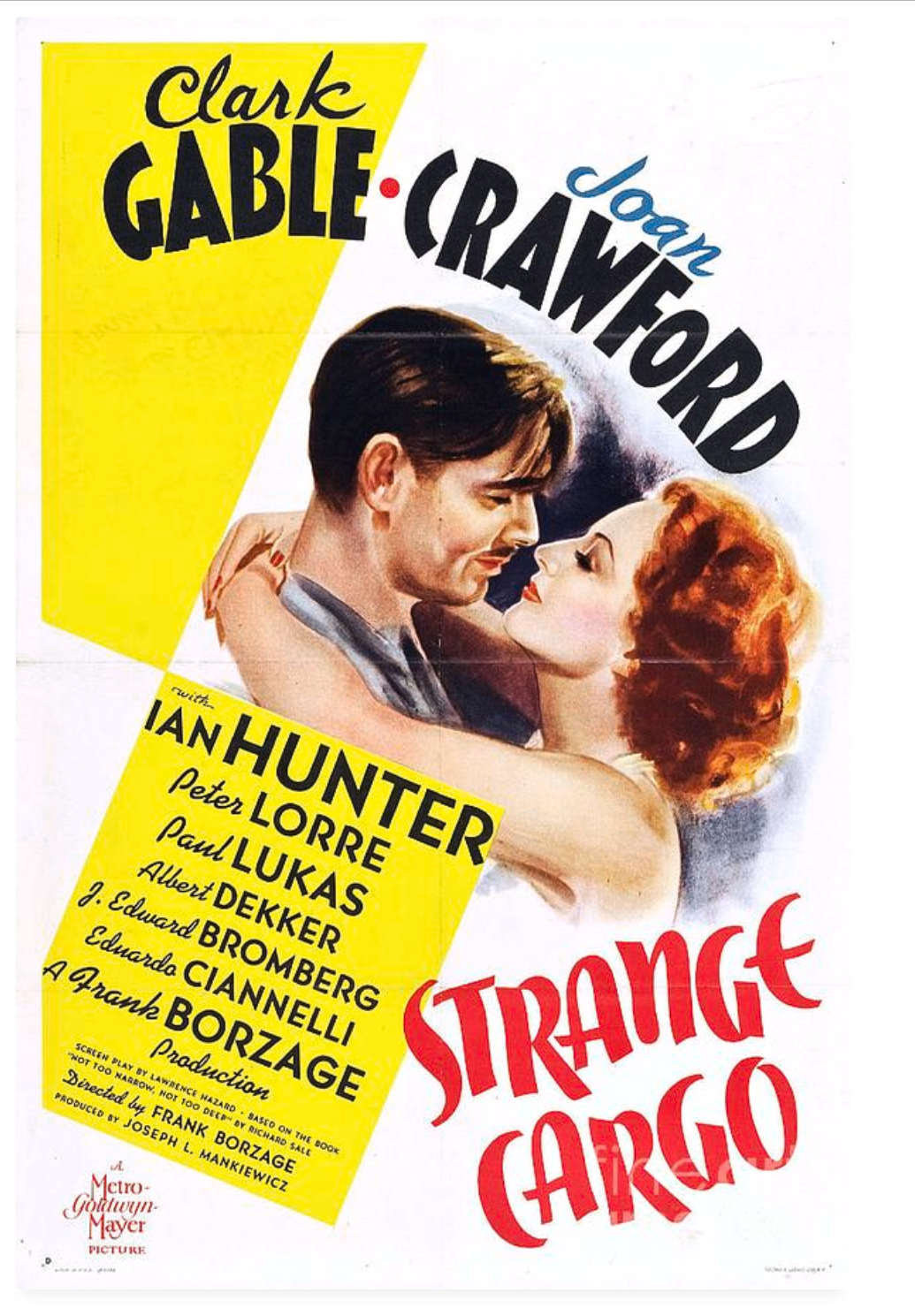
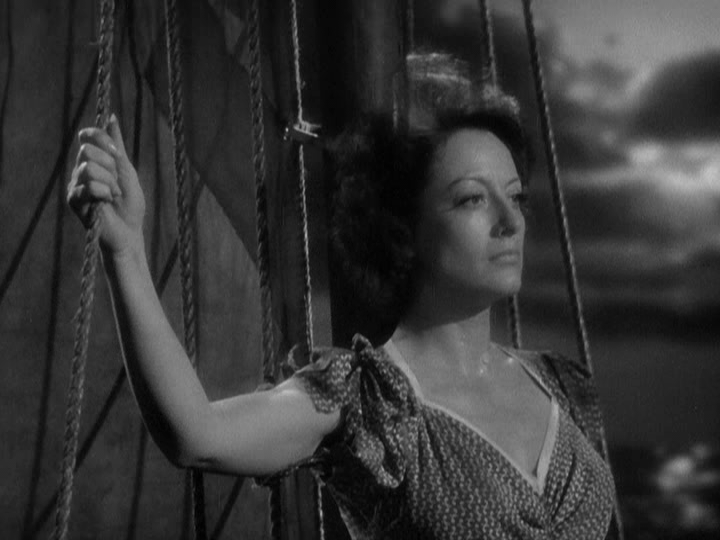
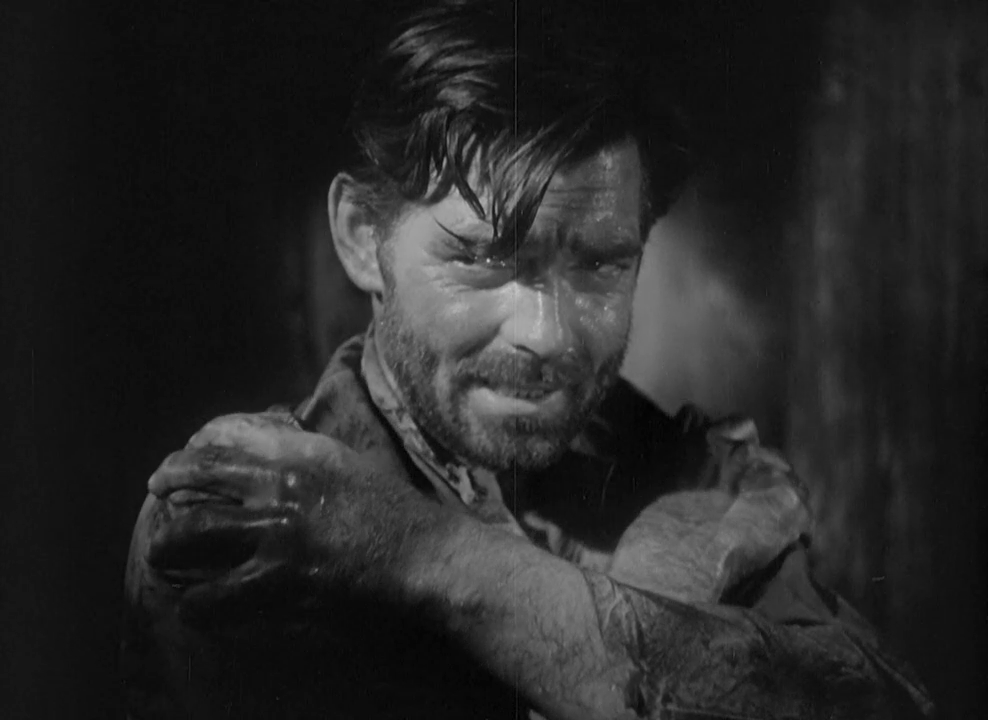
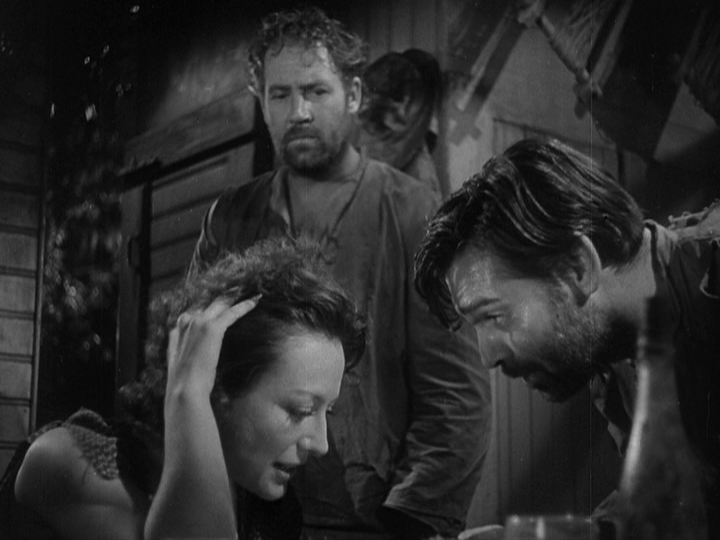
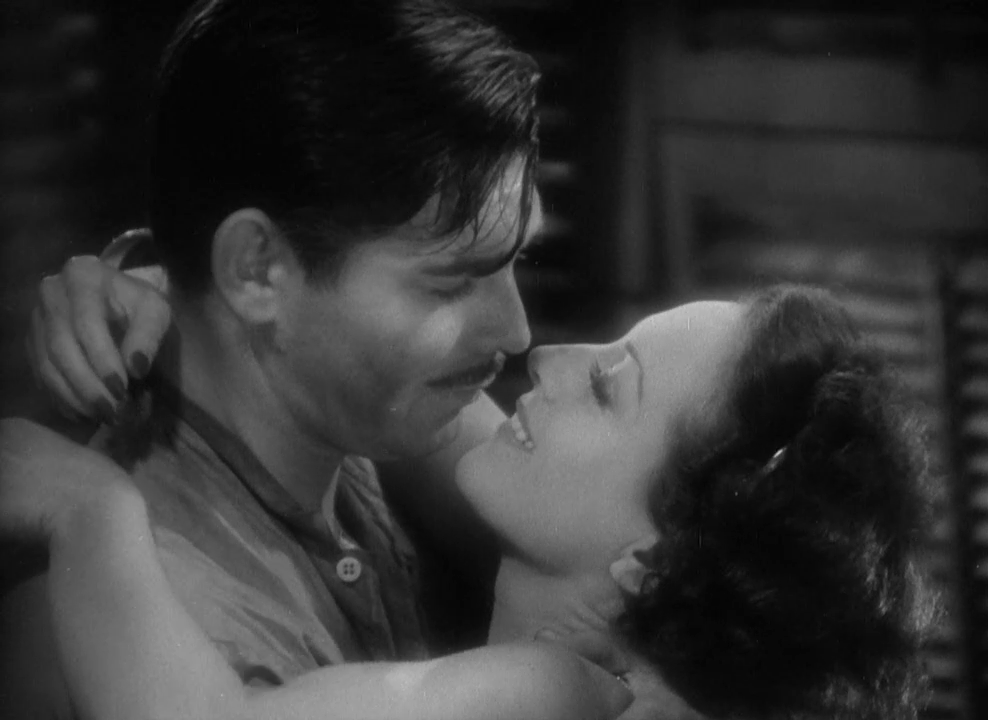
Response to Peary’s Review: I’m not quite in agreement with Peary’s assessment. While it’s certainly an interesting narrative choice to have a living conscience accompanying the crew of sinners, it’s done consistently enough (Hunter really is Christ-like) that we understand what the filmmakers are aiming for. I think it’s the point of this film for the characters to become less tough, and learn how to live a more introspective, charitable life (even if they’re near the end of it — as many are). I wish Lorre had some juicier moments, but Gable and Crawford bring solid star presence and credibility to their roles — and the overall cinematography and direction are stellar. This would make an interesting double-bill with Papillon (1973), also about an attempted escape from Devil’s Island. Note: This was the eighth and final collaborative film between Crawford and Gable, who were on-and-off-again lovers, rivals, and lifelong friends. Redeeming Qualities and Moments:
Must See? Categories
Links: |
“Come on, Din — the world is ours!”
|
Synopsis: |
|
Genres, Themes, Actors, and Directors:
Response to Peary’s Review:
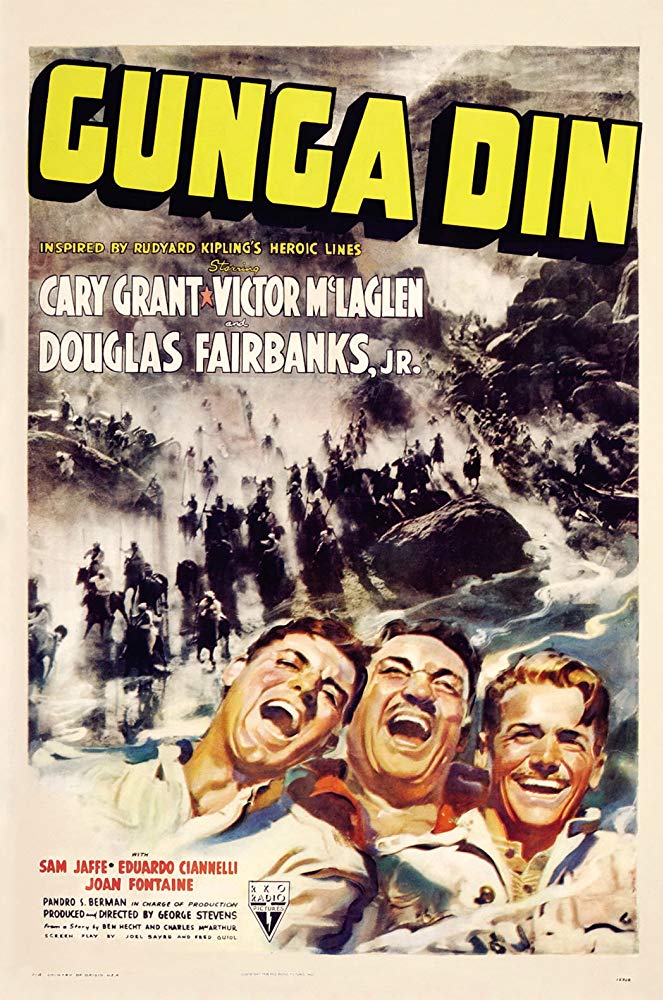
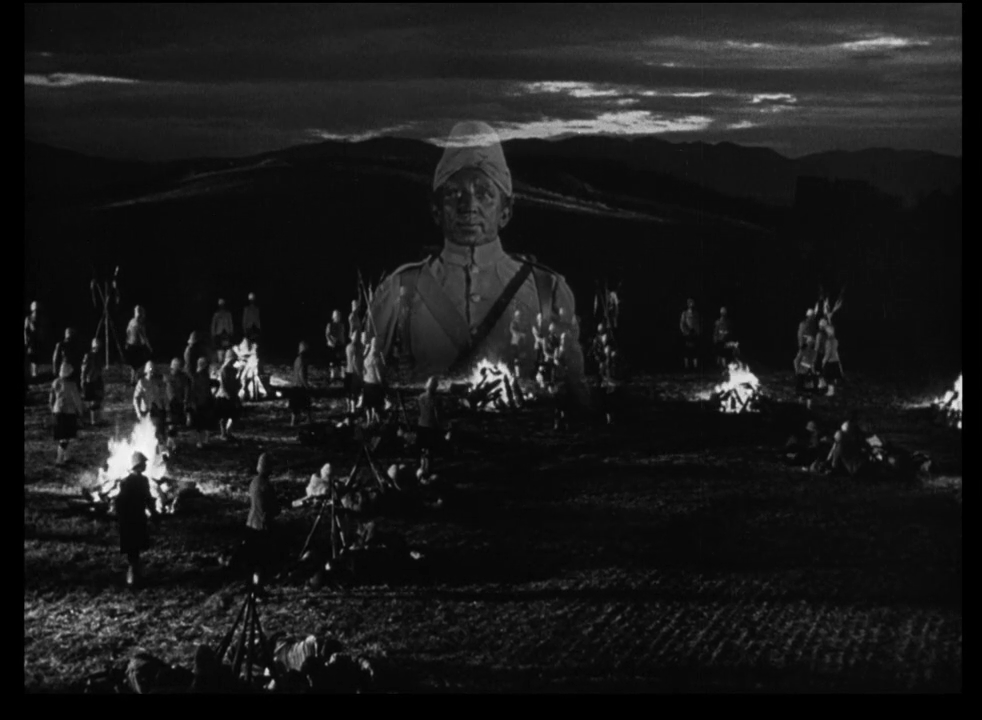
This is all true: Gunga Din is wonderfully mounted, featuring atmospheric cinematography, solid performances, and fine handling of action scenes. However, it’s impossible not to be disturbed by the film’s blatantly Orientalist view of colonized India. Kipling’s poem is more than casually racist, as the following quotes demonstrate:
DVD Savant’s review begins to get at the more problematic aspects of this film, pointing out that “Din is the prime example of the child-like ‘native’ that lives for the doglike joy of pleasing his anglo superiors.
Grant is a nice guy, and treats Din to the ‘honor’ of military compliments, with gestures halfway between sincerity and snickering patronizing.” Savant also reminds us how blatantly history is misrepresented in the film, given that “the 1870s-1880s battles in India were [actually] fought against rebel princes and Rajas resisting English rule” — though of course “it’s always convenient to characterize those resisting Western force-of-arms as fanatic cultists.” Redeeming Qualities and Moments:
Must See? Categories
Links: |
“No woman’s going to support me!”
|
Synopsis: |
|
Genres, Themes, Actors, and Directors:
Response to Peary’s Review: Peary argues that while “the direction by newcomer Kastle… is amateurish at times”, it “is quite innovative when it counts”: he “uses the camera skillfully so that we are aware of settings and spatial relationships”, such as creating “a sense of claustrophobia by placing Lo Bianco, his new romantic conquest, and huge Stoler in a tiny space so that they drive each other crazy.” Kastle gives his actors “free reign to create broad characters”, resulting in “several strong performances” — and he “uses the music of Gustav Mahler effectively, at times to counterpoint the triviality of what is happening on the screen.” Peary elaborates on all aspects of his praise for (and analysis of) this film in his first Cult Movies book, making it clear that “one-hit-wonder” Kastle was quite the polymath talent. It’s too bad for film fanatics that he never made another movie — music (opera in particular) was his first love — but in the meantime, we can appreciate (while shuddering in horror) the gruesome real-life “opera” he puts on for us here. Redeeming Qualities and Moments:
Must See? Categories
Links: |
“Why is it people who want the truth never believe it when they hear it?”
|
Synopsis: |
|
Genres, Themes, Actors, and Directors:
Response to Peary’s Review: I’m in agreement with Peary’s appreciative review of this film, which has held up well and does indeed show tremendous talent from Streisand on numerous fronts. While Streisand chooses not to explore the intriguing potential of gender bending sexual preferences — that is, none of the characters openly reflects on what it means that s/he may be sexually attracted to someone (seemingly) of the same gender — she does effectively highlight how restrictive laws for women once were (and still are for many across the globe). As painful as it is watching Streisand conceal and alter her identity simply to have a chance to study, it’s equally challenging seeing how servile and guileless Irving’s character has been raised to be. By the end of this film, we’re grateful for the disruption ‘Yentl’ has brought to one microcosm of her society, but sad that “once she makes [Avigdor and Hadass] an ideal mate, she must step aside” — and move to America in order to continue her own journey. Redeeming Qualities and Moments:
Must See? Categories
Links: |
“The point — the point is the suppression of words. Now, dig.”
|
Synopsis: |
|
Genres, Themes, Actors, and Directors:
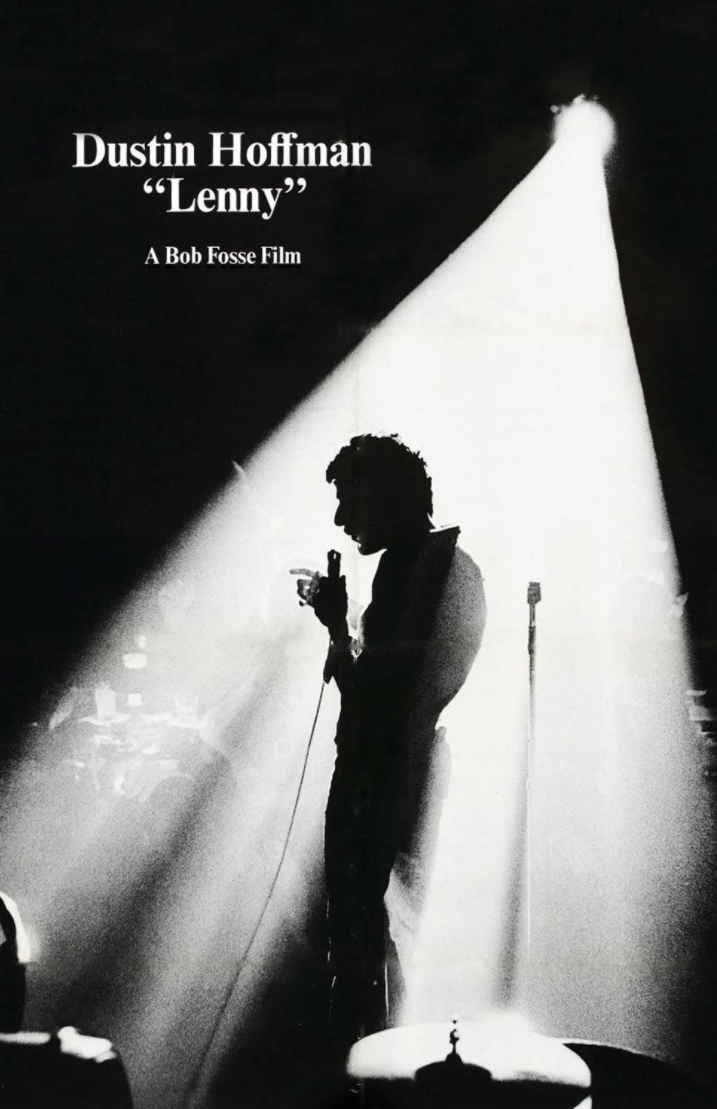
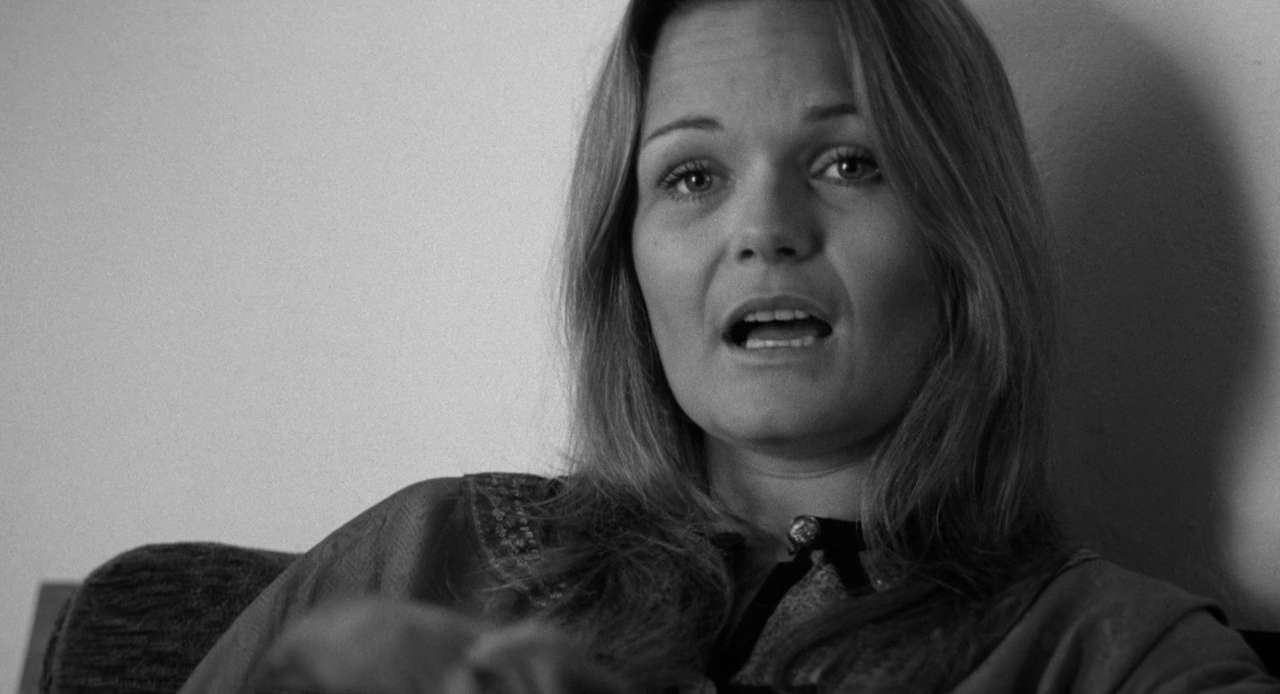
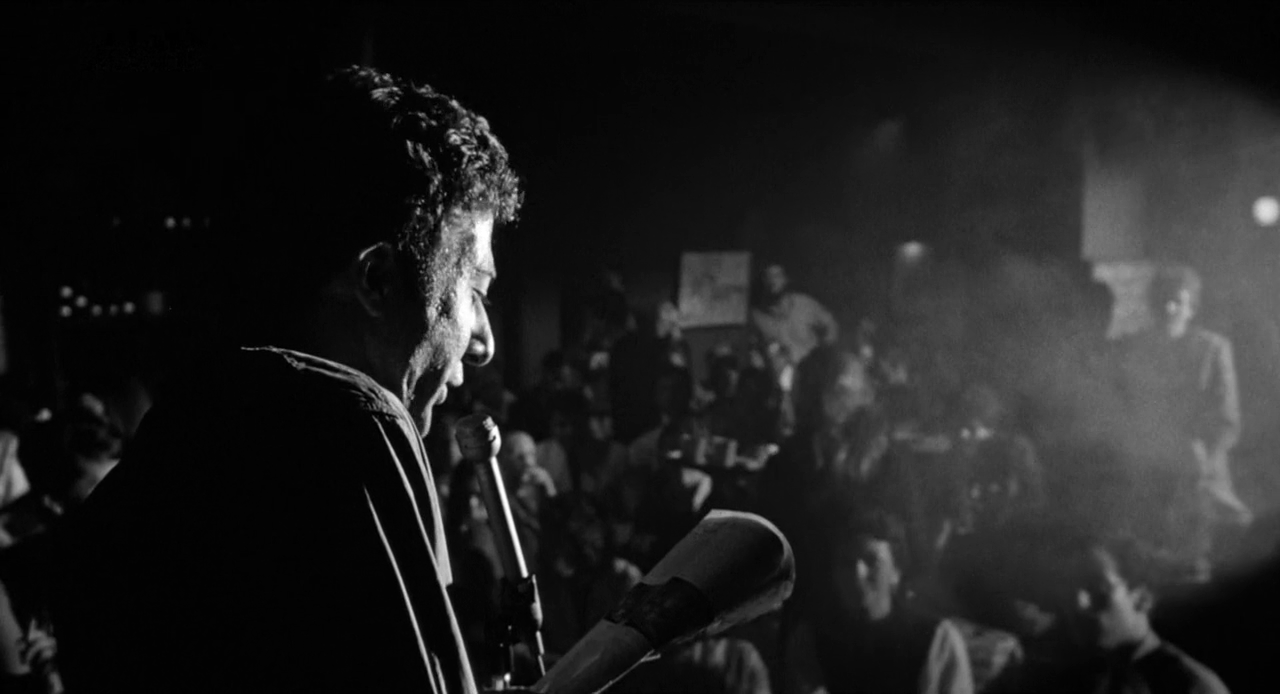
Response to Peary’s Review: I’m not quite in agreement with all of Peary’s points. While the film is indeed depressing, I don’t find it overlong, and wasn’t particularly struck by a dearth of funny routines. Bruce’s audience laughs plenty when they’re shocked by the language he uses, and that’s the primary focus of the film: Bruce’s controversial (!) belief that he should be allowed to use everyday profanity in his comedy. In fact, there’s ample humor as Bruce good-naturedly (albeit very pointedly) does his routine while cops line the walls, substituting “blah blah” for the actual swear words while still being completely understood by his audience; his point is extremely well taken. What I’m most disturbed by is Bruce’s treatment of Perrine, who’s simultaneously adored and demonized for her sexuality (what else is new?). With that said, Barry’s screenplay neatly shows how Bruce’s rightful indignation ultimately consumed his life; it’s sad seeing his obsession with his court cases taking over his routines (and, of course, seeing his drug-induced ramble in a final performance). There may have been many complicated reasons leading to Bruce’s premature death by overdose, but at least here we’re clearly shown how the mutually reinforcing demons of addiction and hopelessness played pivotal roles. Redeeming Qualities and Moments:
Must See? Categories
Links: |
“The gods want their entertainment.”
|
Synopsis: |
|
Genres, Themes, Actors, and Directors:
Response to Peary’s Review:
… to choose his own life’s course, to challenge the gods’ unfair laws, to no longer be frightened by the gods into blind obedience” — with some amusingly droll “marital squabbles between MacGinnis and Blackman” sprinkled throughout for levity.
However, at the front and center of this story — naturally — are Harryhausen’s special effects. Peary writes that “it’s just amazing how believable the movements of his creatures are”, and gives kudos to the excellent “composite photography”.
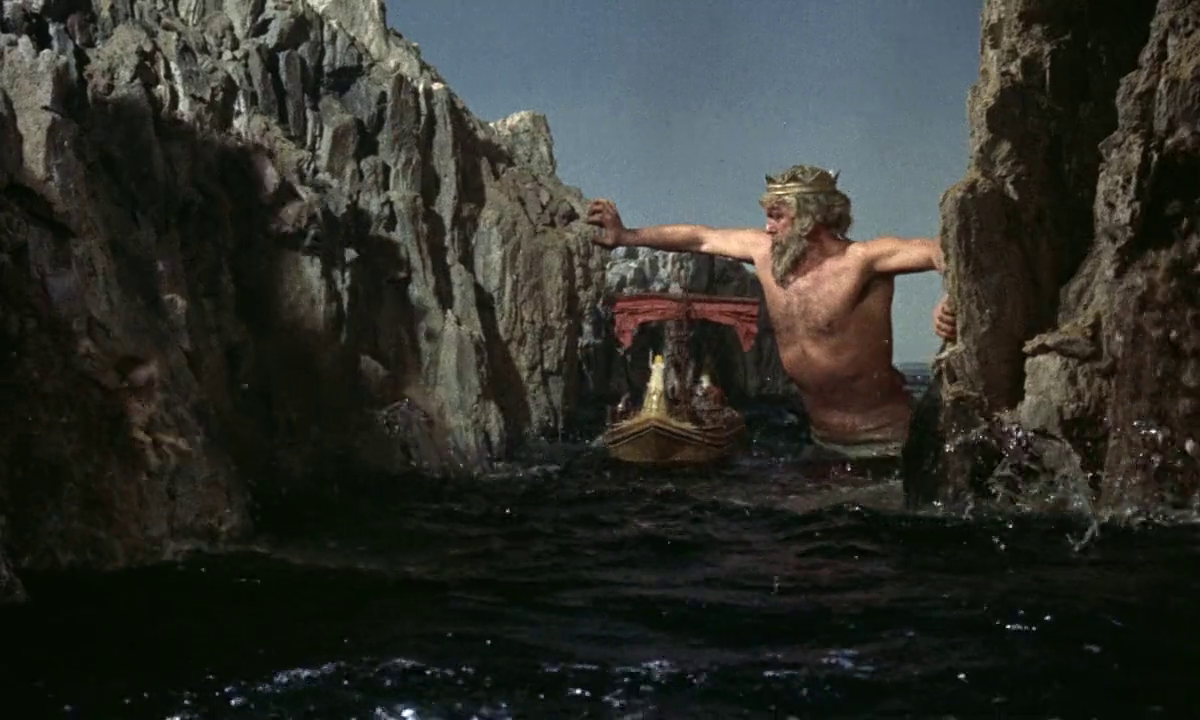
He calls out his own favorite moments as “the ‘Clashing Rocks’ sequence when huge bearded Triton, his fishtail flopping in the ocean, emerges from the water, holds the mountains apart, and watches the Argo sail under his arm:”
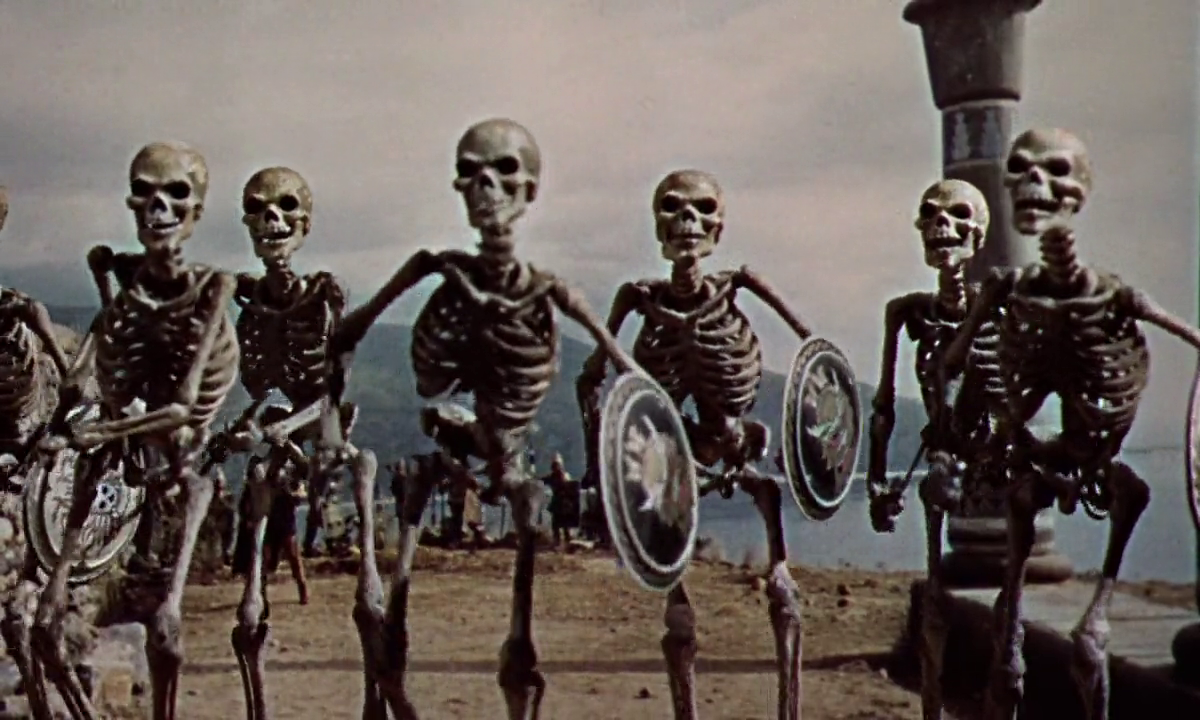
“And, of course, the truly stupendous climactic swordfighting-skeletons sequence — Harryhausen’s ultimate achievement.”
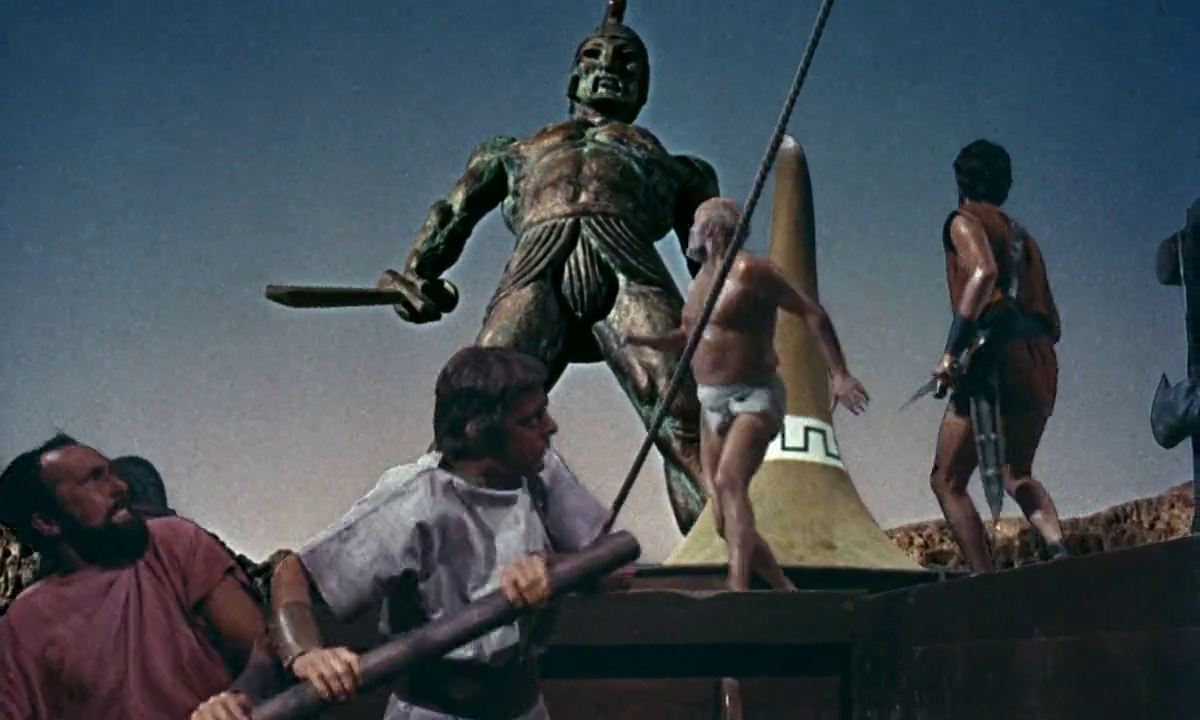
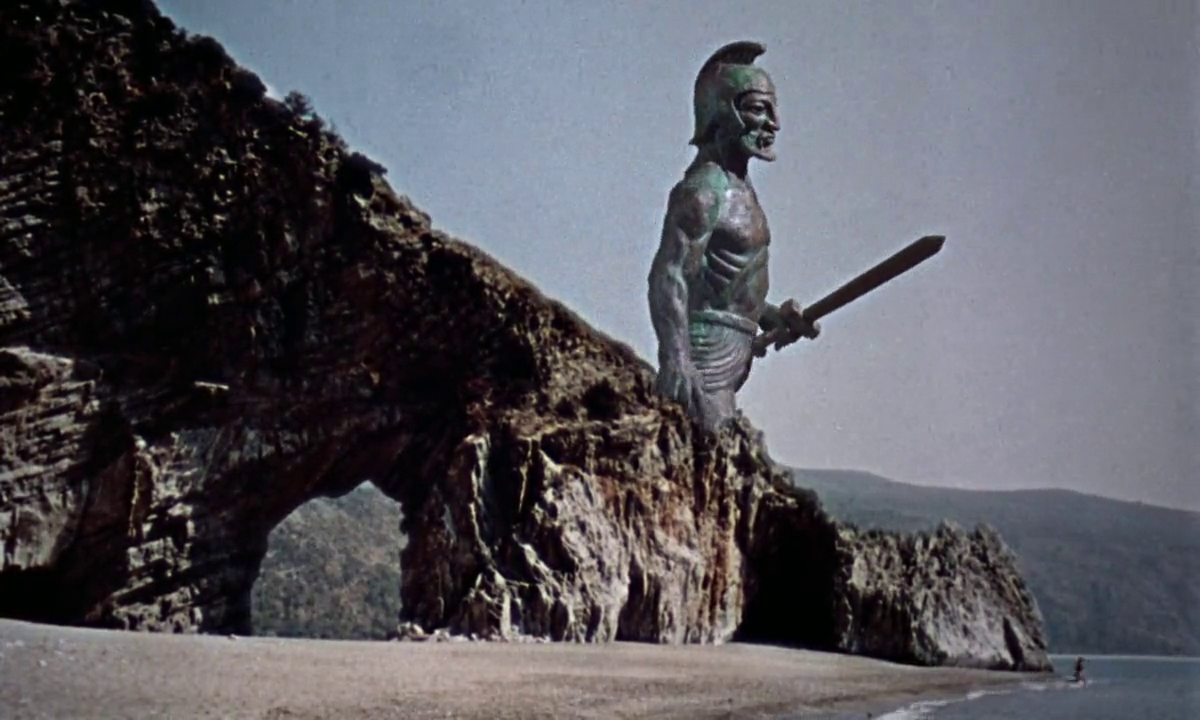
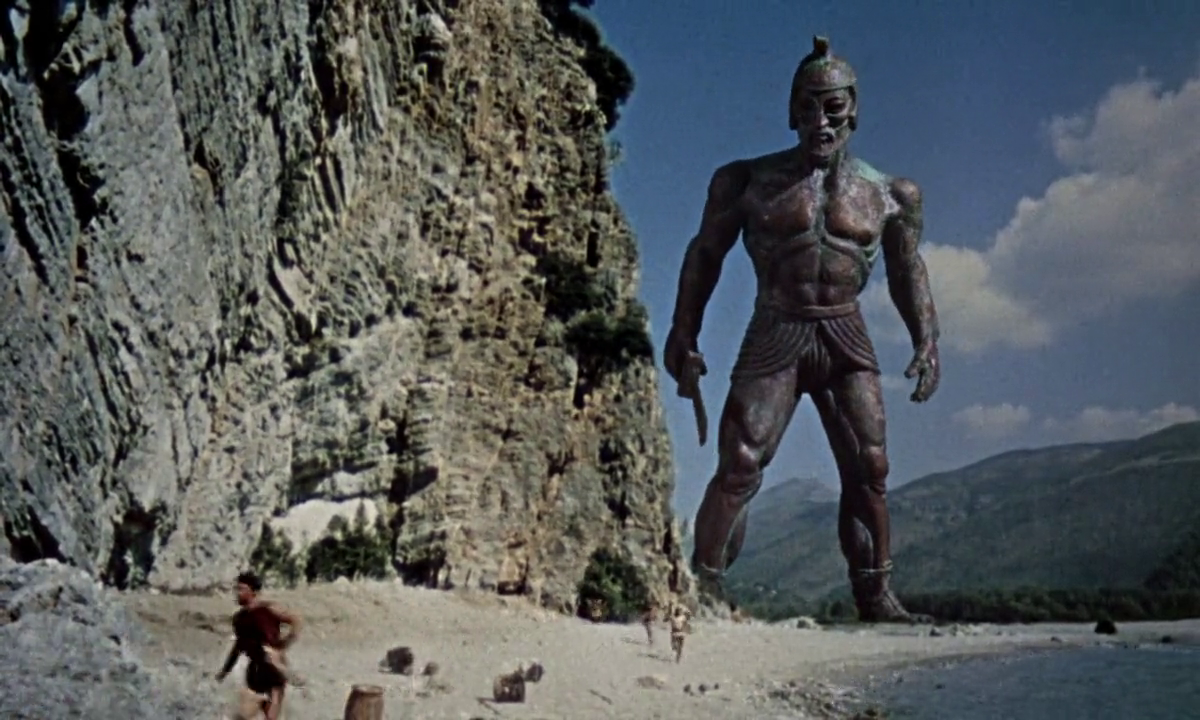
I can’t disagree with either of these choices, though I would add in how thrilling it is to watch the giant statue of Talos coming to life:
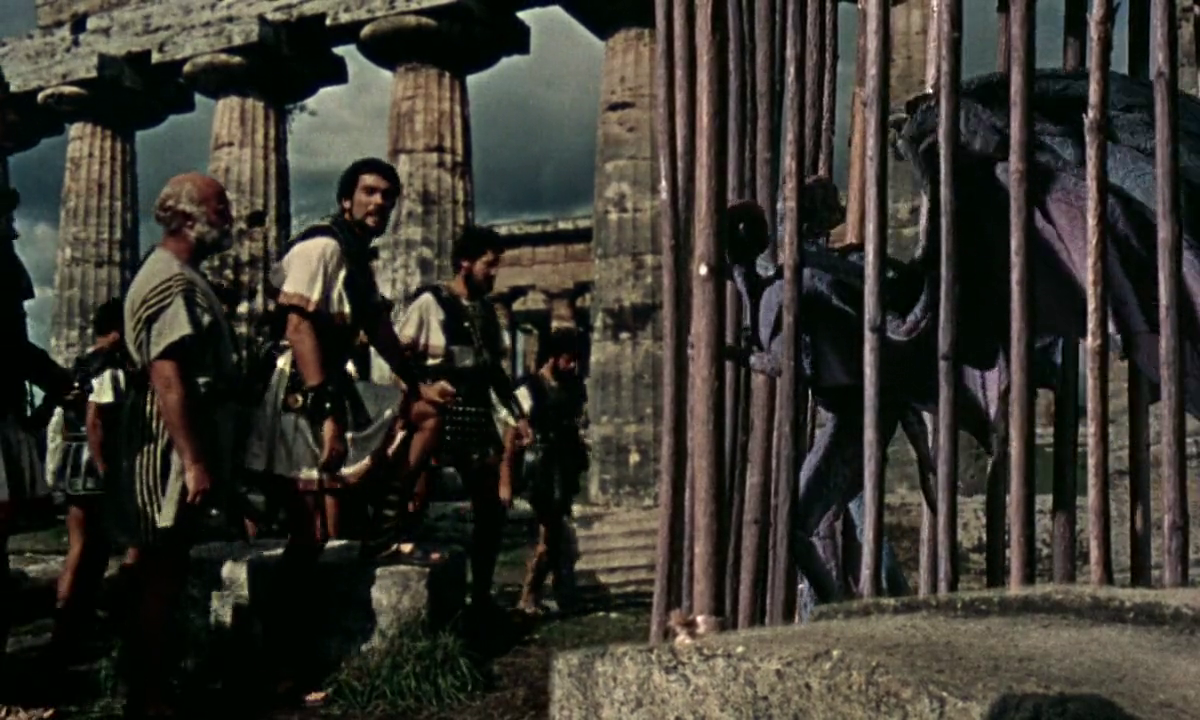
… and to see the gruesome harpies relentlessly plaguing blind Phineus (Patrick Troughton) finally caught and caged.
Redeeming Qualities and Moments:
Must See? Categories
Links: |
“If this can happen to a decent, God-fearing family, who’s safe anymore?”
|
Synopsis: |
|
Genres:
Review: Redeeming Qualities and Moments:
Must See? Categories
Links: |