River, The (1951)
“It’s the same story everywhere I go; I spoil everything.”
“If you die, I’ll kill you!”
|
Synopsis: |
|
Genres, Themes, Actors, and Directors:
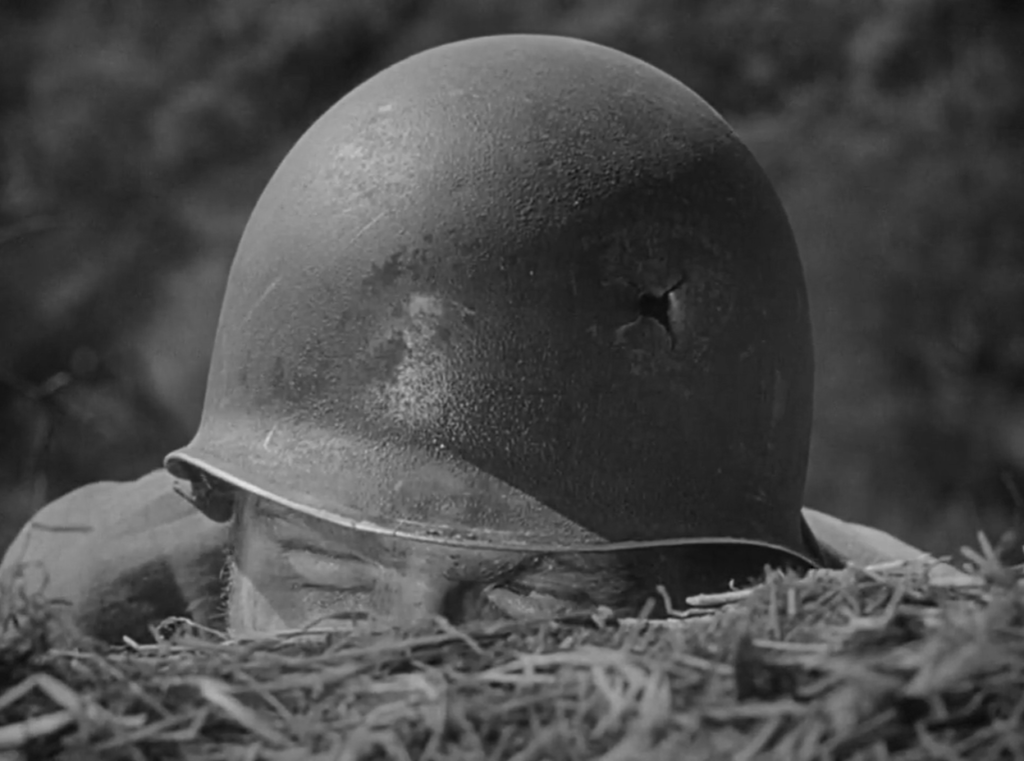
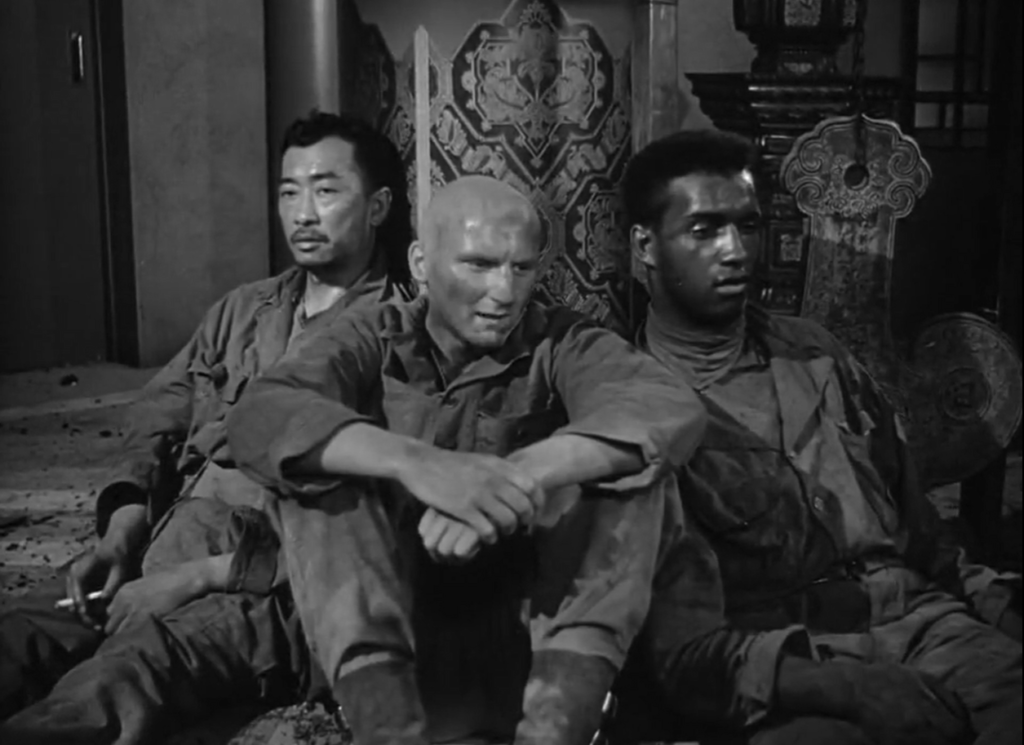
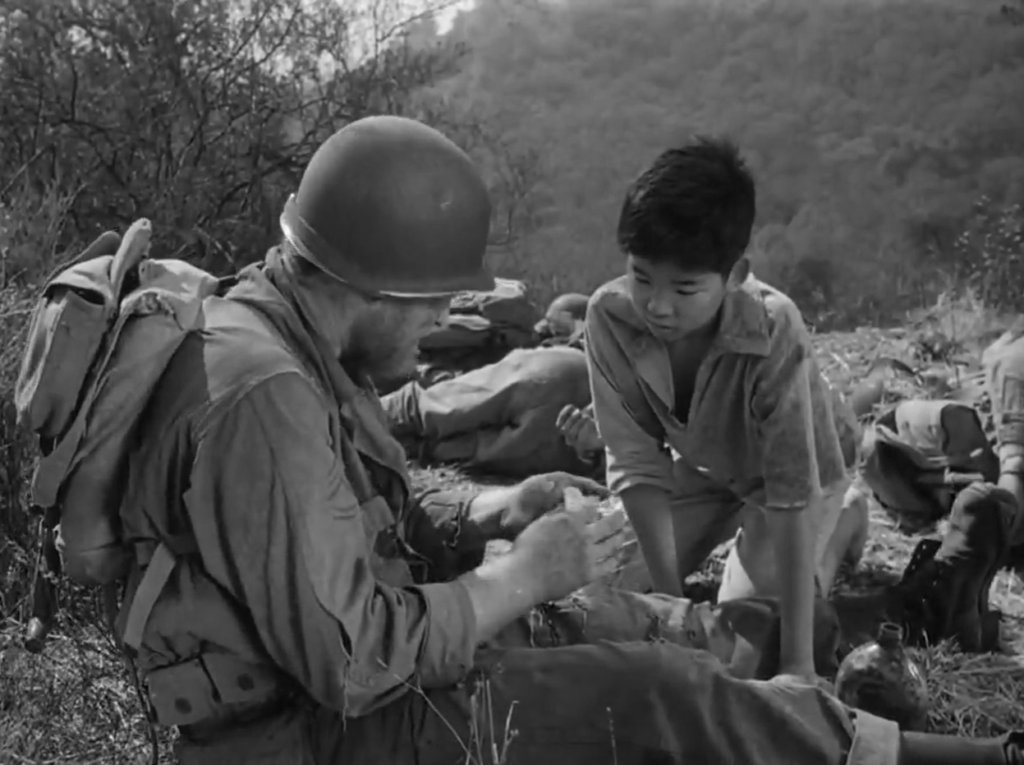
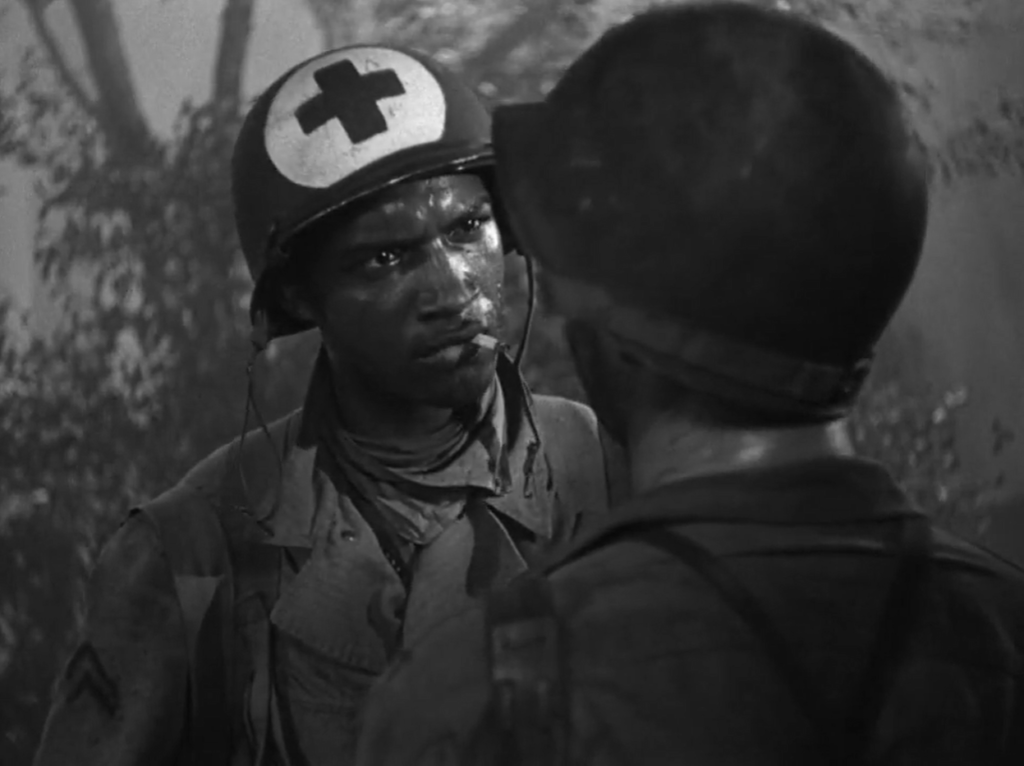
Response to Peary’s Review: He notes that “Fuller’s unsentimental, deglamorized portrait of war is highly atmospheric, tense” and — despite the extremely low budget — “realistic,” with “the character relationships, particularly those between Evans and Chun and Brodie … intriguing.” Made in just ten days on a budget of ~$100K, The Steel Helmet — Fuller’s third film, after I Shot Jesse James (1949) and The Baron of Arizona (1950) — was loosely based on journal entries made during his own time as a soldier. Fuller’s inclusion of a multi-ethnic cast allows him to touch upon topics otherwise undiscussed in Hollywood films at the time — such as Loo’s family being imprisoned in an internment camp during World War II, despite his own active involvement in the segregated Japanese-American 442nd Regimental Combat Team. “We have the same kind of eyes,” the North Korean soldier — known as The Red — goads him. Meanwhile, Edwards’ Cpt. Thompson — trained as a surgeon — must take subtle and not-so-subtle racist jabs at every turn. While chatting with Evans about his stint volunteering for a rifle outfit during WWII, for instance, Evans bluntly responds, “Yeah, that was to prove you guys could shoot besides drive trucks. I remember.” (Blacks were primarily relegated to logistics positions in the war.) When Edwards tells Evans he went back to school after WWII on the G.I. bill to study surgery, surly Evans retorts with: “Where? In a butcher shop?” Edwards seems to simply put up with such comments, though later we’re privy to some of his reasoning:
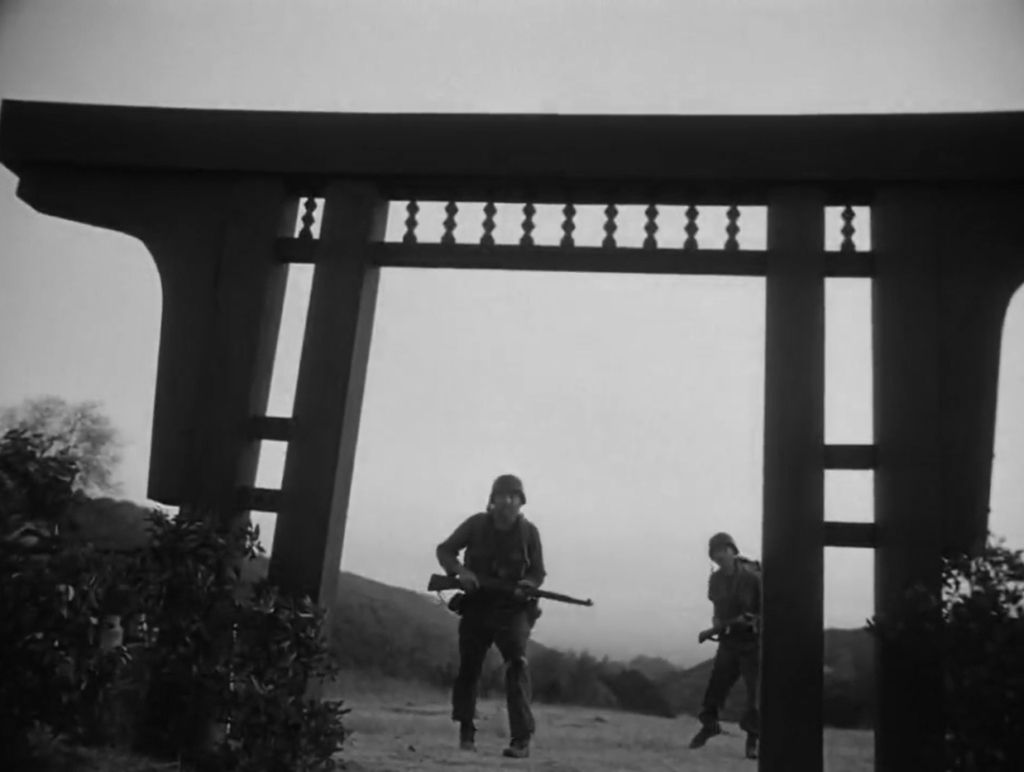
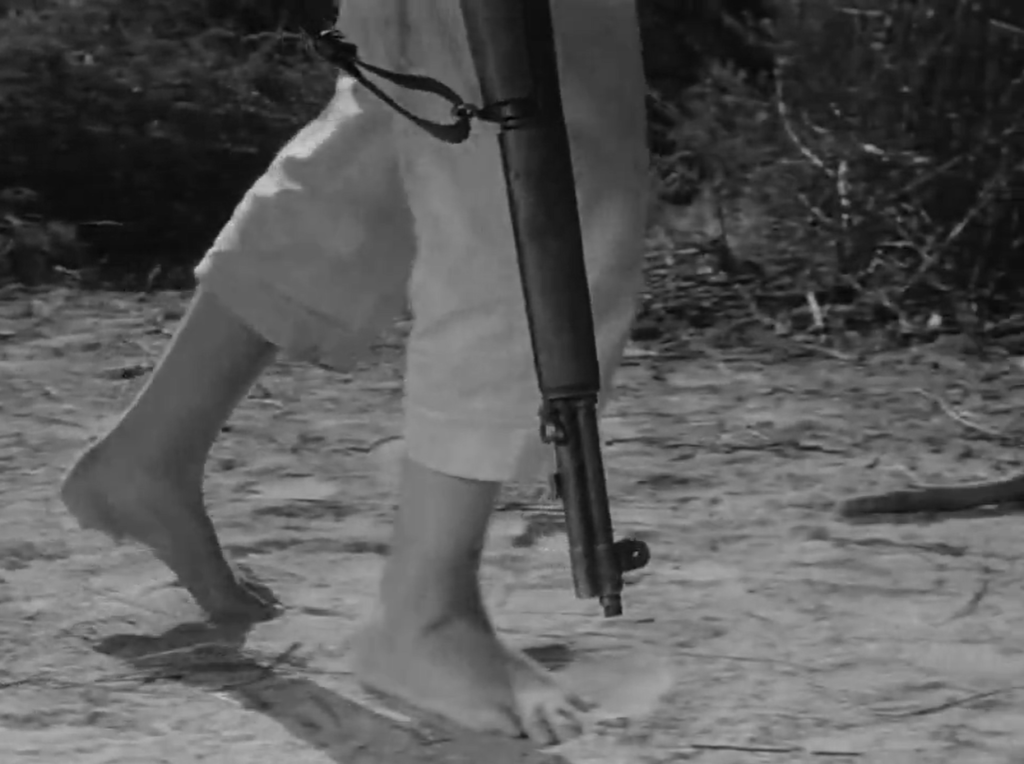
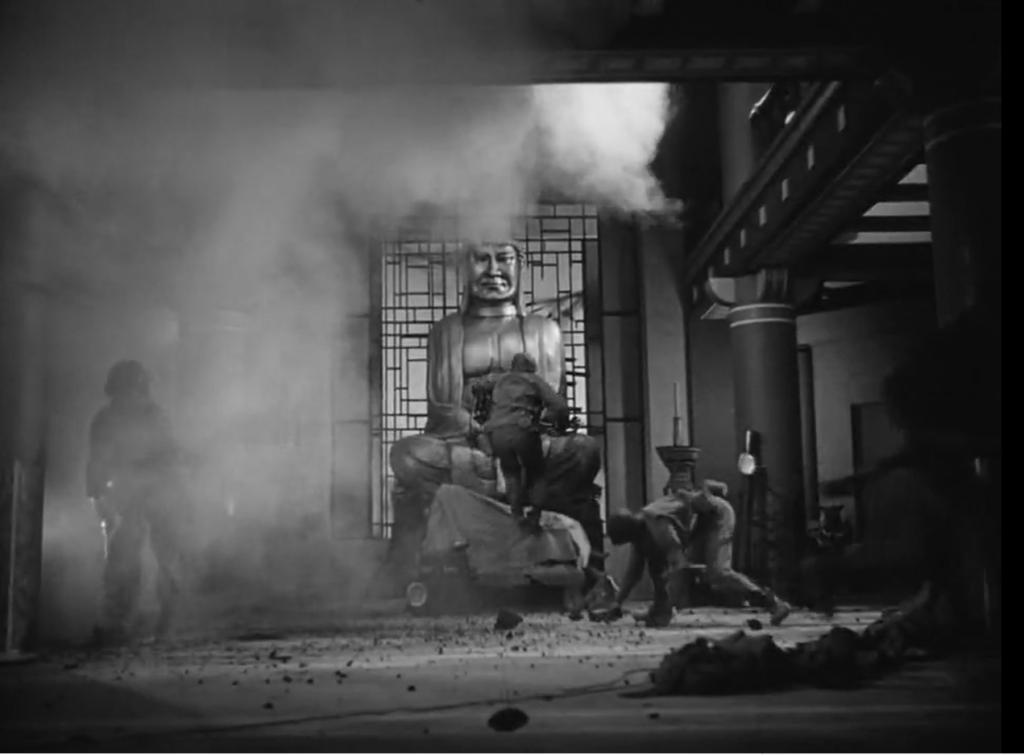
Fuller makes excellent use of sparse, fog-shrouded sets: … and his pulpy script is filled with zingy lines (most mouthed by Evans):
This indie classic remains a tense and gritty portrayal of the inherent insanity of war (and racism), and is worthy of multiple viewings. Notable Performances, Qualities, and Moments:
Must See? Categories
Links: |
“The German army is invincible because it is an army that obeys orders — any orders.”
|
Synopsis: |
|
Genres, Themes, Actors, and Directors:
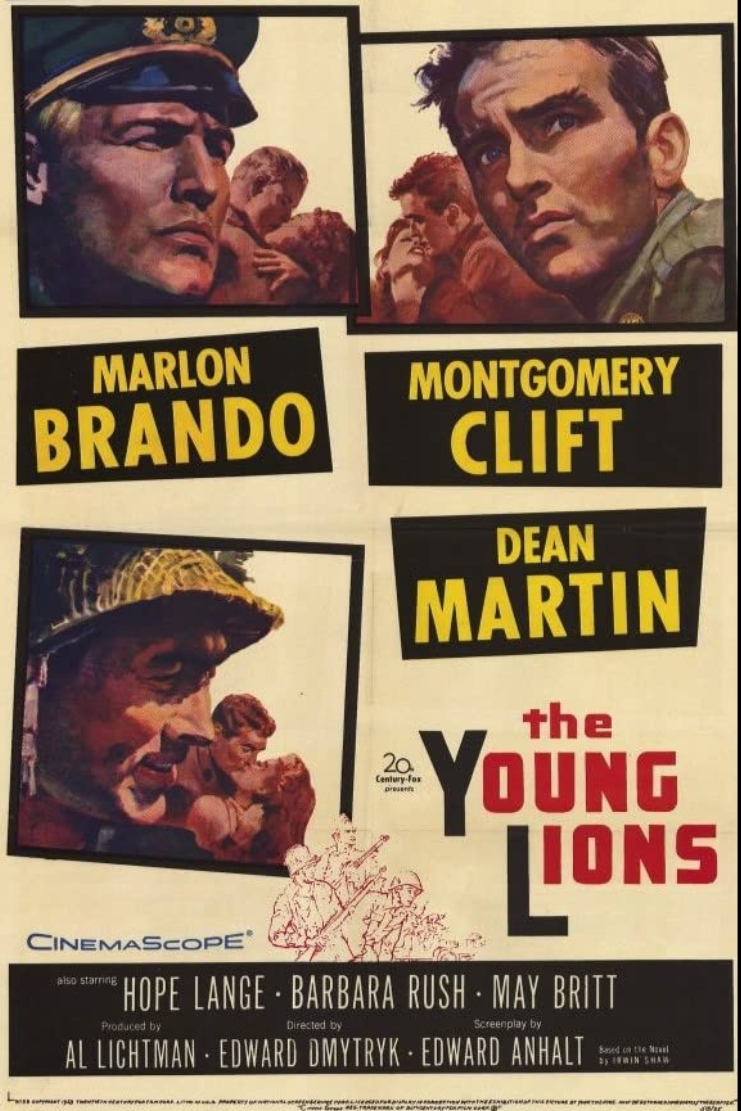
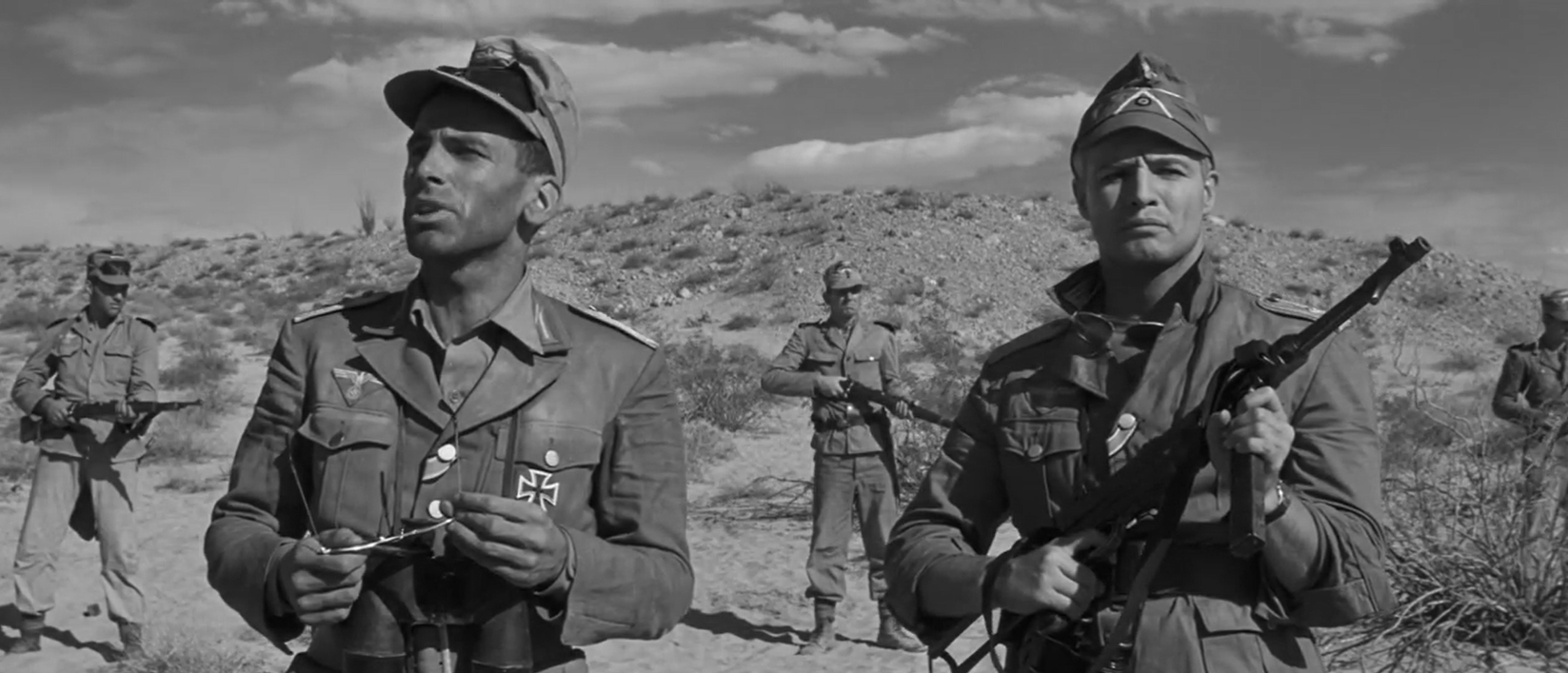
Review: … it’s difficult to understand why these particular storylines have been pulled together, other than to show us how American and German lives inevitably intersected. To that end, Martin’s character gets the film’s best line, spoken early on when he’s explaining his resistance to fighting:
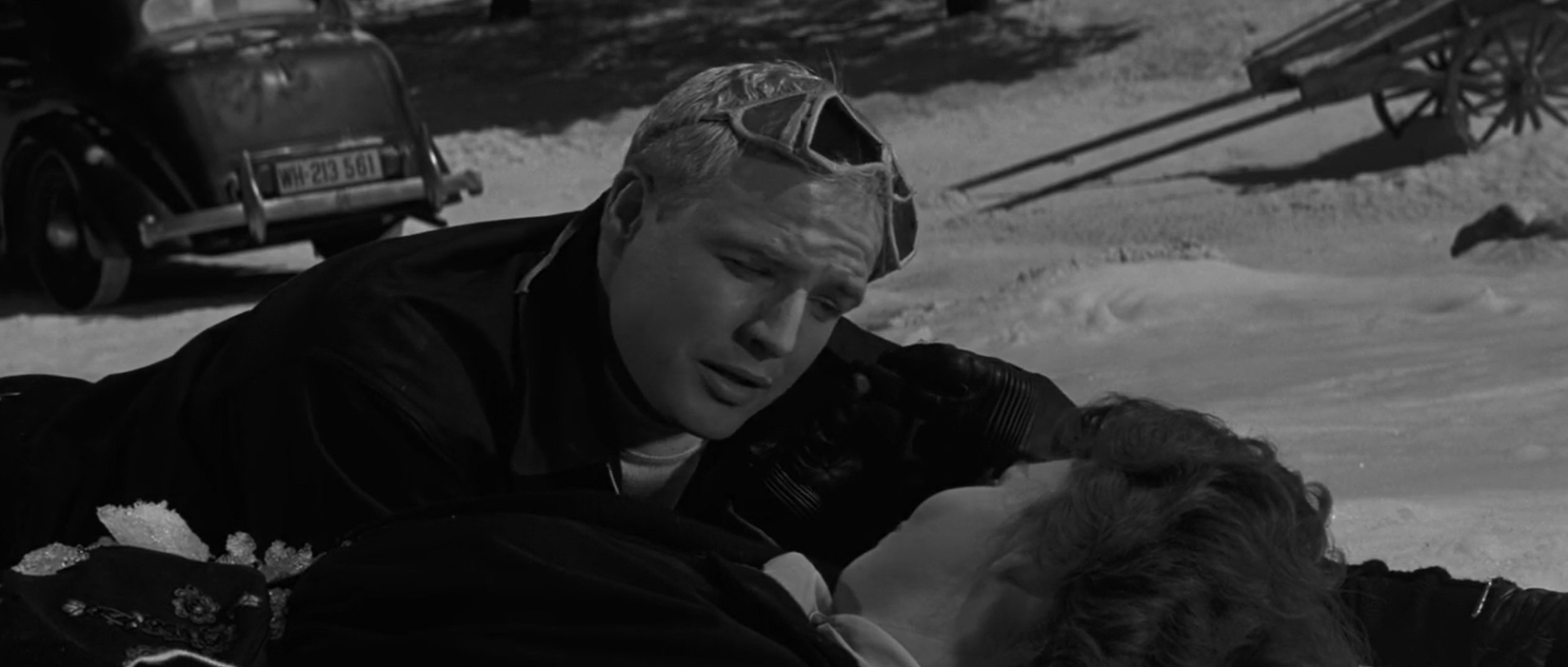
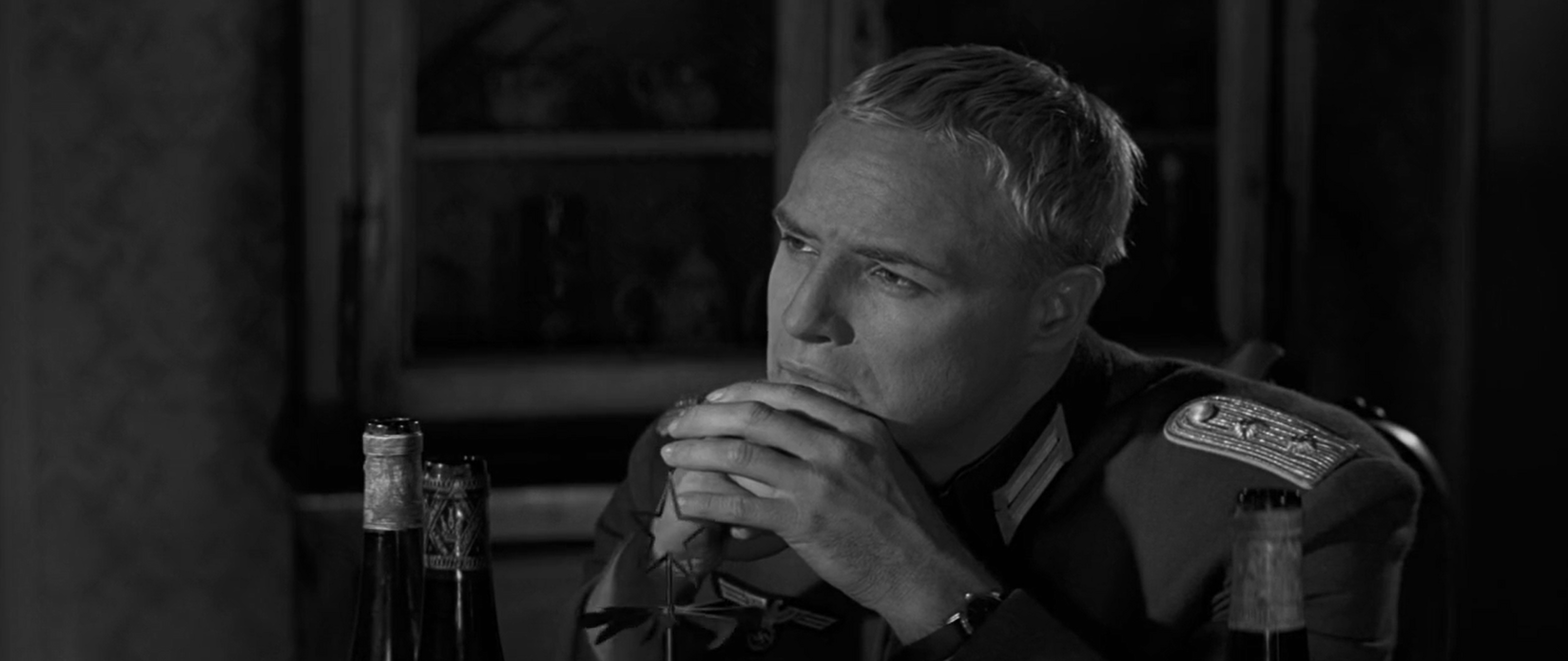
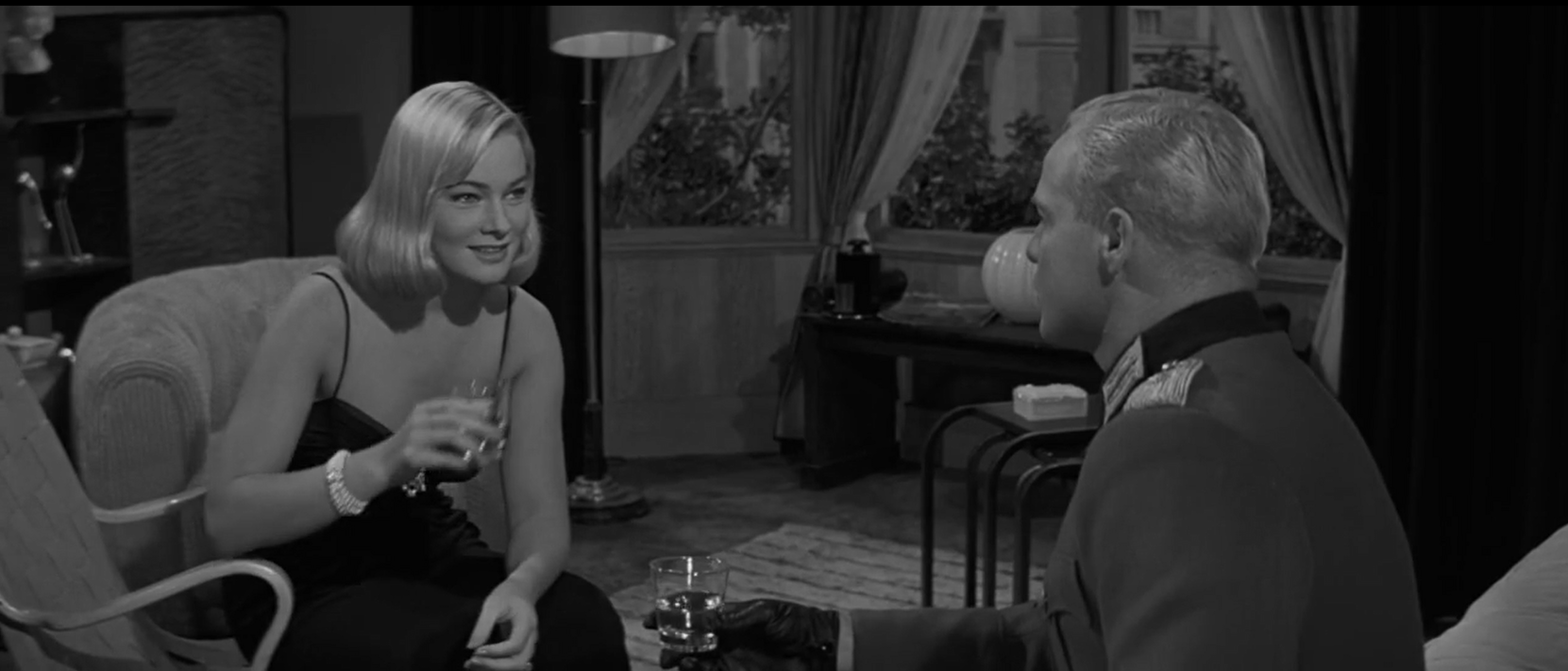
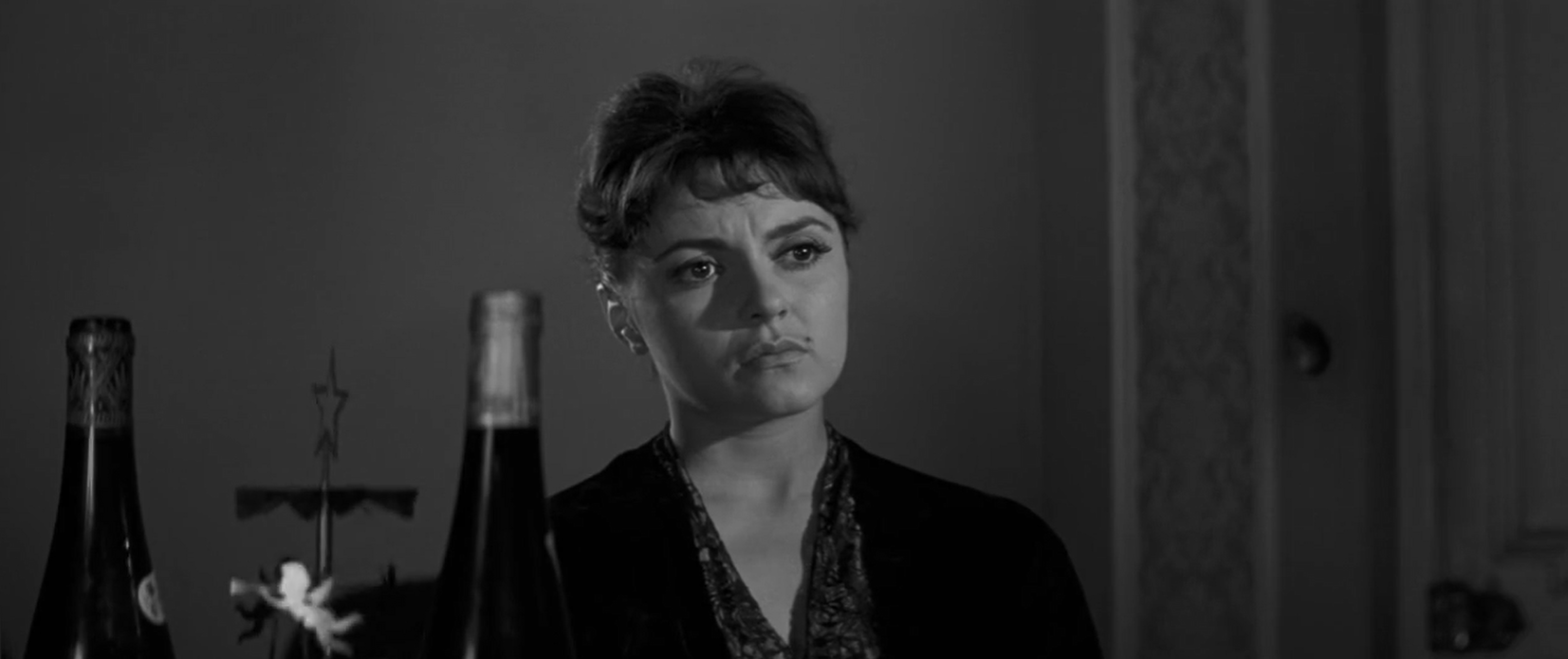
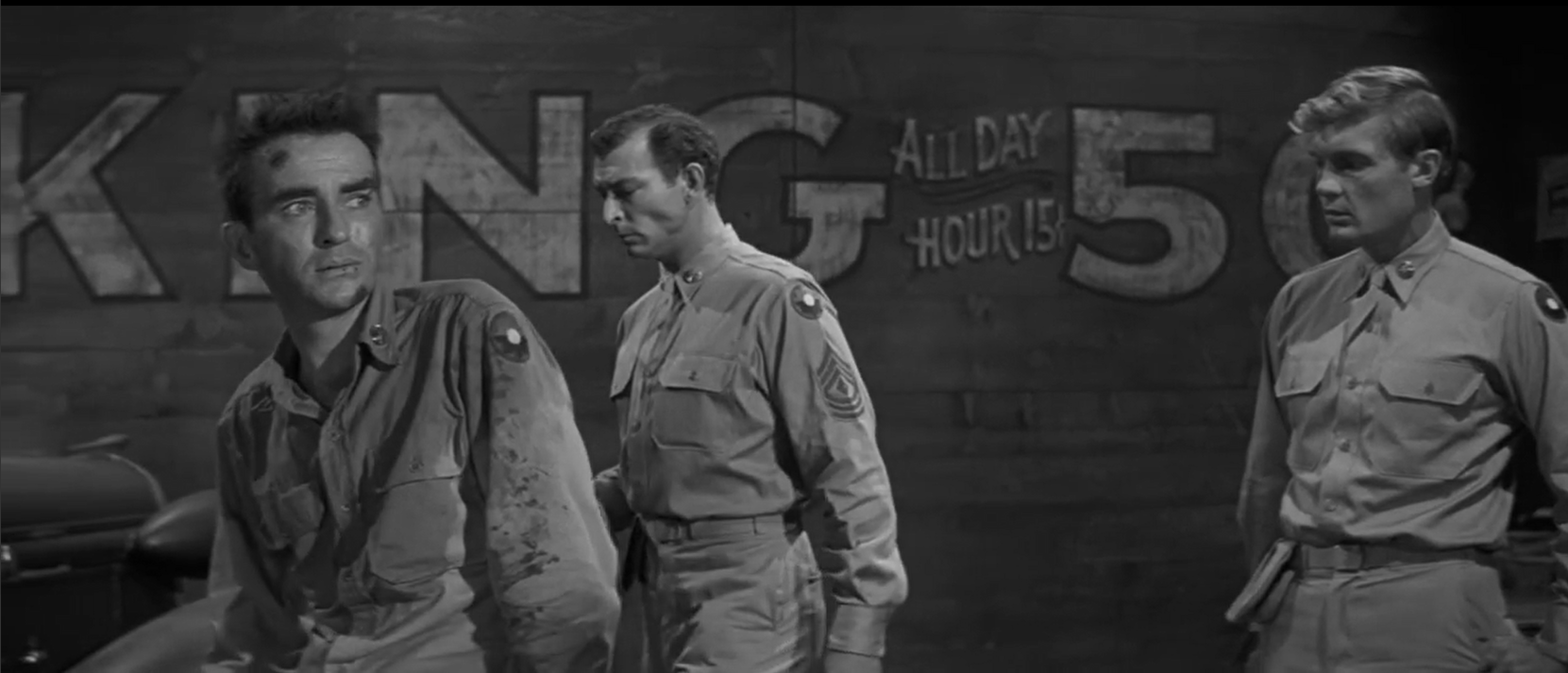
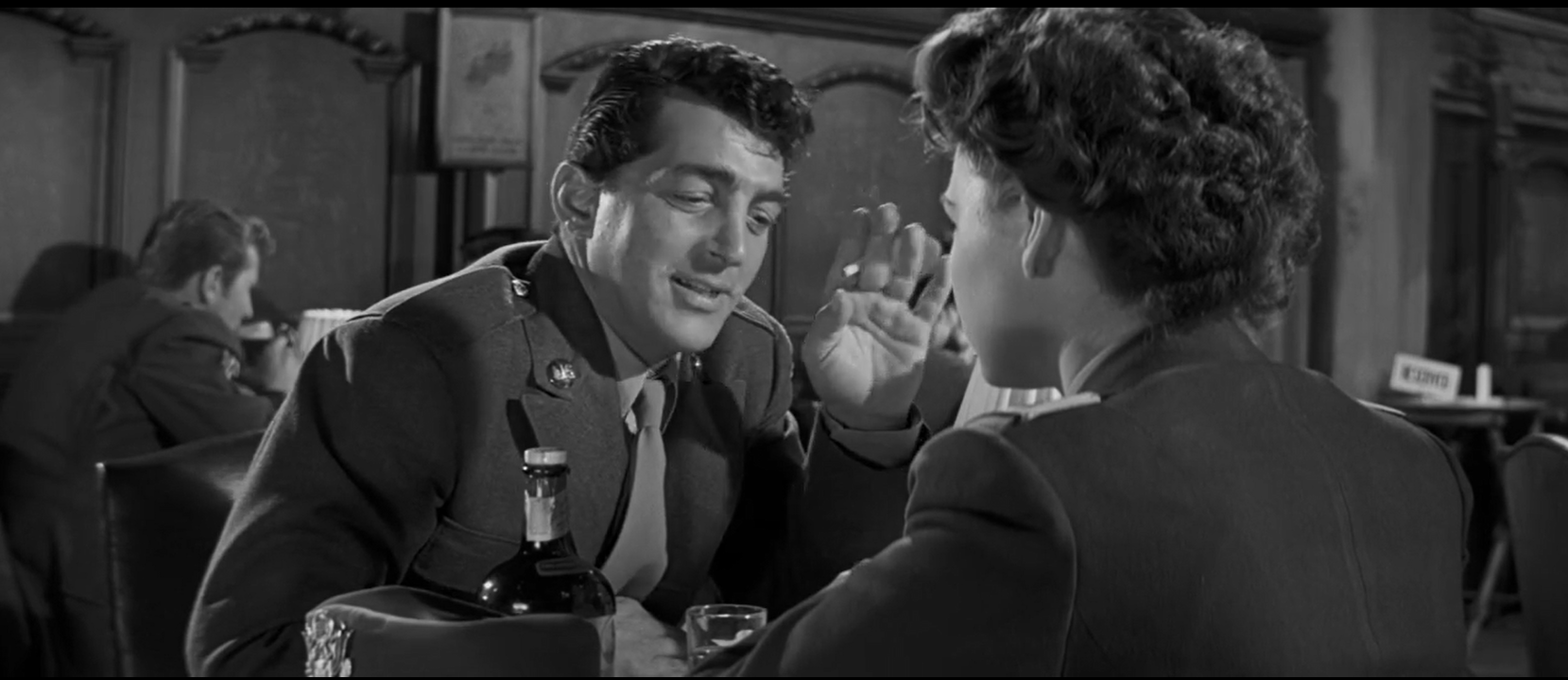
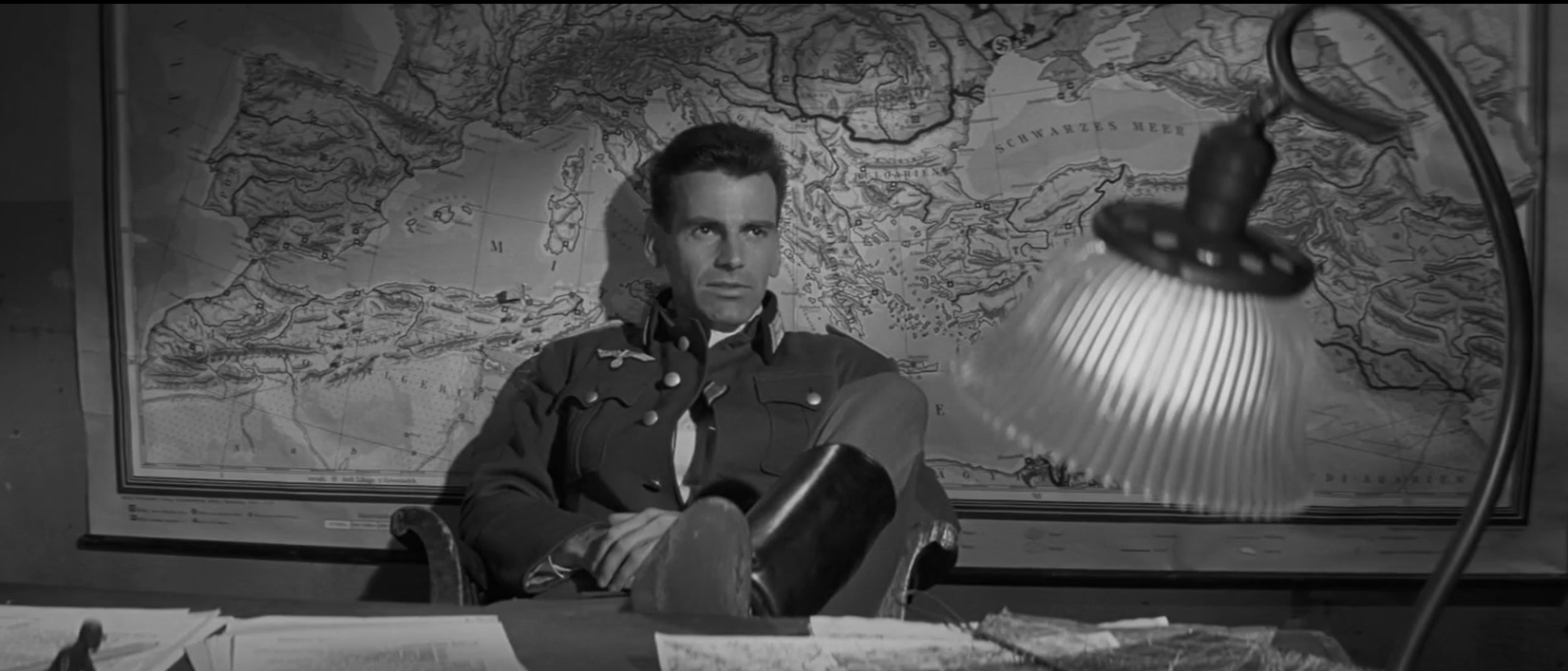
indeed, given that this film was released more than 10 years after the end of the war, some perspective had been gained — and it was likely easier for viewers to empathize with a conflicted Nazi like Brando. Schell, on the other hand (in his American screen debut), simply oozes Aryan arrogance: … representing everything about the Nazis’ approach to life and war that Brando comes to detest. Meanwhile, it’s unclear what kind of “understanding” Schell has with his beautiful wife (Britt), who almost instantly propositions Brando when he goes to visit her (at Schell’s request): Brando’s other would-be love interest — patriotic Francoise (Montvecchi) — seems included simply to show his conflicted desire for more than Germany. On the American side of things, the storyline about Clift’s “Noah Ackerman” hints at parallels to his character in From Here to Eternity (1953) — though this time he chooses to fight in order to stand up against (anti-Semitic) bullies who have stolen his money and are determined to give him a hard time: Lange is appealing as Clift’s romantic partner waiting for him back at home, and her character’s world also exposes us to a bit more of America’s thinly veiled anti-Semitism when we hear her father (Vaughn Taylor) — who “never knew a Jew before” — openly telling Clift he wishes “to heaven [he’d] turn around and get on [a] bus and never see” his daughter again. (He has a change of heart.) Martin’s “Michael Whiteacre” is the least developed of the three; we simply see him as a man who initially resists joining the army, but knows he must eventually move past his cowardice. All three men grow and mature in some way, which is refreshing — but the overall storyline isn’t quite satisfying enough to recommend this one. Notable Performances, Qualities, and Moments: Must See? Links: |
“Maybe that’s why we’re on this ship — ’cause we’re not good enough to fight!”
|
Synopsis: |
|
Genres, Themes, Actors, and Directors:
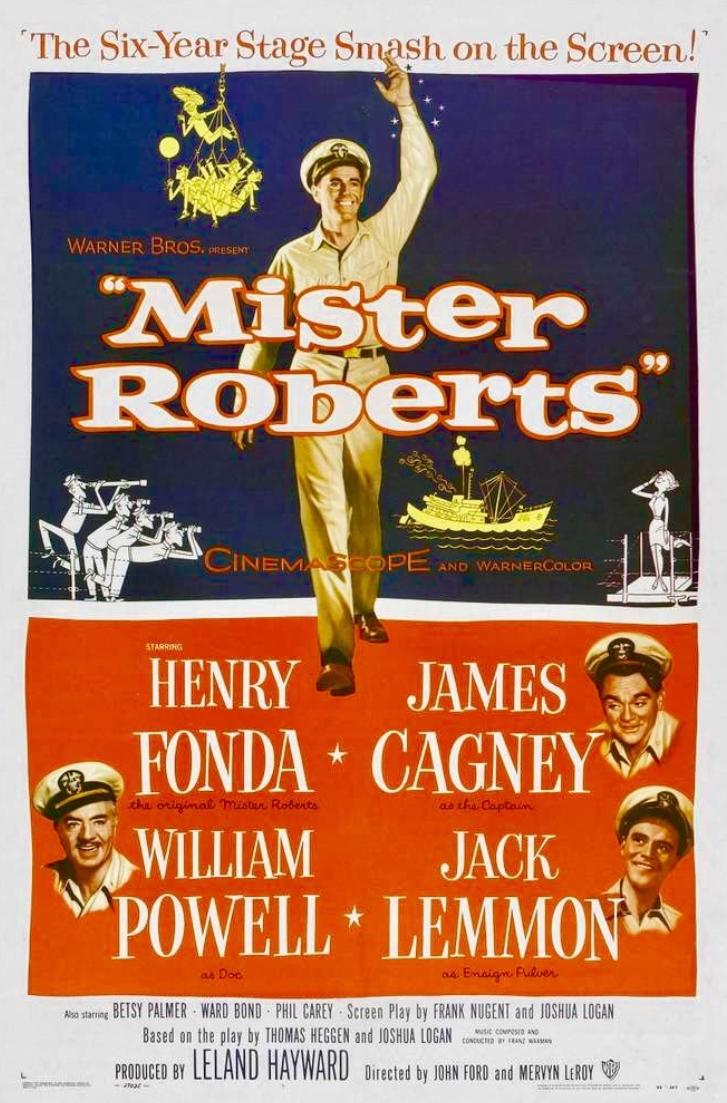
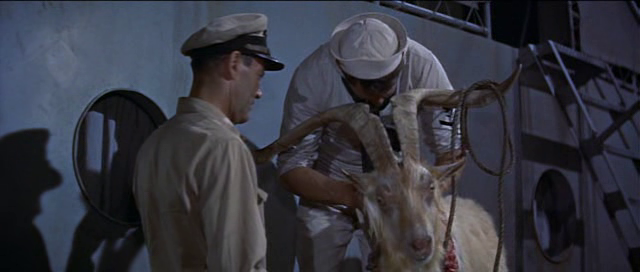
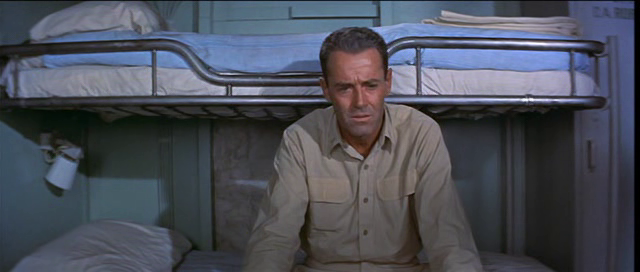
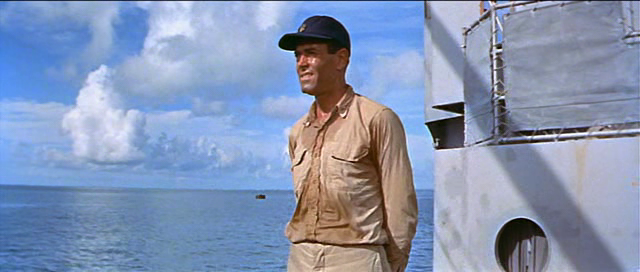
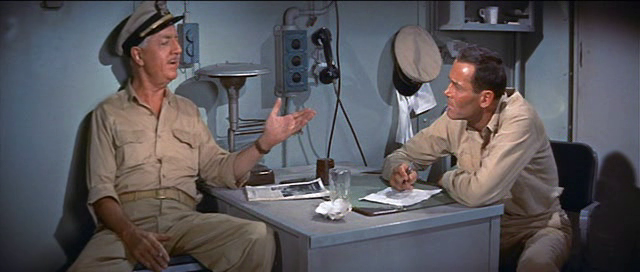
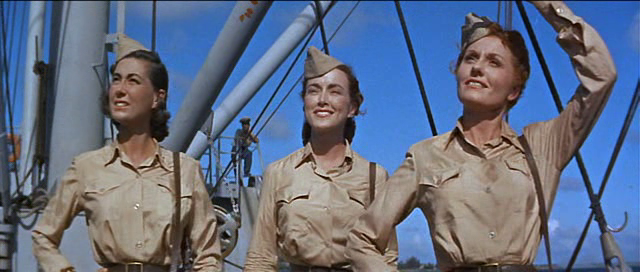
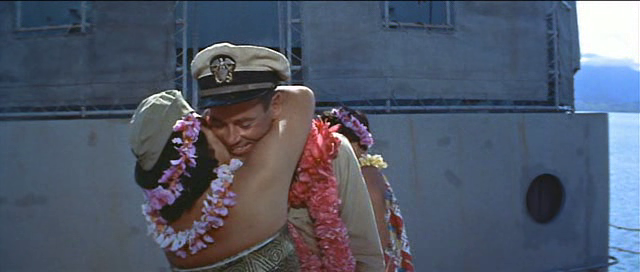
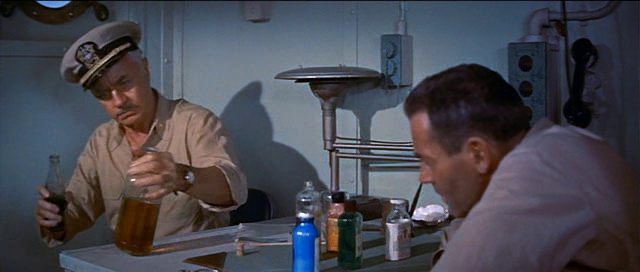
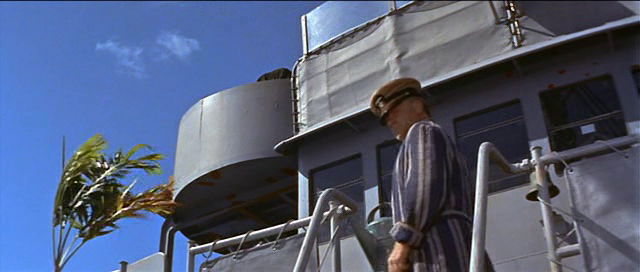
Review: — had a major falling out, ending their 16 year friendship and string of 8 films together. However, the resulting movie was no worse for wear as far as audiences were concerned, given that they made it the second highest grossing film of the year. Jimmy Cagney plays a Bligh/Queeg type of power-tripping naval leader, though no reason is given for his attitude other than class resentment. William Powell gave his final screen performance as a laid-back ship’s doctor who is friends with Fonda: … and Jack Lemmon won an Oscar for his supporting role as lazy Ensign Pulver, who is primarily interested in doing as little as possible other than bedding a beautiful nurse (Betsy Palmer): Speaking of beautiful nurses, a bevy of them are conveniently spotted across the way, and end up on board the ship: … while the local natives are exoticized on behalf of the men’s R&R. Unfortunately, the humor in this film — including the men ogling the nurses using spyglasses and binoculars: … Powell and Fonda crafting a faux-rum for Lemmon using grain alcohol, Coke, iodine, and hair tonic: … Cagney’s obsession with a palm tree: … and the men getting stinking drunk while on leave: — hasn’t aged well. We primarily enjoy watching Fonda in a role he wears like a glove, epitomizing a man who does the right and decent thing without anticipating anything in return. Fonda makes this film worth a one-time look, but it’s not must-see viewing otherwise. Notable Performances, Qualities, and Moments: Must See? Links: |
“A captain’s job is a lonely one; he’s easily misunderstood.”
|
Synopsis: |
|
Genres, Themes, Actors, and Directors:
Response to Peary’s Review: Peary argues that the “picture seems more concerned not to hurt the image of the Navy than to condemn Queeg, or to probe the military mentality and suggest that his phobias are not rare among military leaders.” He further adds that “the direction by Edward Dmytryk is stagy — one never feels that the men are actually on a ship in mid-ocean.” I disagree with Peary’s sentiments. While the studio-mandated inclusion of an insipid romance between Francis and his singer-girlfriend (May Wynn) is an annoying waste of screentime: … the rest of the storyline plays out in an engaging and suspenseful fashion. MacMurray gets to play one of his anti-nice-guy roles as an aspiring novelist who means well with his armchair analysis of Queeg, but ends up (arguably) causing harm: … while Johnson is solid as an uneducated but savvy officer, and Jose Ferrer is nicely cast as a lawyer who openly wishes he were defending someone other than Johnson and Francis, but steps up to the task. However, it’s Bogart’s Oscar-nominated performance which really holds one’s attention, especially during the riveting final courthouse sequence. Bogart’s Queeg is a complicated character, as are the others around him — and I appreciate the culminating sequence in which the courtroom verdict is complexified even a bit further. By the end of this film, we definitely understand that leading is hard, and that knowing what to do under extraordinary circumstances is rarely straightforward. Note: Watch for former-Marine Lee Marvin in a small role as a lieutenant nicknamed “Meatball”: Notable Performances, Qualities, and Moments:
Must See? Categories
Links: |
“It’s a lousy war, kid — but it’s the only one we’ve got.”
|
Synopsis: |
|
Genres, Themes, Actors, and Directors:
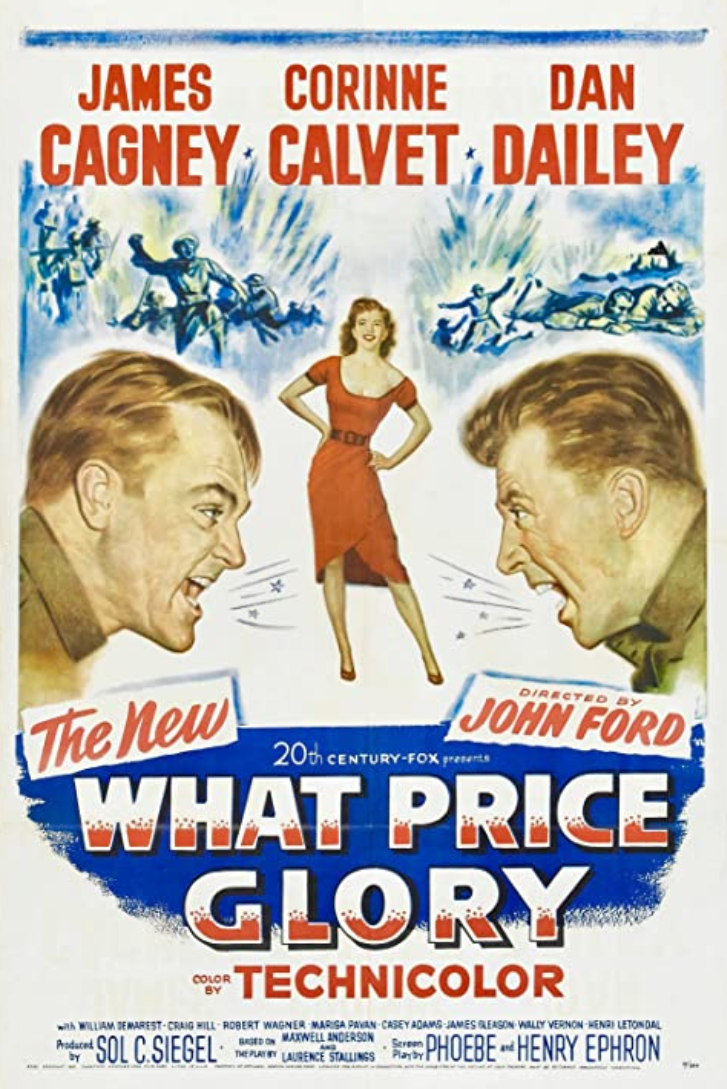
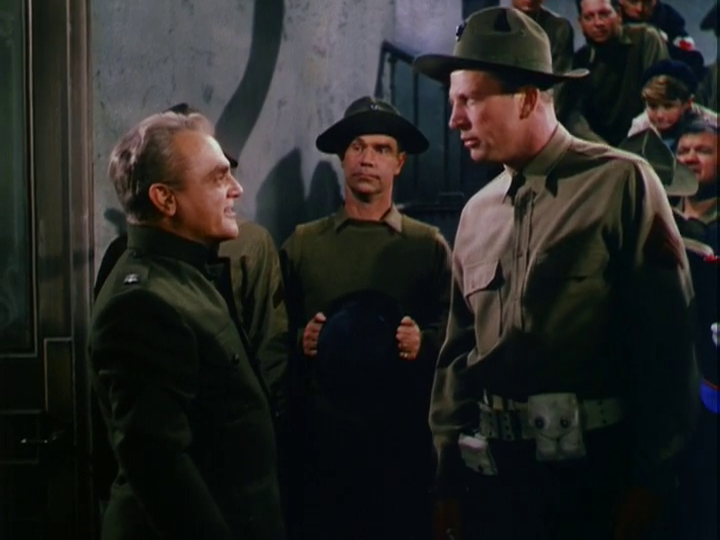
Review: … and Calvert is simply relegated to the role of a beautiful pawn whose only option to make it to Paris is seemingly to marry one of them: We get to see handsome Wagner and lovely Pavan falling for one another (they even sing a romantic multilingual duet): … but there’s nothing else to their relationship, either. This one is strictly must-see for Ford completists. Notable Performances, Qualities, and Moments: Must See? Links: |
“It’s a unicorn!”
|
Synopsis: |
|
Genres, Themes, Actors, and Directors:
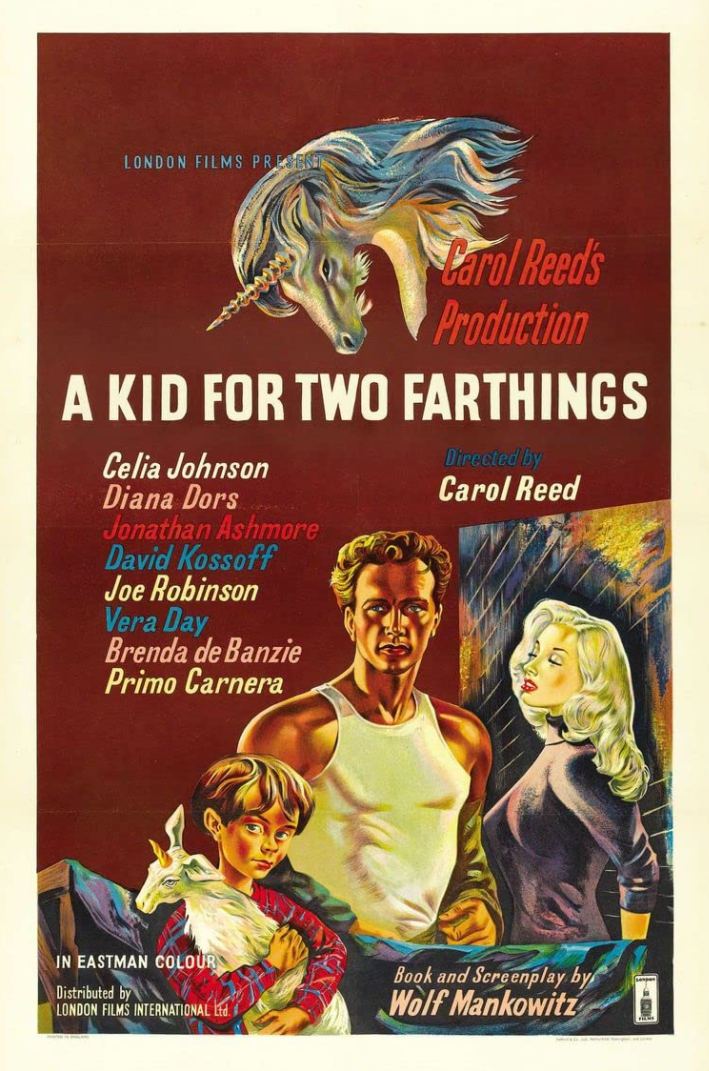
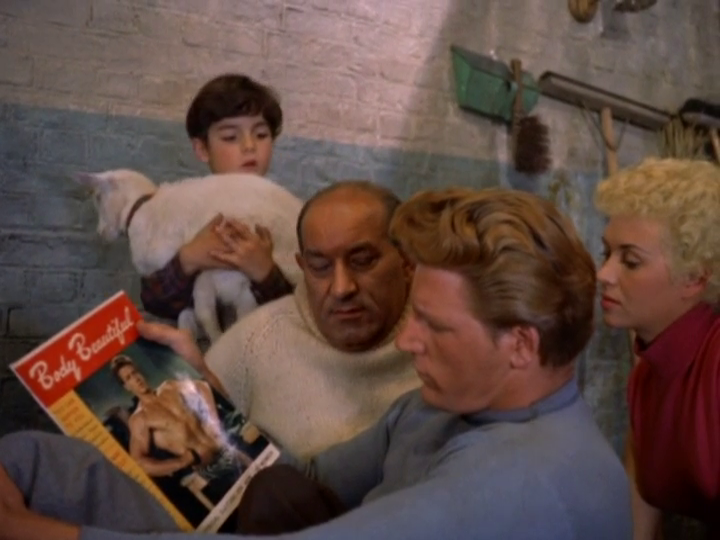
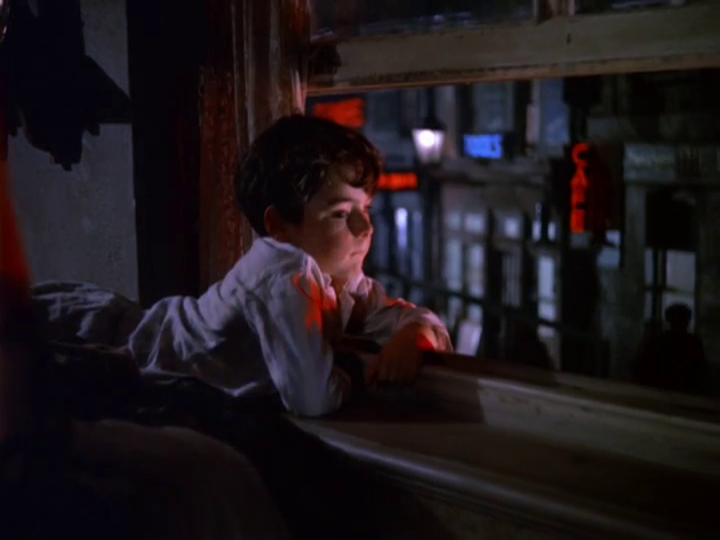
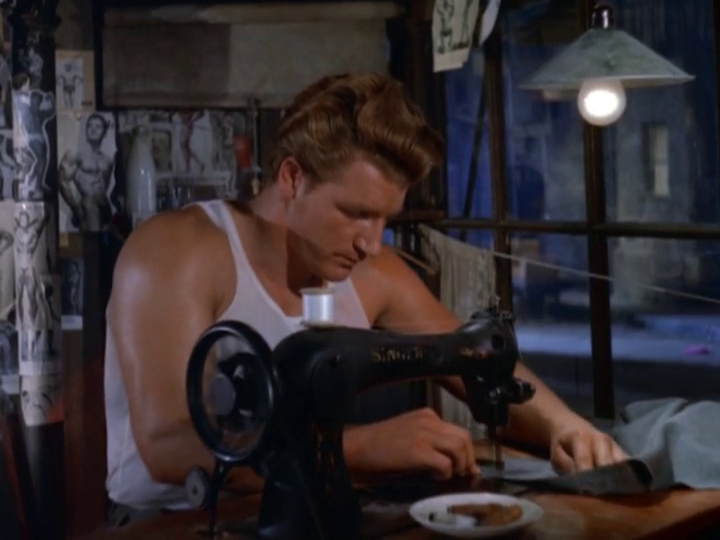
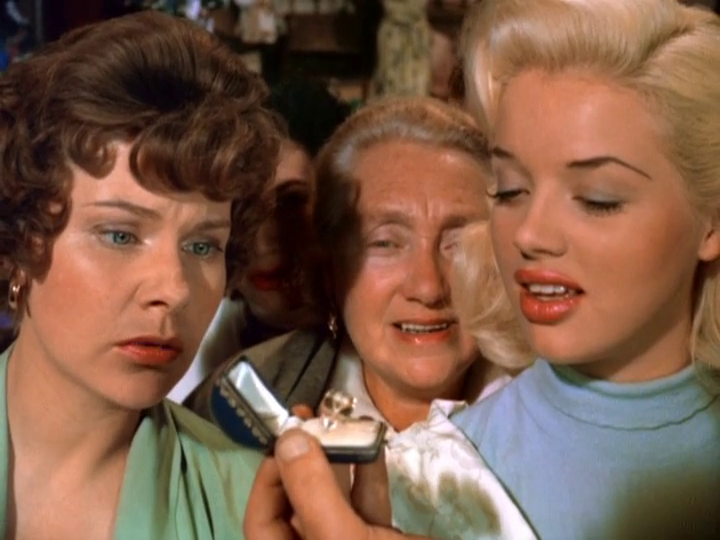
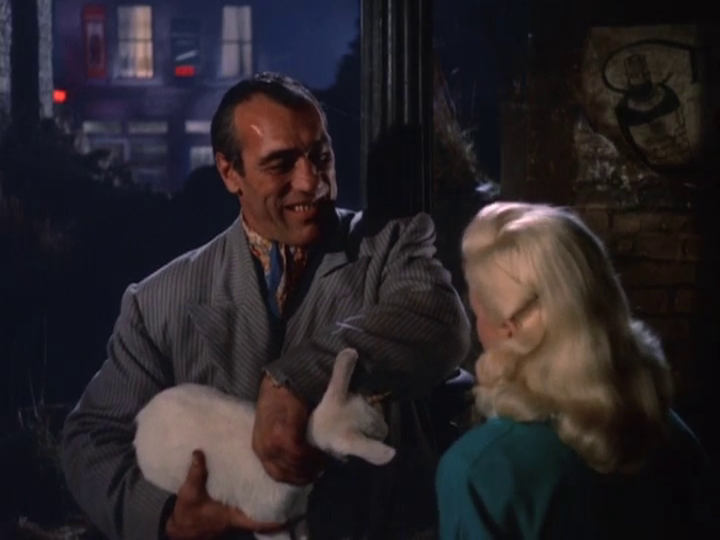
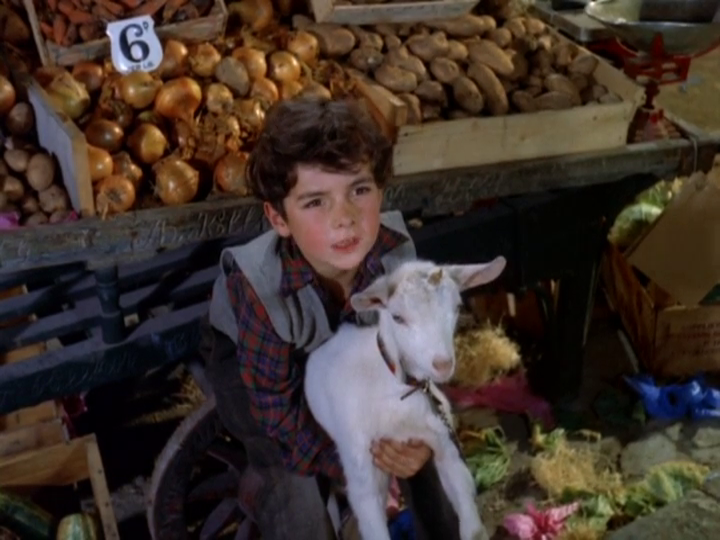
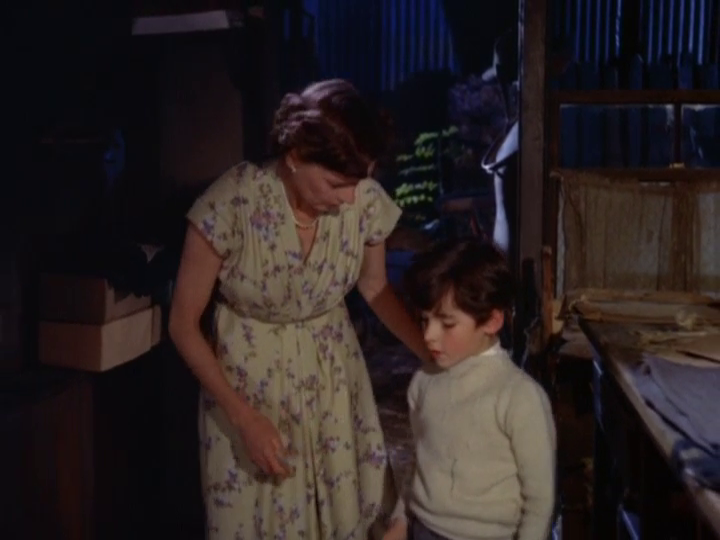
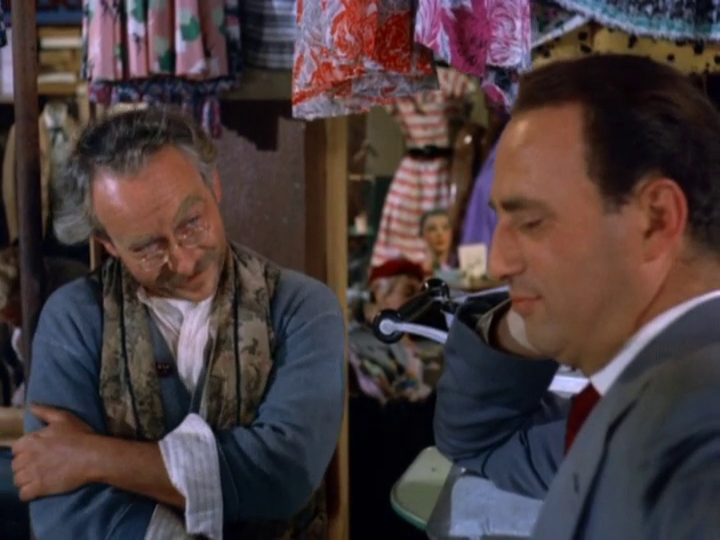
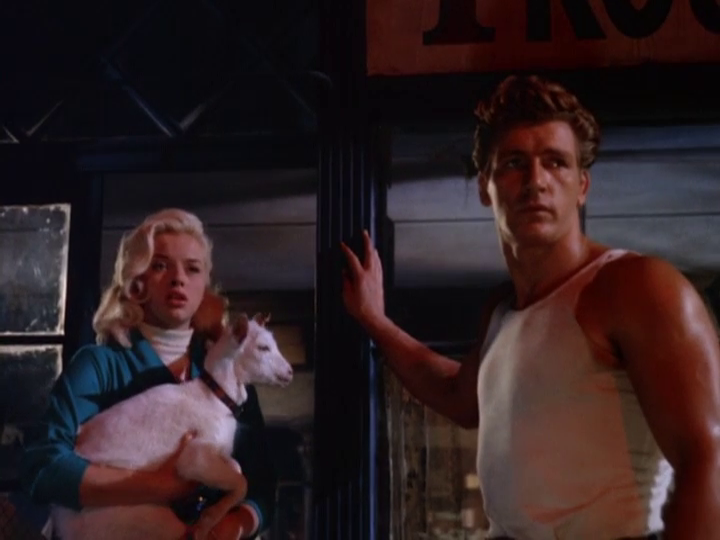
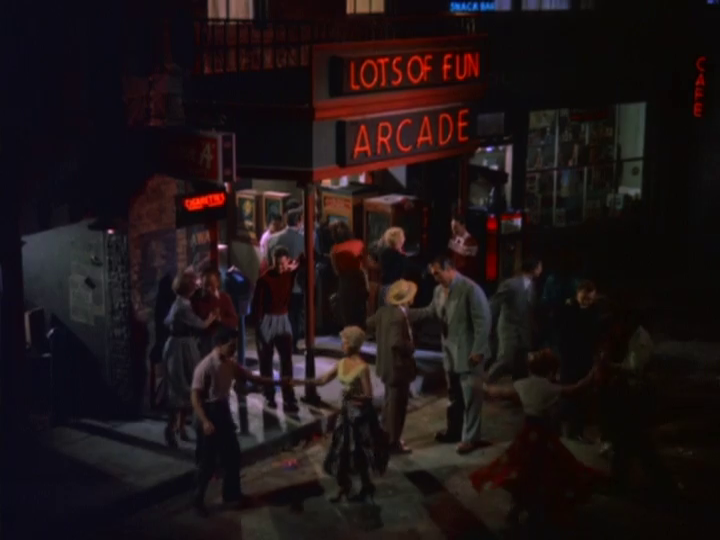
Review: Ashmore is charming as sweet Joe: … though we don’t actually get to know him too well, given that his own needs and wishes are overshadowed by the dominant subplot between Robinson (who aspires obsessively towards body-building fame): … and Dors, who oh-so-desperately wants to get a ring put on it: These two are indeed gorgeous specimens, but unfortunately not all that bright or interesting. Meanwhile, Carnera’s oafish “Python” is a hiss-worthy but purely one-dimensional villain (below he’s trying to strangle Joe’s “unicorn”): The most magical scenes are those simply showing the hustle and bustle of Joe’s child’s-eye view of the world: … as his harried mother (Johnson) struggles to keep up with solo parenting and work: … and Kossoff tries to bargain his way into purchasing his competitor’s old pressing machine: The wrestling scenes are pure filler — though I suppose they fit with the film’s overall theme of showing everyday, working-class life and entertainment. Fans of Carol Reed will want to check this one out simply to see the variety and creativity of his output, but it’s not must-see viewing for all film fanatics. Notable Performances, Qualities, and Moments: Must See? Links: |
“It takes a man to turn on the power — not just a talker.”
|
Synopsis: |
|
Genres, Themes, Actors, and Directors:
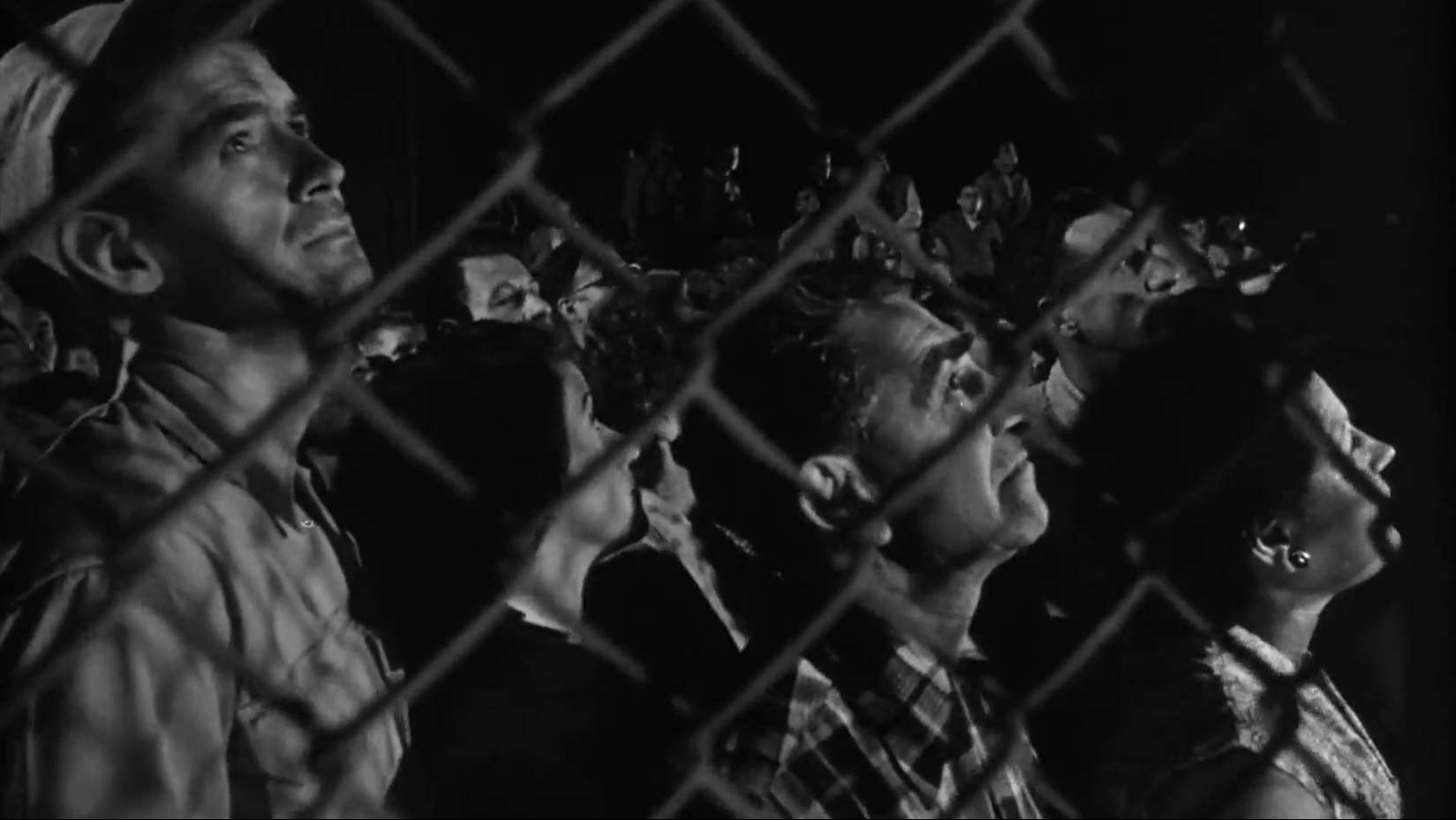
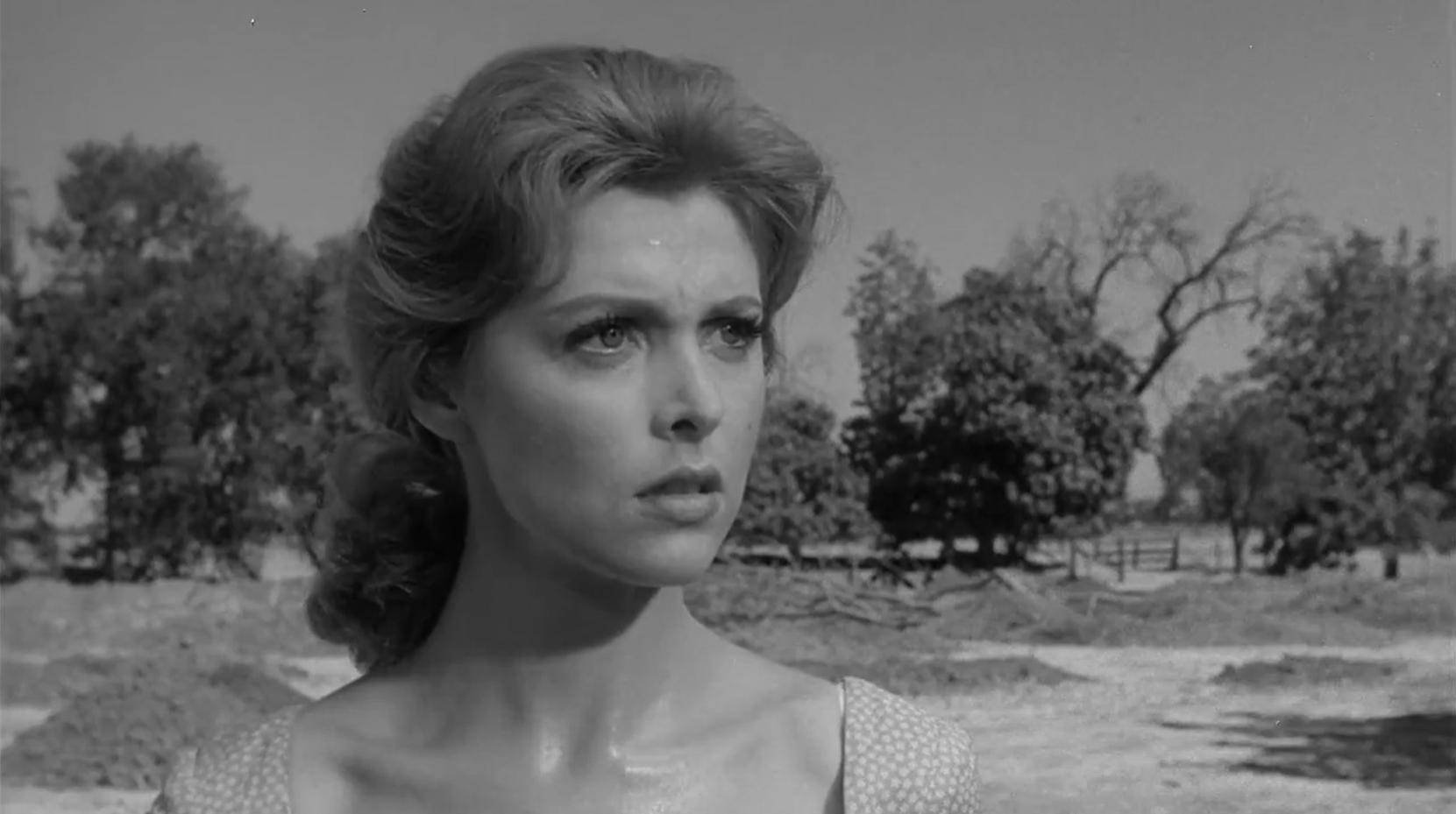
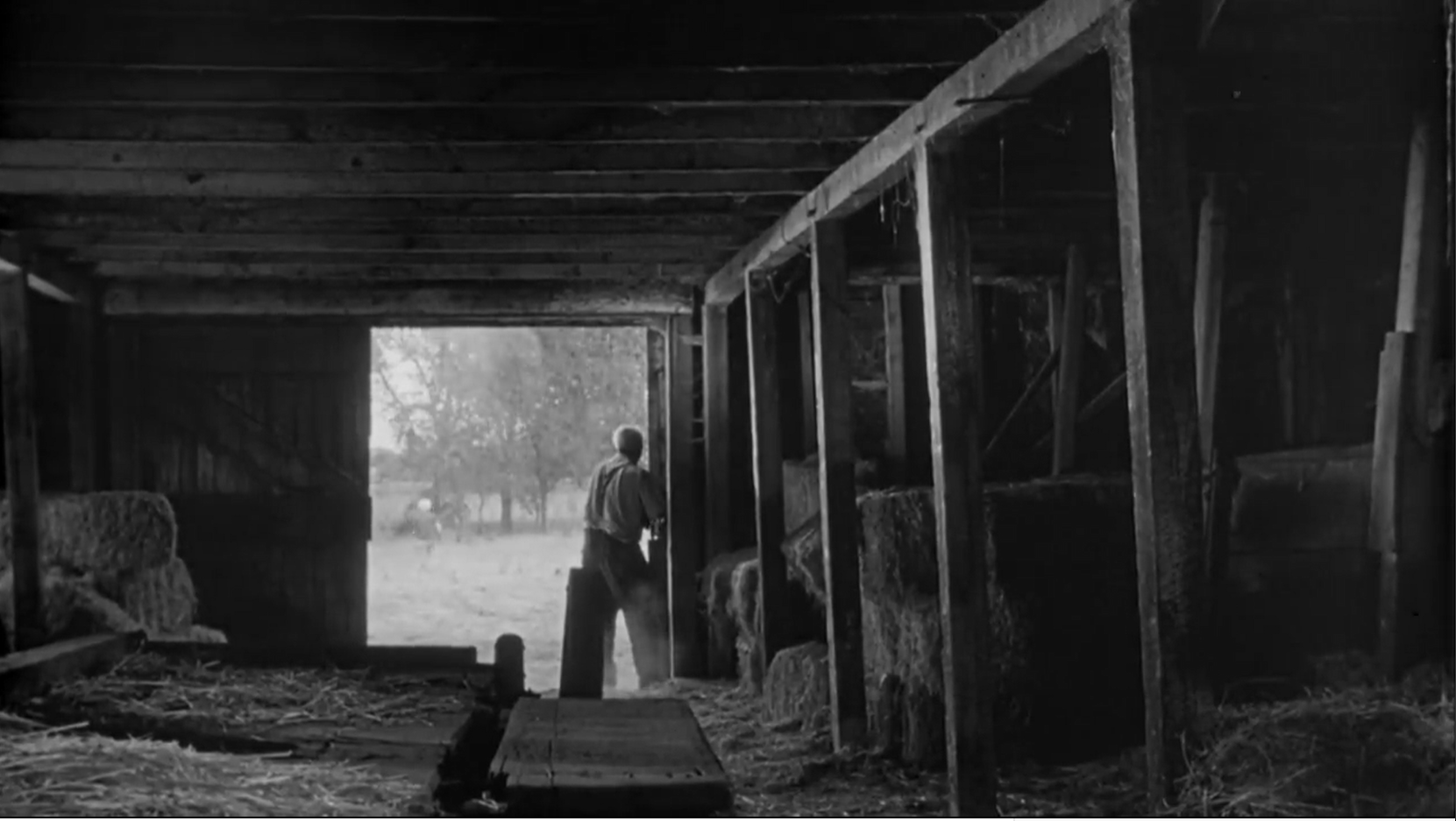
Review: Ryan, meanwhile, is all earnestness and goofy grins as the deluded father of the family (how in the world are they actually surviving?): His imprisonment of an unwitting albino (Landon is unrecognizable) is painfully awkward to watch (though I guess we’re meant to… laugh?): There’s “comic relief” provided through Hackett’s mega-crush on Spain: — who also has the hots for Landon: — but this humor falls terribly flat; and the central subplot about Ray’s intention to open the local mill back up is severely underdeveloped (I didn’t understand its initial closure was due to wage cut protests until I read more about the novel): What we’re mostly watching for in this film are the inevitable tensions building between Louise and Ray, who do indeed come across as hot and steamy with one another: The film’s primary selling point is its visual beauty, with stunning b&w cinematography by Ernest Haller: Overall, however, this film about familial tensions and power plays hasn’t really held up well — but given that it was apparently one of Mann’s personal favorites, fans of his work will of course want to check it out. Notable Performances, Qualities, and Moments: Must See? Links: |
“I can’t fight this Lady Luck of yours, this fancy queen in her green felt dress.”
|
Synopsis: |
|
Genres, Themes, Actors, and Directors:
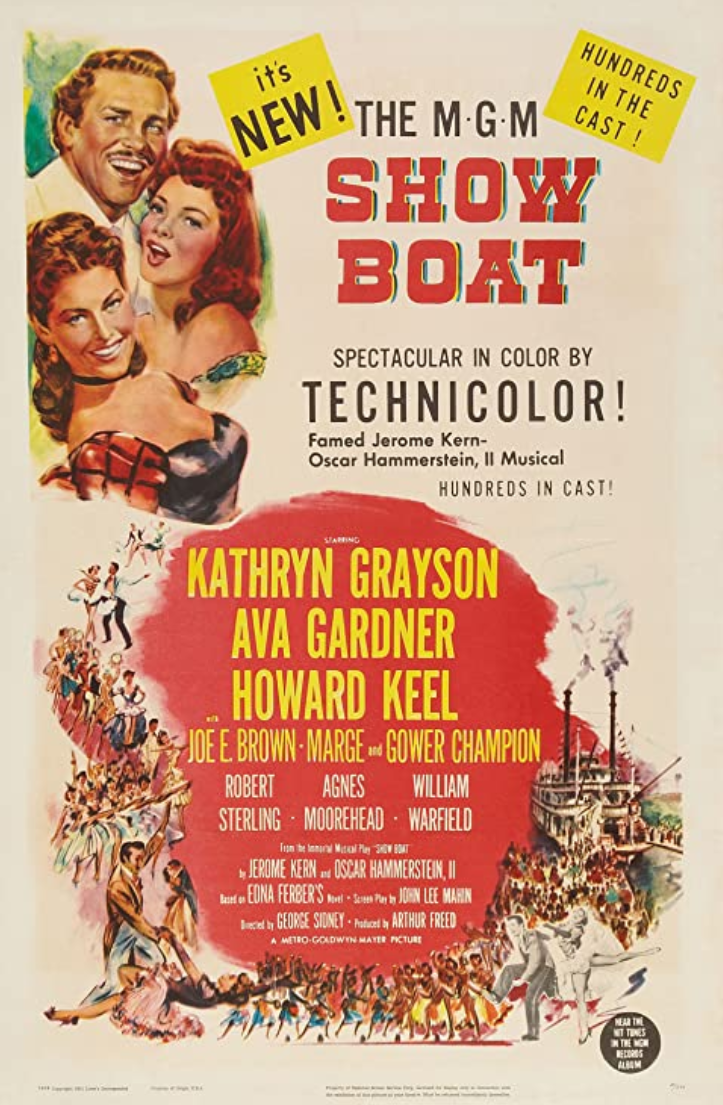
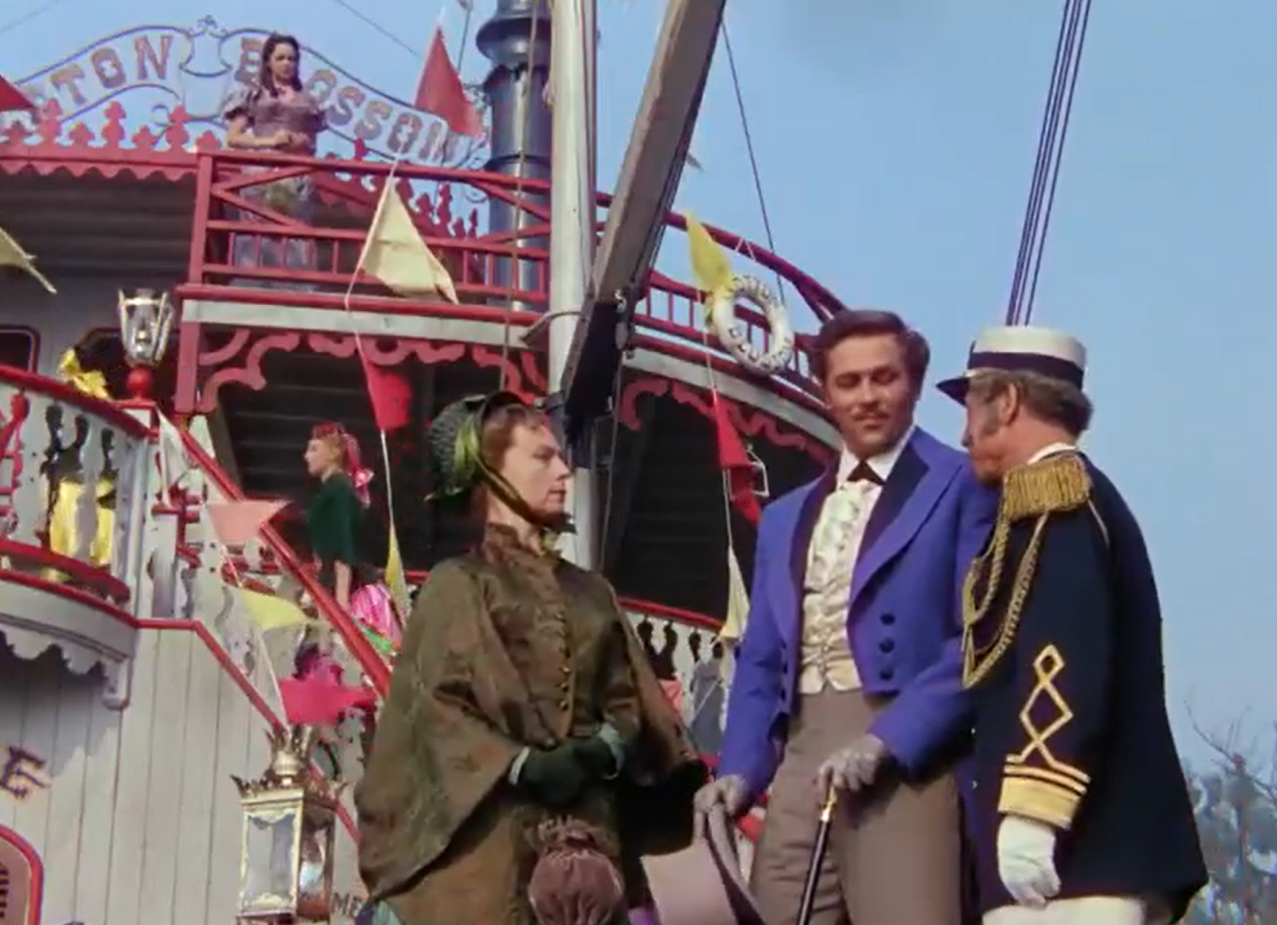
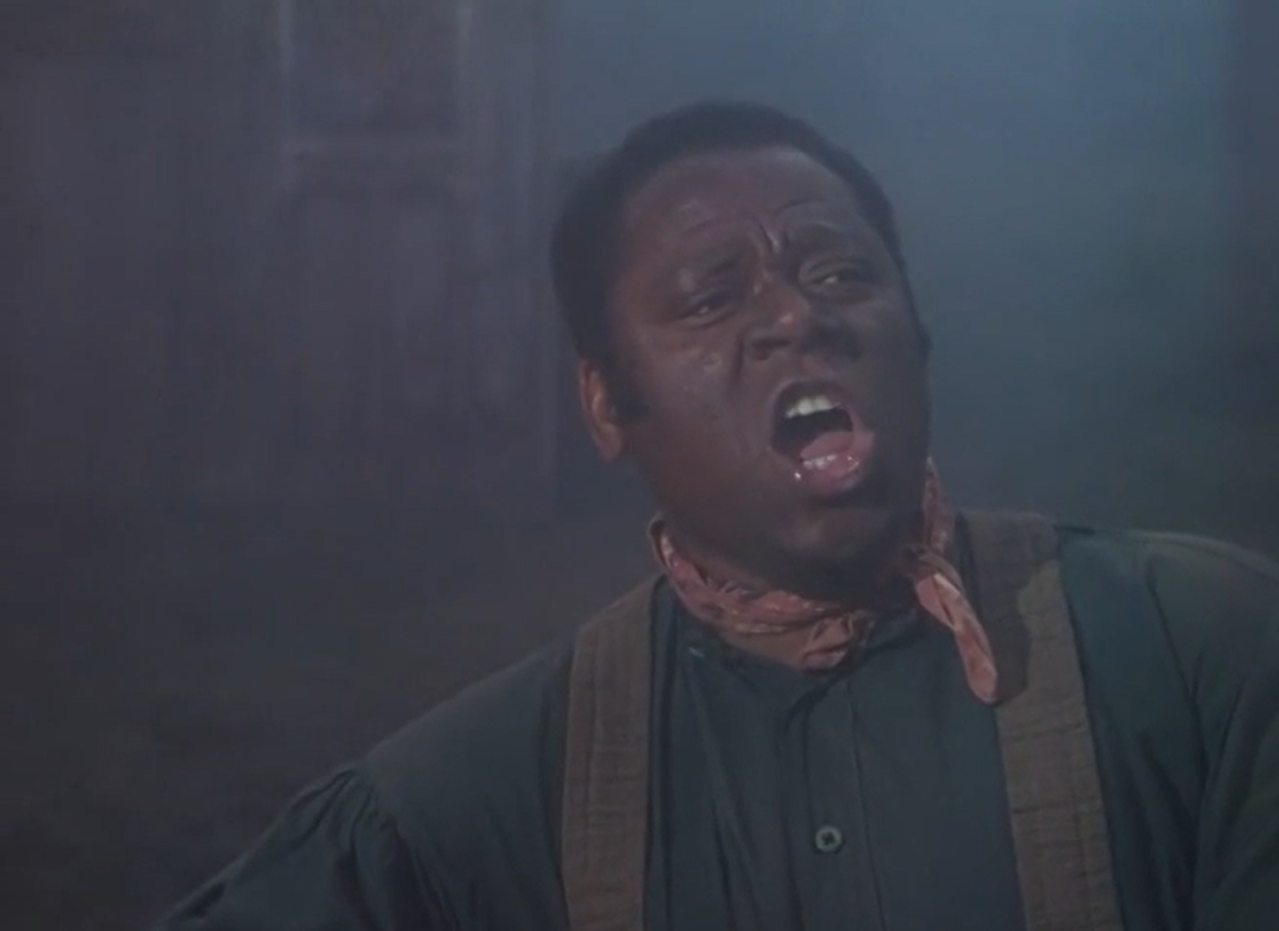
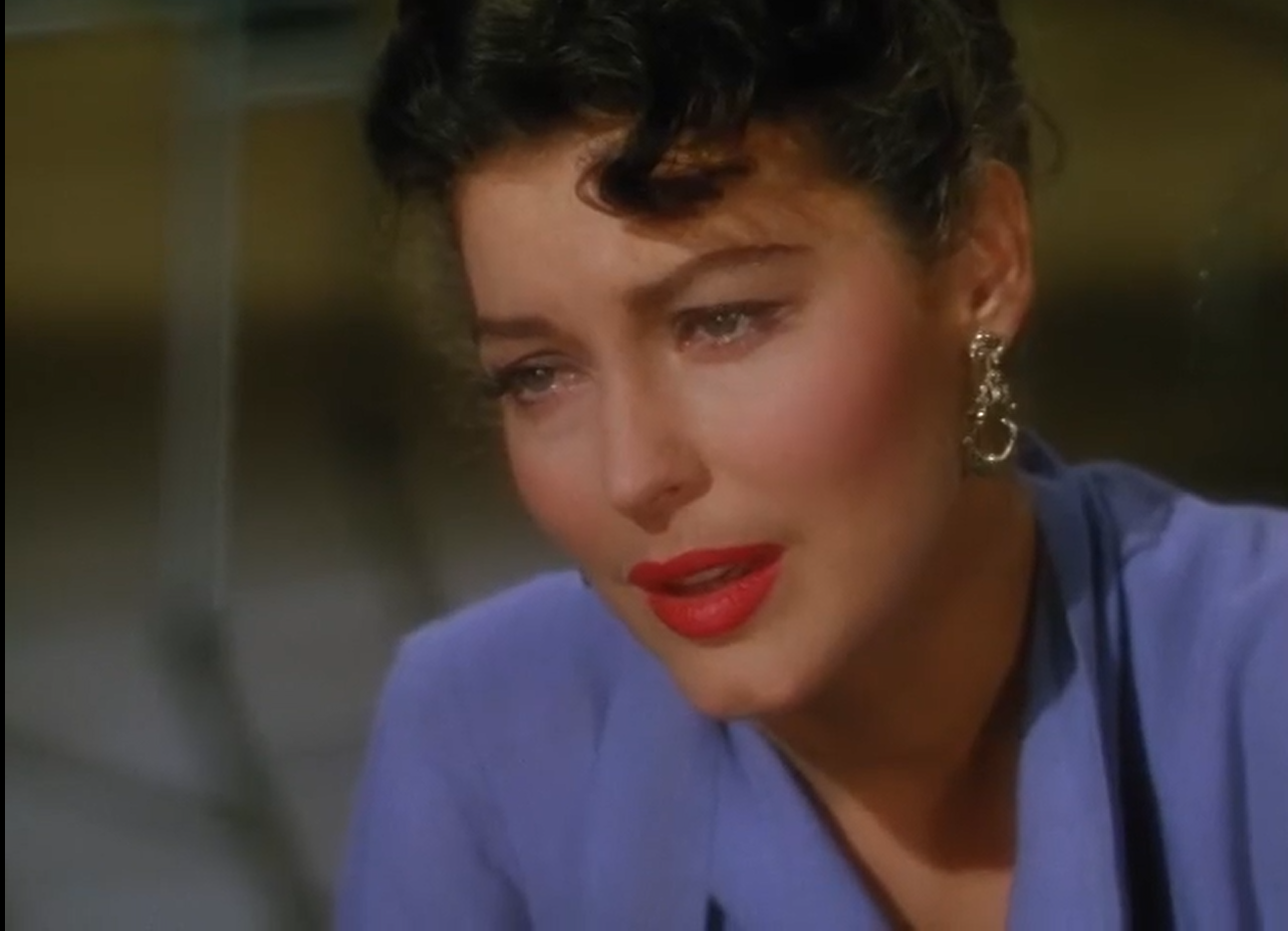
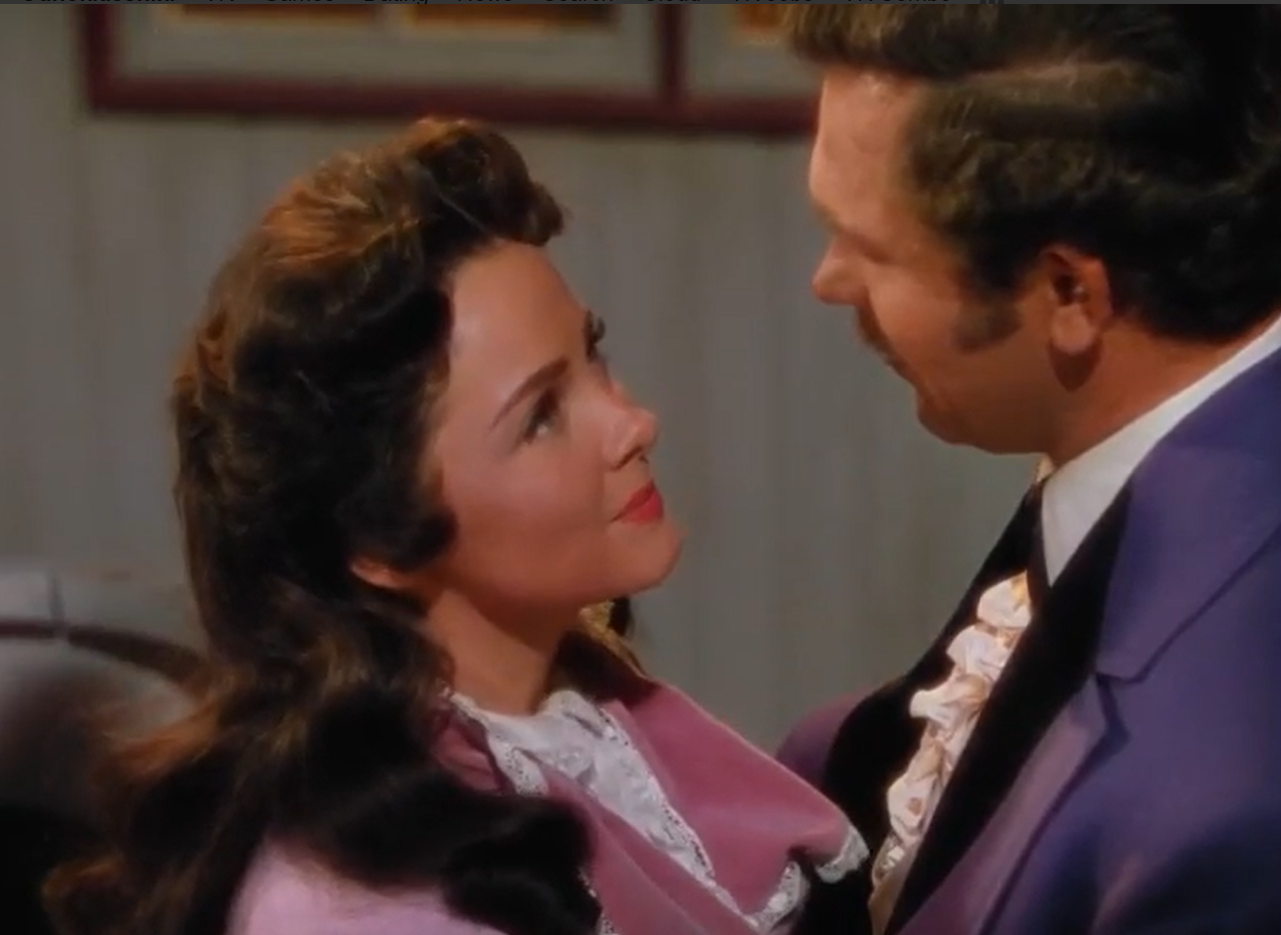
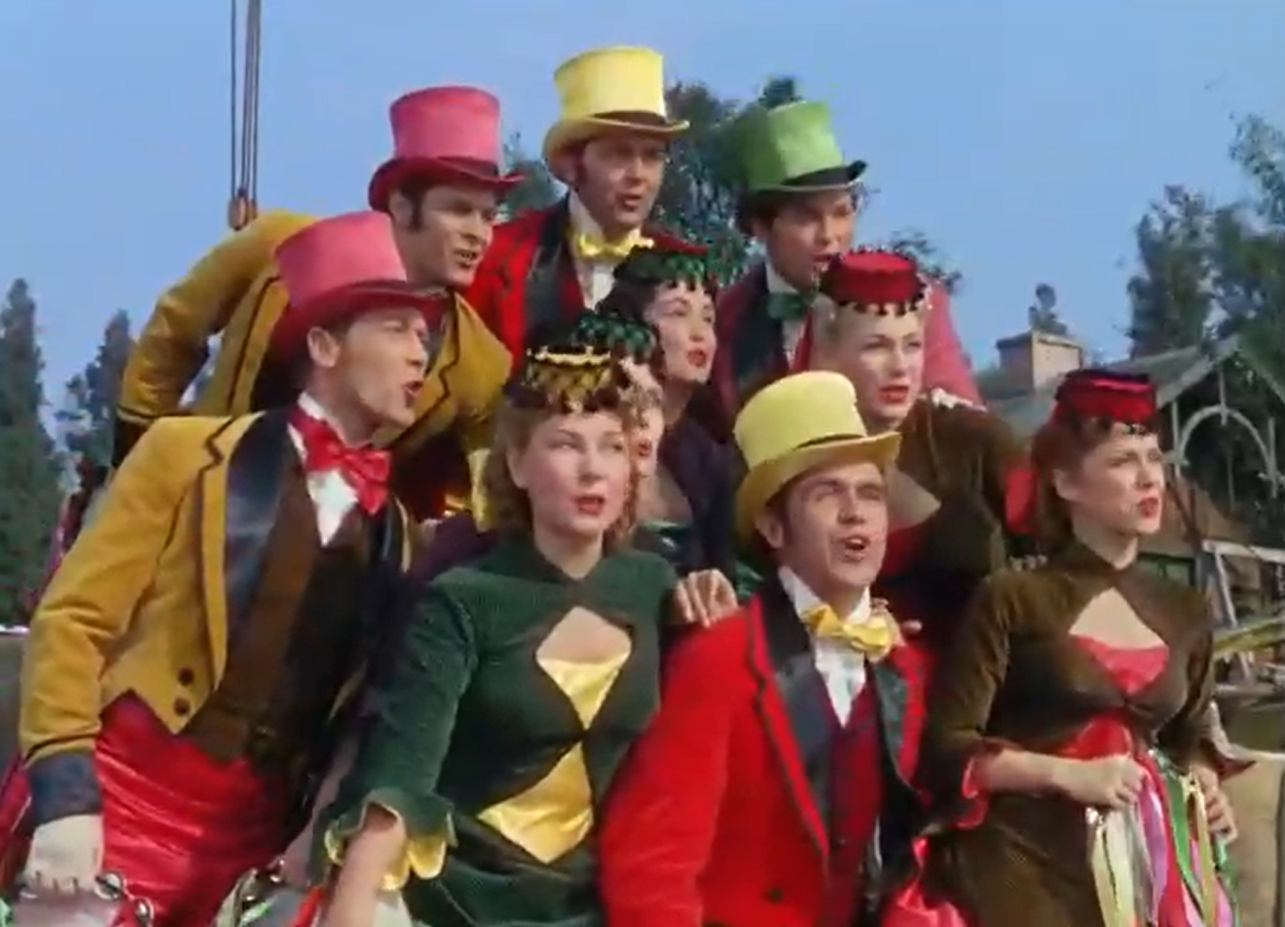
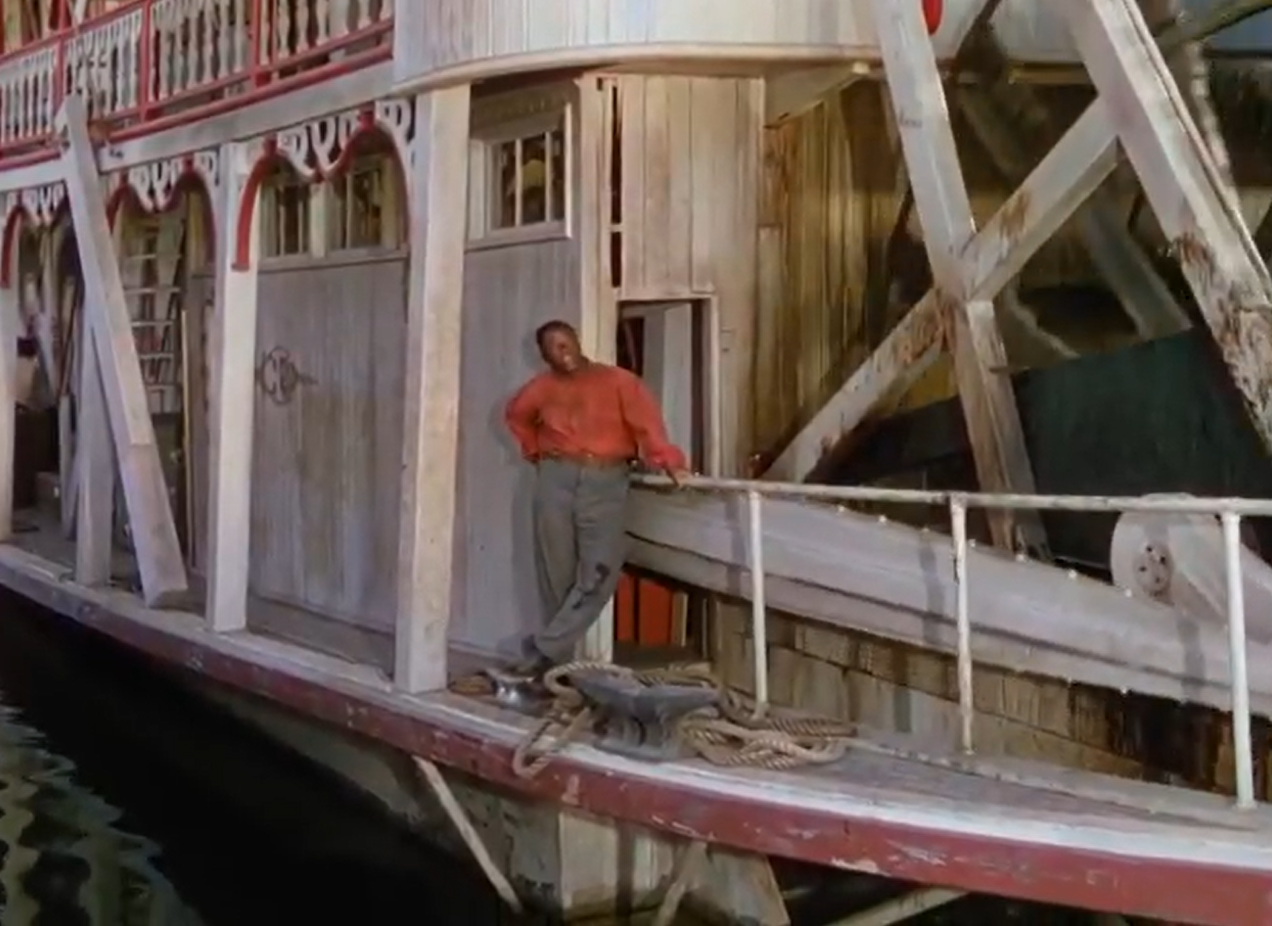
Review: … and we get to hear beautiful renditions of some of the show’s most famous songs, including “Ol’ Man River” (sung by William Warfield): … “Can’t Help Loving’ Dat Man”: … “Make Believe”: … and “My Bill”: … but the storyline has been completely whitewashed (see the Adaptation section of Wikipedia’s entry for a detailed comparison with James Whale’s 1936 version). The remaining narrative is not all that compelling; when Grayson falls for a career-gambler (Keel): … what kind of life does she expect to lead other than one that inevitably becomes volatile? Meanwhile, Gardner’s Julie (as show fans know) simply turns increasingly alcoholic and despondent, which is no fun at all. Fans of the musical will of course want to check this version out, but it’s not must-see viewing for all film fanatics. Notable Performances, Qualities, and Moments: Must See? Links: |
“It was my son that killed your son.”
|
Synopsis: |
|
Genres, Themes, Actors, and Directors:
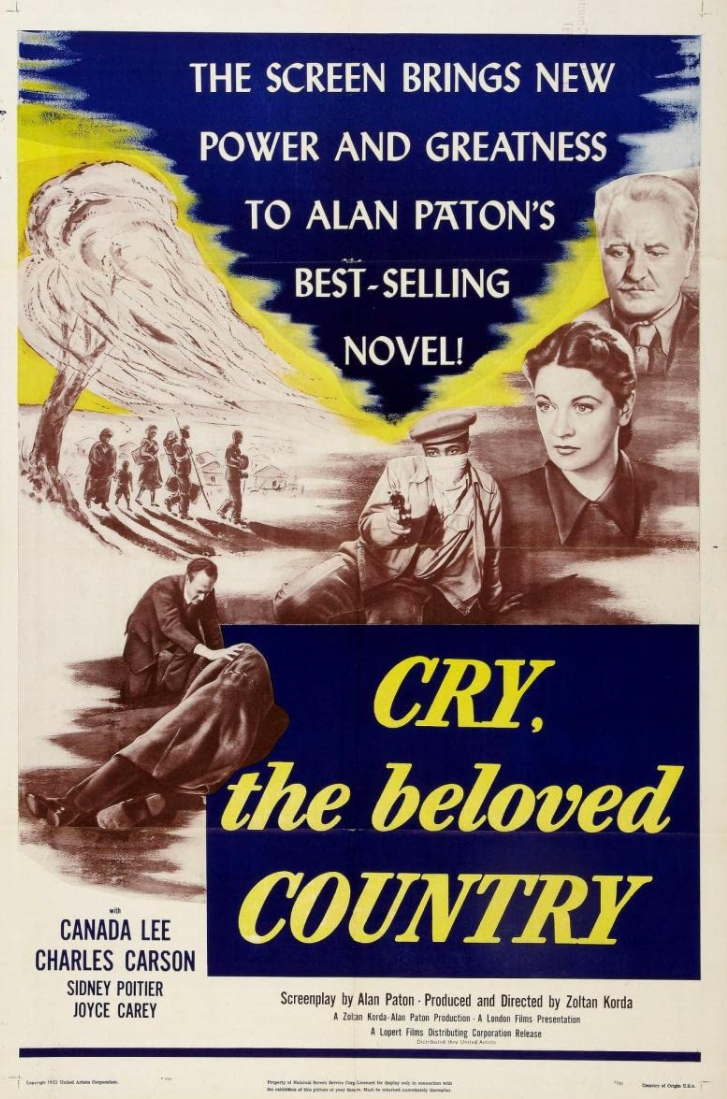
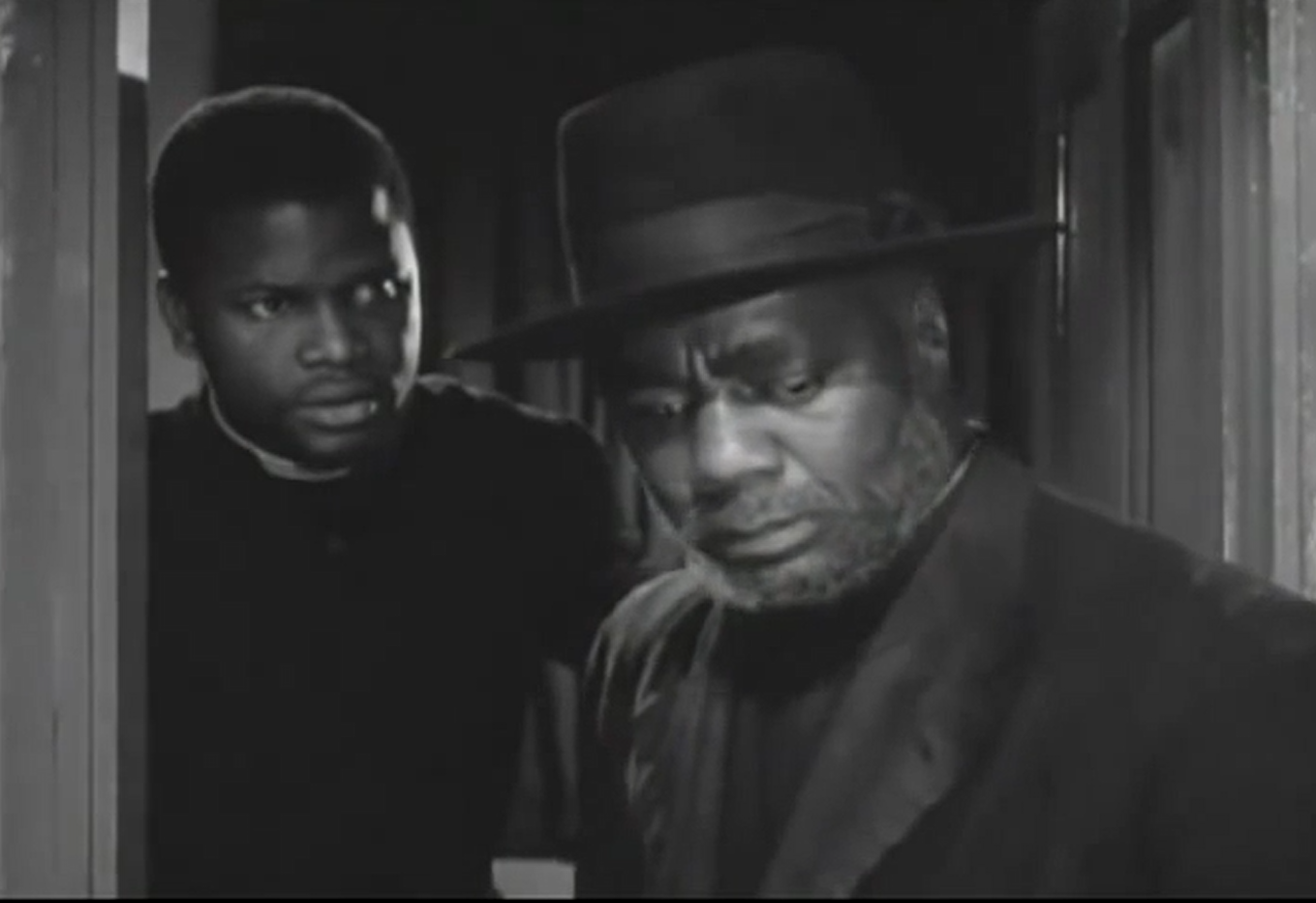
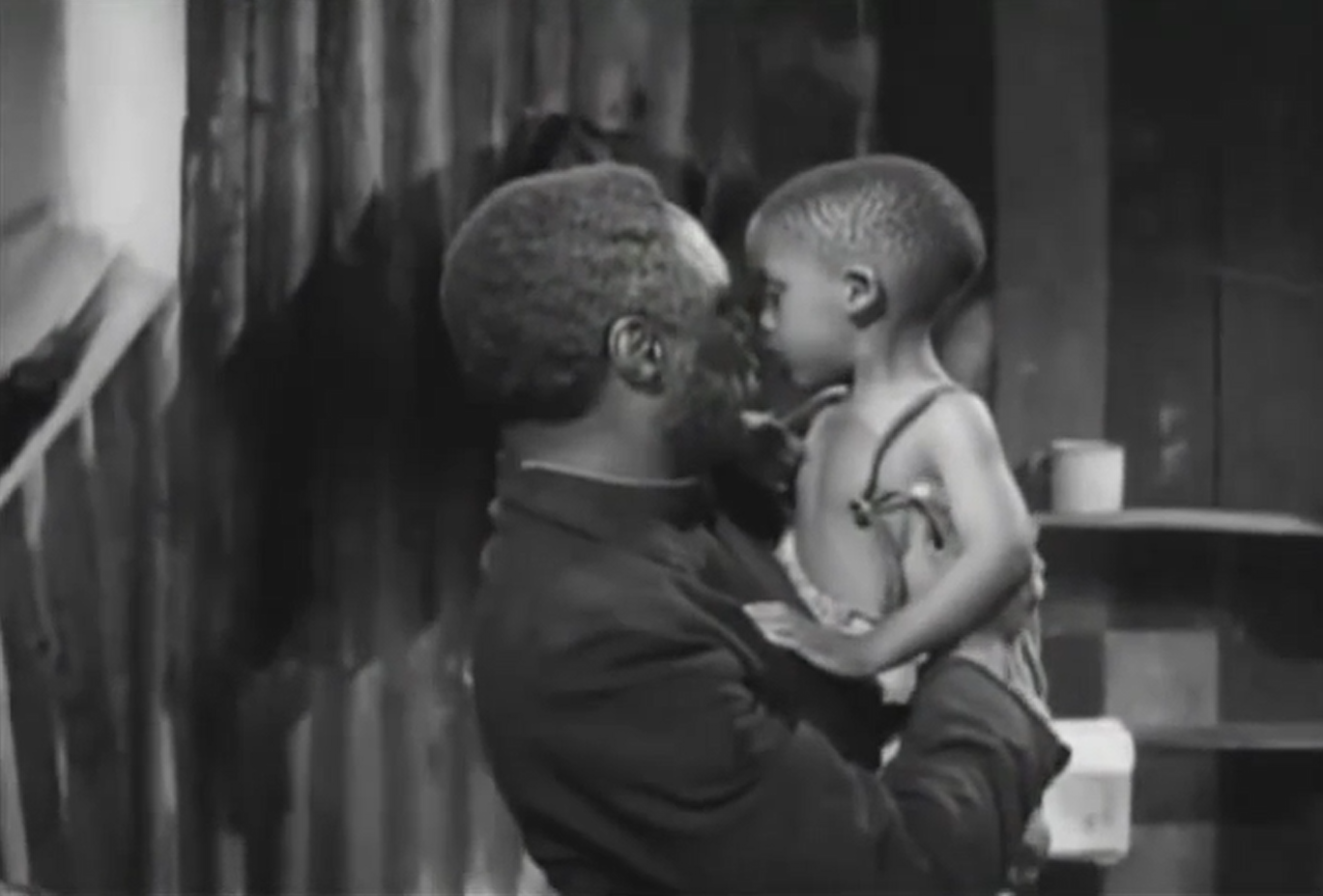
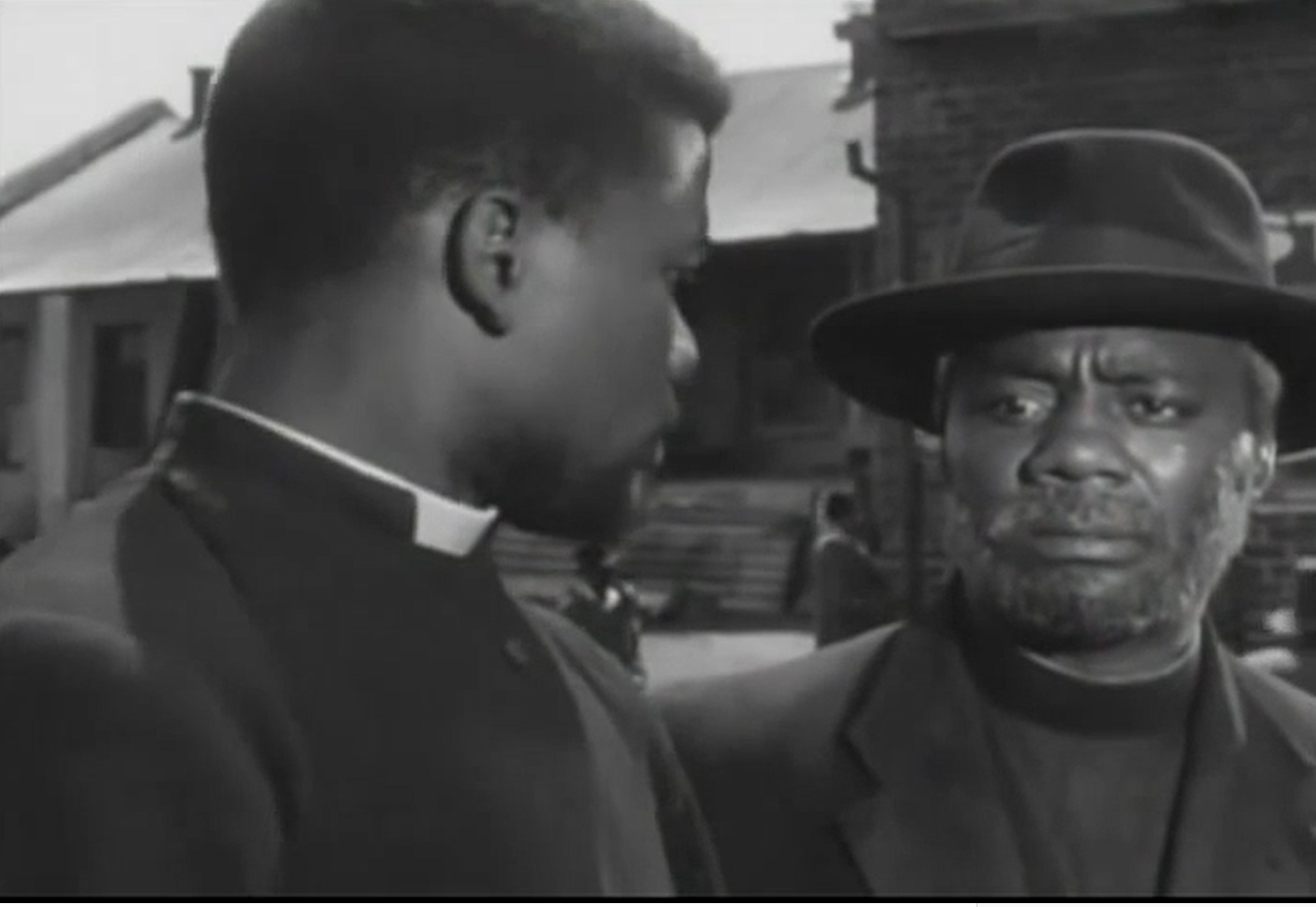
Review: Along the way, we’re shown some of the realities of Apartheid-era South Africa, with pervasive poverty and challenging dilemmas all around: The crime at the center of the film is appropriately shocking, and leads us swiftly towards its second half, as the impact of systemic racism and crime on citizens from all walks of life is explored: There are no easy answers, but thankfully, we see shifts-for-the-better occurring as a result of tragedy, with Carson coming to understand the power of the work his activist-son (Henry Blumenthal) had been engaging in before his death. The fact that Lee and Poitier — in just his second film role after No Way Out (1950) — had to be smuggled into South Africa as “indentured laborers”, and endured bitterly harsh restrictions while there, speaks directly to the challenges inherent in making this film, which remains worth a look given its unprecedented exploration of issues otherwise untouched in mainstream cinema of the time. Notable Performances, Qualities, and Moments:
Must See? Categories
Links: |