Browsed by
Category: Response Reviews

My comments on Peary’s reviews in Guide for the Film Fanatic (Simon & Schuster, 1986).

Incredible Shrinking Man, The (1957)

Incredible Shrinking Man, The (1957)

“I felt puny and absurd, a ludicrous midget.”

Synopsis:
While on a boating excursion with his wife (Randy Stuart), a man (Grant Williams) exposed to atomic radiation soon finds himself shrinking to a smaller and smaller size.

Genres, Themes, Actors, and Directors:

  • Atomic Energy
  • Jack Arnold Films
  • Living Nightmare
  • Science Fiction
  • Survival

Response to Peary’s Review:
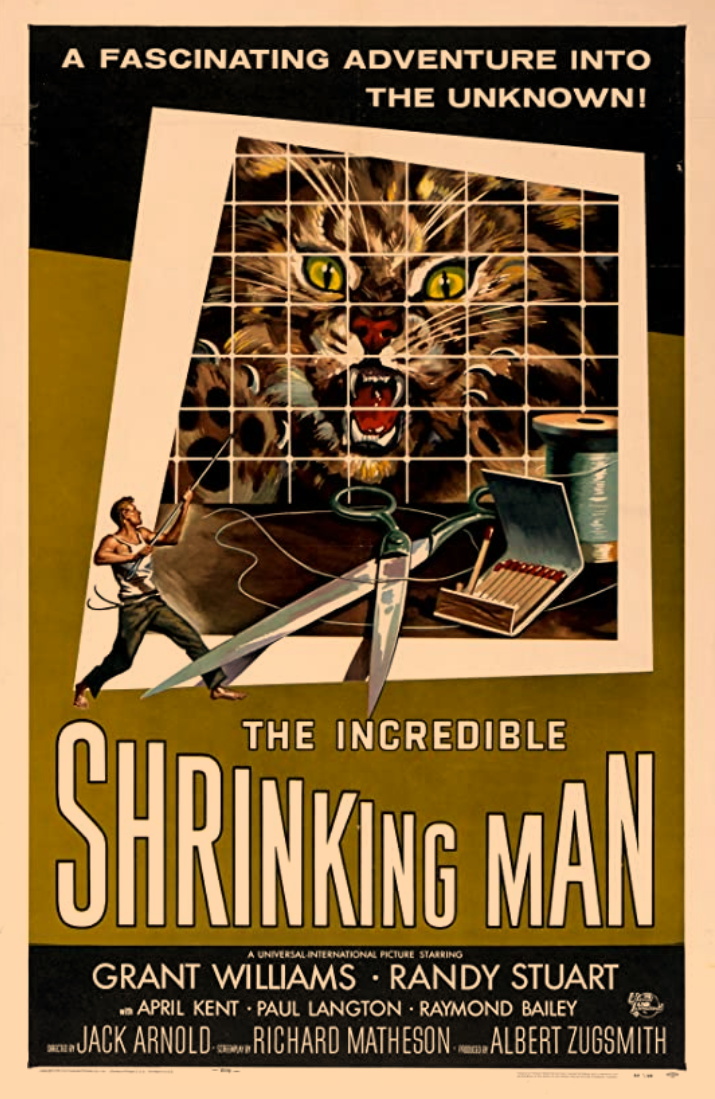
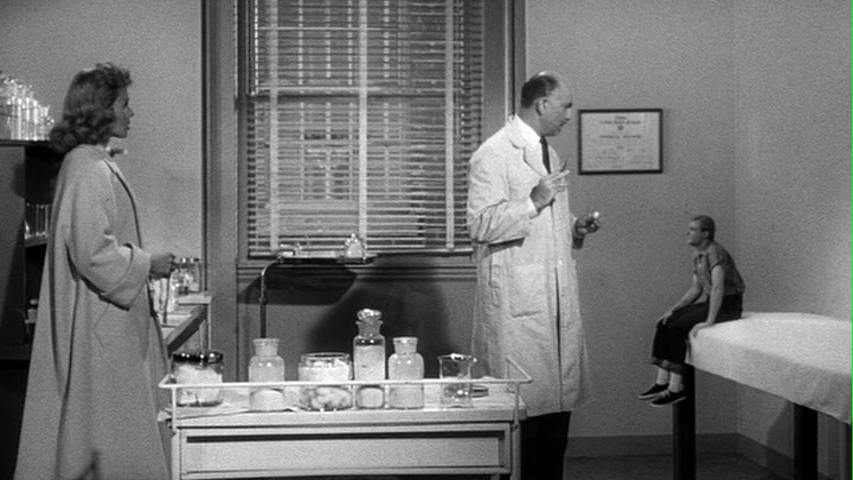
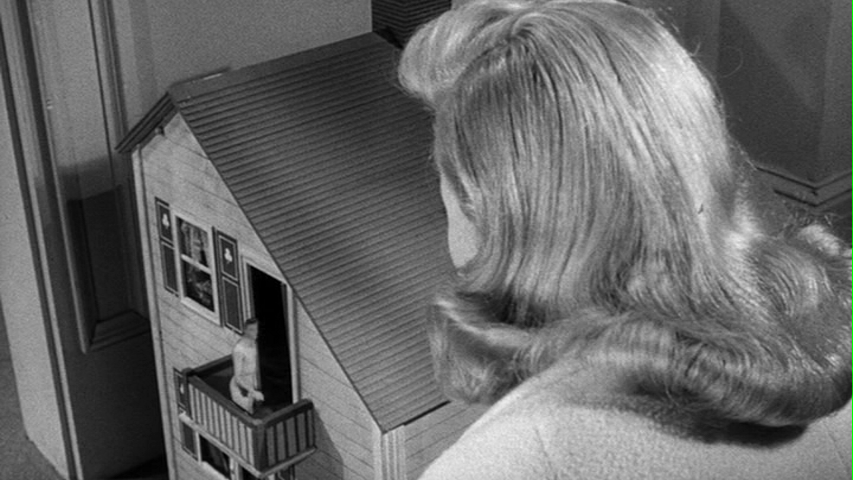
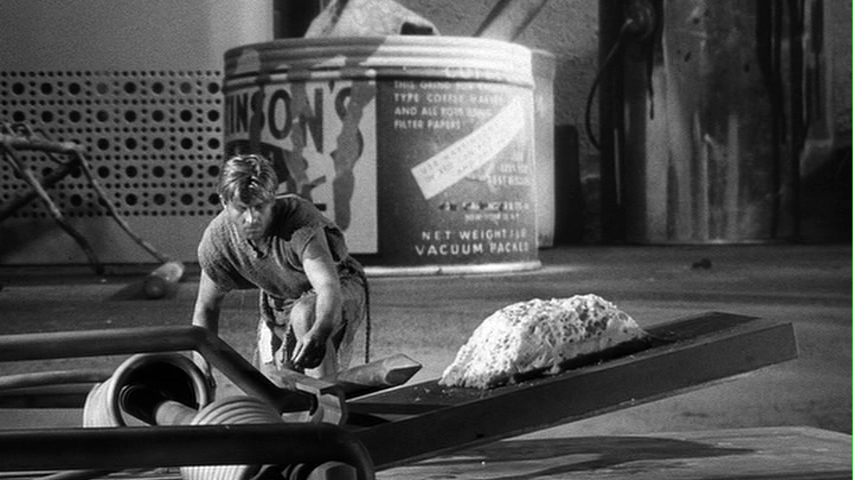
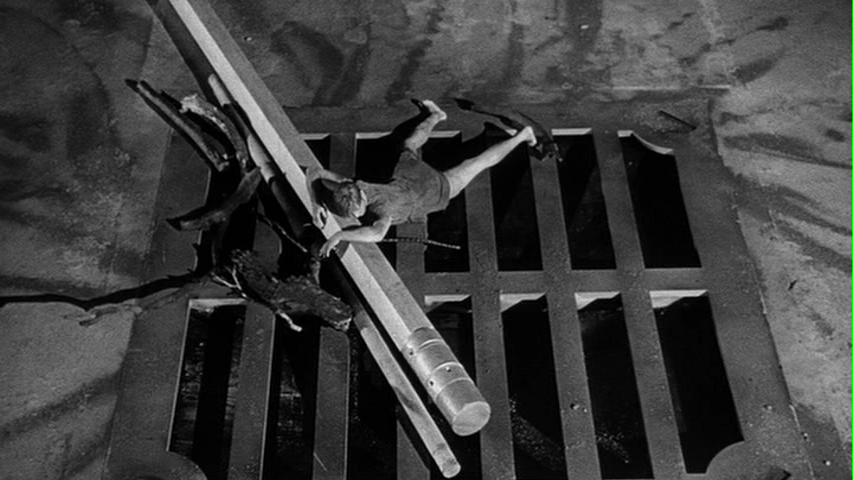
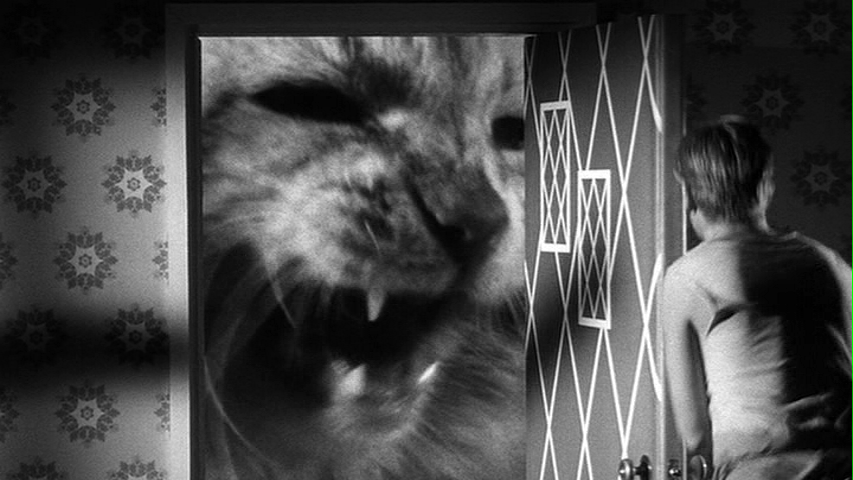
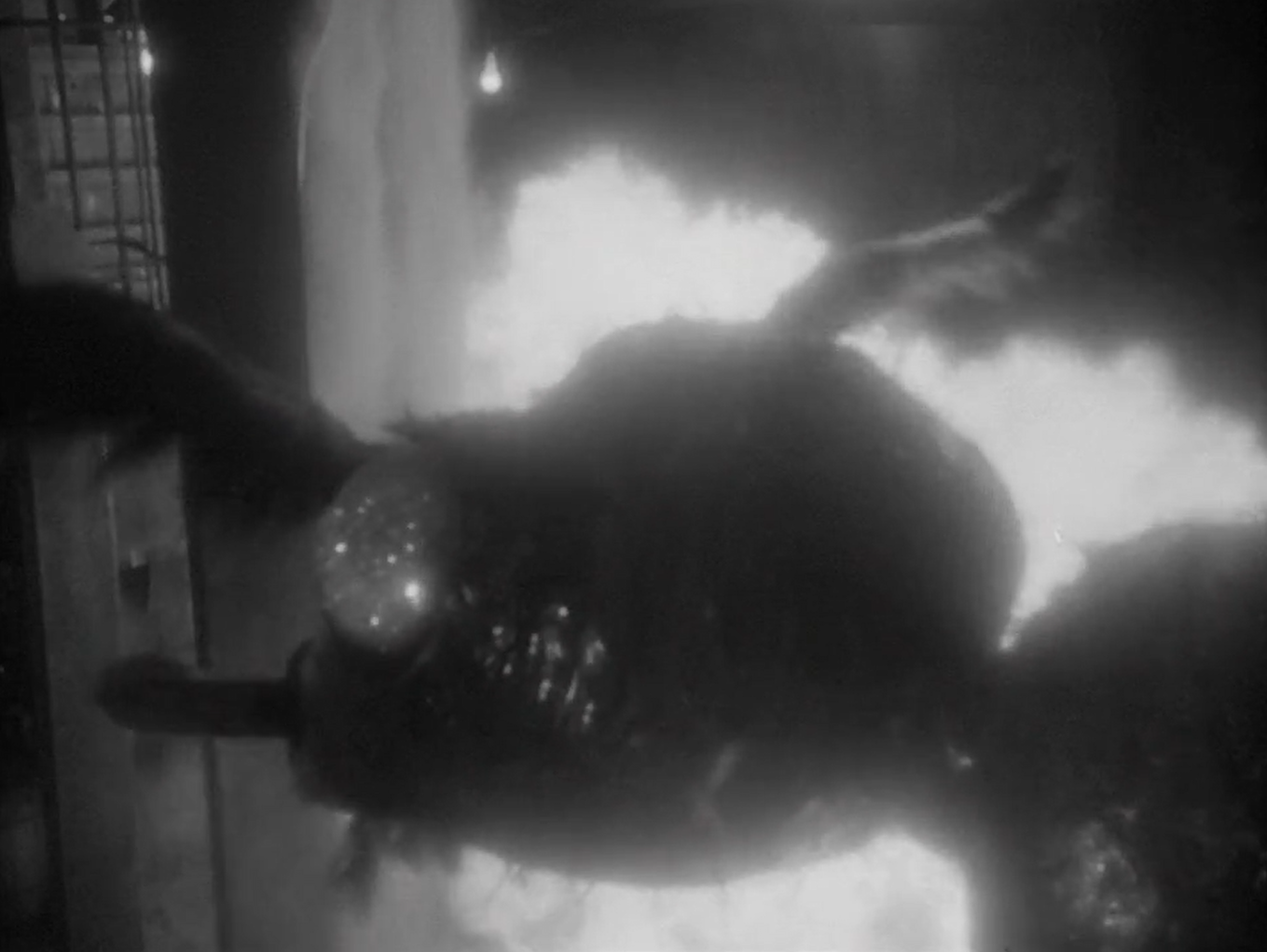
Peary accurately notes that while this “excellent science-fiction film” may, “like most fifties SF films, [be] scientifically preposterous”, it is still “somehow believable,” and will “strike a responsive chord” in viewers given “its human concerns”. He points out that Richard Matheson’s script (based on his novel The Shrinking Man) deals with “two themes… central to the other SF films of director Jack Arnold: scientific advances in dangerous areas eventually will be destructive to the individual; [and] there is nothing more horrifying than losing one’s identity.” Given its rather simplistic narrative trajectory — Williams shrinks smaller and smaller, with no permanent cure in sight — the film maintains a remarkable amount of tension, thanks to both the savvy, literate script (which possesses plenty of thought-provoking dialogue) and truly outstanding special effects (see stills below for a representative sampling).

As we watch Williams — a “sympathetic hero” — spiraling closer and closer to death, with “his home no longer a sanctuary but a booby-trapped battlefield where every household item is potentially a weapon that could destroy him”, we hold our breath in both anticipation and terror. Williams’ valiant struggle to avoid drowning in droplets of water, getting sucked into the vortex of a floor drain, being stepped on by his own brother’s shoe, or being eaten by a spider, are all terrifying in the distorted universe they present: Williams is truly caught in a living nightmare, with no way out. Meanwhile, we can’t help feeling enormous empathy for his growing “sense of inferiority” in the face of his loyal but “normal size” wife (Stuart), who eventually must simply assume that her pin-sized husband has died — though in reality, he’s escaped down into the basement, where the final third of the film takes place, nearly dialogue free yet relentlessly exciting.

Redeeming Qualities and Moments:

  • Clifford Stone’s remarkable special effects


  • A strong, provocative script:

    “The cellar stretched before me like some vast primeval plain, empty of life, littered with the relics of a vanished race. No desert island castaway ever faced so bleak a prospect.”

Must See?
Yes, as a definitive 1950s sci-fi classic.

Categories

  • Genuine Classic

(Listed in 1001 Movies You Must See Before You Die)

Links:

Them! (1954)

Them! (1954)

“Here’s one for Sherlock Holmes: there was enough formic acid in him to kill twenty men.”

Synopsis:
A policeman (James Whitmore), an FBI agent (James Arness), and a father-daughter scientist team (Edmund Gwenn and Joan Weldon) investigate the sudden appearance of atomically super-sized ants in the New Mexico desert.

Genres, Themes, Actors, and Directors:

  • Atomic Energy
  • Deserts
  • Edmund Gwenn Films
  • Fess Parker Films
  • Insects
  • James Whitmore Films
  • Mutant Monsters
  • Science Fiction

Response to Peary’s Review:
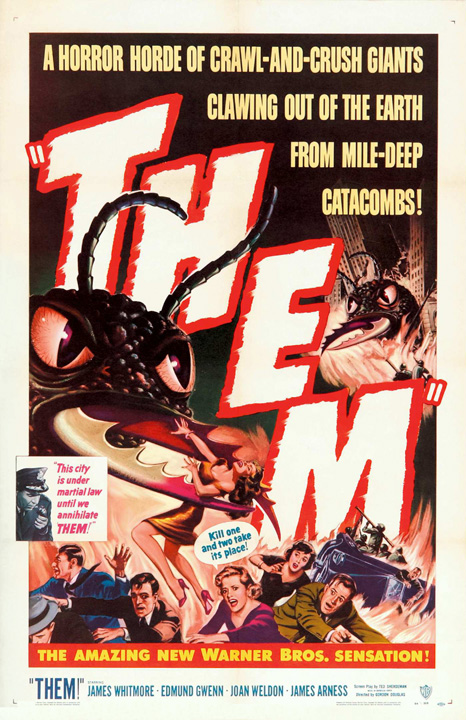
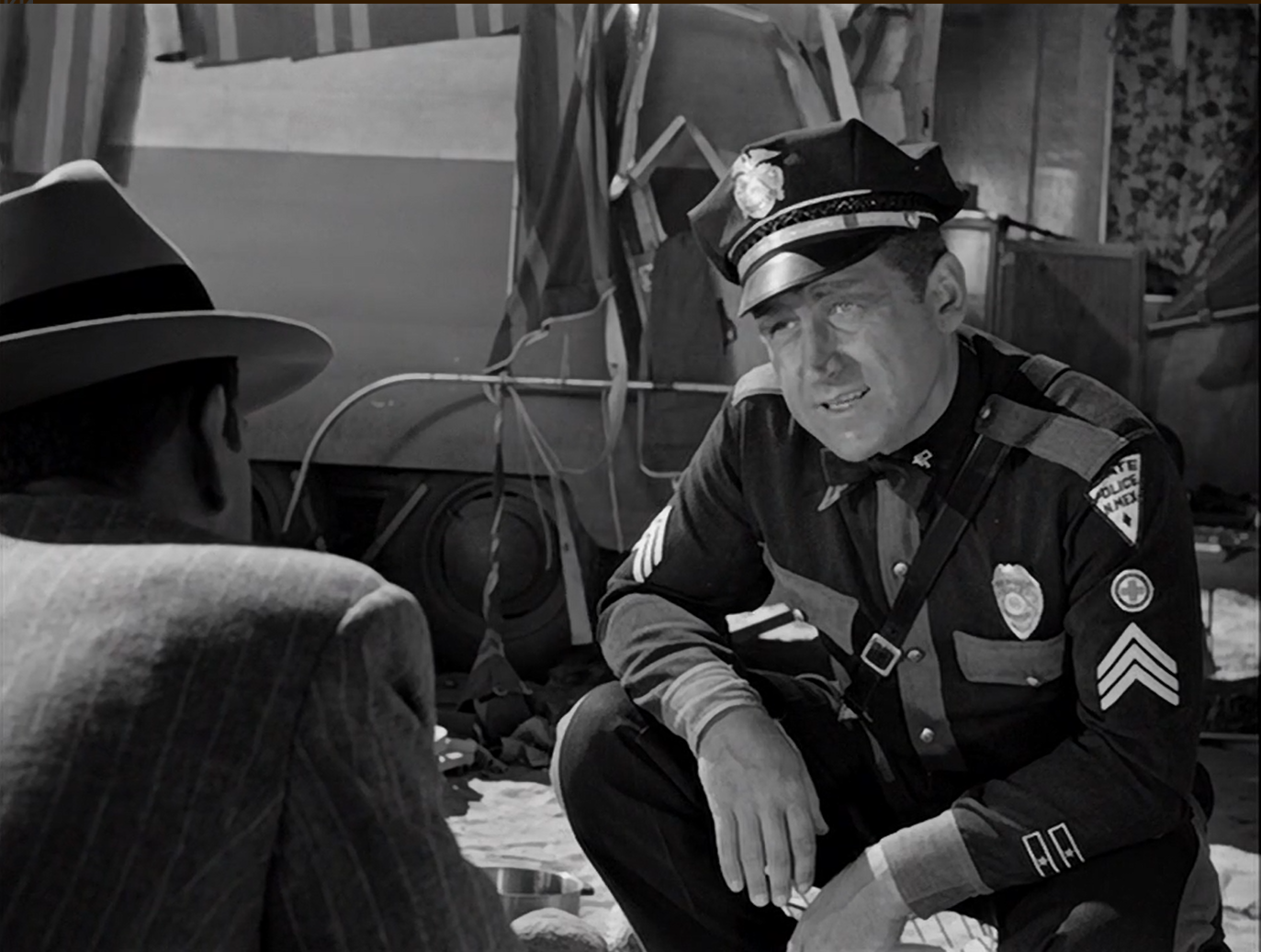
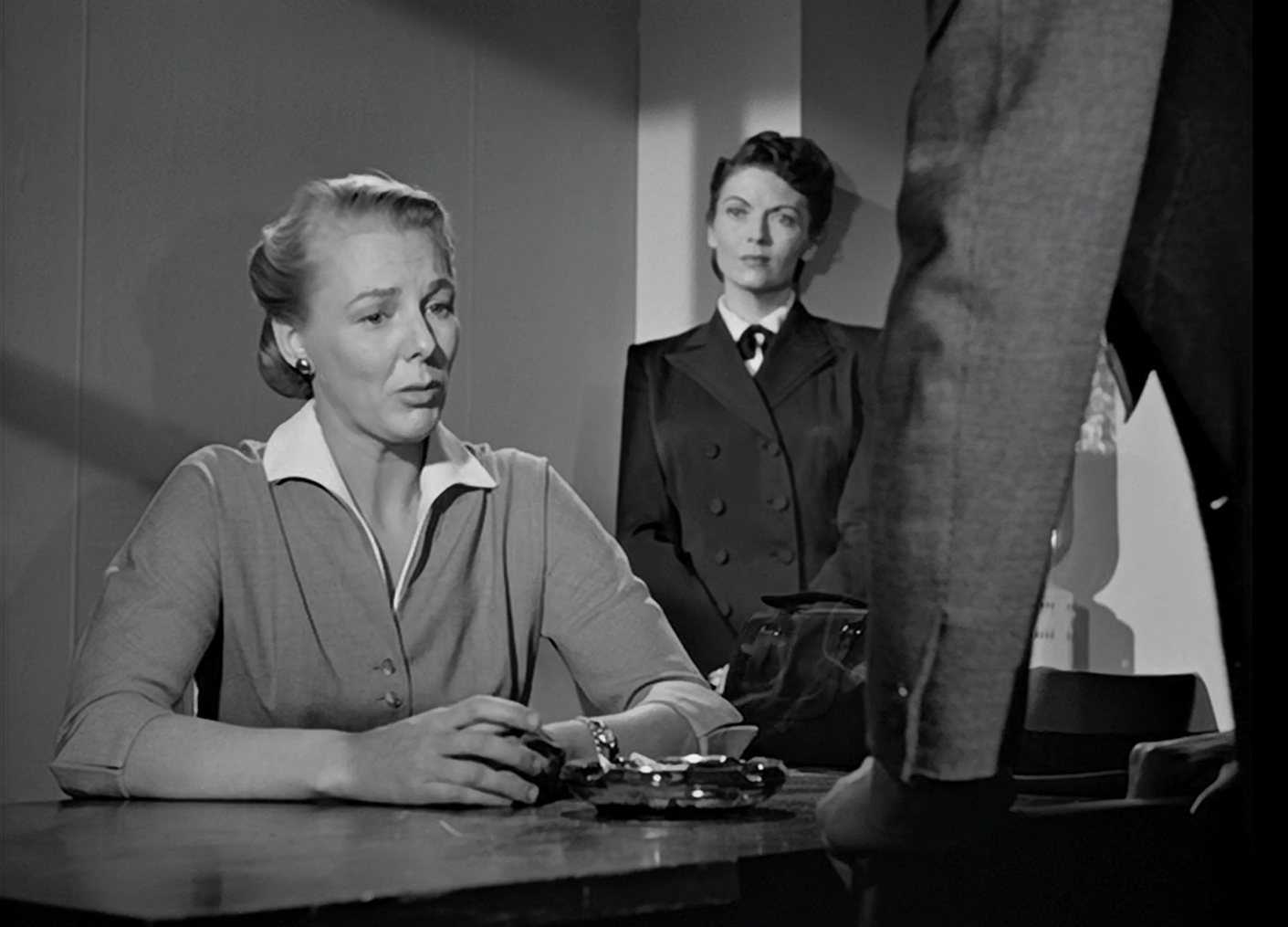
As Peary notes, this classic mutant monster B-flick “ranks with The Thing and Invasion of the Body Snatchers as the best of the countless fifties science fiction films”. Tautly directed by Gordon Douglas (Peary calls it the “best” of his “many films”), the “intelligent, entertaining script” by Ted Sherdeman never drags. The narrative neatly shifts from mystery mode in its truly eerie opening sequence (of “a little girl in shock, wandering through the New Mexico desert”), to tense police procedural a la “the classic fifties TV” show “Dragnet” (as a series of “oddball witnesses” are questioned), to full-on war against the ants and then a “thrilling finale” in which “Whitmore and Arness search the sewer system for the ants and attempt to rescue two boys who are trapped inside”.

While fans of ’50s “creature feature” films are a ready-made audience for movies like this, all-purpose film fanatics will likely find much here to enjoy as well. As Peary notes, Them! (great title) possesses “believable characters and a particularly fine performance by Whitmore”:

… who struggles throughout the film with guilt from “allowing” his partner to be killed in one of the opening sequences. The special effects are noticeably impressive, with the mutant ants — “products of nuclear bomb-testing” who “are ravaging the area” and may bring about the end of mankind on Earth if they’re not stopped in time — coming across as menacing rather than corny.

However, if you’re in the mood for laughs, there’s plenty of campy and/or corny dialogue to enjoy — though it’s just as easy to watch and listen with a straight face.

Redeeming Qualities and Moments:

  • The incredibly disturbing opening sequence
  • Creepy special effects
  • Fine performances throughout

Must See?
Yes, as a classic sci-fi thriller.

Categories

  • Genuine Classic

Links:

Dark Journey (1937)

Dark Journey (1937)

“So our pretty little dressmaker is a spy!”

Synopsis:
During World War One, a French seamstress (Vivien Leigh) working as a spy in Sweden falls in love with a German spy (Conrad Veidt) pretending to be a deserter.

Genres, Themes, Actors, and Directors:

  • Conrad Veidt Films
  • Play Adaptations
  • Spies
  • Star-Crossed Lovers
  • Vivien Leigh Films
  • World War One

Response to Peary’s Review:
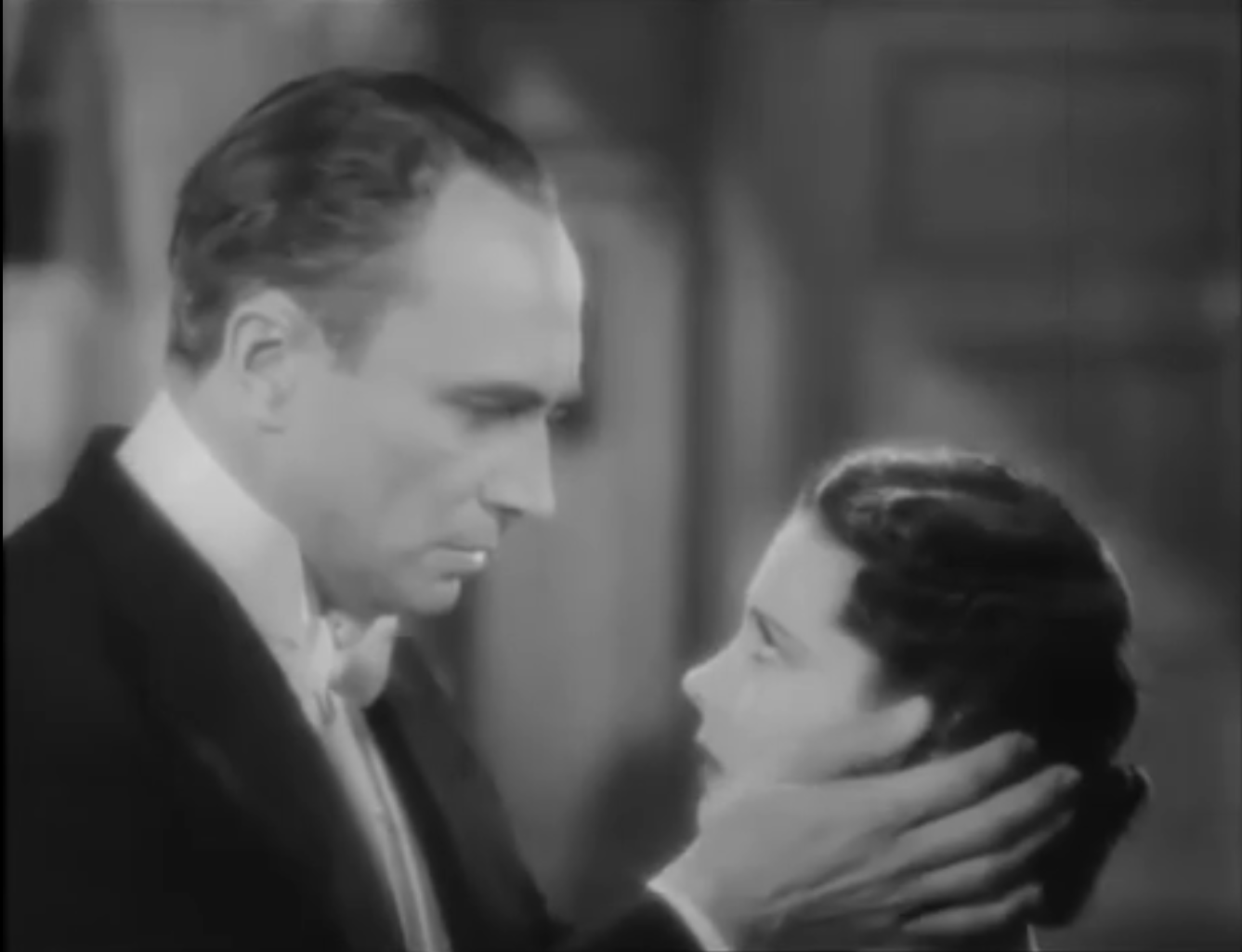
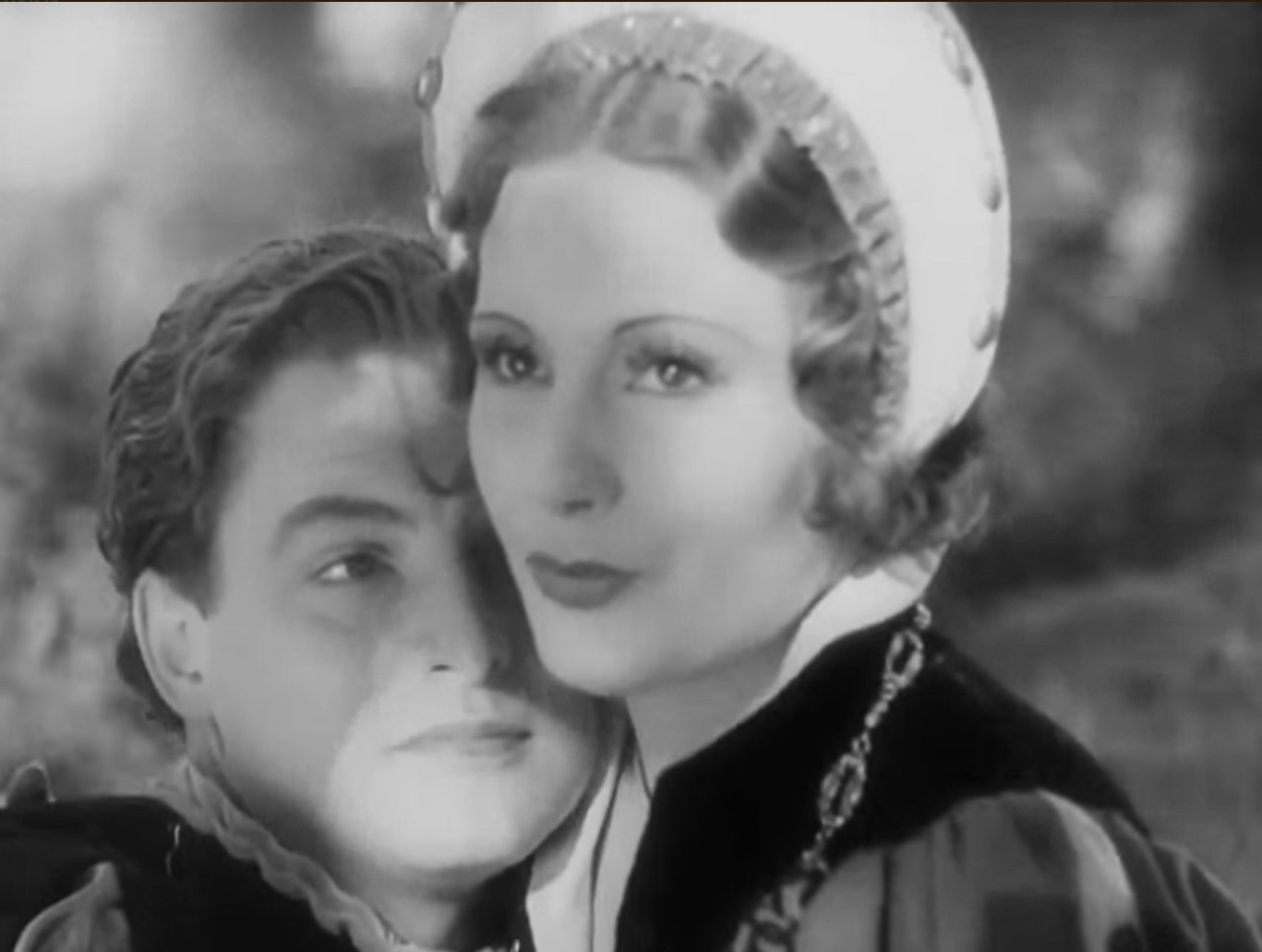
Peary labels this early Vivien Leigh film — based on a play by Lajos Biró — “pretty confusing” but “classy and romantic”. He argues that we “don’t mind Leigh falling for a German spy in pre-Nazi days”, calls out 22-year-old Leigh’s “lovely”, “smart, delicate performance”, and notes that this film provides one with an opportunity to see “Veidt in a role that contributed to his romantic-idol reputation — before he became a villain in Hollywood”. (To be honest, I wasn’t aware he ever possessed such a reputation.) Unfortunately, while Leigh is indeed truly “lovely” here, the label “pretty confusing” doesn’t begin to do justice to the film’s needlessly opaque screenplay, which even Leigh herself professed to not completely understand. And while Leigh and Veidt do possess a surprising amount of chemistry together, not nearly enough is made of their tentative forbidden romance.

Most likely Peary includes this title in his book simply because it’s one of Leigh’s all-too-rare screen roles (and her first leading role) — but it’s not must-see for all film fanatics.

Redeeming Qualities and Moments:

  • Vivien Leigh as Madeleine

Must See?
No — though fans of Leigh will doubtless want to check it out. Easily available for viewing online, given that it’s fallen into public domain.

Links:

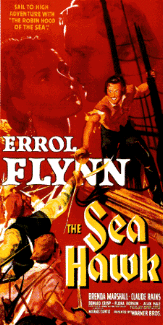
Sea Hawk, The (1940)

Sea Hawk, The (1940)

“By now you know the purpose of the Sea Hawks: in our own way to serve England and the Queen.”

Synopsis:
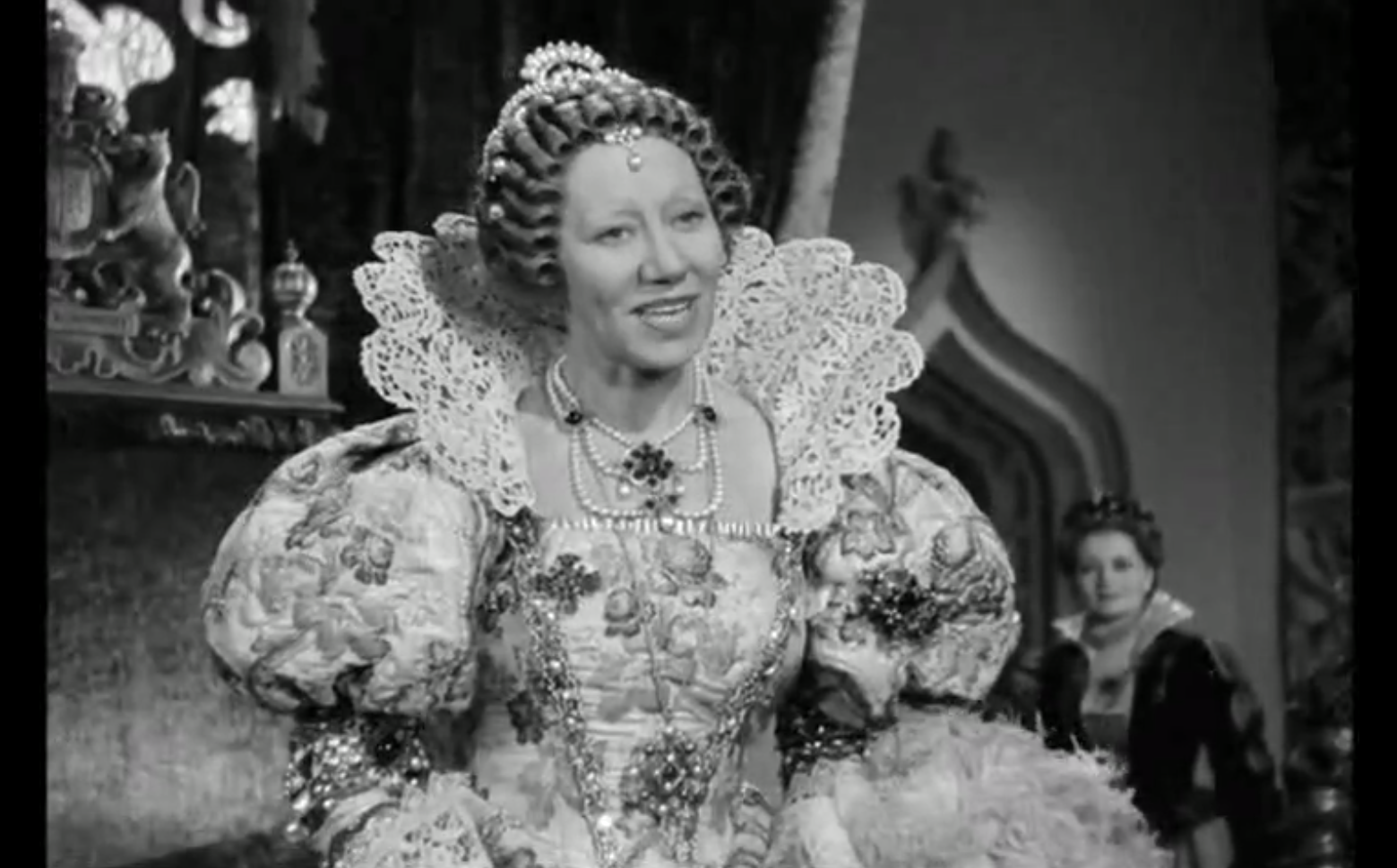
A privateer (Errol Flynn) and his men in Elizabethan England are captured by Spaniards, and must find a way to escape the galleys in time to warn Queen Elizabeth I (Flora Robson) about the presence of a traitor in her court.

Genres, Themes, Actors, and Directors:

  • Alan Hale Films
  • Claude Rains Films
  • Donald Crisp Films
  • Errol Flynn Films
  • Flora Robson Films
  • Henry Daniell Films
  • Historical Drama
  • Michael Curtiz Films
  • Pirates
  • Royalty and Nobility
  • Slavery

Response to Peary’s Review:
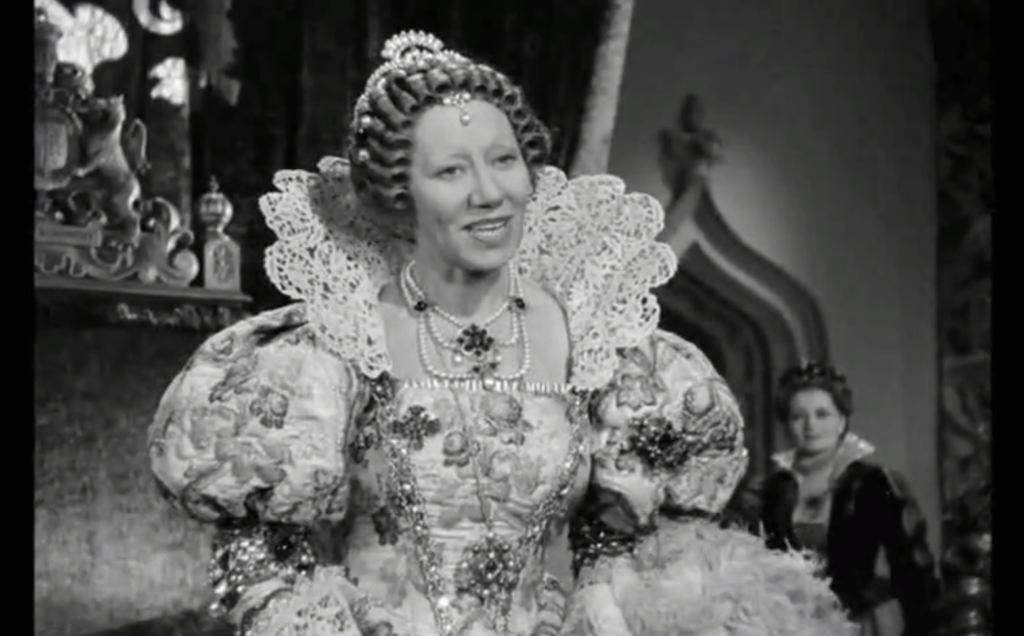
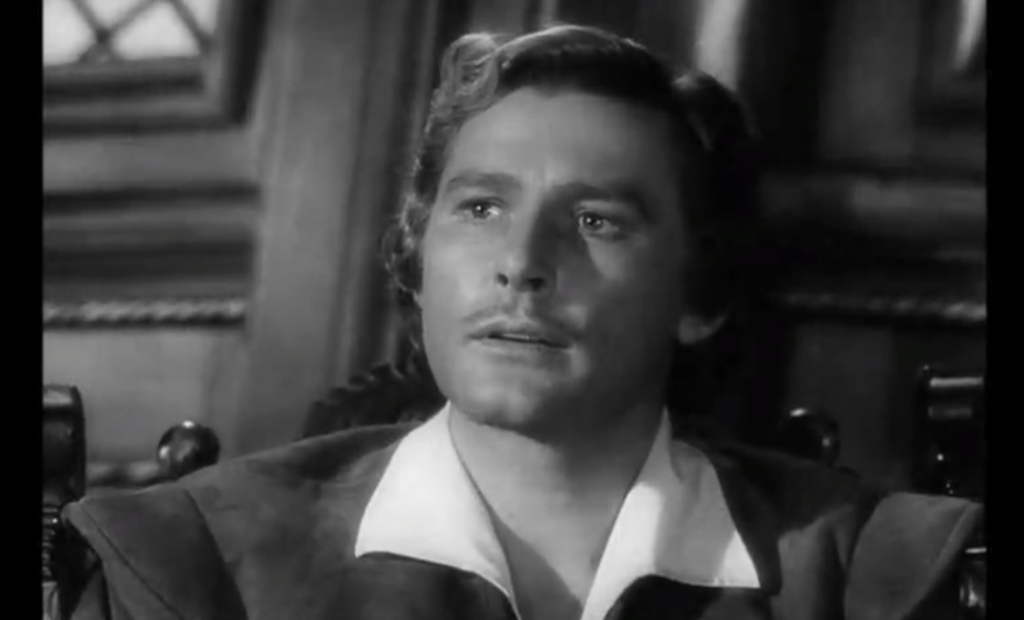
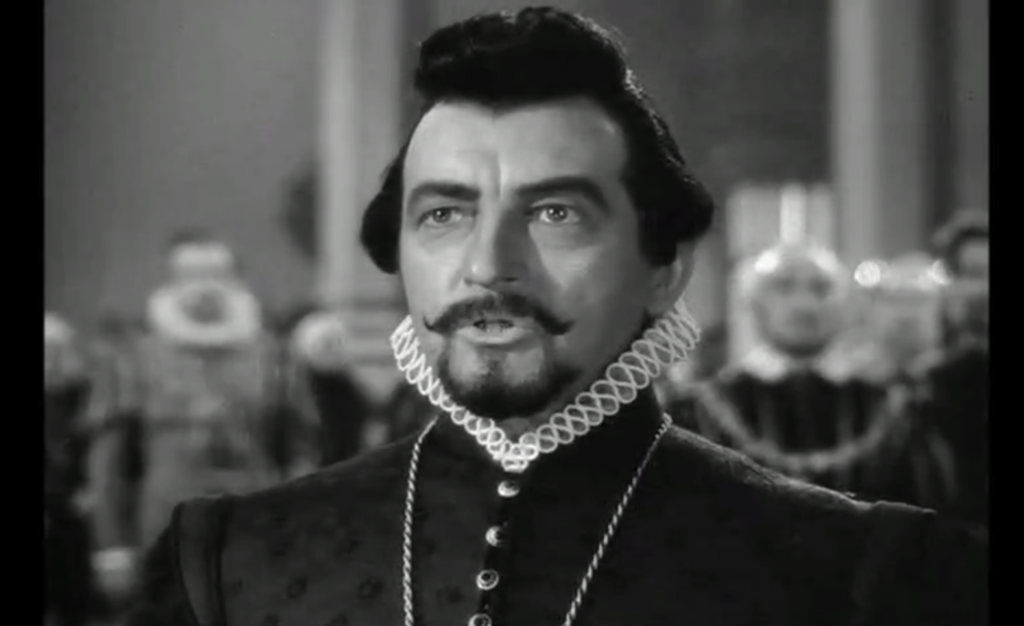
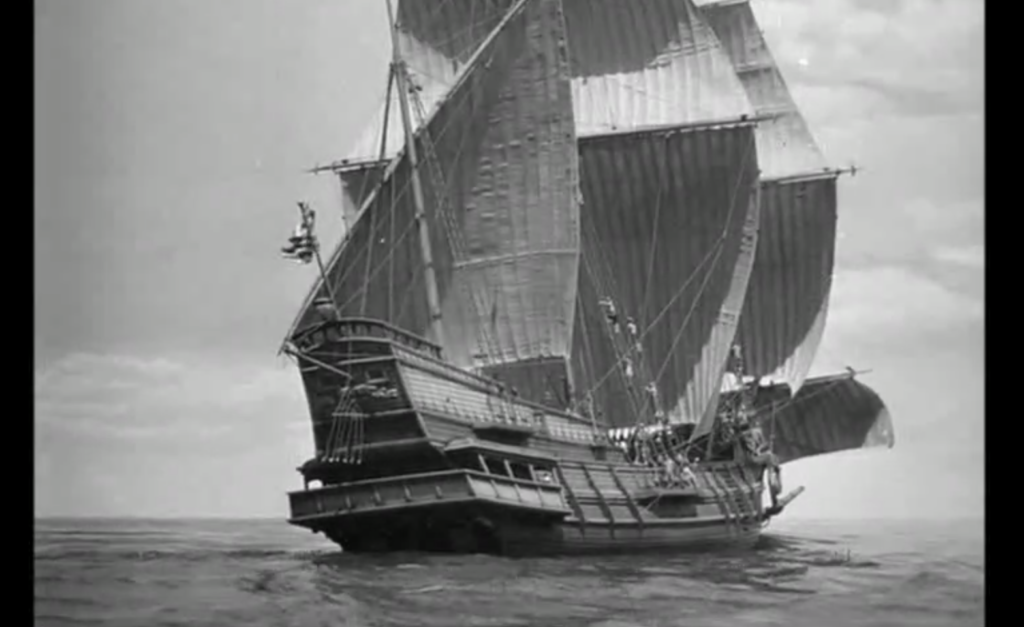
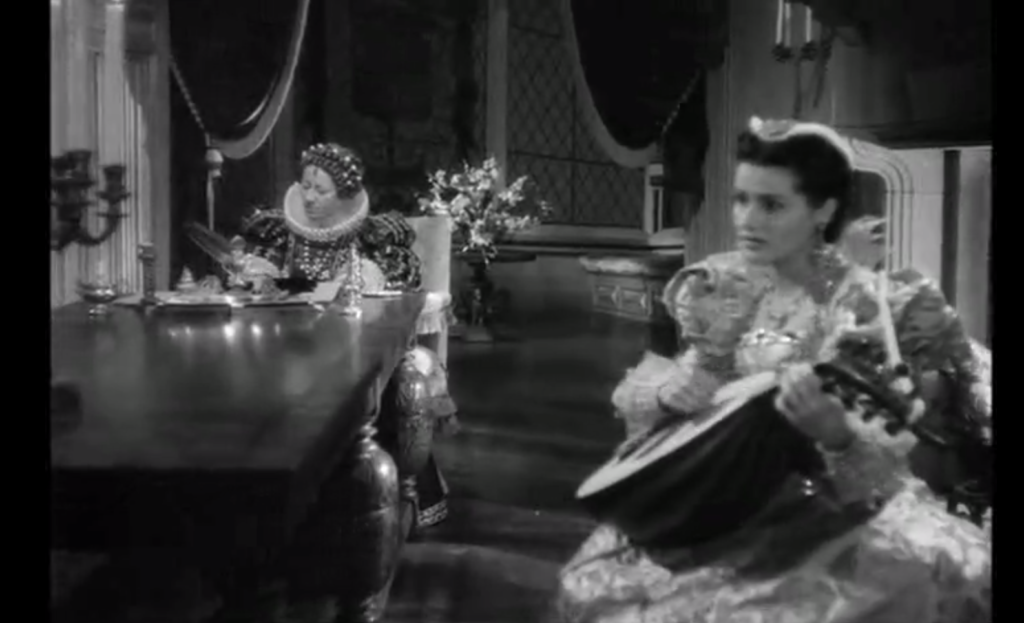
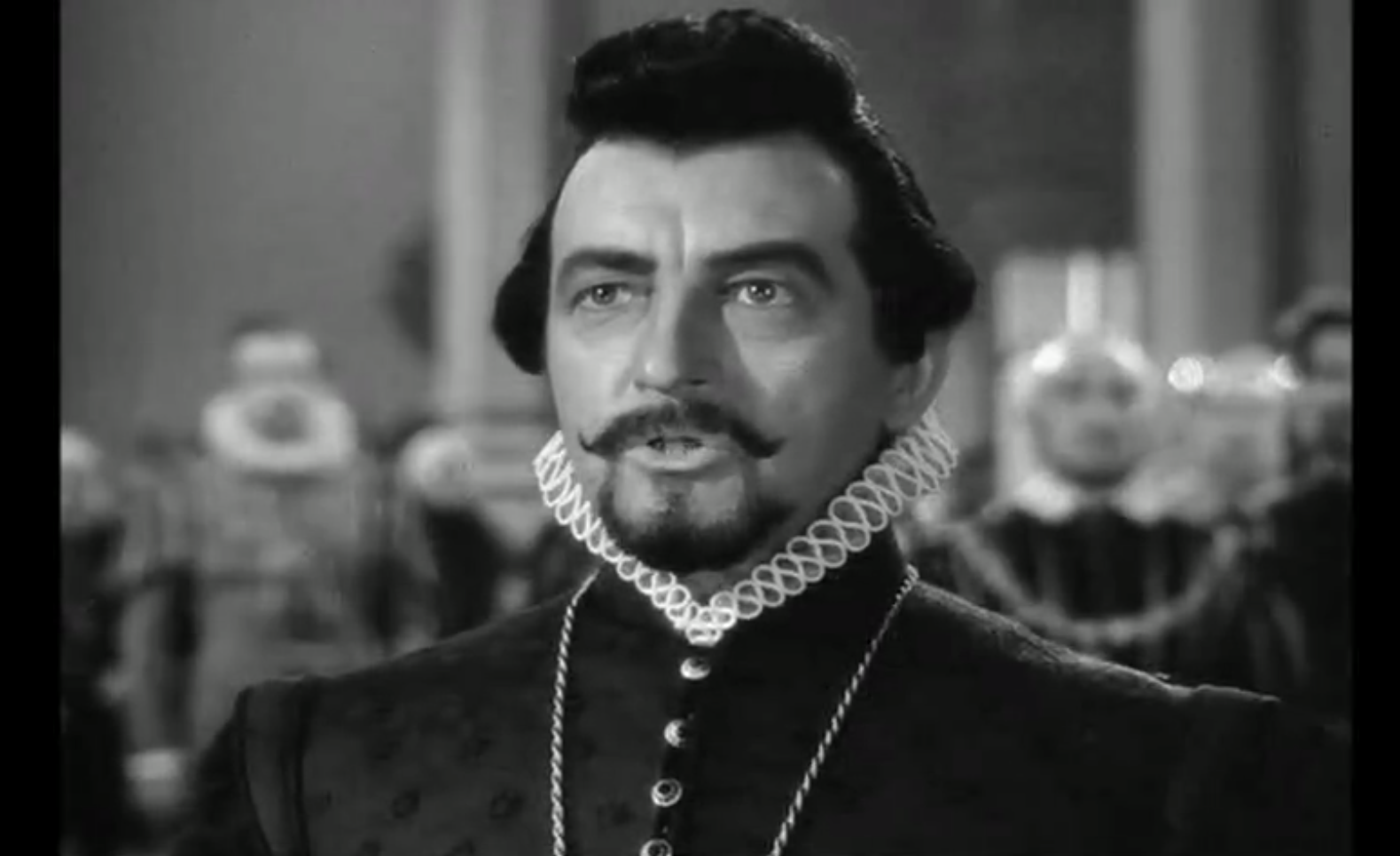
Peary argues that this “Errol Flynn swashbuckler is as good an old-time adventure as you’ll find”, and nominates it as one of the Best Pictures of the Year in his Alternate Oscars book. He notes that it possesses “great ships, sea battles, swordplay, spies, slaves, [and] Spaniards”; a “rousing score by Erich Wolfgang Korngold”; “exuberant and stylish direction by Michael Curtiz (who, as usual, makes great use of light, shadows, and space)”; “a strong, spirited script”; “a marvelous group of supporting actors” (including Flora Robson, Claude Rains, Henry Daniell, Una O’Connor, Alan Hale, and others) — and “even a little smooching” (though Flynn’s romance with beautiful but boring Brenda Marshall is definitely the weakest aspect of the story). Most importantly, however, he notes that it stars “Flynn, the talking pictures’ greatest adventure hero”, who is once again a pirate and once again “champion of the underdog, in this case the England of 1585 that is being set up for conquest for Spain”.

While I find nearly every aspect of this adventure flick to be in fine order, I’ll admit that Flora Robson’s “splendid” performance as Queen Elizabeth I remains its greatest personal enjoyment for me. As Peary so accurately explains, Robson presents the Queen “not as a man in a woman’s body but a woman of intelligence, wit, high spirits, temper, strength, and love for country and subjects; she’s no prude, she just prefers ruling men to loving them”. And speaking of its historical grounding, the parallels made between the film’s “imperialist and evil” Spain of 1585 and Nazi Germany are indeed — as many have pointed out — rather overt, with Robson “start[ing] out like Neville Chamberlain, willing to appease the aggressors rather than risk war”, but eventually “becom[ing] as dogged as Winston Churchill”. As Peary argues, much like 1942’s Casablanca (also directed by Curtiz), this is ultimately a thinly “veiled propaganda piece that attempts to get Americans solidly into the war effort” — but it’s easy to overlook such metaphorical heavy-handedness in the face of what amounts to a bracingly vigorous, finely mounted adventure flick in its own right.

Redeeming Qualities and Moments:

  • Flora Robson as Queen Elizabeth
  • Errol Flynn as Captain Thorpe
  • Fine supporting performances
  • Authentic period detail

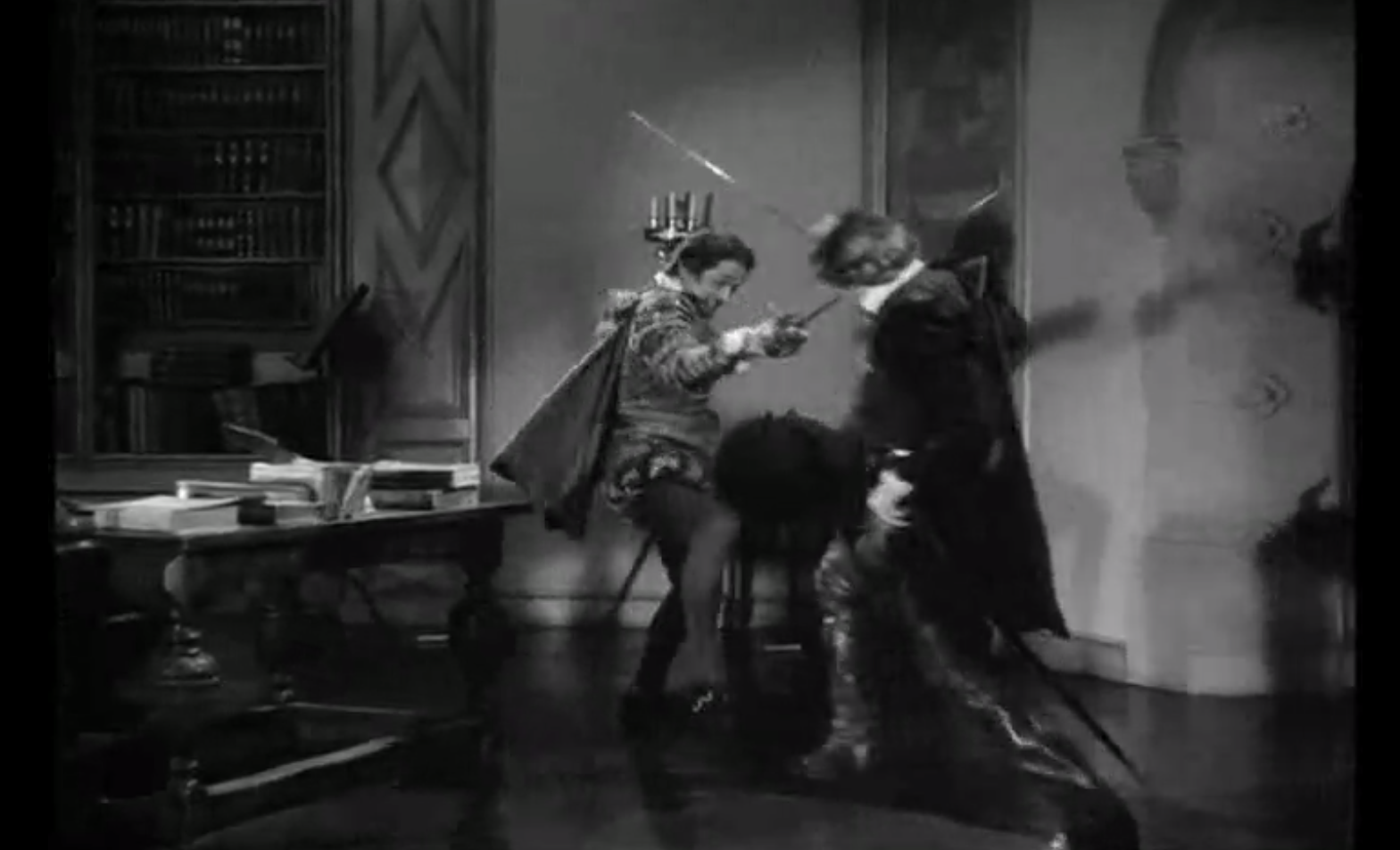
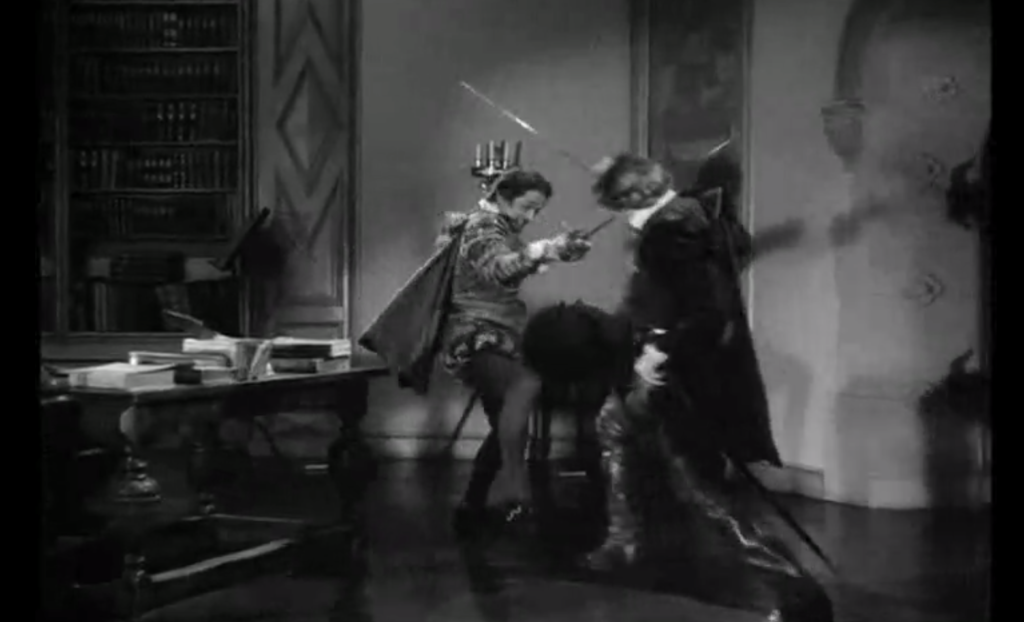
  • The exciting climactic duel (between Flynn and Henry Daniell)
  • E.W. Korngold’s score

Must See?
Yes, as an adventure classic.

Categories

  • Genuine Classic

Links:

North Dallas Forty (1979)

North Dallas Forty (1979)

“You had better learn how to play the game — and I don’t mean just the game of football.”

Synopsis:
An aging football player (Nick Nolte) pumps up his body with painkillers in order to survive in the game.

Genres, Themes, Actors, and Directors:

  • Football
  • Has-Beens
  • Nick Nolte Films
  • Sports

Response to Peary’s Review:
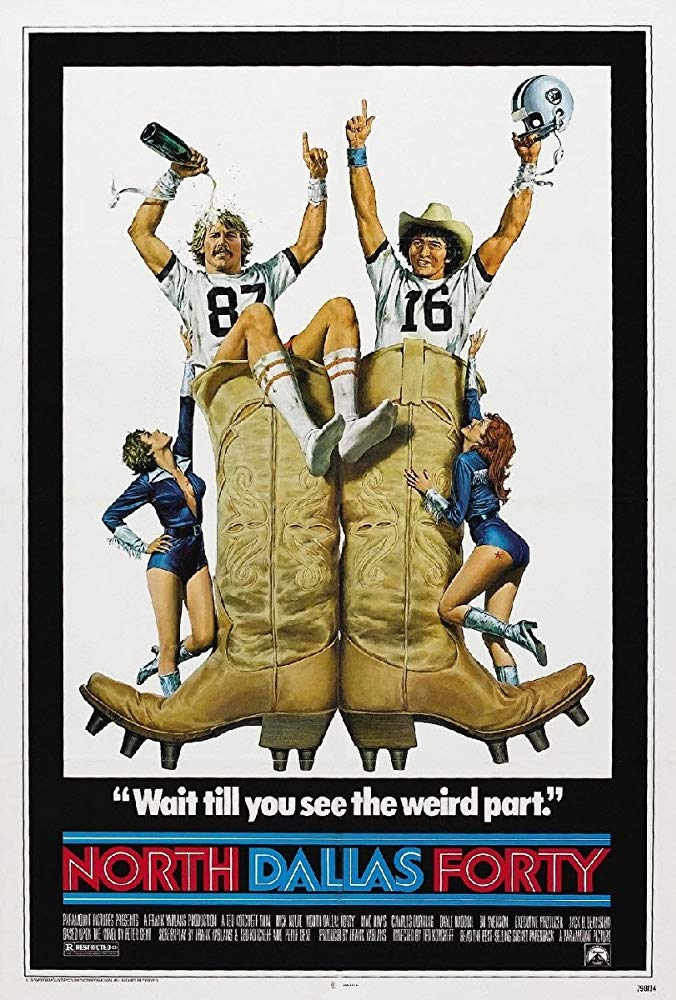
Peary is clearly an enormous fan of this adaptation of a “semi-autobiographical source novel” by “former Dallas Cowboys’ glue-fingered end Pete Gent”. He calls it an “exceptional sports film”, arguing that “the humor comes from the absurd, dictatorial mentality of the coaches and the childishness of the players”, and noting that “the tragic elements of the sport also come from the same sources”. Unfortunately, it’s this very “childishness of the players” that may turn many film fanatics off during the first fifteen minutes, as we’re subjected to an interminable variation on a gonzo fraternity party a la Animal House, only with beefed up football players and their floozy fangirls taking center stage. With that said, Peary analyzes the players’ childishness as masking “their fears of injuries, playing badly, or upsetting the coaches”, noting that “their refusal to grow up is symptomatic of their terror about what they’ll do when their football careers are over” — and this may very well be true (after all, the film is based on a book by an insider, who should know).

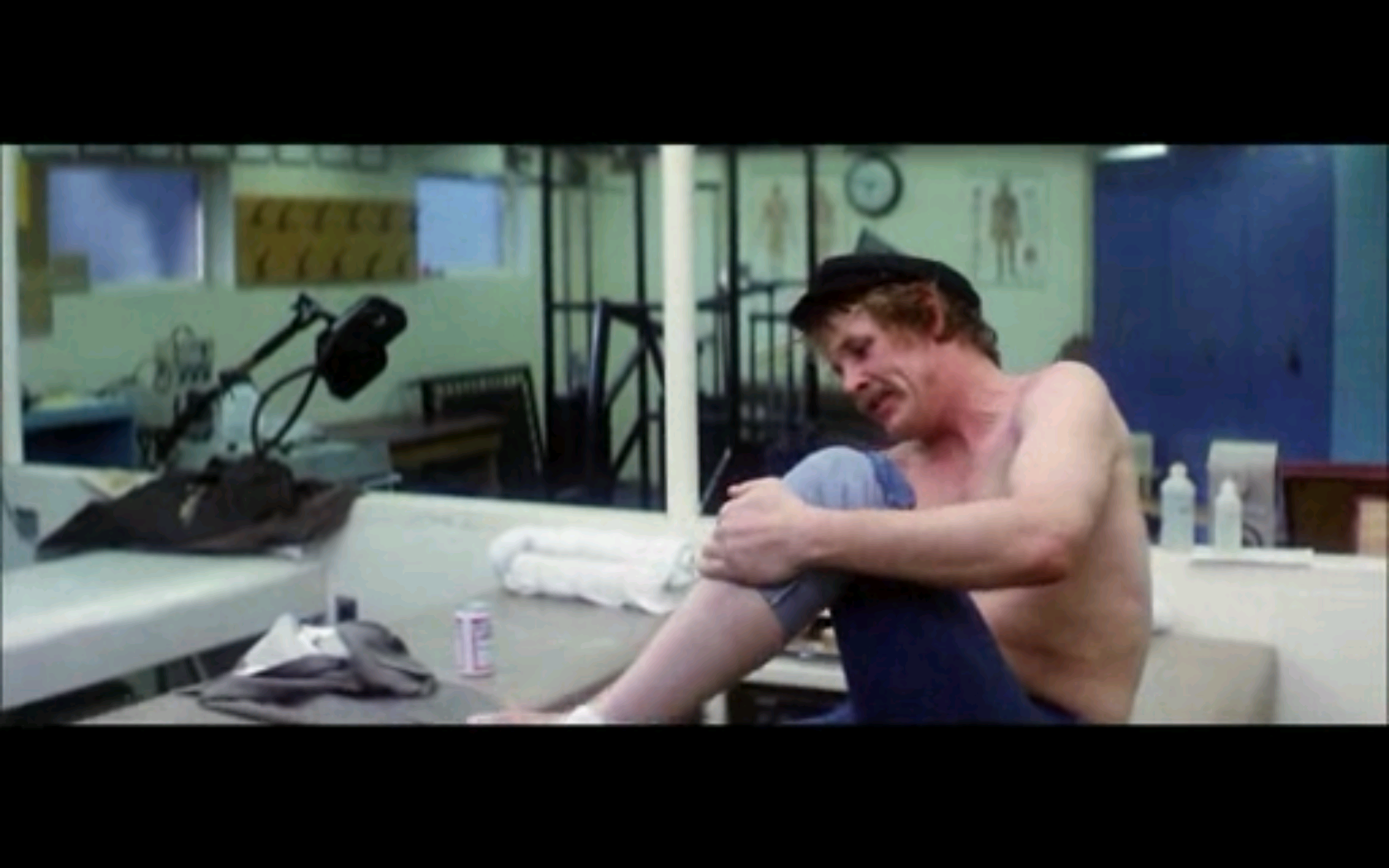
We’re clearly meant to sympathize with poor Nolte, who is presented as “more intelligent than his loony, barbaric teammates”, and who — as a player clearly on the tail-end of his viability as a pro athlete — epitomizes many athletes’ willingness “to endure pills and shots, and ‘take the crap, the manipulation, and the pain’ in order to have that special feeling of playing football”. Indeed, this “willingness” ultimately becomes the central thesis of the somewhat aimless screenplay, as we watch Nolte treating his body like a piece of strategic meat he must somehow keep just fit enough to make it onto the field — where he can finally work his “glue-fingered” magic by catching and holding on to the ball. To that end, the film is at its best presenting a brutally “realistic view of the world of pro football on the field and behind the scenes” (a view most sports movies stay far away from); the “big game” at the end of the film is over far more quickly than one expects, given typical cinematic conventions in such films.

Peary argues that “Nolte has never been better” in the central role, and to a certain extent — as a former junior college football player himself — he seems perfectly cast; but my husband couldn’t help pointing out that Nolte simply didn’t seem buff and beefy enough (even as a clear soon-to-be “has been”) to be competing in pro football, especially in comparison with his teammates (many of them actual players). Nonetheless, his characterization is fine and rings true. Giving an equally memorable, quirky performance is “country singer Mac Davis” as “Nolte’s best friend, a partying, sex-obsessed Don Meredith-like quarterback”. Unfortunately, however, Dayle Haddon as “Nolte’s football-hating girlfriend” falls completely flat; she’s boring from the moment we first see her watching the opening party scene with disdain, and we never understand exactly what Nolte sees in her (other than her obvious beauty). Listen for a fine, haunting score by John Scott.

Redeeming Qualities and Moments:

  • Nick Nolte as Phillip Elliott (nominated by Peary as Best Actor of the Year in his Alternate Oscars)
  • A brutally realistic look at behind-the-scenes pro-football

Must See?
No, though it’s certainly recommended for sports fans.

Links:

Private Life of Henry VIII, The (1933)

Private Life of Henry VIII, The (1933)

“Am I a king or a breeding bull?”

Synopsis:
After ordering the execution of his second wife (Merle Oberon), King Henry VIII (Charles Laughton) marries a series of women in succession — Jane Seymour (Wendy Barrie), Anne of Cleves (Elsa Lanchester), Katherine Howard (Binnie Barnes), and Katherine Parr (Everley Gregg).

Genres, Themes, Actors, and Directors:

  • Biopics
  • Charles Laughton Films
  • Elsa Lanchester Films
  • Historical Drama
  • Marital Problems
  • Merle Oberon Films
  • Robert Donat Films
  • Royalty and Nobility

Response to Peary’s Review:
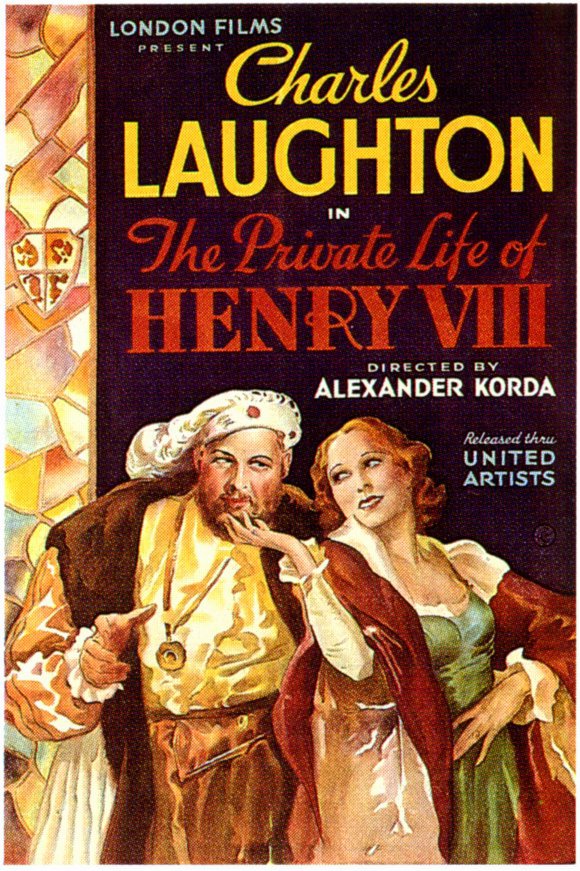
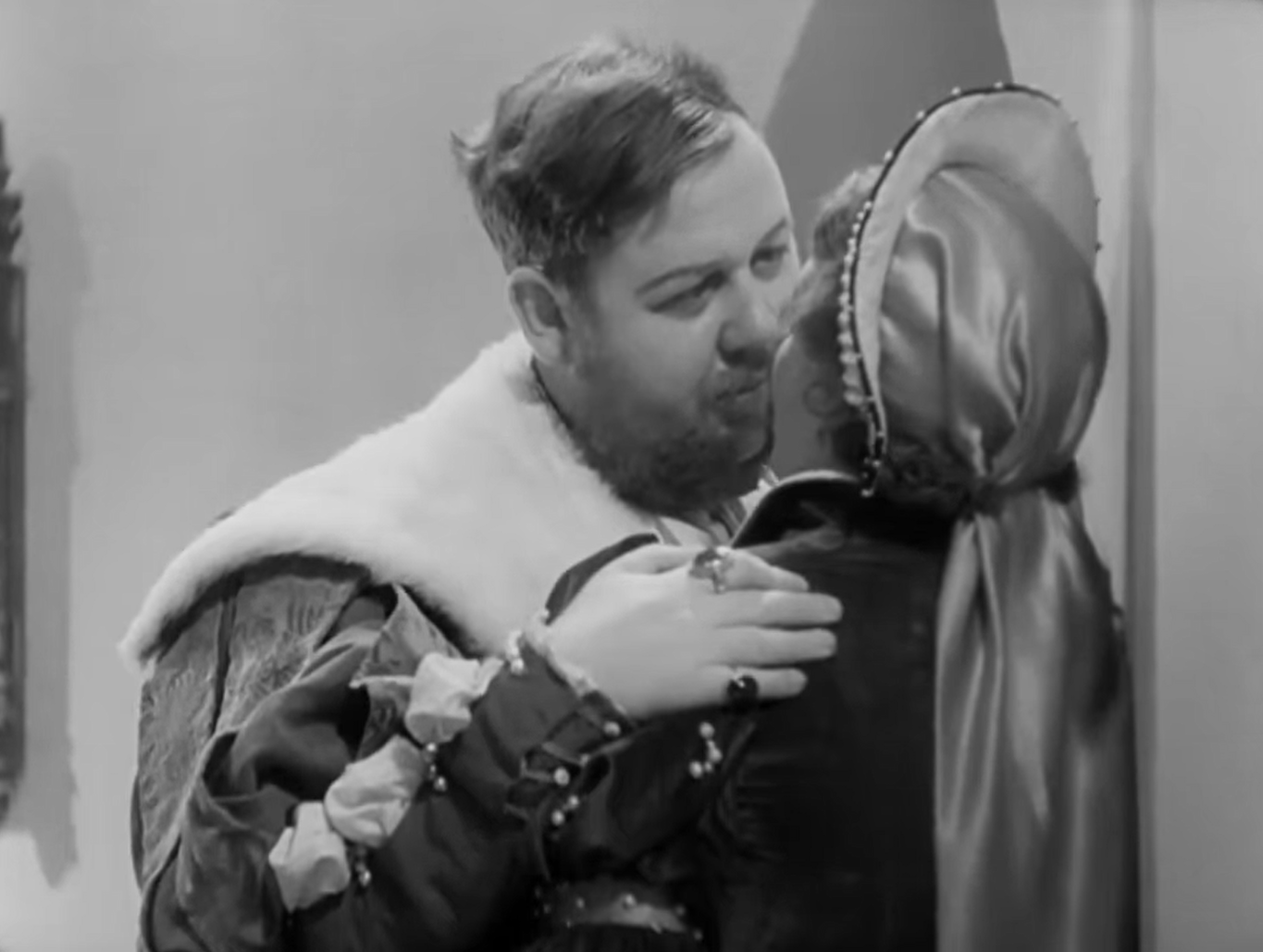
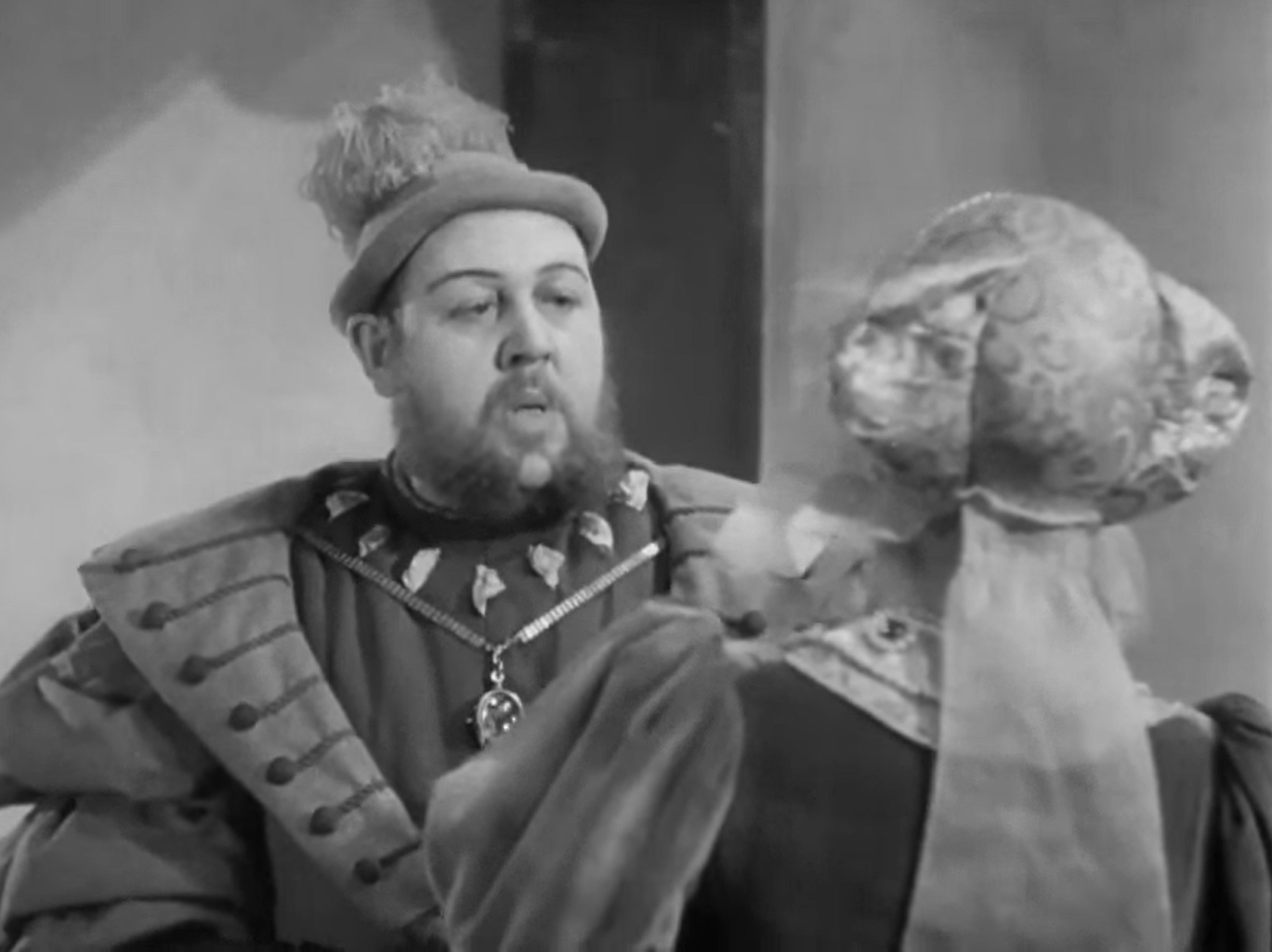
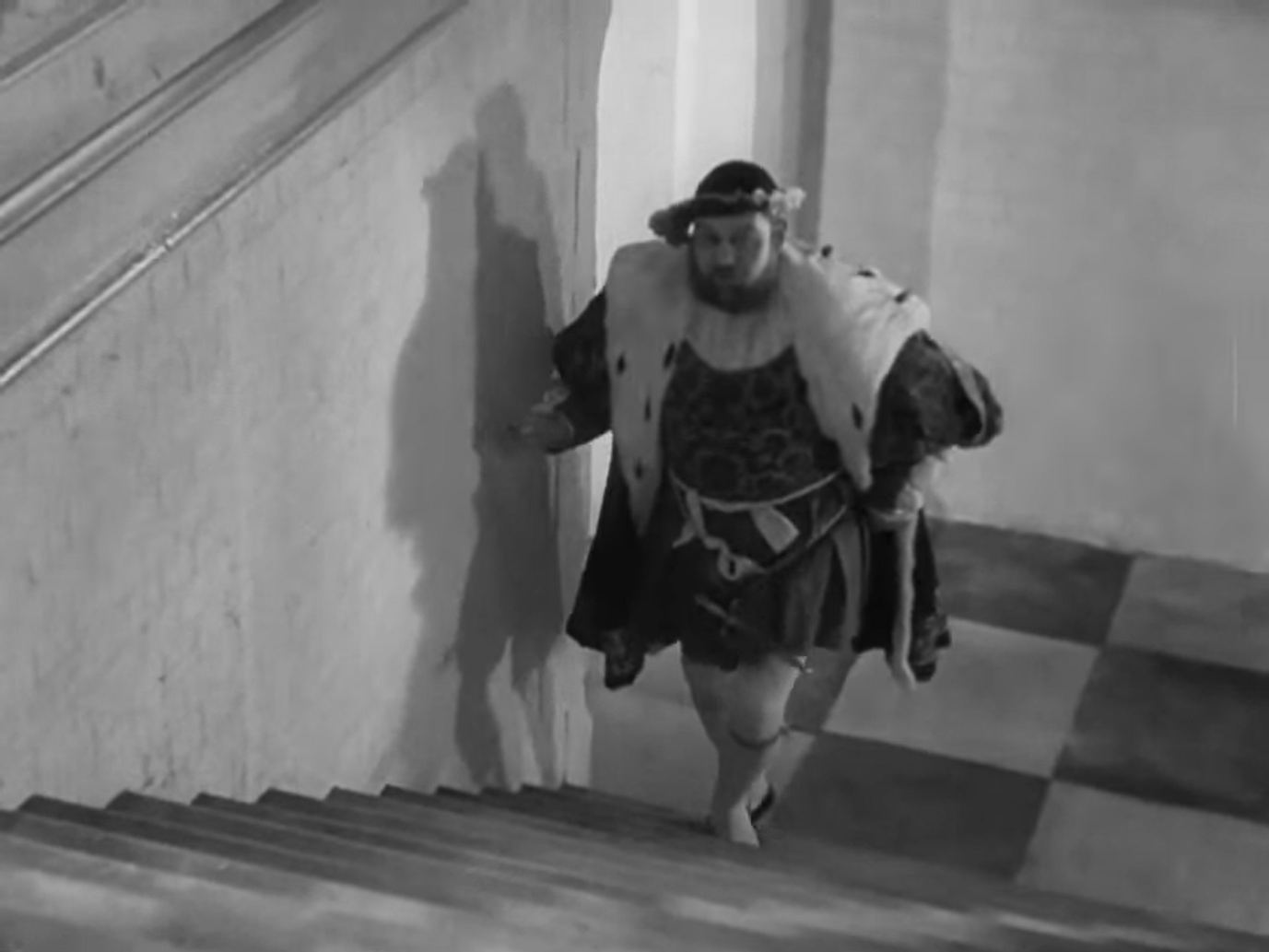
Peary accurately refers to Alexander Korda’s Oscar-winning biopic (the first internationally acclaimed British film) as “creaky but still delightful”. Charles Laughton literally burst onto the screen (and immediately won an Oscar) in a larger-than-life yet memorably nuanced portrayal as the infamous monarch with multiple wives.

As its title suggests, the film “centers less on Henry’s politics than on his personal relationships”, emphasizing the “human, typical-husband side of Henry” as he cycles through a series of wives for one reason after the other. (Only his first wife, Catherine of Aragon, is missing from the remarkably economical 1.5 hour screenplay; she’s simply mentioned at the beginning of the film as “too respectable to spend time on”.)

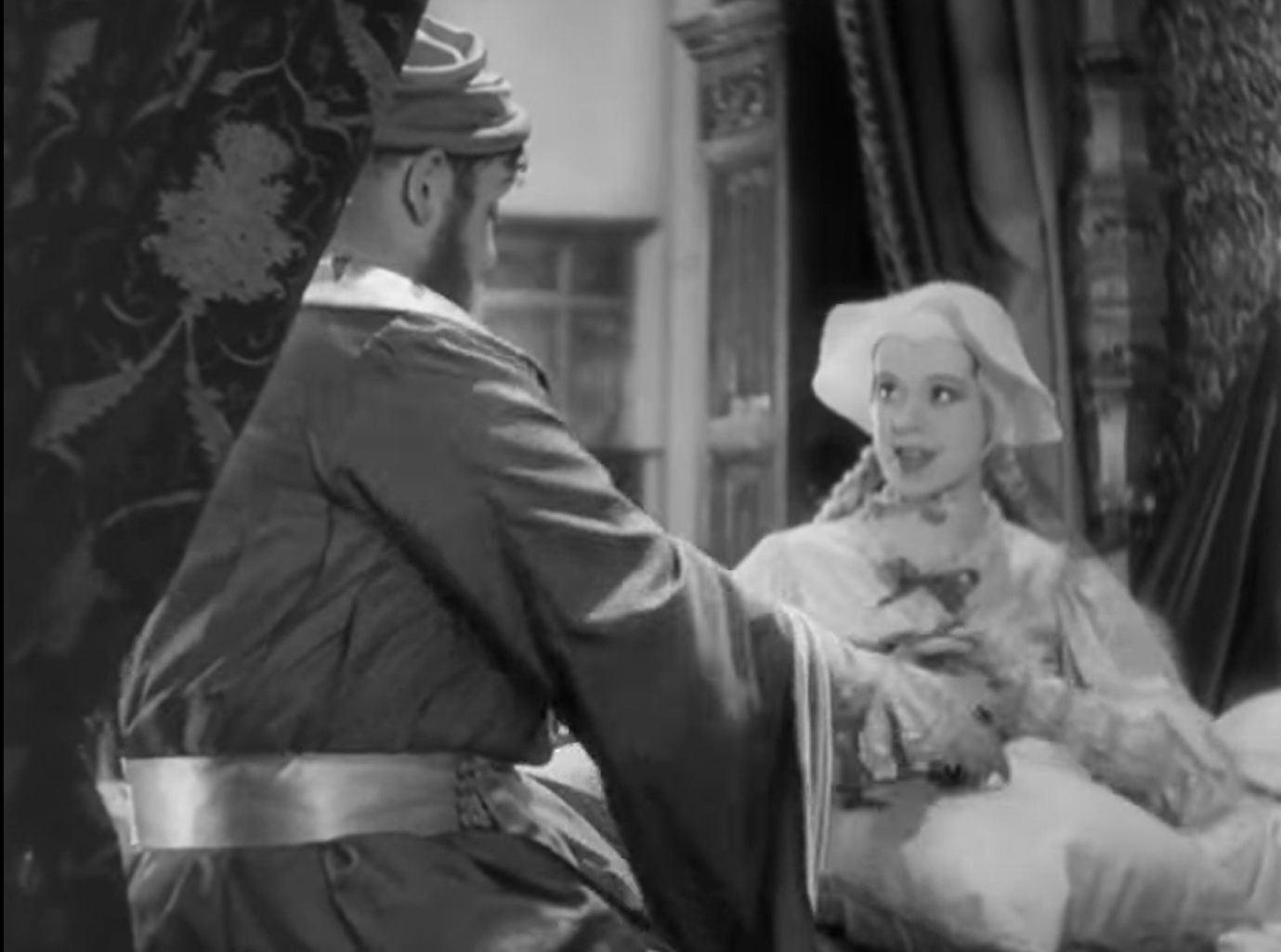
The screenplay is surprisingly risque, with much made of King Henry’s need to sire a male heir (or two, or three) for the crown; indeed, his sexual appetites — and the ramifications they have for the very survival of his kingdom — serve as the foundation of the entire film. The best, all-too-brief scenes are between Laughton and his real-life wife, Lanchester, who gives a truly fearless performance as a woman supposedly too ugly for Laughton to stomach (though I’ve never been convinced that Lanchester is anything less than stunning, in her own quirky fashion). Her clever machinations on her wedding night, as she swiftly works to prevent Laughton from bedding her, are classic evidence of feminine wiles at work; she manages to maintain not just her head but her lover and her previous existence — in noticeable contrast to foolish Binnie Barnes’ Katherine Howard, a socially ambitious noblewoman who openly makes a fool of Laughton, at her own expense.

Redeeming Qualities and Moments:

  • Charles Laughton as Henry VIII
  • Elsa Lanchester as Anne of Cleves
  • Binnie Barnes as Katherine Howard
  • Fine cinematography and sets

  • A clever, often wittily racy script

Must See?
Yes, as an Oscar winning film with historical importance.

Categories

  • Historically Relevant
  • Noteworthy Performance(s)
  • Oscar Winner or Nominee

Links:

Snow White and the Seven Dwarfs (1937)

Snow White and the Seven Dwarfs (1937)

“Magic Mirror, on the wall, who is the fairest one of all?”

Synopsis:
A beautiful young princess named Snow White (Adriana Caselotti) escapes the clutches of her evil stepmother (Lucille La Verne) by joining a household of dwarfs in the forest — but her stepmother will not rest until Snow White ceases to exist.

Genres, Themes, Actors, and Directors:

  • Animated Features
  • Dwarfs and Little People
  • Folk Tales, Fairy Tales, and Mythology
  • Musicals
  • Rivalry
  • Royalty and Nobility

Response to Peary’s Review:
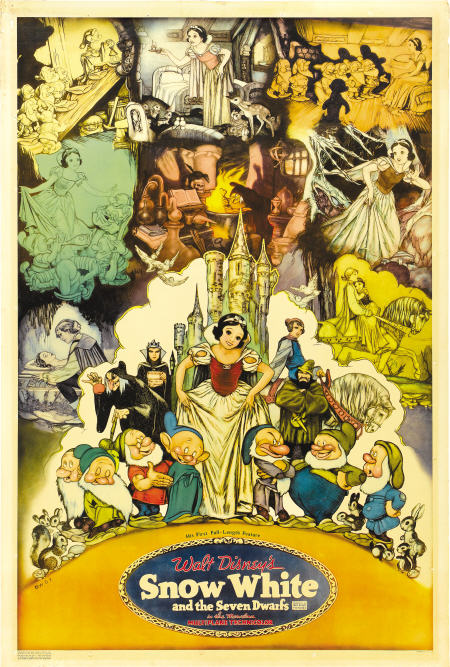
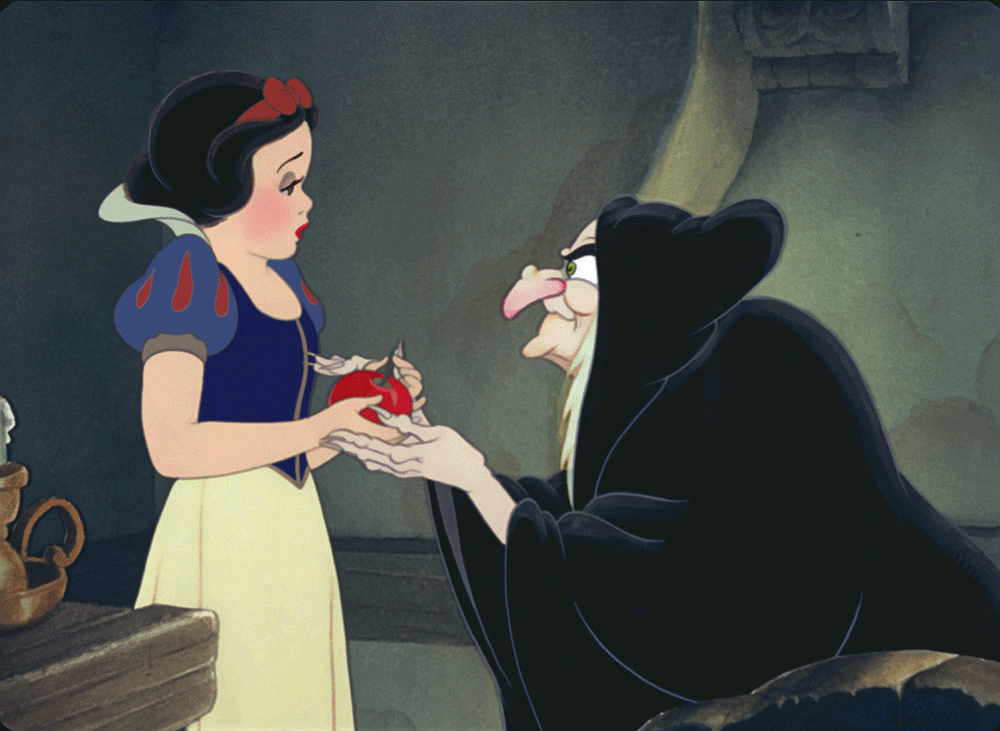
Peary refers to this early Disney adaptation of Grimm’s classic fairytale — notable as the “first American animation feature, and the first cartoon where characters of the same type (here, the Dwarfs) are individualized” — as “one of the greatest pictures of all time”, and votes for it as one of the Best Pictures of the Year in his Alternate Oscars book. He notes that “children will be dazzled by the animation”, will want to “sing along with” several of the highly memorable tunes, will “delight in the humorous Dwarfs”, and will be both “excited and terrified”, given that “this movie is very scary”. Indeed, much like Grimm’s original fairytales, this film is far too intense for the littlest of viewers, so eager-beaver film fanatic parents (ahem — much like myself) should hold off until their kids are of an appropriate age. In the meantime, adults of all ages are sure to “enjoy the same elements” as children — and, as Peary notes, “those with interest in interpreting dreams and fairytales” may be “interested in the sexual subtext”.

So much has been written about this historically groundbreaking cult favorite that interested readers are advised to browse the Web and DVD special features to their heart’s content (for a good start, check out the links provided below). To add my own two cents to the conversation, the following thoughts occurred to me when revisiting this film the other night in anticipation of wanting to show it to my 2-1/2 year old daughter (nope — way too intense for her at this point!): Snow White (as we all know) is the embodiment of both purity and traditional American feminine virtues, given that she immediately sets to work cleaning up the dwarfs’ house and becoming their caretaker. Her stepmother, naturally, is Evil and Jealousy personified (Peary refers to her as “Satan”) — a woman so focused on the importance of her own beauty (another feminine ideal) that she’s willing to kill or be killed in order to maintain her status as the “fairest of them all”.

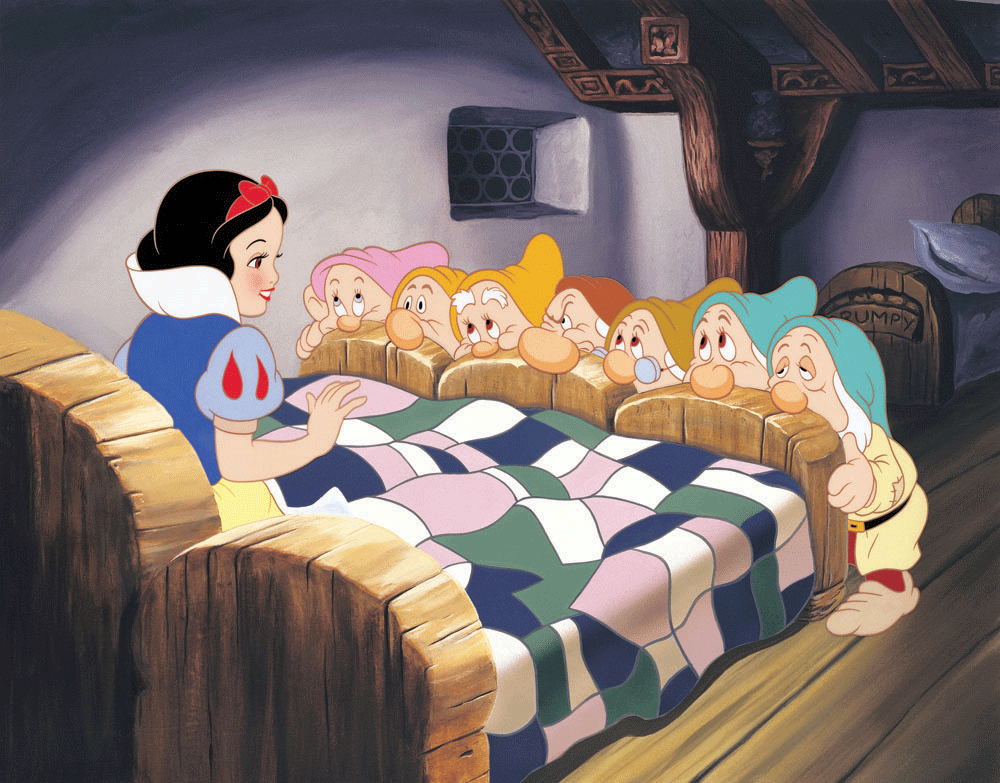
The seven dwarfs — provided with names and personalities by Disney, after lengthy consideration; they’re nameless in Grimm — are given much more screen-time than I remembered. Indeed, at times it feels as though the bulk of the 83-minute film is taken up with showing them at work and at home, as they return from their diamond mines (what are they going to do with all that treasure??!!), discover the presence of an intruder in their little cottage, and quickly find themselves falling in love with the fugitive princess. Meanwhile, other male figures are given surprisingly short shrift: Snow White’s prince (Harry Stockwell) barely registers (interestingly, rumor has it that his character was so challenging to draw that they limited his “appearance” to just a few necessary plot points), and Snow White’s father (the Queen’s husband) is nowhere to be seen. Finally, Snow White’s animal friends — as in so many other Disney classics — are an essential help to her in her quest to survive in a brutal world (though none in particular are given special attention).

Redeeming Qualities and Moments:

  • Groundbreaking feature-length animation


Must See?
Yes, of course.

Categories

  • Genuine Classic
  • Historically Relevant
  • Oscar Winner or Nominee

(Listed in 1001 Movies You Must See Before You Die)

Links:

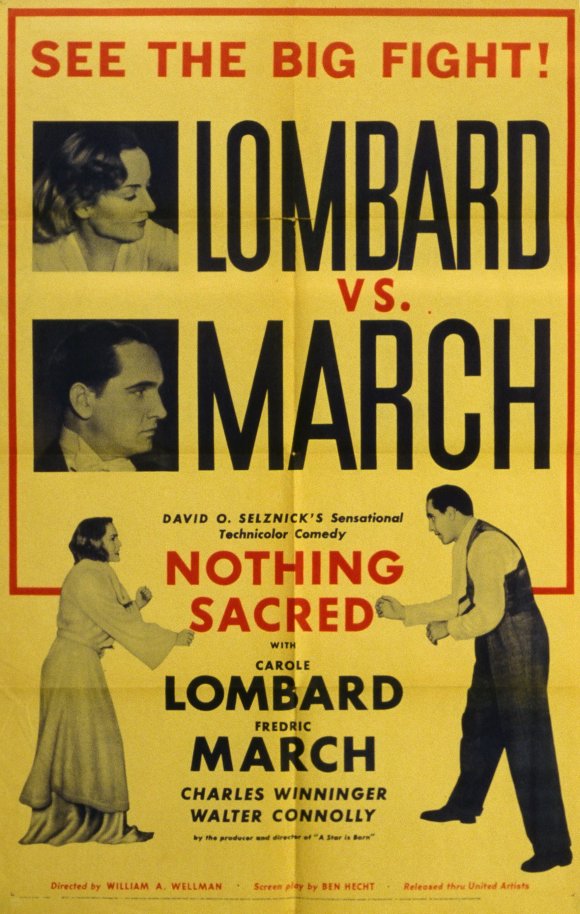
Nothing Sacred (1937)

Nothing Sacred (1937)

“You’ll be a sensation. The whole town’ll take you to its heart.”

Synopsis:
A journalist (Fredric March) exploits the story of a small-town woman (Carole Lombard) supposedly dying of radium poisoning, who hides her healthy status in order to enjoy her new-found fame in New York.

Genres, Themes, Actors, and Directors:

  • Carole Lombard Films
  • Fredric March Films
  • Journalists
  • Media Spectacle
  • Romantic Comedy
  • William Wellman Films

Response to Peary’s Review:
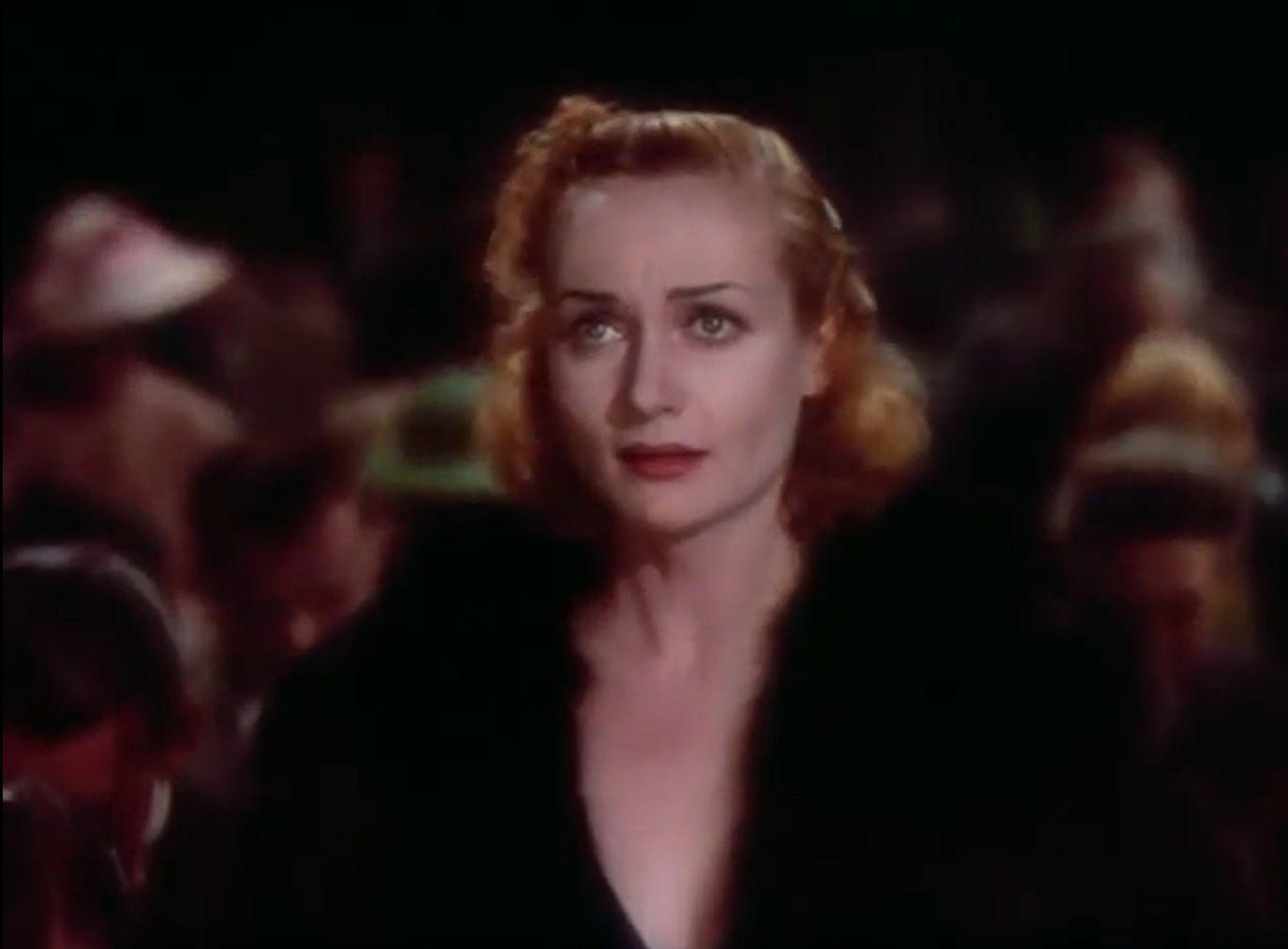
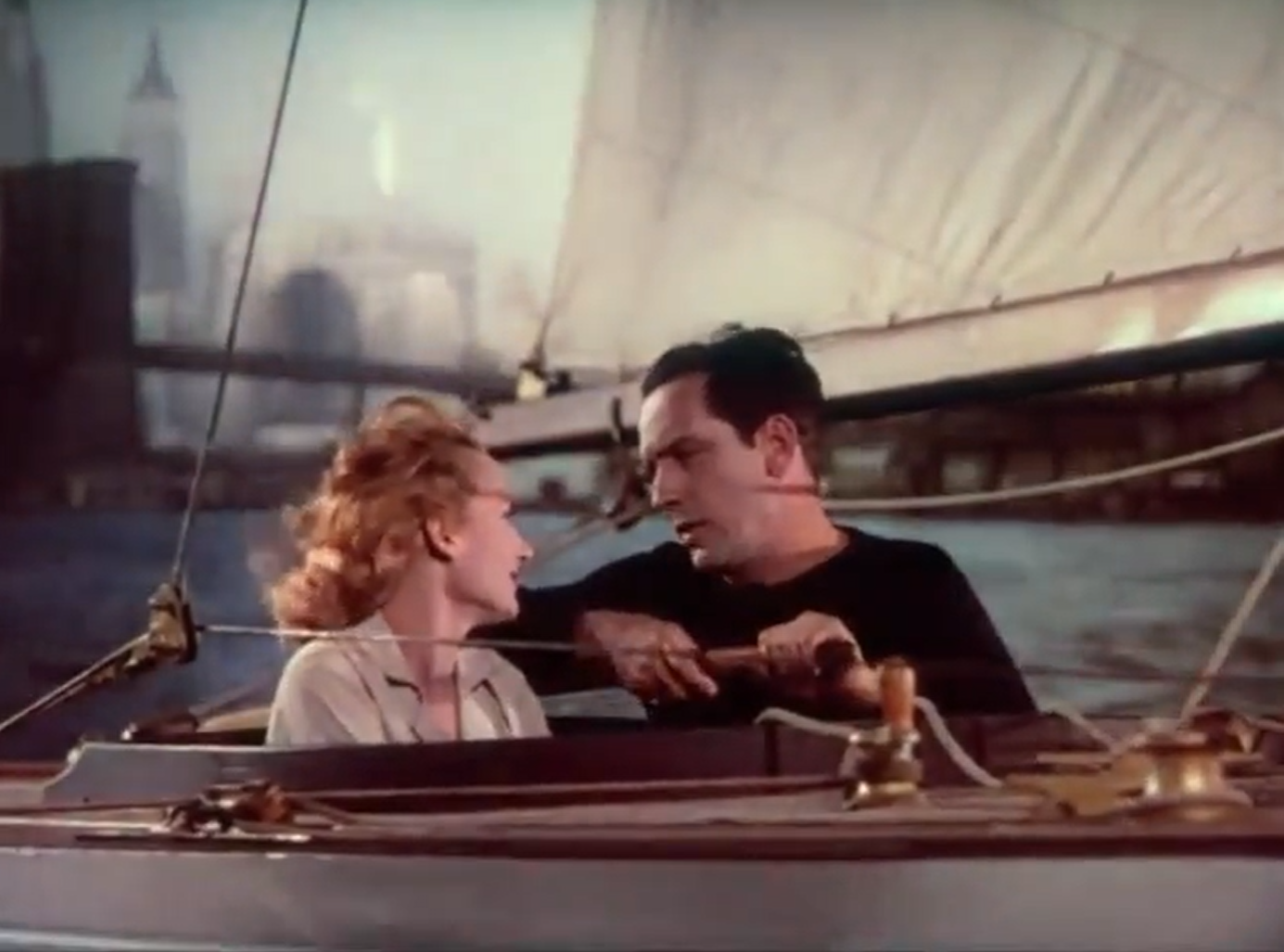
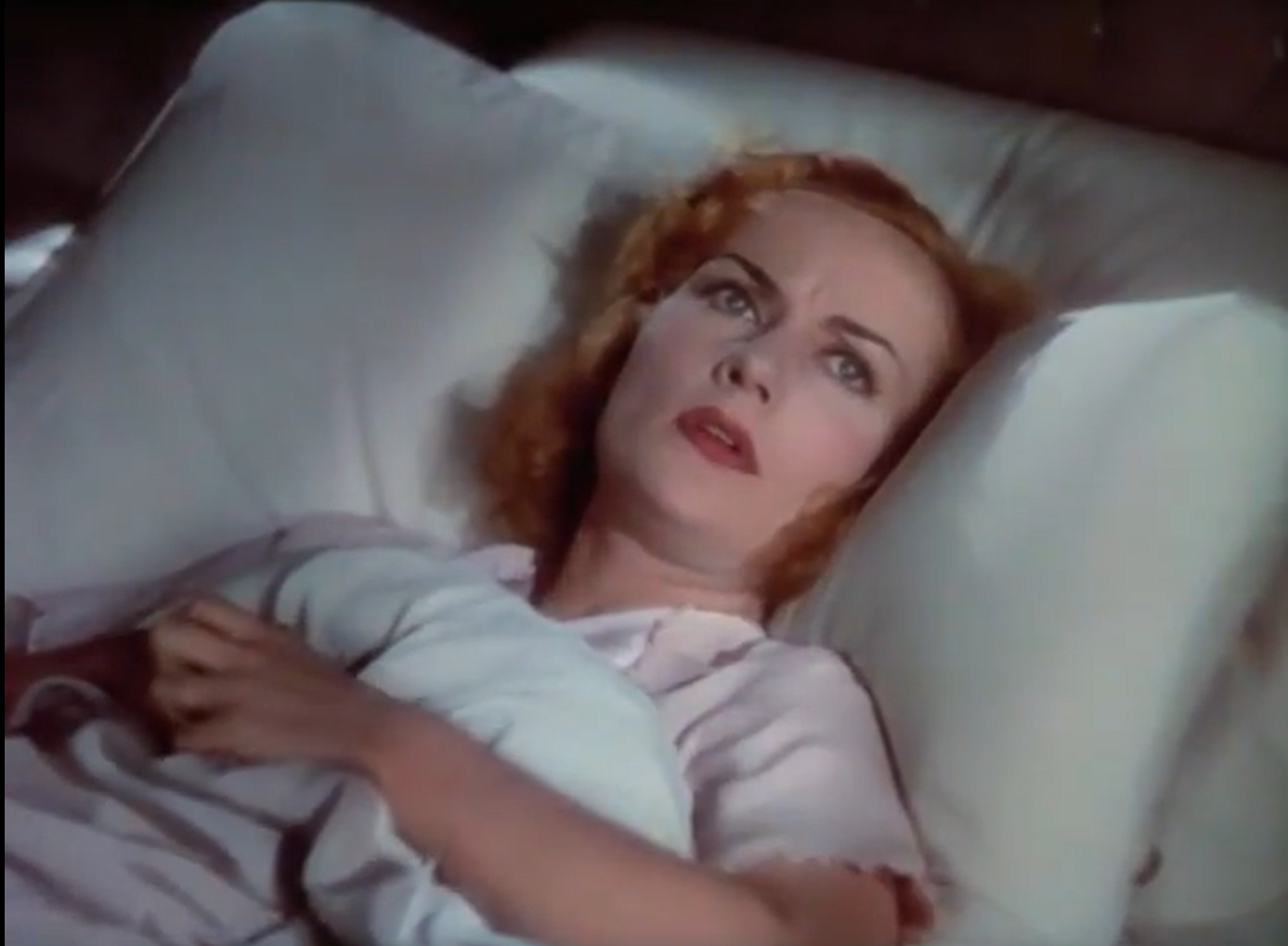
Peary accurately labels this “classic screwball comedy” — scripted by Ben Hecht — as “an attack on the hypocrisy of all Americans” who “revel in their unselfishness and graciousness toward their fellow human beings, yet … delight in other people’s misery … and exploit it”. While Flagg is indeed an outright imposter, taking advantage of a free ride when it’s handed to her, she feels appropriately guilty the entire time — and in reality, she’s just “a 10-cent charlatan compared to the bloodsuckers who profit … from her plight”; thus, she remains an oddly sympathetic protagonist throughout.

It helps, of course, that Flagg is played by the premiere screwball comedienne of the 1930s — beautiful Lombard (the “highest-paid star at the time”), who gives a “witty, animated performance”. March is “his usual too stiff self” (as Peary points out, this it “why it’s funny watching a small town boy greet him with a bite on the leg” during an unexpectedly laugh-out-loud moment) — but he’s a suitable foil for Lombard, whose energy never flags.

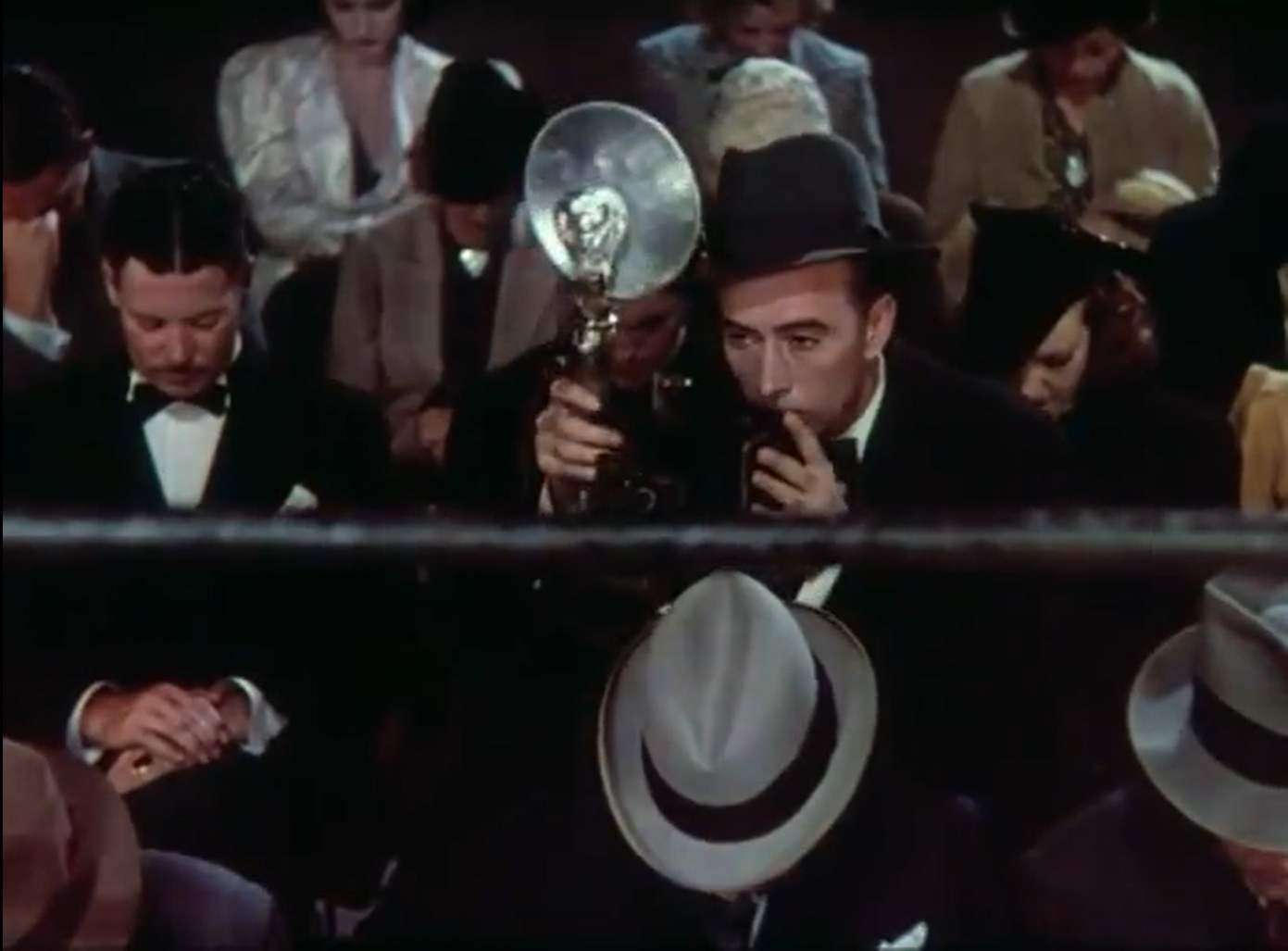
At just 75 minutes, this flick zips along speedily and never loses steam. The rapidity with which Flagg is embraced by the American public as its latest favorite “folk hero” resonates perfectly with the apparent speed of modern-day celeb-culture, in which “breaking news” is available at the touch of a button. Hecht’s merciless script is full of countless juicy moments, milked perfectly for laughs: a photographer (nonchalant George Chandler) pops up to drolly snap shots of Flagg at opportune moments:

… a group of schoolchildren intone an anthem to doomed Flagg:

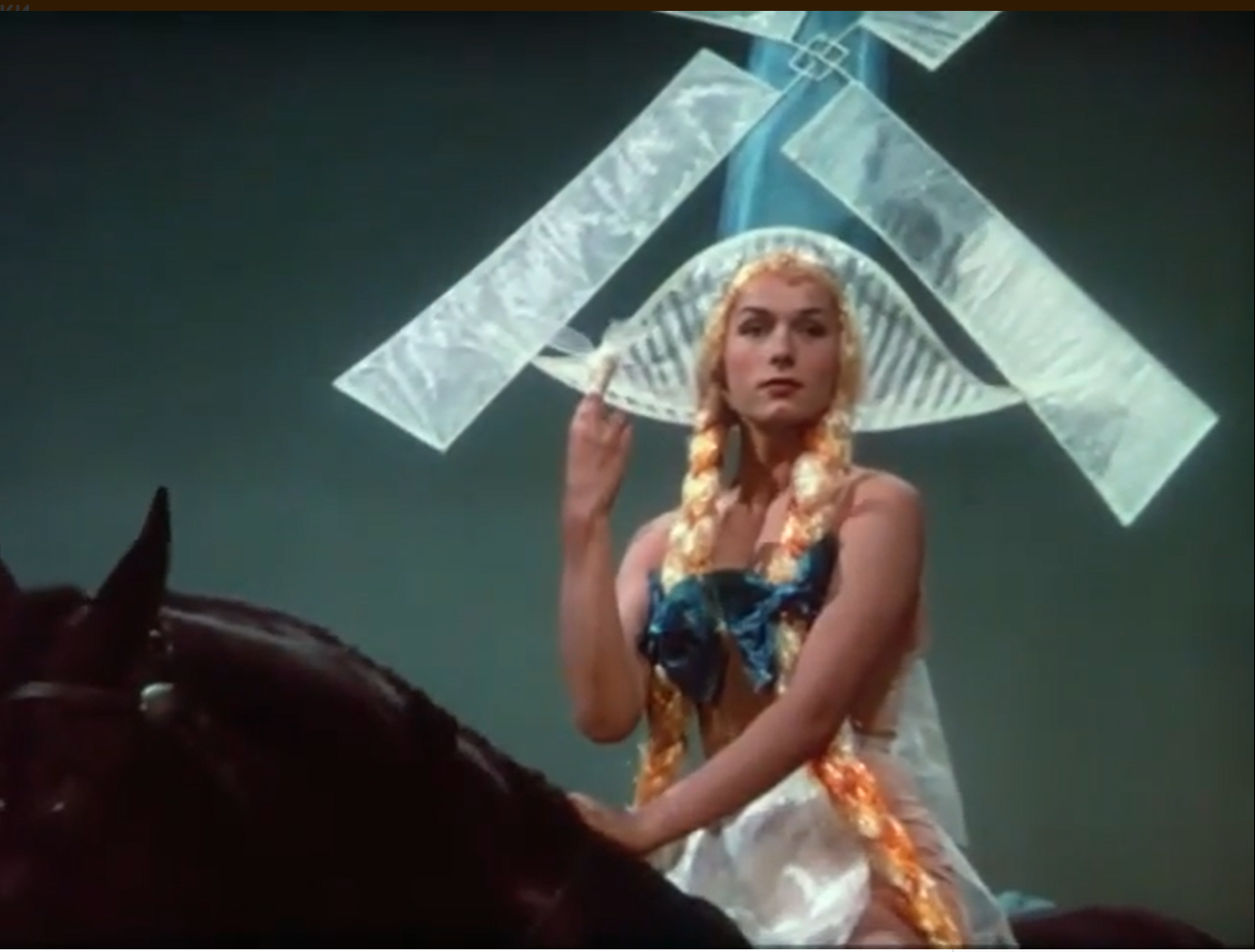
… a bevy of beauties dressed as historical heroines are paraded on horses (watch closely when Jinx Falkenburg as “Katinka”, the girl who “stuck her finger in a dyke” — and thus saved Holland — is on stage).

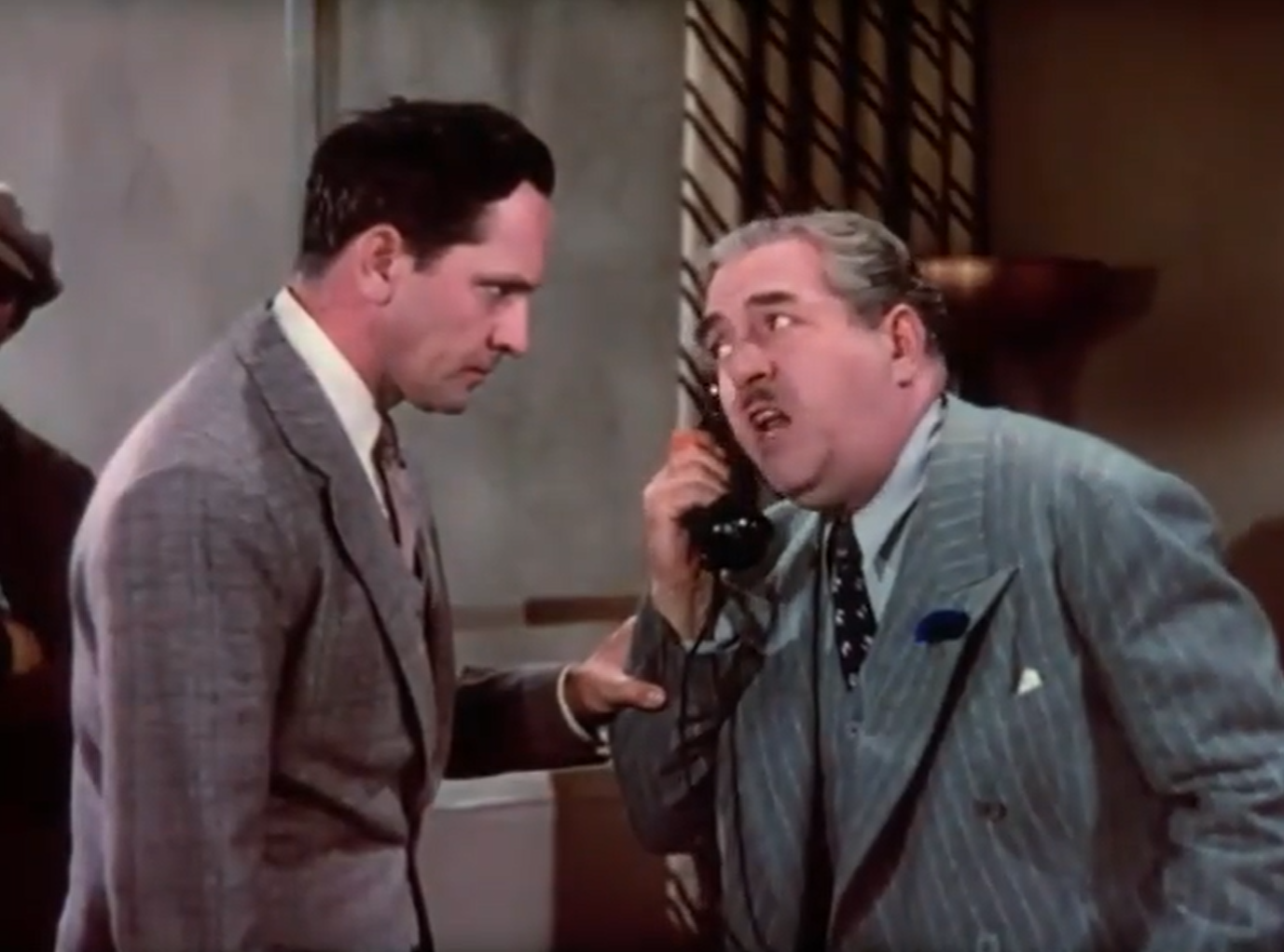
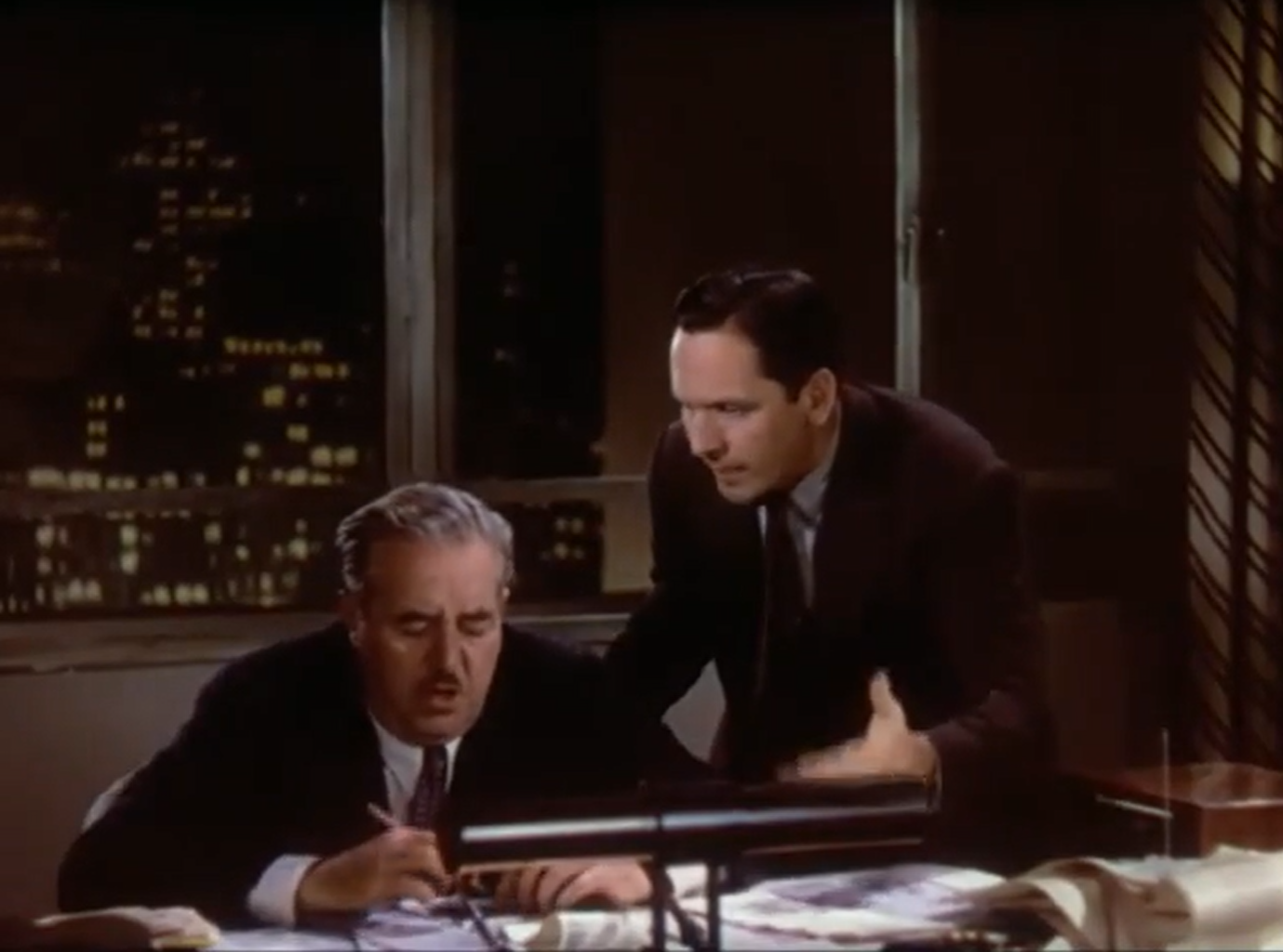
NB: Walter Connelly deserves special mention in a typecast role which he nonetheless embraces wholeheartedly — that of “Oliver Stone”, ruthless editor of the Morning Star newspaper, who genuinely, sincerely finds it problematic to learn that Flagg isn’t really on death’s doorstep.

Redeeming Qualities and Moments:

  • Carole Lombard as Hazel Flagg (Peary nominates her as Best Actress of the year in his Alternate Oscars)
  • Fine supporting performances throughout
  • Ben Hecht’s mercilessly skewering script

Must See?
Yes, as a classic screwball comedy.

Categories

  • Genuine Classic

Links:

Slap Shot (1977)

Slap Shot (1977)

“We all know how to play hockey — just play it smart!”

Synopsis:
The coach (Paul Newman) of a failing New England hockey team encourages his players to employ violent tactics in an effort to revive attendance at games.

Genres, Themes, Actors, and Directors:

  • Comedy
  • Paul Newman Films
  • Sports

Response to Peary’s Review:
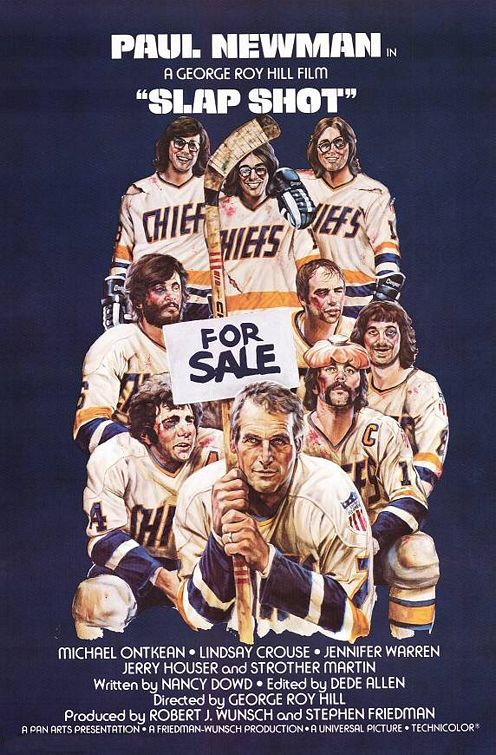
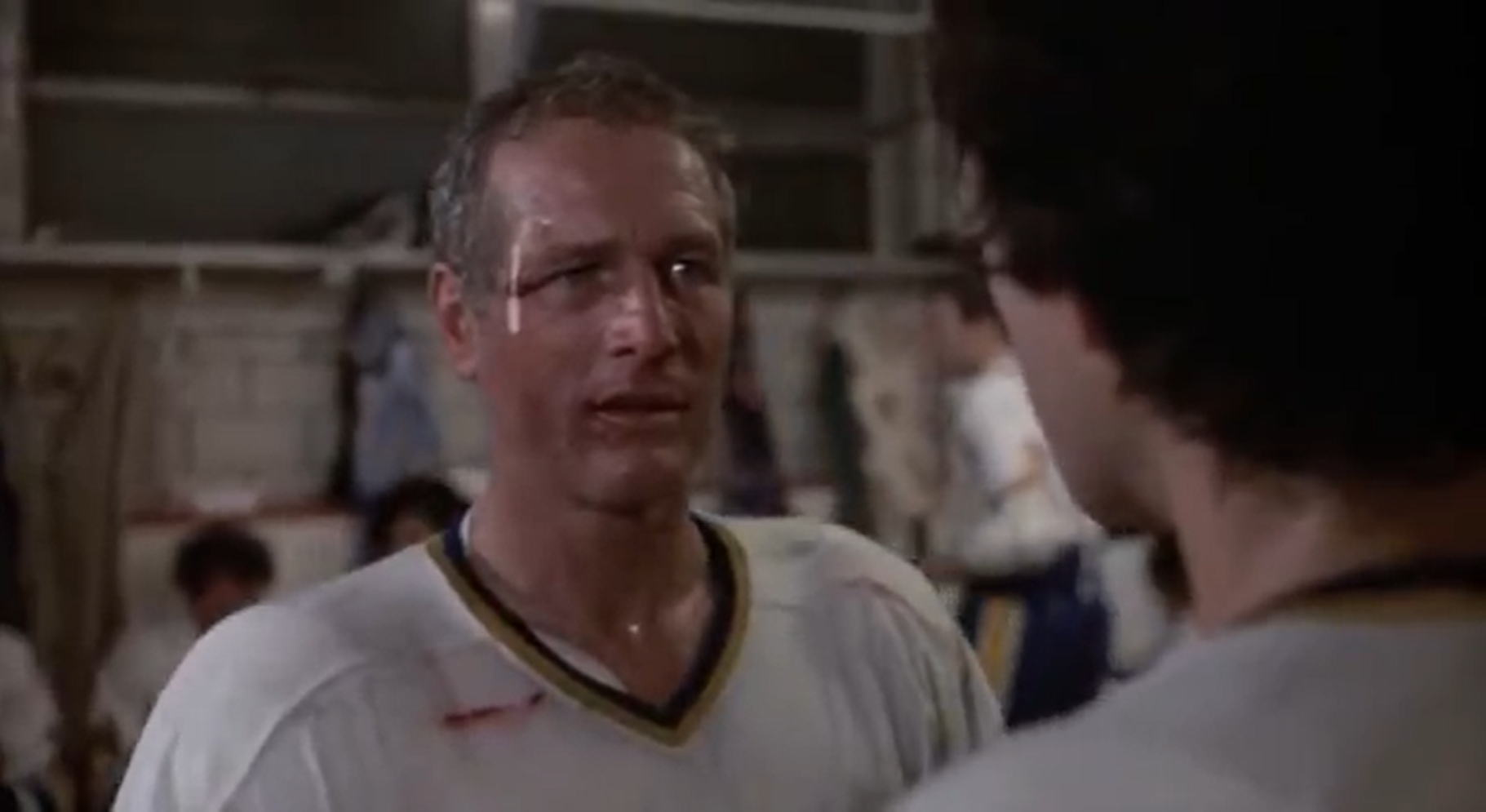
Peary’s review of this cult hockey film by director George Roy Hill is generally favorable. He notes that he’s glad it “doesn’t presume to attack today’s hockey/sports fan for demanding that violence be part of the game” given that “the movie itself aims to please viewers… by including much preposterously brutal sports action”. He argues that “the more violent, the funnier it is”, and notes that Nancy Dowd’s script (based on tape recordings made by her brother in his hockey team locker room) “received much attention because it contained more profanity, sexual content, and brutality than had ever been contained in a screenplay written by a woman”. He praises the “quirkiness of her characters” and the “unexpected ways in which they act and converse with one another”, and argues that “Newman gives one of his most interesting performances” (indeed, he nominates Newman as Best Actor in his Alternate Oscars book).

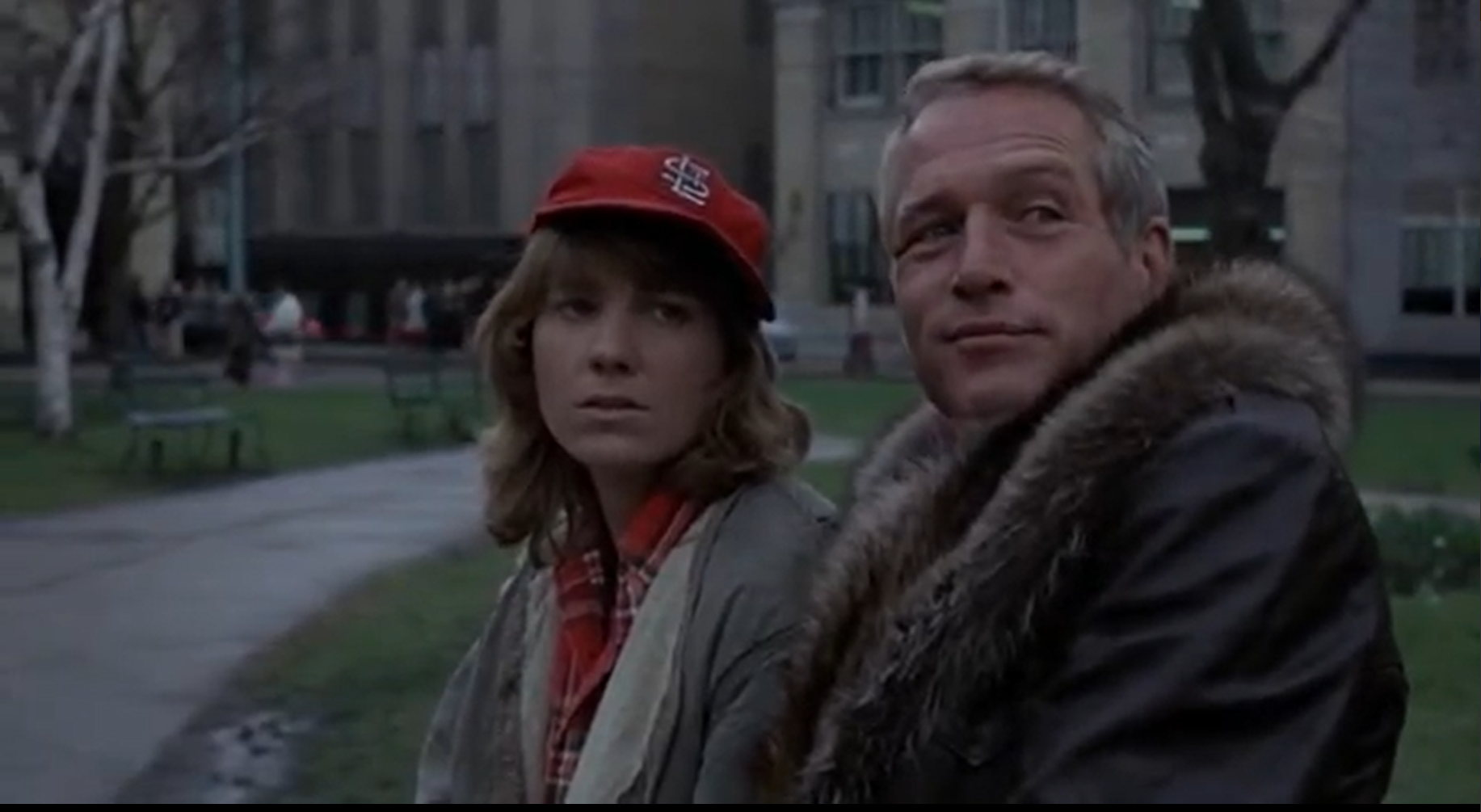
While I’ll admit to being mildly amused by some of the on-ice tactics employed by the “Hanson brothers” (fictional characters so beloved and infamous they actually have their own Wikipedia entry), I have a hard time sharing Peary’s overall admiration for the film. The “quirky” characters — Newman included — are largely unlikable and sloppily written, with Ivy Leaguer Michael Ontkean and his wife (Lindsay Crouse):

particularly underused and poorly conceived. Meanwhile, the film’s reasonably intriguing central comedic premise — about a hockey team turning to brutal tactics as a means of financial survival — never goes anywhere interesting. Despite its status as a serious cult favorite, all-purpose film fanatics can feel free to skip this one.

Redeeming Qualities and Moments:

  • A few mildly amusing sequences on the ice
  • Dede Allen’s impressive editing

Must See?
No. This one’s only a must for hockey fanatics.

Links:

My Favorite Wife (1940)

My Favorite Wife (1940)

“Make up your mind, old man: you’re not allowed to have two wives, you know!”

Synopsis:
A man (Cary Grant) whose shipwrecked wife (Irene Dunne) is presumed dead finds his second marriage (to Gail Patrick) disrupted by the sudden reappearance of Dunne — and the man (Randolph Scott) she spent the past seven years on a deserted island with.

Genres, Themes, Actors, and Directors:

  • Cary Grant Films
  • Irene Dunne Films
  • Love Triangle
  • Marital Problems
  • Newlyweds
  • Randolph Scott Films
  • Romantic Comedy

Response to Peary’s Review:
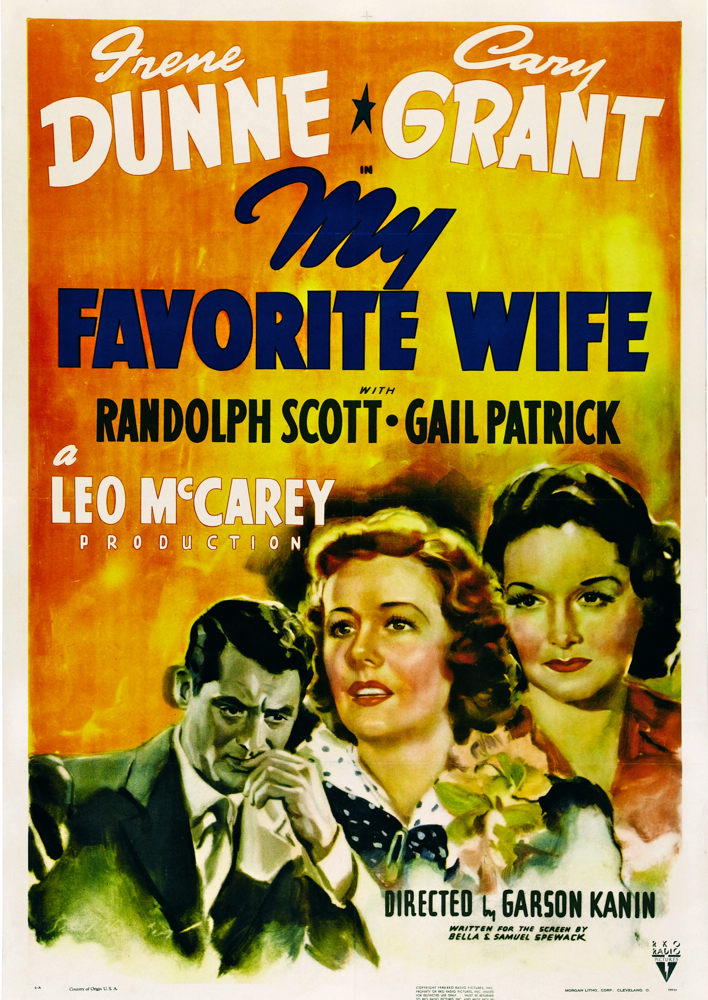
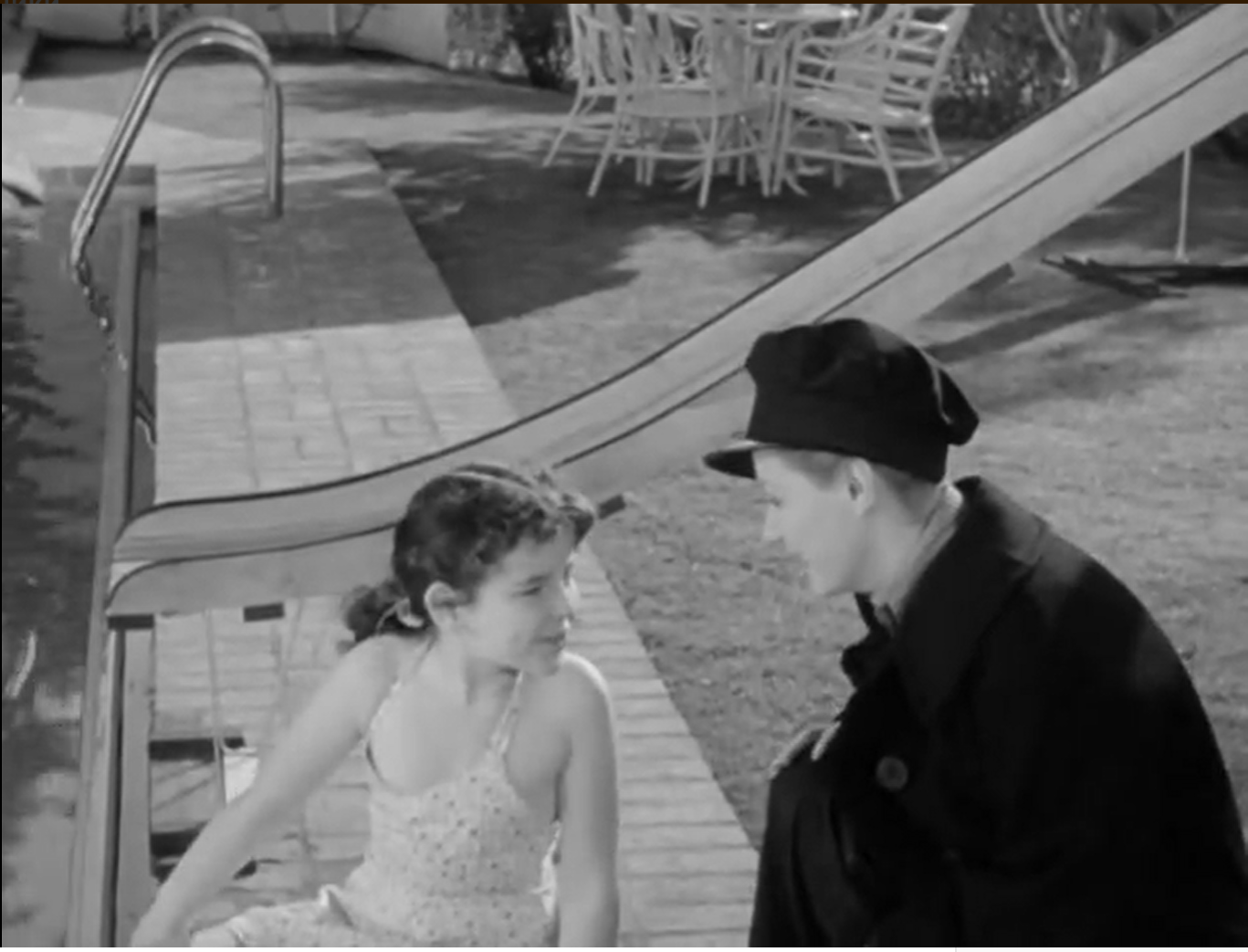
Peary notes that this romantic repairing of Irene Dunne and Cary Grant — who had starred together with “great success” in Leo McCarey’s The Awful Truth (1937), and later reteamed in Penny Serenade (1941) — is a “sprightly but slight marital farce”. While the film “starts out extremely well” (how could it not, based on such a delicious scenario?):

it unfortunately “never rises from amusing to hilarious”; instead, the “marital game-playing becomes far-fetched and tedious, and too much of the humor comes at the expense of characters who are being treated rotten”. Indeed, poor “Patrick, in particular, gets unfair treatment”, mostly due to the underdeveloped arc of her character; she’s never really given much of a chance for sympathy, and is dismissed far too easily as merely a nuisance to be gotten rid of.

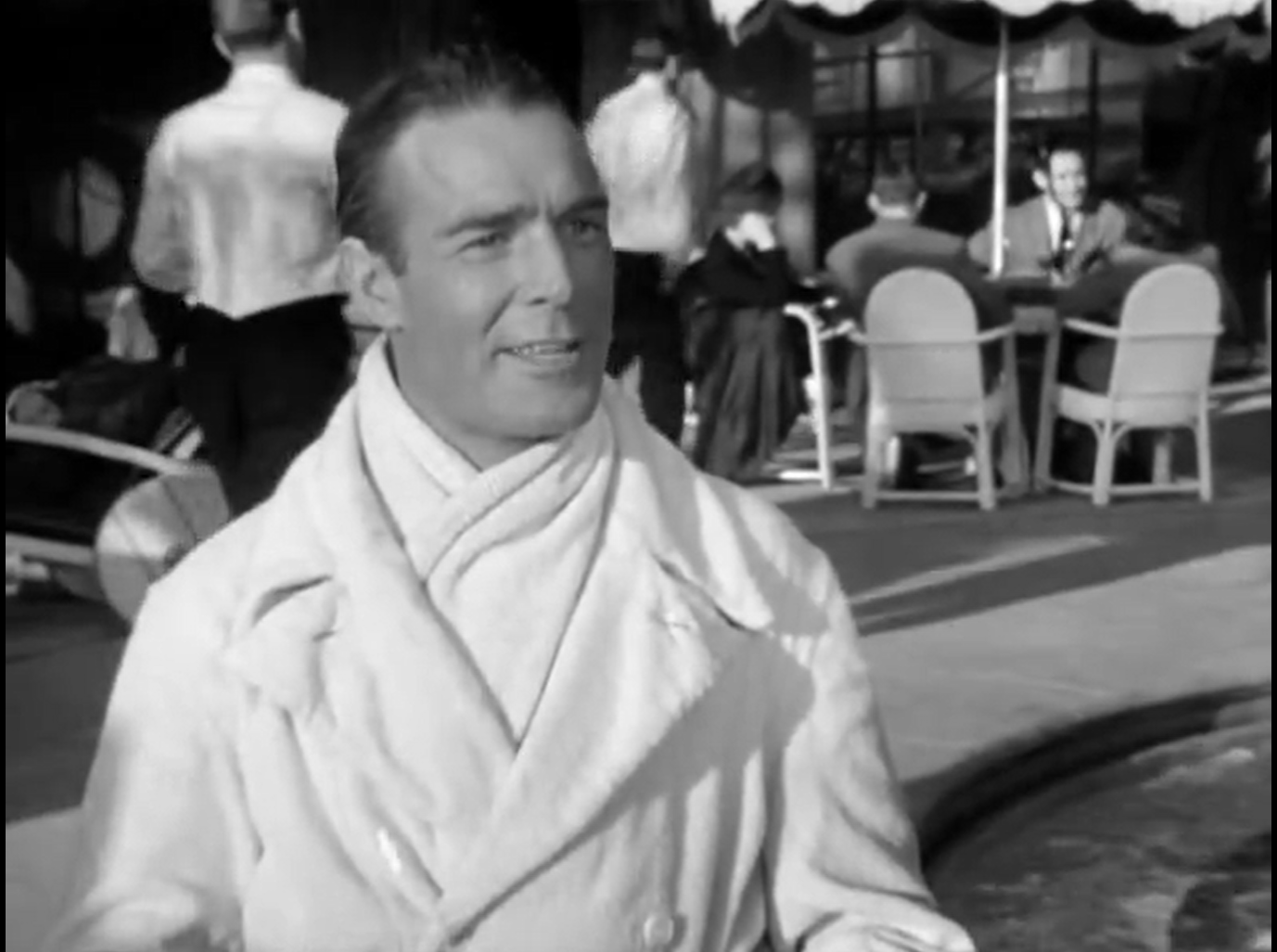
Making much more of a splash (literally!):

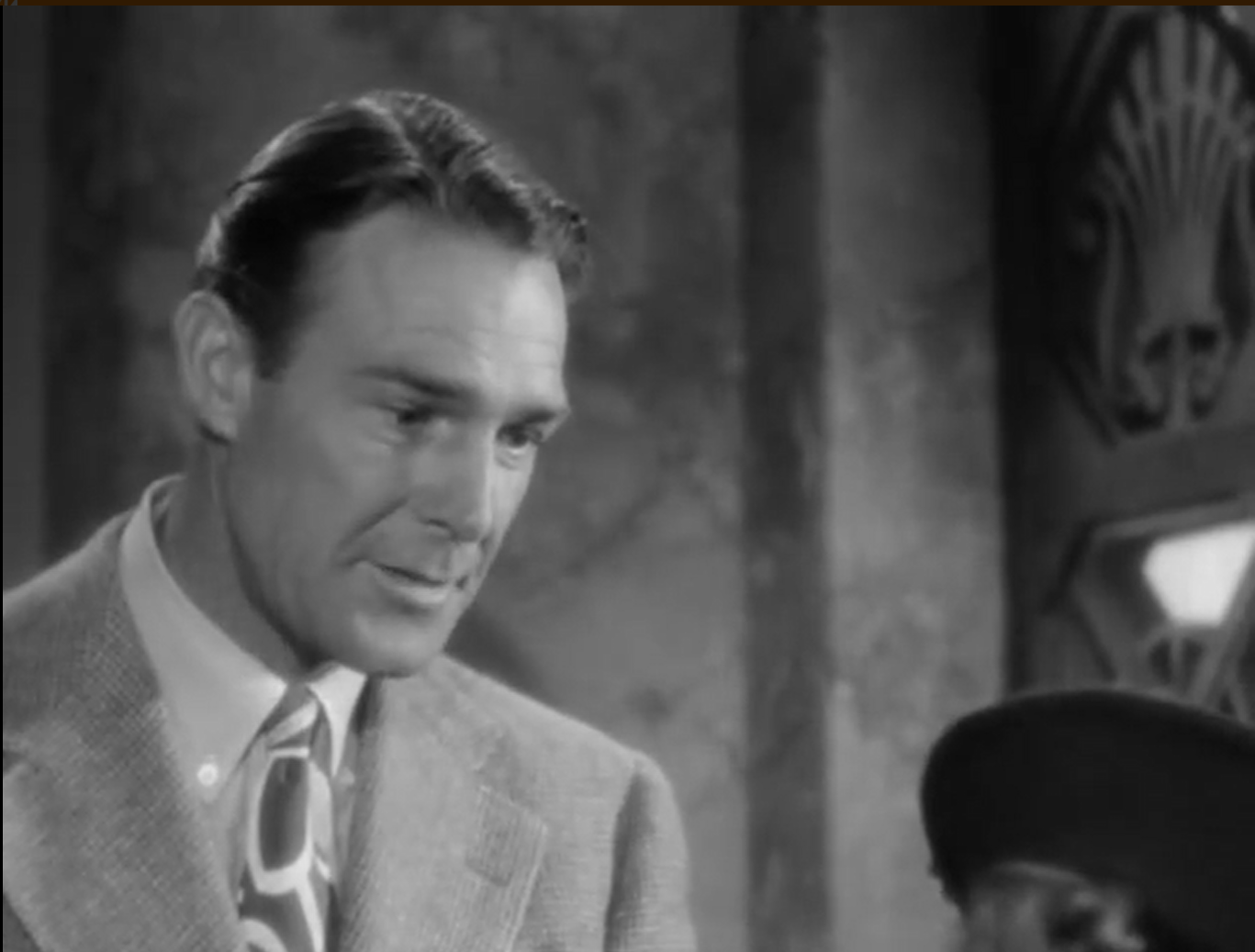
is “muscular, virile” Randolph Scott as Dunne’s shipwrecked compatriot, who insists that things remained strictly platonic between them during their entire seven years on an island together.

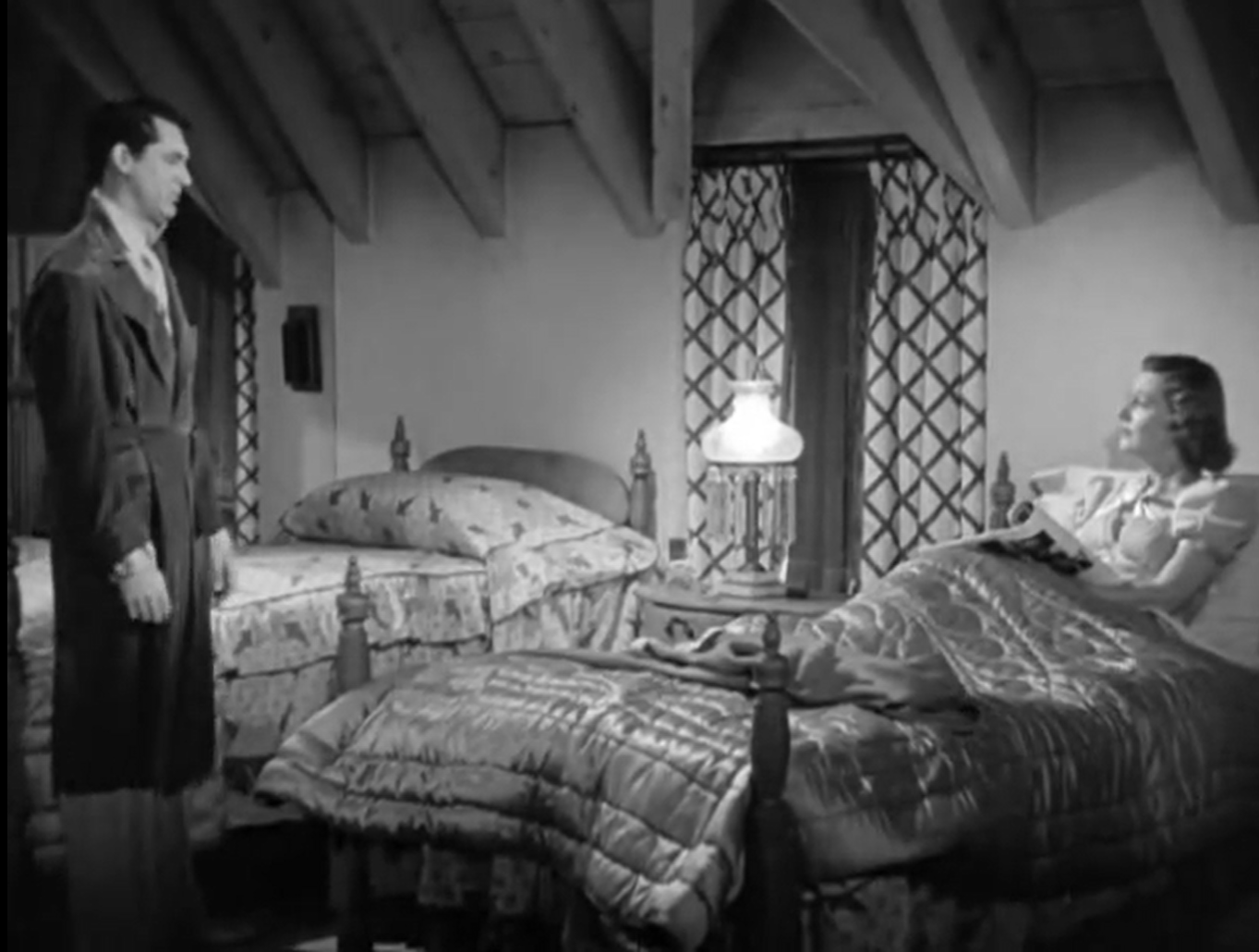
Uh-huh. This is just as quaint as Dunne believing that if she makes it to the hotel before newlyweds Grant and Patrick arrive, she can safely salvage the “situation”. And speaking of “situations”, it is interesting, as Peary notes, that “while Dunne forgives Grant for romancing and marrying Patrick, he has trouble coming to terms with her being stranded for seven years with… Scott”. At any rate, it’s primarily “the charm of the stars” that “carries the picture to its… conclusion” — with the final “bedroom scene” coming across as a weak attempt to replicate the hilarious sexiness of The Awful Truth‘s comparable ending.

Note: Somewhat notoriously, My Favorite Wife was in the process of being remade with Marilyn Monroe as Something’s Got to Give in 1962, but was never completed; instead, it was officially remade with Doris Day and James Garner in 1963 as Move Over, Darling (a title not listed in Peary’s book).

Redeeming Qualities and Moments:

  • Randolph Scott as Steve
  • Some amusingly handled dialogue:

    Grant (to buff Randolph): “Do you ride in cabs or just trot along beside?”

Must See?
No, though it’s certainly worth one-time viewing.

Links: