Browsed by
Category: Response Reviews

My comments on Peary’s reviews in Guide for the Film Fanatic (Simon & Schuster, 1986).

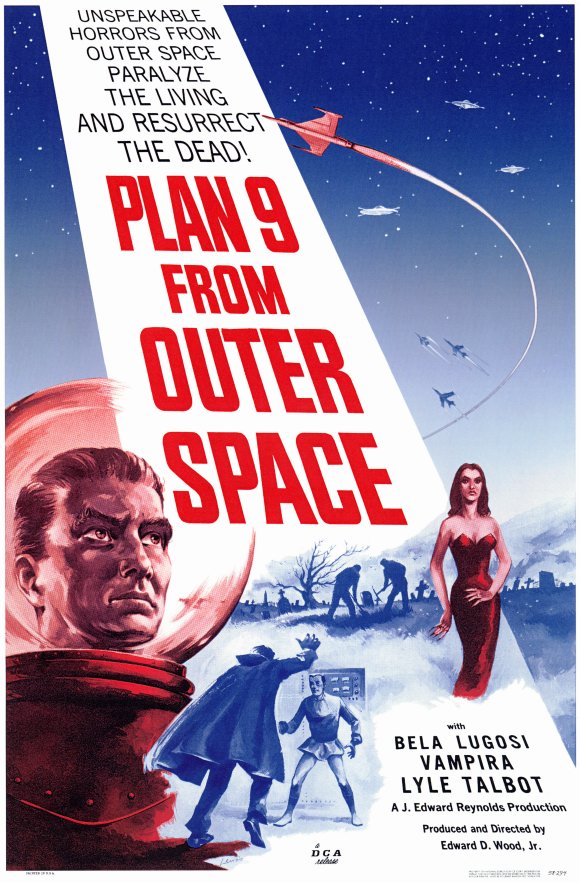
Plan 9 From Outer Space/Grave Robbers From Outer Space (1959)

Plan 9 From Outer Space/Grave Robbers From Outer Space (1959)

“It’s because of men like you that all must be destroyed.”

Synopsis:
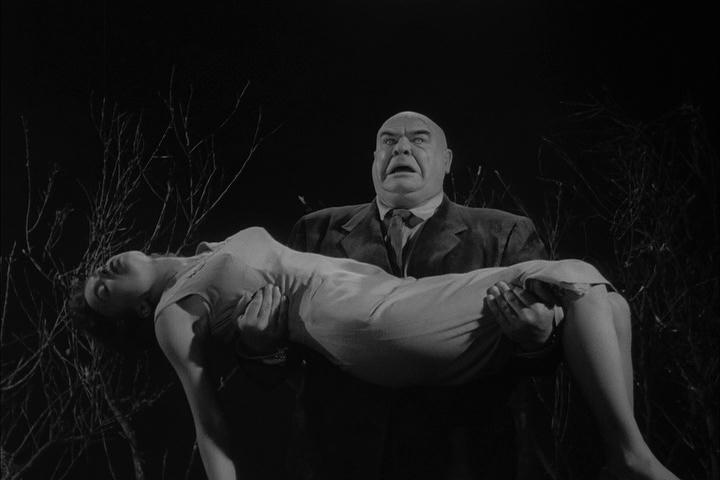
An advanced alien species attempts to prevent the Earth from destroying the universe with atomic weaponry by taking over the minds of three recently deceased corposes (Bela Lugosi, Vampira, and Tor Johnson).

Genres, Themes, Actors, and Directors:

  • Aliens
  • Bela Lugosi Films
  • Ed Wood Films
  • Mind Control and Hypnosis
  • Science Fiction
  • World Domination
  • Zombies

Response to Peary’s Review:
In the opening of his review for this infamously awful film — voted the “World’s Worst Film” by readers of the Medved brothers’ Golden Turkey Awards — Peary writes that in an “era when bad-film freaks have come out of the closet and really awful films are looked on with affection, Edward D. Wood’s berserk sci-fi film is revered by a large and growing cult who contend that it has moved beyond camp to legend status” (indeed, he analyzes it at length in his first Cult Movies book). Peary facetiously notes that if you “give a monkey a camera… it’ll make a better picture”, and will “certainly do a better job with the money” (neither of which is quite true), and notes that “every facet of this production, from acting, script, and direction to special effects, prop selection, and editing, is putrid” — “so putrid that the film is hilarious”.

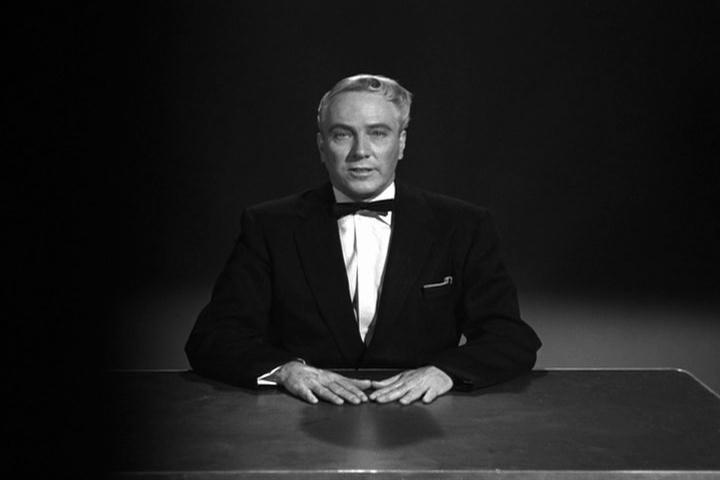
The production history of this notoriously awful howler is so well-documented that I humbly refer you to any of the reviews referenced below (or to Wikipedia’s article). In a nutshell, Wood appears to have cobbled his film together out of the very limited resources he had at hand — starting with two minutes of footage of his recently deceased friend, Bela Lugosi, whose character is thereafter played by his wife’s chiropractor, hiding his face behind a cape. The result is a film in which nearly every “bad movie” element one can think of shows up — and (as noted in Peary’s Cult Movies review), “except for about a hundred dull spots”, it’s actually “a lot of fun”. In his more extended review, Peary calls out the film’s many hilariously awful features, including the “terrible cheap sets”; the hideous interpolation of shots taking place in daytime and nighttime; the flying saucers (made out of paper plates) which “look like chinaware flung into the air”; the way that “everyone fails to respond while The Ghoul Man… strangles Officer Calvin in front of their eyes”; and, of course, the “incomparable dialogue” — all of which make for a surprisingly entertaining viewing experience, if you’re in the right mood.

Interestingly, Peary argues that Wood made a film which is so “atrocious” that perhaps he hoped “censors wouldn’t bother with [the] subversive themes”. He suggests that in “this one God-awful, terribly made, poor excuse for a picture, Wood is more critical of America’s government (which conceals much from the public) and military strategy (that calls for an arms build-up and further nuclear testing) than any other director of the period dared to be.” That alone, as Peary writes, may be reason enough to relegate “another, less daring film to wear” this film’s dubious “World’s Worst film banner”; he quickly notes, however, that he’s “just kidding”.

P.S. In his review, Peary mentions that “God [only] knows what the first eight ‘Plans’ were” — but if you’d like to hear one band’s take on this hypothetical question, click here.

P.P.S. Since Plan 9 is in the public domain, it’s available for free viewing at http://www.archive.org/.

Redeeming Qualities and Moments:

  • Laughably bad dialogue: “Future events such as these will affect us in the future.”
  • Plenty of unintentional “bad movie” laughs throughout
  • A surprisingly provocative and subversive “message”

Must See?
Of course — as the ultimate “bad movie” experience. Check out the second paragraph of Richard Scheib’s review for an illuminating overview of the various types of “bad” movies out there; he convincingly argues that the term “bad” is far too vague to fit the spectrum of ineptitude present in the world of cinema.

Categories

  • Cult Movie

Links:

That Hamilton Woman / Lady Hamilton (1941)

That Hamilton Woman / Lady Hamilton (1941)

“Lady Hamilton is one of the very best women in the world, and an honor to her sex.”

Synopsis:
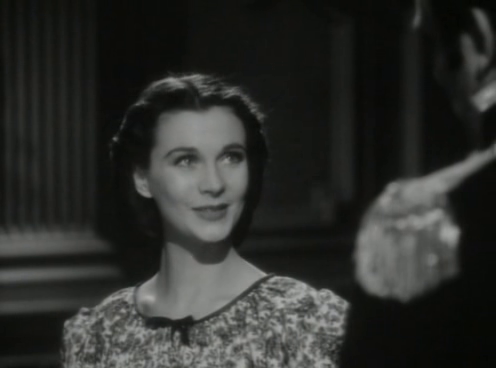
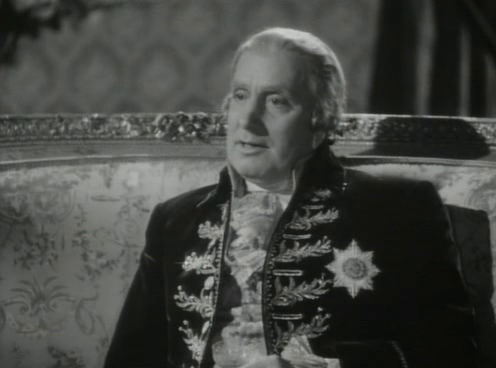
The young new wife (Vivien Leigh) of a middle-aged widower (Alan Mowbray) falls in love with Lord Nelson (Laurence Olivier), a gallant married officer fighting in the Napoleonic Wars.

Genres, Themes, Actors, and Directors:

  • Biopics
  • Flashback Films
  • Historical Dramas
  • Infidelity
  • Laurence Olivier Films
  • Romance
  • Royalty and Nobility
  • Star-Crossed Lovers
  • Vivien Leigh Films

Response to Peary’s Review:
Perhaps best known as Winston Churchill’s favorite film (he purportedly saw it over 80 times), That Hamilton Woman is, as Peary notes, a “combination of great romance… and pro-British wartime propaganda”, and arguably “features Vivien Leigh’s finest performance”. He notes that it’s “a tribute to the bravery, intelligence, and resourcefulness of women”, and lauds Leigh’s Lady Hamilton — one of cinema’s “most impressive woman characters” — as “brainy, witty, flirtatious when need be, serious when she wants to be, able to handle any situation or impress any person, beautiful, optimistic, helpful, caring [and] passionate”. He calls the film “lavishly produced, maturely scripted, [and] beautifully acted and directed”, and concludes that Churchill “had good taste”.

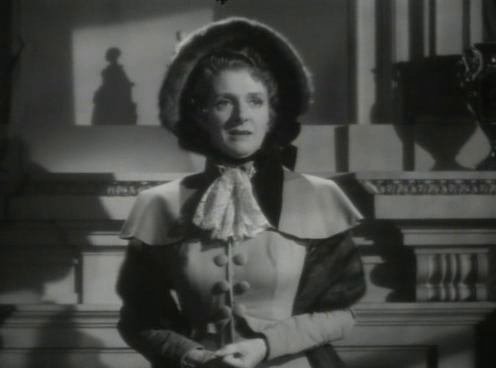
While not all critics feel the same way, I am largely in agreement with Peary’s generous assessment here. Alexander Korda’s production is superbly mounted on all counts, from its sumptuous sets and costumes to the finely nuanced performances by all involved. Leigh and Olivier — whose real-life adulterous relationship notoriously mirrored their characters’ on-screen affair — make for an undeniably romantic star-crossed couple, one which “has few equals in romantic annals”, given that Olivier (in superbly done make-up) “is rigid but dashing” while Leigh “is radiant, alive, aware, [and] available”. Meanwhile, Alan Mowbray and Gladys Cooper are surprisingly convincing and sympathetic in what could have been merely thankless roles, playing cuckolded spouses who are helpless in the face of a love which clearly transcends marriage vows.

Redeeming Qualities and Moments:

  • Vivien Leigh as Lady Hamilton (nominated by Peary as one of the best actresses of the year in his Alternate Oscars)
  • Laurence Olivier as Lord Nelson
  • Alan Mowbray as Lord Hamilton
  • Gladys Cooper as Lady Nelson
  • Rudolph Mate’s cinematography

Must See?
Yes, for Leigh’s performance, and as an overall good show.

Categories

  • Historically Relevant
  • Noteworthy Performance(s)

Links:

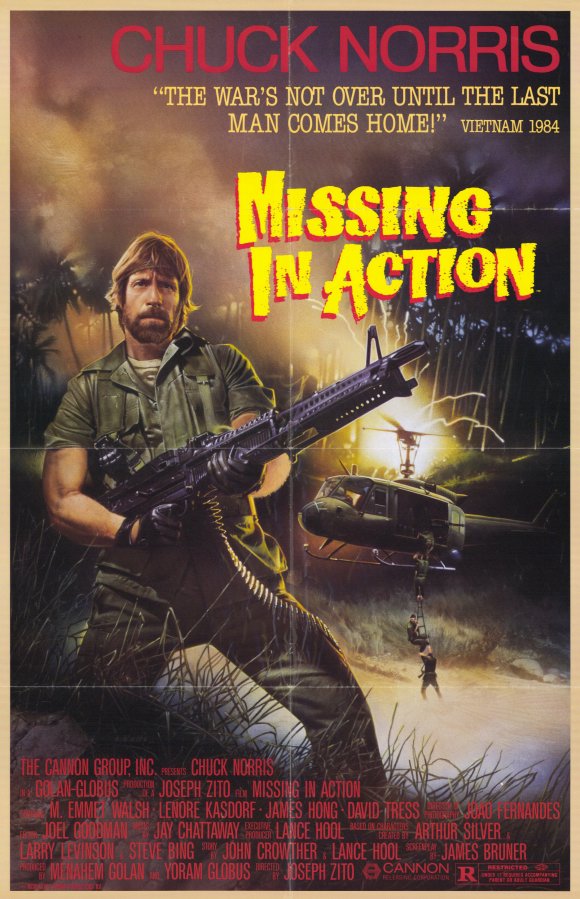
Missing in Action (1984)

Missing in Action (1984)

“Where are the American M.I.A.s?”

Synopsis:
An embittered veteran (Chuck Norris) returns to Vietnam to rescue missing prisoners of war, enlisting the help of his buddy (M. Emmett Walsh).

Genres, Themes, Actors, and Directors:

  • Chuck Norris Films
  • Prisoners of War
  • Revenge
  • Veterans
  • Vietnam War

Response to Peary’s Review:
Peary’s inclusion of this “huge [Chuck Norris] hit” in Guide for the Film Fanatic is suspect at best, given that he labels it “surprisingly passionless and boring”, and laments its “predictable” storyline. He notes that there is “not enough dialogue”, and argues that even for a Norris film, the “action sequences seem familiar”. He further adds that “the lack of regard for human lives is appalling”, that the film is “directed with no feeling for [the] subject”, and that “Norris looks like he needs some Geritol” (ouch).

So why, pray tell, does he deem this piece of cinematic drek must-see? Presumably its box-office status (close to the time of GFTFF‘s publication in 1986) was enough to cause Peary to believe that all film fanatics should at least be familiar with it — but this is certainly no longer the case. In truth, this really is a painfully boring “action” flick, one which (I don’t mind admitting) I watched in fast-forward mode throughout the entire second half, without missing much. (As Peary notes, even the action sequences “take forever to develop”.)

And, since Norris “uses guns more than karate”, there aren’t even many fight sequences to look forward to. By the way, I’m not a total Norris-snob — in fact, I’ve given a must-see “thumbs up” to his next film, Code of Silence (1985), and recommend that you consider this film your required “dose of Norris” (whose iconic status as the ultimate in laconic action heroes has, interestingly, continued to grow exponentially in recent years).

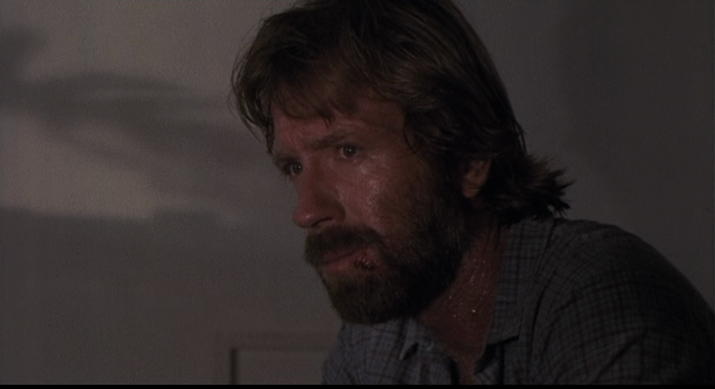
There is some minimally campy humor to be found throughout the film, in terms of how often Norris finds excuses to go bare-chested in front of the camera, for instance, or in his consistently “soulful” gaze as he contemplates what he knows he must go back to Vietnam (the “pearl of the Orient”) to do:

— but there’s not nearly enough of this to make it worth subjecting yourself to the entire film.

Redeeming Qualities and Moments:

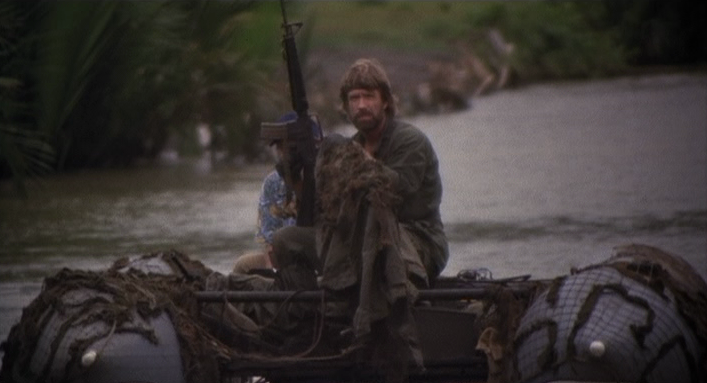
  • Some beautiful on-location scenery (in Thailand)

Must See?
No; despite its dubious notoriety, this one definitely can be skipped.

Links:

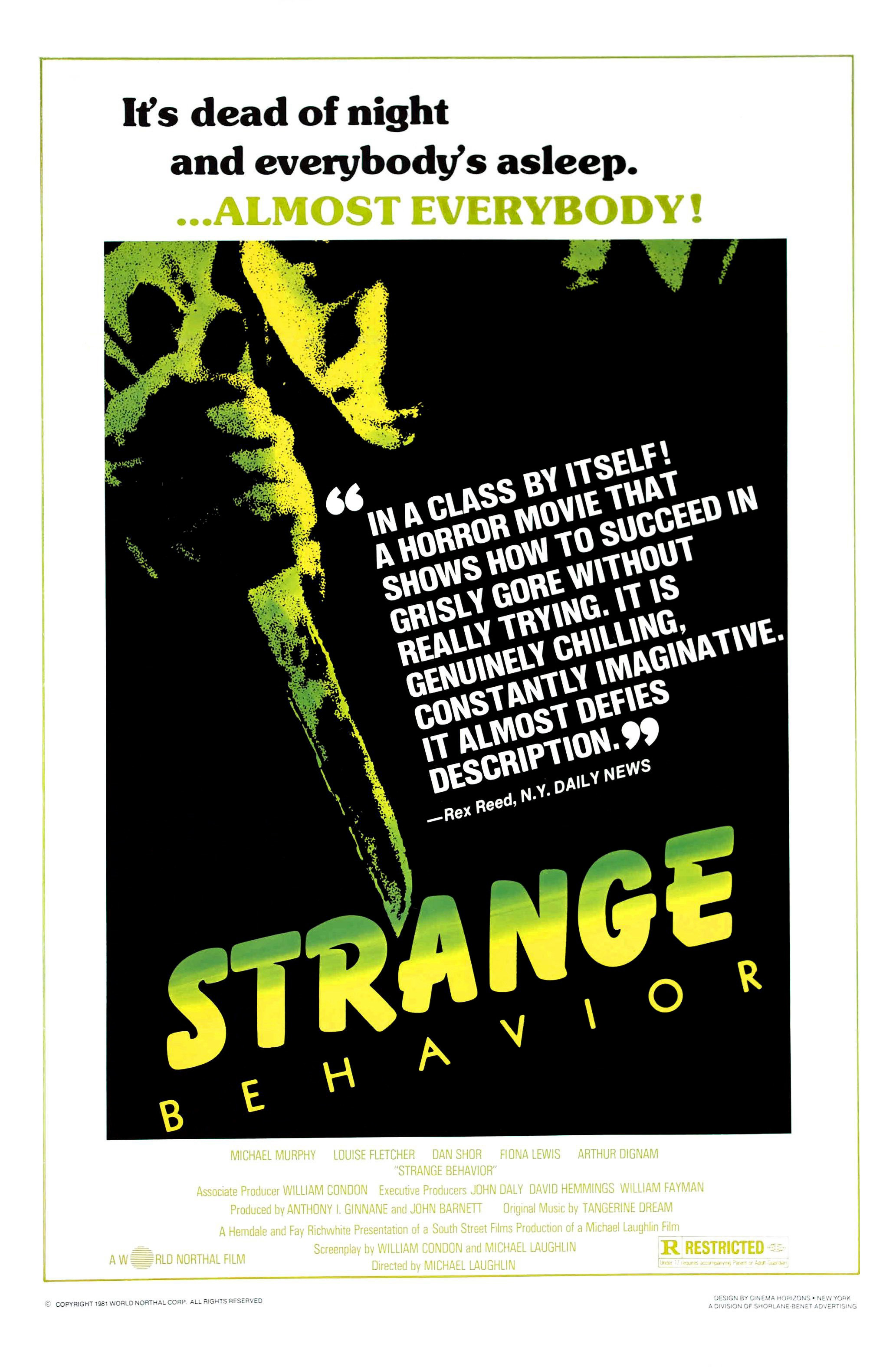
Strange Behavior / Dead Kids (1981)

Strange Behavior / Dead Kids (1981)

“This is no ordinary professor — he’s dead!”

Synopsis:
A police chief (Michael Murphy) investigates a rash of murders which may be linked to mind-control experiments conducted by a local university’s psychology department.

Genres, Themes, Actors, and Directors:

  • Horror
  • Louise Fletcher Films
  • Mad Doctors and Scientists
  • Michael Murphy Films
  • Mind Control and Hypnosis
  • Murder Mystery

Response to Peary’s Review:
I am largely in agreement with Peary’s assessment of this “low-budget horror film” that was “photographed in New Zealand but is set in America’s Midwest” — and, as noted by DVD Savant, “has an engaging appearance and an odd tone”. Peary writes that he finds “the script by Bill Condon and Michael Laughlin pretty witty and inventive”, but argues that the “direction by Laughlin is weak”, given that he “has no sense of timing during suspense scenes”. Indeed, the film’s pacing is noticeably off during more than just the suspense scenes: in her review of the film for the New York Times, Janet Maslin notes that Laughlin’s “timing with his actors is often dangerously slow, allowing many more pregnant pauses than his players can comfortably handle”. I disagree with Peary, however, in his assessment that the script is at times “so offbeat that… it becomes confusing”: while there are definitely some narrative inconsistencies, and a number of scenes (particularly the murders) are handled sloppily, the plot is always comprehensible, up until its final revelatory moments.

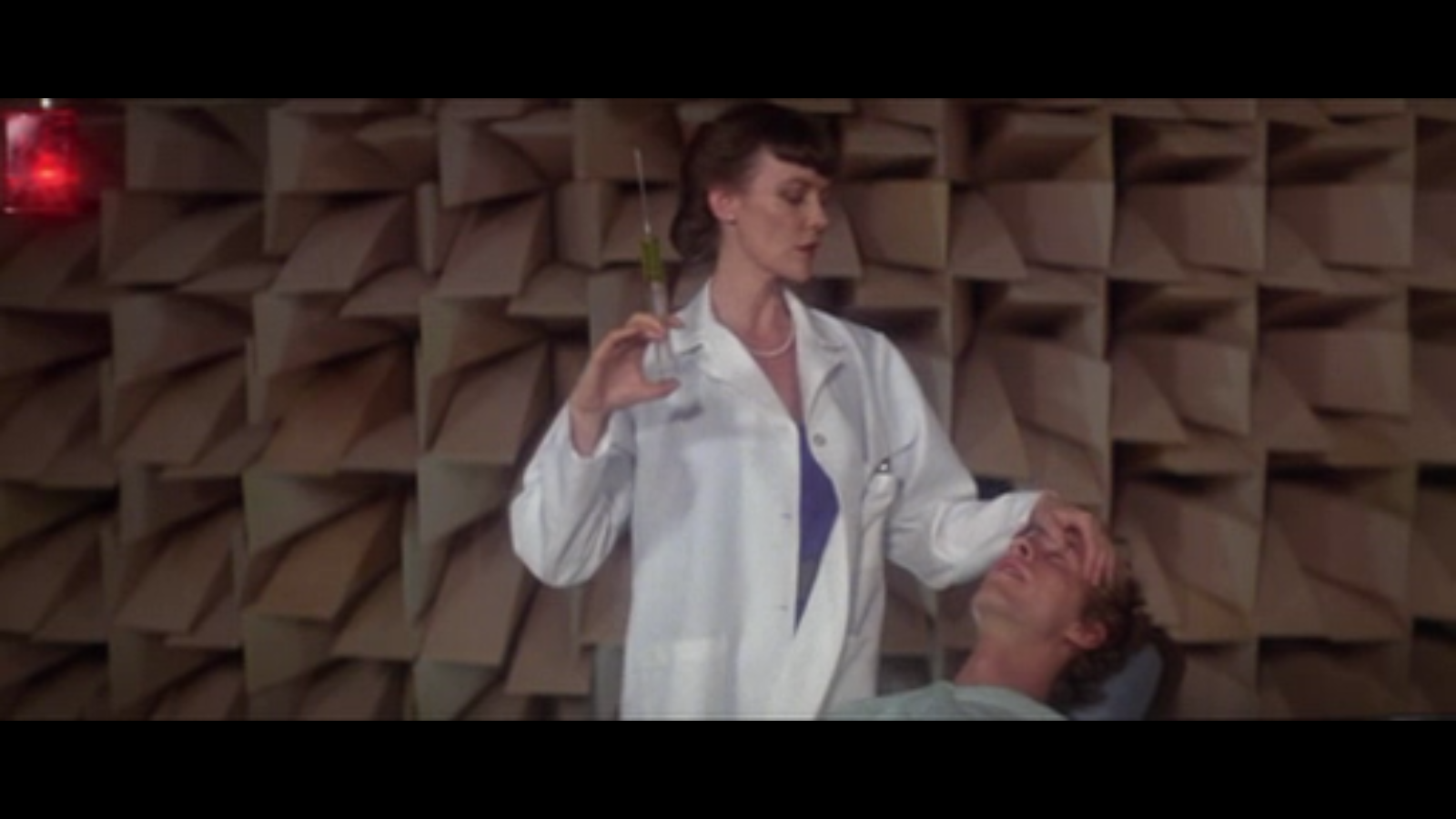
The performances throughout Strange Behavior are a mixed bag, given the mostly amateur, low-budget cast. Murphy — one of the film’s few “big names” — is solid but not particularly compelling in the lead investigative role; Dan Shor as his teenage son is more intrinsically charismatic, and his character should probably have been given even more screentime. Louise Fletcher provides typically excellent support in a tiny role as Murphy’s long-suffering girlfriend, but she is mostly — as Peary puts it so bluntly — “wasted”. Fiona Lewis gives the most memorable performance: she’s clearly having fun as the film’s unabashed villainness, a woman who takes great delight in puncturing her “subjects” in the eyeball with an enormous syringe. (A bit of trivia: apparently her futuristic hairstyle here influenced the vision for Sean Young’s character in Blade Runner.)

Note: Laughlin and Condon’s follow-up to this film was the alien flick Strange Invaders (1983), also included in Peary’s book.

Redeeming Qualities and Moments:

  • A few effectively creepy sequences

Must See?
No; despite its erstwhile cult status, this one isn’t must-see.

Links:

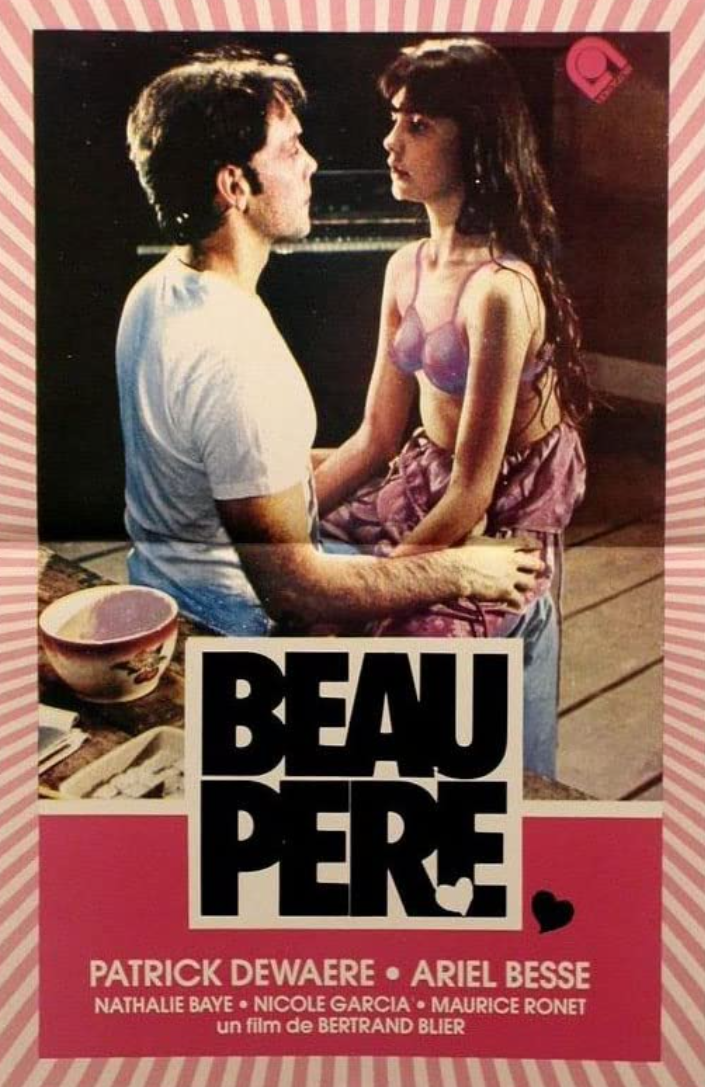
Beau Pere (1981)

Beau Pere (1981)

“We’re like two people who have come through a storm; we have to recover.”

Synopsis:
When his wife (Nicole Garcia) dies in a car accident, a grieving man (Patrick Dewaere) must deal with his increasingly seductive 14-year-old stepdaughter (Ariel Besse), who professes to be in love with him.

Genres, Themes, Actors, and Directors:

  • Bertrand Blier Films
  • Coming of Age
  • French Films
  • Incest and Incestuous Undertones
  • May-December Romance
  • Widows and Widowers

Response to Peary’s Review:
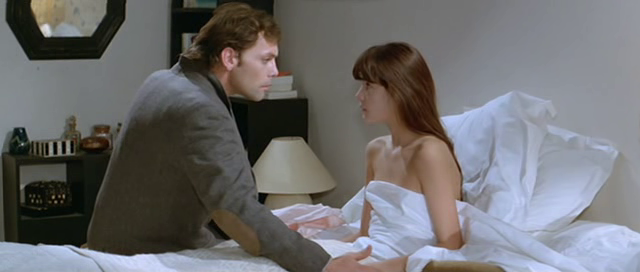
Peary is spot-on in his review of this typically provocative outing by Bertrand Blier, France’s most anarchic portrayer of unconventional romance. He notes that, following the (relatively) mainstream success of Blier’s Oscar-winning romantic comedy Get Out Your Handkerchiefs (1978), Blier “really test[ed] his audience” by turning … Handkerchief‘s tale on its head, portraying an affair between a grown man and a teenage girl rather than a grown woman and a boy — only this time, as Peary points out, “the comedy is not so obvious”. Indeed, I can’t quite bring myself to categorize this as any kind of a comedy, though there are occasional, subtle hints at Blier’s trademark satire — most noticeably during a later scene when Besse’s father (Maurice Ronet) comes to visit his daughter, now in the full throes of a sexual affair with Dewaere.

In his analysis, Peary argues that Beau Pere, while “not exploitative”, is nonetheless “dishonest”, given that “anytime Blier wants Dewaere and Besse to become more deeply involved, he writes words of seduction for Besse — not Dewaere — and has her deliver them in a mature manner, so we always know the affair is her idea”. In addition, Blier makes sure to show us “innocent scenes of Dewaere and Besse together before Besse’s mother was killed and [Besse] quickly evolved from daughter to wife and lover”. Whether one considers this “dishonest” or merely strategic screenwriting, it all leads to palpable sympathy on the part of audience members, who likely will find it difficult to blame Dewaere for eventually giving in to the temptations of his aggressively forthright — but understandably confused — stepdaughter.

Redeeming Qualities and Moments:

  • A provocative yet surprisingly tasteful script

Must See?
No, though it’s certainly worth seeking out for at least one-time viewing.

Links:

Mr. Smith Goes to Washington (1939)

Mr. Smith Goes to Washington (1939)

“You’re not a senator: you’re an honorary stooge.”

Synopsis:
A naively idealistic new senator (James Stewart), aided by his cynical secretary (Jean Arthur), must confront an immensely corrupt political “machine” in Washington, run by Edward Arnold and fronted by two-faced Senator Joseph Paine (Claude Rains).

Genres, Themes, Actors, and Directors:

  • Beulah Bondi Films
  • Coming of Age
  • Do-Gooders
  • Edward Arnold Films
  • Falsely Accused
  • Frank Capra Films
  • Jean Arthur Films
  • Jimmy Stewart Films
  • Political Corruption
  • Thomas Mitchell Films

Response to Peary’s Review:
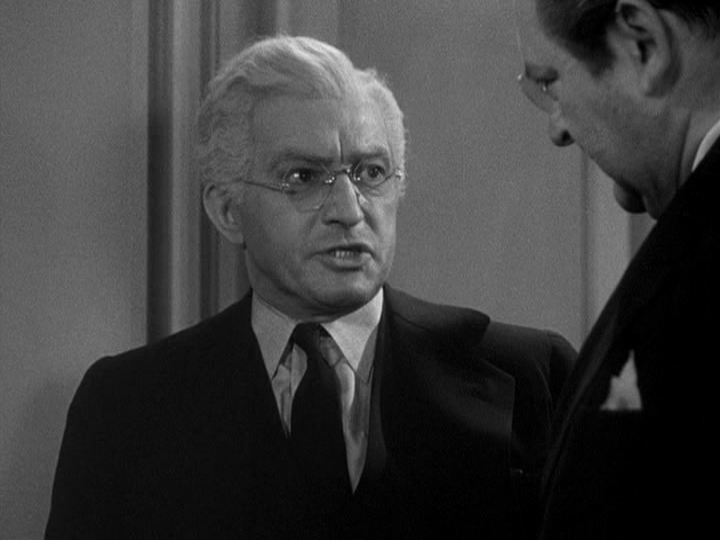
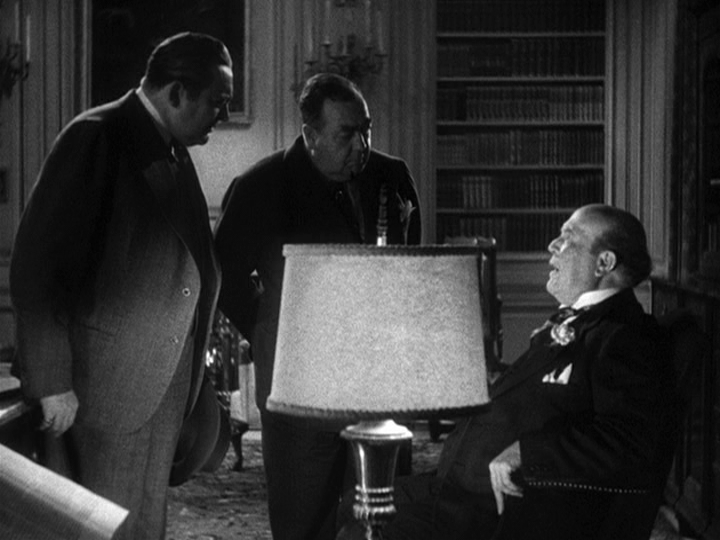
Peary accurately labels this classic political soaper “Frank Capra at his corniest, hokiest, and most manipulative”, yet he goes on to argue that “Still, it’s a great film”, and places it a notch above Capra’s earlier take on the same general theme, 1936’s Mr. Deeds Goes to Town (which was originally meant to be this film’s prequel). He notes that “like other Capra heroes, Stewart’s Smith” — a “great hero” — is the “American everyman, an idealist with a tendency toward demagoguery when he wants to right a wrong”, someone who “is on the brink of giving up and allowing the people he represents to be swallowed up by corrupt influences, when someone he has inspired reminds him of his importance and all the worthy things he stands for”. Mr. Smith… is beloved by many: it’s cited as one of the most inspirational political films of all time, and the justifiably praised extended filibuster sequence during the film’s final half-hour affords Stewart a chance to truly shine (he shows definite hints of his later, more fully developed characterization as George Bailey in Capra’s true masterpiece, It’s a Wonderful Life).

However, I’m not entirely a fan of this highly sincere yet ultimately slickly contrived political exposé. While I don’t doubt for an instant that Washington, D.C. really is as corrupt as Capra depicts it here (that’s pretty much undeniable at this point), I dislike the way Sidney Buchman’s screenplay presents Mr. Smith as the ultimate in gullible naifs, someone so incredibly clueless about politics that he needs to be told (by Jean Arthur, in a conveniently calculated scene) how bills are developed and passed in Congress. We’re meant to believe that Stewart’s idealistic leader of the “Boy Rangers” of America would accept a job as temporary senator of his state without even a minimal understanding of what his job entails, simply because he purportedly has idolized his father’s “best friend” (Rains) for years (this essential detail, by the way, is merely hinted at rather than sufficiently developed).

Indeed, unlike Cooper’s Mr. Deeds (who is almost immediately shown to be infinitely smarter than the arrogant fools around him make him out to be), Stewart’s Mr. Smith remains conveniently clueless — up until the moment he’s finally convinced he needs to take action, at which point his character suddenly springs to life, and one watches with impressed astonishment at Stewart’s full-bodied characterization of a man willing to take the Senate floor for 24 hours straight. Meanwhile, the outrageously corrupt political “machine” continues to churn around him, and Capra pulls out all the stops in his depiction of the “little men” (in this case, “little” Boy Rangers, of all ages and conveniently represented ethnicities) fighting to bring Truth and Freedom to Washington.

Despite my reservations, naturally, there remains much about the film to enjoy and admire — starting with Stewart’s show-stopping performance in the final third of the film. Jean Arthur is as wonderful as ever in an even more cynical variation on her earlier role as the journalist in Mr. Deeds Goes to Town; here, she’s notoriously tippled much of the time, and she’s not quite as much of a romantic partner for Smith (Peary argues that they make “a wonderful couple”, but they technically AREN’T one). Rains — who was nominated for an Academy Award as Best Supporting Actor — oozes quiet corruption in his almost perfectly realized turn as Senator Paine, though I couldn’t help being irritated by his failure to lose his British accent for the role. Joseph Walker’s cinematography is typically atmospheric, and the recreated set of the Senate floor is quite impressive.

Ultimately, however, I’m too much of a cynic to fully appreciate the type of unabashed heart-thumper Capra is going for here. For a much more authentic and nuanced representation of the inner workings of Washington, D.C., watch Otto Preminger’s Advise & Consent (1962) instead.

Redeeming Qualities and Moments:

  • Jimmy Stewart as Jefferson Smith (nominated by Peary as one of the Best Actors of the Year in his Alternate Oscars)
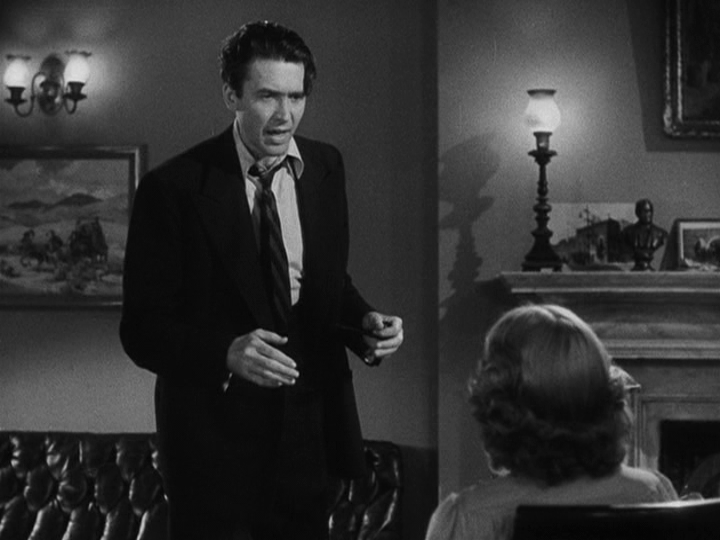
  • Jean Arthur as Clarissa Saunders (nominated by Peary as one of the Best Actresses of the Year in his Alternate Oscars)
  • Claude Rains as Senator Paine
  • The undeniably stirring filibuster sequence
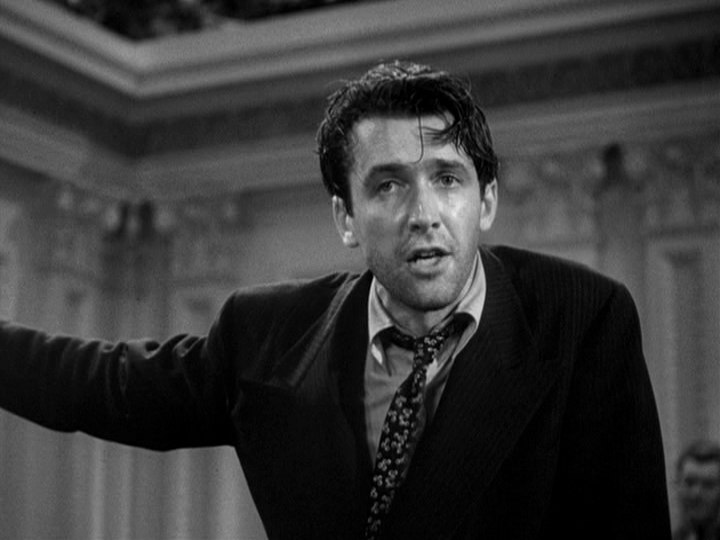
  • Joseph Walker’s cinematography

Must See?
Yes, as one of Capra’s iconic classics. Nominated by Peary as one of the best films of the year — in a year notoriously filled with “classics” — in his Alternate Oscars.

Categories

  • Important Director
  • Noteworthy Performance(s)
  • Oscar Winner or Nominee

(Listed in 1001 Movies You Must See Before You Die)

Links:

Pinocchio (1940)

Pinocchio (1940)

“Now, remember, Pinocchio: be a good boy — and always let your conscience be your guide.”

Synopsis:
A wooden puppet (Dickie Jones) hoping to become a real boy relies on the help of his “conscience”, Jiminy Cricket (Cliff Edwards), to prove himself “brave, truthful, and unselfish”.

Genres, Themes, Actors, and Directors:

  • Animated Features
  • Carnivals and Circuses
  • Coming of Age
  • Con Artists
  • Father and Child
  • Puppets and Ventriloquism
  • Talking Animals

Response to Peary’s Review:
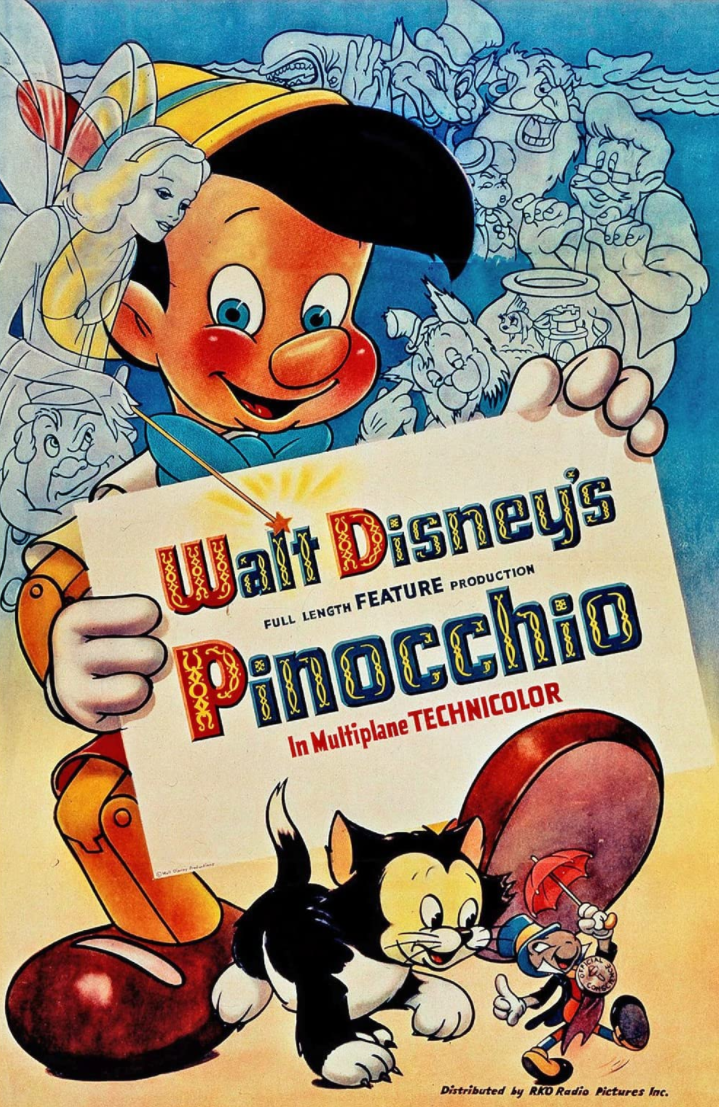
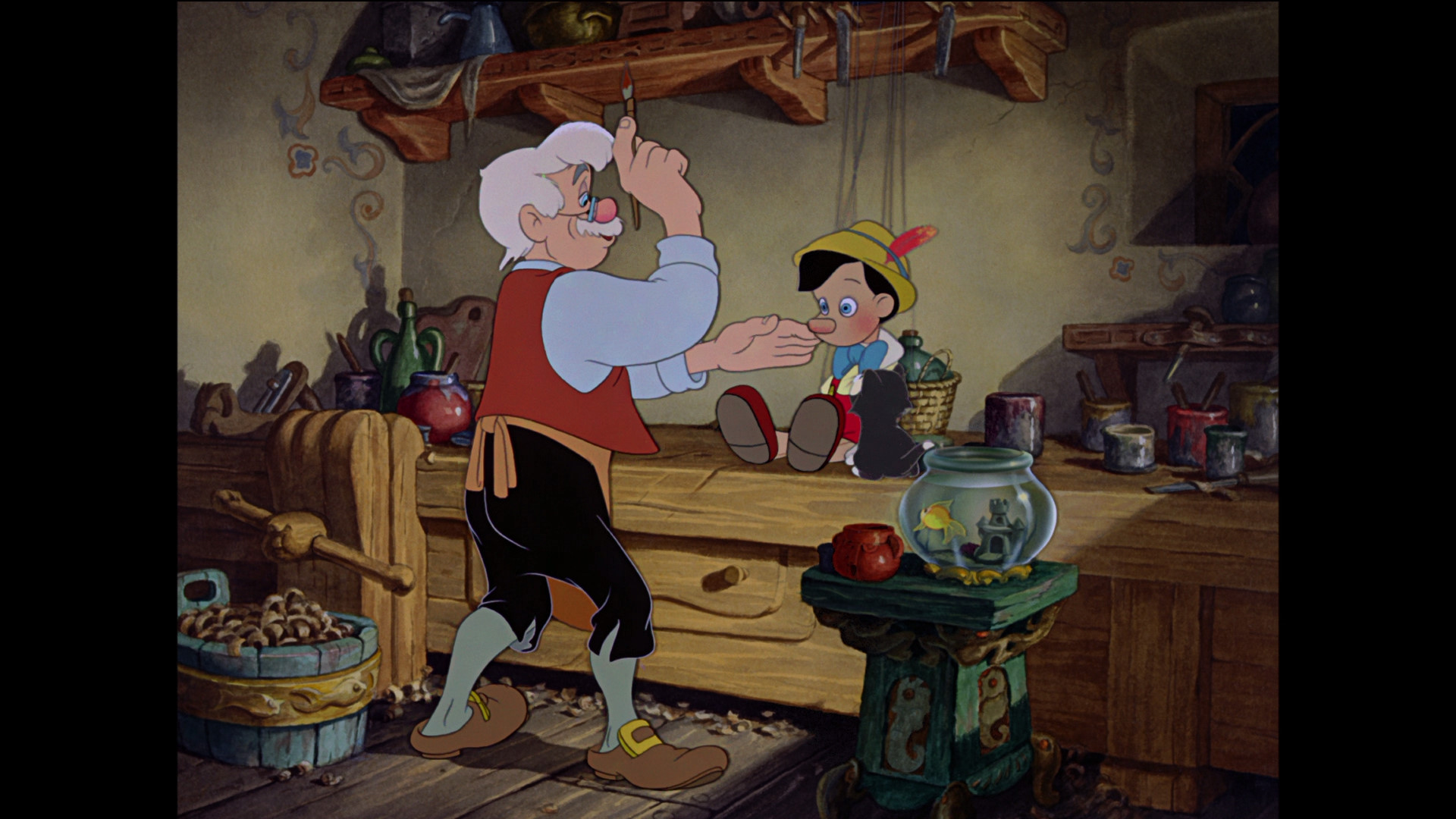
Like most critics, Peary rightfully labels this early Disney classic (the studio’s second feature-length film after its 1937 release of Snow White and the Seven Dwarfs) a “supreme” picture, arguing that it “has no flaws”, given that it’s “beautifully paced, funny, [and] has outstanding songs, marvelous characters, and the best animation in all of Disney”. He accurately notes that the “characters and sets are impressively and imaginatively drawn”, pointing out that one should watch (just for instance) “Pinocchio’s face change when he smokes a cigar”. Indeed, there are countless visual treats throughout the entire film, as demonstrated immediately during the marvelous opening scenes taking place in the woodcutter Gepetto’s house; I defy you not to chuckle with delight while watching the enchanting “dance of the cuckoo clocks”, displaying clocks with “a hunter shooting a bird, a woodsman chopping a turkey’s neck, a mother spanking the boy’s bottom, and two classical dancers”.

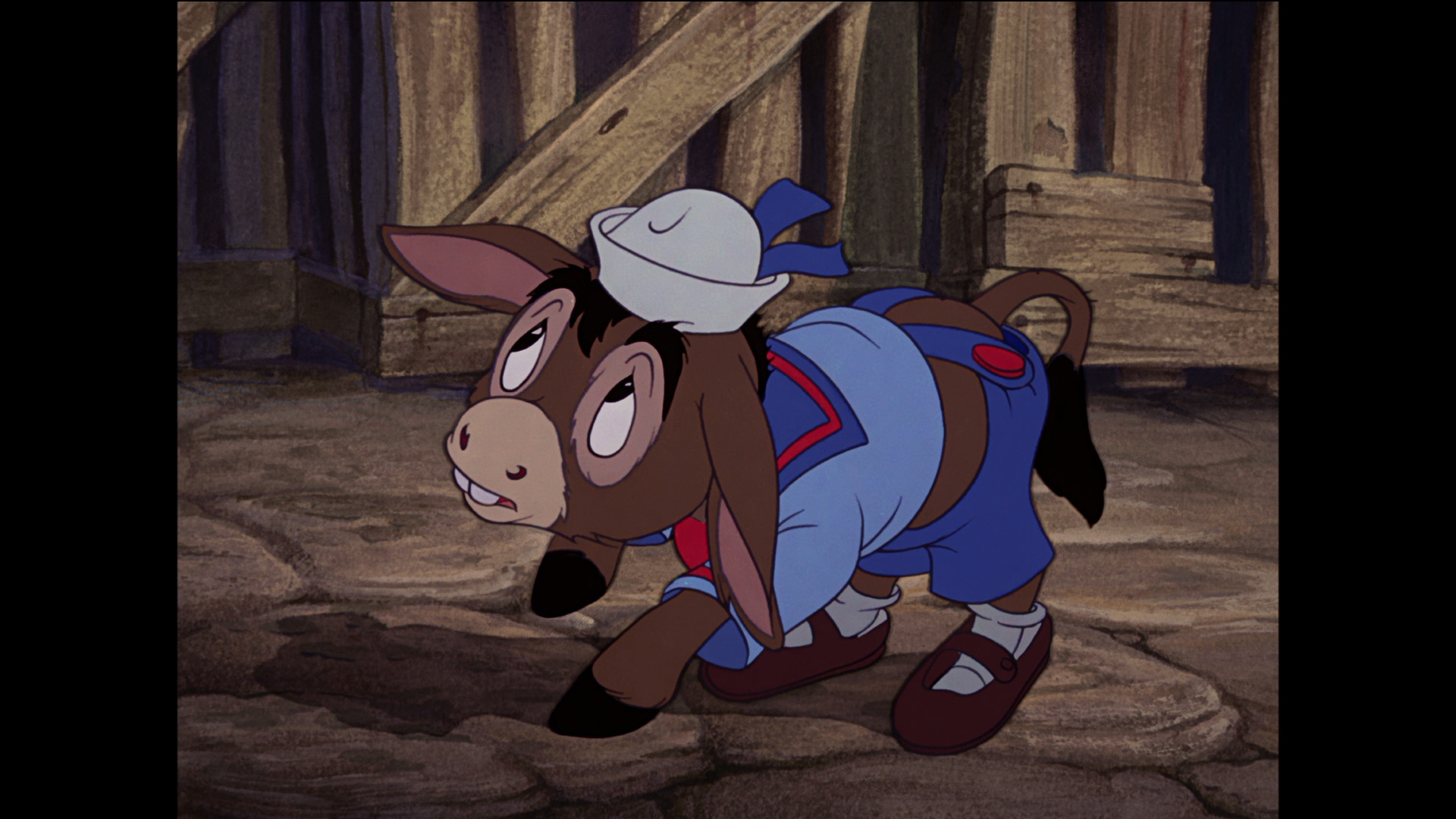
Pinocchio — like Snow White — is yet another astonishingly bold Disney adaptation of a “children’s tale” which is simply far too scary for the littlest of audience members. Peary drolly states that the “film has a lot of visuals that could scare a young child (but that’s okay)” — italics mine (!!). Countless fans have shared anecdotes about the most frightening scenes they recall from their own childhoods, with some citing the culminating sea-battle with Monstro the whale (“fabulously animated” with meticulous care; Peary refers to it as “absolutely terrifying”), and many others — including myself — noting that the most personally terrifying scenes were those in which the little boys at “Pleasure Island” are gradually turned into braying donkeys, to be sent off to work in the salt mines or at carnivals. Ouch. (And — minor spoiler alert — there’s no final resolution to this dilemma, by the way; as far as audience members know, the boys’ metamorphoses are permanent.)

Indeed, Pinocchio unapologetically presents the world as the big, bad place it often is, full of temptations and evil, in which it’s really each man — or child — for himself. Pinocchio’s father, while kind-hearted, is presented as utterly clueless, from the moment he sends his “newly born son” out into the world to go to school (why not walk him there on the first day, for goodness sake??? he’s the ultimate ANTI-helicopter-parent), to the final episode of the film, in which we see him mysteriously trapped in a whale, essentially in need of rescuing by Pinocchio himself, rather than the other way around. Meanwhile, it’s a good thing Pinocchio has more reliable “adults” to count on — though both the Blue Fairy (animated via rotoscoping, she truly is “exceptional” looking) and Jiminy Cricket (ukelele-playing Cliff Edwards is “perfect” as his voice) are equally “hands off” at critical moments. Ultimately (spoilers here again), when Pinocchio is granted the wish he’s longed for during his entire short existence, he’s proven he truly deserves it.

Redeeming Qualities and Moments:

  • Masterful early animation
  • A strong sense of whimsical visual detail
  • A refreshingly no-holds-barred coming-of-age tale
  • Several memorable, Oscar-winning songs

Must See?
Of course. Nominated by Peary as one of the Best Pictures of the Year in his Alternate Oscars book.

Categories

  • Genuine Classic

(Listed in 1001 Movies You Must See Before You Die)

Links:

Mr. Deeds Goes to Town (1936)

Mr. Deeds Goes to Town (1936)

“People here are funny: they work so hard at living they forget how to live.”

Synopsis:
When an eccentric poet (Gary Cooper) inherits a large sum of money from his wealthy uncle, he suddenly finds himself the laughing stock of New York, thanks to a series of articles written by an undercover journalist (Jean Arthur).

Genres, Themes, Actors, and Directors:

  • Comedy
  • Do-Gooders
  • Frank Capra Films
  • Gary Cooper Films
  • George Bancroft Films
  • Inheritance
  • Jean Arthur Films
  • Journalists
  • Nonconformists

Response to Peary’s Review:
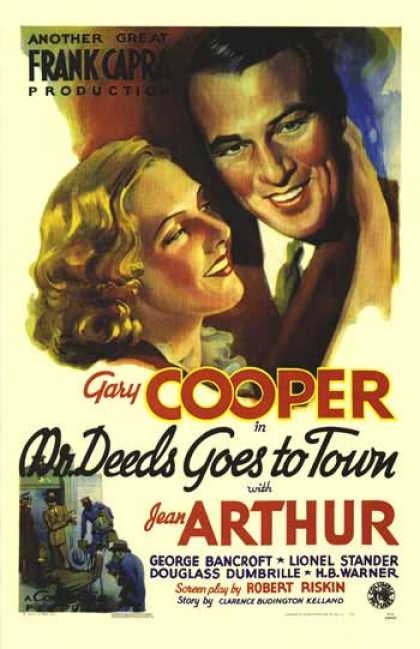
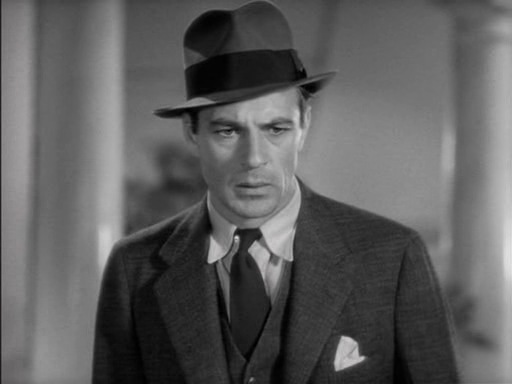
Peary describes this (relatively) early Frank Capra film as the first in the director’s oeuvre “to really attack the city, to show that it has deprived its people of their basic human values”. He argues that it “never reflects the cynicism” of Capra’s later, similarly themed films — Mr. Smith Goes to Washington, Meet John Doe, or It’s a Wonderful Life — and contends that “it is the only one of the four films where the happy ending seems completely natural.” Ultimately, though, while he finds Mr. Deeds… “enjoyable”, he argues that “it’s not on the level of the Jimmy Stewart films” — though he clearly finds it preferable to Cooper’s later collaborative effort with Capra, Meet John Doe (1941), which we both agree is a highly over-rated bore.

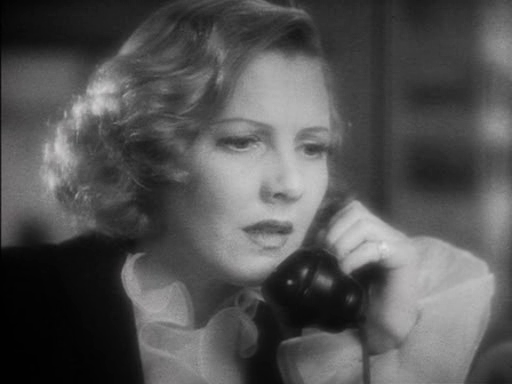
Indeed, having just recently rewatched Meet John Doe (also scripted by Capra’s frequent collaborator, Robert Riskin), I was pleasantly surprised to find this earlier comedy so much fresher on every count. Riskin’s script — while occasionally showing evidence of “Capra-corn”-ish tendencies — never strays too far in this direction, and offers plenty of humorous delights. Unlike in John Doe, Cooper’s home-spun title character here possesses a refreshing amount of sass and eccentric gumption; while we may be tempted at first to laugh at him (along with the rest of New York), we very quickly realize he has his finger on the pulse of what’s truly important in life. Meanwhile, Jean Arthur’s performance as the opportunistic journalist who jumps at the chance to earn a month’s vacation (with pay) by scooping Longfellow’s story never hits a false note — we can literally see her falling for him moment by moment, and her gradual remorse at the critical role she’s playing in his humiliation is palpable. You’re guaranteed to choke up during their final romantic scene together.

Redeeming Qualities and Moments:

  • Gary Cooper as Longfellow Deeds (nominated by Peary as one of the Best Actors of the Year in his Alternate Oscars)
  • Jean Arthur as Babe Bennett (nominated by Peary as one of the Best Actresses of the Year in his Alternate Oscars)
  • Fine supporting performances
  • Joseph Walker’s cinematography
  • Robert Riskin’s humorous, incisive script

Must See?
Yes; this one represents Capra at his peak. Nominated by Peary (and the actual Academy) as one of the best pictures of the year.

Categories

  • Genuine Classic
  • Important Director
  • Oscar Winner or Nominee

(Listed in 1001 Movies You Must See Before You Die)

Links:

Meet John Doe (1941)

Meet John Doe (1941)

“If you ask this column, the wrong people are jumping off the roofs.”

Synopsis:
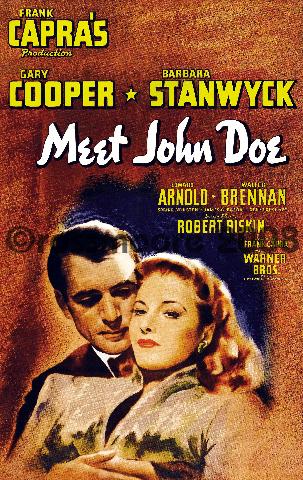
When a “John Doe” letter concocted by a reporter (Barbara Stanwyck) hits a nerve with the public, her oily newspaper editor (Edward Arnold) decides to hire an out-of-work baseball player (Gary Cooper) to impersonate Doe, with the intention of building a mass political movement.

Genres, Themes, Actors, and Directors:

  • Barbara Stanwyck Films
  • Edward Arnold Films
  • Folk Heroes
  • Frank Capra Films
  • Gary Cooper Films
  • Journalists
  • Media Spectacle
  • Naive Public
  • Political Corruption
  • Walter Brennan Films

Response to Peary’s Review:
Peary is pretty much accurate in his scathing review of this “self-congratulatory, pretentious, gloomy, [and] heartless” film, which remains one of Capra’s most iconic movies (and was “shamelessly calculated to become a commercial success”) but simply hasn’t held up well at all. Peary argues that it feels like it was “made by someone who always climbs out of the wrong side of the bed”, given that it “shows an America perpetuated solely by corrupt individuals and simpletons who’ll believe anything told to them and accept anything done to them”. He says he “can’t stand how Capra lines up his common folk, has them talk in humble, hushed tones, and shines a light on their well-scrubbed faces so that we may think they have angels sitting on their shoulders”.

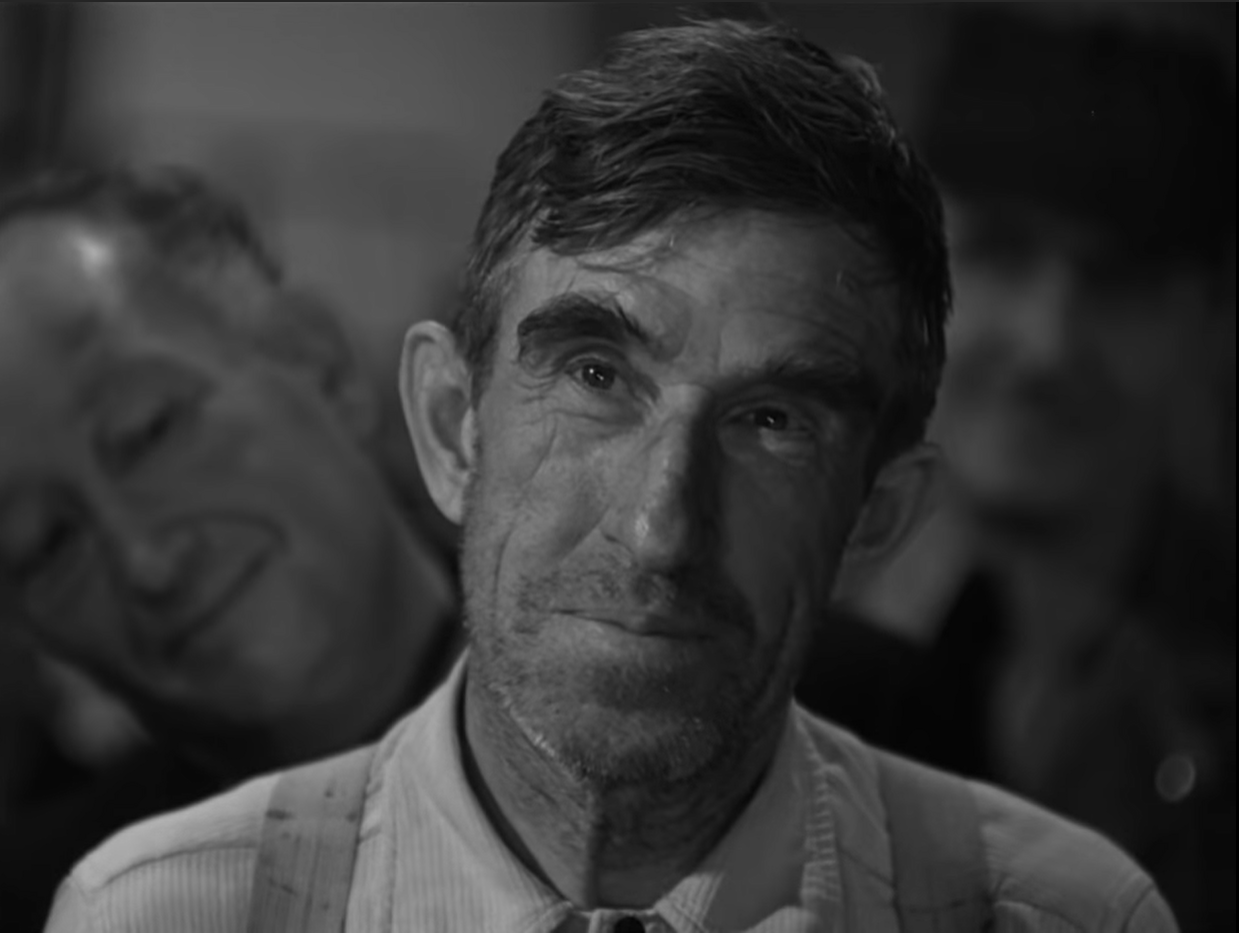
He specifically calls out the seemingly endless “discourse” narrated by a soda jerk (Regis Toomey) about “his town’s people coming together after being inspired by John Doe’s help-your-neighbor speech” (which never rings true, not for a minute):

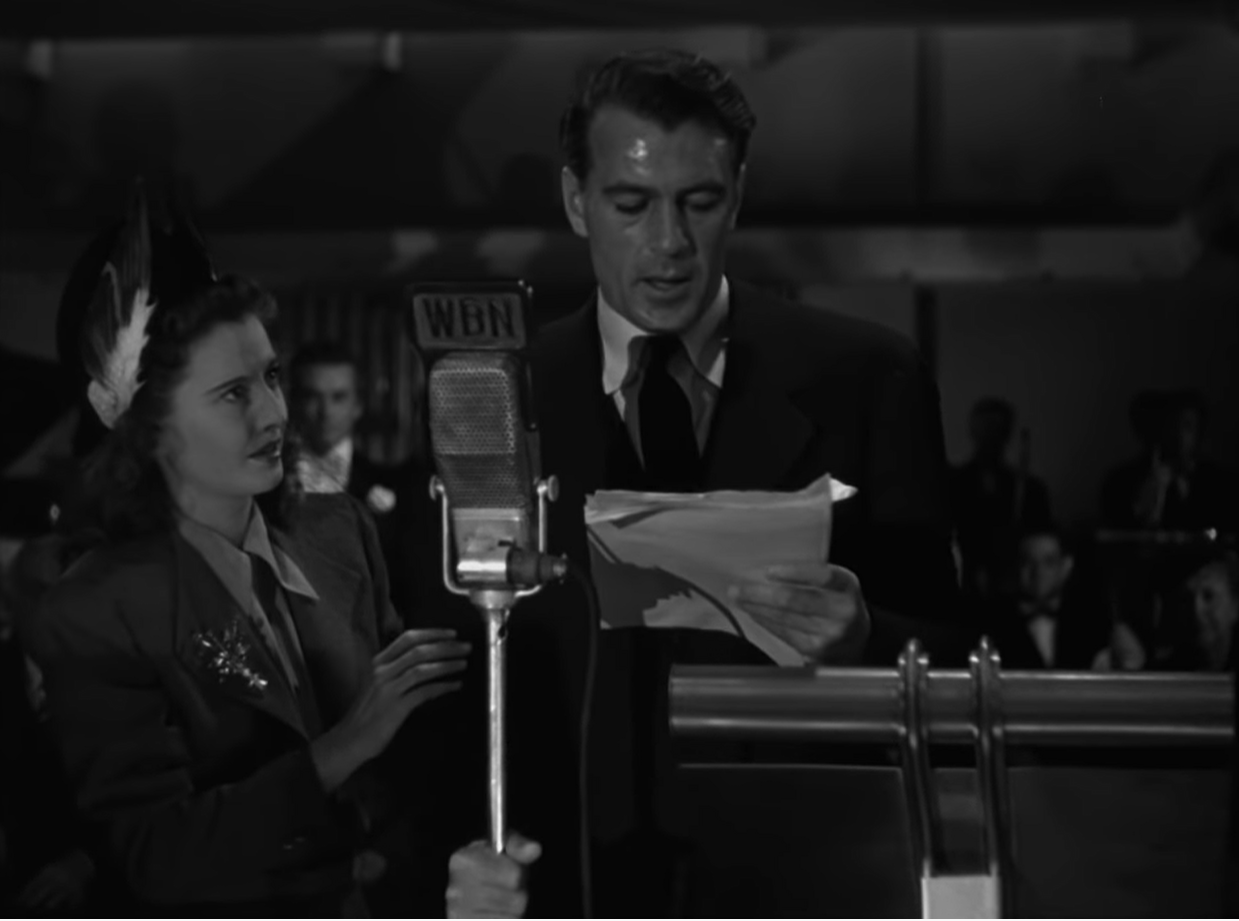
… and notes that Cooper’s speeches “could have been delivered to a junior-high civics class” (I’ll admit to nearly falling asleep in the middle of the first interminable one).

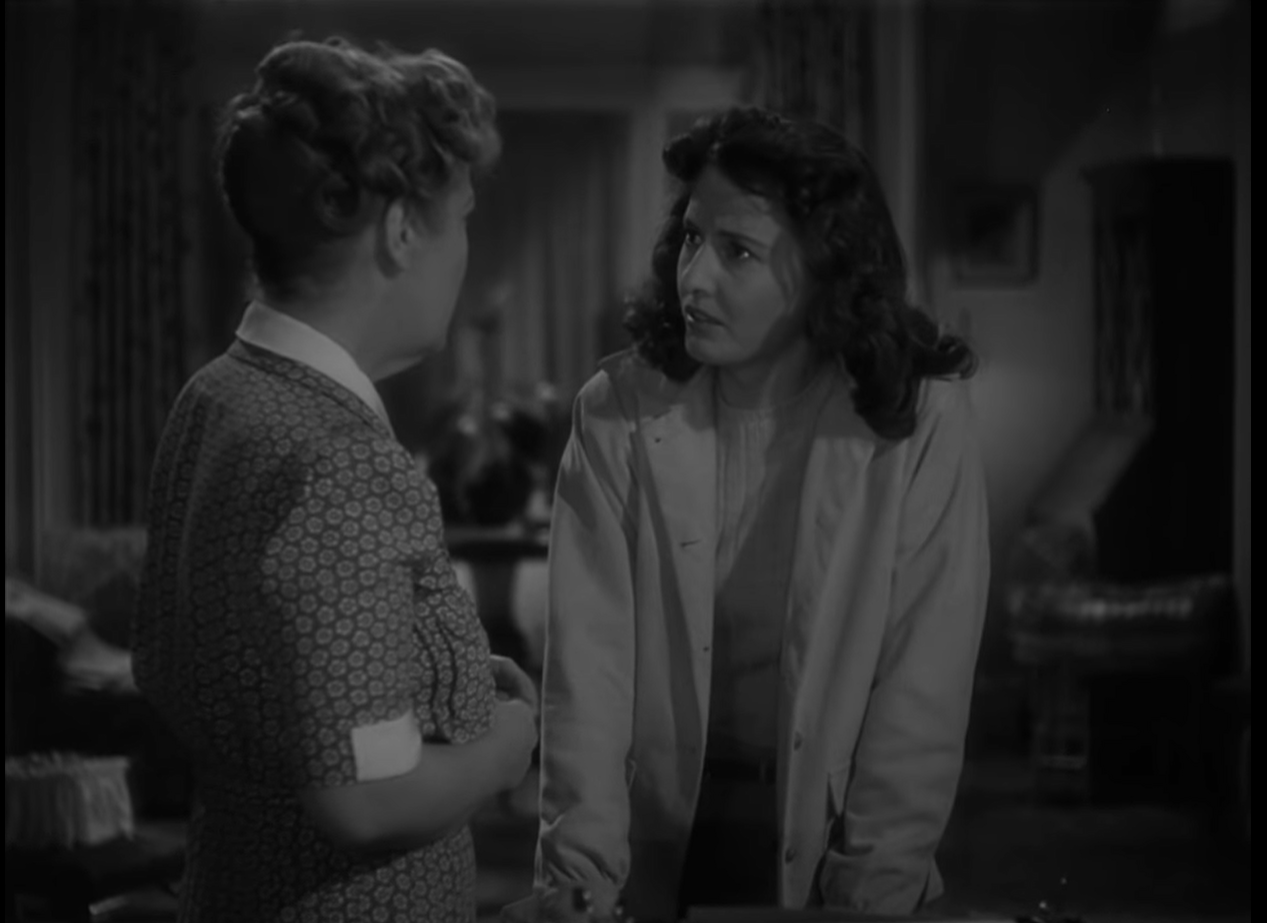
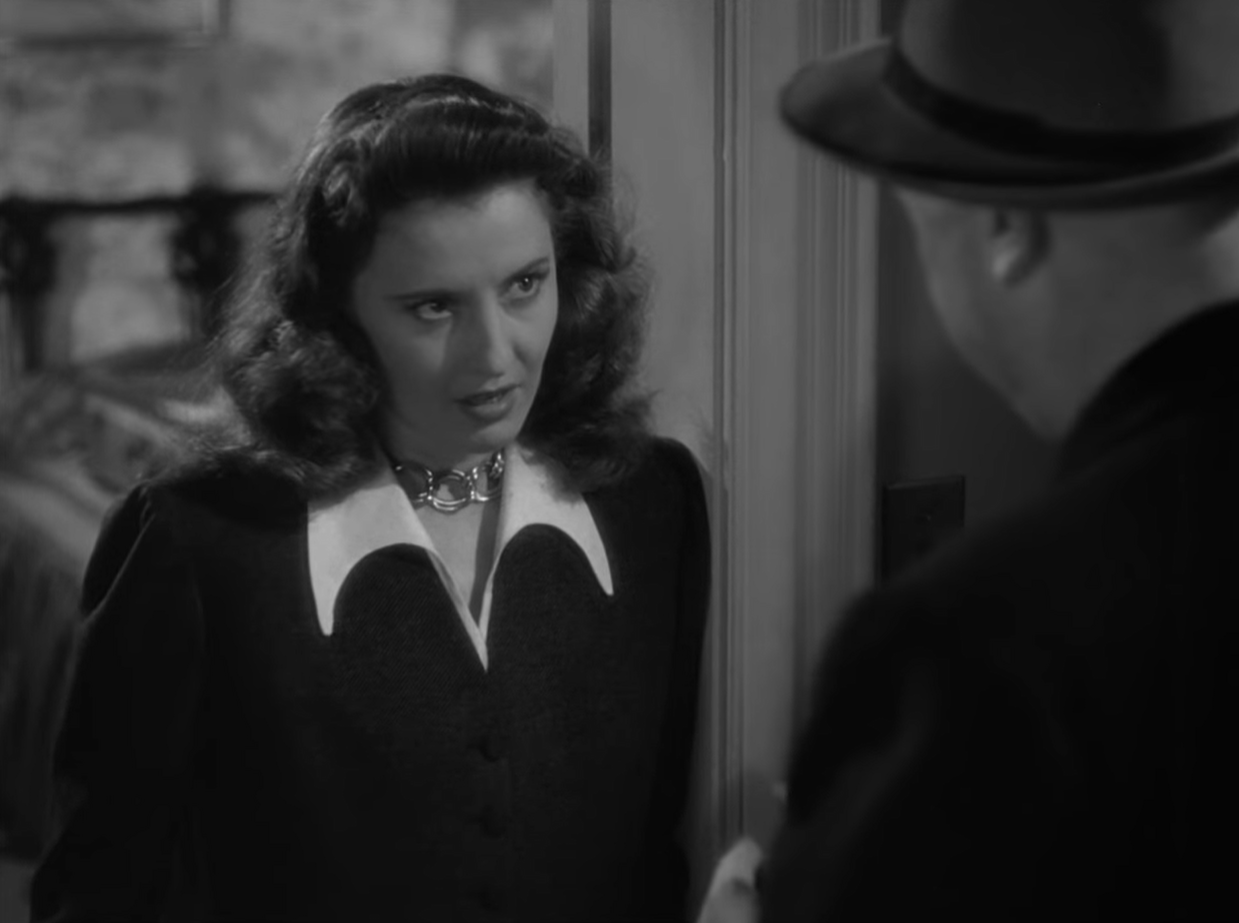
Indeed, it’s actually difficult to argue that this film IS must-see, and I went back and forth in my vote — ultimately deciding that film fanatics will probably be too curious not to check it out at least once for themselves (I’ve now seen it twice, and that’s enough for me). With that said, I do find Barbara Stanwyck’s performance to be worth a watch — though her character, as written, is somewhat inconsistently motivated (it’s difficult to believe that the daughter of two such noble parents would be willing to perpetuate such an elaborate hoax on the public), this is no fault of Stanwyck’s, and she does the best she can with her role.

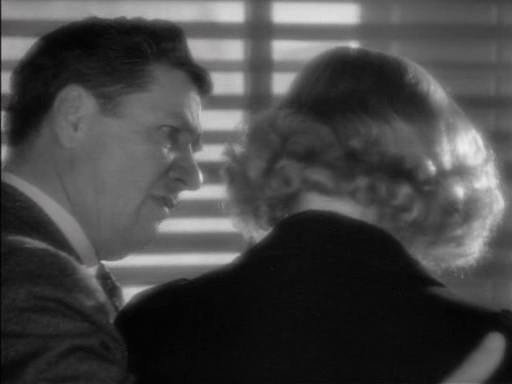
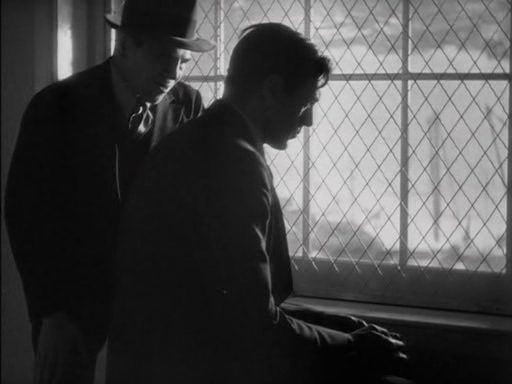
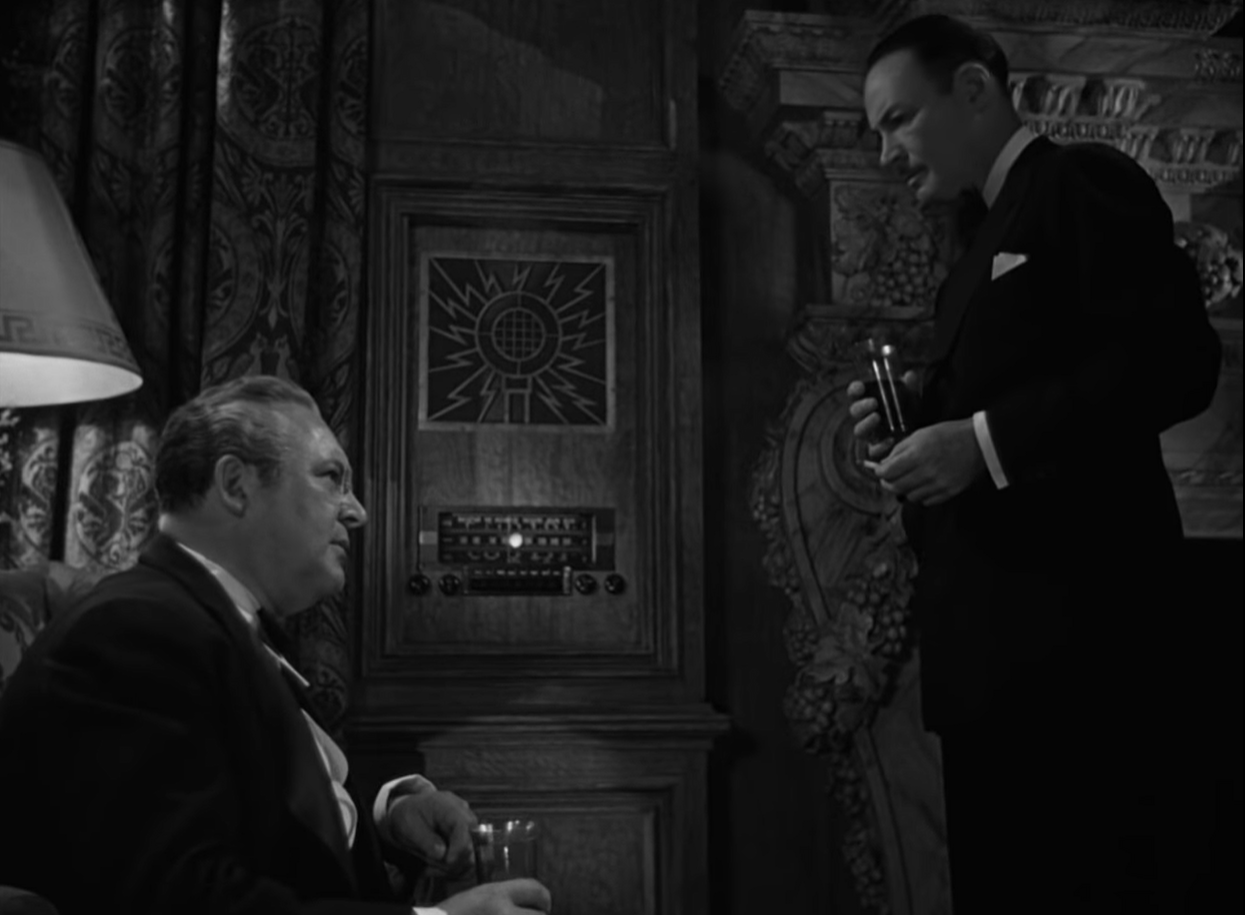
Meanwhile, Edward Arnold is quietly menacing as the film’s Big Baddie (he’s eerily effective, especially in earlier scenes):

… and Walter Brennan, while typecast in a tiny supporting role, adds some much needed cynicism to the proceedings.

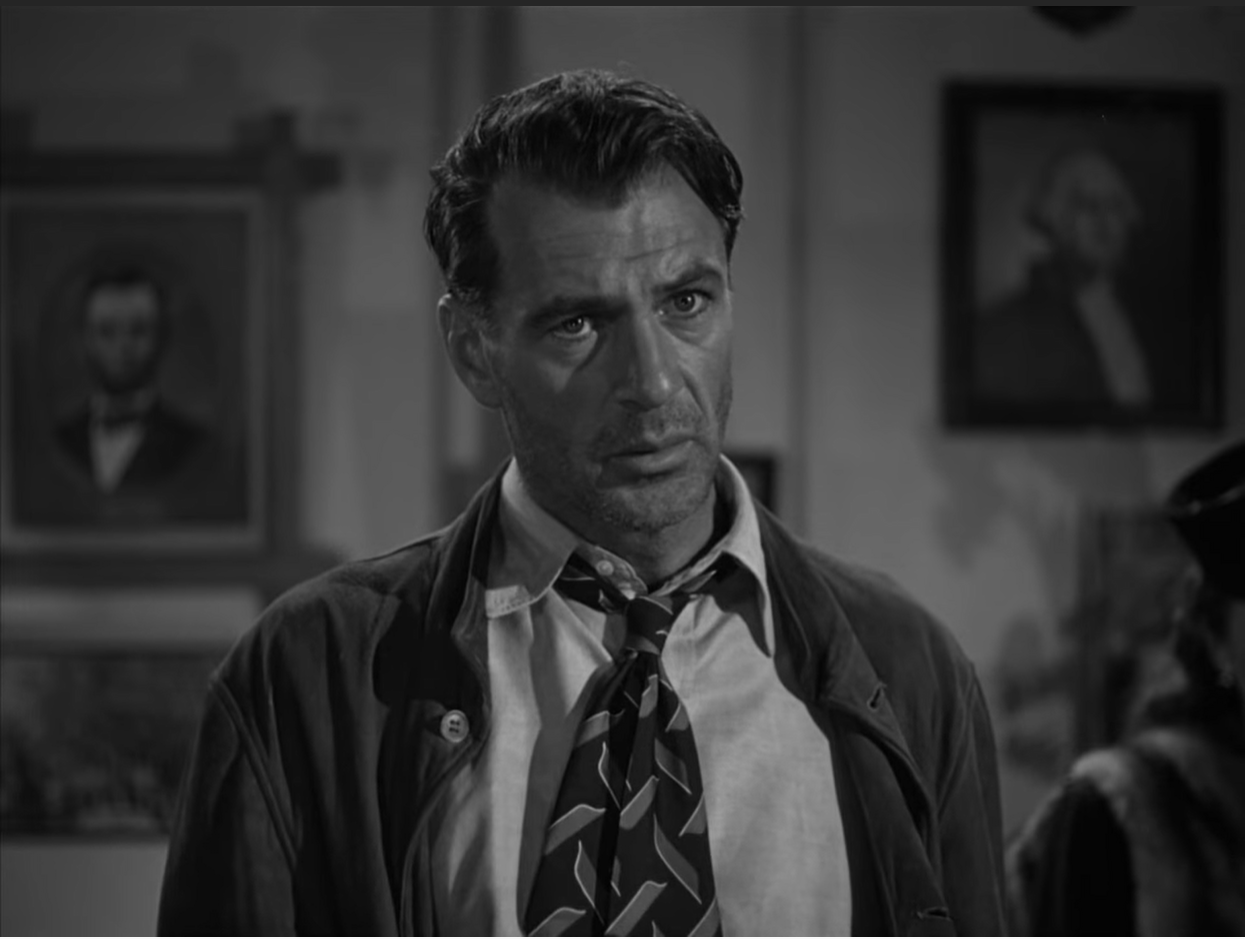
Unfortunately, Cooper himself merely comes across as an uninteresting “bore”, someone without much charisma at all; I guess that’s part of the point (he’s supposed to be the ultimate “every man”, after all), but he makes for an awfully dull protagonist.

Redeeming Qualities and Moments:

  • Barbara Stanwyck as Ann Mitchell
  • Edward Arnold as D.B. Norton

Must See?
Yes — but only as a one-time must-see, for its historical notoriety as prime “Capra-Corn”.

Categories

  • Historically Relevant
  • Important Director

Links:

Who’ll Stop the Rain? (1978)

Who’ll Stop the Rain? (1978)

“I’ve been waiting all my life to fuck up like this.”

Synopsis:
A cynical Vietnam vet (Michael Moriarty) convinces his buddy (Nick Nolte) to smuggle heroin back to his wife (Tuesday Weld) in the United States — but two hitmen (Ray Sharkey and Richard Masur) working for a crooked cop (Anthony Zerbe) are soon on their tail, forcing Nolte and Weld to flee.

Genres, Themes, Actors, and Directors:

  • Drug Dealers
  • Fugitives
  • Karel Reisz Films
  • Michael Moriarty Films
  • Nick Nolte Films
  • Tuesday Weld Films
  • Veterans
  • Vietnam War

Response to Peary’s Review:
Peary notes that while Karel Reisz’s adaptation of Robert Stone’s 1974 novel Dog Soldiers may “not [be] as sordid in its depiction of Vietnam-U.S. drug trafficking”, it “still packs a wallop” in its portrayal of a “fascinating true-to-life storyline that other directors wouldn’t touch because there is no ‘hero’ fighting for what we’d think is a worthy cause.” He notes that while it’s “not for the squeamish”, given that the “characters are extremely brutal” and the “action scenes are frightening”, it nonetheless possesses many strengths, given that the “characters are memorable, casting is perfect, dialogue is sharp, and direction of actors strong”. The final shoot-out in the hills of New Mexico (reminiscent of a western) is particularly exciting, and makes creative use of sound and music. (As Peary notes, the “picture has an excellent, eclectic score”.)

While it’s essentially a crime thriller, Who’ll Stop the Rain? is heavily driven by a core set of noteworthy performances. Nolte, “looking fit, is an action hero to rival Rambo”, and is eminently believable in his role — though one can’t help wishing a bit more of his personality was revealed or explained; at one point he’s referred to as a psychopath, but, despite his propensity towards violence, this clearly isn’t an accurate assessment. Meanwhile, Moriarty (who Peary notes it’s nice to see “in a non-neurotic role”) perfectly captures the quiet, jaded cynicism of a man who has seen far too much violence and “lunacy” during the war to remain idealistic; and Weld’s portrayal as his wife — a seemingly milquetoast bookstore employee and mother who becomes addicted to heroin during her nightmarish ordeal — is both brave and memorable (though again, one wishes the screenplay provided a bit more insight into who she is and what makes her tick). Another minor quibble: while Masur and Sharkey are appropriately menacing as the two thugs chasing after Nolte and Weld, they somehow come across a bit cartoonish at times; however, this is easy enough to overlook, as the story continues to propel us towards its bleak, violence-ridden finale.

Redeeming Qualities and Moments:

  • Nick Nolte as Ray
  • Tuesday Weld as Marge
  • Michael Moriarty as John
  • The exciting final shoot-out

Must See?
Yes, for the fine performances throughout.

Categories

  • Noteworthy Performance(s)

Links: