Browsed by
Category: Response Reviews

My comments on Peary’s reviews in Guide for the Film Fanatic (Simon & Schuster, 1986).

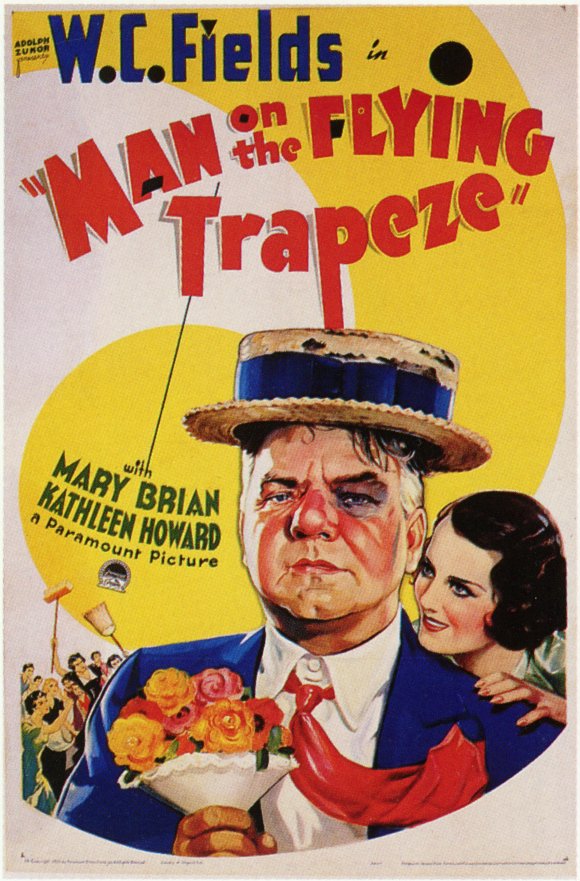
Man on the Flying Trapeze (1935)

Man on the Flying Trapeze (1935)

“He’s the most trying man ever put on this Earth!”

Synopsis:
A henpecked memory expert (W.C. Fields) living with his shrewish wife (Kathleen Howard), cranky mother-in-law (Vera Lewis), lazy brother-in-law (Grady Sutton), and loyal daughter (Mary Brian) finds himself in hot water after lying to his boss (Oscar Apfel) in order to attend a wrestling match.

Genres, Themes, Actors, and Directors:

  • Comedy
  • Family Problems
  • Henpecked Husbands
  • W.C. Fields Films

Response to Peary’s Review:
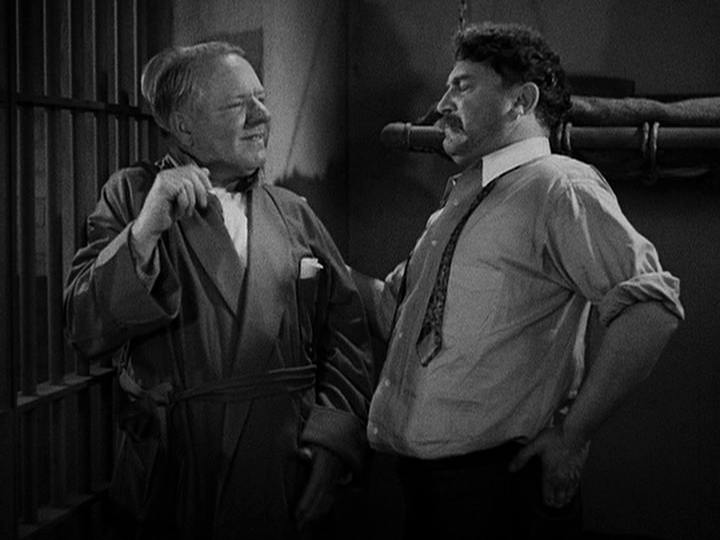
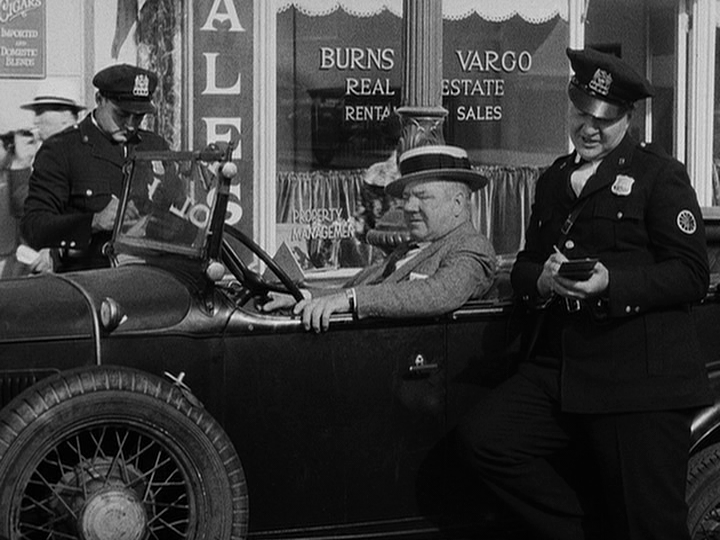
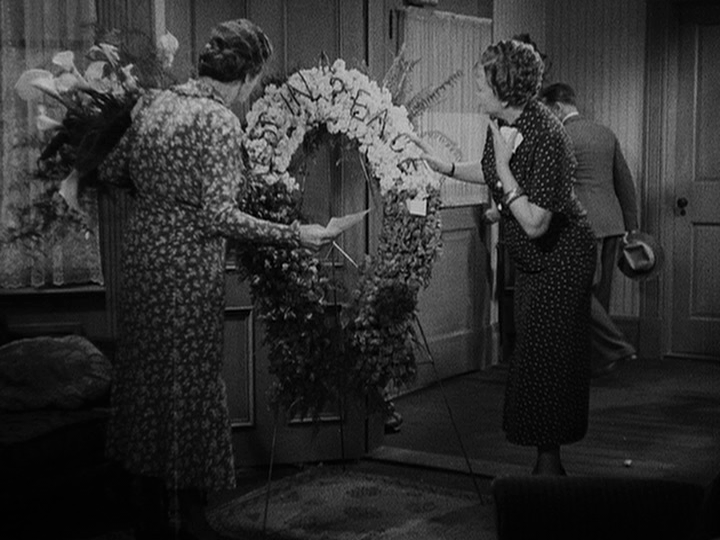
Peary refers to this as a “near-perfect W.C. Fields comedy”, noting that Fields (as henpecked Ambrose Wolfinger) is “hilarious, taking one abuse after the other in his cruel, absurd world without every losing his patience or trying to reform”. There are numerous comedic highlights throughout — including, as Peary notes, Fields “sharing a jail cell with a crazy scissors murderer; driving [his wife] crazy by taking forever to go down and see about the burglars in the basement…; getting a series of traffic and parking tickets in succession”. Fields is in fine form (Peary votes him Best Actor of the Year in his Alternate Oscars!), and his supporting cast members are all convincing (I’m particularly fond of Howard here; her operatic background comes through loud and clear in the hilarious opening scene). While it could certainly be argued that Peary includes far too many W.C. Fields films in his book (he lists or reviews no less than 16 titles), this one is consistently humorous enough that I believe most film fanatics will be glad to have seen it — so I’m voting it a “must see” at least once. Watch for Walter Brennan, Carlotta Monti (Fields’s real-life lover), and Swedish wrestler Tor Johnson in small roles.

Redeeming Qualities and Moments:

  • W.C. Fields and Kathleen Howard’s acrimonious “rapport”
  • Numerous humorous scenes


  • An often clever script (with much ad-libbing):

    Wolfinger: My poor mother-in-law died three days ago. I’m attending her funeral this afternoon.
    Wolfinger’s Secretary: Isn’t that terrible, Mr. Wolfinger!
    Wolfinger: Yes, it’s terrible. It’s awful. Horrible tragedy.
    Wolfinger’s Secretary: It must be hard to lose your mother-in-law.
    Wolfinger: Yes it is, very hard. It’s almost impossible.

Must See?
Yes, as one of Fields’s mid-career classics. Nominated by Peary as one of the Best Pictures of the Year in his Alternate Oscars.

Categories

  • Good Show

Links:

Girl Can’t Help It, The (1956)

Girl Can’t Help It, The (1956)

“I’m telling you I stink, stink, stink!”

Synopsis:
An ex-gangster (Edmond O’Brien) orders a musical agent (Tom Ewell) to turn his voluptuous girlfriend (Jayne Mansfield) into a singing phenomenon — but complications arise when Ewell discovers that Jerri (Mansfield) can’t carry a tune, and he starts to feel romantically attracted to her.

Genres, Themes, Actors, and Directors:

  • Aspiring Stars
  • Dumb Blondes
  • Edmond O’Brien Films
  • Frank Tashlin Films
  • Jayne Mansfield Films
  • Rock ‘n Roll
  • Satires and Spoofs

Response to Peary’s Review:
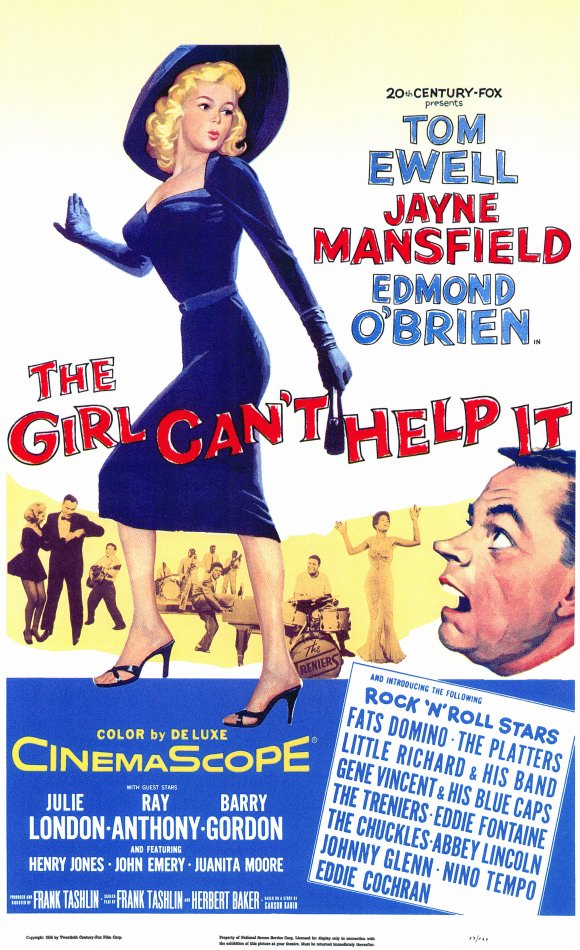
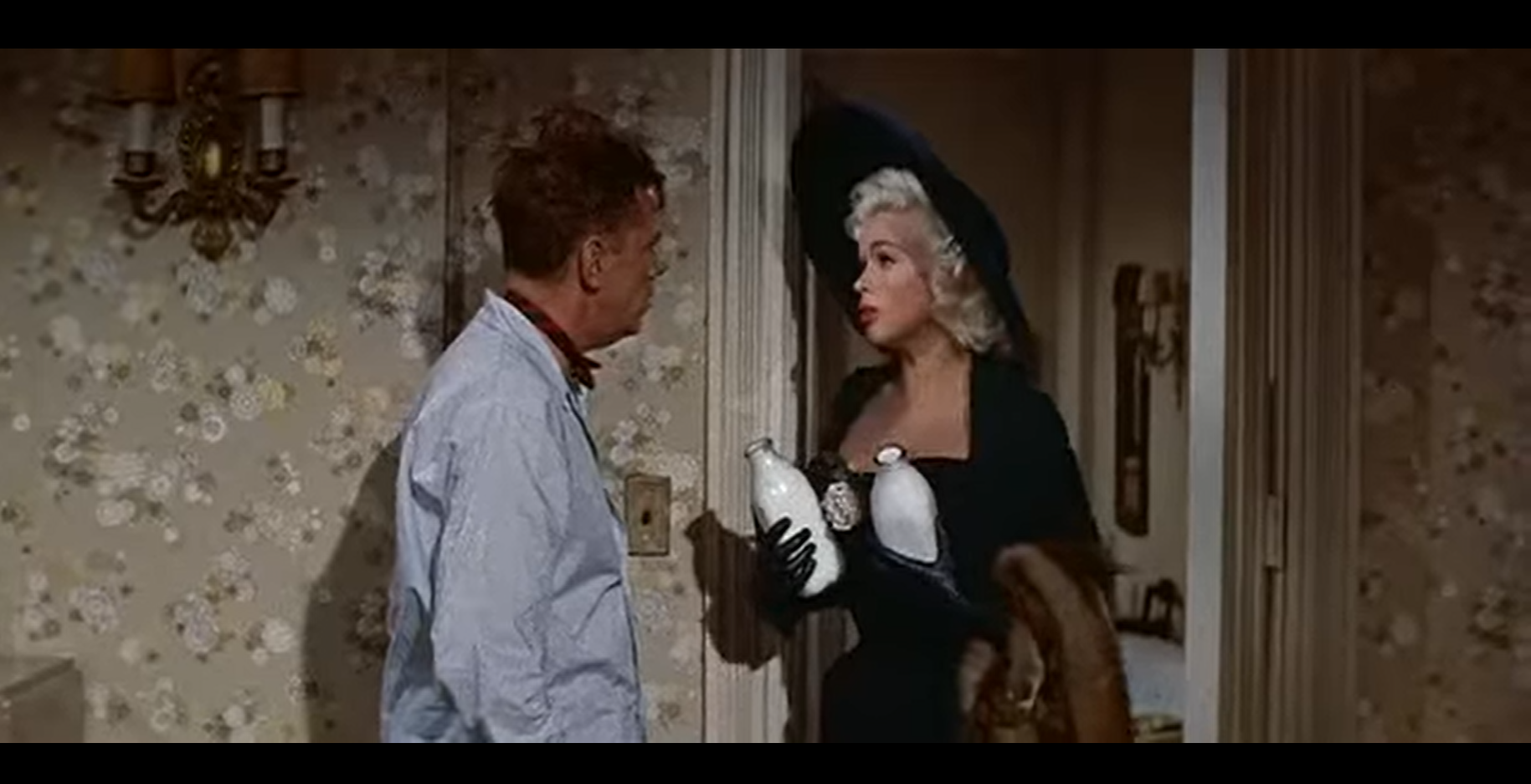
Frank Tashlin’s “rock-music version of Born Yesterday” is, as Peary notes, “a highly inventive picture, briskly paced and extremely colorful”, and likely “the nearest he ever came to a masterpiece”. It’s chock-a-block full of “off-color jokes, double entendres, and sexual innuendos” — all “staples of Tashlin’s humor” which “will cause you either to smile or to walk up the aisle cursing about adolescent humor” (and he bets “you’ll stay seated”). Peary spends the bulk of his review analyzing Mansfield in what was likely her best (and certainly her most iconic) role. He notes that, given Mansfield’s truly outlandish bodily proportions, it’s “not surprising that breast-obsessed Tashlin would use her body as a major source of the film’s humor”, and argues that, “like it or not, when Mansfield’s on-screen, your eyes gravitate towards her bosom” — thanks in part to Tashlin’s helpful visual gags, such as the “film’s most famous moment” in which she holds “a milk bottle over each breast”:

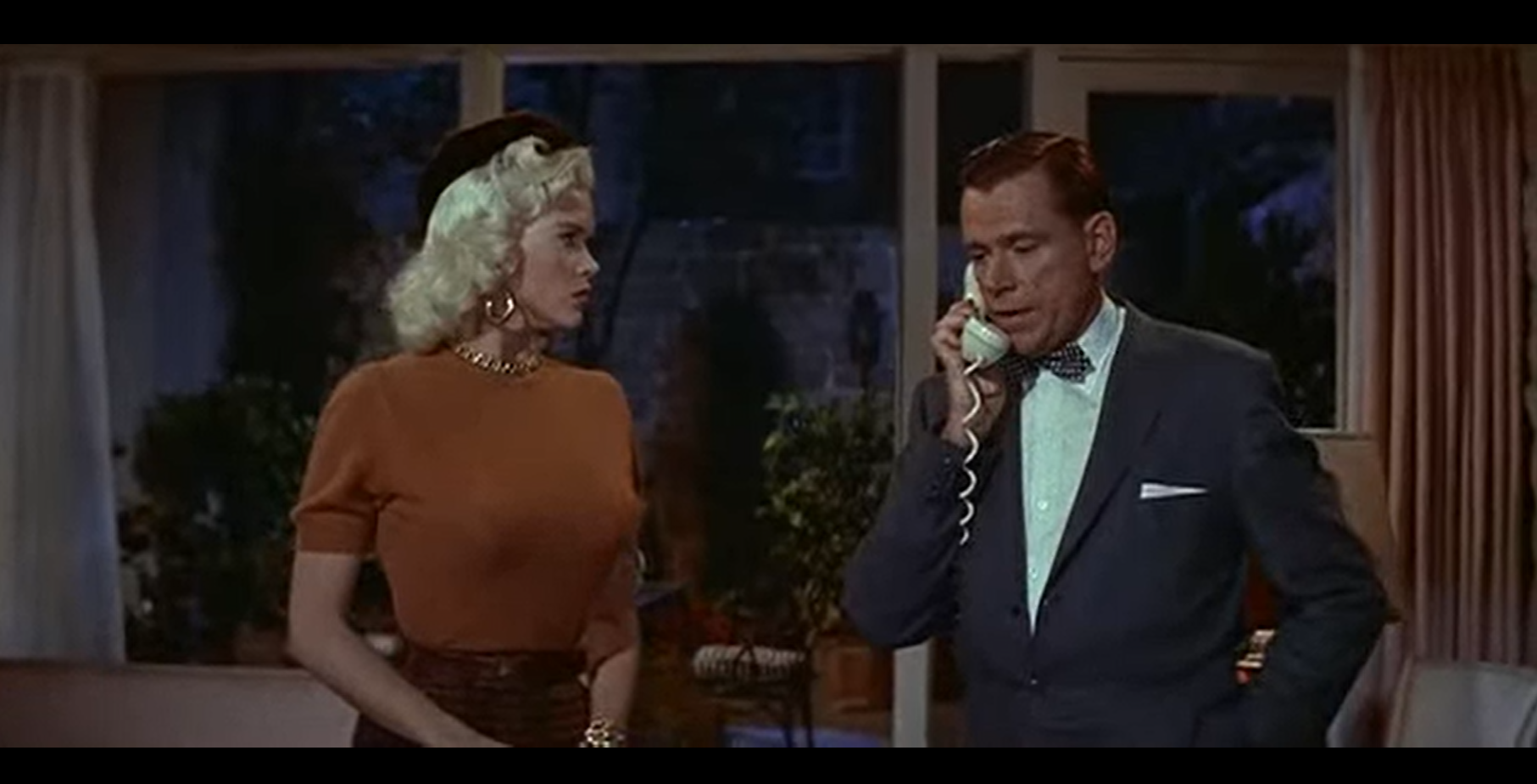
then later leans “over with her half-exposed breasts close to Ewell’s eyes and ask[s] if he thinks she’s ‘equipped’ to be a mother”.

Indeed, Tashlin — a former animator — “uses” Mansfield’s body so strategically (she’s “barely able to walk” in her “tight sweaters and tight skirts”) that “she looks more like a caricature of the ‘fantasy blonde bosom-beauty of the fifties’ than a real woman”.

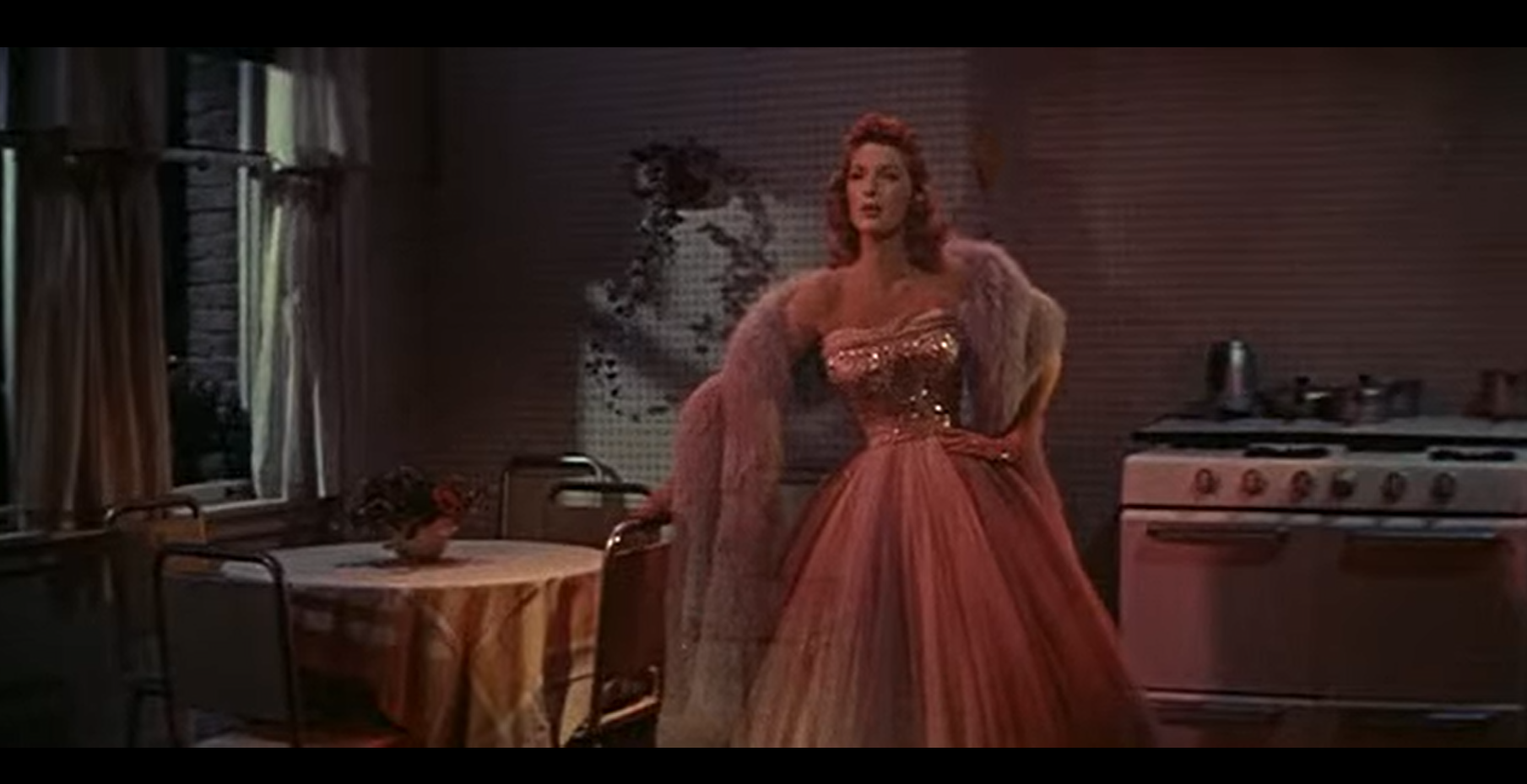
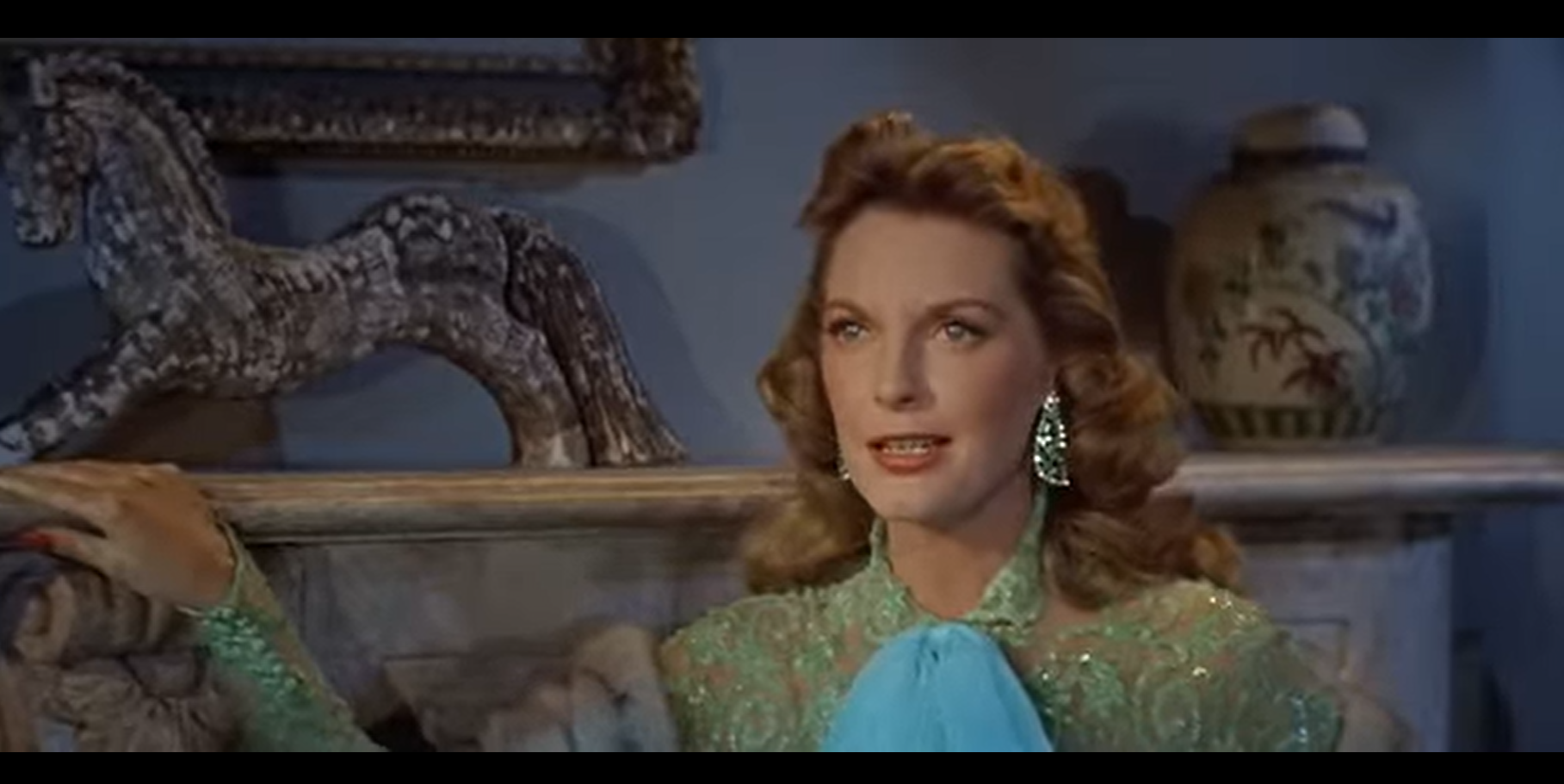
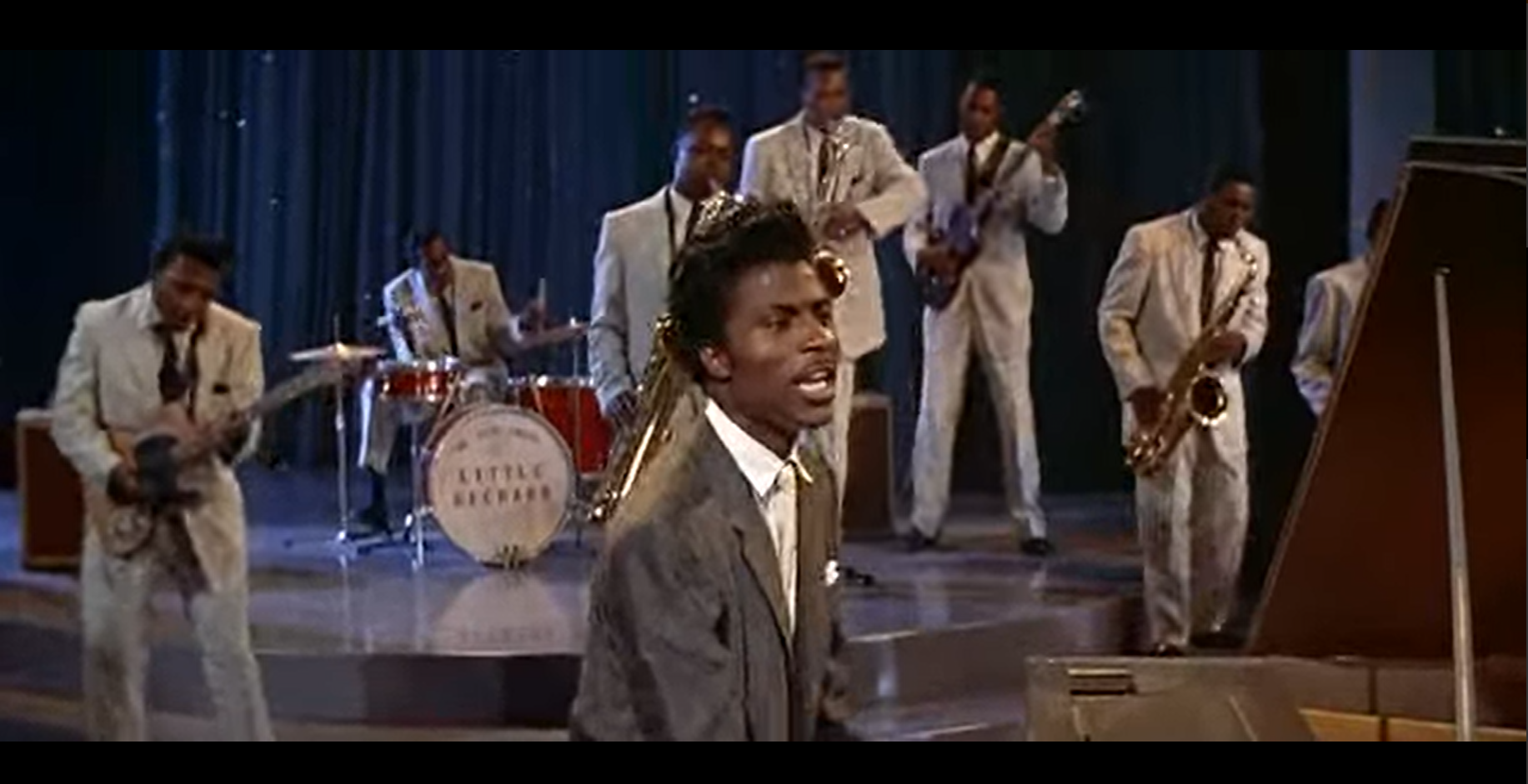
However, as Peary notes, “Mansfield is so spirited, lively, and funny that she emerges unscathed”, and somehow manages to “blunt the sexist humor and make it harmless, [so] we don’t feel guilt”. Mansfield and her bosoms aren’t the only fetish exploited and explored by Tashlin, however: as DVD Savant has hinted, the entire film could be viewed as an extended satirical deconstruction of the fifties, given Mansfield’s not-so-secret desire to simply be a housewife rather than pursuing a career (“I’m a domestic”, she guiltily admits), and the strategic inclusion of rock-n-roll throughout the entire narrative. To that end, Peary points out that the “picture has a strong cult today because of the many great rock acts who appear, including Little Richard at his peak” (singing the title song), “Fats Domino, Gene Vincent, and Eddie Cochran”, among others. (My favorite musical act, however, is that given by the apparition of Julie London, in which she sings the haunting “Cry Me a River” in various locations of Ewell’s apartment while he tries in vain to get her out of his mind; it’s a classic, cleverly conceived comedic sequence.)

Redeeming Qualities and Moments:

  • Jayne Mansfield as Jerri
  • The inspired “Julie London” sequence
  • Several classic rock acts

Must See?
Yes, as one of Tashlin’s acknowledged classics — and to see Mansfield in her best role.

Categories

  • Important Director

Links:

Out of the Past (1947)

Out of the Past (1947)

“That’s one way to be clever: look like an idiot.”

Synopsis:
An ex-private eye (Robert Mitchum) tells his new girlfriend (Virginia Huston) about his previous adventures trailing the moll (Jane Greer) of a gangster (Kirk Douglas) to Mexico, and falling in love with her before being double-crossed — but soon he’s caught up in new webs of intrigue, double-crossings, and murder.

Genres, Themes, Actors, and Directors:

  • Detectives and Private Eyes
  • Femmes Fatales
  • Flashback Films
  • Jacques Tourneur Films
  • Jane Greer Films
  • Kirk Douglas Films
  • Revenge
  • Robert Mitchum Films
  • Search

Response to Peary’s Review:
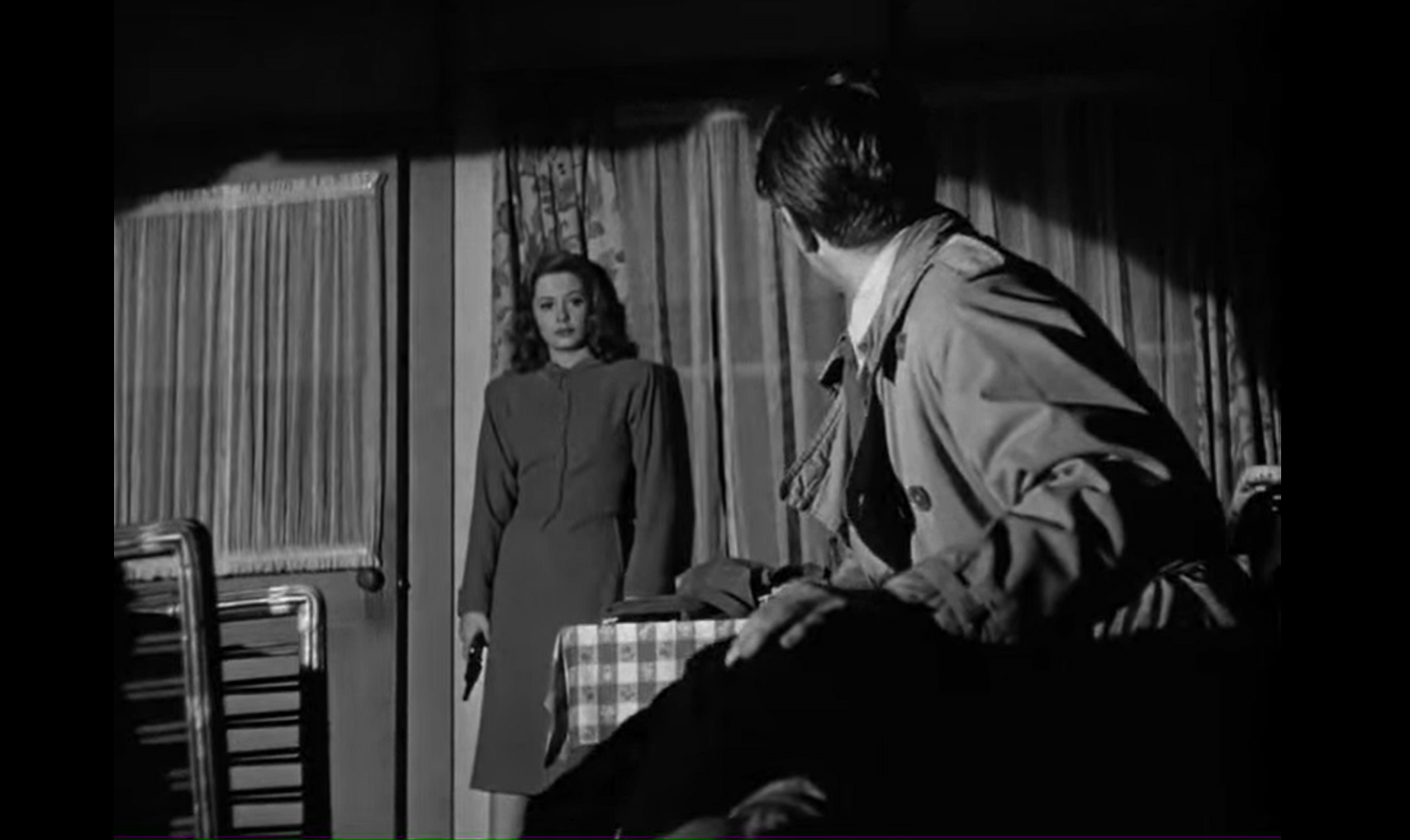
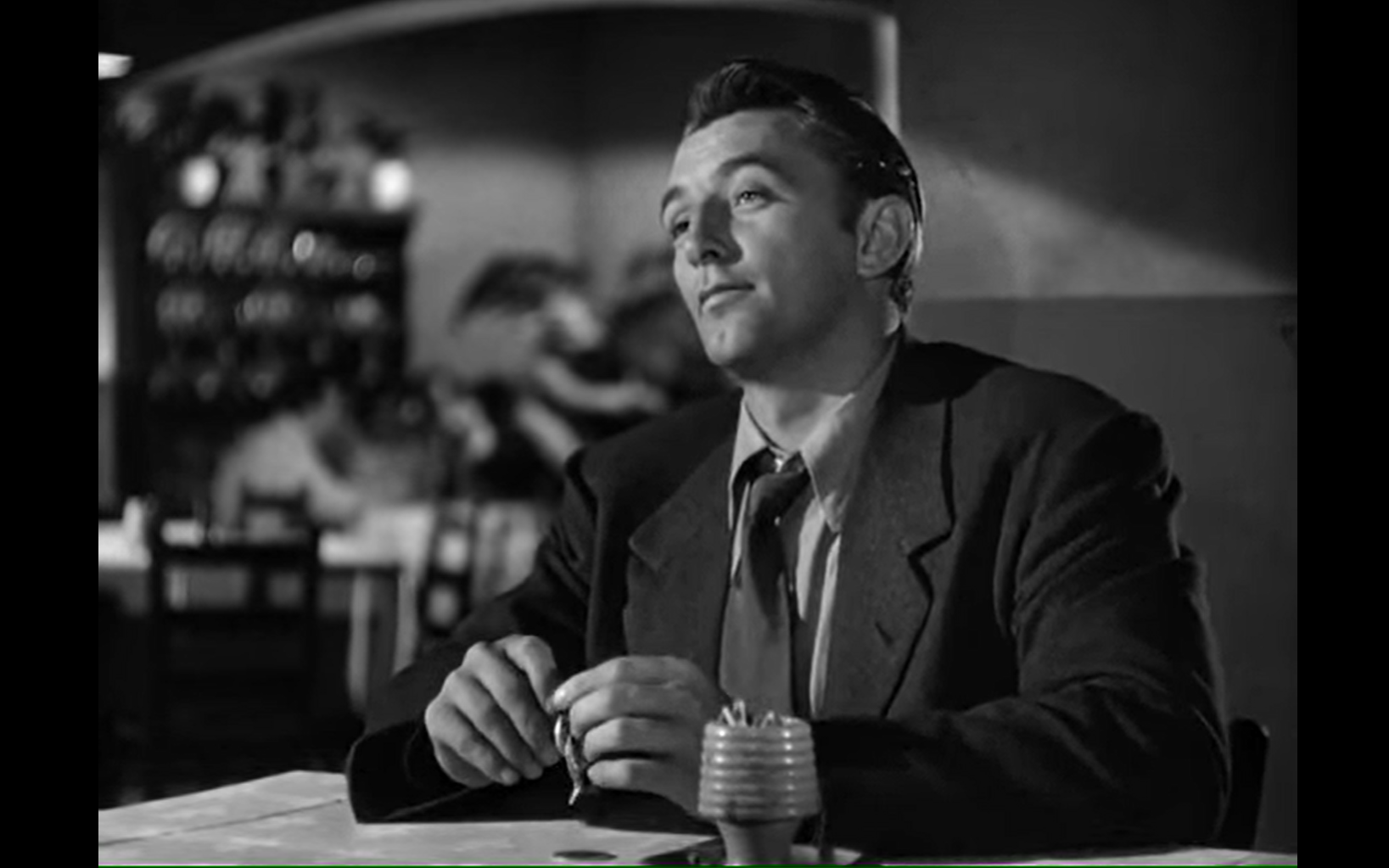
Peary writes that this “exceptional ‘B’ movie” by director Jacques Tourneur has “come to be regarded as the picture that best exemplifies film noir,” given that it possesses “tainted characters; entangled relationships; events determined by chance; large sums of money; murder; a tough, morally ambiguous hero with a gun in his trench coat, a dark hat on his head, and a cigarette in his mouth:

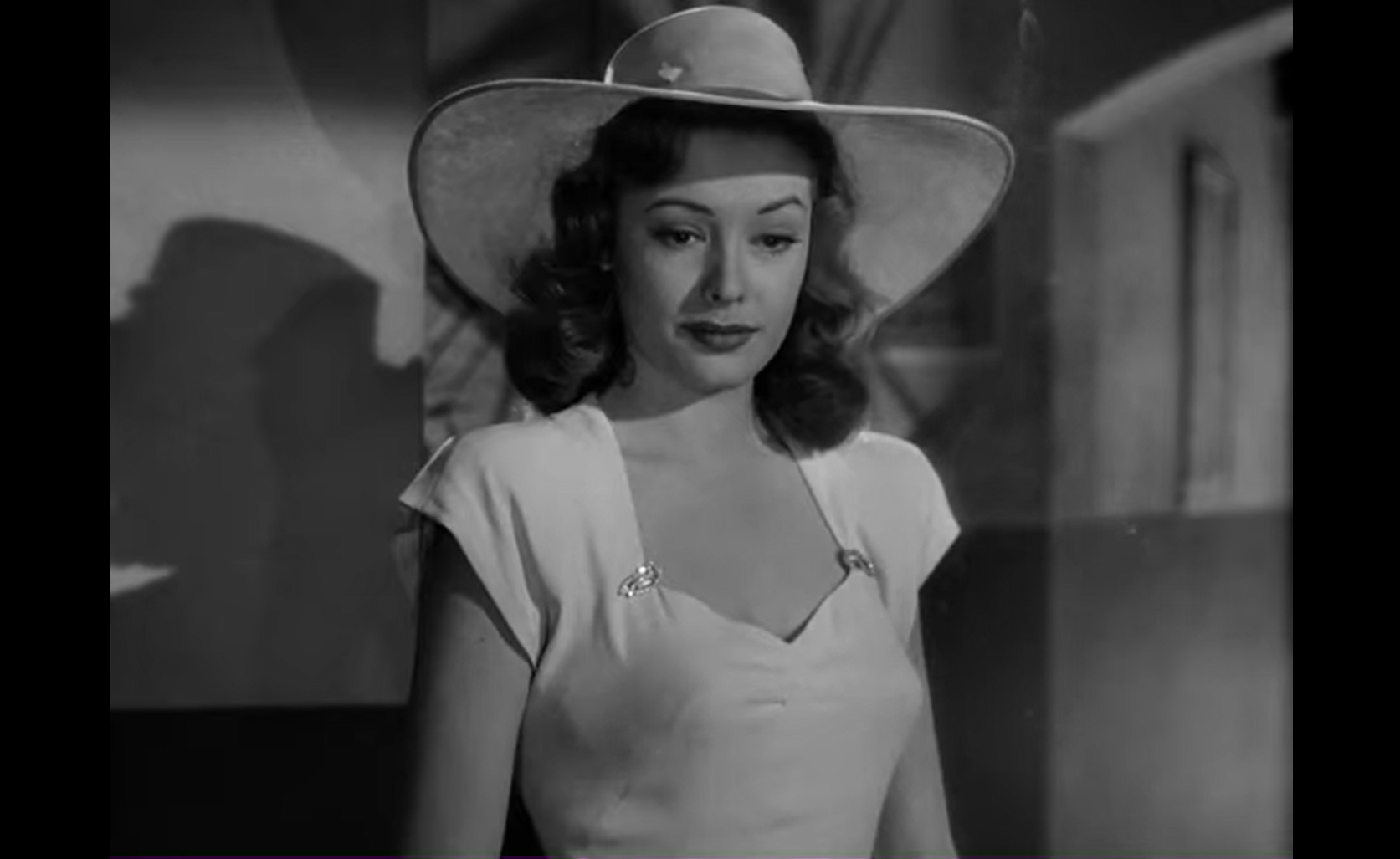
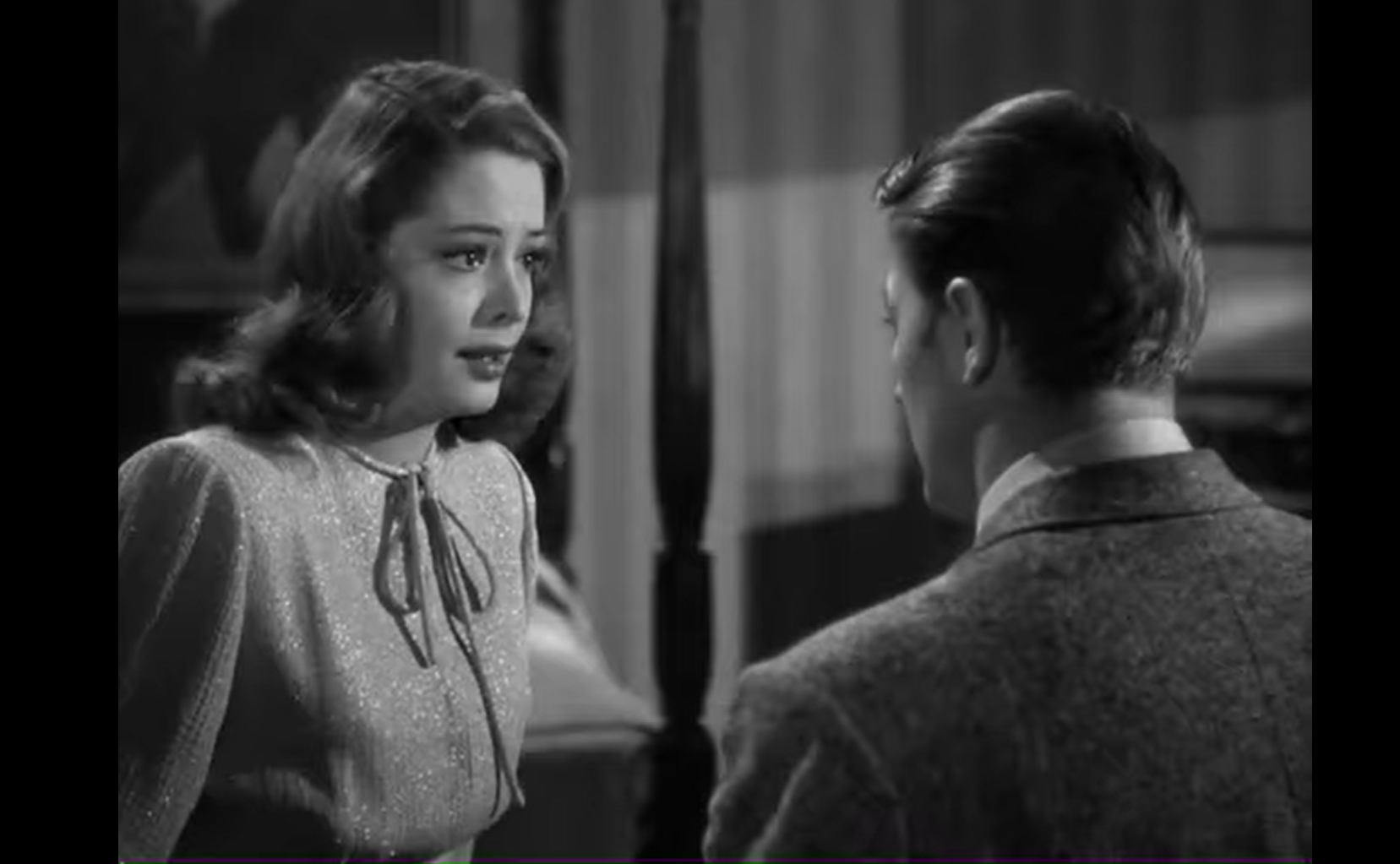
a lying, cheating, chameleon-like femme fatale… who leads an essentially decent guy down a wayward path; and, ultimately, betrayal, frame-ups, and fall guys”. Indeed, the pulpy, intelligent script (by Daniel Mainwaring, based on his novel Build My Gallows High) is so densely plotted that, as Bosley Crowther of the New York Times warned in his review, the film’s action “is likely to leave the napping or unmathematical customer far behind” — i.e., you need to be awake and paying attention, or risk not quite keeping up.

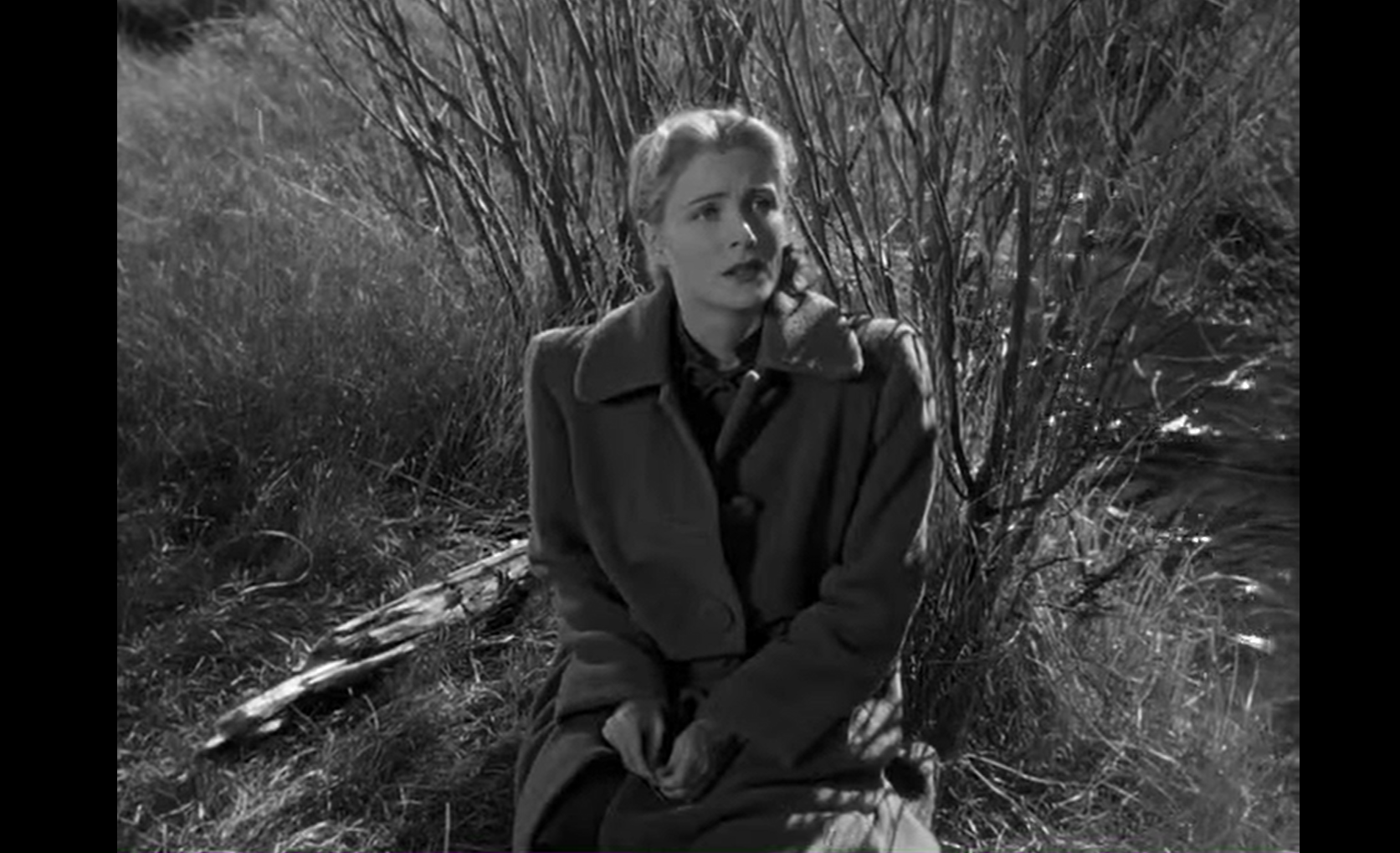
Yet this is a movie that truly merits one’s full attention, given that there’s so much here to enjoy and appreciate — including atmospheric direction by Tourneur, who has the film taking “place mostly at night”, with “darkness… used metaphorically to express… malignant evil spread[ing] from character to character”:

… Nicholas Musucara’s truly “outstanding cinematography”, which often relies on “single-source lighting to place spooky shadows on the faces of his characters and across entire sets”; and “solid performances” by Mitchum, Greer, and all members of their estimable supporting cast. In his lengthier review of the film for his Cult Movies book, Peary writes that while Humphrey Bogart was the studio’s first choice to play the lead role, Mitchum is ultimately “a better choice than Bogart”, given that his “reserved style is more in keeping with the way Tourneur directs his actors”, and the fact that he is young enough to play someone who is “unprepared for the likes of Kathie [Greer] and welcomes her with open arms”. Meanwhile, gorgeous Greer emerges here as one of cinema’s most memorable femme fatales — it’s truly a shame her career didn’t go further.

Redeeming Qualities and Moments:

  • Robert Mitchum as Jeff Markham (nominated by Peary as one of the Best Actors of the Year in his Alternate Oscars book)
  • Jane Greer as Kathie Moffatt (nominated by Peary as one of the Best Actresses of the Year in his Alternate Oscars book)
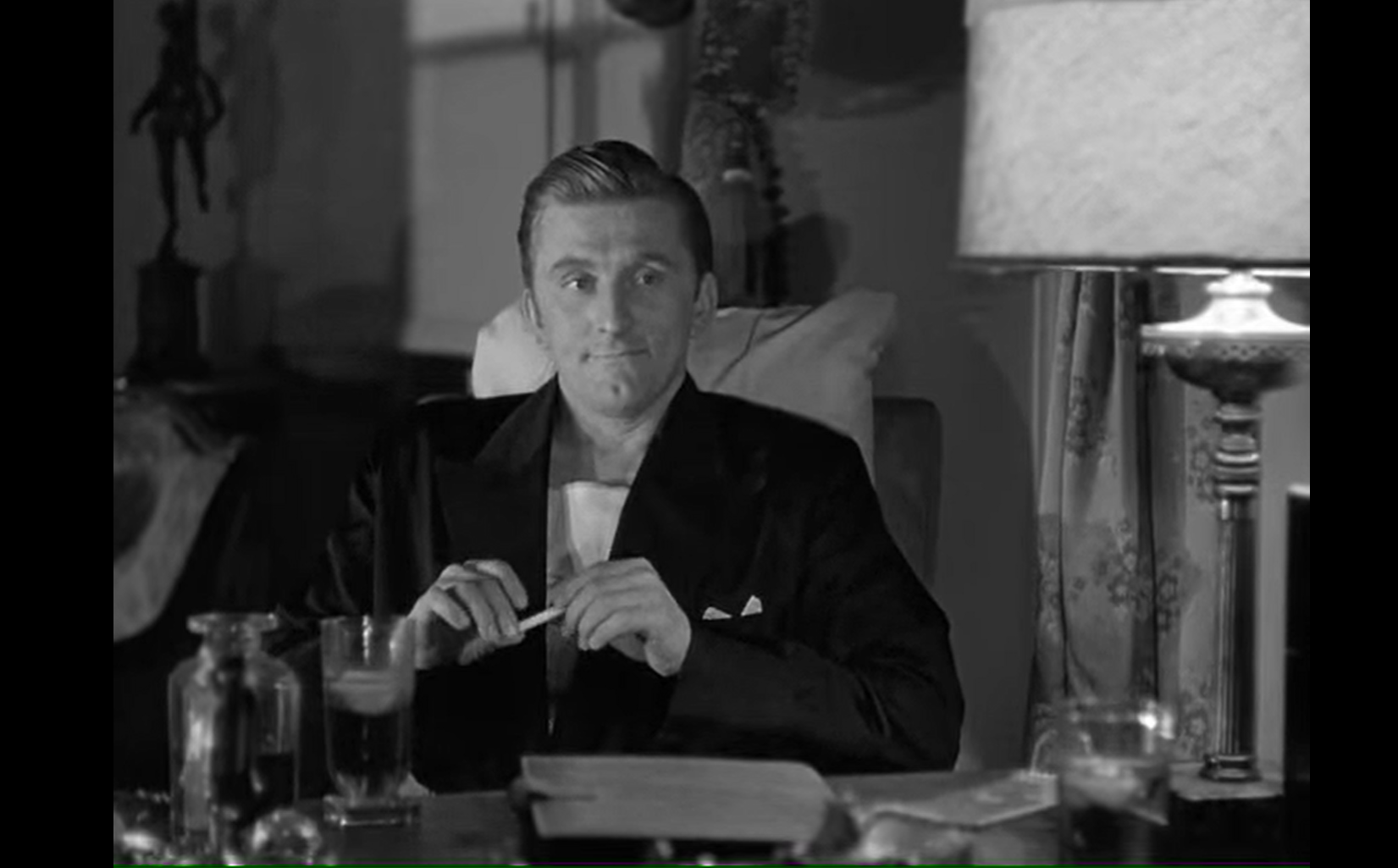
  • Kirk Douglas as Whit Sterling
  • Fine supporting performances throughout
  • Nick Musuraca’s noir-ish cinematography
  • Good use of on-location settings
  • Daniel Mainwaring’s delightfully intelligent yet pulpy screenplay:

    “My feelings? About ten years ago, I hid them somewhere and haven’t been able to find them.”

Must See?
Yes, as a definitive noir classic. Nominated by Peary as one of the best pictures of the year in his Alternate Oscars.

Categories

  • Genuine Classic

(Listed in 1001 Movies You Must See Before You Die)

Links:

Thin Man, The (1934)

Thin Man, The (1934)

“Haven’t you heard the news? I’m a gentleman now.”

Synopsis:
A retired detective (William Powell) is pressured by his new wife (Myrna Loy) into investigating the murder of a secretary (Natalie Moorhead) whose employer (William Henry) has mysteriously disappeared.

Genres, Themes, Actors, and Directors:

  • Cesar Romero Films
  • Comedy
  • Detectives and Private Eyes
  • Maureen O’Sullivan Films
  • Murder Mystery
  • Myrna Loy Films
  • William Powell Films
  • W.S. Van Dyke Films

Response to Peary’s Review:
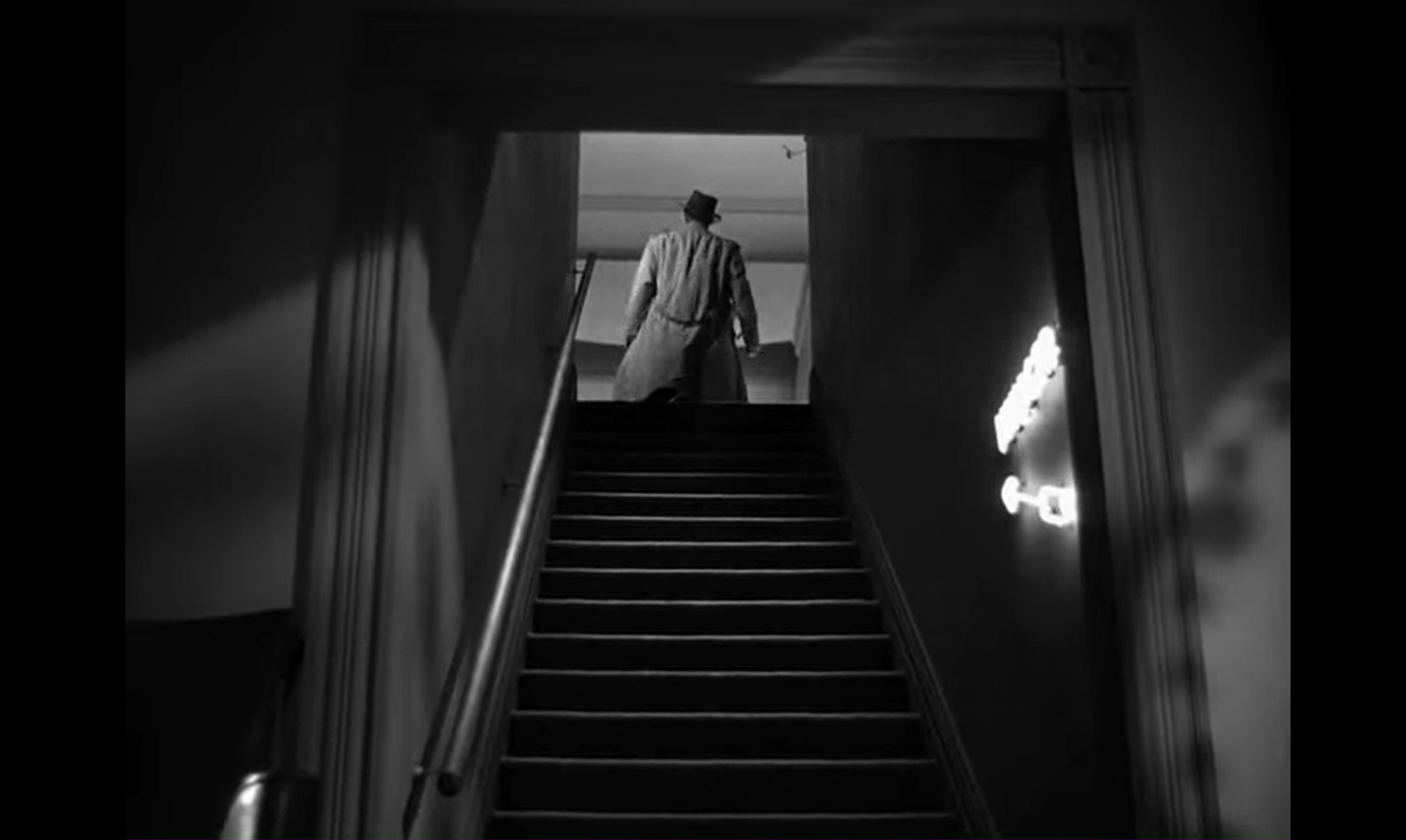
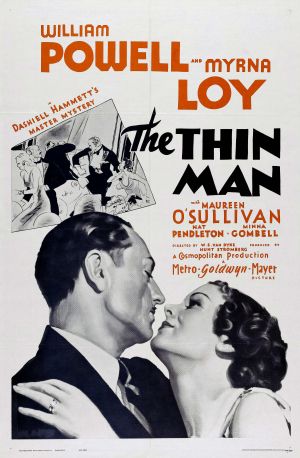
Peary notes that this “wildly successful blend of… murder mystery and… screwball comedy” (adapted from a novel by Dashiell Hammett) possesses “delectable performances by William Powell and Myrna Loy as Nick and Nora Charles” — the most ridiculously happy married couple ever to grace the silver screen. Indeed, while it’s nominally a detective story, what people remember most about The Thin Man is the central relationship between Powell and Loy, whose chemistry together is pitch perfect. They’re a rare “sexy married couple… who enjoy each other’s company, sense of humor, [and] conversation”, and — given that they’re independently wealthy, and don’t yet have any children — are able to devote their lives to simply having fun. As Peary notes, “if you don’t get upset by Nick’s constant imbibing” (the amount of liquor poured and drunk in this post-Prohibition-era film is truly astonishing), you’ll enjoy “watching them and their dog-child”, Asta — whose breed (wire-haired terrier) immediately became all the rage in America.

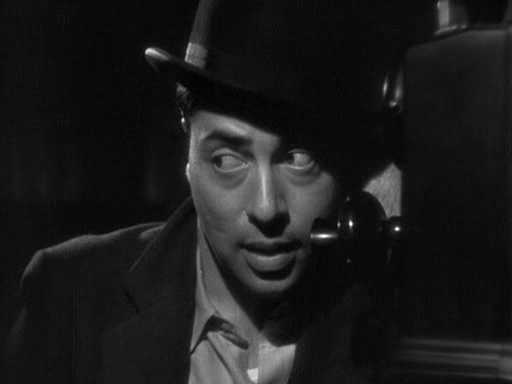
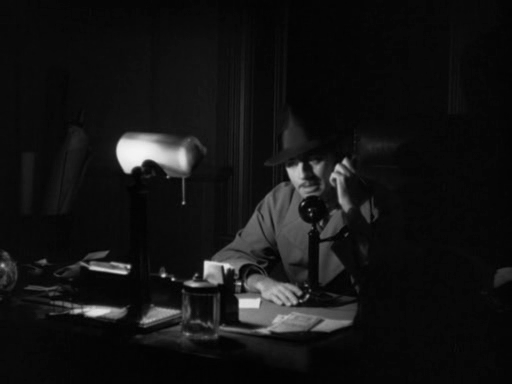
Much of the credit for the success of The Thin Man belongs to its director, W.S. Van Dyke (“One-Take Woody”), who — shooting in just 12 days and working with Albert Hackett and Frances Goodrich’s “breezy adaptation” of Hammett’s novel — managed to infuse the film with “an improvisational feel, with characters moving freely in and out of the frame”. Equally noteworthy is James Wong Howe’s atmospheric cinematography (see stills below), as well as a fine supporting cast — all of whom end up as suspects. Indeed, while the murder mystery here could almost be considered a MacGuffin (as argued by Roger Ebert in his “Great Movies” overview of the film), it’s actually a reasonably enjoyable whodunit which will certainly keep you guessing. Followed by five sequels and a television series, and selected for inclusion in the National Film Registry at the Library of Congress in 1997. Spoofed in Neil Simon’s Murder By Death (1976), with David Niven and Maggie Smith as Dick and Dora Charleston.

Redeeming Qualities and Moments:

  • William Powell as Nick Charles (nominated by Peary as Best Actor of the Year in his Alternate Oscars)
  • Myrna Loy as Nora Charles
  • Fine supporting performances
  • James Wong Howe’s cinematography
  • Albert Hackett and Frances Goodrich’s extremely witty, fast-paced, entertaining script

Must See?
Yes, as a genuine classic. Interestingly, while it was nominated for an Academy Award as Best Picture of the Year (as well as Best Director, Best Adapted Screenplay, and Best Actor for Powell), Peary doesn’t include it as a contender in his own Alternate Oscars book.

Categories

  • Genuine Classic

(Listed in 1001 Movies You Must See Before You Die)

Links:

One Hundred and One Dalmatians (1961)

One Hundred and One Dalmatians (1961)

“I live for furs; I worship furs!”

Synopsis:
A pair of dalmatians (Rod Taylor and Cate Bauer) rely on a network of animal friends to help rescue their brood of 15 puppies from the clutches of evil Cruella De Vil (Betty Lou Gerson).

Genres, Themes, Actors, and Directors:

  • Animated Features
  • Escape
  • Kidnapping
  • Talking Animals

Response to Peary’s Review:
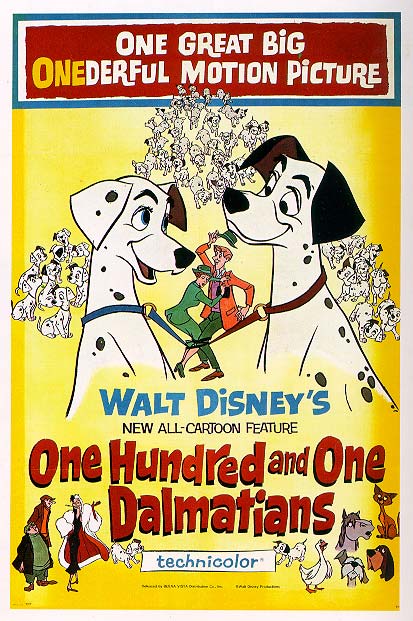
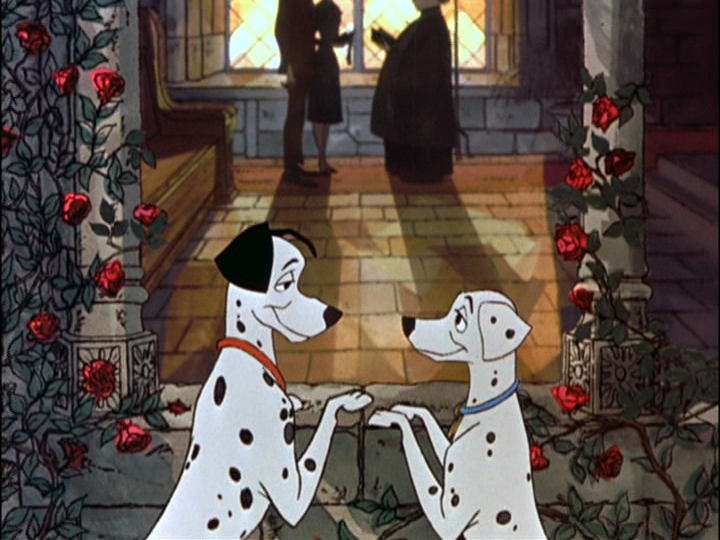
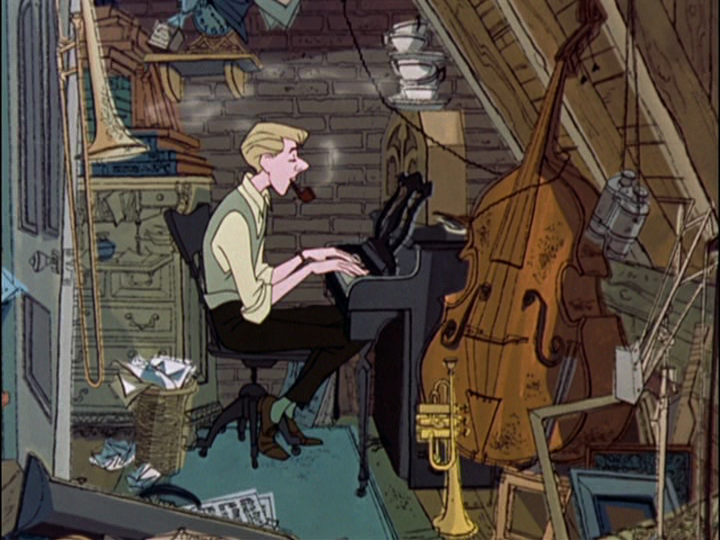
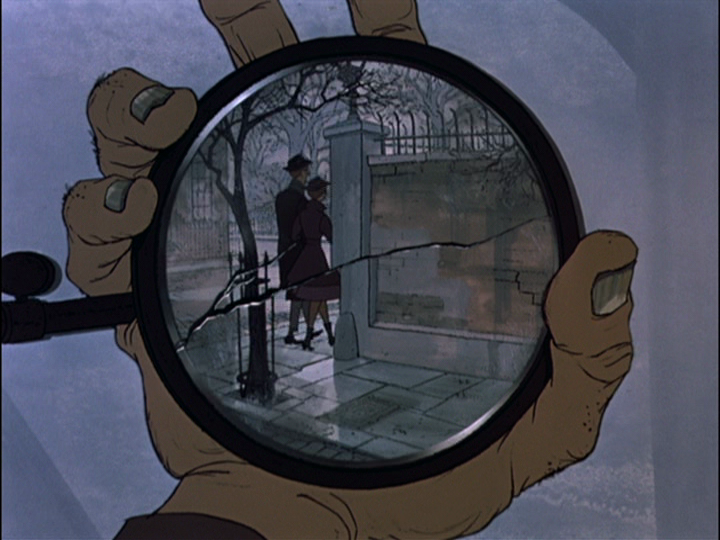
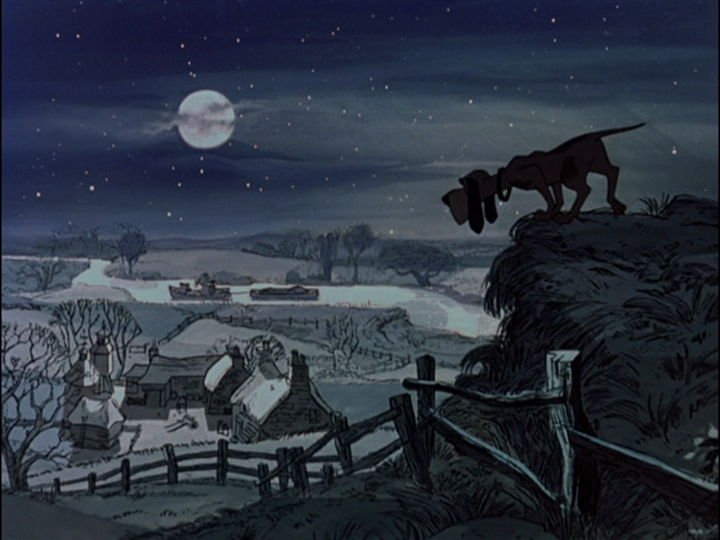
Peary accurately labels this classic animated feature (based on the 1956 children’s novel by Dodie Smith) a “most enjoyable, consistently clever and amusing Disney cartoon” — thanks in no small part to the inclusion of “one of the greatest of Disney’s villainesses, eccentric and mad Cruella de Vil” (animated by Marc Davis as an “exaggerated, flamboyantly garbed and made-up” evil send-up of Tallulah Bankhead). From its charming opening sequences — in which our narrator, Pongo (Rod Taylor), laments the unmarried status of his “pet”/owner, Roger (Ben Wright), and helps him pursue the beautiful, dalmatian-owning Anita (Lisa Davis) — to the “exciting escape sequence, in which [a network of] dogs use various means to elude Cruella and her cronies”, it’s easy to get caught up in this rousing tale of kidnapping and rescue, in which “good” and “evil” are so clearly delineated (who but a truly twisted individual would even think of making a coat out of puppy fur??!). As Peary notes, “many of the supporting animals” are able to “display enormous personality in very brief screen time” — though it’s slightly disappointing that the puppies themselves don’t have “more distinct personalities”, and I’ll agree that it would be better if “Perdita and Anita were as quirky as their male counterparts”. Watch for a couple of clever scenes skewering the mind-numbing quality of “modern” television — most notably the “What’s My Crime?” parody.

Redeeming Qualities and Moments:

  • The charming opening “matchmaking” sequence
  • Cruella De Vil — according to James Kendrick, she’s “a truly inspired character, the kind who, if she didn’t exist, would need to be invented”
  • Amusing satire of TV
  • Impressive animation


Must See?
Yes, as one of Disney’s (many) enjoyable mid-century-ish classics.

Categories

  • Genuine Classic

Links:

I Walked With a Zombie (1943)

I Walked With a Zombie (1943)

“Because I loved him, I felt I had to restore her to him — make her what she had been before.”

Synopsis:
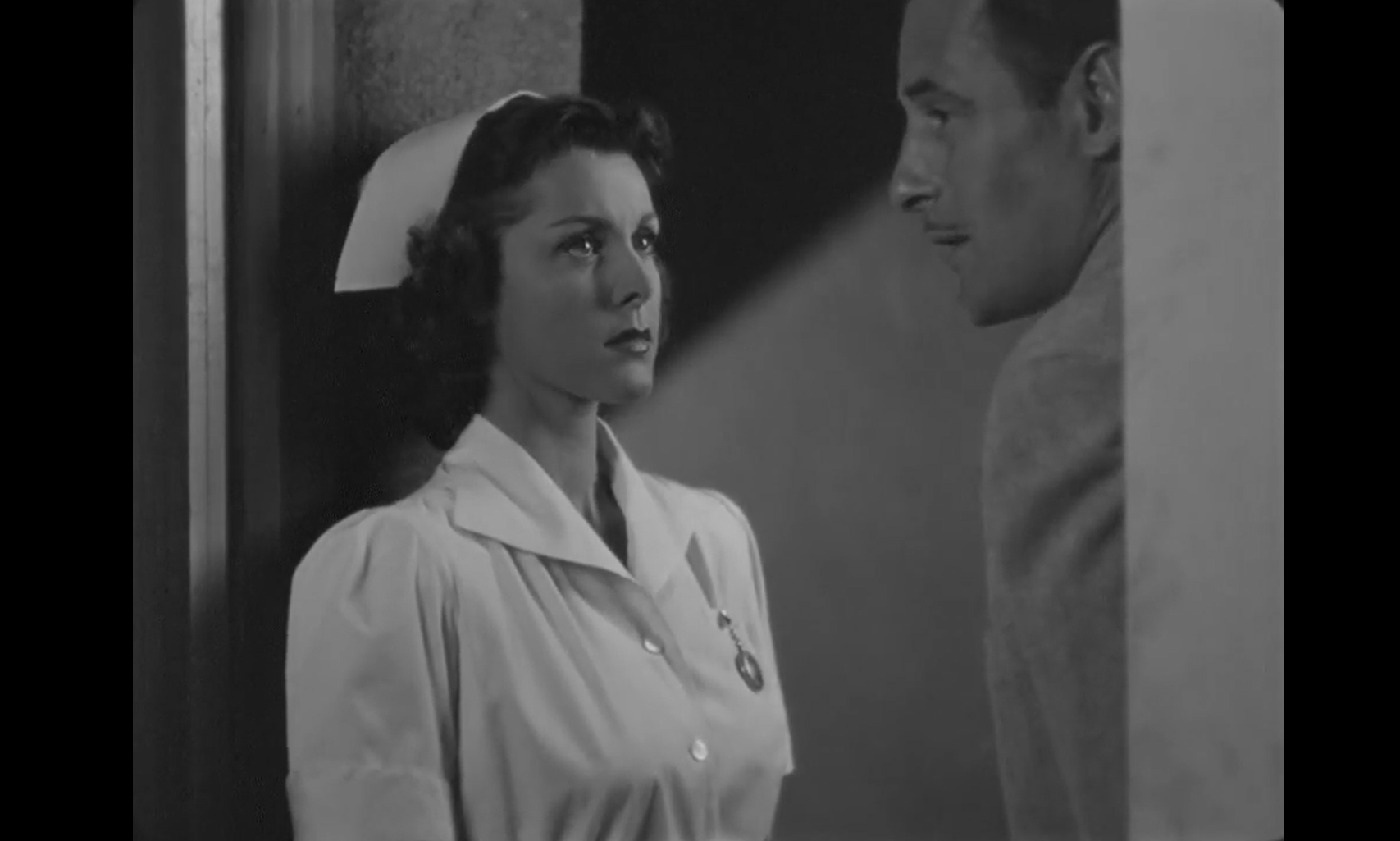
A young nurse (Frances Dee) sent to the West Indies to care for the mentally ill wife (Christine Gordon) of a plantation owner (Paul Holland) soon finds herself in love with Holland, and — for Holland’s sake — eager to help cure Gordon at any cost.

Genres, Themes, Actors, and Directors:

  • Doctors and Nurses
  • Frances Dee Films
  • Jacques Tourneur Films
  • Native Peoples
  • Plantations
  • Psychological Horror
  • Val Lewton Films
  • Voodoo and Black Magic
  • Zombies

Response to Peary’s Review:
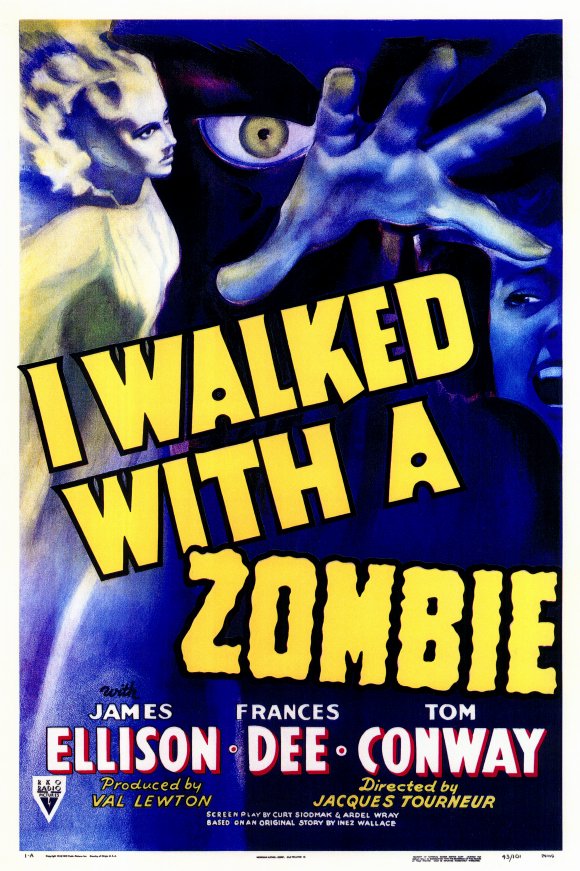
Peary labels this “follow up to Cat People” — produced for RKO by Val Lewton, and “beautifully directed” by Jacques Tourneur — the “most poetic of horror films”.

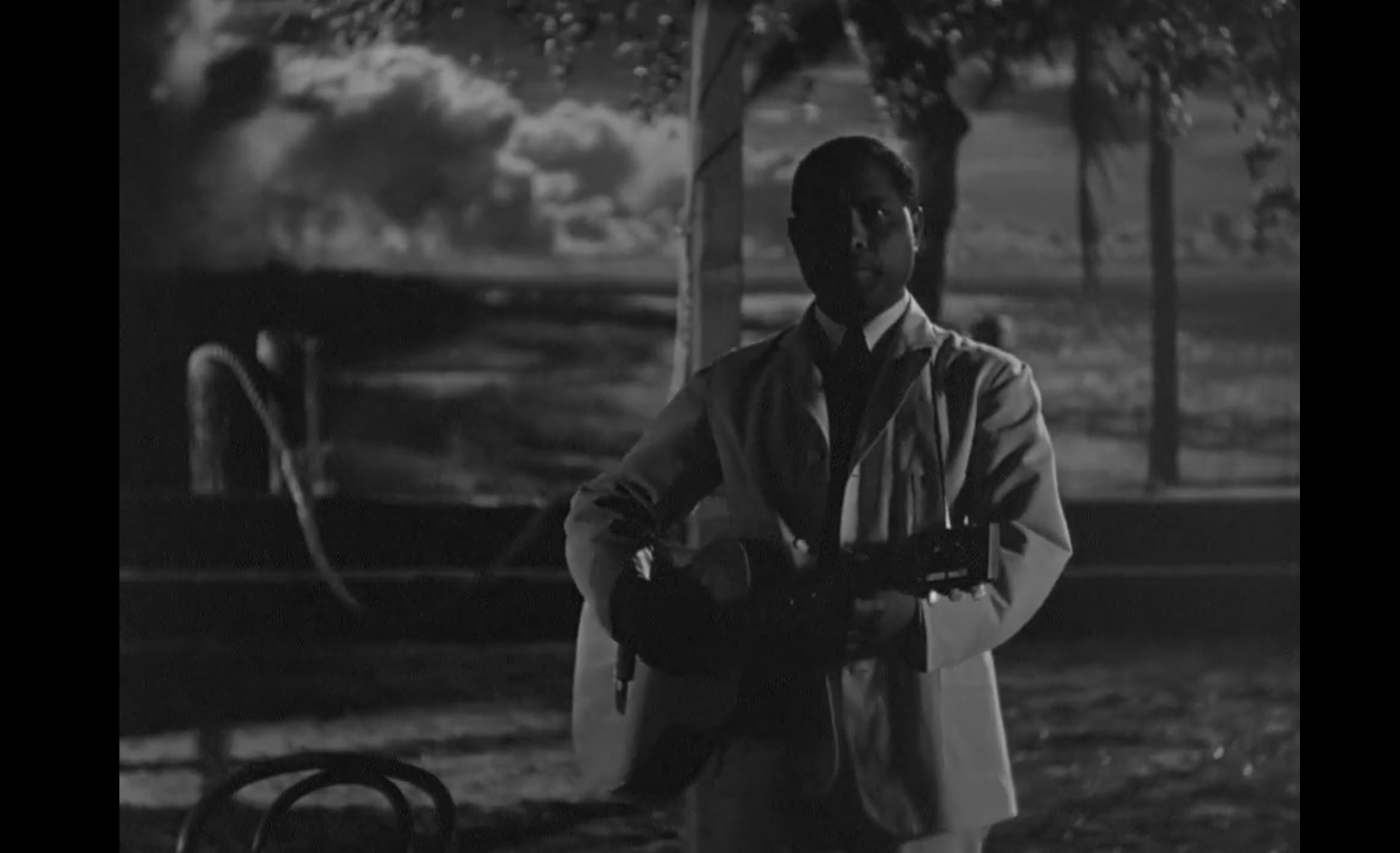
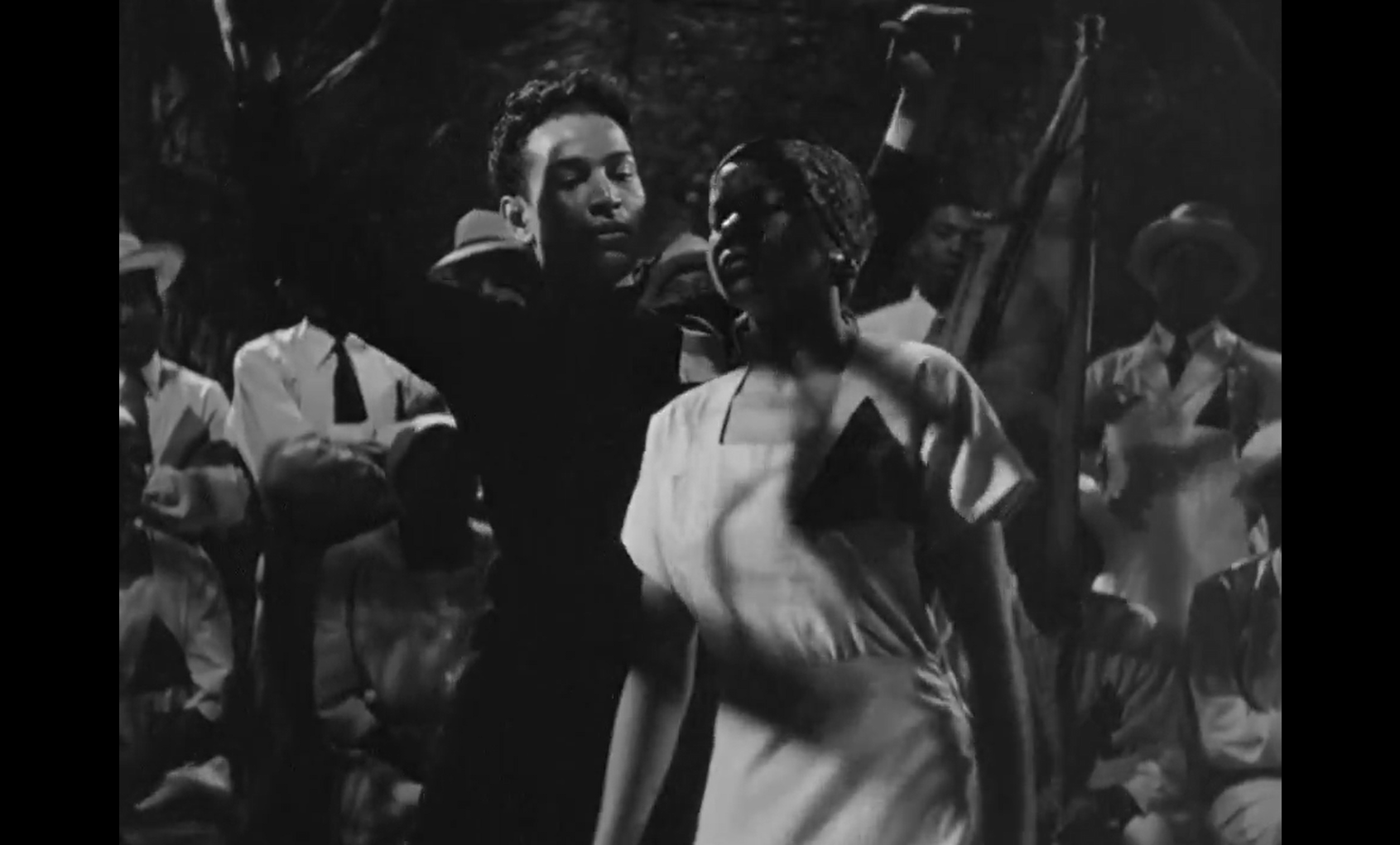
Directly inspired by Jane Eyre (and preceding Jean Rhys’ post-colonial follow-up novel Wide Sargasso Sea by more than 20 years), the richly layered film is “set up like a Greek tragedy”, in which “a house has been ripped asunder by infidelity, meddling in-laws, sibling rivalry, and calling on pagan gods to carry out selfish bidding”; it even includes a “one-man Greek chorus” in Sir Lancelot, a calypso singer who fills us (and Dee) in on the family’s past troubles through a cleverly written ditty. (“Ah, woe! Ah, me! Shame and sorrow for the family.”)

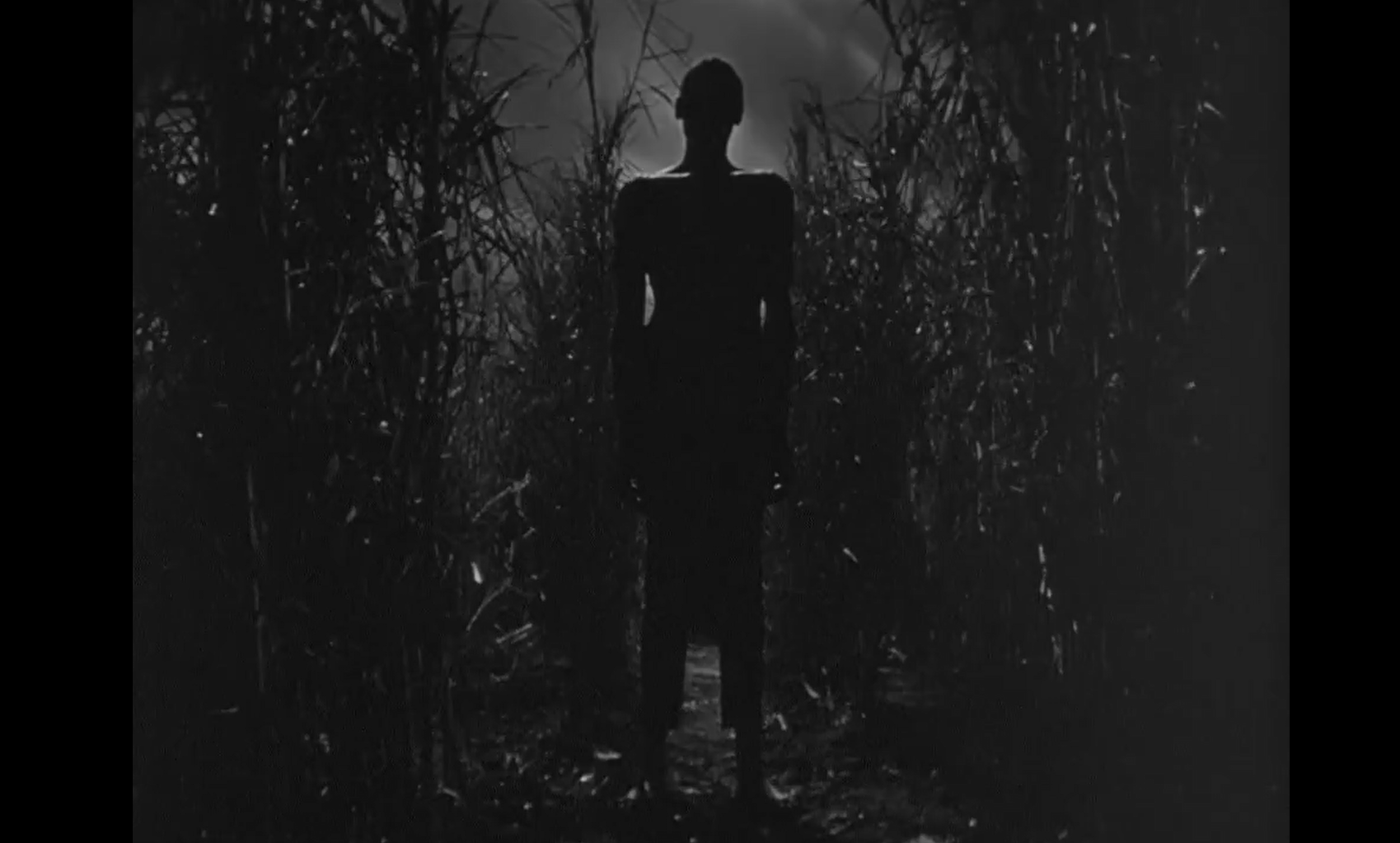
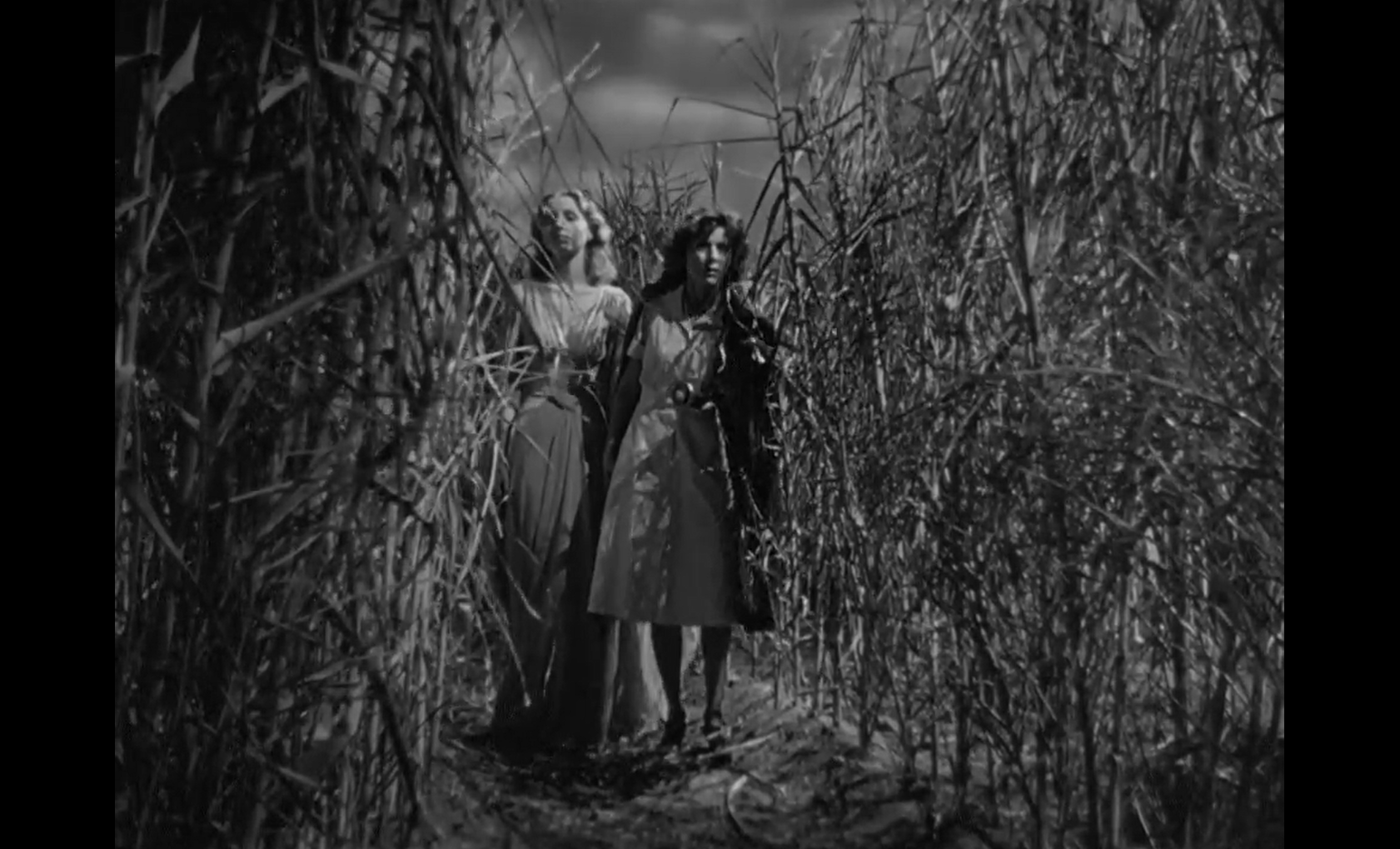
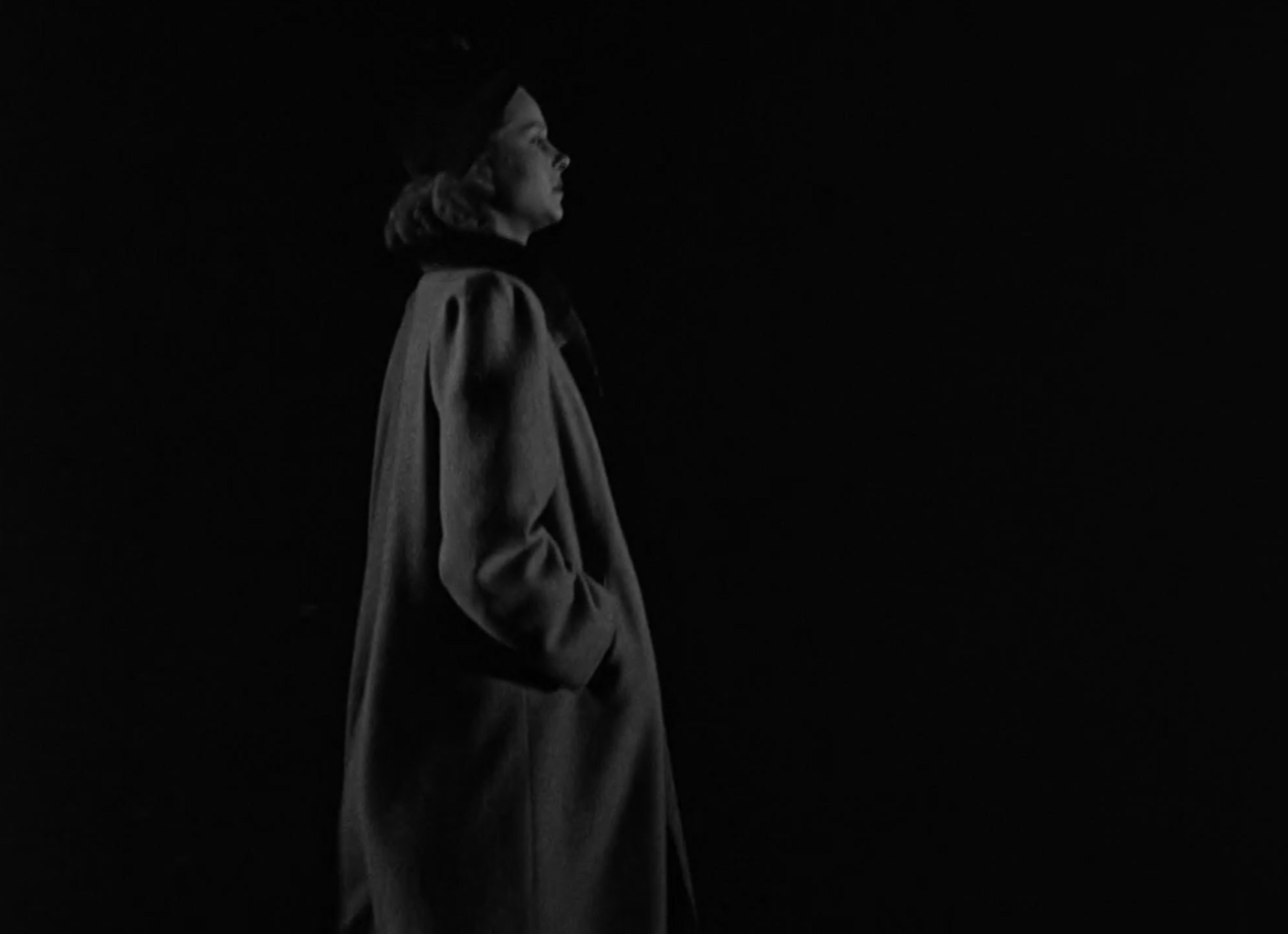
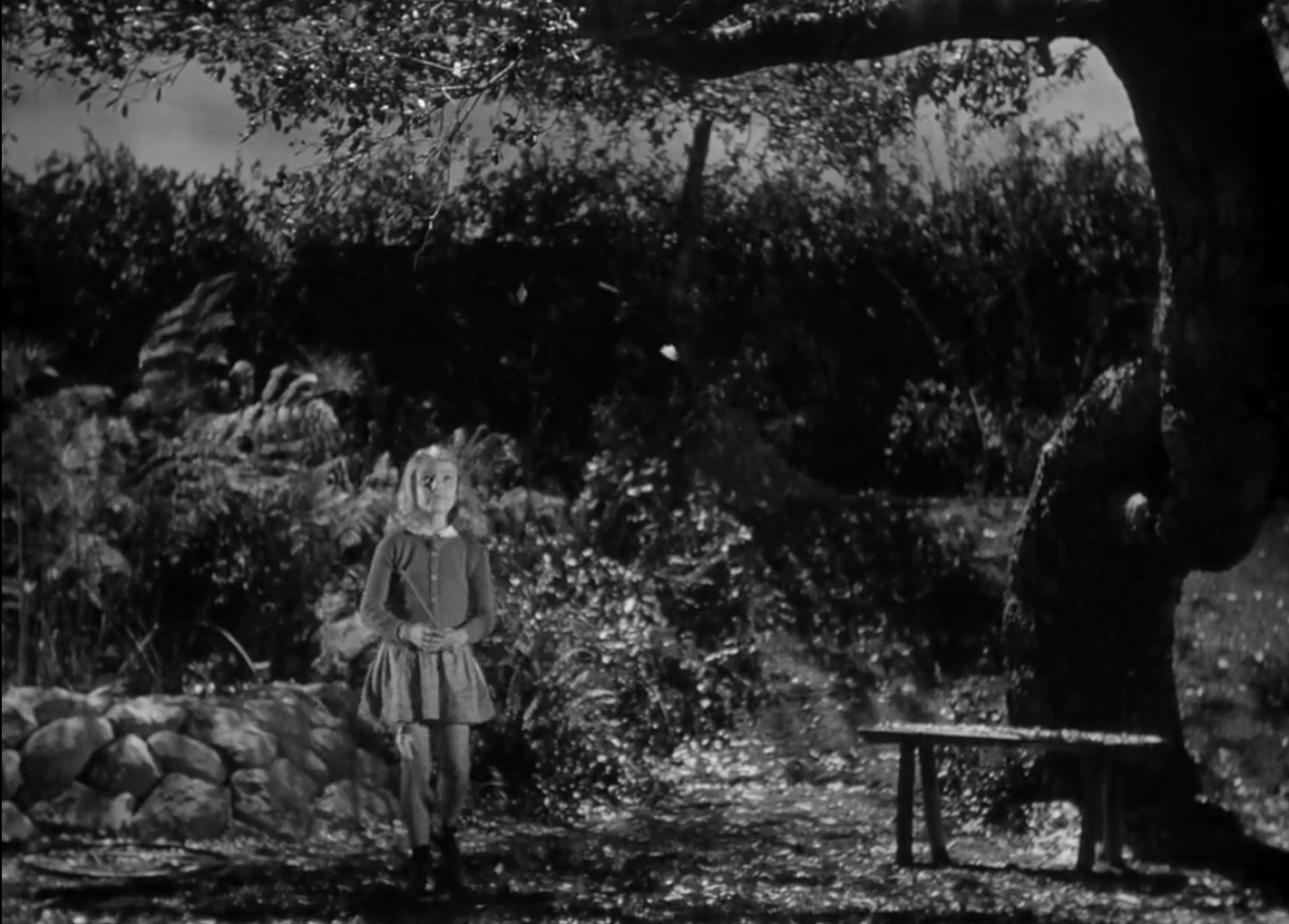
Peary notes that “the lyrical quality of the long silent passages” — most famously “Dee and Gordon’s nocturnal walk through the mysterious woods” —

contribute towards this film’s status as possibly “the most visually impressive of Lewton’s films”. Certainly, the “shadows, the lighting, the music, [and] the exotic settings contribute to make this one of the masterpieces of the genre” — a “beautiful nightmare” which lingers in one’s memory.

As in Cat People, the film’s horror elements here are left up to viewers’ imaginations: is Gordon insane, or “is her zombie-like state the result of a voodoo curse”? Other than a few highly suggestive scenes near the end, the answer is entirely unclear throughout, and “we never find out for sure”. What we “come to believe”, however, as Peary notes, is “that there is just as much validity in believing in the powers of voodoo as there is in believing God will answer prayers”.

To that end, Lewton noticeably “does not belittle the island blacks by mocking their beliefs, customs, and religious practices”, given that it’s the whites who “wallow in confusion and terror”. As Chris Dashiell of CineScene.com writes, “Although the film occupies the European stance towards the black ‘other’ that was always assumed in commercial films at that time, Tourneur is much more sensitive in this regard than one might expect.”

Redeeming Qualities and Moments:

  • Frances Dee as Betsy
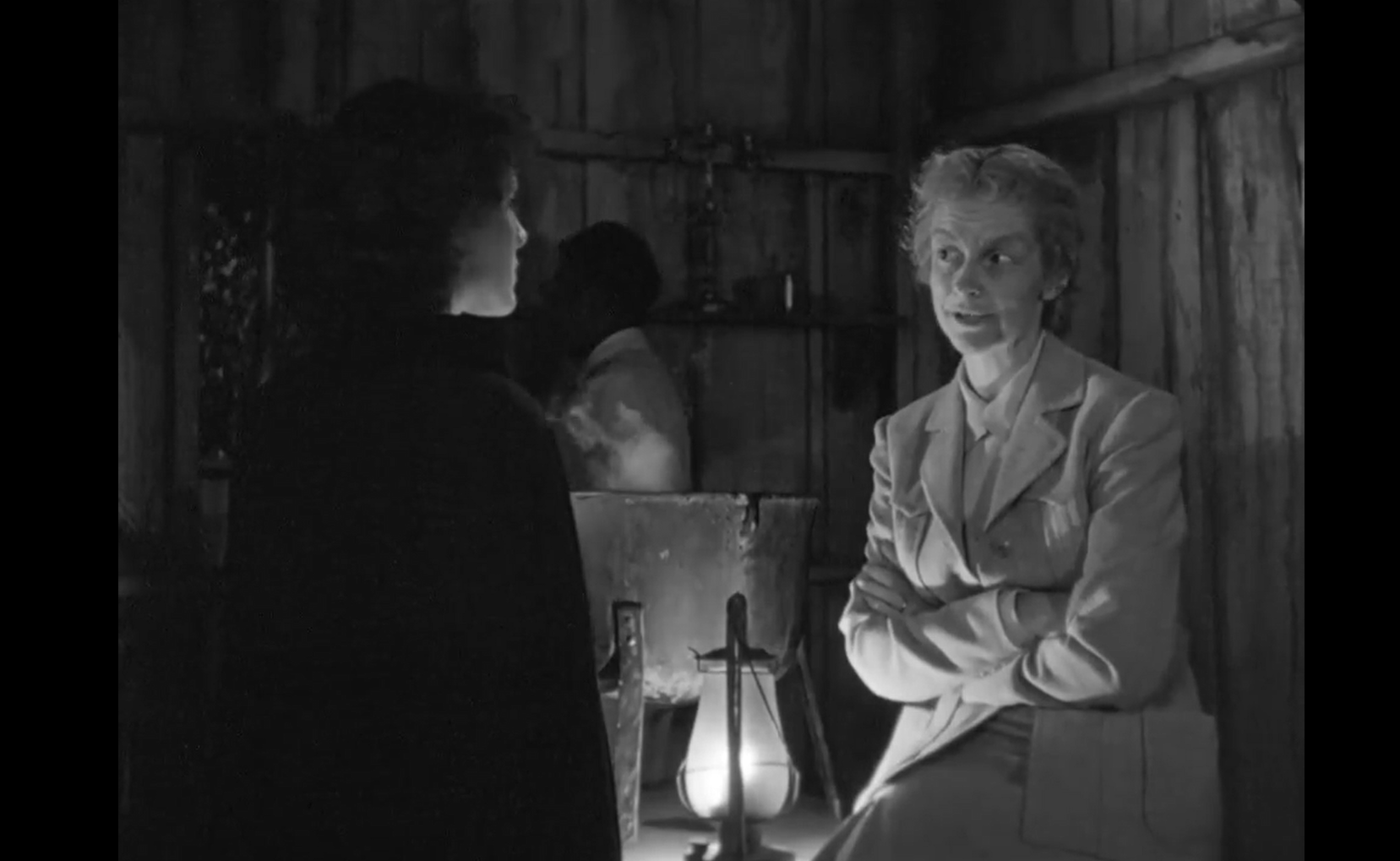
  • Edith Barrett as Mrs. Rand
  • J. Roy Hunt’s cinematography

  • Good use of sound and music

Must See?
Yes, as an acknowledged classic by Tourneur. Discussed at length in Peary’s Cult Movies.

Categories

  • Genuine Classic
  • Important Director

(Listed in 1001 Movies You Must See Before You Die)

Links:

Cat People (1942)

Cat People (1942)

“Cats don’t seem to like me.”

Synopsis:
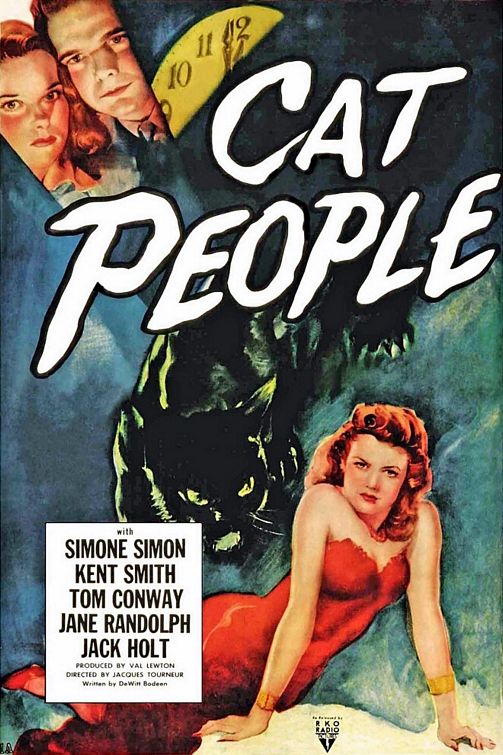
A draftsman (Kent Smith) marries an enigmatic Serbian woman named Irena (Simone Simon) who fears that sexual intimacy with her new husband will turn her into a predatory panther. Smith sends her to a psychiatrist (Tom Conway) for help, and seeks advice from his beautiful co-worker (Jane Randolph) — but Irena’s neurosis and increasing jealousy of Randolph continue to wreak havoc on her unconsummated marriage.

Genres, Themes, Actors, and Directors:

  • Jacques Tourneur Films
  • Marital Problems
  • Newlyweds
  • Psychological Horror
  • Sexual Repression
  • Simone Simon Films
  • Val Lewton Films

Response to Peary’s Review:
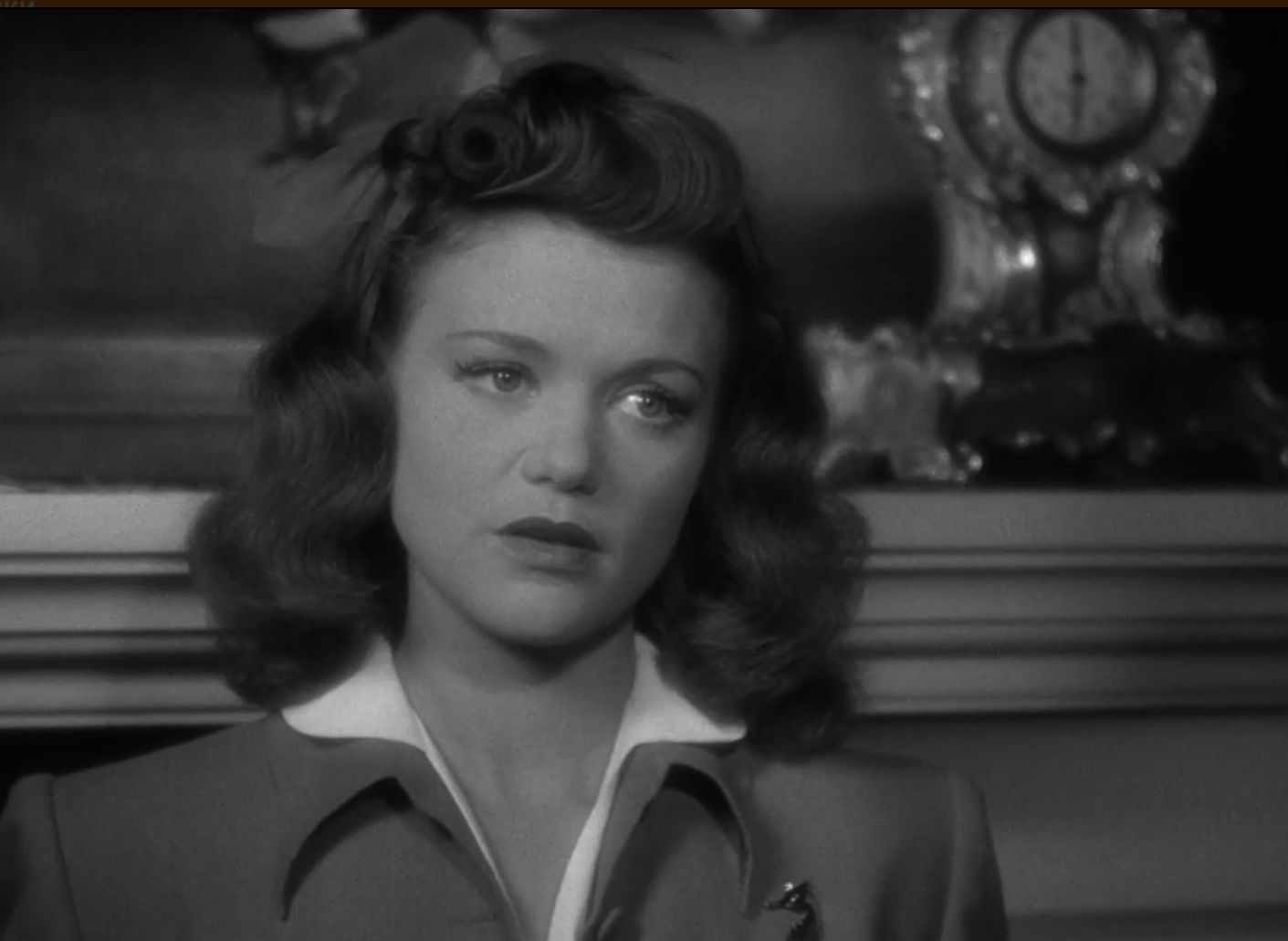
Peary accurately notes that this “first of producer Val Lewton’s facinating ‘psychological’ horror films displays the subtlety, imagination, intelligence, and respect for audiences that would distinguish all his projects at RKO from 1942 to 1946” (including I Walked With a Zombie, The Leopard Man, The Seventh Victim, The Ghost Ship, The Curse of the Cat People, The Body Snatcher, and Bedlam, among others). He writes that “Simone Simon” — giving an “erotic, sympathetic performance” — is “perfectly cast” in her most iconic role as a “sweet, lonely” woman who has avoided intimate relationships her entire life out of fear that her sexual desires will cause “the evil inside her [to] be released” — and who (in a bold narrative move for a film of this era) informs her husband after their marriage that she’s not yet ready to sleep with him (“I want to be Mrs. Reed, really — I want to be everything that name means to me, and I can’t.”).

Peary notes that, “as in several other Lewton films, evil and good fight for control of his characters” — and, “like Lewton’s other tragic heroines… Irena doesn’t have the willpower to reject her evil side”, especially when she begins experiencing (justifiable) jealousy towards her husband and his co-worker, Jane Randolph (waiting conveniently in the wings).

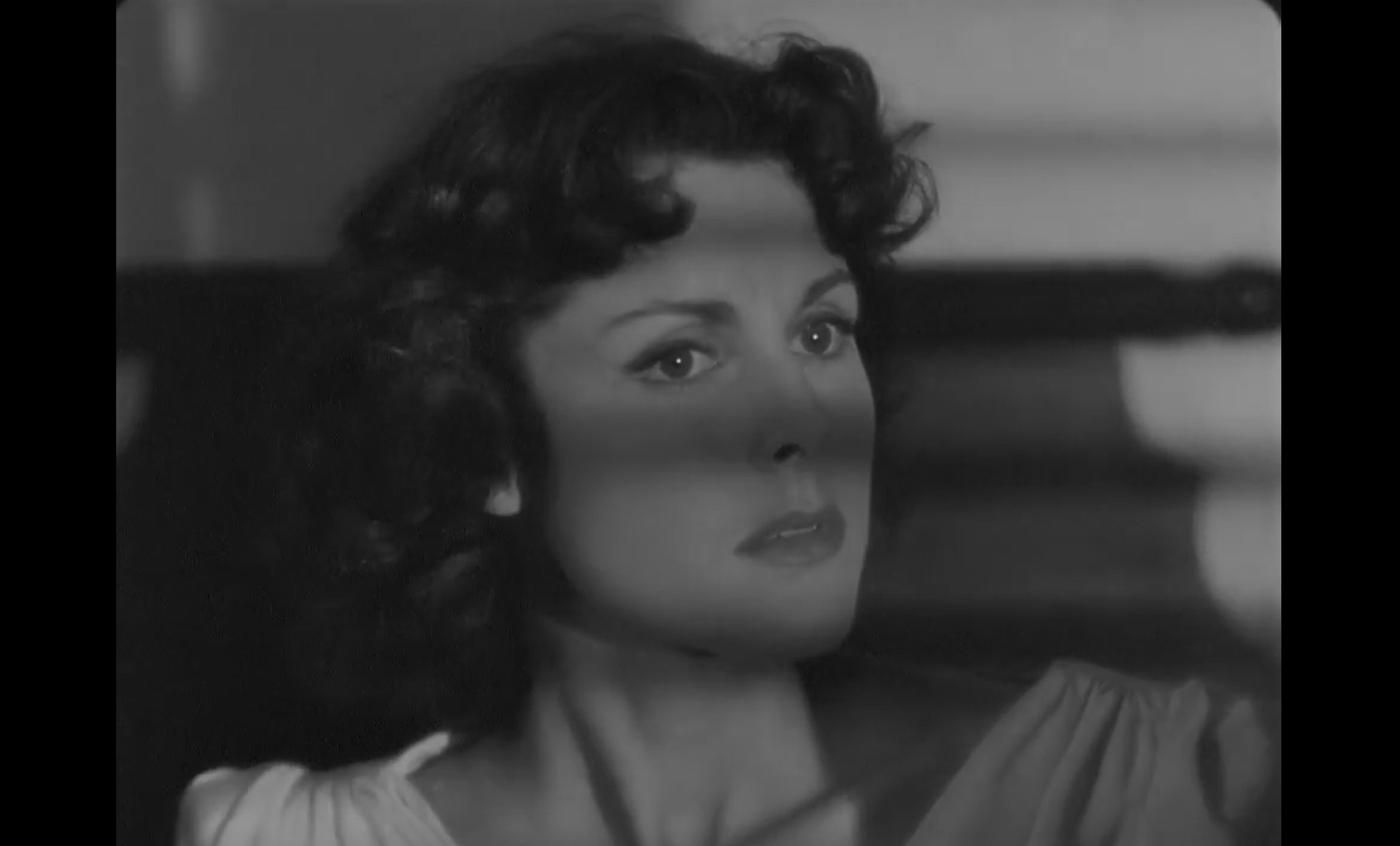
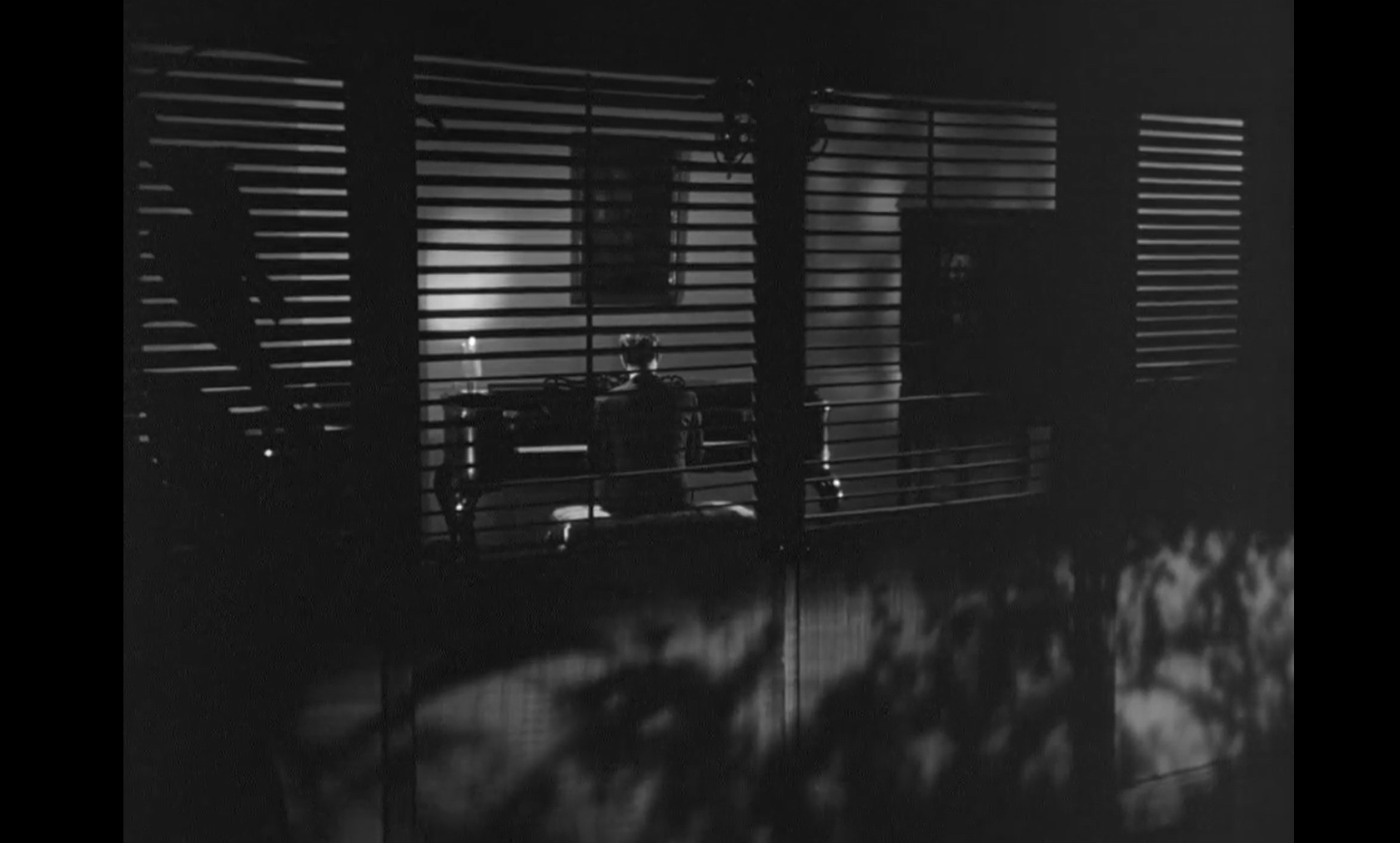
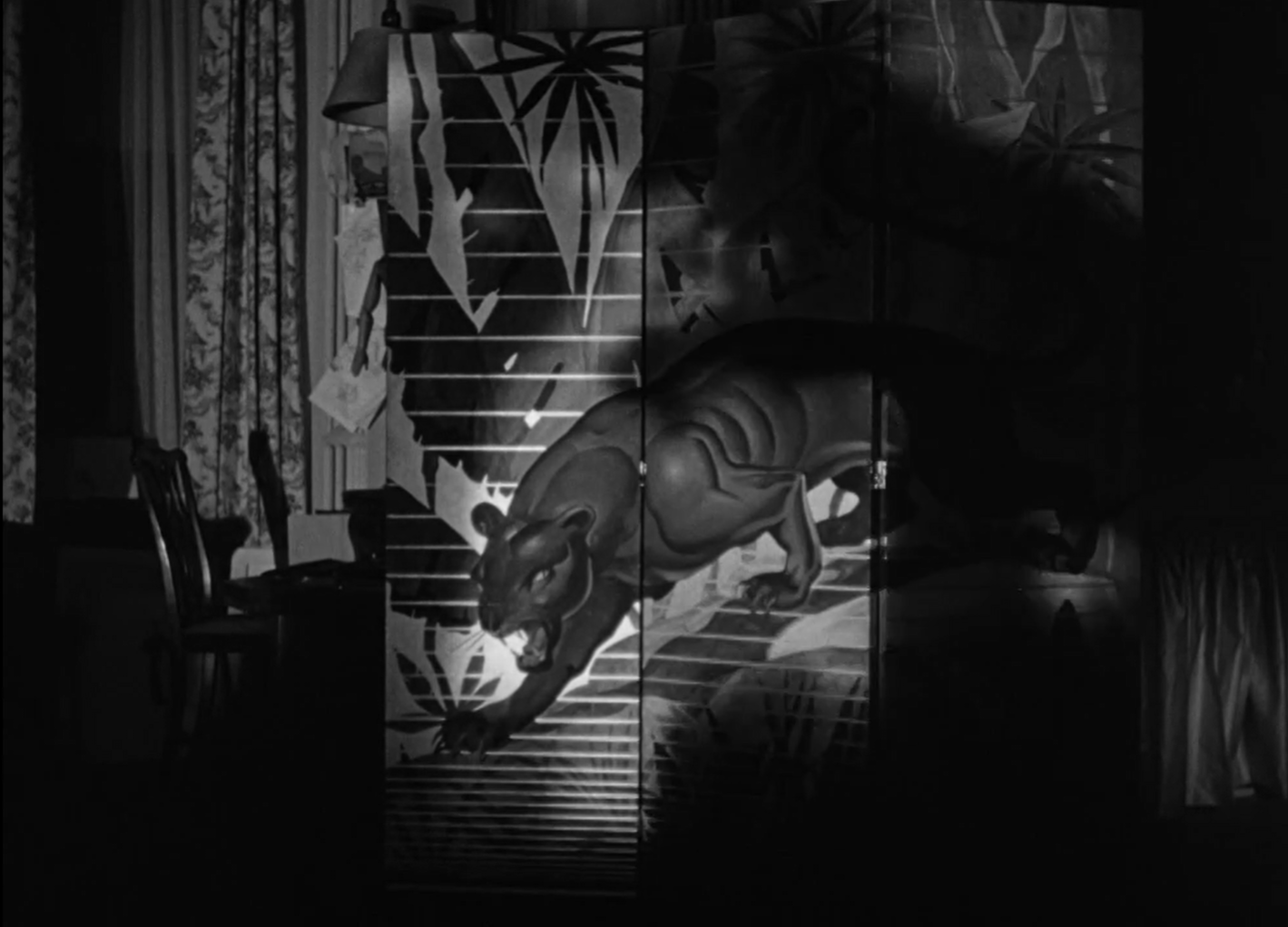
As so many have noted, Lewton’s RKO “horror” films were true masterpieces of suggested terror — and Cat People is a prime example of this. With the exception of a few highly contested shots of a giant cat later in the film (most likely inserted by the studio against Lewton’s will), Irena’s neuroses could be viewed as purely psychological. Each of the film’s justifiably “classic horror sequences” — “terrified Alice [Randolph] being followed through a dark park, jumping when a bus screeches to a halt next to her:

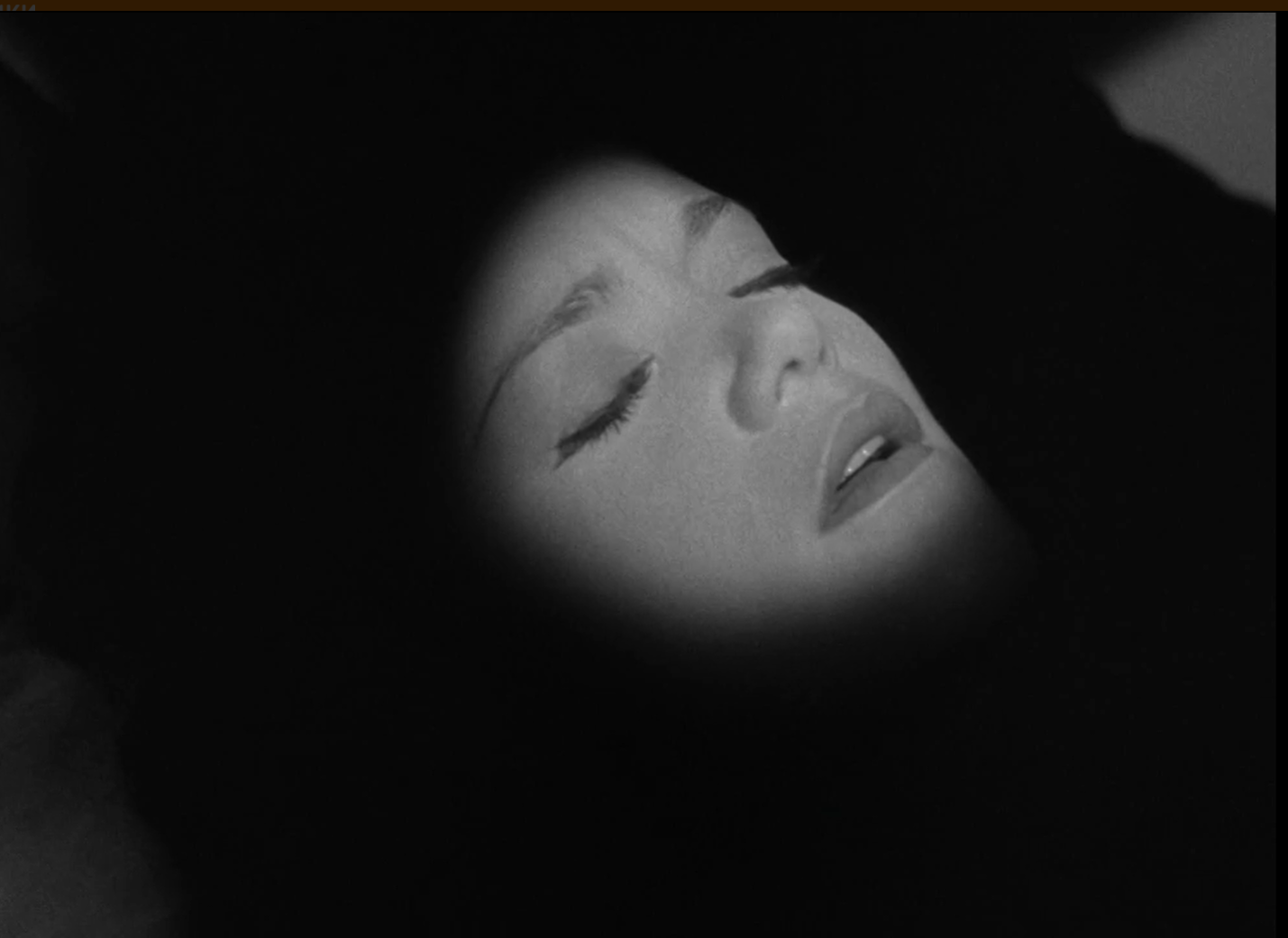
… Judd (Conway) trying to seduce Irena, only to be attacked by a giant cat:


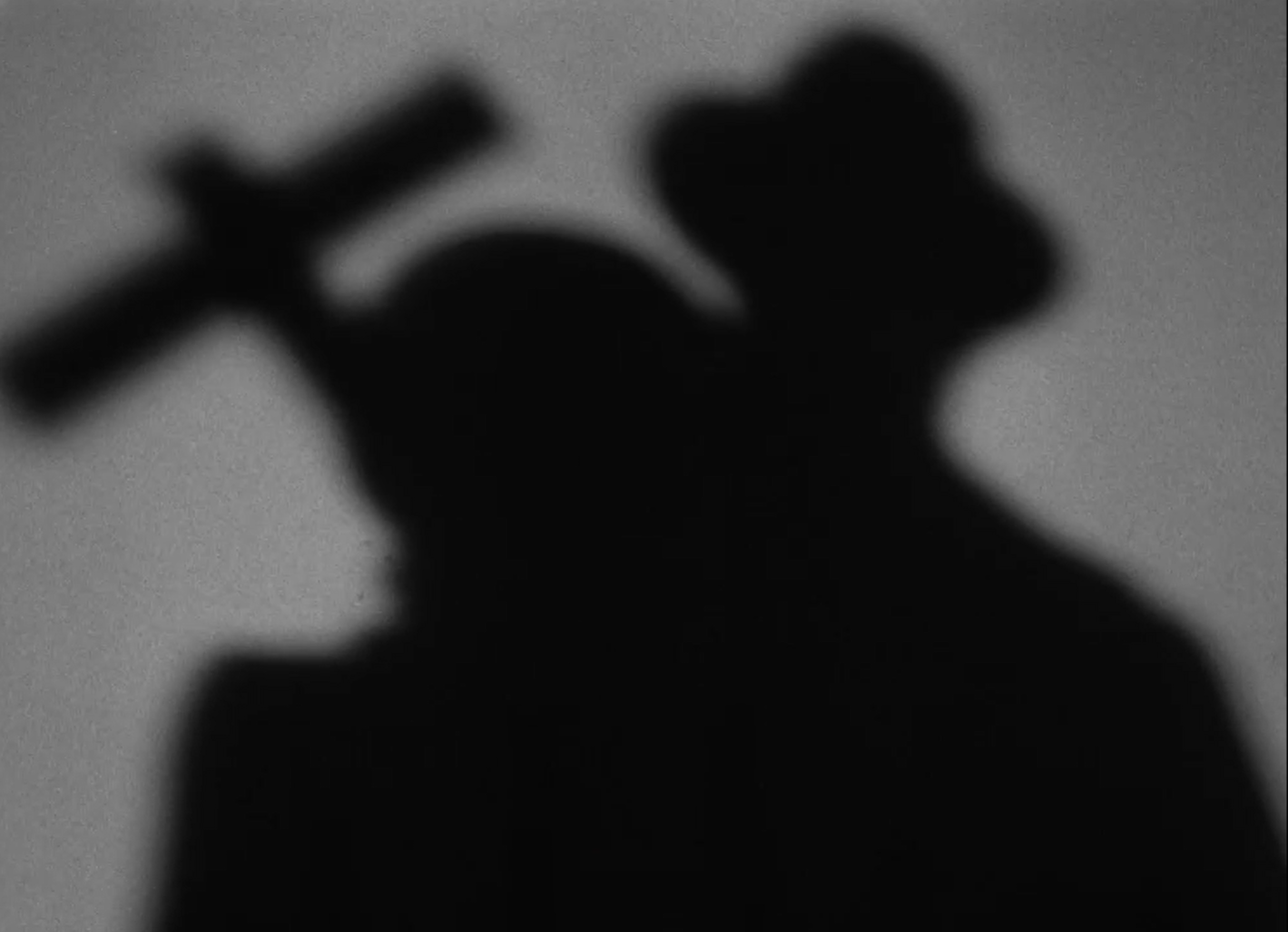
… Alice swimming alone in an indoor pool when the lights go out, [as] cat shadows appear on the wall and growling can be heard”:

— succeeds largely because of what’s implied rather than what’s actually seen. To this end, as Peary notes, director Jacques Tourneur “does a wonderful job of creating tense atmosphere”, and he’s helped in no small part by d.p. Nicholas Musuraca, who “does wonders with light and shadows”.

Cat People is a rare breed of literate horror film that — even at just 73 minutes long — merits repeat viewings in order to allow for full appreciation of the nuanced plot. Much like with its sequel (The Curse of the Cat People, a masterful film in its own right), Cat People is rich enough to be viewed and debated on numerous levels; a quick glance at IMDb’s message boards provides evidence of this ongoing phenomenon. Peary suggests that this would make a good double bill with Hitchcock’s Marnie (1964), “because of strikingly similar sexual themes and plot elements”. Remade by Paul Schrader in 1982 in a much more literal fashion (a title included in Peary’s book as well).

Redeeming Qualities and Moments:

  • Simone Simon as Irena
  • Numerous powerful, memorable sequences
  • Jacques Tourneur’s direction
  • Nicholas Musuraca’s hauntingly noir-ish cinematography

  • DeWitt Bodeen’s screenplay

Must See?
Yes, as one of Val Lewton’s true cult classics.

Categories

  • Genuine Classic

(Listed in 1001 Movies You Must See Before You Die)

Links:

Curse of the Cat People, The (1944)

Curse of the Cat People, The (1944)

“Amy isn’t lying to you. It’s an unseen companion; children love to dream things up.”

Synopsis:
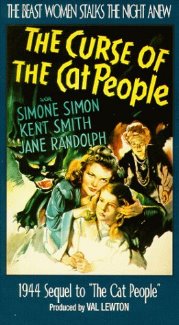
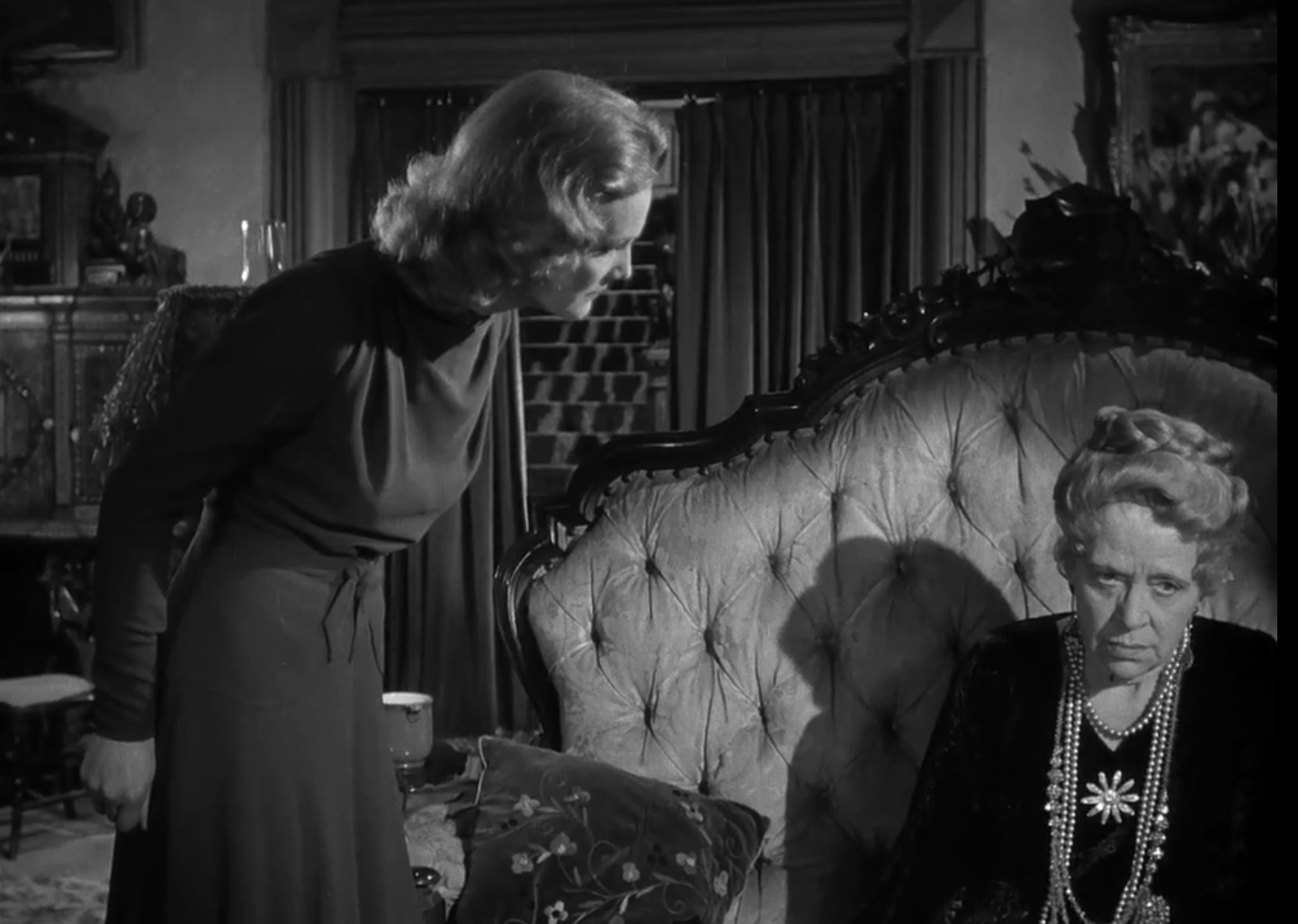
A lonely, imaginative girl (Ann Carter) befriends a beautiful apparition (Simone Simon) who looks just like the deceased wife of her father (Kent Smith); meanwhile, she becomes acquainted with a dotty neighbor (Julia Dean) who refuses to acknowledge the existence of her own increasingly distraught daughter (Elizabeth Russell).

Genres, Themes, Actors, and Directors:

  • Childhood
  • Friendship
  • Psychological Horror
  • Robert Wise Films
  • Simone Simon Films
  • Val Lewton Films

Response to Peary’s Review:
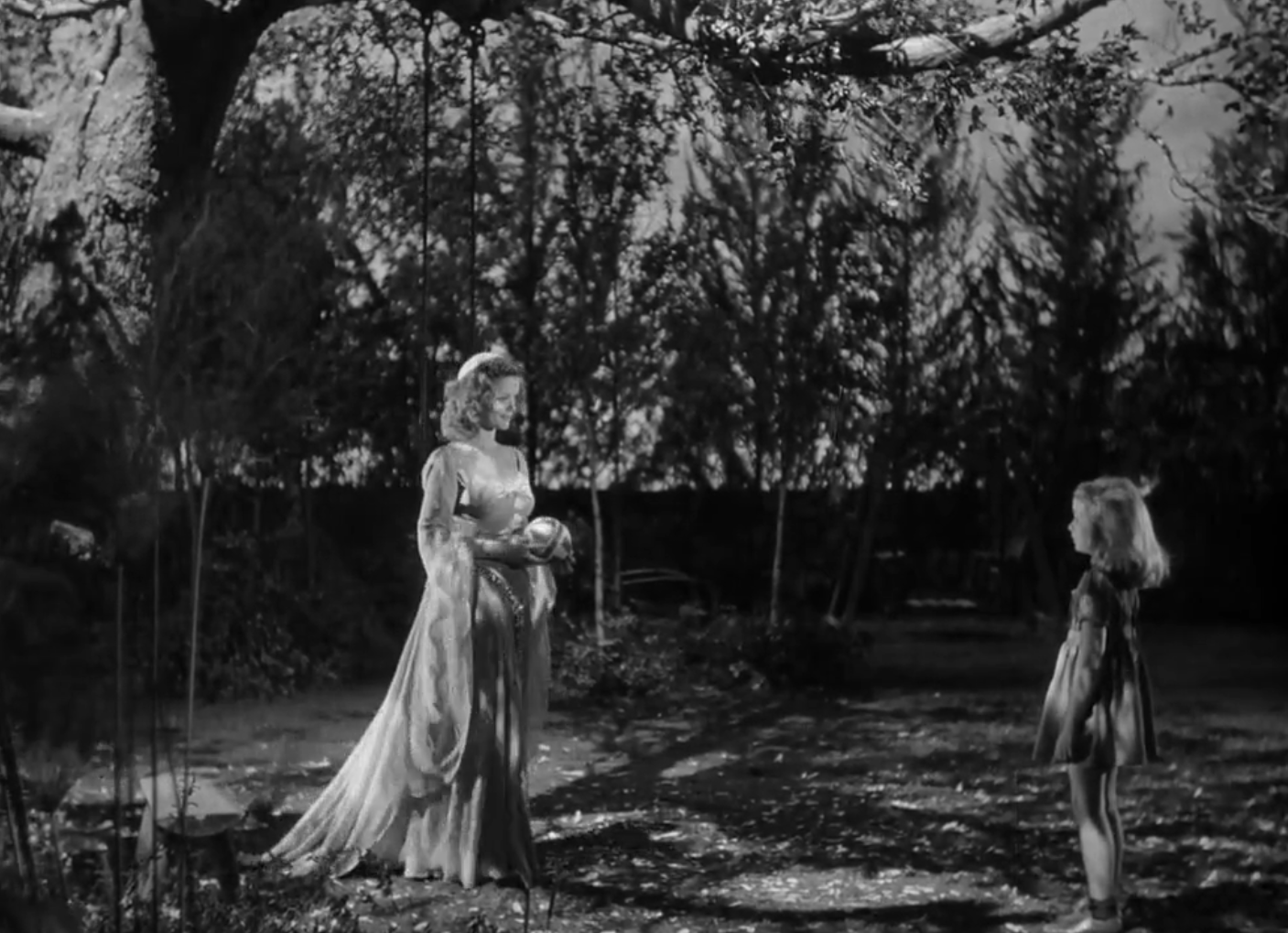
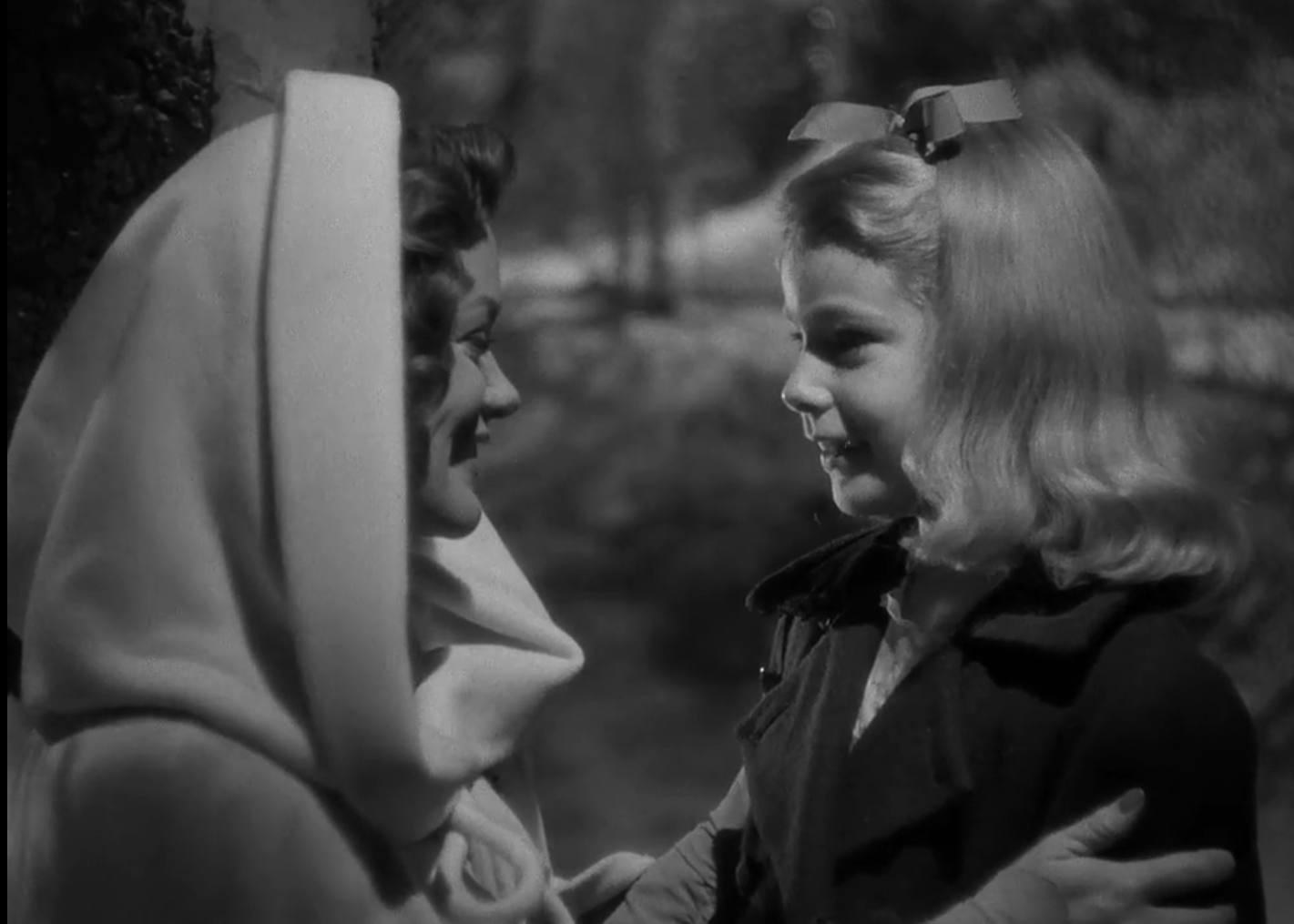
Peary accurately labels this “truly imaginative, magical little sleeper” from “producer Val Lewton’s ‘B’ unit at RKO” a “gem”, noting that it bears “no resemblance” to “any other horror film ever made”. Essentially the story of a lonely, socially awkward only child who imagines herself a beautiful playmate (Lewton’s preferred title for the film was Amy and Her Friend):

it actually defies categorization, and should probably not be labeled a “horror” film at all. In classic Lewton fashion, its chills and frights are suggested rather than shown; indeed, the only monsters here are ones created through the tragedy of life — such as the nearly psychotic Russell, who is being slowly driven off the deep end by her mother’s maddening refusal to acknowledge her existence.

Screenwriter DeWitt Bodeen’s inclusion of this subplot in the storyline at first appears a bit odd — until one begins to recognize the parallels between Russell and Amy: both are lonely, misunderstood individuals who are alienated from their parents, but while one chooses fantastic escape, the other wallows in increasingly hostile and dangerous bitterness to soothe her emotional wounds.

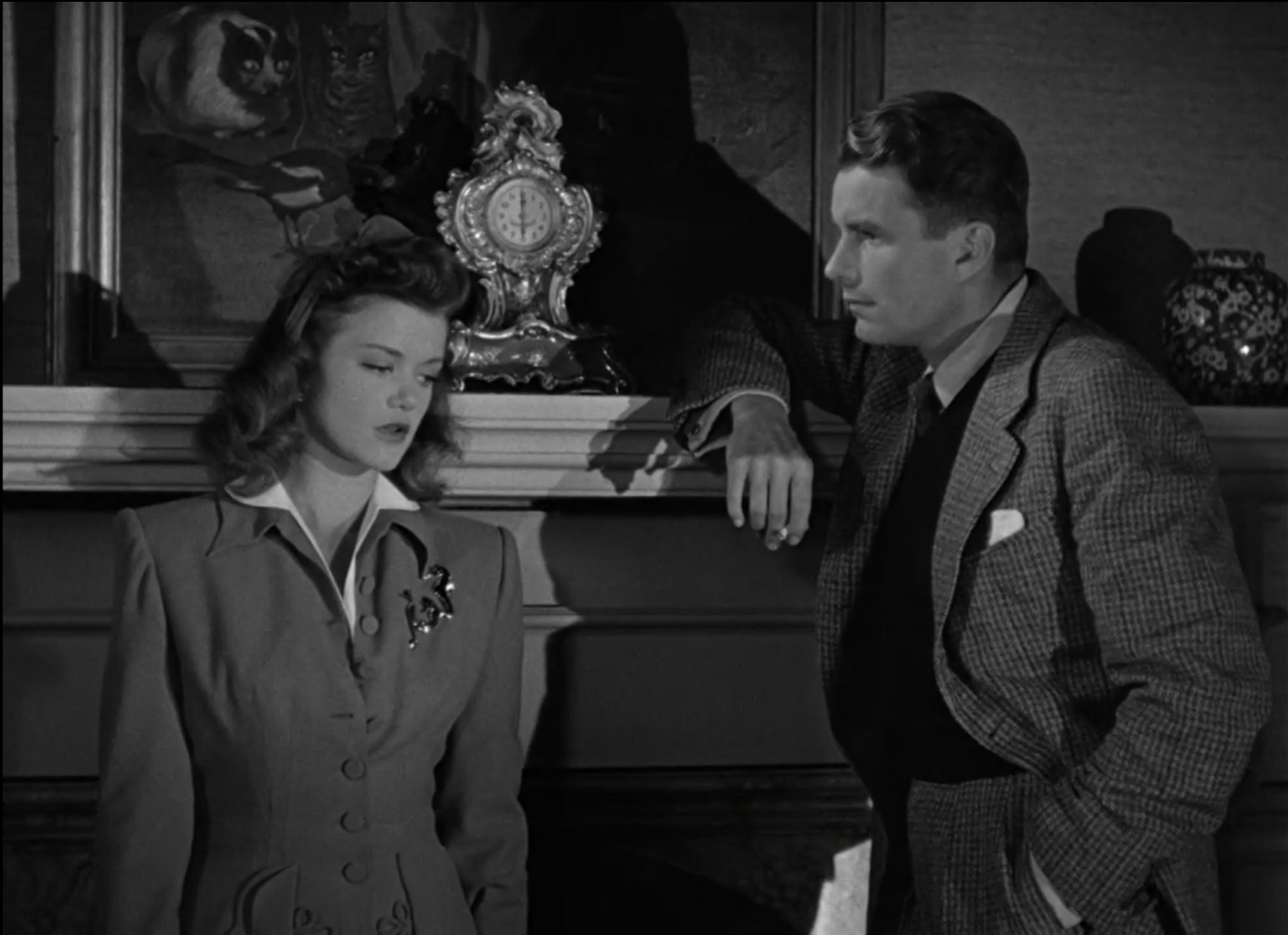
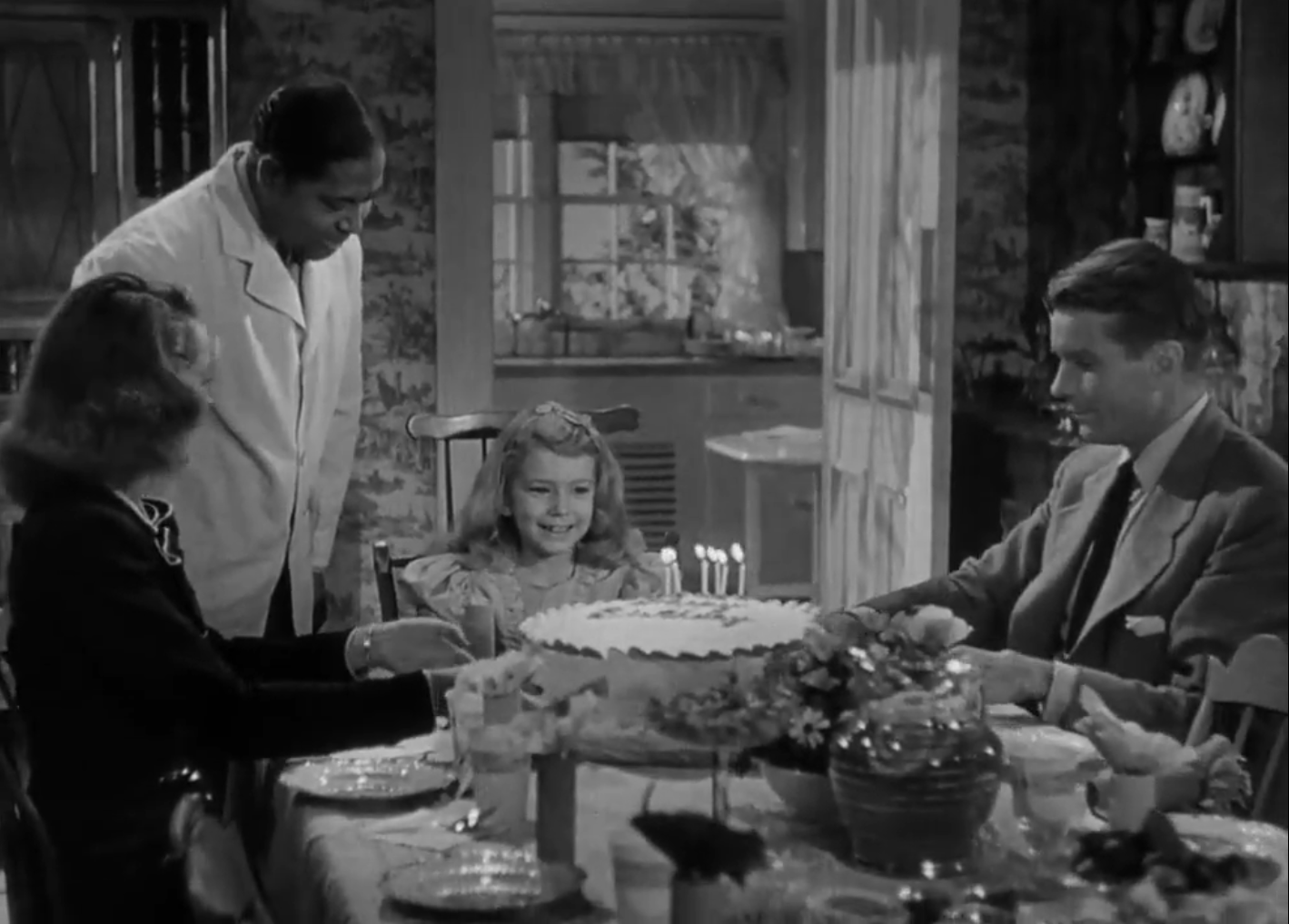
Interestingly, while Peary labels this a “so-called sequel” to Cat People, arguing that it “has no resemblance to its predecessor”, this isn’t technically accurate: Bodeen’s screenplay actually creatively imagines what might have happened to each of the central protagonists of Cat People a few years after that film’s tragic denouement. In this follow-up story, Smith is now (predictably) married to sympathetic Randolph, and they have a child:

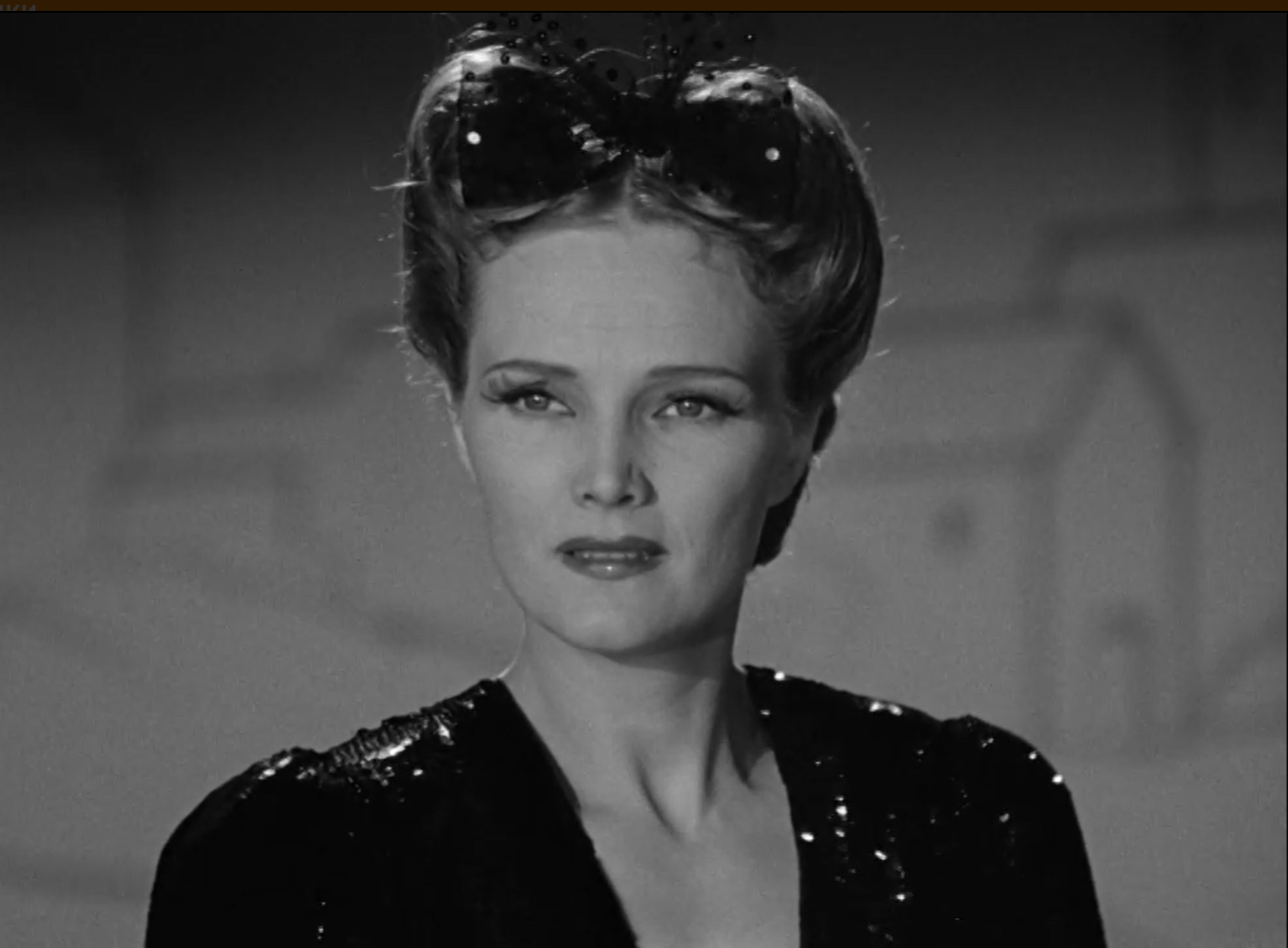
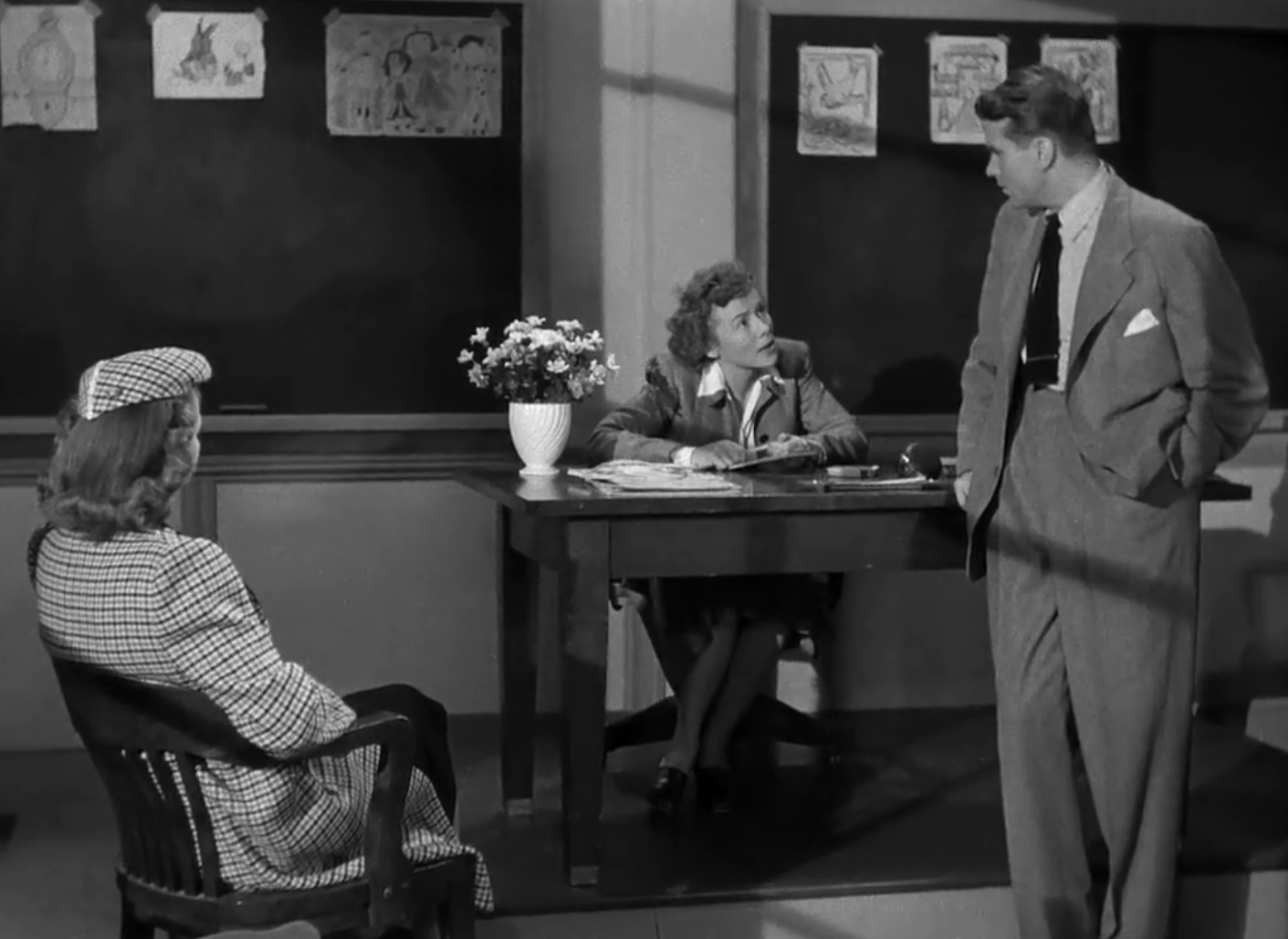
— but Smith remains so haunted and guilt-ridden by his troubled past that he suspects Carter of somehow representing or channeling his late wife. Meanwhile — depending upon how literally one wishes to view Carter’s imaginative friendship — Simon’s character here could be viewed (as one contributor on IMDb’s message board posits) as finally having achieved some peace after her tortured life, and bringing her new-found happiness to the daughter who might have been her own. Despite a few creakingly dated elements (wait until you hear Carter’s teacher’s opinion about spankings!), this remains a true sleeper, one which all film fanatics are sure to want to check out.

Note: This was, as Peary notes, “probably the first horror film ever screened at child-psychology courses”.

Redeeming Qualities and Moments:

  • Ann Carter as Alice
  • Nicholas Musuraca’s cinematography
  • DeWitt Bodeen’s lovely, sensitive screenplay about childhood and loneliness

Must See?
Yes, as an acknowledged classic by Lewton.

Categories

  • Genuine Classic

Links:

Sleeping Beauty (1959)

Sleeping Beauty (1959)

“Before the sun sets on her 16th birthday, she shall prick her finger, on the spindle of a spinning wheel — and die!”

Synopsis:
An evil fairy named Maleficent (Eleanor Audley) — upset about not being invited to the birth celebration of Princess Aurora (Mary Costa) — curses her to die on her 16th birthday. In an attempt to keep the princess safe from harm, a trio of goodnatured fairies — Flora (Verna Felton), Fauna (Barbara Jo Allen), and Merryweather (Barbara Ludd) — raise her in the forest; but will she remain safe from Maleficent’s wrath?

Genres, Themes, Actors, and Directors:

  • Animated Features
  • Folk Tales, Fairy Tales, and Mythology
  • Royalty and Nobility
  • Revenge

Response to Peary’s Review:
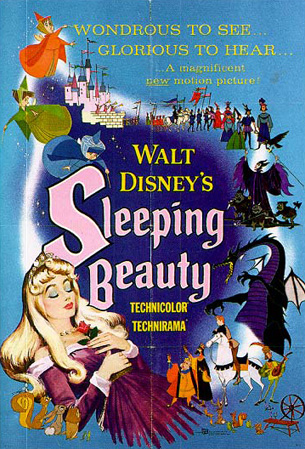
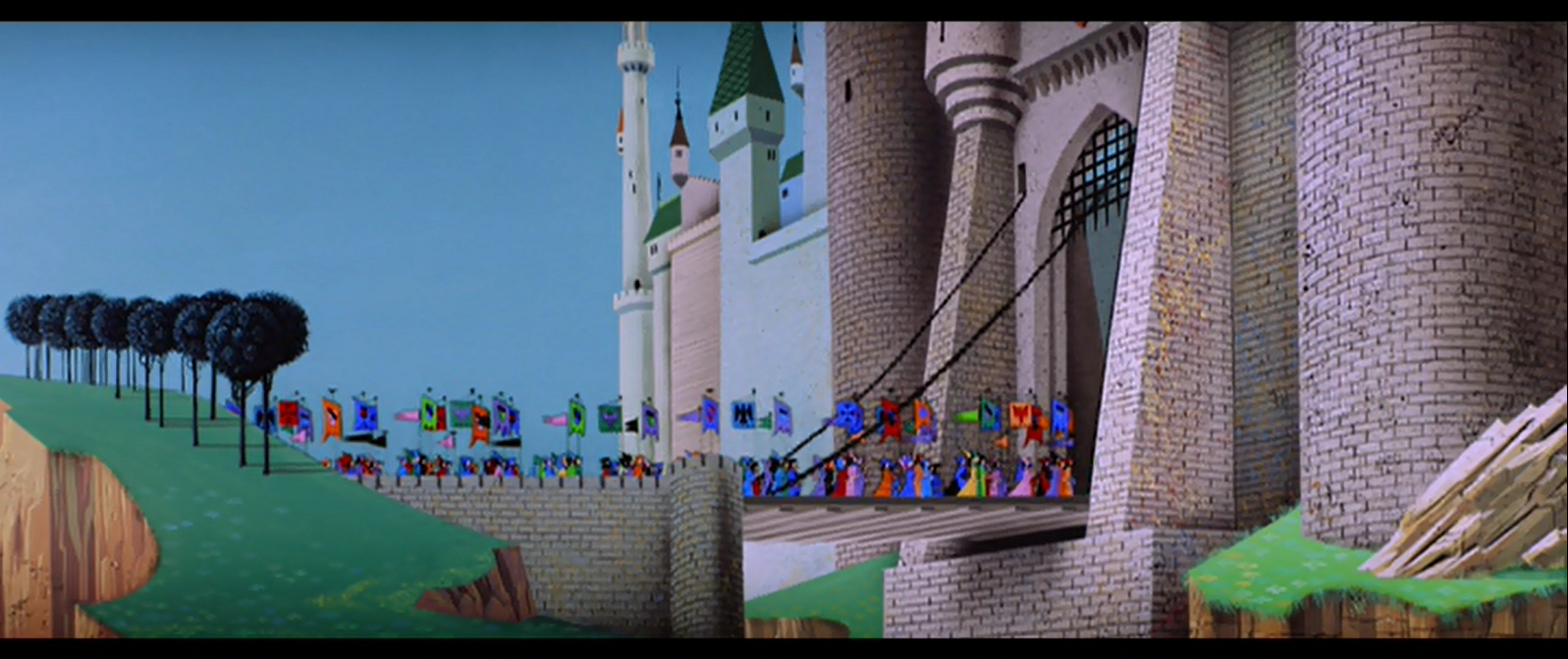
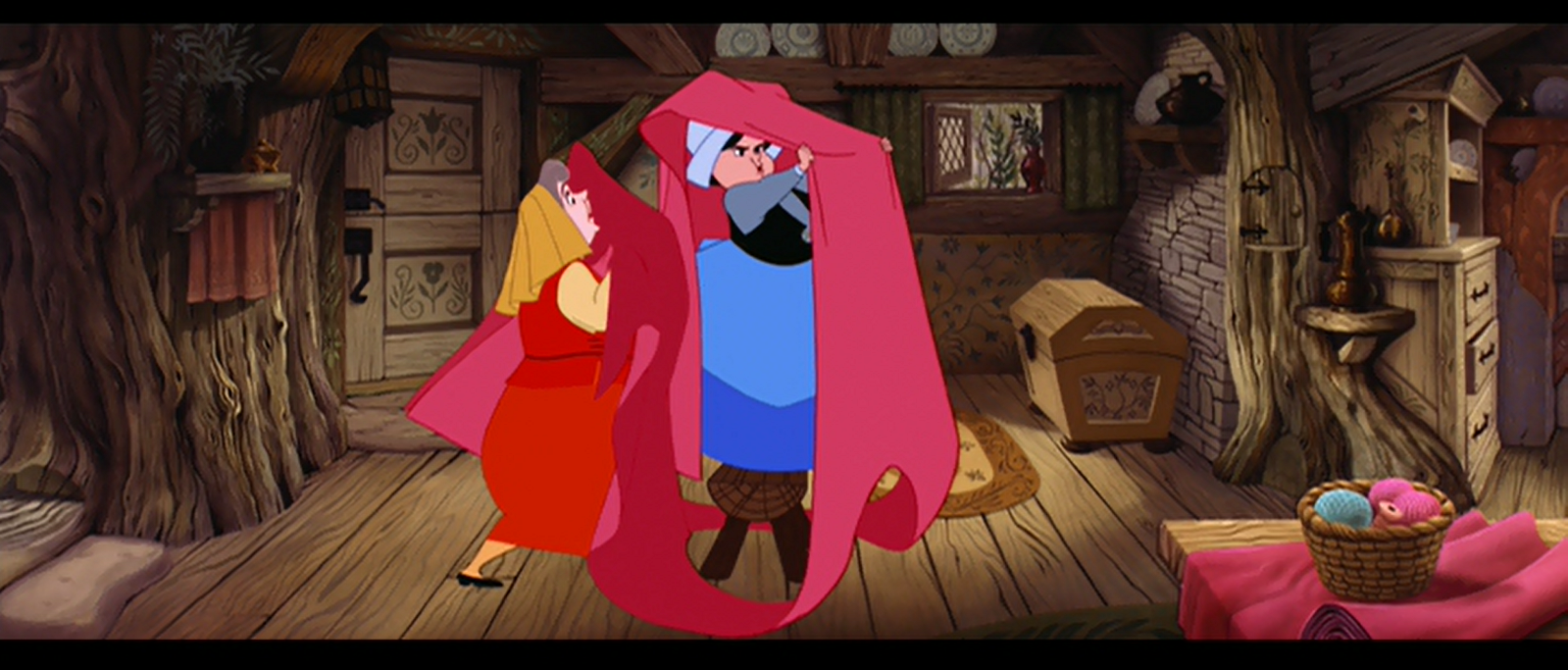
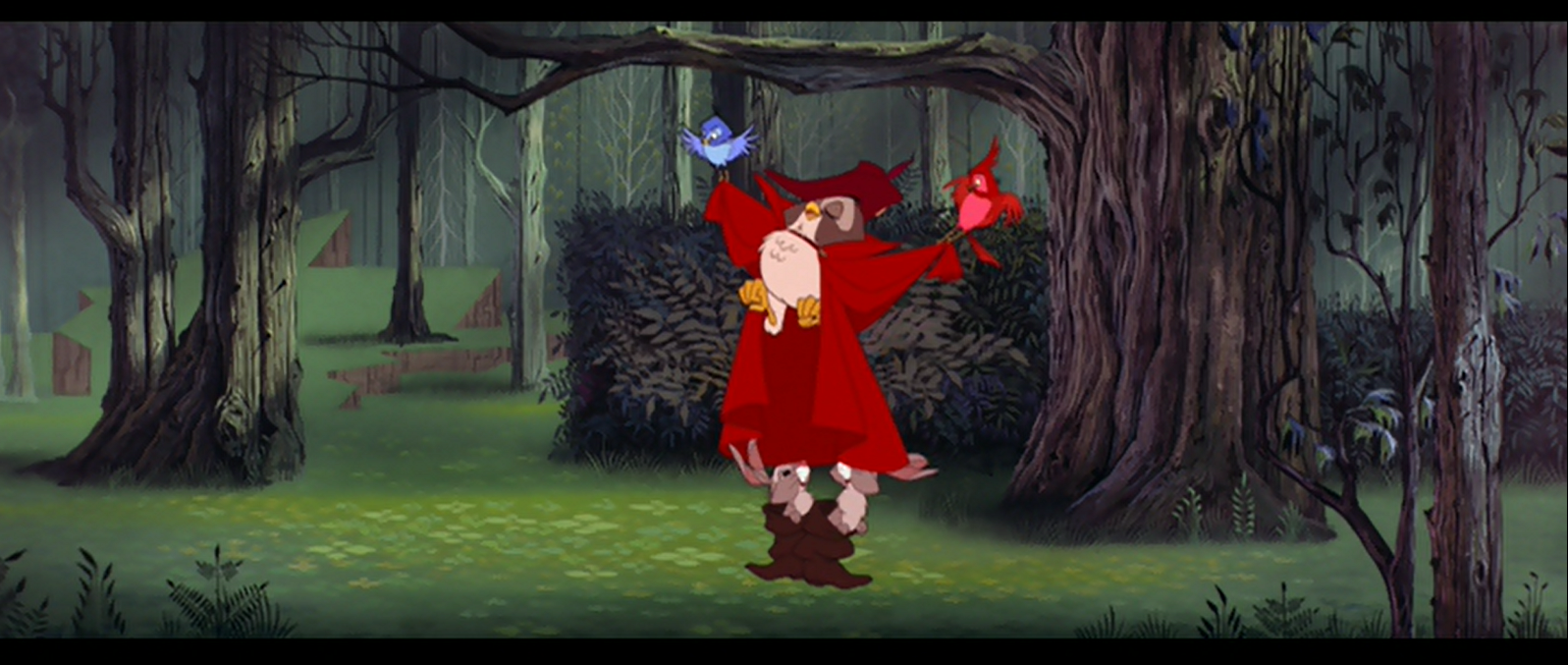
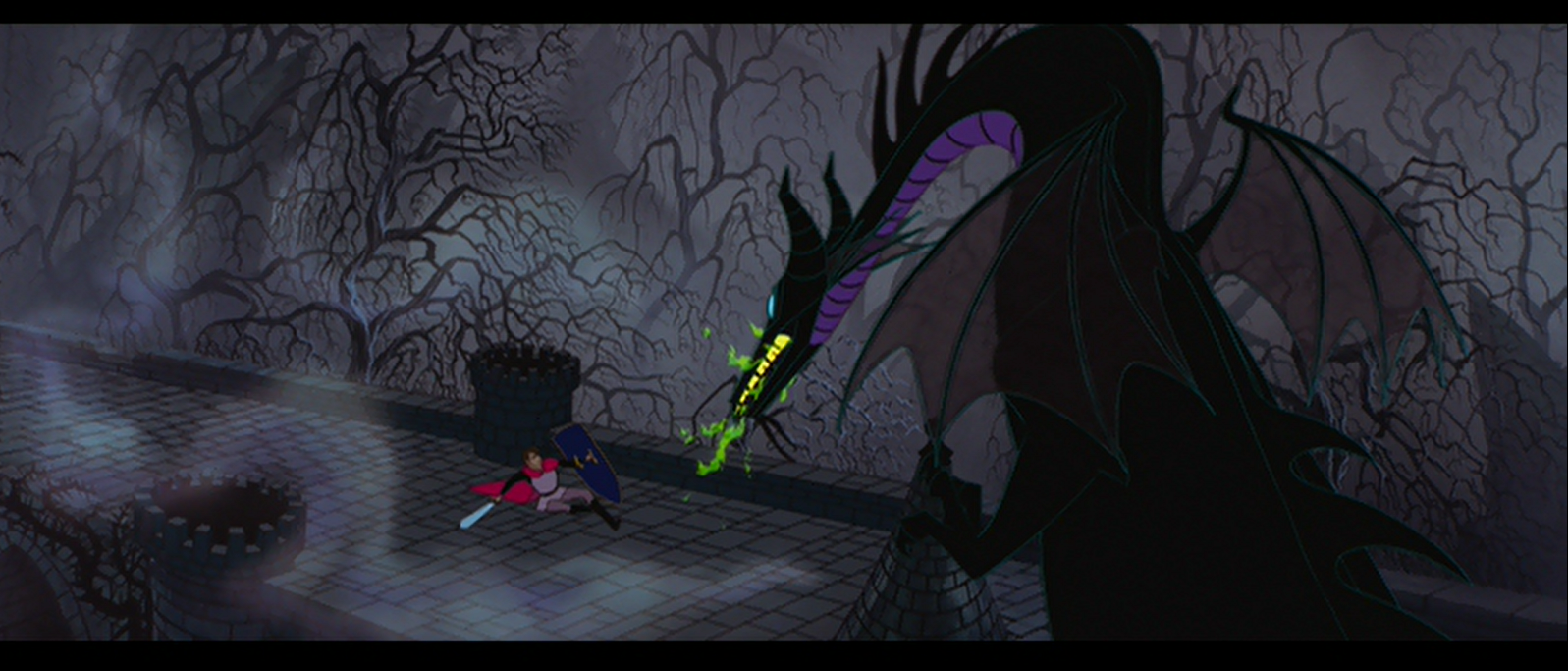
Peary writes that this “elaborate, charming animated feature by Walt Disney” — the second highest grossing film of the year (after Ben Hur) — has been “criticized for not being humorous enough or exciting enough (until the end) to please children”, but notes that he saw it in a “theater full of quiet kids who were absolutely spellbound”. He argues that while “the animation is not as flamboyant as in other Disney cartoons”, there is nonetheless “some fine detail work” (sadly, this was the last Disney film in which cels were inked by hand), and the Technicolor hues are truly gorgeous. Indeed, the animation style (inspired by European medieval painting and architecture — see stills below) is strategically different from that found in other Disney features, in part because — according to a bit of IMBd trivia — Disney’s “constant mantra to his animators” was that Sleeping Beauty could NOT be like Snow White and the Seven Dwarfs (1937).

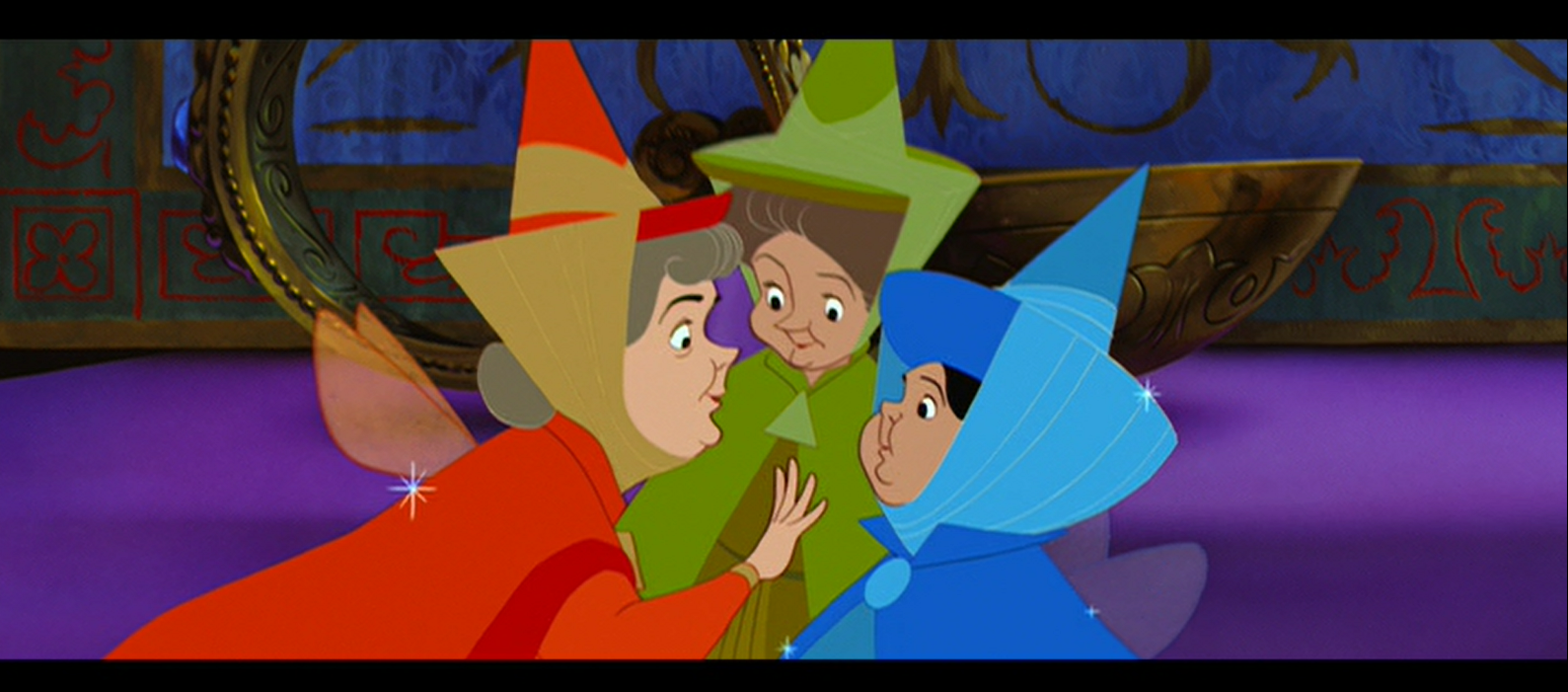
While Peary refers to Aurora as “one of the sexiest and most beautiful of Disney’s animated heroines”, she unfortunately — much like Snow White — can’t really be considered the film’s central protagonist, given that she only appears on-screen for 18 minutes. Meanwhile, her romance with Prince Philip (Bill Shirley) is as slight and meaningless as Snow White’s with Prince Charming. Instead, it’s Aurora’s fairy godmothers — “who are like three lovable, squabbling, slightly daffy maiden aunts” — who drive the story forward, and are featured in some of the film’s most enjoyable scenes. The most justifiably celebrated sequence, however, is the “spectacular” “climactic battle on Forbidden Mountain”, between Prince Philip and the evil Maleficent — this scene, while far too scary for young viewers, is a truly thrilling, masterfully animated denouement.

Redeeming Qualities and Moments:

  • A unique animation style
  • An eye-popping technicolor palette
  • Many enjoyable sequences

  • The exciting climax on Forbidden Mountain

Must See?
Yes, as one of Disney’s enduring classics.

Categories

  • Genuine Classic
  • Historically Relevant

Links:

Dumbo (1941)

Dumbo (1941)

“You all oughta be ashamed of yourselves — a bunch of big guys like you, pickin’ on a poor little orphan like him.”

Synopsis:
A baby elephant is ridiculed because of his enormous ears, and exiled to working as a clown — but with the help of his friend Timothy Q. Mouse (Edward Brophy), he soon discovers his true potential.

Genres, Themes, Actors, and Directors:

  • Animated Features
  • Carnivals and Circuses
  • Misfits
  • Talking Animals

Response to Peary’s Review:
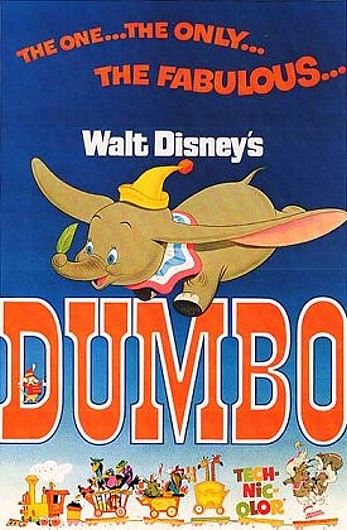
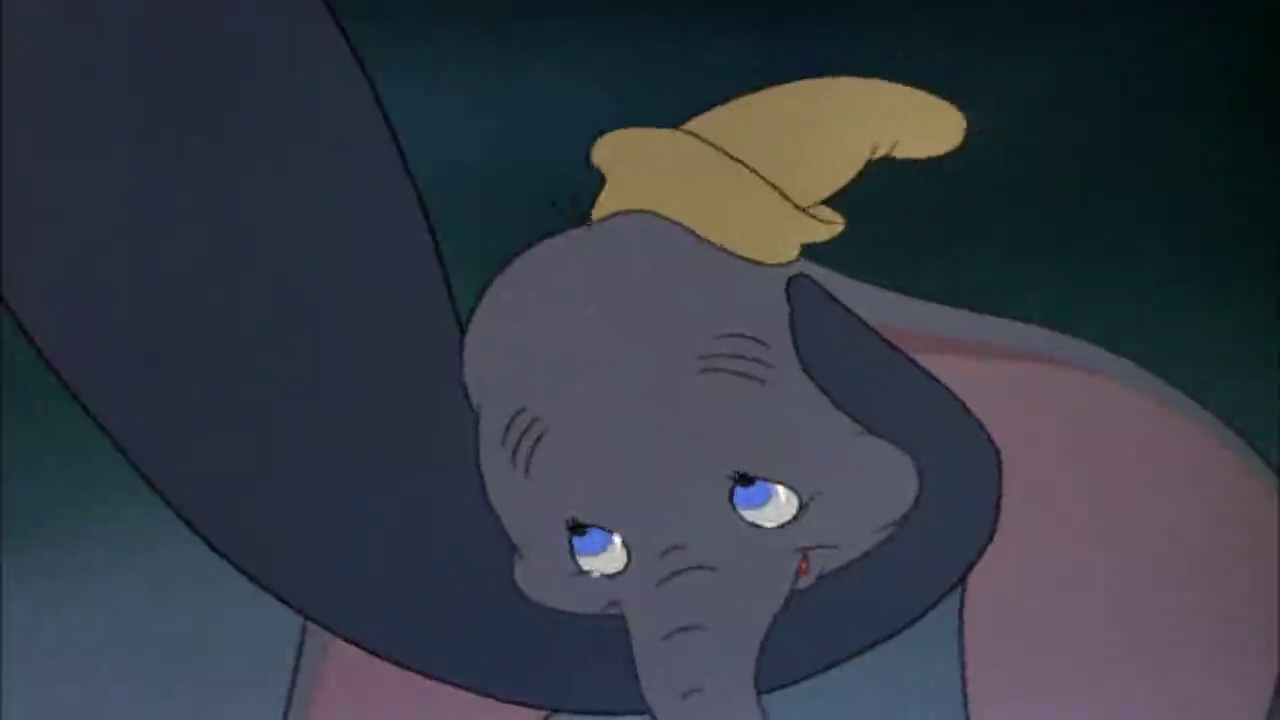
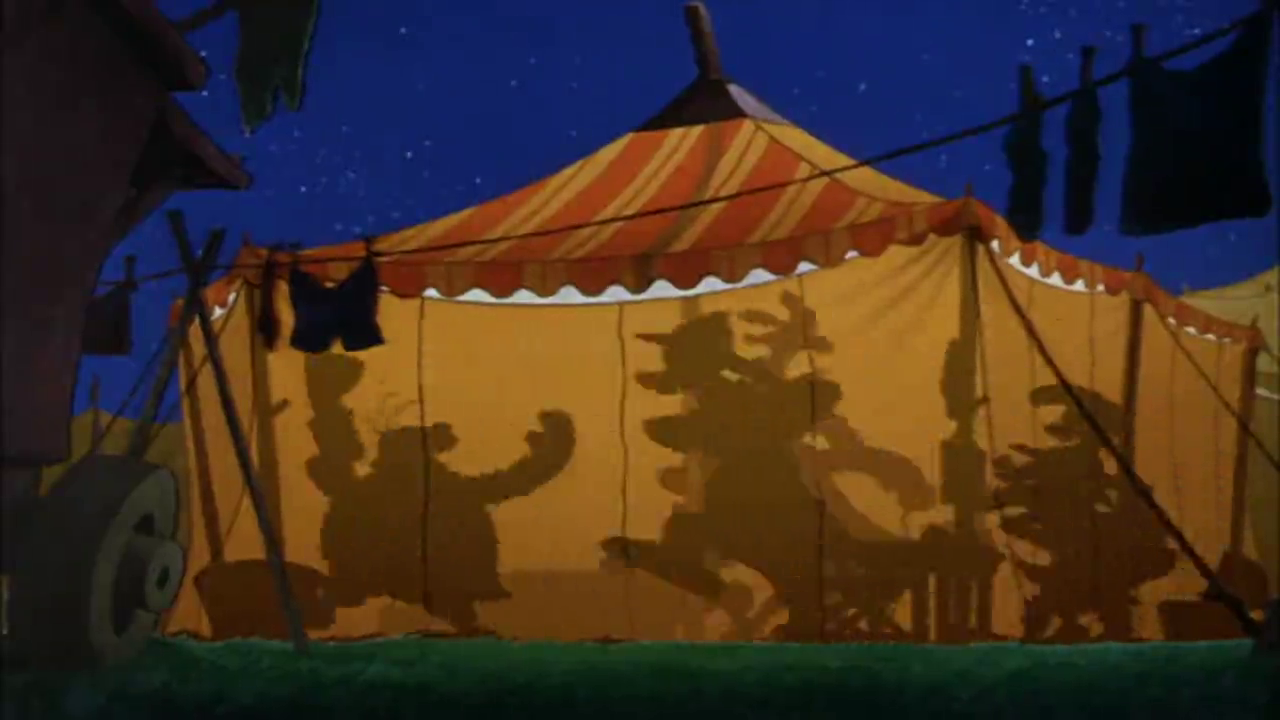
Peary accurately labels this classic animated feature about a misfit/freak who is “laughed at and rejected by the ones [he tries] to befriend” a “Disney film with heart”, noting that while it was “made on the cheap, to help recoup heavy studio losses”, it nonetheless remains one of the studio’s “finest, sweetest, least pretentious films”. He points out that “the characters are a memorable lot and are drawn expertly”, that the “action animation is exceptional” (with “excellent use… made of quick cuts and extreme angles”), and that “the story… manages to be both frightening (like, say, Oliver Twist) and charming.” He calls out in particular the famed “Pink Elephants” dance sequence — representing a “nightmare the drunk Dumbo is having” — as “one of the greatest bits of animation in all of Disney”. At just an hour long, the heartwarming story literally flies by, from its inspired opening sequence (involving a stork — Sterling Holloway — delivering Dumbo to his eagerly awaiting mother), to the infamously distressing scene in which Dumbo attempts to communicate with his wrongly caged mother, to its triumphant finale (preceded by a pivotal scene involving a quartet of helpful jivin’ crows). Dumbo deserves its celebrated spot in animation history, and merits multiple enjoyable viewings by all film fanatics.

Note: Other than the “traumatic” mother-child separation scene cited above, Dumbo is probably the film most suitable for young children out of all of Disney’s early features.

Redeeming Qualities and Moments:

  • A truly heartwarming (and at times heartbreaking) screenplay
  • Creative animation
  • The memorably infamous “pink elephants” sequence

Must See?
Yes, as one of Disney’s most justifiably acclaimed classics.

Categories

  • Genuine Classic

(Listed in 1001 Movies You Must See Before You Die)

Links: