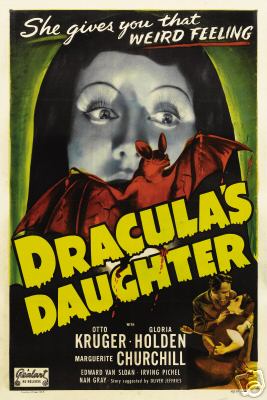
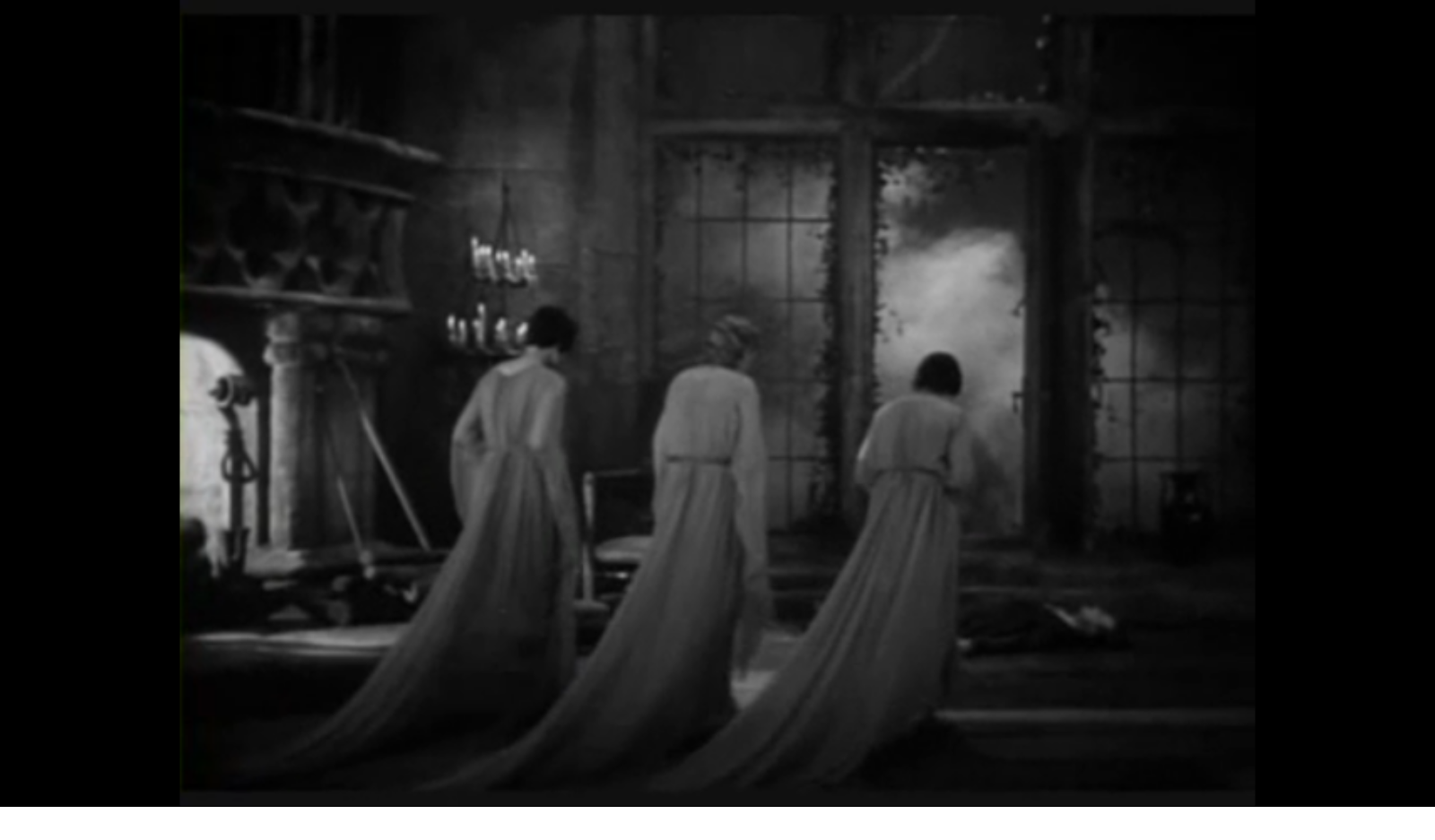
Dracula’s Daughter (1936)
“Sympathetic treatment will release the mind from any obsession.”
|
Synopsis: |
|
Genres, Themes, Actors, and Directors:
Response to Peary’s Review: Redeeming Qualities and Moments:
Must See? Categories
Links: |
My comments on Peary’s reviews in Guide for the Film Fanatic (Simon & Schuster, 1986).
“Sympathetic treatment will release the mind from any obsession.”
|
Synopsis: |
|
Genres, Themes, Actors, and Directors:
Response to Peary’s Review: Redeeming Qualities and Moments:
Must See? Categories
Links: |
“Each time I close my eyes, it seems I’m going to see him.”
|
Synopsis: |
|
Genres, Themes, Actors, and Directors:
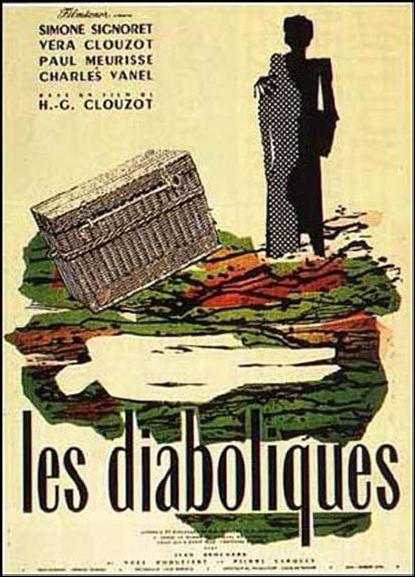
Response to Peary’s Review: In the rest of his review, Peary discusses the film’s “sinister vision”, arguing that it “conveys a nastiness of character and environment that is both oppressive and unsettling”, given that “the heroine, the nicest person in the story, plans cold-blooded murder” — yet this isn’t quite accurate. As in Hitchcock’s Rope (1948), one weaker (same-sex) character is convinced by another that murder is an appropriate course of action in a particular situation — therefore, it’s not really Clouzot’s character who plans the murder, per se. Plus, Clouzot is so clearly guilt-ridden and panic-stricken about what she’s doing that she remains a sympathetic protagonist throughout. Regardless, this is most definitely a bleak and “unsettling” film, one which works almost (though not quite) as well even if you already know (or can predict) the infamous plot twist. (And here’s where I’ll admit that years ago, as a first-time viewer, I was both terrified and shocked by the twist — thus disproving Peary’s assertion above). Redeeming Qualities and Moments:
Must See? (Listed in 1001 Movies You Must See Before You Die) Links: |
“Listen to them: children of the night. What music they make!”
|
Synopsis: |
|
Genres, Themes, Actors, and Directors:
Response to Peary’s Review: Redeeming Qualities and Moments:
Must See? Categories
(Listed in 1001 Movies You Must See Before You Die) Links: |
“Don’t ask for your rights; demand them!”
|
Synopsis: |
|
Genres, Themes, Actors, and Directors:
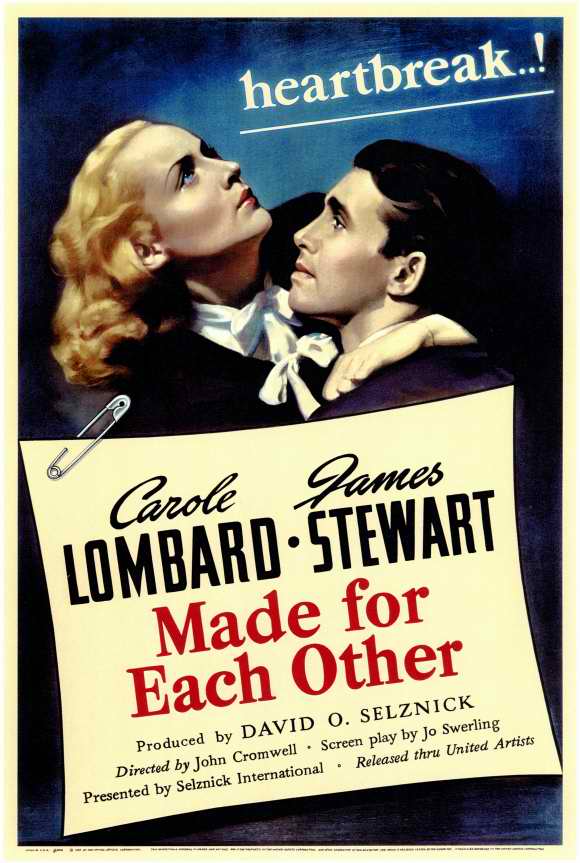
Response to Peary’s Review: It could be argued — as DVD Savant does in his review — that the Masons’ entire situation is overplayed as much more dire than it really is. After all, the couple’s worst troubles consist of a dinner party gone awry (no more wine left!), Stewart unable to get a raise and promotion (though he DOES have a stable job during harsh economic times), having to house their newborn baby’s crib in the dining room (horrors! I’m guilty of that one as charged), and — the worst case scenario — actually being unable to afford their housemaid anymore (!). With that said, it’s still easy enough to sympathize with a couple who (in Savant’s words) “are about as endearing as a movie pairing can get”, and are ultimately “trying to cope with familiar financial problems” — and Lombard’s interactions with her meddlesome mother-in-law (nicely played by Watson) ring true. It’s just too bad the script fails the characters completely by the end — though I’ll guiltily admit that my heart was in my mouth throughout. Watch for unexpectedly Expressionistic sets by William Cameron Menzies, lit atmospherically by D.P. Leon Shamroy. Redeeming Qualities and Moments:
Must See? Links: |
“The power to kill can be just as satisfying as the power to create.”
|
Synopsis: |
|
Genres, Themes, Actors, and Directors:
Response to Peary’s Review:
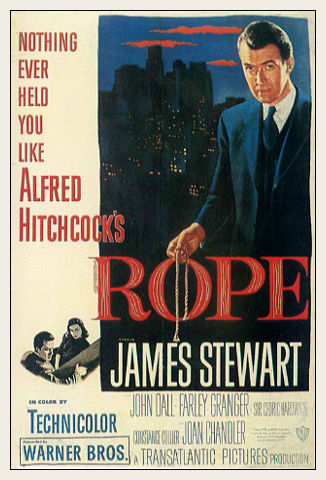
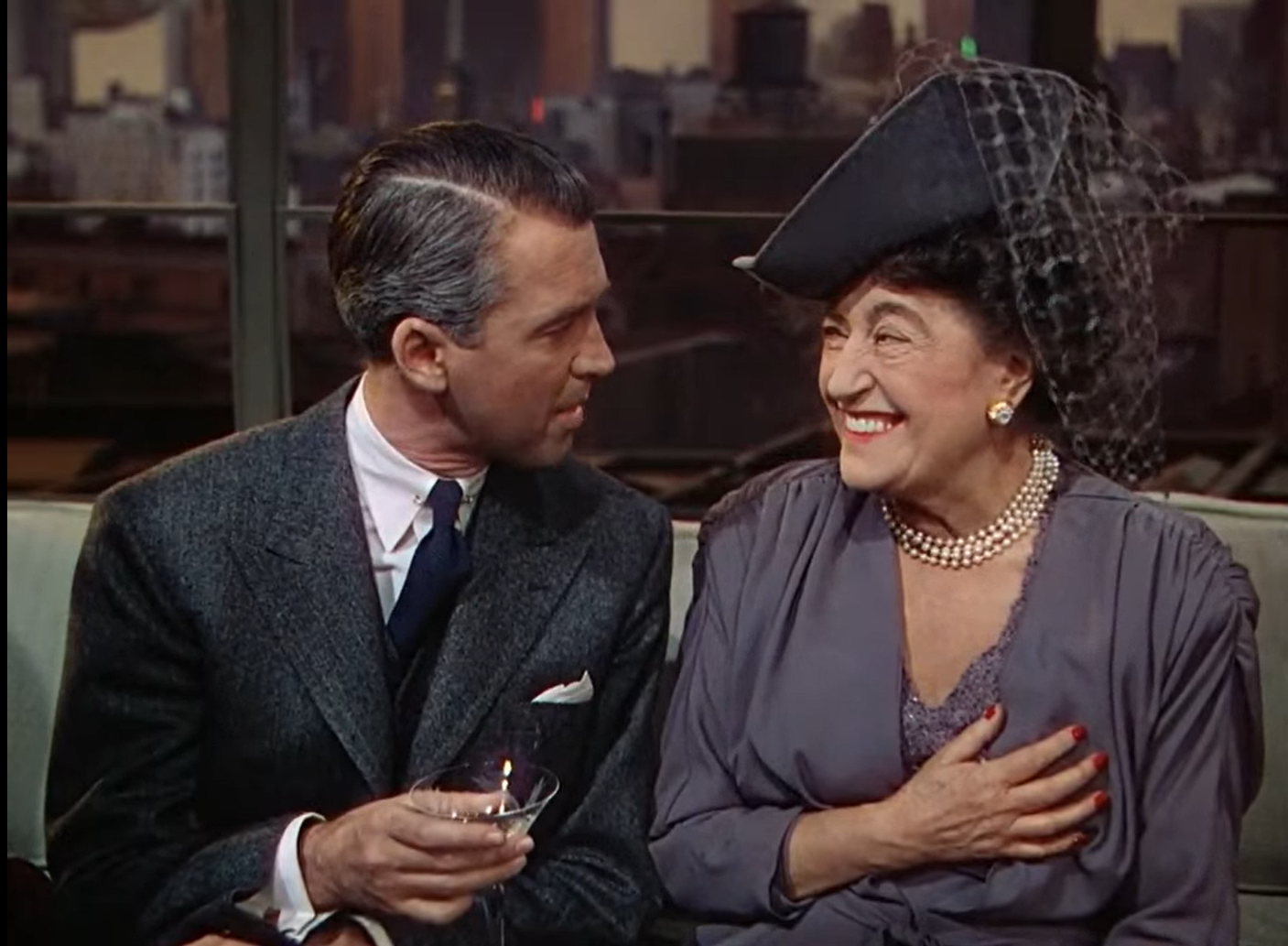
Unfortunately, while the film’s technical bravado excuses its staginess, it only partially hides the storyline’s more obvious flaws — most notably the fact that Stewart’s character boldly preaches an outrageously Nietzschian philosophy (“After all, murder is — or should be — an art”, he says; “And, as such, the privilege of committing it should be reserved for those few who are really superior individuals.”), then acts horrified when his impressionable young charges carry out exactly the actions he has just condoned. (Apparently he takes issue with the young men’s positing of themselves as “superior individuals” — but who, pray tell, WOULD fit this bill in his eyes?!?)
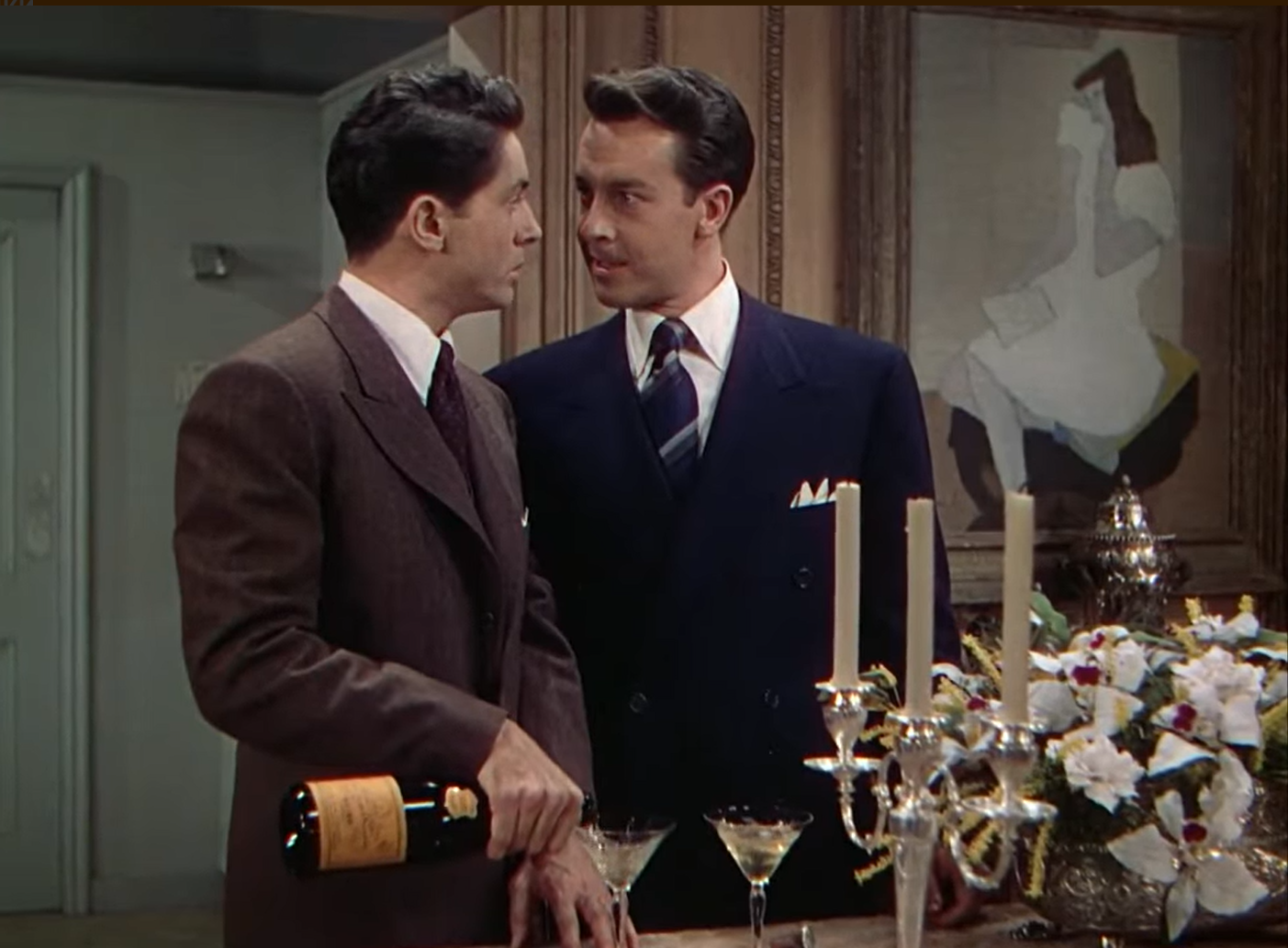
On the other hand, while some believe that Hitchcock should not have chosen to show the murder itself taking place as the film opens — instead allowing viewers to remain in suspense about whether the duo actually committed the crime — I don’t believe this negatively impacts the storyline, which remains inherently suspenseful simply given the omnipresence of the chest where Hogan’s freshly killed corpse has been placed. Peary makes an interesting observation near the end of his review, noting that it’s “tough to be in [the] audience” while watching such “morbid subject matter” because, “while you despise the two killers, for some reason you hope the crime goes unresolved”. Actually, I find it difficult to truly “despise” Granger’s character, who — unlike the “arrogant Dall”, “immediately feels woozy [and] guilty” about what he’s done. To that end, it’s clear from the get-go that the sociopathic Dall is the dominant partner in this thinly veiled homosexual partnership, and that Granger has likely been bullied somehow into committing the murder. It’s interesting to contemplate what kind of different impact the movie would have if: a) Dall and Granger’s characters were written as more openly homosexual, and b) Stewart’s character were portrayed as a homosexual as well (given that this was Hamilton’s original intention). At the very least, it would add another level of tension and thematic interest — though in some ways, of course, it’s refreshing NOT to see two cold-blooded murderers overtly portrayed on-screen as gay, given all the implications that would engender. Redeeming Qualities and Moments:
Must See? Categories
(Listed in 1001 Movies You Must See Before You Die) Links: |
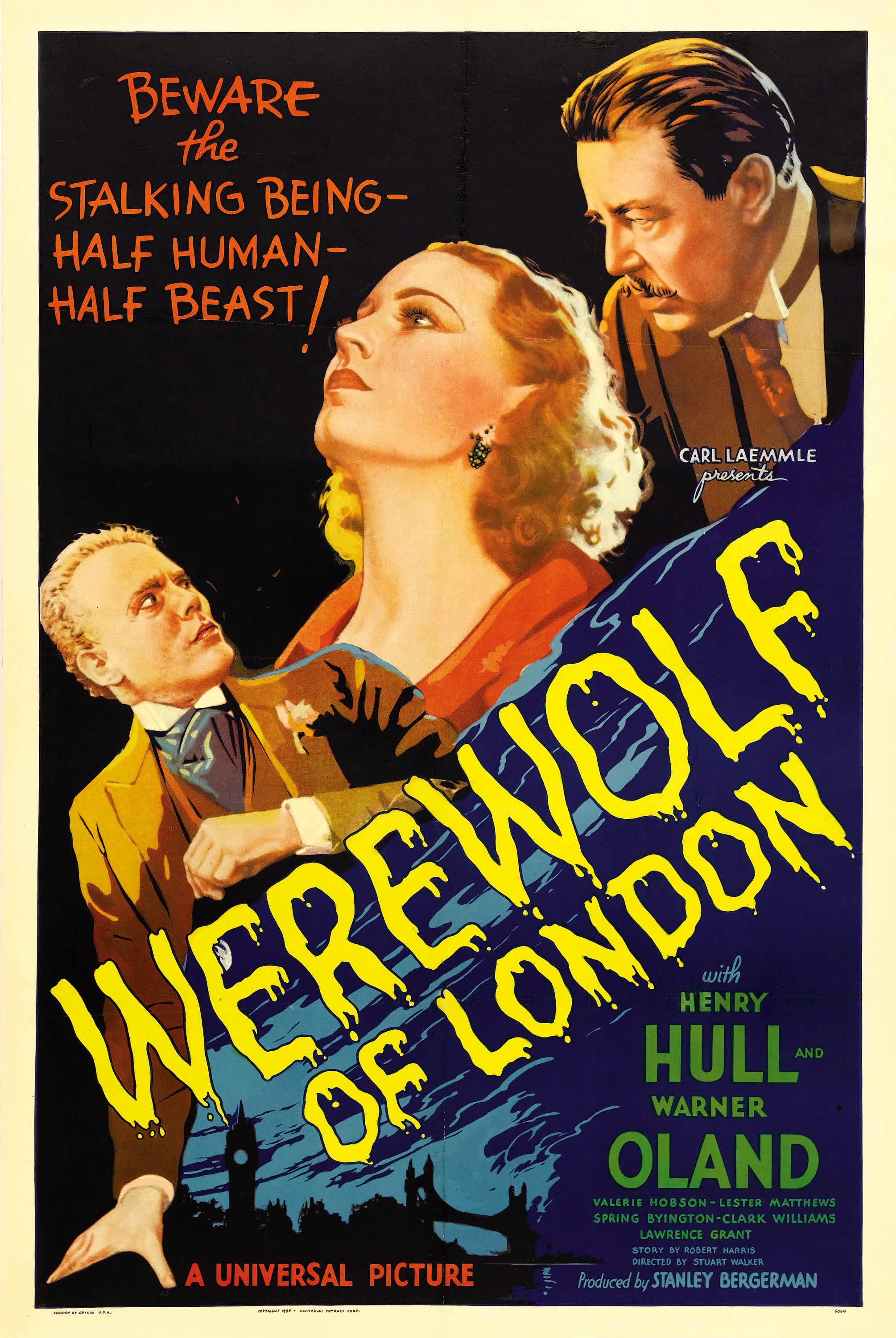
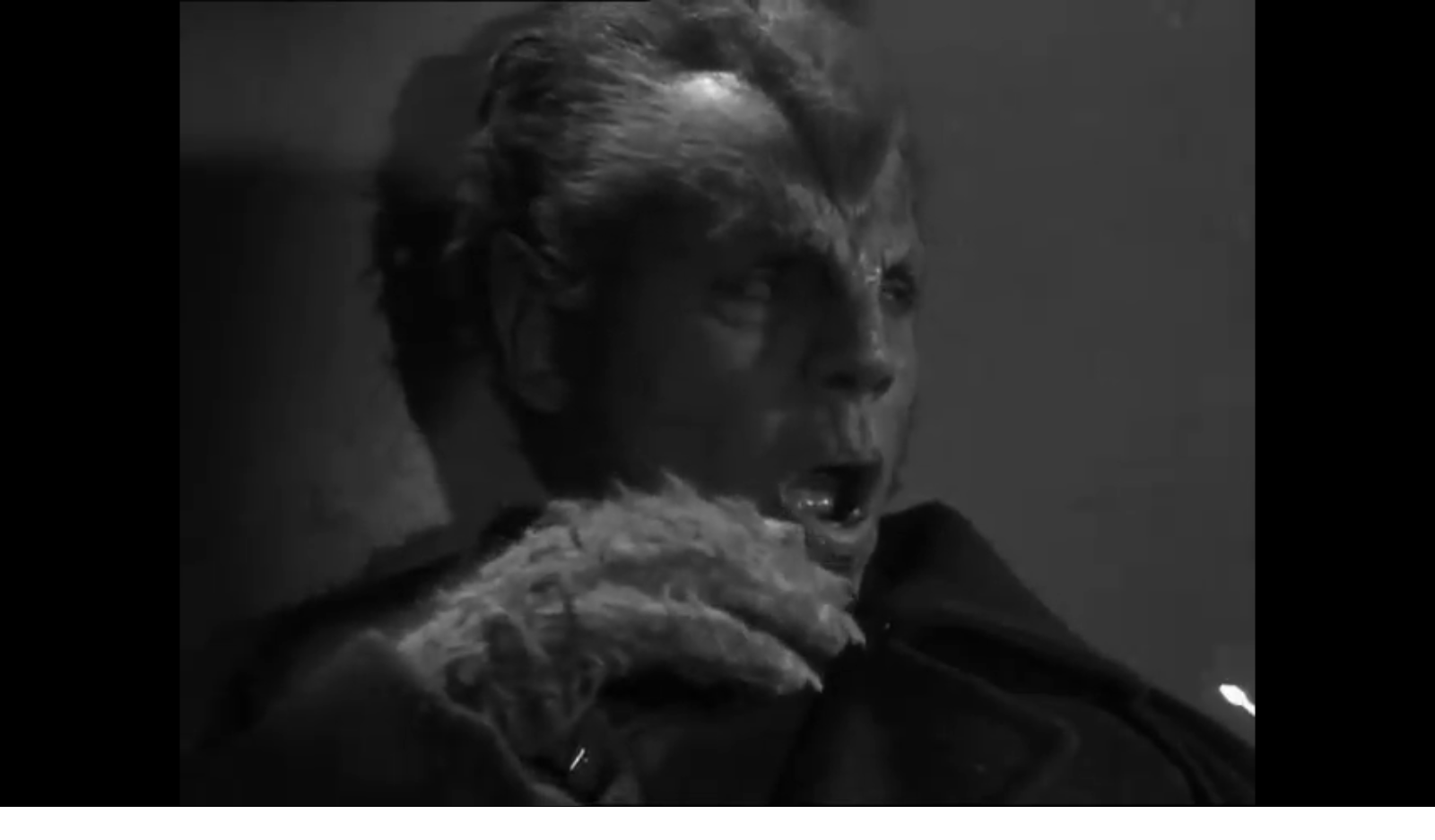
“The werewolf instinctively seeks to kill the thing it loves best.”
|
Synopsis: |
|
Genres, Themes, Actors, and Directors:
Response to Peary’s Review: Redeeming Qualities and Moments:
Must See? Categories
Links: |
“There’s a million Indians out here against one coward!”
|
Synopsis: |
|
Genres, Themes, Actors, and Directors:
Response to Peary’s Review: Note: Interestingly, this title is included in the notoriously snooty 1,001 Movies You Must See Before You Die, though the reviewer is frustratingly elusive as to exactly why it should be considered “must-see”. Redeeming Qualities and Moments:
Must See? (Listed in 1001 Movies You Must See Before You Die) Links: |
“I told you that no one could leave.”
|
Synopsis: |
|
Genres, Themes, Actors, and Directors:
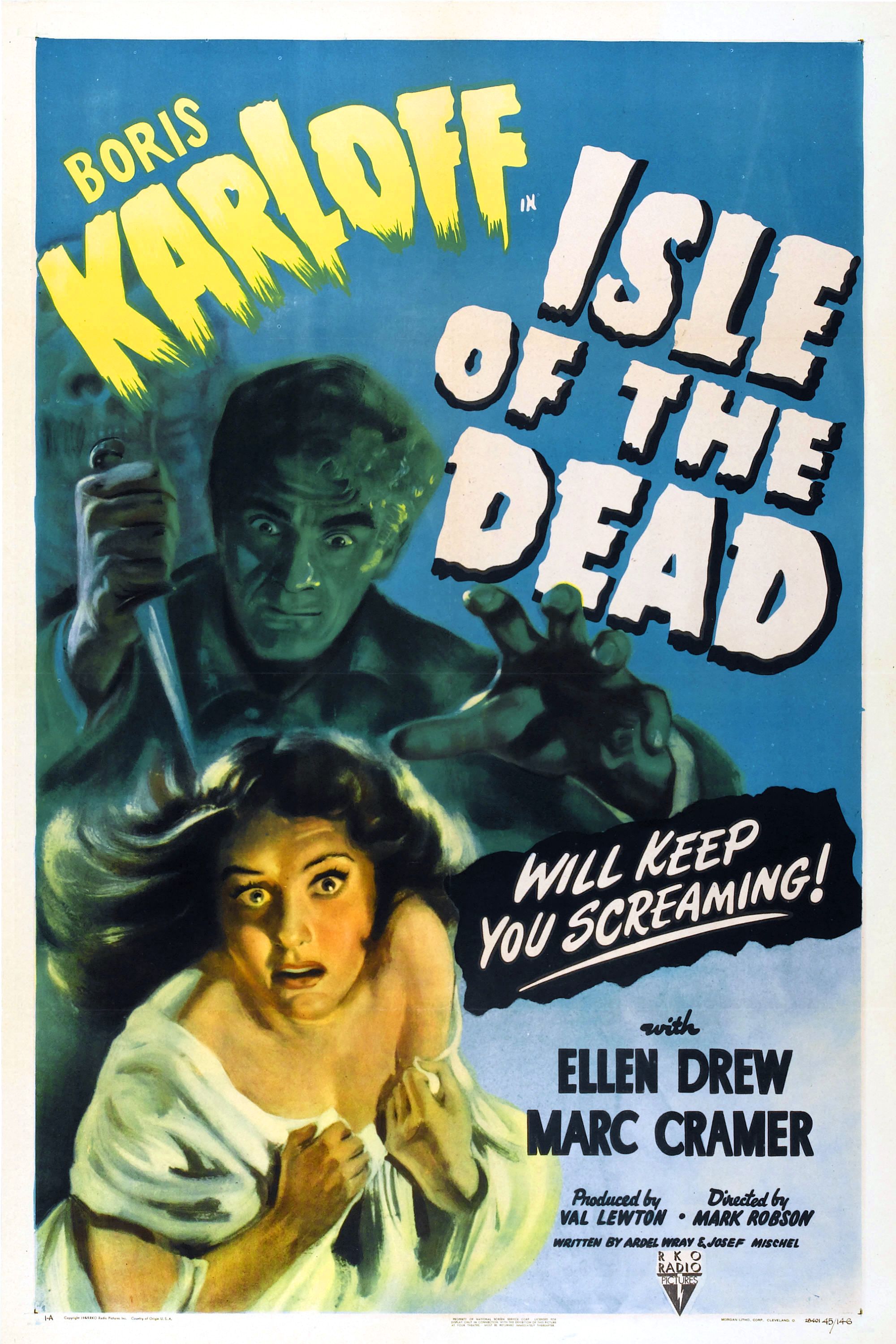
Response to Peary’s Review: Peary spends the bulk of his review analyzing the film and its characters in light of Lewton’s limited but impressive oeuvre (nearly all of which are “must see” movies). He points out that “in Lewton films, when a character” (such as Karloff’s general) “loses his mind he reverts to old, superstitious ways”, and notes that the screenplay allows Lewton to “exploit his concept of man controlled by fate”. He makes an apt analogy between Drew’s character (Thea) and Simone Simon’s Irena in Lewton’s Cat People, noting that Thea, like Irena, is “not sure she doesn’t harbor evil within her” — but while Irena is immediately presented as a sympathetic character whose fate we genuinely care about, Thea (a gypsy) simply functions here as a conveniently “Othered” scapegoat (and a requisite romantic lead). Ultimately, you’re better off spending your time rewatching one of Lewton’s many other classic psychological horror flicks — though film fanatics will be probably be curious to check this one out at least once. Redeeming Qualities and Moments:
Must See? Links: |
“Science — like love — has her little surprises.”
|
Synopsis: |
|
Genres, Themes, Actors, and Directors:
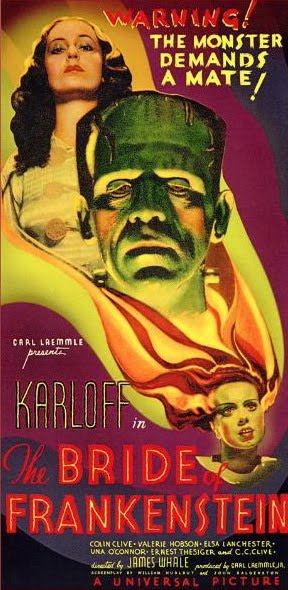
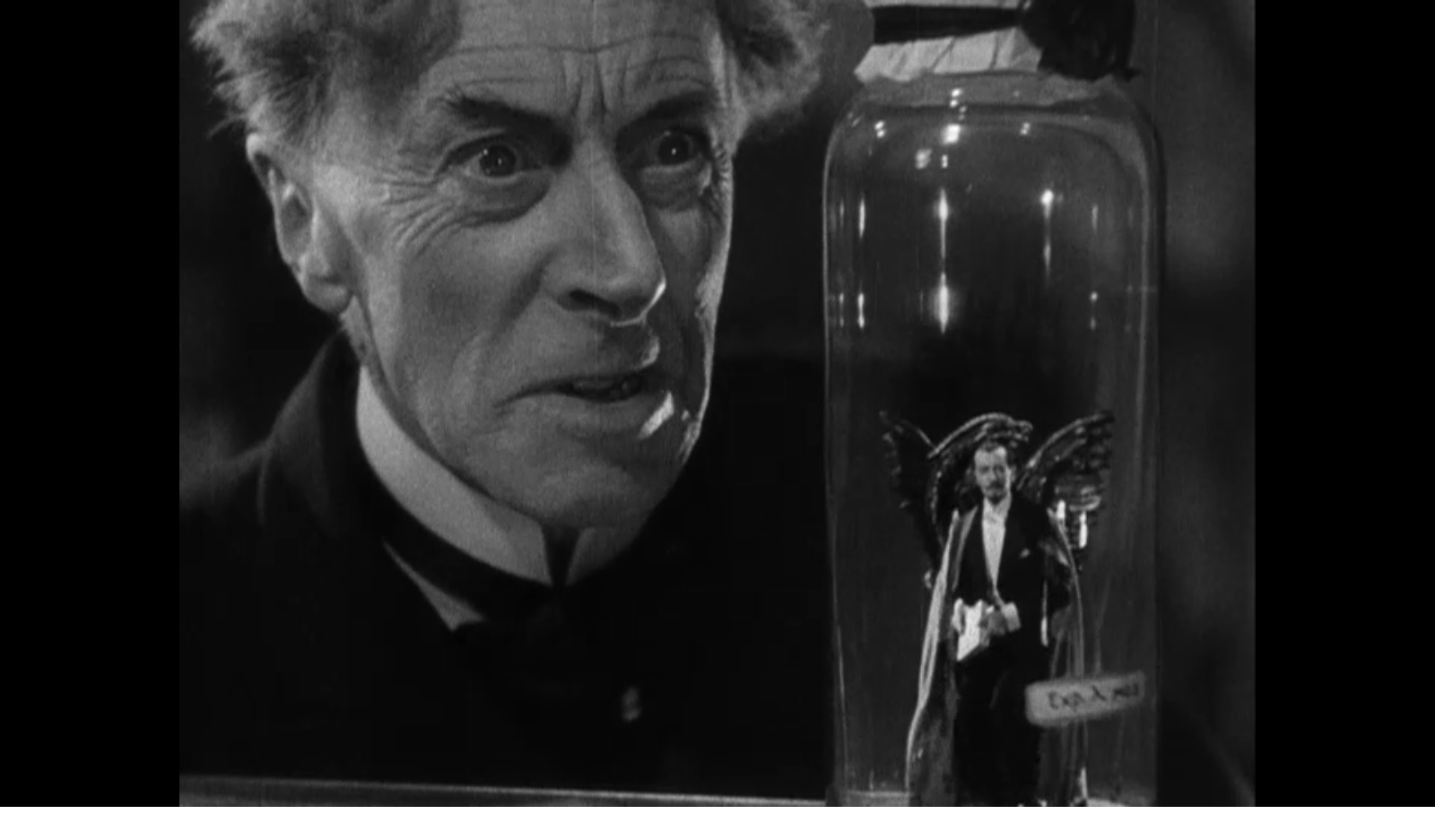
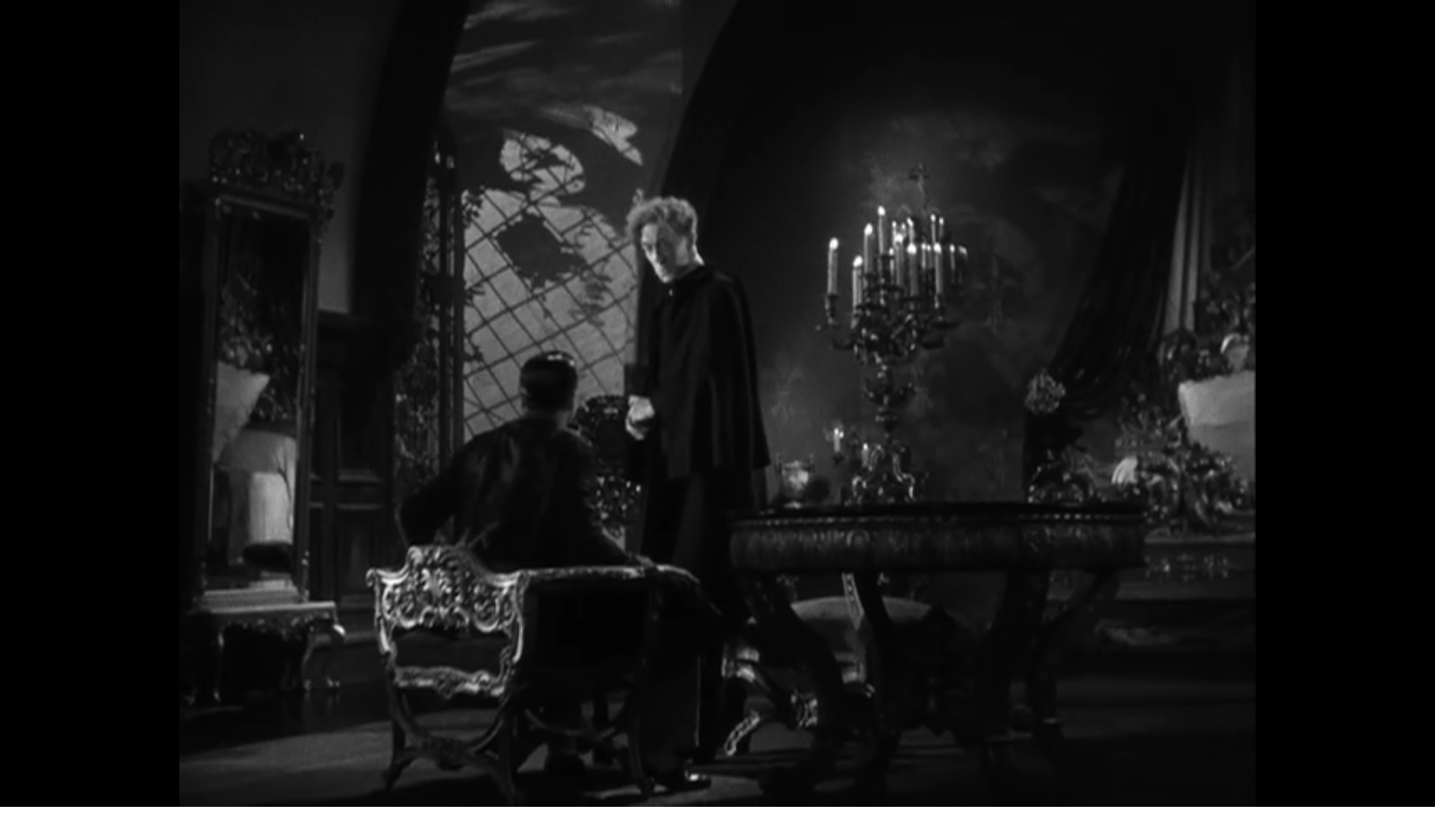
Response to Peary’s Review: At any rate, Peary goes on to argue that this second film “is not cold, bleak, or depressing like the original” (apples and oranges, anybody? I find nothing wrong with the first film having more of this tone), and that it “has a higher budget [so that] the production values breathe life into the story” (though again, I found the production values just fine in the original). He notes that “the claustrophobic castle and laboratory sets are balanced by spacious, candle-lit chambers with shiny floors and columns, all covered with shadows”, and exclaims (rightfully so) over “how wonderful the expressionistic forest [is]!” As Peary points out, “neither Whale nor cameraman John Mescall strove for realism”, given that this “film is meant to be a visualization of a story”. He calls out the way Whale “has fun with the four stars’ angular faces”, shooting them “in tremendous close-ups, often using wild camera angles” — indeed, it’s this particular element of the film that strikes one as most innovative and astonishing. (“Really? He’s filming from THAT perspective?!” you’ll find yourself wondering aloud.) Peary accurately argues that the 5’4″ Lanchester is “marvelous in her brief appearance as the Bride”, walking on “2 1/2-foot stilts that make her movements birdlike” — yet despite her visual dominance in our collective consciousness of this film, she’s really a very minor character, not showing up until the very end, and on-screen for less than five minutes. Thus, Peary’s right to note that “it is Karloff’s touching performance” (as in the original) “that makes this film great.” While he’s “almost hidden beneath Jack Pearce’s remarkable make-up, his sensitive eyes still come through, expressing the Monster’s feelings”. Peary sums it up perfectly: “With Karloff in the part, the Monster is eloquent even when silent”. Just as memorable, however — and arguably an equally essential ingredient in the film’s success — is the bold performance given by Thesiger as “one of the genre’s most eccentric scoundrels”. Whenever this angular villain is on-screen, we simply can’t look away — particularly as he’s showcasing his display of miniaturized humans, each perfectly realized, and reminding one of the expert special effects work done a year later in Tod Browning’s The Devil Doll. Redeeming Qualities and Moments:
Must See? Categories
(Listed in 1001 Movies You Must See Before You Die) Links: |
“Now I know what it feels like to be God!”
|
Synopsis: |
|
Genres, Themes, Actors, and Directors:
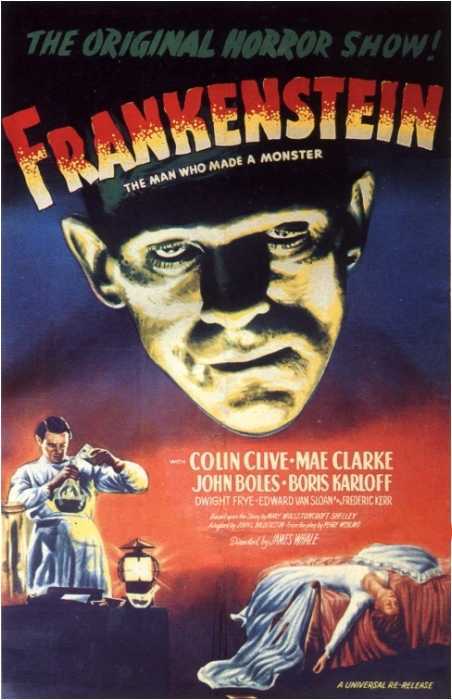
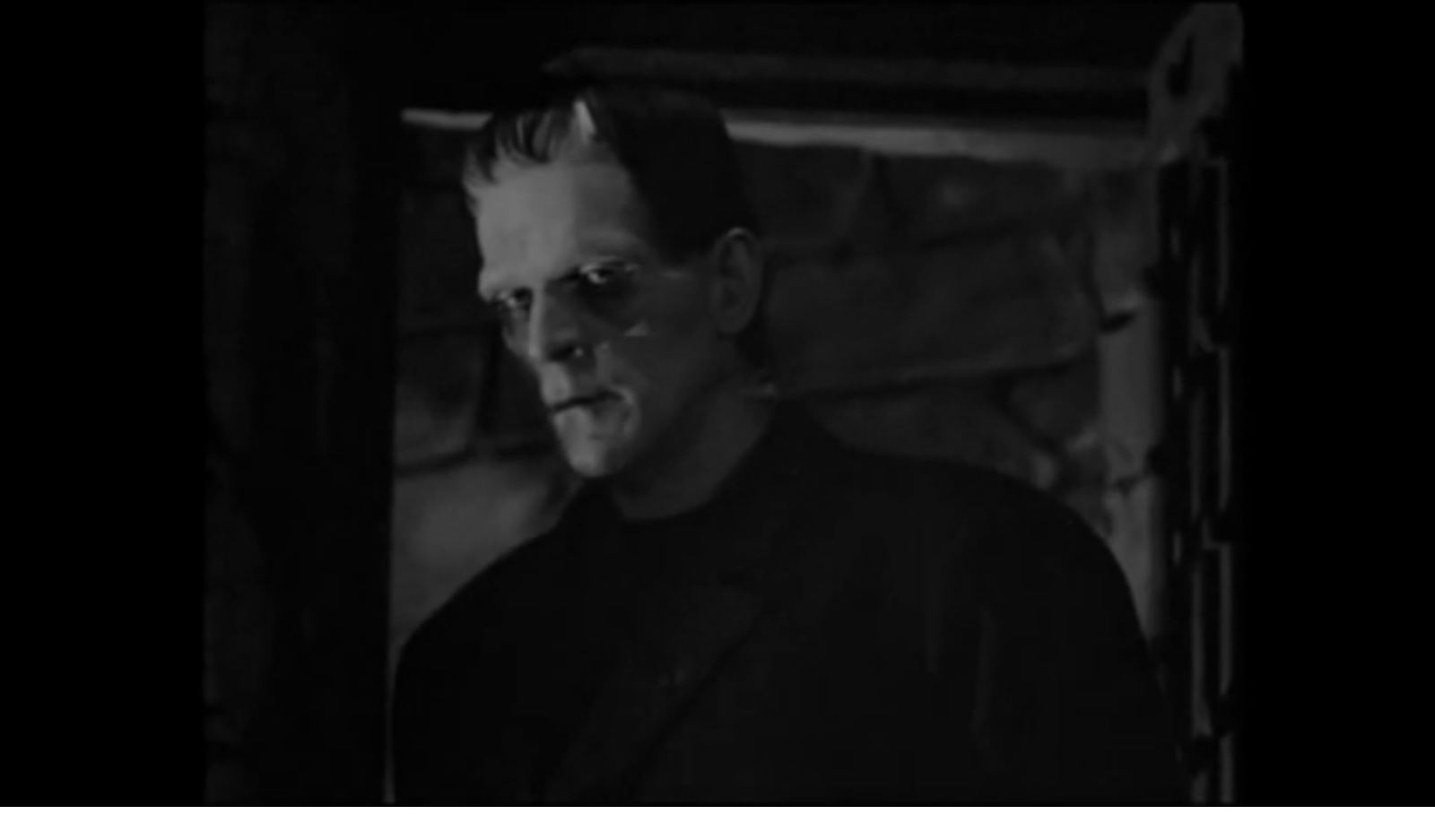
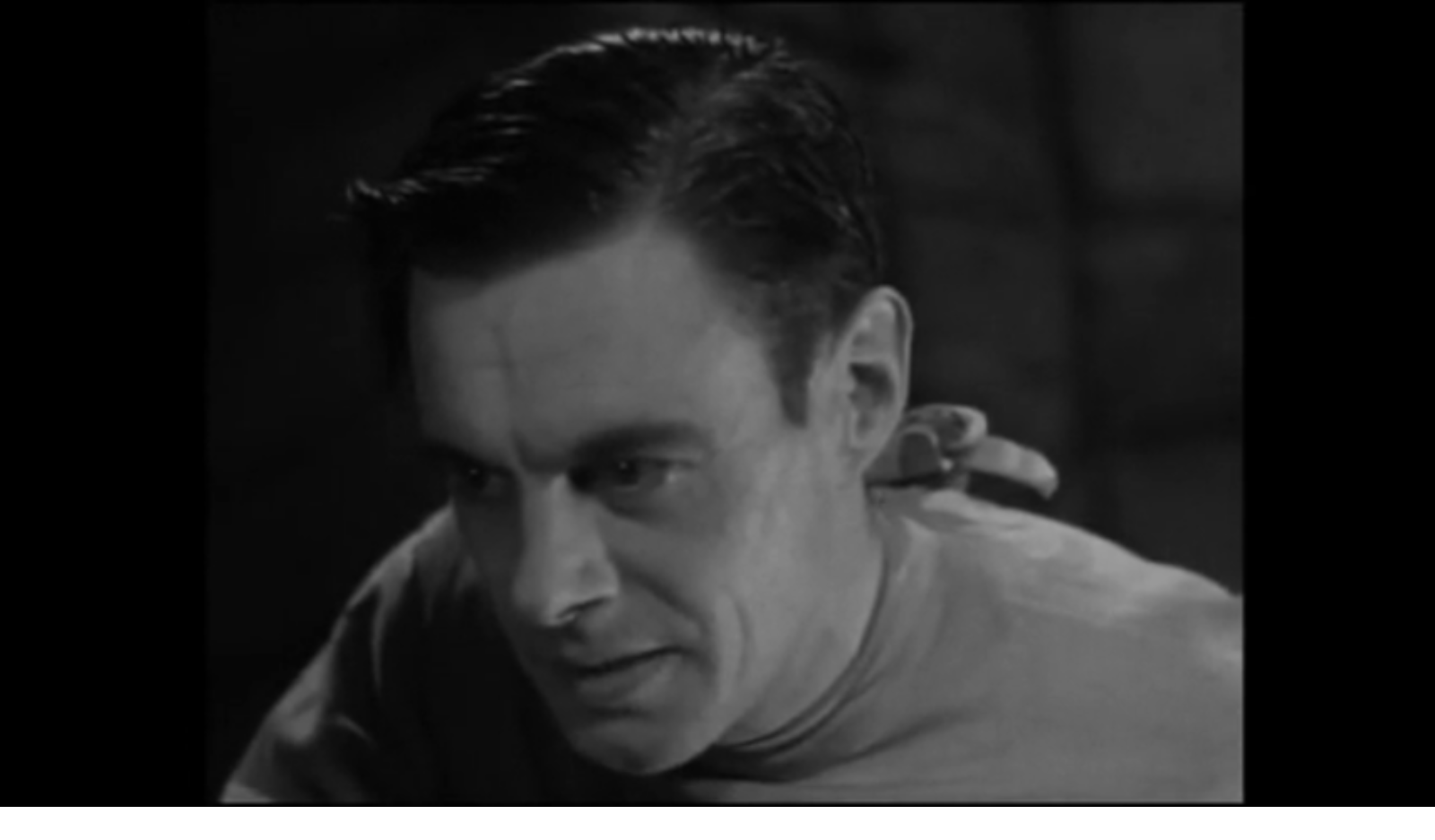
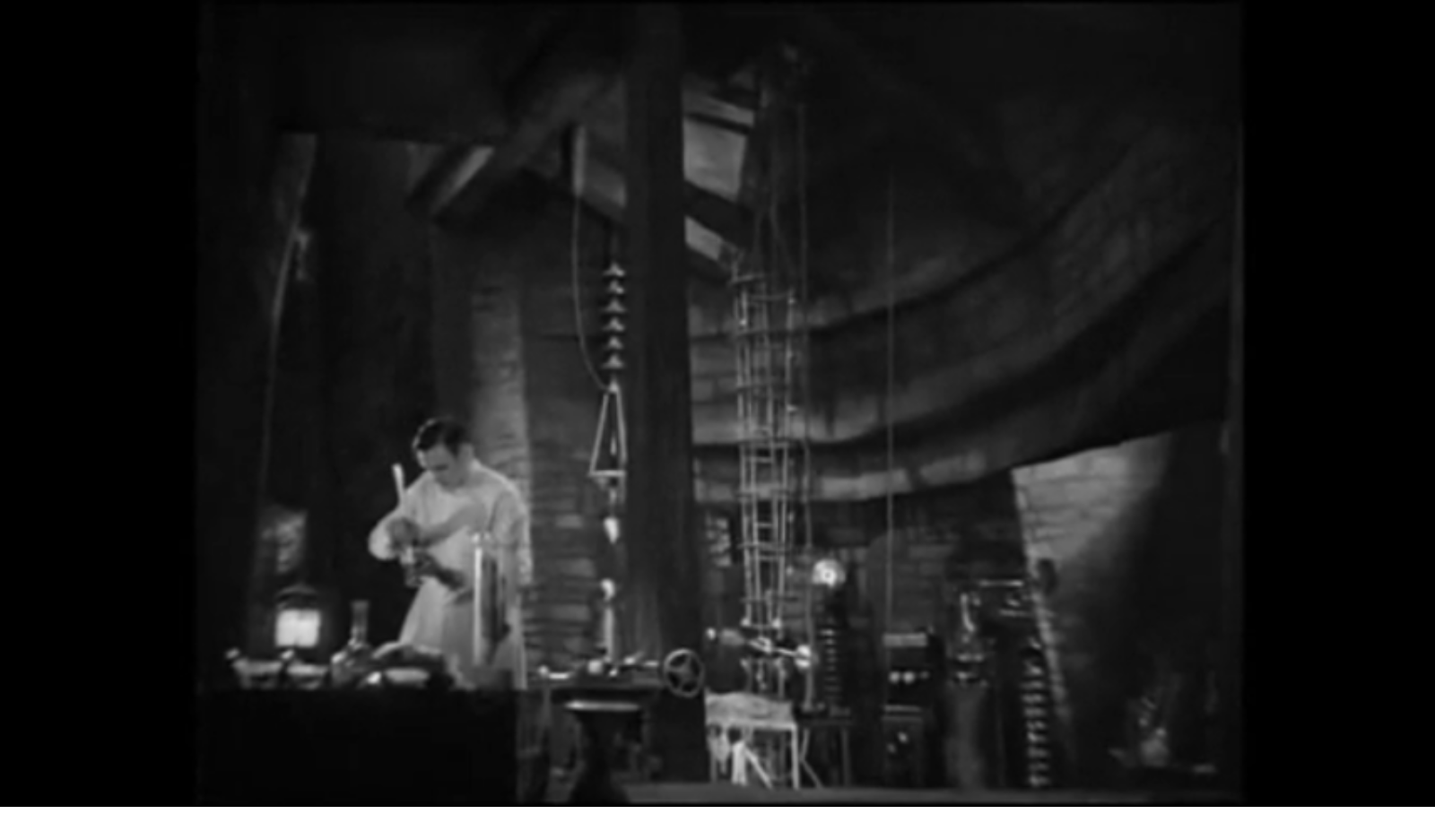
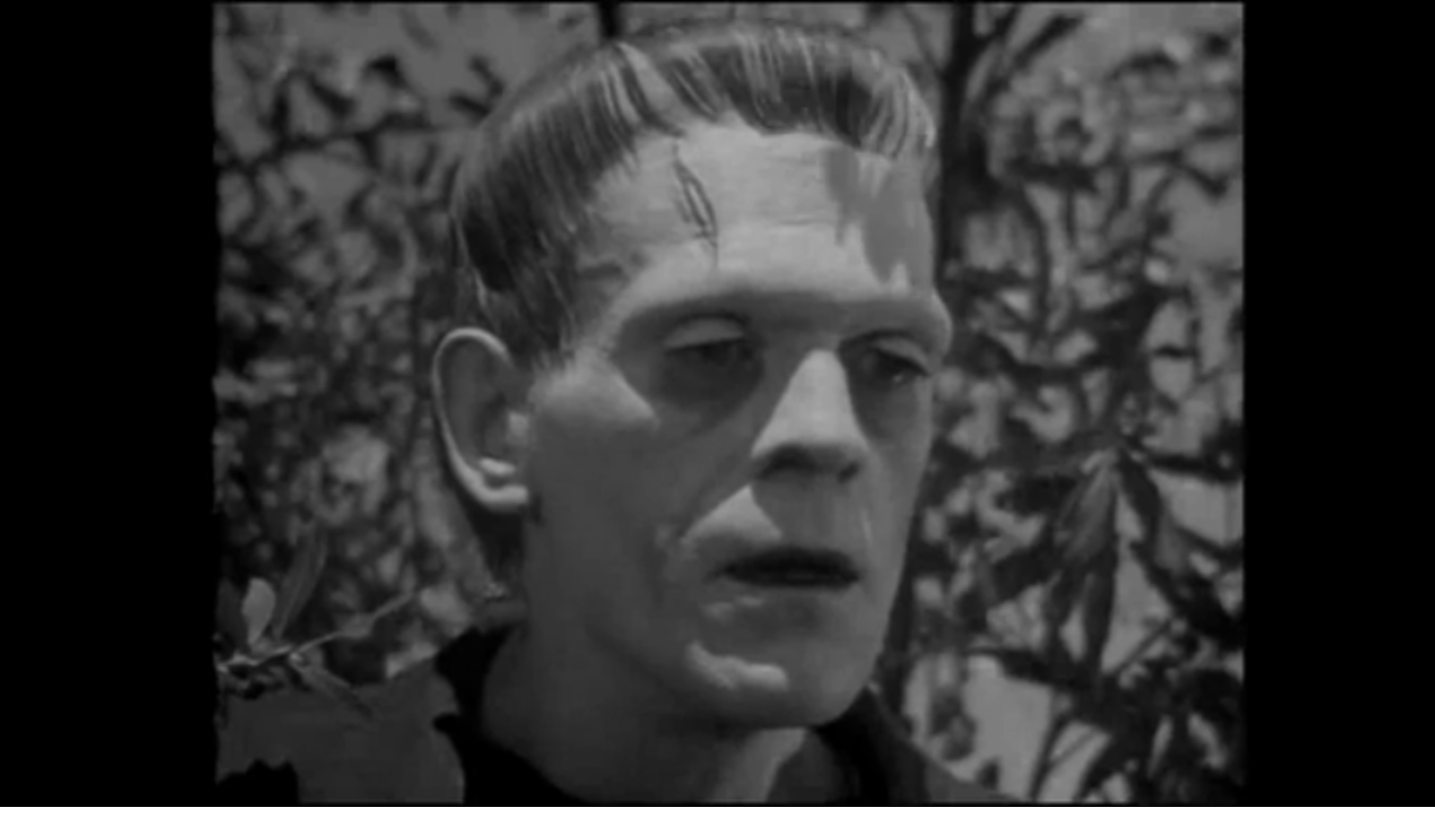
Response to Peary’s Review: In the remainder of Peary’s review, he provides an interesting analysis of the film’s themes and philosophical groundings. He argues that “Whale seems to go along with Shelley’s controversial belief that Frankenstein’s sin is not that he defies God by creating life but that once he becomes a creator he both emulates God and competes with him for sovereignty”. Indeed, this is evidenced by the powerful scene in which “Karloff beautifully conveys the recently born being’s newfound feelings of warmth and wonderment” as he “shuffles directly under the light” which is “flickering into the dark chamber”, only for Dr. Frankenstein to “block out the light, jealously refusing the creature any knowledge (symbolized by sunlight) that he didn’t offer himself, as well as any contact with the god who sent his sun ray.” Peary’s interpretation here is spot-on, and demonstrates the level of care taken with turning Shelley’s complex tale into more than just a standard horror flick. What’s most tremendous about Frankenstein is the way in which we come to genuinely care about the Monster — even when (in perhaps the movie’s most affecting, devastating scene) his new friendship with a young girl goes tragically wrong. Karloff’s ability to convey depth of emotion through layers of expertly applied make-up (which apparently took five hours each day to apply, and two hours to remove) is truly impressive; it’s understandable why Peary chose to nominate him as one of the Best Actors of the Year in his Alternate Oscars book. Also impressive (if less astonishing) is Clive’s performance as Dr. Frankenstein. Knowing Clive’s personal history (he died just six years later, at the age of 37, from complications related to his alcoholism) adds an extra layer of pathos to his portrayal of a man who “has withdrawn into self-imposed isolation… and become an elitist”, ultimately neglecting “his fatherly obligations and abandon[ing] his ‘son’, leaving the creature to make its way in a world repulsed by grotesquery”. Redeeming Qualities and Moments:
Must See? Categories
(Listed in 1001 Movies You Must See Before You Die) Links: |