Browsed by
Category: Response Reviews

My comments on Peary’s reviews in Guide for the Film Fanatic (Simon & Schuster, 1986).

Ride Lonesome (1959)

Ride Lonesome (1959)

“There are some things a man just can’t ride around.”

Synopsis:
A bounty hunter (Randolph Scott) seeking his wife’s killer (Lee Van Cleef) uses the killer’s brother (James Best) as bait.

Genres:

  • Bounty Hunters
  • Budd Boetticher Films
  • James Coburn Films
  • Lee Van Cleef Films
  • Outlaws
  • Randolph Scott Films
  • Revenge
  • Western

Response to Peary’s Review:
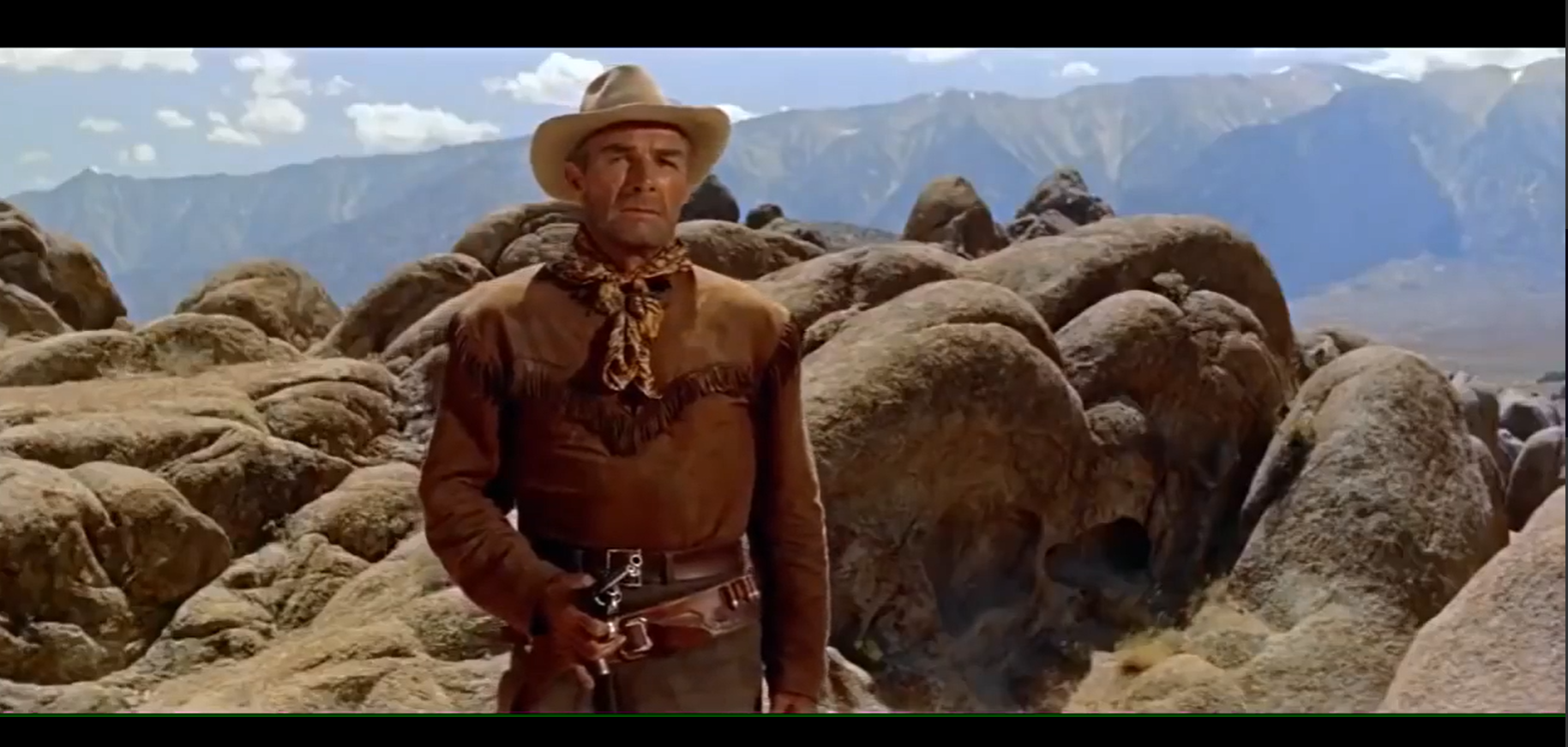
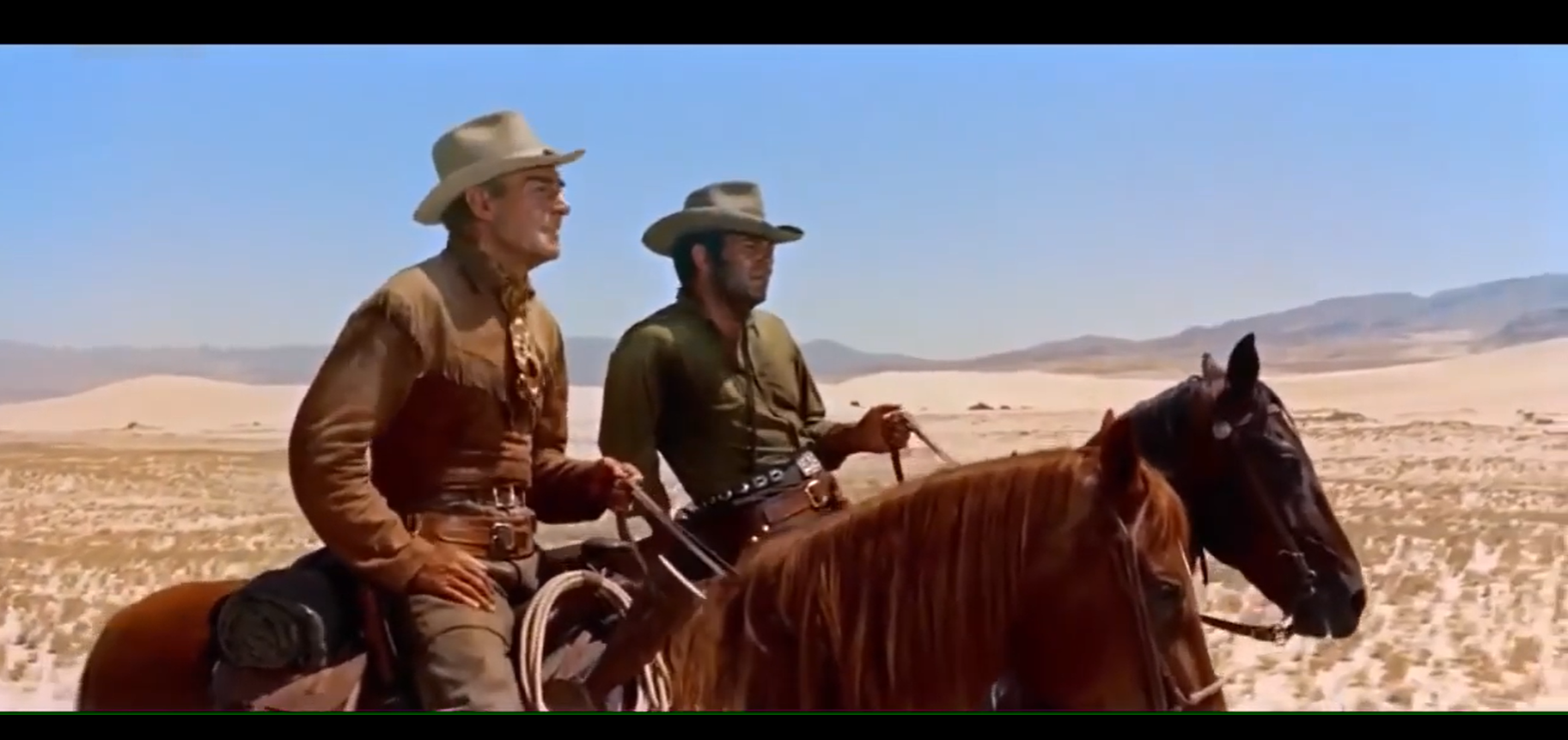
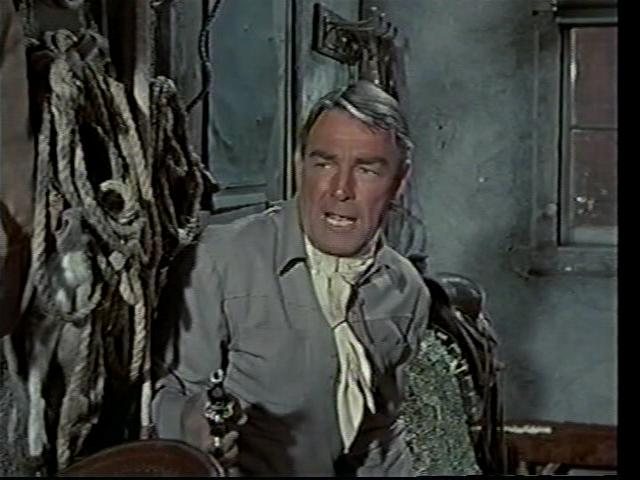
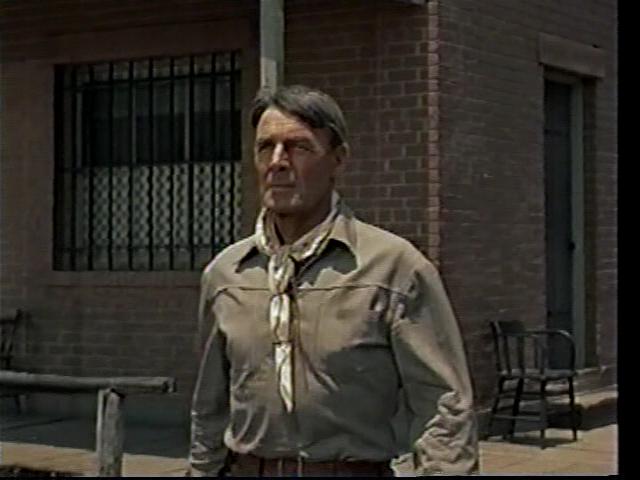
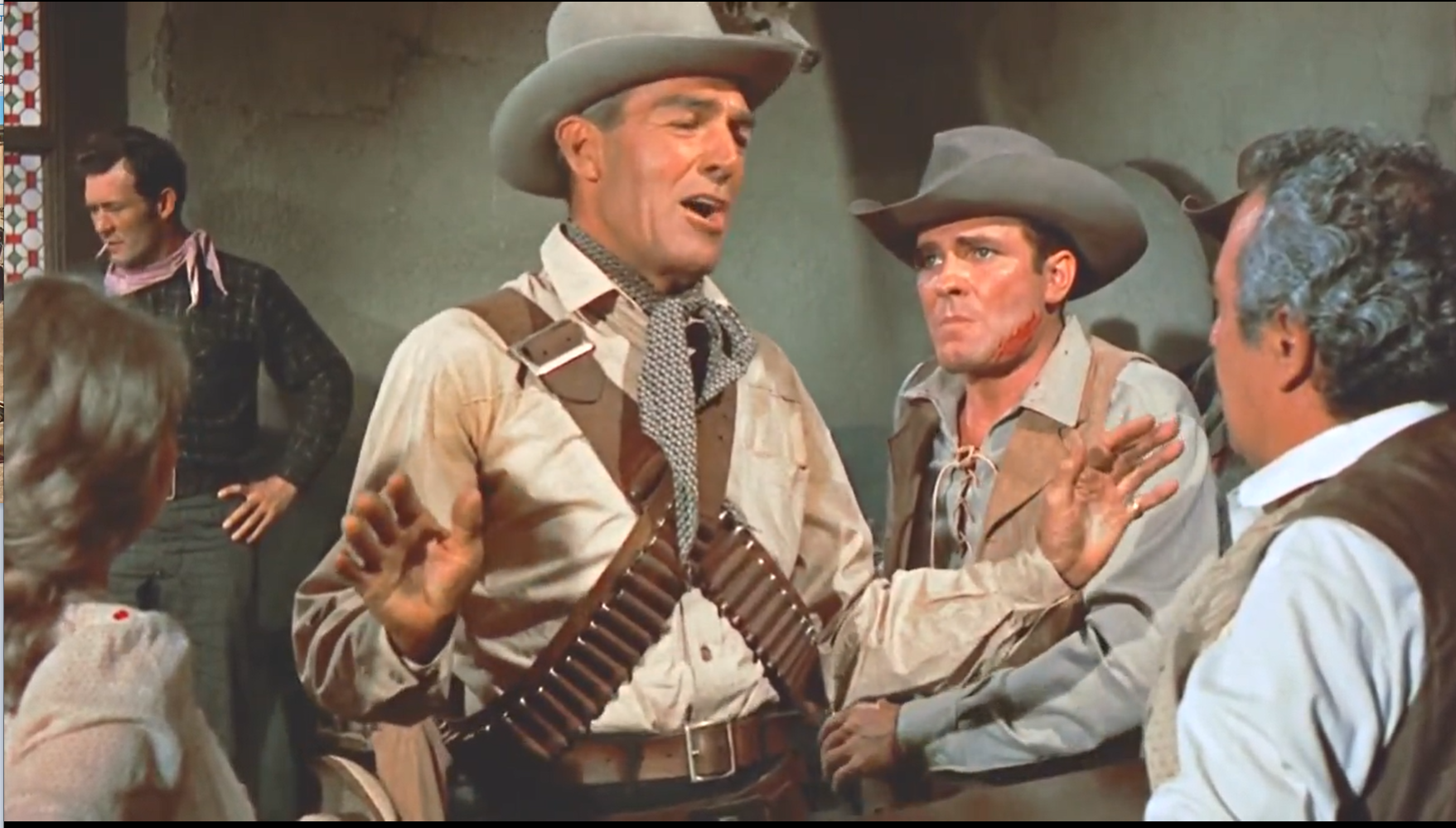
This “powerful, provocative” western by Budd Boetticher manages to explore several important themes within the space of just 73 minutes. As in many of the other Boetticher/Scott films, Scott’s character is once again hell-bent on seeking vengeance for his wife’s death.

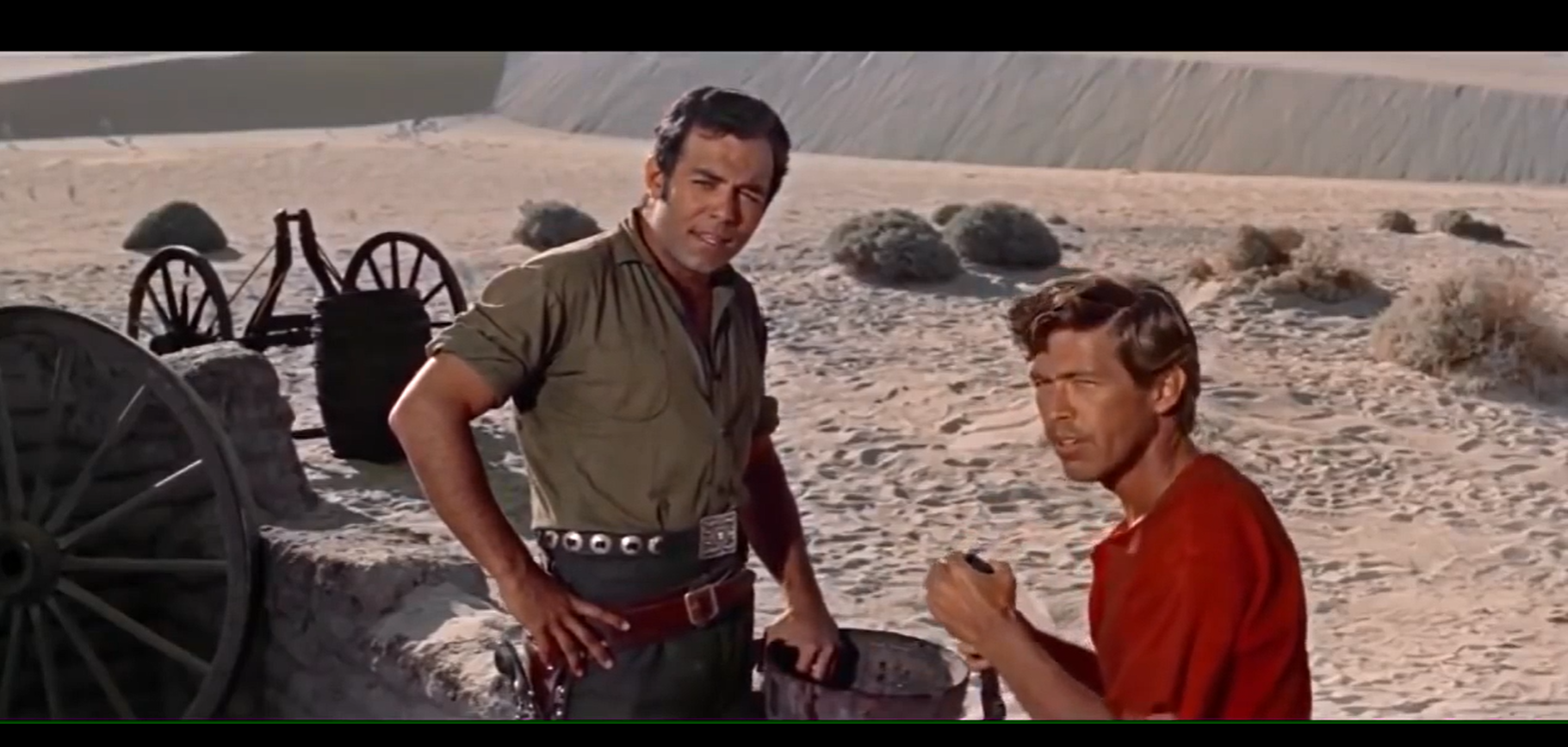
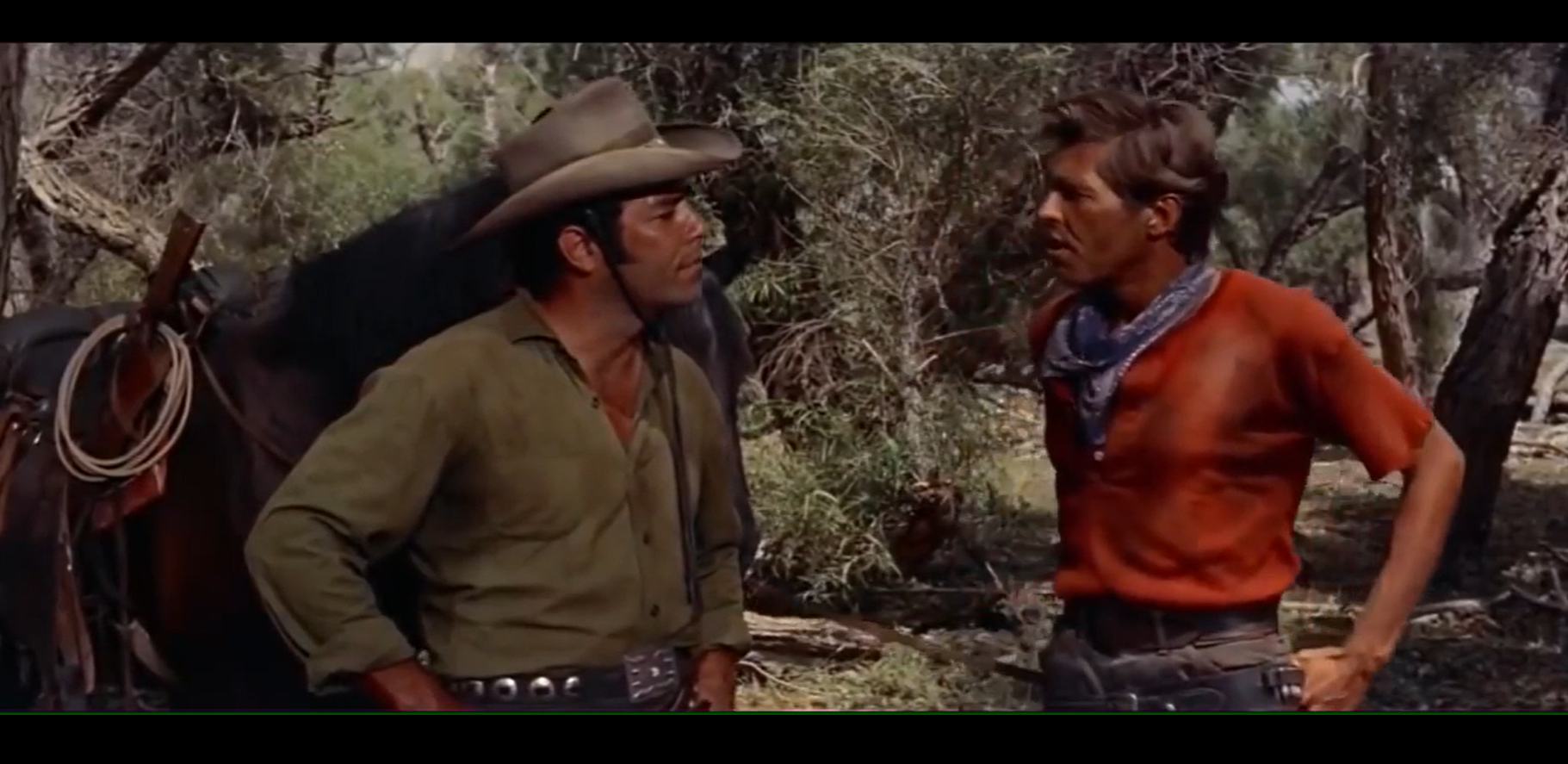
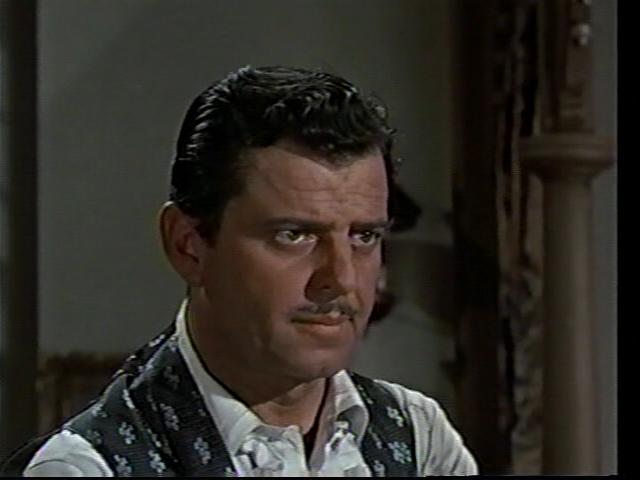
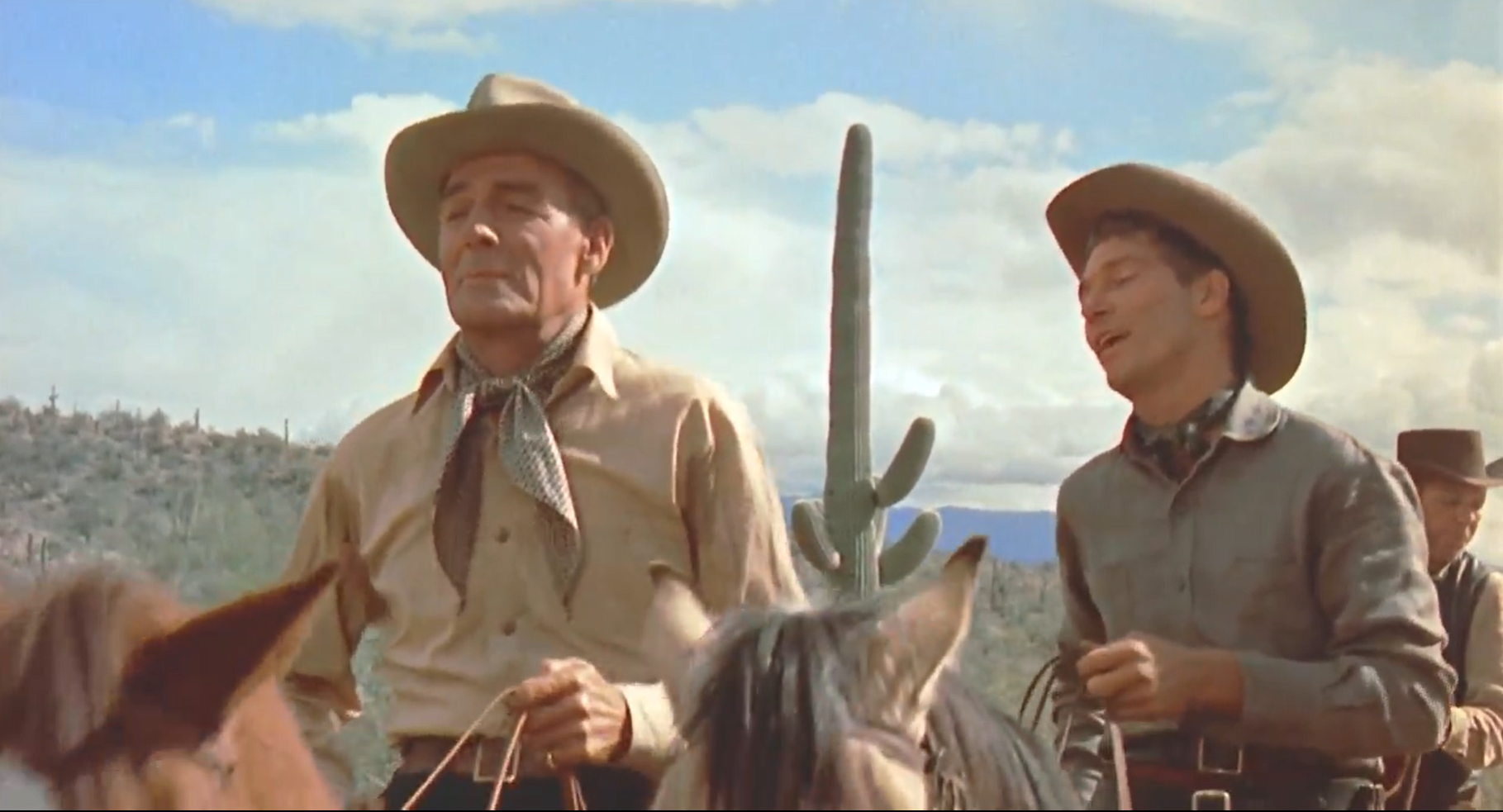
But his story is balanced by that of two outlaws — one (Pernell Roberts) calculating, the other (James Coburn) gullible — who have competing plans for the killer’s murderous brother: by bringing him in themselves, they can receive total amnesty for their previous crimes.

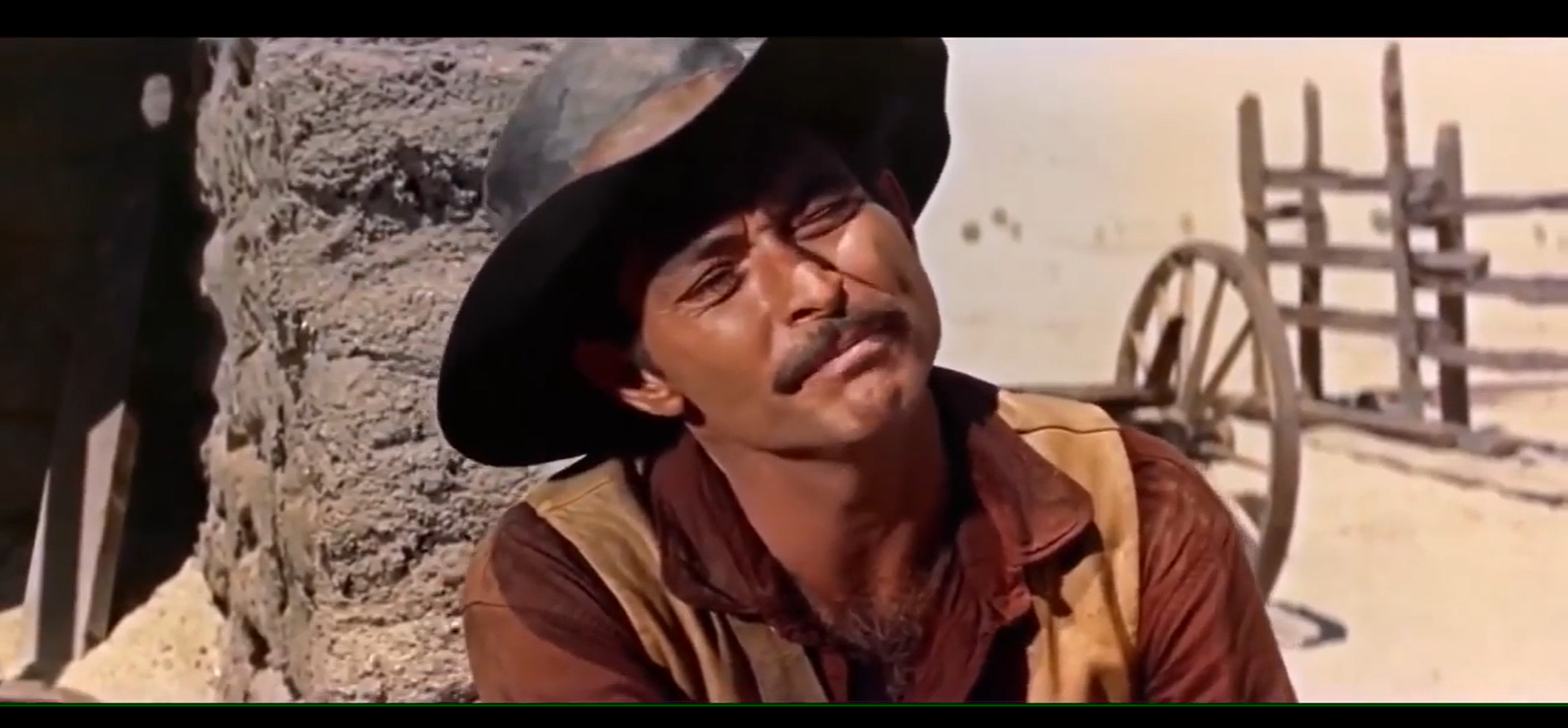
Since the true villain of the film (Van Cleef) is rarely on-screen:

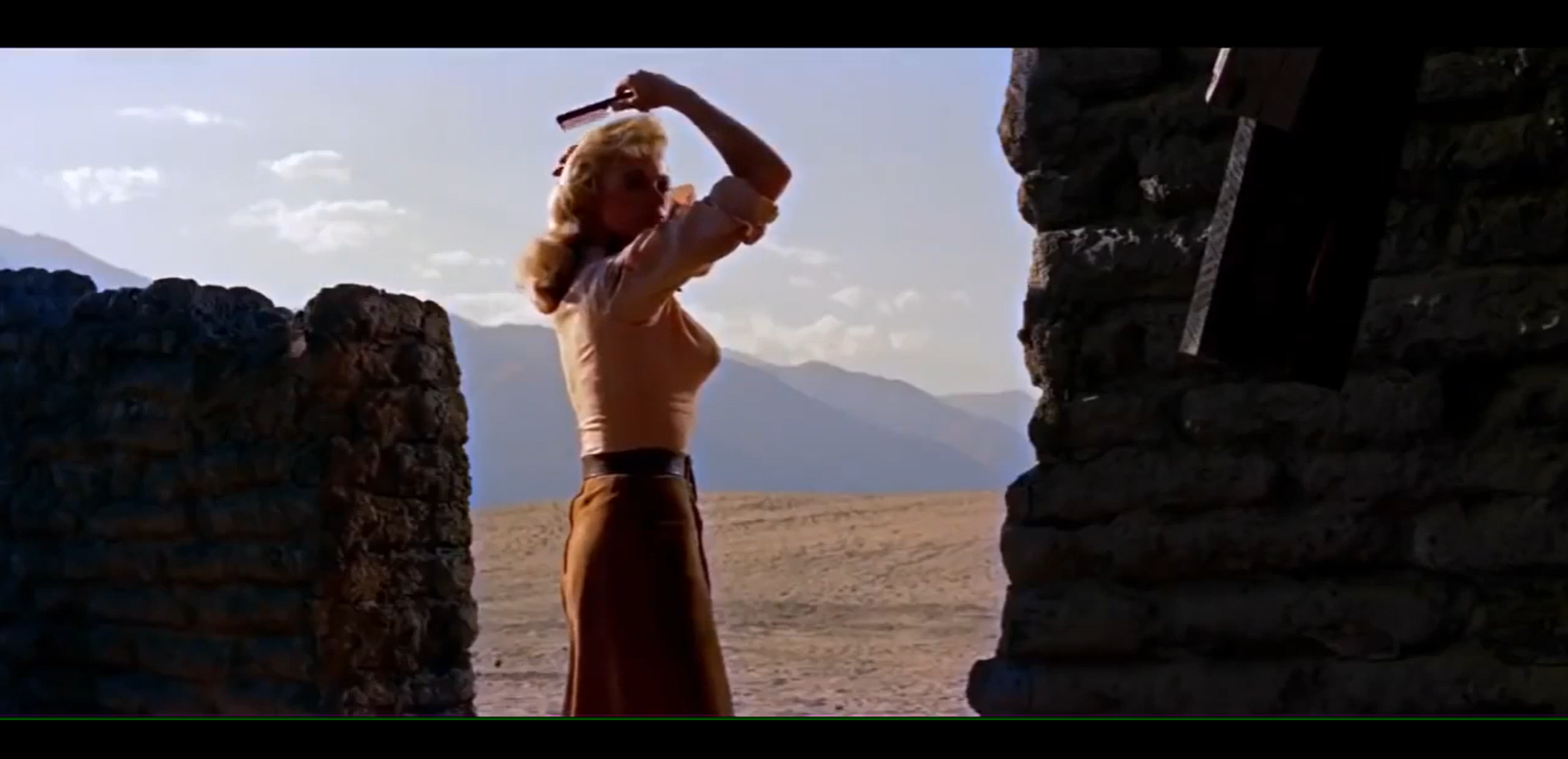
… the primary interactions thus take place between Scott, Roberts, and a buxomy young widow (Karen Steele) they pick up along the way, who represents the possibility of a new life for Roberts:

Unfortunately, despite its unique take on Western themes, Ride Lonesome is still very much a product of its time — as referenced in the following exchange about Steele, which reveals antiquated notions about what exactly women “need”:

Coburn: I wonder what she’ll do now she’s out a man?
Roberts: Find another.
Coburn: Well, she loved that fella hard enough… She’d stay a widow, wouldn’t she?
Roberts: Ain’t the kind — not her…. She’s the kind that’s got a need — a deep, lonely need only a man can get at.

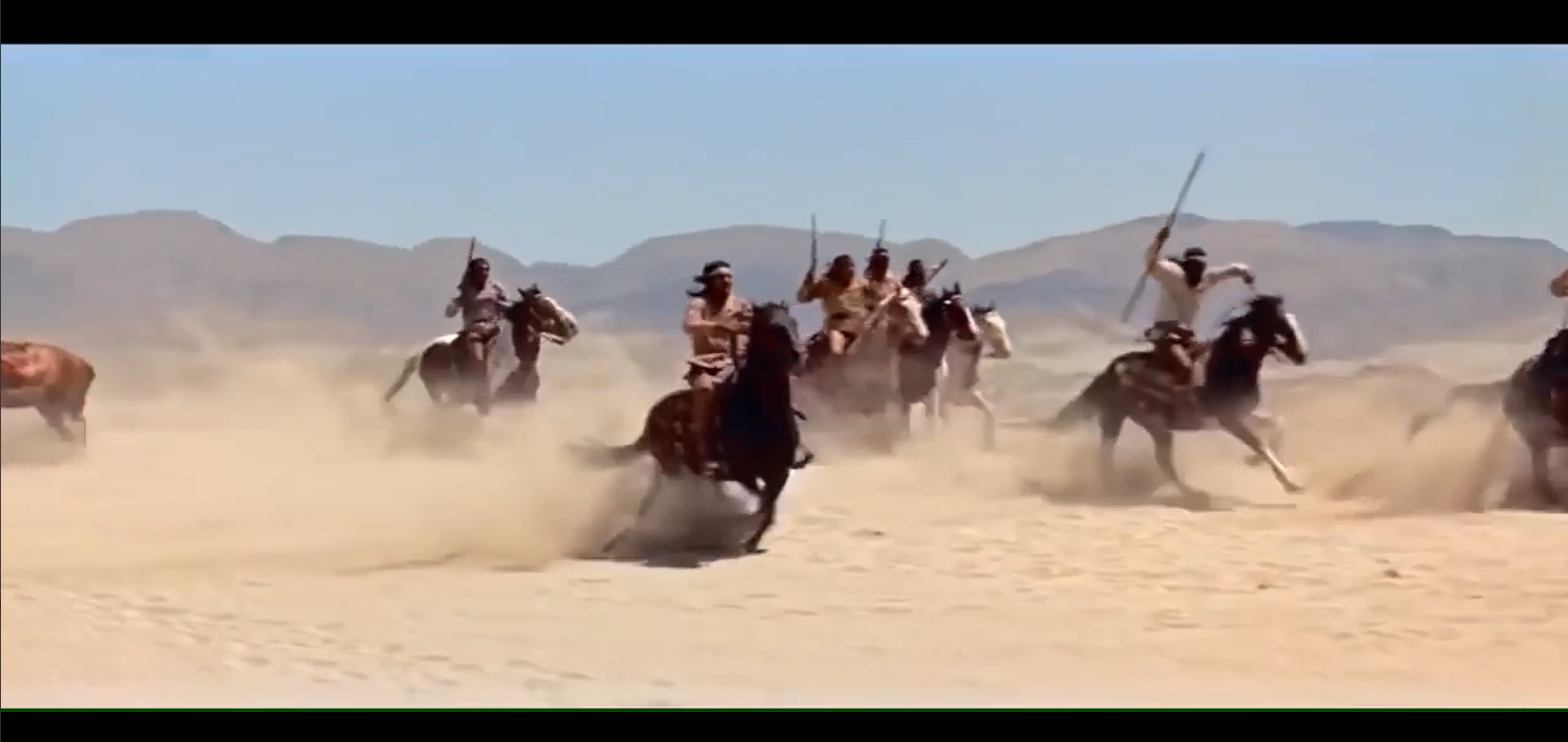
In addition, I’m puzzled by screenwriter Burt Kennedy’s decision to include a skirmish with local Indians, since it does nothing to further the plot.

However, overall this remains a provocative western by a master director, and is certainly worth a look.

Redeeming Qualities and Moments:

  • Pernell Roberts and James Coburn (in his screen debut) as the opportunistic outlaws
  • Beautiful cinematography and landscapes

Must See?
Yes; this is one of the best known of the Boetticher/Scott films, and should be seen by every film fanatic.

Categories

  • Important Director

(Listed in 1001 Movies You Must See Before You Die)

Links:

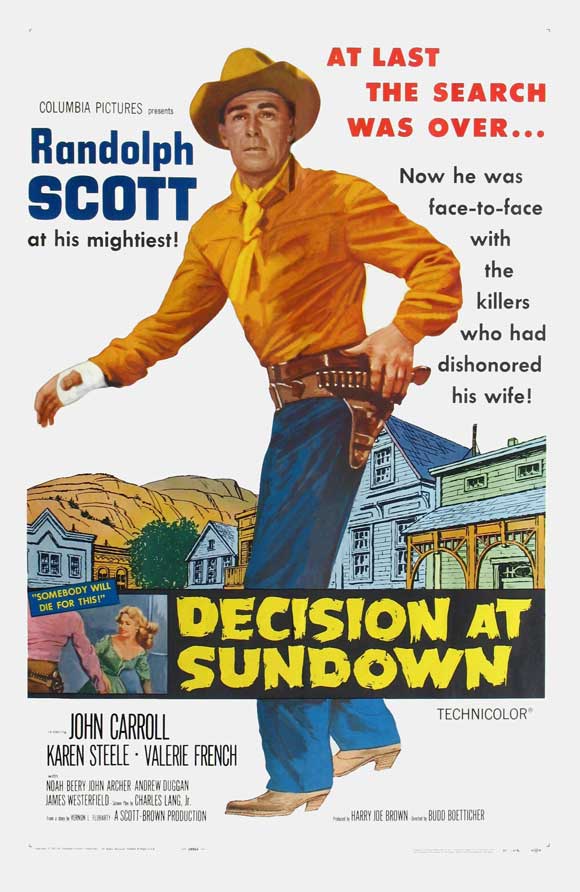
Decision at Sundown (1957)

Decision at Sundown (1957)

“A man’s gotta draw the line somewhere if he’s going to go on living with himself.”

Synopsis:
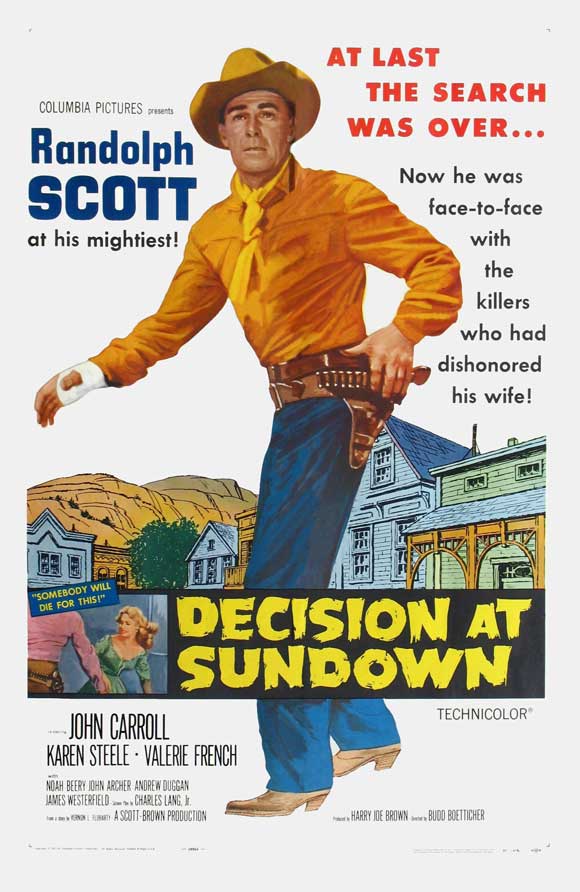
A man (Randolph Scott) obsessed with avenging his wife’s death rides into the town of Sundown and threatens to kill the local head honcho, Tate Kimbrough (John Carroll).

Genres, Themes, Actors, and Directors:

  • Budd Boetticher Films
  • Catalysts
  • Randolph Scott Films
  • Revenge
  • Western

Response to Peary’s Review:
This surprisingly tense and effective western about a man (Scott) “obsessed with killing [a] conceited dandy” (John Carroll) who “had an affair with [his] wife prior to her suicide” adds a new twist to the trope of vengeance in the old West. Although the protagonist (Scott) stubbornly refuses to recognize the irrationality of his obsession, his visit serves as a catalyst for the inhabitants of Sundown, who suddenly realize the folly of their subservience to Carroll. As Peary notes, the film is “well directed, offbeat, and psychologically complex,” with an “effective but downbeat script” by Charles Lang, Jr. However, Peary adds he has “a hard time enjoying [the] film because Scott’s character is too crazed by revenge to admire”; like “all Boetticher heroes, he must come to terms with his own flaws, obsessions, and blindness.” Lang’s screenplay moves along at a fast clip, and makes excellent use of a surprise revelation, a stalled wedding, a daylong stand-off, and a “satisfying, unusual ending.” This one remains well worth a viewing.

Redeeming Qualities and Moments:

  • Randolph Scott as a man nearly blinded by obsessive vengeance
  • John Carroll’s surprisingly nuanced characterization as the womanizing Tate Kimbrough
  • Exciting use of claustrophobic locales
  • A surprising ending

Must See?
Yes. This remains one of Boetticher’s finest and most unusual westerns.

Categories

  • Important Director

Links:

Buchanan Rides Alone (1958)

Buchanan Rides Alone (1958)

“The name’s Buchanan.”

Synopsis:
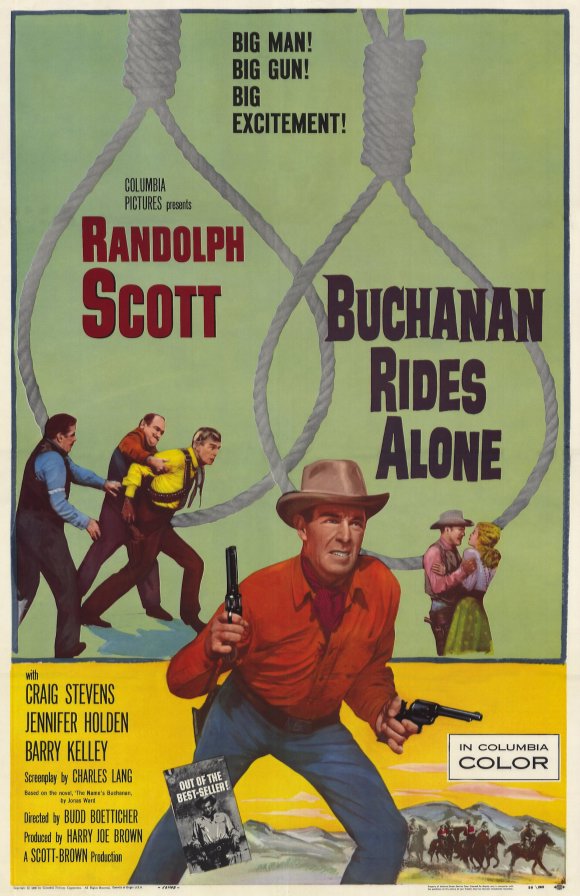
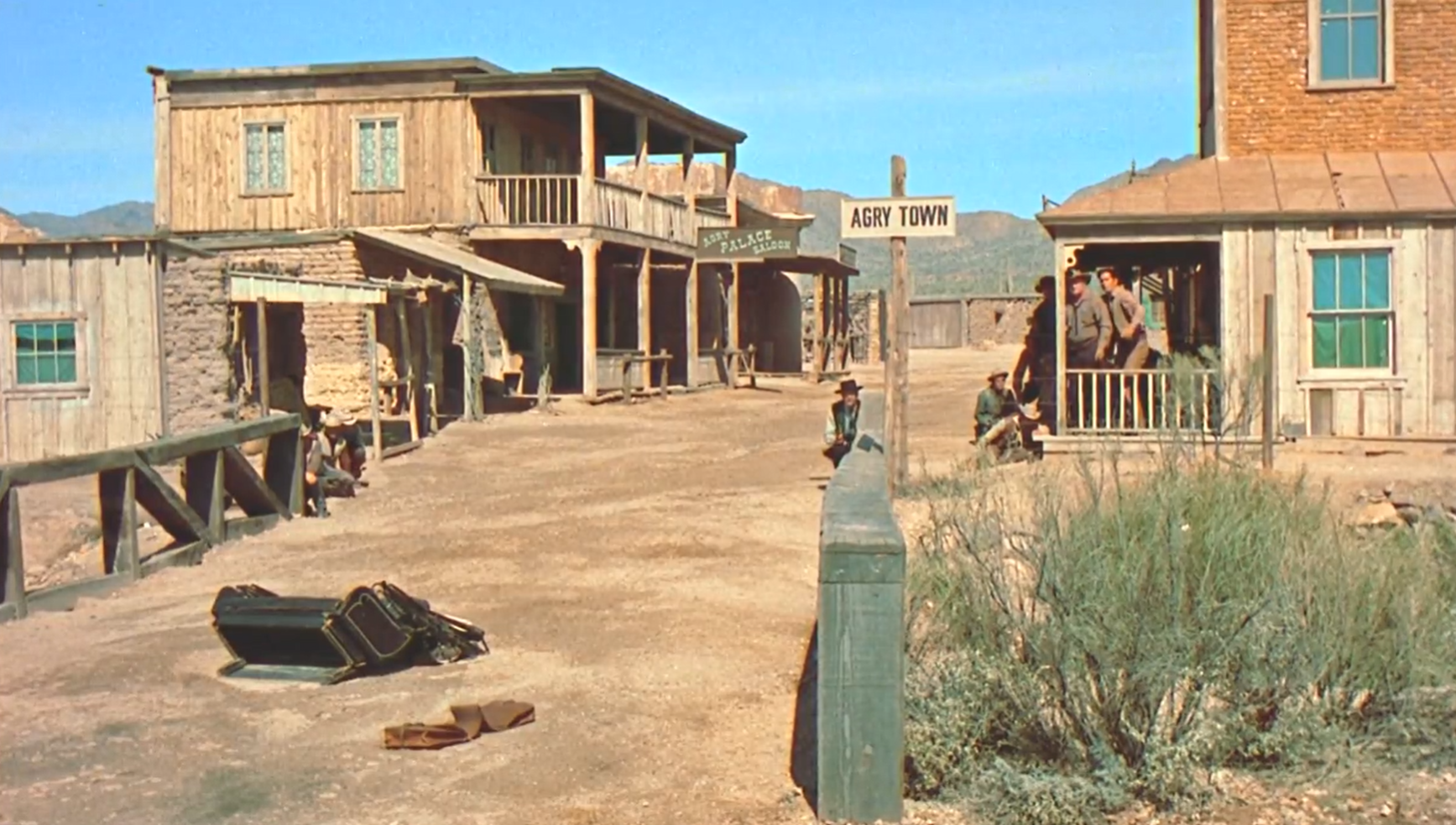
When heading home through the corrupt border town of Agry, a lone rider (Randolph Scott) gets embroiled in a feud between the Agry brothers and a Mexican family.

Genres, Themes, Actors, and Directors:

  • Budd Boetticher Films
  • Corruption
  • Randolph Scott Films
  • Revenge
  • Western

Response to Peary’s Review:
As Peary notes, this “offbeat”, surprisingly tongue-in-cheek western about a loner riding into a feuding town is reminiscent of both Leone’s A Fistful of Dollars (1964) and Kurosawa’s Yojimbo (1961). For most of the film, Scott has a bemused look of detachment on his face — all he wants is to get home to West Texas.

But when push comes to shove, he does what is needed to help protect those who are innocent, and to retrieve what is rightfully his. In his review of The Tall T (1958) — another of the seven westerns Boetticher ultimately made starring Randolph Scott — Peary notes Boetticher’s tendency to show men (in this case, Buchanan and the Mexicans) who choose to act with pride and honor in the face of an increasingly corrupt and violent “civilized” West. Indeed, women play only minor secondary roles in the film; this is very much a male western.

Note: As I wrote in my review of The Bullfighter and the Lady (1951), Boetticher was one of the rare filmmakers at the time to portray Mexicans in a dignified and respectful manner; this is clearly evident in Buchanan Rides Alone as well.

Redeeming Qualities and Moments:

  • Randolph Scott as Buchanan
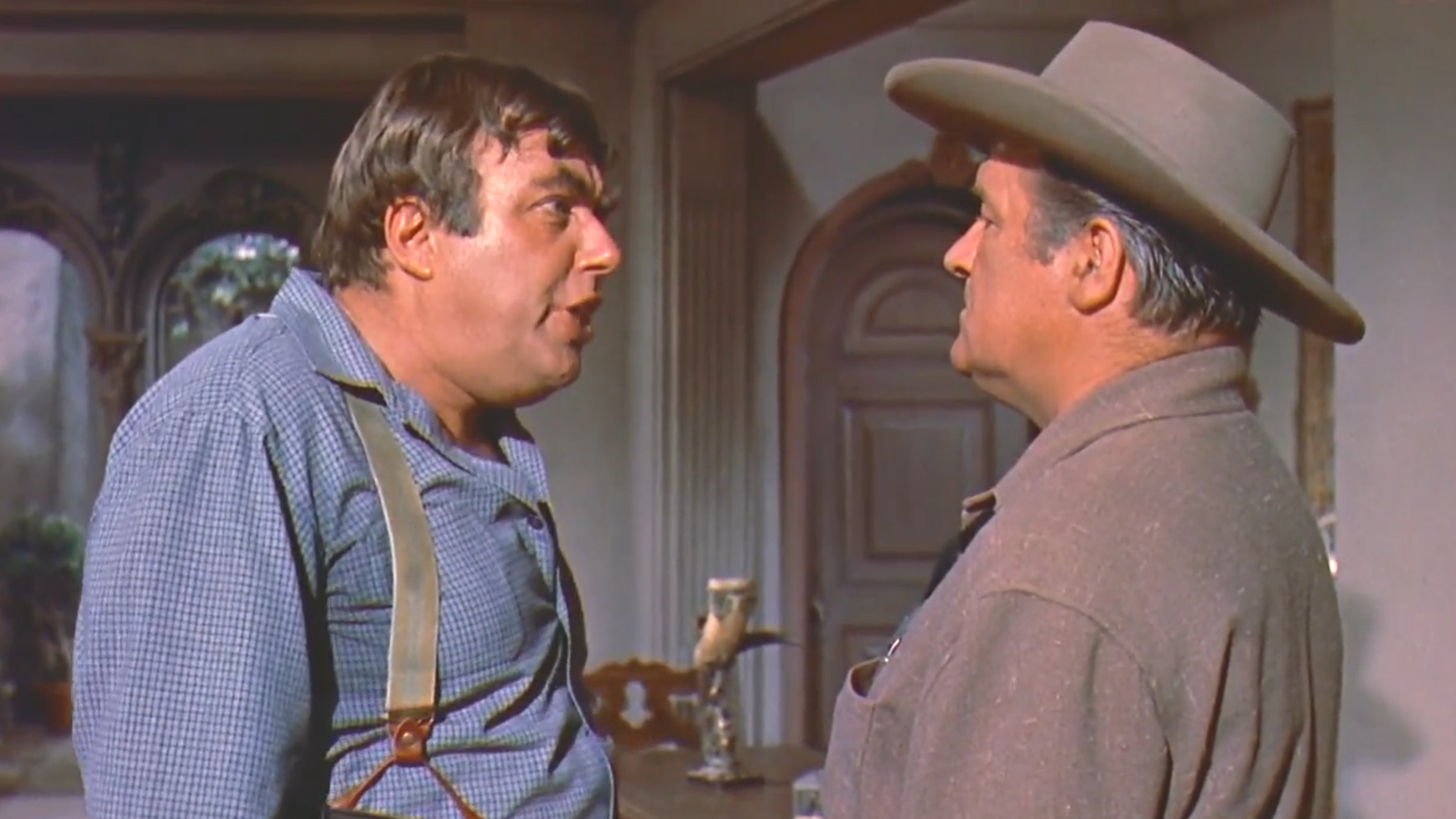
  • Peter Whitney as Amos, the bumbling, half-wit Agry brother who’s always on-the-move and in-the-know
  • An exciting final shoot-out

Must See?
No, though any fan of Boetticher/Scott films will undoubtedly want to check it out.

Links:

St. Elmo’s Fire (1985)

St. Elmo’s Fire (1985)

“This isn’t real. You know what it is? It’s St. Elmo’s Fire.”

Synopsis:
A group of self-centered friends struggle with life and love after college.

Genres, Themes, Actors, and Directors:

  • Ensemble Cast
  • Friendship
  • Love Triangle
  • Martin Balsam Films

Response to Peary’s Review:
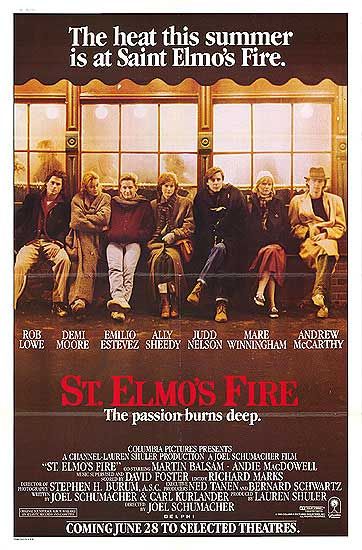
Peary is fairly dismissive of this hit Brat Pack film, calling it “trite and klutzy, a beatable combination”. I was equally disappointed when re-watching it recently; the characters are so unappealing that it’s difficult to generate any concern for what happens to them. The one exception is Emilio Estevez as Kirby, the love-lorn medical student whose travails could easily have filled the entire film — instead, however, director Joel Schumacher chooses to shuffle back and forth continuously between far too many inane sub-plots about drug addiction, infidelity, and career crises. A hot 80’s soundtrack (including the winning title song) was what kept me going through this otherwise insufferable mess.

Redeeming Qualities and Moments:

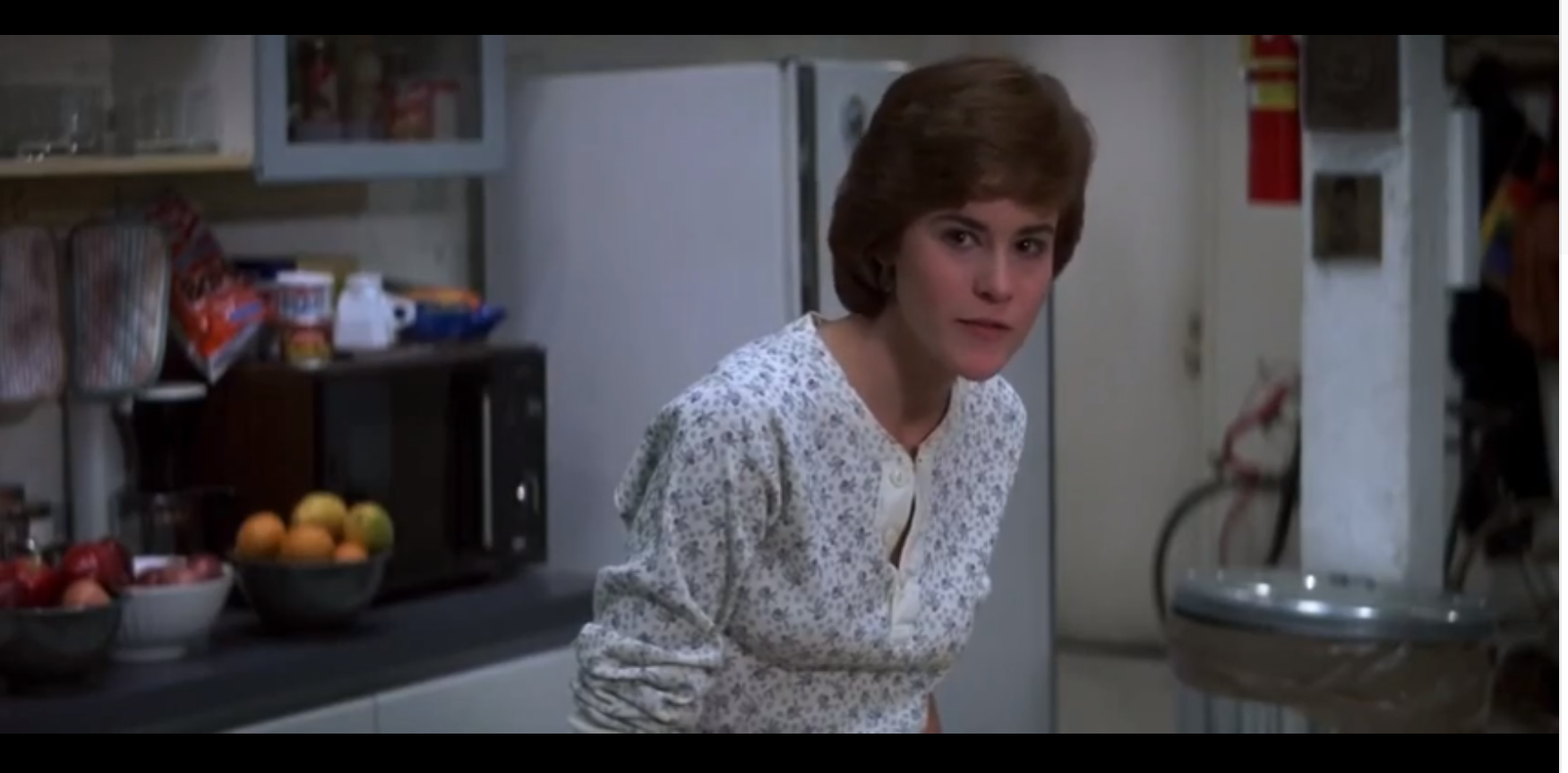
  • Sensitive performances by Ally Sheedy, Mare Winningham, and Emilio Estevez


  • An undeniably catchy title song

Must See?
No, though it’s worth a look simply for its historical notoriety as the ultimate “brat pack” film.

Links:

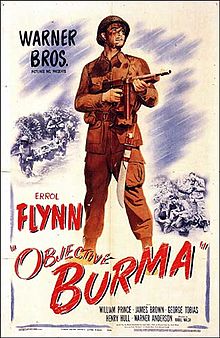
Objective, Burma! (1945)

Objective, Burma! (1945)

“Wipe them off the face of the earth!”

Synopsis:
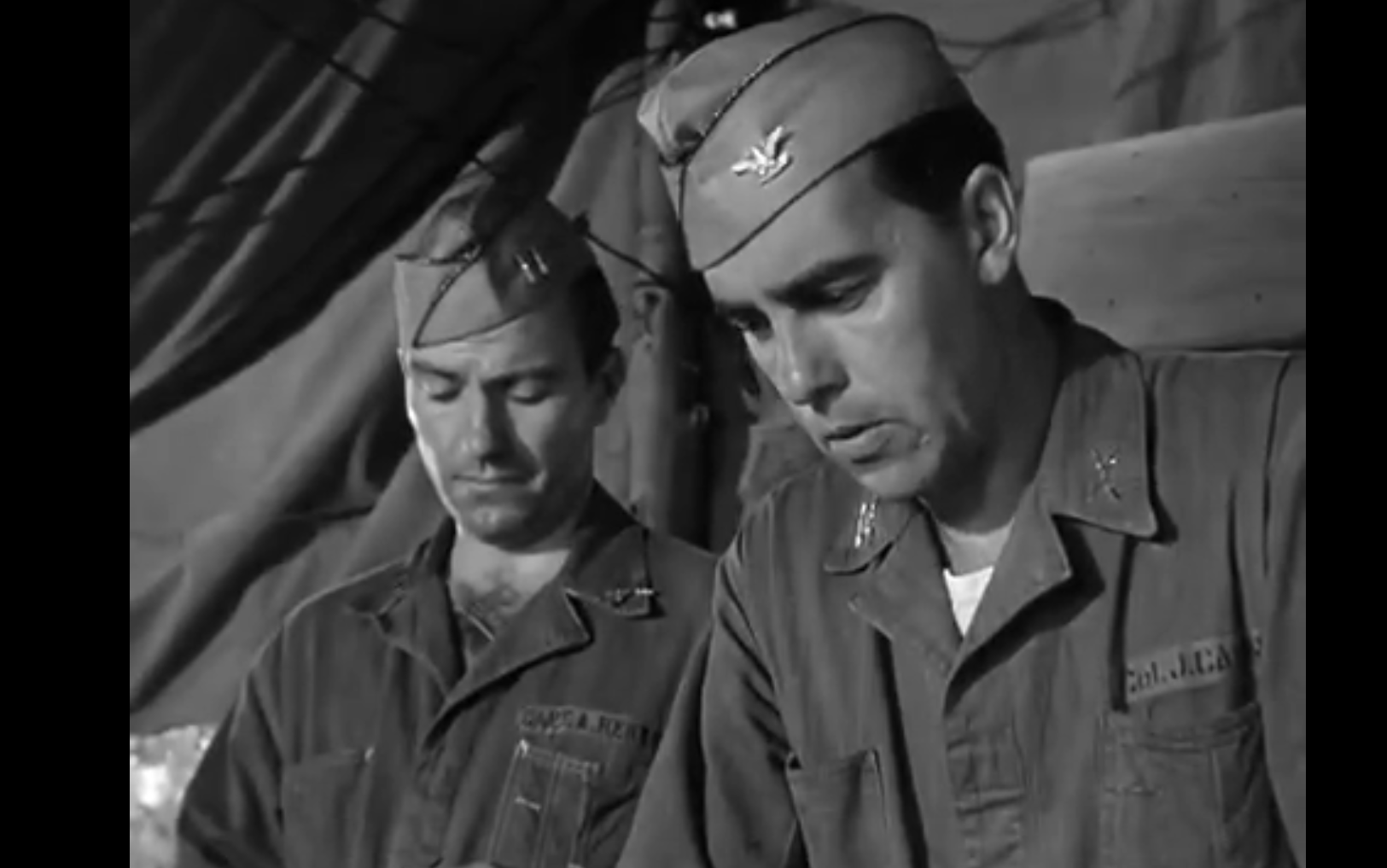
A group of American soldiers, led by Captain Nelson (Errol Flynn), parachute into Burma on a mission to blow up a radar station, and must fight off Japanese enemies while attempting to escape.

Genres, Themes, Actors, and Directors:

  • Errol Flynn Films
  • Raoul Walsh Films
  • Soldiers
  • World War Two

Response to Peary’s Review:
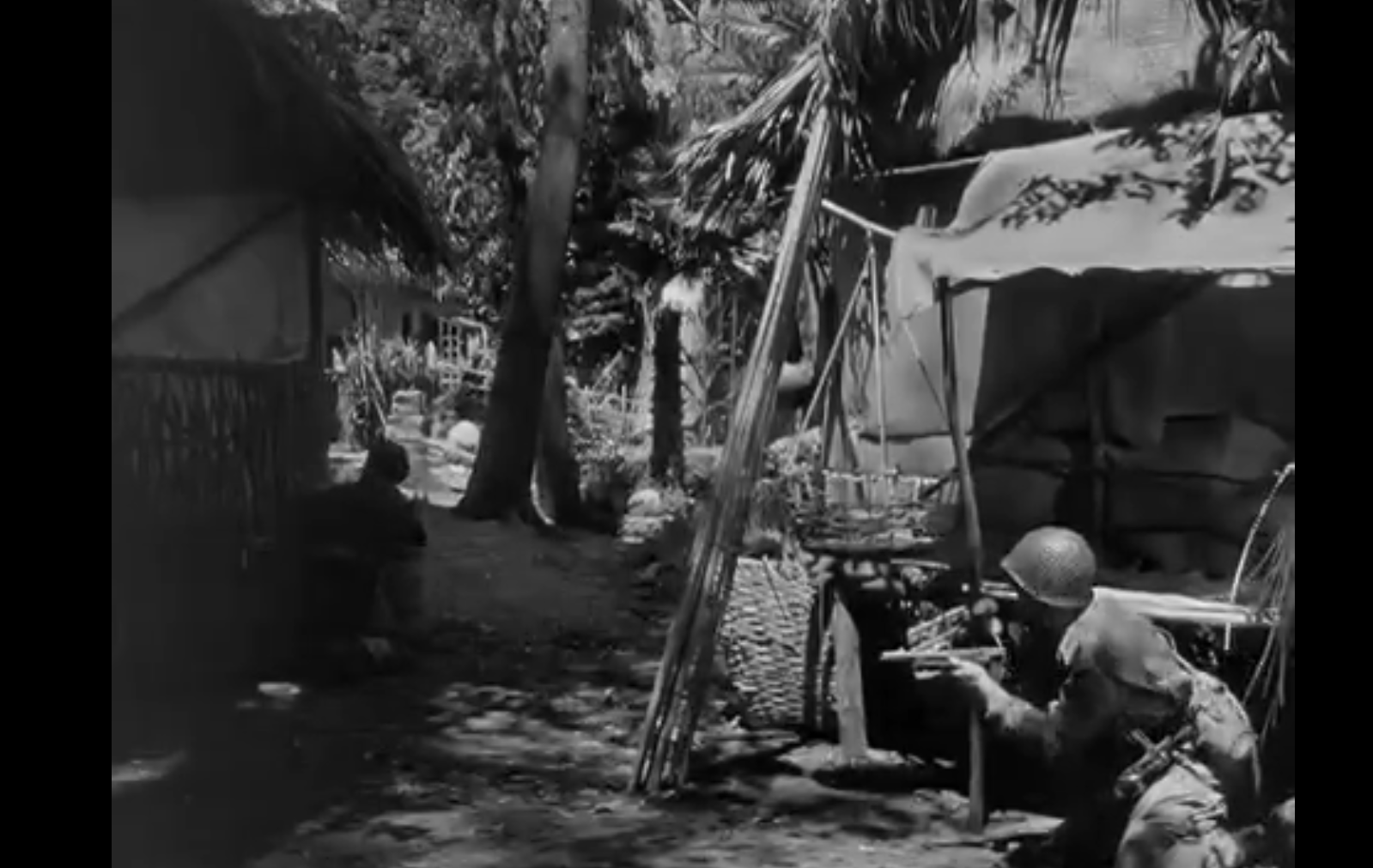
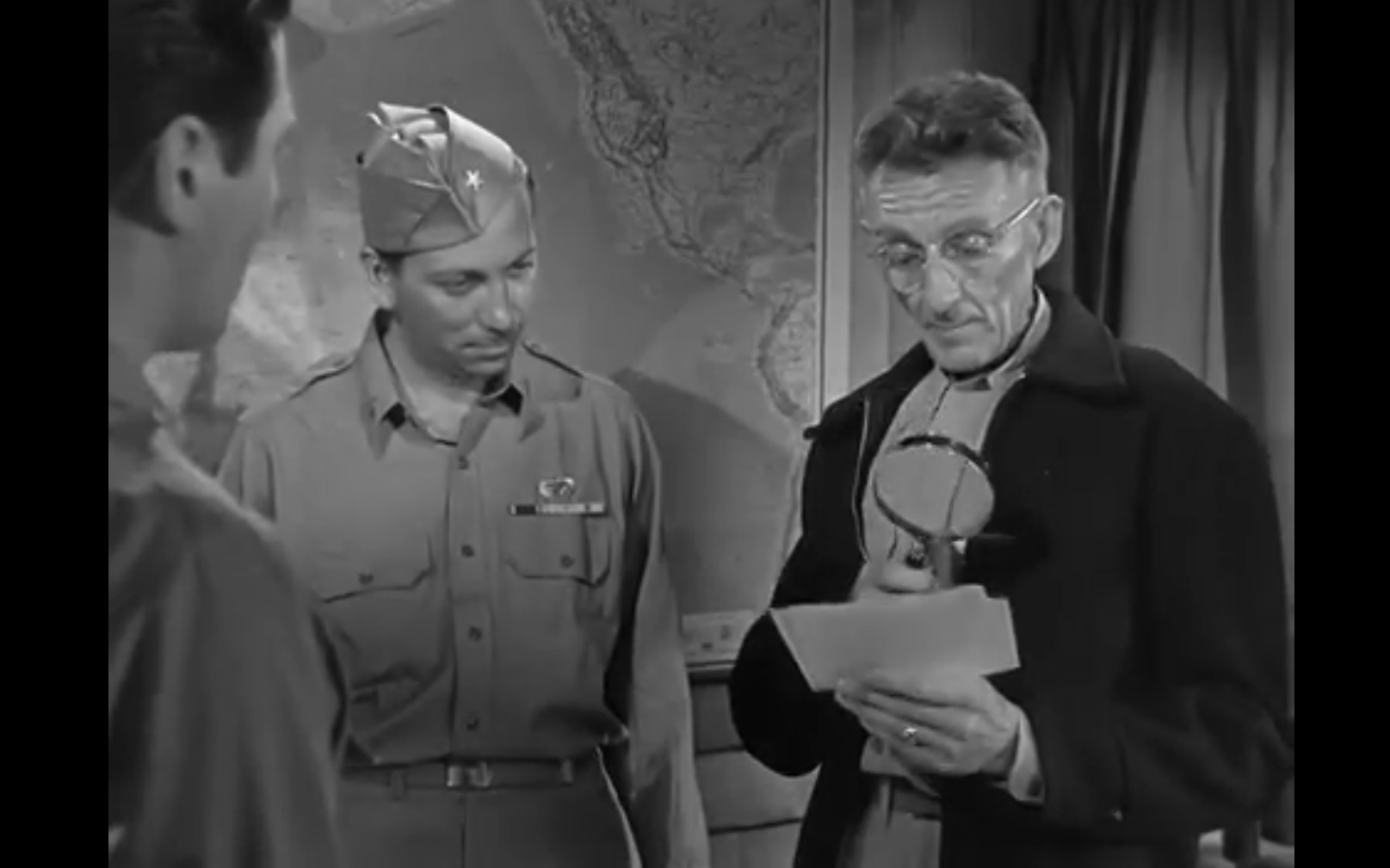
Peary is appropriately laudatory of this Raoul Walsh-directed WWII action flick (released just six and a half months before the bombing of Hiroshima), in which “Flynn leads his command on a daring mission into the Burmese jungle to blow up a strategic Japanese radar station”, only to find that “rescue plans can’t land to get [them] out”, and thus “they must begin [a] long trek to [a] new rescue point, with vengeance-bent Japanese both on their heels and waiting in ambush all along the way.”


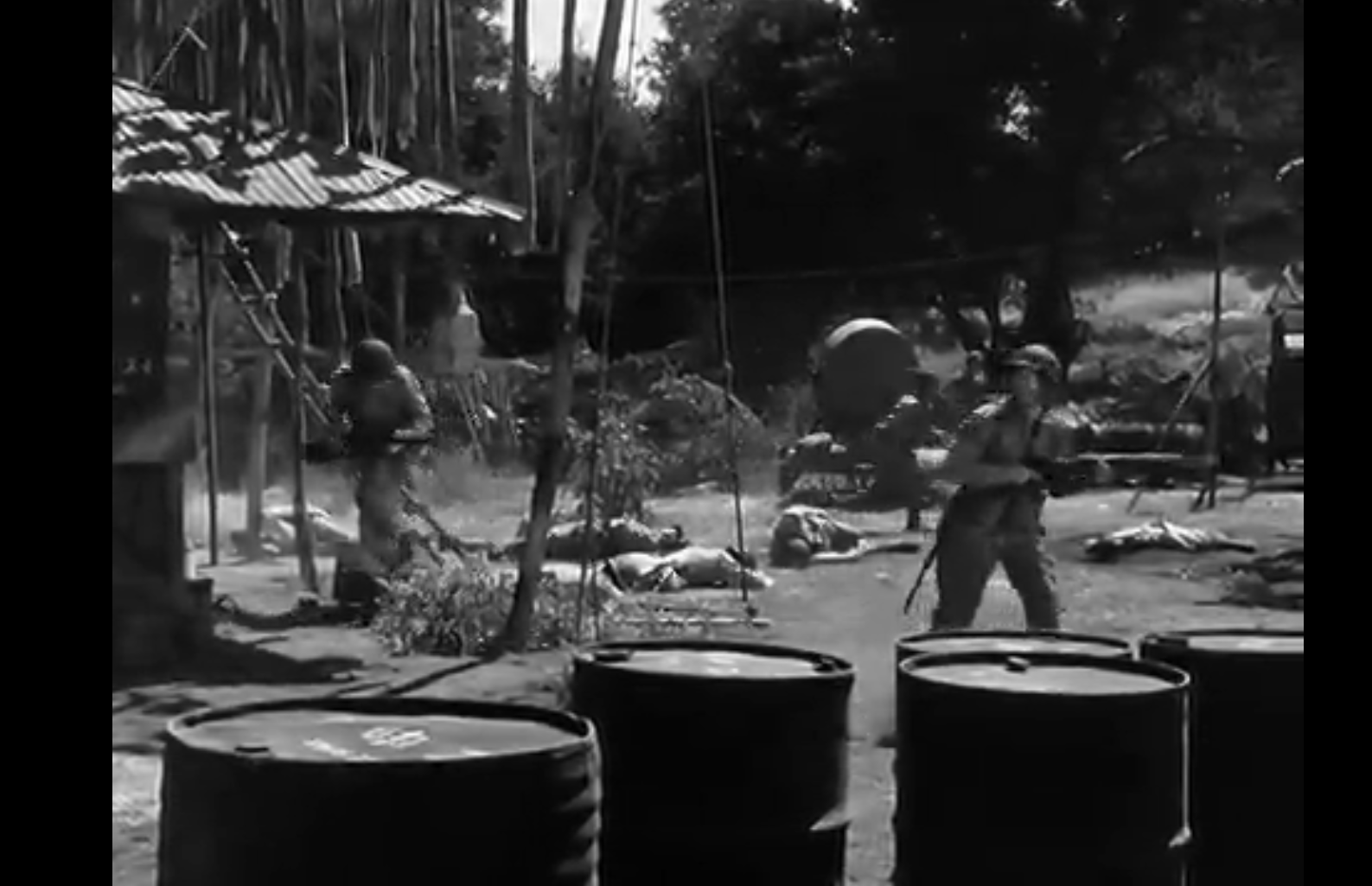
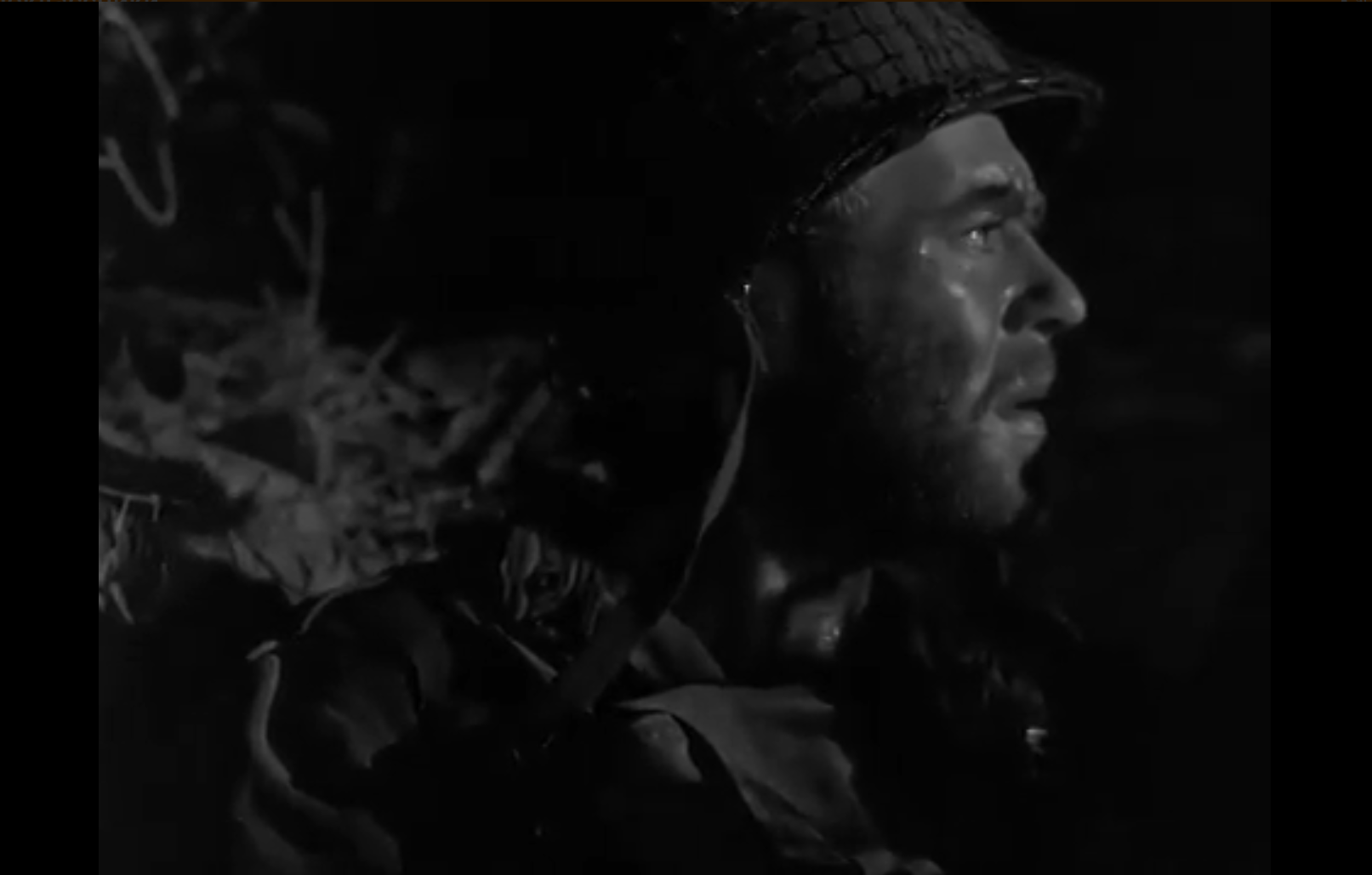
He accurately labels it “one of the best war movies”, despite being “among the grimmest, considering how many soldiers on both sides are killed, and the brutality of their deaths.” He calls out “the great pacing” — with “characters who always seem to be moving” — as “characteristic of director Raoul Walsh”:

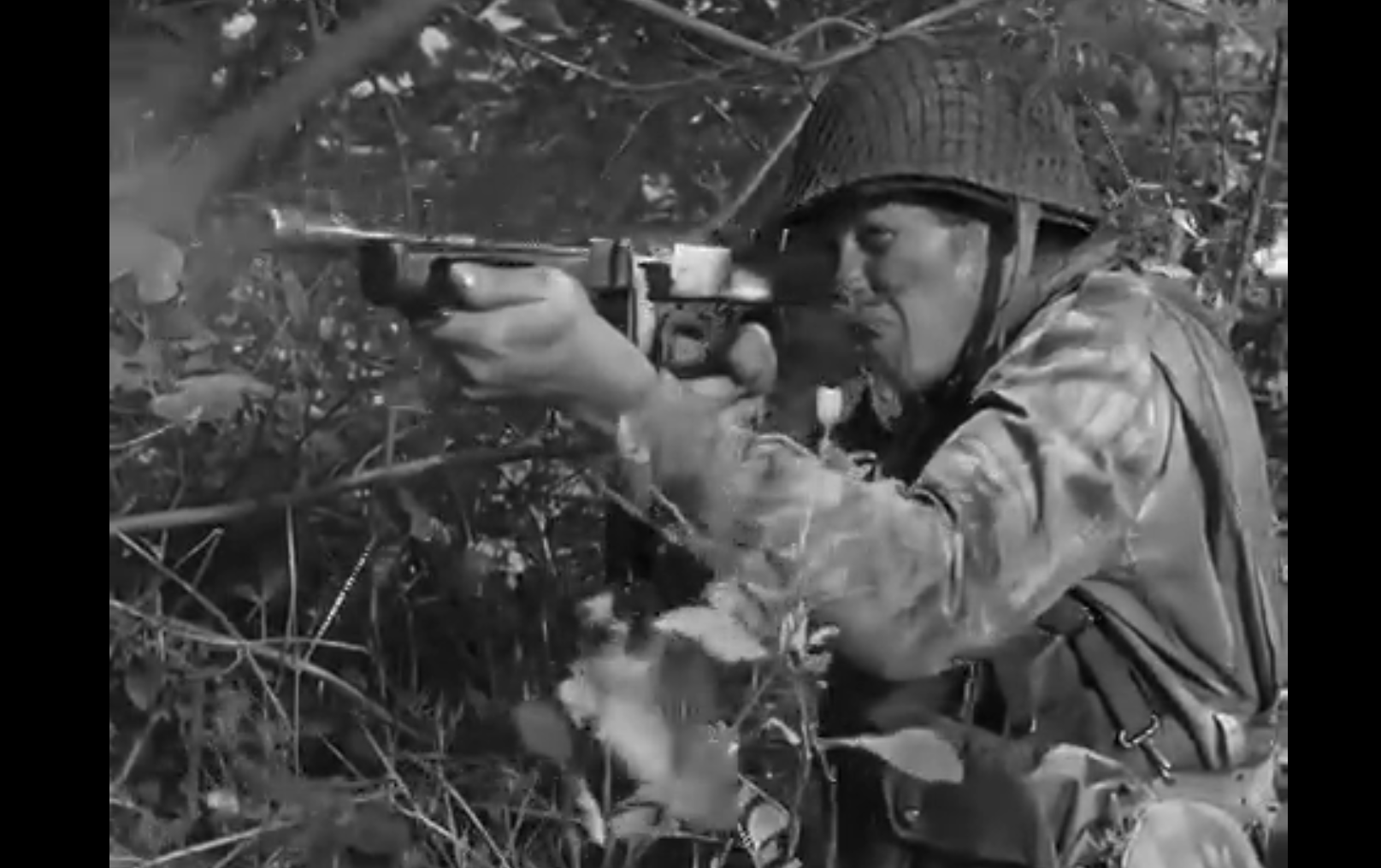
… and notes that the film is “highlighted by powerful battle sequences, including a tense, climactic ‘night’ battle in which few survive.”

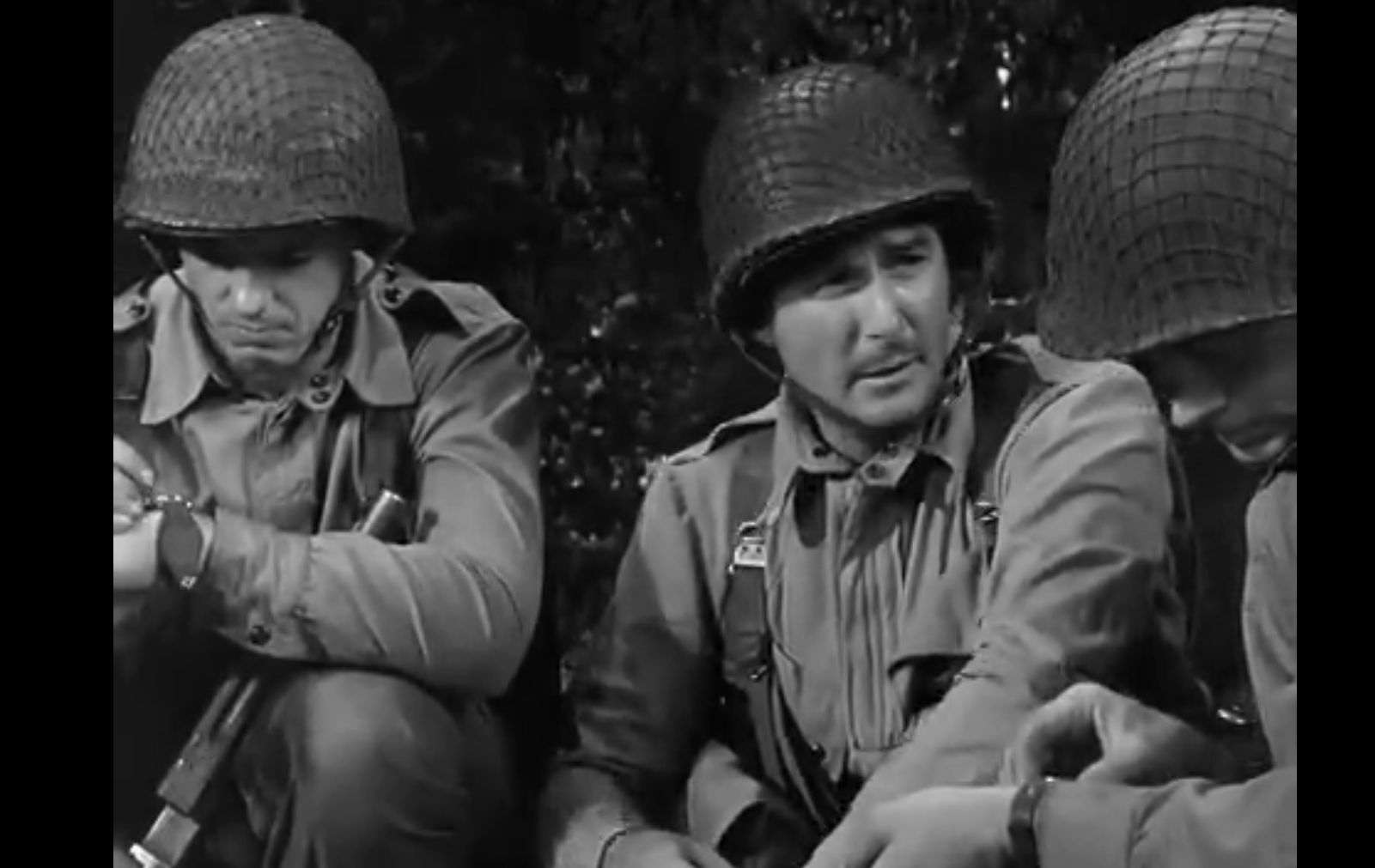
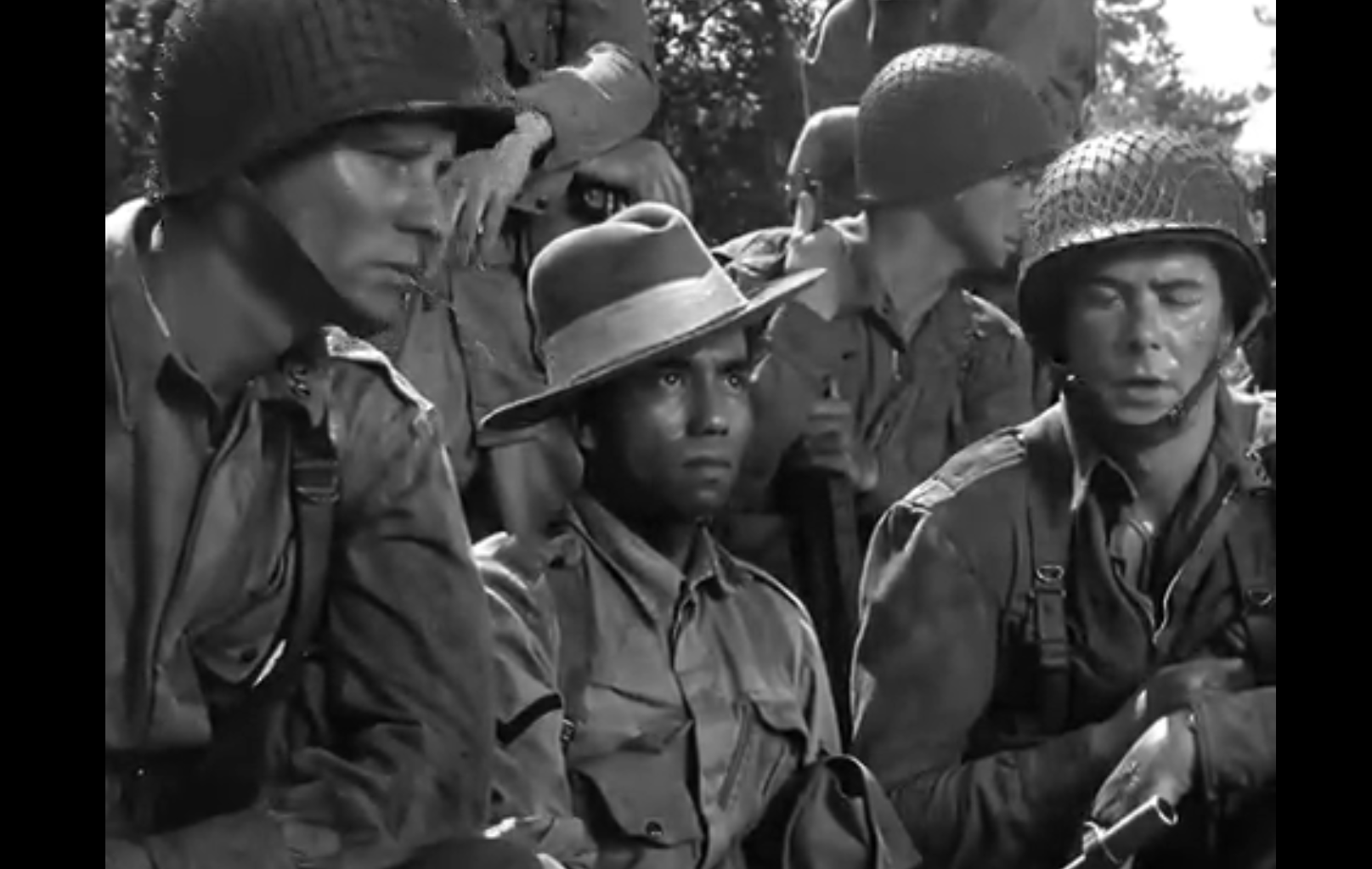
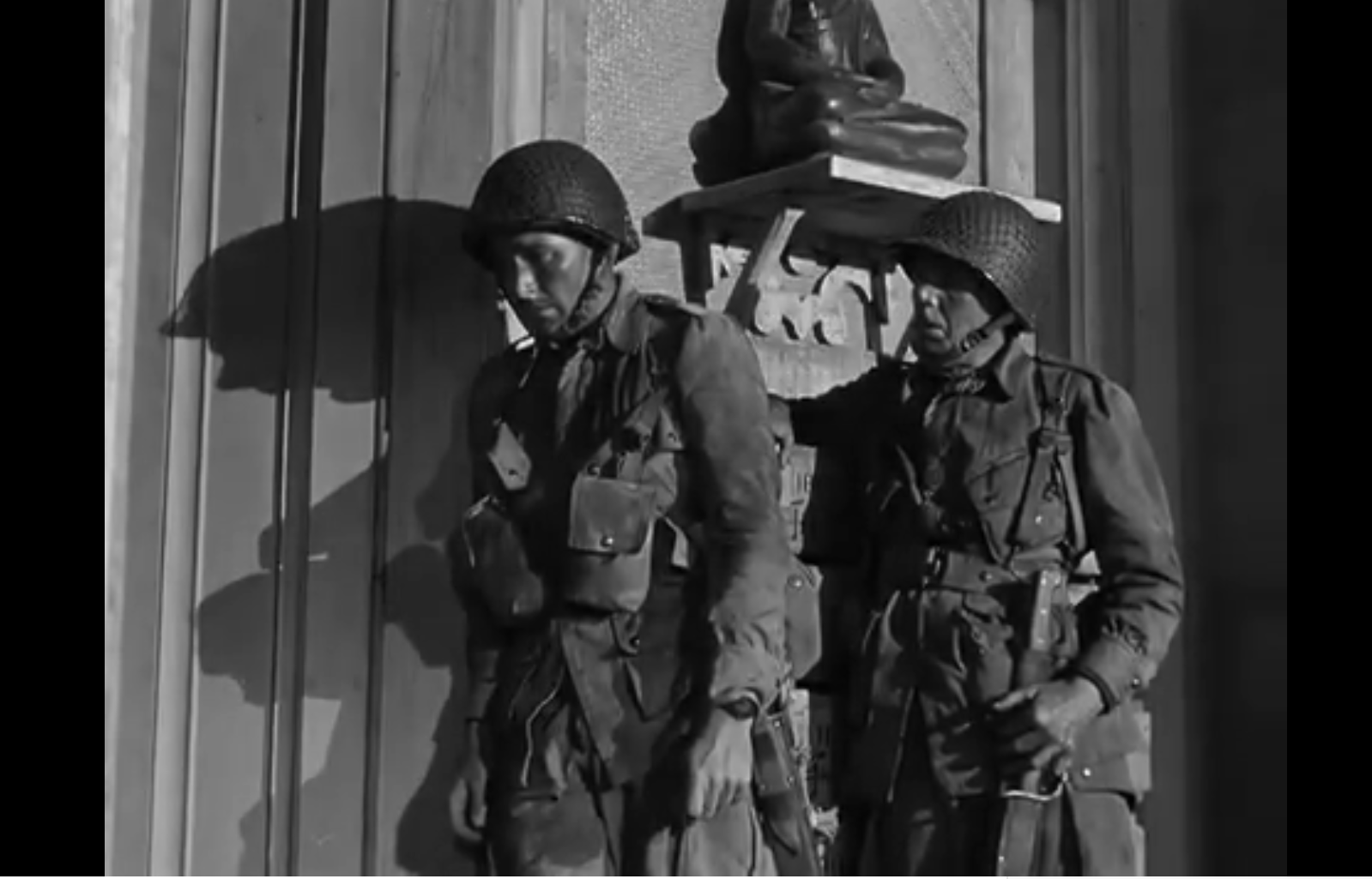
As Peary notes, the soldiers (each a unique individual):

… show the utmost professionalism on the field (they’re remarkably “well prepared and efficient”), yet they also display very real emotions and fear, becoming “frustrated, scared, and los[ing] confidence as their numbers start to diminish and rescue looks hopeless.”

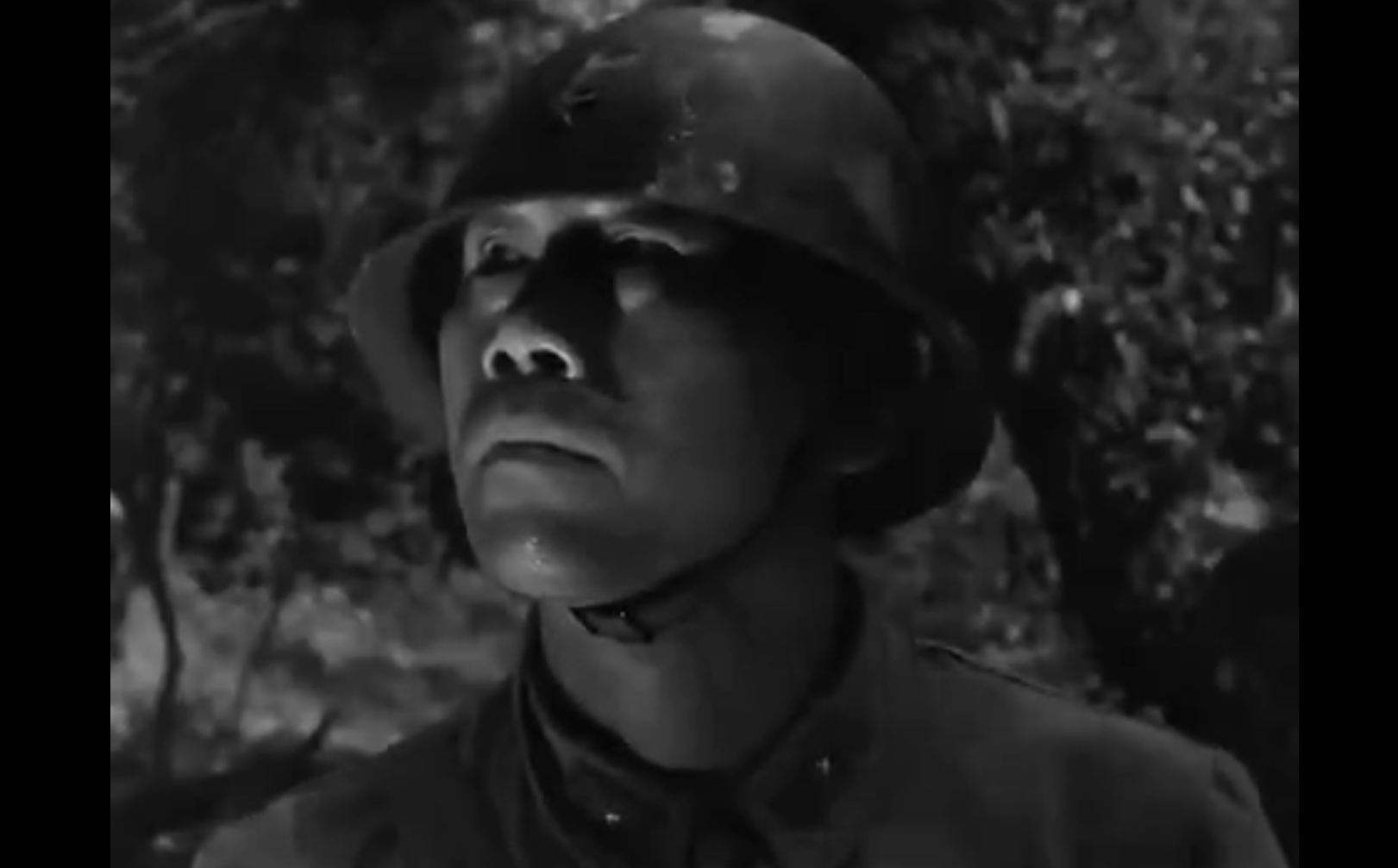
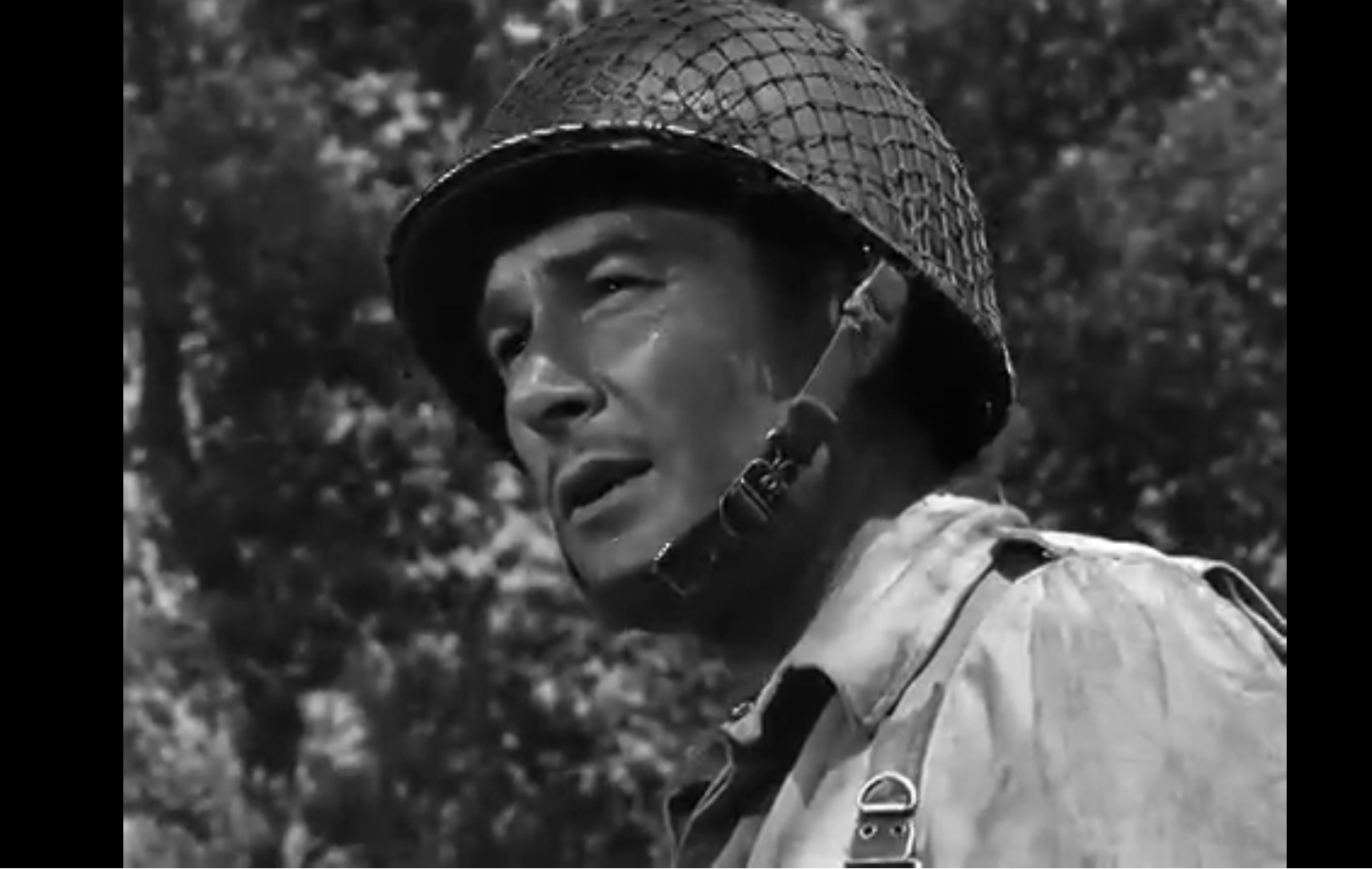
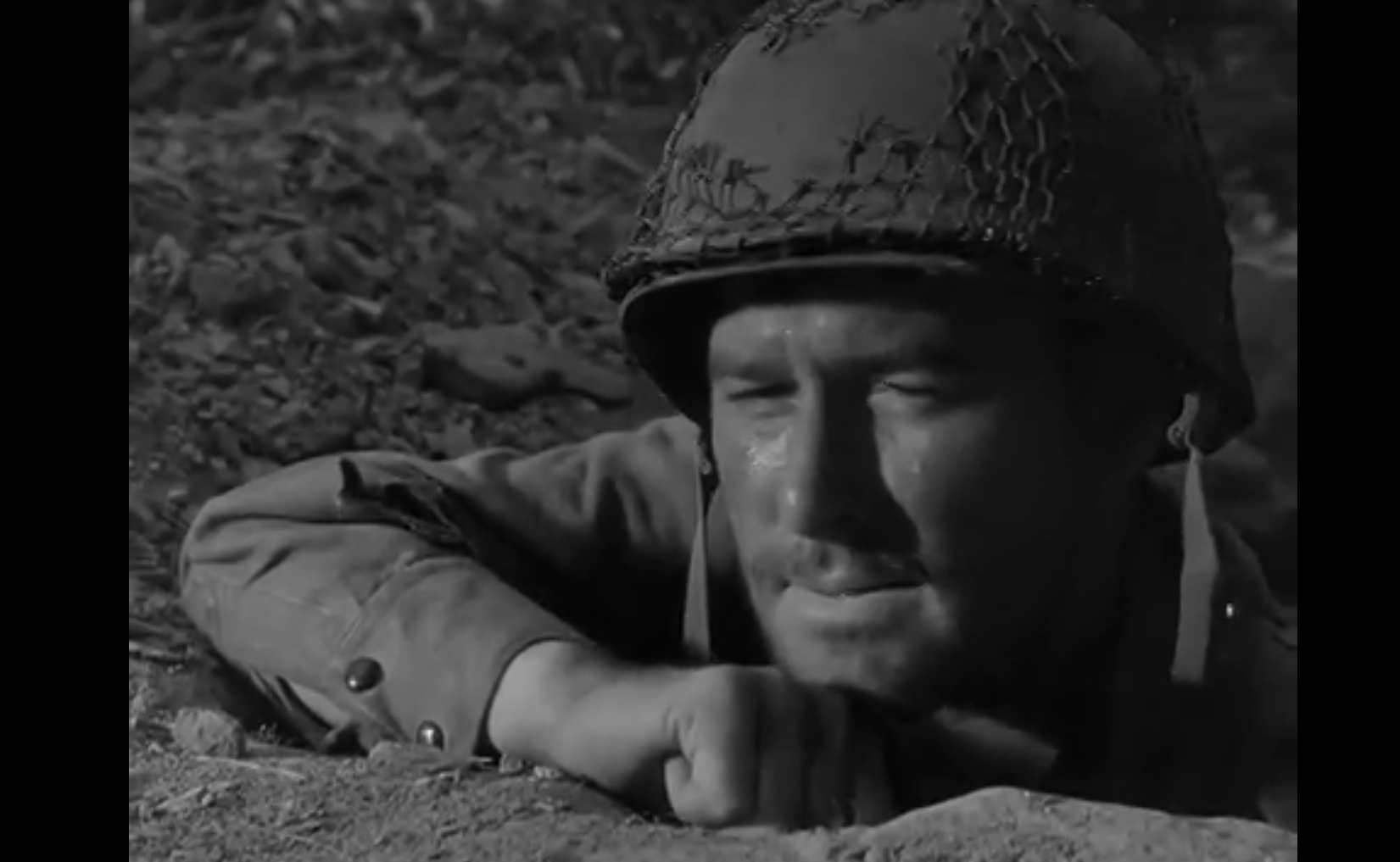
Flynn is especially admirable in the lead role (Peary refers to his performance as “unusually restrained” and “humble”):

Less impressive is Henry Hull as an “aged war correspondent” a la Ernie Pyle, whose performance (in a role meant to simulate “our eyes” on the battlefield) comes across a tad heavy-handed.

Regardless, it’s the non-stop action here that keeps us riveted — yet Peary forewarns us that it may be difficult for modern viewers to stomach the “racist propaganda” in the film, given that, as we “watch our soldiers ambushing Japanese soldiers”, it’s “like a shooting gallery”.

Note: According to Time Out’s Review, England was so upset about the film’s suggestion that Americans “won the Burma Campaign single-handled” that they prevented this film from future distribution in the country until 1952.

Redeeming Qualities and Moments:

  • Errol Flynn’s surprisingly subdued, stoic performance as Captain Nelson
  • Nonstop, exciting action
  • Atmospheric cinematography

  • Plenty of smart dialogue:

    Reporter: What if my parachute doesn’t open?
    Captain Nelson: Then you’ll be the first one on the ground.

Must See?
Yes; this one remains among the best WWII movies ever made.

Categories

  • Controversial Film
  • Historically Relevant

Links:

Pardners (1956)

Pardners (1956)

“We’ll be the greatest pardners, buddies, and pals!”

Synopsis:
A wealthy wanna-be cowboy (Jerry Lewis) joins his new “pardner” (Dean Martin) in a stand-off against masked raiders who are terrorizing a Western town.

Genres, Themes, Actors, and Directors:

  • Agnes Moorehead Films
  • Comedy
  • Dean Martin Films
  • Jerry Lewis Films
  • Lee Van Cleef Films
  • Lon Chaney, Jr. Films
  • Revenge
  • Western

Response to Peary’s Review:
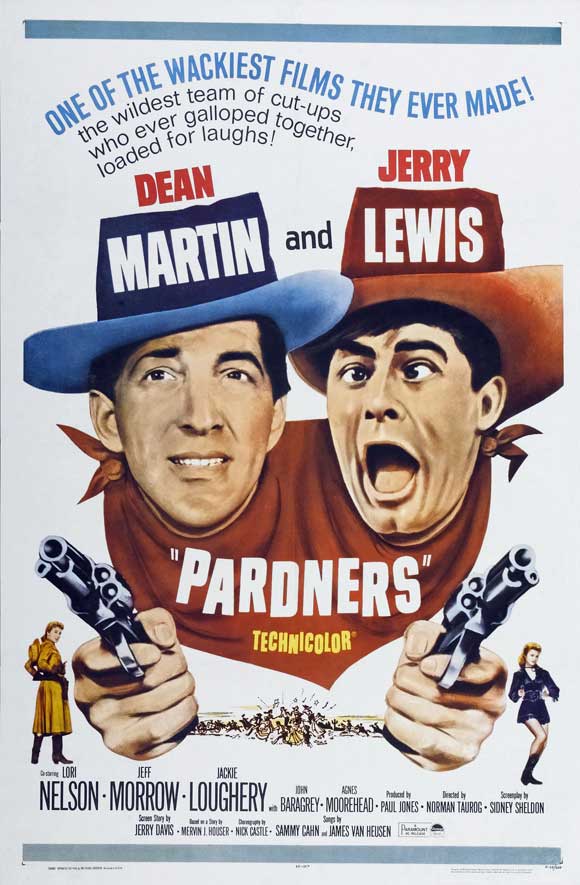
Peary admits to a childhood fondness for this fun if mediocre Dean Martin/Jerry Lewis comedy — their next-to-last together before Hollywood or Bust (1956) — which he finds “still pretty amusing”.

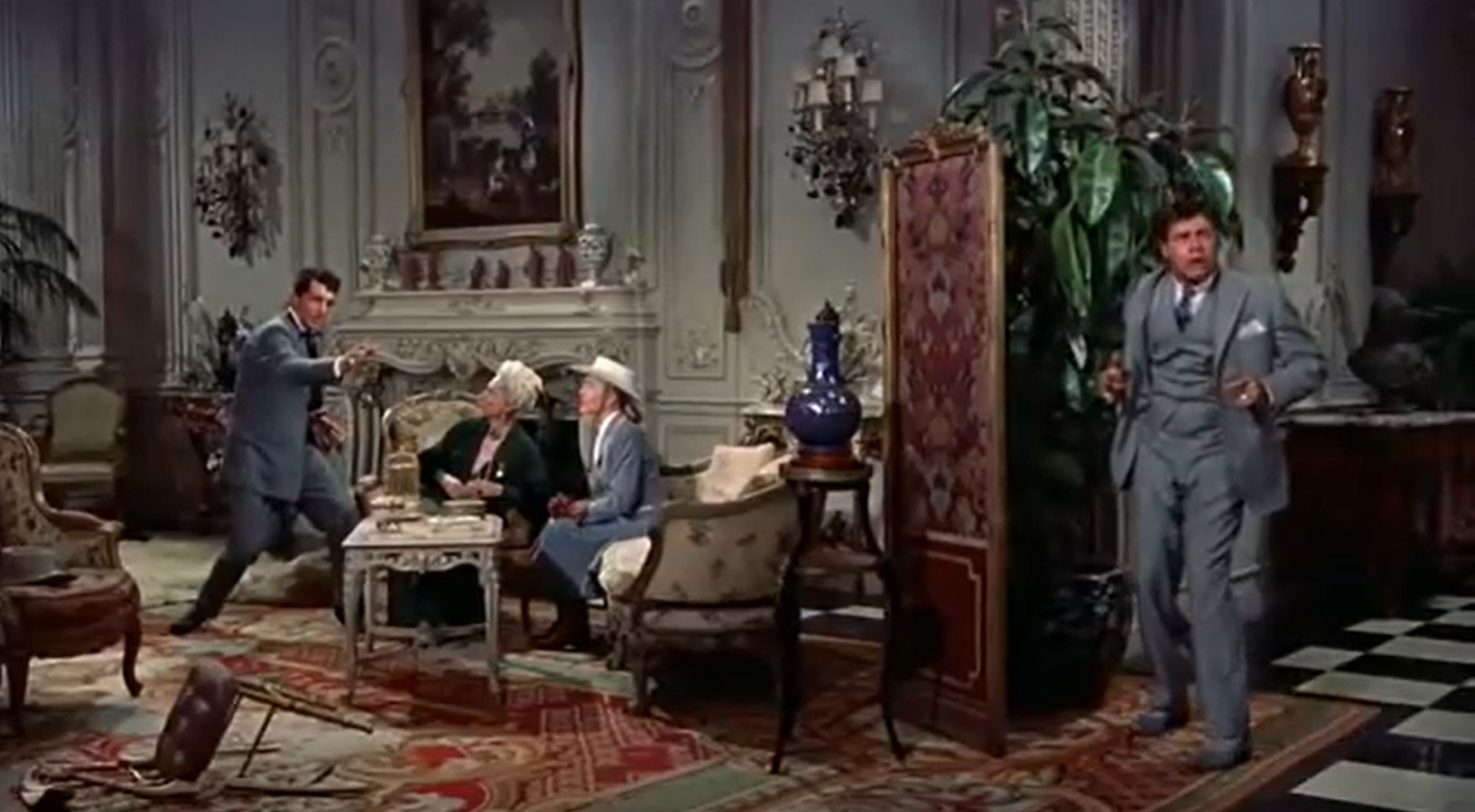
He points out that the direction by Normal Taurog is “snappy”, and that Lewis is as nutty, juvenile, and physically dexterous as ever. As Peary notes, he’s “not only silly but has a sense of humor”, and is a “genuinely quirky fellow with a touch of rebelliousness… and reckless abandon”. Although a little goes a long way with Jerry Lewis, there’s no denying that he was a talented comedian in his own fashion; meanwhile, Dean Martin croons as nicely as ever.

Redeeming Qualities and Moments:

  • Lewis secretly miming a story Martin is telling in the next room
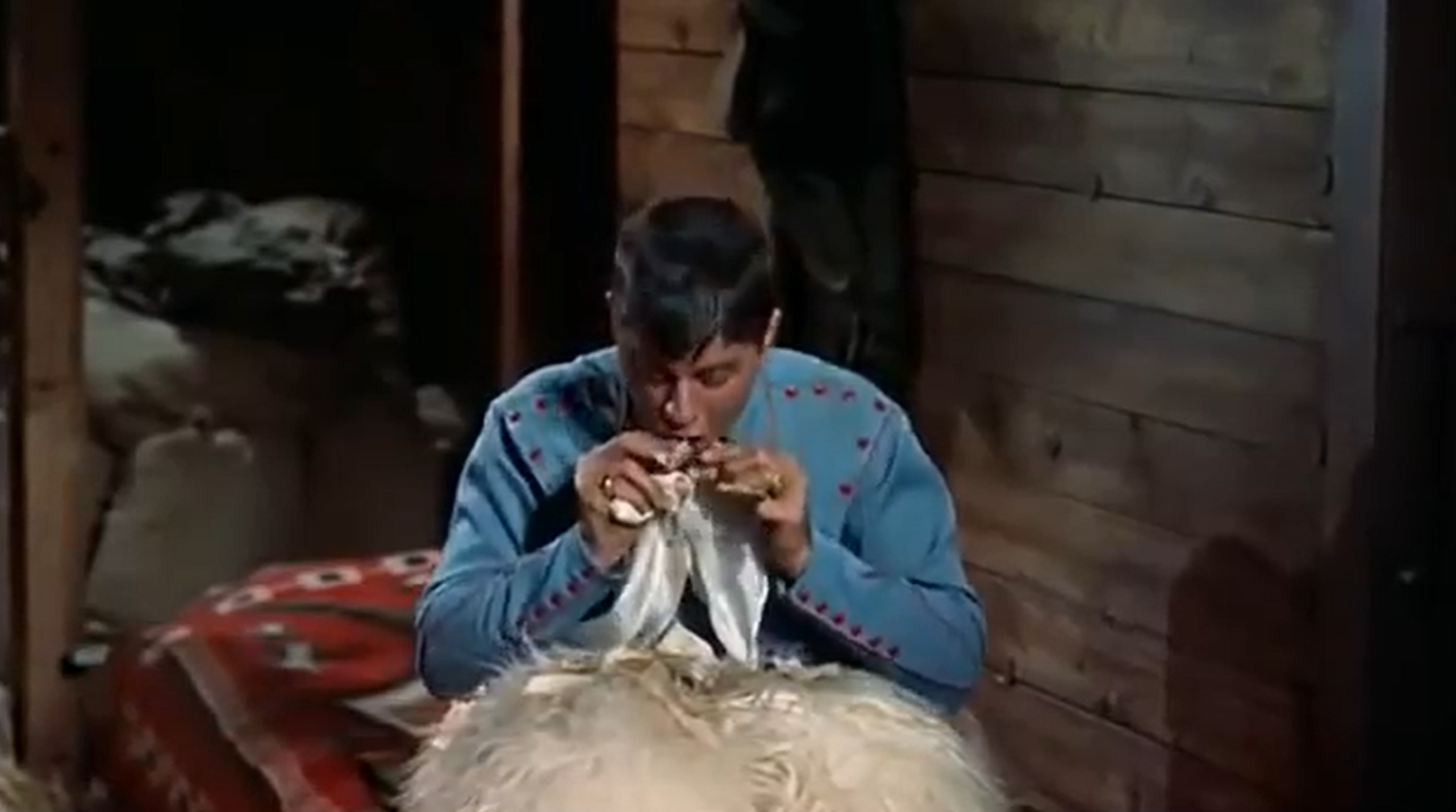
  • Lewis incompetently trying to roll a cigarette using Martin’s tobacco

Must See?
No — though every film fanatic should see at least one Martin-and-Lewis comedy, and this may be as good a choice as any.

Links:

Blood Money (1933)

Blood Money (1933)

“Every dollar you ever made was right from somebody’s heart — you’re nothing but a bloodsucker.”

Synopsis:
Corrupt bondsman Bill Bailey (George Bancroft) falls for a thrill-seeking young socialite (Frances Dee), who nearly causes his downfall.

Genres, Themes, Actors, and Directors:

  • Corruption
  • Framed
  • Frances Dee Films
  • George Bancroft Films
  • Judith Anderson Films
  • Love Triangle
  • Thieves and Criminals

Response to Peary’s Review:
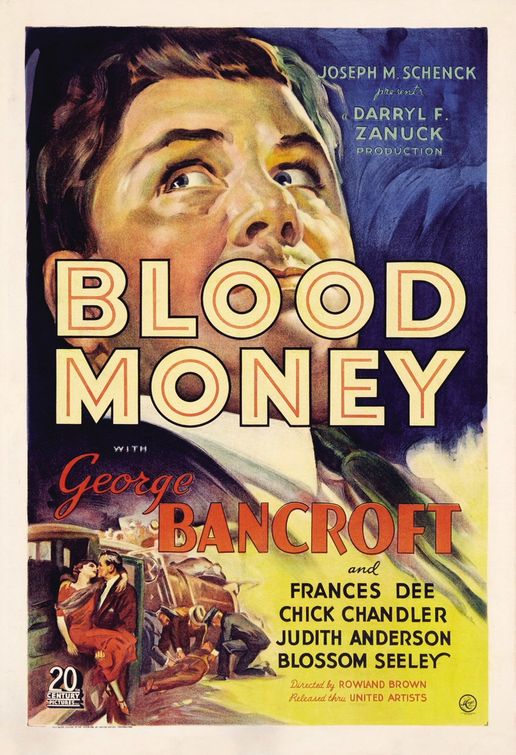
This above-average underworld thriller from the early 1930s defies easy categorization. As Peary points out, director Rowland Brown doesn’t pass judgment on those participating in organized crime (which he considered to be a “legitimate” business during the Depression); in this film’s universe, the only crime of which “one should be ashamed” is a double-cross. The characters flout convention as well: a shady, ordinary-looking bondsman is the sympathetic protagonist of the film, while Frances Dee’s wealthy kleptomaniac thrill-seeker is, as Peary puts it, “a woman years ahead of her time”. At only 65 minutes long, Blood Money moves quickly, with several exciting plot twists, some unusual settings (including a dog race), well-written dialogue, and nuanced characters. Well worth a look.

Redeeming Qualities and Moments:

  • Judith Anderson, wonderful in her first screen role
  • Frances Dee as the spoiled, thrill-seeking young socialite
  • An exciting climax
  • Smart dialogue

    “How’d you like to get interested in me?”

Must See?
Yes, simply to watch one of the few films directed by the notorious Rowland Brown. Discussed at length in Peary’s Cult Movies 2 (1983).

Categories

  • Cult Movie
  • Important Director

Links:

Secret Six, The (1931)

Secret Six, The (1931)

“Carl, you’d better come through: Who are the secret six?”

Synopsis:
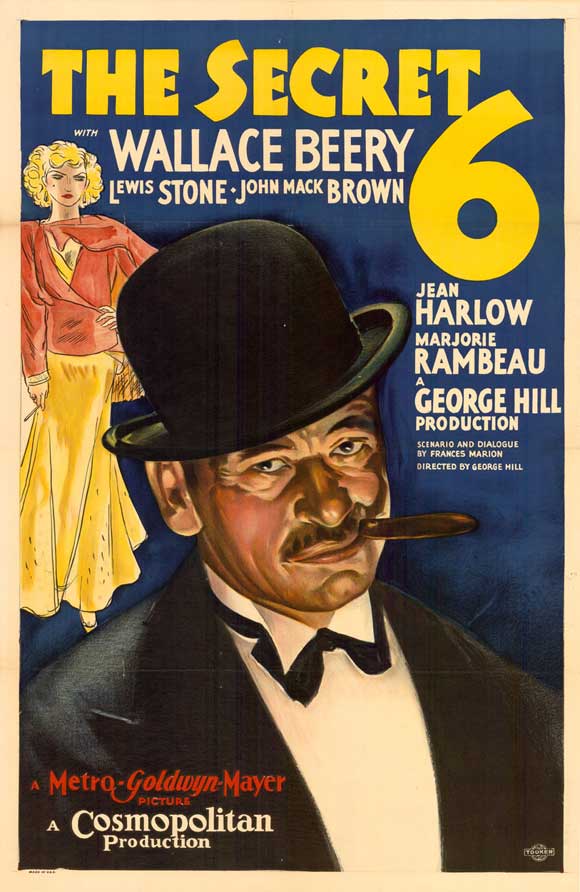
A reporter (Clark Gable) and a moll (Jean Harlow) help a group of concerned citizens (the “Secret Six”) bring about the downfall of big-time prohibition-era mobster Louie Scorpio (Wallace Beery).

Genres, Themes, Actors, and Directors:

  • Clark Gable Films
  • Gangsters
  • Jean Harlow Films
  • Journalists
  • Lewis Stone Films
  • Prohibition
  • Wallace Beery Films

Response to Peary’s Review:
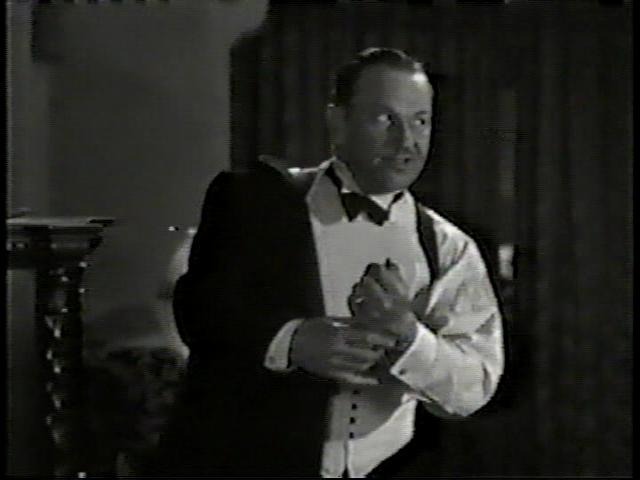
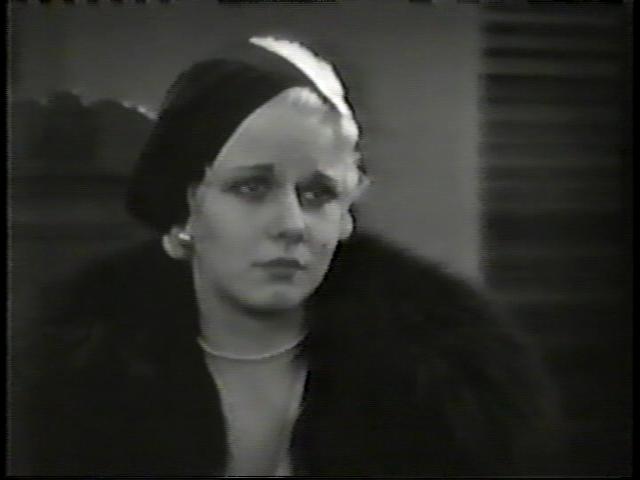
As Peary notes, the cast in this early anti-crime flick is “first-rate”, with Wallace Beery’s “offbeat” performance as Louie Scorpio especially notable.

While there’s nothing new under the sun here in terms of the plot — small-time slaughterhouse worker rises to the top of the crime world by killing colleagues, bribing journalists, and planting politicians — it’s all done with style and levity, and is a joy to watch. It’s also fun to see Clark Gable and Jean Harlow in two of their earlier film roles, with Gable coming across as especially charismatic. However, this film really should have a different title, given that the “Secret Six” (concerned citizens who, as Peary puts it, “look silly in their Lone Ranger masks”) only show up twice, and don’t have much to do with the overall plot.

Redeeming Qualities and Moments:

  • Wallace Beery’s comical portrayal as “Slaughterhouse” Scorpio
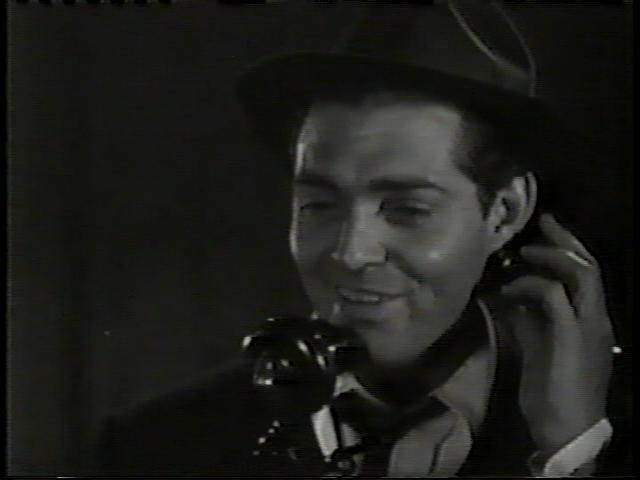
  • Clark Gable in one of his first star-making roles
  • Jean Harlow in a sympathetic early role
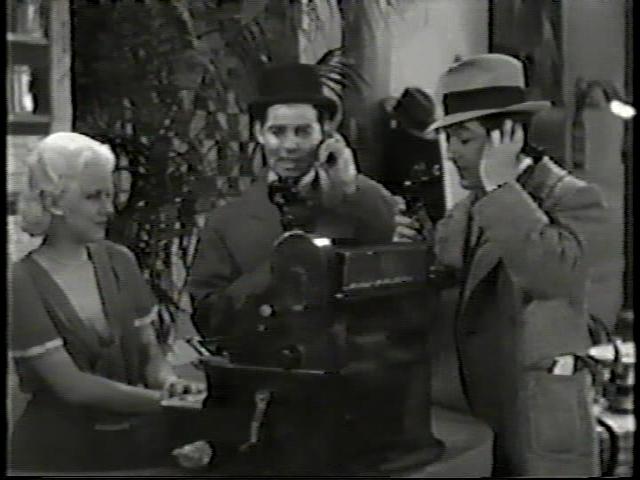
  • Gable and his colleague (Johnny Mack Brown) making competing phone calls to their newspapers while simultaneously chatting up Jean Harlow
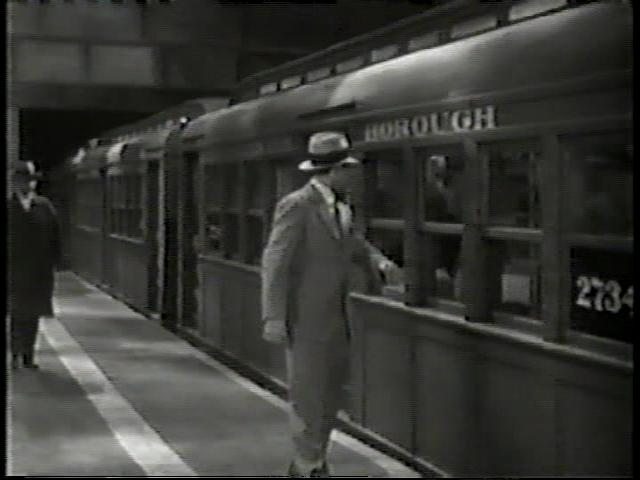
  • A fun glimpse of the New York Metro system in the 1930s
  • Scorpio dictating a letter to his secretary, who makes some substantial changes:

    Scorpio: “You better lay off shipping grapes into our state if you don’t cut me in on it.” Read that.
    Secretary: “Gentlemen: I understand you are shipping concentrated grape juice into our state without consulting our organization.”
    Scorpio: That’s right.
    Secretary: Thank you, sir.

Must See?
No. While it’s a good anti-crime flick with an excellent cast, I believe director George Hill’s previous film, The Big House (1930), is a better candidate as a “must see” film.

Links:

Exterminating Angel, The (1962)

Exterminating Angel, The (1962)

“The best explanation of this film is that, from the standpoint of pure reason, there is no explanation.”

Synopsis:
A group of bourgeois dinner guests find themselves inexplicably unable to leave once the party is over.

Genres, Themes, Actors, and Directors:

  • Black Comedy
  • Bourgeois Society
  • Get Together
  • Living Nightmare
  • Luis Buñuel Films
  • Surrealism

Response to Peary’s Review:
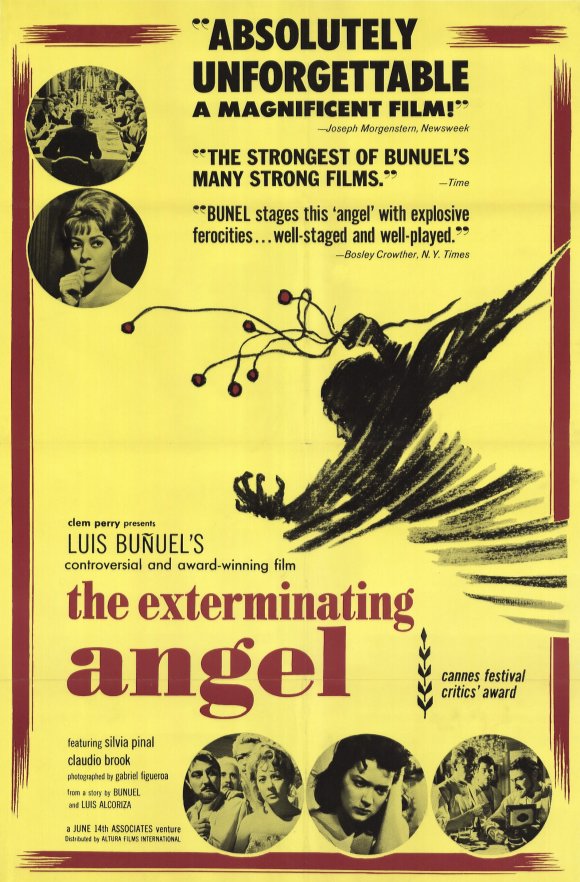
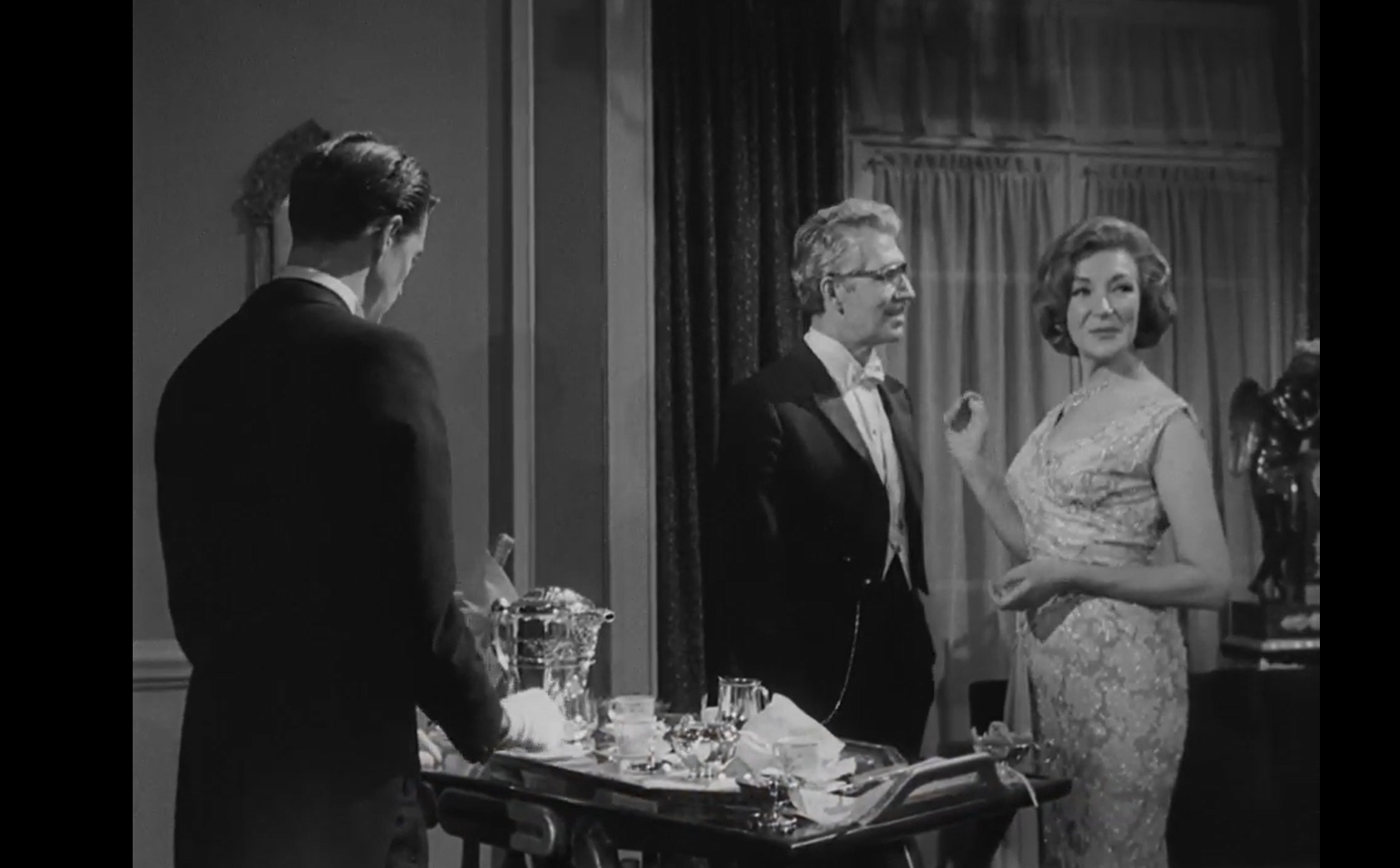
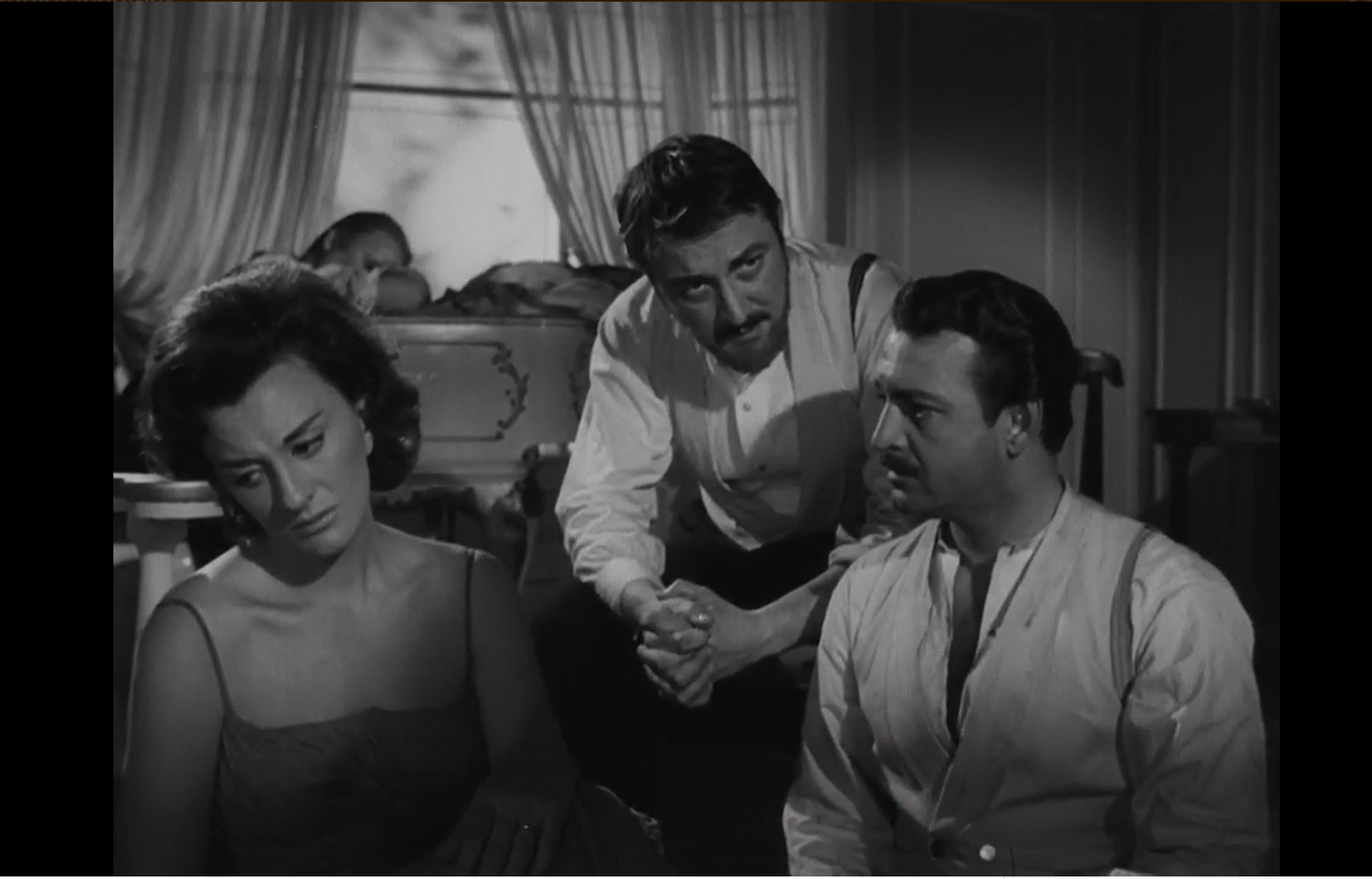
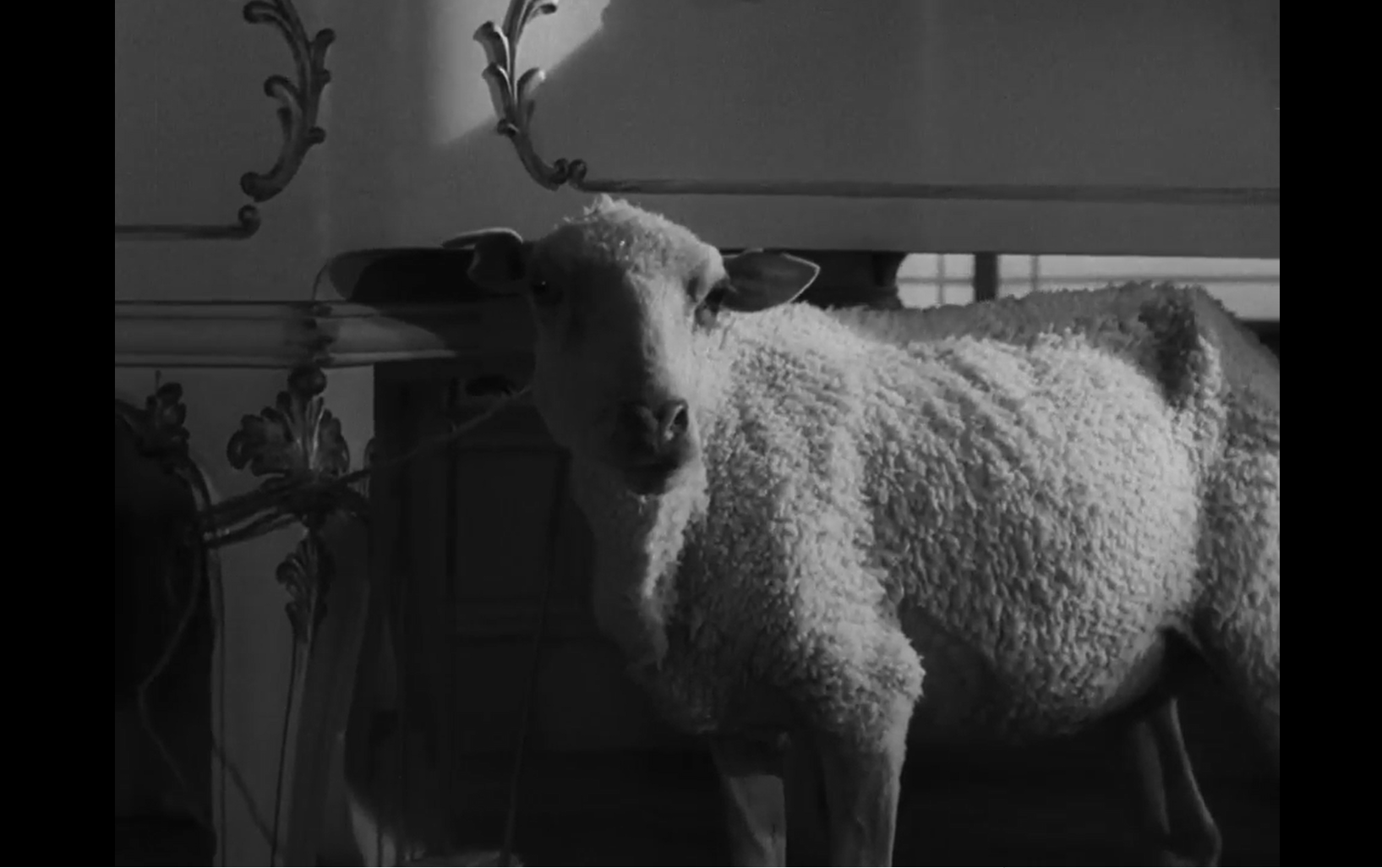
Peary refers to this “perplexing, absurdist black comedy” — an extended allegory on the fragile veneer of class — as “one of Buñuel’s most bizarre films” (a notable distinction, given Buñuel’s many other surrealistic endeavors). As Peary notes, this film represents one of Buñuel’s “many indictments of the bourgeoise” given “it is they who have contaminated society” and now they are transformed “into the smelly, violent, uncouth people they’ve always despised.” The guests — caught in a living nightmare from which they can’t awake, without servants to help mediate their pressing needs — eventually begin to lose every shred of their carefully seasoned civility, making “brutally honest remarks about each other” that “may seem like cheap shots, but are a big improvement over the false respect that previously distinguished their relationships.” Nothing is left sacred here: suicide, infidelity, and bitterly sarcastic barbs all come to bear as the days go by and nothing seems to change for the trapped guests.

Redeeming Qualities and Moments:

  • A powerful allegory of bourgeois conformity and fragility

  • Atmospheric cinematography

Must See?
Yes. This film is a masterpiece of Buñuelian absurdism, and should be seen by every film fanatic.

Categories

  • Foreign Gem
  • Important Director

Links:

Immoral Mr. Teas, The (1959)

Immoral Mr. Teas, The (1959)

“Sensitive men have been fretting over G-strings for years.”

Synopsis:
A door-to-door salesman (Bill Teas) develops the uncanny ability to see women without their clothes on.

Genres:

  • Comedy
  • Peeping Toms
  • Russ Meyer Films
  • Supernatural Powers

Response to Peary’s Review:
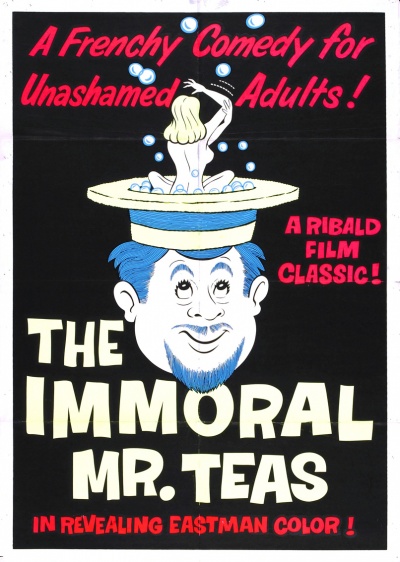
Peary notes that this one-note nudie comedy was “notorious when released”, but now seems “tame, even genteel”. Most importantly, it put director Russ Meyer on the map as the “King of the Nudies”; he went on to make much raunchier fare, including Faster, Pussycat! Kill! Kill (1965) and Vixen! (1968). TIMT is pure male fantasy all the way, naturally, and becomes repetitive fairly quickly; fortunately, it’s only an hour-plus long, and has enough “curiosity appeal” to remain relatively amusing until the end.

Redeeming Qualities and Moments:

  • Occasional moments of unexpected humor

Must See?
No, though it’s of mild historical interest simply for its status as “bosomania” director Russ Meyer’s first feature film.

Links: