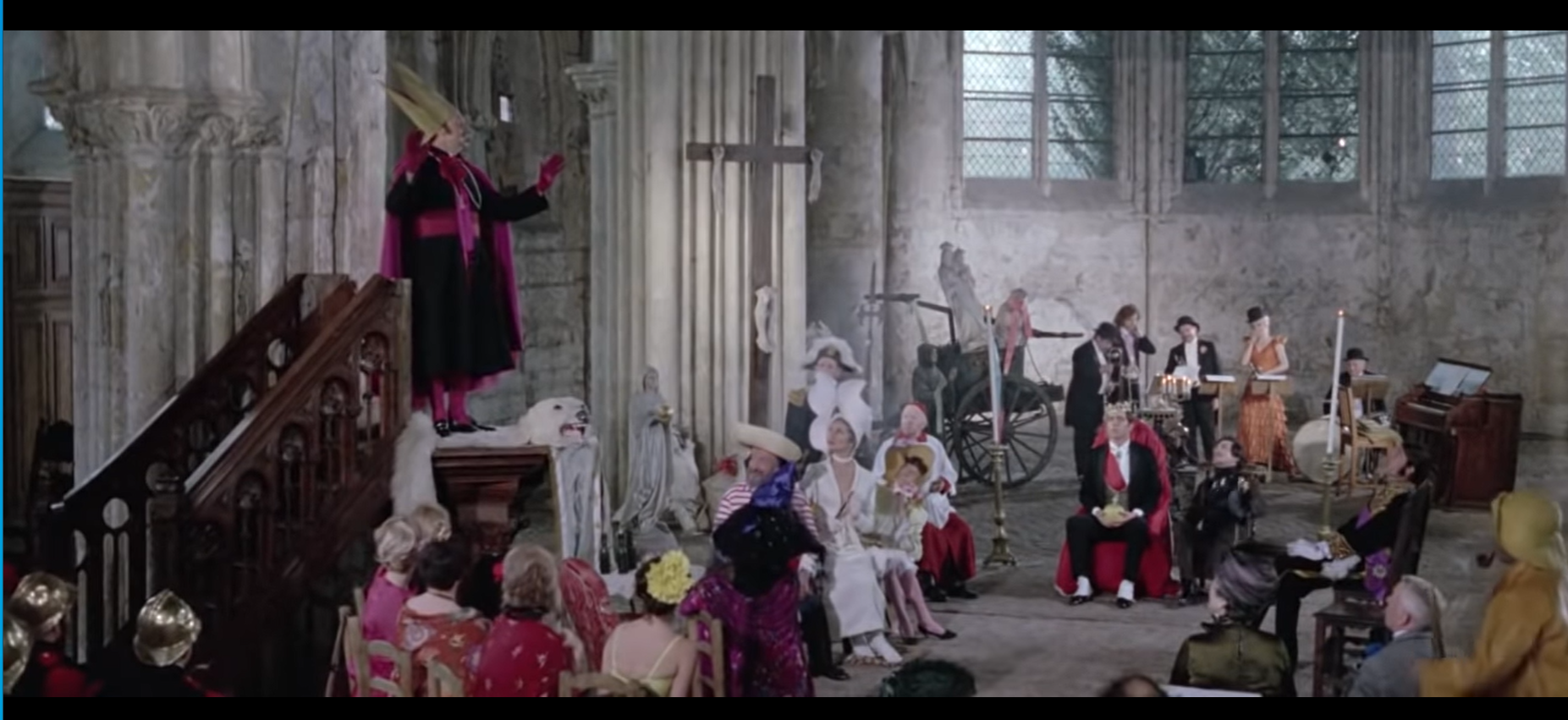
King of Hearts (1966)
“All life is a spectacle — you’re on a stage.”
|
Synopsis: |
|
Genres, Themes, Actors, and Directors:
Response to Peary’s Review: Redeeming Qualities and Moments:
Must See? Links: |
My comments on Peary’s reviews in Guide for the Film Fanatic (Simon & Schuster, 1986).
“All life is a spectacle — you’re on a stage.”
|
Synopsis: |
|
Genres, Themes, Actors, and Directors:
Response to Peary’s Review: Redeeming Qualities and Moments:
Must See? Links: |
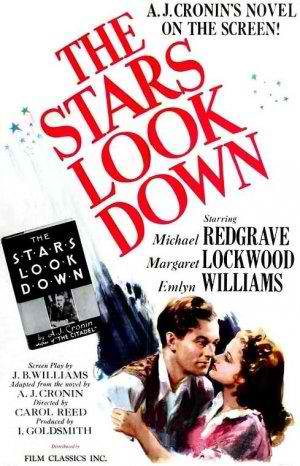
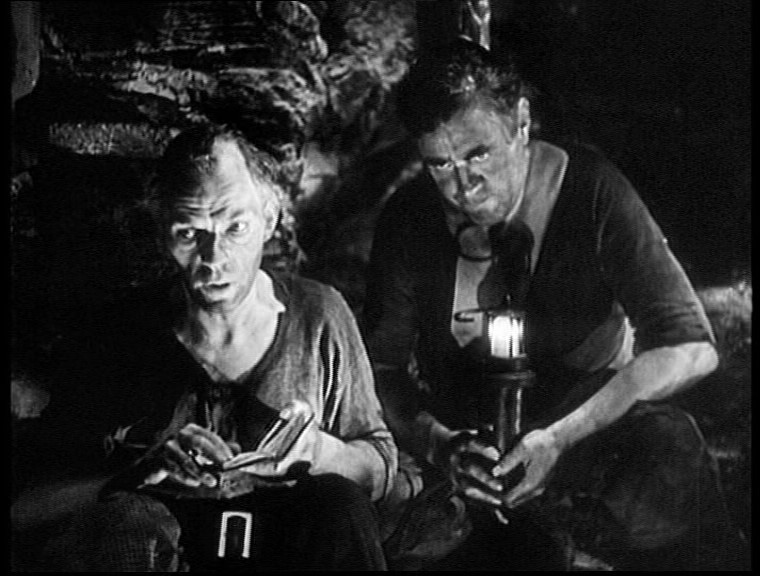
“These men and women are the backbone of nations, the stuff of human destiny — simple, working people, such as there are the world over, in all countries, and in all times.”
|
Synopsis: |
Genres, Themes, Actors, and Directors:
Response to Peary’s Review: Redeeming Qualities and Moments:
Must See? Categories
Links: |
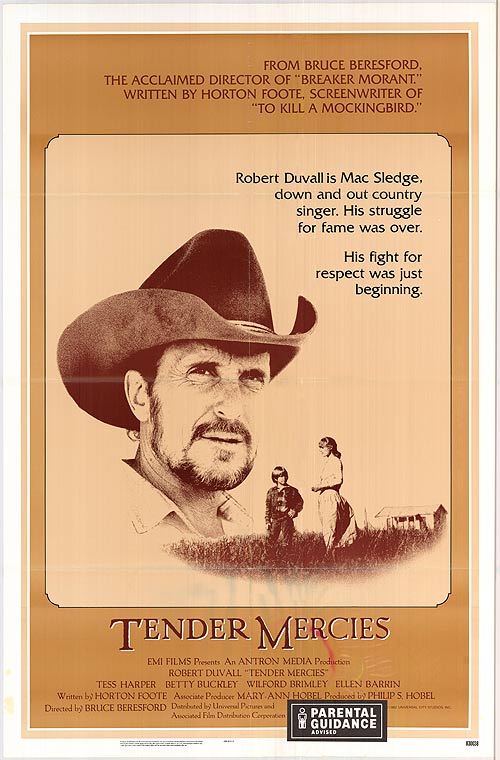
“Every night when I say my prayers and I thank the Lord for his blessings and his tender mercies, you and Sonny hit the list.”
|
Synopsis: |
|
Genres, Themes, Actors, and Directors:
Response to Peary’s Review: Redeeming Qualities and Moments:
Must See? Categories
Links: |
“The motion picture you are about to witness may startle you.”
|
Synopsis: |
|
Genres, Themes, Actors, and Directors:
Response to Peary’s Review: Redeeming Qualities and Moments:
Must See? Categories
Links: |
“I’m your normal, tired, neurotic, polymorphously perverse teacher.”
|
Synopsis: |
|
Genres, Themes, Actors, and Directors:
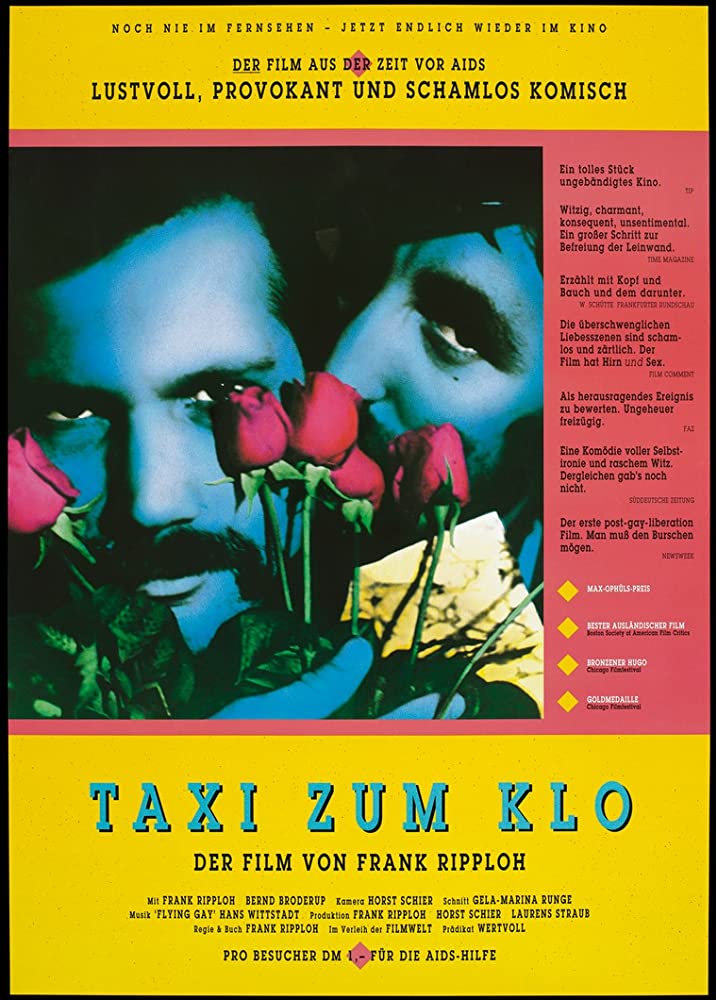
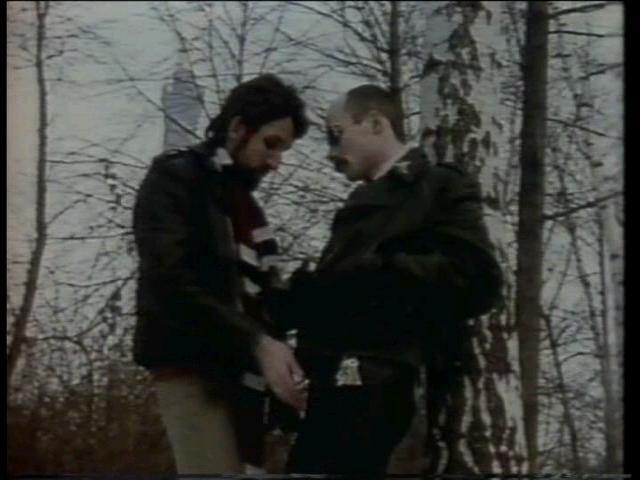
Response to Peary’s Review: Taxi Zum Klo (which translates into “Taxi to the [Public] Toilet”) is especially effective at showing how Ripploh was able to keep his sex life completely separate from his career as a schoolteacher. In one particularly overt instance, Ripploh cross-cuts between innocent shots of his tutoring session with a young male student, and his transvestite friend commenting disparagingly while watching a cautionary school film about a pedophile. It may be a heavy-handed message, but it’s an important one — and it works within the context of the film’s unabashed presentation of explicit gay male sexuality (surely an eye-opener for many at the time). Redeeming Qualities and Moments:
Must See? Categories
Links: |
“She was the most beautiful girl I have ever seen.”
|
Synopsis: |
|
Genres, Themes, Actors, and Directors:
Response to Peary’s Review: Andrews is fine as Moore’s long-suffering girlfriend, and gets to sing a couple of nice Henry Mancini songs — but her too-perfect British accent quickly becomes distracting. More impressive, believe it or not, is Derek, who — once she finally becomes a three-dimensional character rather than simply the distant object of Moore’s lust — gives a natural and appealing performance. Though director Blake Edwards tries a bit too hard for laughs with his repeated attempts at slapstick humor (as when Moore tumbles down a hill and struggles to climb back up again), overall this remains a surprisingly honest look at middle-aged male sexuality. Redeeming Qualities and Moments:
Must See? Links: |
“Man — lacking the will to understand other men — became like the beasts, and their way of life was his.”
|
Synopsis: |
|
Genres, Themes, Actors, and Directors:
Response to Peary’s Review:
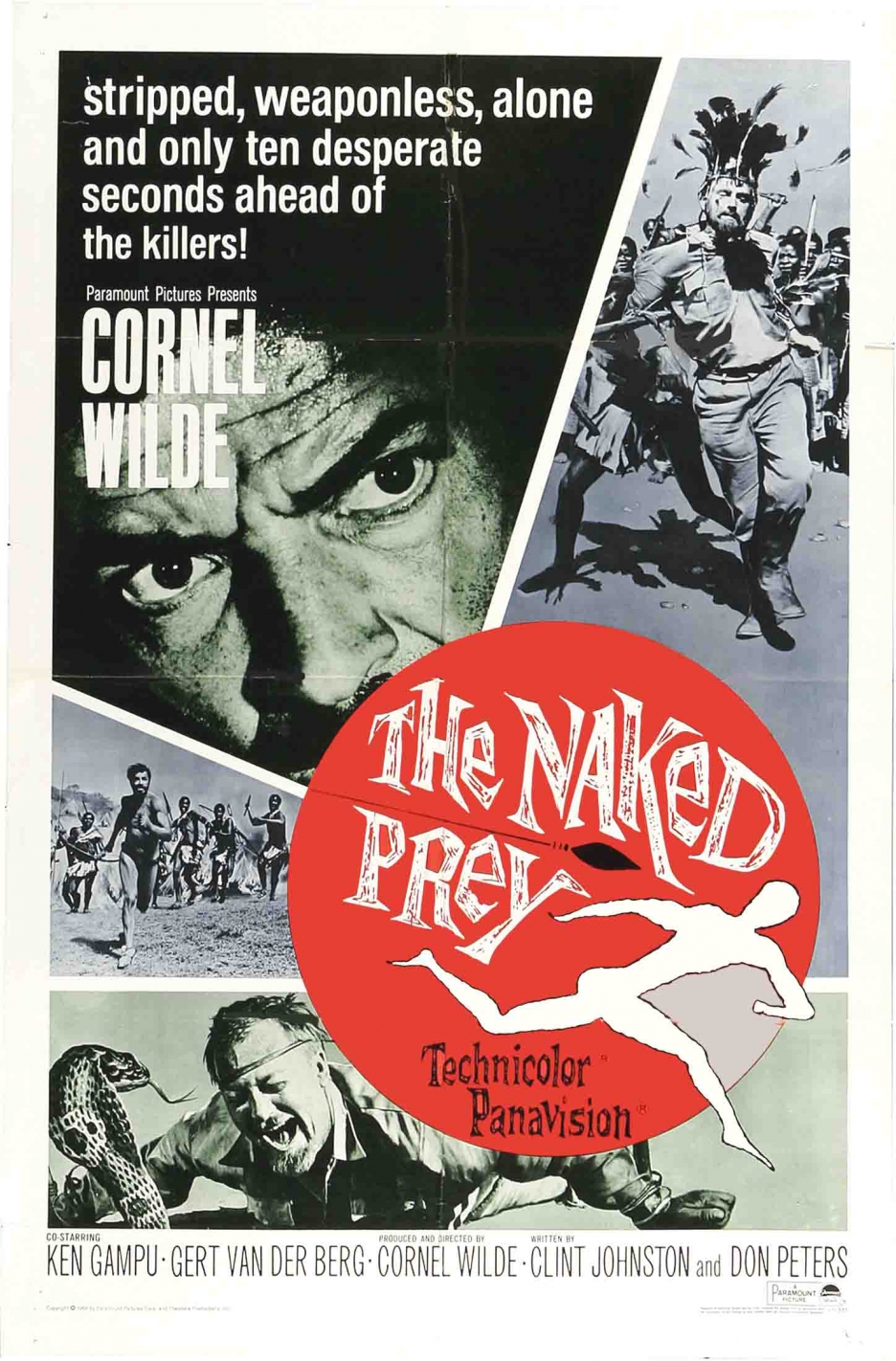
What Peary curiously neglects to mention in his review, however, is the sticky issue of how the African natives are portrayed. On the one hand, Wilde respects the warriors as individuals, showing them stopping to mourn each other as they’re killed.
And it’s undeniably refreshing to see Africans gaining a sort of revenge against the whites who so brutally invaded their culture. On the other hand, they’re still clearly posited as The Exotic Others: the women dance around without shirts on, the warriors are essentially portrayed as savage and uncivilized, and Wilde (The White Man) is the undisputed protagonist. On the whole, however, I would still vote for The Naked Prey as a rare mid-century American film which at least attempts to humanize Africans. Redeeming Qualities and Moments:
Must See? Categories
Links: |
”I don’t like the way life is for the majority of us — I don’t say I can change it, but I can sing about it.”
|
Synopsis: |
|
Genres, Themes, Actors, and Directors:
Response to Peary’s Review: Redeeming Qualities and Moments:
Must See? Links: |
“I’ve been on the docks all my life, boy, and there’s one thing I’ve learned — you don’t ask no questions, you don’t answer no questions.”
|
Synopsis: |
|
Genres, Themes, Actors, and Directors:
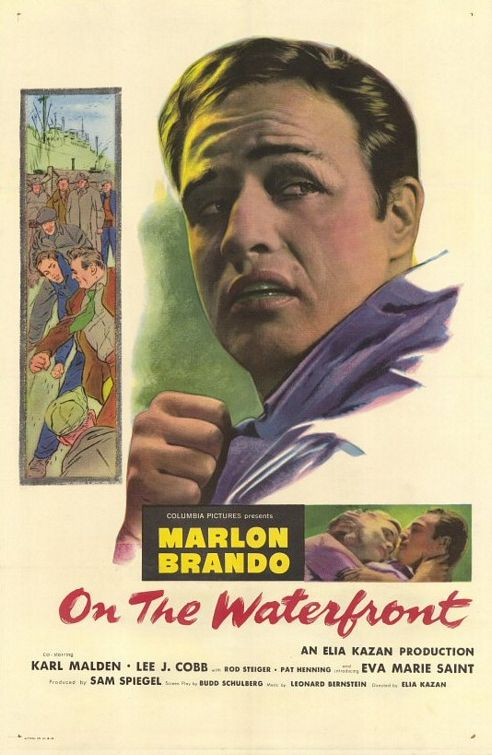
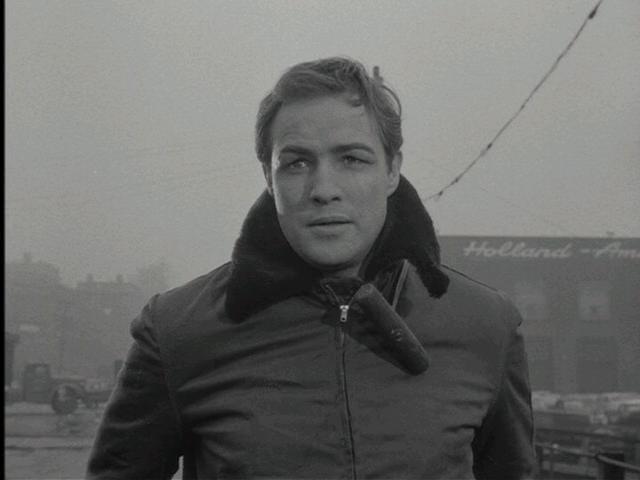
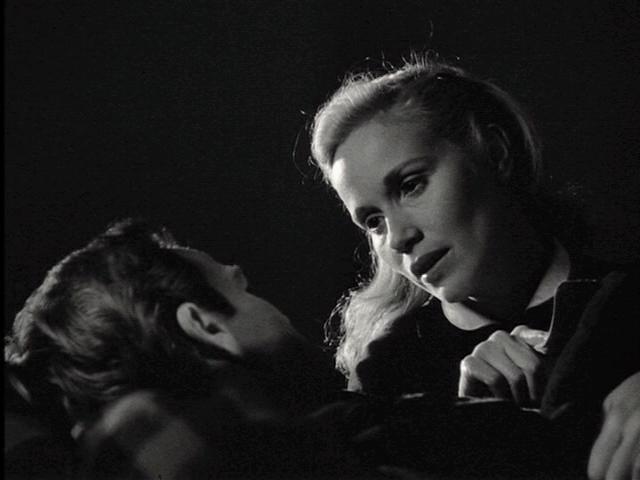
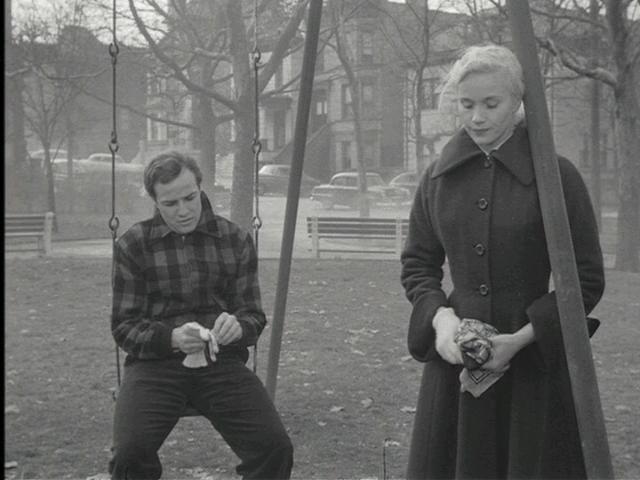
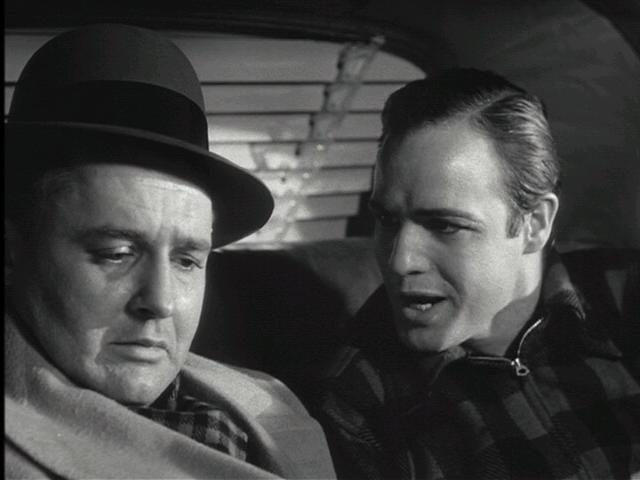
Response to Peary’s Review: On the Waterfront has been criticized on multiple fronts over the years: by those upset about its portrayal of the longshoreman’s union in the 1950s as corrupt; by those who claim On the Waterfront is essentially anti-union (I disagree); and — most famously — by those who believe Kazan was trying to offer Terry’s story as an apologetic for his own name-spilling to the House of Un-American Activities Commission (HUAC). Ultimately, however, I choose to view the film as a fable-like character study about personal redemption, rather than a polemic on unions, corruption, or Kazan himself. The film’s primary flaw (as noted by Peary) is the fact that “too much Christian morality is expounded by the overacting Karl Malden” — indeed, the scenes with Father Barry are a major distraction. Fortunately, there are enough memorable moments in On the Waterfront — Terry walking with Edie in the park; Terry’s poignant talk with Charlie in the taxi cab; the final climactic moments on the docks — to make up for those which don’t quite work. Also noteworthy are Leonard Bernstein’s majestic score (his first), and Boris Kaufman’s luminous black-and-white cinematography. Ultimately, On the Waterfront remains a glorious example of collaborative filmmaking, and merits multiple viewings by film fanatics. Redeeming Qualities and Moments:
Must See? Categories
(Listed in 1001 Movies You Must See Before You Die) Links: |
“Wars are waged by kings; we are ordinary, simple folk.”
|
Synopsis: |
|
Genres, Themes, Actors, and Directors:
Response to Peary’s Review: Despite the enormity of the subject matter, Ray characteristically takes a deeply personal approach, focusing primarily on the character arc of the main protagonist (Gangacharan), who gradually learns that, when it comes to survival in times of war, caste matters not at all. Equally compelling, however, are the subplots about Gangacharan’s wife Ananga (Babita) and her friends, who do what they can to bring food to their households — for Ananga, this means lowering herself enough to help mill rice, while her married friend Chutki (Sandhya Roy) sleeps with a disfigured man (Noni Ganguly) in exchange for some of his precious supply. Ultimately, Ray shows both the worst and the best sides of humanity in his film, as each character discovers what he or she is willing to compromise for his own survival — and for the survival of others. Redeeming Qualities and Moments:
Must See? Categories
Links: |