Browsed by
Category: Response Reviews

My comments on Peary’s reviews in Guide for the Film Fanatic (Simon & Schuster, 1986).

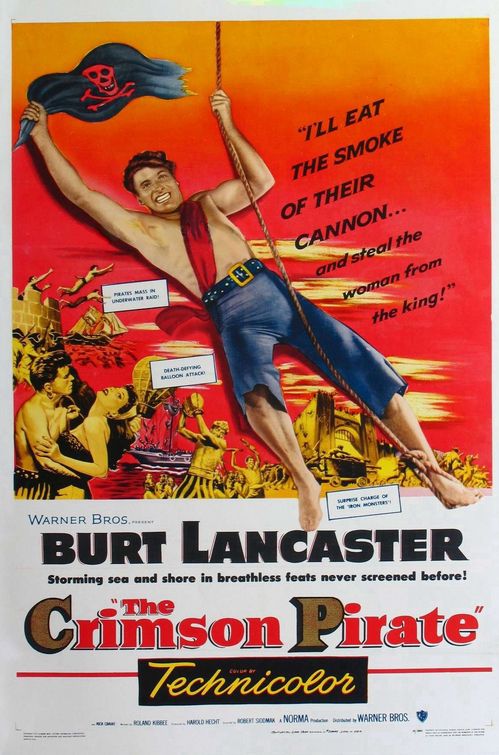
Crimson Pirate, The (1952)

Crimson Pirate, The (1952)

“Remember: in a pirate ship, in pirate waters, in a pirate world, ask no questions.”

Synopsis:
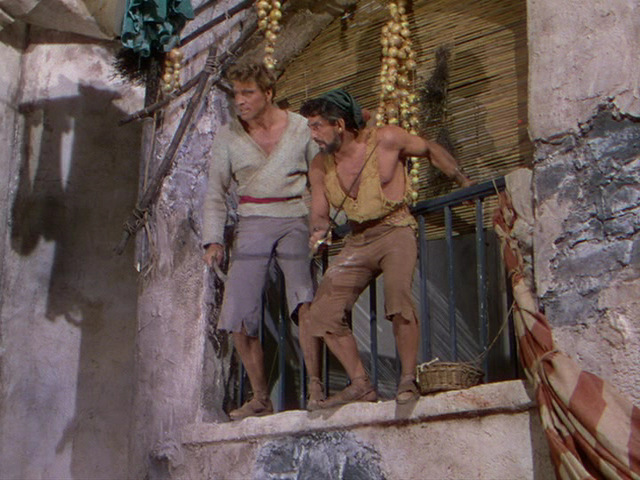
After seizing a ship full of arms from Baron Jose Gruda (Leslie Bradley), the “Crimson Pirate” (Burt Lancaster) and his trusty sidekick Ojo (Nick Cravat) try to win back the loyalty of their mutinous crew while rescuing a damsel-in-distress (Eva Bartok).

Genres, Themes, Actors, and Directors:

  • Burt Lancaster Films
  • Christopher Lee Films
  • Historical Drama
  • Pirates
  • Robert Siodmak Films

Response to Peary’s Review:
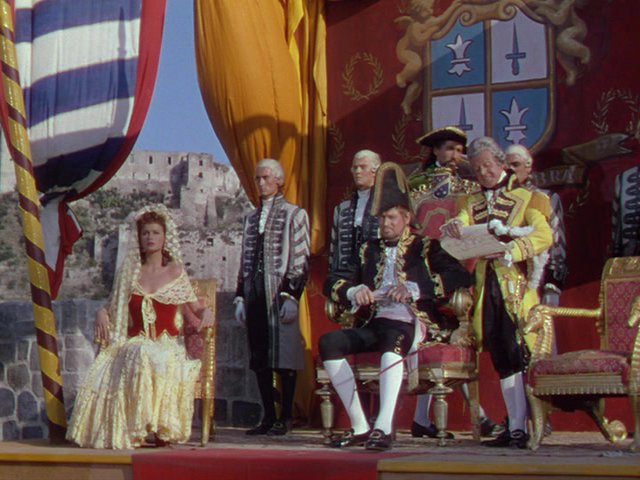
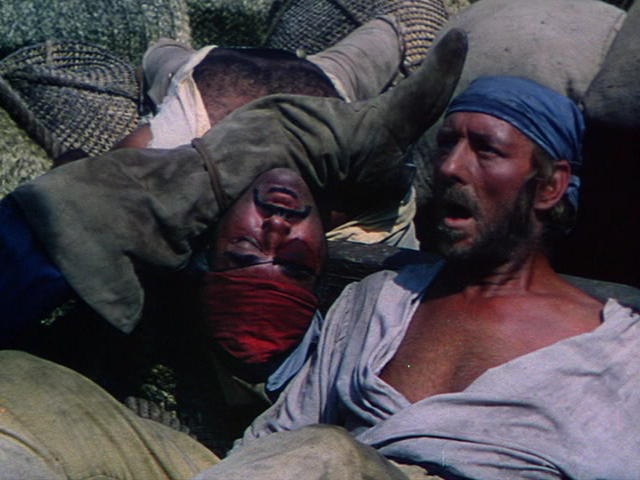
Peary refers to this enjoyably innocuous Technicolor adventure as “perhaps the last first-rate pirate movie” — a statement which is no longer quite true, given the recent success of Pirates of the Caribbean in 2003, but was certainly accurate at the time Guide for the Film Fanatic was published in 1986. As Peary notes, “you won’t pay much attention to the plot”, which isn’t really all that important — the emphasis instead is on both “humor and the high-flying acrobatic stunts of [Burt] Lancaster and Nick Cravat, his former circus partner” — these two are the real reason to watch closely and enjoy. Surprisingly, this action-packed flick was directed by Robert Siodmak, much better known for his noir-ish thrillers; as Peary points out, it’s a “fine change of pace” for him.

Redeeming Qualities and Moments:

  • Lancaster and Cravat’s phenomenal acrobatic feats together
  • Plenty of colorful sets and costumes
  • The humorous opening “scurvy” scene

Must See?
Yes, as a jolly good pirate show, and one of Lancaster-and-Cravat’s best outings together.

Categories

  • Good Show

Links:

Nosferatu (1922)

Nosferatu (1922)

“Blood is life! Blood is life!!!”

Synopsis:
Real estate agent Thomas Hutter (Gustav von Wangenheim) travels to Transylvania to meet with a reclusive client named Count Orlok (Max Schreck), who sucks his blood, then sets out by sea to find and ravage Hutter’s wife (Greta Schroder).

Genres, Themes, Actors, and Directors:

  • F.W. Murnau Films
  • Horror
  • Silent Films<
  • Vampires

Response to Peary’s Review:
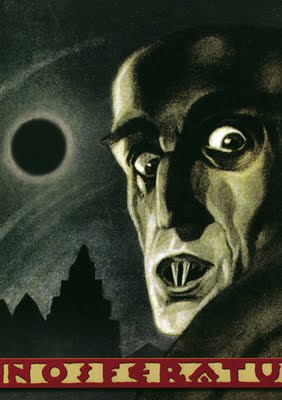
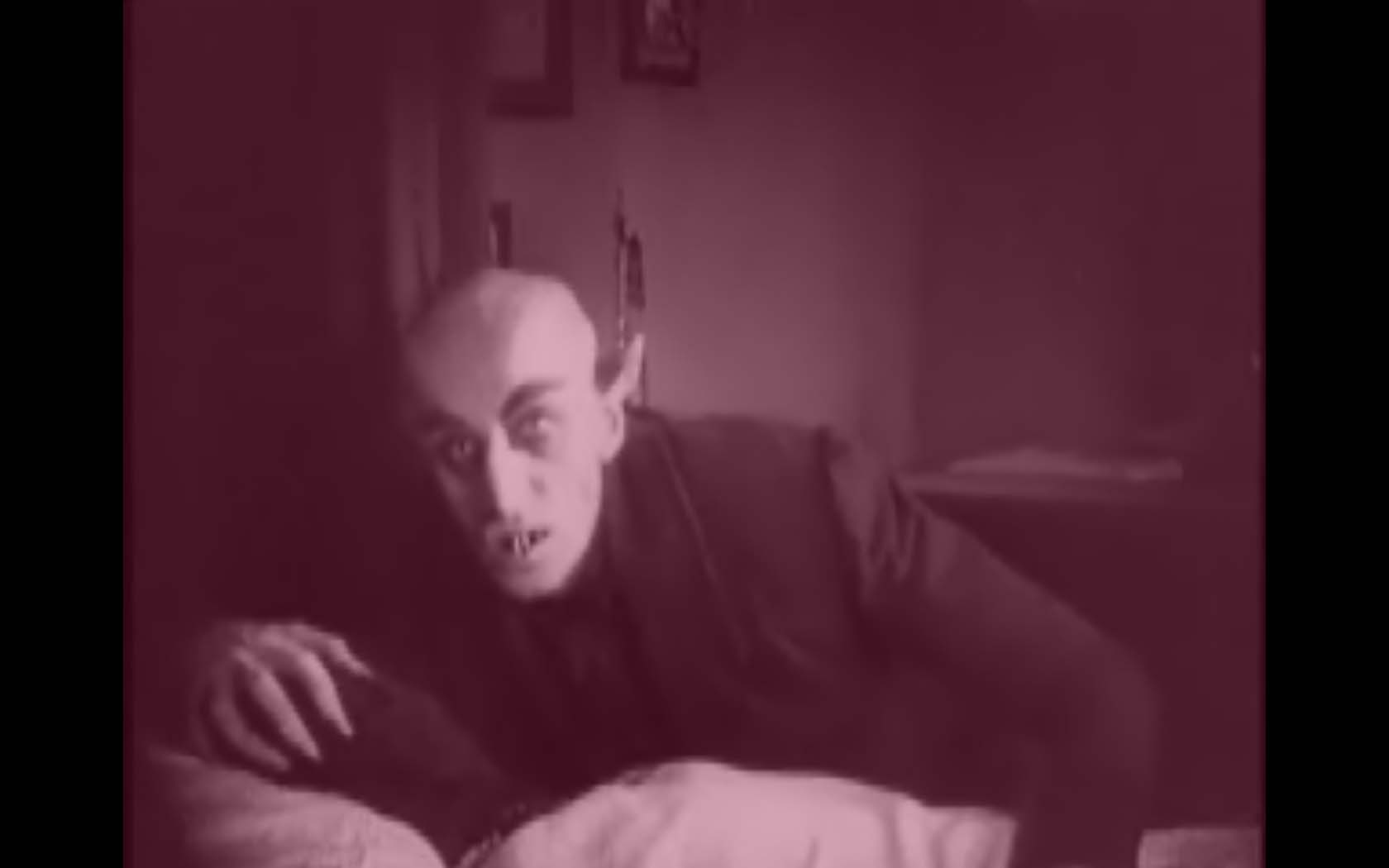
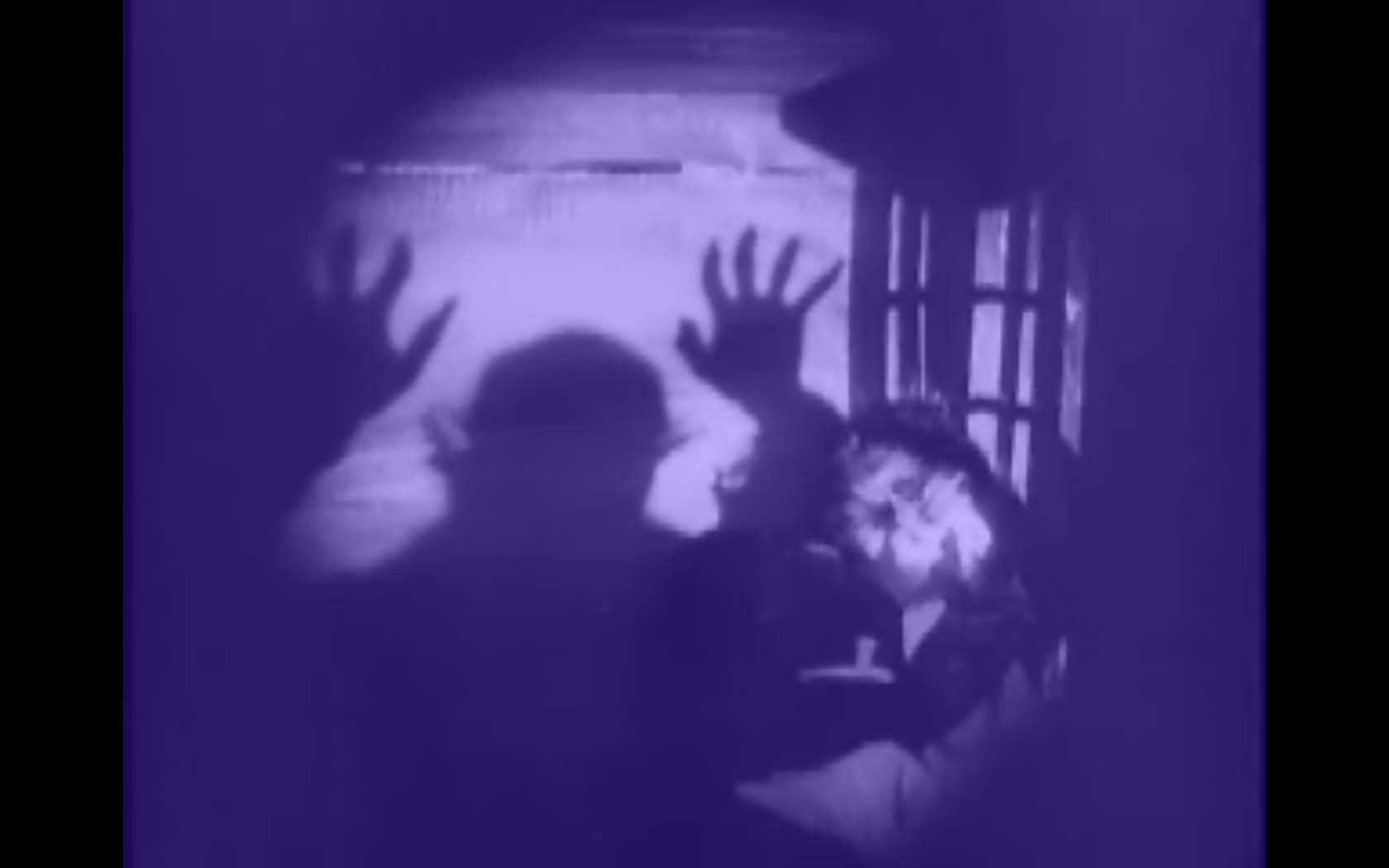
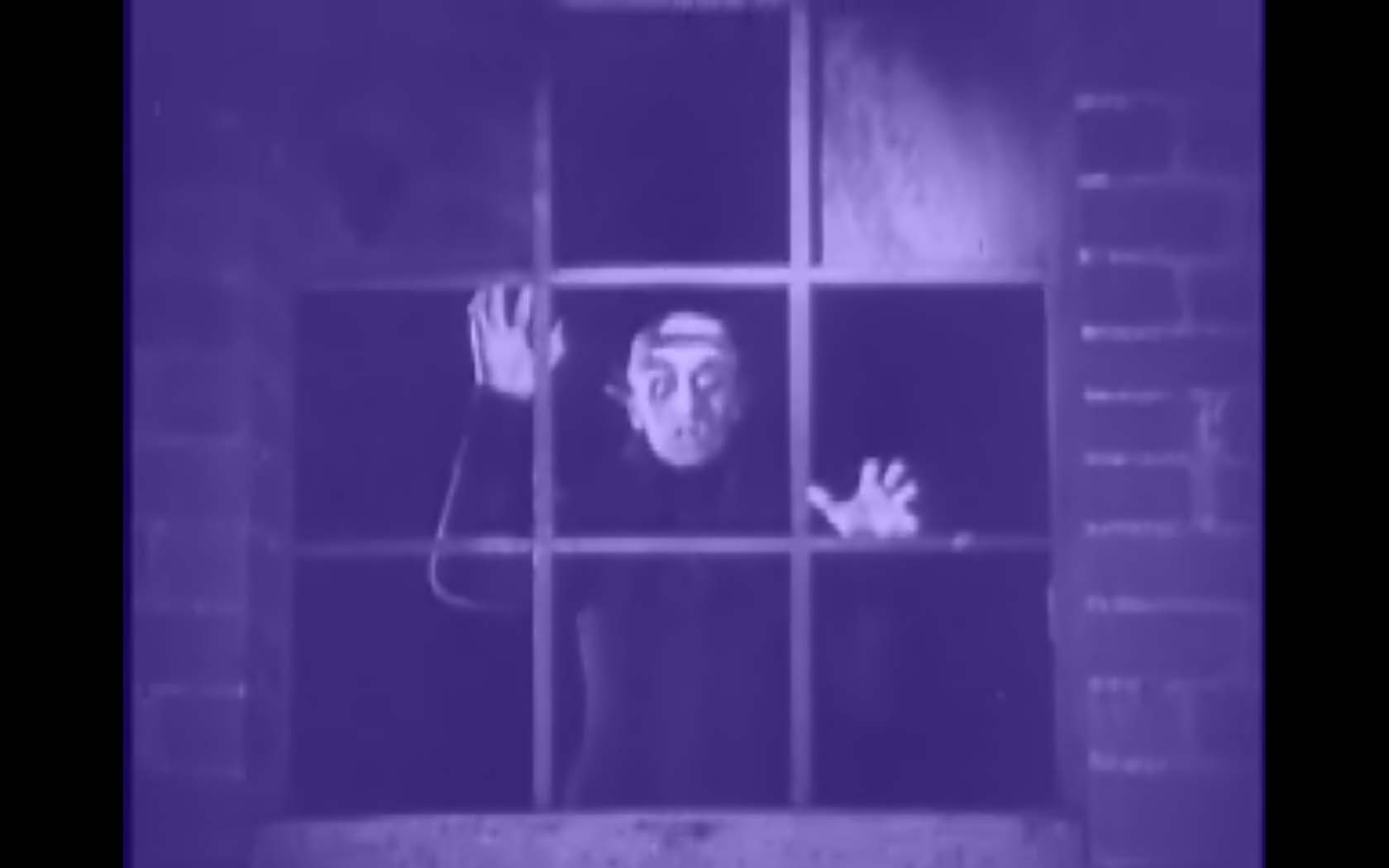
Peary refers to this early F.W. Murnau adaptation of Bram Stoker’s Dracula as “the greatest of all vampire films”, noting that it stars “the most-hideous looking vampire there has ever been”, possesses “a surprising amount of tension”, and features an “extremely powerful” finale. Peary’s review primarily centers on an analysis of Orlok’s vampiric “sexual aggression”, and Schroder’s willingness to “overcome her sexual repression… rather than letting [Orlok’s] sexual aggression be what sexually liberates her.” These “sexually” charged scenes, however, only comprise the final few minutes of the film; the remainder of the story is memorable due primarily to Murnau (and cinematographer Fritz Wagner’s) “haunting images” — in Orlok’s castle, at sea on the “death ship” (Orlok’s presence on board causes a rat-infested plague), and in the streets of Hutter’s hometown.

Film fanatics will be interested to note that Nosferatu possesses a notorious history: Murnau and his producer failed to secure the rights from Stoker’s widow to film Dracula, and — despite their concession in changing the names of the characters — eventually were forced to burn all copies of the negative. Fortunately, at least a few prints survived, and the film has now become one of the most iconic horror flicks of the silent era.

Redeeming Qualities and Moments:

  • Max Schreck as Count Orlok
  • Fritz Wagner’s cinematography
  • Countless memorable images


Must See?
Yes, for its historical importance. Remade by Werner Herzog in 1979.

Categories

  • Genuine Classic
  • Important Director

(Listed in 1001 Movies You Must See Before You Die)

Links:

Femme Infidele, La (1969)

Femme Infidele, La (1969)

“Why should anyone just disappear?”

Synopsis:
A business man (Michel Bouquet) who discovers his wife (Stephane Audran) is having an affair murders her lover (Maurice Ronet) while visiting his apartment.

Genres, Themes, Actors, and Directors:

  • Claude Chabrol Films
  • French Films
  • Infidelity

Response to Peary’s Review:
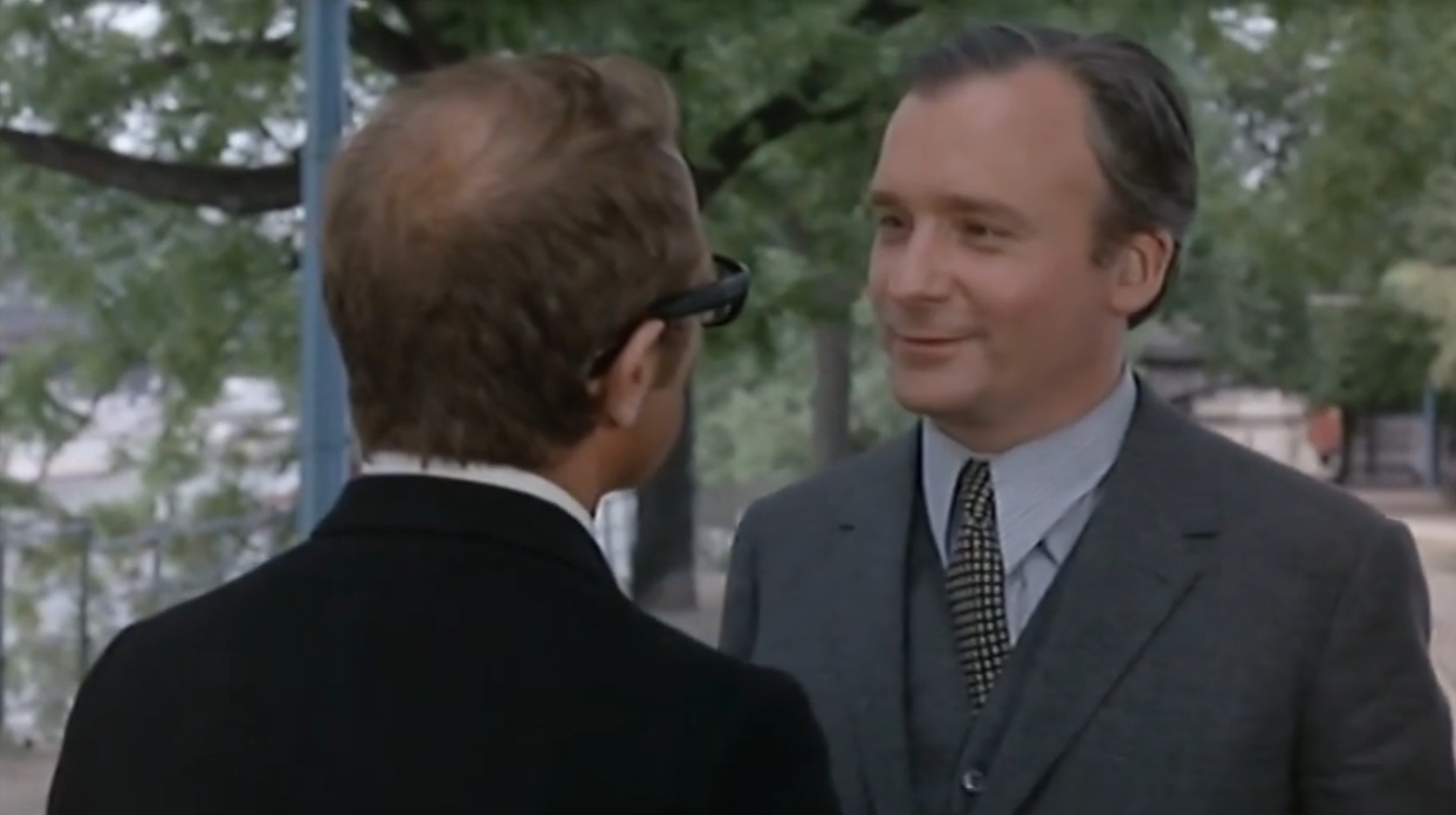
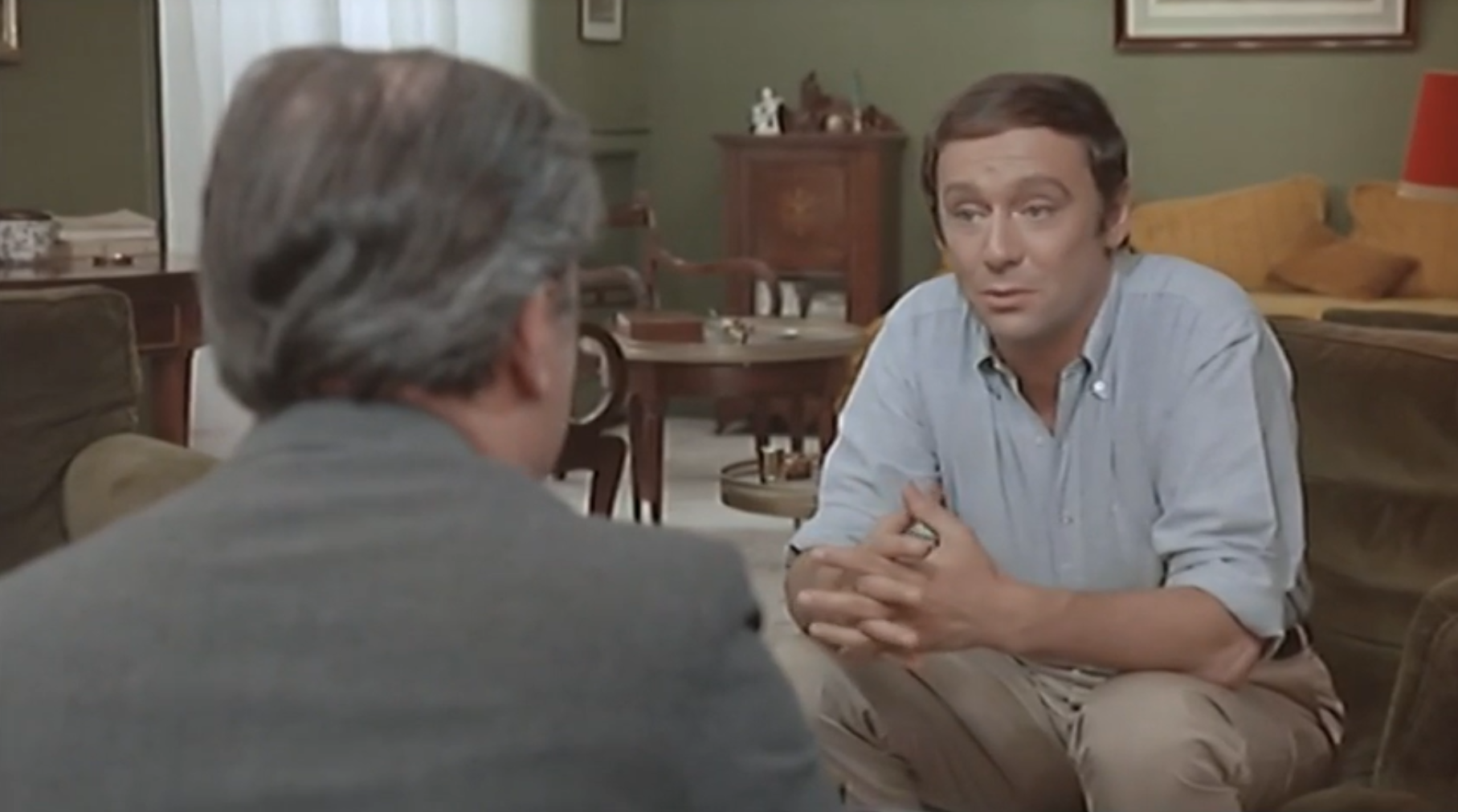
As Peary notes, this “erotic, subtle, meticulously crafted” thriller — one of director Claude Chabrol’s finest films — “fits into no genre” but “draws you in completely”. While it’s “deceptively slow at first”, it remains compelling throughout, thanks in large part to the psychologically complex performances by Michel Bouquet (star of Truffaut’s The Bride Wore Black and Mississippi Mermaid) and Stephane Audran (Chabrol’s wife and frequent leading lady). Helene’s (Audran’s) infidelity is revealed subtly, without drama or fanfare — this is a “happily married” bourgeois couple, after all, who enjoy a good life together with their adorable, intelligent son (Francois Moro-Giafferi) in a large Versailles house. Likewise, Charles’ (Bouquet’s) “revenge” occurs unexpectedly — we have no idea (and neither does he) that events will eventually take such a bloody, fatal turn. Perhaps most surprising, however, is Helene’s ultimate response once she learns what her husband has done; according to Peary’s analysis, “Chabrol is stating that bourgeois life is so stifling, so oppressive, and so resistant to change or growth, that it takes no less than an act of murder on one person’s part to shake up things in a positive way.”

Redeeming Qualities and Moments:

  • Stephane Audran as Helen Desvallees
  • Michel Bouquet as Charles Desvallees
  • Maurice Ronet as Helene’s lover, Victor
  • A chillingly effective portrait of a bourgeois marriage rocked by infidelity

Must See?
Yes, as one of Chabrol’s finest films. Remade (though less successfully) in 2002 by Adrian Lyne as Unfaithful, starring Diane Lane and Richard Gere.

Categories

  • Important Director

Links:

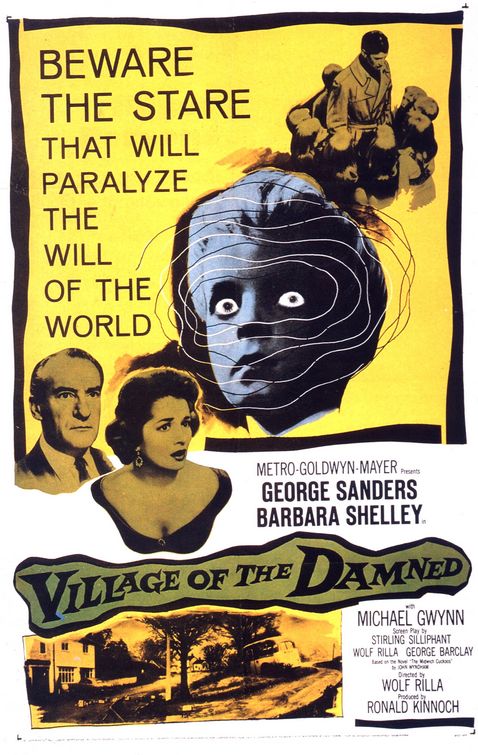
Village of the Damned (1960)

Village of the Damned (1960)

“You have to be taught to leave us alone.”

Synopsis:
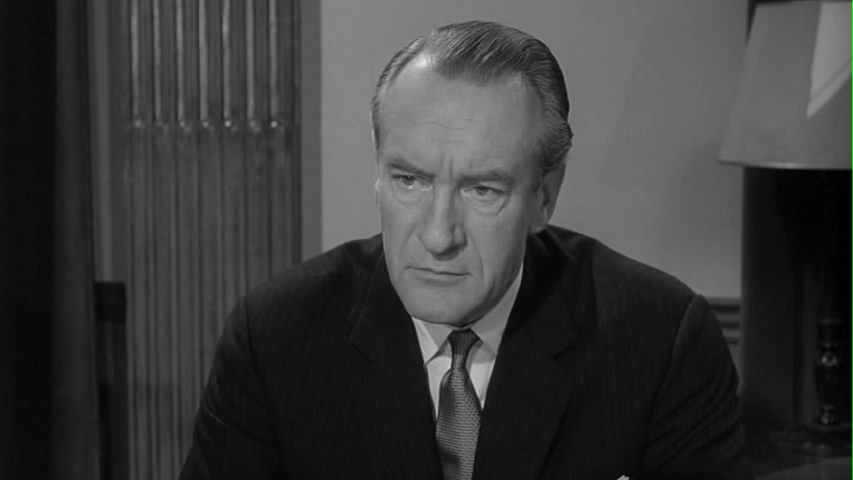
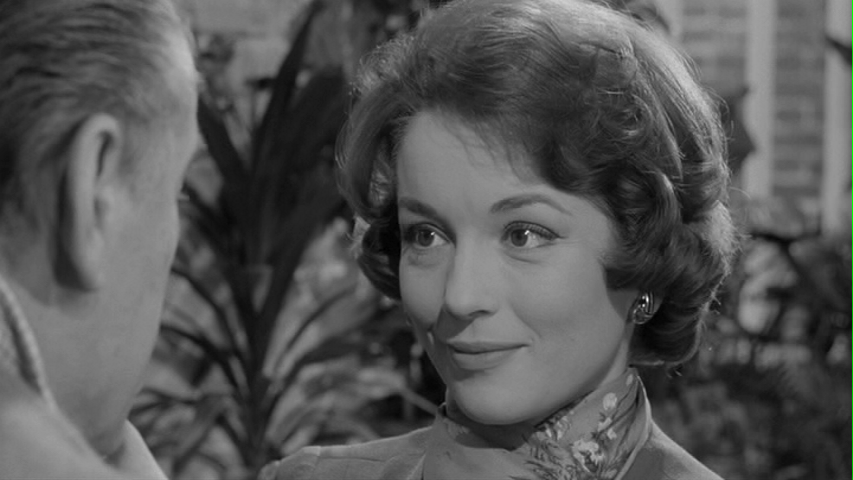
In a small British village, twelve emotionless blonde children with extraordinary intellect are mysteriously born at the same time. A scientist (George Sanders) whose wife (Barbara Shelley) has given birth to one of these odd children (Martin Stephens) becomes their teacher, and learns that their powers may be more destructive than anyone could have imagined.

Genres, Themes, Actors, and Directors:

  • Aliens
  • Evil Kids
  • George Sanders Films
  • Horror
  • Mind Control and Hypnosis
  • Science Fiction

Response to Peary’s Review:
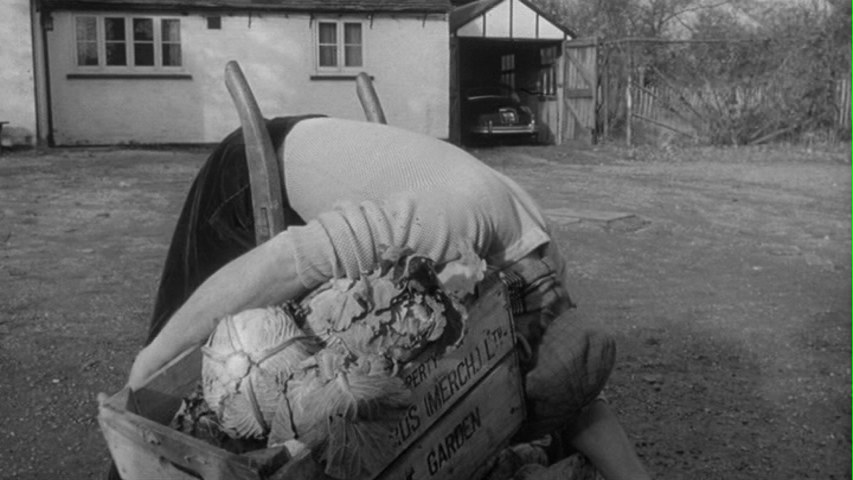
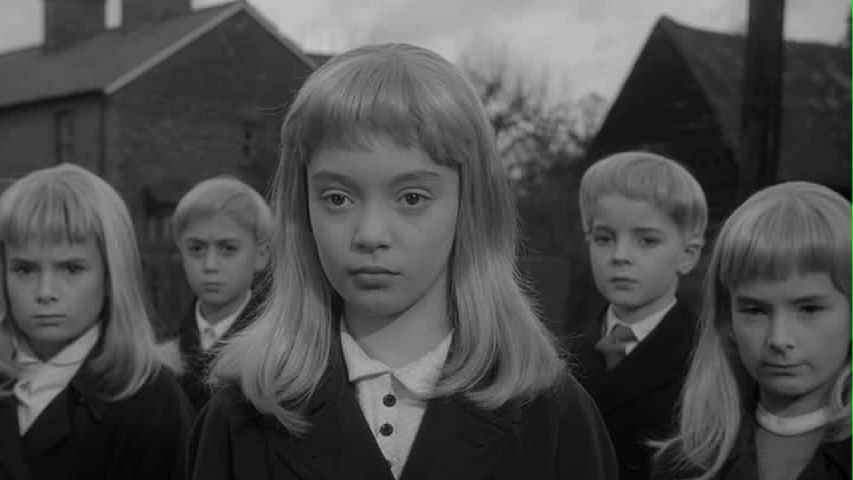
As Peary notes, this “scary, well-made movie” — a “loose adaptation of John Wyndham’s novel The Midwich Cuckoos” — is “a top-notch horror film” which features “impressive atmospheric direction by Wolf Rilla” (who never made another “important film”). As in Val Lewton’s horror films of the 1940s, Rilla generates tension primarily through atmosphere and suggestion rather than explicit violence; the opening sequence, for instance — in which villager after villager collapses in the middle of their daily business — is truly frightening in its implication of sudden collective powerlessness. Indeed, throughout the film, we’re kept in suspense about what exactly has caused these mysterious children to be (virginally) conceived and then born — we can surmise that they’re alien spawn of some kind, but we never learn this for a fact, nor do we understand why or how they’re able to grow (both in utero and out) at nearly twice the normal human rate.

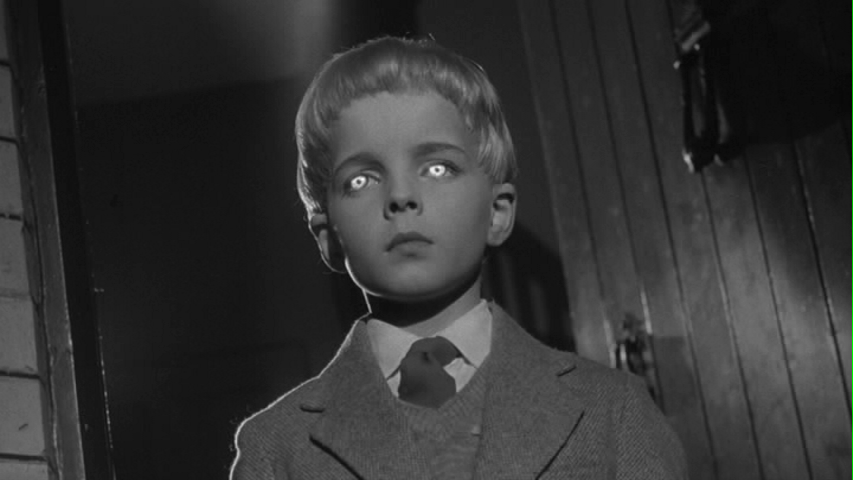
While Village of the Damned works perfectly well on its own as simply a taut, enjoyable horror flick, the presentation of other-worldly children who share a collective brain and have the power to make the adults around them do whatever they wish remains ripe for thematic investigation. In some ways, they’re clearly an allegory for the Communist Scare of the 1950s — emotionless beings who have invaded an idyllic Western town, and must be destroyed (by decisive force) before they “take over” (though their icy blonde hair makes them appear more like Aryan cogs than Russian workers). Others (see, for instance, the Not Coming to a Theater Near You review link below) have suggested that Village of the Damned represents a thinly veiled exploration of sexual mores in the 1960s, when women’s right to control their own reproductive potential was squarely in confrontation with religious mandates. Regardless of one’s deeper analysis, however, the unsmiling children — with their glowing, penetrating gaze (the film’s only concession to special effects) — remain an iconic trope in the history of horror cinema.

Note: While Peary argues that this was the first film “to exploit… the horror potential” of “children-as-monsters”, the kids here — with their odd blonde haircuts and bangs — bear more than a faint resemblance to “evil” Rhoda Penmark in 1956’s The Bad Seed

Redeeming Qualities and Moments:

  • The creepy opening sequence
  • George Sanders as Gordon Zellaby
  • Barbara Shelley as Sanders’ wife, Anthea
  • Martin Stephens as Sanders’ “son”
  • The eerie scene in which the “one year old” babies teach each other how to open up a trick box with a chocolate inside
  • Geoffrey Faithfull’s b&w cinematography

Must See?
Yes, for its status as a classic British horror flick. Remade in 1995 by John Carpenter, and followed by a pseudo-sequel (Children of the Damned) in 1964.

Categories

Links:

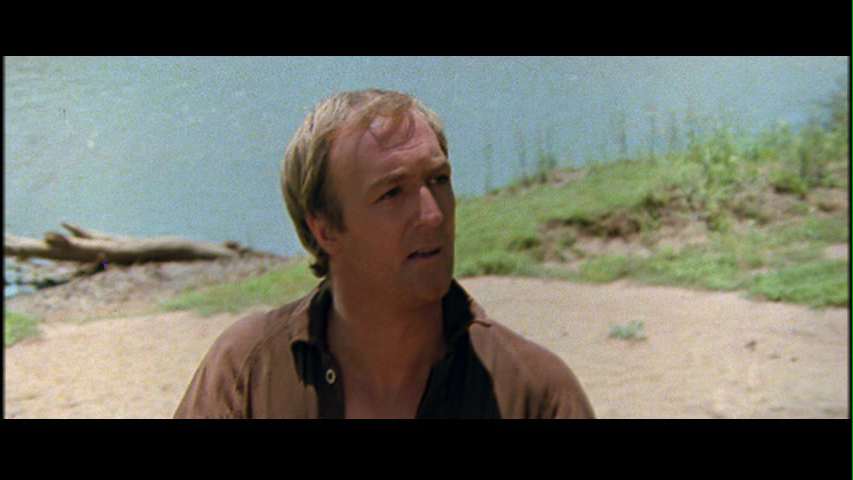
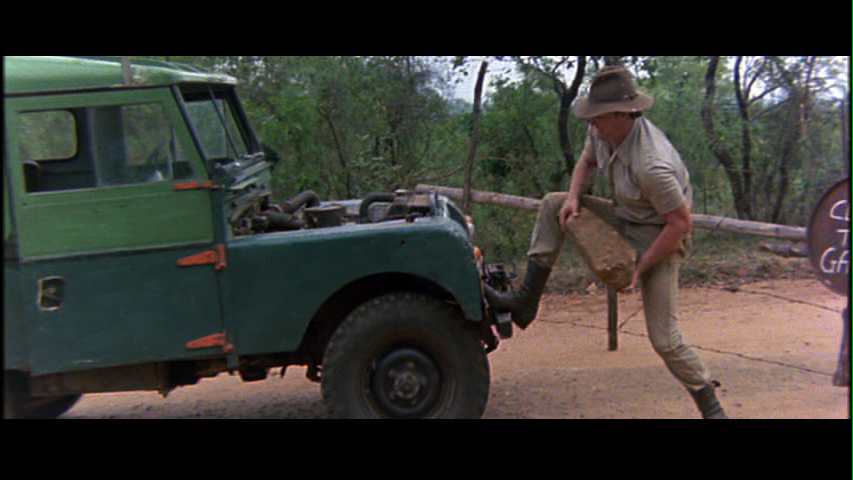
Gods Must Be Crazy, The (1980)

Gods Must Be Crazy, The (1980)

“Xi had never seen anything like this in his life — it looked like water, but was harder than anything else in the world.”

Synopsis:
When a Coke bottle is dropped from a plane in the middle of the Kalahari desert, it disrupts the lives of a peaceful tribe of bushmen, so the man who found it (N!xau) volunteers to “drop it off the face of the earth”. Meanwhile, a bumbling biologist (Marius Weyers) attempts to woo a beautiful young teacher (Sandra Prinsloo), whose students have been kidnapped by a band of revolutionary terrorists; it’s up to N!xau to help save the day.

Genres:

  • Africa
  • Comedy
  • Deserts
  • Hostages
  • Native Peoples
  • Revolutionaries

Response to Peary’s Review:
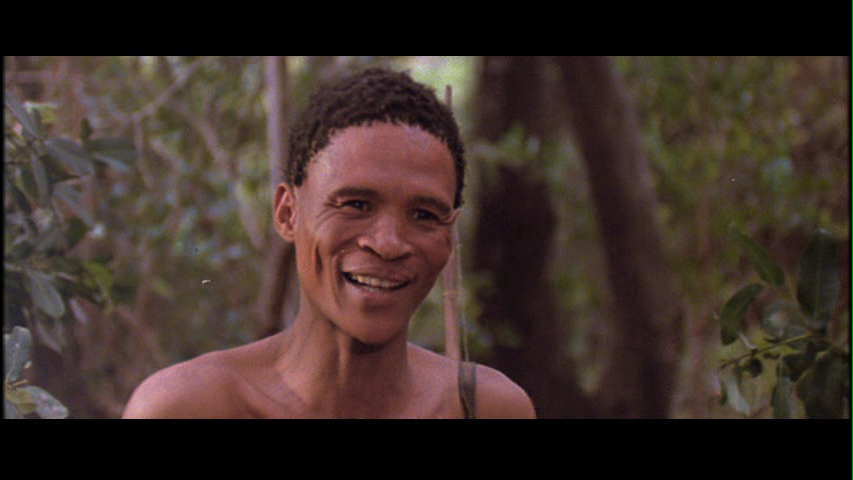
Peary praises this unexpected “cult favorite” from South Africa as a “surefire crowd-pleaser”, calling it a “rare picture that will appeal to to everyone in the family.” These days, The Gods Must Be Crazy — which was followed by a popular sequel in 1989 — comes across as enjoyable in parts but ultimately uneven; the sequences of slapstick violence between guerrilla rebels and the Burundian government are particularly interminable (and not at all amusing). In addition, knowing as we do now that the Bushmen (who Peary naively — though understandably — believes are simply “playing themselves”) were actually asked to strip their clothes and pretend to live like their “noble” ancestors detracts from the film’s innate charm; we have to work a bit harder to believe in the veracity of their pastoral existence.

With that said, there’s plenty to recommend in The Gods Must Be Crazy, which is certainly one of the best comedies to emerge from Africa. Director Jamie Uys does a particularly fine job highlighting the hypocrisy of “civilization” in contrast with tribal living; the pseudo-scientific anthropological voiceover — though overused in far too many films — works surprisingly well here. In addition, the lead performances by both bumbling Marius Weyers (who Peary likens to Jacques Tati) and N!xau (adorably “innocent”) are marvelous — whenever they’re on-screen, the story sparkles. My favorite scene is probably the one in which N!xau watches sexy Sandra Prinsloo undressing, and we hear his hilariously disparaging thoughts via voiceover (“She was as pale as something that had crawled out of a rotting log…”); this is the best cinematic example I’ve seen so far of how beauty — along with so many other values — is indeed culturally relative.

Redeeming Qualities and Moments:

  • N!xau as Xi
  • Marius Weyers as a hopelessly clumsy biologist
  • Weyers attempting to navigate his brakeless car across country roads
  • Beautiful cinematography of Kalahari landscapes
  • The often hilarious “faux-anthropologist” narration — as when N!xau sees the sexy, slender, half-dressed Prinsloo for the first time:

    That morning, he saw the ugliest person he’d ever come across. She was as pale as something that had crawled out of a rotting log; her hair was quite gruesome, long and stringy and white, as if she was very old; she was very big — he’d have to take the whole day to find enough food to feed her.

Must See?
Yes, for its status as a long-running cult favorite. Discussed at length in Peary’s Cult Movies 3 (1988).

Categories

  • Cult Movie

Links:

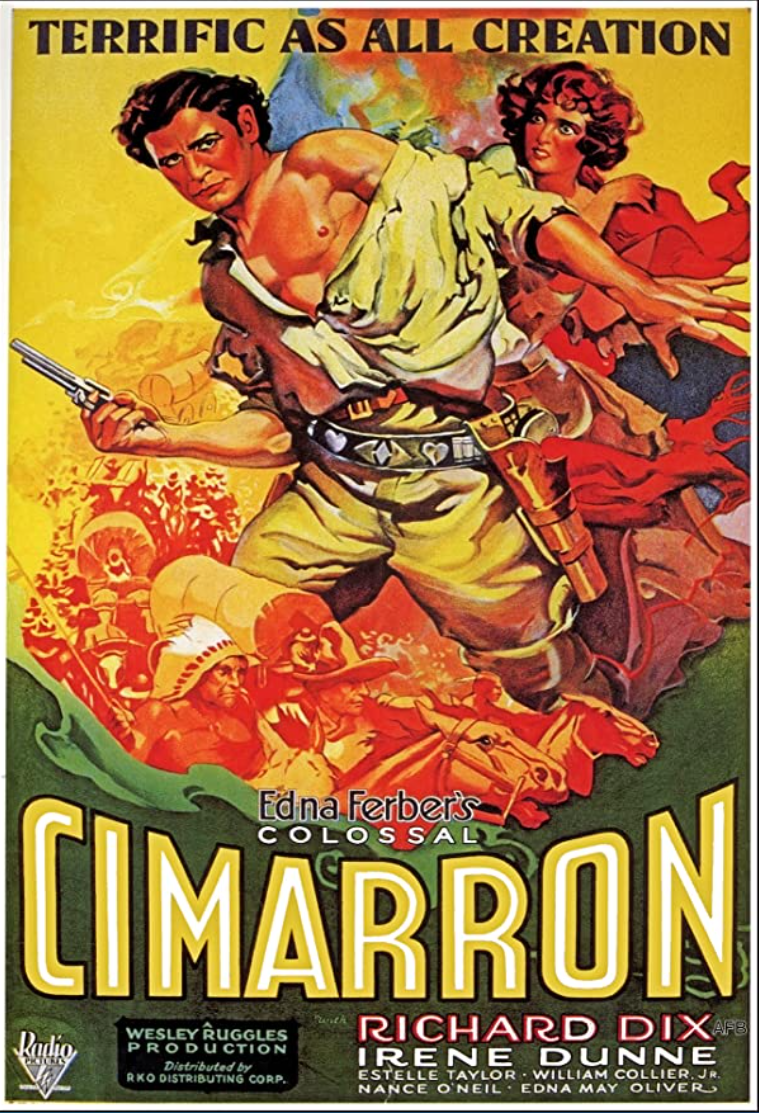
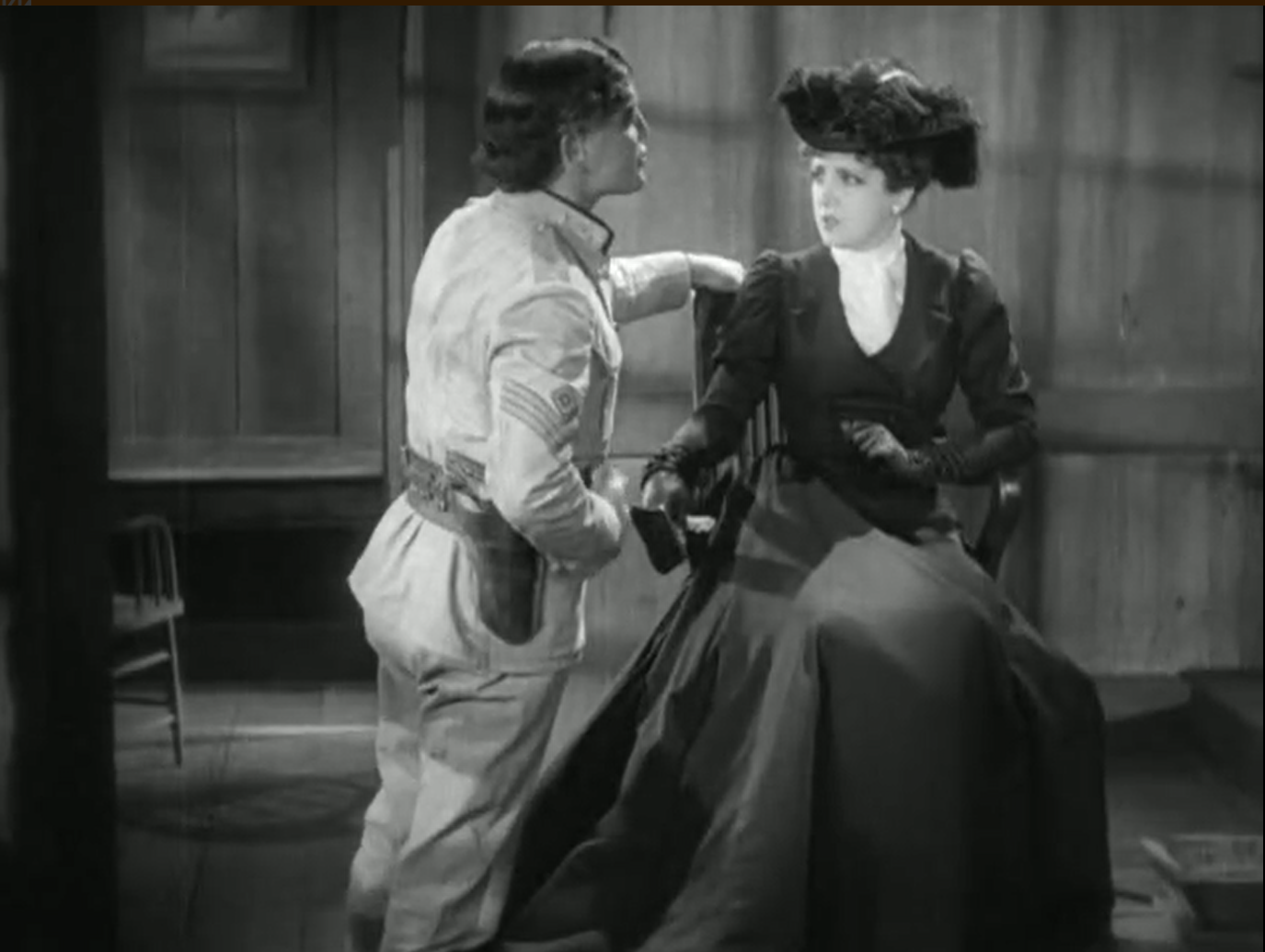
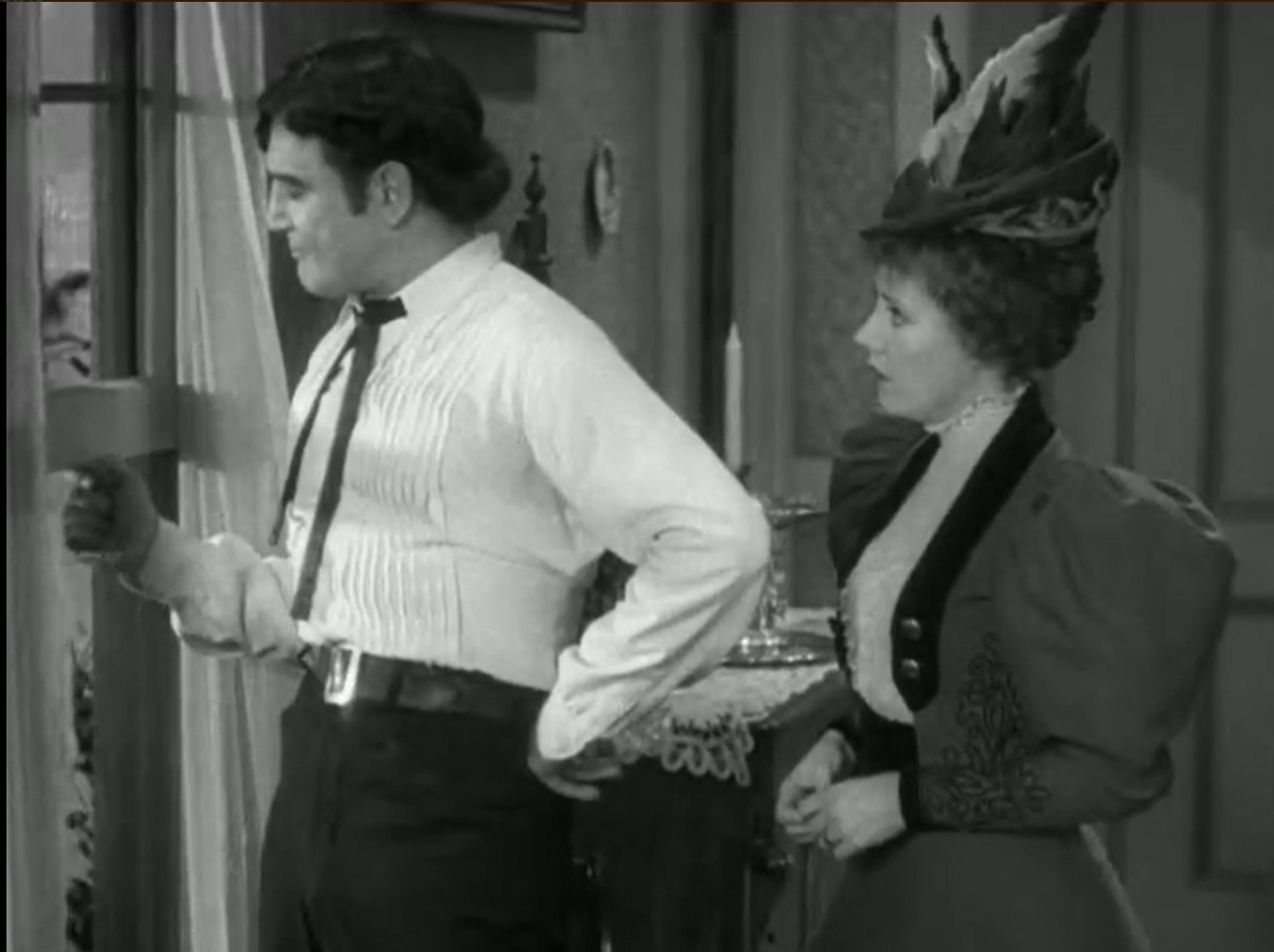
Cimarron (1931)

Cimarron (1931)

“We’re going into new things, Sabe — a new empire. And I want to help build it for you!”

Synopsis:
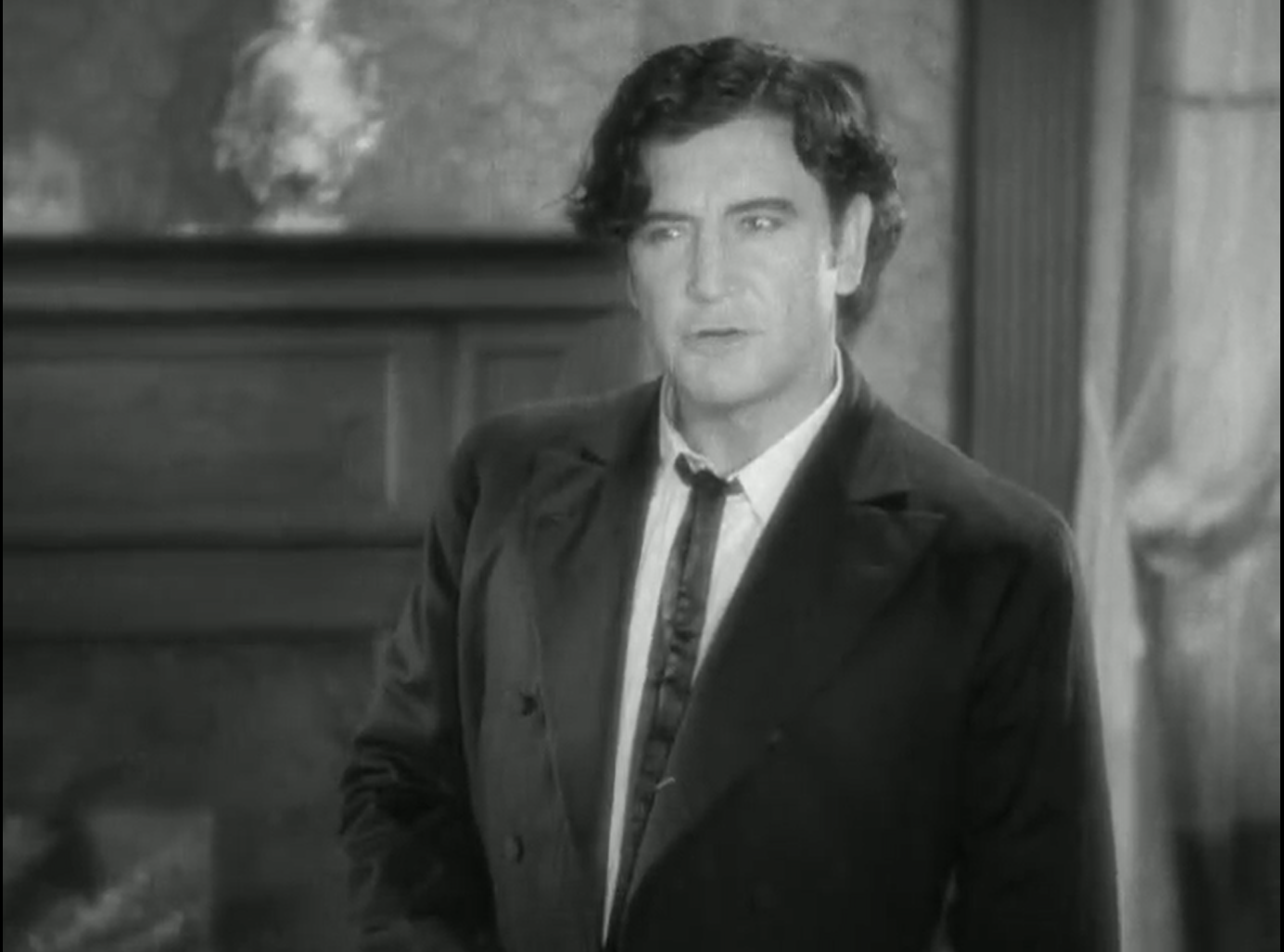
Idealistic newspaper editor Yancey Cravat (Richard Dix) settles with his wife (Irene Dunne) in Oklahoma territory, where he fights against injustice and racism. But his wanderlust soon prompts him to seek new adventures, and he leaves his family behind for years at a time.

Genres, Themes, Actors, and Directors:

  • Historical Drama
  • Irene Dunne Films
  • Settlers
  • Westerns

Response to Peary’s Review:
This early screen adaptation of Edna Ferber’s novel — which Peary refers to as a “tiresome… soap-opera western epic” — remains notorious for its status as one of the first (and least deserving) Oscar winners for Best Picture. As Peary notes, it comes across today as “extremely dated”, and boasts “uniformly awful” acting — particularly by “matinee idol” Richard Dix, who “gives an unbearably hammy, deep-voiced” performance.

Although Peary gives faint praise to traces of “unexpected feminism” in the storyline (they’re faint indeed):

he inexplicably argues that this is “undermined by some racism” — an odd statement, given that Yancey’s fearlessly anti-racist stance is one of the film’s genuine redeeming factors. Another is the infamous opening “land rush” sequence, though it unfortunately establishes a standard of excitement which the remainder of the film can’t possibly live up to. The primary problem lies in the filmmakers’ daunting attempt to adapt an epic novel spanning 40 years: numerous life-changing events — including Yancey abandoning his family for years on end — are necessarily given short-shrift, and seriously compromise what could otherwise have been an insightful portrait of a pioneer marriage.

The rushed ending is particularly egregious, and makes little sense on any level.

Redeeming Qualities and Moments:

  • The impressive opening “land rush” scene
  • Yancey’s refreshingly anti-racist attitude:

    “If you knew anything at all … you’d realize that a Cherokee is too smart to put anything in the contribution box of a race that’s robbed him of his birthright.”

Must See?
Yes, but only for its historical status as an early Best Picture Oscar winner.

Categories

  • Oscar Winner or Nominee

Links:

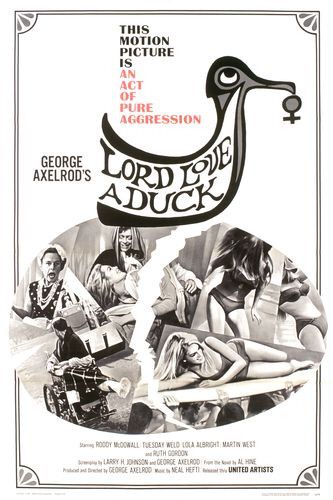
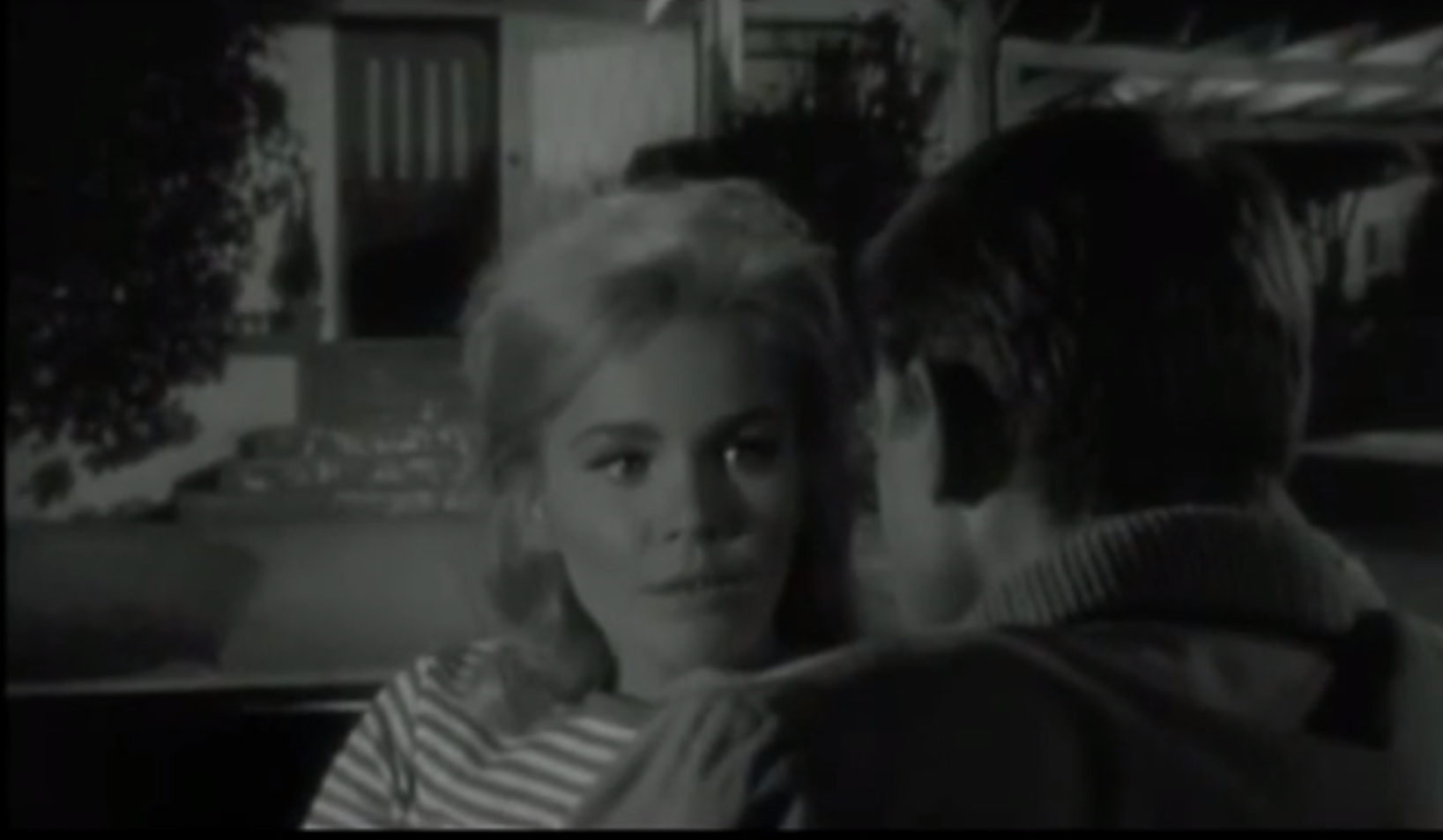
Lord Love a Duck (1966)

Lord Love a Duck (1966)

“You just tell Mollymauk what you want, Mollymauk will get it for you — we have a deal, remember?”

Synopsis:
A gifted teenager (Roddy McDowall) with strange powers befriends a beautiful senior (Tuesday Weld) and helps her achieve her dreams of popularity and fame.

Genres, Themes, Actors, and Directors:

  • Aspiring Stars
  • Black Comedy
  • Flashback Films
  • Roddy McDowall Films
  • Ruth Gordon Films
  • Satires and Spoofs
  • Teenagers
  • Tuesday Weld Films

Response to Peary’s Review:
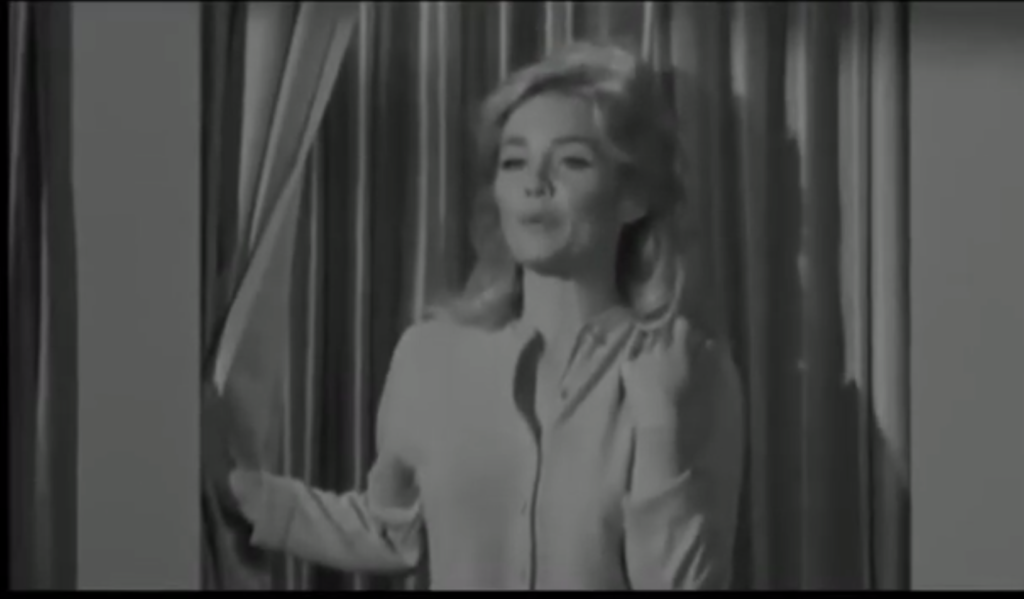
Peary seems decidedly turned off by this “strange, strange cult comedy”, which he labels both “smutty” and “as vulgar as it is mean.” He acknowledges that “there are many imaginative, hilarious sequences”, yet argues that they ultimately “make the viewer uncomfortable”, and claims that writer/director George Axelrod inexplicably “exhibits pure hatred” rather than satire. While I agree with Peary that the film eventually “falls apart”, I find the rest of his assessment unduly harsh — indeed, up until its rather dreary final half hour, Lord Love a Duck is unique enough to keep any film fanatic on his or her toes. We’re never quite sure exactly who McDowall is (is he the devil?), where he comes from, what powers he possesses, or why he latches onto Barbara Ann with such selfless devotion, but we remain oddly fascinated.

Tuesday Weld (with her perennially child-like face) turns in one of her best performances here as Barbara Ann, a greedy yet oddly sympathetic high school beauty who’s surprised to find herself suddenly achieving her goals, one by one; the hilarious scene in which she practically seduces her estranged father (Max Showalter) into buying her 13 cashmere sweaters in various luscious colors — including “Grape Yum Yum,” “Periwinkle Pussycat”, and “Papaya Surprise” — is reason enough to recommend the film. The supporting performances are uniformly fine as well; my favorites include Harvey Korman (pre-Carol Burnett) as Barbara Ann’s easily distracted high school principal, and Ruth Gordon as Barbara Ann’s arrogant new mother-in-law (“In our family, we don’t divorce our men, we bury them!”). Unfortunately, the story begins to lose momentum once Barbara Ann marries a boring marriage counselor (Martin West) and instantly regrets doing so — McDowall’s failed attempts to “get rid of” West are out of character with his otherwise infallible powers. Equally disappointing is the denouement, in which McDowall “confesses” unconvincingly to the “true” motivations behind his actions. Nevertheless, there’s enough of interest in Lord Love a Duck to recommend it as must-see viewing for all film fanatics at least once.

Redeeming Qualities and Moments:

  • Tuesday Weld as Barbara Ann
  • The discomfiting “sweater seduction scene”
  • Ruth Gordon as Bob’s controlling mother

  • Harvey Korman as Weldom Emmett

Must See?
Yes, for its status as a most unusual cult comedy.

Categories

  • Cult Movie

Links:

NeverEnding Story, The (1984)

NeverEnding Story, The (1984)

“Don’t you know anything about Fantasia? It’s the world of human fantasy. Every part, every creature of it, is a piece of the dreams and hopes of mankind.”

Synopsis:
When a lonely boy (Barrett Oliver) discovers a fantasy book called The NeverEnding Story, he’s transported to the world of Fantasia, where a young warrior named Atreyu (Noah Hathaway) has been sent on a mission to save the kingdom’s dying empress (Tami Stronach). Soon Bastian (Oliver) learns that his participation as a reader will play an essential part in the story’s outcome, and that he must have faith in the power of his wishes.

Genres, Themes, Actors, and Directors:

  • Fantasy

Response to Peary’s Review:
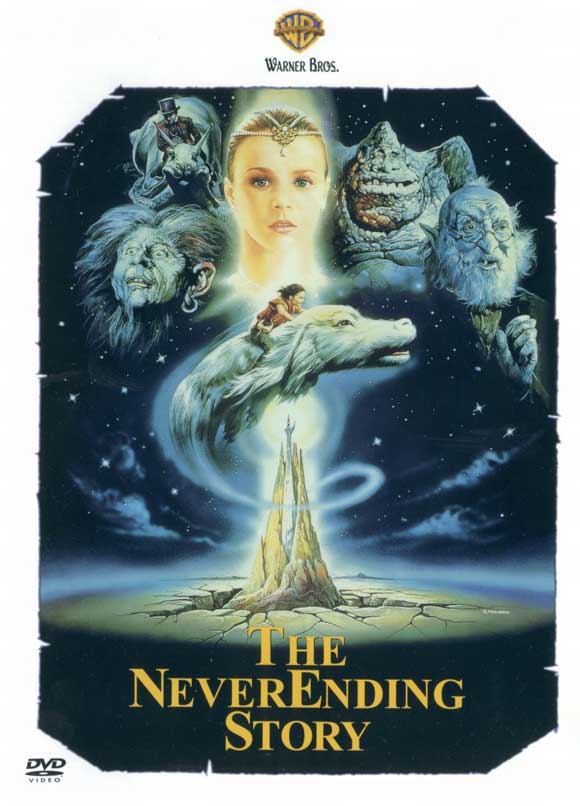
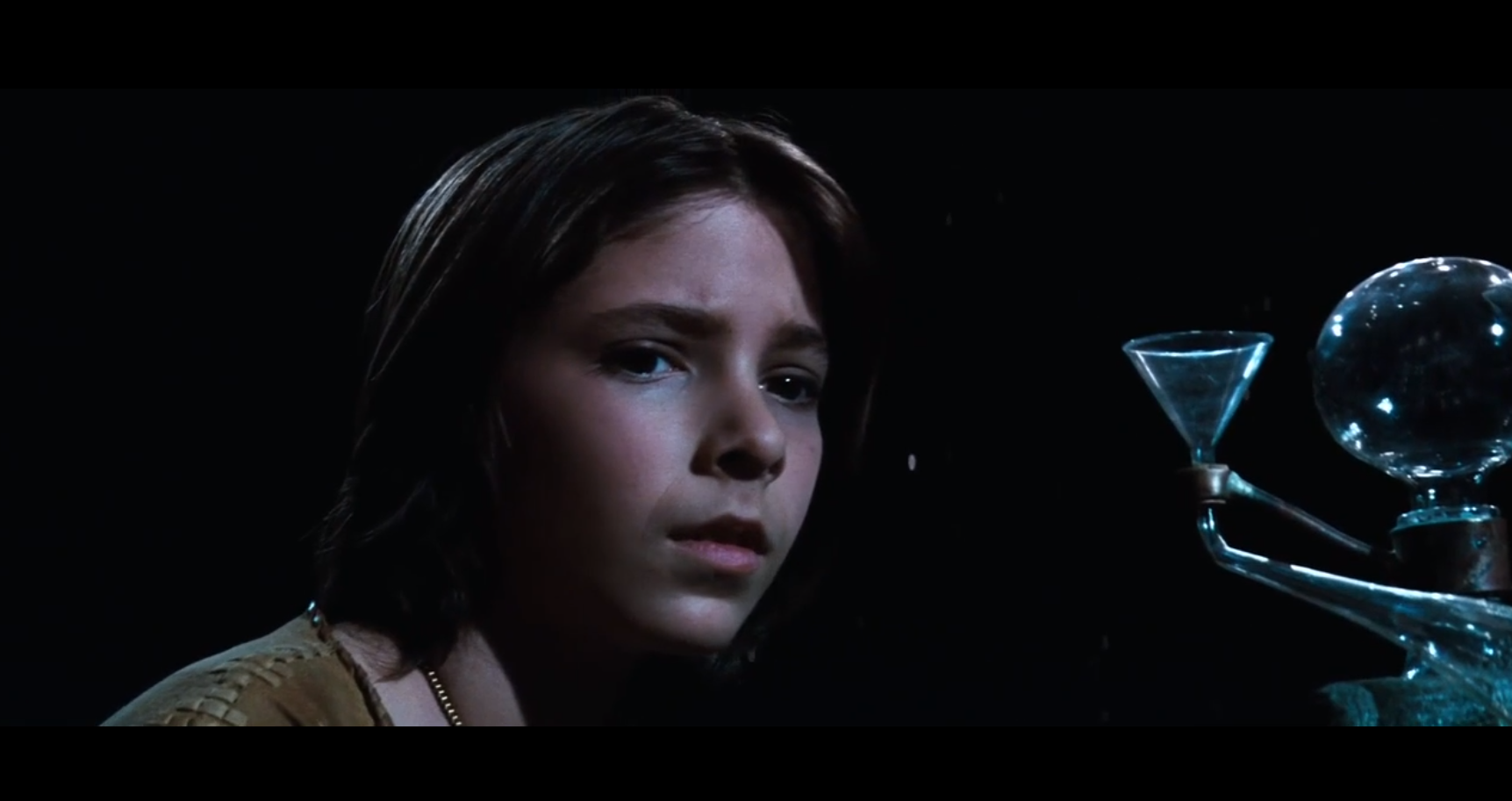
As Peary notes, this “flawed” adaptation of Michael Ende’s popular young adult novel — which received mixed reviews upon its release — is both “imaginative” and “visually spectacular”, and contains a positive message for kids about the importance of hopes and dreams. Barrett Oliver is sympathetic and believable as a young boy devastated by the recent loss of his mother and bullied mercilessly by his classmates, who finds refuge in books and fantasy; less remarkable is Noah Hathaway as Oliver’s doppelganger warrior, who comes across as appropriately handsome and plucky yet ultimately two-dimensional. More important than the performances, however, are the film’s stunning special effects, which effectively transport viewers into a new and exciting universe: while I’m less than thrilled by the rather insipid, puppet-like dragon Atreyu rides through the skies of Fantasia, other creatures — particularly the massive Rock Biter — are truly breathtaking. The dramatic ending (clearly paving the way for a sequel) is both exciting and heartwarming.

Note: Because the film contains a number of “difficult” scenes — including Atreyu’s beloved horse dying in a Swamp of Sadness, and Atreyu being persistently pursued by a vicious werewolf — The NeverEnding Story seems most appropriate for adolescents and adults rather than young, impressionable children.

Redeeming Qualities and Moments:

  • Barrett Oliver as Bastian
  • Impressive animation — particularly the gigantic “Rock Biter”
  • Many exciting sequences
  • The heartwarming ending

Must See?
No, but it’s recommended.

Links:

Roommates (1981)

Roommates (1981)

Synopsis:
Three single women (Samantha Fox, Kelly Nichols, and Veronica Hart) share an apartment in New York while exploring careers, romance, and sex.

Genres, Themes, Actors, and Directors:

  • Adult Films
  • New York City
  • Sexual Liberation

Response to Peary’s Review:
As Peary notes, this reasonably well-made “adult” film is an “almost successful attempt by [director] Chuck Vincent… to make an XXX-rated film that the general audience would find palatable.” (After two weeks playing in X-rated venues, the film was re-cut and released with an “R” rating). As a female non-fan of such films, I was delighted to find myself actually enjoying this story of three gutsy women attempting to “make it”, both professionally and romantically, in New York. The very natural-looking Veronica Hart — playing a budding actress who is trying to move beyond an unfulfilling affair with a married man — is especially credible. Fans of adult film stars Jamie Gillis and Ron Jeremy will be happy to note that each makes an appearance here (though be forewarned that Gillis plays a surprisingly unappealing, smarmy character.)

Redeeming Qualities and Moments:

  • Decent acting by the three female leads
  • Well-integrated (if “surprisingly raunchy”) sex scenes

Must See?
No — though as one of the few successful “crossover” adult films, it merits a look.

Links:

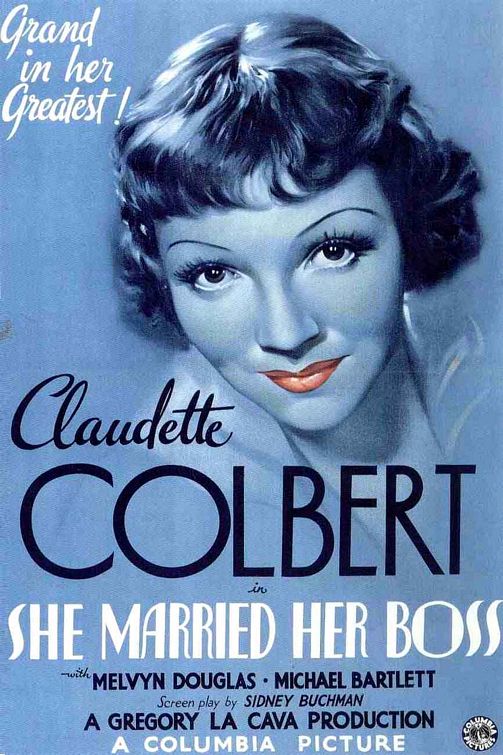
She Married Her Boss (1935)

She Married Her Boss (1935)

“That doesn’t sound like a marriage to me — it sounds like an incorporation!”

Synopsis:
An executive secretary (Claudette Colbert) who is secretly in love with her overworked boss (Melvyn Douglas) convinces him to marry her, but soon finds that he’s disappointed by her choice to run his household rather than stay at the office.

Genres, Themes, Actors, and Directors:

  • Career-versus-Marriage
  • Claudette Colbert Films
  • Cross-Class Romance
  • Melvyn Douglas Films
  • Romantic Comedy

Response to Peary’s Review:
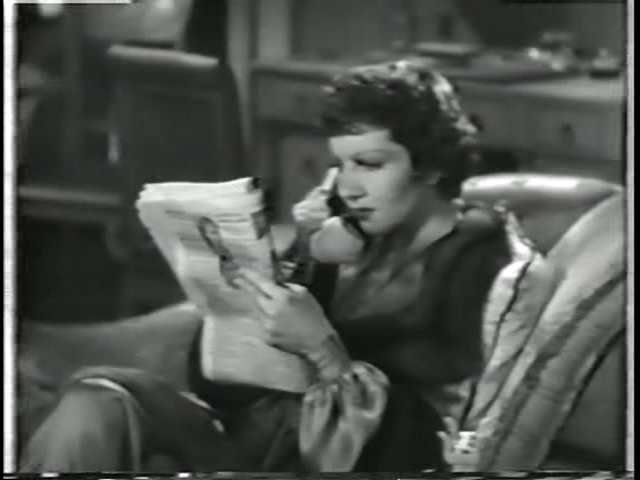
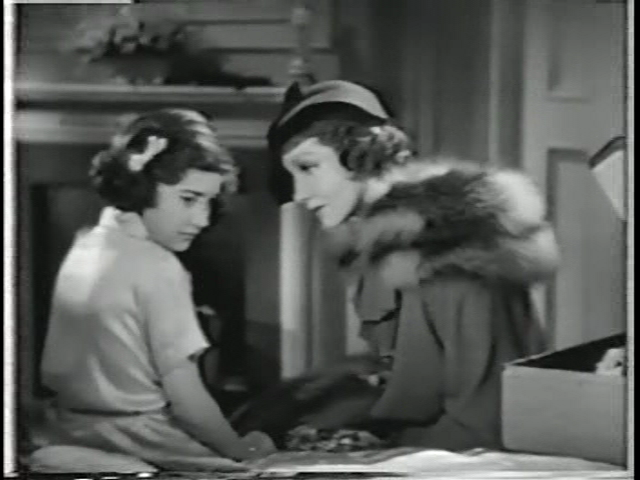
It’s unclear why Peary includes this mediocre Gregory La Cava screwball comedy in his book as “must see”, given that it’s clearly one of the famed director’s lesser efforts. The primary problem lies in the film’s implausible, underdeveloped script, which is based on a decidedly weak premise: Douglas and Colbert’s marriage rings false from the start (why is Colbert in love with such a dull, insipid man?), while the convenient “other man” (Michael Bartlett) waiting in the wings to “rescue” Colbert from her loveless marriage never really seems to pose a serious threat. With that said, She Married Her Boss isn’t a chore to sit through — as Peary notes, it possesses at least a few good scenes, and Colbert (despite her poorly written character) sparkles in the lead role. Also enjoyable is young Edith Fellows as Colbert’s bratty new stepdaughter Annabel, whose temerity in the face of authority reaches hilarious heights.

Redeeming Qualities and Moments:

  • Claudette Colbert as Julia Scott
  • Edith Fellows as Annabel — described by the NY Times as “nobody’s lamby pie”
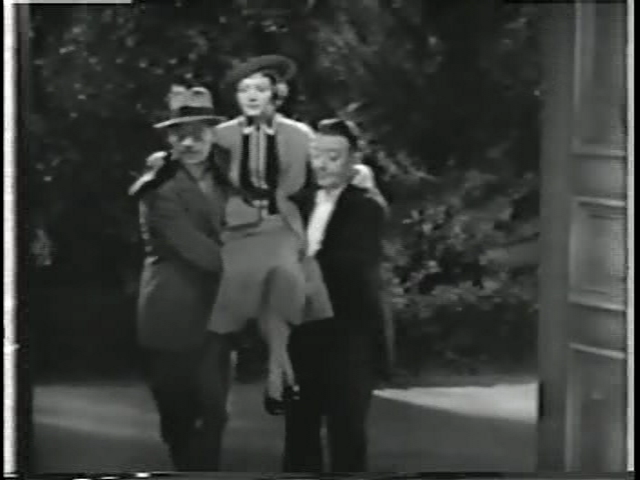
  • Colbert being carried over the threshold of her new home by both her husband and his butler
  • Colbert’s drunken carousing with store mannequins

Must See?
No, but fans of ’30s screwball comedies will likely be curious to seek it out.

Links: