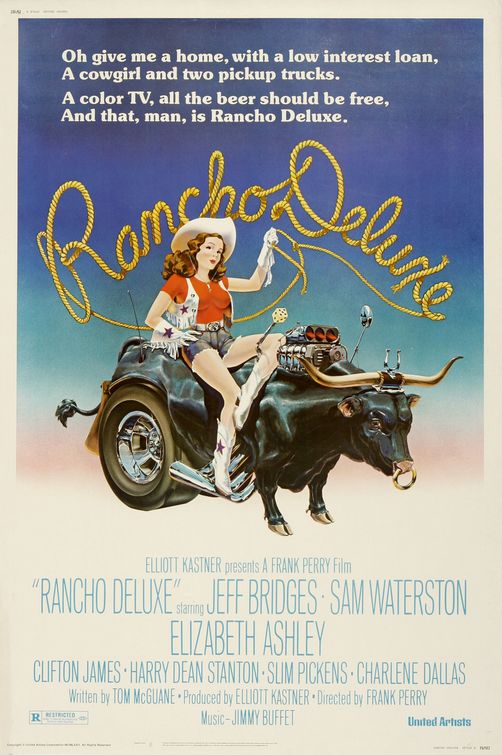
Rancho Deluxe (1976)

Rancho Deluxe (1976)

“A Sharps buffalo rifle… This is gettin’ downright romantic!”

Synopsis:
An arrogant ranch owner (Clifton James) enlists the help of his two cowhands (Harry Dean Stanton and Richard Bright) and an aging detective (Slim Pickens) in capturing a pair of anarchic young rustlers (Jeff Bridges and Sam Waterston).

Genres, Themes, Actors, and Directors:

  • Black Comedy
  • Cat-and-Mouse
  • Frank Perry Films
  • Harry Dean Stanton Films
  • Jeff Bridges Films
  • Ranchers
  • Sam Waterston Films
  • Thieves and Criminals
  • Warren Oates Films
  • Westerns

Response to Peary’s Review:
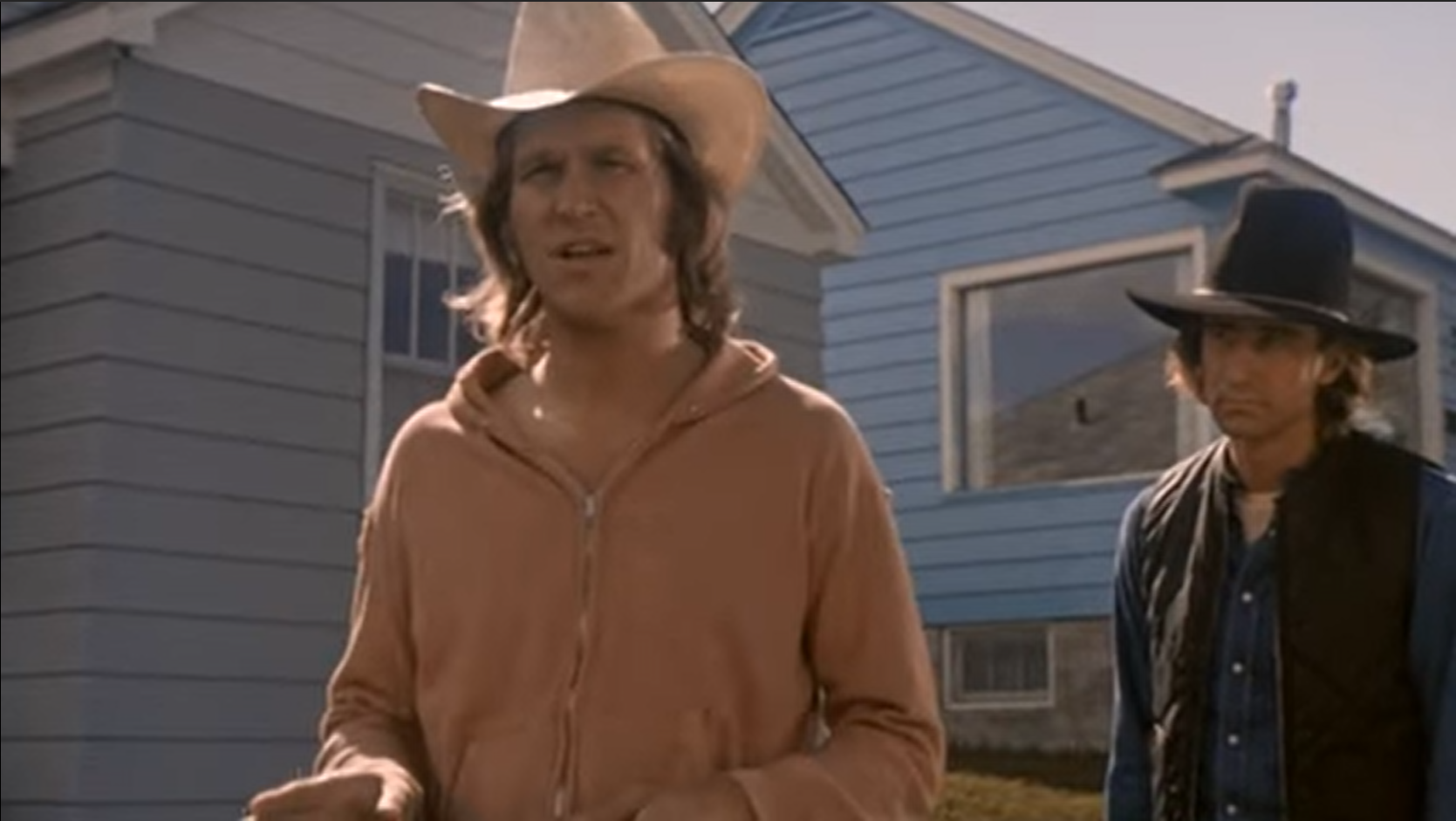
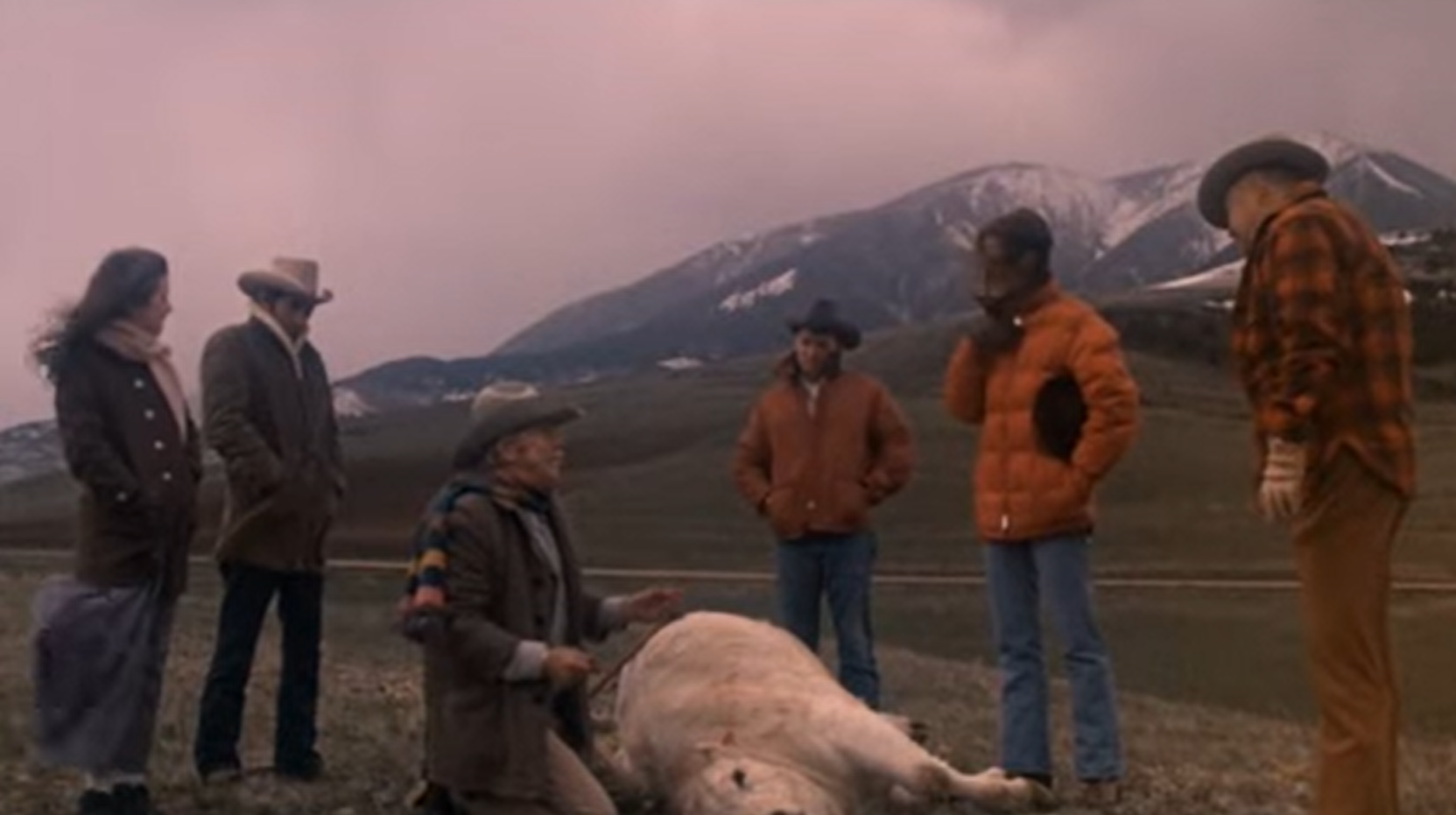
Peary accurately labels this “modern-day Western” by director Frank Perry “curiously uninvolving”, noting that the characters “aren’t very likable”, and that the “skillfully” shot individual scenes never coalesce into a meaningful whole. Indeed, the sloppy script by Thomas McGuane (I disagree with Peary that it’s “well-written”) fails to generate much authentic interest in either the characters or their situations, and is often incomprehensible. Although Bridges and Waterston:

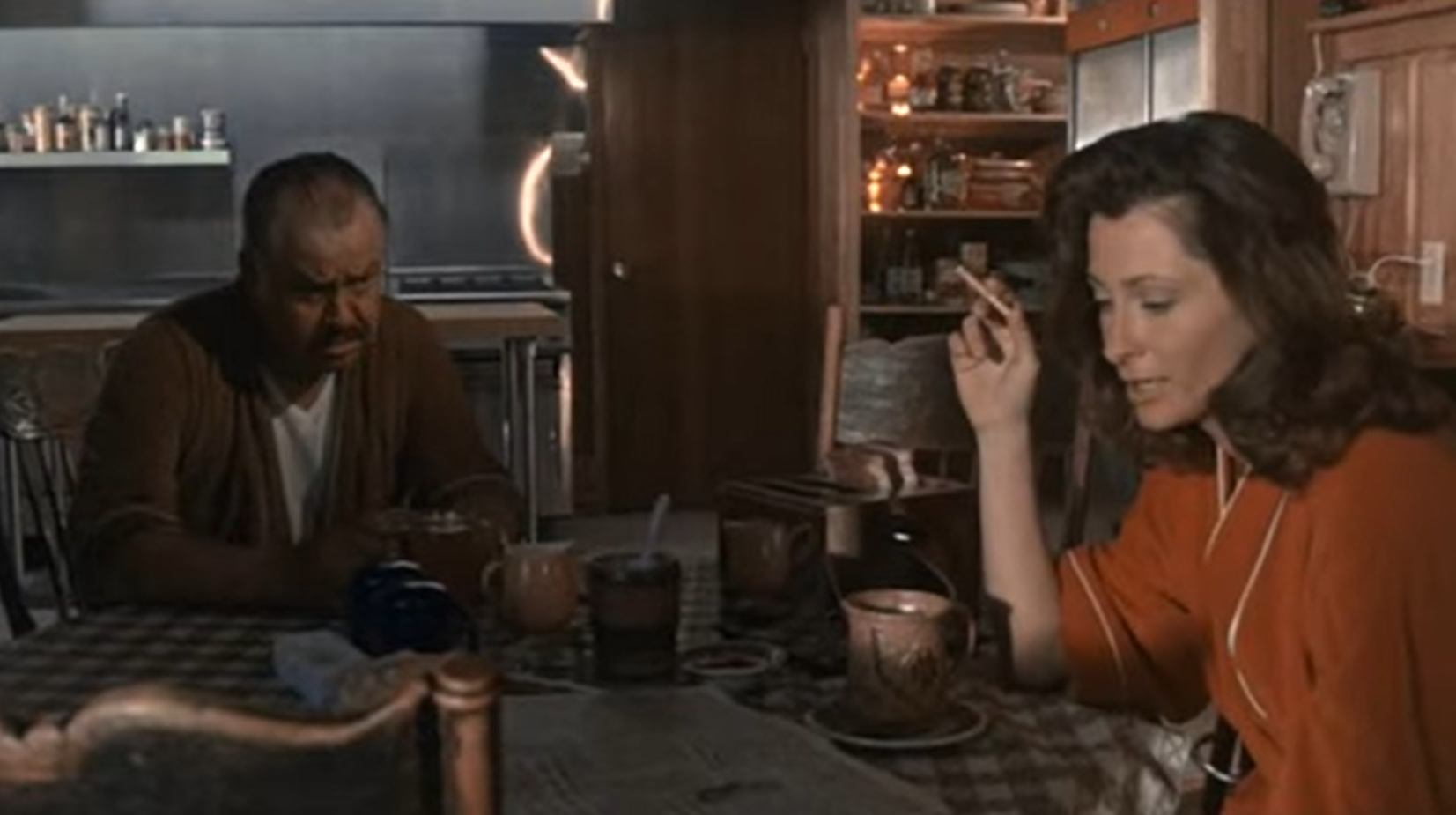
are clearly meant to embody counter-culture anarchists rebelling against The Establishment (as represented by the buffoonish James and his sexy wife, Elizabeth Ashley):

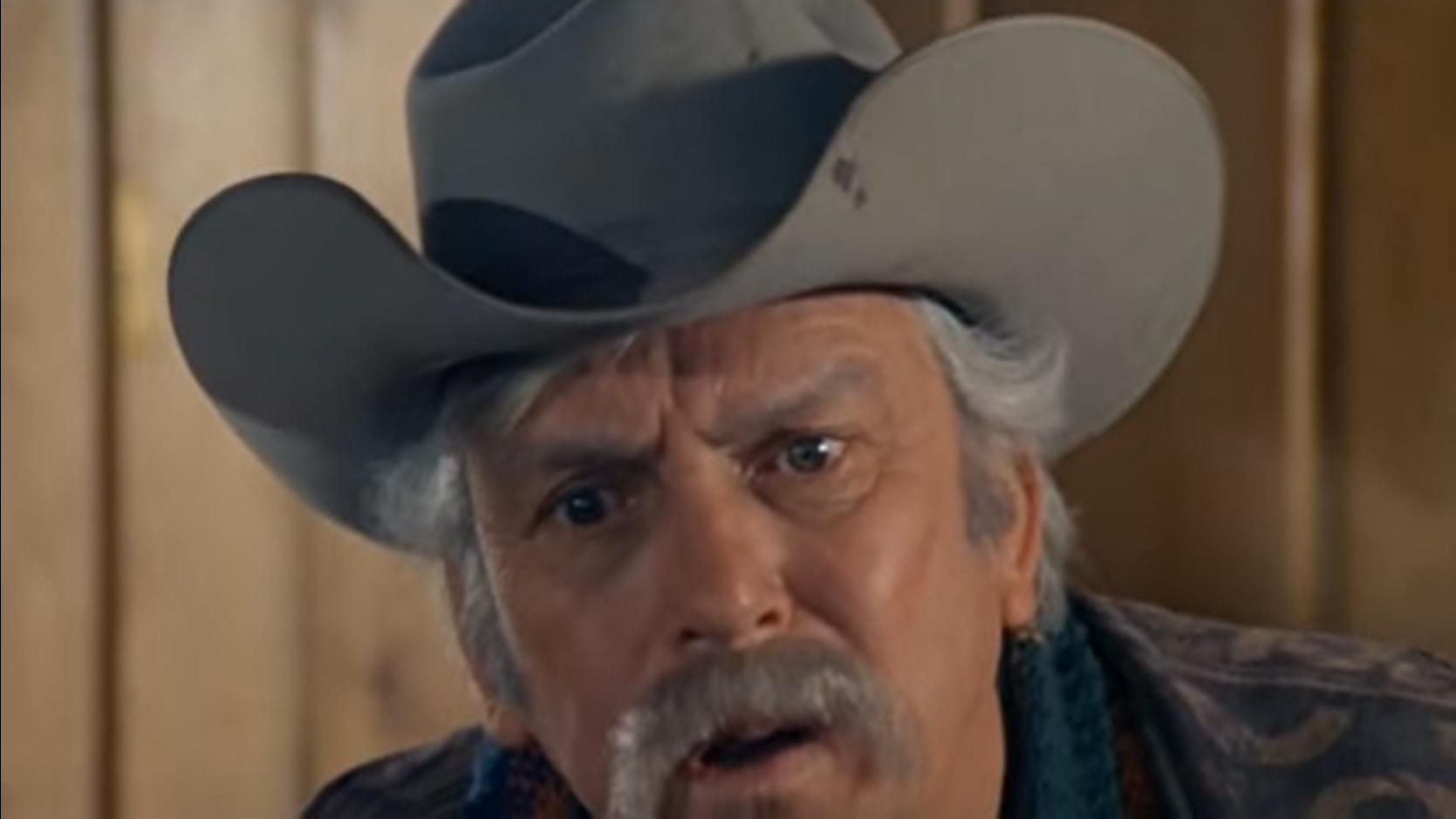
they never generate our sympathy, given that they’re essentially trigger-happy scofflaws who disrespectfully kill animals for kicks. A brief attempt is made to provide us with some background “motivation” on why they’ve chosen their current lifestyle — Bridges is fleeing an unhappy marriage and a “stifling” life of privilege, while Waterston is posited as a “lost” Indian divorced from his tribal values — but both threads are dropped without a trace. Meanwhile, the central drama of the story — whether James will discover the identities of Bridges and Waterston — carries no genuine suspense or interest, given that he’s just as unappealing as his nemeses. Not even the auspicious arrival of Slim Pickens in the final third of the film redeems this disappointing revisionist western.

Redeeming Qualities and Moments:

  • Harry Dean Stanton as Curt, one of James’s two cowhands
  • Beautiful outdoor locations in Montana

Must See?
No; feel free to skip this one.

Links:

Marty (1955)

Marty (1955)

“Listen, Ange: I’ve been looking for a girl every Saturday night of my life. I’m thirty-four years old — I’m just tired of looking, that’s all.”

Synopsis:
A 34-year-old butcher (Ernest Borgnine) living with his mother (Esther Minciotti) meets a mousy schoolteacher (Betsy Blair) at a dance, and must decide whether she’s a “dog” like his best friend (Joe Mantell) insists, or a potential marriage partner.

Genres, Themes, Actors, and Directors:

  • Betsy Blair Films
  • Character Studies
  • Ernest Borgnine Films
  • Grown Children
  • Looking for Ms./Mr. Right
  • Misfits
  • Romance

Review:
Peary doesn’t appear to be a big fan of this Oscar-winning character study, which he refers to in his Alternate Oscars as “disappointingly static and uninvolving”, merely a “relic of its time”. He points out that 1955 saw many other worthy “best film” contenders — including The Night of the Hunter, Rebel Without a Cause, and Kiss Me Deadly — and argues that “not many of us would answer that we want to watch Marty” when asked the film’s classic line, “What do you feel like doing tonight?” I wholeheartedly disagree. Despite its teleplay origins, Marty remains a well-acted, finely scripted film — and I find it difficult to believe that most viewers would find Marty’s travails “uninvolving”.

While the societal pressure to get married and have children may not be quite as strong today as it was in the 1950s, the urge to find one’s soulmate and build a life together is certainly just as relevant — and who among us can’t relate to feeling hopeless in romance at least once? If the film has a fault — and it’s a minor one — it may be in the casting of Betsy Blair (“Mrs. Gene Kelly”) as an unattractive “dog” of a woman; yet Blair transcends this limitation through her performance, managing to project “wallflower” simply through her posture and expression. She and Borgnine make a most appealing romantic couple, one we can’t help rooting for.

Note: Marty holds additional historical significance as the first film based directly on a television drama; Rod Steiger played the title character in the original production.

Redeeming Qualities and Moments:

  • Ernest Borgnine as Marty
  • Betsy Blair as Clara
  • Esther Minciotti as Marty’s mom
  • Paddy Chayefsky’s touching script

Must See?
Yes; whether or not it’s a personal favorite, all film fanatics should see Marty at least once.

Categories

  • Historically Relevant
  • Noteworthy Performance(s)
  • Oscar Winner or Nominee

(Listed in 1001 Movies You Must See Before You Die)

Links:

Kiss of Death (1947)

Kiss of Death (1947)

“You know what I do to squealers? I let ’em have it in the belly, so they can roll it over for a long time, thinkin’ it over.”

[Note: The following review is of a non-Peary title; click here to read more.]

Synopsis:
In order to get parole and spend time with his new wife (Coleen Gray) and children, a thief (Victor Mature) decides to rat on his partners, risking the wrath of a psychopathic con named Tommy Udo (Richard Widmark).

Genres:

  • Brian Donlevy Films
  • Cat-and-Mouse
  • Coleen Gray Films
  • Ex-Cons
  • Karl Malden Films
  • Mildred Dunnock Films
  • Revenge
  • Richard Widmark Films
  • Thieves and Gangsters
  • Victor Mature Films

Review:
Henry Hathaway’s Kiss of Death is a curious omission from Peary’s book, given that it contains one of the most infamous scenes in all of noir history: Richard Widmark’s psychotic “Tommy Udo” gleefully shoving wheelchair-bound Mildred Dunnock down a staircase, in order to teach her “squealing” son a lesson.

Indeed, Kiss of Death brought immediate fame to Widmark, and it’s easy to see why: while many note that Mature gives one of the best performances of his career here, his character:

— a conflicted con hoping for a second chance — is literally dwarfed by Udo, who dominates each scene he’s in.

As played by Widmark, giggling Udo emerges as one of the quintessential “villains” of cinema; critic James Agee (cited in the All Movie Guide OVerview) wrote, “You feel that murder is the kindest thing he’s capable of.” The film itself (co-written by Ben Hecht and Charles Lederer) is competent noir, with several suspenseful sequences (particularly the final showdown between Mature and Widmark) and atmospheric location cinematography in New York City — but it’s Widmark who ultimately elevates it to “must see” status.

Note: Blink and you’ll miss Karl Malden in a tiny role as a police sergeant grilling Mature.

Redeeming Qualities and Moments:

  • Richard Widmark in a career-making turn as Tommy Udo
  • Victor Mature as Tony Bianco
  • Coleen Gray as Mature’s love interest
  • Effective use of New York locales
  • Norbert Brodine’s noir-ish cinematography

Must See?
Yes, for Richard Widmark’s truly noteworthy, Oscar-nominated performance.

Categories

  • Noteworthy Performance(s)
  • Oscar Winner or Nominee

Links:

I Never Sang for My Father (1970)

I Never Sang for My Father (1970)

“I hate him — and I hate hating him.”

Synopsis:
When his mother (Dorothy Stickney) passes away, a widowed professor (Gene Hackman) must decide whether to stay in New York and care for his elderly father (Melvyn Douglas) or move to California and marry his girlfriend (Elizabeth Hubbard).

Genres, Themes, Actors, and Directors:

  • Father and Child
  • Gene Hackman Films
  • Grown Children
  • Melvyn Douglas Films
  • Play Adaptation

Review:
This Oscar-nominated drama — based on Robert Anderson’s autobiographical play — received radically diverse reviews upon its release, with Vincent Canby of The New York Times lambasting it as “a wretched motion picture”, and Roger Ebert praising it as “one of the most unforgettably human films I can remember.” The truth lies somewhere in between: I Never Sang for My Father is a frustrating blend of positive elements (fine performances and authentically drawn characters) with an overly theatrical script, stagy direction, and an obtrusively melodramatic score. Each time an emotionally powerful scene emerges, director Gilbert Cates tacks on swelling background music and/or unnecessary flashback sequences to emphasize the point; meanwhile, it’s impossible to forget that I Never Sang… was originally a stage play, given several obvious “end of act” speeches, and only a limited attempt to open up the story to outside locales. With that said, certain small exchanges — such as Douglas commenting on his lack of chest hair in comparison with his son — ring so true that it’s obvious screenwriter Anderson was drawing from intensely personal experiences; and the actors — particularly Douglas and Hackman — give such fine, credible performances that one can’t help retaining an interest in the characters despite the film’s deeper flaws.

Ultimately, however, it’s not “must see” viewing.

Redeeming Qualities and Moments:

  • Melvyn Douglas as Tom Garrison
  • Gene Hackman as Gene Garrison

Must See?
No, but it’s worth viewing once.

Links:

Shaggy Dog, The (1959)

Shaggy Dog, The (1959)

“Don’t be ridiculous — my son isn’t any werewolf! He’s just a big, baggy, stupid looking, shaggy dog!”

Synopsis:
The teenage son (Tommy Kirk) of a dog-hating postman (Fred MacMurray) accidentally recites an ancient charm which turns him intermittently into a shaggy dog; while in dog form, he learns about the presence of spies across the street, and enlists the help of his younger brother (Kevin Corcoran) to foil their plans.

Genres, Themes, Actors, and Directors:

  • Cecil Kellaway Films
  • Fantasy
  • Jean Hagen Films
  • Small Town America
  • Spies
  • Talking Animals

Review:
Recently remade with Tim Allen, this immensely popular Disney live-action film broke box office records the year it was released (beating even Ben-Hur), and generated a sequel twenty years later (1979’s The Shaggy D.A.). While Fred MacMurray is surprisingly annoying in the central adult role (his performance is both one-note and overly broad):

both Kirk and Corcoran are decent as his two sons, with Corcoran in particular showing evidence of kid star talent. The film’s two central subplots — Kirk’s rivalry with his best friend (Tim Considine) for the affections of two neighborhood girls (Annette Funicello and Roberta Shore), and the discovery of a neighborhood Cold War spy ring — are silly but ultimately innocuous; with that said, the movie as a whole is far from must-see viewing for all film fanatics, and will be a tedious bore for many.

Redeeming Qualities and Moments:

  • Kevin Corcoran as Wilby’s dog-loving younger brother, Moochie
  • Several amusing Wilby-as-Dog sequences

Must See?
No, but film fanatics may be curious to check it out simply for its historical popularity.

Links:

Marlowe (1969)

Marlowe (1969)

“Does your mother know what you do for a living?”

Synopsis:
While searching for the missing brother (Roger Newman) of a young woman (Sharon Farrell), private detective Philip Marlowe (James Garner) stumbles onto a blackmailing plot involving compromising photos of a television star (Gayle Hunnicutt).

Genres, Themes, Actors, and Directors:

  • Blackmail
  • Bruce Lee Films
  • Detectives and Private Eyes
  • James Garner Films
  • Search

Review:
This updated version of Raymond Chandler’s 1949 novel The Little Sister is polished but not all that memorable. While James Garner (always a pleasure to watch) is appropriately gritty and handsome as famed detective Philip Marlowe, ultimately his performance (unlike that of, say, Humphrey Bogart as Marlowe in 1946’s The Big Sleep) fails to leave much of a lasting impression.

Meanwhile, the dense storyline — despite featuring a couple of clever plot twists at the end — is needlessly confusing, and introduces far too many supporting characters whose importance is either lost (after two viewings, I still don’t have a clue what Paul Stevens’ enigmatic Dr. Lagardie has to do with anything) or given short shrift (Carroll O’Connor as an embittered police lieutenant, Bruce Lee as a martial arts-wielding henchman, and Rita Moreno as Hunnicutt’s “old friend” all deserve better development). Ultimately, this one’s only must-see viewing for Chandler aficionados.

Note: This was Lee’s first appearance in a Hollywood movie, and his presence is noteworthy — but his second (final) scene in the film is inexplicably insulting to his talents.

Redeeming Qualities and Moments:

  • Rita Moreno as Dolores

Must See?
No, though Chandler fans will likely be curious to check it out.

Links:

Witches of Eastwick, The (1987)

Witches of Eastwick, The (1987)

“It’s women who are the source: the only power. Nature, birth, rebirth… Cliche? Cliche, sure — but true.”

Synopsis:
When three women — a potter (Cher), a journalist (Michelle Pfeiffer) and a cellist (Susan Sarandon) — wish for the man of their dreams to appear, a hedonistic stranger (Jack Nicholson) suddenly arrives in town and changes their lives forever.

Genres, Themes, Actors, and Directors:

  • Black Comedy
  • Catalysts
  • Character Arc
  • Cher Films
  • Fantasy
  • Feminism and Women’s Issues
  • Jack Nicholson Films
  • Susan Sarandon Films
  • Witches, Wizards and Magicians

Review:
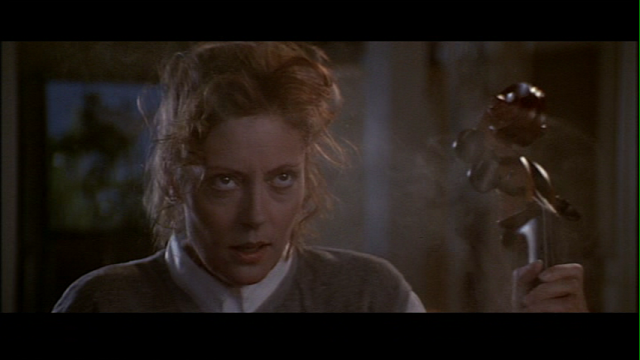
George Miller’s adaptation of John Updike’s bestselling 1984 novel is ultimately a disappointment. While the three female leads are clearly witches of one kind or another (as indicated by the film’s very title), the script never offers any explanation of how or why they came to possess their supernatural powers (can they only achieve magic when “working” together?), or what — if any — deeper relevance this holds for them as repressed women in a small American town. Though it’s clear that they are responsible for unintentionally invoking Nicholson’s character, his identity as (presumably) the devil incarnate makes one question the dynamics of power that emerge: who’s in control of who here? And why are these particular women granted such specific powers? Hints of feminist themes emerge every now and then — particularly during Nicholson’s seductive diatribes (“Men are such cocksuckers, aren’t they?”) — but are never sufficiently explored.

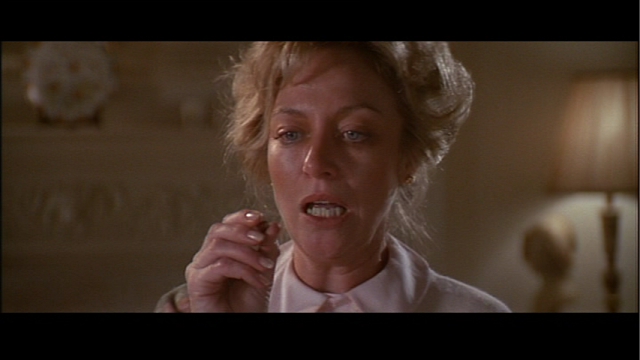
Meanwhile, the witches’ thematic counterpart — the prim wife (Veronica Cartwright) of the town’s editor (Richard Jenkins) — is provided with just as little explanatory grist. She’s a symbol rather than a three-dimensional character — and when her situation becomes gruesomely dire by the final third of the film, audiences will be utterly confused about how or why she’s forced to suffer such an unhappy fate. While the film’s pre-CGI special effects are memorable, and the actors — particularly Nicholson, Sarandon, and Cartwright — have great fun with their parts, The Witches of Eastwick ultimately hasn’t held up well enough to recommend as must-see viewing.

Redeeming Qualities and Moments:

  • Jack Nicholson as Daryl Van Horne
  • Susan Sarandon as Jane
  • Veronica Cartwright as Felicia Alden

Must See?
No; while it holds some historical interest (particularly since it’s been remade as a comedic musical), it’s no longer must-see viewing.

Links:

Swiss Miss (1938)

Swiss Miss (1938)

“This is one time the critics will not be blinded to the merits of my music by your lovely voice!”

Synopsis:
Two clueless mousetrap salesmen (Stan Laurel and Oliver Hardy) travel to Switzerland, where they are promptly relegated to working as dishwashers in a restaurant; meanwhile, Ollie (Hardy) falls for an opera diva (Della Lind) whose husband (Walter Woolf King) wants to be left alone in peace to compose.

Genres, Themes, Actors, and Directors:

  • Comedy
  • Laurel and Hardy Films

Review:
This inane Laurel and Hardy flick is one of their worst outings. The paper-thin subplot (involving Lind and King) makes little sense, and while Lind (nee Grete Natzler) is mildly charismatic (she hoped to make it big in Hollywood as the next Jeanette McDonald, but this was ultimately her last film), the songs she performs are insipid at best. Laurel and Hardy themselves aren’t given much of interest to do, either: the best known sight gag in the film — Stan and Ollie are forced to move a piano across a rickety bridge spanning the Alps — is simply a retread of their classic short “The Music Box” (1932); and when a man in a gorilla suit shows up as part of the “joke”, all hope for genuine chuckles is lost. The one mildly amusing sequence — involving Stan valiantly tricking a stoic St. Bernard into giving him his keg of brandy — is hardly funny enough to recommend sitting through the rest of this tedious film.

Redeeming Qualities and Moments:

  • Stan’s attempt to convince a St. Bernard to give him his flask of brandy

Must See?
No; there’s no reason for this clunker to be listed in Peary’s book.

Links:

One Way Passage (1932)

One Way Passage (1932)

“I know now what I want: I want to crowd all the intense, beautiful happiness possible into what life I’ve got left!”

Synopsis:
When a condemned convict (William Powell) falls in love with a dying woman (Kay Francis) on board a cruise ship, his desire to escape from the clutches of his captor (Warren Hymer) suddenly becomes more complicated.

Genres, Themes, Actors, and Directors:

  • At Sea
  • Con-Artists<
  • Kay Francis Films
  • Romance
  • Star-Crossed Lovers
  • William Powell Films

Review:
Glamorous Kay Francis was one of the most popular and highly paid stars in early Hollywood, but because she made so few memorable films, she’s largely forgotten by movie buffs today.

Along with her supporting role in Ernst Lubitsch’s Trouble in Paradise (1932), she’s probably best known for this three-hankie shipboard romance, which succeeds in large part due to the genuine chemistry between the two leads. Equally enjoyable is Aline McMahon as a kind-hearted con woman posing as a countess:

Unfortunately, her sidekick “Skippy” (Frank McHugh) — with perhaps one of the most annoyingly affected laughs ever heard on-screen — is nothing short of irritating.

Indeed, whenever the film slides into overt comedy, the story falls flat — yet while One Way Passage can’t rightfully be called a classic, it remains worth a look simply to see Francis in her prime.

Redeeming Qualities and Moments:

  • William Powell and Kay Francis as the star-crossed lovers (Peary nominates them both for Alternate Oscars)
  • Aline McMahon as “Countess Barilhaus”

Must See?
Yes, simply to see Francis in one of her most memorable films. Listed as a film with historical importance and a Personal Recommendation in the back of Peary’s book.

Categories

  • Noteworthy Performance(s)

Links:

American Tragedy, An (1931)

American Tragedy, An (1931)

“You don’t know how I love all this — this music, this kind of life!”

Synopsis:
A socially ambitious youth (Phillips Holmes) seduces and impregnates a factory worker (Sylvia Sidney), then plots to kill her when he falls in love with a debutante (Frances Dee).

Genres, Themes, Actors, and Directors:

  • Courtroom Drama
  • Frances Dee Films
  • Josef von Sternberg Films
  • Love Triangle
  • Plot to Murder
  • Social Climbers
  • Sylvia Sidney Films

Review:
Josef von Sternberg’s adaptation of Theodore Dreiser’s monumental 1925 novel was in some ways destined to disappoint, given the need to condense two volumes (over 800 pages) into a manageable running time — and, sure enough, Dreiser himself disapproved of the film. These days, viewers are likely most familiar with George Stevens’ 1951 adaptation of the book — A Place in the Sun (starring Elizabeth Taylor, Montgomery Clift, and Shelley Winters) — primarily because von Sternberg’s earlier version is so hard to locate. Of the two versions, von Sternberg’s is ultimately more faithful to the original text — and less sympathetic to the central protagonist (Holmes), whose cowardly, selfish actions remain truly difficult to watch.
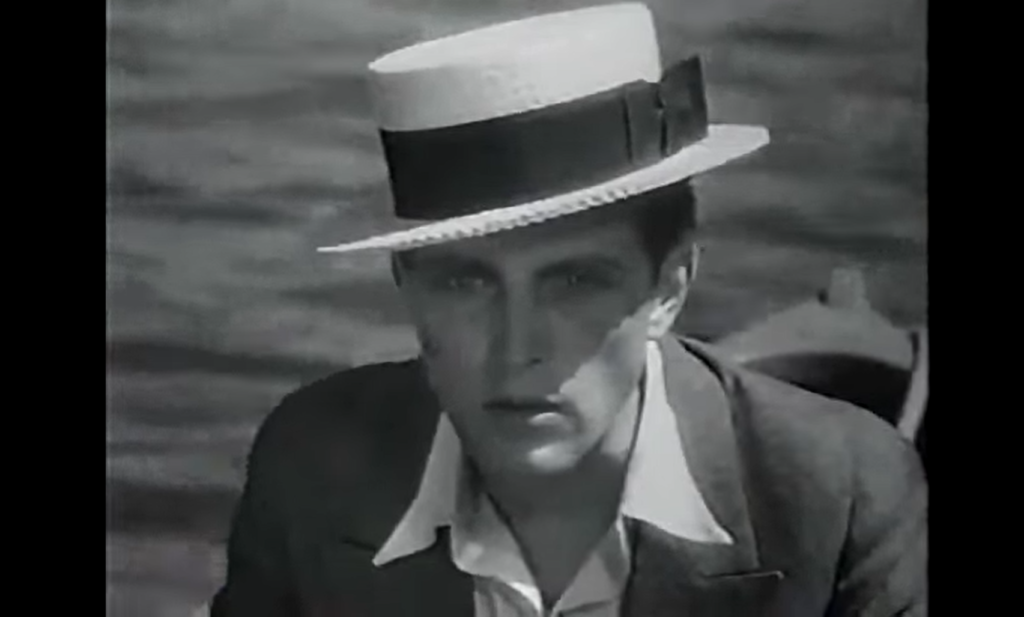
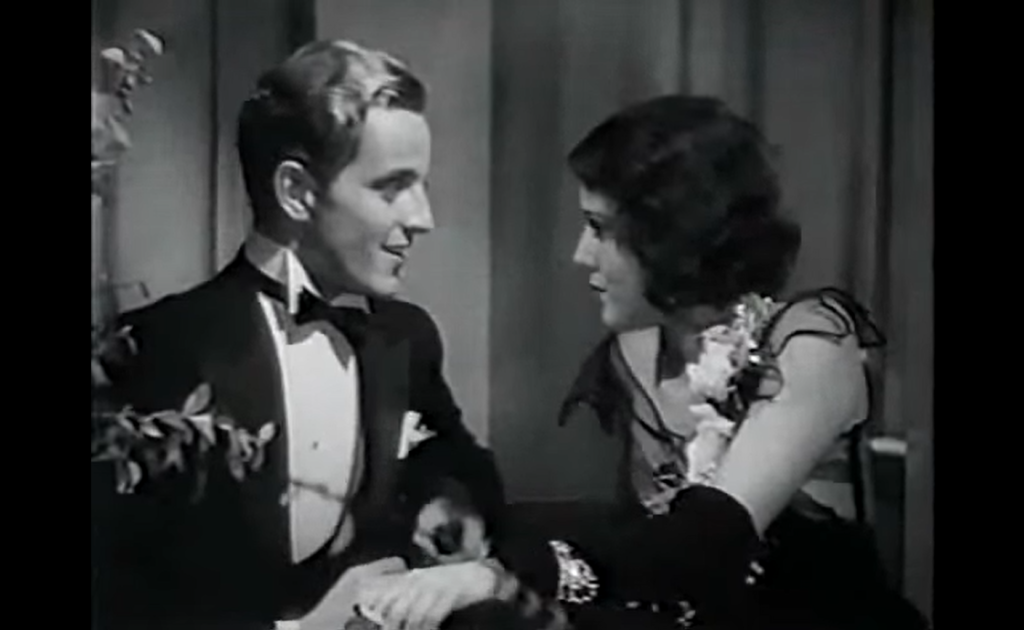
While Holmes’ performance is less than impressive (he tends to read his lines rather than embody them), he does manage to convey the sniveling callowness of a self-absorbed pretty boy.
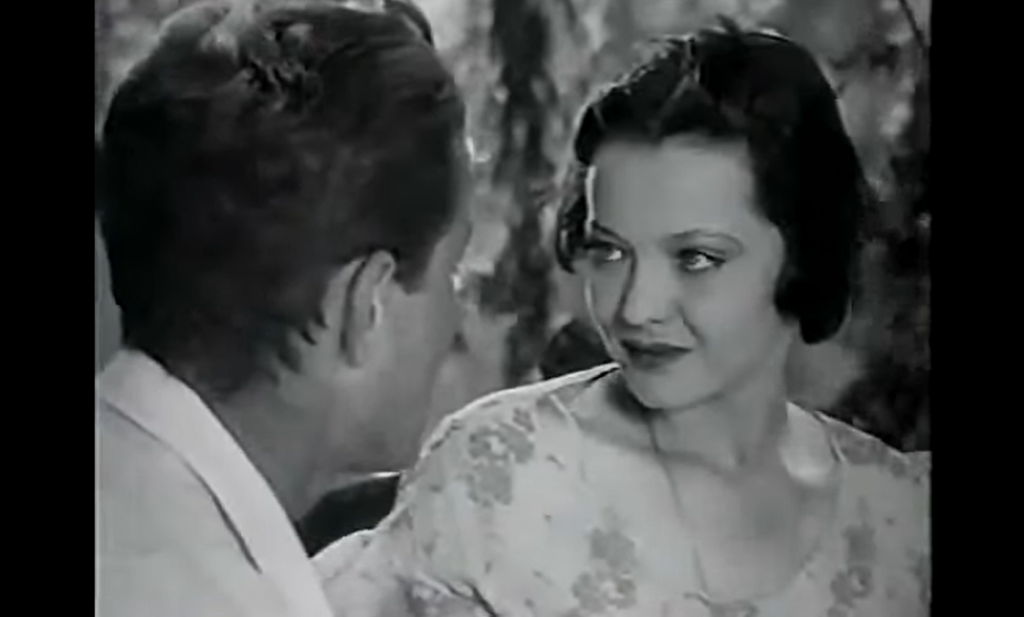
Of the lead performers, however, Sylvia Sidney ultimately comes across the best:
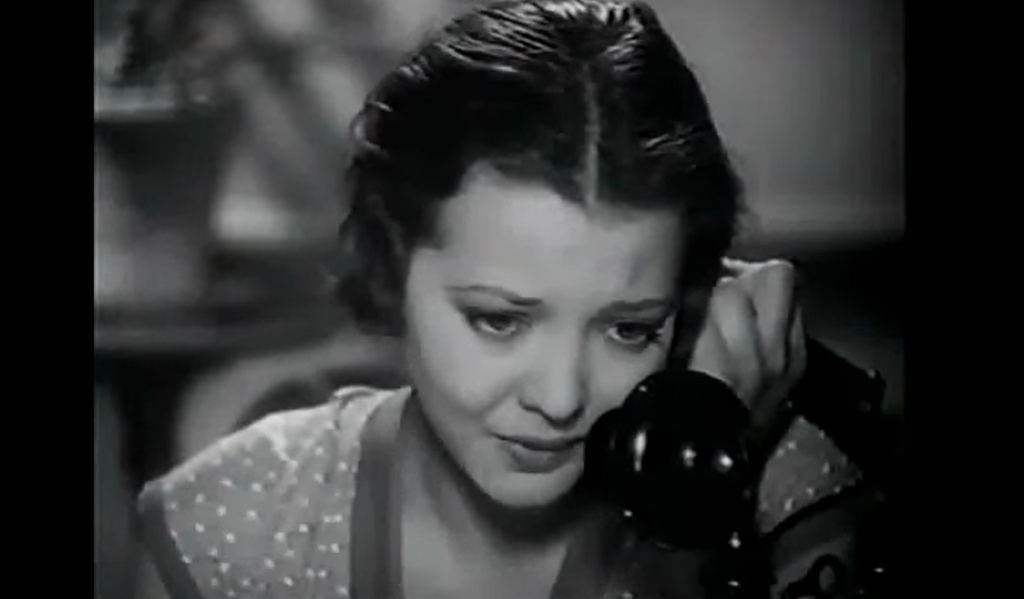
Unlike her counterpart in A Place in the Sun (Winters), Sidney’s “Bert” is truly a sympathetic innocent: a hardworking girl who wants nothing more than a chance at romance with her handsome boss. She resists sex at first, but gives in once she realizes that their tenuous relationship won’t continue without it; later, she’s willing to give Holmes up as long as he’ll marry her and give her baby a good name. While she’s naively desperate, she’s far from shrewish, and it’s genuinely painful to know she’s destined for a watery grave.

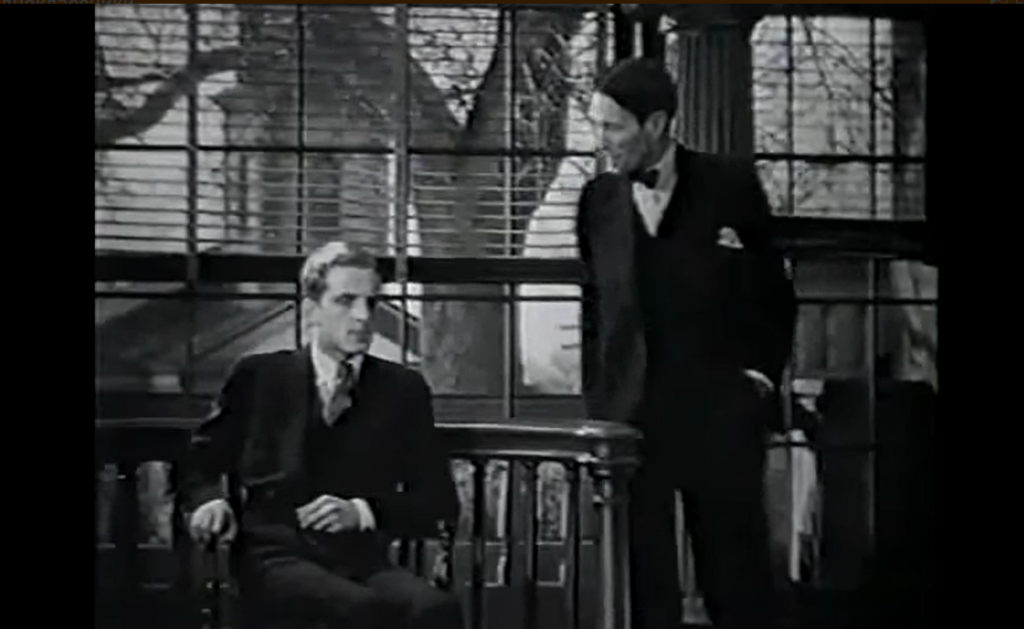
Speaking of such spoilers, the fact that audience members (then and now) already know the outcome of this most famous of American stories (based on the real-life story of Chester Gillette) contributes to the film’s ultimate failure to impress. By the final third of the movie — an extended courtroom sequence — we’re anxious to see Holmes get his due, but are forced to sit through a series of painful lies and distortions before things finally wrap up.
The presence of Holmes’ mother (Claire McDowell) in the final scenes:
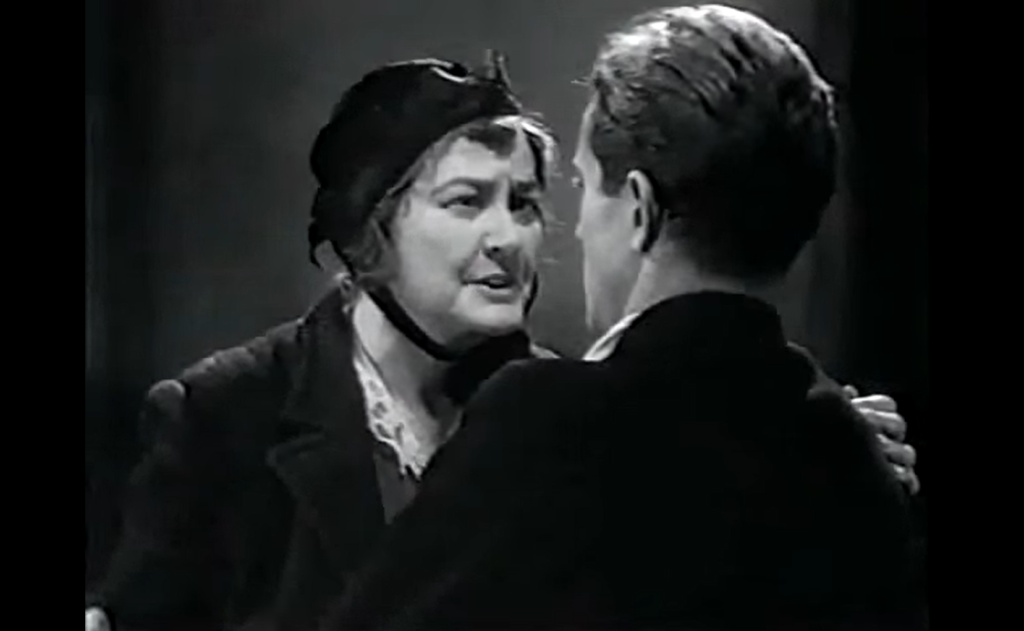
… hints at the larger theme of Dreiser’s novel — that Clyde’s poverty-stricken upbringing contributed towards his desperate need to climb socially — which unfortunately is barely touched upon. While competent, this early von Sternberg film doesn’t provide enough evidence of his burgeoning style to make it a must-see entry in his canon — though it’s certainly worth a look.

Redeeming Qualities and Moments:

  • Sylvia Sidney as “Bert” (Peary nominates her as Best Actress of the Year in his Alternate Oscars book.)
Must See?
No, but it’s worth a look if you can locate a copy.

Links: