River of No Return (1954)

River of No Return (1954)

“He didn’t treat me like a tramp; he treated me like a woman!”

Synopsis:
A gambler (Rory Calhoun) engaged to a saloon singer (Marilyn Monroe) steals a horse and rifle belonging to a farmer (Robert Mitchum), and heads to town to stake a claim he recently won. Meanwhile, when Indians raid Mitchum’s farm, he flees with Monroe and his son (Tommy Rettig) by steering a raft down a notoriously deathly river, hoping to confront Calhoun if they make it safely to town.

Genres, Themes, Actors, and Directors:

  • Marilyn Monroe Films
  • Otto Preminger Films
  • Robert Mitchum Films
  • Survival
  • Westerns

Review:
Otto Preminger’s directorial career was nothing if not highly varied, with entries ranging from noir-tinged detective flicks like Laura (1944) to somber political exposés — i.e. Advise & Consent (1962) — to the truly surreal counter-culture misfire Skidoo (1969). River of No Return was his first attempt at helming a western, and while he was purportedly pleased with the script — which was inspired by Vittorio De Sica’s The Bicycle Thief — the overall production experience was less than ideal for all involved. The final product comes across as a patchily successful affair, with the benefit of a compellingly urgent storyline, and fine performances by both Tommy Rettig (of The 5,000 Fingers of Dr. T. fame) as Mitchum’s estranged son:

and Rory Calhoun as Monroe’s slippery lover.

However, while the outdoor CinemaScope cinematography is stunning:

much less successful is the use of rear-screen projection, which makes it patently obvious that the actors are rocking about on a sound stage rather than on the rapids themselves.

Meanwhile, a disturbing near-rape scene between Mitchum and Monroe is poorly resolved, leaving a bitter taste in one’s mouth. Fortunately, the final resolution between Calhoun and Mitchum is smartly scripted, bringing the story full-circle, and leaving one feeling at least partially satisfied.

Redeeming Qualities and Moments:

  • Fine use of Technicolor CinemaScope

  • Rory Calhoun as Harry Weston

Must See?
No; this one is only must-see for Monroe completists.

Links:

Gold Diggers of 1933 (1933)

Gold Diggers of 1933 (1933)

“I know these showgirls: they’re just little parasites, little gold diggers!”

Synopsis:
A secretly wealthy aspiring composer (Dick Powell) in love with a chorus girl (Ruby Keeler) helps to finance a new musical production starring Keeler and her friends (Joan Blondell, Aline McMahon, and Ginger Rogers), much to the chagrin of his disapproving brother (Warren Williams), who attempts to break off Powell’s relationship but instead finds himself falling for Blondell.

Genres, Themes, Actors, and Directors:

  • Busby Berkeley Films
  • Cross-Class Romance
  • Depression Era
  • Dick Powell Films
  • Ginger Rogers Films
  • Gold Diggers
  • Joan Blondell Films
  • Let’s-Put-On-a-Show
  • Mervyn LeRoy Films
  • Mistaken Identities
  • Musicals
  • Ruby Keeler Films
  • Showgirls
  • Warren William Films

Response to Peary’s Review:
Peary accurately refers to this Depression-era Warners musical as “super” and full of “extravagant, delightfully outlandish Busby Berkeley production numbers”. He points out that because Warners was the “one studio that called attention to the country’s social problems”, the storyline remains strongly tied to issues of the day, straight through to its stunning “mammoth” finale, a “Blondell-led production tribute to the ‘Forgotten Man’ who fought in the war but couldn’t get a job when he came home”. He notes that “Blondell has one of her most appealing roles”, that “Rogers displays a sparkling, hungry… quality”, and that “Powell is in fine voice during ‘Pettin’ in the Park'” (a catchy tune you won’t easily be able to get out of your head).

In his review, Peary doesn’t say a word about Keeler, whose erstwhile fame as a charming leading lady of early-’30s musicals continues to puzzle modern viewers, given her decidedly weak singing voice and clunky dancing style; however, she’s cute and does an okay job here, ultimately playing more of a supporting role than a leading one. It’s more puzzling to me that Peary fails to mention Aline McMahon’s hilariously memorable turn as a boldly flirtatious gold-digger determined to seduce Williams’ susceptible lawyer-friend (Guy Kibbee); she shines in a rare opportunity to share the screen equitably with her co-stars. Meanwhile, though her role is minimal, Rogers demonstrates exactly why she went on to leading-lady fame shortly after this film’s release; her Pig Latin rendition of “We’re in the Money” provides a truly stunning opening to the film (recall the presence of this particular sequence in Arthur Penn’s Bonnie and Clyde).

But the film’s real draw, of course, are the outrageously surreal Busby Berkeley musical numbers, each of which merits some sort of prize for sheer creative chutzpah. It’s been duly noted that such numbers would never have “worked” in real life on a stage, given that strategic cinematic framing plays an enormous part in their presentation here — but viewers must simply ignore such details and enjoy Berkeley’s incomparable vision.

Redeeming Qualities and Moments:

  • Several truly memorable Busby Berkeley numbers


  • Ginger Rogers singing “We’re in the Money” in pig Latin
  • Joan Blondell as Carol (nominated by Peary as one of the Best Actresses of the Year)
  • Aline McMahon as Trixie

Must See?
Yes, as a delightful showcase for Berkeley’s talents.

Categories

  • Genuine Classic

(Listed in 1001 Movies You Must See Before You Die)

Links:

Trouble in Paradise (1932)

Trouble in Paradise (1932)

“I’m mad about you! My little shoplifter! My sweet little pickpocket! My darling.”

Synopsis:
A pair of thieving lovers (Herbert Marshall and Miriam Hopkins) plot to steal from a wealthy widow (Kay Francis); but when Francis expresses romantic interest in Marshall, he finds his loyalties divided.

Genres, Themes, Actors, and Directors:

  • Ernst Lubitsch Films
  • Heists
  • Herbert Marshall Films
  • Kay Francis Films
  • Love Triangle
  • Miriam Hopkins Films
  • Mistaken Identities
  • Romantic Comedy
  • Thieves and Criminals

Response to Peary’s Review:
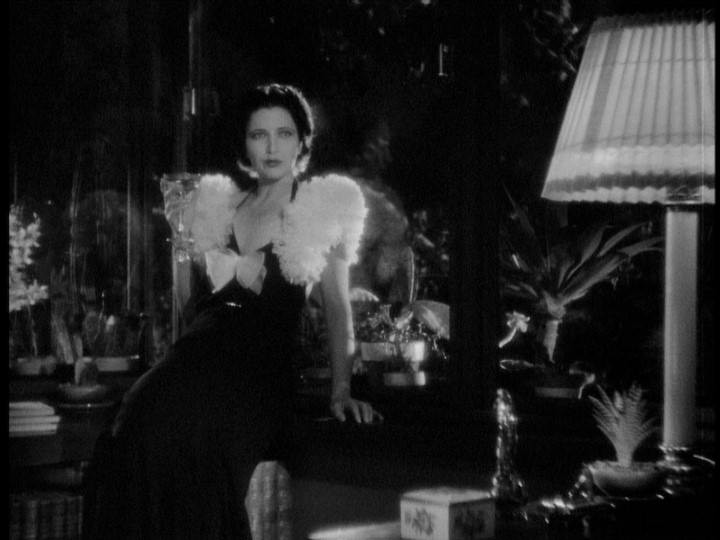
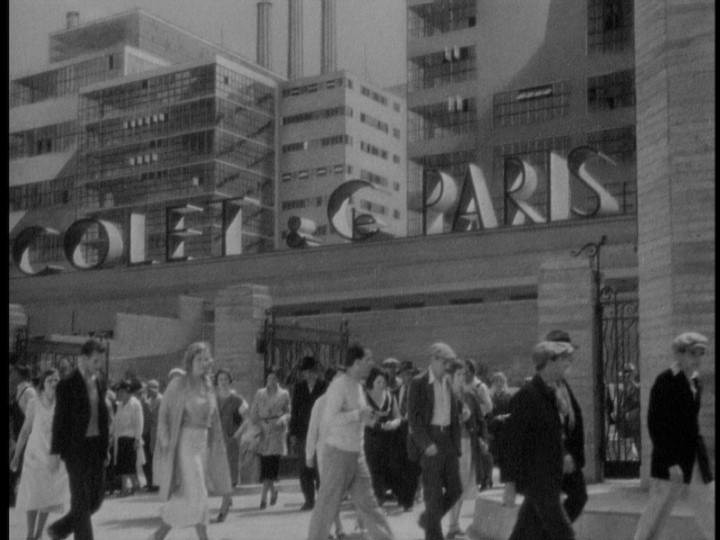
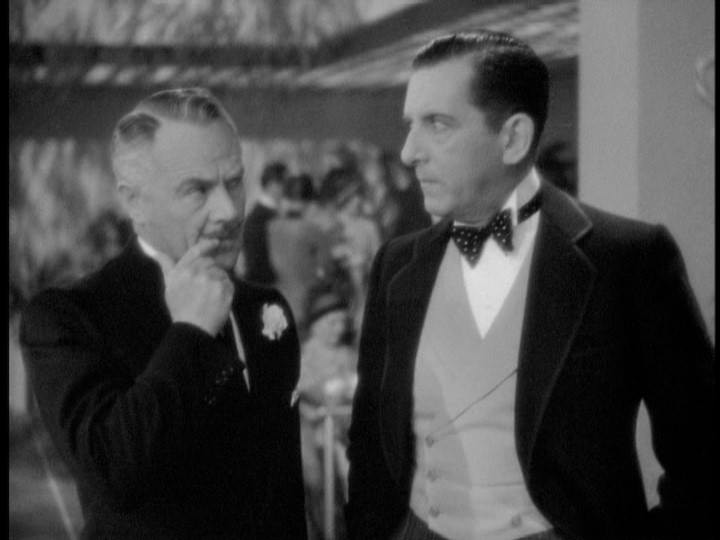
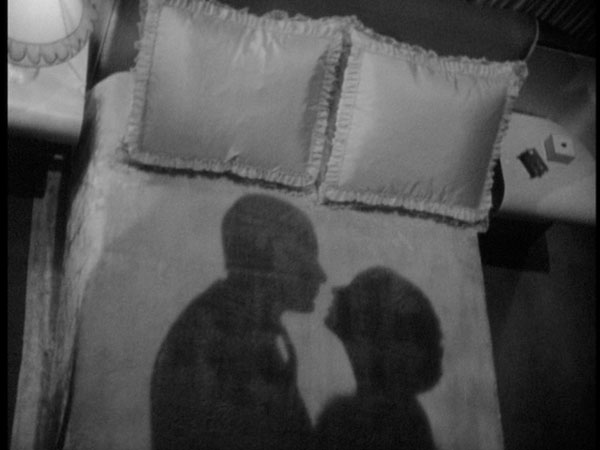
Peary is only mildly enthusiastic in his praise of this pre-Production Code “sophisticated sex comedy” by Ernst Lubitsch, noting that while it has “excellent dialogue” and “sly performances”, he doesn’t “find it as spirited as other Lubitsch comedies”. However, I’m more in line with other critics, many of whom consider it to be Lubitsch’s masterpiece. The love-triangle storyline is simple yet sophisticated, beginning with Marshall and Hopkins’ meet-cute during mutual thieving in Venice, and carrying through to their more elaborate plans to rob a wealthy widow (Francis) of her jewels — which is complicated by Francis’s confident sexual designs on Marshall, who isn’t entirely uninterested in her himself. (As Roger Ebert so aptly describes Francis’s character in his Great Movies review, she’s “a woman of appetites and the imagination to take advantage of an opportunity”, someone who “thinks she can buy [Marshall] but is content to rent him for a while”.) Indeed, I’m surprised Peary doesn’t take time in his GFTFF review to point out the droll perfection of Francis’s performance — though he does nominate both her and Hopkins as two of the Best Actresses of the Year in his Alternate Oscars (and I believe Marshall gives one of his personal best performances as well). A fine cast of familiar supporting faces, luxuriously sophisticated Art Deco sets, and consistently amusing dialogue (“Marriage is a beautiful mistake which two people make together”) make Trouble in Paradise a true treat for film fanatics, one which merits multiple enjoyable visits.

Redeeming Qualities and Moments:

  • Kay Francis as Madame Colet (nominated by Peary as one of the Best Actresses of the Year in his Alternate Oscars)
  • Herbert Marshall as Gaston
  • Miriam Hopkins as Lily (nominated by Peary as one of the Best Actresses of the Year in his Alternate Oscars)
  • Fine Art Deco sets
  • A wonderfully comedic supporting cast
  • Victor Milner’s cinematography

Must See?
Yes, most definitely. Nominated as one of the Best Pictures of the Year in Alternate Oscars.

Categories

  • Genuine Classic

(Listed in 1001 Movies You Must See Before You Die)

Links:

Christmas Holiday (1944)

Christmas Holiday (1944)

“They said it was shameful that I should love him — as if you could stop loving because it’s shameful to love.”

Synopsis:
A jilted G.I. on leave (Dean Harens) encounters a depressed nightclub singer (Deanna Durbin) who proceeds to tell him the sad story of how she met her troubled husband (Gene Kelly), who was eventually sent to jail for murder.

Genres, Themes, Actors, and Directors:

  • Deanna Durbin Films
  • Flashback Films
  • Gene Kelly Films
  • Robert Siodmak Films

Review:
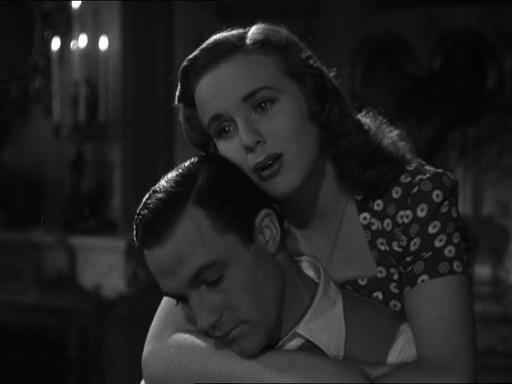
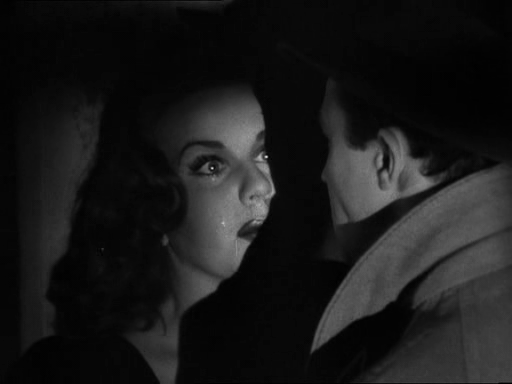
Robert Siodmak’s noir-tinged Christmas Holiday — loosely based on a novel by W. Somerset Maugham — possesses both an incongruously misleading title (Christmas has little to do with the proceedings), and a mind-boggling choice of romantic leads. Having recently rewatched Universal Studios’ chirpy songbird Deanna Durbin in two of her best-known early films — Three Smart Girls (1936) and 100 Men and a Girl (1937) — I was shocked to see her cast here as a world-weary chanteuse with a shadowy past (though a bit of background reading reveals that she was eager to take on this persona-busting role, and worked tremendously hard to perfect her character).

Meanwhile, Kelly (early in his career) seems equally cast against type in a slippery role as a charming husband who turns out to be not only a Mamma’s boy but a convincing liar.

The storyline starts slowly and somewhat mysteriously, leading us to believe that we’ll be watching a film primarily about Harens’ cruelly jilted G.I.:

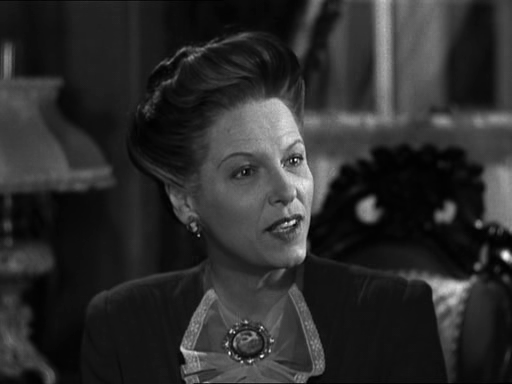
instead, Harens turns out to be merely a side-note in the much darker tale told by Durbin in flashback. At this point, viewers discombobulated by Durbin’s jaded initial appearance on screen may be temporarily renewed to see her as a familiarly fresh-faced young woman falling for Kelly, who only gradually realizes that he’s not all he seems to be. Gale Sondergaard is quietly menacing as Kelly’s deceptively inviting mother, and Durbin herself reveals surprising depth and nuance while portraying her character’s mounting confusion and suspicion. Atmospheric cinematography and a firm directorial hand by Siodmak make this unusual flick worth checking out once, if simply to see its stars in the most atypical roles of their careers.

Redeeming Qualities and Moments:

  • Deanna Durbin as Jackie/Abigail
  • Gale Sondergaard as Mrs. Manette
  • Woody Bredell’s atmospheric cinematography

Must See?
Yes, simply as a most unusual outing by Siodmak.

Categories

  • Important Director

Links:

Sound of Music, The (1965)

Sound of Music, The (1965)

“When the Lord closes a door, somewhere He opens a window.”

Synopsis:
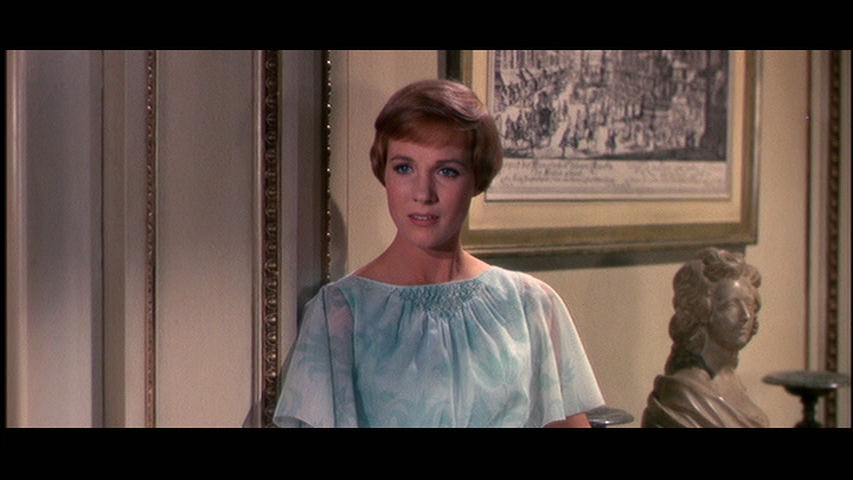
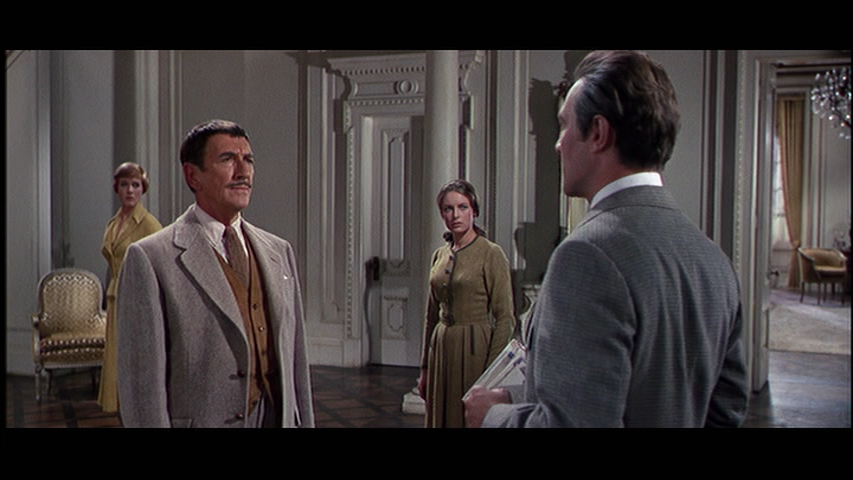
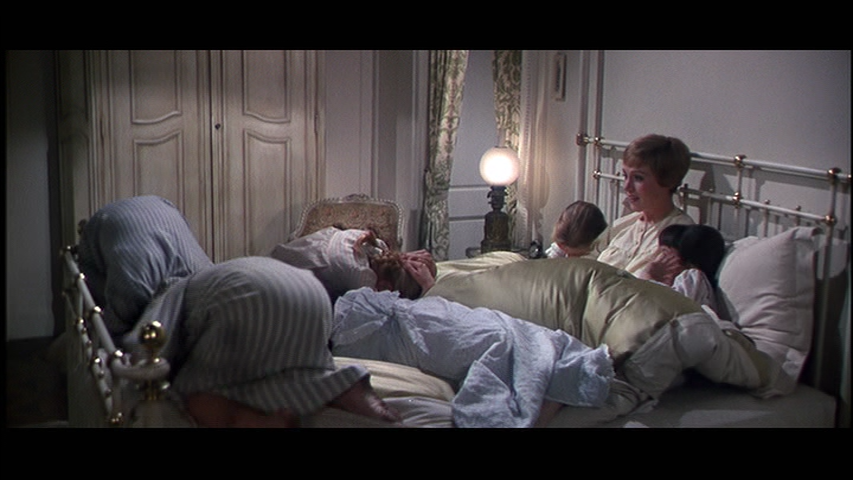
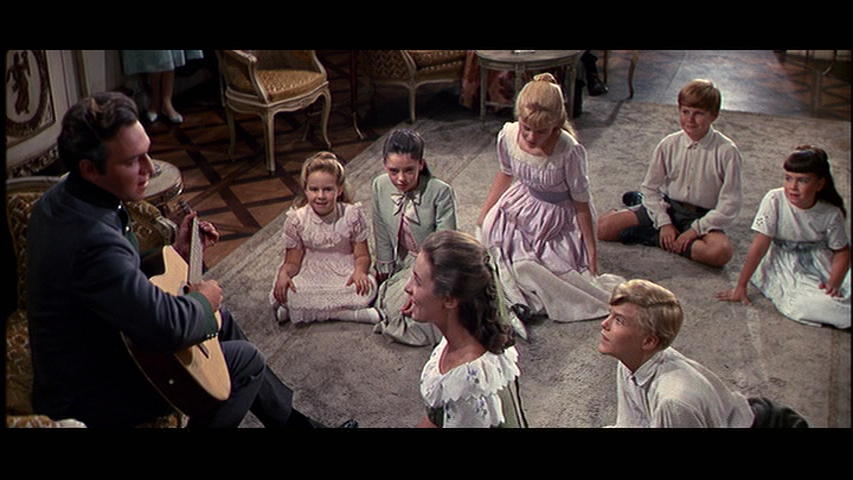
In 1930s Austria, a nun-in-training (Julie Andrews) is sent to work as a governess for the seven unruly children — Liesl (Charmian Carr), Louisa (Heather Menzies-Urich), Friedrich (Nicholas Hammond), Kurt (Duane Chase), Brigitta (Angela Cartwright), Marta (Debbie Turner), and Gretl (Kym Karath) — of a widowed and retired captain (Christopher Plummer) engaged to a baroness (Eleanor Parker). Soon Andrews and Captain Von Trapp (Plummer) find themselves falling in love, but their family’s happiness is threatened when the captain is called back to active duty with the Nazis.

Genres, Themes, Actors, and Directors:

  • Christopher Plummer Films
  • Eleanor Parker Films
  • Governesses and Nannies
  • Julie Andrews Films
  • Musicals
  • Nazis
  • Nuns
  • Play Adaptation
  • Richard Haydn Films
  • Robert Wise Films
  • Romance
  • Widows and Widowers
  • World War Two

Response to Peary’s Review:
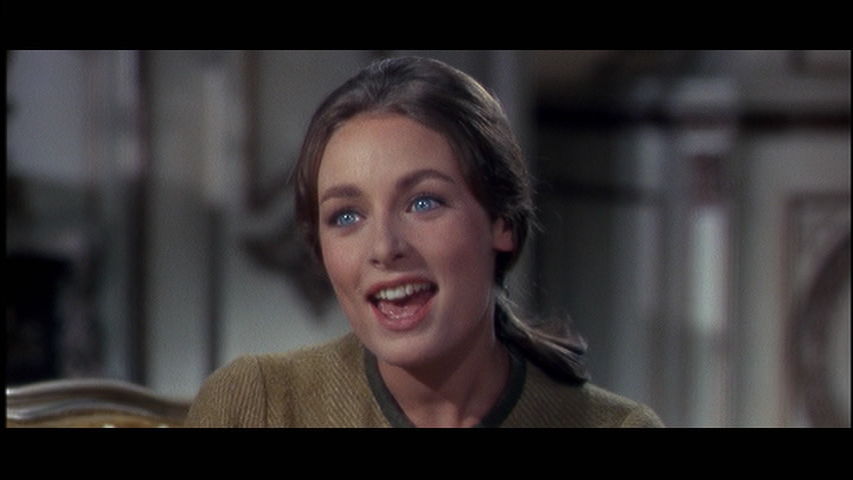
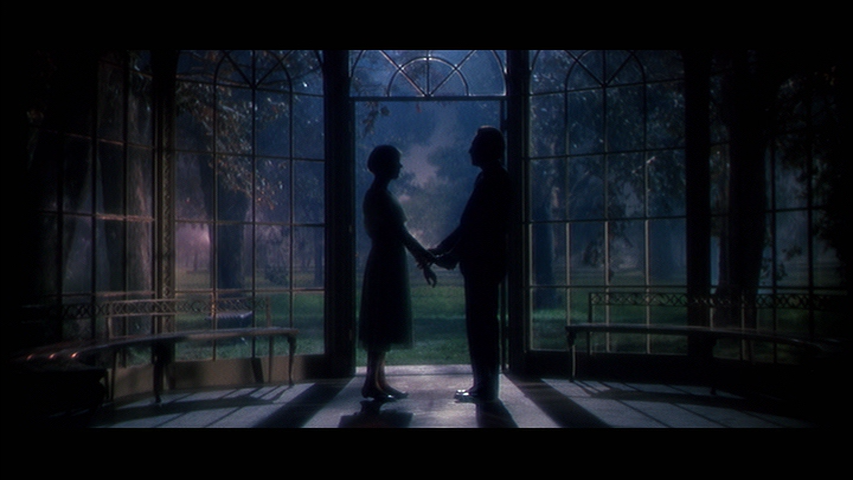
Peary begins his somewhat cynical review of this beloved musical — based on a “stage musical by Howard Lindsay and Russel Crouse” — by noting that it’s “one of the most popular films of all time — which it was calculated to be”. He goes on to write that “You’ll know you’re being manipulated at every turn, that you’re expected to feel a lump in your throat or laugh or cry on cue (when the music swells, when a child smiles, when a stern adult is kind)” — but he concedes that “even if you become sick on the sugar, you’ll find it hard not to appreciate the talents of Julie Andrews, whose exuberance is infectious, whose voice is superb…, [and] who is as good as Streisand at acting while singing a song”. Indeed, Peary is so impressed by Andrews’ performance in TSOM that he names her Best Actress of the Year in his Alternate Oscars, where he refers to her as “single-handedly responsible for TSOM becoming the most profitable musical in history and winning 1965’s Best Picture Oscar”. He argues in Alternate Oscars that “she can sing about such things as ‘raindrops on roses and whiskers on kittens’ and make you want to sing along instead of throw up”; he points out that Andrews’ Maria is refreshingly “brave”, not to mention “outspoken and defiant enough of authority figures to please the most rebellious of viewers”.

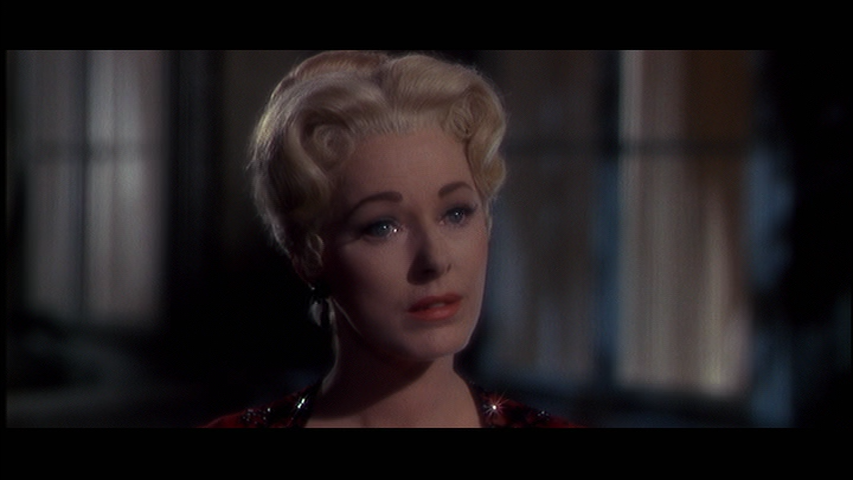
I’ll admit I find it somewhat difficult to assess the critical merits of TSOM, which was — along with The Wizard of Oz (1939) — one of two “must-see” movies I happily rewatched on television each year when it aired. Viewing it again recently as an adult, I noticed myself instantly humming “the familiar Rodgers and Hammerstein songs”, which are indeed “cheery and childish and catchy”, and are for the most part, as Peary points out, “skillfully blended into the plot”. I also paid much more attention to the nuanced performance given by Eleanor Parker as Andrews’ romantic rival: younger viewers may tend to reduce her presence to simply that of a stuffy villainess who must be vanquished in order to allow Plummer’s love for Andrews to fully blossom, but in truth she injects her role with an impressive level of nuance and pathos. Parker’s Baroness is a woman who — though wealthy and used to a life of privilege — instantly recognizes that her social cache and glamour hold no weight in the face of a “greater”, truer love. Watch her expression in each and every scene she’s in, noting how seamlessly Parker conveys this character’s complex emotional arc. Meanwhile, it was fun as an adult FF to finally recognize fey character actor Richard Haydn as her (subtly-coded-as-gay) companion.

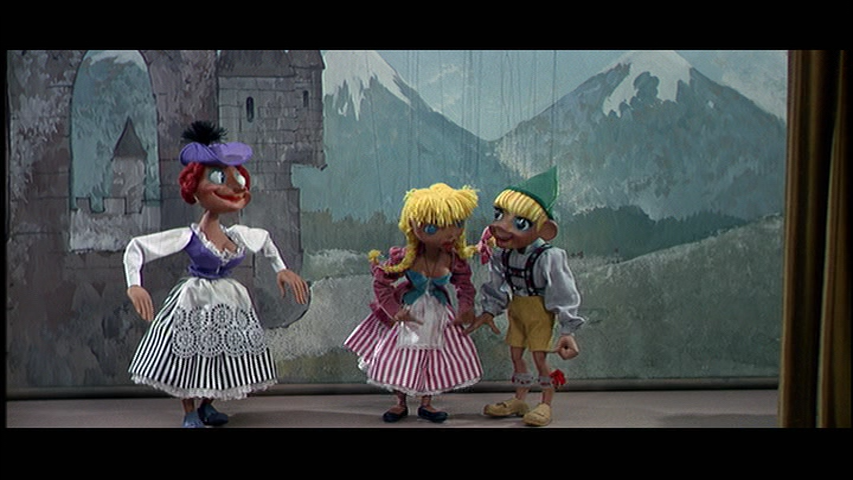
Of all the lead performances, Plummer’s remains least satisfying, though he’s certainly adequate in his portrayal of a once-stiff man who melts in the presence of Maria’s irresistible charms. I think Plummer’s notorious reluctance to take on the role — and his infamous disregard for the film years after its release — continues to sully my overall impression of his Captain von Trapp. However, Charmian Carr as his eldest daughter Liesl — who remains beloved worldwide by fans of the film — does a convincing job portraying a conflicted teen-in-love, and the rest of the child cast is fine as well. Meanwhile, the use of authentic Austrian/German locales — including the iconic opening shots on verdant hillsides — helps to open up the play enormously; aided by cinematographer Ted McCord, director Robert Wise turns the entire affair into a wonderfully picturesque adventure.

Redeeming Qualities and Moments:

  • Julie Andrews as Maria
  • Eleanor Parker as the Baroness
  • Richard Haydn as Max
  • Charmian Carr as Liesl
  • Excellent use of authentic Austrian/German settings

  • Ted McCord’s cinematography
  • Rodgers’ and Hammerstein’s immensely popular and hummable score


Must See?
Yes, of course. Haven’t you already, multiple times?

Categories

  • Genuine Classic
  • Good Show
  • Oscar Winner or Nominee

(Listed in 1001 Movies You Must See Before You Die)

Links:

Our Vines Have Tender Grapes (1945)

Our Vines Have Tender Grapes (1945)

“It’s better to never have a thing than to have it and be afraid.”

Synopsis:
A Norwegian-American farmer (Edward G. Robinson) and his wife (Agnes Moorehead) raise a curious and compassionate daughter (Margaret O’Brien) in rural Wisconsin; meanwhile, Robinson longs to follow in the footsteps of his neighbor (Morris Carnovsky) and build himself a fancy new barn, much to his wife’s consternation.

Genres, Themes, Actors, and Directors:

  • Agnes Moorehead Films
  • Edward G. Robinson Films
  • Farming
  • Father and Child
  • Frank Morgan Films
  • Margaret O’Brien Films
  • Small Town America

Review:
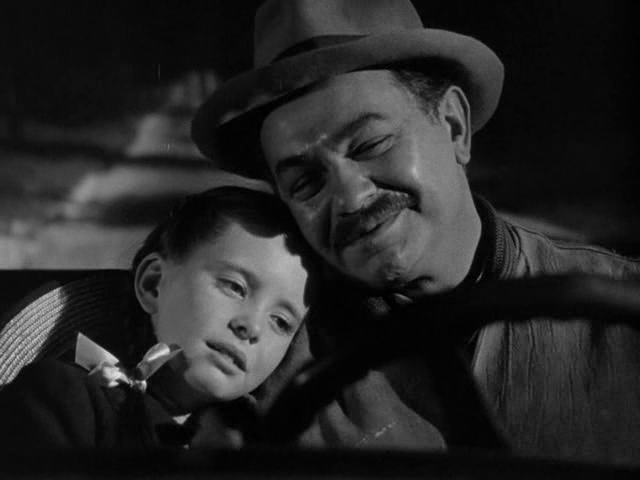
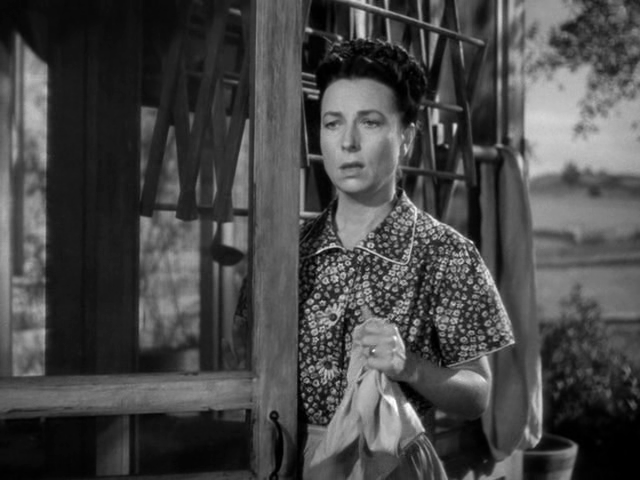
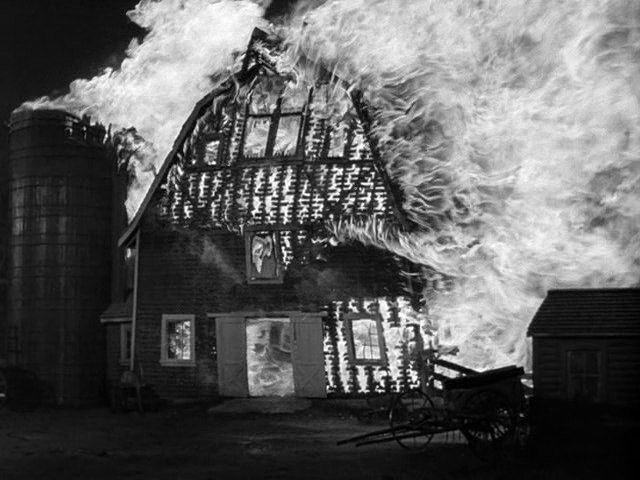
Just before being blacklisted by HUAC, Dalton Trumbo scripted this lyrical, often hard-hitting look at life for a Norwegian-American farming family in Wisconsin (based on a novel by George Victor Martin). Its most striking characteristic may be the casting of Robinson in the lead role as a gentle Scandinavian (!) father, rather than the “tough-guy” roles he was usually offered; by his side is Agnes Moorehead, who comes across as much less shrewish than usual in an equally atypical role as his supportive yet concerned wife. The episodic storyline attempts to show both the joys and the more challenging aspects of rural life in a small American town — the latter most clearly epitomized by the collective judgment towards a mentally challenged young woman (Dorothy Morris) whose tyrannical father (Charles Middleton) refuses to allow her to go to school. Meanwhile, the cruelly fickle hardships of a farming existence are highlighted in a devastating scene involving a burning barn — a sequence cited by many as simultaneously too difficult to (re)watch and instantly unforgettable.

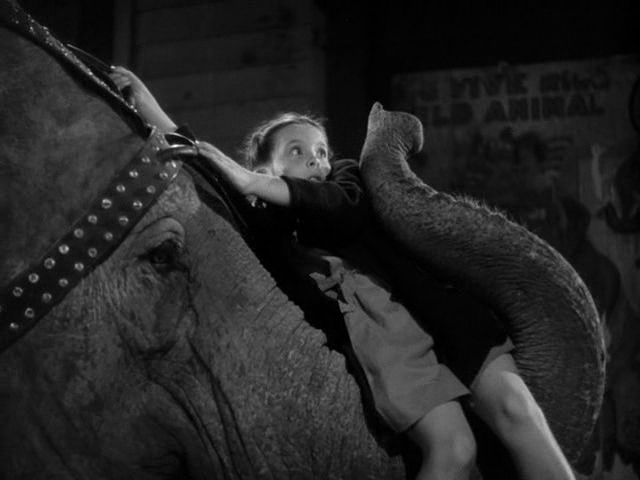
Robinson’s loving relationship with O’Brien — and O’Brien’s tenuous friendship with a neighbor boy (Jackie ‘Butch’ Jenkins) — provide a pleasant counterpart to the film’s more challenging elements, with one of the most joyous vignettes occurring when Moorehead informs Robinson that a circus is stopping by overnight, and convinces him to take O’Brien for a behind-the-scenes late-night visit. Unfortunately, the entire narrative is framed by a yawn-worthy subplot involving a reporter (James Craig) who falls for the town’s new schoolteacher (Frances Gifford), and tries to convince her to forsake city living for a small-town existence; their Hollywood-ized relationship is eerily reminiscent of that between Craig and Marsha Hunt in Clarence Brown’s The Human Comedy (1943) — and equally unsatisfying. Nonetheless, I’m recommending Our Vines… to FFs for one-time viewing, simply for its fine lead performances and for several unforgettably powerful moments.

Redeeming Qualities and Moments:

  • Edward G. Robinson as Martinius
  • Agnes Moorehead as Bruna
  • Many heartwarming — and heartbreaking — scenes

Must See?
Yes, simply for Robinson and Moorehead’s fine performances. Listed as a Personal Recommendation in the back of Peary’s book.

Categories

  • Noteworthy Performance(s)

Links:

Waxworks (1924)

Waxworks (1924)

“Your lack of clothes does not disturb me in the least!”

Synopsis:
The owner of a waxworks show (John Gottowt) commissions a poet (William Dieterle) to write stories about three historical wax figures: Haroun the Caliph (Emil Jannings), Ivan the Terrible (Conrad Veidt), and Jack the Ripper (Werner Krauss).

Genres, Themes, Actors, and Directors:

  • Conrad Veidt Films
  • Episodic Films
  • Fantasy
  • German Films
  • Silent Films

Review:
The career of German-born set designer and director Paul Leni was cut tragically short when he died of blood poisoning in 1929 at the age of 44, shortly after arriving in Hollywood and directing a highly regarded silent adaptation of The Cat and the Canary (1927). He’s perhaps best known for designing and directing this early Expressionist film, which unfortunately hasn’t held up nearly as well as the film upon which it was thematically and stylistically patterned (Robert Wiene’s cult favorite The Cabinet of Dr. Caligari). While Leni’s art direction is consistently innovative, the script leaves much to be desired, shifting unevenly between three different storylines and never fully engaging us. The first episode — a semi-comedic fantasy tale set in Arabia, in which Dieterle plays a baker whose wife (Olga Belajeff) is seduced by a portly caliph (Emil Jannings) — is marginally involving, but one assumes even more will be forthcoming in future episodes.

However, the second vignette — starring Conrad Veidt in a solid performance as a sadistic Ivan the Terrible — offers even less satisfaction:

and the third story (presumably about Jack the Ripper, though his character is incongruously referred to via intertitles as “Spring-Heeled Jack”) is little more than a dream sequence lasting just a few minutes long.

Waxworks remains worth a look for Leni’s creative vision, but is otherwise only must-see for silent film completists.

Redeeming Qualities and Moments:

  • Fantastical Expressionist sets

Must See?
No; this one is only must-see for silent film enthusiasts. Listed as a film with Historical Importance and a Personal Recommendation in the back of Peary’s book.

Links:

Farmer’s Daughter, The (1947)

Farmer’s Daughter, The (1947)

“When someone asks you for your vote, you must be jealous of that vote. You must ask yourself, who is it I am voting for?”

Synopsis:
The Swedish-American daughter (Loretta Young) of a stalwart farmer (Harry Shannon) heads to the city to attend nursing school, but is swindled out of her savings by a lecherous acquaintance (Rhys Williams), and finds temporary work instead as a maid in the house of a congressman (Joseph Cotten) and his mother (Ethel Barrymore). Soon she becomes unexpectedly caught up in a world of politics, while falling in love with Cotten.

Genres, Themes, Actors, and Directors:

  • Charles Bickford Films
  • Cross-Class Romance
  • Ethel Barrymore Films
  • Joseph Cotten Films
  • Loretta Young Films
  • Political Corruption
  • Servants, Maids, and Housekeepers

Review:
In his Alternate Oscars, Peary lambastes the Academy for providing Loretta Young with an award for her title role performance in this H.C. Potter-directed film, calling her “upset victory” the “most boring choice ever made in the Best Actress category”. He argues that “despite being a lovely and warm presence in the cinema for twenty-six years (1927-53), she made only a half-dozen noteworthy movies, and wasn’t all that impressive in any of them.” Personally, I can understand why the Academy was entranced by Young’s performance here: her character is refreshingly feisty and independent, and — speaking as a Scandinavian-American myself — I believe she manages her Swedish accent quite admirably.

With that said, the film itself leaves quite a bit to be desired. The first half is reasonably engaging, as we get to know Young’s Katrin Holmstrom and see how remarkably capable she is in just about every way; it’s easy to see why Cotten falls for her.

However, once the film’s corny political elements come into full force, the screenplay becomes an unwelcome variation on Frank Capra’s overly simplistic portrayal of the corrupt Political Machine; I was immediately bored, and lost all interest in Katie’s fate.

Another minor quibble: While Young’s accent is just fine, why in the world weren’t the actors playing her three strapping Swedish brothers (Lex Barker, Keith Andes, and James Arness) given better coaching for their mixed-bag accents?

Redeeming Qualities and Moments:

  • Loretta Young as Katrin Holstrom

Must See?
No, though most film fanatics will be curious to check it out simply to see Young’s award-winning performance.

Links:

Show Boat (1936)

Show Boat (1936)

“Love is such a funny thing; there’s no sense to it.”

Synopsis:
When the lead singer (Helen Morgan) on a show boat is discovered to be a half-black woman married to a white man (Donald Cook), she leaves and is replaced by the daughter (Irene Dunne) of the boat’s owner (Charles Winninger), despite the disapproval of Dunne’s shrewish mother (Helen Westley). Meanwhile, Dunne falls in love with her leading man (Allan Jones), a riverboat gambler, but their marriage remains a decidedly rocky affair.

Genres, Themes, Actors, and Directors:

  • Actors and Actresses
  • African-Americans
  • Irene Dunne Films
  • James Whale Films
  • Marital Problems
  • Musicals
  • Paul Robeson Films
  • Play Adaptation

Response to Peary’s Review:
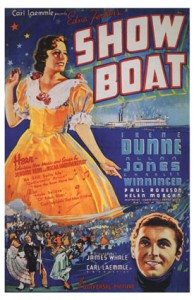
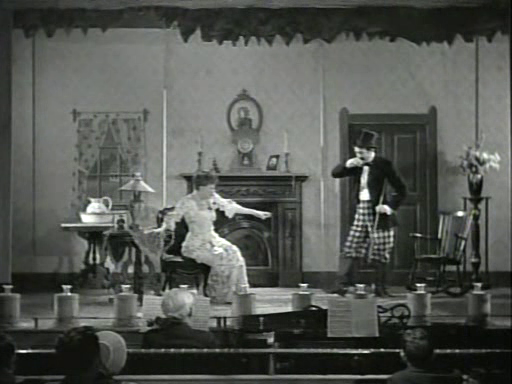
Peary notes that this James Whale-directed adaptation of the “Jerome Kern-Oscar Hammerstein musical” (which retains “soap-opera elements from Edna Ferber’s novel“) is “flavorful, schmaltzy, and rewarding”, with “lavish production, wonderful music, and a splendid cast”. He points out that “dramatic highlights include the scene in which the play is performed on the Show Boat, and conversations between Paul Robeson and Hattie McDaniel” (playing married servants on the boat); he also points out some of the film’s “musical highlights”, including “the McDaniel-Robeson duet, Helen Morgan giving a soulful rendition of ‘Bill’, some surprisingly effective singing by Dunne (in a role that would have been ideal for Jeanette MacDonald), and, of course, Robeson’s spellbinding ‘Ol’ Man River’.”

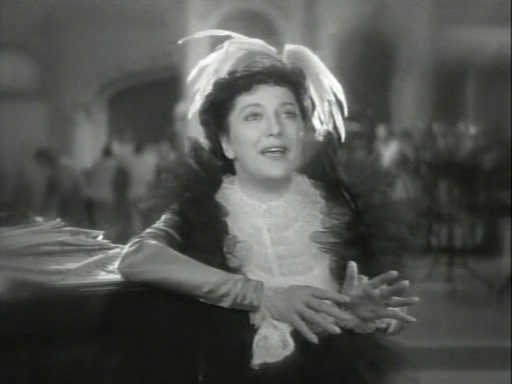
I’m in agreement with most of Peary’s assessment points: the production is indeed “lavish”, the cast is in fine form, and many of the songs are quite enjoyable. I also appreciated the opportunity to see Show Boat-theater so lovingly revived for modern audiences, who otherwise would have little understanding of this erstwhile form of traveling entertainment. However, I don’t find the film as a whole nearly as engaging as Peary seems to. The primary problem is that the central narrative — about Dunne’s rocky road to fame and troubled marriage with Jones — simply isn’t all that interesting, and the most compelling characters — Morgan, McDaniel, and Robeson — are relegated to supporting roles. The miscegenation subplot which propels the earliest portion of the screenplay is quite fascinating, and Whale deftly handles a pivotal scene in which Cook takes unusual measures to demonstrate his commitment to Morgan; but other than a critical appearance once more later in the story, Morgan’s tragic story is left sadly unexplored.

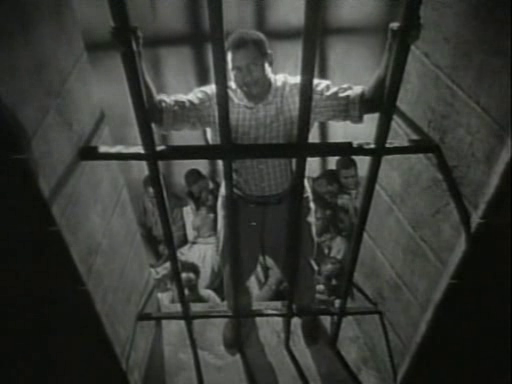
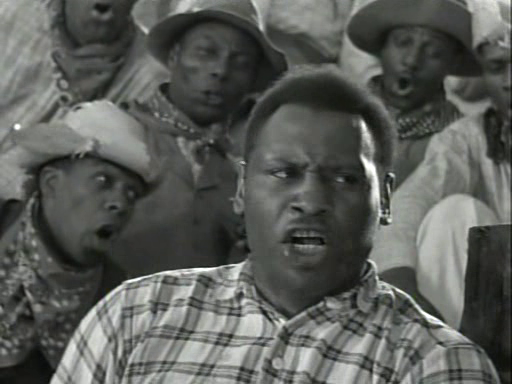
Meanwhile, Robeson’s performance of “Old Man River” does indeed remain (for me) the film’s indisputable highlight, leading me to wish we could learn more about his soulful character as well (the Expressionist montage flashing across the screen while Robeson sings could easily morph into a film of its own). To that end, as Peary notes, “the film’s portrayal of blacks is a sticky issue”, given that “on the one hand, they fit into stereotypes”, but “on the other, they display class, talent, [and] strength”, and are “given quality screen time”; overall, I think Whale does a respectful job handling the film’s thorny race issues, despite the unfortunate yet historically realistic appearance of Dunne in black-face at one point. Indeed, Whale’s direction is never at fault, and fans of his work will surely be interested to check out his foray into a genre completely different from the one he’s best known for (horror). But unfortunately, I can’t quite recommend this title as must-see viewing for all film fanatics.

Redeeming Qualities and Moments:

  • Paul Robeson’s incomparable rendition of “Ol’ Man River”
  • Irene Dunne as Magnolia
  • Helen Morgan as Julie
  • An amusing glimpse at 19th century small-town entertainment
  • John Mescall’s cinematography

Must See?
No, though it’s recommended.

Links:

Beat Generation, The (1959)

Beat Generation, The (1959)

“The world is full of moldy figs: they’re the squares who eat, sleep, go to work, vegetate, and while they vegetate — I swing.”

Synopsis:
A surly detective (Steve Cochran) and his partner (Jackie Coogan) search for a psychopathic rapist (Ray Danton) known as the “Aspirin Kid”, who finagles his way into Cochran’s house and rapes his wife (Fay Spain). When Spain discovers she’s pregnant, she and Cochran face the difficult decision of whether or not to abort; meanwhile, Danton blackmails his buddy (Jim Mitchum) into instigating a copycat rape against a woman (Mamie van Doren) in order to throw the police off his trail.

Genres, Themes, Actors, and Directors:

  • Detectives and Private Eyes
  • Mamie van Doren Films
  • Rape

Review:
It’s difficult to know where to begin in assessing this painfully insensitive detective flick, conveniently situated within a Beatnik milieu simply for its novelty and exploitation value. Danton and Cochran are posited as two sides of the same flawed coin — one a psychopathic killer, the other a determined cop, yet both with an inbred distrust of (and/or hatred for) women:


The intersection of their two characters seems designed to provide psychological complexity to the script, but instead just leaves us cringing. The rape scenes are disturbing, as expected — but what’s genuinely shocking is how Cochran treats the victims he interrogates, essentially accusing them of complicity in the crimes. (We’re reminded that his former wife was a tramp, which excuses his behavior, I guess.) Meanwhile, when Cochran’s current wife learns she’s pregnant but isn’t sure whether the father is Cochran or Danton, the storyline veers into a truly bizarre pro-Choice subplot that must be seen and heard to be believed. There’s some curiosity value to be had in the sight of a short-haired Vampira in Beatnik get-up, spouting a moronic poem about parenthood while stroking a white rat perched on her shoulder, but this ultimately just feels wildly incongruous to the plot. And while Mamie van Doren brings a bit of life to the second half of the film as a would-be victim, her presence once again feels superfluous, and is clearly designed simply to bring sexual star-power to the film.

What’s most astonishing is that the screenplay for this clunker was co-written by the estimable Richard Matheson (who clearly must not have had any final say in what appeared on screen).

Redeeming Qualities and Moments:

  • Good use of L.A. locales
  • An occasionally campy Beatnik sensibility: “There’s no tomorrow — not while the sky drools radiation gumdrops.”

Must See?
No; definitely feel free to skip this one.

Links: