Karate Kid (1984)

Karate Kid (1984)

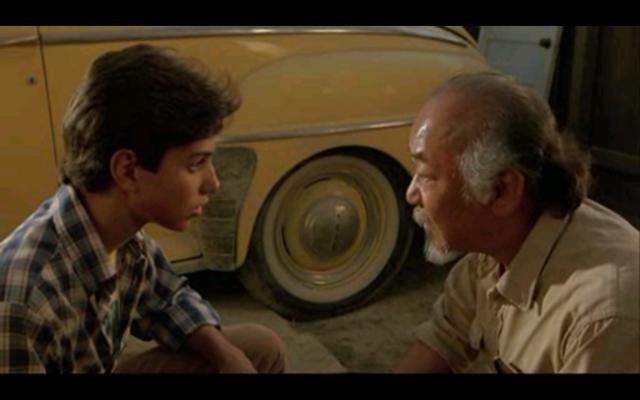
“We make sacred pact. I promise teach karate to you, you promise learn. I say, you do, no questions.”

Synopsis:
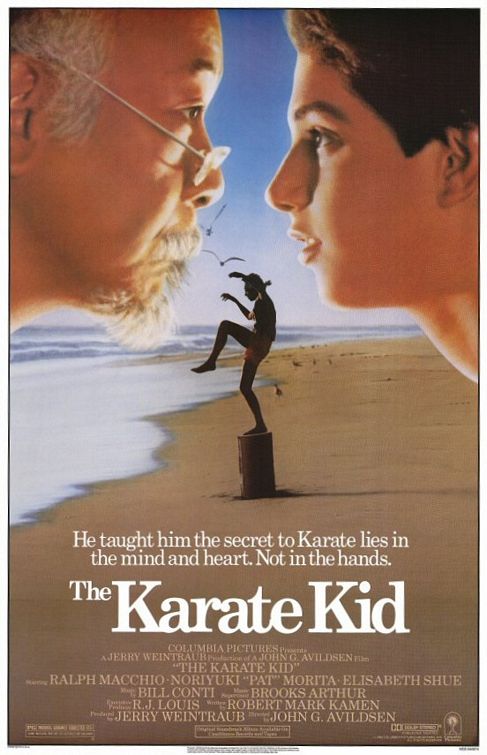
A New Jersey teenager (Ralph Maccio) moves to California and falls in love with a beautiful blonde (Elizabeth Shue) whose thuggish ex-boyfriend (William Zabka) bullies him mercilessly. To prepare for fighting back, Danny (Macchio) is given karate lessons by an elderly handyman (Pat Morita) in his building, who teaches him that strength comes from within.

Genres, Themes, Actors, and Directors:

  • Bullies
  • Coming-of-Age
  • Cross-Class Romance
  • Martial Arts
  • Mentors
  • Underdogs

Response to Peary’s Review:
Peary accurately describes this popular cult film as a “likable fairytale” about a “very likable teenager” who encounters “a few obstacles along the way before [he and his girlfriend] can live happily ever after.” He notes that, like Rocky (also directed by John Avildsen), this “extremely pleasing” film “has wit and sentimentality”, and makes you want to “cheer the underdog”, who will “do the impossible because he has a lot of heart and character”. The elements of the film that don’t work so well (i.e., Zabka’s one-dimensional “Aryan” baddie) are overshadowed by those that do — including fine central performances by Macchio and Morita (who was nominated for an Academy Award as best supporting actor), nice supporting work by Shue and Randee Heller (as Macchio’s mom, who Peary wishes “had a more significant part” — me, too), and countless memorable scenes (“Wax on… Wax off.”).

Note: Interestingly, Peary notes near the end of his review that he wishes “Morita would dump Zabka’s sadistic coach in the garbage” — which is exactly how The Karate Kid, Part II (1986) (not listed in Peary’s book) begins…

Redeeming Qualities and Moments:

  • Pat Morita as Mr. Miyagi
  • Ralph Maccio as Daniel
  • Elizabeth Shue as Ali
  • Randee Heller as Danny’s mom

Must See?
Yes, as a pleasing cult film.

Categories

  • Cult Movie

Links:

Supergirl (1984)

Supergirl (1984)

“Such a pretty world; I can’t wait until it’s all mine.”

Synopsis:
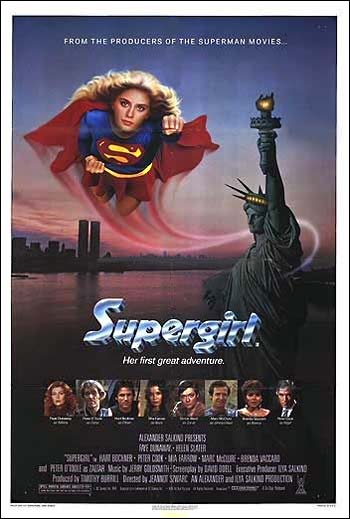
Superman’s cousin (Helen Slater) is sent to Earth to retrieve a missing talisman known as an Omegahedron, and finds herself confronting a power-hungry witch named Selena (Faye Dunaway).

Genres, Themes, Actors, and Directors:

  • Faye Dunaway Films
  • Mia Farrow Films
  • Peter O’Toole Films
  • Strong Females
  • Superheroes
  • Witches, Wizards, and Magicians
  • World Domination

Review:
This fourth installment in Ilya and Alexander Sarkind’s Superman franchise is a tedious disappointment. Beautiful, feisty Helen Slater is perfectly cast as Superman’s cousin (known as “Linda Lee” on Earth), but she’s saddled with such an inane, uninteresting storyline that she never really has a chance to shine. None of the plot developments in the movie make much sense or are even remotely plausible: for instance, while we somehow believe that Superman’s crash landing in Smallville and adoption by the kindly Kents was “meant to be” (and part of the scope of his larger legacy), Supergirl’s descent onto a girls’ boarding school (where Lois Lane’s younger sister happens to attend — how convenient) is simply sloppy screenwriting. Meanwhile, Dunaway’s obsession with getting a hunky gardener (Hart Bochner) to fall in love with her rather than Supergirl merely perpetuates the stereotype that what all women really want is a “good [sexy] man” (and Bochner himself is such an uninteresting clod that we never really think he’s good enough for Supergirl, anyway). Dunaway’s over-the-top performance is unintentionally campy, but there’s little humor to be had at her expense — and Brenda Vaccaro as her sidekick fares even worse. Unfortunately, Supergirl is a disappointment all the way around.

Redeeming Qualities and Moments:

  • Helen Slater as Supergirl
  • The impressive sets of Argo City (Supergirl’s home planet)

Must See?
No; this one is only must-see viewing for diehard Superman fans.

Links:

4D Man (1959)

4D Man (1959)

“Nothing can stop him… A man in the fourth dimension is indestructible!”

Synopsis:
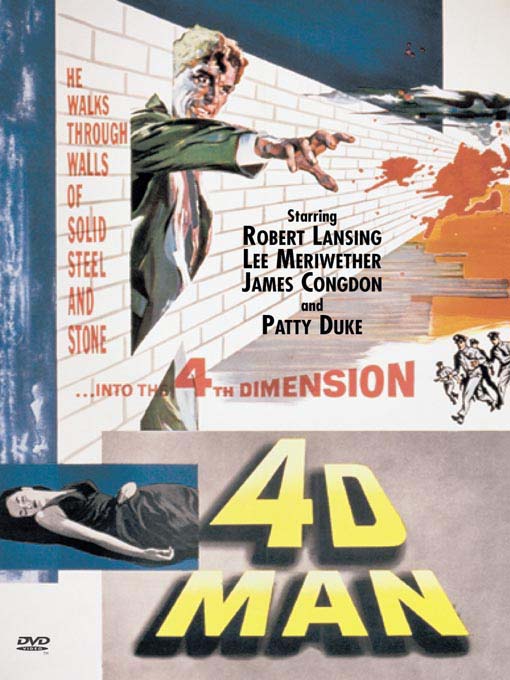
A scientist (James Congdon) experiments with an amplifier that would allow objects to pass through solid matter into the “fourth dimension”; but when his scientist brother (Robert Lansing) discovers that he possesses this “lifeforce” power himself, dire consequences ensue.

Genres, Themes, Actors, and Directors:

  • Horror
  • Science Fiction
  • Scientists
  • Siblings
  • Supernatural Powers

Review:
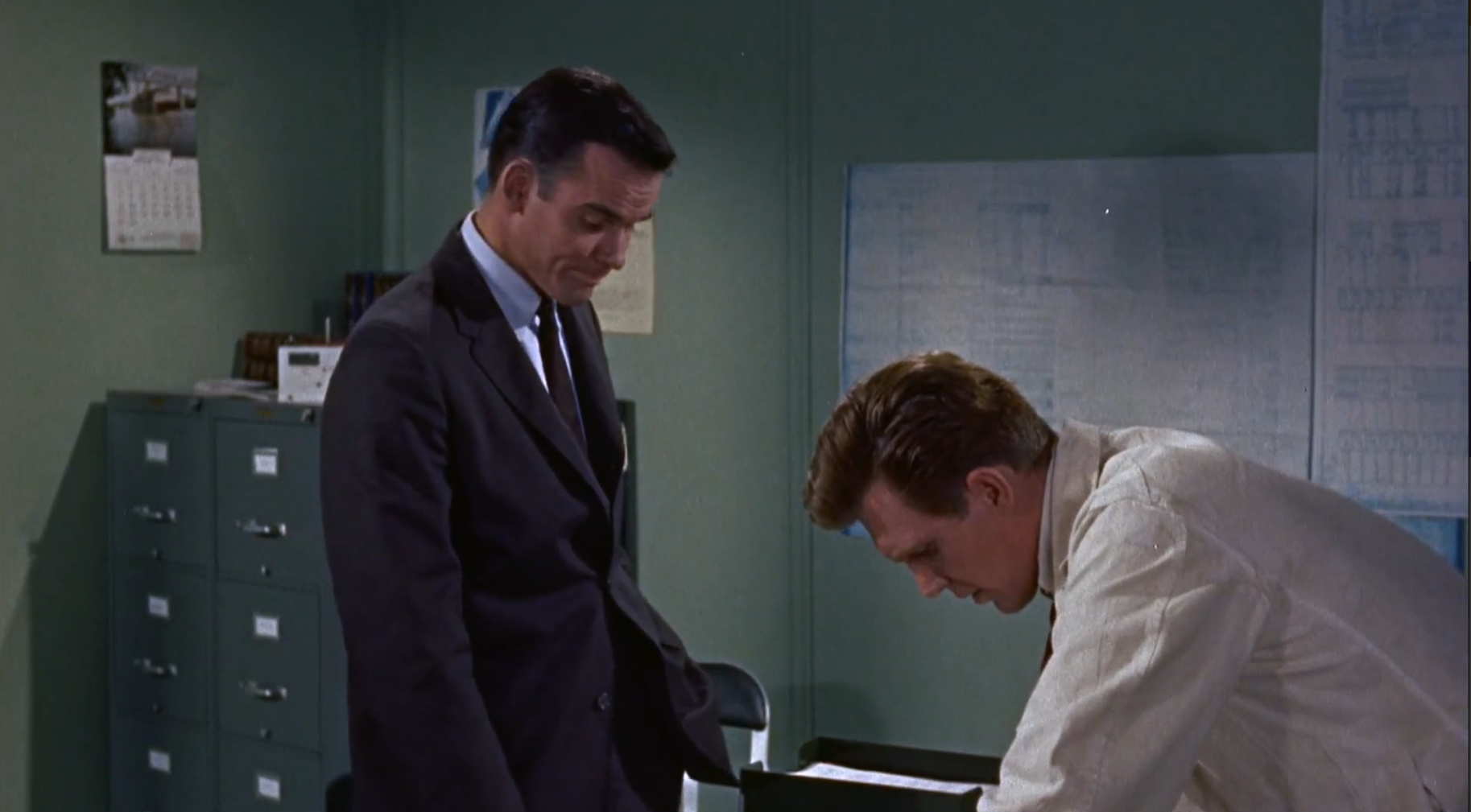
Irvin Yeaworth is best known for directing The Blob (1958), a low-budget surprise hit which gave Steve McQueen his first leading role. Yeaworth’s next film was this equally engaging sci-fi horror flick, which — in its treatment of mad scientists, megalomania, and dual personalities — evokes numerous other classic genre films, most notably The Invisible Man and Dr. Jekyll and Mr. Hyde. The storyline, while occasionally cliched and overwrought, is mostly compelling, primarily thanks to the fact that the screenwriters take their time establishing the film’s central characters: first we’re introduced to “wild child” James Congdon’s relentless pursuit of his scientific passion:

which brings him to his more “established” older brother’s laboratories.

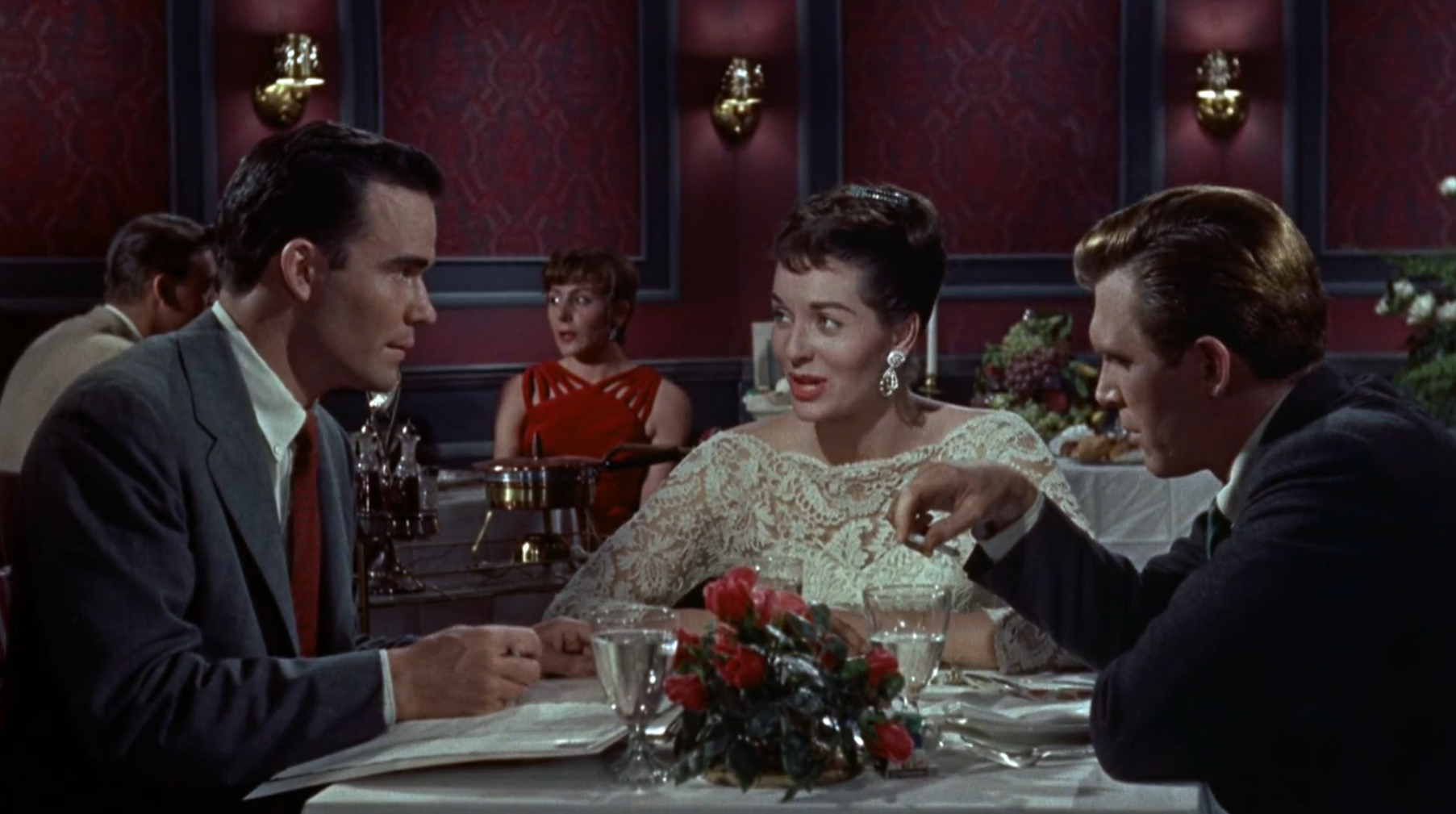
Next, a potentially rocky love triangle emerges between Congdon and feisty Lee Meriwether (Lansing’s assistant, who he’s about to propose to).

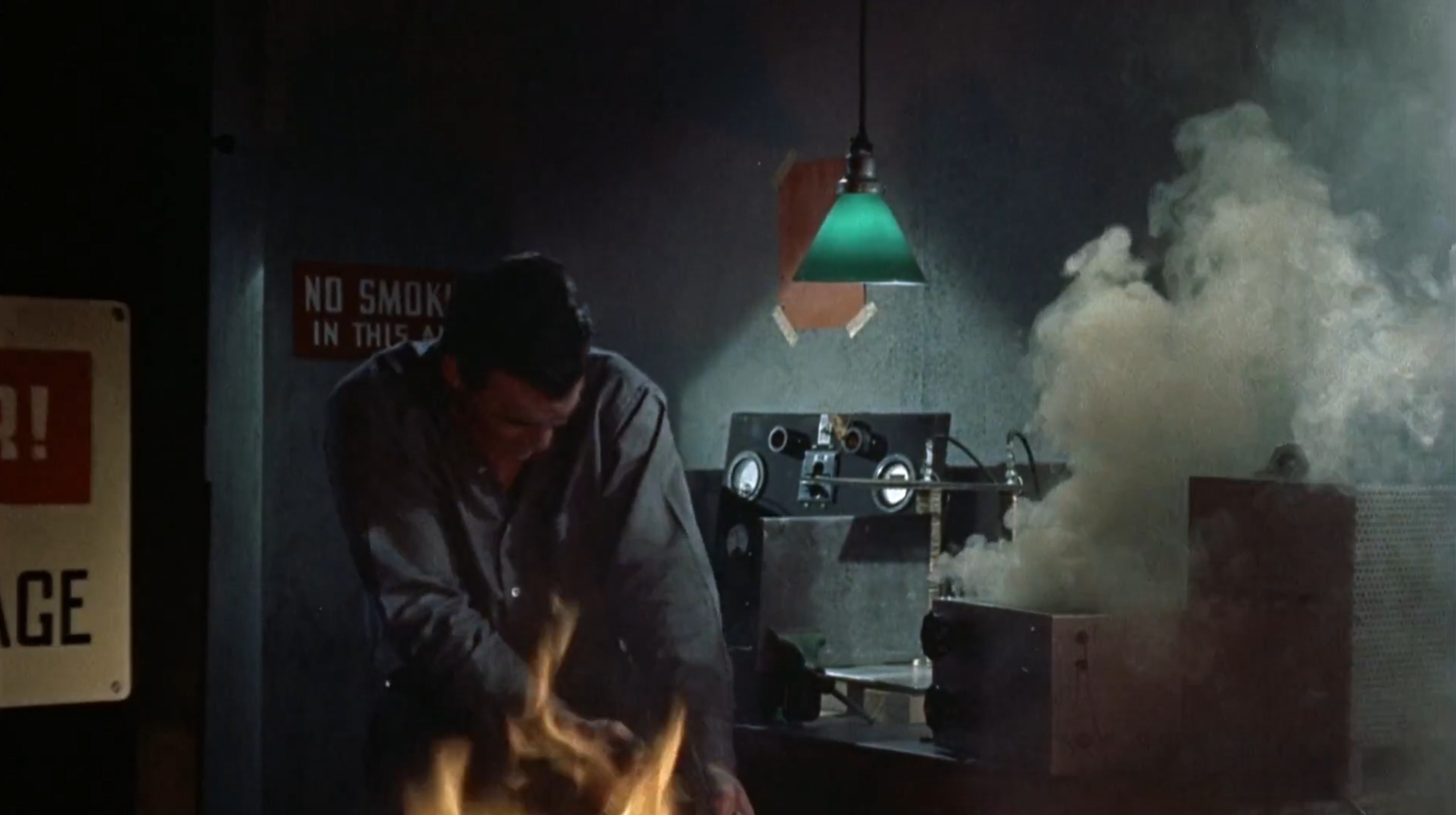
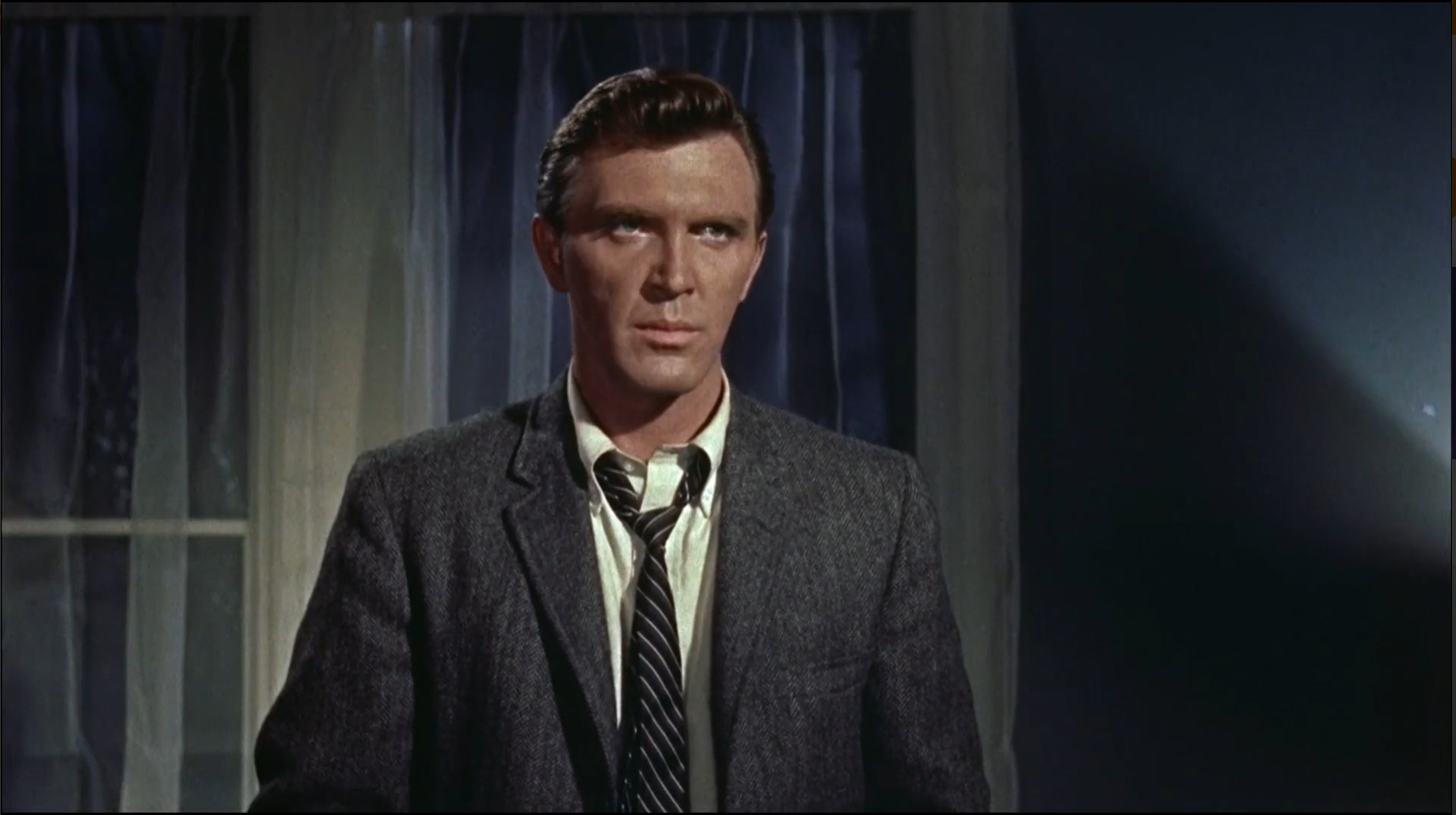
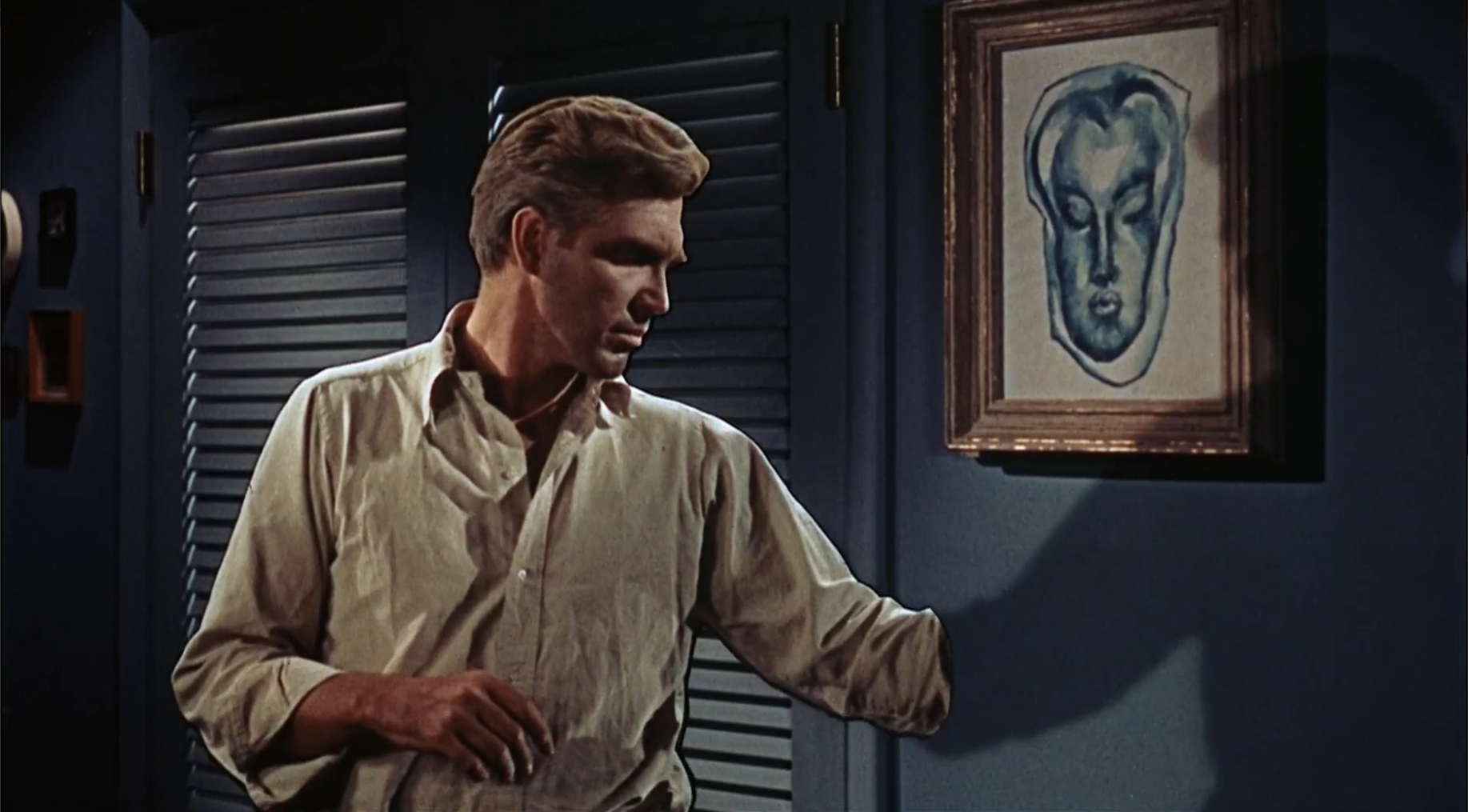
Finally, the story shifts to its central premise — the surprise powers possessed by Lansing, who becomes the film’s conflicted protagonist. By the time Lansing begins to experiment with his “4D” abilities (the film’s special effects are low-budget but effective):

and discovers the hideous truth that he is sapping his own “lifeforce” at an astonishing rate, we care about him as an individual, and feel sorry for the inevitable mess he’s gotten himself into.

For a much more detailed analysis of the film (giving away additional plot spoilers), see DVD Savant’s thorough review.

Redeeming Qualities and Moments:

  • Robert Lansing as Scott Nelson
  • Fun visual effects

Must See?
No, but it’s recommended, and definitely must-see for sci-fi fans.

Links:

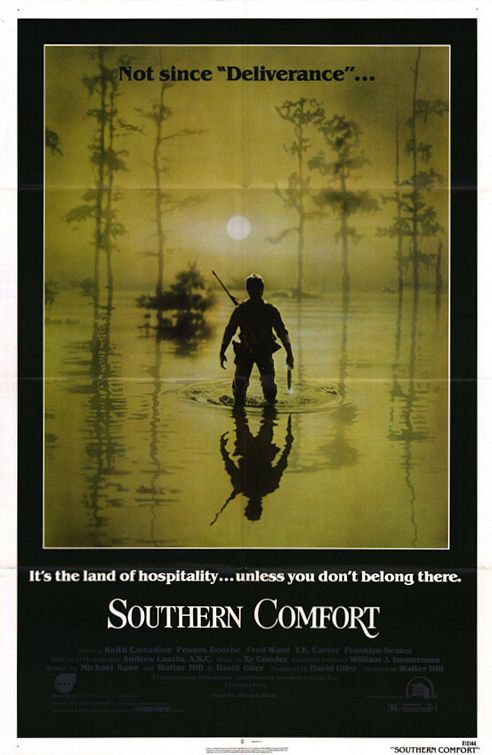
Southern Comfort (1981)

Southern Comfort (1981)

“We don’t know the enemy’s strength or his disposition — and while he may have the advantage of familiar terrain, we have the advantage of military training.”

Synopsis:
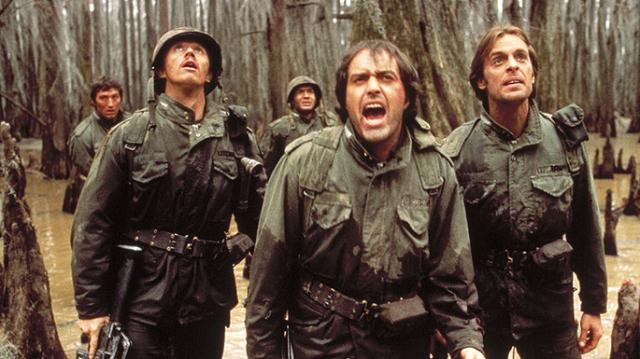
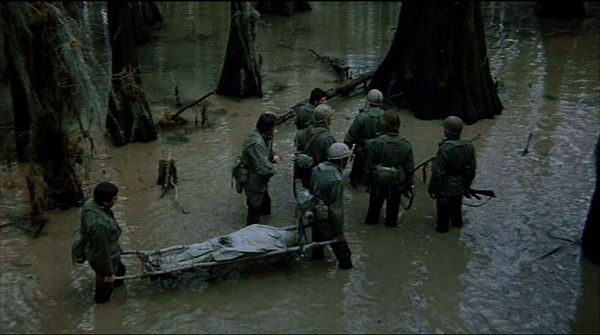
A group of Louisiana National Guardsmen (including Keith Carradine, Powers Boothe, Fred Ward, Franklyn Seales, and Peter Coyote) find themselves lost in the bayou, fighting for survival against militant local Cajuns.

Genres, Themes, Actors, and Directors:

  • Deep South
  • Keith Carradine Films
  • Military
  • Revenge
  • Survival
  • Walter Hill Films

Response to Peary’s Review:
Peary notes that this “extremely intense, violent” film by director Walter Hill “can be seen as a metaphor for American involvement in Vietnam”, given that “we see the parallels between these initially arrogant guardsmen and those American soldiers who trespassed through Vietnamese jungles and… acted with condescension toward the illiterate peasants”, often being “blown away” as a result. Indeed, the allegory is hard to miss, and occasionally comes across as heavy-handed; as Roger Ebert accurately points out, the characters in Southern Comfort never fully come alive — we only get to see one of the Cajun militants (an effective Brion James), and, in classic cinematic platoon fashion, the guardsmen are racially and socially diverse “types” (trigger-happy punk, loose cannon, fatherly leader, etc.) rather than individuals.

With that said, the film has much going for it: it’s beautifully shot (the seemingly endless bayou is all muted greens and grays and browns); Ry Cooder’s score is a “good” one; Powers Boothe gives a fine, enigmatic performance; and there are many genuinely tense sequences — particularly the “nerve-wracking” finale, “in which [Carradine and Boothe] nervously party with seemingly friendly Cajun villagers while looking over their shoulders for the vengeful backwoodsmen”. This extended sequence, shot with dozens of seemingly authentic locals, makes one intensely curious to learn more about this mysterious segment of American society.

Note: The film’s tone and subject immediately bring to mind Jon Boorman’s Deliverance (1972), but film fanatics may also be reminded of the little-seen Peary title Shoot (1976).

Redeeming Qualities and Moments:

  • Powers Boothe as Cpl. Hardin
  • Effective location shooting
  • Ry Cooder’s score

Must See?
No, but it’s definitely worth a look.

Links:

Dial M for Murder (1954)

Dial M for Murder (1954)

“People don’t commit murder on credit.”

Synopsis:
An ex-tennis pro (Ray Milland) carries out an elaborate plan to have his wealthy philandering wife (Grace Kelly) killed by a former classmate (Anthony Dawson); when Kelly manages to kill Dawson instead, Milland schemes to have Kelly indicted for murder — and it’s up to her American lover (Robert Cummings) to discover the truth in time to save her.

Genres, Themes, Actors, and Directors:

  • Blackmail
  • Grace Kelly Films
  • Hitchcock Films
  • Homicidal Spouses
  • Infidelity
  • Play Adaptations
  • Plot to Murder
  • Ray Milland Films
  • Robert Cummings Films

Response to Peary’s Review:
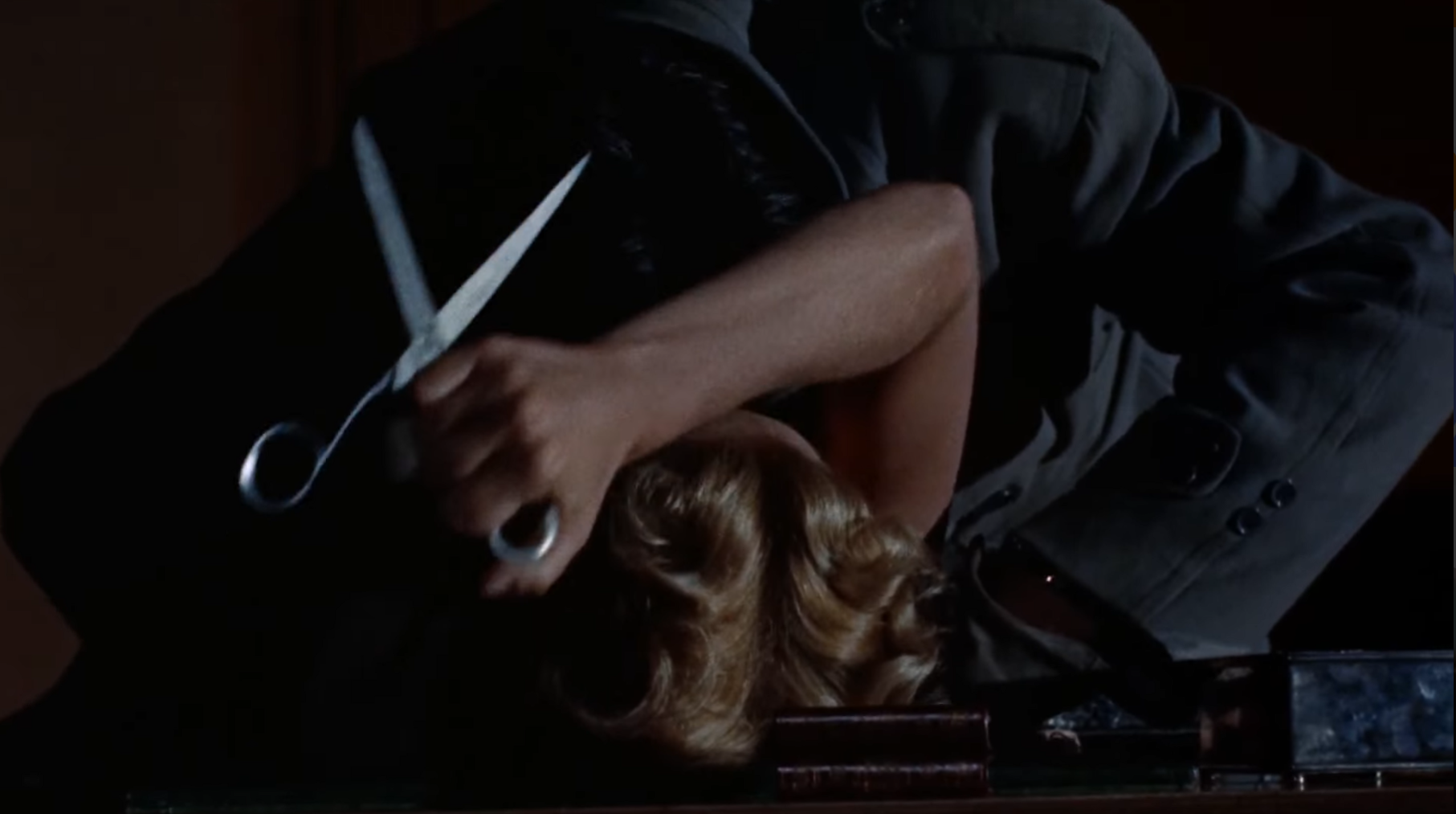
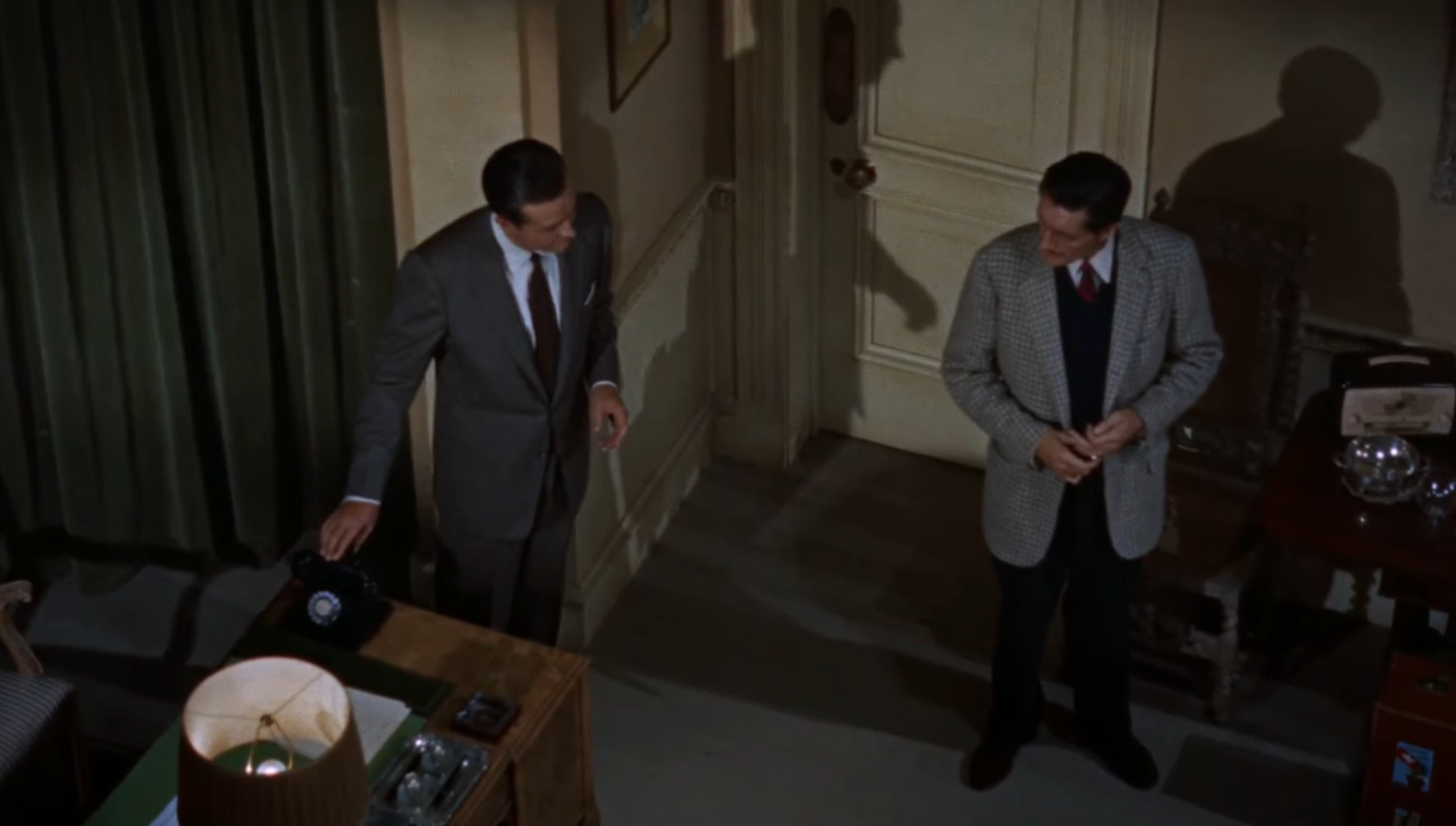
As Peary notes, Dial M for Murder — based on a stage play by Frederick Knott — is far from “prime Alfred Hitchcock”, but it’s nonetheless a “passable suspense film” with “intricate plot twists” and a “superbly directed” (if not entirely convincing) scissors-murder scene.

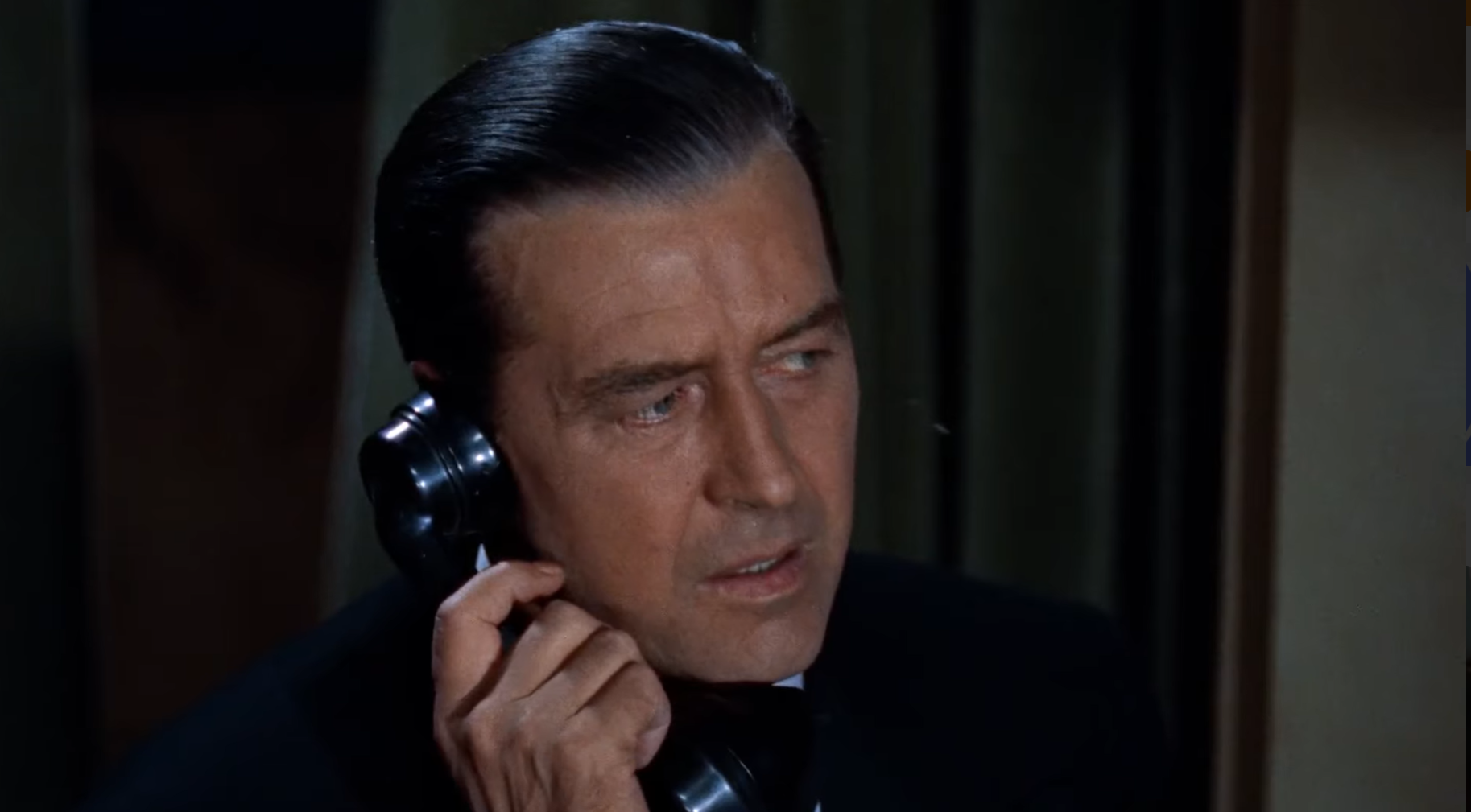
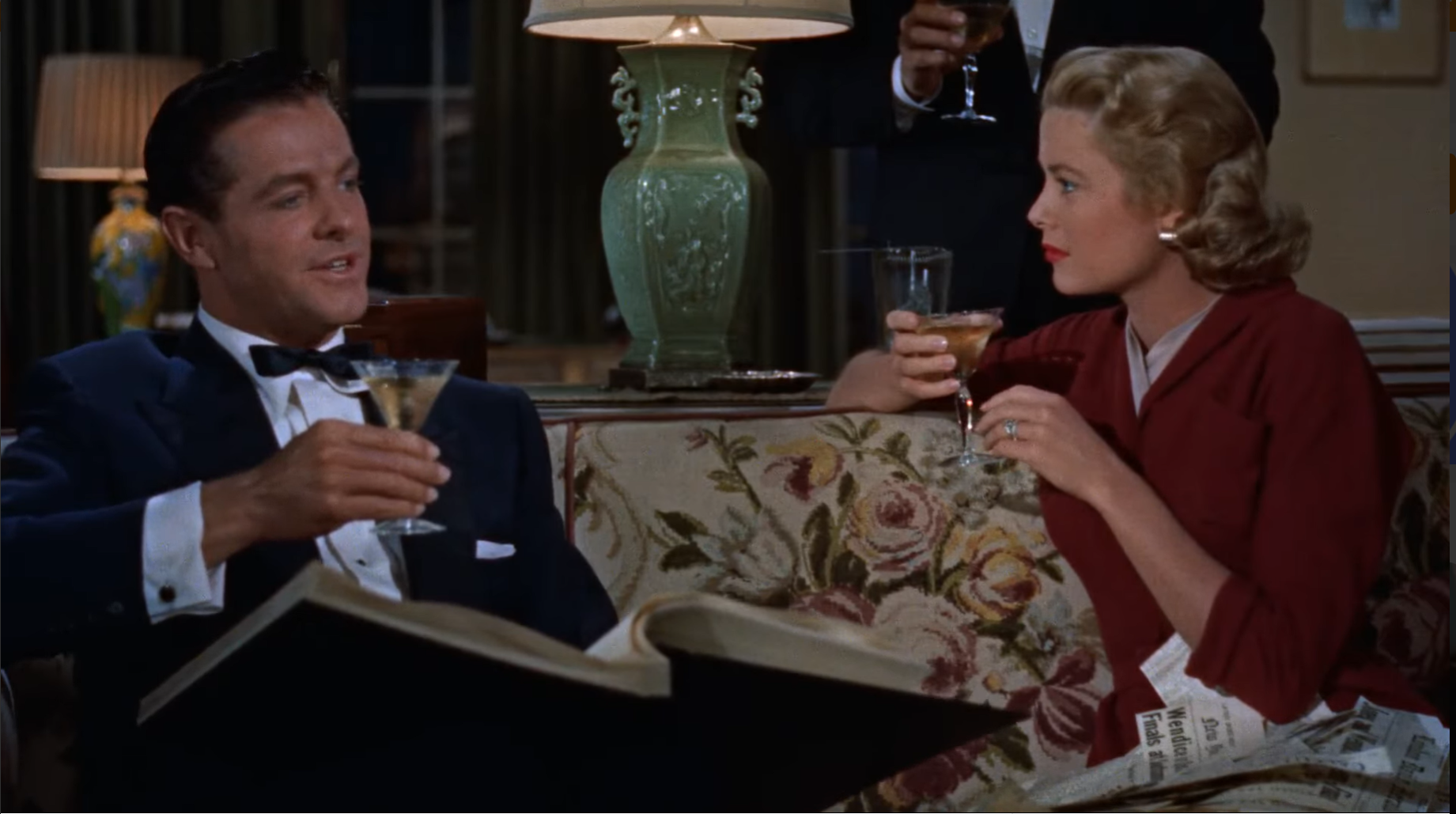
It’s much stagier than most of Hitchcock’s films, and relies an awful lot on dialogue to further the plot, but Knott’s story is so cleverly constructed that it’s easy to remain engaged till the end, despite the relatively static action. Milland, Kelly, and Cummings are fine in their respective leading roles:


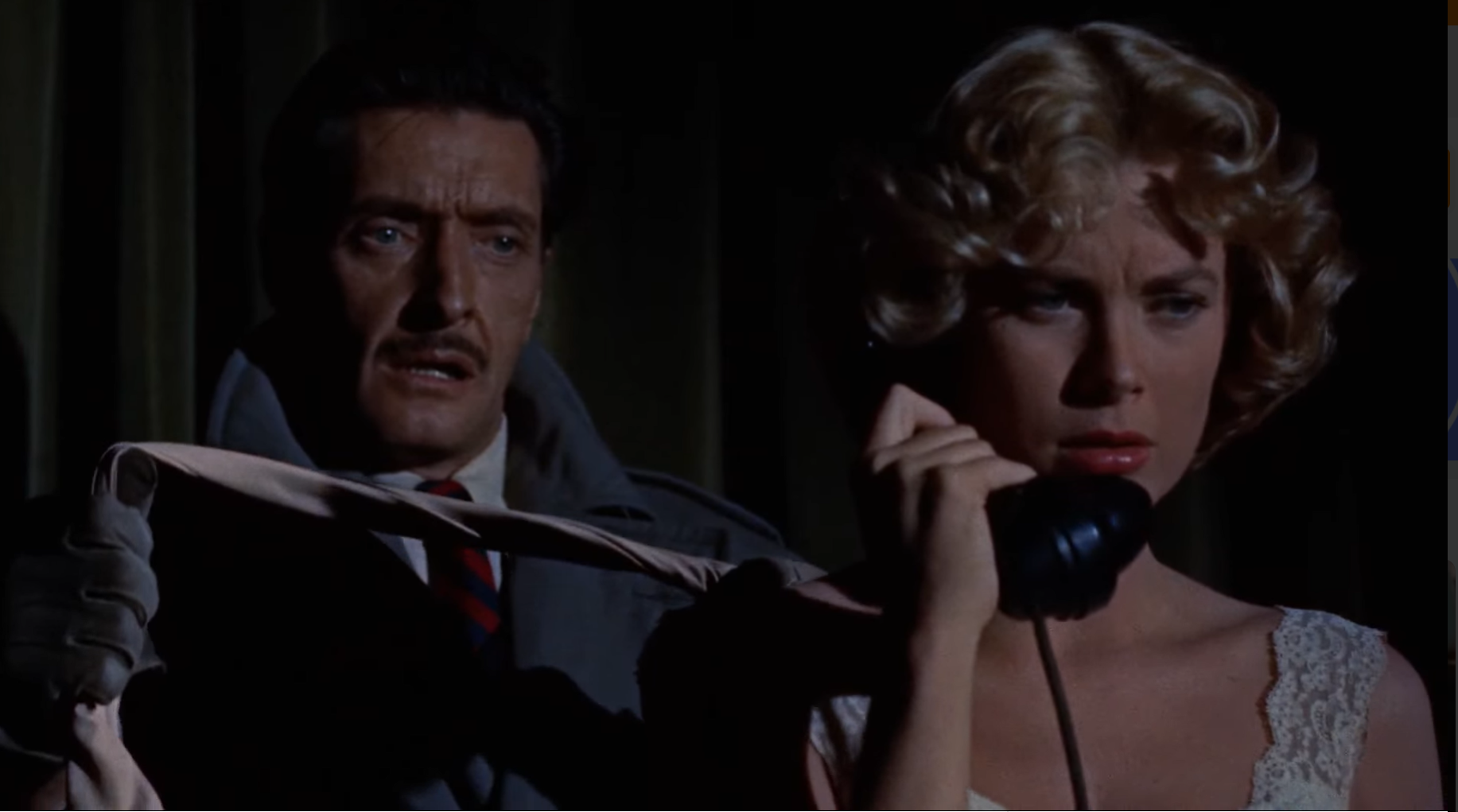
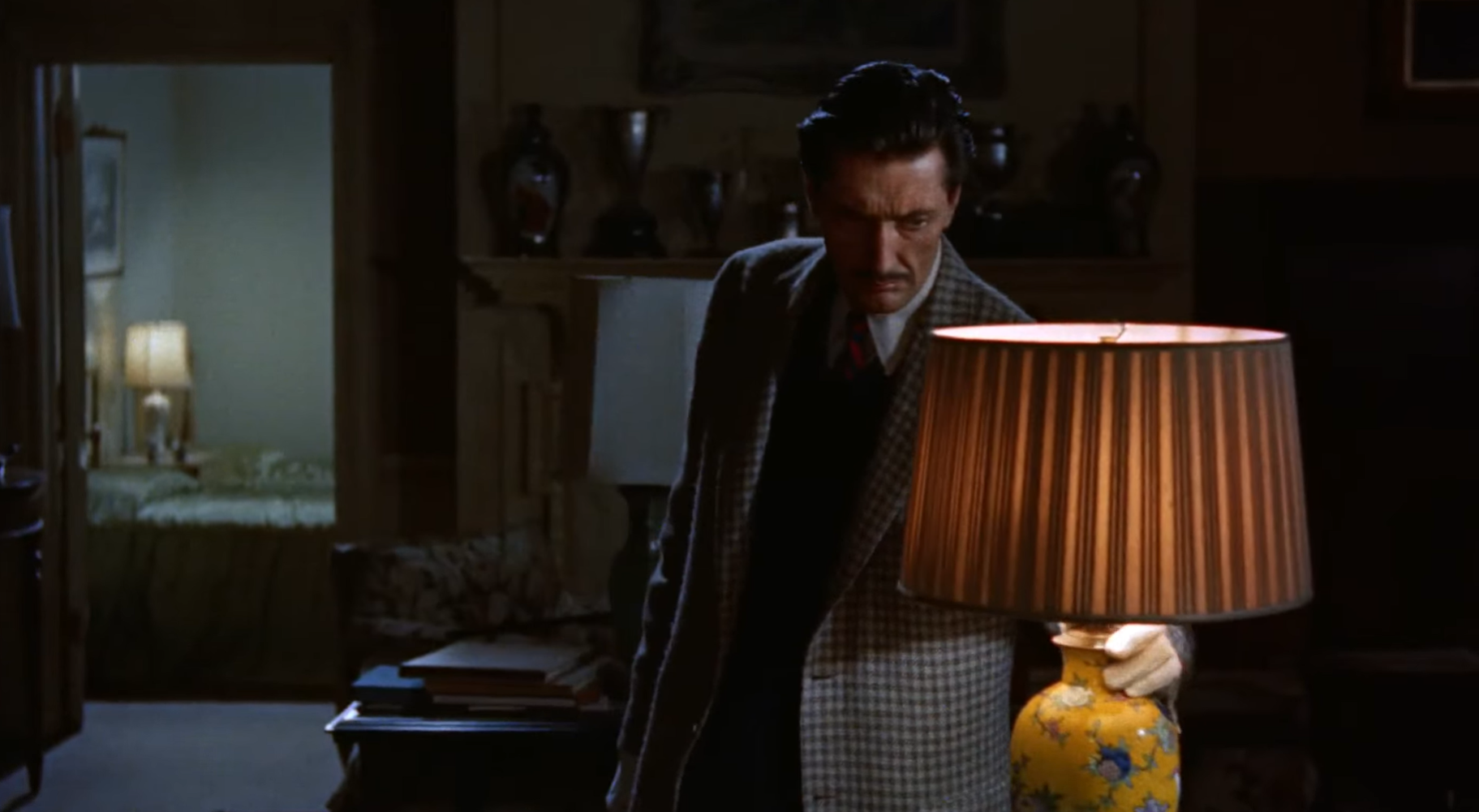
… however, the most enjoyable performances are given by Anthony Dawson as Milland’s unwitting “hired hand” (as DVD Savant notes, he’s “really the victim of the piece”):

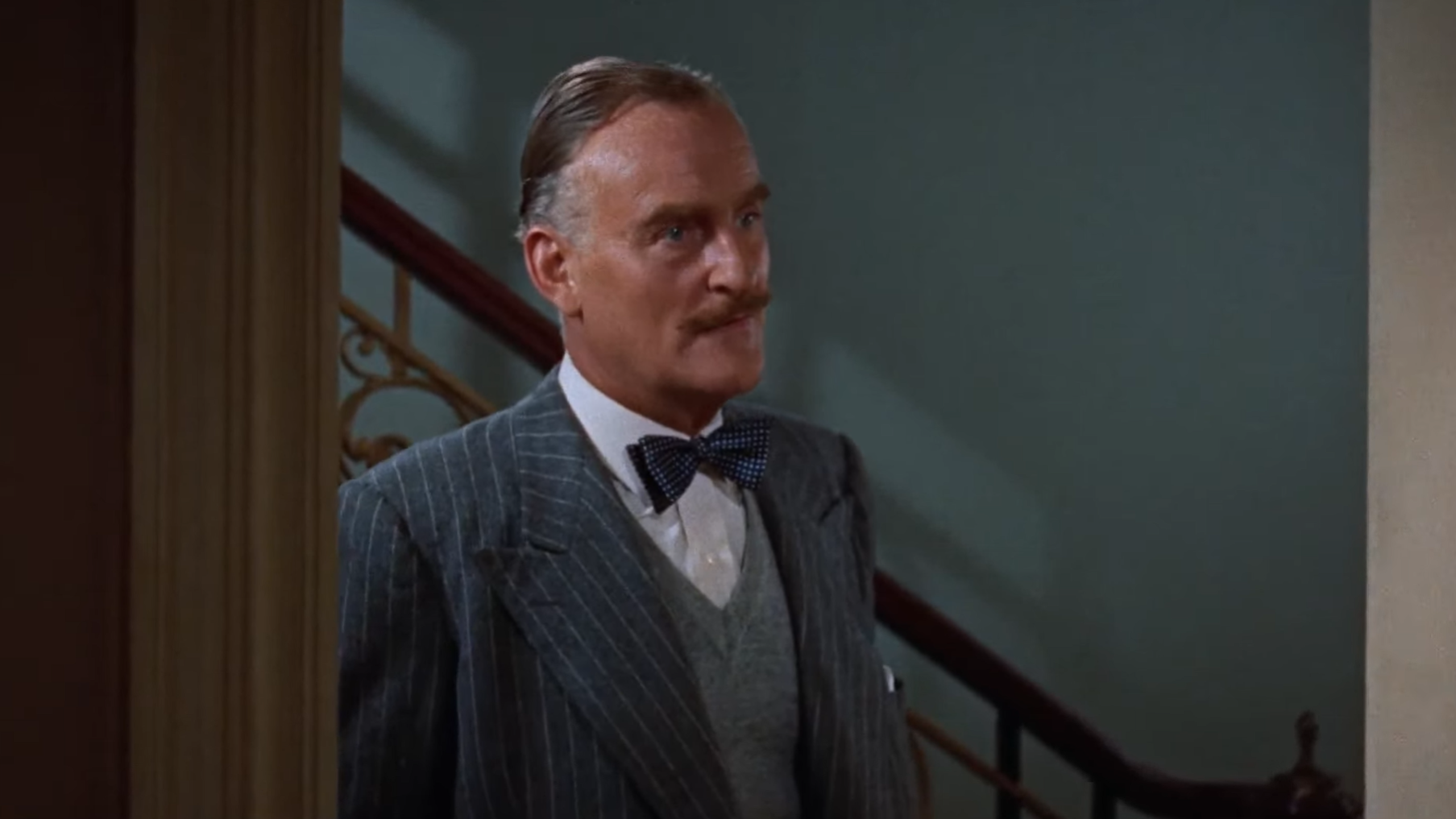
and John Williams as a mustache-twirling Inspector, who has more than one card up his sleeve.

Note: Dial M for Murder was shot in 3-D, but looks just fine in its “flat” version as well.

Redeeming Qualities and Moments:

  • A clever, suspenseful screenplay
  • Anthony Dawson as Charles Swann
  • John Williams as Inspector Hubbard

Must See?
No, though it’s recommended as an enjoyable flick by a master director.

Links:

Laura (1944)

Laura (1944)

“I must say: for a charming, intelligent girl, you certainly surrounded yourself with a remarkable collection of dopes.”

Synopsis:
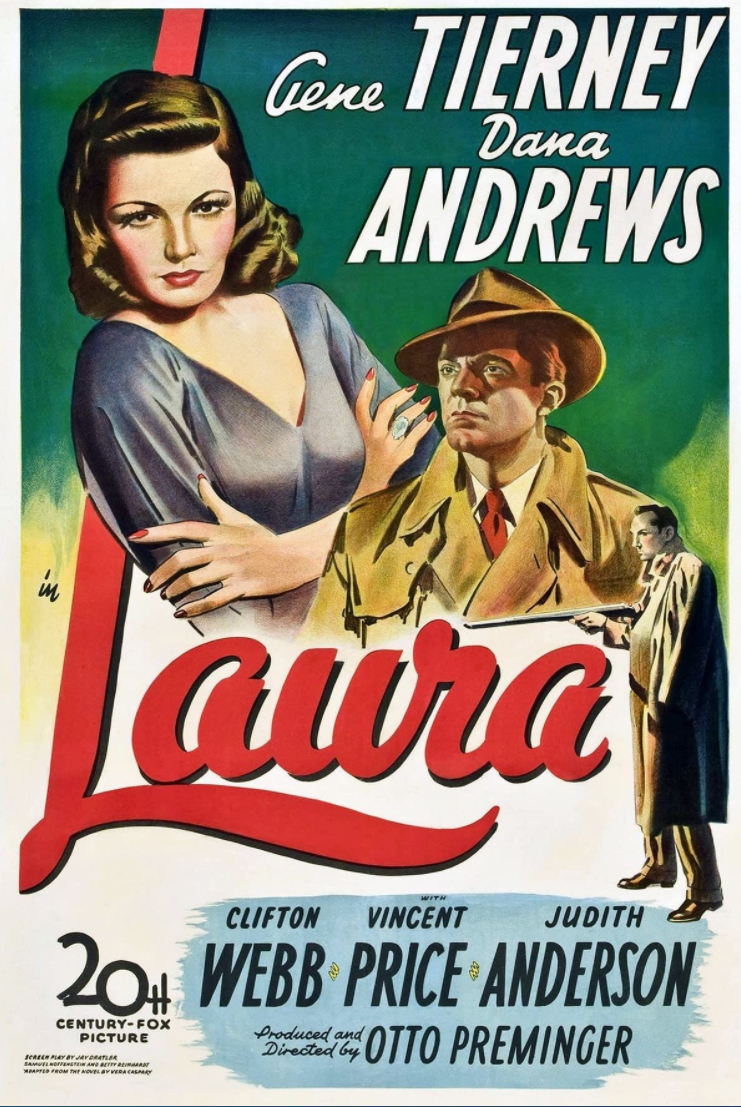
A hard-boiled detective (Dana Andrews) investigates the murder of a woman (Gene Tierney) loved by both an arrogant newspaper columnist (Clifton Webb) and a spoiled dilettante (Vincent Price).

Genres, Themes, Actors, and Directors:

  • Clifton Webb Films
  • Criminal Investigation
  • Dana Andrews Films
  • Detectives and Private Eyes
  • Gene Tierney Films
  • Judith Anderson Films
  • Love Triangle
  • Mistaken Identities
  • Murder Mystery
  • Obsessive Love
  • Otto Preminger Films
  • Vincent Price Films

Response to Peary’s Review:
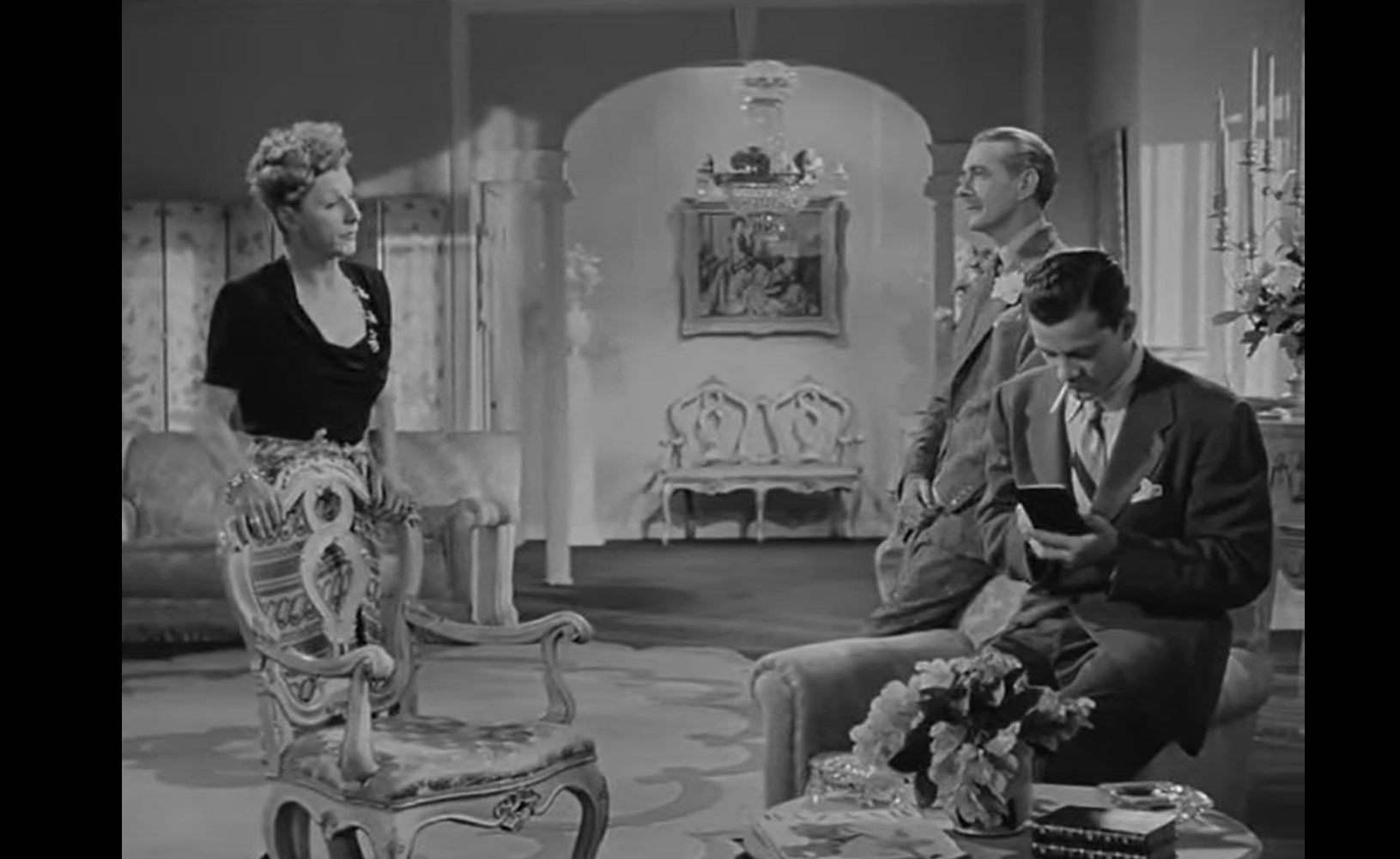
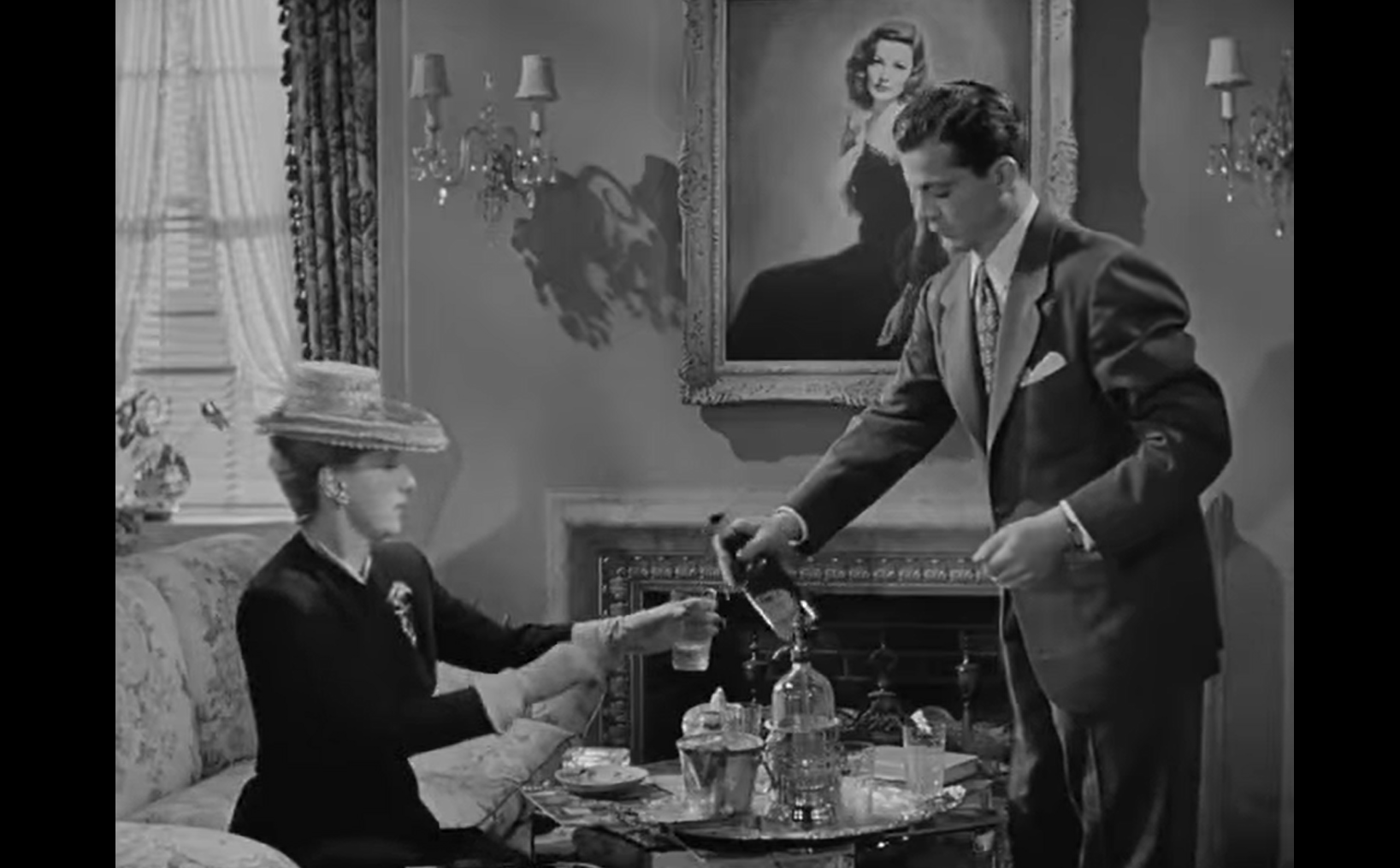
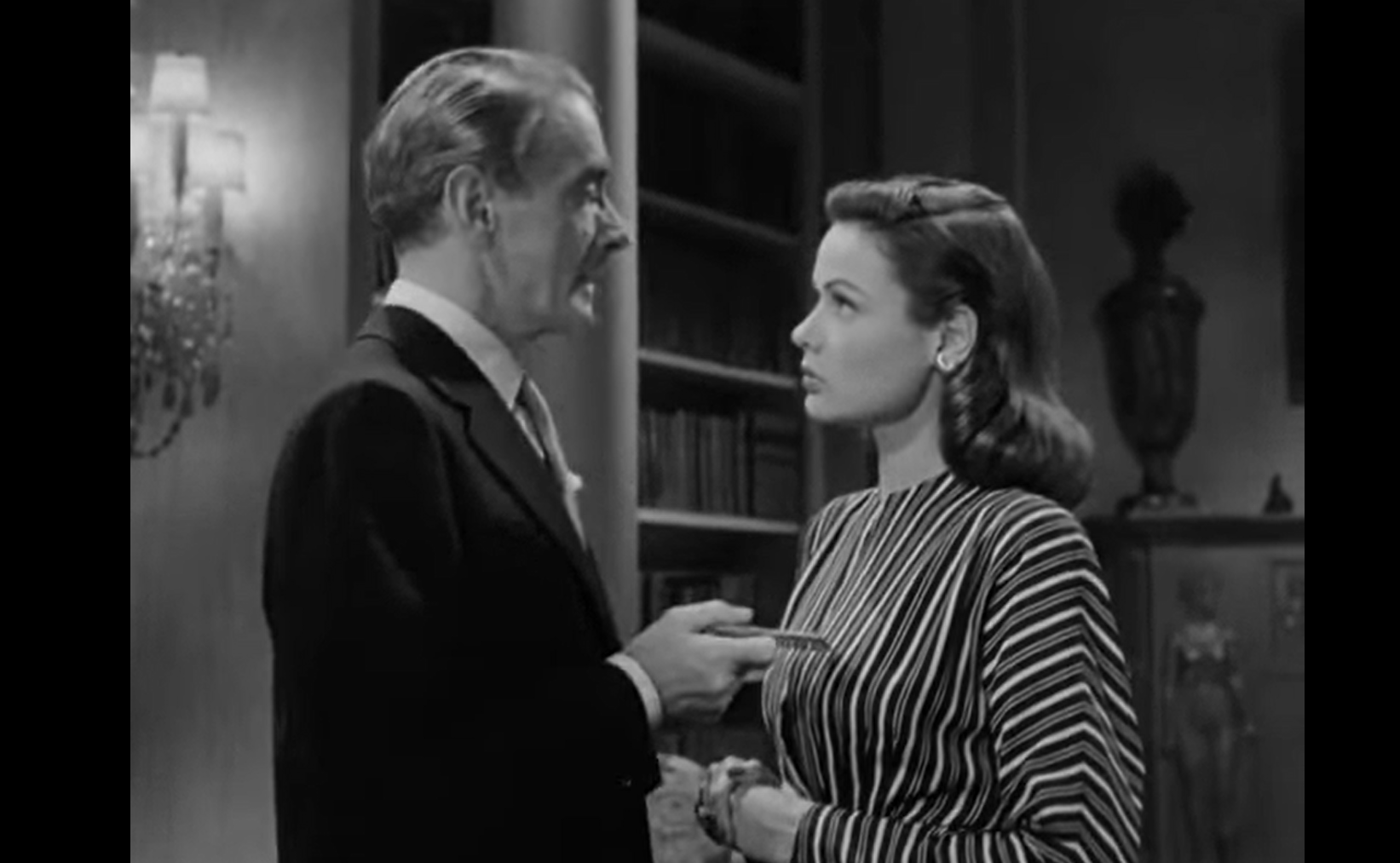
As Peary notes, this “cult classic” is among “the best of [director] Preminger’s somber excursions into psychological melodrama, stories with brutal intonations but dealing primarily with the perversity of the mind.” The fact that it presents “the screen’s first movie hero to fall for a dead woman” has won it a lasting spot in cinematic history; indeed, it remains the definitive film about “necrophilic” love. Details of the plot itself (essentially a flashback murder mystery) are oddly forgettable; what one remembers instead are both the film’s classic theme song (which wasn’t even nominated for an Oscar!) and the oh-so-odd love quadrangle at its core.

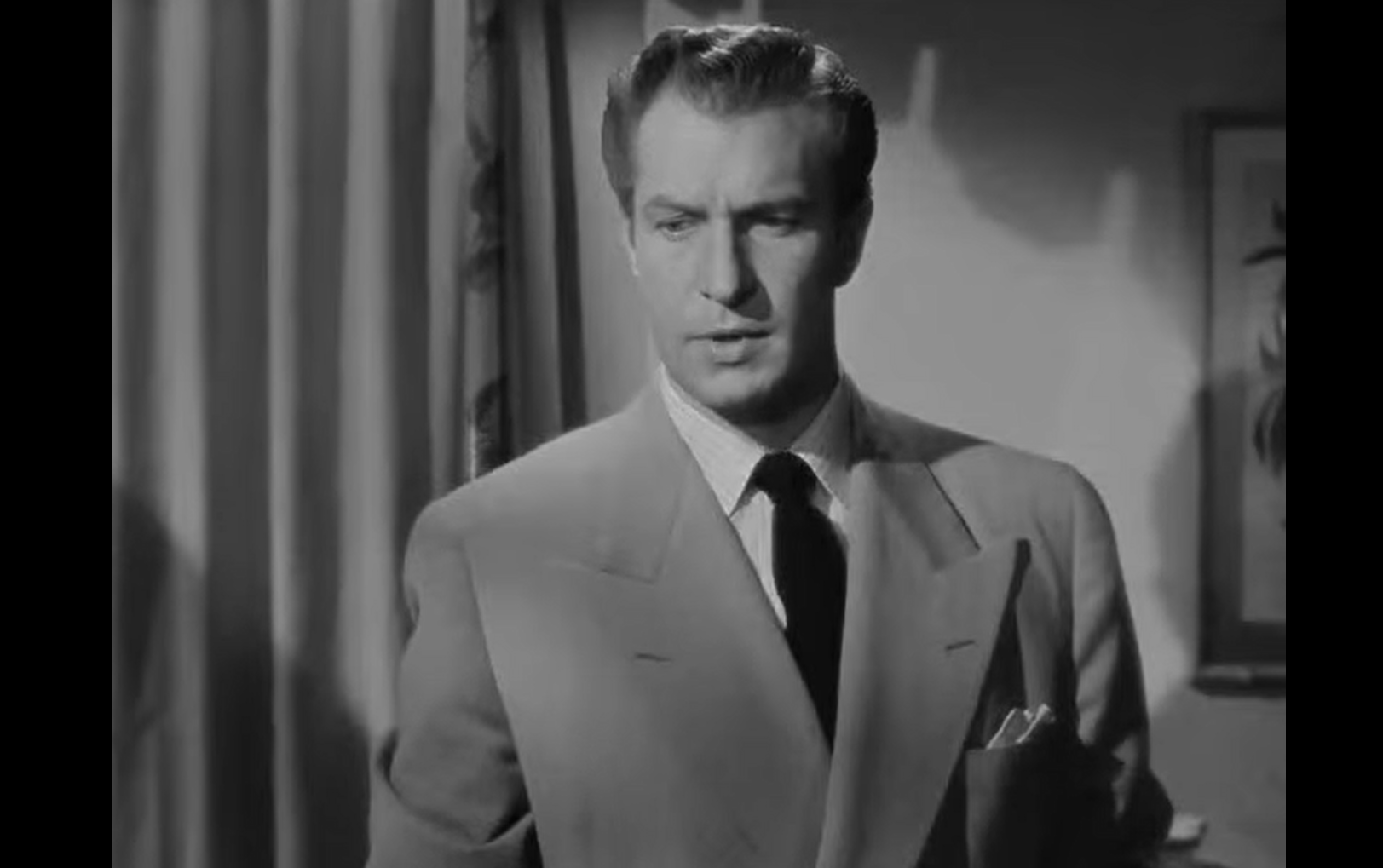
In his most iconic role, Dana Andrews plays a “tough, crude police detective who is… totally out of his element” in Laura’s upper-crust milieu; meanwhile, Gene Tierney will always be equated with her performance in the film’s title role as an ambitious woman who is ultimately “attracted to men because of brawn rather than brains”. But it’s Laura’s two primary rivals — Clifton Webb and Vincent Price — who easily steal the show. The much-older Webb (as Waldo Lydecker — what a name!) never emerges as a viable sexual partner for 20-something Laura (in the book, he’s impotent; here, he’s merely posited as a companion), but it’s clear she would be nothing without him: he is her Svengali, and he is literally obsessed with making her his personal “project”. Webb delivers many of the film’s most memorable lines with droll aplomb (“I don’t use a pen; I write with a goose quill dipped in venom.”), and never apologizes for his view of the world: “I should be sincerely sorry to see my neighbors’ children devoured by wolves.” Meanwhile, Price — looking “weak and hungry” — is hilariously snivelly and self-absorbed as Laura’s two-timing fiance (“I can afford a blemish on my character, but not on my clothes.”); fans of his later work in campy horror flicks will likely be surprised by his early turn here.

Redeeming Qualities and Moments:

  • Clifton Webb as Waldo Lydecker
  • Vincent Price as Shelby Carpenter
  • Dana Andrews as Detective McPherson
  • Gene Tierney as Laura
  • Judith Anderson as Ann Treadwell
  • Fine cinematography

  • Jay Dratler, Samuel Hoffenstein, and Elizabeth Reinhardt’s clever, immensely quotable screenplay
  • David Raksin’s classic title song

Must See?
Yes, as a classic noir murder mystery. Nominated by Peary for an Alternate Oscar as best film of the year, and discussed at length in his Cult Movies (1981).

Categories

  • Genuine Classic

(Listed in 1001 Movies You Must See Before You Die)

Links:

Strangers on a Train (1951)

Strangers on a Train (1951)

“Everyone has somebody that they want to put out of the way.”

Synopsis:
A disturbed sociopath (Robert Walker) confronts a politically-aspiring tennis star (Farley Granger) on a train and proposes a “criss-cross” murder swap, in which Walker will kill Granger’s duplicitous wife (Laura Elliott) and Granger will kill Walker’s controlling father (Jonathan Hale). Granger dismisses the plan as nonsense — but when his wife is murdered, Walker suddenly demands that Granger keep up his end of the bargain.

Genres:

  • Blackmail
  • Farley Granger Films
  • Hitchcock Films
  • Plot to Murder
  • Robert Walker Films
  • Ruth Roman Films

Response to Peary’s Review:
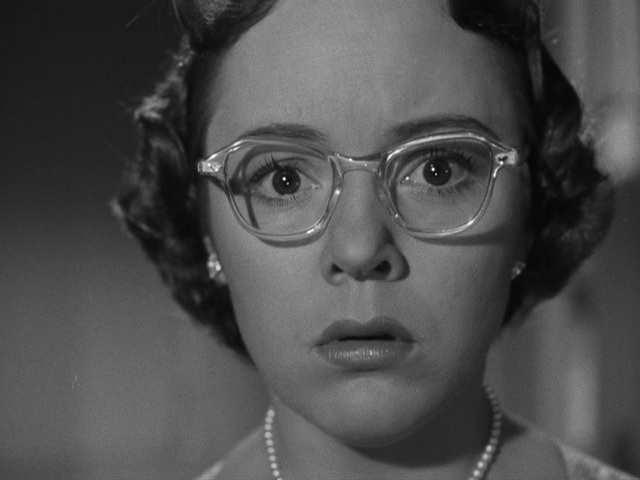
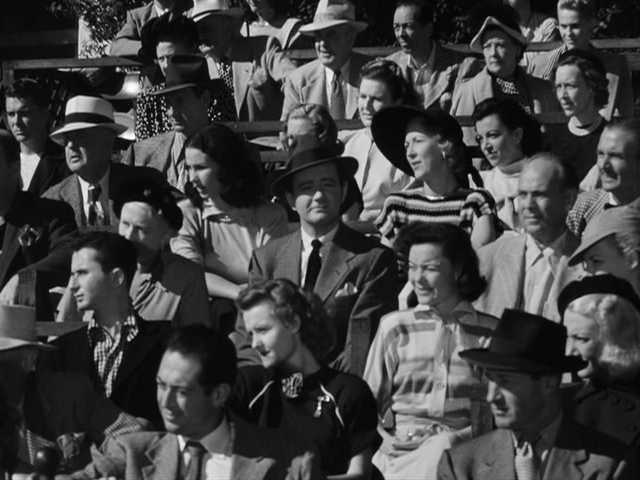
In his Alternate Oscars book, Peary selects this “supreme thriller” by Hitchcock — based on an early novel by Patricia Highsmith — as the best film of the year, and awards an Oscar to Robert Walker as best actor. In addition to telling a humdinger of a story, it’s visually one of Hitchcock’s most stunning films: from beginning to end, he strategically utilizes creative camera angles, framing, and editing to heighten suspense, and as a result, it’s full of countless memorable moments: Elliott’s murder as viewed through her glasses; the back-and-forth cutting between Guy’s hurried tennis match and Bruno’s desperate attempt to retrieve Guy’s lighter from a gutter; Bruno staring straight at Guy during an earlier tennis match as the eyes of the crowd around him move back and forth on the ball; wooden horses which “become smirking monsters hovering over the men’s heads” as Guy and Bruno duke it out on a carousel in the final scene. Equally impressive is Robert Burks’ noir-ish cinematography, which heightens the drama of several key scenes (most notably Guy’s night-time visit to see Bruno’s father).

With that said, the film has its flaws: as one avid poster on IMDb has pointed out, there are more than 20 instances in which the characters in the film act irrationally and/or foolishly, simply to move the plot forward (a policeman shoots into a crowd with children, for instance). But Hitchcock’s films aren’t designed to present the most “logical” progression of events; they’re strategically crafted for maximum dramatic and psychological effect. Indeed, the story is presented as a sort of “living nightmare” for Guy, who — desperately hoping for some kind of resolution to the seemingly impossible situation with his sluttish, obstinate wife (delightfully played by Elliott, a.k.a. Kasey Rogers, in Coke-bottle glasses) — finds that her convenient “disappearance” merely resolves one dilemma while opening up a host of others.

Most of Peary’s review in GFTFF centers on an analysis of Walker’s character (Bruno Anthony), who he refers to as a “picaresque hero” — someone who, “if it weren’t for a domineering father and daffy mother (Marion Lorne), might have been a great person.” He argues that “we like this fellow Walker plays; it’s as if we were under his skin, sweating his sweat. We care more about his hurt feelings than about the survival of Guy and Ann’s relationship.” But I can’t entirely agree. While it’s true that Walker does a remarkable job humanizing Bruno, I disagree that we actually “like” him; he’s far too vengeful and unhinged to really empathize with. And while it’s true that Granger (who Peary argues is miscast; I think he’s ideal for the part) fails to project even a fraction of Walker’s complexity, his character remains at the very least a decent fellow, someone we can’t help hoping will emerge from the situation unscathed. Meanwhile, watch for a host of other engaging performances — most notably Patricia Hitchcock (in what was arguably the best role of her brief acting career) as Granger’s fiancee’s younger sister, and Marion Lorne as Bruno’s incomparably eccentric mother.

Note: There are multiple other “layers” to the film as well; while Peary doesn’t touch upon it at all in his review, it’s impossible to ignore the homoerotic tensions between Walker (fairly openly “coded” as gay) and Granger (bisexual in real life).

Redeeming Qualities and Moments:

  • Robert Walker as Bruno
  • Laura Elliott as Miriam
  • Patricia Hitchcock as Barbara Morton
  • Robert Burks’ stunning (Academy Award nominated) b&w cinematography
  • Masterful direction by Hitchcock
  • Marion Lorne in a tiny role as Mrs. Anthony (Bruno’s mother)
  • Dimitri Tiomkin’s classically-heavy score

Must See?
Definitely, as one of Hitchcock’s finest thrillers.

Categories

  • Genuine Classic
  • Important Director

(Listed in 1001 Movies You Must See Before You Die)

Links:

Pursuit of Happiness, The (1971)

Pursuit of Happiness, The (1971)

“I have to go into court and play a part in a stupid charade to convince some judge that I’m not really me in order to receive some justice!”

Synopsis:
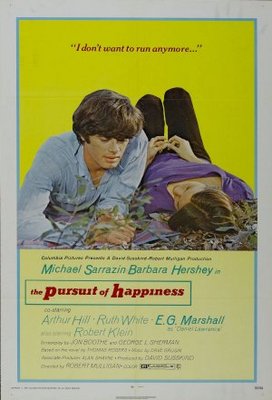
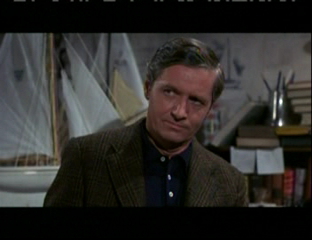
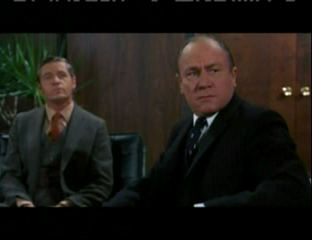
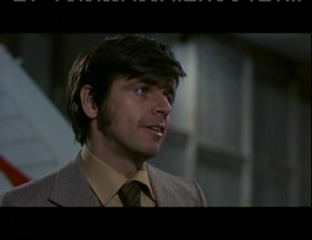
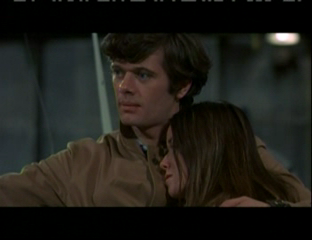
When a college student (Michael Sarrazin) accidentally runs over and kills an old lady (Maya Kenin), he finds his liberal lifestyle rather than his crime put on trial; eventually he and his girlfriend (Barbara Hershey) decide to take matters into their own hands.

Genres, Themes, Actors, and Directors:

  • Barbara Hershey Films
  • Counterculture
  • E.G. Marshall Films
  • Fugitives
  • Living Nightmare
  • Robert Mulligan Films

Review:
This oddly provocative counterculture flick posits a Kafka-esque “living nightmare” any one of us could find ourselves in — involuntary vehicular manslaughter — and takes this scenario to its farthest limits, ultimately arguing that expatriation may be the only option when the legal strictures of one’s country have become too outlandish to obey. Made during the height of the Vietnam protest era, it’s an interesting non-political variation on the theme of private resistance; one can’t help siding with Sarrazin’s sympathetic protagonist, who tries to play by the rules but ultimately finds himself damned no matter what he does. It’s all a bit stagy and forced at times, but there are several fine supporting performances to watch for (most notably by Arthur Hill, E.G. Marshall, and William Devane), and the central premise is compelling enough to hold interest throughout.

Redeeming Qualities and Moments:

  • Arthur Hill as William’s father
  • E.G. Marshall as William’s no-nonsense lawyer-uncle
  • William Devane’s tiny but memorable performance
  • A provocative thematic basis

Must See?
No, but it’s worth a look if you stumble upon a copy. Listed as a Sleeper in the back of Peary’s book.

Links:

Canary Murder Case, The (1929)

Canary Murder Case, The (1929)

“I have a strange premonition that the Canary is headed for disaster.”

Synopsis:
Detective Philo Vance (William Powell) investigates the mysterious murder of a blackmailing showgirl known as the Canary (Louise Brooks), who accumulated countless enemies and/or jealous lovers just before her death.

Genres, Themes, Actors, and Directors:

  • Detectives and Private Eyes
  • Louise Brooks Films
  • Murder Mystery
  • Showgirls
  • William Powell Films

Review:
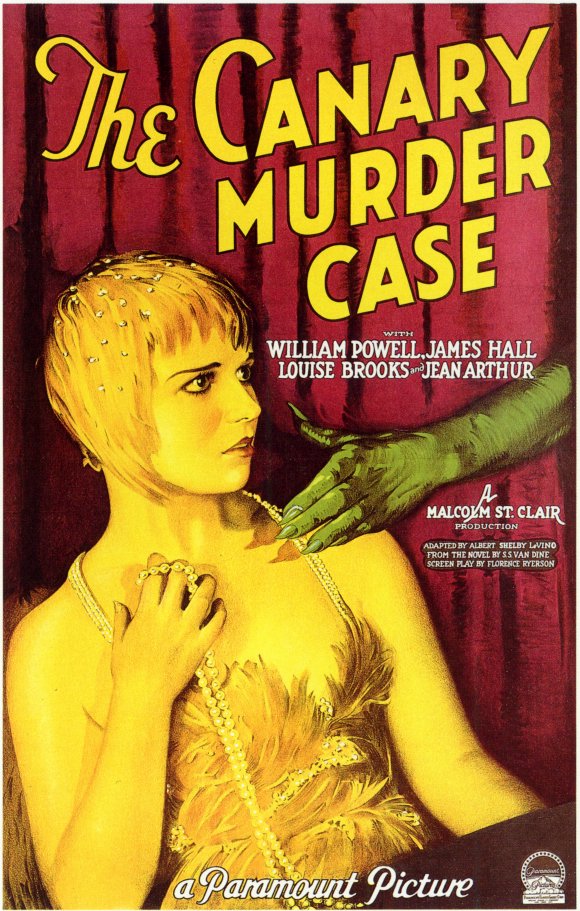
The Canary Murder Case was the first cinematic translation of an S.S. Van Dine Philo Vance detective novel, but is even more notable today as the film that destroyed Louise Brooks’ career in Hollywood. A so-called “transitional talkie”, it was originally shot as a silent film, then later dubbed; but Brooks, who was in Europe at the time making Diary of a Lost Girl with G.W. Pabst, refused to return to America, and her character was dubbed by Margaret Livingston instead. While it’s jarringly obvious that Brooks herself isn’t speaking, she nonetheless manages to project a memorable hussy within her brief period on-screen, and we miss her striking presence once she’s gone. Indeed, the remainder of the film falls mostly flat, thanks largely to its awkward “silent film” pacing, in which characters speak, then pause briefly before responding; not even William Powell emerges unscathed. The murder mystery is mildly interesting, but far too talky — and it takes so long for Vance to figure out the identity of the murderer (which most audience members will have guessed long before) that impatience finally sets in.

Redeeming Qualities and Moments:

  • Louise Brooks in a too-small role as “the Canary”

Must See?
No, unless you’re a die-hard Louise Brooks fan; for a much more engaging and creatively filmed Philo Vance flick, see The Kennel Murder Case (1933). Listed as a film with Historical Importance in the back of Peary’s book.

Links:

Vivacious Lady (1938)

Vivacious Lady (1938)

“And dad, I might add that she’s the finest wife any man could hope to have!”

Synopsis:
A young professor (Jimmy Stewart) falls for and marries a nightclub singer (Ginger Rogers), then must get up the nerve to tell his strict father (Charles Coburn) and nervous mother (Beulah Bondi).

Genres:

  • Beulah Bondi Films
  • Charles Coburn Films
  • Cross-Class Romance
  • George Stevens Films
  • Ginger Rogers Films
  • Jack Carson Films
  • Jimmy Stewart Films
  • Newlyweds
  • Professors
  • Romantic Comedy
  • Singers
  • Star-Crossed Lovers

Review:
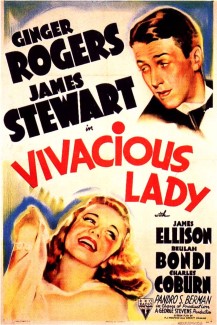
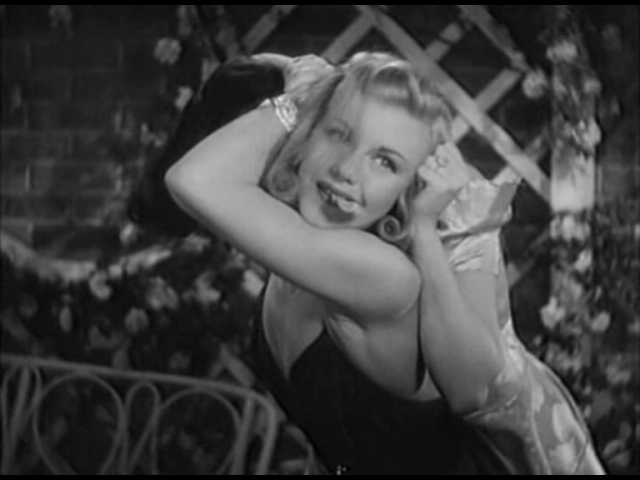
Two years after eliciting a nuanced performance from Ginger Rogers in Swing Time (1936), George Stevens directed her once again in this frothy romantic comedy about a mismatched couple who fall in love at first sight, marry immediately, and (only in Hollywood) struggle through a series of misunderstandings before finally being able to “legitimate” their relationship. Several scenes are genuinely amusing: I get a kick out of Rogers’ all-out catfight with Stewart’s presumed-fiancee (Frances Mercer), for instance, and Stewart and Rogers’ visual tussle with “Walter” the pull-down bed is fun. But many of the broader plot devices — including Rogers posing “incognito” as one of Stewart’s biology students, and Coburn’s fear that Stewart’s marriage to a nightclub singer will irreparably damage the reputation of their college — simply strain credulity, and ultimately fall flat. Fortunately, the genuine chemistry between Rogers and Stewart (former lovers in real life) bolsters the film; they make a sweet, if unconventional, screen couple. Film fanatics take note: RKO-regular Franklin Pangborn plays an amusing but too-small role as a fastidious hotel clerk determined to keep Stewart away from his new wife.

Redeeming Qualities and Moments:

  • Genuine chemistry between Rogers and Stewart
  • Franklin Pangborn in a bit role as a hotel clerk
  • Robert DeGrasse’s luminous b&w cinematography
  • Several amusing sequences — such as Rogers’ catfight with Frances Mercer (hidden here)

Must See?
No, but it’s certainly recommended for one-time viewing.

Links: