Carnal Knowledge (1971)

Carnal Knowledge (1971)

“I want you right here, where you belong.”

Synopsis:
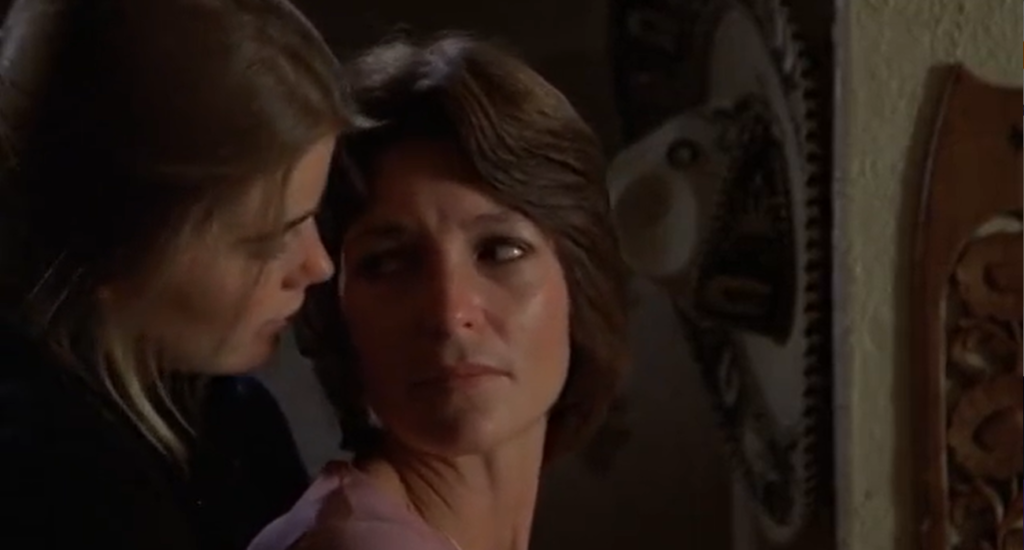
Two college students — Jonathan (Jack Nicholson) and Sandy (Art Garfunkel) — lose their virginity to the same woman (Candice Bergen), then go on to have divergent experiences with other women, including Jonathan shacking up with a buxom model (Ann-Margret) and Sandy dating a young hippie (Carol Kane).

Genres, Themes, Actors, and Directors:

  • Ann-Margret Films
  • Art Garfunkel Films
  • Candice Bergen Films
  • Carol Kane Films
  • Jack Nicholson Films
  • Mike Nichols Films
  • Rita Moreno Films
  • Sexuality
  • Womanizers

Response to Peary’s Review:
Peary notes that this fourth feature film by director Mike Nichols — after Who’s Afraid of Virginia Woolf? (1966), The Graduate (1967), and Catch-22 (1970) — was “an ‘in’ film of the early seventies, when college-age viewers defended its sexual frankness — indeed, this was a rare film about sex — and argued about its themes.” He writes that this movie (scripted by Jules Feiffer) “about two friends… and how their attitudes toward sex and women evolve from the late forties to 1971” is “the story of men who think of women as the enemy, who [thus] can’t be treated with sincerity because they’re putting on an act themselves in order to trap a man.”

However, “it’s not women who dehumanize and emasculate these men, but their own fear of women (‘ballbreakers’ as Nicholson calls them).”

Peary asserts that “Nichols’s direction is innovative but very cold,” while “the acting is exceptional” (he nominates Nicholson as one of the Best Actors of the Year in his Alternate Oscars). I agree with Peary that the “best scene” (albeit the hardest to watch) “is the volatile argument between Nicholson and the depressed Ann-Margret, who reveals her desire for marriage.”

This film is one I resisted rewatching for as long as possible, knowing it’s a rough if distressingly honest ride — however, it remains worth a one-time look for the performances and its historical significance. Watch for Rita Moreno in a small but crucial closing scene with Nicholson.

Notable Performances, Qualities, and Moments:

  • Ann-Margret as Bobbie
  • Giuseppe Rotunno’s cinematography

Must See?
Yes, once, for its historical relevance.

Categories

  • Historically Relevant

Links:

Personal Best (1982)

Personal Best (1982)

“The thing to remember is this: the Pentathlon is one event.”

Synopsis:
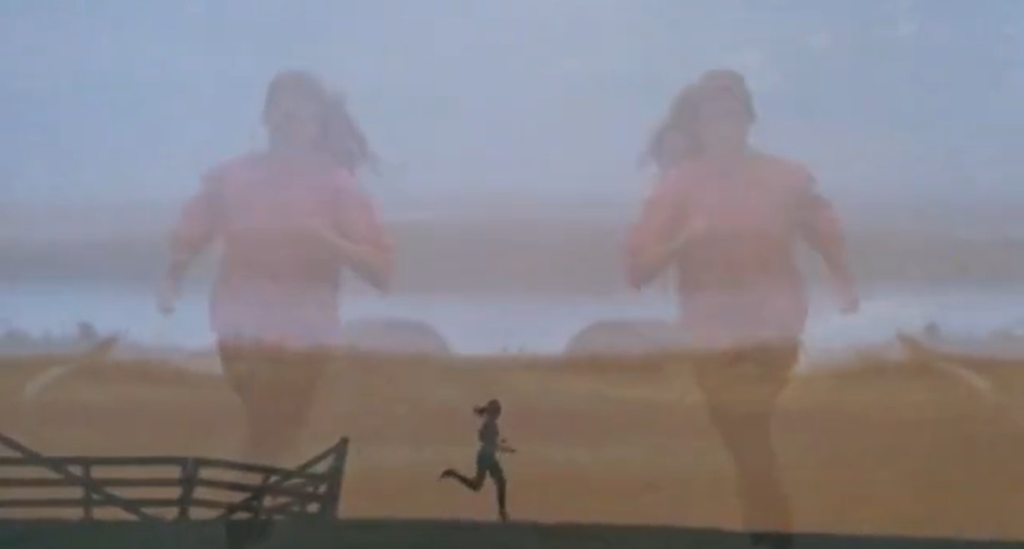
When an aspiring Olympian athlete (Mariel Hemingway) falls for her female trackmate (Patrice Donnelly), her coach (Scott Glenn) worries that their romance will get in the way of their competitive spirit.

Genres, Themes, Actors, and Directors:

  • Lesbianism
  • Love Triangle
  • Olympics
  • Scott Glenn Films
  • Sports
  • Strong Females

Response to Peary’s Review:
Peary writes that this “controversial, underappreciated film” — “written and directed by Robert Towne (who won the Oscar for his Chinatown script)” — is “an undisguised celebration of the bodies of female athletes.” He describes in detail how often Towne takes advantage of locker rooms, steam baths, bedroom scenes, and “raunchy female dialogue” to “serve [his] purpose,” “taking what we consider tasteless and deviant acts and making them seem perfectly natural and unembarrassing.” As Peary writes, it’s “evident that Towne likes his women” (a little too much) — they “are funny, sensitive, dedicated, self-confident, competitive yet supportive, strong, and, because they’re athletes, beautiful.”
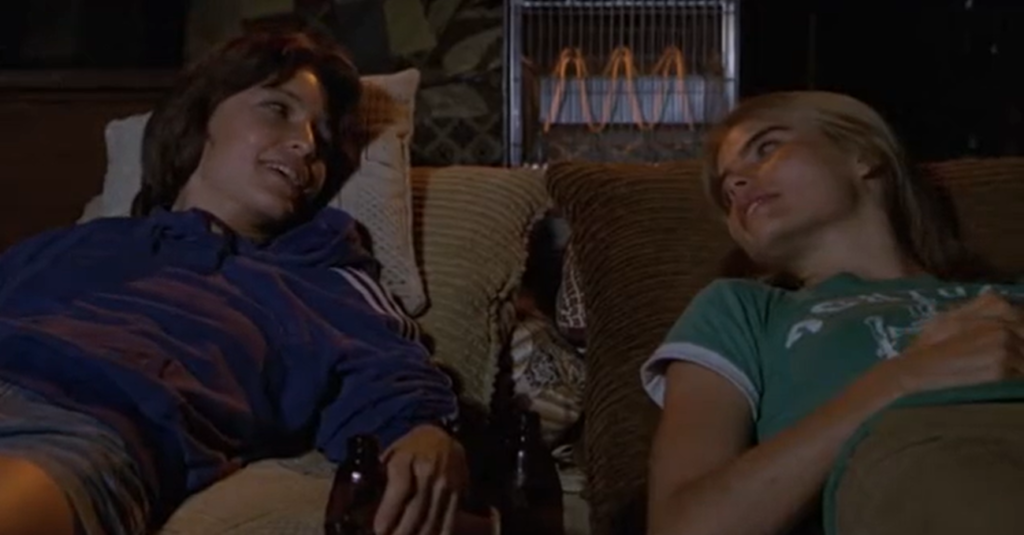
This film was heralded upon its release for its casual treatment of Hemingway and Donnelly’s same-sex romance long before this was de rigeur in cinema. As Peary writes, “We accept Donnelly’s homosexuality and don’t begrudge her initiating the naive Hemingway into a lesbian affair,” even though “it might be true that once Hemingway figures out her self-identity she’ll discover herself to be heterosexual” (what about the possibility of bisexuality?!). He adds: “It’s also interesting that we feel happy that… Hemingway got to experience one” (?) “beneficial and exciting homosexual experience,” since “Hemingway feels no guilt about the affair and no anger towards Donnelly for possibly taking advantage of her.”
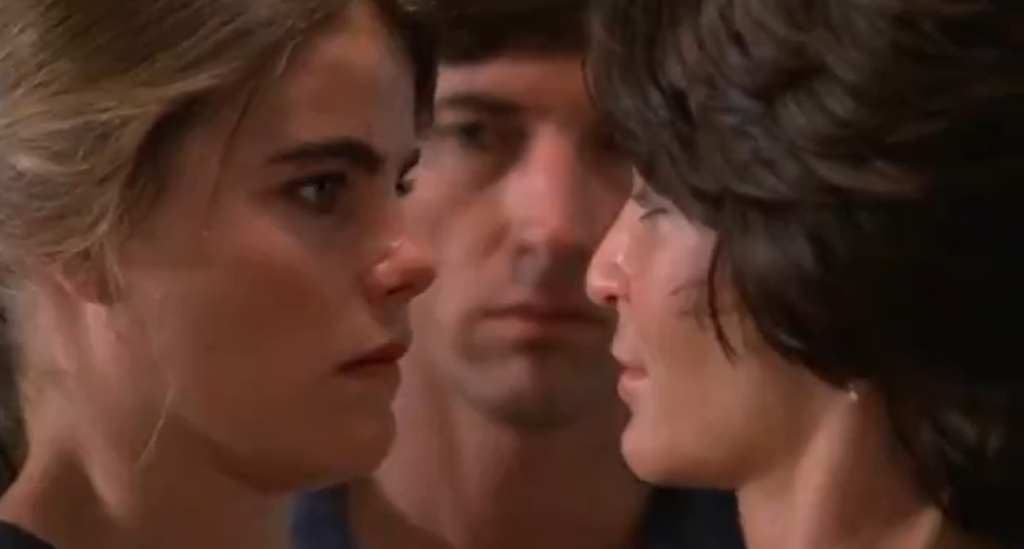
Unfortunately, while Towne should (perhaps) be applauded for attempting to normalize bodily interactions across all spheres of life, it’s also impossible not to imagine how much he personally enjoyed filming every… single… close-up… [often slo-mo]… of toned female flesh — and there are oh-so-many during this movie’s two-plus-hour running time; one can’t help thinking somewhat uncomfortably about Leni Riefenstahl’s glorification of athletic prowess in The Olympiad (1936).
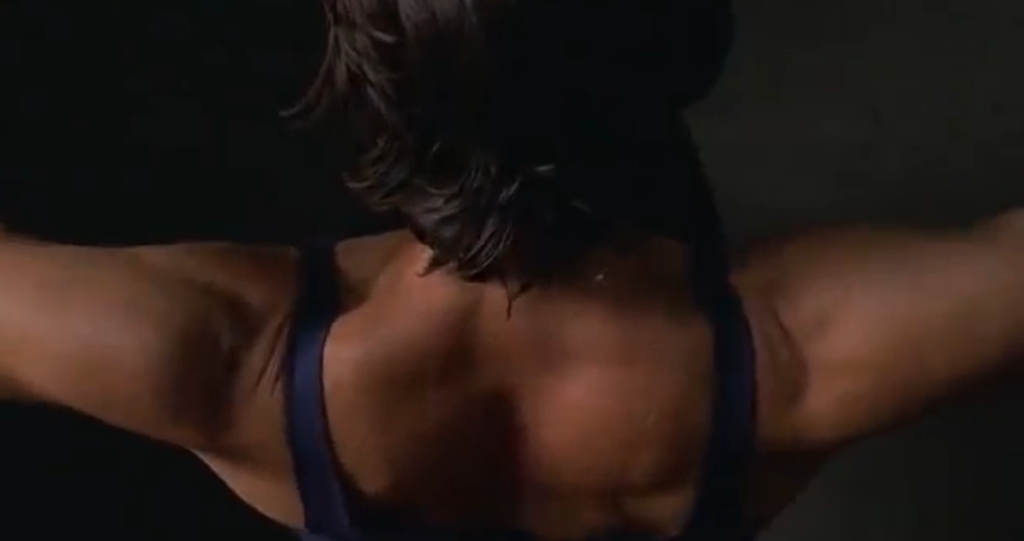

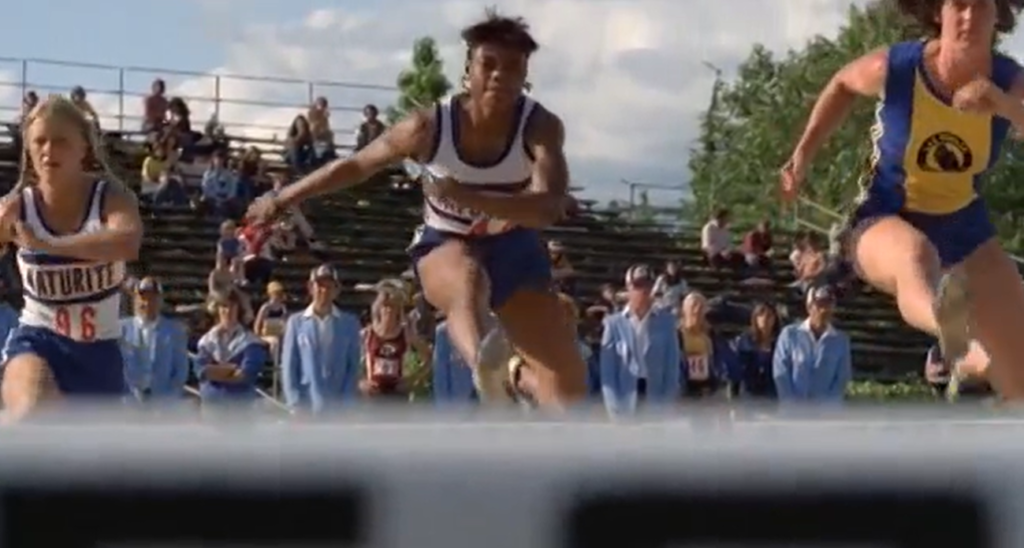
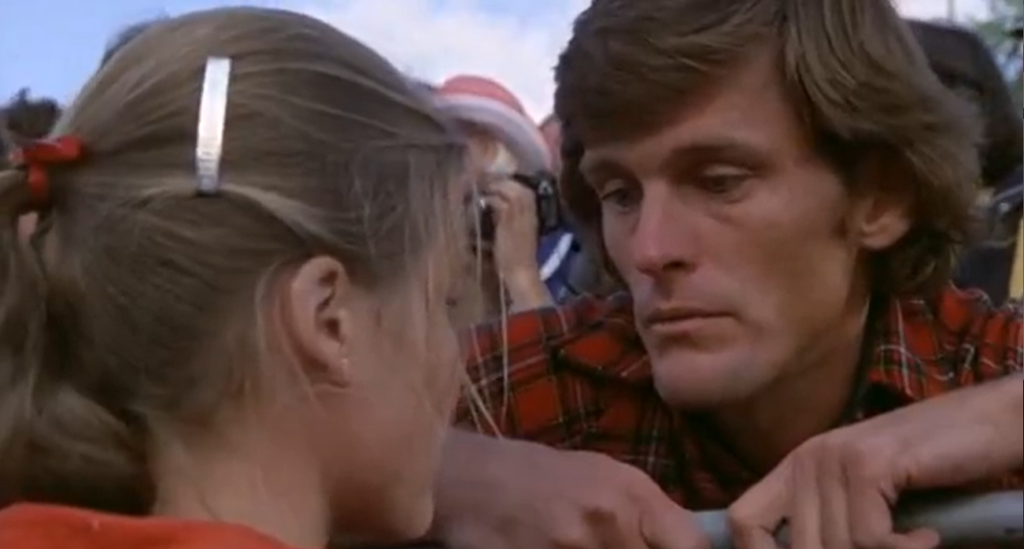
Note: In addition to Donnelly, this film is noteworthy for featuring another real-life athlete among its cast: Olympian Kenny Moore as Hemingway’s boyfriend-after-Donnelly.
Notable Performances, Qualities, and Moments:

  • Mariel Hemingway as Chris Cahill
  • Patrice Donnelly as Tory Skinner
  • Michael Chapman’s cinematography

Must See?
No, but it’s recommended for one-time viewing.

Links:

Return of the Dragon / Way of the Dragon, The (1972)

Return of the Dragon / Way of the Dragon, The (1972)

“What I like, I get – and I want that restaurant!”

Synopsis:
When martial arts expert Tang Lung (Bruce Lee) travels to Rome to help his uncle (Chung-Hsin Huang) and cousin (Nora Miao) fight against gangsters hoping to take over their restaurant, he eventually finds himself in mortal combat with a hired fighter named Colt (Chuck Norris).

Genres, Themes, Actors, and Directors:

  • Bruce Lee Films
  • Chinese, Hong Kong, and Taiwanese Films
  • Chuck Norris Films
  • Martial Arts Films

Response to Peary’s Review:
As Peary writes, this third film by Bruce Lee (his “only attempt at directing”) features “several kung fu battles, which are fun to watch but repetitive,” and then a “much more exciting” set of fights featuring “martial-arts experts Bob Wall, Wang Ing Sik, and in his film debut, Chuck Norris” — all playing “the villains who take on our hero.”


There’s not much more to say about this film other than that it represents Lee playing “a fists-for-free-hire character whom he would have played in several other films if it hadn’t been for his sudden death” (which is sad to contemplate), and to point out that the “Lee-Norris confrontation, set in the Colosseum, is one of the highlights of Lee’s movie career.”

Notable Performances, Qualities, and Moments:

  • Numerous fabulous fighting sequences
  • Good use of location shooting in Rome

Must See?
No, but the fight scenes are well worth a look.

Links:

Fists of Fury / Big Boss, The (1971)

Fists of Fury / Big Boss, The (1971)

“Wisdom comes with age; nothing can be solved by fighting.”

Synopsis:
When a Chinese man (Bruce Lee) working in Thailand learns that his new boss (Ying-Chieh Han) is smuggling heroin through ice blocks and killing off anyone who questions his grift, he begins to question his vow of non-violence.

Genres, Themes, Actors, and Directors:

  • Bruce Lee Films
  • Chinese, Hong Kong, and Taiwanese Films
  • Drug Dealers

Response to Peary’s Review:
Peary writes that “Bruce Lee’s first martial arts film” is “generally considered [his] best, least pretentious film,” but he notes that he finds “it somewhat disappointing.” He argues that “the film suffers because Lee spends too much of it being reluctant to fight and not joining in several melees” (indeed, the entire first half of the film is “free” from Lee fighting):

… and “when he does fight, it’s too apparent that none of the villains is a match for him.” (This didn’t bother me; Lee’s fighting is amazing no matter what.) Peary concedes that “Lee does have one spectacular fight sequence in which he singlehandedly kills about 15 men”:

… and also points out that Lee “has his only scene with a nude women,” but forewarns fans that “he’s in a drunken sleep at the time.”

While this isn’t must-see viewing for all film fanatics, it’s undeniably enjoyable seeing handsome Lee on screen in one of his too-few feature-length starring roles before his untimely death.

Notable Performances, Qualities, and Moments:

  • Lee’s extraordinary fighting skills

Must See?
No, but of course Bruce Lee fans will consider it must-see – and they don’t need this review to give them permission!

Links:

Five Fingers of Death / King Boxer (1972)

Five Fingers of Death / King Boxer (1972)

“I’ll always remember teacher’s words.”

Synopsis:
A martial arts student (Lieh Lo) leaves behind the beloved daughter (Ping Wang) of his teacher (Wen Chung Ku) to join the studio of a master instructor (Fang Mien), who enlists the help of Japanese thugs in rigging an upcoming tournament.

Genres, Themes, Actors, and Directors:

  • Chinese, Hong Kong, and Taiwanese Films
  • Martial Arts

Response to Peary’s Review:
Peary notes that this “first Chinese martial-arts film to hit America” started “the crazy and pav[ed] the way for the Bruce Lee classics” — and he adds that while the “picture has been mercilessly attached for its poor dubbing” (I watched a subtitled version) “and hokey plot,” he finds “it great fun to watch an extremely bland hero (Lo Lieh):

… taking on a fabulous array of Chinese and Japanese villains, each more outrageous than his predecessors.”

While “these villains are all considered unbeatable in battle,” “only Lieh possesses the mystical ‘Iron Fist’ to defeat them.”

Peary argues that this “picture has flare, imagination” and at “the very least, it has great camp value” and “would make a good second feature to Infra-Man.”

I’m in agreement with Peary’s review. While it doesn’t offer up much more than it promises, this film remains a colorful, finely choreographed example of why kung-fu became such a craze in the 1970s, and remains worth a one-time look.

Note: The “anger siren” used when Lieh becomes aware of his super-powered hands is the same “ironside motif” used in Quentin Tarantino’s Kill Bill movies, and was created by Quincy Jones.

Notable Performances, Qualities, and Moments:

  • Many impressive fight sequences

Must See?
Yes, once, for its historical relevance.

Categories

  • Historically Relevant

Links:

Convoy (1978)

Convoy (1978)

“They’ve got a language all their own.”

Synopsis:
A trucker named Rubber Duck (Kris Kristofferson) is accompanied by a photographer (Ali MacGraw) and other sympathetic long-haulers while being pursued by a vengeful sheriff (Ernest Borgnine); meanwhile, an opportunistic politician (Seymour Cassel) tries to bank on the immense popularity of the convoy across state lines.

Genres, Themes, Actors, and Directors:

  • Ali MacGraw Films
  • Car Chase
  • Cat and Mouse
  • Ernest Borgnine Films
  • Kris Kristofferson Films
  • Sam Peckinpah Films
  • Seymour Cassel Films
  • Sheriffs and Marshals
  • Truckers

Review:
Based on C.W. McCall’s country-western novelty song of the same name, Sam Peckinpah’s next-to-last feature film was this over-budget action flick seemingly designed to capitalize on the popularity of Smokey and the Bandit (1977) and all things trucking. Indeed, as DVD Savant points out, “A love of big rig tractor-trailer interstate trucks will be an asset for watching this, because that’s what we see for about 90 minutes of this marathon road picture: trucks cruising, roaring down dusty dirt roads, overturning, running roadblocks.”


Near the beginning of the film — after Kristofferson and MacGraw meet-cute:


— we’re shown a western-style barroom brawl taking place in a cafe:

… and are introduced to Borgnine’s evil sheriff, who doesn’t seem to have a particularly good reason for spending the rest of the movie relentlessly chasing after Rubber Duck.

DVD Savant provides an especially excoriating review of this flick, noting: “Convoy was such a joke when it came out (at least in California) that Savant never saw it. A commercial trifle built around car crashes and a then current Trucker/C.B. Radio craze, it’s a dated eyesore attempting to cash in on various rube fads.” Andrew Sarris of the Village Voice was similarly disappointed, asserting that “Convoy is not merely a bad movie but a terrible movie” given that “anyone can make a bad movie” but “only a misguided talent can manage to be terrible.” While it has its fans, there really isn’t a whole lot here for most film fanatics to hold on to. Be forewarned.

Notable Performances, Qualities, and Moments:

  • Effectively filmed action sequences

Must See?
No; you can skip this one unless you’re a Peckinpah completist.

Links:

Deadhead Miles (1971)

Deadhead Miles (1971)

“We’ll have everything we need, like the Boxcar Kids — we can move!”

Synopsis:
After stealing a truck and abandoning his buddy (Oliver Clark), a drifter (Alan Arkin) picks up a hitchhiker (Paul Benedict) and begins a cross-country trip filled with theft and trickery.

Genres, Themes, Actors, and Directors:

  • Alan Arkin Films
  • Black Comedy
  • Road Trip
  • Truckers

Review:
Directed by Vernon Zimmerman (just before making The Unholy Rollers) and scripted by Terrence Malick, this unusual trucker/road-trip flick maintains a darkly sardonic and absurdist edge throughout. Malick’s screenplay is decidedly unpredictable, with plenty of quirk and local flavor:

… but it’s hard to watch Arkin’s consistently ruthless behavior without cringing, as innocent people are harmed for his own selfish purposes. Fortunately, Malick’s love of classic movies offers intermittent reprieves — as during a super-brief early cameo of Ida Lupino and George Raftat a gas station:

… and a sequence when Arkin and Benedict are watching (and commenting on) key scenes from Samson and Delilah (1949) at a drive-through.

My favorite “throwback” moment is when classic movie workhorse Bruce Bennett appears in cameo as black-clad “Johnny Mesquitero” and helps out Benedict on the side of the road. (It’s notable that Arkin is nowhere to be seen during this sequence; decency can finally prevail.)

[As a side note, I had to look up Bennett to see what else he starred in, and noticed that he had supporting roles in Strategic Air Command (1955), Angels in the Outfield (1951), The Treasure of the Sierra Madre (1947), and Mildred Pierce (1945) (as “Bert Pierce”).]

Wikipedia’s entry provides a succinct yet accurate overview of what actually happens throughout this film, and I refer readers to that if they’re curious; mostly, it comes across as an absurd commentary on the randomness of life, and a cautionary tale against ever being too gullible.

Note: Loretta Swit can be seen here in her first role, as “Lady With Glass Eye” (her bizarre scene jives with the rest of the film’s odd sensibility).

Notable Performances, Qualities, and Moments:

  • Good use of authentic shooting locations

  • Effective cinematography

Must See?
No, but it’s worth a one-time look if you’re curious and/or an Arkin fan. Listed as a Cult Movie in the back of Peary’s book.

Links:

Smokey and the Bandit (1977)

Smokey and the Bandit (1977)

“What we are dealing with here is a complete lack of respect for the law.”

Synopsis:
After two truckers — Bandit (Burt Reynolds) and Cledus (Jerry Reed) — accept a proposition to haul beer illegally across state lines, they pick up a hitchhiking bride (Sally Field) running away from her wedding, and are pursued by her jilted fiance (Mike Henry) and his sheriff-dad (Jackie Gleason).

Genres, Themes, Actors, and Directors:

  • Burt Reynolds Films
  • Car Chase
  • Cat and Mouse
  • Comedy
  • Sally Field Films
  • Truckers

Review:
Stuntman-turned-director Hal Needman made his directorial debut with this box office hit — the second highest grossing film after Star Wars (1977) — starring real-life couple Burt Reynolds and Sally Field. Thankfully, Reynolds and Field have chemistry to spare, and help move the romantic angle of this jam-packed car chase flick along nicely.

Gleason is as blustery and pompous as his one-dimensional role calls for:

… while country-western singer-songwriter Reed does nicely in his crucial supporting performance:

… and diminutive Paul Williams (villainous Swan from Phantom of the Paradise) is well-cast as the shorter half of a pair of big-wheelers who book-end the film.

The real stars of this show, however, are the powerful Trans Ams (three were used during filming) and all the helpful truckers who save the day time and again for Bandit and his mates.

Notable Performances, Qualities, and Moments:

  • Burt Reynolds and Sally Field’s chemistry
  • Many impressive stunts
  • A fun fourth-wall-breaking moment
  • Bill Justis and Jerry Reed’s score

Must See?
Yes, once, for its historical significance.

Categories

  • Historically Relevant

Links:

Fighting Mad (1976)

Fighting Mad (1976)

“I’m gonna have to start kickin’ asses and takin’ names.”

Synopsis:
After his brother (Scott Glenn) and pregnant sister-in-law (Kathleen Miller) are brutally murdered, a young father (Peter Fonda) vows to seek revenge against the corrupt businessman (Philip Carey) intent on taking over the farm run by his own father (John Doucette).

Genres, Themes, Actors, and Directors:

  • Corruption
  • Jonathan Demme Films
  • Peter Fonda Films
  • Revenge
  • Roger Corman Films
  • Scott Glenn Films

Review:
Jonathan Demme wrote and directed this Roger-Corman-produced exploitation flick which functions as a modern-day western, with corrupt land developers ramrodding their way into an idyllic farming village, and a well-meaning sheriff (Harry Northup) caught in between the warring parties. From the opening sequence involving a bullying driver, Fonda’s Tom Hunter (who we ultimately learn is proficient with hand-to-hand combat, gun use, and a bow-and-arrow):

… is positioned as someone who will stick up for the underdog at any cost — a theme which continues throughout various scenarios.

There’s not much to the revenge-filled screenplay other than Fonda attempting to convince Northup that lethal shenanigans are at play; Fonda dating a beautiful young woman (Lynn Lowry) who is distressed by his distraction:

… and Fonda responding to the the relentlessly ruthless moves demanded by power-hungry Carey of his many minions.

Good use is made of low-budget lighting and sets, and it’s all competently directed — but this flick is only must-see for diehard Demme, Corman, or Fonda fans.

Notable Performances, Qualities, and Moments:

  • Effective sets and performances

Must See?
No. Listed as a Cult Movie in the back of Peary’s book.

Links:

Every Which Way But Loose (1978)

Every Which Way But Loose (1978)

“Well, it appears to me that there can’t be too many guys driving around this valley with an ape.”

Synopsis:
A trucker and fighter (Clint Eastwood) who’s fallen in love with an itinerant country-western singer named Lynn Halsey-Taylor (Sondra Locke) travels across the country with his buddy (Geoffrey Lewis) and pet orangutan Clyde (Manis) to find her.

Genres, Themes, Actors, and Directors:

  • Clint Eastwood Films
  • Comedy
  • Primates
  • Road Trip
  • Ruth Gordon Films
  • Truckers

Response to Peary’s Review:
Peary writes that while “Clint Eastwood’s first outright comedy” — surely inspired by the popularity of Smokey and the Bandit (1977) — “drew the wrath of most critics,” it “became his biggest commercial success at the time.” He argues that “as directed by James Fargo, it’s a very crude, too violent, thinly plotted but often very funny film about a not-too-bright but amiable trucker named Philo Beddoe, who picks up extra money by challenging local toughs to bare-knuckle fights.”

Peary spends the bulk of his review describing the various characters and scenarios — which include “the cantankerous Ma (Ruth Gordon)”:

… a “mysterious country-western singer [with] a secret” (Locke):

… the “resourceful girlfriend (Beverly D’Angelo)” of Orville (Wright):

… and a slapstick-filled pursuit “by an inept, overage motorcycle gang and two cops.”

Peary writes that while “the film is absurd… Locke’s character is intriguing and there’s something touching about Philo as he attempts to win her over” — though this may only hold true for diehard Eastwood fans. For all others, this is simply an erstwhile crowd-pleaser now memorable for featuring an orangutan (who gives a fine performance).

Notable Performances, Qualities, and Moments:

  • Philo and Clyde’s rapport together

Must See?
No, though it has its fans.

Links: