Ganja and Hess / Double Possession / Blood Couple (1973)

Ganja and Hess / Double Possession / Blood Couple (1973)

“Everybody’s some kind of freak!”

Synopsis:
After a Black anthropologist (Duane Jones) is stabbed by his suicidal assistant (Bill Gunn), he becomes a vampire, eventually seducing Gunn’s widow (Marlene Clark).

Genres, Themes, Actors, and Directors:

  • African Americans
  • Horror Films
  • Vampires

Review:
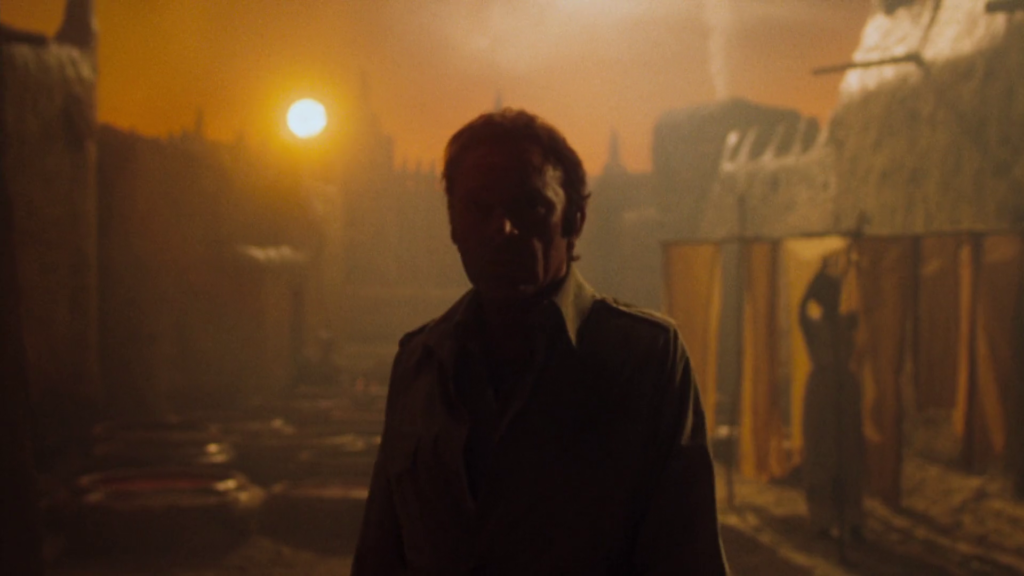
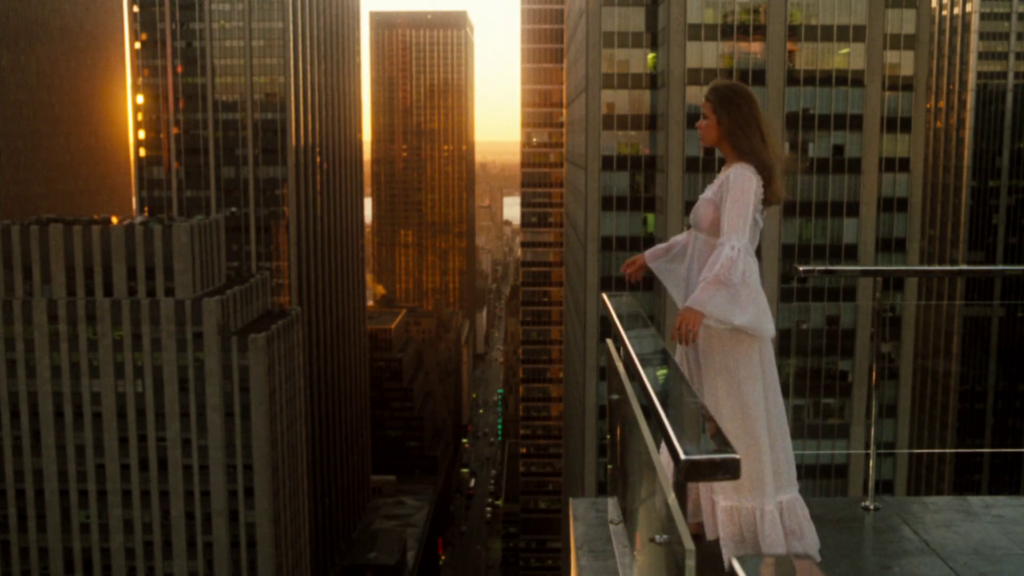
Writer-director-actor Bill Gunn was expected to make a follow-up vampire flick akin to the phenomenally popular blaxploitation film Blacula (1972), but instead made this highly atmospheric experimental film which requires some analysis (and likely a re-watching) to fully parse. As noted by Stuart Galbraith in his review for DVD Talk, “There’s practically nothing to compare Ganja & Hess to in either all of black cinema or the horror genre, and because the film is very much its own animal, audiences often don’t quite know what to make of it.” Indeed, Ganja and Hess was notoriously re-cut and re-distributed numerous times under different titles in an attempt to make it more appealing, but is thankfully now available once again in Gunn’s original vision — which seems entirely appropriate for such an experimental film. While it’s not for all tastes and moves too slowly at times, it’s recommended for one-time viewing given its unique place in Black cinema.

Note: Fans of Night of the Living Dead (1968) will likely be thrilled to see its star, Duane Jones, on-screen again in one of his very few movie roles.

Redeeming Qualities and Moments:

  • Fine performances by the three leads


  • Atmospheric cinematography by James E. Hinton

  • Sam L. Waymon’s score

Must See?
Yes, once, as an unusual cult movie and for its historical significance.

Categories

  • Cult Movie
  • Historically Relevant

Links:

Entity, The (1982)

Entity, The (1982)

“I don’t know what they were; I couldn’t see them — I felt them.”

Synopsis:
After a single mother (Barbara Hershey) of a teenager (David Labiosa) and two girls is violently raped by an unseen entity in her bedroom, she struggles to get those around her — including her best friend (Margaret Blye) and a psychologist she begins seeing (Ron Silver) — to believe her. Eventually, as the attacks persist, she secures help from a pair of paranormal researchers (Richard Brestoff and Michael Alldredge) working for a noted professor (Jacqueline Brookes), all of whom are determined to help document what might be happening to Hershey.

Genres, Themes, Actors, and Directors:

  • Barbara Hershey Films
  • Horror Films
  • “No One Believes Me!”
  • Psychotherapy
  • Rape
  • Single Mothers

Response to Peary’s Review:
Peary writes that this horror film — “supposedly based on a genuine case history” — includes “rape scenes [that] are truly scary (though the brutality may turn off some viewers),” and “shows how males immediately try to give females the weaker inadequate position in relationships.”

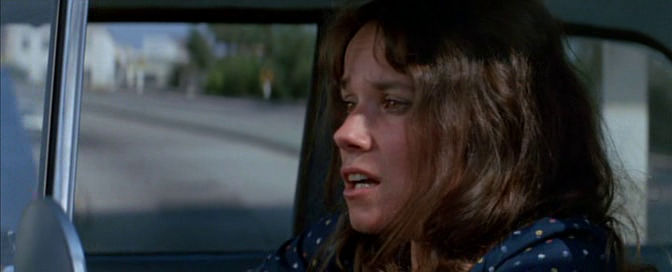
He notes that Silver is presented as someone “who simultaneously tries to get [Hershey] to believe there is something wrong with her and to take him as her lover,” and points out that while “it seems that Silver will be the film’s hero despite playing mind games with Hershey,” “fortunately, in a very good scene, Hershey permanently rejects him.” He concludes by noting that “director Sidney J. Furie wisely shot the beautiful Hershey in close-up to build intensity:

… [and] gave her free reign,” resulting in “a truly great performance that, because it’s in a very flawed horror film, won Hershey little attention instead of a deserved Oscar nomination.” I’m essentially in agreement with Peary’s assessment of this intriguing but over-long, overly brutal horror flick which pulls no punches in depicting a truly demonic entity ravaging poor Hershey. Hershey’s performance is consistently compelling, and it’s satisfying to watch her holding her own in the midst of the numerous men who fail to support her — but with that said, I won’t be returning to this deeply disturbing flick any time soon (if again).

Redeeming Qualities and Moments:

  • Barbara Hershey as Carla Moran (nominated as one of the Best Actresses of the Year in Peary’s Alternate Oscars)
  • Impressive visual and special effects

Must See?
No, but it’s worth a look for Hershey’s performance.

Links:

Doctor and the Devils, The (1985)

Doctor and the Devils, The (1985)

“I think we’re being supplied with the victims of murder.”

Synopsis:
In 19th century Edinburgh, an anatomy doctor (Timothy Dalton) procures corpses from a pair of grave diggers (Jonathan Pryce and Stephen Rea) who turn out to be opportunistic murderers. Meanwhile, Dalton’s assistant (Julian Sands) falls in love with a prostitute (Twiggy) who may be next in line for murdering.

Genres, Themes, Actors, and Directors:

  • Historical Drama
  • Mad Doctors and Scientists
  • Serial Killers

Review:
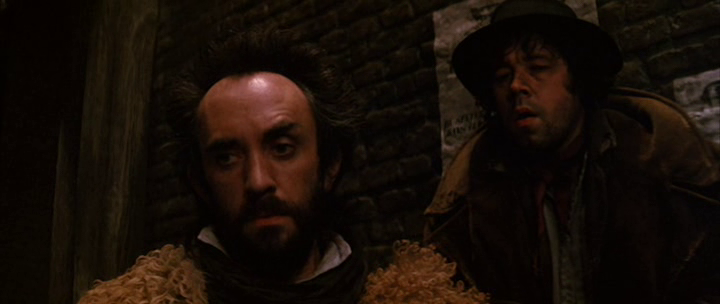
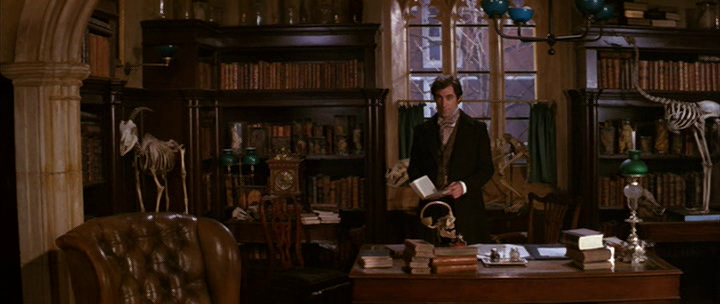
Freddie Francis directed this re-telling of the infamous Burke and Hare murders, probably best known to film fanatics through Val Lewton’s much-superior The Body Snatcher (1945), co-starring Boris Karloff and Bela Lugosi. Unfortunately, there’s not much new to be told or explored in this iteration, which faithfully recreates the seediness of the era but fails to hold our interest on anything other than a surface level. Pryce and Rea are alcoholic psychopaths simply out to exploit those even less fortunate than themselves:

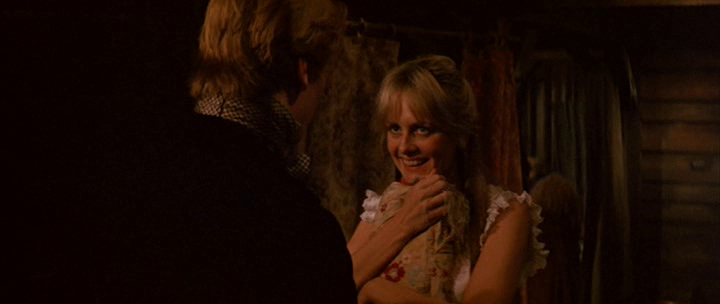
… while Sands’ attraction to Twiggy is clearly doomed from the get-go:

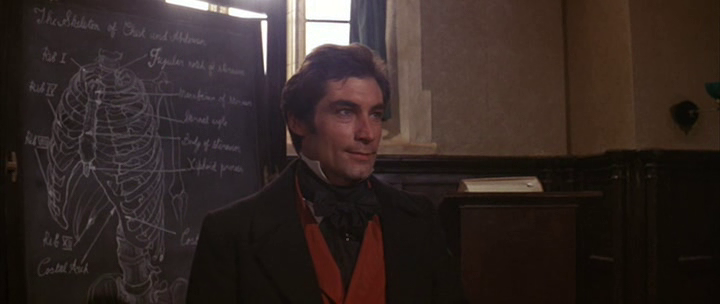
… and we don’t feel much sympathy for Dalton’s “science above all else” lecturer who is willing to overlook some pretty obvious ethical challenges in his quest for “fresh” bodies to study.

You can skip this one.

Redeeming Qualities and Moments:

  • Fine historical sets and atmospheric cinematography

Must See?
No. Listed as a Cult Movie in the back of Peary’s book.

Links:

Re-Animator (1985)

Re-Animator (1985)

“A good doctor knows when to stop.”

Synopsis:
A demented medical student (Jeffrey Combs) rents a room from a fellow student (Bruce Abbott) whose girlfriend (Barbara Crampton) is the daughter of their school’s strait-laced dean (Robert Sampson). Soon Combs’ passion to utilize a reviving agent comes to a head when evil Dr. Hill (David Gale) finds out about it, and gory rivalry ensues in the morgue.

Genres, Themes, Actors, and Directors:

  • Horror Films
  • Mad Doctors and Scientists
  • Zombies

Response to Peary’s Review:
Peary writes that he’s astonished this “ludicrous horror movie, directed by innovative stage director Stuart Gordon of Chicago’s Organic Theater” somehow “got some good reviews”, noting that he hates “to see new filmmakers parody horror films when it’s obvious that if they had to make a serious one themselves they’d be lost.” He argues that the “endless gore becomes self-satisfying, as in The Evil Dead; rather than being a means to shock viewers out of complacency, it is there to impress everyone who gets a kick out of new splatter effects.” He further asserts that “there are no scary scenes, just a lot of streaming blood, crushed heads, decomposed bodies, [and] ugliness.” He ends his review by referring to Re-Animator as “amateurish and surprisingly unoriginal.” Interestingly, Peary’s views on gore-filled horror flicks of the 1980s and late 1970s — i.e., Dawn of the Dead (1978) — seem to be at direct odds with cult horror fans, many of whom embraced this new direction and adore exactly the elements of such films that bother Peary. While I’m no lover of the genre myself, I can appreciate the dark humor that went into taking the mad doctor/scientist flick to its most extreme “logical” conclusion — the storyline coheres, and thus it “works” on the level it’s aiming for. Meanwhile, it’s amusing seeing a mad doctor (Combs, very effective in the lead role) bested by someone even madder (and far more evil) than he.

Redeeming Qualities and Moments:

  • Jeffrey Combs as Herbert West
  • Effectively over-the-top gore and special effects

Must See?
No, though it’s worth a one-time look for its cult status.

Links:

Firestarter (1984)

Firestarter (1984)

“If I do something bad, will you still love me?”

Synopsis:
Accompanied by her father (David Keith), a young girl with pyrokinetic powers (Drew Barrymore) stays on the run from government officials hoping to capture her and weaponize her abilities.

Genres, Themes, Actors, and Directors:

  • Art Carney Films
  • Father and Child
  • Fugitives
  • George C. Scott Films
  • Horror Films
  • Louise Fletcher Films
  • Martin Sheen Films
  • Political Corruption
  • Stephen King Adaptations
  • Supernatural Powers

Response to Peary’s Review:
Peary argues that this “mess of a film, adapted from Stephen King’s novel” about a “sympathetic little girl [named Charlie] (Drew Barrymore) with the power to start fires through mental impulses and her nice-guy father (David Keith) with mind-control powers” “picks up slightly once the two are captured and separated,” given that we then “no longer have to endure Keith repeatedly getting down on one knee and sensitively comforting the teary child, who feels guilt about the destruction and deaths her fires have caused.”

He notes that the “picture’s main selling point is the special effects, most of which involve people and objects bursting into flames”, in addition to a climax “filled with flying fireballs.”

He writes that “George C. Scott, wearing a pony tail, has a field day as a maniacal government assassin who literally wants to bash Charlie’s brains in”:

… but “all the other actors are poorly used.” I’m essentially in agreement with Peary’s assessment of this film, which was purportedly a major disappointment to King. The special effects are super-cool, and Barrymore inhabits her role with conviction — but there’s far too much we never learn about her family’s situation (what, exactly, happened after Keith and Locklear underwent experimental treatment, apparently married, and had a child?), and various supporting characters — including Art Carney and Louise Fletcher as kindly farmers who offer shelter to the runaway duo:

… and Sheen as a corrupt politician:

— are underdeveloped.

Redeeming Qualities and Moments:

  • Drew Barrymore as Charlie
  • George C. Scott as John Rainbird
  • Impressive special effects

Must See?
No; you can skip this one unless you’re a Stephen King fan and curious to check it out.

Links:

Strange Invaders (1983)

Strange Invaders (1983)

“I’m a scientist — I know what I saw. I just want somebody to believe me!”

Synopsis:
When his ex-wife (Diana Scarwid) drops off their daughter (Lulu Sylbert) and fails to return, an entomology professor (Paul Le Mat) visits Scarwid’s hometown of Centerville, Illinois, where he learns that aliens took over decades earlier. After being ridiculed by a government agent (Louise Fletcher) specializing in alien sightings, he enlists the help of a Z-grade reporter (Nancy Allen) and the distressed father (Michael Lerner) of an alien-abducted family in learning more.

Genres, Themes, Actors, and Directors:

  • Aliens
  • Journalists
  • Louise Fletcher Films
  • Nancy Allen Films
  • “No One Believes Me!”
  • Paul Le Mat Films
  • Science Fiction
  • Small Town America

Response to Peary’s Review:
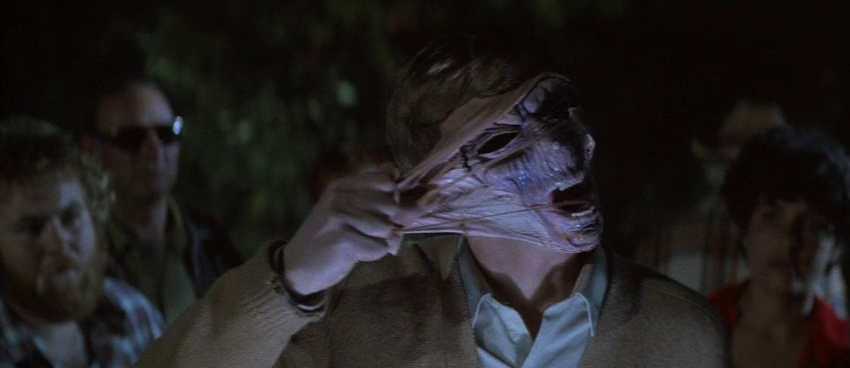
Peary writes that this “follow up to Strange Behavior by director-producer Michael Laughlin and his co-writer, Bill Condon, is strange sci-fi.” He notes that the “first half of [the] film is really impressive, as [the] script is witty (i.e., alien Fiona Lewis pretends to be the Avon Lady):

… [the] direction is bizarre, [and] characters act uniquely.”

However, he posits that “the later scenes are sloppy and more conventional,” and “unfortunately, the final bit in the story virtually erases everything bad that happened earlier” (which is true, though I found this comforting rather than disappointing). Peary asserts that this movie has “a good premise, worth making into a film, but sadly, it doesn’t work.” I’ll agree that Strange Invaders doesn’t quite deliver on what it hopes to do (paying homage to 1950s alien invasion flicks), but I disagree that there are “too many disgusting shots of aliens ripping off their human skins”: they’re not too frequent, and actually really cool-looking.

I also appreciate the clever casting of Kenneth Tobey — star of The Thing (From Another World) (1951), The Beast From 20,000 Fathoms (1953), and It Came From Beneath the Sea (1955) — as the lead alien in Centerville, who is either deadly serious or creepily smirking throughout many of his scenes.

Redeeming Qualities and Moments:

  • Impressively gruesome special effects when the aliens reveal their true form

Must See?
No, but it’s worth a one-time look if you’re curious.

Links:

Return of Count Yorga, The (1971)

Return of Count Yorga, The (1971)

“Don’t you sense a strangeness — an unwanted curiosity?”

Synopsis:
When Count Yorga (Robert Quarry) falls in love with a beautiful redhead (Mariette Hartley) working at an orphanage, he arranges a mass attack on her family — including her sister (Karen Erickson) — then hypnotizes her so she’ll forget what happened and come live with him. Meanwhile, a deaf caretaker (Yvonne Wilder) at the orphanage tries to convince a young boy (Philip Frame) to admit to what he saw happening, and a detective (Rudy De Luca) enlists help from his co-worker (Craig Nelson) in investigating the case. Will either Erickson’s fiance (David Lampson) or Hartley’s fiance (Roger Perry) be able to rescue their loved ones from a vampiric fate?

Genres, Themes, Actors, and Directors:

  • Horror Films
  • Vampires

Review:
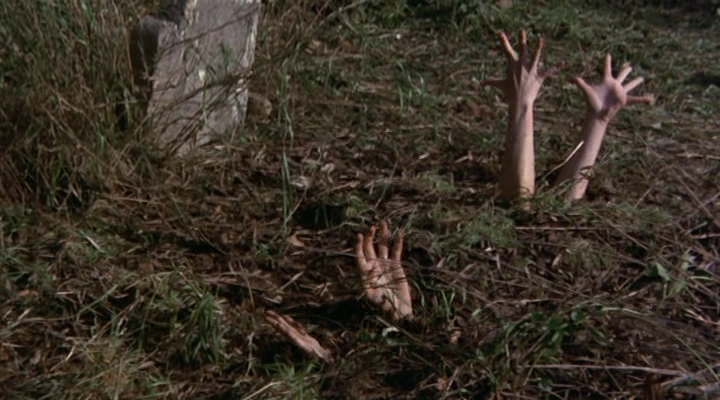
This sequel to the cult vampire flick Count Yorga (1971) offers more of the same: a handsome nobleman (Quarry) attempts to lure yet more beautiful women to his harem, this time falling authentically in love with a luminous woman (Hartley) who he hopes to turn into his lifetime mate. The framing device of a young orphan (Frame) chasing a ball through a cemetery and being influenced by dead women rising from their graves is effectively spooky but never really explained. (It’s strongly implied that he’s been brainwashed in order to help Yorga, but to what extent? Is he now a vampire, too?) Meanwhile, the incorporation of a deaf woman (Wilder) who can’t get anyone to believe her is a tired trope, and later scenes involving detectives De Luca and Nelson turn weirdly comedic. You can feel free to skip this one unless you’re curious or a fan of the original.

Redeeming Qualities and Moments:

  • Some effectively creepy moments

Must See?
No; this one isn’t must-see.

Links:

Dawn of the Dead (1978)

Dawn of the Dead (1978)

“When there’s no more room in hell, the dead will walk the Earth.”

Synopsis:
During a zombie apocalypse, a quartet of survivors — a helicopter pilot (David Emge) and his pregnant girlfriend (Gaylen Ross), as well as two SWAT team members (Ken Foree and Scott Reiniger) — hole up in a shopping mall.

Genres, Themes, Actors, and Directors:

  • George Romero Films
  • Horror Films
  • Survival
  • Trapped
  • Zombies

Response to Peary’s Review:
Peary argues that this “long-awaited sequel” to George Romero’s Night of the Living Dead (1968) “has a message” but it’s “drowned in buckets of blood”. He posits that the “film fails on all levels, but what’s most infuriating is its extreme violence,” noting that while “Romero claimed that no one would be bothered by the graphic killings because everyone would understand that the film is a pop fantasy,” he “has characters being shot in the head… right at the beginning, before we are aware that Romero is working on a comical-fantasy level” — and thus “viewers eventually become numbed by the violence rather than taking it lightly as Romero intended.” Peary concedes that “opinion on the film is divided,” but asserts that he personally finds it “a dreadful, embarrassing picture by a director who should know better.”

I disagree completely with Peary on this film, which has become a cult classic in its own right. His description of Romero’s choice to set the film in a shopping mall — given that it represents “a gathering place, home-away-from-home, and self-contained community that, significantly, is minus only a church” — is, to be honest, over-thinking things. (Romero has said that his friend gave him a behind-the-scenes tour of the mall used in the movie and he simply thought it would be a good place to “hole up during an emergency.”) Meanwhile, the blood and violence throughout are so obviously fake (intentionally so) that it’s hard to get too upset about them. Instead, one simply roots for this motley group of protagonists as they face the truly freaky prospect of battling hundreds of undead creatures who move slowly but bite aggressively, causing near-certain transformation. All the leads do a fine job in their roles, and Tom Savini’s special effects are impressive given the budget and era. This one remains well worth a look.

Redeeming Qualities and Moments:

  • Fine performances by the leads


  • Impressive special effects
  • Masterful editing

Must See?
Yes, as a cult favorite by a master director.

Categories

  • Cult Movie
  • Important Director

(Listed in 1001 Movies You Must See Before You Die)

Links:

Exorcist II: The Heretic (1977)

Exorcist II: The Heretic (1977)

“I’d do anything to help Regan — anything!”

Synopsis:
A Catholic priest (Richard Burton) sent to investigate the death of Father Merrin (Max von Sydow) after his exorcism of the demon Pazuzu from young Regan (Linda Blair) finds teenage Regan being treated by a psychiatrist (Louise Fletcher) and cared for by her former nanny (Kitty Winn). Can Father Lamont (Burton) somehow connect Regan’s experiences with those of a possessed African boy (Joey Green) who has now grown into a scientist (James Earl Jones) fighting swarms of evil locusts?

Genres, Themes, Actors, and Directors:

  • Horror Films
  • John Boorman Films
  • Louise Fletcher Films
  • Max von Sydow Films
  • Ned Beatty Films
  • Possession
  • Priests and Ministers
  • Richard Burton Films

Review:
This infamously awful sequel to William Friedkin’s blockbuster hit The Exorcist (1973) was directed by John Boorman, who brings an entirely different sensibility to the proceedings. As James Kendrick notes in his review for Q Network:

“Although Boorman should be commended for attempting originality in an arena that is usually marked by simple regurgitation of old ideas, in his zeal to impress, he created one of the most bloated, preposterous, and unintentionally silly films of the 1970s.”

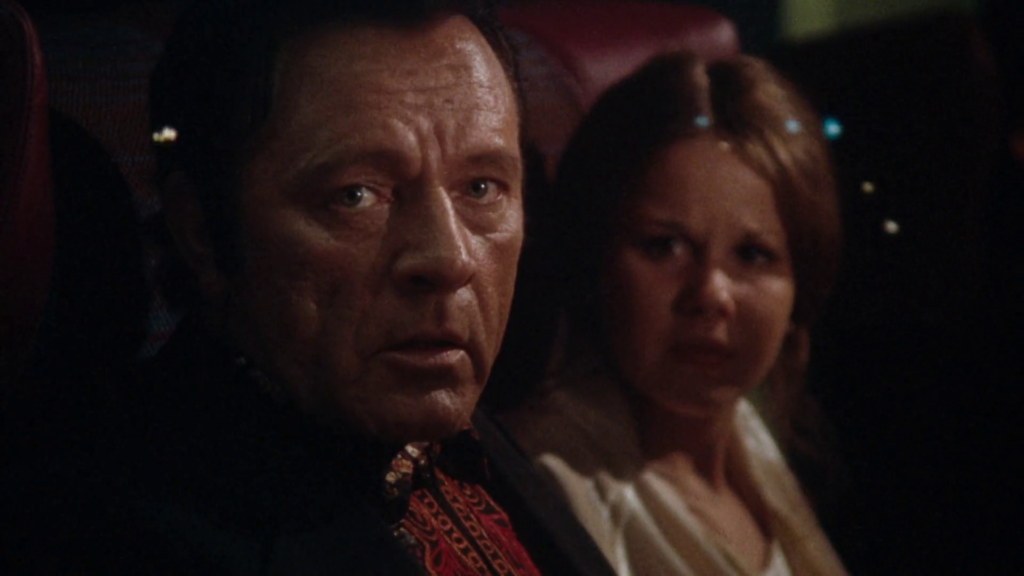
The performances by esteemed actors Richard Burton, Louise Fletcher, and James Earl Jones are passable at best:
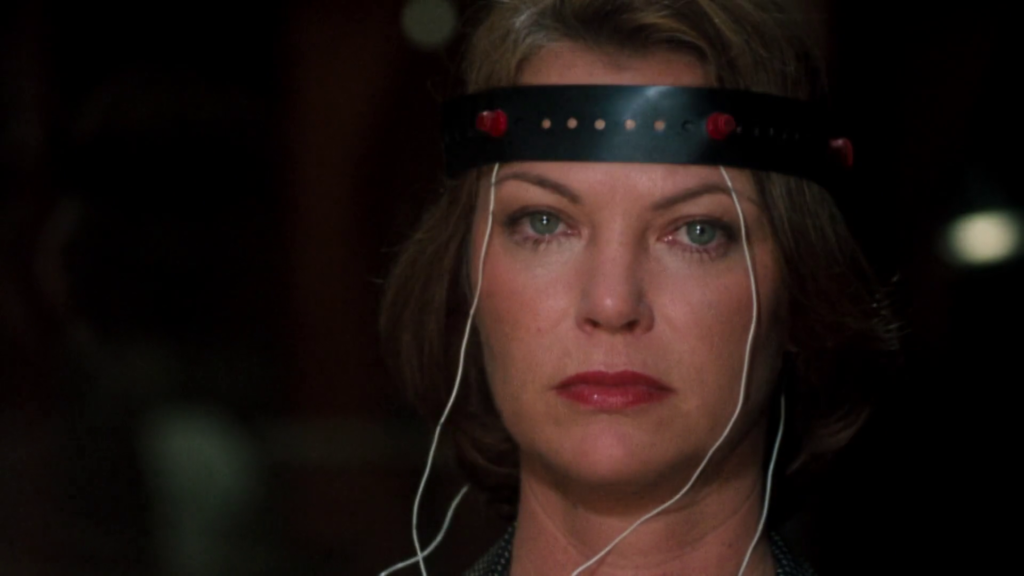
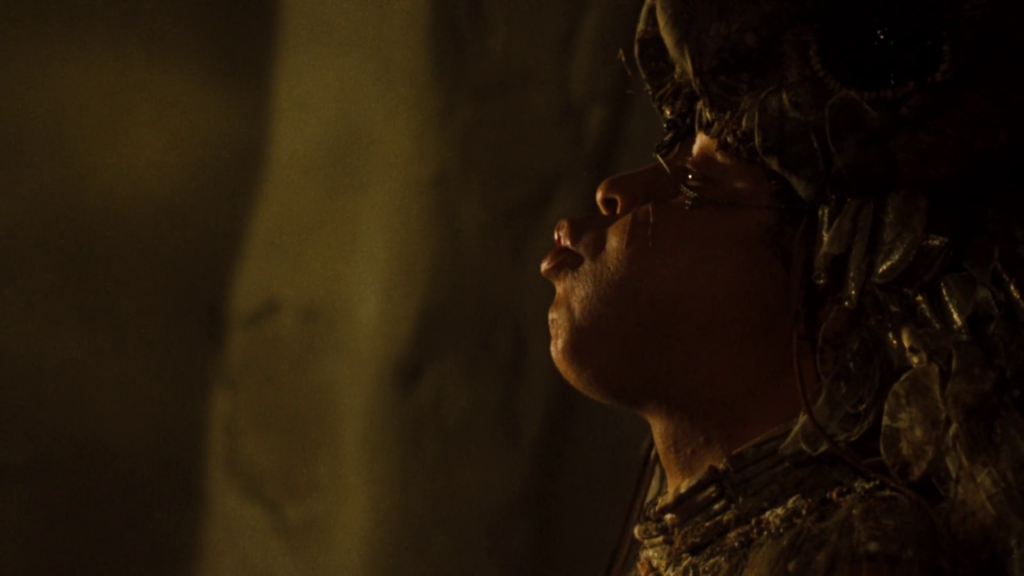
… while Blair’s portrayal of adolescent Regan is laughably inadequate.
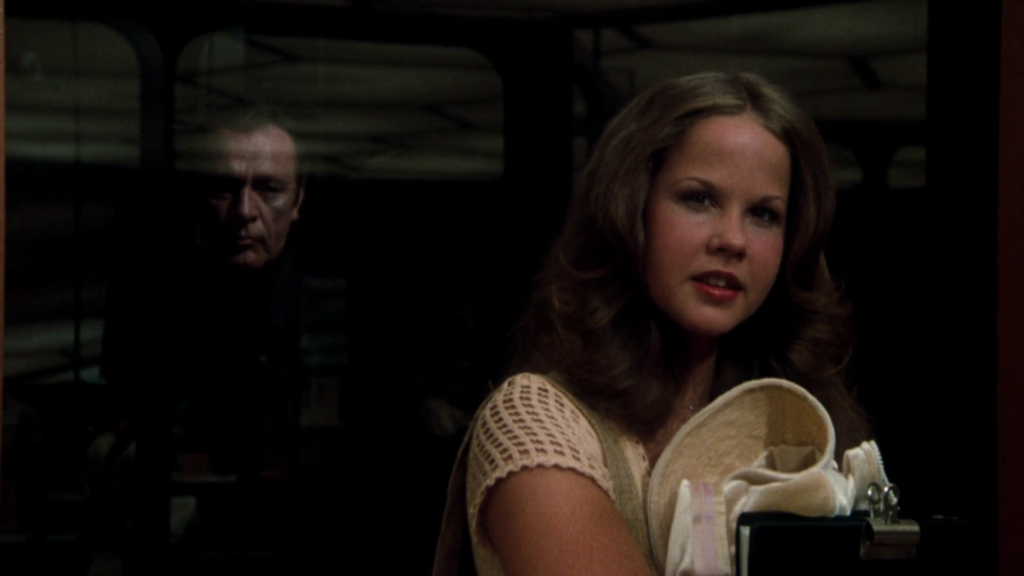
The actors aren’t helped by a screenplay that shifts away from the original film’s solid emphasis on Catholic guilt and demon possession towards a much more amorphous conceptualization of spirituality across various spheres and continents.
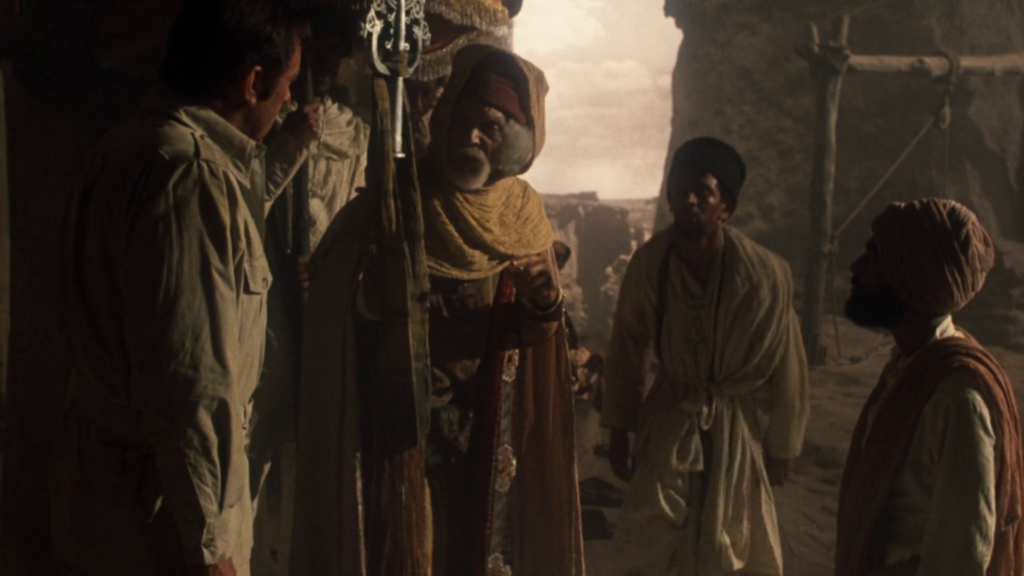
Meanwhile, the dialogue is uniformly awful; it’s challenging to pick out the most egregious stinkers, but here are just a few:

Regan: Come! Fly the teeth of the wind! Share my wings!

Young Autistic Girl: What’s the matter with you?
Regan: I was possessed by a demon. Oh, it’s okay — he’s gone!

Father Lamont: It was horrible, utterly horrible… and fascinating!

Dr. Tuskin [Fletcher]: It’s hard to live alone. Don’t you ever need a woman, Father?

With that said, this big-budget flick looks beautiful, and features some memorable imagery; it’s too bad the storyline fails it so badly.

Redeeming Qualities and Moments:

  • Fine cinematography
  • Some memorable imagery

Must See?
No; skip this one unless you’re curious. Listed as a Camp Classic in the back of Peary’ book.

Links:

Cars That Ate Paris, The / Cars That Eat People, The (1974)

Cars That Ate Paris, The / Cars That Eat People, The (1974)

“You ever seen a bloke with a foot up his nose?”

Synopsis:
When his brother (Rick Scully) is killed in a freak car accident in Paris, Australia, a meek man (Terry Camilleri) ends up living with the town’s paternalistic mayor (John Meillon) and his wife (Melissa Jaffer), gradually learning more about how Parisian citizens survive on scavenged items from intentional accidents, the local doctor (Kevin Miles) performs lobotomizing operations on the survivors, and rebellious youths race their “odd-looking automobiles”.

Genres, Themes, Actors, and Directors:

  • Australian Films
  • Horror Films
  • Mad Doctors and Scientists
  • Peter Weir Films

Response to Peary’s Review:
Peary writes that “Peter Weir’s debut was this creepy, comical, unsettling, one-of-a-kind ‘horror’ film” about a “shantytown off the beaten track” filled with “weirdos”. He notes that “Weir completely keeps viewers off guard” so that while “we laugh”, the “sinister environment makes us feel uneasy.”

He describes this most unusual flick as a “send-up of youth/drive-in films, westerns (a stand-off is filmed like a Sergio Leone shootout):

… and horror films” — but “it can also be seen as an attack on Australia’s car culture, the acquisitive materialism of the bourgeoisie, and the oppressive autocracies present in small towns.”

It’s hard to know what else to say about this movie except… it’s weird. Really weird. Be forewarned.

Redeeming Qualities and Moments:

  • Memorable imagery


Must See?
No, though it’s worth a one-time look for its cult status and historical importance in Australian cinema.

Links: