Gunfight at the O.K. Corral (1957)

Gunfight at the O.K. Corral (1957)

“We’re not going to start a life together with a gun in your hand.”

Synopsis:
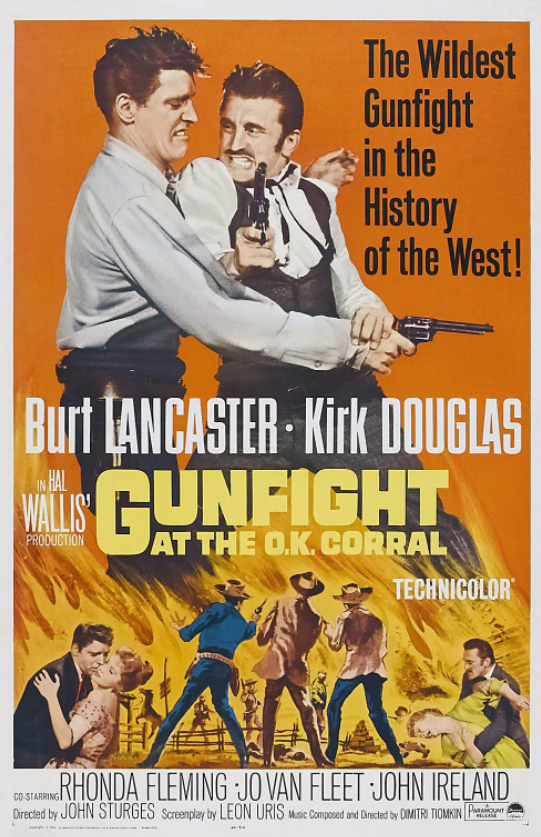
Famed sheriff Wyatt Earp (Burt Lancaster) — who falls in love with a beautiful gambler (Rhonda Fleming) — seeks help from his consumptive friend Doc Holliday (Kirk Douglas) in a shootout taking place in Tombstone, Arizona.

Genres, Themes, Actors, and Directors:

  • Burt Lancaster Films
  • Dennis Hopper Films
  • John Ireland Films
  • John Sturges Films
  • Kirk Douglas Films
  • Lee Van Cleef Films
  • Sheriffs and Marshals
  • Westerns

Review:
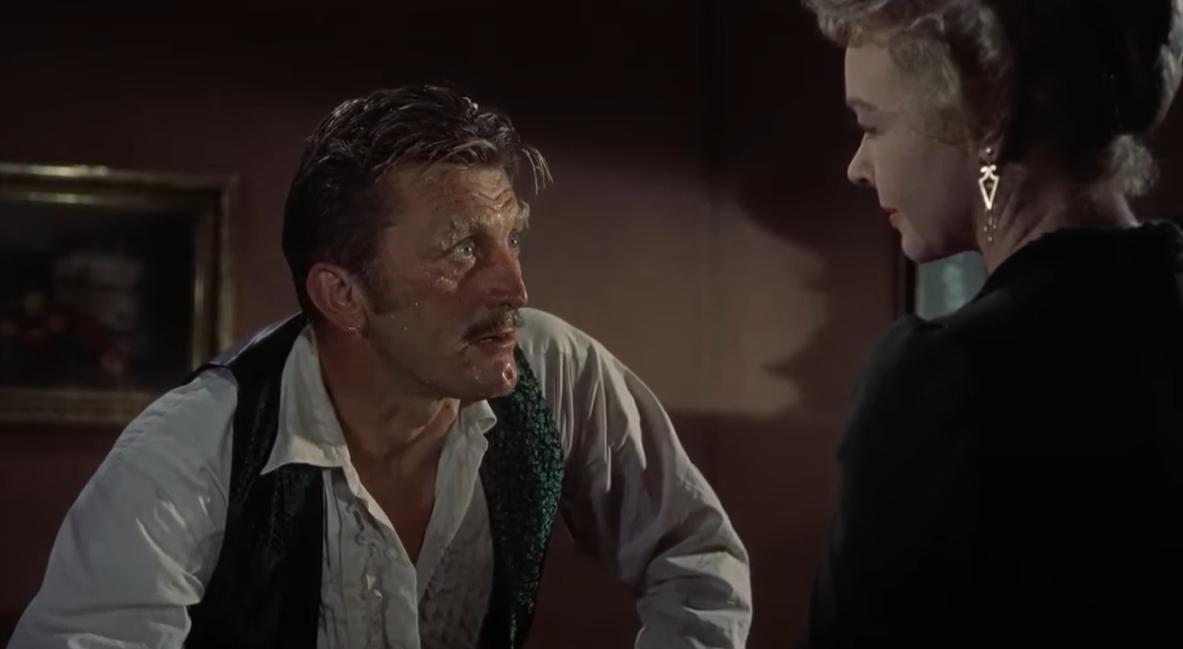
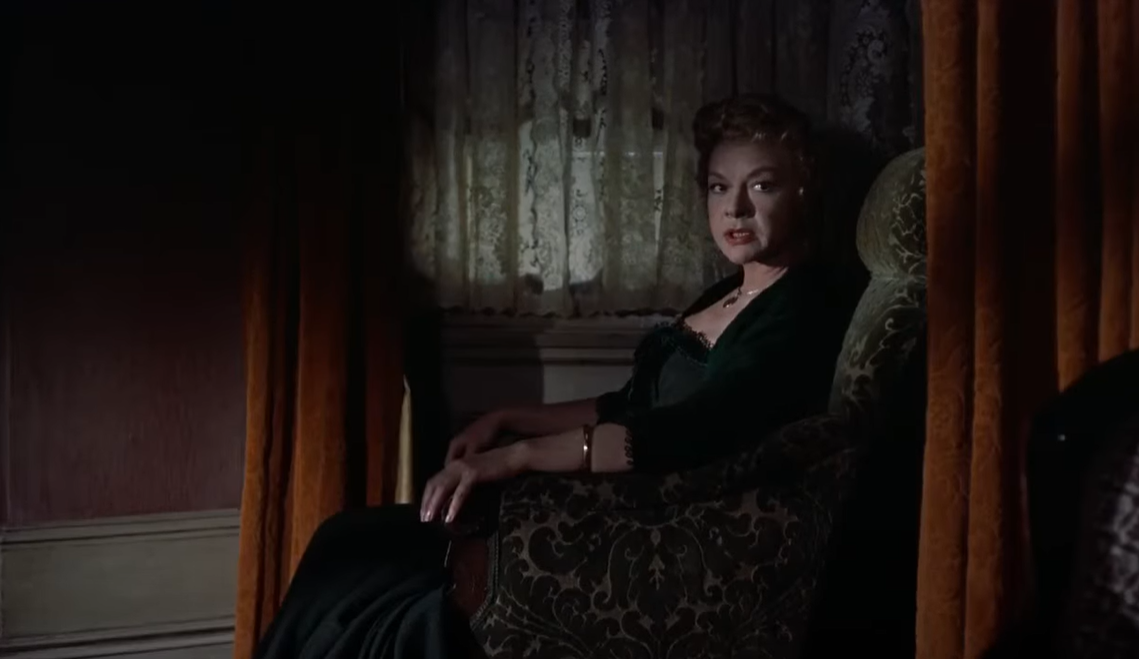
John Sturges directed and novelist Leon Uris wrote the screenplay for this fictionalized cinematic rendering of an oft-filmed event in American history. It’s a nicely shot western, with beautiful cinematography by Charles Lang and a standout performance by Jo Van Fleet as Doc Holliday’s boozy girlfriend:

Unfortunately, the rest of the storyline — overlong at 2+ hours — isn’t all that distinctive. While Lancaster and Douglas are believable as stoically loyal pals:

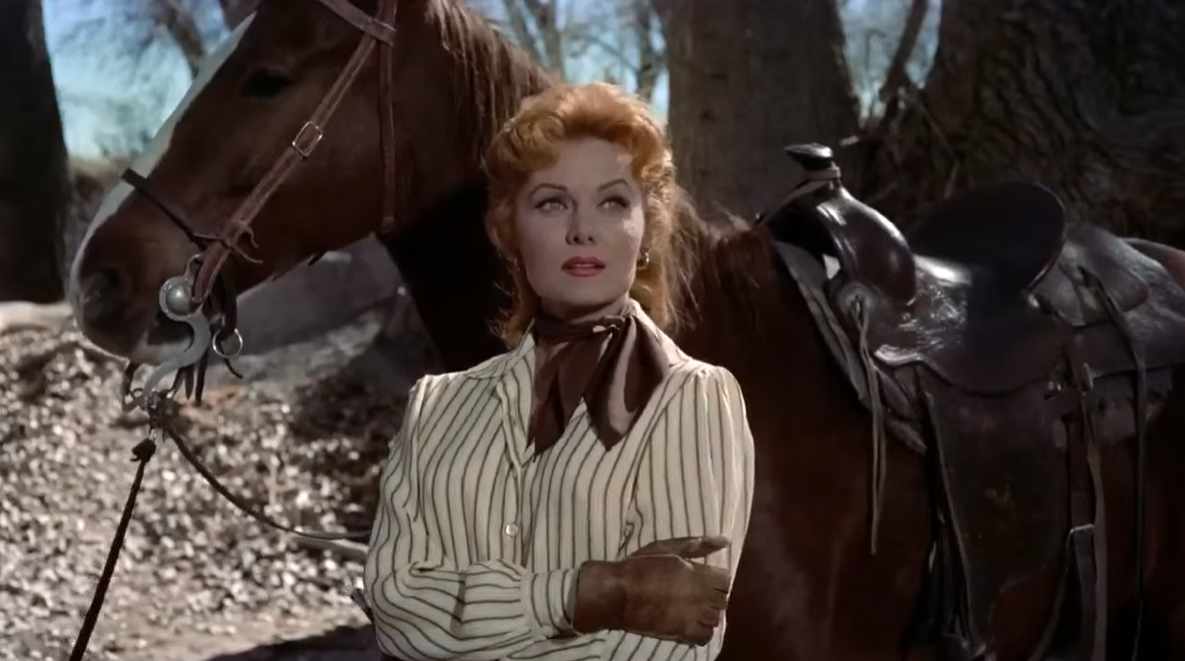
… Rhonda Fleming’s role as Lancaster’s love-interest isn’t well fleshed out:

… and we don’t get a strong sense of why so much tension has built between the Earps and the Clantons. Meanwhile, the title song as sung by Frankie Laine is simply an earworm (be forewarned).

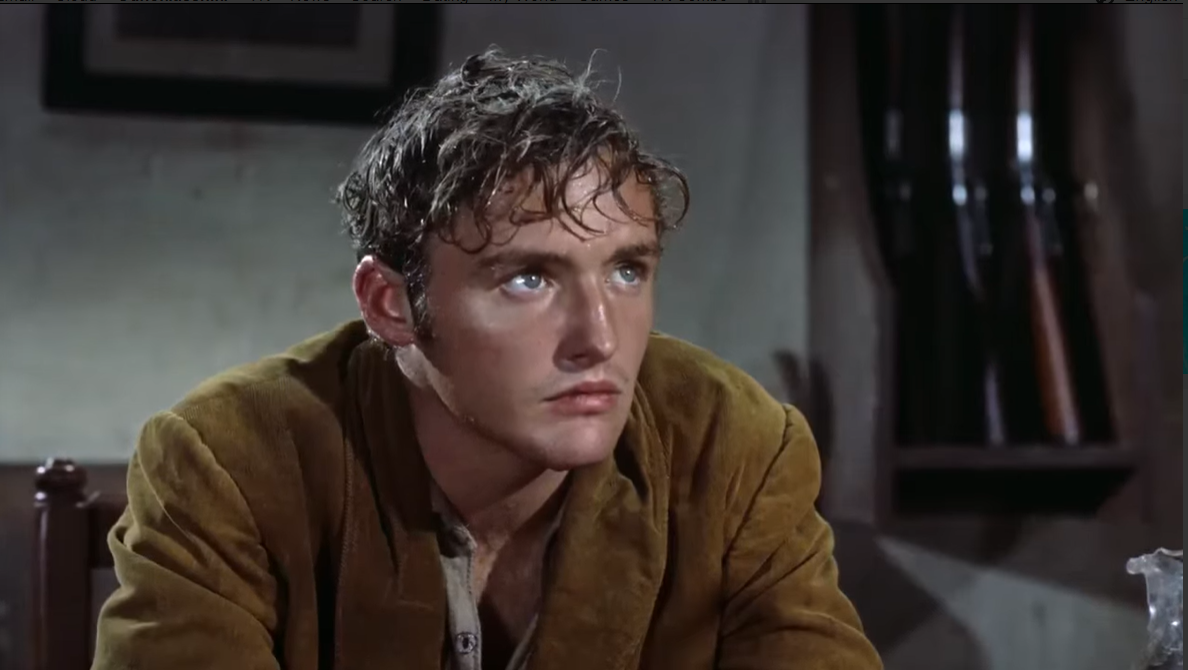
Note: Watch for young Dennis Hopper as Billy Clanton.

Notable Performances, Qualities, and Moments:

  • Charles Lang’s cinematography
  • Jo Van Fleet as Kate
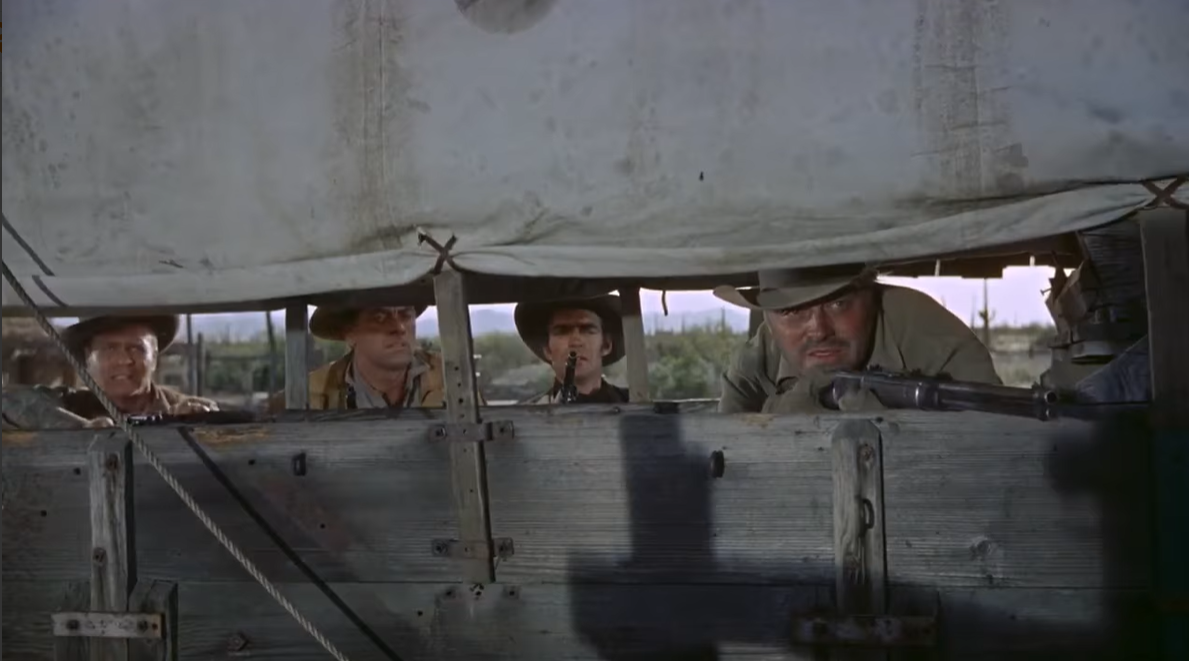
  • The exciting shootout sequence

Must See?
No, though western fans will likely be curious to check it out.

(Listed in 1001 Movies You Must See Before You Die)

Links:

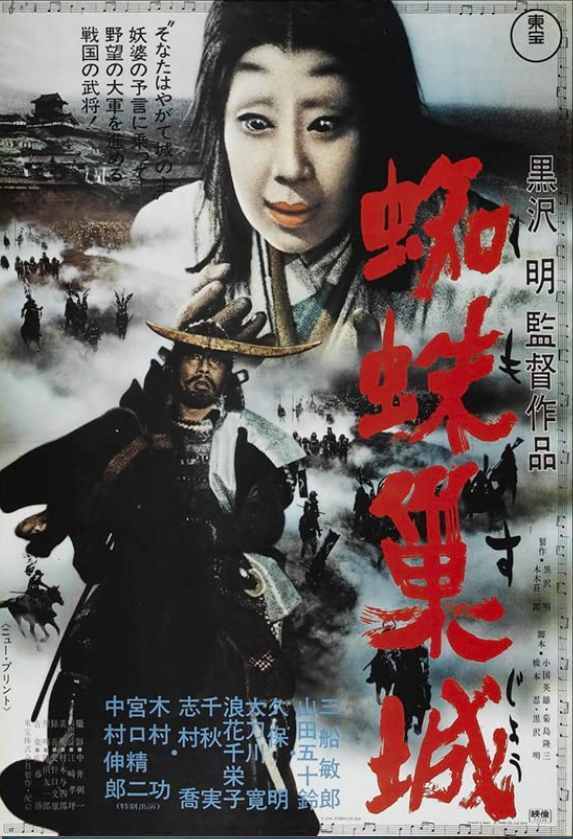
Throne of Blood (1957)

Throne of Blood (1957)

“This is a wicked world. To save yourself you often first must kill.”

Synopsis:
On their way home from an invasion, two loyal samurai — Taketori Washizu (Toshiro Mifune) and Yoshiteru Miki (Akira Kubo) — are told by a mysterious forest spirit (Chieko Naniwa) that they will become inheritors of their lord’s castle. When Washizu’s status-hungry wife (Isuzu Yamada) hears this news, she poisons two guards and sets in motion a bloody rampage of killings and treachery.

Genres, Themes, Actors, and Directors:

  • Akira Kurosawa Films
  • Historical Drama
  • Japanese Films
  • Royalty and Nobility
  • Samurai
  • Shakespeare
  • Toshiro Mifune Films

Review:
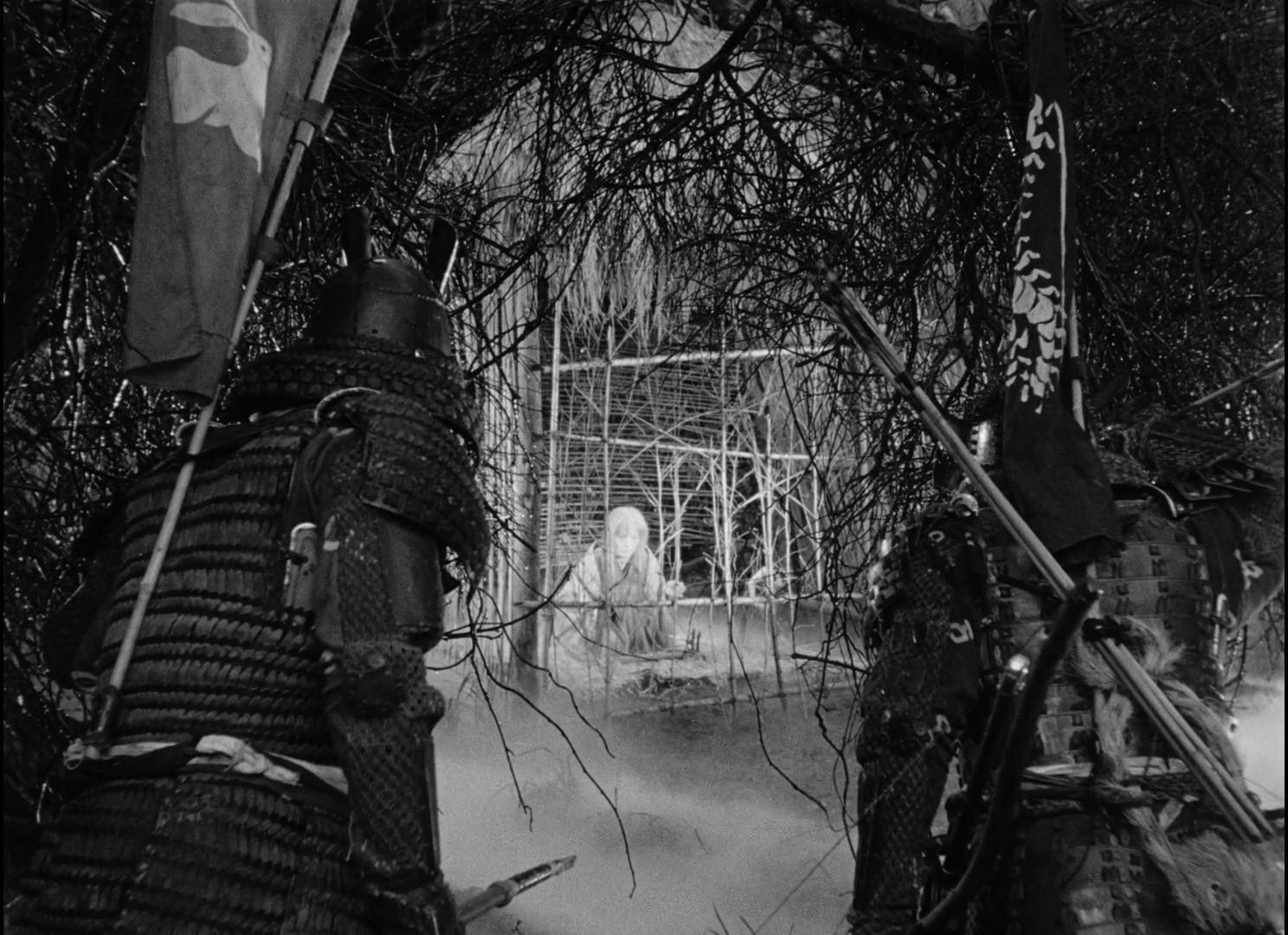
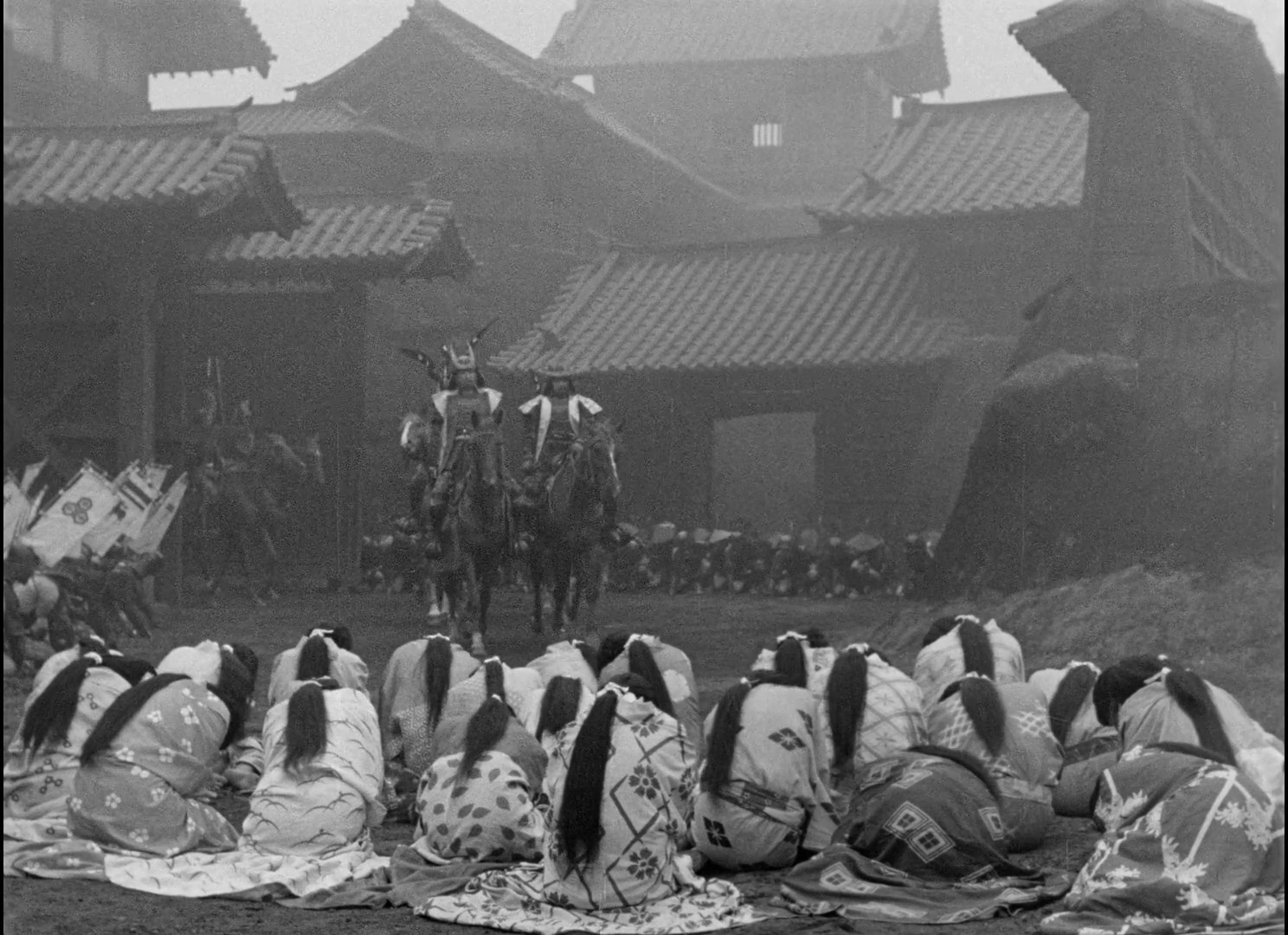
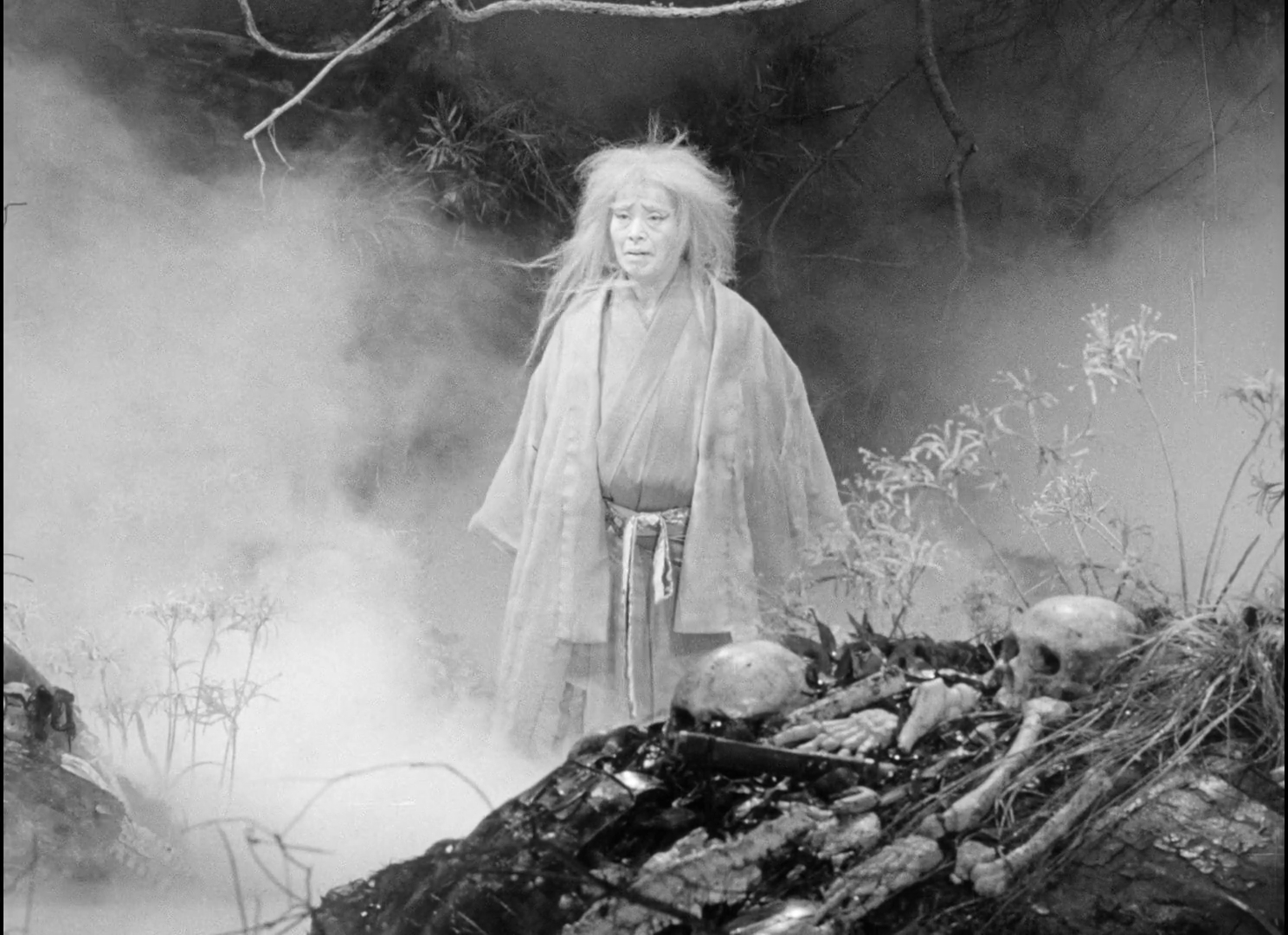
Akira Kurosawa had purportedly wanted to make an adaptation of Shakespeare’s Macbeth for awhile, but delayed this production given the release of Orson Welles’ adaptation in 1948. This highly stylized iteration (incorporating elements of Noh drama) succeeds on its own merits, transplanting Shakespeare’s play from Scotland to feudal Japan, retaining none of Shakespeare’s original text, and replacing the three witches with a forest spirit:

Indeed, as described by film scholar Stephen Prince in his essay for Criterion Collections:

Kurosawa’s movie is a brilliant synthesis of diverse cultural, aesthetic, and historical sources, only one skein of which derives from Shakespeare… Kurosawa often turned to foreign literary works for his films, but in all cases, the result was a transposition of the source rather than anything as straightforward as an adaptation. His appropriations of Shakespeare… were acts more of historiography than of analysis, and descriptions of the films as adaptations minimize the true nature of what Kurosawa accomplished. In Throne of Blood, with his keenly developed sense of Japanese history, he found a kind of mirror universe in the period of turmoil, treachery, and succession battles that Shakespeare wrote about in Macbeth.

Prince goes on to describe Japan’s Sengoku period (1467-1615), “which was marked by internecine conflicts among rival clans, the absence of a central political power, and the kind of treachery, prevarication, and murder that Kurosawa dramatizes” in this film — thus assuring us that the events displayed are entirely authentic to the setting. (It seems, sadly, that war and paranoid power grabs are both universal and timeless among humanity.)

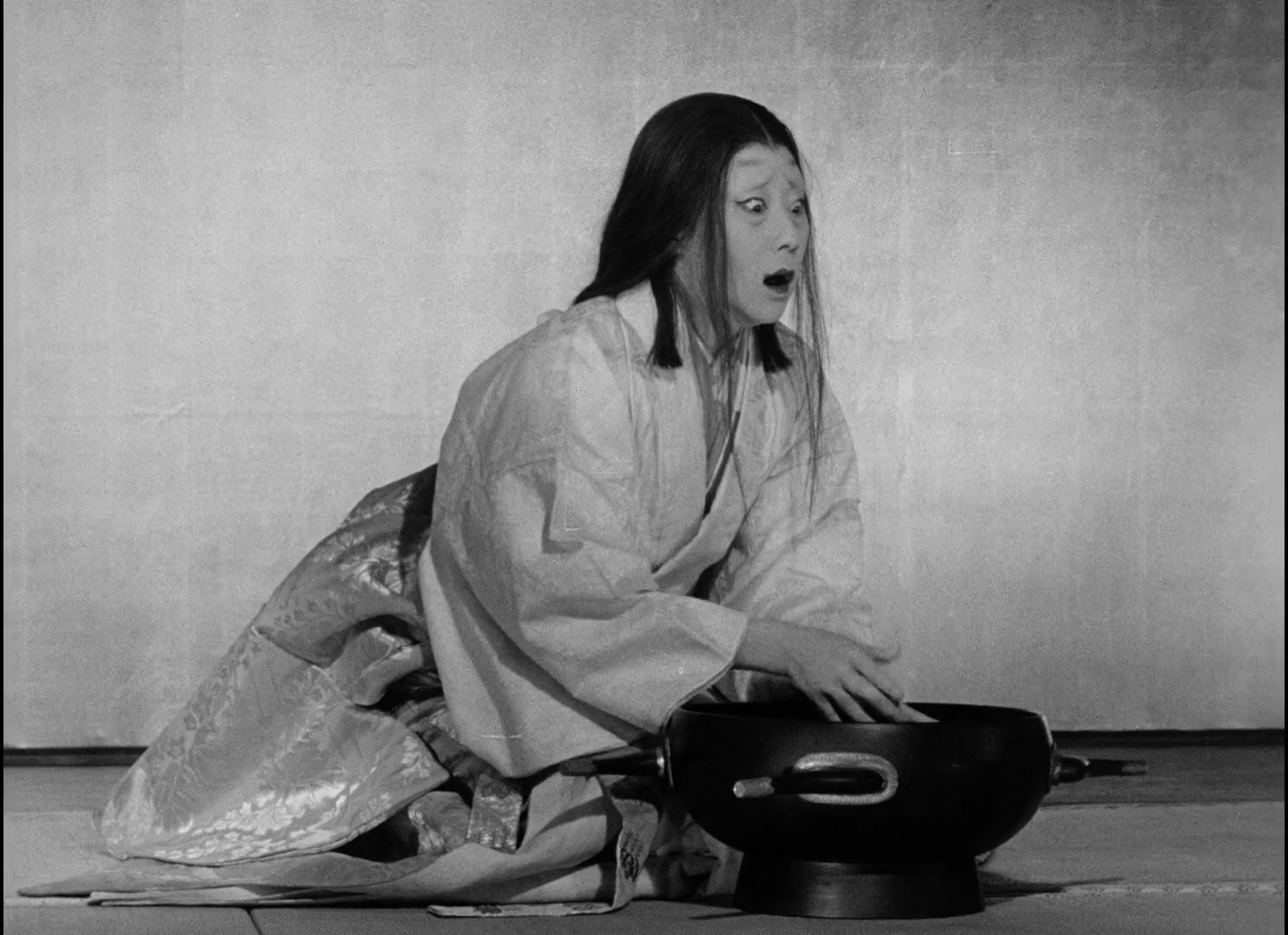
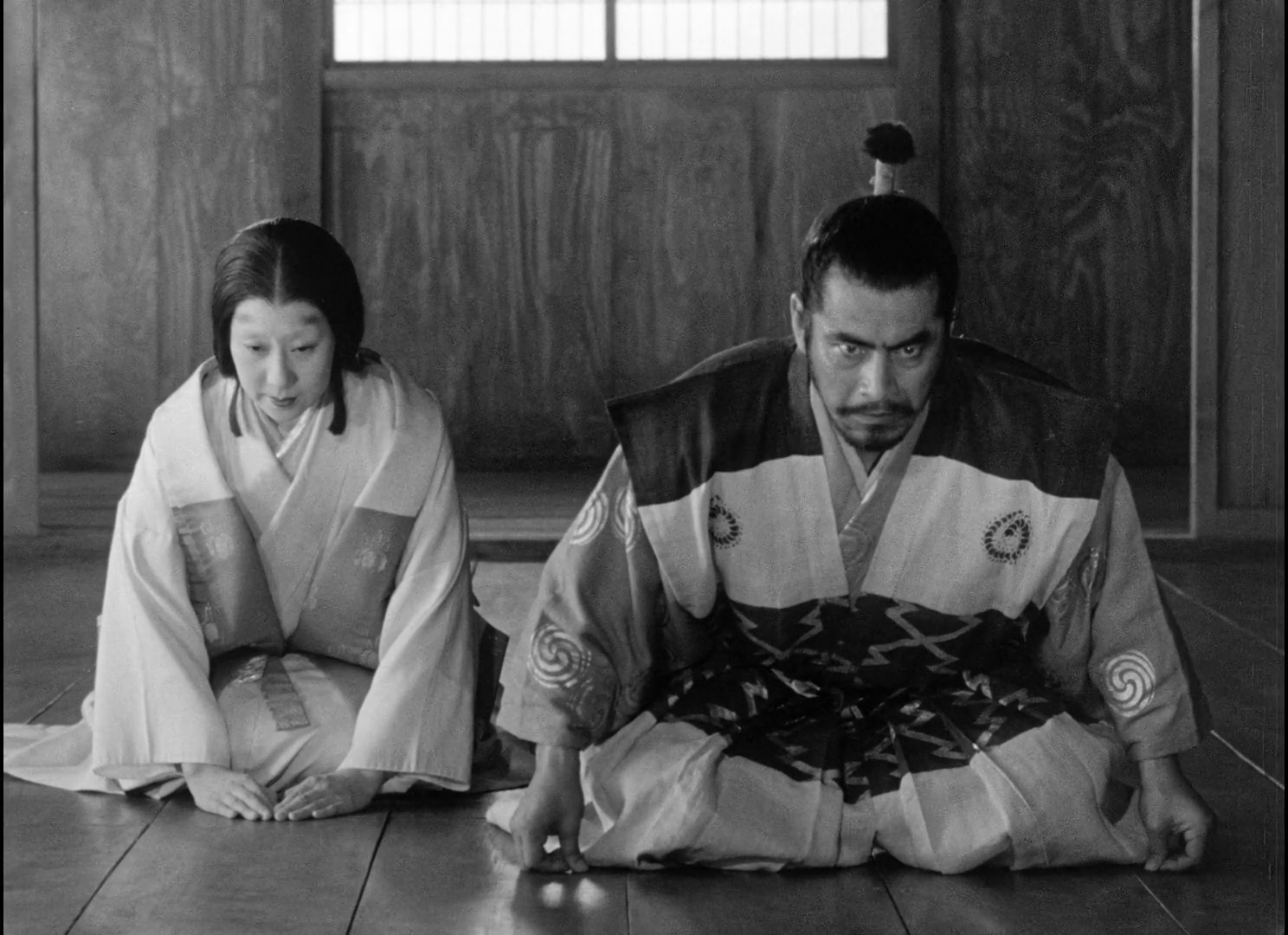
In terms of parallels between the two tales, Washizu’s wife (stoic Yamada) is just as cruelly ambitious and neurotically guilty as Lady Macbeth, attempting in vain to cleanse her hands of the blood she’s caused to spill:

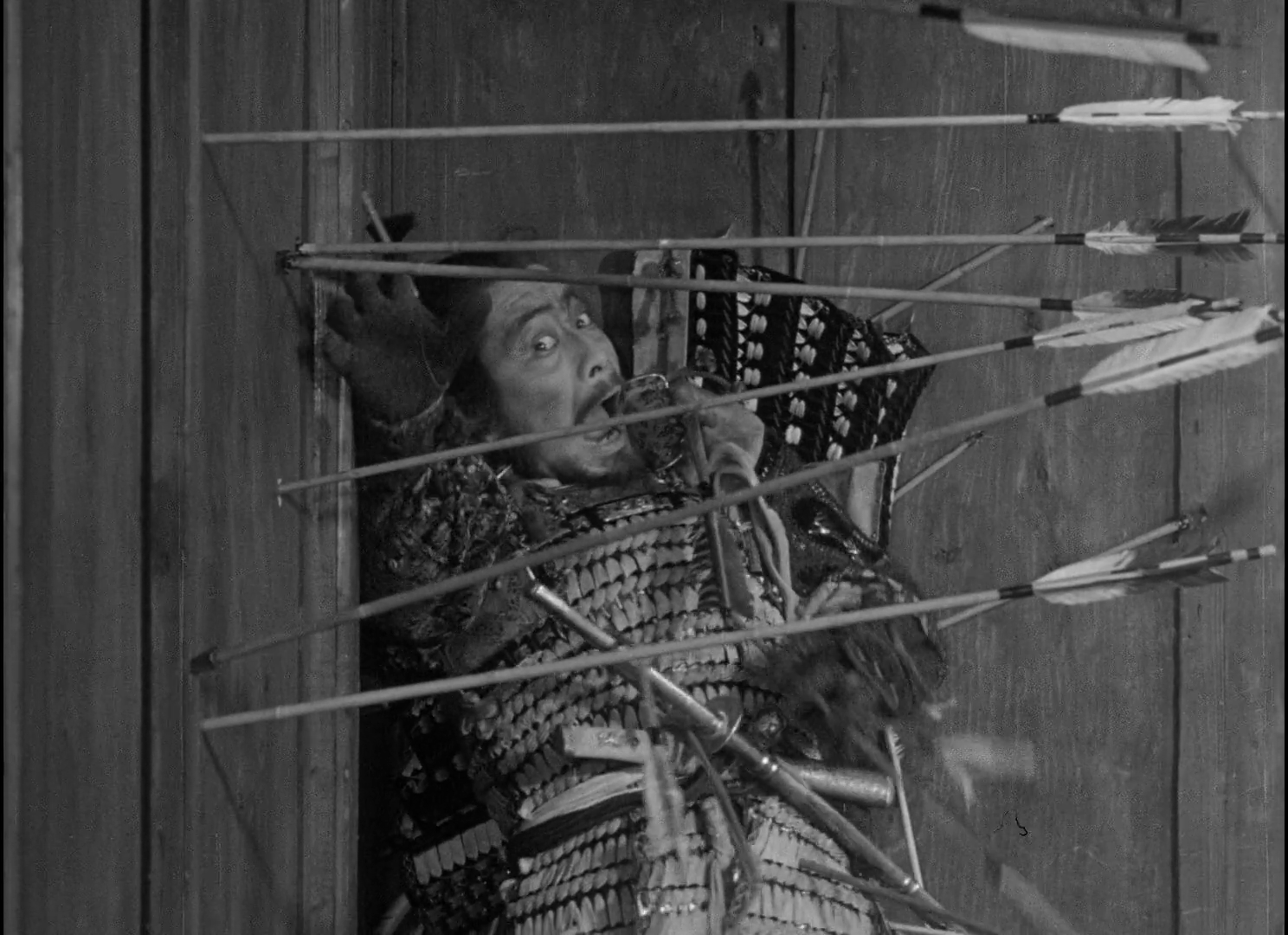
… and while Washizu himself suffers a different type of final blow than Macbeth, it is most definitely fatal (and oh-so-dramatic to watch on-screen).

This atmospheric film remains among Kurosawa’s best, and should be seen at least once by all film fanatics.

Notable Performances, Qualities, and Moments:

  • Toshiro Mifune as Taketori Washizu
  • Atmospheric cinematography and sets
  • Eiji Tsuburaya’s special effects

Must See?
Yes, as another masterful outing by Kurosawa.

Categories

  • Foreign Gem
  • Important Director

(Listed in 1001 Movies You Must See Before You Die)

Links:

Black Orpheus (1959)

Black Orpheus (1959)

“True love? Is there such a thing?”

Synopsis:
A guitar-playing cable-car conductor (Bren Mello) engaged to a pushy flirt (Lourdes de Oliveira) falls in love with a naive young woman (Marpessa Dawn) who has fled to Rio after being chased by a figure clad as Death (Adhemar Ferreira da Silva).

Genres, Themes, Actors, and Directors:

  • Carnivals and Circuses
  • Love Triangle
  • Musicals
  • South and Central American Films
  • Star-Crossed Lovers

Response to Peary s Review:
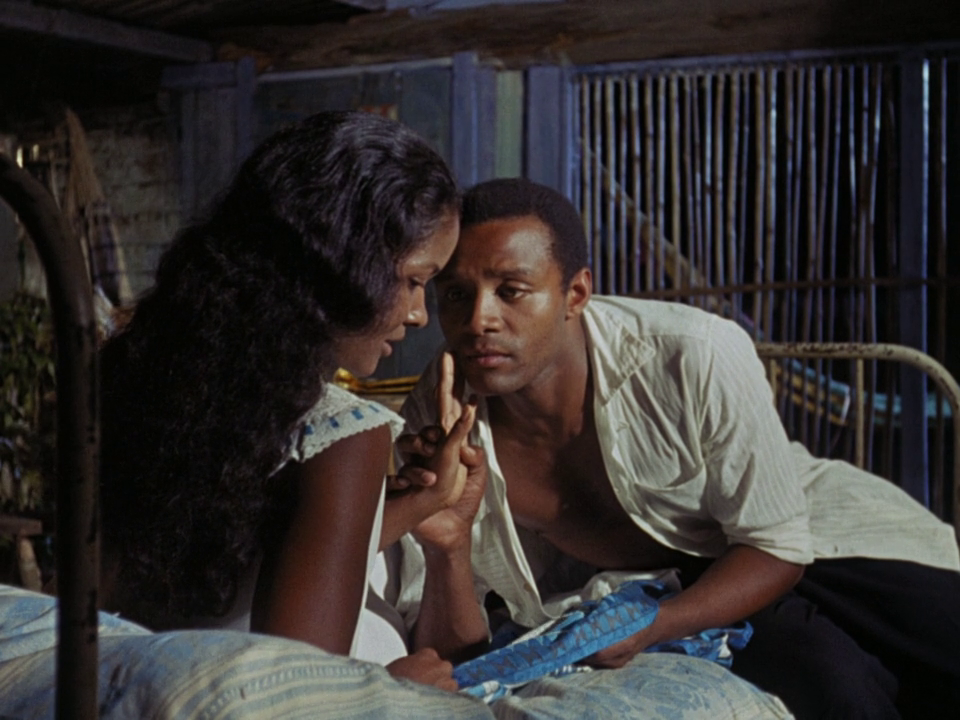
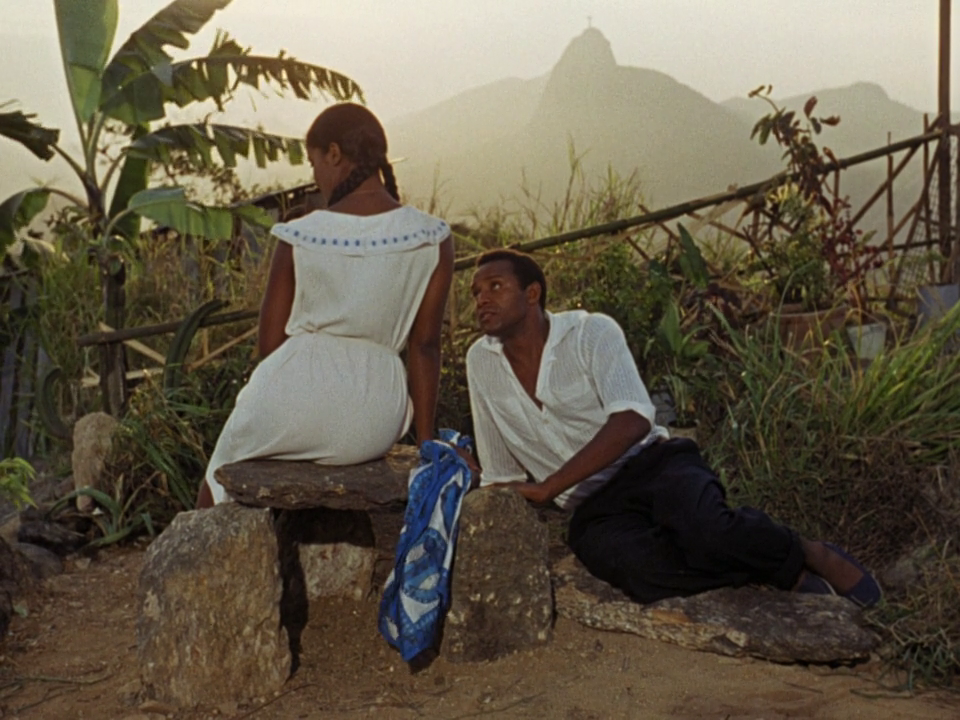
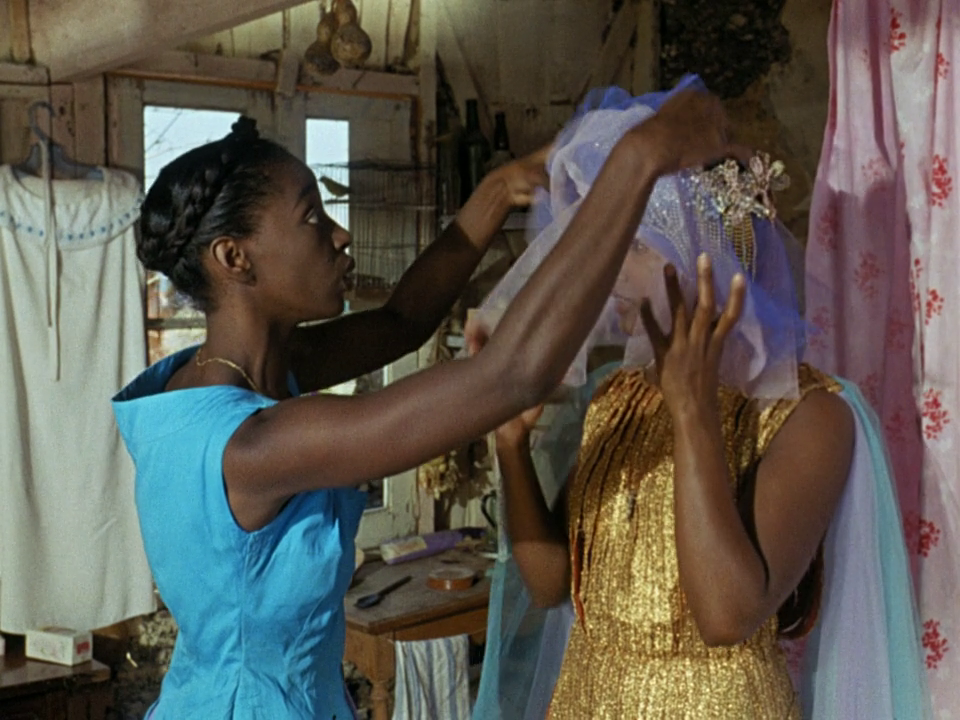
As Peary writes, this “popular Brazilian film by Marcel Camus” — which was the “Academy Award Winner for Best Foreign Film” — “updates [the] myth of Orpheus and Eurydice to modern Rio,” set during “carnival time” when “the city is festive and romantic.” He points out this is “one of the first films with black characters that was popular with American white audiences:”

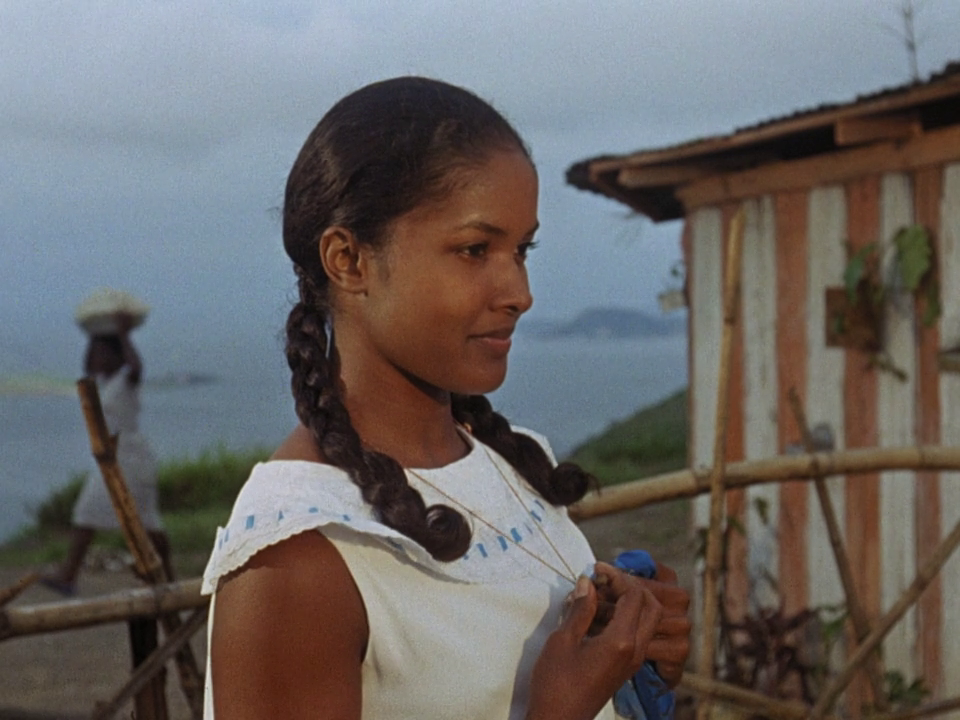
… and that “females tend to like it better than males, perhaps because of [the] extensive dancing and music (indeed, the film is like an epic dance).” He notes it’s “an extremely colorful film, with emphasis on local customs and costumes” as well as “splendid photography by Jean Bourgoin [that] captures [the] glorious setting.”


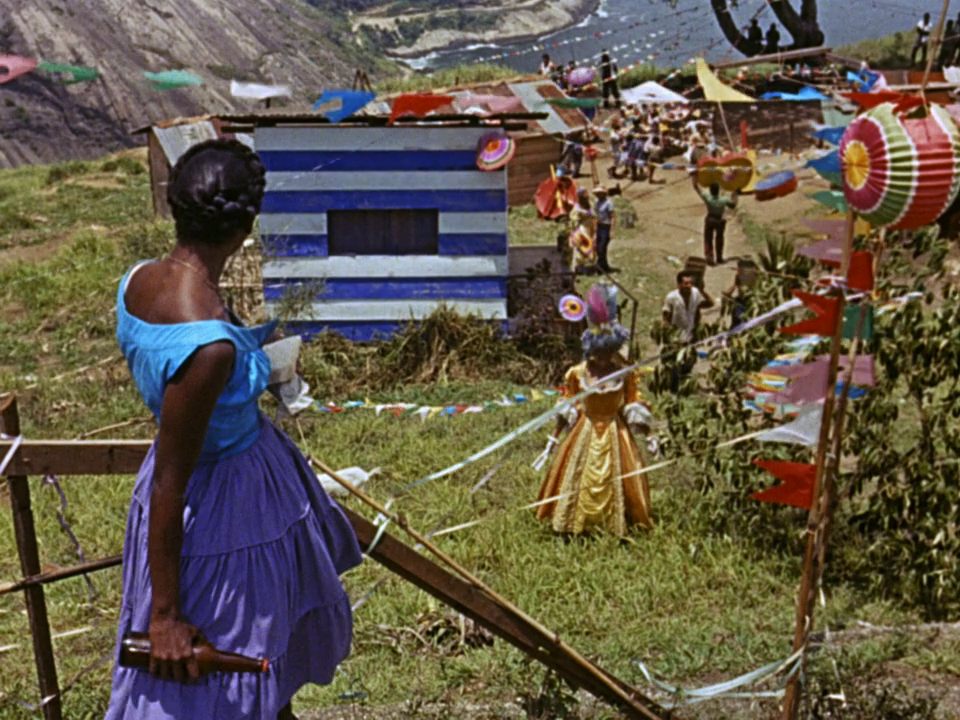
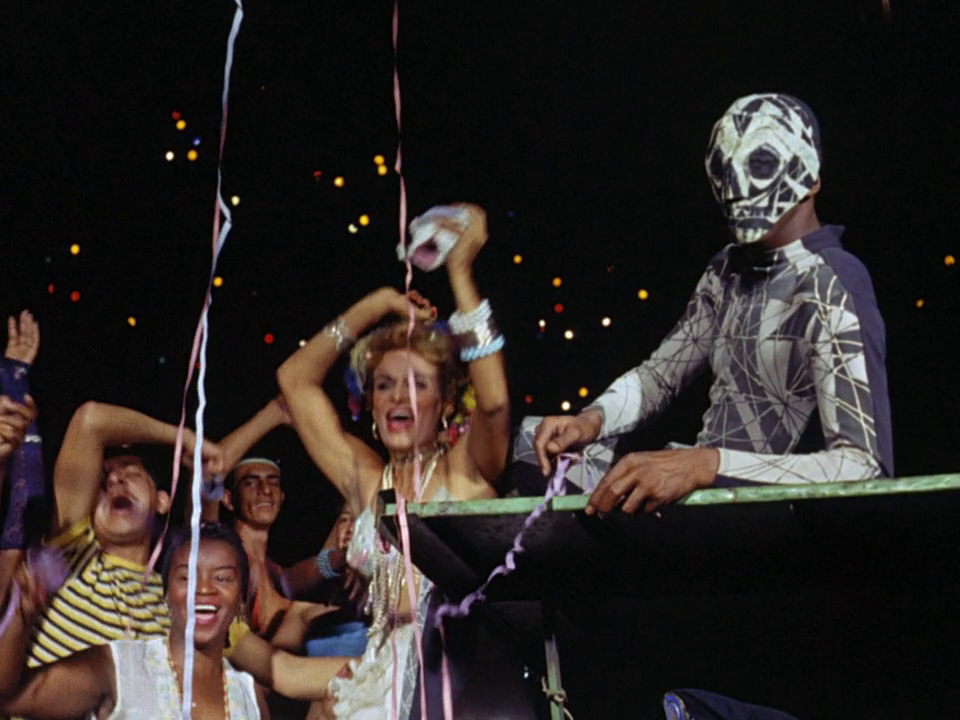
What Peary’s review curiously neglects to mention is the justifiable controversy over how, as described in Movie Diva’s review, “Poverty was romanticized, with the squalid favelas (shanty towns) shown as picturesque neighborhoods:”

… “blessed with great views and colorful décor, filled with charming, carefree, sexually joyful people.” Indeed, this film — made through the gaze of a white (French) male director — is notable for opening up the world’s eyes and ears to the joys of Brazilian music and dance, but at the cost of authenticity. As such, it’s a decidedly mixed bag — but it remains worth a one-time look by film fanatics simply for its visual and aural beauty, and for its historical relevance.

Notable Performances, Qualities, and Moments:

  • Jean Bourgoin’s cinematography

  • Colorful sets and costumes

  • An incredible score by Luiz Bonfá and Antonio Carlos Jobim

Must See?
Yes, for its historical relevance.

Categories

  • Historically Relevant

(Listed in 1001 Movies You Must See Before You Die)

Links:

Ballad of a Soldier (1959)

Ballad of a Soldier (1959)

“Instead of my decoration, could I go home to see my mother?”

Synopsis:
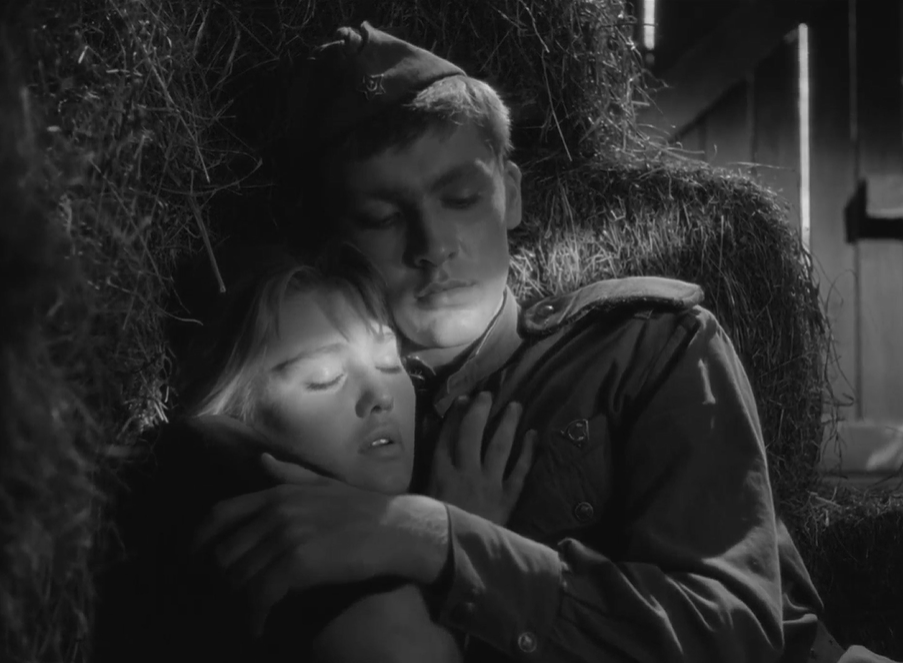
During World War II, a 19-year-old private (Volodya Ivashov) is given unprecedented leave to visit his mother (Antonina Maksimova) for two days, Along the way he helps a wounded soldier (Yevgeni Urbansky) return to his wife, and falls for a beautiful young woman (Zhanna Prokhorenko) stowing away on a train.

Genres, Themes, Actors, and Directors:

  • First Love
  • Road Trips
  • Russian Films
  • Soldiers
  • World War II

Response to Peary’s Review:
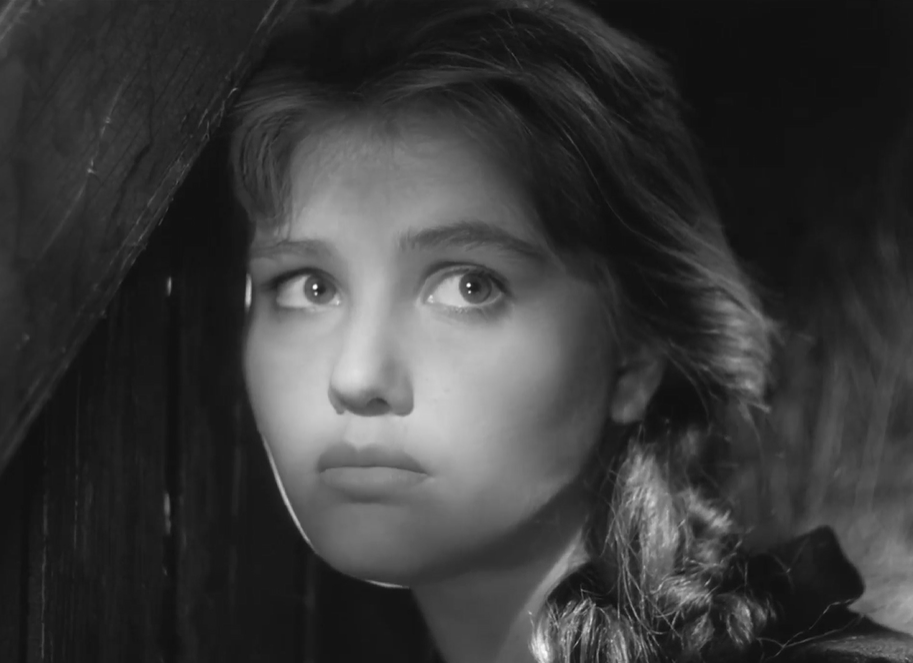
Peary writes that this Soviet-era film — made with “sensitive and warm” direction by Ukrainian Grigori Chukhrai — remains “one of our most powerful anti-war films, one that effectively conveys the suffering of the men and (especially) women who are separated when there is a call to arms.” (Sadly, this remains as true and current as ever in the very region of the world where this movie takes place.) He notes that “the storyline is simple” but by opening the film with narration informing us that Ivashov “was killed in battle during WWII” we view the events that occur through a different perspective.

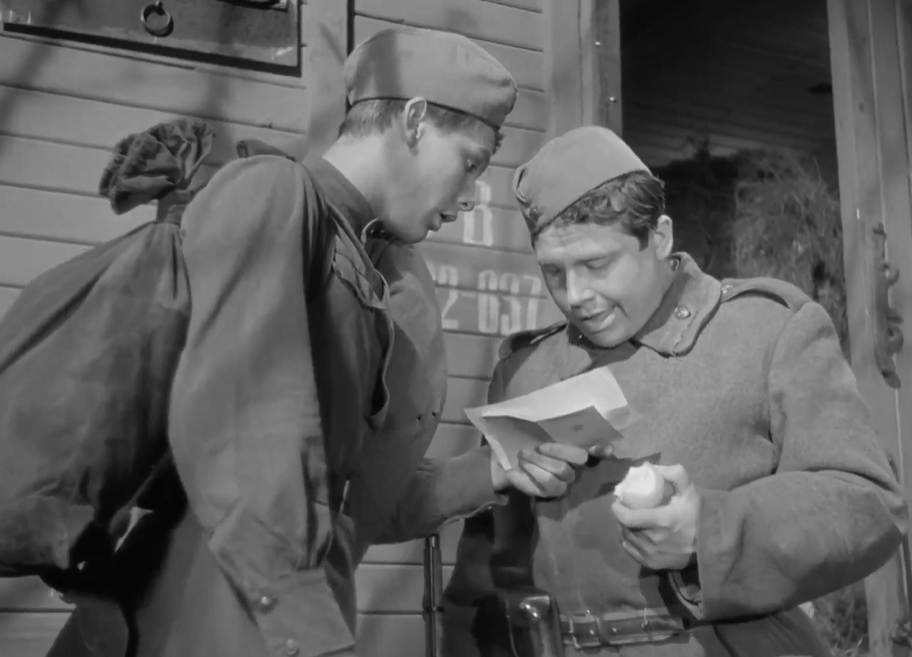
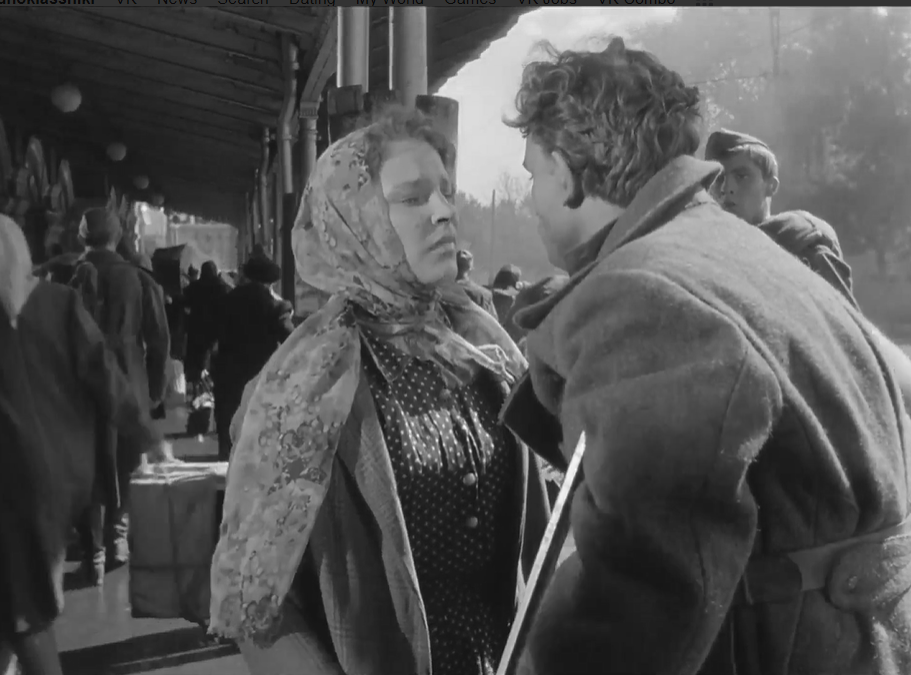
Peary asserts that “critic Dwight MacDonald correctly criticized this film (in 1960) for making all Russian people and soldiers so lovable” — well, except for that fellow on the train who blackmails Ivashov out of a can of meat:

… but he believes that “the anti-war message is sincerely delivered, and the emphasis on the suffering of those whose husbands and sons are in combat seems correct.” Peary further points out that Chukhrai’s “depiction of women is admirable,” and that he “lovingly films Russia’s landscape and the lovely faces of his actors and actresses.”

I’m in overall agreement with Peary’s review of this simple but touching film, one which humanizes the enemy (Russians) and touches upon the universality of our needs and desires (family, love, connection). Along with The Cranes Are Flying (1957), it provides compelling evidence of a short-lived period of Soviet cinema when creative constraints were temporarily lifted, and remains well worth a look.

Notable Performances, Qualities, and Moments:

  • Atmospheric cinematography

  • Numerous memorable moments

Must See?
Yes, as a classic of post-war Soviet cinema.

Categories

  • Foreign Gem
  • Historically Relevant

Links:

Cranes Are Flying, The (1957)

Cranes Are Flying, The (1957)

“That’s what love is, my dear: a harmless mental illness.”

Synopsis:
During World War II, a young Russian (Tatyana Samoylova) is devastated to learn that her fiance (Aleksey Batalov) has enlisted as a soldier, and soon finds herself wooed by Batalov’s persuasive cousin (Vasiliy Merkurev).

Genres, Themes, Actors, and Directors:

  • Infidelity
  • Love Triangle
  • Russian Films
  • World War II

Response to Peary’s Review:
As Peary notes, this “touching love story set during WWII” features “an illuminating performance by Tatyana Samoylova… who looks like a cross between the young Vivien Leigh and Jennifer Jones.”

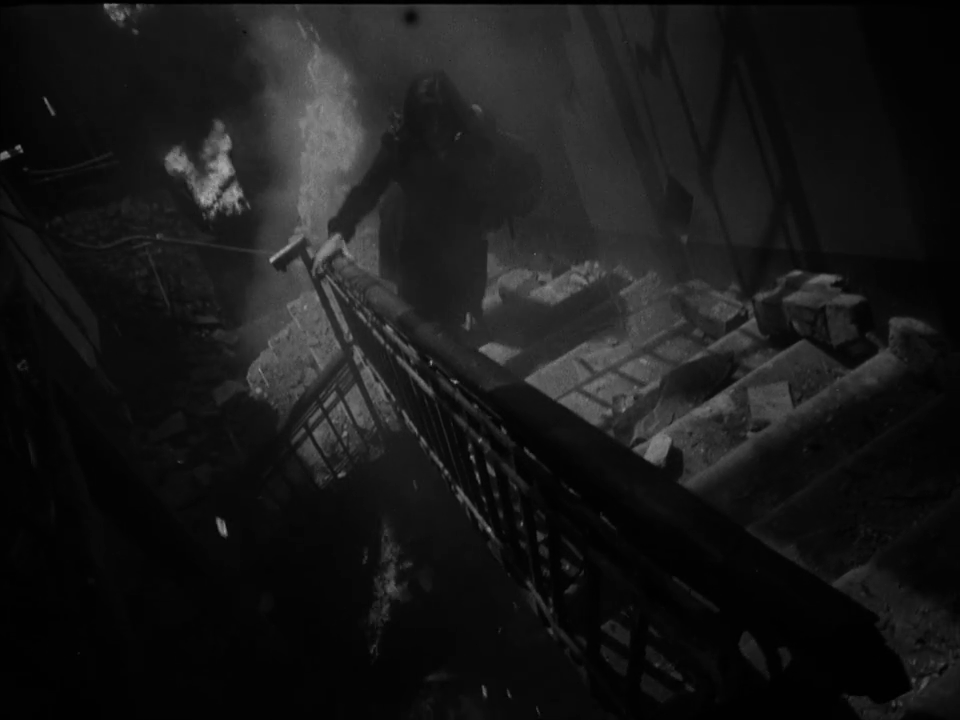
He writes that “we and Batalov’s superpatriotic doctor father [Vasiliy Merkurev] sympathize with Samoylova… because she is brave, tender (she works in a hospital), and — despite her marriage — waits obsessively for her lover’s return.” Peary describes this as “the first Russian film to play in the U.S. after a cultural-exchange agreement,” noting that “it suffers” (I disagree) “whenever propaganda sneaks in and characters are induced to forget personal tragedy and realize that their future happiness will result if they play a part in Russia’s cultivation.” He points out several “powerful scenes,” including “Samoylova running up the stairs of her burning building and discovering that her apartment no longer exists”:

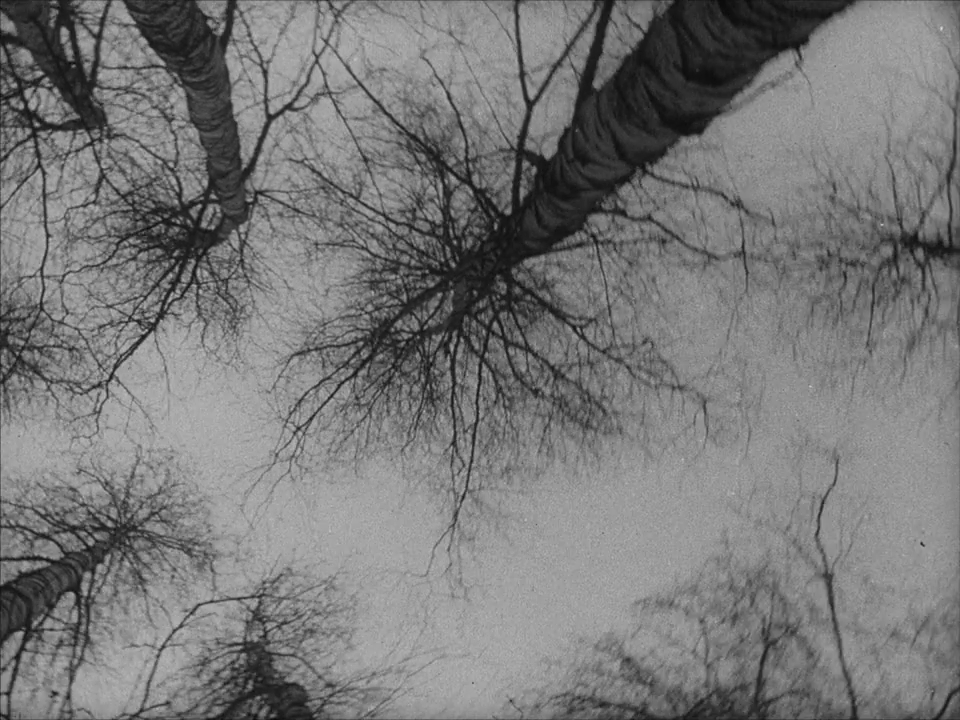
… “Batalov being shot, looking up into the birches and fantasizing his return to Samoilova and their marriage”:

… and “the terrifying seduction [rape] scene during which bombs explode, glass shatters, and wind blows.”

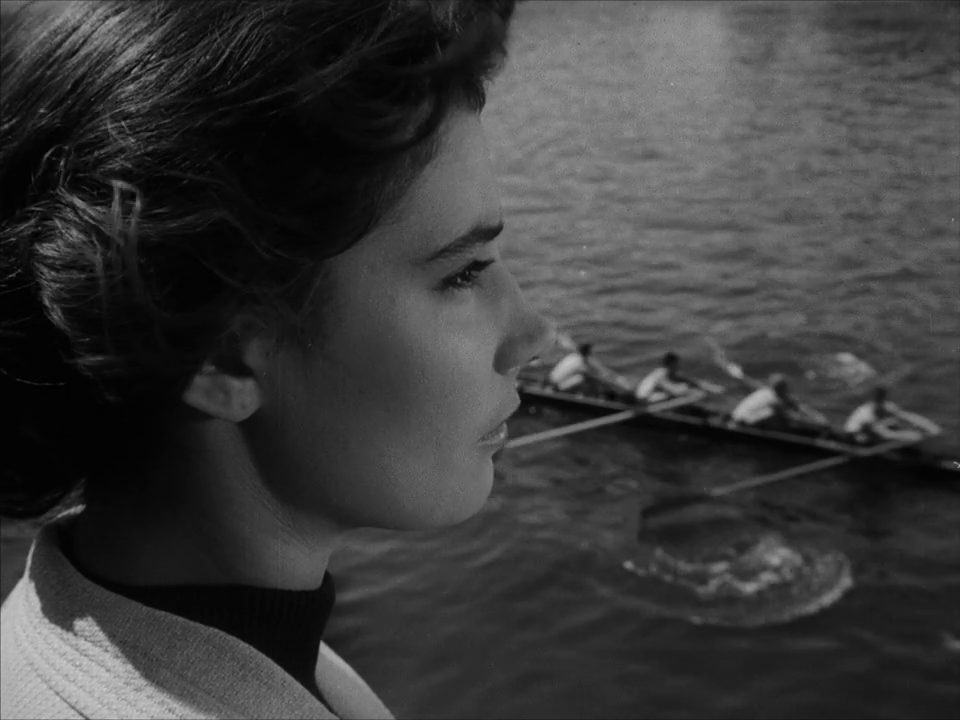
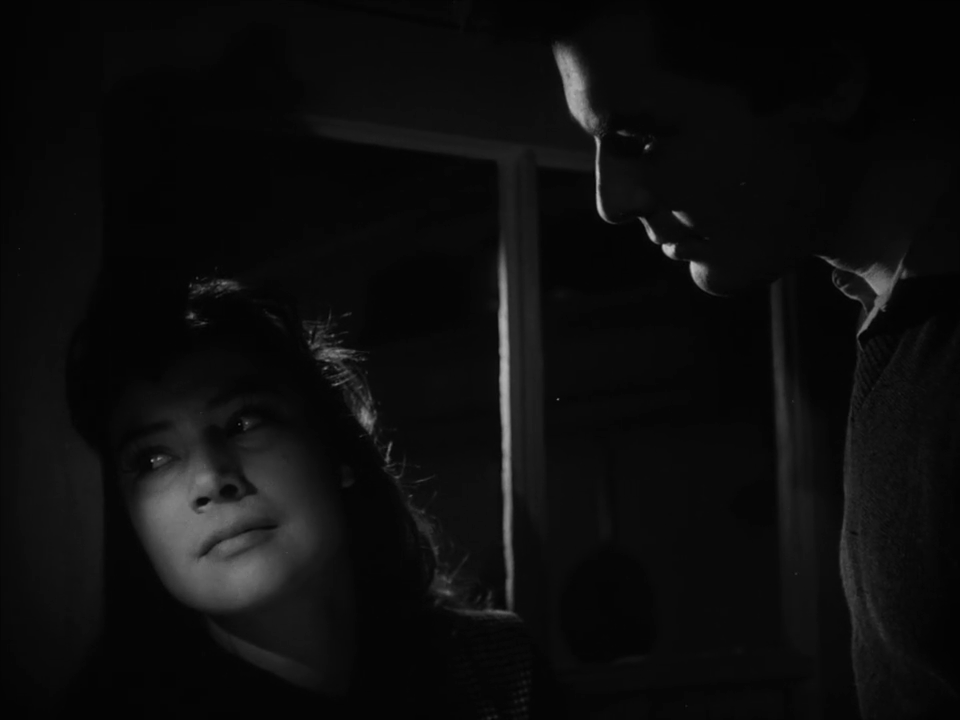
Other memorable scenes include early moments between the carefree young lovers:

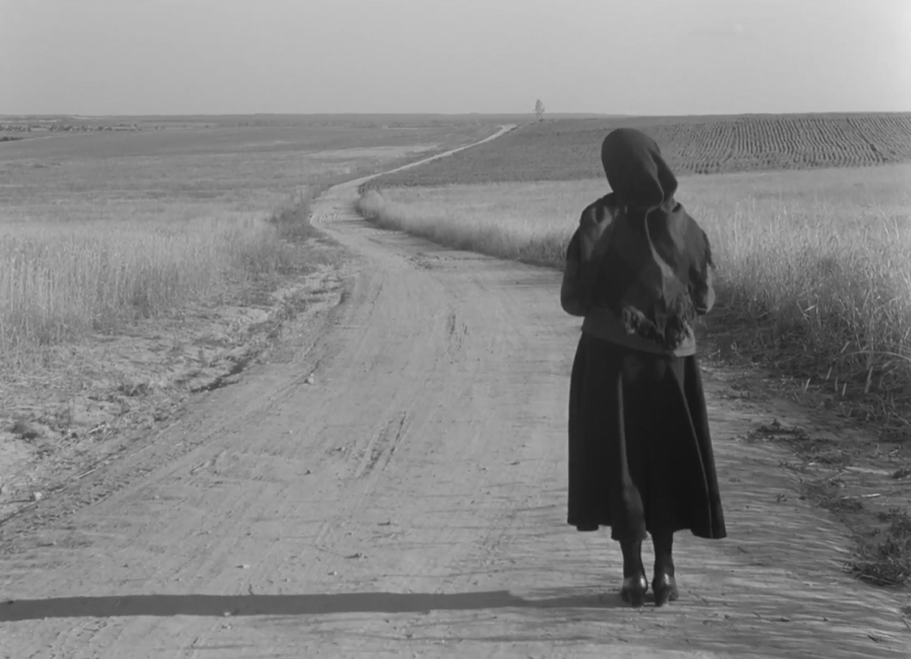
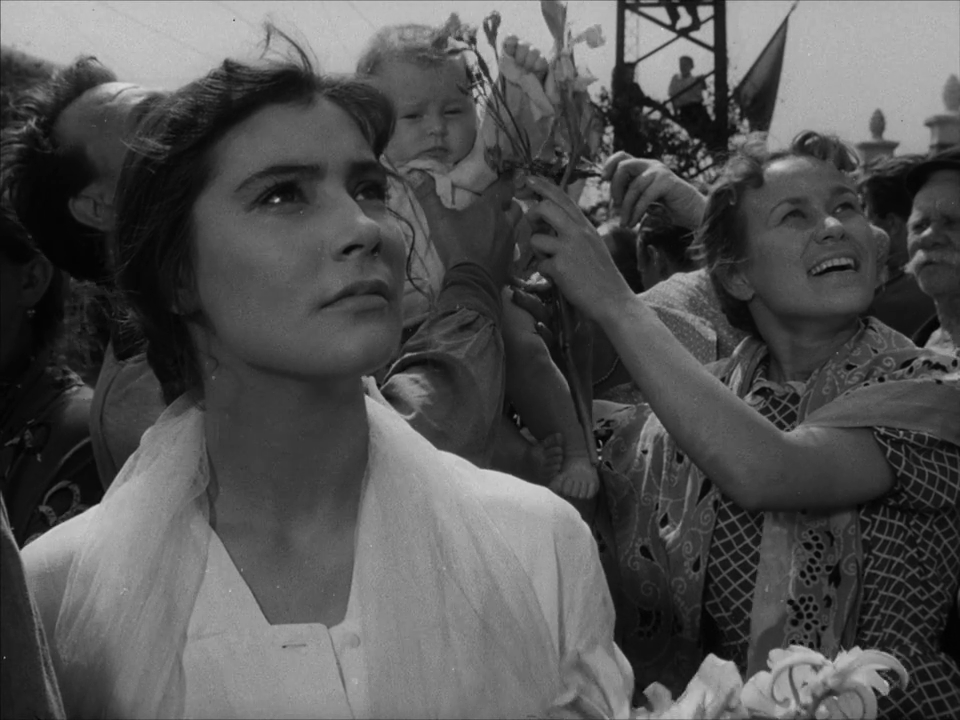
… and two masterfully shot tracking sequences showing soldiers and their loved ones during departures and arrivals:

As Peary writes, the “direction by Mikhail Kalatozov is emotionally charged and visually innovative,” making this a consistently engaging Soviet-era film that is still very much worth viewing.

Notable Performances, Qualities, and Moments:

  • Tatyana Samoylova as Veronika
  • Atmospheric cinematography and overall camerawork

Must See?
Yes, as a fine post-WWII Soviet-era film.

Categories

  • Foreign Gem
  • Important Director

(Listed in 1001 Movies You Must See Before You Die)

Links:

Paths of Glory (1957)

Paths of Glory (1957)

“One way to maintain discipline is to shoot a man now and then.”

Synopsis:
During World War I, French General Broulard (Adolphe Menjou) dares ambitious General Mireau (George Macready) to order Colonel Dax (Kirk Douglas) to send his men out on a suicidal mission to capture the impregnable “Anthill”. When most of Dax’s men refuse to venture out onto the deadly battlefield, infuriated Mireau orders three of them — “undesirable” Timothy Carey, a soldier who has witnessed his commander’s cowardice (Ralph Meeker), and randomly selected Joe Turkel — to be court martialed and executed.

Genres, Themes, Actors, and Directors:

  • Adolphe Menjou Films
  • Courtroom Drama
  • Falsely Accused
  • George Macready Films
  • Kirk Douglas Films
  • Mutiny
  • Ralph Meeker Films
  • Ruthless Leaders
  • Stanley Kubrick Films
  • World War I

Response to Peary s Review:
Peary opens his review of this film by noting that “Stanley Kubrick’s powerful drama is primarily an attack on the military mind, a scathing attack on the top brass of all armies who are willing to sacrifice their own men, their pawns, rather than look weak” — and he adds that “while it doesn’t contend that wars shouldn’t be conducted, it succeeds as an anti-war film because it makes it clear that the innocent, powerless men in the trenches will always be at the mercy of the super-patriotic, narrow-minded generals who are obsessed with flag and country but have no feelings for the obedient foot soldier.”

Peary argues that “the excellent script by Kubrick, Calder Willingham, and Jim Thompson is unrelentingly bleak but thought-provoking”: while “earlier films presented evil generals,” “none before contended that the entire military system was evil.” He writes that the “film is extremely intense but not heavy-handed; Kubrick’s handling of actors has never been better” — and he points out that “the most frightening thing about the generals is that they’re not much different from the military men in Dr. Strangelove.”

Peary names this film the Best Movie of the Year in his Alternate Oscars (instead of The Bridge On the River Kwai), where he writes that “if the film has a weakness, it’s that it is just too easy to agree with the director’s point of view (as it is with the same year’s liberal courtroom drama 12 Angry Men, my favorite nominated film of 1957).” Otherwise, he notes that “everything else rings true and has impact,” with the film featuring “first rate” acting in which “the characters are essentially ‘types’ but they all come across as distinct people.”

He also calls out Kubrick’s directorial acumen, including the “impressive tracking shot [in which] Macready moves along through the trenches, giving similar pep talks to individual soldiers before battles” (“Ready to kill more Germans?”) as in The Red Badge of Courage (1951):

… and his use of “light in night sequences to build tension.”

Indeed, this film has lost little to none of its power, and remains among Kubrick’s best outings. Despite being utterly depressing, it is worthy of repeat viewings both as a reminder of the gritty brutality of war:

… and how easily Those in Power can dehumanize the individuals they’re controlling. Absolute power corrupts, absolutely.

Notable Performances, Qualities, and Moments:

  • George Macready as General Mireau
  • Kirk Douglas as Col. Dax
  • Timothy Carey as condemned Private Ferol
  • Adolphe Menjou as General Broulard
  • George Krause’s cinematography

Must See?
Yes, as an enduring classic by a master director.

Categories

  • Genuine Classic
  • Important Director

(Listed in 1001 Movies You Must See Before You Die)

Links:

Saint Joan (1957)

Saint Joan (1957)

“They did not stop me — nor will anybody.”

Synopsis:
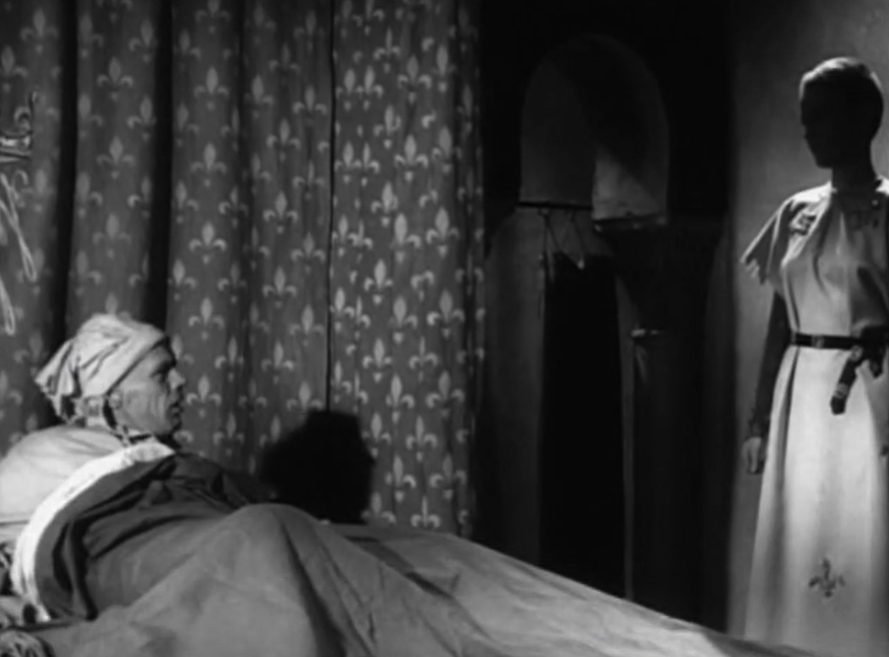
In 15th century France, King Charles VII (Richard Widmark) is visited in his dreams by Joan of Arc (Jean Seberg), who burned at the stake for heresy after leading the French army against the English in the siege at Orléans, and then refusing to denounce the voices she heard.

Genres, Themes, Actors, and Directors:

  • Anton Walbrook Films
  • Biopics
  • Christianity
  • Harry Andrews Films
  • Historical Drama
  • Jean Seberg Films
  • John Gielgud Films
  • Non-Conformists
  • Otto Preminger Films
  • Play Adaptations
  • Richard Widmark Films
  • Royalty and Nobility
  • Strong Females

Review:
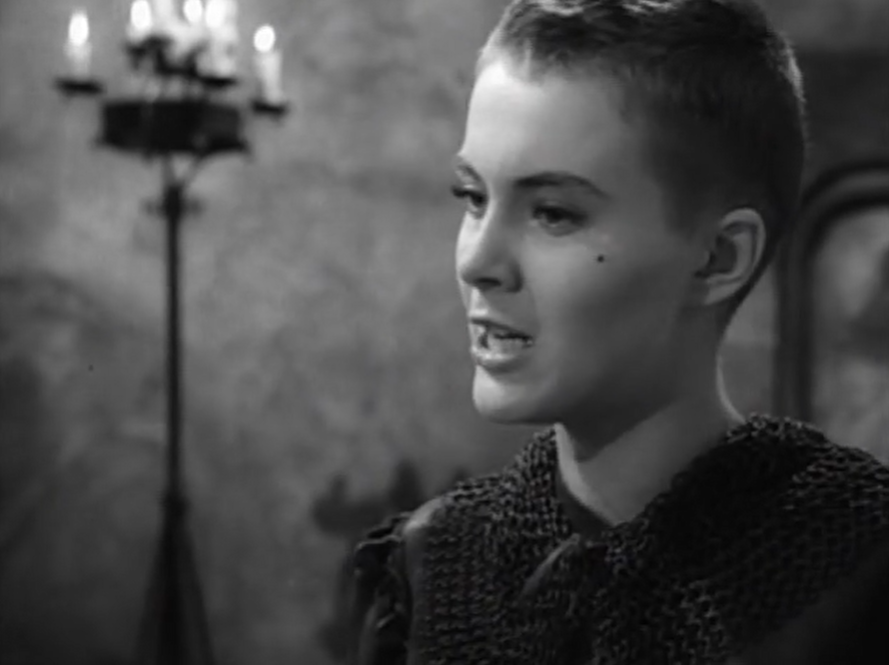
Otto Preminger purportedly screened 18,000 young women for the central role in his adaptation of George Bernard Shaw’s 1923 play, and landed on Iowan would-be starlet Jean Seberg. Unfortunately, Seberg was (unfairly) lambasted for her performance here, though Preminger immediately cast her in his next film, Bonjour Tristesse (1958) — and of course she went on to New Wave stardom in Godard’s Breathless (1960). I haven’t seen or read Shaw’s original play, so can’t comment on its truncation and alteration here, but Grahame Greene’s screenplay flowed just fine for me. Seberg is appropriately earnest as the strong-willed Joan, never letting up on her insistence that she’s being guided by God:

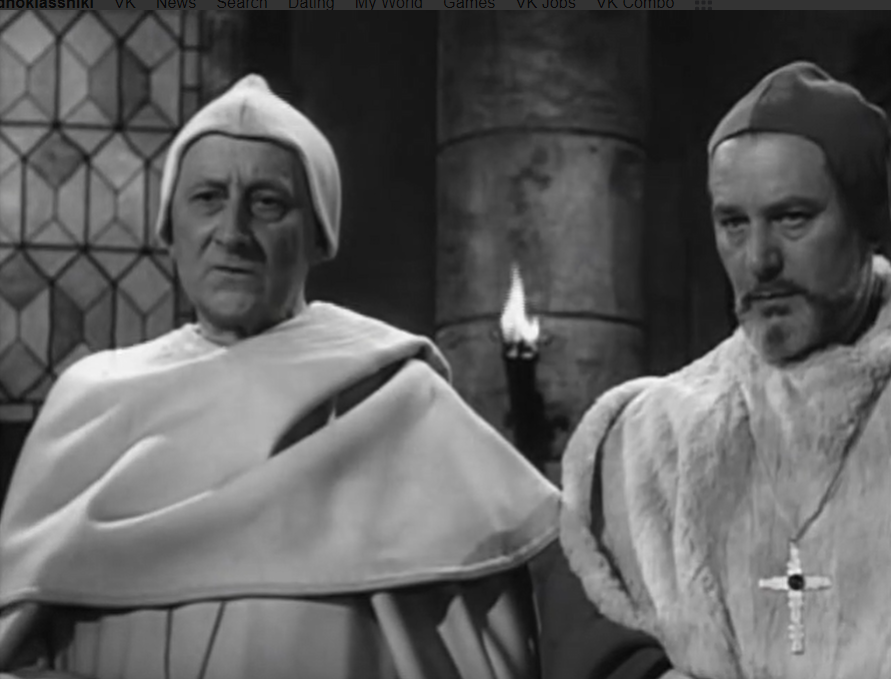
… and she’s surrounded by top-class talent, including John Gielgud as the Earl of Warwick, Felix Aylmer as the Inquisitor, and Anton Walbrook as the Bishop of Beauvais.

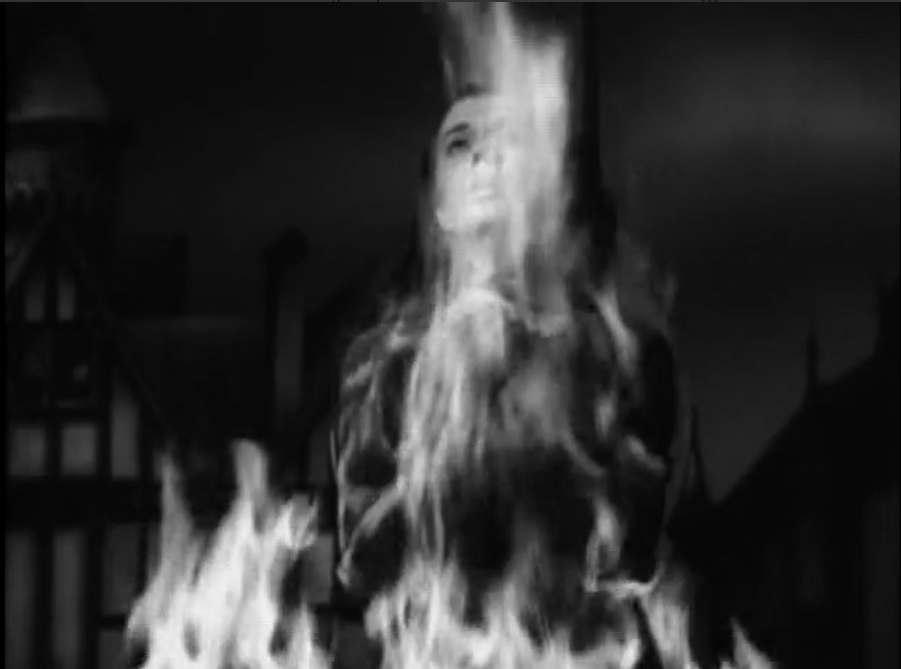
The final stake-burning sequence (which apparently accidentally involved real risk) is authentically frightening:

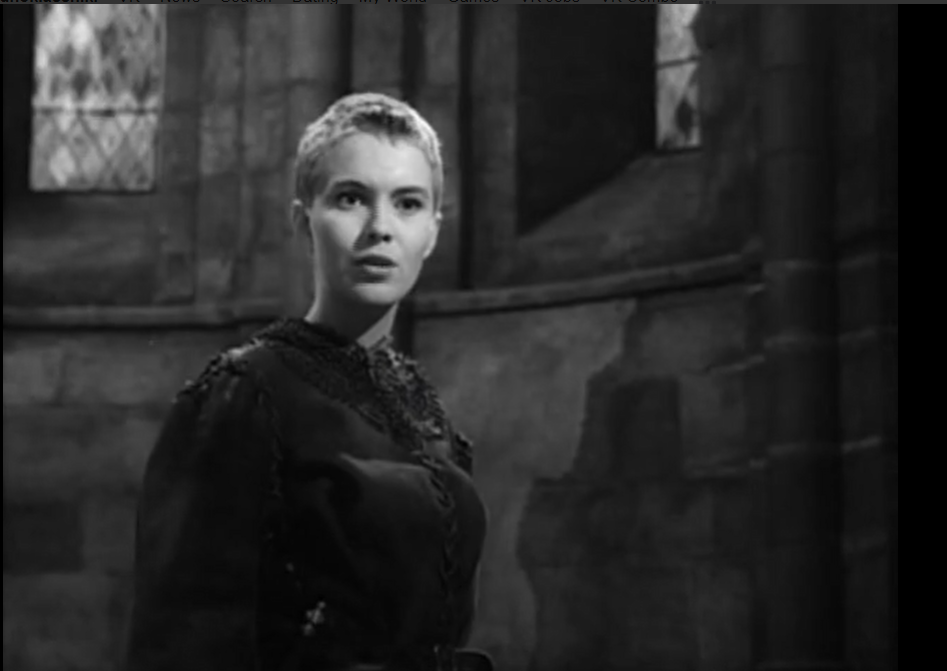
… and the sets and costumes effectively evoke an entirely different time and place. This one isn’t as bad as its reputation would lead you to believe.

Notable Performances, Qualities, and Moments:

  • Jean Seberg as Joan
  • Fine supporting performances across the cast
  • Georges Périnal’s cinematography

Must See?
No, though it’s worth a one-time look.

Links:

Crimson Kimono, The (1959)

Crimson Kimono, The (1959)

“You can’t feel for me unless you are me.”

Synopsis:
After the mysterious murder of a stripper (Gloria Pall) in Los Angeles, a Japanese-American detective (James Shigeta) and his partner (Glenn Corbett) both fall for an artist (Victoria Shaw) who has sketched an image of a suspect — but would an inter-racial relationship between Shigeta and Shaw be considered “acceptable”?

Genres, Themes, Actors, and Directors:

  • Anna Lee Films
  • Artists
  • Asian Americans
  • Cross-Cultural Romance
  • Detectives and Private Eyes
  • Los Angeles
  • Love Triangle
  • Murder Mystery
  • Race Relations and Racism
  • Sam Fuller Films

Review:
As Peary notes, this “Sam Fuller film dealing with racism and the clash between American and Asian cultures” covers “familiar Fuller themes,” and is “ahead of its time.” He points out that it “has some exciting visuals” — including “the murder of the stripper on an LA street (Fuller didn’t inform the public that a film was being made):”

… and “the smashingly edited poolroom fight.”

However, he adds that “some terrific, offbeat dialogue is mixed with embarrassingly trite dialogue,” and argues that the film “suffers because of Shaw, certainly Fuller’s dullest, most proper heroine” (I disagree).

Peary writes that “one doubts that the two men, who’ve been around, would quickly fall for her at the expense of their friendship,” but this seems beside the point: they both do fall for her, and she for them, and entanglements ensue.

What emerges — including “feelings of paranoia… within Shigeta,” who “comes to believe that Shaw and Corbett harbor racist feelings toward him” — is of significant interest, and propels the narrative. I also disagree with Peary that “on the plus side are the supporting players, including Corbett’s cigar-smoking, bourbon-guzzling artist friend, Anna Lee”, who consistently overplays her alcoholic character:

Regardless of its flaws, however, this film is unique and bold enough to remain well worth a look. (Though I do have one question: what’s with all the apple eating?)

Notable Performances, Qualities, and Moments:

  • Atmospheric cinematography

  • Excellent use of location shooting in L.A.
  • Intriguing glimpses of mid-century Japanese-American culture


Must See?
Yes, as an unusual outing by a maverick director.

Categories

  • Important Director

Links:

Virgin Spring, The (1960)

Virgin Spring, The (1960)

“A day can start out beautifully, yet end with misery.”

Synopsis:
In medieval Sweden, a father (Max von Sydow) and mother (Birgitta Valberg) seek revenge on the goatherds (Axel Düberg and Tor Iseda) who raped and killed their virginal daughter (Birgitta Pettersson) while their pregnant servant (Gunnel Lindblom) watched in horror.

Genres, Themes, Actors, and Directors:

  • Historical Drama
  • Ingmar Bergman Films
  • Max von Sydow Films
  • Rape
  • Revenge
  • Scandinavian Films

Review:
This adaptation of a 13th century Swedish ballad entitled “Per Tyrsson’s daughters in Vänge” — directed by Ingmar Bergman and scripted by Ulla Isaksson — won an Academy Award as Best Foreign Film of the Year. Isaksson was tasked with ensuring this story came across as more historically accurate than Bergman’s The Seventh Seal (1957), and the result is that we feel we’ve been deposited into an entirely different world (albeit one crafted for the screen).
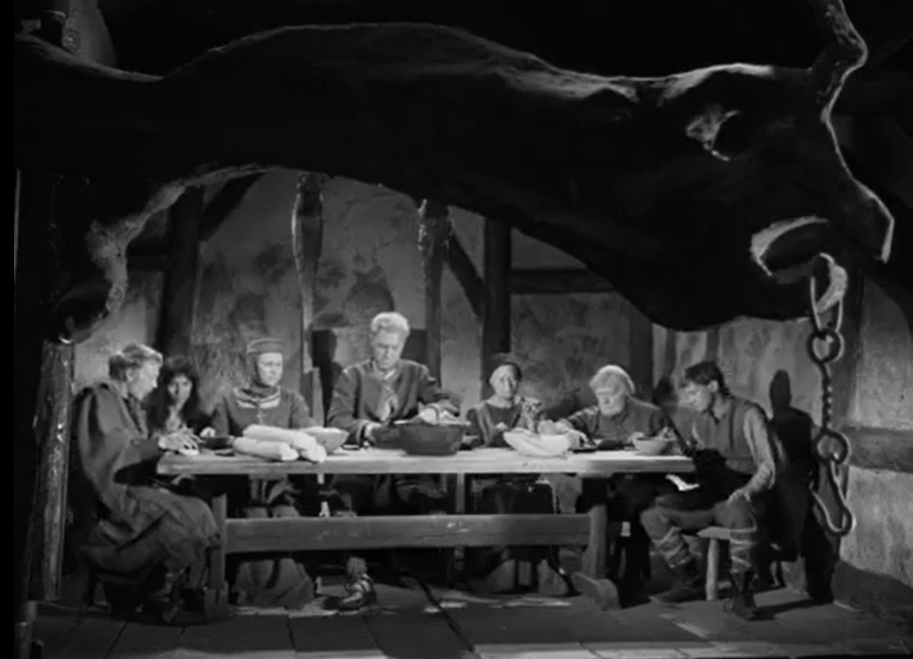
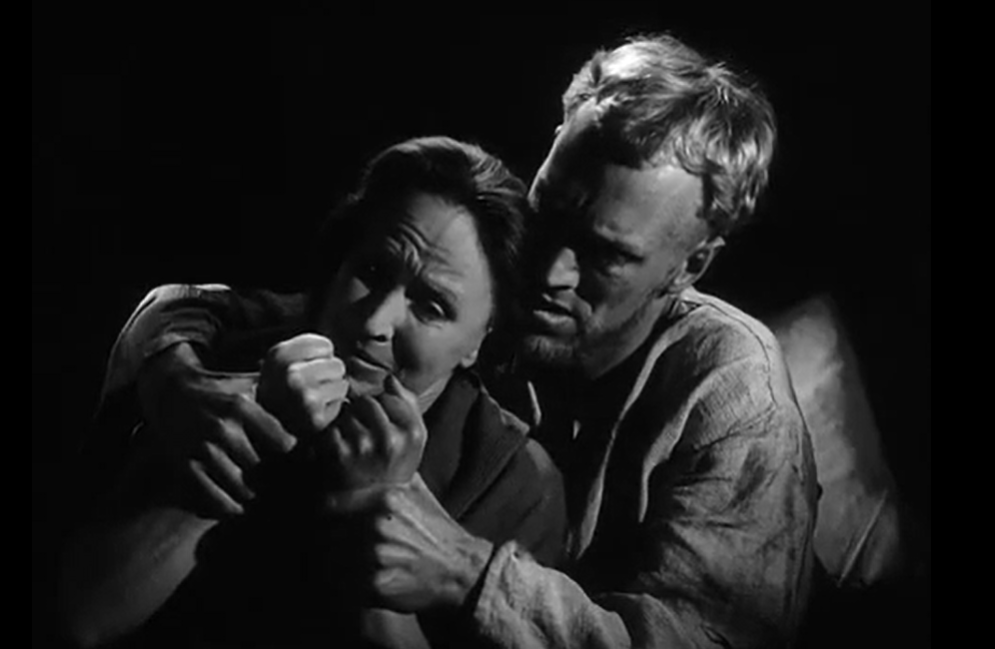
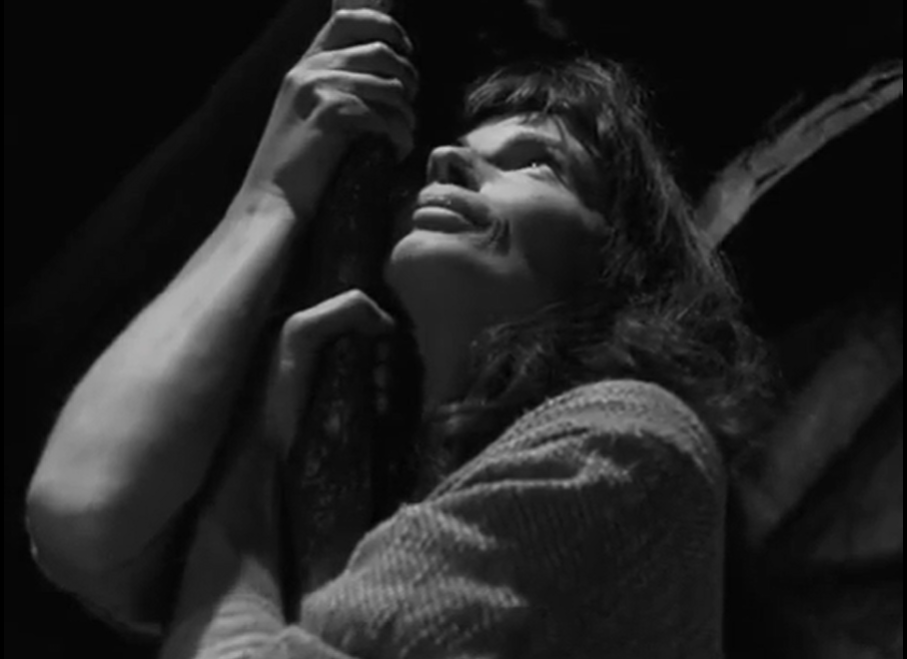
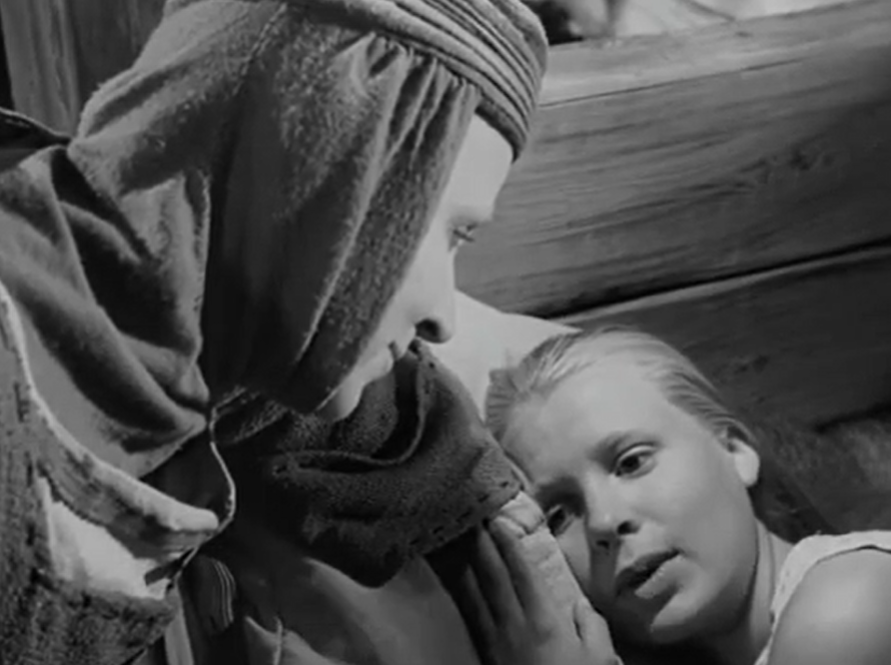
The storyline is a dark tale of violence, revenge, and religion, with a rape scene so graphic (for the time) that it was subject to censorship in the U.S. (For better or for worse, this film was purportedly the inspiration for Wes Craven’s The Last House on the Left.) As the movie opens, we’re introduced to a fearful pregnant girl (Lindblom) praying to Odin:
Lindblom’s “impure”, dark-haired Ingeri is posited as a clear contrast to the innocence of the spoiled young blonde mistress of the house, Karin (Pettersson), whose hyper-religious mother (Valberg) can’t resist giving into the whims of her daughter.
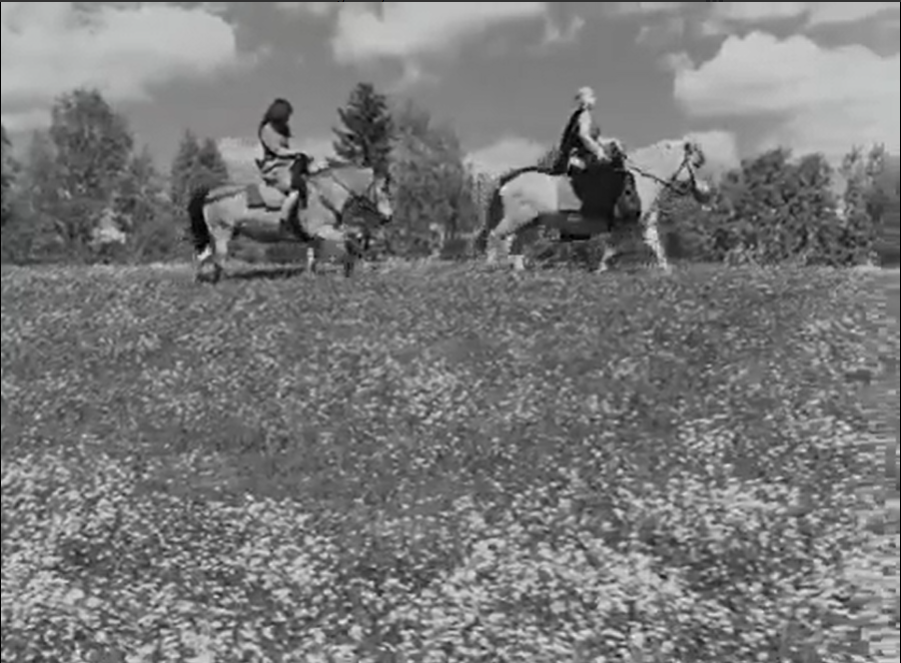
Bergman presents us with an idyllically pastoral vision of life before tragedy strikes, as Pettersson is sent out on a beautiful day for a horseback trip to the local church to bring candles, accompanied by Lindblom.
Her naive interactions and picnic with wily Düberg, mute Iseda, and their traumatized younger brother (Ove Porath) showcase her truly child-like innocence:
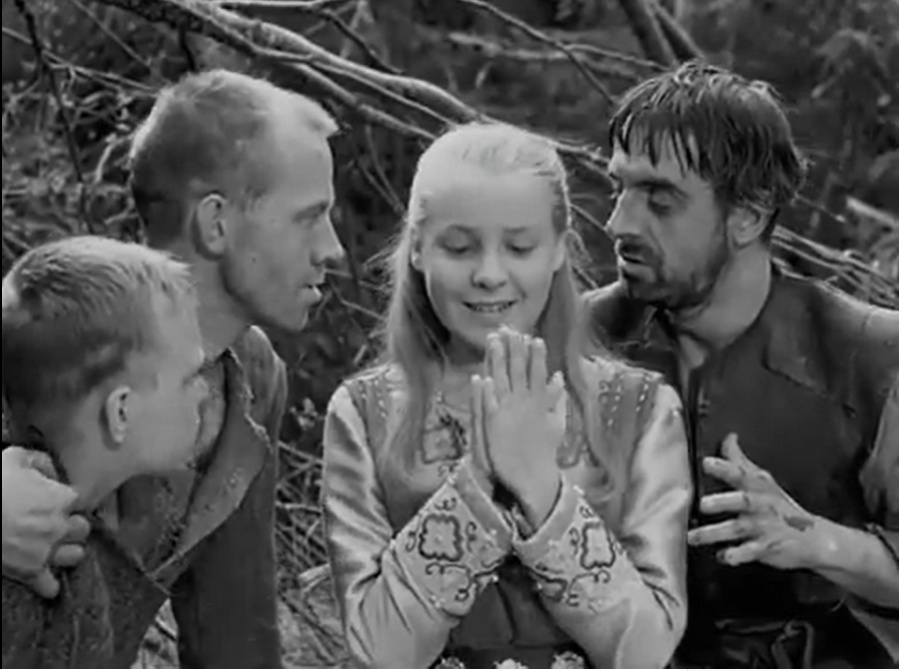
… before her fatal violation.

SPOILERS

The next phase of the story shifts to the three brothers visiting von Sydow and Valberg’s house, not knowing that the fancy clothing they stole off of Pettersson’s corpse and are trying to pawn for money instantly gives away their crime.

Von Sydow and Valberg’s shift to vengeance is swift and merciless — but it’s impossible to fault them, given what we’ve seen happening to their family.

The film’s closing sequence — in which a “miraculous” spring emerges from where Pettersson’s body lies (per the original ballad) — brings us full circle to some kind of earthly yet spiritual closure. While this brutal film is not for the faint of heart, it’s beautifully shot and will likely linger in your memory.

Notable Performances, Qualities, and Moments:

  • Highly atmospheric cinematography

Must See?
Yes, as an early masterpiece by Bergman. Listed as a film with Historical Importance in the back of Peary’s book.

Categories

  • Foreign Gem
  • Important Director
  • Oscar Winner or Nominee

Links:

China Gate (1957)

China Gate (1957)

“What did you expect? A notarized guarantee that the baby would be born with eyes aimed your way?”

Synopsis:
During the French Indochine War, a racist American mercenary (Gene Barry) reconnects with his half-Chinese wife (Angie Dickinson) whose son he has rejected for looking “too Chinese”. Meanwhile, “Lucky Legs” (Dickinson) agrees to accompany Barry and a small group of international soldiers to a Communist munitions stockpile known as “China Gate”, where one of Dickinson’s would-be lovers (Lee Van Cleef) eagerly awaits her.

Genres, Themes, Actors, and Directors:

  • Angie Dickinson Films
  • Cold War
  • Cross-Cultural Romance
  • Lee Van Cleef Films
  • Marital Problems
  • Race Relations and Racism
  • Soldiers

Review:
Sam Fuller’s ninth feature-length film — made between House of Bamboo (1955) and Run of the Arrow (1957) — was this staunchly anti-Communist adventure flick taking place just before America’s formal engagement in the Vietnam War. Interestingly, its primary focus is on race relations, with Dickinson’s “booze smuggler” (she’s a thinly veiled prostitute) demonstrating spectacularly awful choice in men through her marriage and procreation with bigoted Barry.

Barry’s rejection of his own son based purely on his appearance is at least a refreshingly forthright depiction of white supremacy at its most insidious; but watching Dickinson try again and again to make things work with her estranged husband — simply for the opportunity to send her son to America, though we get the sense she still loves Barry for some reason — leaves us feeling decidedly icky. Adding some much-needed pathos to the storyline is Nat “King” Cole as a Black American mercenary named Goldie who is openly disgusted by Barry’s treatment of his son, and who is (thankfully) able to show this emotion without fear of racial reprisal.

The bulk of the drama focuses on the group’s intrepid journey across a jungle of wilderness, using Dickinson as a decoy and featuring plenty of gritty violence along the way. Joseph Biroc’s atmospheric cinematography is top-notch throughout, effectively portraying the shadowy dangers this group undergoes:

While this film isn’t must-see viewing, it will be of interest to Fuller fans, and is worth a one-time look.

Notable Performances, Qualities, and Moments:

  • Joseph Biroc’s cinematography

Must See?
No, but it’s worth a look. Listed as a Cult Movie in the back of Peary’s book.

Links: