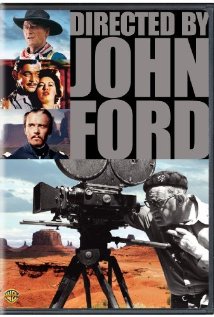
Directed by John Ford (1971/2006)

Directed by John Ford (1971/2006)

“‘Directed by John Ford’: what do those words really mean, anyway?”

Synopsis:
Peter Bogdanovich analyzes John Ford’s rich cinematic oeuvre.

Genres, Themes, Actors, and Directors:

  • Documentary
  • Movie Directors
  • Peter Bogdanovich Films

Review:
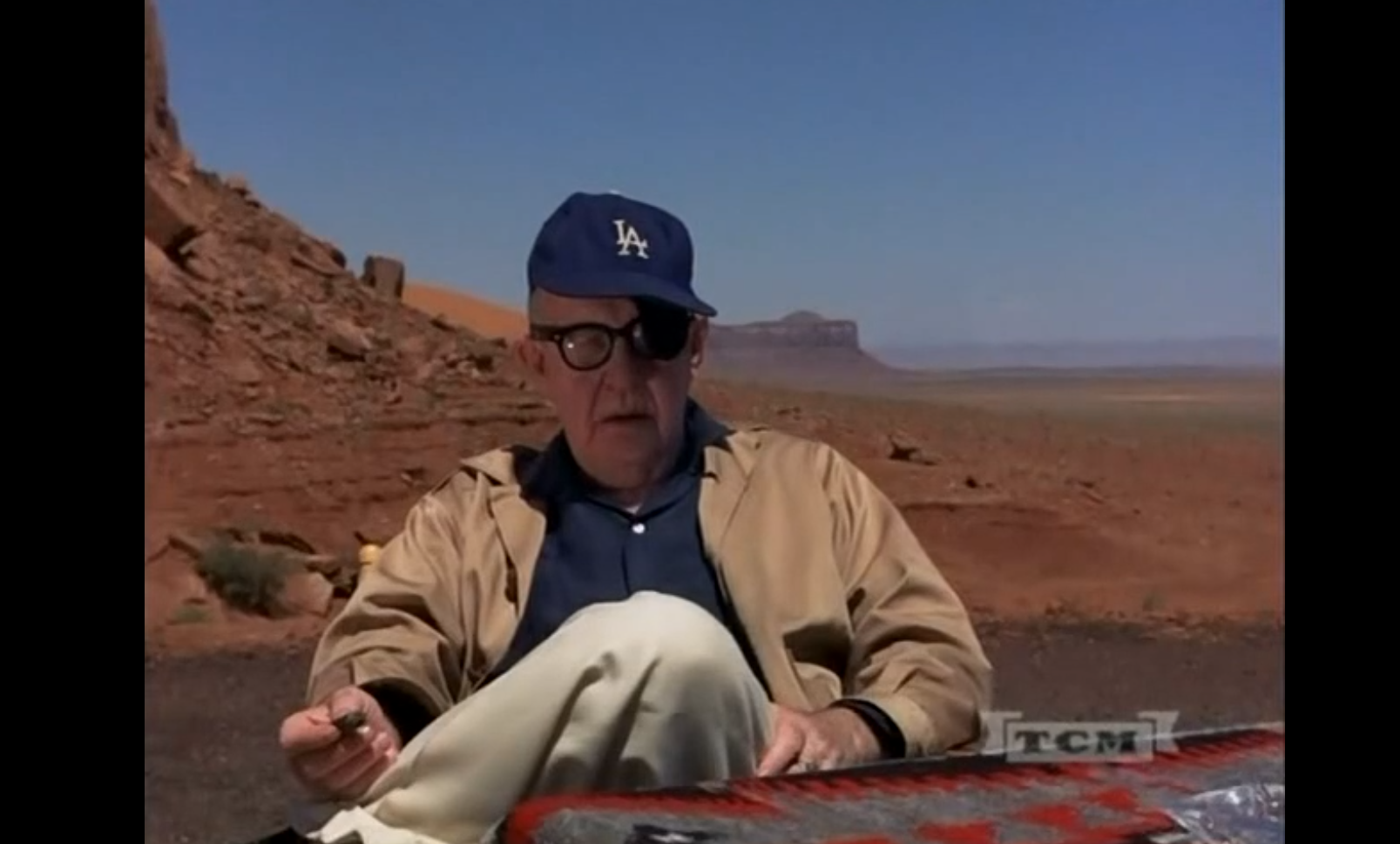
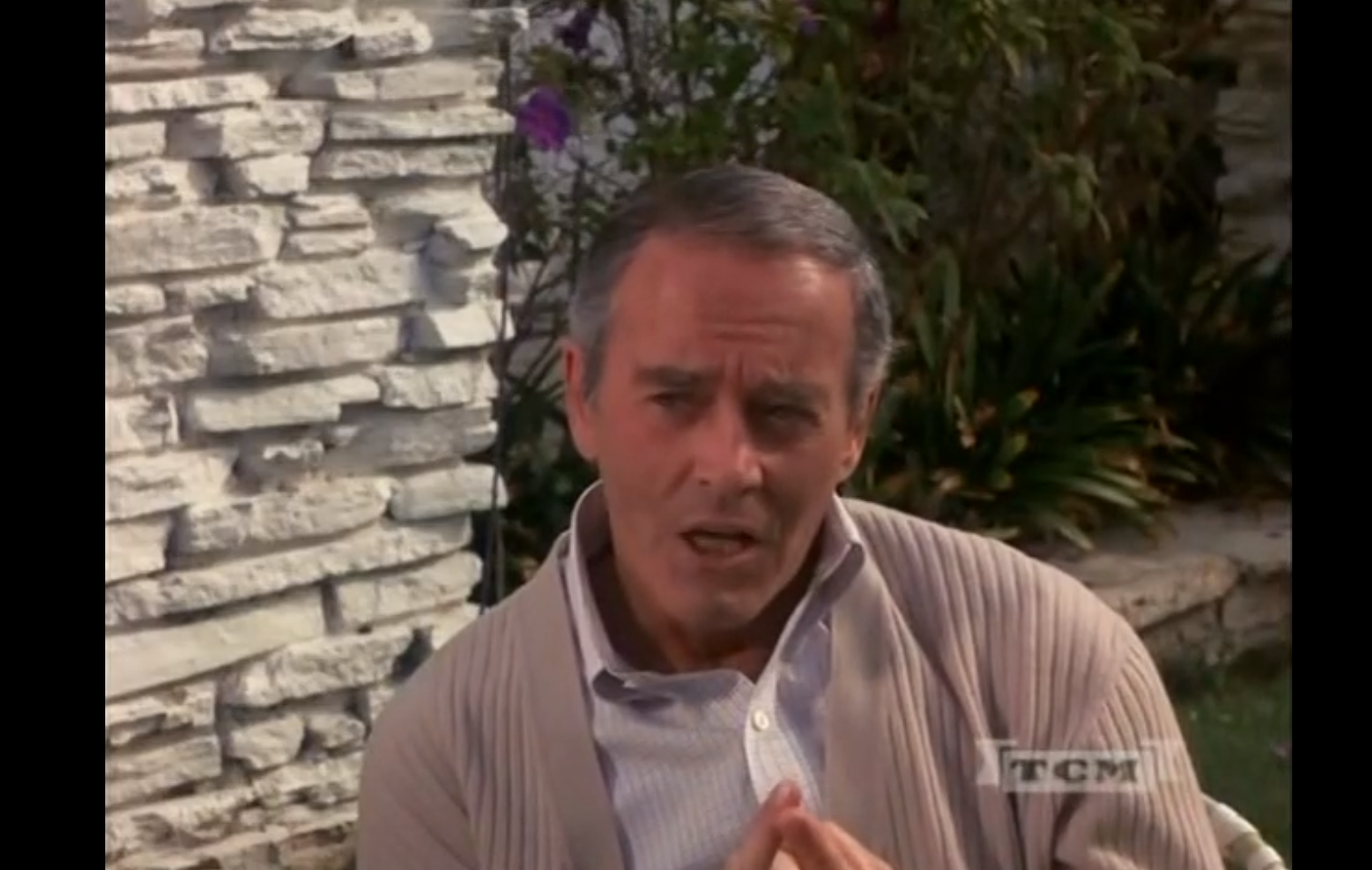
Peter Bogdanovich’s adulatory look at iconic American director John Ford features movie clips from many of Ford’s most well-known films, a resonant voiceover narration by Ford-fan Orson Welles, and fascinating interviews with several of Ford’s key actors (including Jimmy Stewart, John Wayne, and Henry Fonda). While Bogdanovich’s interview with Ford himself is less informative (he didn’t have much to say), it provides both unintentional comic relief and a revealing glimpse of Ford’s notoriously “difficult” personality. The original version of this documentary has been unavailable for viewing since its release in 1971, so Bogdanovich’s updated iteration is especially welcome; but the original footage ultimately remains much more interesting than the later additions.

Redeeming Qualities and Moments:

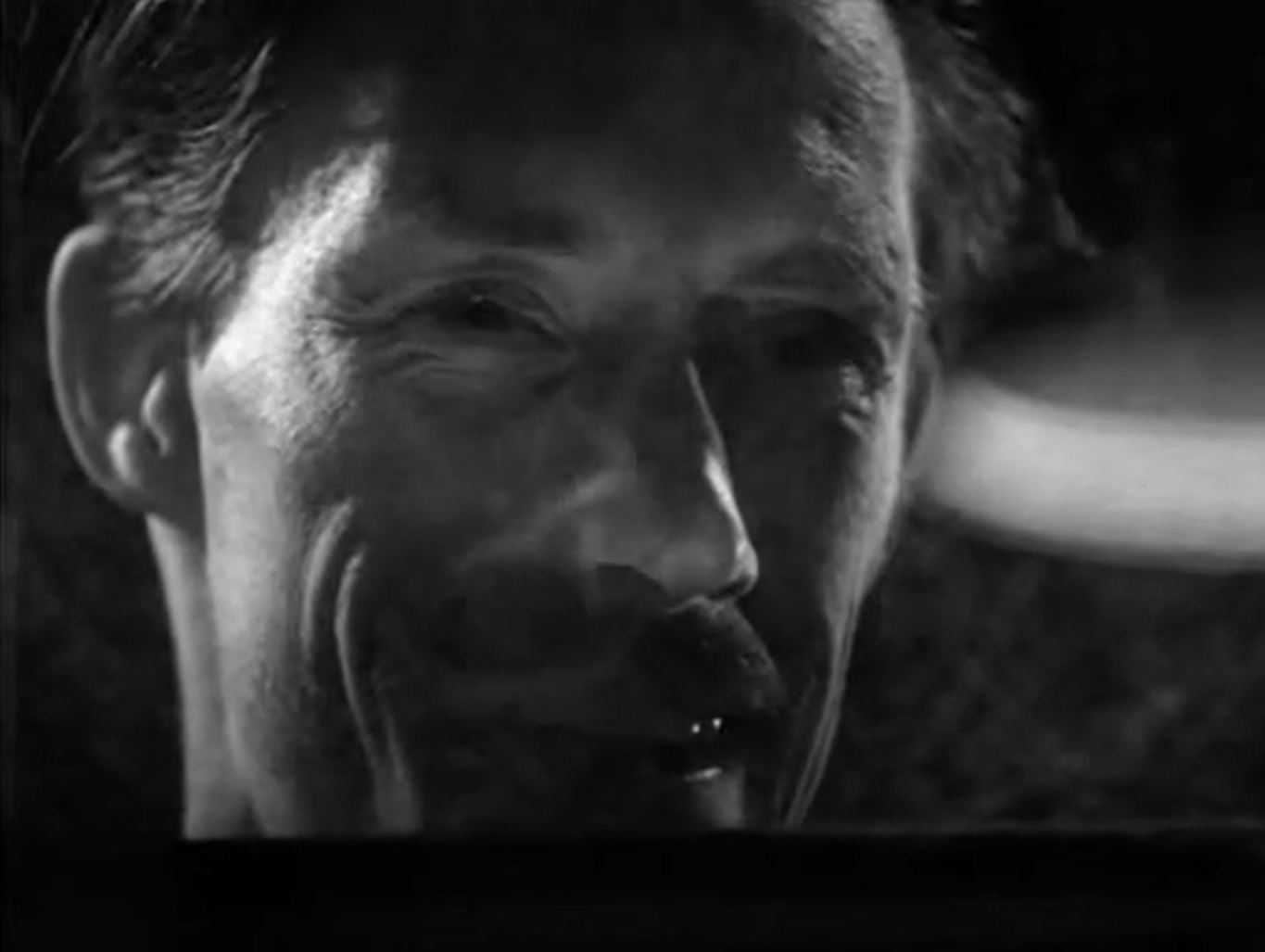
  • Bogdanovich’s interview with the laconic Ford in Monument Valley
  • Fascinating interview clips with Jimmy Stewart, Henry Fonda, and John Wayne


Must See?
Yes. This documentary is indispensable viewing for any true film fanatic.

Categories

  • Historically Relevant

Links:

Stars Look Down, The (1940)

Stars Look Down, The (1940)

“These men and women are the backbone of nations, the stuff of human destiny — simple, working people, such as there are the world over, in all countries, and in all times.”

Synopsis:
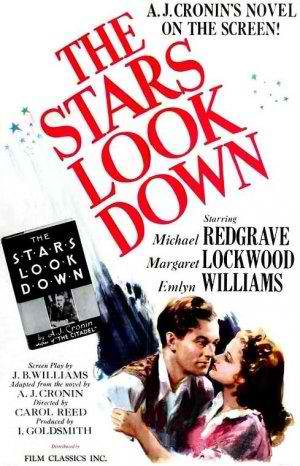
An idealistic young man (Michael Redgrave) from a Welsh mining town hopes to return with a university degree and improve conditions for the miners. His plans are disrupted, however, when he marries a socially ambitious woman (Margaret Lockwood) in love with his money-grubbing friend (Emlyn Williams).

Genres, Themes, Actors, and Directors:

  • Carol Reed Films
  • Henpecked Husbands
  • Love Triangle
  • Michael Redgrave Films
  • Mining Town

Response to Peary’s Review:
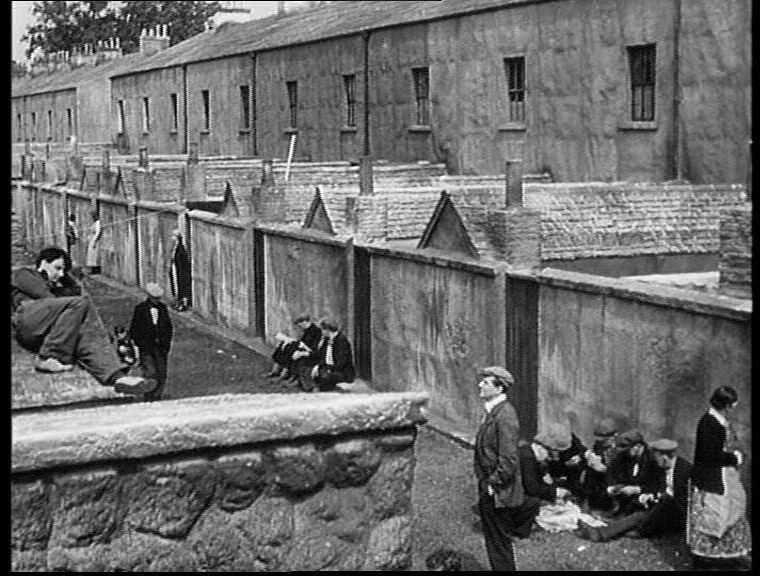
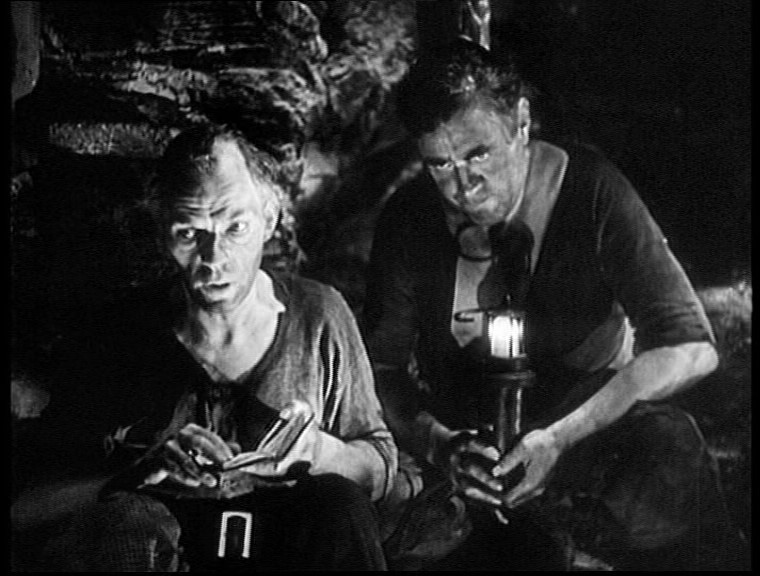
As Peary notes, this “fine, interesting, depressing” adaptation of A.J. Cronin’s novel is “generally regarded as the first British film with social relevance.” Director Carol Reed does an excellent job showing “the contempt rich owners have for their underpaid employees and the distrust labor has for its union leaders”; unfortunately, however, this powerful narrative thread is done in by Redgrave’s romance with the insufferable Lockwood, who has zero redeeming qualities. It’s literally painful to watch the likable yet horribly naive Redgrave cuckolded by his wife — especially since his distraction from his noble goals has grave consequences for the entire mining town. Although I admire The Stars Look Down, it’s not a film I’m eager to revisit.

Redeeming Qualities and Moments:

  • A gritty, realistic look at life in a Welsh mining town
  • One of the first British films to deal seriously with a socially meaningful issue

Must See?
Yes, simply for its historical importance.

Categories

  • Historically Relevant
  • Important Director

Links:

Demon Pond (1979)

Demon Pond (1979)

“There’s a firm covenant: as long as this bell is rung three times a day, the village is safe. The princess is bound by it.”

Synopsis:
A teacher (Gakuen Yamasawa) traveling through a drought-ridden Japanese village meets a long-lost friend (Akira Hagiwara) who has remained in the town both because of his marriage to a beautiful local woman (Tamasaburo Bando), and because of his promise to uphold a superstitious legend: he must ring a bell three times a day in order to prevent the nearby pond’s Dragon God (also Bando) from flooding the town.

Genres, Themes, Actors, and Directors:

  • Fantasy
  • Folk Tales, Fairy Tales, and Mythology
  • Japanese Films
  • Play Adaptations

Review:
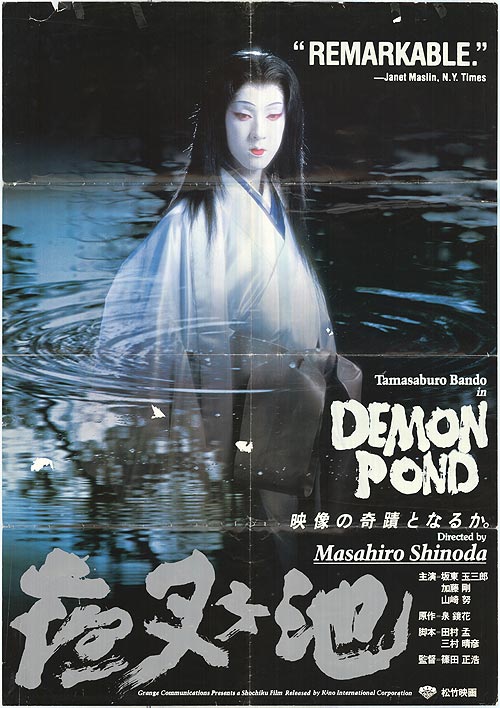
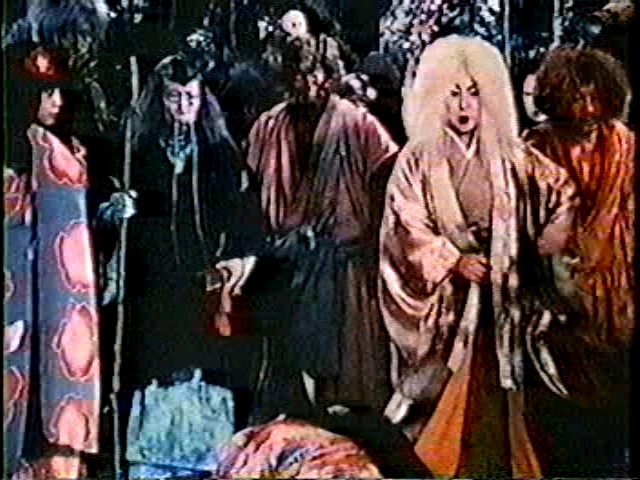
This unusual movie by director Masahiro Shinoda (Double Suicide, 1969) is unlike any other fantasy film you’ve ever seen. Buoyed by Isao Tomita’s synthesized score (which draws heavily upon classical Western music themes — most notably, and appropriately, Debussy’s “The Sunken Cathedral”), the film immediately evokes an atmosphere of mystery, magic, and potential harm. Kabuki actor Tamasaburo Bando is wonderful in dual roles as both a village woman (Yuri) and a sympathetic demon (Princess Shirayuki) longing to join her lover in another pond; you would never guess these characters were played by a man. My main complaint about the film is that the scenes with the pond creatures are over too quickly: since the bulk of the narrative centers on the villagers, we ultimately learn far too little about Shirayuki and her coterie. A more balanced screenplay would have elevated this unusual, visually stunning film even a notch higher.

Redeeming Qualities and Moments:

  • Tamasaburo Bando as both Yuri and Princess Shirayuki
  • Haunting visuals
  • The colorful, enormously creative costumes and make-up of the pond creatures
  • Isao Tomita’s score

Must See?
Yes; it’s unlike any other fantasy film I’ve ever seen.

Categories

  • Foreign Gem

Links:

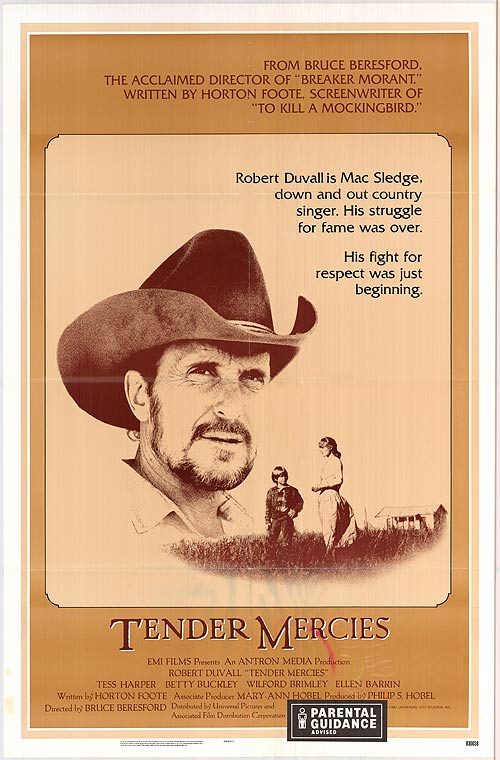
Tender Mercies (1983)

Tender Mercies (1983)

“Every night when I say my prayers and I thank the Lord for his blessings and his tender mercies, you and Sonny hit the list.”

Synopsis:
A former country music star (Robert Duvall) starts a new life with a young widow (Tess Harper) and her son (Allan Hubbard).

Genres, Themes, Actors, and Directors:

  • Character Studies
  • Has-Beens
  • Musicians
  • Robert Duvall Films
  • Romance

Response to Peary’s Review:
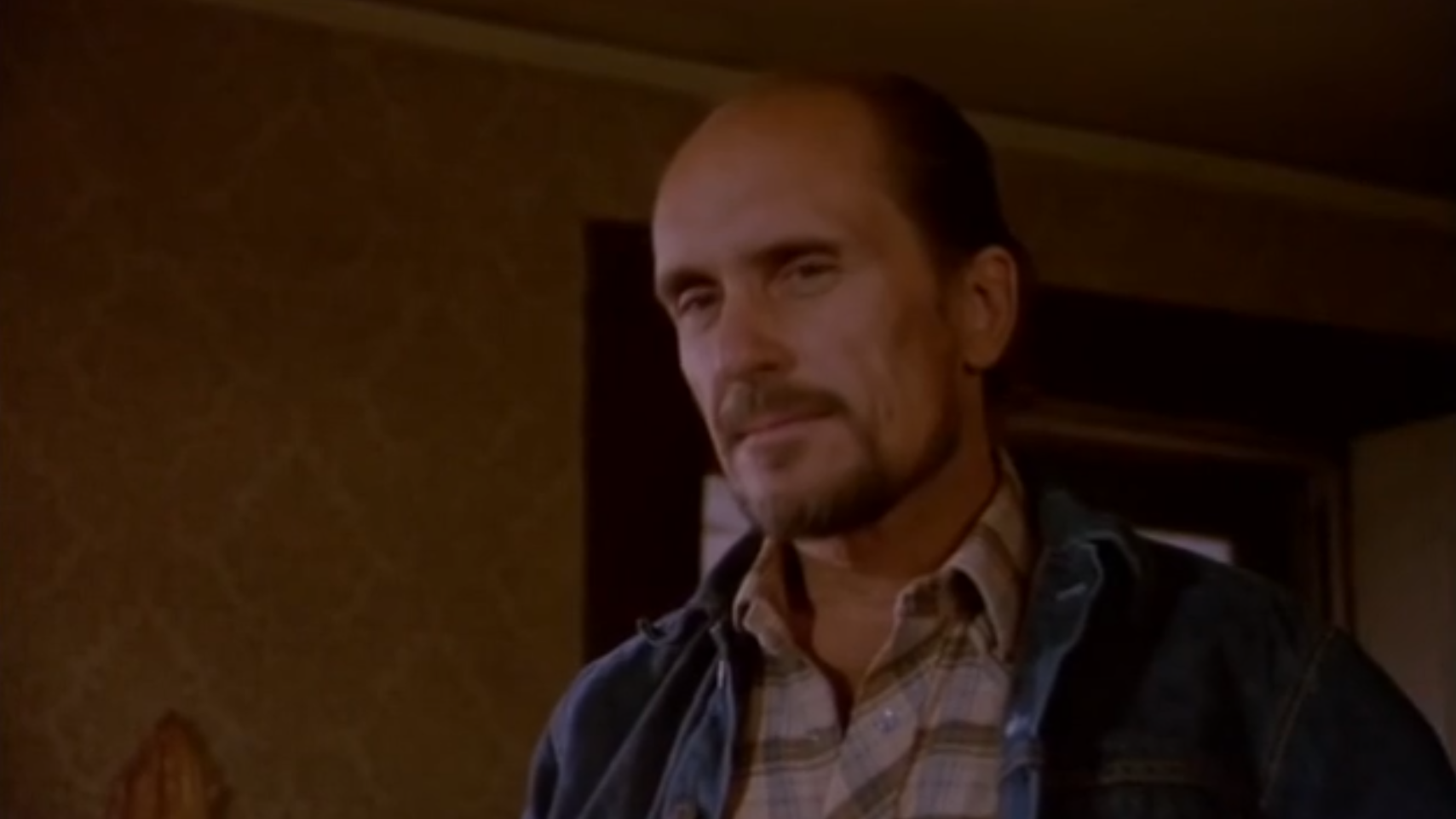
Peary seems less than impressed with this Oscar-winning film, directed by Bruce Bereford and written by Pulitzer-prize winning playwright Horton Foote. In his review, he argues that “the attempt at realistic dialogue between common people who aren’t pretentious often comes across as pretentious”, but I disagree: Tender Mercies is a fable-like, episodic character study rather than an exercise in realism, and I find the sparse dialogue to be appropriate. Duvall is both sympathetic and believable as a man so burnt-out on fame and fortune that he gladly finds redemption in the form of a sweet, simple, religious woman; his interactions with Hubbard (a wonderfully natural child actor) are especially poignant. Even more impressive, however, is the way in which Foote’s screenplay never takes obvious turns: we fully expect Mac to start drinking again once he steps back into the world of country music, but our expectations are foiled. Although it ends on a melancholy note, Tender Mercies is a surprisingly feel-good film, one which is guaranteed to leave a lasting impression.

Redeeming Qualities and Moments:

  • Robert Duvall’s sympathetic performance as Mac
  • Betty Buckley as Mac’s ex-wife
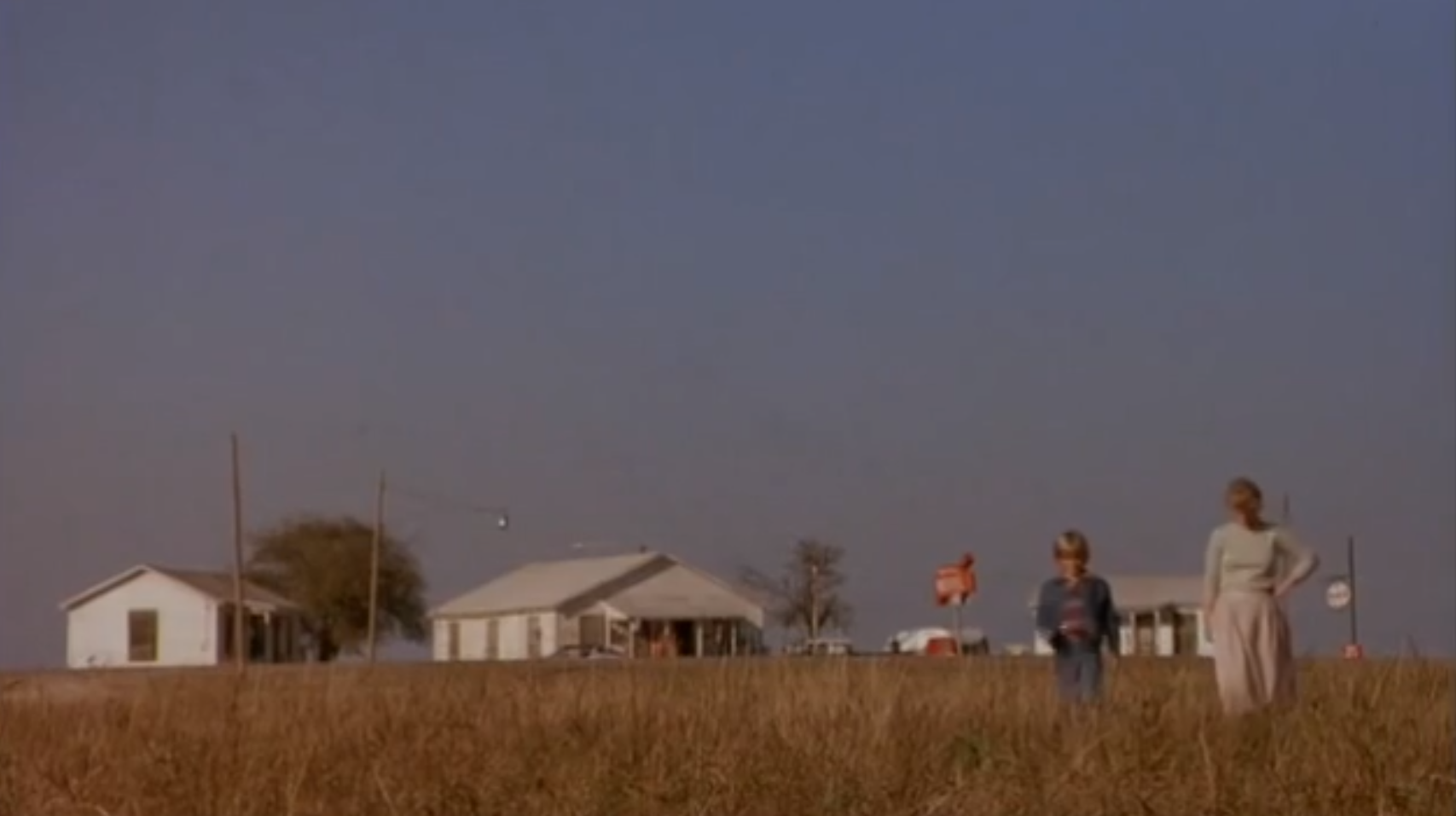
  • Beautiful cinematography of Texas landscapes
  • Horton Foote’s refreshingly uncliched screenplay
  • Some genuinely touching country music songs

Must See?
Yes, simply for Duvall’s Oscar-winning performance.

Categories

  • Noteworthy Performance(s)
  • Oscar Winner or Nominee

Links:

Reefer Madness / Tell Your Children / The Burning Question / Dope Addict / Doped Youth / Love Madness (1936)

Reefer Madness / Tell Your Children / The Burning Question / Dope Addict / Doped Youth / Love Madness (1936)

“The motion picture you are about to witness may startle you.”

Synopsis:
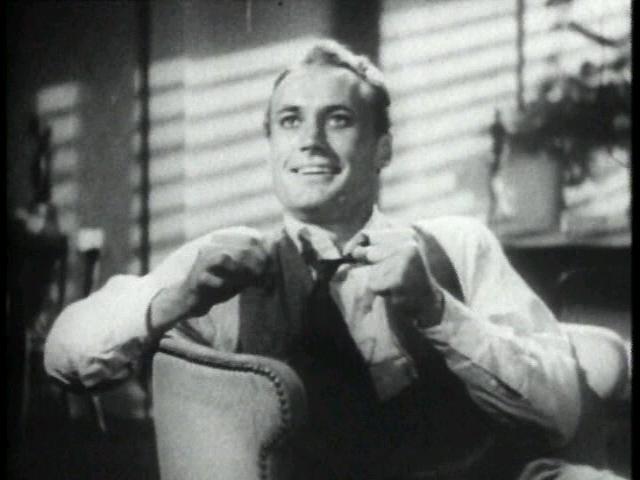
A principal (Joseph Forte) warns parents against the evil influence of “marihuana” by telling the story of an upstanding teen named Bill (Kenneth Craig) whose life went downhill after he was led into a life of wild partying by drug dealers Mae (Thelma White) and Jack (Carleton Young).

Genres, Themes, Actors, and Directors:

  • Alcoholism and Drug Addiction
  • Downward Spiral
  • Falsely Accused
  • Morality Police

Response to Peary’s Review:
As Peary notes, this cult exploitation film (with more alternate titles than you can count on one hand) was clearly “made by people who obviously knew nothing about their subject”, and “reinforces every falsehood you’ve ever heard about marijuana: that you become immediately addicted, that it is violence-inducing, that it’s as bad as heroin, [and] that it ends in one’s ‘inevitable insanity’.” Reefer Madness possesses a handful of unintentionally hilarious moments — such as a young addict (Dave O’Brien) laughing maniacally, or characters reacting to weed as though it’s the latest form of speed — but I’ll admit I don’t enjoy it much on the whole: it’s too hard to keep track of the characters, and, despite its short length of only 67 minutes, the storyline tends to drag. Nonetheless, while Reefer Madness is undeniably a “terribly made, sensationalized, preposterous film”, it remains “the ultimate camp film”, and is required viewing for anyone seriously interested in the history of cinema.

Redeeming Qualities and Moments:

  • A hilariously uninformed representation of the effects of marijuana
  • Countless campy moments
  • Dr. Carroll testifying to Bill’s unexplainable outburst of laughter during a class reading of Romeo and Juliet
  • Ralph (O’Brien) prompting Mae to play the piano “faster — faster!”

Must See?
Yes, both for its undisputed cult status, and as a representative example of post-Hays Code exploitation films. Discussed at length in Peary’s Cult Movies.

Categories

  • Cult Movie
  • Representative Film

Links:

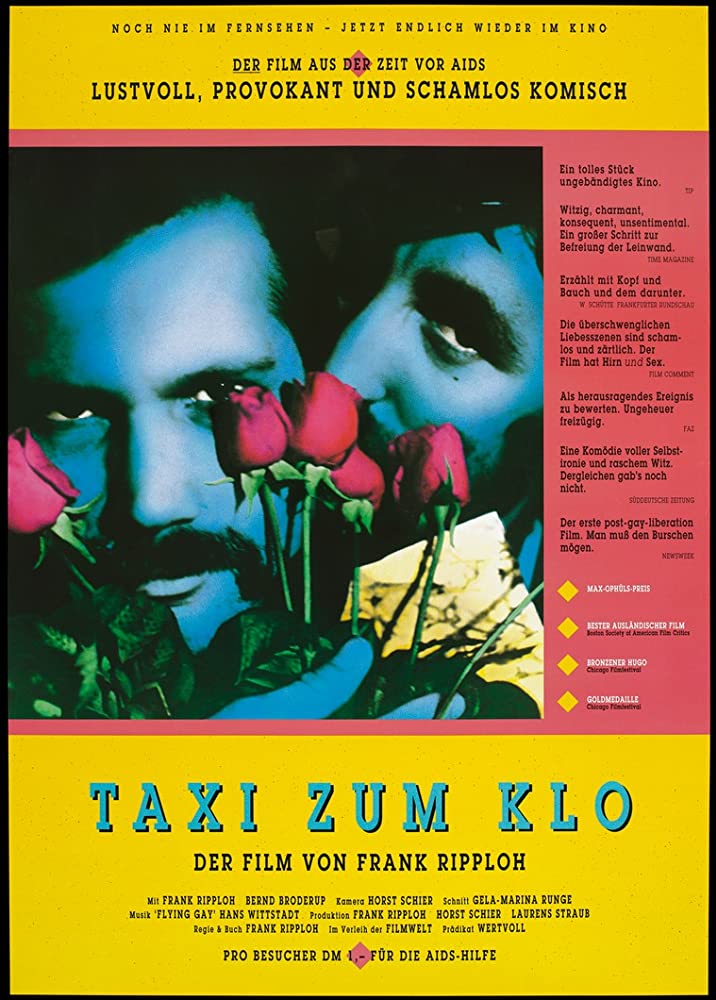
Taxi Zum Klo (1981)

Taxi Zum Klo (1981)

“I’m your normal, tired, neurotic, polymorphously perverse teacher.”

Synopsis:
A sexually adventurous gay schoolteacher (Frank Ripploh) resists monogamy with his new partner (Bernd Broaderup).

Genres, Themes, Actors, and Directors:

  • Character Studies
  • German Films
  • Homosexuality
  • Sexuality
  • Teachers

Response to Peary’s Review:
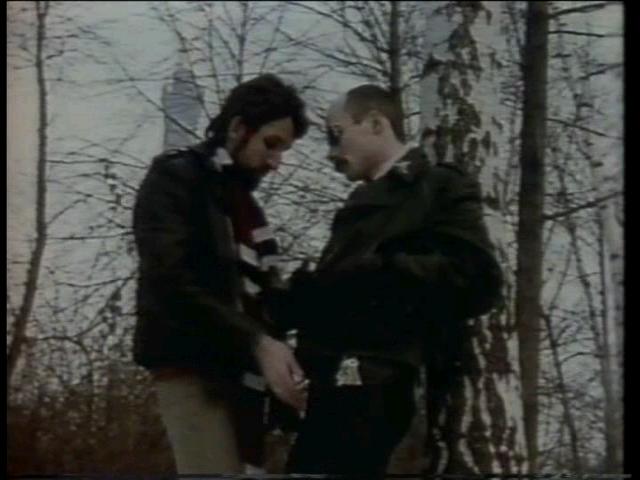
As Peary notes, this humorous cult film by German writer/director Frank Ripploh (who essentially plays himself) is a “self-indulgent”, “crudely made, disjointed, but intriguing autobiographical account.” Ripploh isn’t afraid to portray himself as a bit of a jerk: he’s the kind of guy who, lacking toilet paper, wipes his bum on a guest towel, then nonchalantly puts it back on the rack. Later, when he openly cheats on his new partner (the good-looking yet frustratingly passive Broaderup), we’re disturbed, but not all that surprised — and, at the very least, we respect Ripploh’s honesty about his need for sexual adventure.

Taxi Zum Klo (which translates into “Taxi to the [Public] Toilet”) is especially effective at showing how Ripploh was able to keep his sex life completely separate from his career as a schoolteacher. In one particularly overt instance, Ripploh cross-cuts between innocent shots of his tutoring session with a young male student, and his transvestite friend commenting disparagingly while watching a cautionary school film about a pedophile. It may be a heavy-handed message, but it’s an important one — and it works within the context of the film’s unabashed presentation of explicit gay male sexuality (surely an eye-opener for many at the time).

Redeeming Qualities and Moments:

  • A no-holds-barred look at male gay life in 1980s Berlin

Must See?
Yes, both for its status as a cult film and as a cultural window into a unique subculture.

Categories

  • Cult Movie

Links:

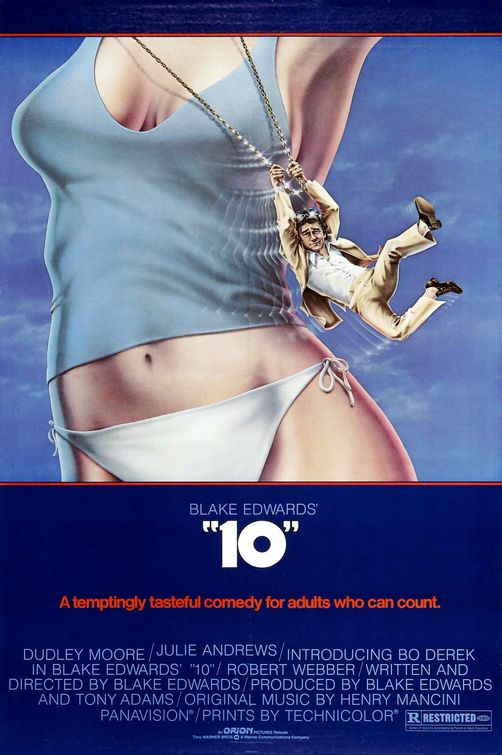
“10” (1979)

“10” (1979)

“She was the most beautiful girl I have ever seen.”

Synopsis:
A middle-aged composer (Dudley Moore) in a steady relationship with a singer (Julie Andrews) becomes obsessed with a beautiful young woman (Bo Derek) he spots through a car window.

Genres, Themes, Actors, and Directors:

  • Blake Edwards Films
  • Composers
  • Dudley Moore Films
  • Julie Andrews Films
  • Midlife Crisis
  • Obsessive Love
  • Romantic Comedy

Response to Peary’s Review:
Although “10” immediately evokes images of cornrowed sex goddess Bo Derek running across a beach, it’s not her story; instead, the film centers on a man (Moore) who has fame, money, and a beautiful lover, yet suffers from the incurable sense that the grass is always greener — sexually speaking — on the younger side. Unlike the obnoxiously dissatisfied schmuck played by Albert Brooks in Modern Romance (1981), Moore’s restless composer makes for an unusually sympathetic protagonist: he’s someone we care about even though we immediately recognize the folly of his desires.

Andrews is fine as Moore’s long-suffering girlfriend, and gets to sing a couple of nice Henry Mancini songs — but her too-perfect British accent quickly becomes distracting. More impressive, believe it or not, is Derek, who — once she finally becomes a three-dimensional character rather than simply the distant object of Moore’s lust — gives a natural and appealing performance. Though director Blake Edwards tries a bit too hard for laughs with his repeated attempts at slapstick humor (as when Moore tumbles down a hill and struggles to climb back up again), overall this remains a surprisingly honest look at middle-aged male sexuality.

Redeeming Qualities and Moments:

  • Dudley Moore as the lust-struck composer
  • Beautiful Bo Derek in her first significant screen role
  • Moore’s constant voyeurism through his telescope

Must See?
No, but it’s worth a look simply to see Derek in her infamous breakthrough role.

Links:

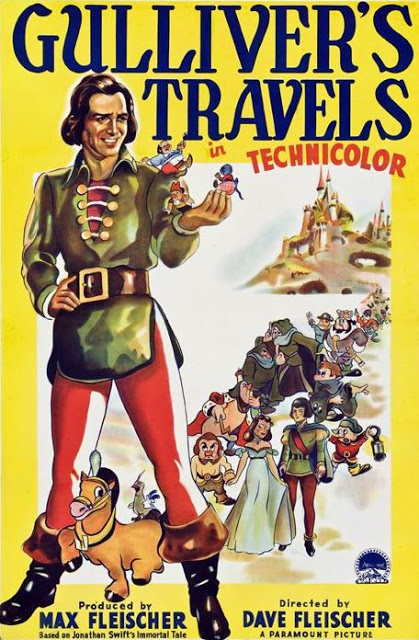
Gulliver’s Travels (1939)

Gulliver’s Travels (1939)

“There’s a giant on the beach!”

Synopsis:
When a sailor named Gulliver washes ashore on the island of Lilliput, he finds himself in the midst of a rivalry between the King of Lilliput and the King of Blefiscu.

Genres, Themes, Actors, and Directors:

  • Animated Features
  • Giants
  • Musicals
  • Rivalry<
  • Royalty and Nobility

Review:
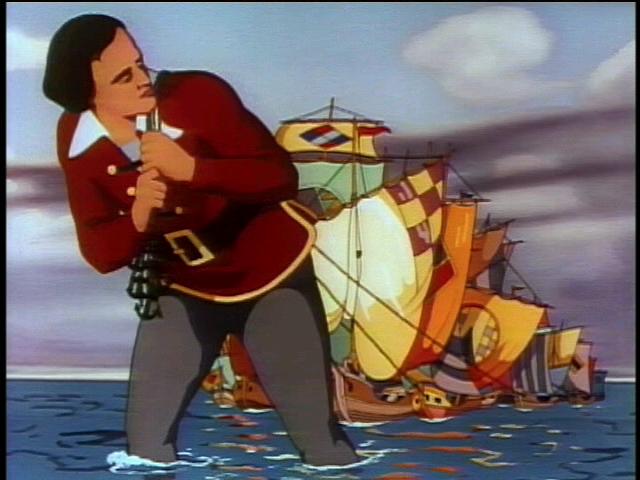
Gulliver’s Travels holds historical distinction as the first feature length animated film made by a studio other than Disney. Unfortunately, the heads of Fleischer Studios (responsible for Popeye and Betty Boop) were pressured into trying to repeat the success of Disney’s Snow White and the Seven Dwarfs (1937), and this film comes across as a mostly pale imitation. The narrative is irredeemably weak, the songs are instantly forgettable, and — as in the Fleischer Brothers’ second and last animated feature, Hoppity Goes to Town (1941) — there isn’t a strong central protagonist: none of the Lilliputians are particularly appealing, and Gulliver himself doesn’t even speak until nearly halfway through the movie. On the other hand, there are a few redeeming elements in the film, including the unusual rotoscoping process used to animate Gulliver himself, and the sequence in which the Lilliputians collectively work to haul Gulliver off the beach. Ultimately, while Gulliver’s Travels falls short of status as a true classic, it remains must-see viewing simply for its place in animated cinematic history.

Redeeming Qualities and Moments:

  • The Lilliputians using remarkable teamwork to tow Gulliver off of the beach
  • Interesting early use of rotoscope animation

Must See?
Yes, simply for its historical status.

Categories

  • Historically Relevant

Links:

Hurricane, The (1937)

Hurricane, The (1937)

“No jail can hold Terangi very long — if it has a window in it, he’ll fly away! If it has water around it, he’ll swim away!”

Synopsis:
A South Pacific native (Jon Hall) working as a sailor on a tall ship is unjustly jailed for hitting a white man; when he tries to escape, additional years are added to his sentence. Meanwhile, his beautiful wife (Dorothy Lamour) waits at home for his return, while his island’s by-the-book governor (Raymond Massey) refuses to intervene. A massive hurricane finally brings the entire situation to a dramatic conclusion.

Genres, Themes, Actors, and Directors:

  • Disaster Flicks
  • Dorothy Lamour Films
  • Falsely Accused
  • John Carradine Films
  • John Ford Films
  • Mary Astor Films
  • Prisoners
  • Race Relations
  • Raymond Massey Films
  • South Sea Islands
  • Thomas Mitchell Films

Review:
Directed by John Ford, and based on a novel by Charles Nordhoff and James Norman Hall, The Hurricane bears an uncanny resemblance to Ford’s film of the previous year, The Prisoner of Shark Island: both deal with an unjustly accused man attempting to escape from prison, and John Carradine even reappears as a sadistic warden.

Yet The Hurricane remains the less compelling of the two films in terms of sheer narrative and characterization, with a primary problem one of lead casting: although blonde Jon Hall is hunky eye candy and not a terrible actor, it’s simply impossible to imagine him as an island native.

Indeed, when he’s ordered to “get up when a white man tells ya to!”, one almost wants to laugh, since Hall is undeniably a white man himself!

Equally problematic is the film’s overall portrayal of the South Pacific islanders as happy, naughty, naive children lacking any ability to reason rationally.

In the first scene of the movie, for instance, even a sympathetic white character (Thomas Mitchell) is heard making the disparaging comment that “a sense of honor in the South Seas is about as useful — and often as silly — as a silk hat in a hurricane.” And Terangi — though he eventually becomes somewhat of a folk legend — is ultimately shown to be unthinking in his ceaseless, animal-like attempts to escape, without concern for the consequences.

The performances as a whole in The Hurricane are unexceptional. Though Mitchell was nominated for an Academy Award as best supporting actor, his work here playing a drunken doctor isn’t especially impressive.

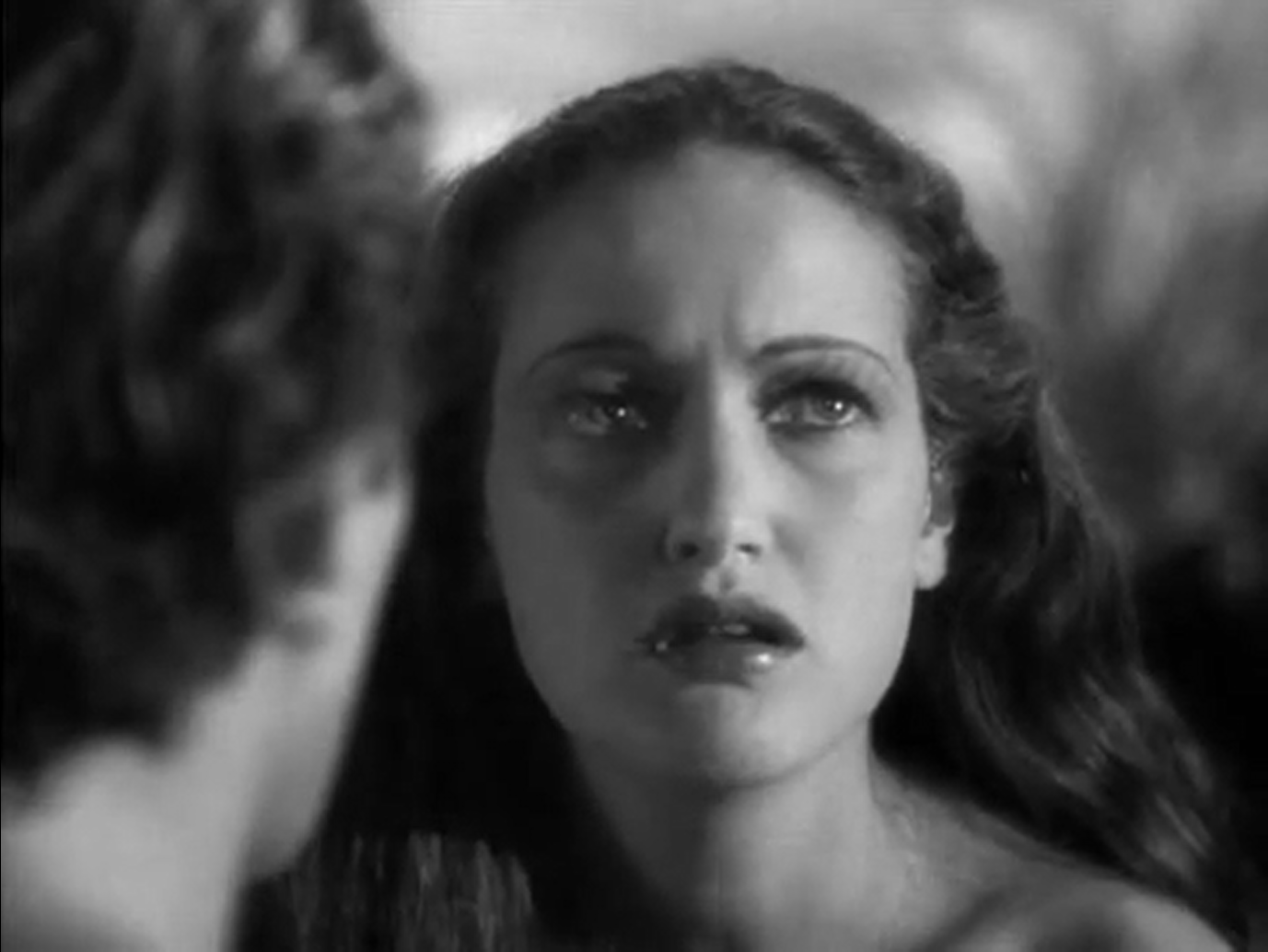
Mary Astor is wasted in a thankless role as Massey’s loyal wife, while Massey himself comes across as one-dimensionally stubborn. Dorothy Lamour — never a great actress, but undeniably beautiful — gives perhaps the most appealing performance, managing to pass as a native without too much trouble.

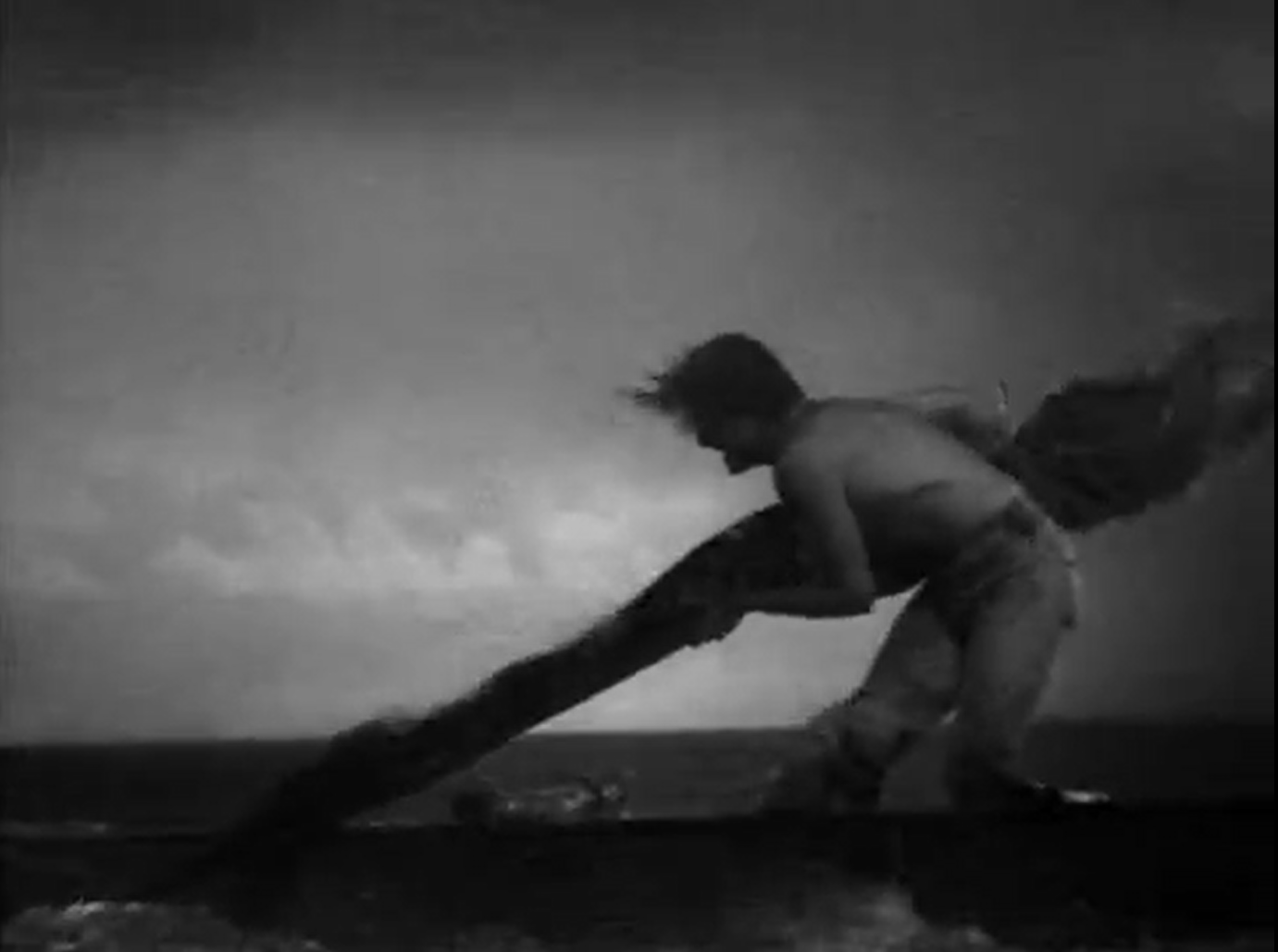
But the primary selling point of The Hurricane (which received excellent reviews upon its release) was and is its final climactic sequences, directed by an uncredited Stuart Heisler. Heisler’s ability to simulate a ferocious island hurricane is nothing short of phenomenal, and represents a true masterpiece of early special effects in cinema. Indeed, the entire narrative arc leading up to these final scenes seems superfluous in hindsight. The titular hurricane itself makes this must-see viewing for serious film fanatics.

Redeeming Qualities and Moments:

  • The phenomenal hurricane sequences

Must See?
Yes — but only for the final 20 minutes, which are a masterpiece of early special effects wizardry. Peary lists this movie in the back of his book as a film with historical importance and a personal recommendation.

Categories

  • Historically Relevant

Links:

Naked Prey, The (1966)

Naked Prey, The (1966)

“Man — lacking the will to understand other men — became like the beasts, and their way of life was his.”

Synopsis:
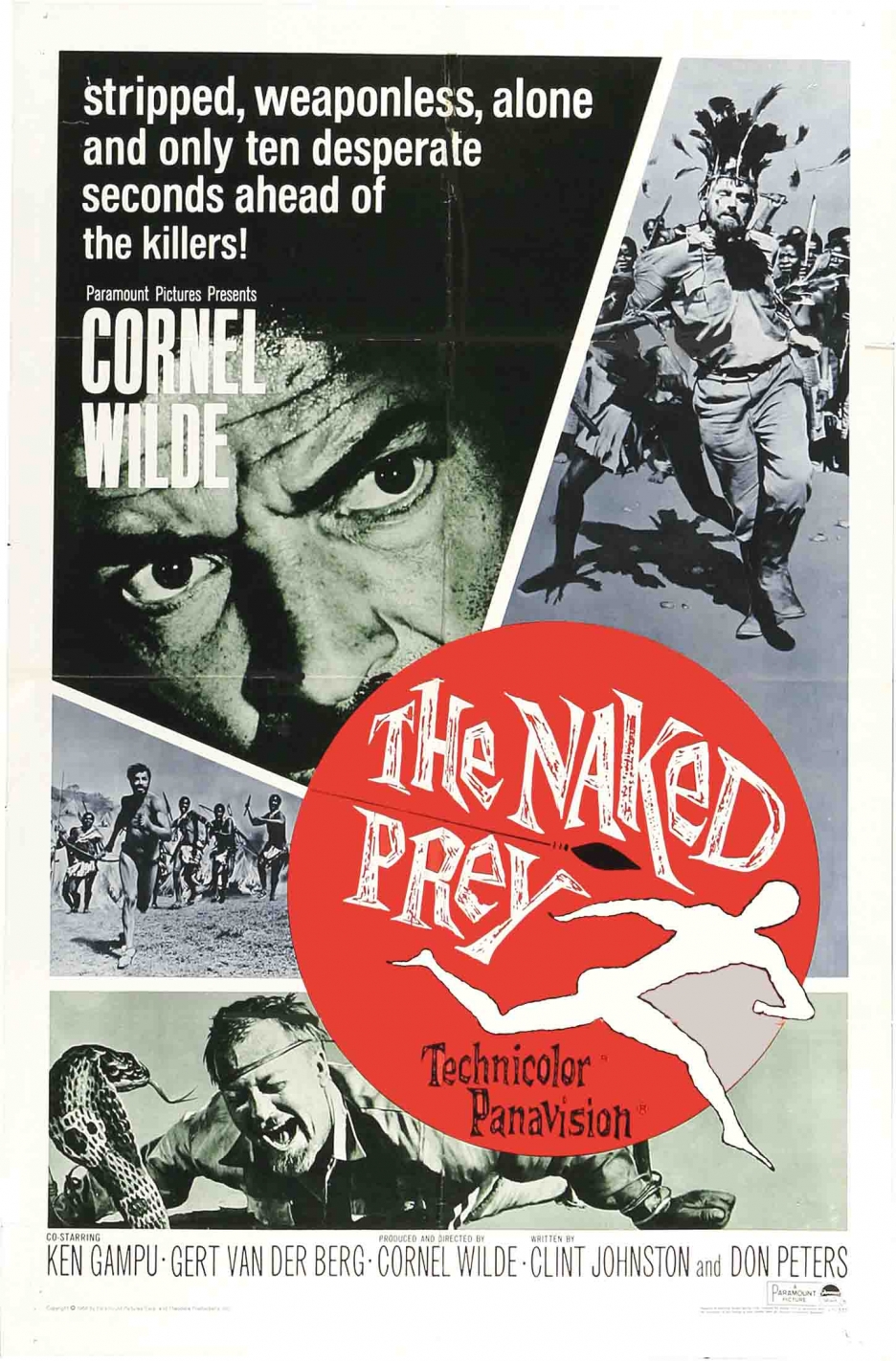
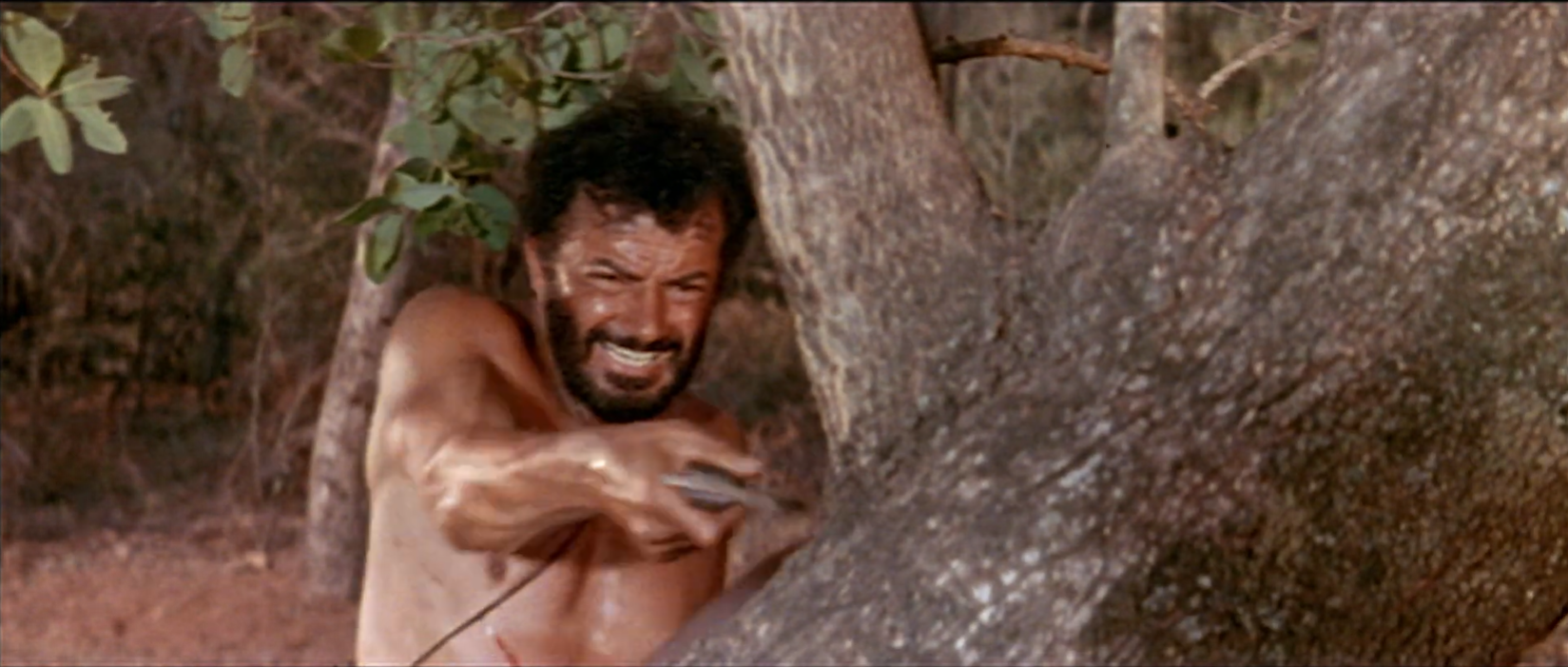
A safari leader (Cornel Wilde) in 1800s Africa is captured by a tribe, set loose with no clothing or weapons, and hunted by a group of warriors.

Genres, Themes, Actors, and Directors:

  • Africa
  • Cornel Wilde Films
  • Escape
  • Hunting
  • Survival

Response to Peary’s Review:
As Peary notes, this “brutal adventure movie” — which bears resemblance to The Most Dangerous Game (1932) in its tale of a man hunted as human prey — is indeed an “unusual, exciting, often frightening film”, with very little dialogue or plot. Although director/producer/star Cornel Wilde pushes the metaphor of “kill or be killed” a bit too far (the extraneous footage of African fauna in battle quickly becomes repetitive), it’s still remarkably exciting to see Wilde outrunning his captors, and using his substantial wits to survive.

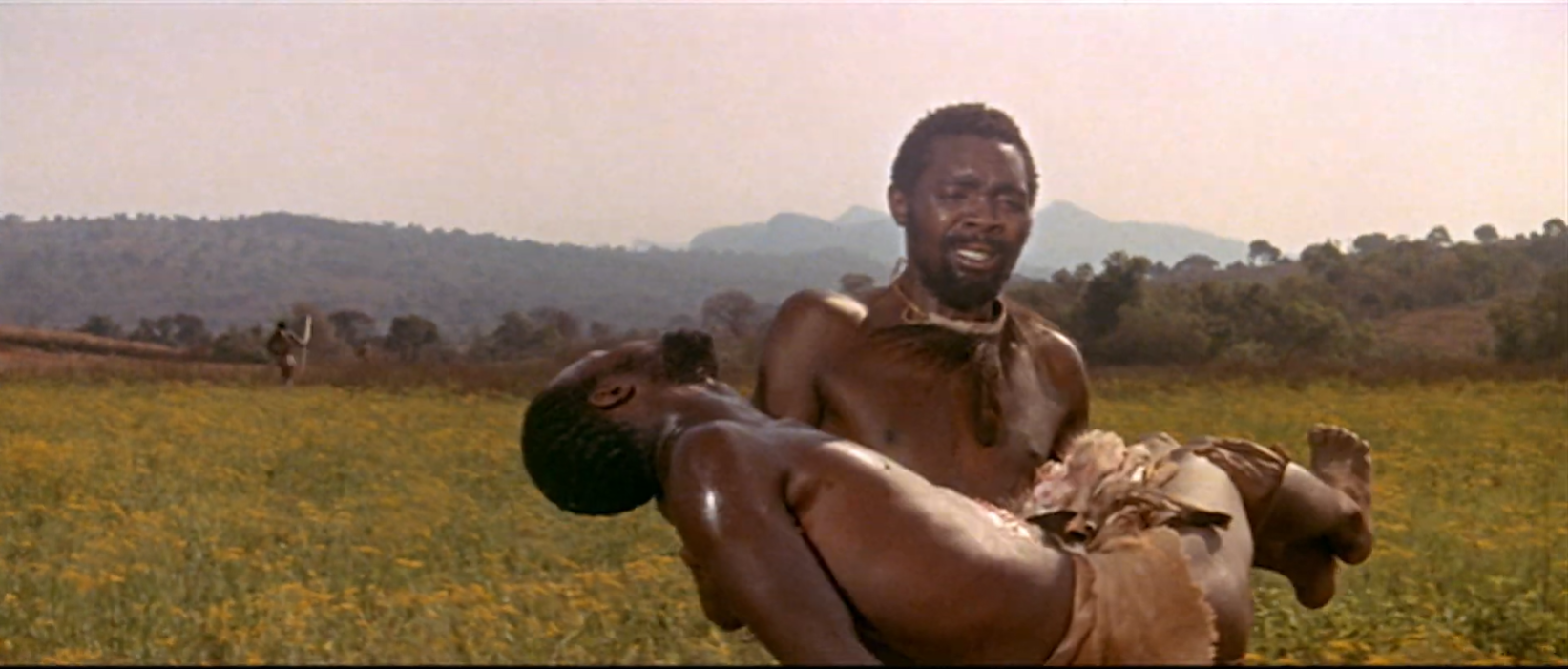
What Peary curiously neglects to mention in his review, however, is the sticky issue of how the African natives are portrayed. On the one hand, Wilde respects the warriors as individuals, showing them stopping to mourn each other as they’re killed.

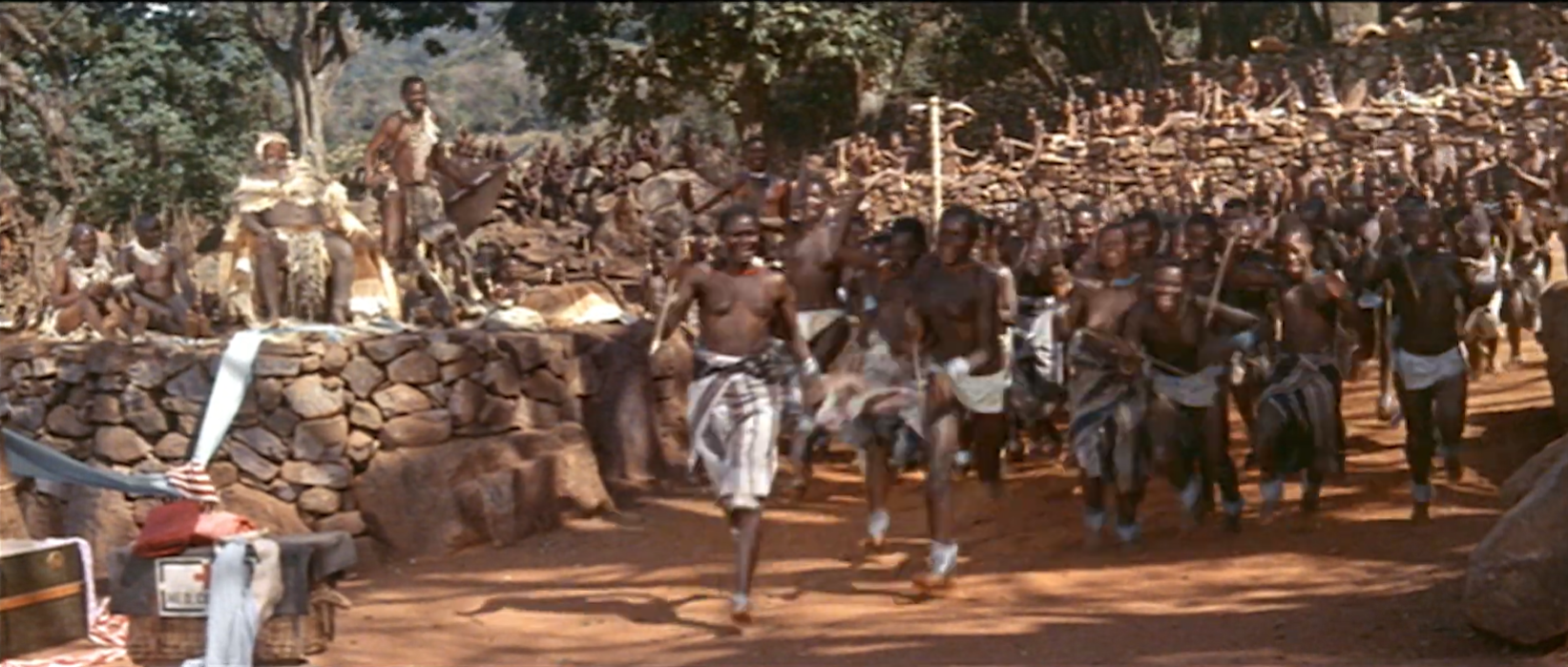
And it’s undeniably refreshing to see Africans gaining a sort of revenge against the whites who so brutally invaded their culture. On the other hand, they’re still clearly posited as The Exotic Others: the women dance around without shirts on, the warriors are essentially portrayed as savage and uncivilized, and Wilde (The White Man) is the undisputed protagonist. On the whole, however, I would still vote for The Naked Prey as a rare mid-century American film which at least attempts to humanize Africans.

Redeeming Qualities and Moments:

  • Cornel Wilde as The Man
  • Plenty of exciting action sequences

Must See?
Yes, to see Wilde in his most iconic role.

Categories

  • Historically Relevant

Links: