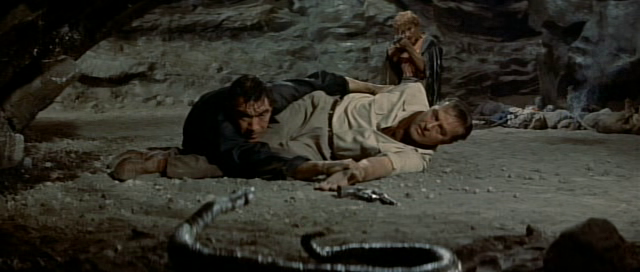
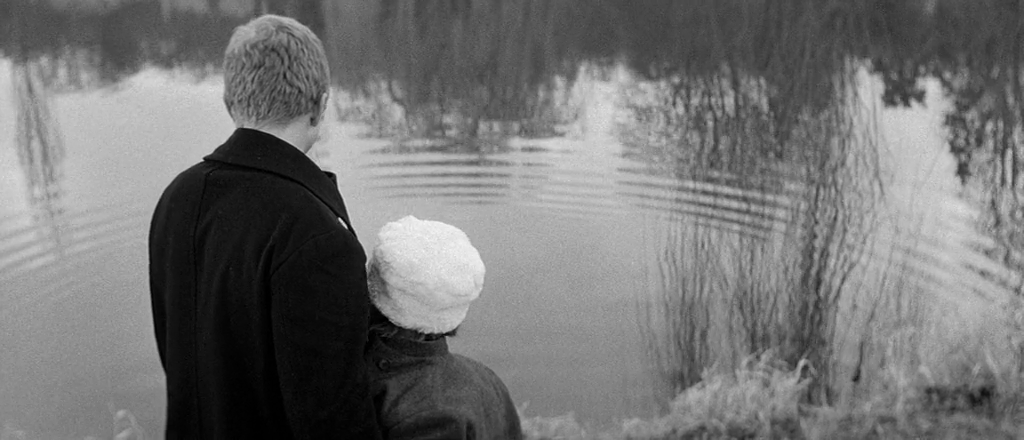
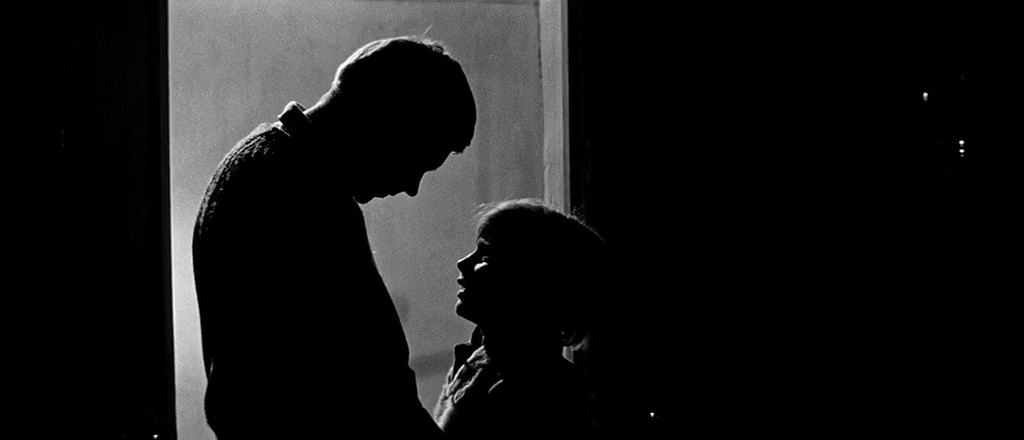
Sea Wife (1957)

Sea Wife (1957)

“Why shouldn’t I love you? You’re young and beautiful and brave and good.”

Synopsis:
A former officer during World War II (Richard Burton) reflects back on his experiences as a castaway with an incognito nun (Joan Collins), a racist white man (Basil Sydney), and a black purser (Cy Grant). Will the quartet be able to survive together given racial tensions and Burton falling in love with the unattainable Collins?

Genres, Themes, Actors, and Directors:

  • At Sea
  • Flashback Films
  • Joan Collins Films
  • Mistaken or Hidden Identities
  • Nuns
  • Race Relations and Racism
  • Richard Burton Films
  • Survival

Review:
DVD Savant accurately describes this flashback-driven wartime melodrama as “colorful, reasonably well acted and almost completely unsatisfying”. The central conceit — that Collins won’t reveal her true identity as a nun to Burton — makes no sense whatsoever, driving a storyline that keeps us increasingly frustrated as we wonder why (oh, why) she doesn’t just tell him already. No — because then there would be no tension at all, other than the secondary subplot about Sydney’s toxic racism driving him to literally want to snuff out Grant. Ew.

Meanwhile, the characters won’t stop referring to each other by silly nicknames: Biscuit (Burton), Seawife (a.k.a. “mermaid”) (Collins), Bulldog (Sydney), and Number 4 (Grant) (great way to dehumanize him even further…). There’s really nothing here worth watching, other than the beautiful scenery; one imagines Peary included it in GFTFF because young Collins is as gorgeous as ever:

… and we know he had a childhood crush on her from seeing her bare midriff in Land of the Pharaohs (1955).

Notable Performances, Qualities, and Moments:

  • Fine location footage

Must See?
Nope; definitely feel free to skip this one.

Links:

Little Big Horn (1951)

Little Big Horn (1951)

“None of us is in any condition to ride 50 miles — let alone 250 — through what’s between us and the 7th; but we’re gonna do it.”

Synopsis:
On a trip to inform General Custer that the Sioux are waiting to attack, a captain (Lloyd Bridges) whose wife (Marie Windsor) is having an affair with one of his men (John Ireland) struggles with various leadership decisions.

Genres, Themes, Actors, and Directors:

  • Cavalry
  • Historical Drama
  • John Ireland Films
  • Lloyd Bridges Films
  • Marie Windsor Films
  • Marital Problems
  • Native Americans
  • Westerns

Review:
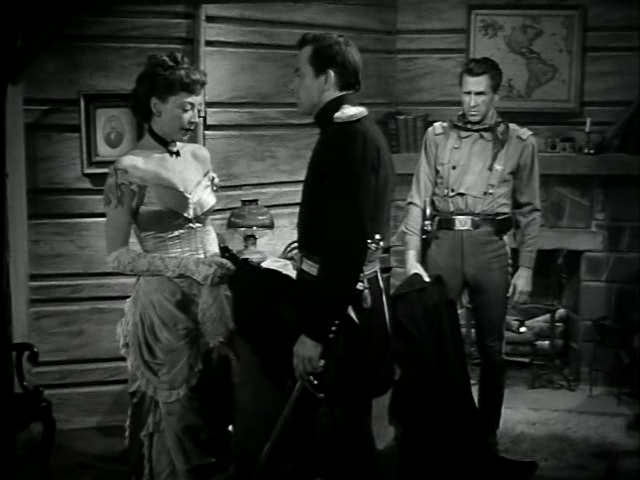
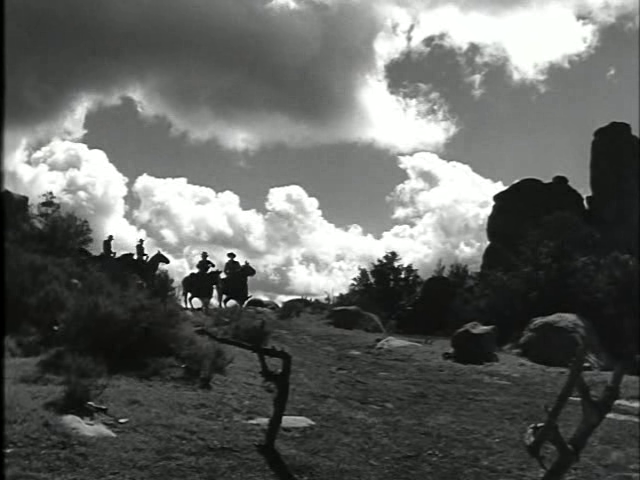
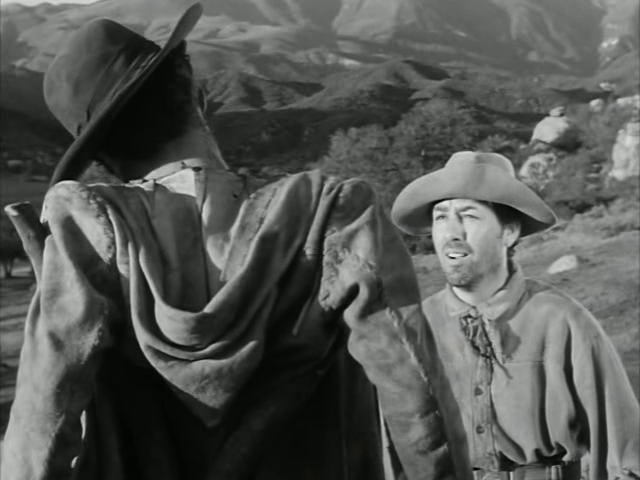
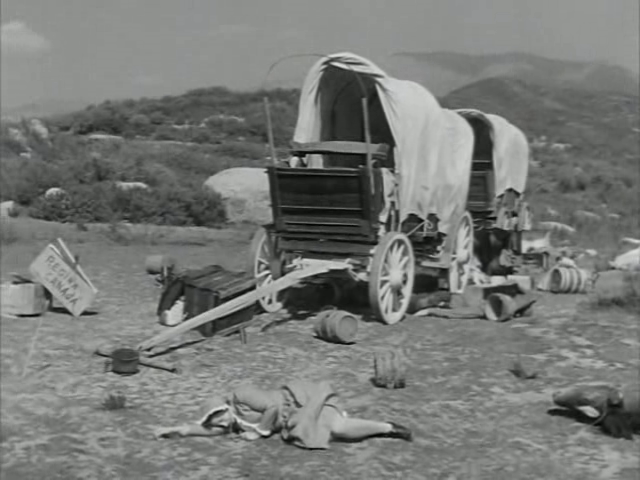
Loosely based on the real-life exploits of Captain Frederick K. Giddleren (here Capt. Phillip Donlin) and Lt. Charles Larin (here Lt. John Haywood) of the United States Cavalry — who tangentially supported Lt. General Custer in the Battle of the Little Bighorn — this western puts a love triangle between Donlin (Bridges) and Haywood (Ireland) front and center, opening with a supposedly private rendezvous between Ireland and Bridges’ wife (Windsor) that’s interrupted by Bridges’ emergence from the shadows:

We learn that tensions between these two men will understandably be running high, making an already dangerous and uncertain military mission even more fraught. Is Bridges assigning tasks to Ireland out of spite and anger — or is he keeping military protocol and best practices at the forefront of his decision making?

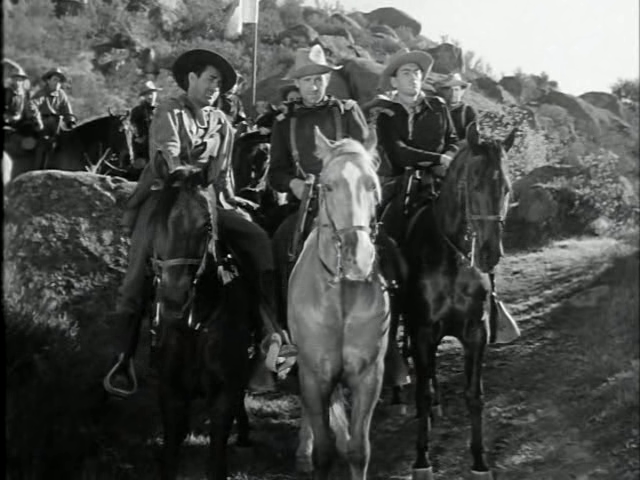
The bulk of the film is spent exploring issues of trust and leadership, as the cavalry members ride their horses over rocky terrain and worry about Sioux hiding behind every boulder.

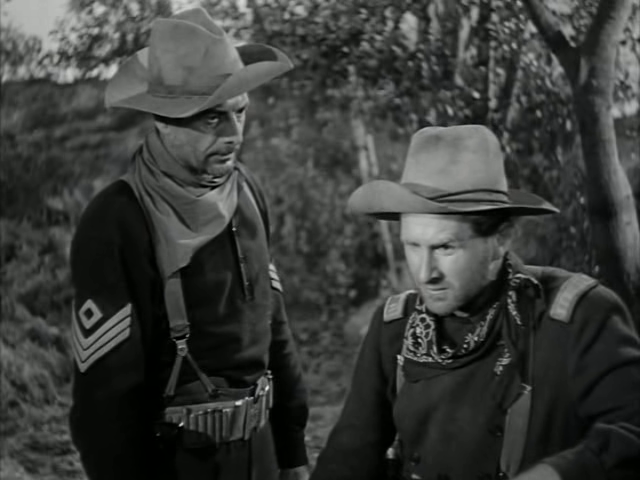
The most interesting scenes show how the men negotiate positions and tasks — i.e., Major Grierson (Reed Hadley) attempting to volunteer to “ride point” (“I’m not a brave man, but the others have got a reason for getting back to the fort”) :

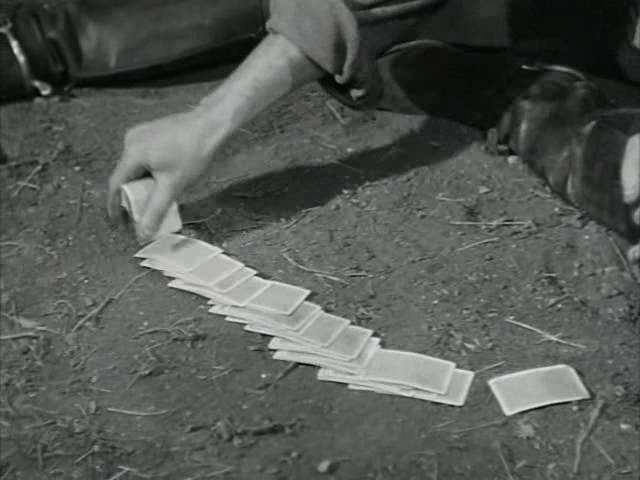
… and the eventual resolution of the situation by “cutting high card to see who rides out in front”, with various men either eager to “win” or relieved to draw low:

Indeed, once the romantic subplot involving Windsor is (mostly) cut from the storyline, things shape into a reasonably taut tale of doomed heroism and duty (we already know things won’t end well for this crew). Fans of American military historical dramas and/or westerns may be curious to check this one out, though it’s not must-see viewing for all.

Notable Performances, Qualities, and Moments:

  • Ernest Miller’s cinematography
  • Several unexpectedly powerful moments

Must See?
No, though it’s worth a look if you enjoy westerns. Listed as a Sleeper in the back of Peary’s book.

Links:

Three on a Meathook (1972)

Three on a Meathook (1972)

“You know what happens when you get around women — and it can’t happen again!”

Synopsis:
When a young man (James Carroll Pickett) living in the country brings home four stranded women, they are brutally murdered, and Billy (Pickett) is accused by his father (Charles Kissinger) of committing these acts. Heading out into town, Billy meets a kind waitress (Sherry Steiner) who brings a friend (Madelyn Buzzard) with her for a visit at Billy’s home the following weekend — but will the pair be safe with a murderer on the loose?

Genres, Themes, Actors, and Directors:

  • Father and Child
  • Horror Films

Review:
Loosely inspired by the Ed Gein murders, this grindhouse debut by low-budget director William Girdler — who died at age 30 in a helicopter crash over the Philippines after completing his final film, The Manitou (1978) — is thankfully a snoozy bore rather than a shockingly crude bloodfest (as one might imagine from the sensationalist title).

Given that Girdler was hugely inspired by Hitchcock (Psycho in particular), the killings are over mercifully quickly, with more emphasis placed on character and psychological motivations — though even that is in short supply. We know Kissinger is gaslighting his son into believing he murdered his own mother years ago, and that he can’t be trusted around any women:

… but we’re unsure what this will lead to for Billy. Instead, we simply watch him heading into town:

… listening to a band perform, meeting a nice girl (Steiner):

… and making inane small-talk while wandering around.

Eventually, of course, Steiner’s life will be put at risk — and when we learn that she’s bringing a friend (Buzzard) with her to Billy’s house, we know exactly what will happen.

At least Buzzard is given a moment in the spotlight, speaking directly to the camera about her deceased veteran-husband. At any rate, we eventually learn the film’s “big reveal” — nothing surprising, yet with an added twist — and all is wrapped up in a tidy horror-film bow. Fans of this type of fare know who they are, but this one certainly isn’t must-see for all film fanatics.

Notable Performances, Qualities, and Moments:
Ummm….

Must See?
Nope.

Links:

Immortal Sergeant (1943)

Immortal Sergeant (1943)

“If I want Valentine or anything else worthwhile in this life, I have to fight for it.”

Synopsis:
While fighting in North Africa under a firm but kind sergeant (Thomas Mitchell), a milquetoast writer (Henry Fonda) reflects on his love for a beautiful woman named Valentine (Maureen O’Hara), who is simultaneously being courted by a wealthy suitor (Reginald Gardner). When Fonda must suddenly take on additional leadership responsibilities, he finds himself developing new confidence and skills — but will this translate to his romantic endeavors once he’s back home?

Genres, Themes, Actors, and Directors:

  • Character Arc
  • Flashback Films
  • Henry Fonds Films
  • Maureen O’Hara Films
  • Soldiers
  • Thomas Mitchell Films
  • World War II

Review:
It’s difficult to know why Peary included this earnest but heavy-handed wartime propaganda film in his GFTFF, other than the star-power provided by Fonda and O’Hara:

Much time is spent in early scenes showing Fonda flashing back to missed opportunities with O’Hara, as Gardner conveniently sweeps in and obnoxiously tries to woo her away.

Once we finally understand the thrust of the drama that will take place on the desert (i.e., Mitchell’s mentorship of Fonda):

… we feel a little more engaged — but not much, since we’re relatively certain how things will turn out, more or less. I recommend watching Sahara (1943) instead for a much better wartime movie taking place in the same setting.

Notable Performances, Qualities, and Moments:

  • A few effectively filmed moments (i.e., the men enjoying passing around a final tiny cigarette and giving it a burial in the sand)

Must See?
No; you can skip this one unless you’re a diehard Fonda or O’Hara fan.

Links:

Women in Love (1969)

Women in Love (1969)

“One has a hankering after a sort of further fellowship.”

Synopsis:
A schoolteacher (Jennie Linden) and her sculptress sister (Glenda Jackson) begin romantic relationships with a school inspector (Alan Bates) and his friend (Oliver Reed), the son of a wealthy mine owner (Alan Webb); meanwhile, Bates and Reed intensify their own bond of male friendship.

Genres, Themes, Actors, and Directors:

  • Alan Bates Films
  • Glenda Jackson Films
  • Ken Russell Films
  • Oliver Reed Films
  • Romance
  • Sexuality
  • Strong Females

Response to Peary’s Review:
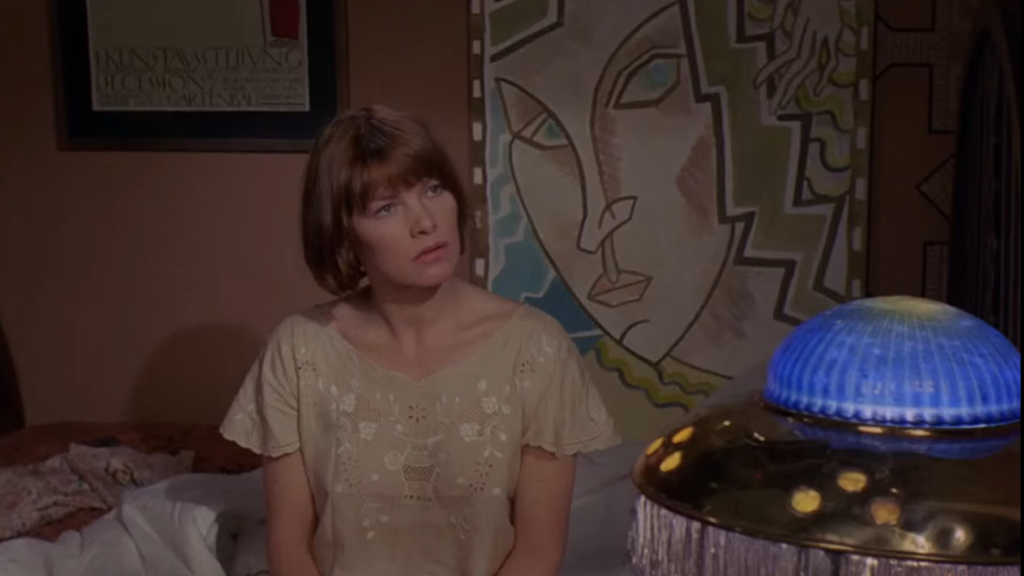
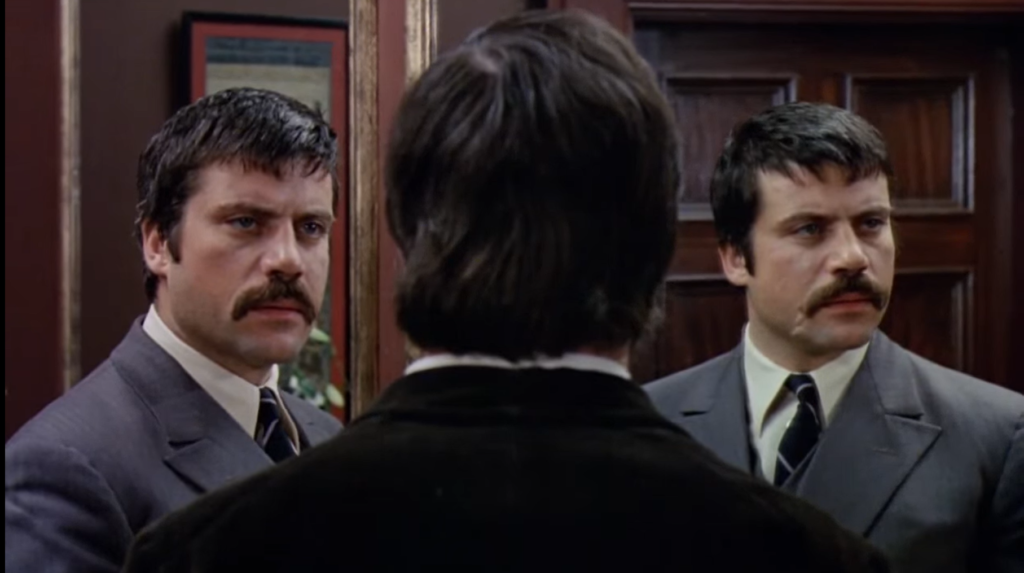
Peary argues that Ken Russell’s “visually impressive, sexually explicit adaptation of D.H. Lawrence’s 1920 novel” contains “annoyingly flamboyant” imagery despite “Lawrence’s words [being] graceful and sensual” — but he concedes that Russell “does manage to convey Lawrence’s difficult point about people in a romance pushing and pulling each other and themselves into their correct ‘positions’ in the relationship — just as animals in a jungle form a hierarchy based on predators and prey.” He posits that the “relationship between strong, passionate, cerebral Gudrun [Jackson] and the hard, unloving Gerald [Reed] is about the struggle for power — it is combative and self-destructive and drives them apart.”
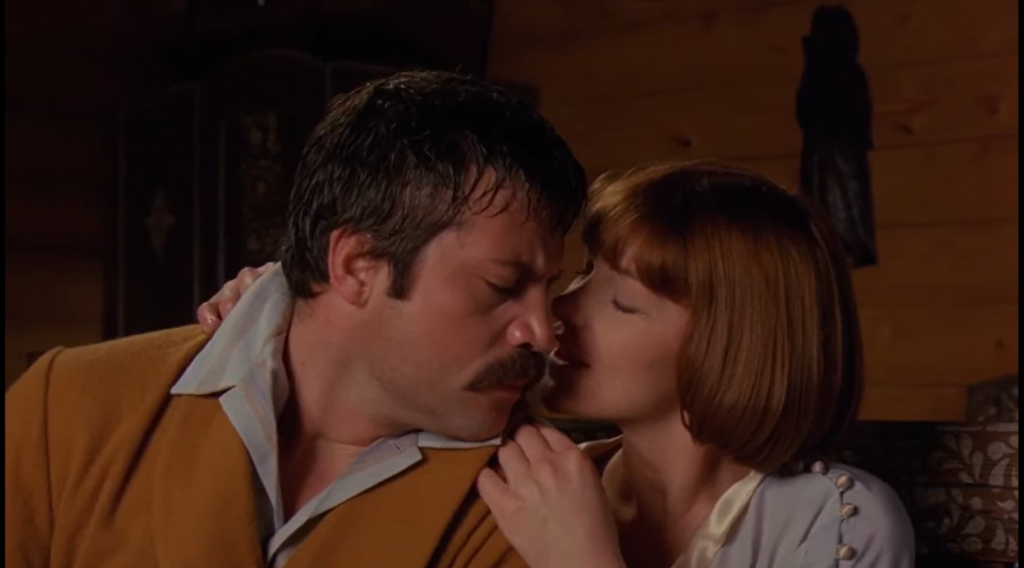
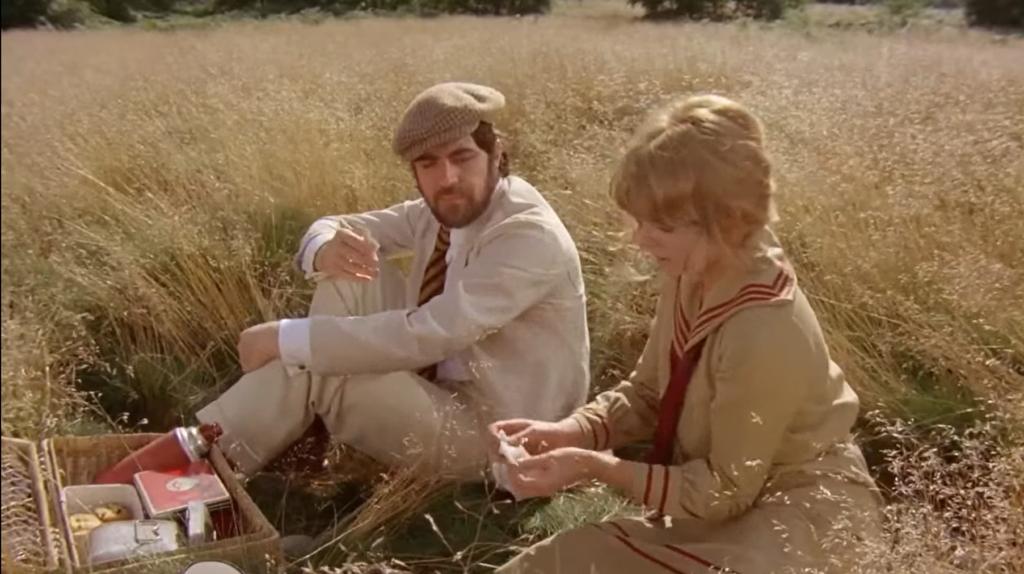
“Meanwhile, Ursula [Linden] and Birkin [Bates], who are more romantic and simpler, grow closer together” and “are seemingly the perfect couple because they love each other equally and each has equal standing in the relationship”:
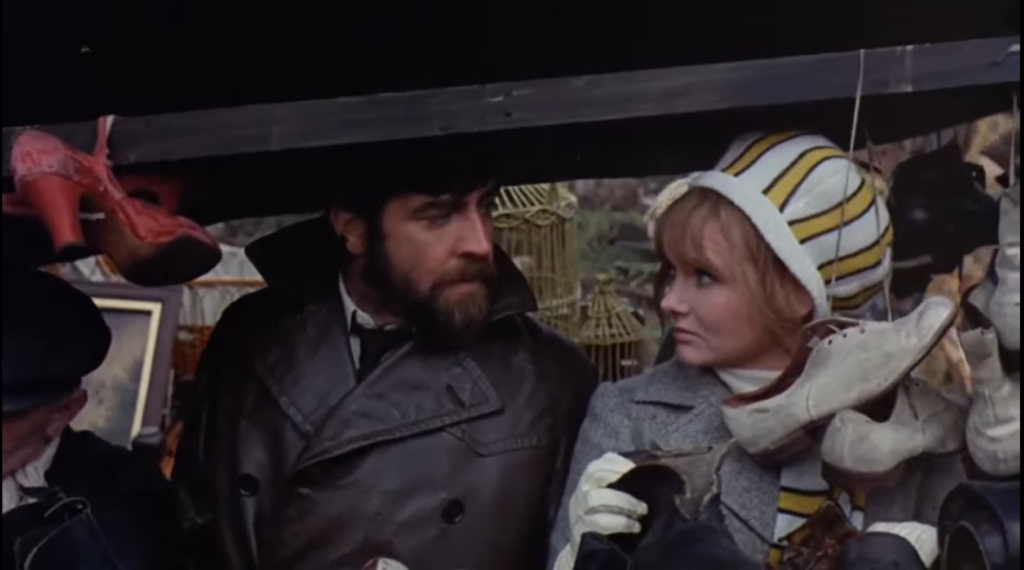
(However, the film’s final scene and image belie this easy interpretation.)

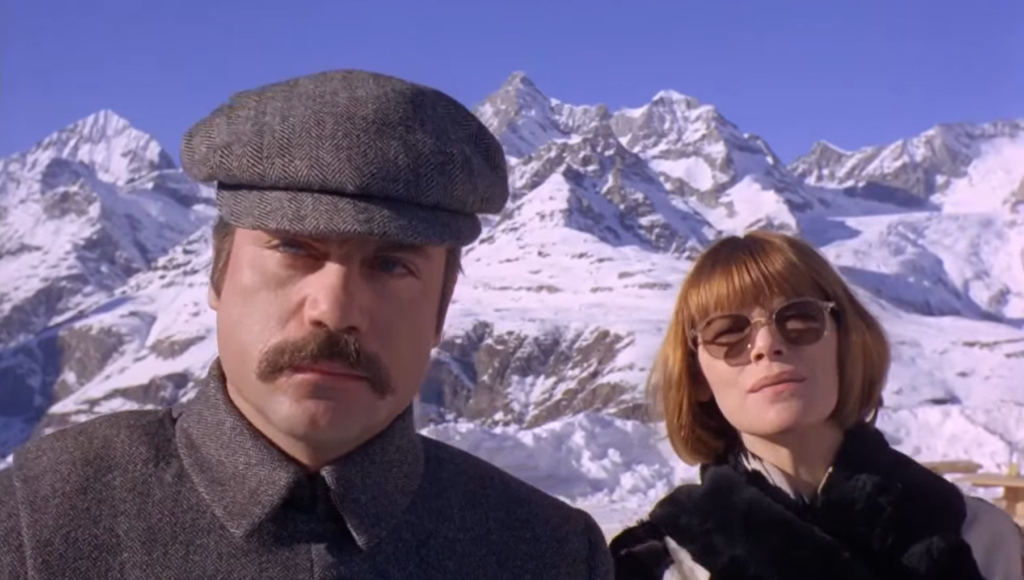
Peary adds that “when the characters make love, especially outdoors, the ‘animal’ analogy is obvious; but it’s interesting to watch how Russell keeps them involved in other physical activities when they’re not having sex — they spend much time dancing:
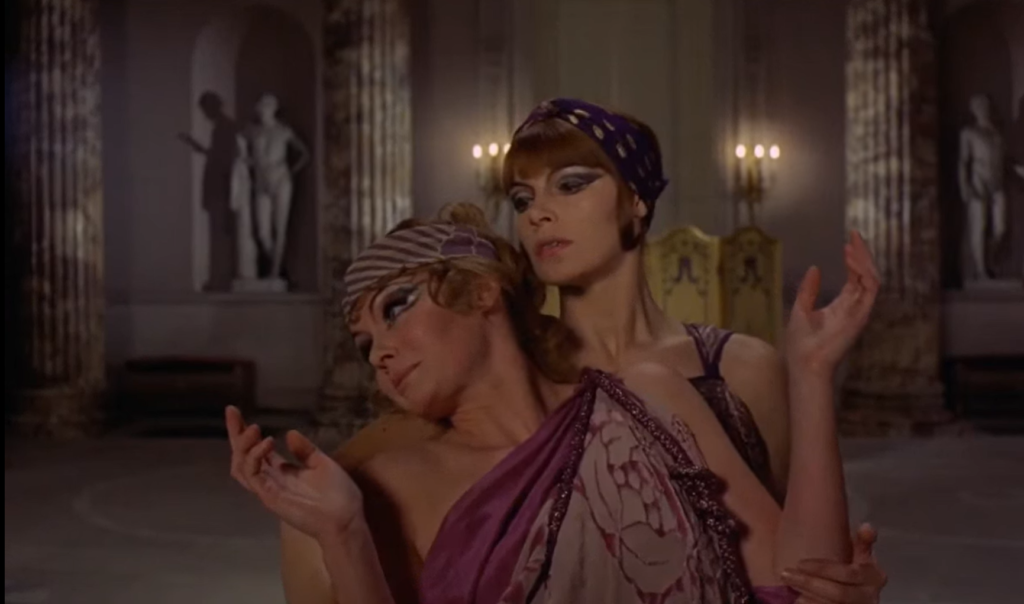
… they swim, they go sledding, they roll in the snow:
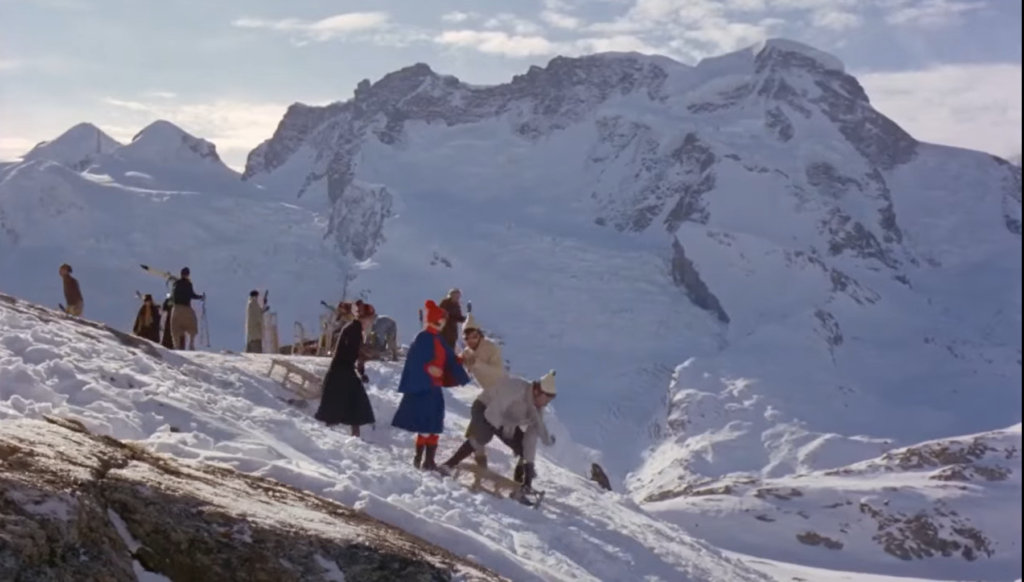
… there is slapping, there is fighting, some men are even knocked down by attack dogs.”
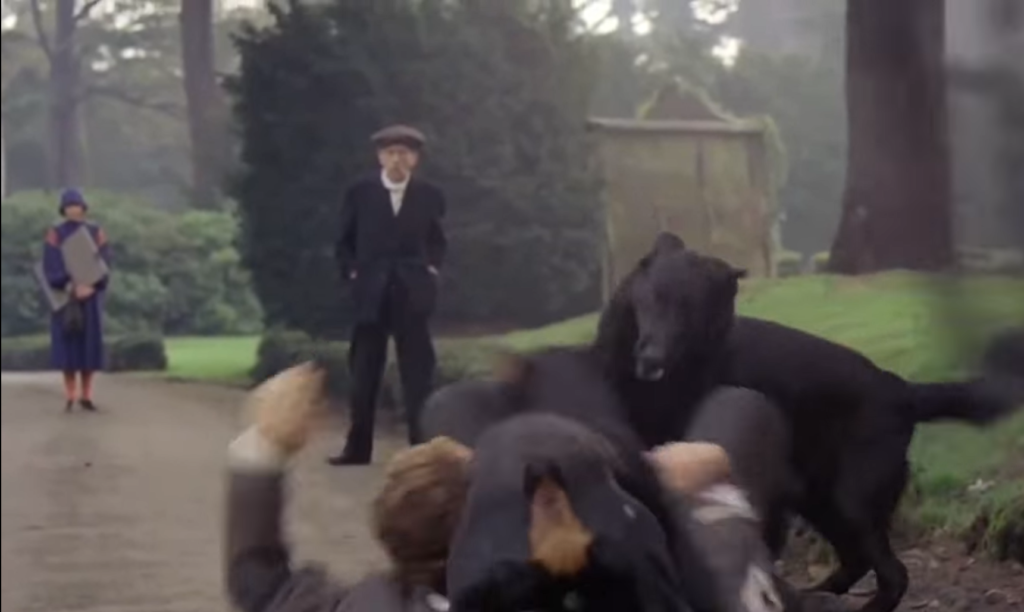
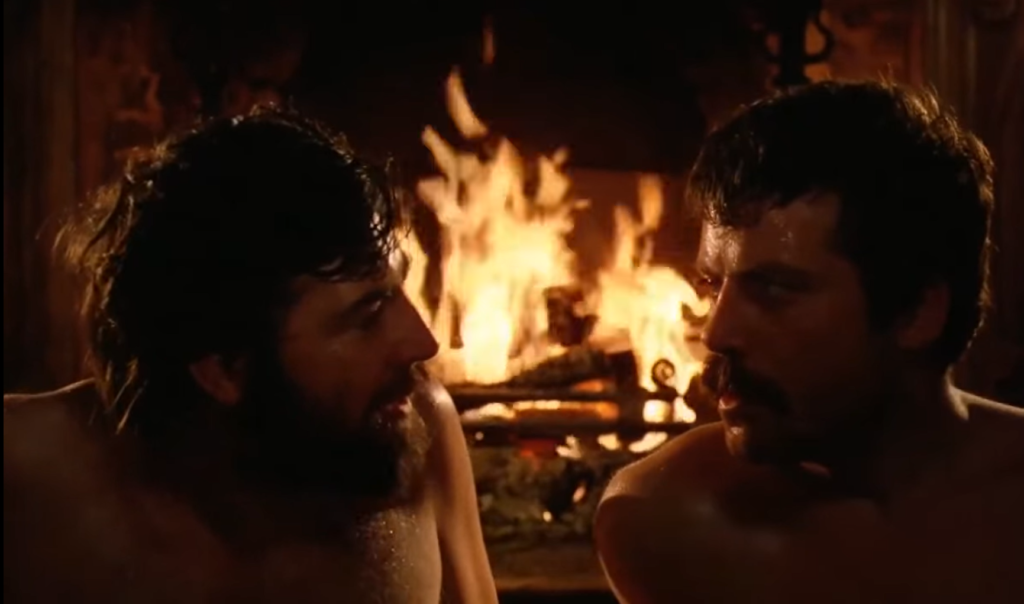
Peary notes that “the performances by the four leads are quite strong… and they are to be commended for appearing in [adult-rated] love scenes when stars of that era were reluctant to do so.” However, he asserts that “from a director’s standpoint, the nude fight scene between Birkin and Gerald:
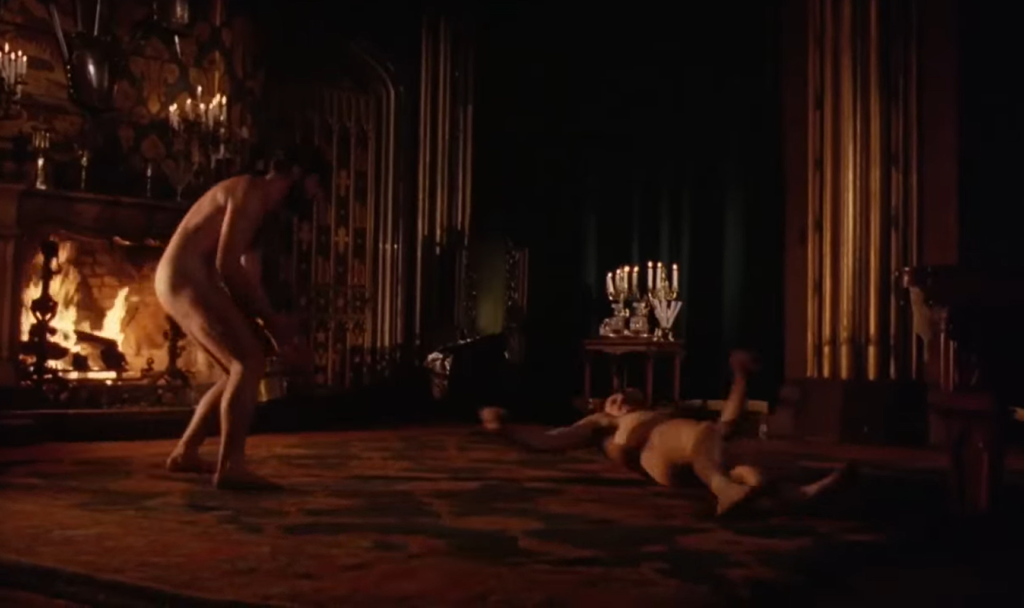
… and the scene in which the nude Birkin and Ursula run toward each other and Russell turns their images within the frame so that they’re horizontal are shamefully pretentious.”
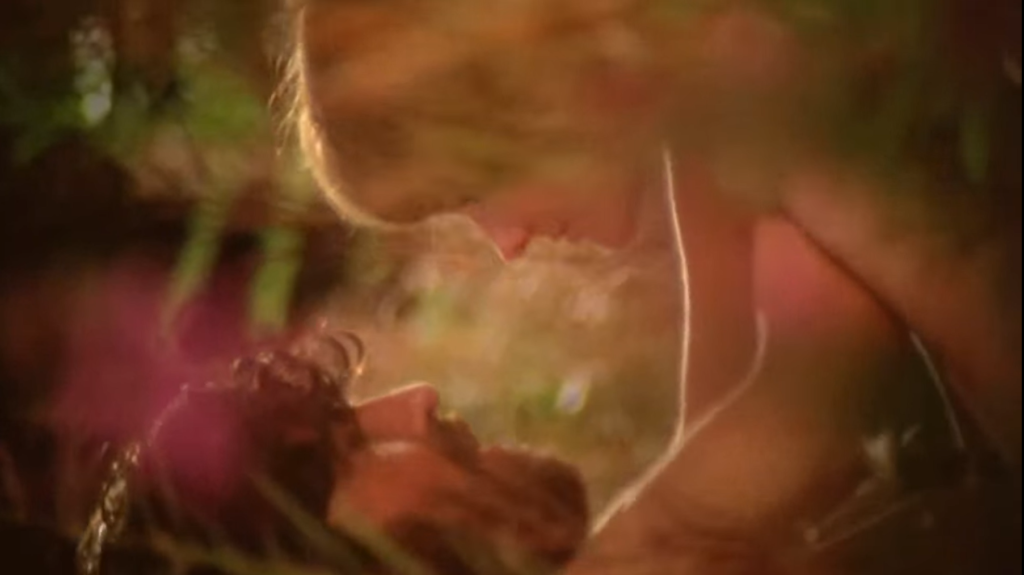
(The latter might possibly be so, but I disagree about the former, which is a masterfully filmed, oft-discussed and provocative sequence.)

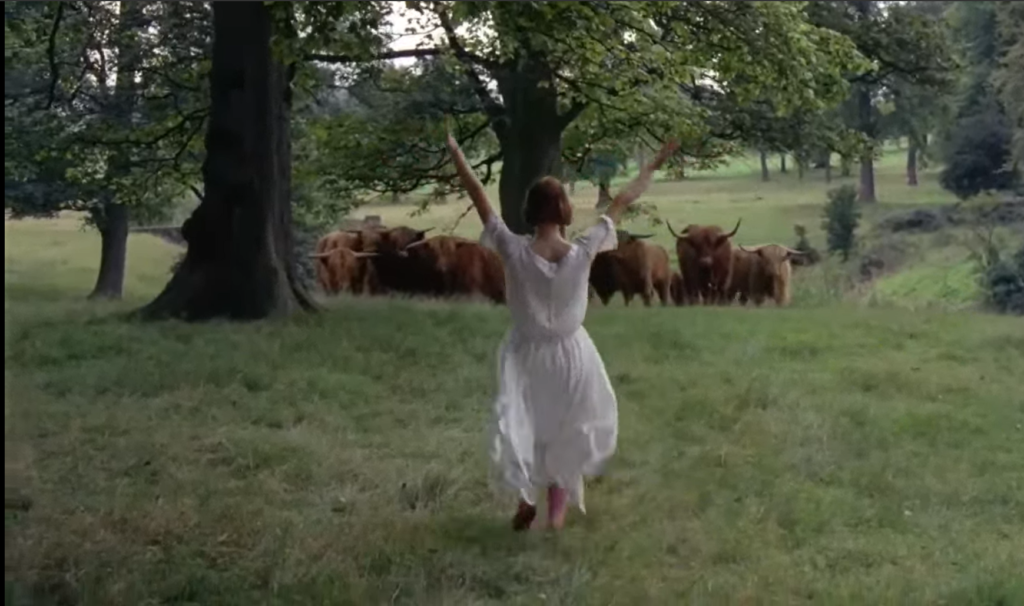
Peary adds that “worse still is Gudrun’s improvisational outdoor dance” — though I’m not exactly sure why he takes issue with it:
In Alternate Oscars, Peary agrees with the Academy in naming Jackson Best Actress of the Year, noting that “Jackson impressed everyone, including [him] in 1970, because she was much different from other leading actresses of the day… [She] came across as extremely intelligent, forceful, defiant, and witty, and could convincingly play women with similar traits without turning off viewers to herself or the characters.” He asserts that while “in the past, viewers rarely warmed to intellectual female characters,” “Jackson showed that brainy women like Gudrun are capable of tremendous passion, even heightened sexuality because of their curiosity.”
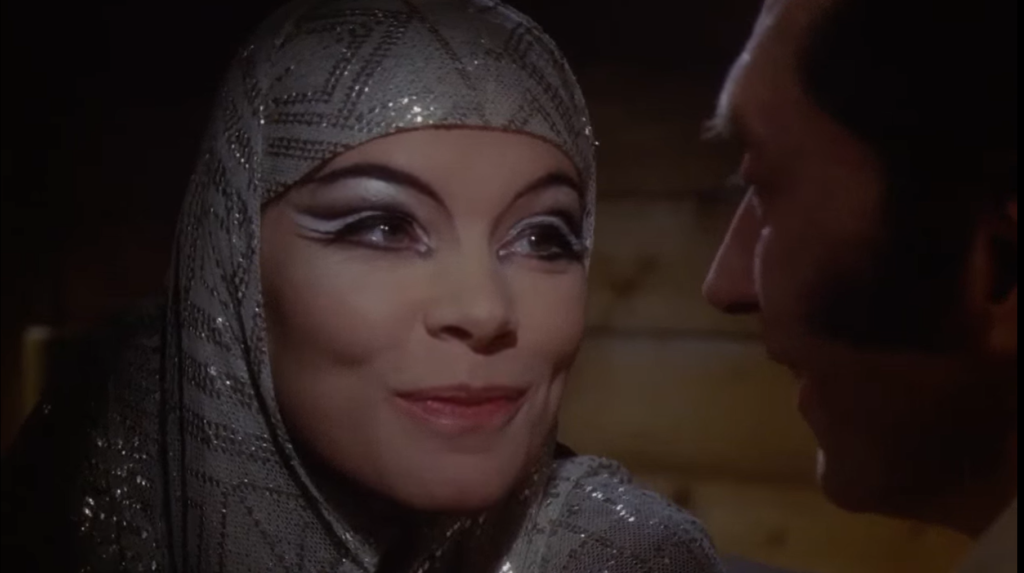
He writes that “Jackson gives a bold performance, making no attempt to cover those traits that might diminish Gudrun’s appeal. Apart from barroom floozies in Westerns and B melodramas, Gudrun is one of the few sympathetic female leads with more than a touch of arrogance. She isn’t just highly spirited or headstrong or even aloof — she is arrogant.”
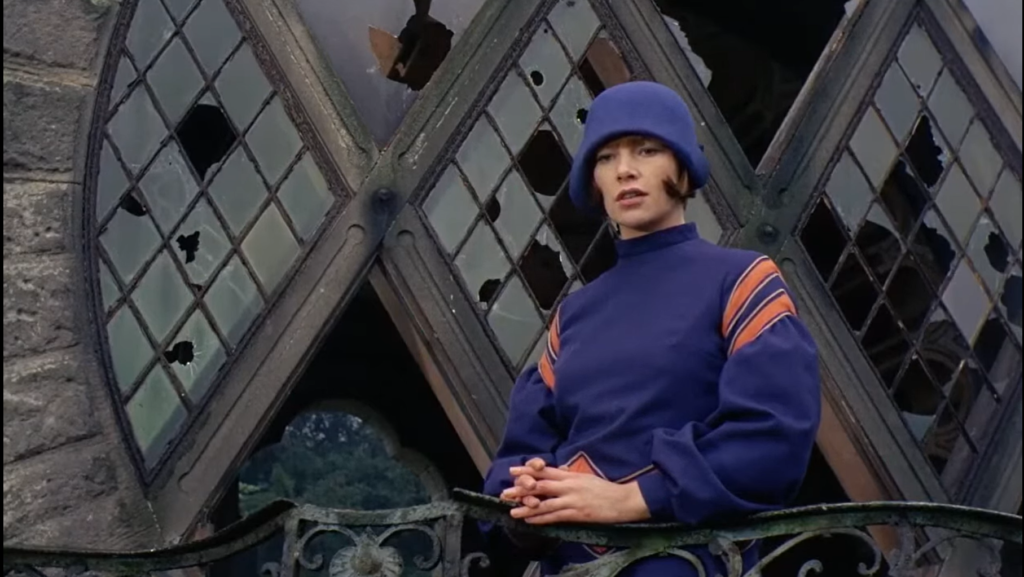
However, Peary asserts that “this doesn’t come aross as meanness… or condescension. It comes across in her refusal to conform or compromise; or — and this drives macho men like Gerald crazy — to reveal her weaknesses or dependence on men.”
While this unusual film isn’t for all tastes, Russell exhibits enough innovation and creativity to recommend it for one-time viewing — and Jackson’s strong performance is indeed worth a watch.

Notable Performances, Qualities, and Moments:

  • Glenda Jackson as Gudrun
  • Oliver Reed as Gerald Crich
  • Alan Bates as Rupert Birkin
  • Billy Williams’ cinematography

Must See?
Yes, as an unusual outing by a creative director — and for Jackson’s Oscar-winning performance.

Categories

  • Important Director
  • Oscar Winner or Nominee

Links:

Sons and Lovers (1960)

Sons and Lovers (1960)

“I don’t want you wasting yourself instead of finding your place in the world.”

Synopsis:
A budding artist (Dean Stockwell) with an alcoholic father (Trevor Howard) and an emotionally manipulative mother (Wendy Hiller) rejects an offer from an elderly art patron (Ernest Thesiger) to move to London to study, instead romancing his local sweetheart (Heather Sears), then moving on to an affair with a married-but-separated suffragette (Mary Ure) at his new workplace.

Genres, Themes, Actors, and Directors:

  • Artists
  • Coming-of-Age
  • Dean Stockwell Films
  • Donald Pleasence Films
  • Sexuality
  • Trevor Howard Films
  • Wendy Hiller Films

Review:
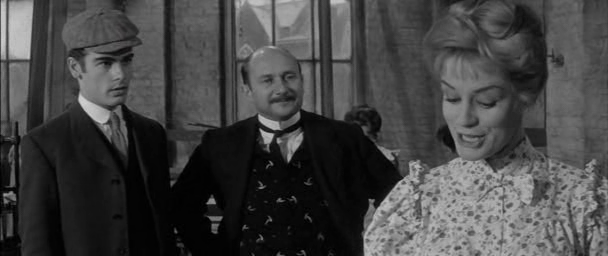
Cinematographer Jack Cardiff helmed this beautifully shot (by DP Freddie Francis) adaptation of D.H. Lawrence’s semi-autobiographical 1913 novel. Unfortunately, while the location shooting in Nottingham, England is lovely:

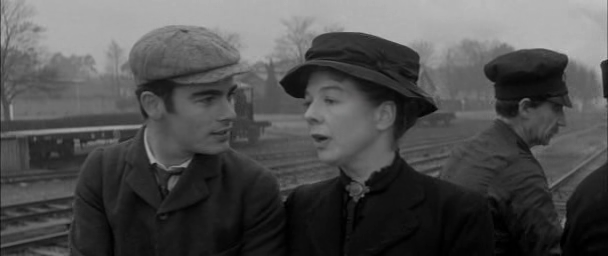
… the storyline implies a prior familiarity with the novel, given that characters are only loosely fleshed out and there is clearly much more to their situations than we’re privy to here. The morbidly unhealthy relationship between Hiller and Stockwell, for instance, hints at deep dysfunction but never goes beyond her surface comments to him:

Meanwhile, Stockwell’s artistic aspirations are hardly given any screentime, and his rejection of Thesiger’s offer in favor of staying at home to care for his mother doesn’t make sense given all her talk about wanting him to go and make something of himself. (We can surmise that she’s actually quite happy to keep him pinned to her apron-strings, but this isn’t made sufficiently evident.)

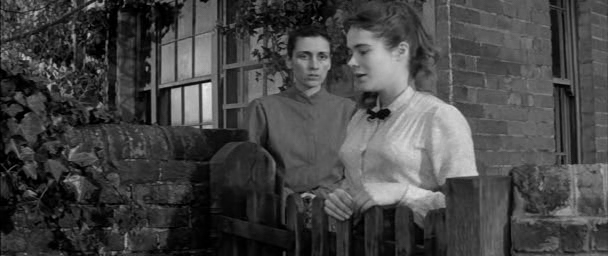
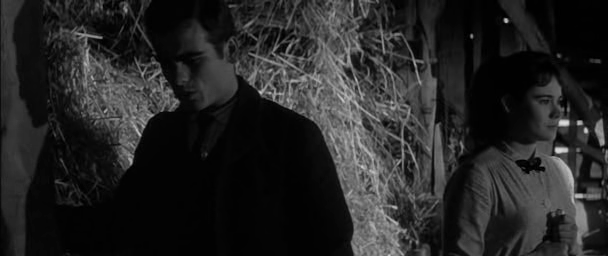
The same is true for the brief glimpses we see of Sears interacting with her puritanical, sex-shaming mother (Rosalie Crutchley):

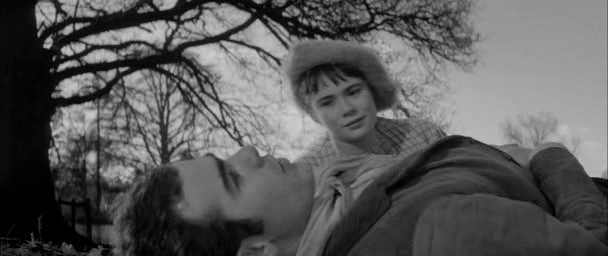
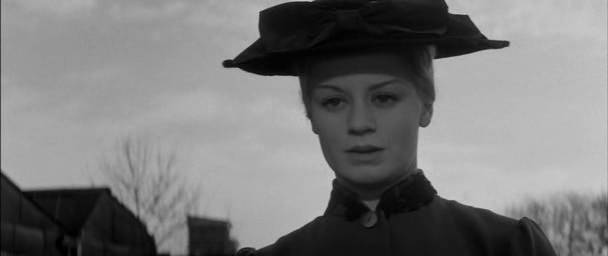
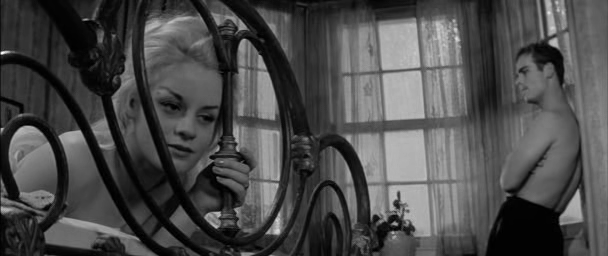
Indeed, Sears’ interesting character is not given enough weight or time, with the majority of romantic scenes involving Ure instead:

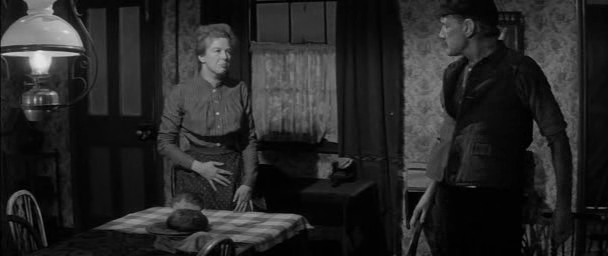
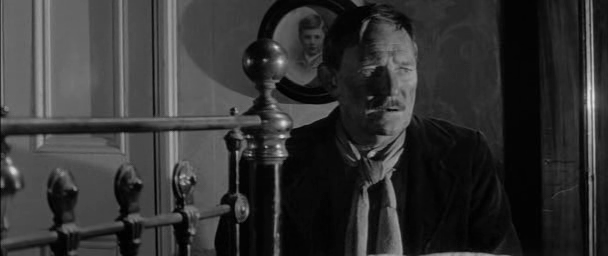
The film’s best performance comes from Oscar-winning Howard as Stockwell’s mercurial coal-mining father — a man who takes great pride in his career, and erupts in alcoholic rage when his value and status are questioned. We can sense how infuriating it is for him to be married to Hiller, yet how deeply he relies on her for companionship and care.

Note: Watch for Donald Pleasence in a small role as Stockwell’s new employer:

Notable Performances, Qualities, and Moments:

  • Trevor Howard as Walter Morel
  • Freddie Francis’s cinematography

Must See?
No; you can skip this one.

Links:

Lola (1961)

Lola (1961)

“This town and its people bore me.”

Synopsis:
When a bored, recently fired young man (Marc Michel) spots his childhood crush (Anouk Aimee), he arranges to have dinner with her, not realizing that she’s still infatuated with the long-gone father of her young son (Gérard Delaroche). Meanwhile, Lola (Aimee) has a friendly fling with an American soldier named Frankie (Alan Scott), and Roland (Michel) is invited to dinner at the home of a widow (Elina Labourdette) and her teenage daughter (Annie Duperoux) who are borrowing his English dictionary.

Genres, Themes, Actors, and Directors:

  • Anouk Aimee Films
  • French Films
  • Jacques Demy Films
  • Love Triangle
  • Single Mothers

Review:
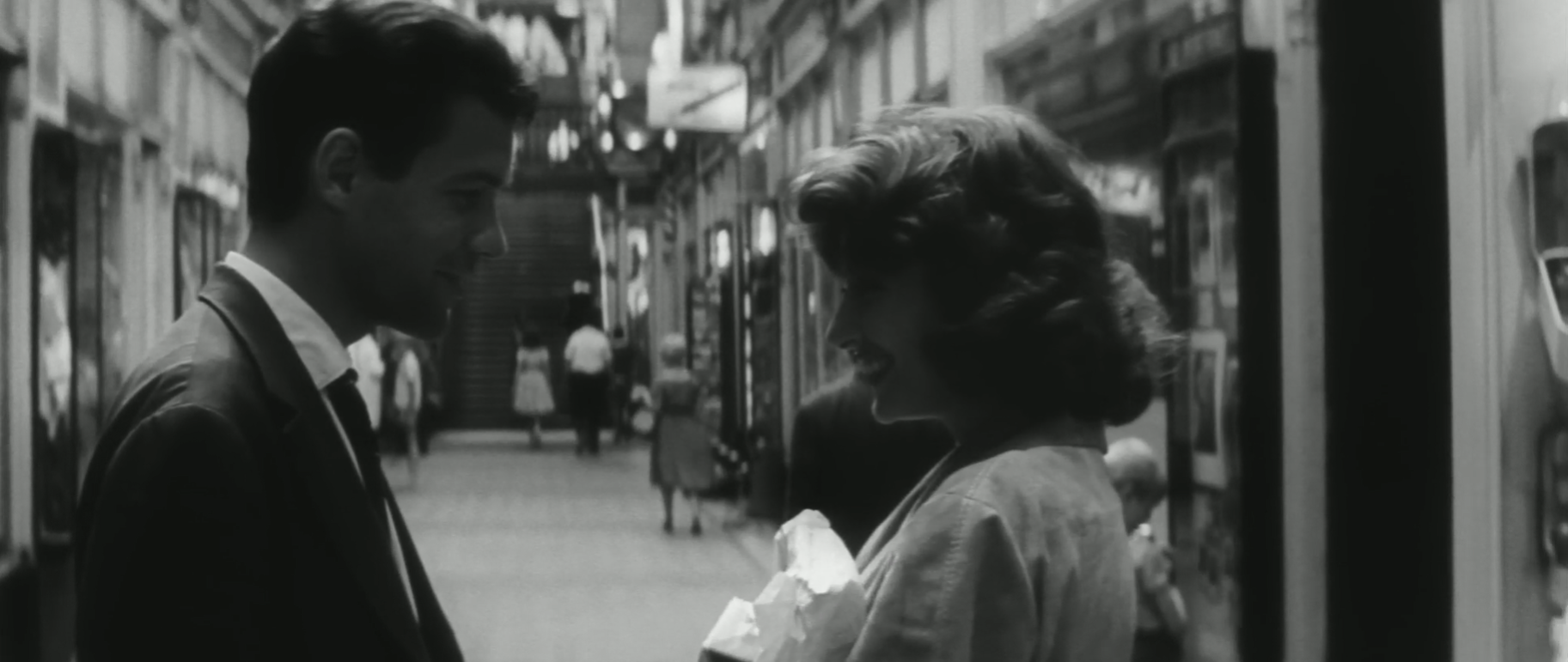
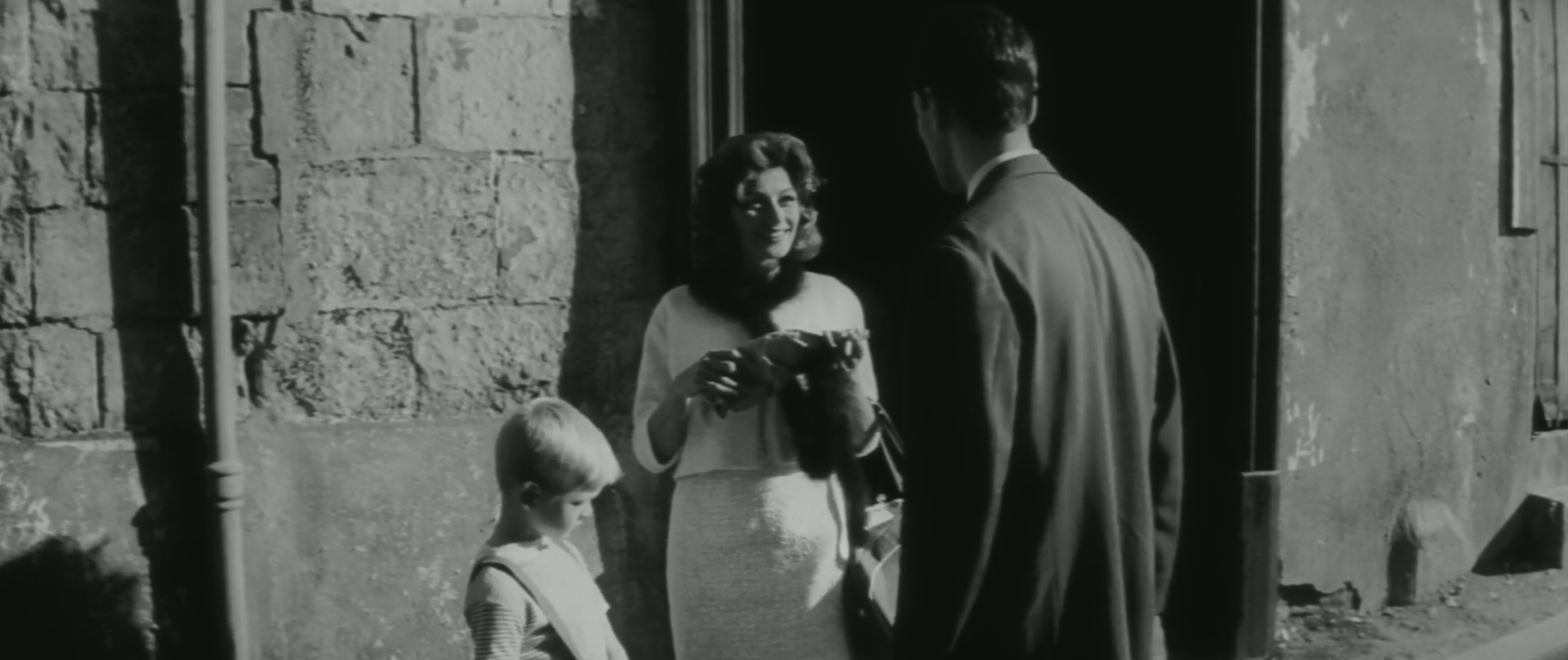
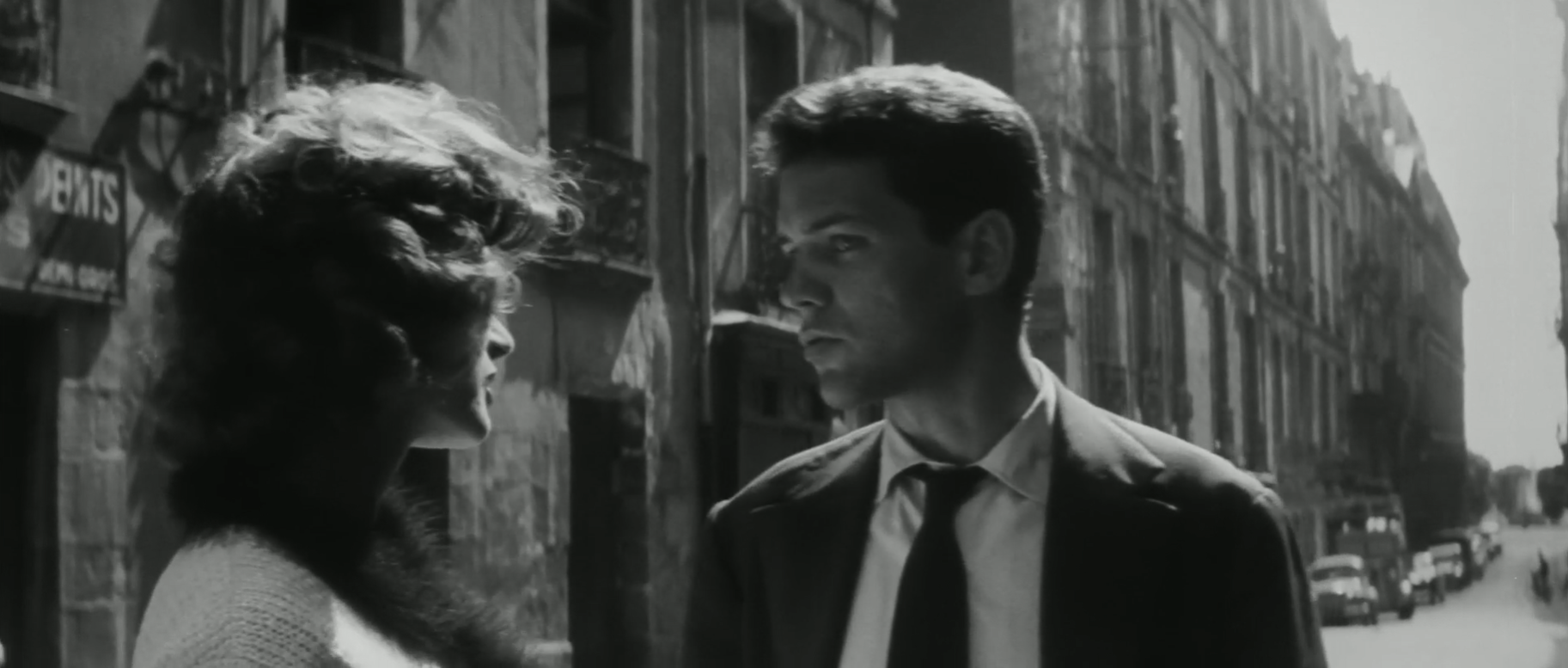
Jacques Demy’s feature debut introduces us to a character who plays a small but pivotal role in The Umbrellas of Cherbourg (1964): Catherine Deneuve’s older suitor, “Roland Cassard” (Marc Michel). In this earlier film, Roland is posited as someone who is literally seeking his way in the world, and believes he’s landed on a solution by serendipitously meeting up with Aimee:

However, despite a seemingly endless series of coincidences and connections, life is far from straightforward for any of the characters in this film, who all hold on to secret desires and hopes.

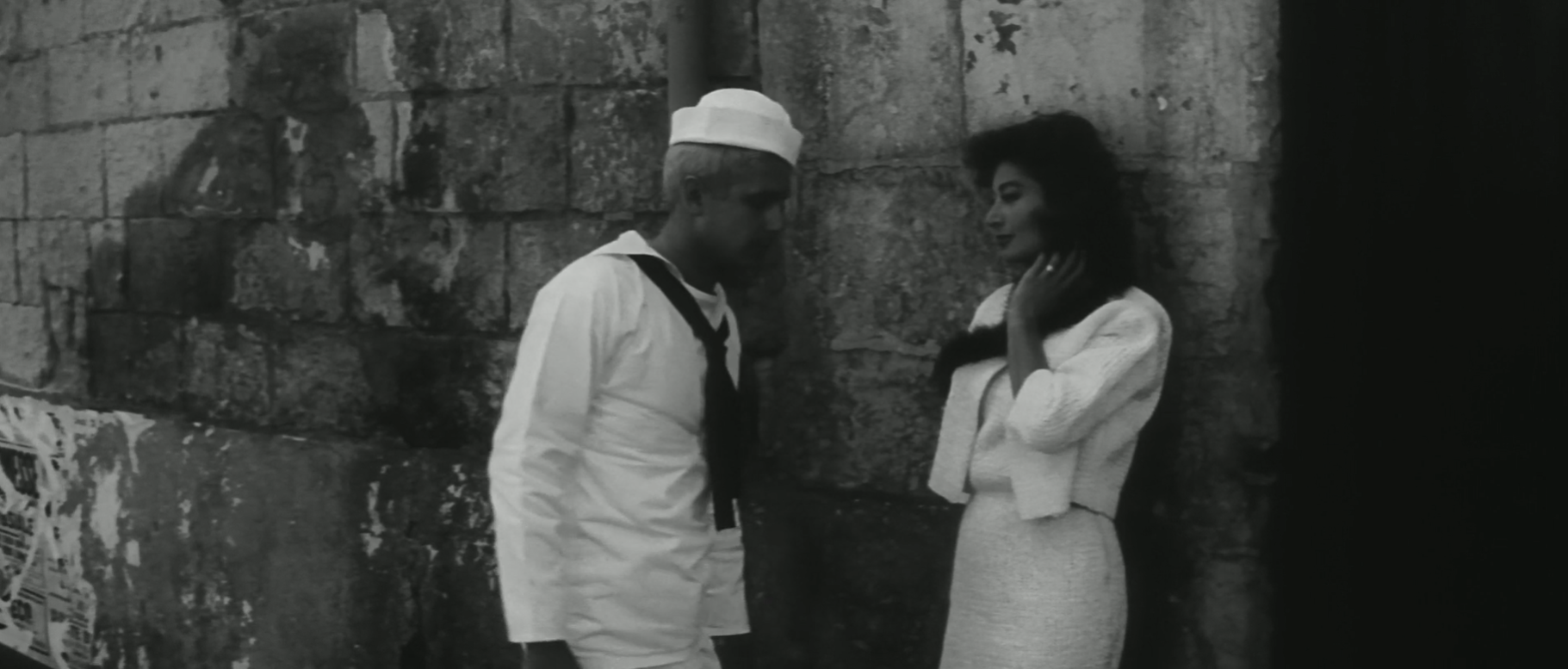
As pointed out in the video essay “Capturing Coincidences and Mirroring Characters”, Demy’s screenplay is meticulously crafted to show thematic and emotional parallels between various individuals — from young Cecile (Duperoux), like Aimee, being an aspiring dancer who falls for a blond American sailor (Scott) at the age of 14:

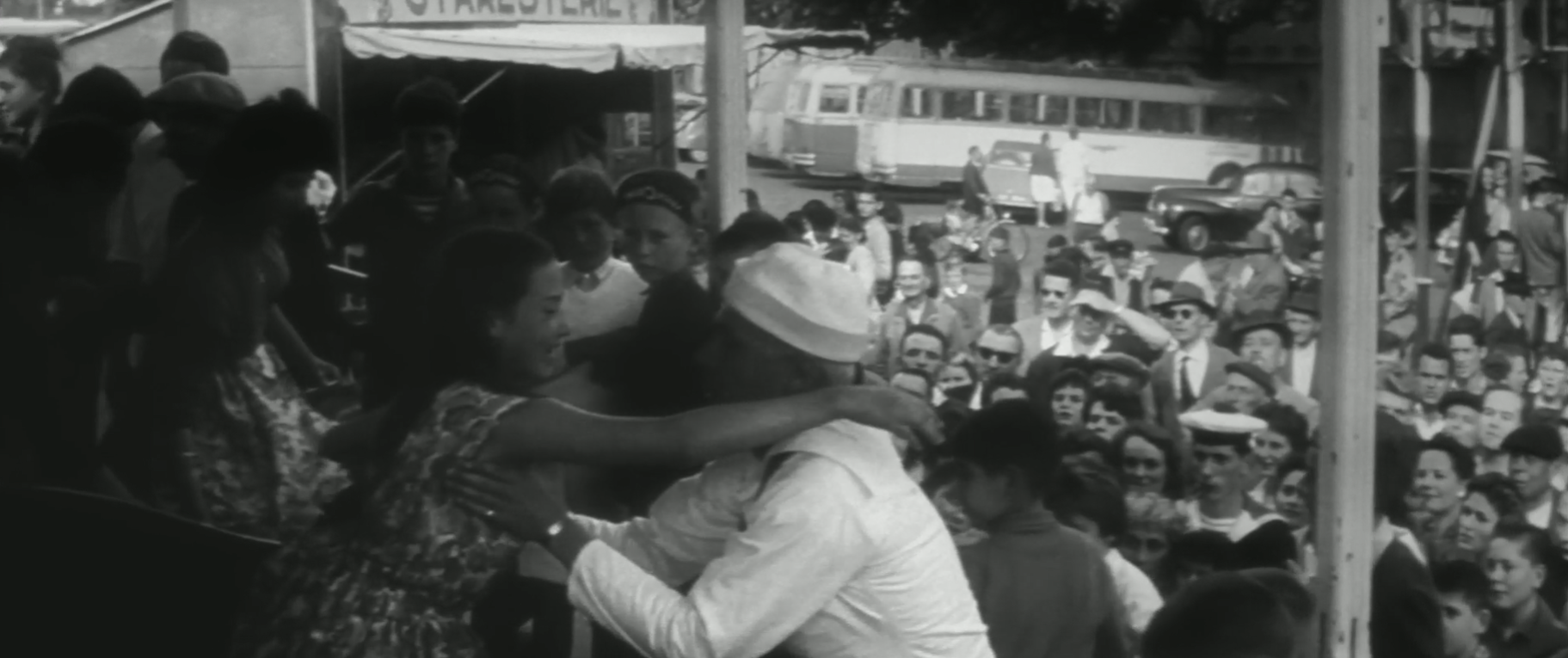
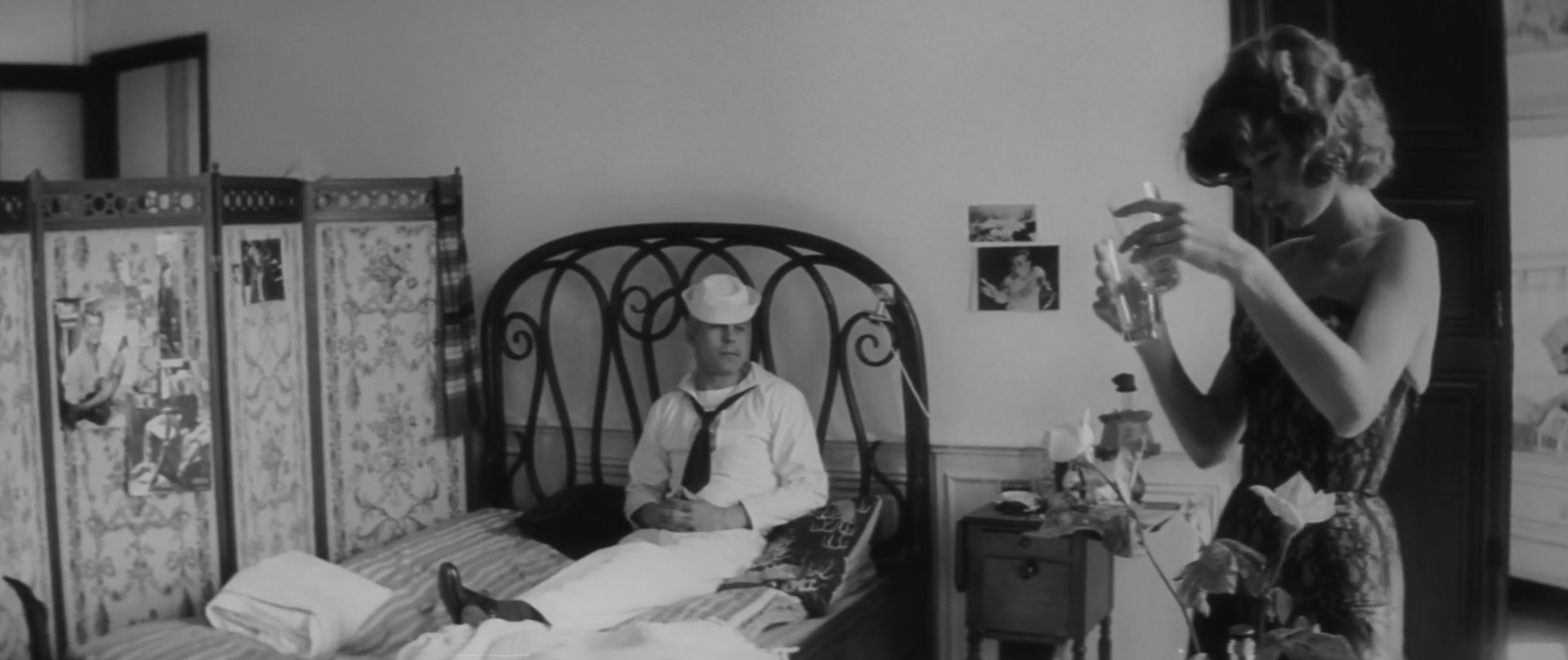
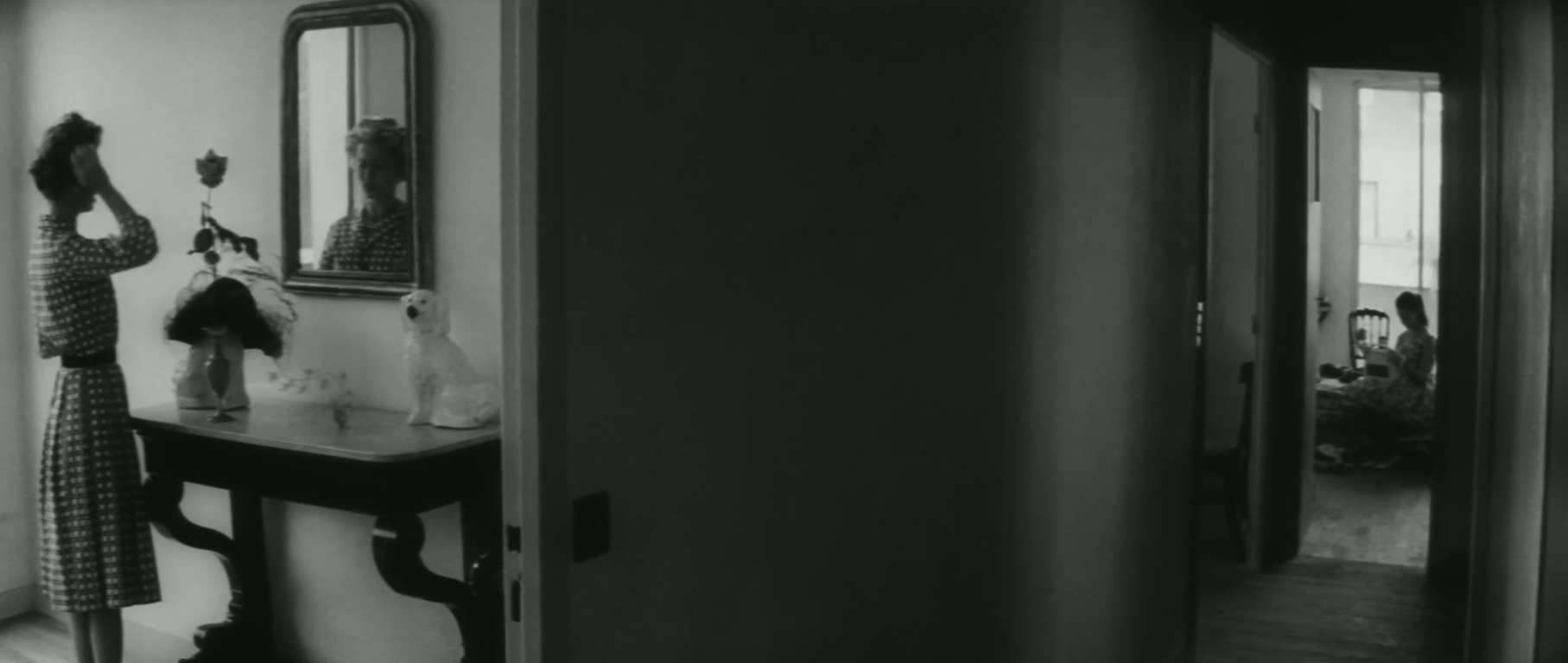
… to Roland’s belief that his first love (Aimee) must somehow be destined for him. Given that Aimee’s character comes across at first like an irresponsible single mom nurturing unrealistic expectations (she appears to be deliberately mimicking Marilyn Monroe at times, and even references her explicitly):

… it’s pleasantly surprising how we gradually come to root for Lola, and learn that she actually considers being a “good mom” at the top of her list of favorite personal traits (despite leaving her 7-year-old son regularly at home alone! oh, those were different times):

Indeed, we remain invested until the very end in how things will turn out for each of these characters — and when a mysterious figure from early in the film suddenly shows up again at the end, we cheer for life’s occasional serendipities.

Notable Performances, Qualities, and Moments:

  • Raoul Coutard’s cinematography

  • Good use of natural sets in Nantes, France

Must See?
Yes, as a compelling debut film by a beloved director.

Categories

  • Important Director

(Listed in 1001 Movies You Must See Before You Die)

Links:

River’s Edge, The (1957)

River’s Edge, The (1957)

“You’re like something I’ve caught and can’t quite cure myself of.”

Synopsis:
When an ex-con (Debra Paget) married to a rancher (Anthony Quinn) learns that her former lover (Ray Milland) — who she took the rap for — has arrived with money in a briefcase and is hoping to get across the border to Mexico, she persuades her husband to help; but their situation quickly becomes even stickier once Milland shows his truly sociopathic nature.

Genres, Themes, Actors, and Directors:

  • Allan Dwan Films
  • Anthony Quinn Films
  • Cat-and-Mouse
  • Debra Paget Films
  • Ex-Cons
  • Love Triangle
  • Ranchers
  • Ray Milland Films

Review:
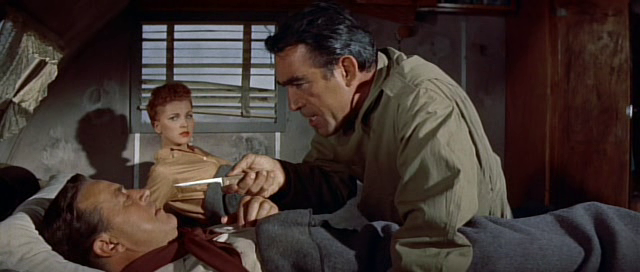
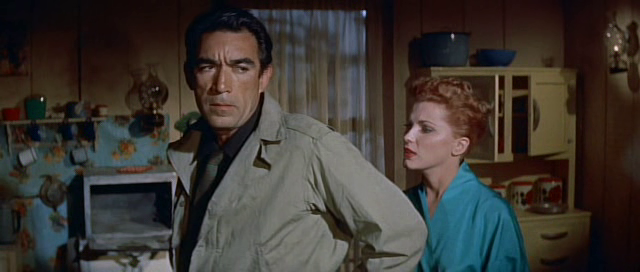
In his review for DVD Talk, Stuart Galbraith IV accurately describes this late-career outing by workhorse director Allan Dwan as “a compact little thriller that’s part modern-day Western, part-quasi noir,” a “violent and nasty… three-character show where no one is entirely innocent or unrepentantly evil.” Although it takes a little while for the storyline to get underway, once it does we find ourselves unexpectedly involved in how things will resolve — especially given that Quinn and Paget’s motivations continue to shift. Does Quinn really love Paget, or just feel sorry for her? Does Paget still really love Milland, or will she see the folly of that stance?

Milland, meanwhile, is a straight-up baddie who we watch simply to see what self-centered moves he’ll make next.

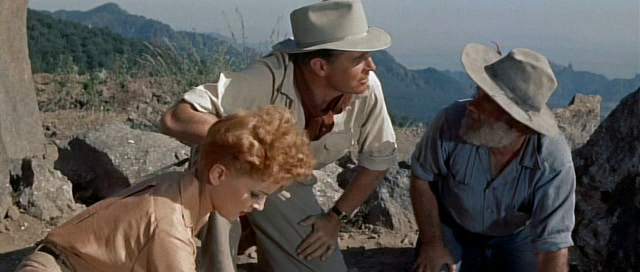
Watch for Harry Carey, Jr. in a small but pivotal role as a goldminer who helps the trio out — at a cost.

Notable Performances, Qualities, and Moments:

  • Anthony Quinn as Ben Cameron
  • A surprisingly compelling screenplay

Must See?
No, but it’s worth a look if you’re in the mood for this kind of flick.

Links:

Sundowners, The (1960)

Sundowners, The (1960)

“He’s a man who hates routine; what he needs is a little excitement.”

Synopsis:
In 1920s rural Australia, a sheep drover (Robert Mitchum) and his wife (Deborah Kerr) and teenage son (Michael Anderson, Jr.) settle down briefly to shear sheep, but Kerr is eager to secure a more permanent homestead. Will she and her nomadic husband be able to come to an agreement about where to go next?

Genres, Themes, Actors, and Directors:

  • Australian Films
  • Deborah Kerr Films
  • Fred Zinneman Films
  • Glynis Johns Films
  • Marital Problems
  • Peter Ustinov Films
  • Robert Mitchum Films
  • Westerns

Review:
Three years after co-starring in John Huston’s Heaven Knows, Mr. Allyson (1957), Robert Mitchum and Deborah Kerr re-teamed for this comedic “meat pie western”, directed by Fred Zinneman and set in southern Australia (with ample evidence of on-location shooting). At the heart of the storyline, other than showcasing the sheep-driven existence of most of the characters:


… are the significant tensions between Mitchum and Kerr in terms of how they want to live out the rest of their lives. While Kerr accepted Mitchum’s wanderlust in their younger years, her desires have since shifted (though not her desire for Mitchum himself):

It’s realistic but painful at times to watch this likable pair work through their challenges, especially given Mitchum’s troubles with gambling. Meanwhile, the leisurely, episodic narrative shows us what life is like for those existing in this milieu — including the family’s British colleague (Peter Ustinov) romancing a local barmaid (Glynis Johns):

… their employer’s classy wife (Dina Merrill) wondering if she fits in:

… a young wife (Lola Brooks) hoping to have her husband (John Meillon) nearby when she gives birth:

… and Mitchum’s willingness to go up against a veteran sheep shearer in a betting contest:

Meanwhile, Anderson, Jr. discovers his love of horse racing:

… which leads to the film’s climactic albeit somewhat ambiguous ending. While this amiable movie isn’t must-see viewing for all film fanatics, it’s worth a look for the lead performances, and for those interested in Australia’s depiction on screen by Hollywood.

Notable Performances, Qualities, and Moments:

  • Deborah Kerr as Ida Carmody (nominated as one of the Best Actresses of the Year in Peary’s Alternate Oscars)
  • Jack Hildyard’s cinematography

Must See?
No, but it’s worth a look for Kerr’s performance. Listed as a Personal Recommendation in the back of Peary’s book.

Links:

Sundays and Cybele (1962)

Sundays and Cybele (1962)

“I’m nothing. I’m nothing anymore.”

Synopsis:
An amnesiac veteran (Hardy Krüger) living with a sympathetic nurse (Nicole Courcel) meets a 12-year-old girl named Francoise (Patricia Gozzi) when her father drops her off permanently at an orphanage. Pierre (Krüger) and Francoise, a.k.a. Cybele, soon become close friends despite their difference in age — but how will the rest of the world view their relationship?

Genres, Themes, Actors, and Directors:

  • French Films
  • Friendship
  • Orphans
  • Veterans

Review:
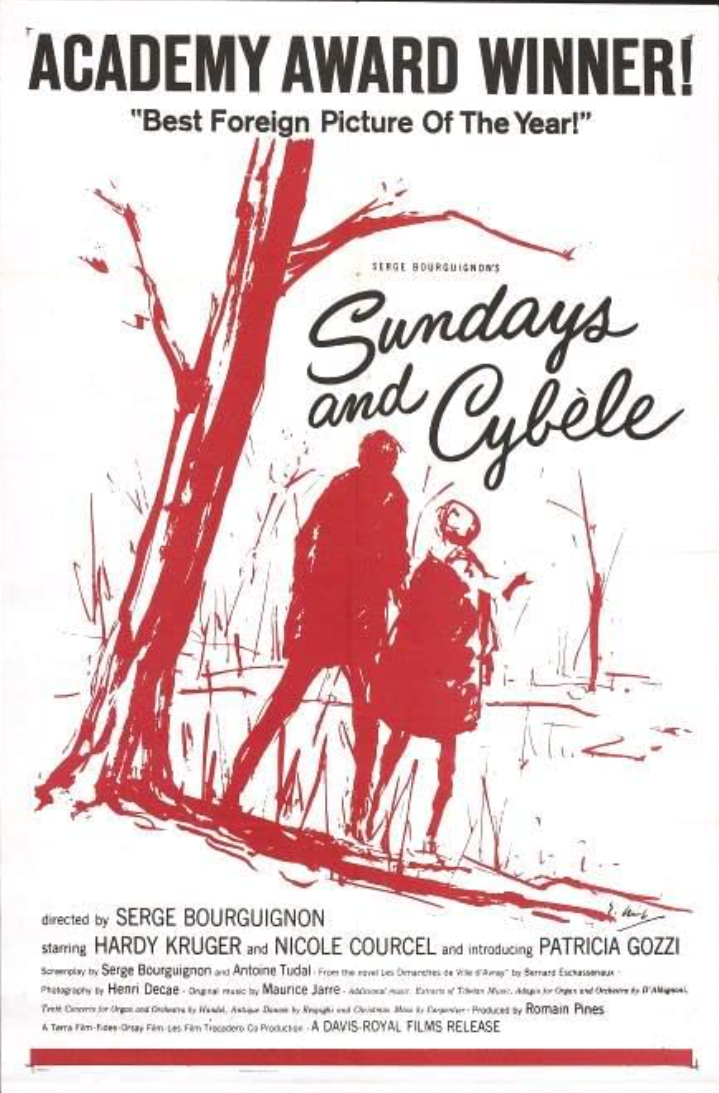
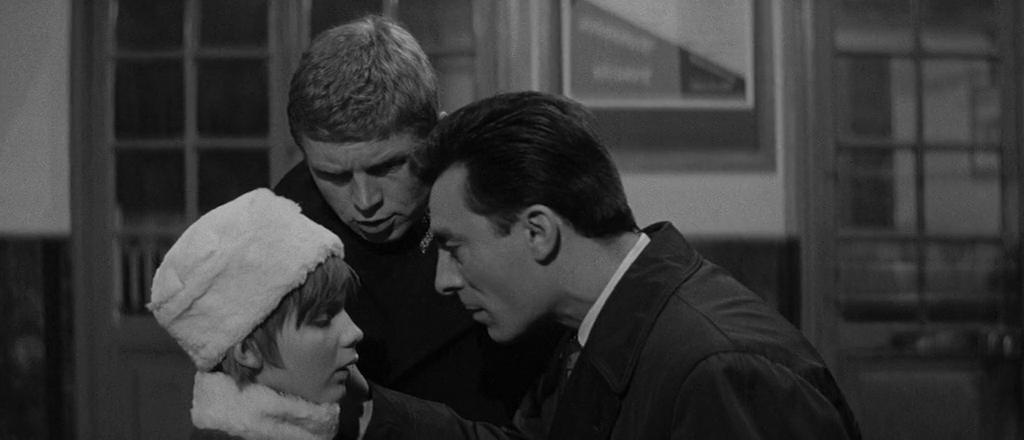
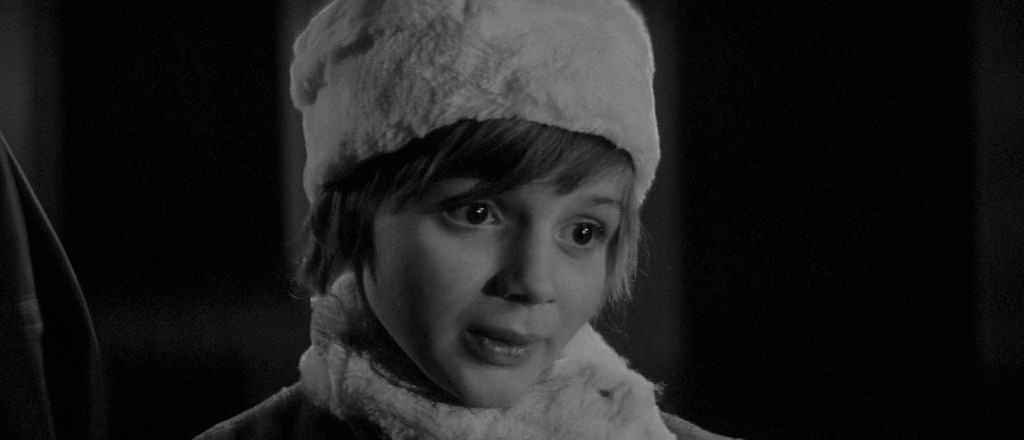
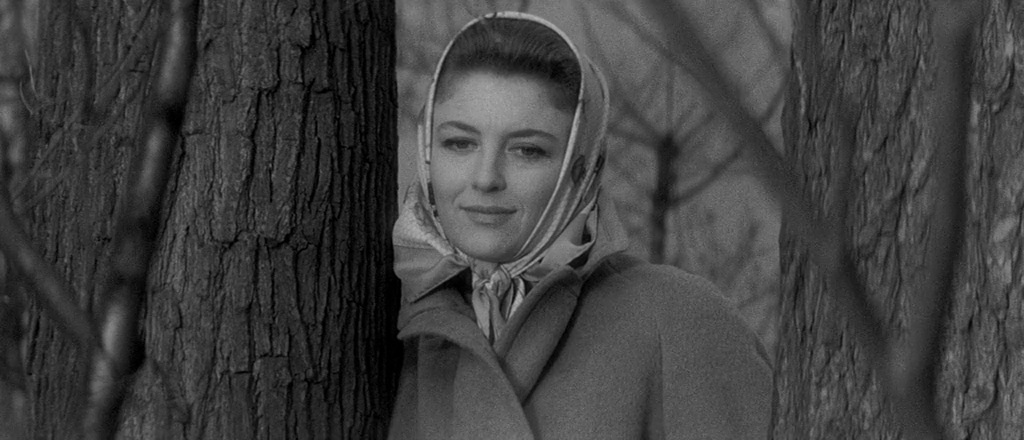
French director Serge Bourguignon’s Oscar-winning Best Foreign Film tackles the challenging topics of PTSD and cross-age friendships with sensitivity and compassion. From the film’s distressing beginning, we learn that Gozzi’s character — who goes by the Christian name of “Francoise” but was actually born as “Cybele” — is deeply scarred by outright rejection from both her parents:

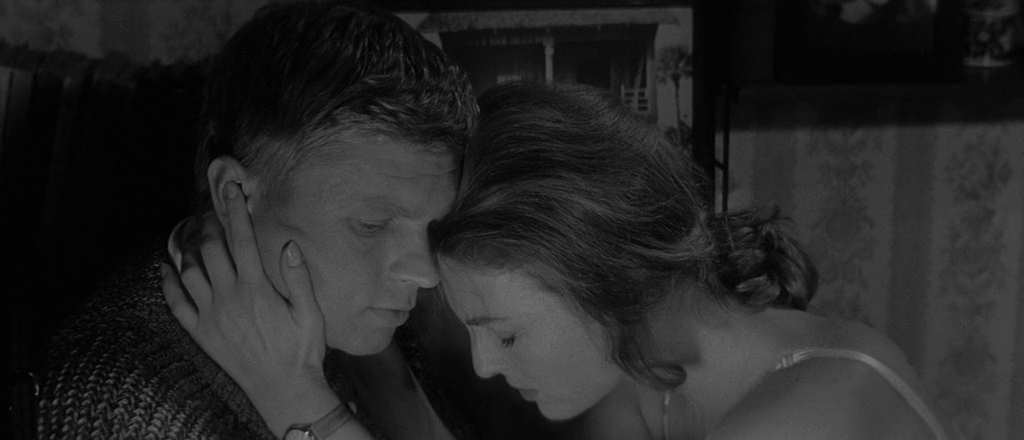
… and eager to secure a bond with a reliable adult. To that end, traumatized Krüger (emotionally stunted after believing he’s killed a girl in combat) fits the bill perfectly. However, Krüger and Bozzi’s age and gender differences make their friendship inherently problematic, and their situation is further complicated by Bozzi’s quasi-romantic overtures (she insists that once she’s old enough at 18, they should marry).

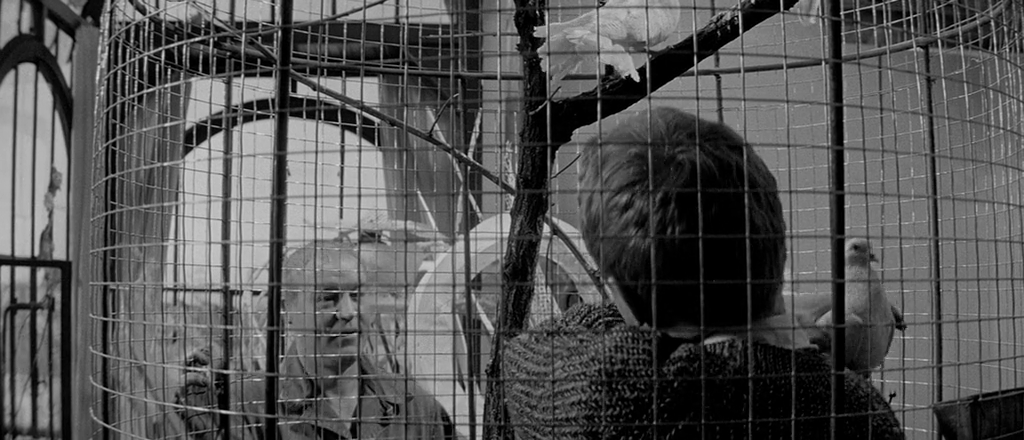
To his credit, Krüger’s Pierre never shows anything but non-sexual love and intentions towards Francoise; however, the concerns of those around him make complete sense. While a sympathetic artist-friend (Daniel Ivernel) insists that Pierre’s friendship with Francoise is a good thing (“With this little girl he’s found a world where he fits in, where he’s happy.”):

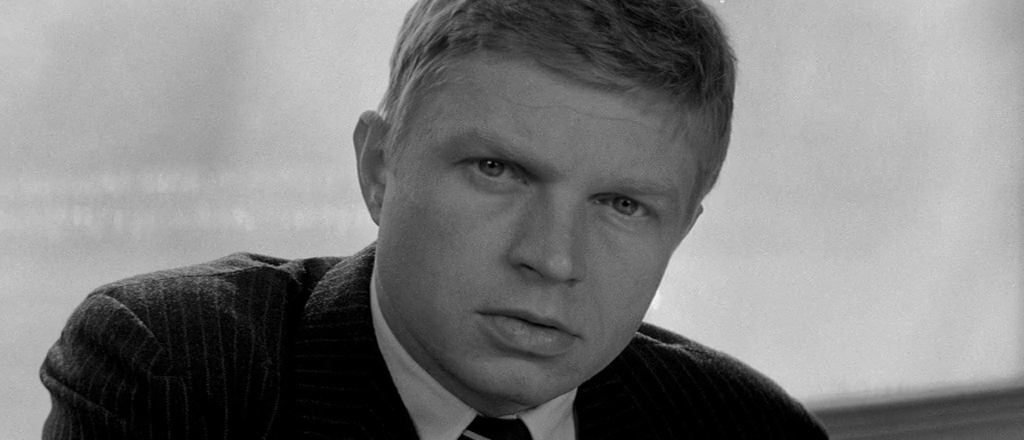
… the risk of harm in one way or another is real. Gozzi’s performance is remarkably natural and precocious (she apparently had fun simply “playing” with Krüger during shooting), while German-born Krüger is believably innocent yet troubled in a challenging role.

Notable Performances, Qualities, and Moments:

  • Hardy Krüger as Pierre
  • Patricia Gozzi as Francoise/Cybele
  • Nicole Courcel as Madeleine
  • Henri Decaë’s cinematography


Must See?
Yes, for its historical relevance and as a fine film to check out.

Categories

  • Historically Relevant

Links: