Jitterbugs (1943)
“I just love the way you show people carry on.”
|
Synopsis: |
|
Genres, Themes, Actors, and Directors:
Review: Redeeming Qualities and Moments:
Must See? Links: |
“I just love the way you show people carry on.”
|
Synopsis: |
|
Genres, Themes, Actors, and Directors:
Review: Redeeming Qualities and Moments:
Must See? Links: |
“Every day you read about girls marrying rich fellas — every day!”
|
Synopsis: |
|
Genres, Themes, Actors, and Directors:
Review: Redeeming Qualities and Moments:
Must See? Links: |
“Women have a flag to fly as well as men, Mr. Brown.”
|
Synopsis: |
|
Genres, Themes, Actors, and Directors:
Review:
Naturally, the film’s very premise is absolutely ripe for disbelief, given that it’s predicated entirely on the notion that a shift from tightly-bound headcap and serious expression to springy curls and gay demeanor is enough to fool a man into believing he’s seeing an entirely different woman.
Yet Stevens has fun milking this scenario for all its worth, particularly through the incorporation of a Greek chorus of meddling old biddies (ring-led by wide-eyed Estelle Winwood), whose sole aim in life appears to be to get to the root of Livvy’s identity.
Set roughly during the same era as Jane Austen’s novels, Quality Street evokes a similar social milieu of (non-working class) women whose only options in life are to marry or become spinsters; indeed, there’s an undercurrent of quiet desperation to the entire affair. Yet the mistaken identity plot keeps it lighthearted throughout, and it will certainly be of interest to Hepburn fans. Note: Watch for Joan Fontaine in an early, uncredited role. Redeeming Qualities and Moments:
Must See? Links: |
“Don’t you ever get tired of lessons?”
|
Synopsis: |
|
Genres, Themes, Actors, and Directors:
Review:
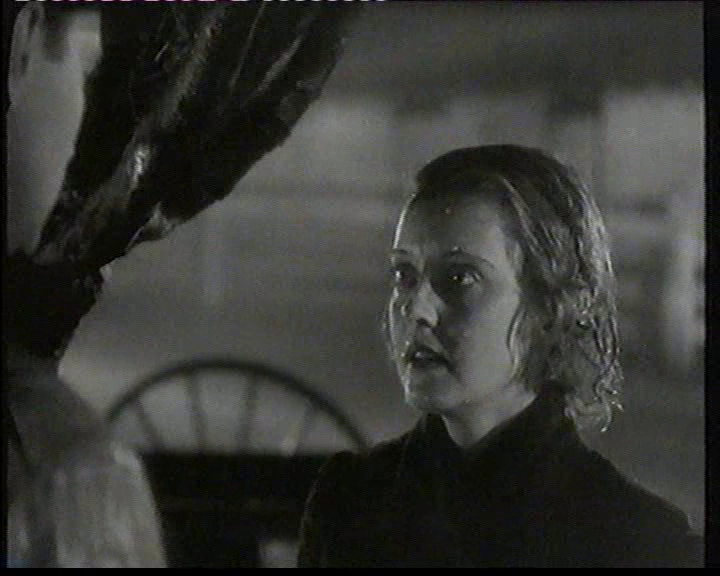
In his film debut, Dall — best known for his starring roles in Hitchcock’s Rope (1948) and Joseph Lewis’s Gun Crazy (1949) — received a Best Supporting Actor nomination, and does an impressive job portraying his character’s deep sense of conflict:
It’s easy to understand why this strapping young man would both appreciate and resent the attentions paid to him by Davis. However, I’m less enamored with Lorring’s performance as a trollop who sets a key plot hitch in motion:
While Davis apparently hand-picked her for the role, I find her performance overly broad; sure, she’s written as a no-good femme fatale whose very mother confesses to not liking her when she was born (poor thing!), but she’s a tad too one-dimensional in her sociopathic glee for my tastes. Redeeming Qualities and Moments:
Must See? Links: |
“Do you know what it is to look into a woman’s eyes when she’s lying?”
|
Synopsis: |
|
Genres, Themes, Actors, and Directors:
Review:
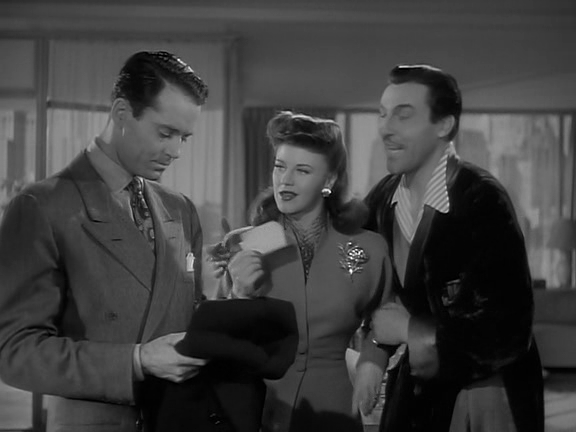
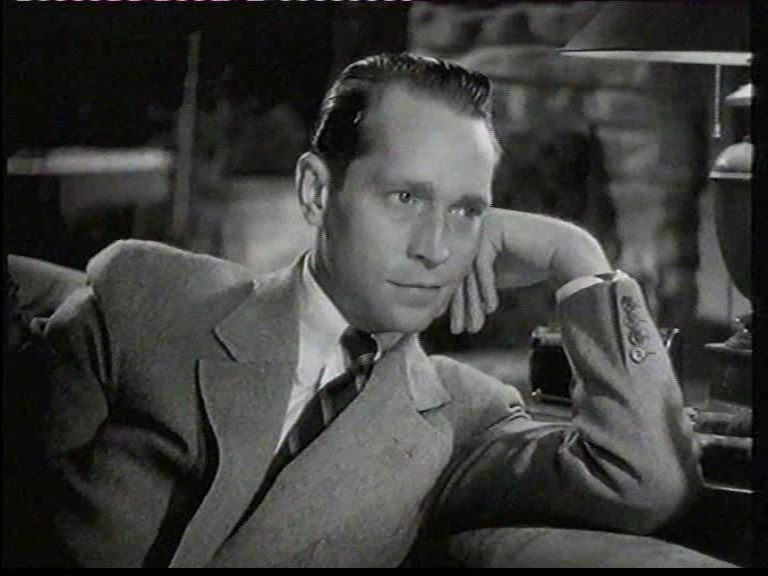
This story is likely my least favorite of the bunch, but “works” on a visual level (Joseph Walker’s cinematography is appropriately noir-ish) and provides a neat twist ending. The second vignette — a comedic gem involving Ginger Rogers’ discovery of a love note in the pocket of her fiance (Cesar Romero), who quickly calls in his friend (Henry Fonda) to cover for him, with truly unexpected results — is probably the film’s highlight, neatly showcasing how to move a zingy storyline from A to Z within just over 20 well-used minutes.
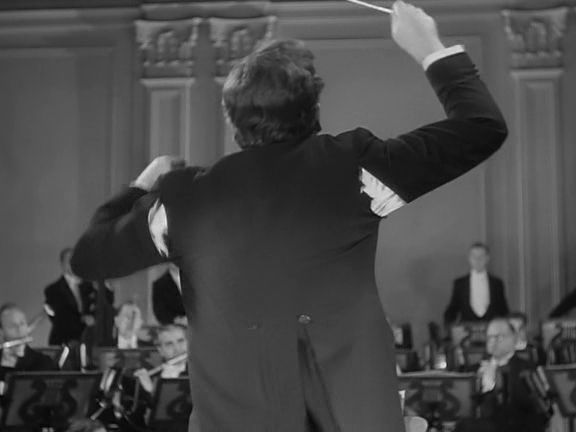
The next story — about a poor composer (Charles Laughton) given a life-altering opportunity to conduct an orchestra, only to find that the too-small second-hand tailcoat his wife (Elsa Lanchester) has purchased for him causes him unexpected grief:
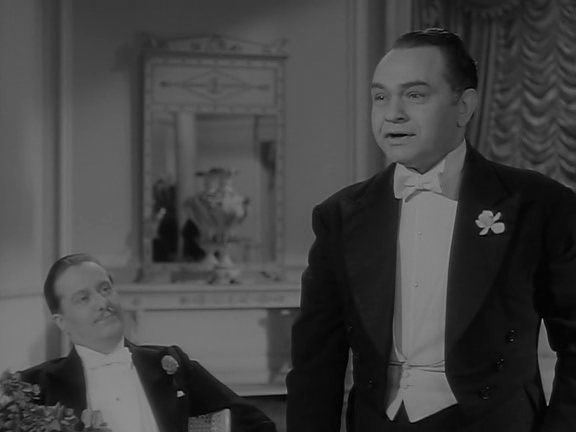
— is decidedly bittersweet and almost surreal, ending with a powerful visual statement. (Indeed, this vignette could easily have been filmed without dialogue.) The fourth vignette — about a down-on-his-luck man (Edward G. Robinson) who dons the patched tailcoat to attend a college reunion, making up tales about his recent successes — is the one most often cited by viewers who remember the film, and it is indeed a bittersweet, surprisingly touching tale; watch for George Sanders in a typically caddish supporting role.
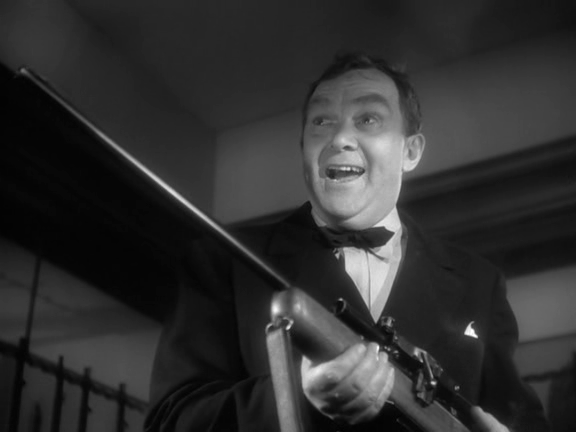
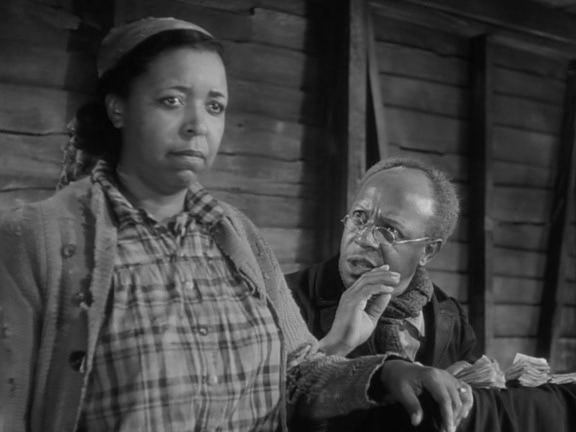
The fifth story (the one cut from the original screening version) is the shortest, and — as indicated previously — the least satisfying. W.C. Fields embodies a variation on his classically tippling self, though with the ironic twist that his character’s tee-totaling lecturer gets drunk accidentally when the coconut milk he’s touting to his audience is spiked with liquor. It goes absolutely nowhere, and fails to entertain on any level (though it’s always nice to catch a glimpse of Margaret Dumont, here playing the event’s hostess). The sixth and final vignette involves a crook (J. Carroll Naish) who steals the tailcoat, robs a casino, then drops the coat from his getaway plane when it catches fire, pockets full of stolen cash. It lands in the hands of a poor sharecropper (Paul Robeson) and his wife (Ethel Waters), whose faith leads them to believe that they should share the money with their neighbors, only doling it out for items that were sincerely prayed for.
It was criticized by Robeson himself as demeaning to Blacks by presenting them as “childlike and innocent”, but while I sympathize with his perspective, I can’t quite say I agree. Rather, the characters here seem to me to be fully human, with the best interests of all at heart — and the closing scene, in which the tattered tailcoat meets what is likely its final fate, is surprisingly moving. This segment is an entirely fitting finale to a most enjoyable film overall. Redeeming Qualities and Moments:
Must See? Categories
Links: |
“Would you put a Jack Daw and a Bird of Paradise in the same cage?”
|
Synopsis: |
|
Genres, Themes, Actors, and Directors:
Review: Redeeming Qualities and Moments:
Must See? Links: |
“I’m bad for people. I don’t mean to be, but I can’t help myself.”
|
Synopsis: |
|
Genres, Themes, Actors, and Directors:
Review:
From the moment he naively believes he can bring a beautiful but notoriously damaged young actress:
… back to his country home for the weekend and not cause potential risk to his happy engagement with Lindsay, we lose all respect for him, making it difficult to care much about either him or the story’s resolution. Yet Davis’s performance shines through the dross of the narrative, presenting us with a fully dimensional, deeply flawed femme fatale with a host of “dangerous” demons in her closet. She alone makes this film worth seeking out for a one-time look. Redeeming Qualities and Moments:
Must See? Links: |
“There’s no sentiment in science, Mary — just the operation of natural laws.”
|
Synopsis: |
|
Genres, Themes, Actors, and Directors:
Review: Note: Bette Davis purportedly appears in a brief cameo role as a nurse in this film, but I couldn’t spot her. Redeeming Qualities and Moments:
Must See? Links: |
“I’m not pig-headed, I’m strong-minded.”
|
Synopsis: |
|
Genres, Themes, Actors, and Directors:
Review: Redeeming Qualities and Moments:
Must See? Categories
Links: |
“You can consider yourself lucky — you’ve got a charming little wife.”
|
Synopsis: |
|
Genres, Themes, Actors, and Directors:
Review: Note: Interestingly, Jannings is presented here as somewhat of a feminized caretaker, given that we watch him changing his infant son’s diaper (surely one of the earliest instances of this on screen!), and in general taking more ownership over his son’s well-being than one would expect; it’s unfortunate that all narrative threads relating to his former marriage and family are dropped once he runs away with De Putti. Redeeming Qualities and Moments:
Must See? Categories
Links: |