Lassie Come Home (1943)
“I know something about this dog. She’s going somewhere — she’s on her way.”
|
Synopsis: |
|
Genres, Themes, Actors, and Directors:
Response to Peary’s Review: Redeeming Qualities and Moments:
Must See? Categories
Links: |
“Call me Shane.”
|
Synopsis: |
|
Genres, Themes, Actors, and Directors:
Response to Peary’s Review: Given its iconic status, it’s easy to approach Shane with a sense of cinematic duty — but despite overly slow pacing and an occasionally disruptive musical score, for the most part it’s held up quite nicely. Indeed, there’s plenty to enjoy and appreciate about Shane, which features “remarkable authenticity” (check out stills of the sets below), is “beautifully shot” by Oscar-winning DP Loyal Griggs, and is “beautifully acted” by Ladd, Heflin, Arthur, and others. While some have argued that Ladd was miscast in the title role, I disagree; he shows off an appropriately fit, muscular body, and is entirely believable both during the excitingly brutal extended fight scenes, and during the film’s many quieter moments, as we see how much he’s come to care for both Arthur and her adoring son, Joey. Heflin is equally notable in the critical secondary role as Joe Starrett, a man determined to hold onto his land and fight back against bullies at any cost — and Arthur (lured out of semi-retirement by Stevens) is a fine, believable choice to play Starrett’s wife. Meanwhile, other familiar faces — including Elisha Cook, Jr. as a hot-headed southern homesteader, and Jack Palance as the black-hatted gunslinger brought in to “take care of” the homesteaders — are a welcome presence as well. Unfortunately, De Wilde’s performance as young Joey is the one dissatisfying outlier; he’s far too often shown simply staring wide-eyed at the proceedings, and/or asking whiny “why?” questions like a four-year-old. However, his nearly worshipful adoration of Shane is made abundantly clear, which I suppose is what’s most important in this tale of a larger-than-life western hero. Redeeming Qualities and Moments:
Must See? Categories
(Listed in 1001 Movies You Must See Before You Die) Links: |
“My darling, our marriage will be a paradise — because we’re both abnormal.”
|
Synopsis: |
|
Genres, Themes, Actors, and Directors:
Response to Peary’s Review: In his more extensive review of the film in his Cult Movies 3 book, Peary elaborates upon its role in Fuller’s broader oeuvre, noting that “The Naked Kiss and Shock Corridor are usually linked by critics and twin-billed by repertory theater owners”, perhaps because they “have (if you stretch it) vaguely similar premises, star Constance Towers…, were [similarly] financed…, were photographed by Stanley Cortez, deal with lurid subject matter and perverse sex, and tread the fine line between trash and art”. In addition, he points out that they both possess “fantasy-dream sequences”, incorporate “out-of-place personally photographed 16-mm travelogue-like footage”, include “absurd scenes only Fuller fanatics can accept”, and “have smashingly directed, unflinching shock scenes”. Indeed, as Peary notes, “there are few more startling sequences in Fuller’s work” (or any other films of the period, for that matter) “than the opening in The Naked Kiss;” while Towers’ head only remains bald during this initial scene (and it’s clear, if you’re looking, that she’s wearing a headpiece), the image evoked is masterfully indelible.
What’s perhaps most fascinating about The Naked Kiss is how brutally Fuller disrupts the trajectory of his storyline, which eventually shifts into what looks like a standard “corny” Hollywood romance about a woman with a secret past hoping to reform and be accepted. (In Cult Movies 3, Peary quotes Fuller himself as saying, “I hate those kinds of stories.” !!) Instead, Fuller completely upends our expectations by showing that while Towers herself may be an “outcast”, she’s surrounded by corrupt men who “have no respect for women”, and think of them exclusively in “sexual terms”. Peary points out that while Fuller’s “violent, male-oriented films” may not seem like prime candidates for feminist analysis, The Naked Kiss actually offers us a “strong, smart, self-reliant… and proud” female protagonist, one who becomes a “positive role model… to the other women in the film, because she refuses to play the victim”. Indeed, Towers’ performance is one you’re unlikely to soon forget, making this a cult favorite all film fanatics should check out at least once. Redeeming Qualities and Moments:
Must See? Categories
Links: |
“I think I ought to stay.”
|
Synopsis: |
|
Genres, Themes, Actors, and Directors:
Response to Peary’s Review: Regarding the “fairly clunky, faux-profound” script, the film’s moral compass remains notoriously challenging to grasp, with critics continuously debating whether it more accurately represents a liberal or a conservative viewpoint. While many see Cooper’s “Will Kane” as a stand-in for Foreman himself (abandoned by friends and colleagues during his blacklisting in the HUAC era), others see him as a staunch version of America, unafraid to fight and stand up to Communist threats. Personally, I choose to view the film on a much simpler and more human level — as the tale of a man who knows he’ll be followed for the rest of his life unless he confronts the menace that’s out to get him. To that end, Cooper’s Kane makes a pragmatic but life-altering choice in what seems like an instant, despite the fact that it means the disruption of his brand-new marriage to beautiful (pacifist) Kelly; indeed, given that the film is basically “told in real time”, we’re plunged immediately into Kane’s dilemma, without much of a chance to learn more about his character or what might have caused him to make such a seemingly reckless decision. Peary writes, “Personally, I think Cooper should have left town… but I’m glad he doesn’t because the final shootout is one of the western’s most exciting sequences”, since “Cooper finally displays strength” and “because of the way Floyd Crosby’s striking images are edited to fit the music”. Indeed, regardless of whether one believes Cooper is being foolhardy or not by staying in town (and I personally disagree that he shows anything but “strength” all along), the storyline itself — including the enjoyably taut final shootout — remains intrinsically compelling, simply given the threat of an ever-looming deadline, and the question of whether or how Cooper will be able to pull together enough support to stay alive. Interestingly, Peary points out that High Noon is “one of the few westerns that are favorites of viewers who dislike the genre”, perhaps because of its strategically thriller-like structure — or perhaps because of its unconventional storyline, which is ultimately more of an allegorical morality tale than a standard western. Who are the “good guys” here, and who (other than the obvious four gunmen) are the “bad”? That’s ultimately left up to viewers to decide. Speaking of personal takes on the film, Peary writes that apparently “Howard Hawks was so infuriated by Cooper’s whimpering [sic] that he made Rio Bravo to show that a professional lawman like Cooper’s wouldn’t ask common folk for help against the gunmen”. While I don’t agree with Hawks’ interpretation of Cooper’s character, I’m not upset that Rio Bravo was the result of his dissatisfaction. Note: Watch for Lon Chaney, Jr. in a brief supporting role as the town’s former sheriff; it’s lovely to see him given such a dignified moment in a highly-regarded film. Redeeming Qualities and Moments:
Must See? Categories
(Listed in 1001 Movies You Must See Before You Die) Links: |
“There’s a great future in plastics; think about it.”
|
Synopsis: |
|
Genres, Themes, Actors, and Directors:
Response to Peary’s Review: Many (including myself) would disagree with Peary’s assertion that The Graduate is “dated”, given its iconic status as a cult favorite, with countless memorable scenes and quotes:
Peary is right, however, to point out that “the acting by Hoffman and Bancroft is super”, with “their scenes together still hold[ing] up”. Indeed, the first half of the film — during which Ben carries out his affair with Mrs. Robinson — is undeniably its funniest and most powerful, with nearly every scene packing a punch, and Nichols establishing himself as a master of sly romantic wit; Bancroft’s seduction of Hoffman will have you laughing out loud, yet simultaneously wincing at Ben’s obvious discomfort. Once Elaine “enters the picture”, it’s true that events take a more somber turn, and one can’t help regretting that Bancroft’s character eventually recedes into the background as a one-dimensional mother-bitch; but Ben’s pursuit of Elaine is ultimately what drives the film, so while we may miss Bancroft, we nonetheless remain glued to the screen, wondering how in the world Ben will salvage the mess that is his love life. Adding to the film’s appeal is the fact that Ben remains a sympathetic character throughout the entire movie, given that he was clearly (oh, so clearly) the one seduced by Mrs. Robinson; that he tells Elaine about his affair immediately after meeting her, at which point it stops; and that he’s never anything but transparent and sincere about his intentions to put his past with Mrs. Robinson behind him. It’s also easy to relate on a personal level to Ben’s broader existential dilemma, as he contemplates how to craft a life for himself without automatically following in his parents’ footsteps; there’s nothing at all dated about that coming-of-age scenario. Finally, Nichols’ creative direction (which, unlike Peary, I do find impressive), Richard Surtees’ cinematography, fine supporting performances, and Simon & Garfunkel’s instantly recognizable soundtrack all add to the appeal of this deserved cult classic. Redeeming Qualities and Moments:
Must See? Categories
(Listed in 1001 Movies You Must See Before You Die) Links: |
“I’m not contemplating any Maidenform bonfires… But they could certainly use something around here!”
|
Synopsis: |
|
Genres, Themes, Actors, and Directors:
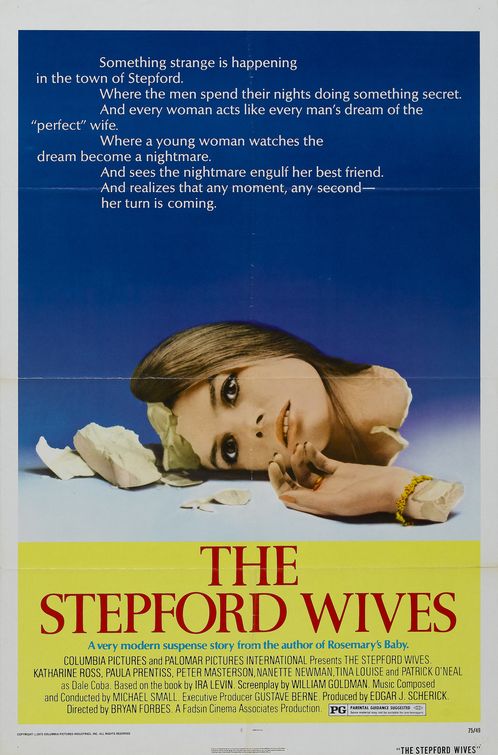
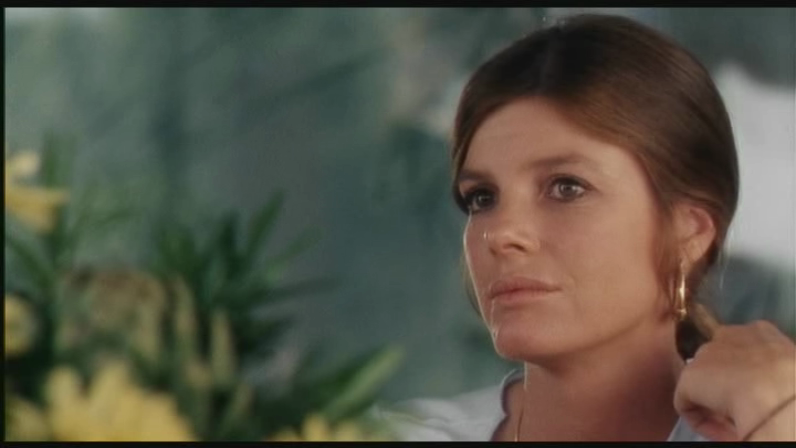
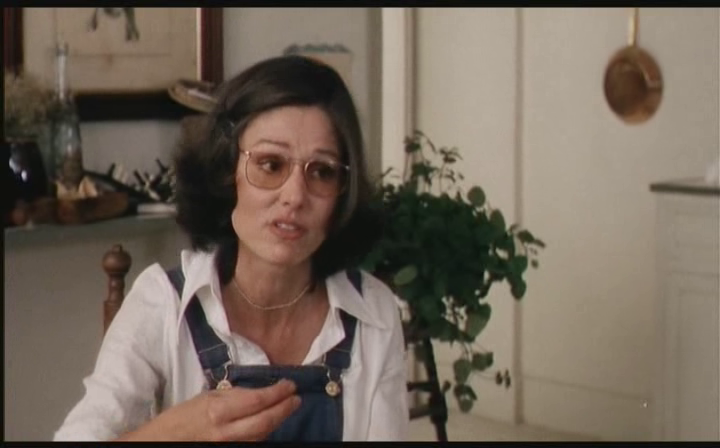
Review: Fans of Levin’s work (which includes the novel Rosemary’s Baby and the thriller-play Deathtrap) will know that he frequently placed wives in positions of vulnerability, positing their husbands as calculating villains whose motives are masked behind a façade of loving attention. That dynamic definitely plays out here, with Masterson doing a fine job as Ross’s husband — a man who seemingly has her best interests at heart, yet is clearly involved in nefarious dealings on some unknown level. Ross is perfectly cast in the lead role, projecting just the right amount of feminist spunk, and Prentiss gives one of her best supporting performances as Bobbie, who fearlessly shows off her body in casually sexy outfits (which are in noted contrast to the prim dresses and hats worn by the Wives). While one can certainly quibble with any number of logistical elements of the story (most having to do with the wives “transforming”), The Stepford Wives remains an engaging and culturally iconic sci-fi thriller, one which all film fanatics should check out. Redeeming Qualities and Moments:
Must See? Categories
Links: |
“For me, nothing is more beautiful to see than a woman walking.”
|
Synopsis: |
|
Genres, Themes, Actors, and Directors:
Review:
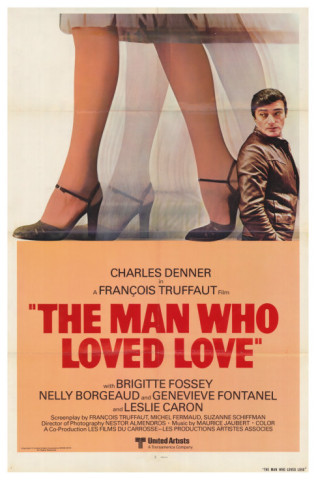
Unlike McQueen, however, Truffaut keeps the tone of his film relatively lighthearted throughout; Denner’s obsession with accumulating female partners (most of whom are young, attractive, and unrealistically willing to jump straight into bed with him) rules his life, but his doctor — after telling him he’s contracted gonorrhea — simply chuckles at his lusty spirit, and Denner’s pursuits continue. Most of the screenplay is dedicated to showing us the string of varied women Denner beds, as well as his attempt to get his “scandalous” memoirs published; along the way, Truffaut intersperses occasional flashbacks to Denner’s youth, showing how his neglectful mother (Marie-Jeanne Montfajon) may have played a part in his lifelong neurosis. While there’s nothing particularly offensive about any of this — one can’t help staying engaged in what’s happening on screen, given Truffaut’s intrinsic storytelling talents — the film as a whole isn’t one of Truffaut’s best, and ultimately isn’t must-see viewing for all film fanatics. Note: Leslie Caron shows up in a brief scene as — you guessed it — one of Denner’s former lovers, but her role is so small as to be considered a cameo. Redeeming Qualities and Moments:
Must See? Links: |
“Of all of mankind’s injustices, injustice to children is the most despicable!”
|
Synopsis: |
|
Genres, Themes, Actors, and Directors:
Response to Peary’s Review:
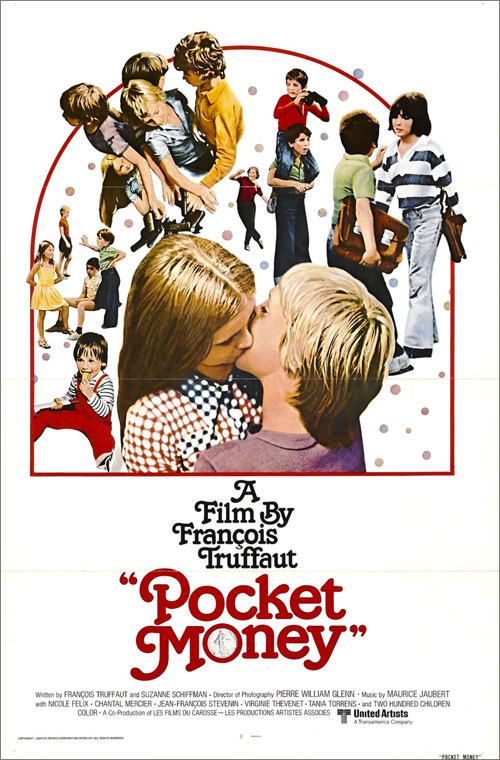
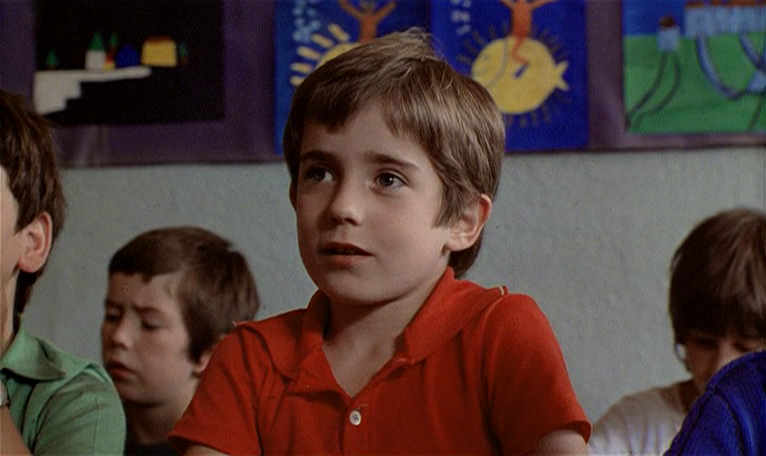
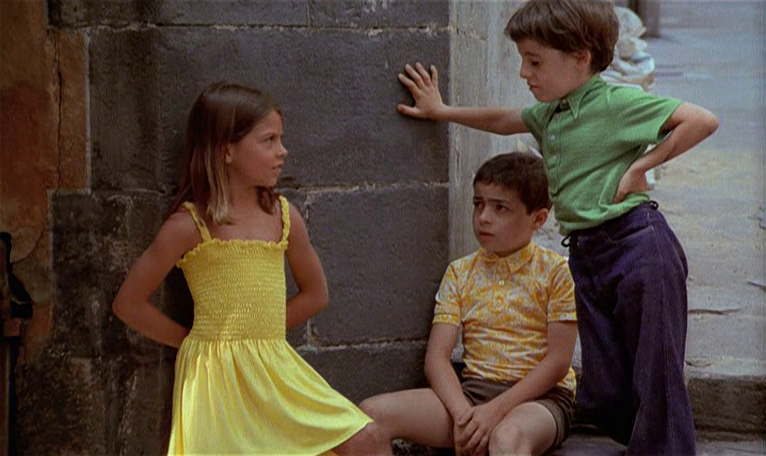
… and a “welfare case” (Goldman) with a mysteriously absent family. Otherwise, as Peary notes, “this is a simple film about innocent themes (a boy’s first kiss, boys sneaking into a movie, boys making their own breakfast, boys spying on a nude woman)” — though he argues that this simplicity masks “unforgettable scenes and faces”, with “much… revealed about children’s special, often-troubled world”. While I recall greatly enjoying Small Change as a teenage film fanatic, I was less enamored with it during a recent revisit. The biggest problem is that the episodic nature of the screenplay — though clearly strategic to Truffaut’s purposes — makes it impossible to get to know much about any of these kids, each of whom seems like a potentially interesting protagonist on his/her own. To that end, the performances by the child actors are uniformly natural and engaging, and Truffaut should certainly be commended for the obvious time and energy he put into this pursuit — yet we continually long for more knowledge about each of their situations. Meanwhile, the overall tone of the film shifts too dramatically between humor and pathos, with certain scenes (such as an infamous episode involving a toddler left on his own in a high-rise with an open window) nearly too painful to watch, yet designed to garner chuckles (!?). By its final scenes (spoiled in Peary’s review, though I won’t say more here), the movie has shifted into different territory altogether, with a well-meaning schoolteacher (Jean-Francois Stevenin) — who “will remind some of Truffaut” — providing a didactic lecture to his students before they leave for the summer; at this point, the true intent behind the film is suddenly revealed. Unfortunately, it casts an overly moralistic pall upon the film, which (as noted earlier) is otherwise presented as primarily a light-hearted coming-of-age ensemble tale. While there are many naturalistic moments to enjoy throughout the film, they ultimately don’t add up to a satisfying enough experience to recommend as “must-see” for all film fanatics. Redeeming Qualities and Moments:
Must See? Links: |
“Experience: that’s what separates the girls from the girl scouts.”
|
Synopsis: |
|
Genres, Themes, Actors, and Directors:
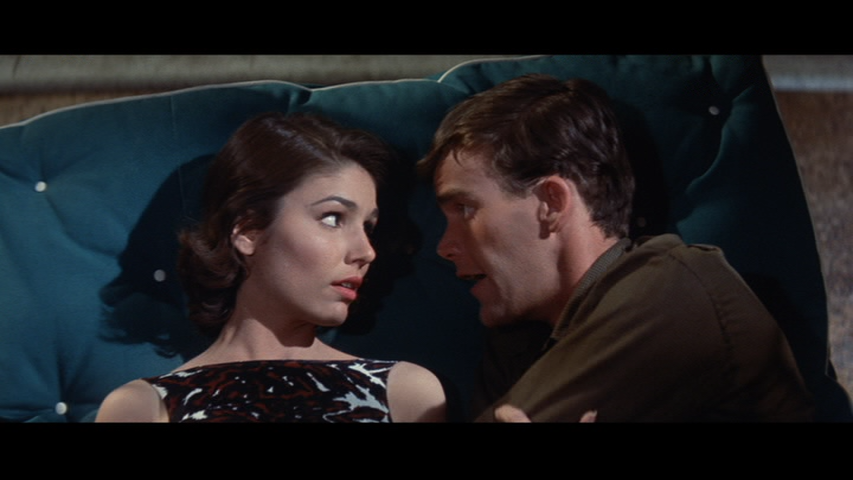
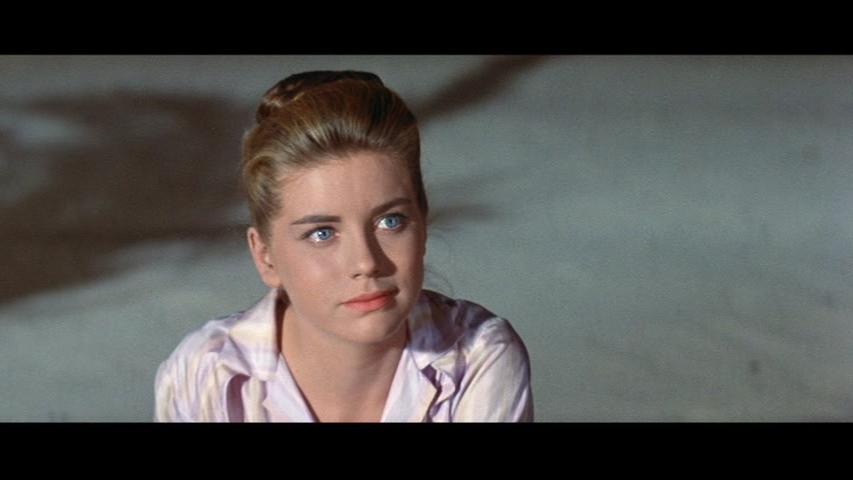
Response to Peary’s Review: In Cult Movies 3, Peary concedes that WTBA shouldn’t really “be taken all that seriously”, given that “any picture about the students who migrate to Spring Break in Fort Lauderdale is bound to be somewhat stupid and junky”. He further points out that one shouldn’t forget “this picture actually has George ‘Mr. Tan’ Hamilton striding across the beach — an image that never fails to delight camp-movie addicts”. However, he argues that the film “is above being enjoyed only on a camp level”, given that “there is much to appreciate” — including “young heroes and heroines” who are portrayed as “caring, smart, and, ultimately, responsible”, and men who “show… respect for the women they’re attracted to”. The exception to this latter statement is, of course, the tragic subplot involving Mimieux’s fatally naive sexual interactions with a group of faux-Yalies — but it’s to the film’s credit that these male characters never emerge as anything other than bit players designed to play slimy louses. As noted above, I don’t quite agree with Peary that all the girls in this film are interested in pursuing sex per se. While they are all sexually curious to one extent or another (who isn’t?), it’s evident that they’re primarily looking for boys to date, to have fun with, and to possibly turn into longer-term mates. Prentiss’s “Tuggle”, for instance, is a self-avowed “good girl” who makes it clear that she’s exclusively interested in finding a man to settle down with: “Girls like me weren’t built to be educated. We were made to have children. That’s my ambition: to be a walking, talking baby factory.” In her screen debut, Prentiss has an appealing comedic presence, and her interactions with lanky Hutton generally ring true. Much less satisfying is the character played by Connie Francis, who nicely sings the title song but otherwise is relegated to a thankless role as the girl desperate to catch a man, any man; she’s too attractive to merit this type of degrading characterization, and I don’t blame her for dismissing the film later in her life as terrible. Note: Where the Boys Are remains of minor historical interest as well simply given that its lead, Dolores Hart, left Hollywood after making this film to become a lifelong Benedictine nun in Connecticut. Redeeming Qualities and Moments:
Must See? Categories
Links: |
“This is no place for you anymore!”
|
Synopsis: |
|
Genres, Themes, Actors, and Directors:
Response to Peary’s Review: As is now well-known, Flaherty’s “documentaries” were actually highly constructed narratives featuring carefully selected actors, thus rendering his fame as a forerunner of ethnographic filmmaking suspect at best. As I discussed in my review of Flahery’s breakthrough film, Nanook of the North (1922), such an issue remains much less problematic when the material itself is intrinsically fascinating: in Nanook…, for instance, one can easily understand why he may have “needed” to reconstruct key scenes, given the severe constraints of life in such harsh circumstances. In Louisiana Story, however, such a “sin” is less pardonable — particularly given that we actually learn very little about life for this Cajun backwoods family. As DVD Savant notes in his review of the film, “Pa is never seen doing anything more vocational than handling a small trap, and the son has nothing to do but amuse himself exploring the dangerous bayou”. Louisiana Story is a visually gorgeous but otherwise disappointing finale to Flaherty’s career. Redeeming Qualities and Moments:
Must See? (Listed in 1001 Movies You Must See Before You Die) Links: |