East of Eden (1955)
“Some day, he’s going to know who his real son is.”
|
Synopsis: |
|
Genres, Themes, Actors, and Directors:
Response to Peary’s Review:
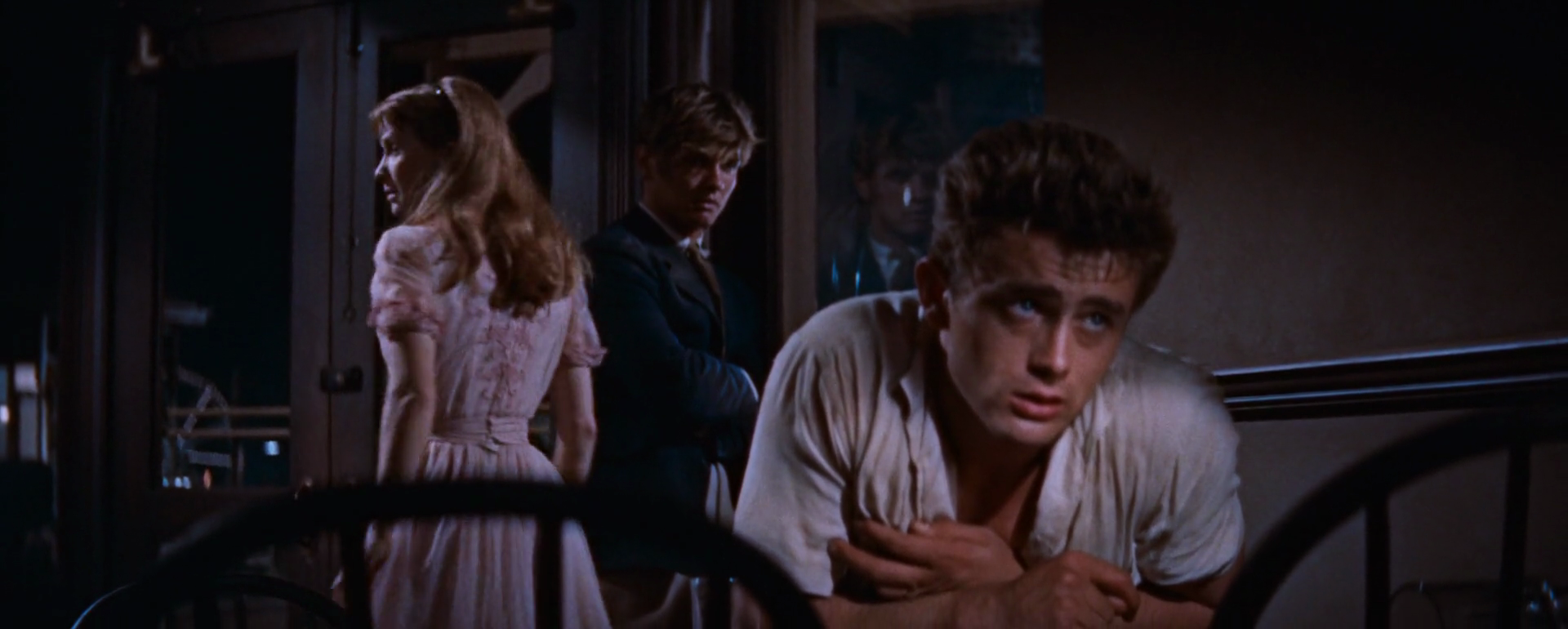
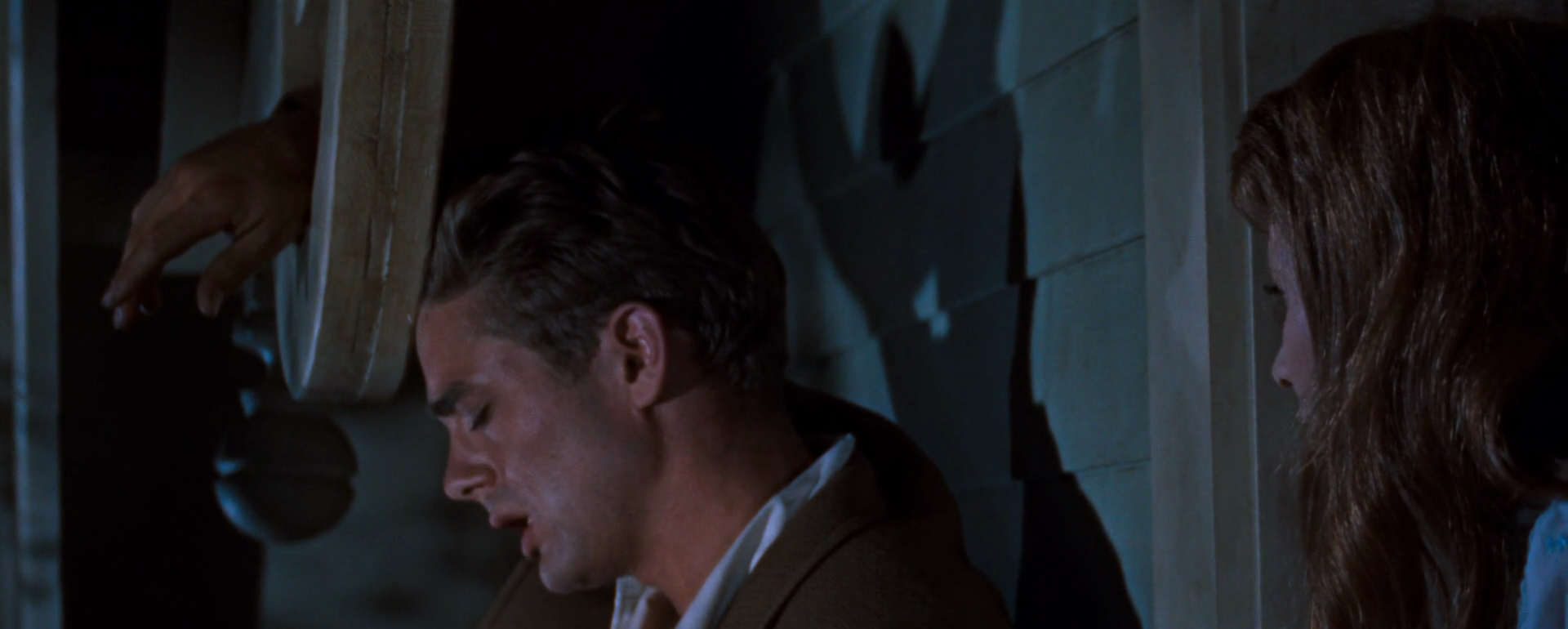
East of Eden is best known as one of only three movies Dean starred in before his untimely death at the age of 24, and quite a bit has been written about his involvement in the film — including his initial casting; his method-informed acting style (as well as his awe for Brando); his challenging interactions with the more-traditional Massey (which Kazan milked for all its on-screen potential):
… and his deep emotionality both on and off set (Harris reports he sobbed for hours after shooting was over). Today, unfortunately, Dean’s performance comes across as distractingly hyper-kinetic. In his review for the New York Times, Bosley Crowther referred to Dean as “a mass of histrionic gingerbread”, and this wry description holds somewhat true: Dean’s all-pervasive angst means he’s literally never still or untroubled.
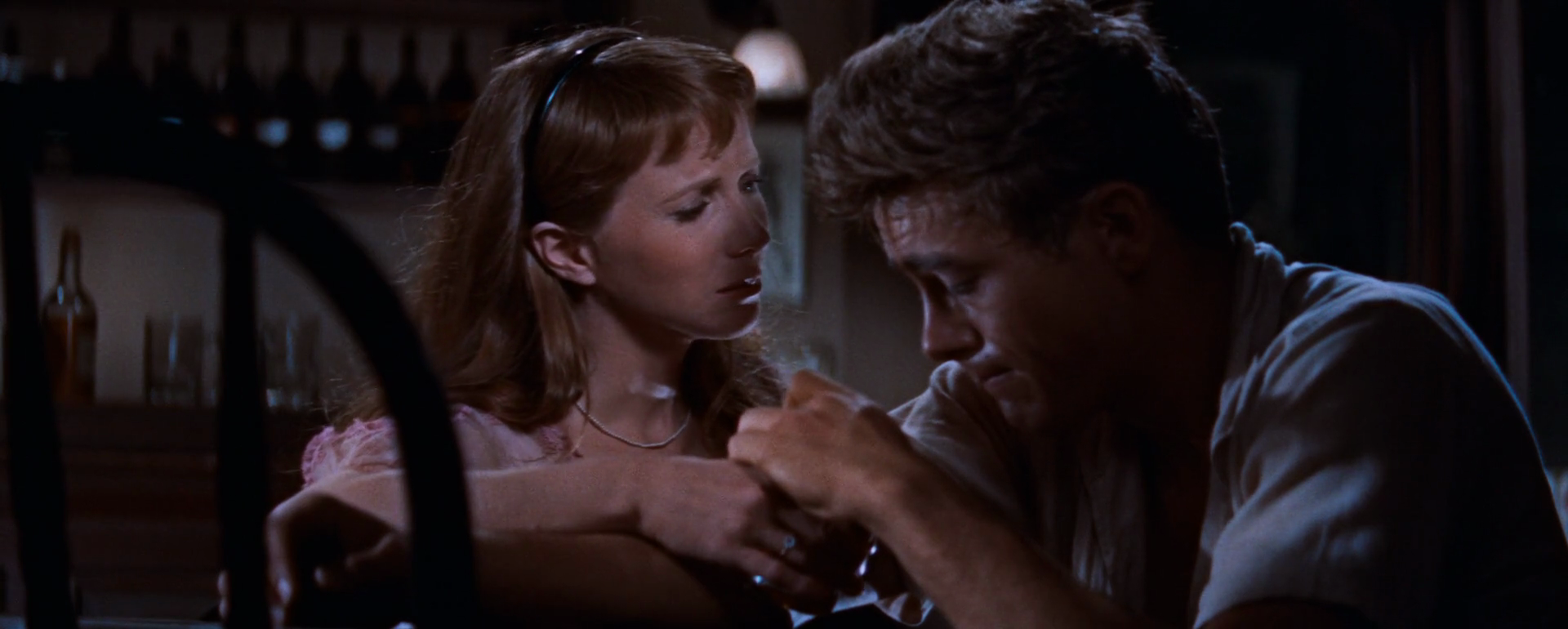
Ironically, his role within such a broadly melodramatic, biblically-inspired narrative ultimately feels less convincing than his similar turn in the more intimately-themed Rebel Without a Cause (1955) (though Peary disagrees with me, nominating his performance here as one of the best of the year in his Alternate Oscars). Top-billed Harris gives a highly emotional and affecting performance (she’s also nominated by Peary), but one that — like Dean’s — simply never lets up.
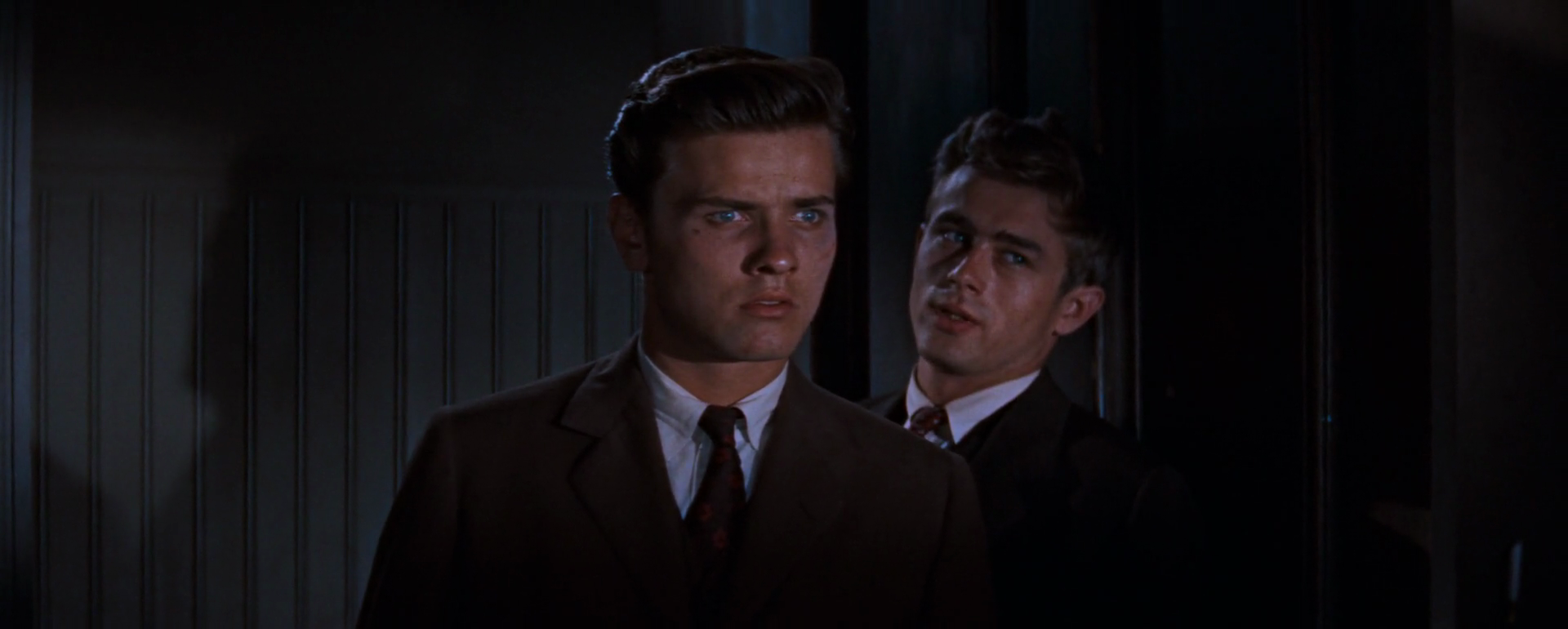
Davalos, meanwhile, is bland and forgettable; it’s too bad Paul Newman, who tested for the part, wasn’t cast instead!
Redeeming Qualities and Moments:
Must See? Links: |