Jesus Christ Superstar (1973)

Jesus Christ Superstar (1973)

“Why should I die — oh, why should I die?”

Synopsis:
In the week leading up to the crucifixion of Jesus Christ (Ted Neeley), Jesus’s disciple Judas Iscariot (Carl Anderson) — worried that Jesus is becoming too popular and spending too much time with the prostitute Mary Magdalene (Yvonne Elliman) — remains deeply conflicted about betraying his whereabouts to the Romans.

Genres, Themes, Actors, and Directors:

  • Betrayal
  • Biblical Stories
  • Musicals
  • Norman Jewison Films
  • Play Adaptations

Review:
Norman Jewison directed this adaptation of Andrew Lloyd Webber and Tim Rice’s rock opera, filming on location in the Middle East and opening with a bus full of modern-day actors emerging and preparing to put on the show. Thankfully, this hybrid conceit works remarkably well, showcasing the enduring legacy of Christianity across the millennia while tapping into the then-current cultures of hippies and so-called “Jesus Freaks”. The storyline offers a fascinating psychological glimpse into the tortured decision by Judas (powerfully played by Anderson) to betray Jesus; Jesus’s acceptance of his fate while also railing against God for putting him in such a position; the reluctance of Pontius Pilate (Barry Dennen) to execute a man guilty of no crime; and Mary Magdalene’s abiding love for Jesus. The soundtrack by Webber and Rice is dynamic and catchy, nicely suiting the dramatic tensions inherent in Jesus’s final week of life. While it’s not must-see viewing for all film fanatics, I recommend this flick as an enjoyable, colorfully mounted musical.

Redeeming Qualities and Moments:

  • Fine performances by the three leads (Ted Neeley as Christ, Carl Anderson as Judas, and Yvonne Elliman as Mary Magdalene)

  • Lovely cinematography by Douglas Slocombe

  • Good use of authentic locale shooting
  • A creative reimagining of the final days of Jesus Christ
  • A rousing soundtrack

Must See?
No, but it’s recommended.

Links:

Eraserhead (1977)

Eraserhead (1977)

“Mary tells me you’re a very nice fellow.”

Synopsis:
A man (Jack Nance) raising a mutant infant with his girlfriend (Charlotte Stewart) imagines that a squirrel-cheeked girl (Laurel Near) in his radiator is dancing and singing about heaven.

Genres, Themes, Actors, and Directors:

  • David Lynch Films
  • Father and Child
  • Living Nightmare
  • Mutant Monsters
  • Science Fiction
  • Surrealism

Response to Peary’s Review:
Peary describes “David Lynch’s fascinating independently made debut film” as “at once repellent and hypnotic, ugly and beautiful, heartbreaking and hilarious, cruel and tender.” He notes that it’s not only “one of the most popular midnight movies” but “could be the strangest picture ever made,” given it’s “an intense mood piece; an absurdist’s vision of the future; a mix of abstract art, surrealistic painting, and minimalist cinema” — not to mention “the ultimate student film,” “the ultimate experimental film, [and] the last word in personal filmmaking.” He writes that Eraserhead is “the visualization of your worst nightmare, or, more accurately, that of the most paranoid manic-depressive on the eve of committing suicide or donning a Doomsday placard.” Peary notes that our ‘hero’, Henry — “a depressed, pudgy guy” with “mismatched clothes” and “electrified hair that stands straight up” — “lives in a noisy… post-apocalyptic age, in a spooky industrial town (perhaps in Pennsylvania, perhaps in Poland)” and is “forced to marry his pregnant girlfriend” who gives birth to a “hideous-looking” mutant baby that simply “lies in the dark and wails.” Peary adds that “this unique film has marvelous special effects, frame-by-frame animation, black-and-white photography, and scenic design,” as well as “startling moments of horror, sex, and brilliant black comedy.” While “it may adversely affect the squeamish and will undoubtedly confuse everyone a bit (Lynch intentionally left questions unanswered),” it’s “worth a gamble.”

Peary discusses this iconic film at greater length in his first Cult Movies book, where he notes that it’s “unpleasant and often repellent, but all the while it is riveting and fascinating, not unlike sideshow acts at the carnival. It is cruel and sadistic, but has moments of compassion and humor; is about all things alien, but about things that ring a responsive chord; is full of images that are in themselves ugly or bland, yet… everything is touched with beauty.” He describes Henry’s apartment building as “the type… one fears ending up in when stranded in a strange town after all the decent hotels have closed down,” and points out that “Henry’s room is worse than depressing” given that “his one window faces a brick wall.” When Henry “visits his plain-looking, shabbily dressed girlfriend, Mary X, in a scene that outdoes every awful boyfriend-meets-girlfriend’s family sequence you’ve seen (or experienced),” we undergo a “painful excursion into black comedy” which includes a “man-made chicken which spurts awful slime and moves by itself” for dinner. Suffice it to say that every element of Lynch’s vision defies easy explanation and leaves us “never (mentally) finished ‘working out’ [the] film, never through thinking about it.”

Note: Citing a critic from The Village Voice, Peary describes Henry and Mary’s mutant baby as “a mewling, eye-rolling first cousin to the skinned rabbit from Repulsion (1965)” — which is absolutely, freakily accurate.

Redeeming Qualities and Moments:

  • Effective b&w cinematography

  • Countless surreal moments


  • The truly creepy infant
  • Highly unique and evocative sound effects

Must See?
Yes, as a bizarre cult classic.

Categories

  • Cult Movie

(Listed in 1001 Movies You Must See Before You Die)

Links:

Wizard of Gore, The (1970)

Wizard of Gore, The (1970)

“Have you ever seen the sight of human butchery IN PERSON?!”

Synopsis:
A sadistic magician (Ray Sager) uses mind control to lure women to his stage, where he dismembers them in what appears each time to be a harmless trick but soon thereafter results in their demise. Can a plucky reporter (Sherry Carson) and her boyfriend (Jack Ward) discover what’s going on before yet another gory murder takes place?

Genres, Themes, Actors, and Directors:

  • Amateur Sleuths
  • Herschell Gordon Lewis Films
  • Horror Films
  • Journalists
  • Magicians
  • Mind Control and Hypnosis
  • Serial Killers

Review:
While this “existential” splatter flick is considered a favorite among fans of fabled goremeister Herschell Gordon Lewis, there’s nothing whatsoever to recommend about it for anyone who’s not already (inexplicably) enamored with his work. The central premise of a plucky duo trying to determine why all the women who volunteer to be “killed” on stage by Montag the Magnificent (Sager) eventually end up legitimately dead:

… is stupid beyond belief (not to mention never explained in terms of the mysterious gap between the gruesome mutilations we see Montag delighting in, and what the audience actually witnesses). Then again, that’s the “point” of this film: who really knows what’s reality versus our imaginations or an illusion? Profound. It’s too bad the same sentiment written by Peary in his review of Blood Feast (1963), HGL’s debut flick, applies just as well here: “If you detest horror films that show how many shocking ways a creative sadist can do away with young women:”


… “then Lewis is the man you’ll want to blame and this is the film you’ll want to burn.”

Redeeming Qualities and Moments:

  • Not a thing

Must See?
Nope. Listed as Trash and a Cult Movie in the back of Peary’s book (yes, it does indeed have a cult following, and was even remade).

Links:

Repulsion (1965)

Repulsion (1965)

“They’re all the same, these bloody virgins — they’re just teasers, that’s all.”

Synopsis:
A shy beauty salon assistant (Catherine Deneuve) living in London with her sister (Yvonne Furneaux) becomes increasingly unhinged when Furneaux leaves for a week-long trip with her lover (Ian Hendry), and Deneuve is visited first by her suitor (John Fraser), then by their landlord (Patrick Wymark).

Genres, Themes, Actors, and Directors:

  • Catherine Deneuve Films
  • Mental Breakdown
  • Psychological Horror
  • Roman Polanski Films
  • Sexual Repression

Response to Peary’s Review:
Peary’s review of this “classic psychological horror film” by Roman Polanski consists primarily of a summary of Deneuve’s gradual mental breakdown throughout the film: she is “disturbed by the constant presence of her sister’s boyfriend… and their lovemaking at night”:

… “taken aback by the rude remarks made by construction workers as she goes to and from work”:

… and feels so ill after “a young suitor… kisses her” that “she goes home and brushes her teeth”.

However, it’s when “Furneaux goes out of town for two weeks” that Deneuve’s “mind completely deteriorates.”

She “begins to imagine that men are breaking into the apartment and raping her”:

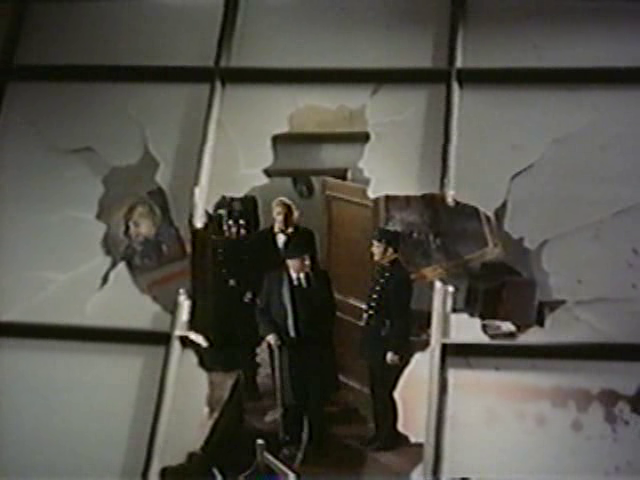
… and that “walls [are] cracking” and “hands [are] shooting out of the walls to caress her.”

Peary notes that this “unforgettable film” is differently scary from Psycho in that “we identify with the insane murderer” rather than the victims — and he points out that it’s “not for the squeamish.”

A number of other reviewers have provided insightful remarks about this “landmark” film which “helped to re-establish the primordial power of the genre and its thematic and emotional complexities.” As James Hendrick writes in his review for Q Network:

After the 1950s had turned horror into something of a joke via teen-cheapie drive-in staples and Abbott and Costello comedies, the 1960s was a decade of reinvention, starting with Psycho and culminating with Repulsion and George A. Romero’s Night of the Living Dead (1968), three psychologically dense, visually inventive, and thematically rich explorations of what scares us most, which always amounts to some drastic collapse of what we consider “normal.”

Along similar lines, Richard Scheib of Moria writes that:

A recurrent theme of Roman Polanski’s work, particularly his horror films, seems to be paranoia, of protagonists finding the familiar around them suddenly turned strange and obliquely sinister. Polanski’s evocation of paranoia is always intensely subjective, something he frequently suggests could just as easily be being imagined by his protagonists.

Finally, DVD Savant notes:

Repulsion synthesizes elegant visions from Cocteau fantasy and Val Lewton horror to chart [Deneuve’s] headlong fall into the pit. By the time the film resorts to overt Guignol, we’re locked in a horror landscape with rotting corpses and murders by straight razor.

He further comments on the film’s memorable ending, comparing it with Psycho by noting:

When all is said and done, Polanski offers a clue to the mystery of the catatonic Carol [Deneuve] with the use of an extreme zoom into a family photo. This compromise for viewers in need of closure is a major improvement on Hitchcock’s epilogue with the psychiatrist. The big mystery is why Stanley Kubrick would copy it so lazily for his later The Shining.

Touché.

In his Alternate Oscars, Peary names this film Best Picture of the Year (with no other contenders). He writes that while the Oscar-winning The Sound of Music (1965) “still affects millions of viewers emotionally, thanks mostly to [Julie] Andrews”, he prefers the performance of “another blonde, France’s Catherine Deneuve”: “While Andrews brought sunshine into people’s lives on- and offscreen, Deneuve gave the year’s darkest portrayal as a psychotic young woman who literally tries to brush sunlight away.” He notes that today, Repulsion “seems more unnerving than terrifying — although viewers still jump when they see the fantasy man’s reflection in the mirror.”

Indeed, Repulsion “remains fascinating as an erotic psychological thriller; an enigmatic portrait of a woman who sinks into madness; and an early look into the macabre mind of Roman Polanski” — who “based his heroine on a woman he knew, who seemed quiet but was prone to inexplicable moments of violent behavior.” Peary adds, “As he would do in later films, the Polish-born director, whose one previous feature was Knife in the Water, placed his main character in a bewildering, inhospitable setting” which “is a fit landscape for a breakdown.” Deneuve’s Carol is unknown to all, including her older sister, who “isn’t at all like her.” Meanwhile, “at a cosmetics clinic” Carol “is employed by an ugly, older woman to give manicures to equally grotesque, equally old women whose faces are covered with grease and mud.”

While Carol “can’t deal with sex,” “everything she hears in the shop is about men (being beasts) and everything she sees has sexual connotations” (not surprising, given how sexualized she is by nearly every man who sees her) — and while everyone she knows gets “the urge to take care of Carol, as if she were a child,” they all “in some way turn against her or become aggressive toward her.” Carol exists “in a sad world in which no one offers to help” and “no one recognizes [her] problem or makes a real attempt to understand what is wrong.” Peary writes it’s “little wonder that reality and illusion merge in Carol’s troubled mind.” While apparently “some critics chastised Polanski for his depiction of ‘woman as man-killing monster’,” I agree with Peary that “Carol doesn’t represent evil” — instead, “Polanski treats her extremely sympathetically.”

Redeeming Qualities and Moments:

  • Catherine Deneuve as Carol
  • Gilbert Taylor’s cinematography

  • Numerous frightening moments

Must See?
Yes, as a now classic psychological horror film by a master director.

Categories

  • Genuine Classic
  • Important Director

(Listed in 1001 Movies You Must See Before You Die)

Links:

King Kong vs. Godzilla (1963)

King Kong vs. Godzilla (1963)

“If we do not destroy Godzilla soon, the monster will destroy us all.”

Synopsis:
Shortly after Godzilla is accidentally released from his icebound habitat, representatives (Tadao Takashima and Yû Fujiki) from a pharmaceutical company stumble upon King Kong on Faro Island and decide to bring him back to Japan for publicity purposes. What will happen when Godzilla and King Kong encounter one another?

Genres, Themes, Actors, and Directors:

  • Japanese Films
  • Mutant Monsters

Review:
This third entry in the Godzilla franchise brought together two literal giants of the big screen: Godzilla (first introduced in 1956’s Godzilla, King of the Monsters!) and King Kong (first seen in 1933’s King Kong). Unfortunately Kong’s rendering was taken away from the brilliant hands of his original creator, Willis O’Brien, instead turning into what DVD Savant refers to as “an immediate source of derision”. He adds that “Toho had made ape suits before but this one is truly pathetic. The instructions seem to have been to not frighten 4-year-olds, and to slap it together in 24 hours.”

Meanwhile, lengthy sequences taking place on Faro Island feature the disturbing use of Japanese actors in blackface:

Partially redeeming this silly flick are effective use of a real-life octopus to simulate a gigantic one, and the final duke-out between two of cinema’s most formidable monster foes. However, this one is really only must-see for diehard Godzilla or Kong fans.

Redeeming Qualities and Moments:

  • The impressive octopus special effects
  • King Kong and Godzilla’s battle on Mount Fuji

Must See?
No; only fans of the series need to check this one out.

Links:

Vampyr / Castle of Doom (1932)

Vampyr / Castle of Doom (1932)

“I know. I’m damned.”

Synopsis:
A young man (Julian West) interested in all things supernatural arrives at a mysterious inn in the village of Courtenpierre, where he’s handed a book about vampires by an old man (Maurice Schutz), then wanders over to a castle where he finds two sisters — deathly ill Leone (Sybille Schmitz) and scared Gisele (Rena Mandel) — under the sway of a vampiric old lady (Henriette Gerard) and her helpers, a suspiciously lurking village doctor (Jan Hieronimko) and a peg-legged gamekeeper (Albert Bras).

Genres, Themes, Actors, and Directors:

  • Carl Theodore Dreyer Films
  • Horror Films
  • Living Nightmare
  • Vampires

Response to Peary’s Review:
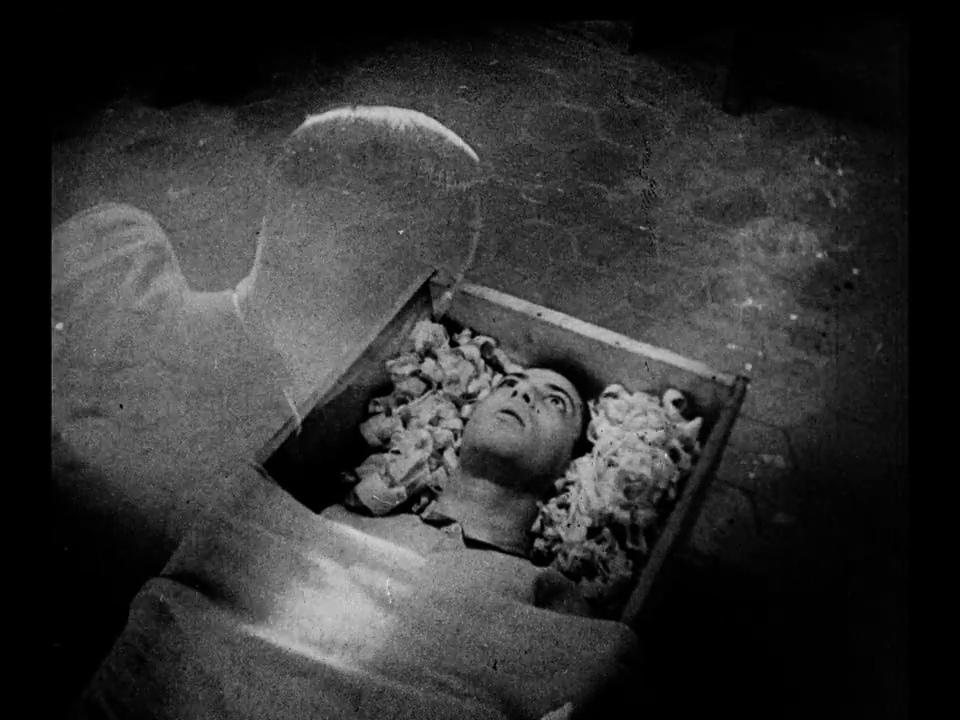
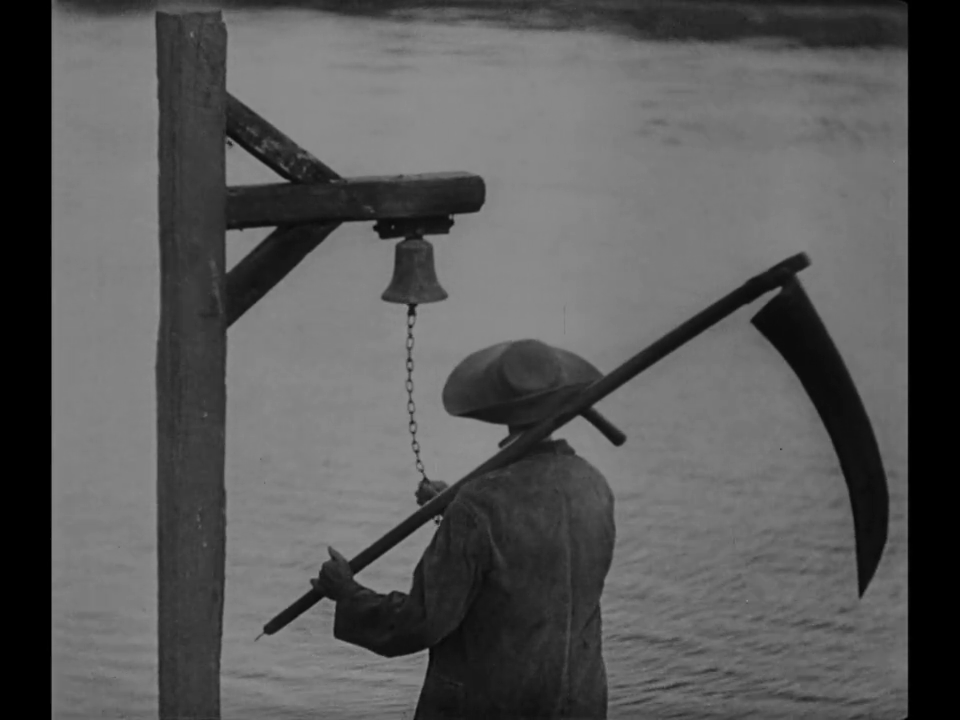
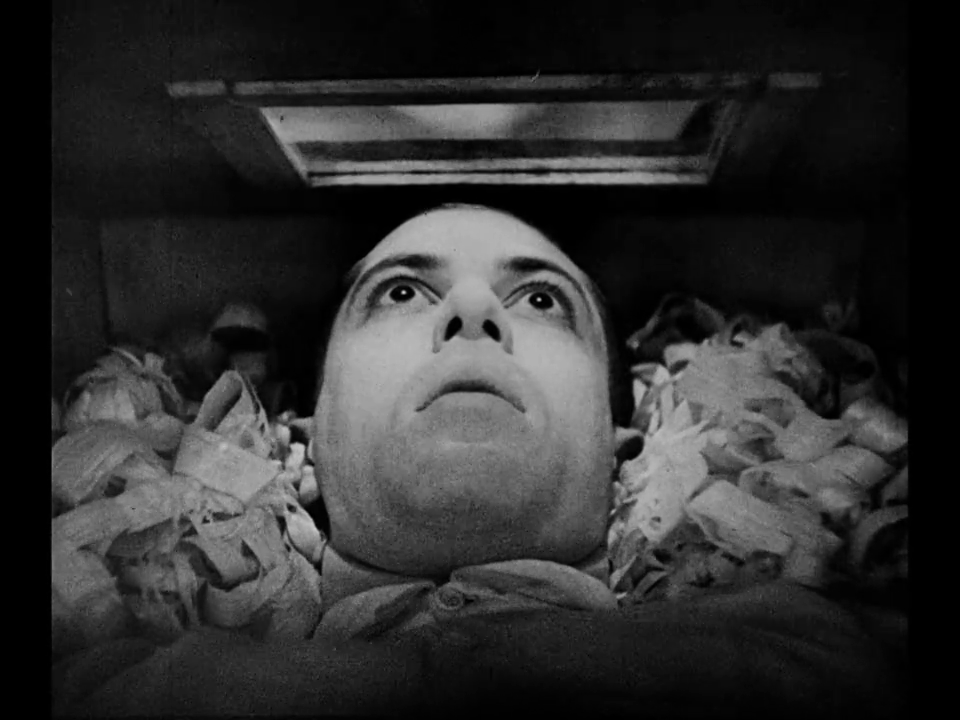
Peary writes that “Carl Dreyer’s classic is not like any other vampire film,” given it’s “not so much a horror film as an eerie mood piece, a dream, the visualization of the conflict between the heart and the brain for the soul.” He notes that “Dreyer links his vampire with Satan and makes Courtenpierre a religious battleground where believers and blasphemers wage war” and asserts that while the “picture is slow-paced and has no shocks” “even young horror-movie fans should be able to recognize why it is regarded as a classic of the genre.” He points out “several startling visual passages”, including West “thinking himself a corpse and seeing his own funeral:

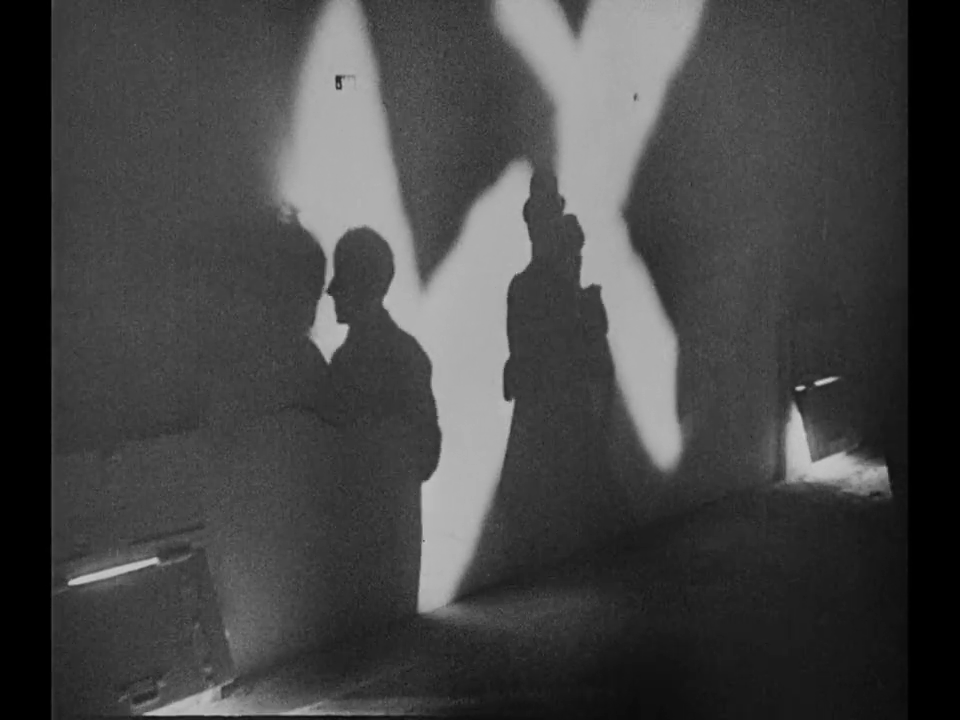
… shadows dancing on the inn’s wall:

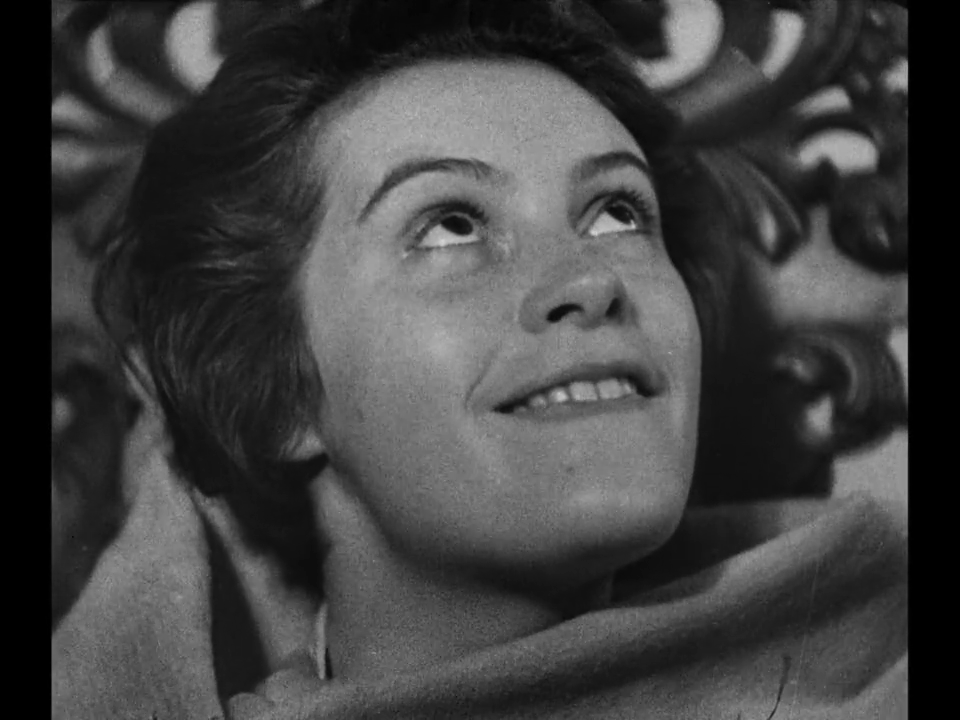
… possessed Leone’s evil face shown in close up as she leers at her sister:

… [and] a death in a flour mill” — and he notes that “the whole film has an effectively haunting, misty look due to the use of gauze in front of the camera.”

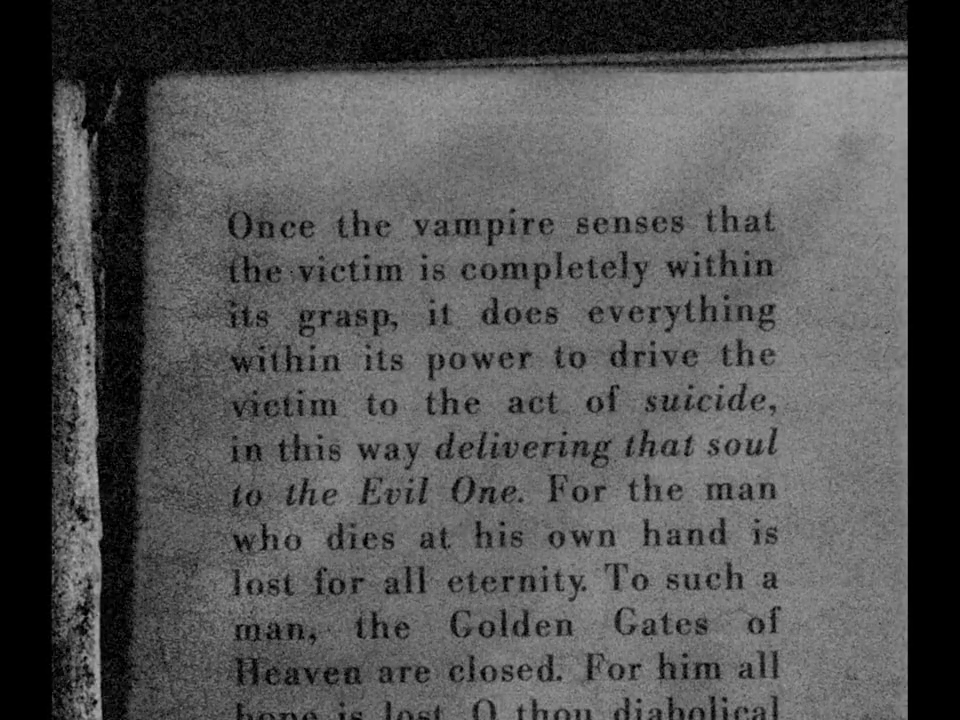
However, while Peary and every other reviewer I’ve read seem quite taken by this intentionally ethereal mood piece (made during a transitional period between silent films and talkies), I was much less engaged. Non-actor West — who funded the film, thus securing a role for himself — simply wanders through a pair of houses watching admittedly eerie and incomprehensible imagery playing out, while far too many pages from the book he’s received about vampires are shown on screen for us to read at regular intervals.

Meanwhile, I’m hard-pressed to see much evidence in the surreal narrative of “the conflict between the heart and the brain for the soul” — though clearly there’s plenty here for those so inclined to interpret in a variety of ways.

Redeeming Qualities and Moments:

  • Rudolph Mate’s cinematography
  • Effectively unsettling imagery

Must See?
No, though it’s worth a look for its historical significance.

(Listed in 1001 Movies You Must See Before You Die)

Links:

Jaws (1975)

Jaws (1975)

“You’re gonna need a bigger boat.”

Synopsis:
The police chief (Roy Scheider) of the tourist town of Amity is pressured by its money-conscious mayor (Murray Hamilton) to keep the death-by-shark of a young woman (Susan Backlinie) under wraps — but when a boy (Jeffrey Voorhees) is killed during a very public beach day, Scheider relies on support from an ichthyologist (Richard Dreyfuss) and a shark-fighting sea captain (Robert Shaw) to find the great white shark that’s really behind the gruesome deaths.

Genres, Themes, Actors, and Directors:

  • At Sea
  • Horror Films
  • Fishermen
  • Killer Animals
  • Richard Dreyfuss Films
  • Robert Shaw Films
  • Roy Scheider Films
  • Small Town America
  • Steven Spielberg Films

Response to Peary’s Review:
Peary writes that this “exciting adventure-horror film” — an “adaptation of Peter Benchley’s best-seller” — “went far beyond anyone’s expectations” because “no one knew what to expect from [28-year-old] director Steven Spielberg.” He argues that “this is by far the best nature-retribution film since The Birds,” pointing out that “the fun and the tension are constant”: “there are thrills, there are terrifying scenes, there is humor, [and] there’s even a Watergate cover-up theme” (actually, it’s simple everyday small-town political corruption). He notes that “there are few horror films in which you’ll so identify with potential victims,” adding, “Has anybody who has swum in the ocean since seeing this film not worried about something latching on to a leg?”

Peary highlights the “excellent camera work by Bill Butler and special effects by Robert A Mattey under difficult conditions,” which have been discussed at length in various documentaries about the making of the film. He notes that the “first attack is a shocker”:

… the “entire boat sequence is nerve-wracking”:

… and “solid performances from the three leads (whose volatile conversations on the boat are quite enjoyable) give this film” — which “became a box-office phenomenon” — “real class”.

Indeed, this breakthrough film for Spielberg — who apparently was convinced each day that he would be fired, and that his career in filmmaking would come to a premature end — is arguably his best. I agree with Richard Scheib in his review for Moria, where he writes: “Spielberg demonstrates a real mastery – one that he has never fully demonstrated again – in detail, in character and most of all in the ability to manipulate the audience with shock and suspense.”

Note: Of special interest during COVID-19 times is how spot-on the film is in naming the political and financial drivers behind reckless disregard for public safety. As the mayor points out (where have we heard this before?): “Amity is a summer town — and we need summer dollars.”

Redeeming Qualities and Moments:

  • Robert Shaw as Quint
  • Roy Scheider as Brody
  • Richard Dreyfuss as Hooper
  • Memorable supporting performances
  • Fine special effects
  • Impressive at-sea footage (shot at no small cost to the cast, crew, and producers)
  • Bill Butler’s cinematography

  • An excellent script by Peter Benchley and Carl Gottlieb
  • Verna Fields’ editing
  • John Williams’ iconic score

Must See?
Yes, as an exciting and enduring classic.

Categories

  • Genuine Classic

(Listed in 1001 Movies You Must See Before You Die)

Links:

Little Shop of Horrors (1986)

Little Shop of Horrors (1986)

“Excuse me: I couldn’t help noticing that strange and unusual plant!”

Synopsis:
An unsuccessful flower shop owner (Vincent Gardenia) is happy when his nebbishy employee (Rick Moranis) purchases a small, unusual plant that draws massive attention to his business. However, Seymour (Moranis) soon finds that his plant needs more than the usual substances to survive, and turns to the sadistic boyfriend (Steve Martin) of his beloved co-worker (Ellen Greene) as a source of sustenance.

Genres, Themes, Actors, and Directors:

  • Aliens
  • Bill Murray Films
  • Dentists
  • Horror Films
  • Killer Plants
  • Misfits
  • Musicals
  • Steve Martin Films
  • World Domination

Review:
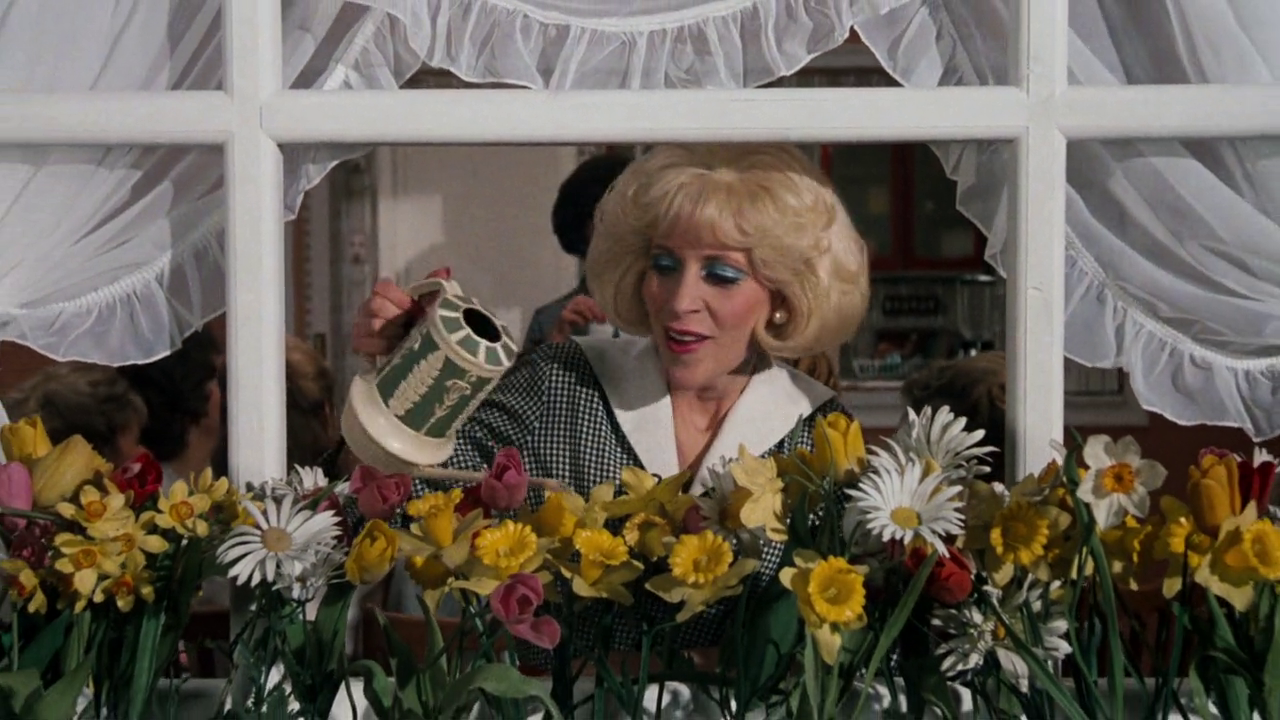
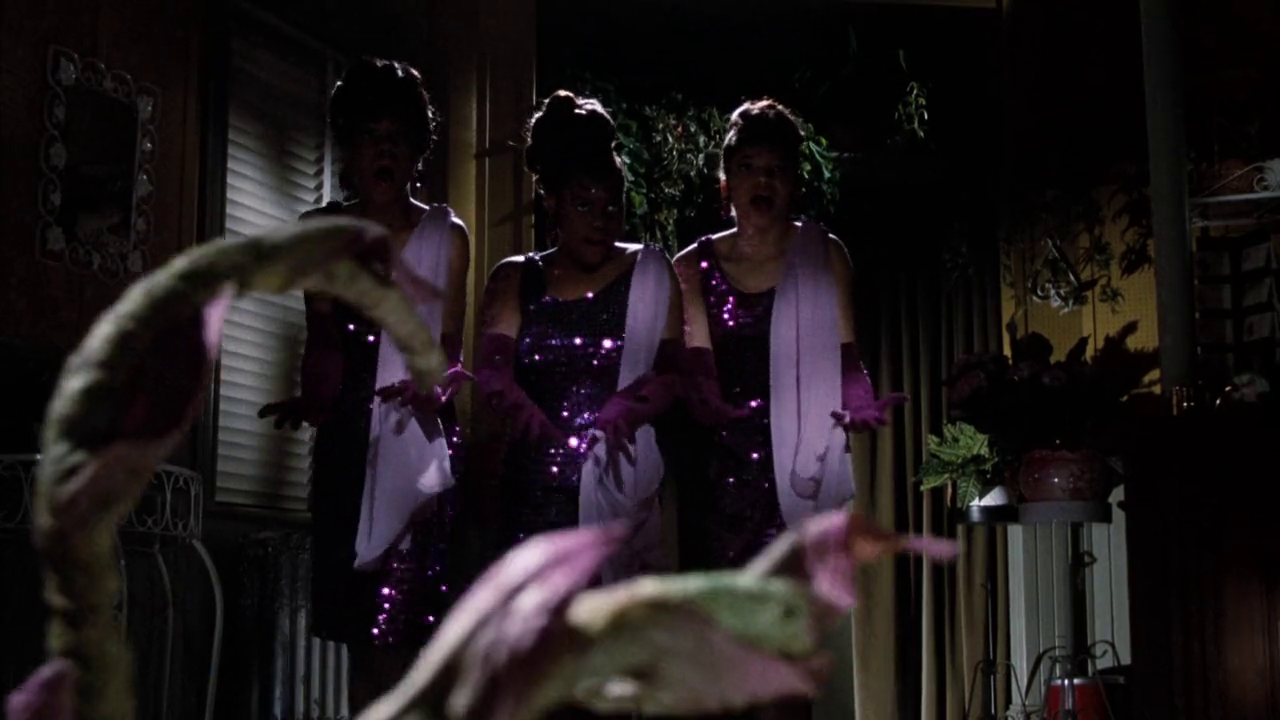
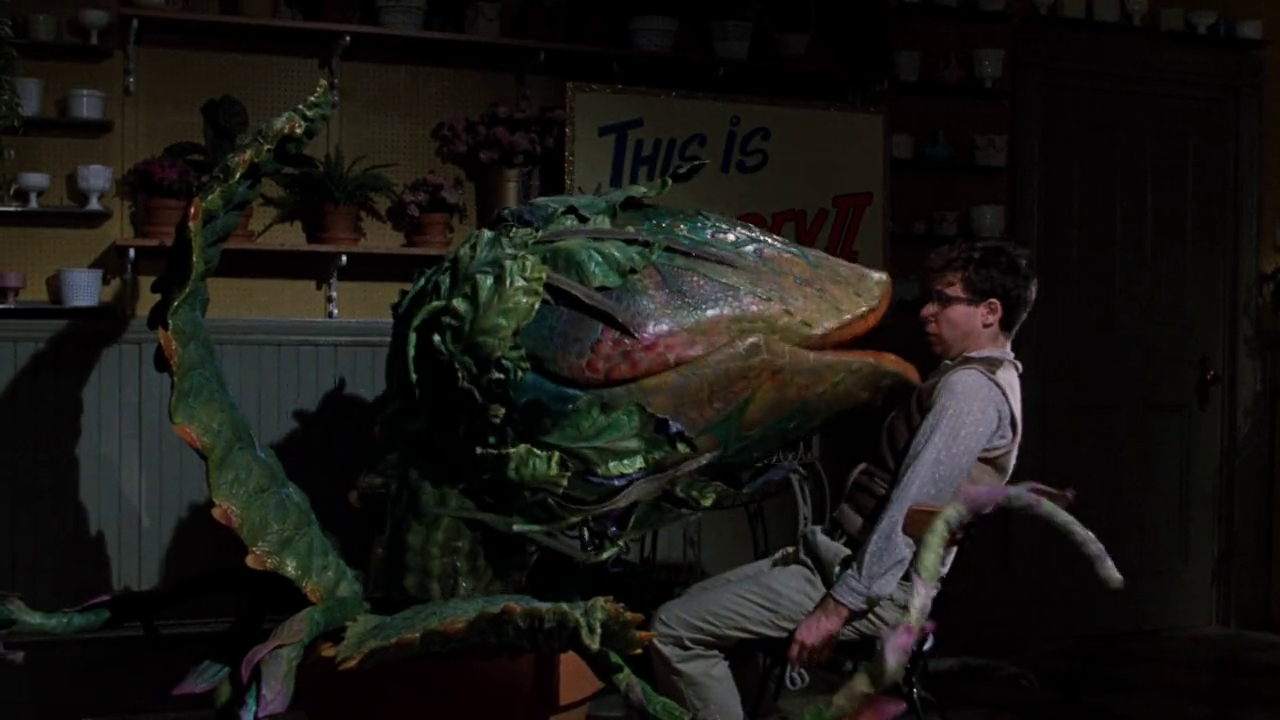
Frank Oz directed this enjoyable adaptation of an off-off Broadway horror-comedy musical which was itself inspired by Roger Corman’s quirky b&w cult favorite from 1960. It moves quickly, building on the intriguing storyline in Corman’s original (scripted by Charles B. Griffith) while taking it to even wilder extremes and with much more color (and music). Speaking of music, it’s integral to the script, with each song (by playwright/lyricist Howard Ashman) helping to move the narrative and/or character development forward (they’re all quite catchy).


Perhaps most impressive, however, is Frank Oz’s puppeteering of “Audrey II”, which grows from a tiny and seemingly harmless potted houseplant:

… to a fully-grown force-to-be-reckoned-with:

[SPOILERS]

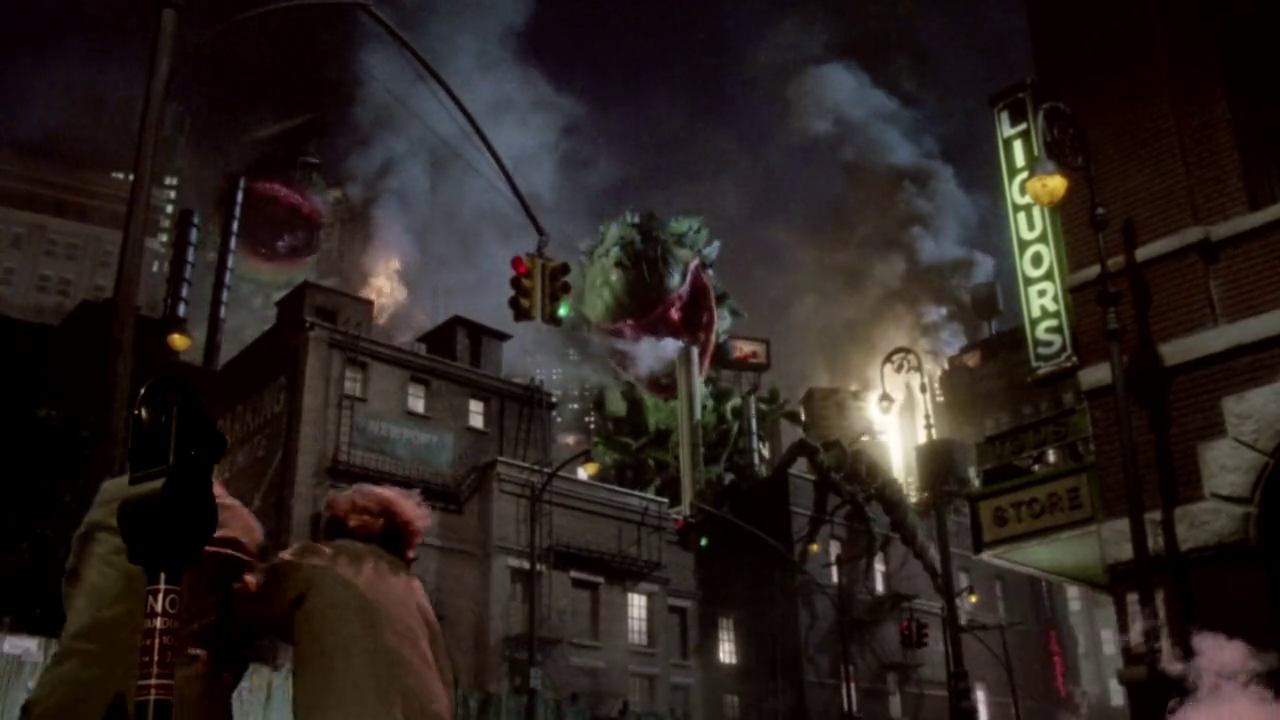
… to a Godzilla-like monstrosity that has taken over the Earth:

(This ultra-dark, apocalyptic ending was the original one conceived and filmed by Oz; it was altered to something cheerier for theatrical release, but has now been restored.)

Also amusing are various cameos by comedic favorites — especially Steve Martin and Bill Murray’s interactions as a sadistic dentist who encounters his most enthusiastic patient ever.

Redeeming Qualities and Moments:

  • Fine performances by the leads
  • Steve Martin as Dr. Scrivello
  • Bill Murray as Martin’s sadomasochistic dental patient
  • Truly impressive puppeteering
  • A most enjoyable soundtrack

Must See?
Yes, as a cult favorite.

Categories

  • Cult Movie

Links:

Piranha (1978)

Piranha (1978)

“The water is filled with carnivorous fish: piranha.”

Synopsis:
When an insurance investigator (Heather Menzies) teams up with an alcoholic recluse (Bradford Dillman) to determine what happened to a pair of teenagers who mysteriously disappeared, they learn about a doctor (Kevin McCarthy) overseeing a government-sponsored project to breed lethal piranhas, which wreak havoc when they’re released into the nearby river and beyond — including a summer camp and a water resort.

Genres, Themes, Actors, and Directors:

  • Barbara Steele Films
  • Detectives and Private Eyes
  • Dick Miller Films
  • Horror Films
  • Joe Dante Films
  • John Sayles Films
  • Keenan Wynn Films
  • Kevin McCarthy Films
  • Killer Animals
  • Scientists
  • Summer Camp

Response to Peary’s Review:
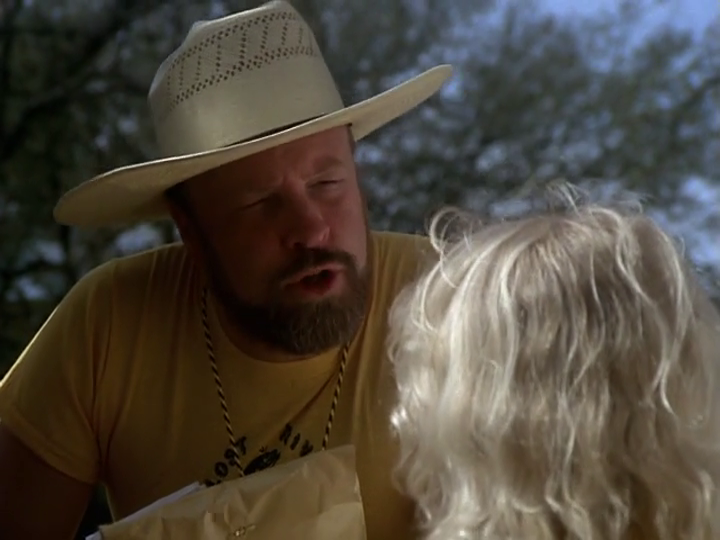
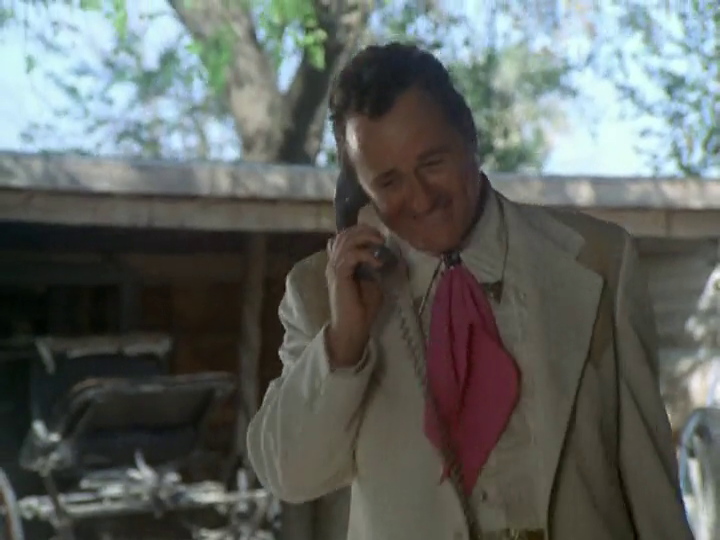
Peary rather uncharitably argues that “Roger Corman’s low-budget Jaws variation, directed by Joe Dante and scripted by John Sayles,” “should be condensed to 15 minutes.” He writes that “it becomes annoying how Dante and Sayles put the usual roadblocks in the path of Dillman and Menzies to kill screen time,” given that “there can be only one attack at the camp and one at the resort because after that nobody would go back into the water” — and “as it is, those two attacks, which should take about 10 seconds each since the swimmers are about 10 feet from land, go on forever.” He further argues that while “Paul Bartel, as the taskmaster camp head:

… and Dick Miller, as the money-hungry resort owner:

… are funny,” their “broad humor doesn’t mesh with the tongue-in-cheek satirical upstream story [?] with Dillman and Menzies,” and it “should all have been played straight.”

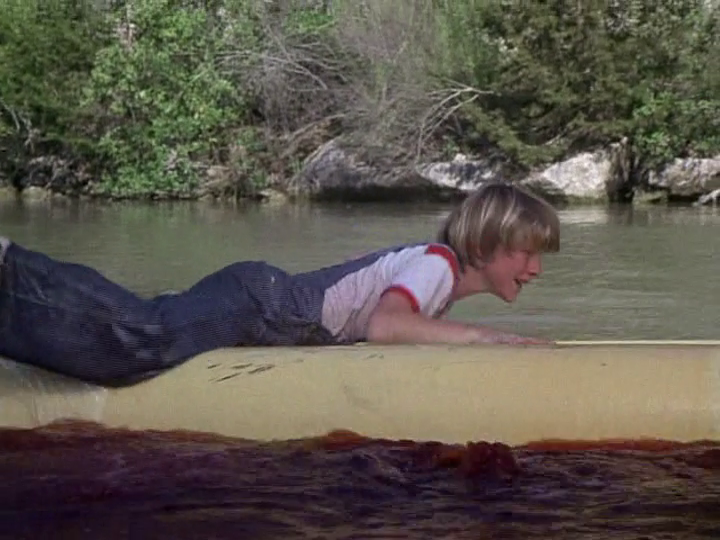
I think Peary is being overly harsh on this flick, which effectively builds off of Jaws while offering plenty of genuine chills and thrills. The idea of genetically modified fish with teeth swarming in the water is enough to terrify me — and it’s pretty ridiculous to complain that swimmers would get to shore within 10 seconds if they’re being attacked and bitten to death by ravenous hordes of critters. Meanwhile, plenty of authentic suspense is built into Sayles’s screenplay — i.e., when the raft Menzies and Dillman are using to flee starts unraveling due to the piranhas eating away at its bindings:

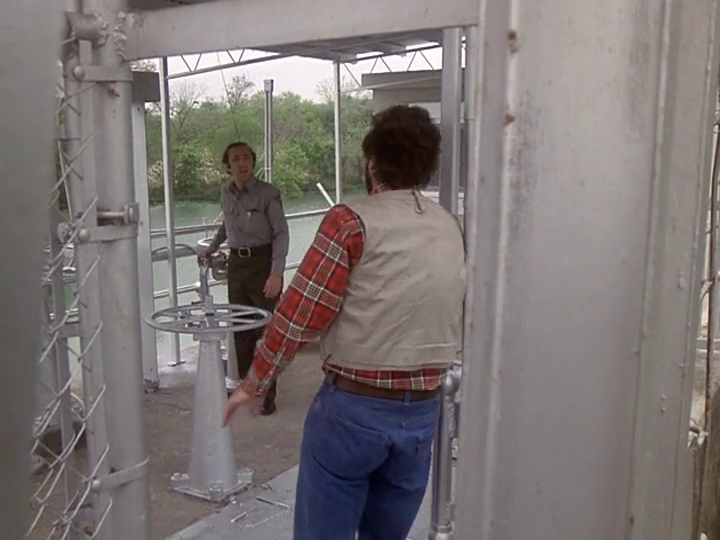
… and when Dillman is racing against time to prevent a dam operator from releasing the water:

… and all the sequences in which innocent swimmers (including plenty of kids) are about be swarmed.

Redeeming Qualities and Moments:

  • Plenty of suspenseful moments

  • An effective horror film score

Must See?
No, but it’s worth a look.

Links:

Phantom of the Rue Morgue (1954)

Phantom of the Rue Morgue (1954)

“There seems to be a killer instinct — frequently blind, pointless — running through the entire animal kingdom.”

Synopsis:
A police inspector (Claude Dauphin) investigating a series of mysterious murders on the Rue Morgue suspects and arrests a psychology professor (Steve Forrest), not realizing that a nefarious zookeeper (Karl Malden) who is romantically fixated on Forrest’s fiancee (Patricia Medina) is actually responsible in some way.

Genres, Themes, Actors, and Directors:

  • Edgar Allan Poe Adaptations
  • Falsely Accused
  • Horror Films
  • Karl Malden Films
  • Murder Mystery
  • Primates
  • Roy Del Ruth Films

Review:
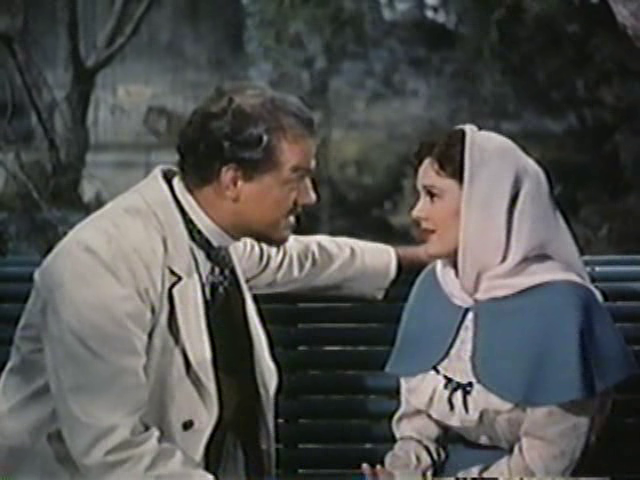
Warner Brothers’ 3D follow-up to House of Wax (1953) was this disappointing adaptation (directed by Roy Del Ruth) of Edgar Allan Poe’s short story “The Murders in the Rue Morgue”. Forrest and Medina’s characters are pretty nondescript:

… and poor Malden is given a thankless role as a secretly deranged villain:

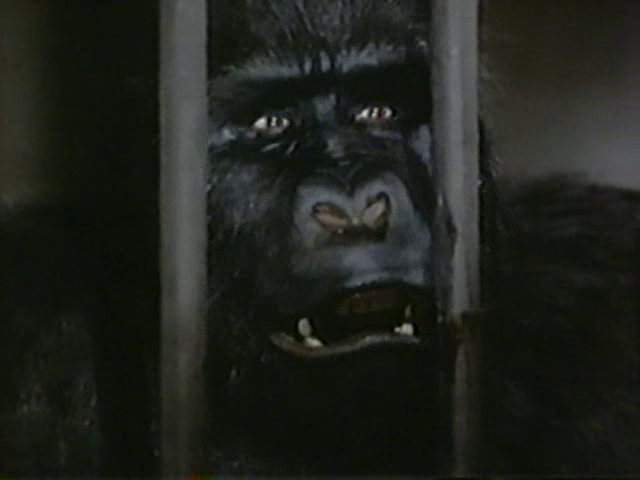
Most impressive is make-up expert Charles Gemora’s work on the gorilla suit used for a critical primate character in the film; it’s remarkably authentic and effective.

Redeeming Qualities and Moments:

  • Some reasonably atmospheric cinematography and sets

  • Charles Gemora’s gorilla suit

Must See?
No; you can skip this one.

Links: