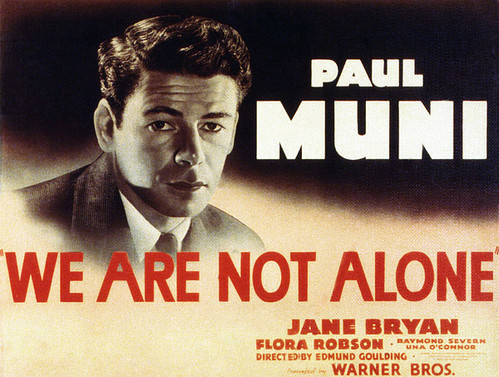
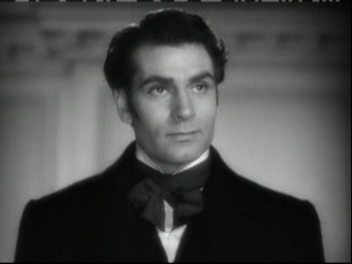
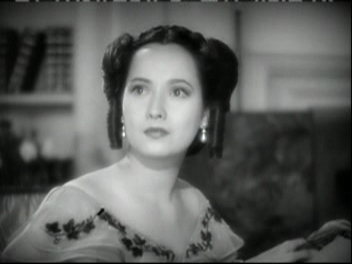
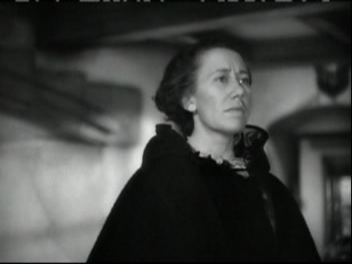
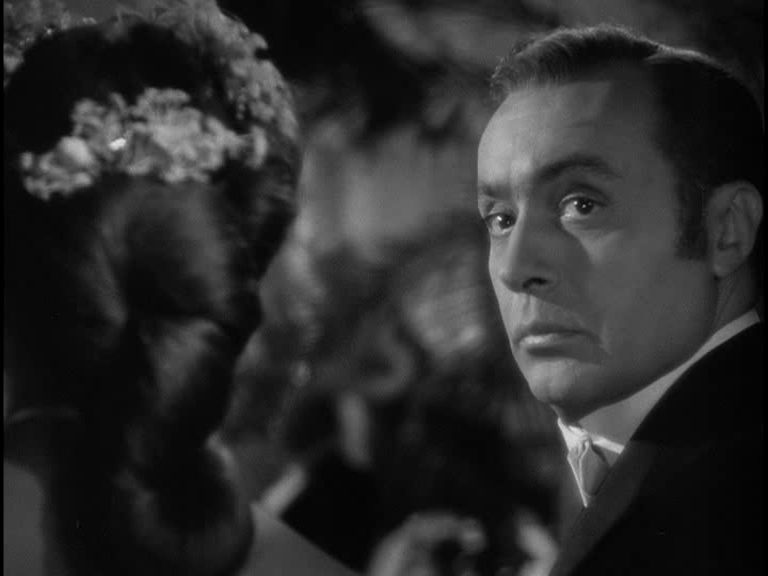
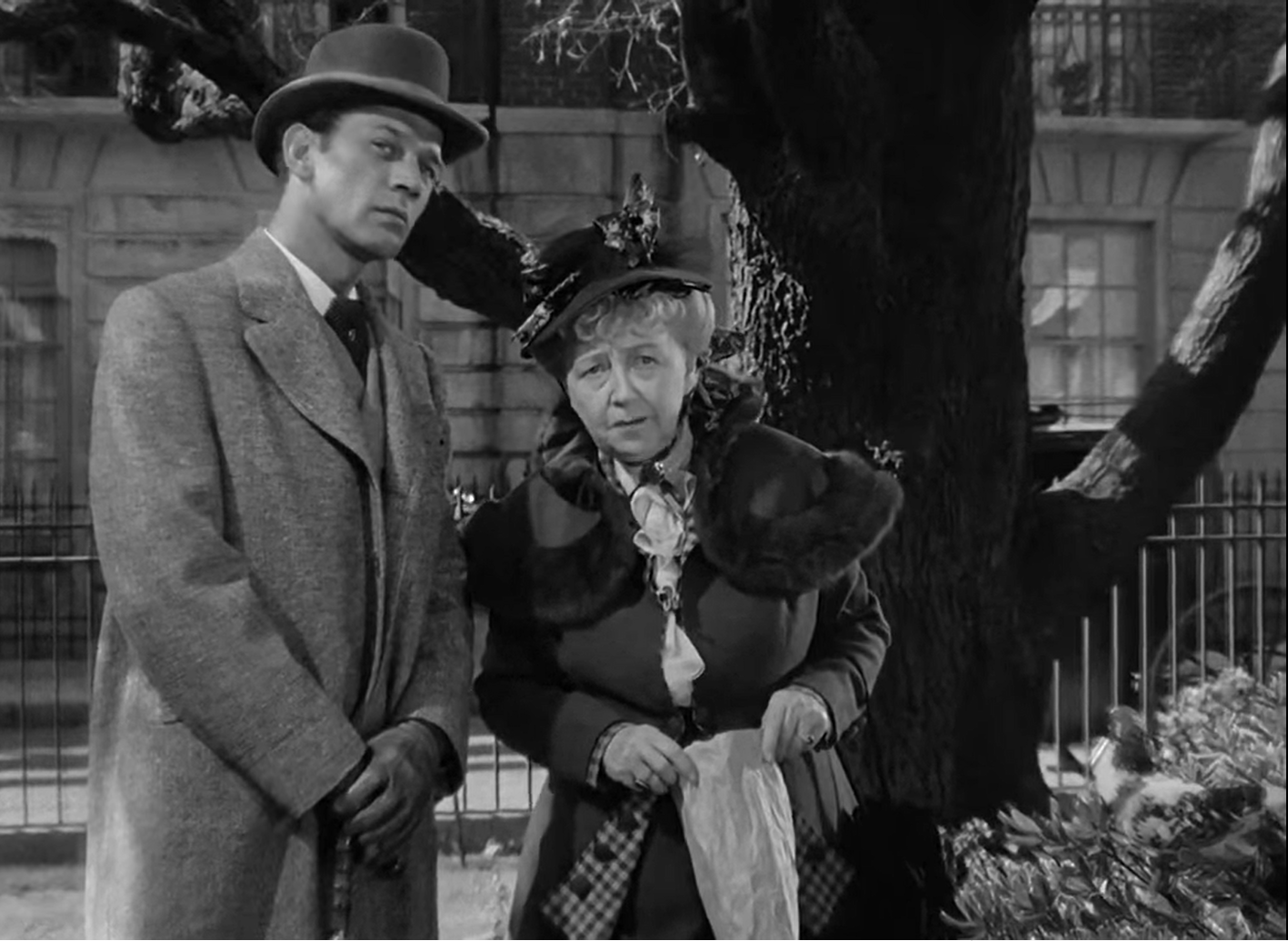
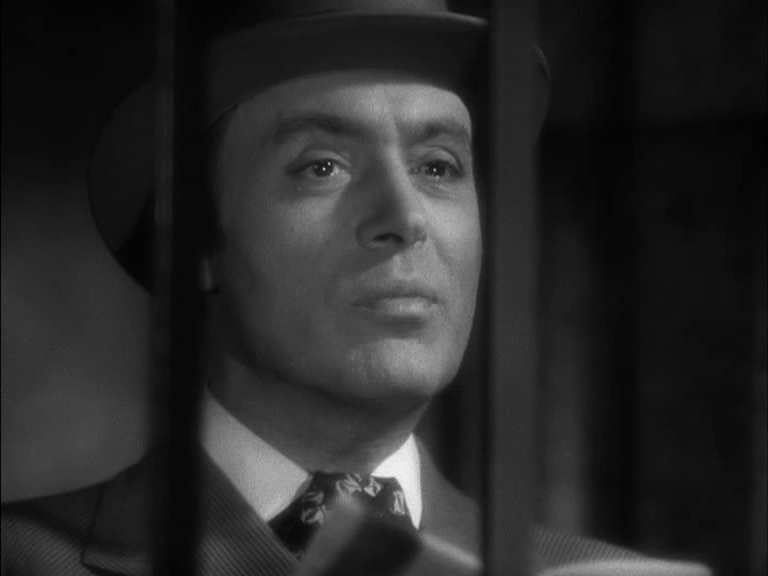
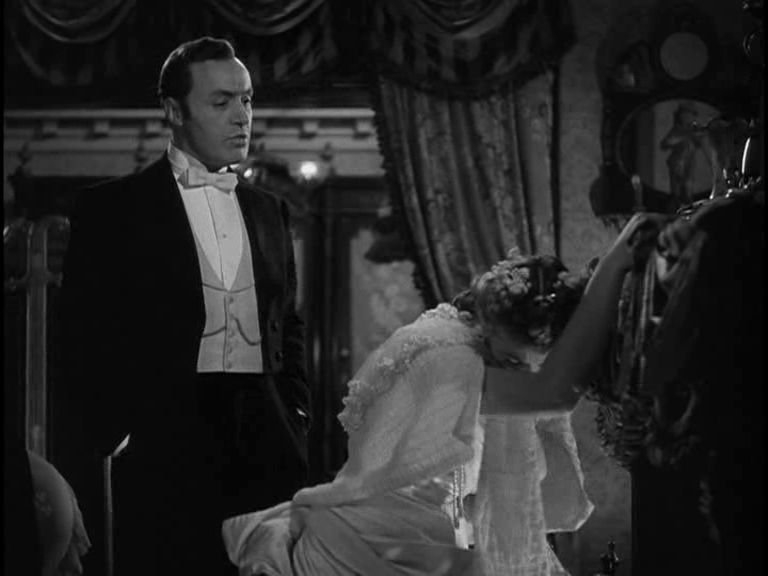
We Are Not Alone (1939)
“Did you really think I’d allow them to be together for another minute?”
|
Synopsis: |
|
Genres, Themes, Actors, and Directors:
Review: Redeeming Qualities and Moments:
Must See? Categories
Links: |
“Did you really think I’d allow them to be together for another minute?”
|
Synopsis: |
|
Genres, Themes, Actors, and Directors:
Review: Redeeming Qualities and Moments:
Must See? Categories
Links: |
“Catherine Earnshaw, may you not rest so long as I live on!”
|
Synopsis: |
|
Genres, Themes, Actors, and Directors:
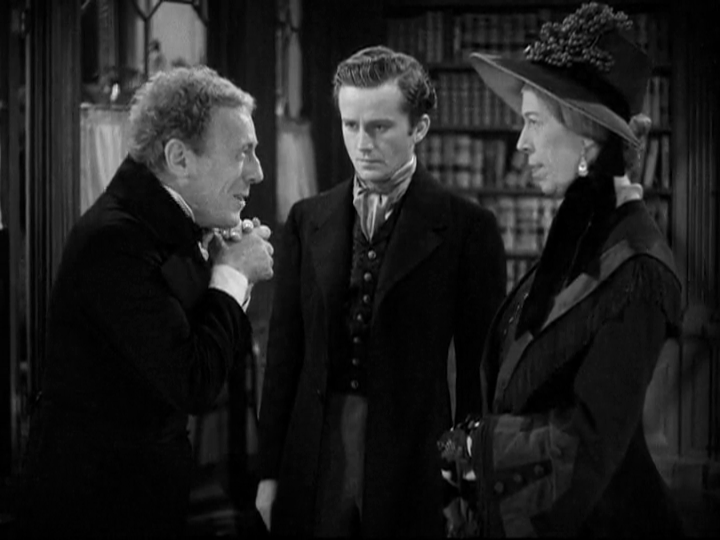
Response to Peary’s Review: However, Peary argues that “too often the atmosphere conveys characters’ emotions that otherwise wouldn’t be evident from the acting alone”, and that “unlike in the book, the characters don’t come across as being forces of nature more than human beings”. He spends the rest of his review comparing the book (mostly unfavorably) with the film — and in his Cult Movies 2 essay on the film, he admits bluntly: “I like Wuthering Heights very much. Yet I am disturbed by how much [screenwriters Ben] Hecht and [Charles] MacArthur changed the novel”. He writes that while in the novel, “Heathcliff’s fight is with all who are civilized”, in the film his “anger is directed toward Cathy for marrying rich Edgar Linton (David Niven),” and “all that he intentionally does wrong — including marrying Edgar’s naive sister, Isabella (Geraldine Fitzgerald) — is his way of getting revenge.” Peary complains that Hecht and MacArthur’s “biggest crime is to turn Cathy into the film’s villain”, and writes that while the “film has a polished veneer”, the “issues are far more complex in the novel, as are the characters — and they are far more interesting”. The film does — for better or for worse — reduce the novel’s complex narrative into a “simple” story of star-crossed lovers and revenge. However, as Peary writes, “there’s no denying that Oberon and Olivier are a wonderful couple, and their scene in the make-believe castle on Peniston Crag” — “original to Hecht and MacArthur”, who “wanted to humanize the characters” — is “one of the most romantic [and iconic] bits in cinema history”. He notes that “Oberon is surprisingly good” (this was almost certainly her best, most impassioned performance), and that Olivier’s “delivery has such strength that we tend to overlook those lines which make no sense”; he’s fully invested in his role. Ultimately, Olivier and Oberon make such a handsome, romantically tragic couple — representative of all would-be lovers kept apart either through fate or social constrictions — that we can’t help becoming involved in their plight, despite knowing from the beginning how things will turn out. Redeeming Qualities and Moments:
Must See? Categories
(Listed in 1001 Movies You Must See Before You Die) Links: |
“Jewels are wonderful things; they have a life of their own.”
|
Synopsis: |
|
Genres:
Response to Peary’s Review:
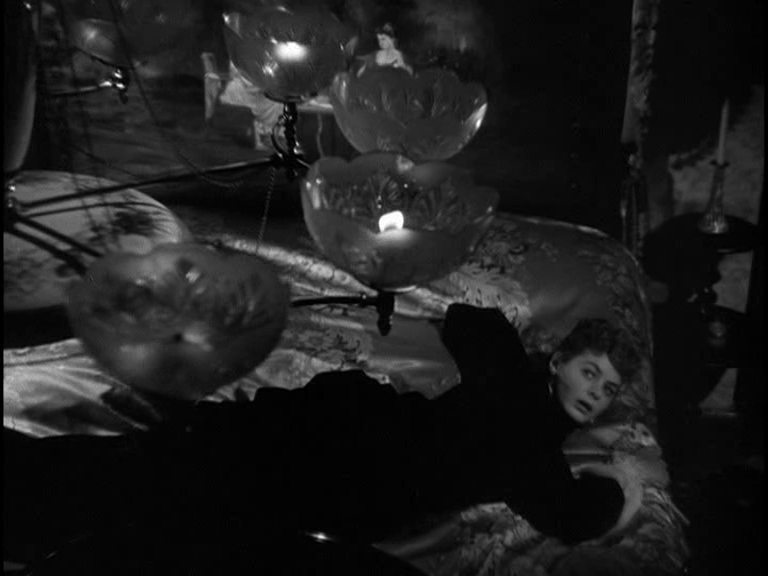
In his more in-depth analysis of Boyer’s performance, Peary writes that this “villain… is unique in the cinema and one of the most dastardly men ever portrayed… yet… one monster that no one will dispute exists in the real world”; he “never lets up on [Paula], always acting smug and patronizing, using her name as if it were an icepick: ‘You are inclined to lose things, Paula…’; … ‘Are you becoming suspicious as well as absentminded, Paula?'” In addition to strong lead performances by Bergman and Boyer, the film remains a satisfying thriller thanks to “unusually powerful direction by George Cukor”, as well as highly atmospheric cinematography by Joseph Ruttenberg and an “intricate scenic design”. With that said, the level of tension in the storyline suffers a bit from our knowledge at the outset that Boyer’s character is a murderous cad — and that Cotten (giving an undistinguished performance) will eventually come to Bergman’s assistance; the bulk of the film’s suspense lies in wondering how and when Bergman will finally come to realize she’s being duped. But while Peary argues (in Alternate Oscars) that throughout most of her performance she merely acts “docile and dazed” — and “only at the end… does [her] character switch from being infuriatingly ignorant to interesting” — I disagree: luminous Bergman is as compelling, convincing, and nuanced here as always.
Watch for a young (17-year-old!) Angela Lansbury in her debut role as a tarty maid, and Dame May Whitty (providing mild relief from the film’s otherwise relentlessly gloomy air of oppressiveness) as a snoopy neighbor.
Note: Peary points out that “an earlier [cinematic] version [of the play] was made in England in 1939-40, but MGM kept it out of circulation to benefit its own film”; this original version — co-starring Anton Walbrook and Diana Wynyard — is a worthy film in its own right, and recommended as an interesting comparative study. The two films are available as a double-feature on the 2004 DVD release. Redeeming Qualities and Moments:
Must See? Categories
(Listed in 1001 Movies You Must See Before You Die) Links: |
“You have to be educated, David, and take your place in the world.”
|
Synopsis: |
|
Genres, Themes, Actors, and Directors:
Review:
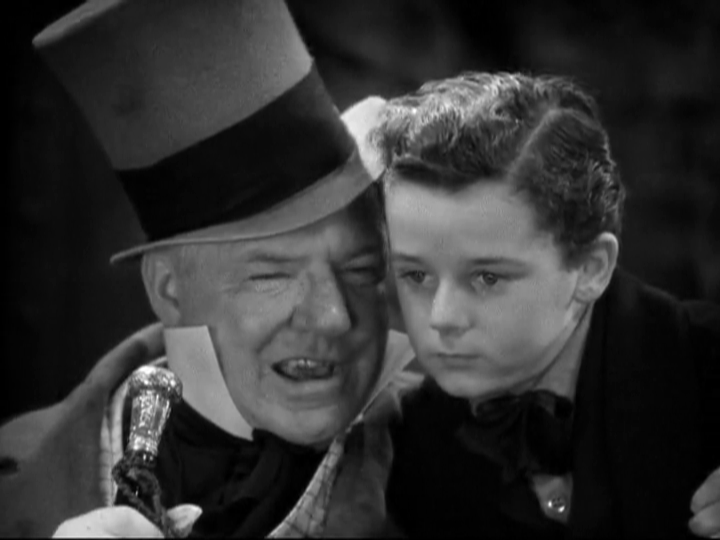
… Roland Young as the inimitably oily Uriah Heep; jolly-faced Lennox Pawle (was this his one claim to cinematic fame?) as the lovably loopy Mr. Dick; Maureen O’Sullivan as the impossibly childlike but angelically beautiful Dora; and, of course, W.C. Fields as Mr. Micawber (whose failure to drop his American accent somehow doesn’t affect the veracity of his performance in the slightest). With that said, the storyline itself, while carefully crafted, is a tad too episodic and melodramatic for its own good; the noble intention of staying as true as possible to the lengthy source material means that — inevitably — far too many characters and subplots are ultimately introduced, thus diluting the power of the narrative. Meanwhile, grown David (played competently but without much charisma by Lawton) doesn’t really register as a complex individual; he comes across more like the lynchpin around which multiple scenarios conveniently revolve.
Indeed, when it comes to Dickensian adaptations, I prefer David Lean’s Great Expectations (1946) — and (to a somewhat lesser extent) Lean’s Oliver Twist (1948) — both darkly atmospheric renderings of inherently gripping tales. Yet David Copperfield, expertly directed by George Cukor, remains a unique classic in its own right — and as long as one watches it with its literary and historical contexts firmly in mind, it remains an enjoyable treat. Redeeming Qualities and Moments:
Must See? Categories
Links: |
“Sure, the girl is much younger than I am — there’s no denying that!”
|
Synopsis: |
|
Genres, Themes, Actors, and Directors:
Review: Redeeming Qualities and Moments:
Must See? Links: |
“Just a lovely average girl; that’s all I want.”
|
Synopsis: |
|
Genres, Themes, Actors, and Directors:
Response to Peary’s Review: The subplot involving Morgan’s discovery of his wife’s infidelity plays an important role in the overall storyline (and it’s wonderful to see Morgan given such a meaty, nuanced part) — but at the heart of the film lies the love-hate relationship that develops between Stewart and Sullavan. We know from the beginning that they are each others’ secret paramours, and Stewart finds out roughly half-way through the film — so the crux of the narrative tension revolves around how, when, or if Stewart will choose to reveal what he’s discovered. To that end, the scene in which Stewart initially learns about Sullavan’s identity is decidedly bittersweet; Sullavan’s reaction to Stewart “barging in” on her intended rendezvous shows her in a surprisingly negative light, and it took me a while to understand how Stewart could so easily forgive her and reconcile her “real life” persona with the one she’d revealed to him in letters (there’s clearly more going on in his mind than we’ve privy to). Ultimately, however, their complicated dance of gradual recognition rings true — now more so than ever, as more and more individuals (myself included) meet their beloved in virtual reality before encountering one another in person. Film fanatics should certainly check out this finely acted, expertly directed human comedy at least once. Note: Laszlo’s play was remade two more times — first as the Judy Garland/Van Johnson musical In the Good Old Summertime (1949), and later as You’ve Got Mail (1993), starring Tom Hanks and Meg Ryan; neither is must-see viewing. Redeeming Qualities and Moments:
Must See? Categories
Links: |
“I’m gonna’ build me a chapel.”
|
Synopsis: |
|
Genres, Themes, Actors, and Directors:
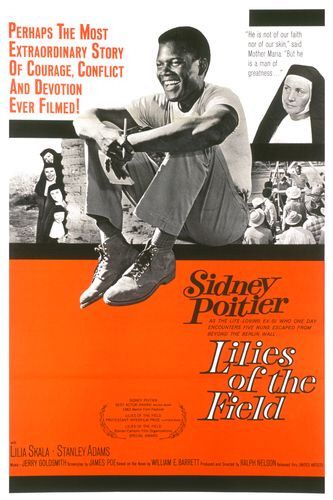
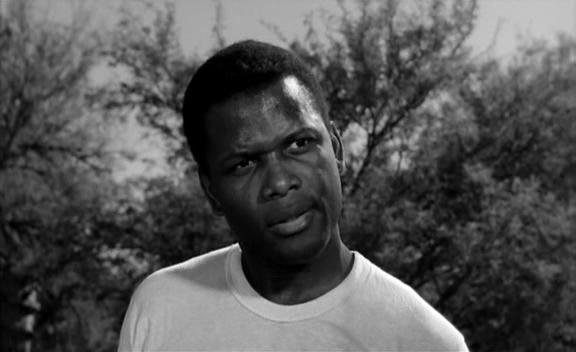
Review: With that said, Poitier brings some much-needed energy to this otherwise overly-twee tale of a no-nonsense head nun and her gaggle of nondescript “sisters”. The storyline is far too simple to engage on anything other than a vaguely metaphorical level, and even then we’re not quite sure exactly what to make of its fable-like qualities. I suppose the primary moral is that persistence and faith pay off, given how Skala’s stubborn insistence that her chapel WILL be built eventually bears fruit; meanwhile, a message about the importance of relying on others for strategic help is slipped in as well. Ultimately, this film remains worth a one-time look both for historical reasons (Poitier’s landmark Oscar) and as a fine early attempt at intimate, low-budget filmmaking — but the narrative (apparently based on a true story) isn’t compelling enough to make it must-see viewing. Redeeming Qualities and Moments:
Must See? Links: |
“I will not have my wedding spoiled by intruders!”
|
Synopsis: |
|
Genres, Themes, Actors, and Directors:
Response to Peary’s Review:
Peary posits that “the major problem is that Kelly is so energetic that Crosby, 25 years her senior, seems much too old for her” — but I disagree; in fact, I actually find it easier to imagine that the uptight character of “Tracy Lord” (Hepburn/Kelly) would have a problem with Crosby’s easy-going jazz musician than with Cary Grant’s alcoholic (perhaps because we never actually see evidence of the latter issue in TPS).
Meanwhile, Sinatra and Holm make a suitable impact in the roles originated by James Stewart and Ruth Hussey:
— and while the narrative has been watered down quite a bit, the film “moves at a brisk pace” and contains “many musical highlights”.
As Peary notes, “Cole Porter songs serve for memorable duets by Crosby and Kelly (their hit ‘True Love’), Crosby and Sinatra (‘Did You Evah?’), Crosby and Louis Armstrong (‘Now You Has Jazz’), and Sinatra and Holm (‘Who Wants to Be a Millionaire?’)” — in addition to “Sinatra sing[ing] Kelly an emotional… ‘You’re Sensational'”. While this one isn’t quite a classic like its predecessor, it’s a surprisingly enjoyable remake, and remains worthy viewing in its own right. Redeeming Qualities and Moments:
Must See? (Listed in 1001 Movies You Must See Before You Die) Links: |
“With such a girl like that, anything can happen — anything.”
|
Synopsis: |
|
Genres, Themes, Actors, and Directors:
Review: Redeeming Qualities and Moments:
Must See? Links: |
“That’s beautiful, see — that’s really a lovely thing.”
|
Synopsis: |
|
Genres, Themes, Actors, and Directors:
Response to Peary’s Review:
… Culp telling Wood of his affair and becoming slightly annoyed that she’s not jealous:
… Cannon talking to her psychiatrist about her sexual confusion:
… [and] Culp offering a drink to a nervous lover”.
While I agree with Peary that each of the above scenes (among others) is cleverly written and dryly humorous, I disagree with his assertion that the film’s ending is disappointing in any way. This may be a “mainstream movie with an ending… that allowed middle-class viewers to go home happy”, but Culp’s willingness to be open with his wife about his infidelity actually comes across as quite radical, and leads to an equally “radical” response by Wood — not to mention an incisive skewering of gender norms (there’s a dilly of a double-standard that emerges at a certain point in the script, and is nicely handled). Peary also asserts that “one problem” in the film is that “all four characters come across like jerks by the end,” but I think this is exactly the point. When given permission to follow their desires at whim, without concern for (traditional) social conventions, these characters temporarily devolve into expected narcissism — which doesn’t exactly make them likable; they’re experimenting, and part of the fun in watching their travails is to see how foolishly they flounder.
The only character who emerges semi-triumphant within the new state of affairs (at least until the culminating scene) is Wood — who, on a side note, was indeed “never prettier” (a fact which slyly contributes to the inanity of Culp’s decision to cheat on her). The picture’s ultimate moral, I think, is that social strictures and contracts (complete with strategic deception, as needed) exist for a reason, serving as useful tools for navigating the undeniably tricky waters of long-term relationships; it’s to Mazursky’s credit that his film — rather than seeming dated — remains such a potent example of this fact. Redeeming Qualities and Moments:
Must See? Categories
Links: |