Browsed by
Month: January 2022

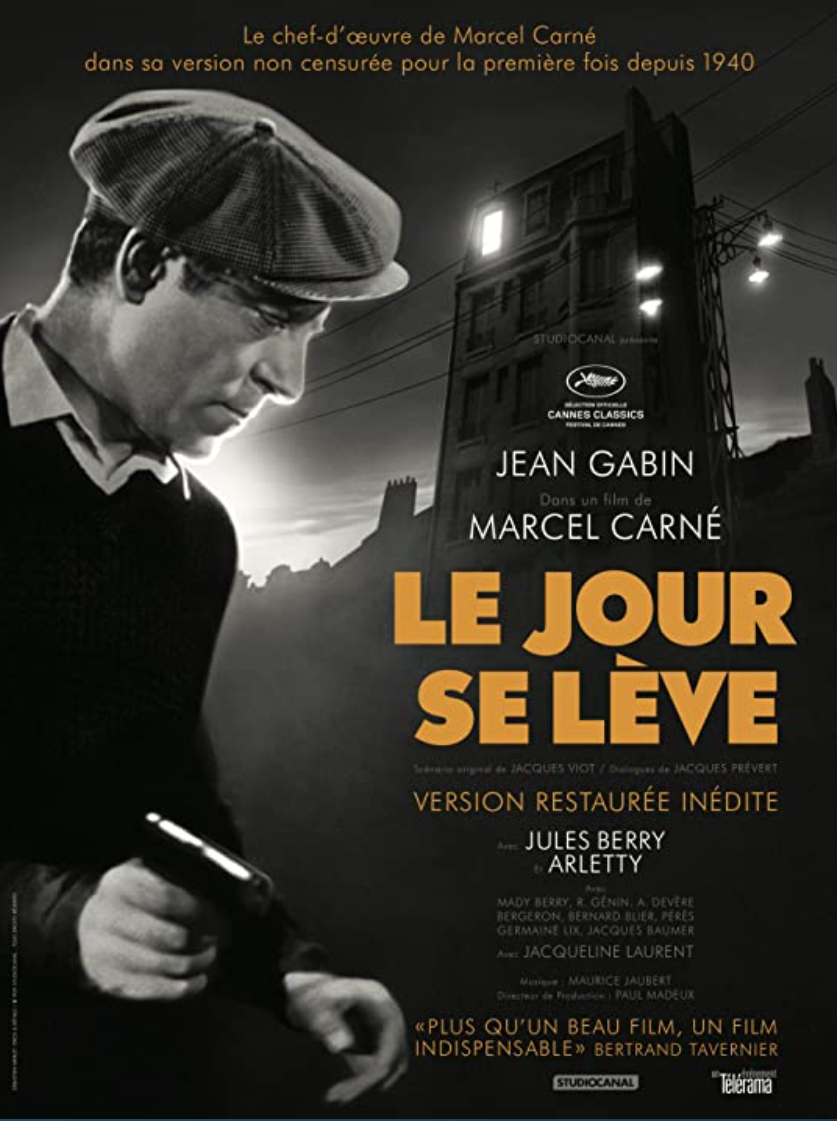
Jour Se Leve, Le (1939)

Jour Se Leve, Le (1939)

“People in love are said to be more alive than others.”

Synopsis:
A man (Jean Gabin) who has just murdered a cruel dog trainer (Jules Berry) remains barricaded in his apartment, reflecting back on what led him to this act — beginning with meeting a sweet orphan (Jacqueline Laurent) and then connecting with Berry’s world-weary stage assistant (Arletty).

Genres, Themes, Actors, and Directors:

  • Flashback Films
  • French Films
  • Jealousy
  • Jean Gabin Films
  • Love Triangle

Response to Peary’s Review:
Peary writes that this “classic fatalistic melodrama, masterly directed by Marcel Carné [and] with dialogue by Jacques Prevert” shows us — like “many American directors of forties noir films would do” — “how a decent, average guy can become a murderer under the right set of circumstances.”

He notes that this picture — which “would have been ideal for Fritz Lang” — is a “landmark of French ‘poetic’ realism” given that it’s “extremely intense, sensual…, and atmospheric (the sets are not just part of the background but create the mood.”

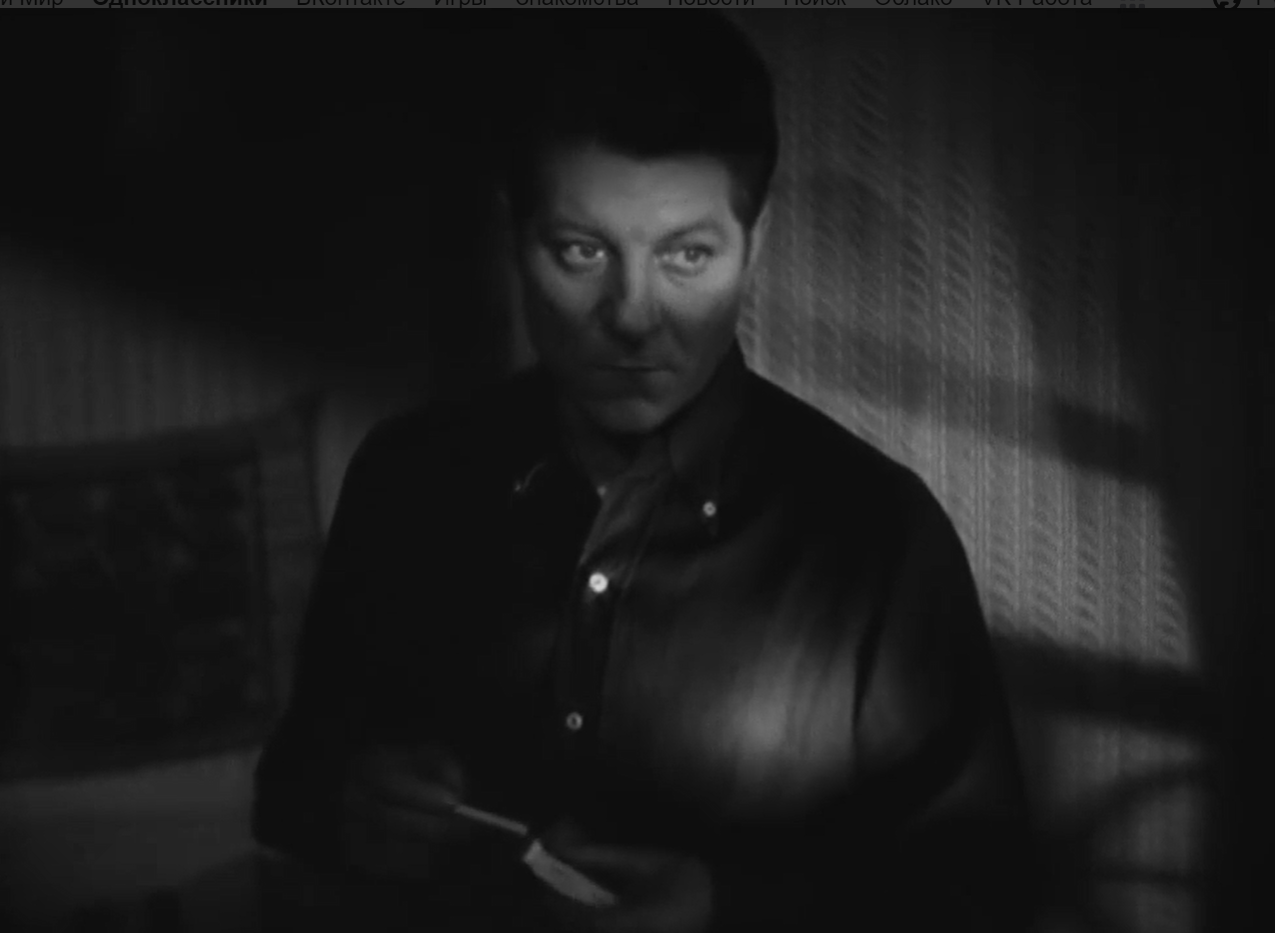
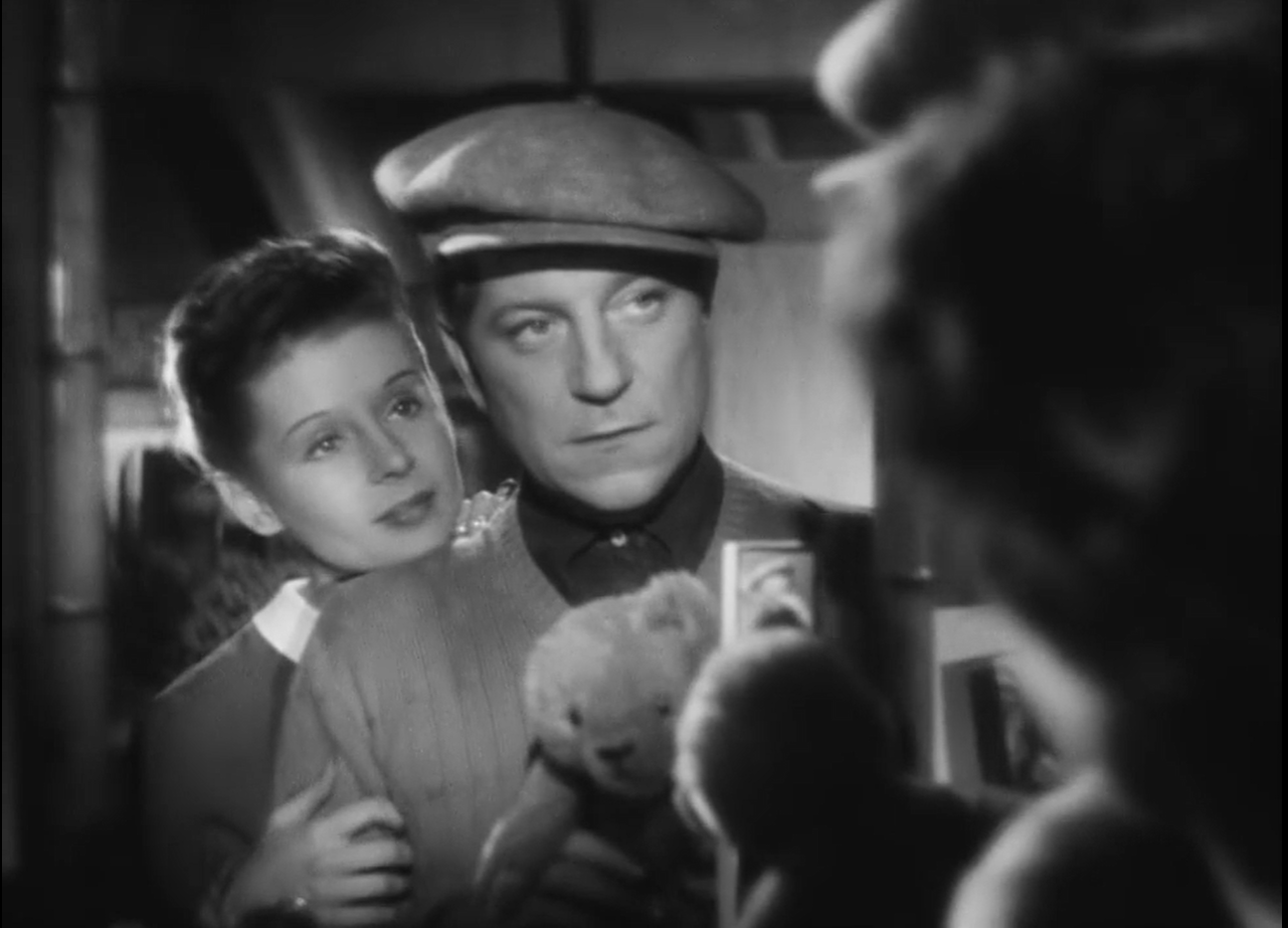
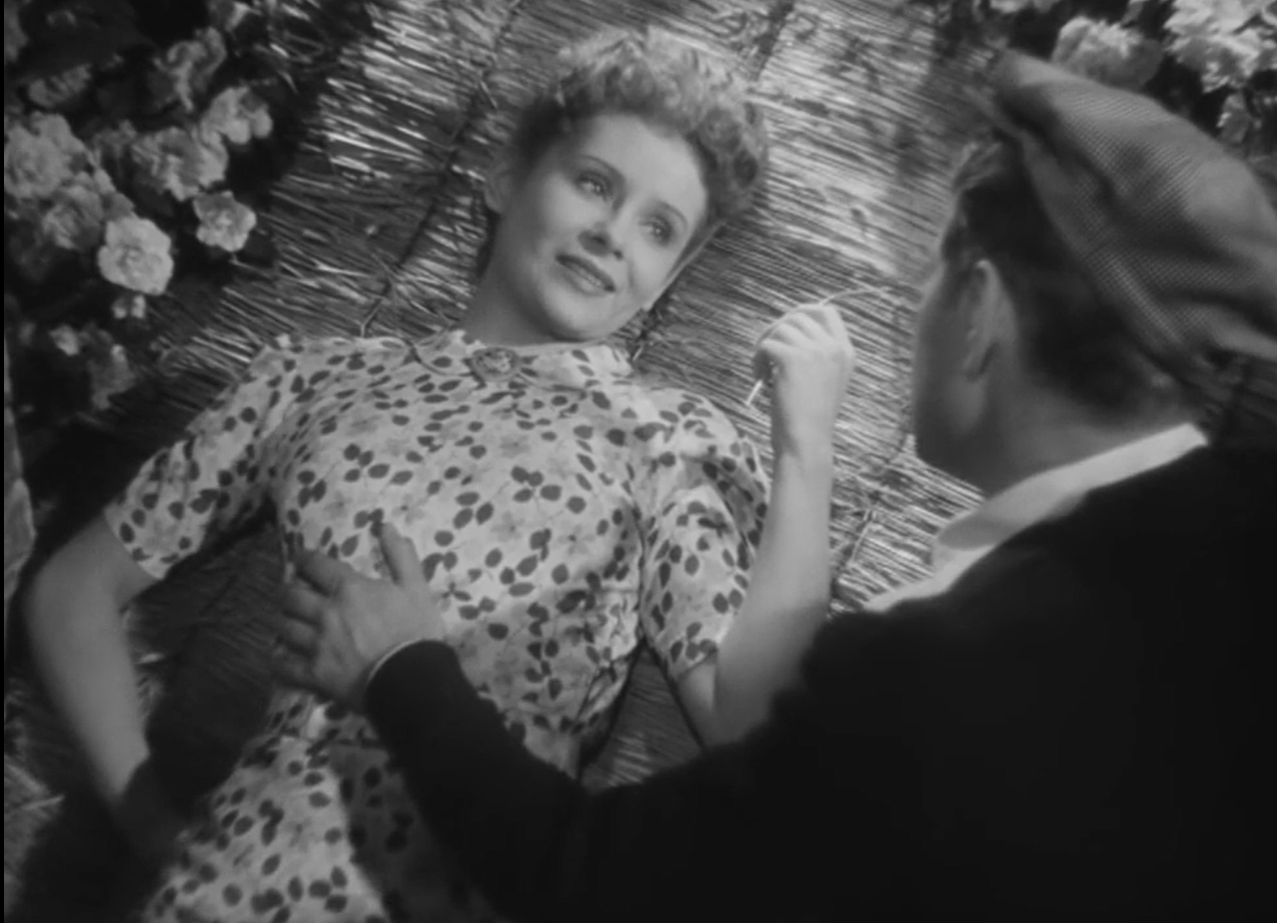
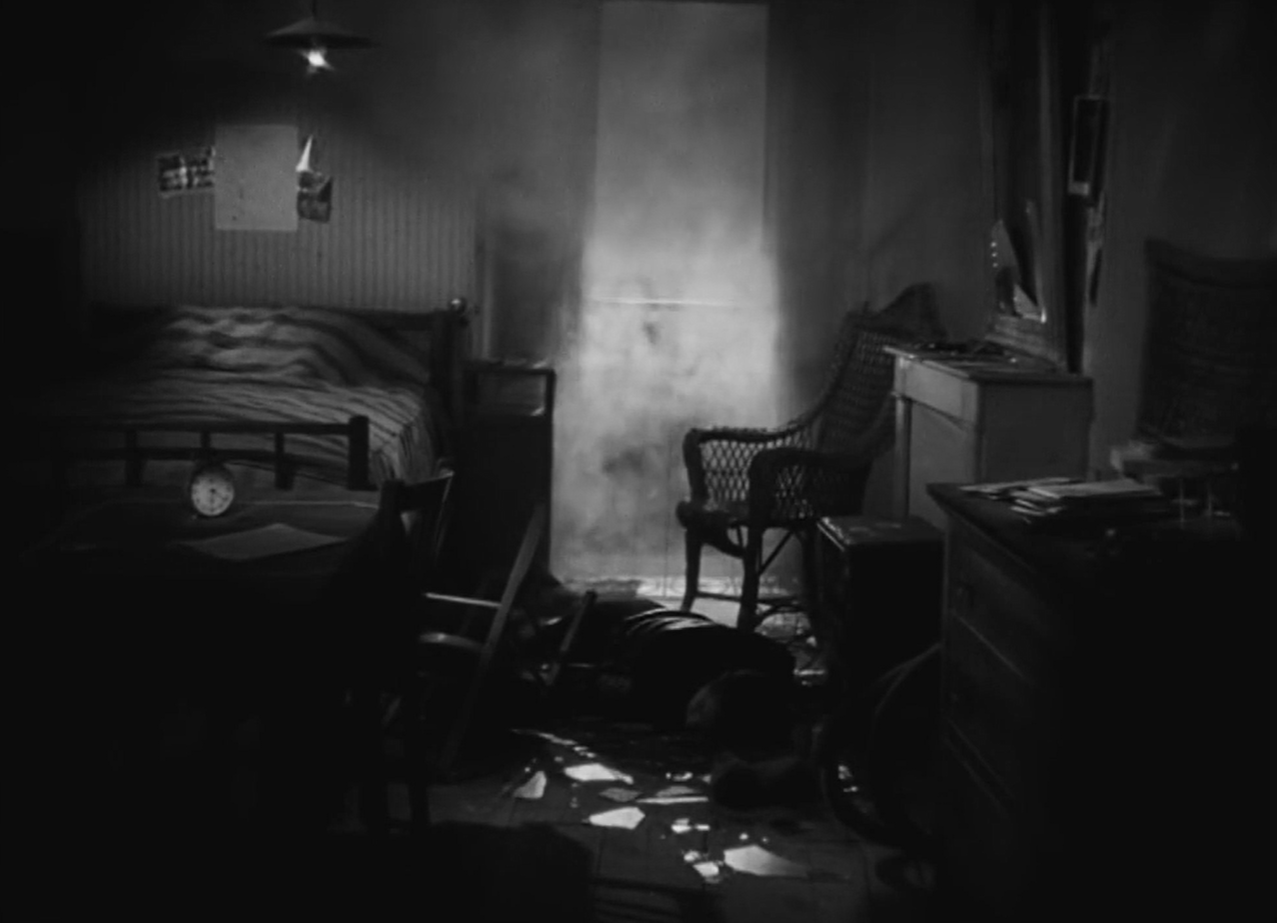
He also adds (though this is hard to believe) that he “can think of no other film in which so much import is given to costumes and props, including the gun, Gabin’s dangling cigarette, Laurent’s teddy bear, Gabin’s alarm clock, photos, postcards, hats, brooches, beds, mirrors, flowers, dresses, [and] sweaters”:

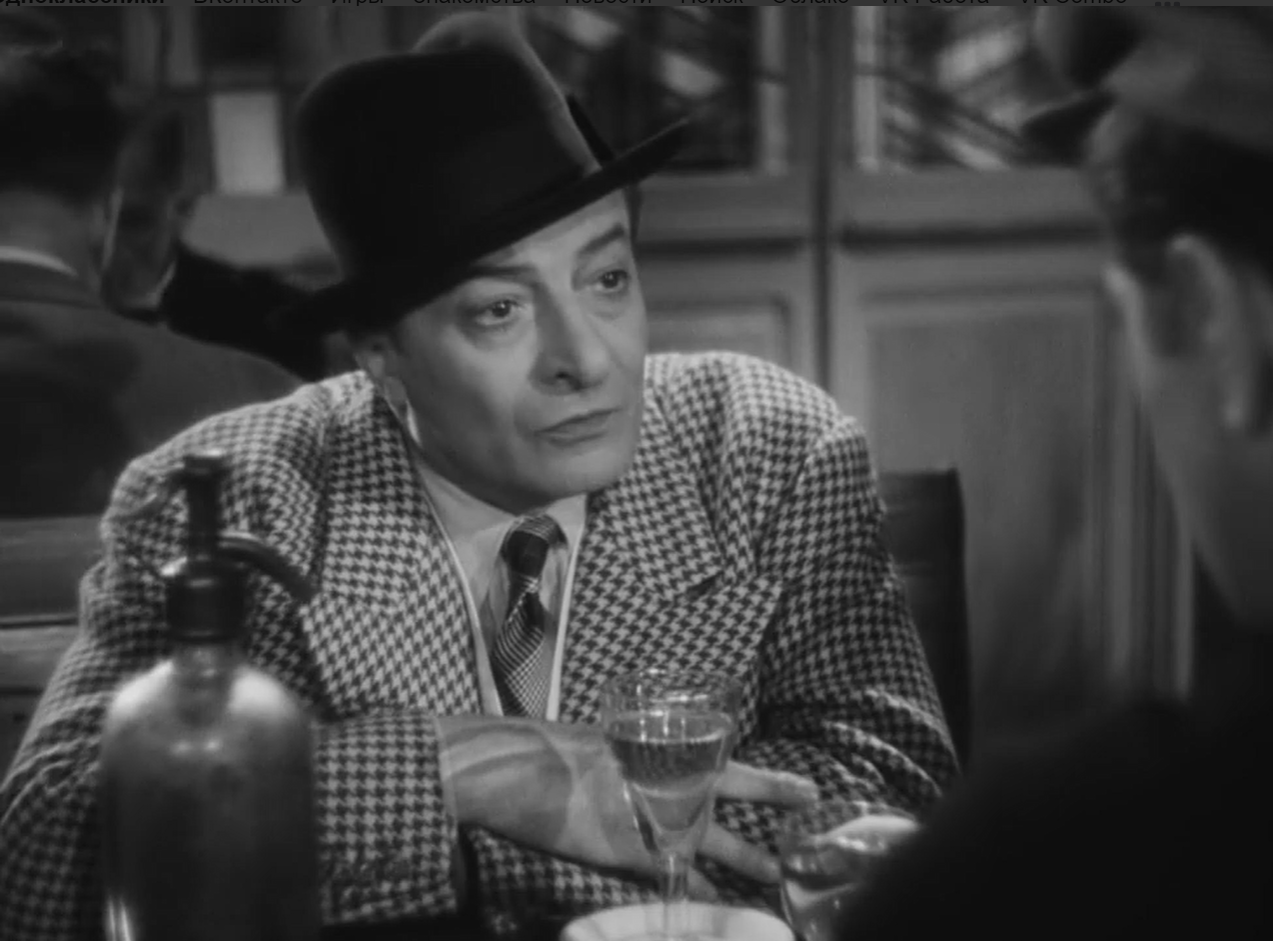
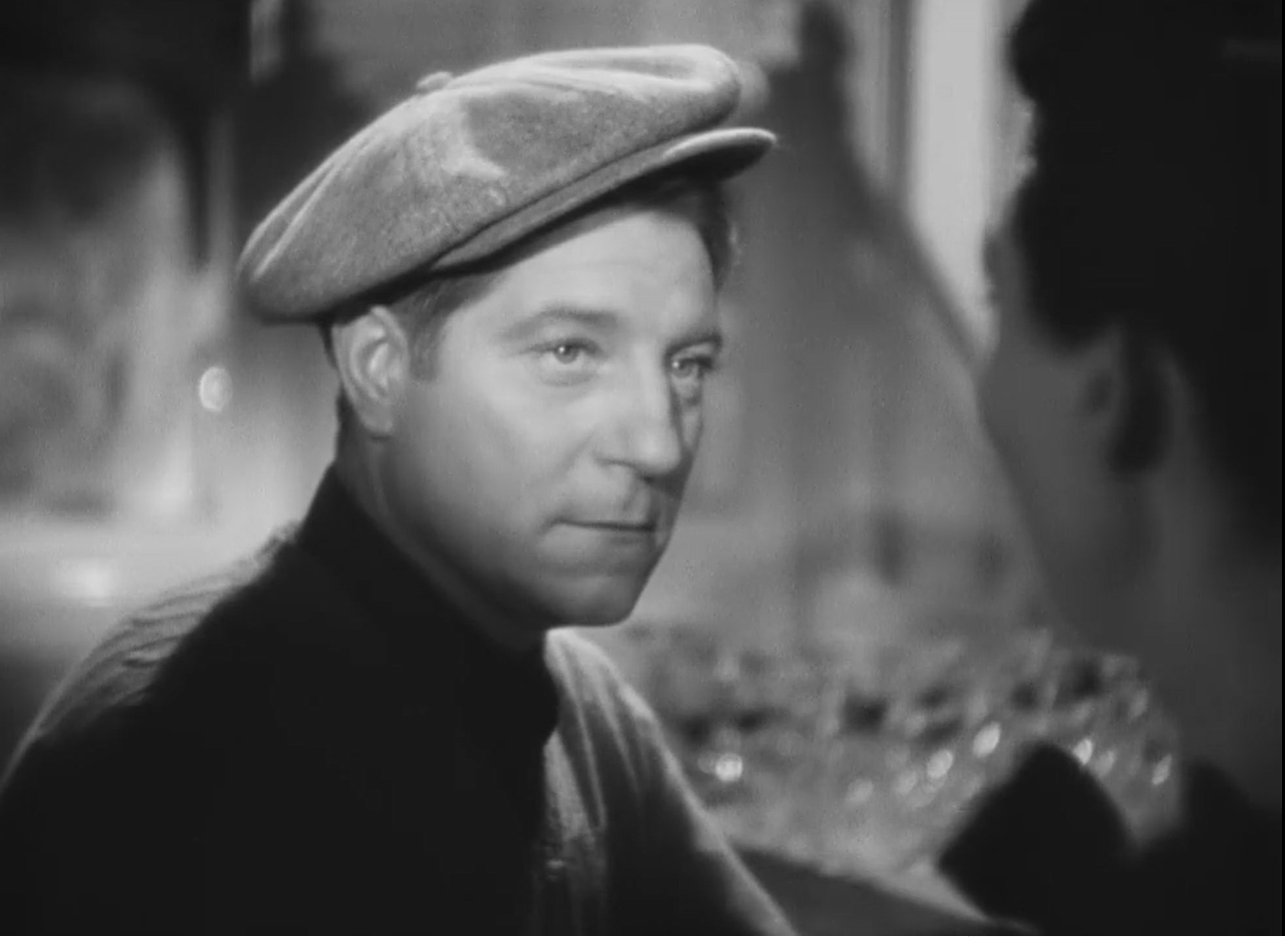
… and he points out that “characters almost always are drinking, smoking, or holding something.”

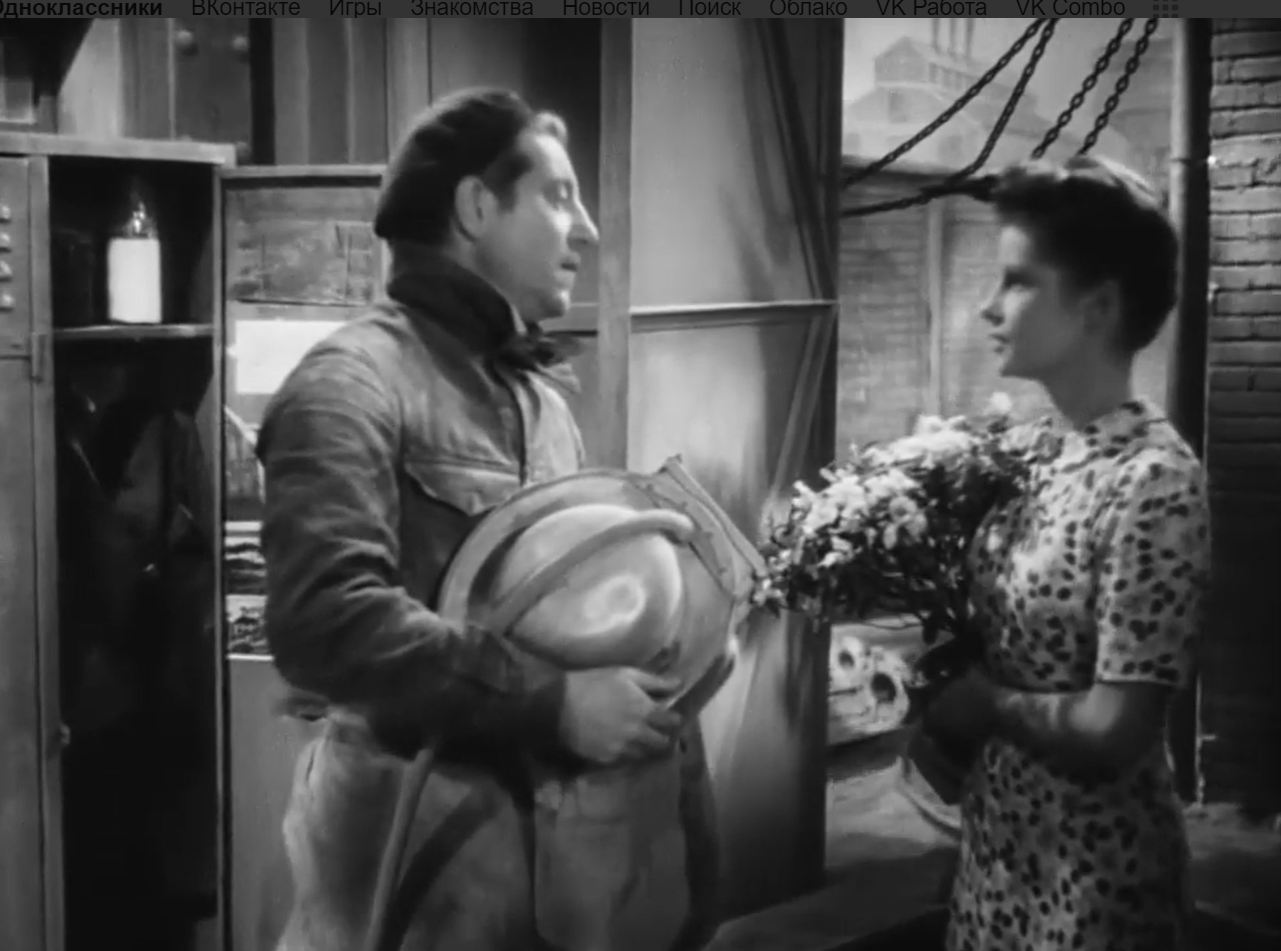
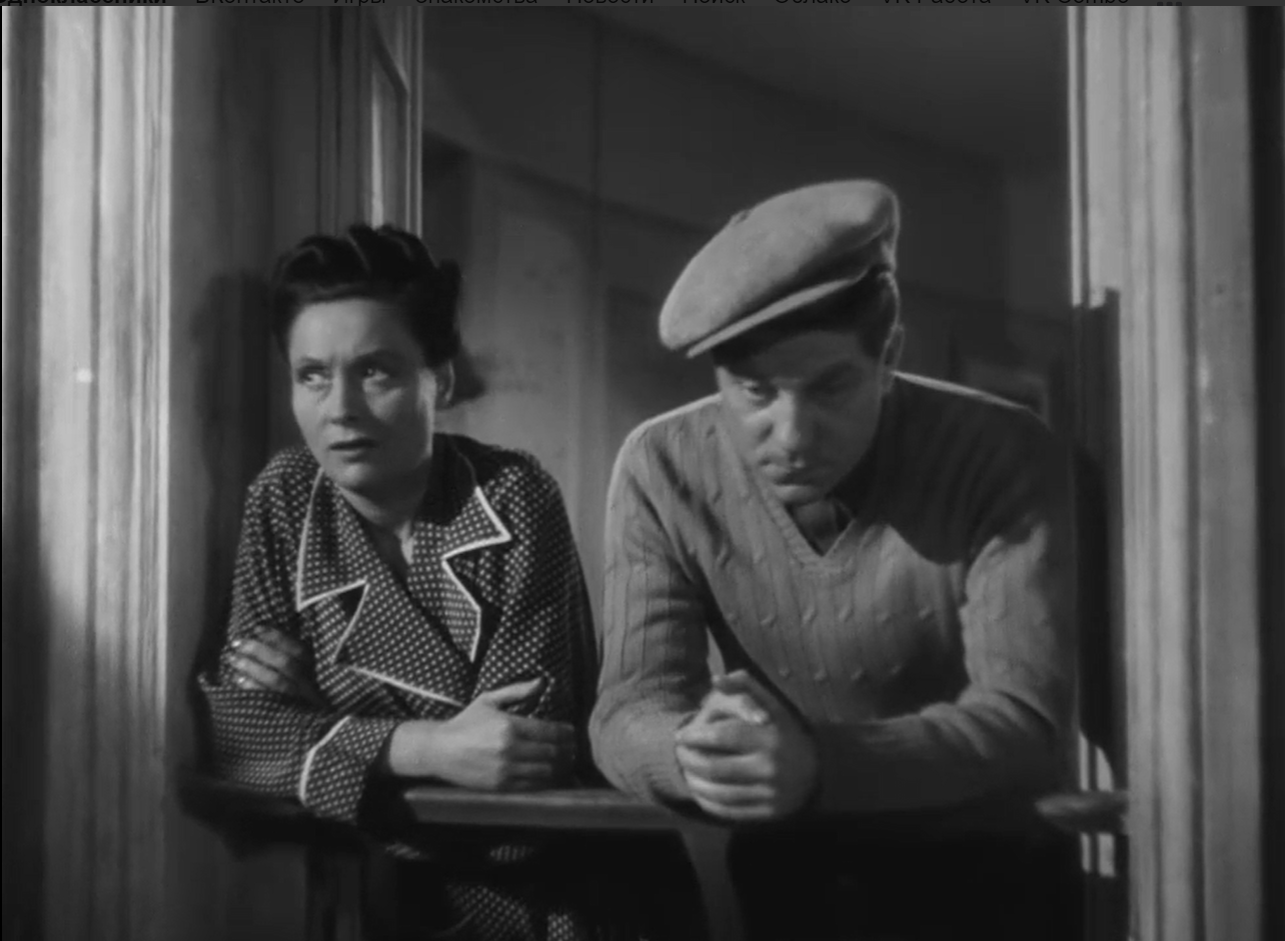
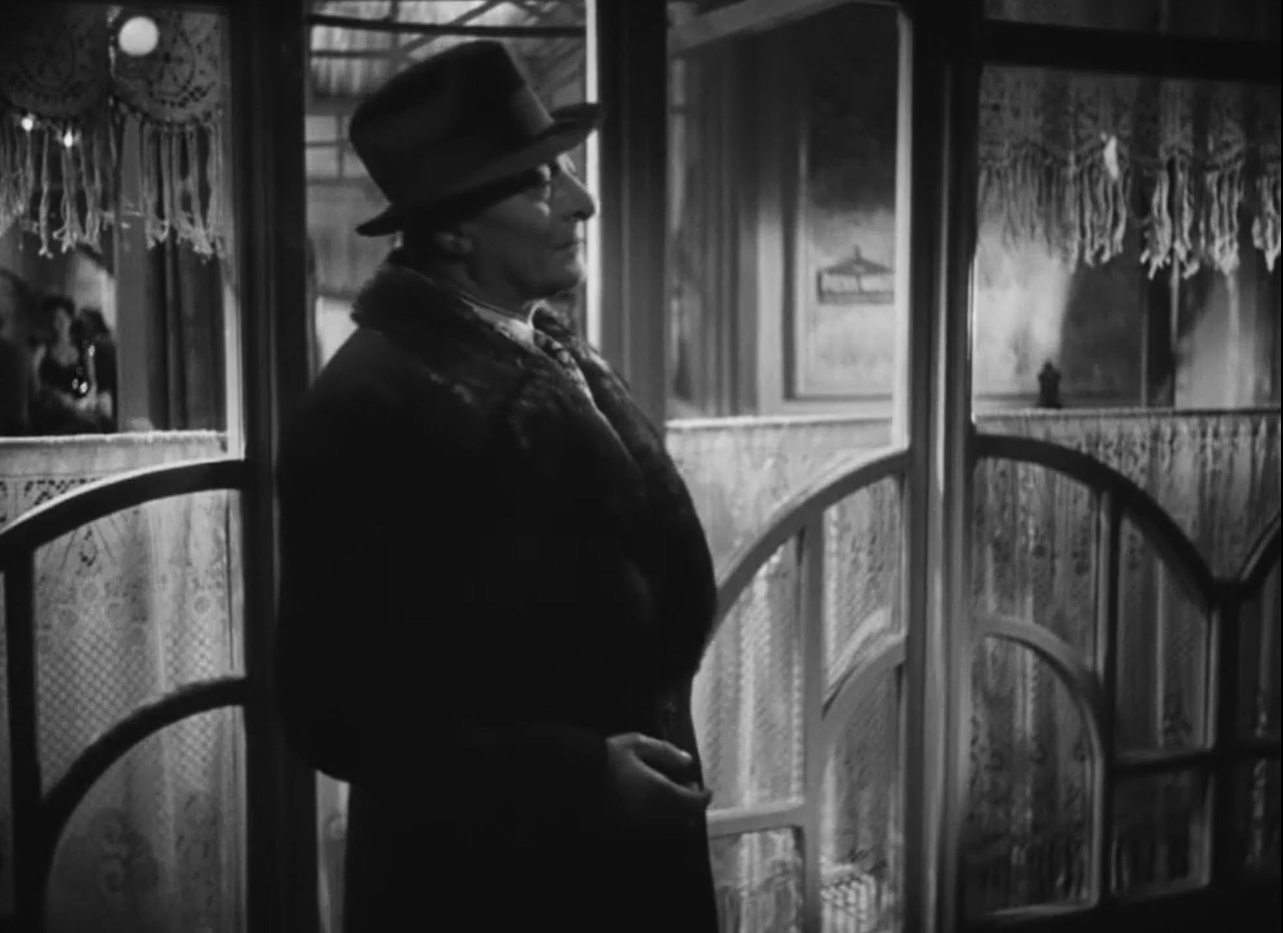
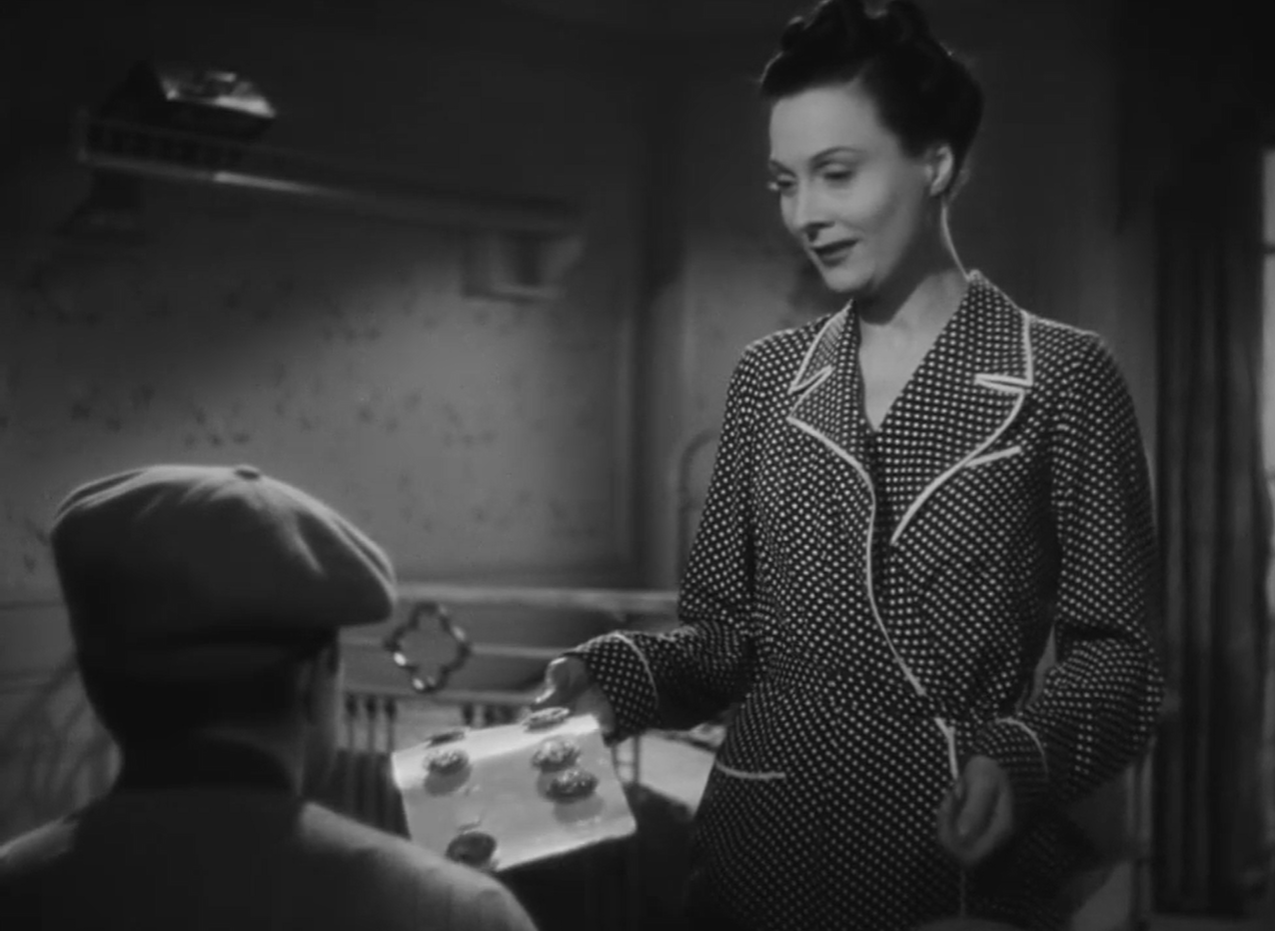
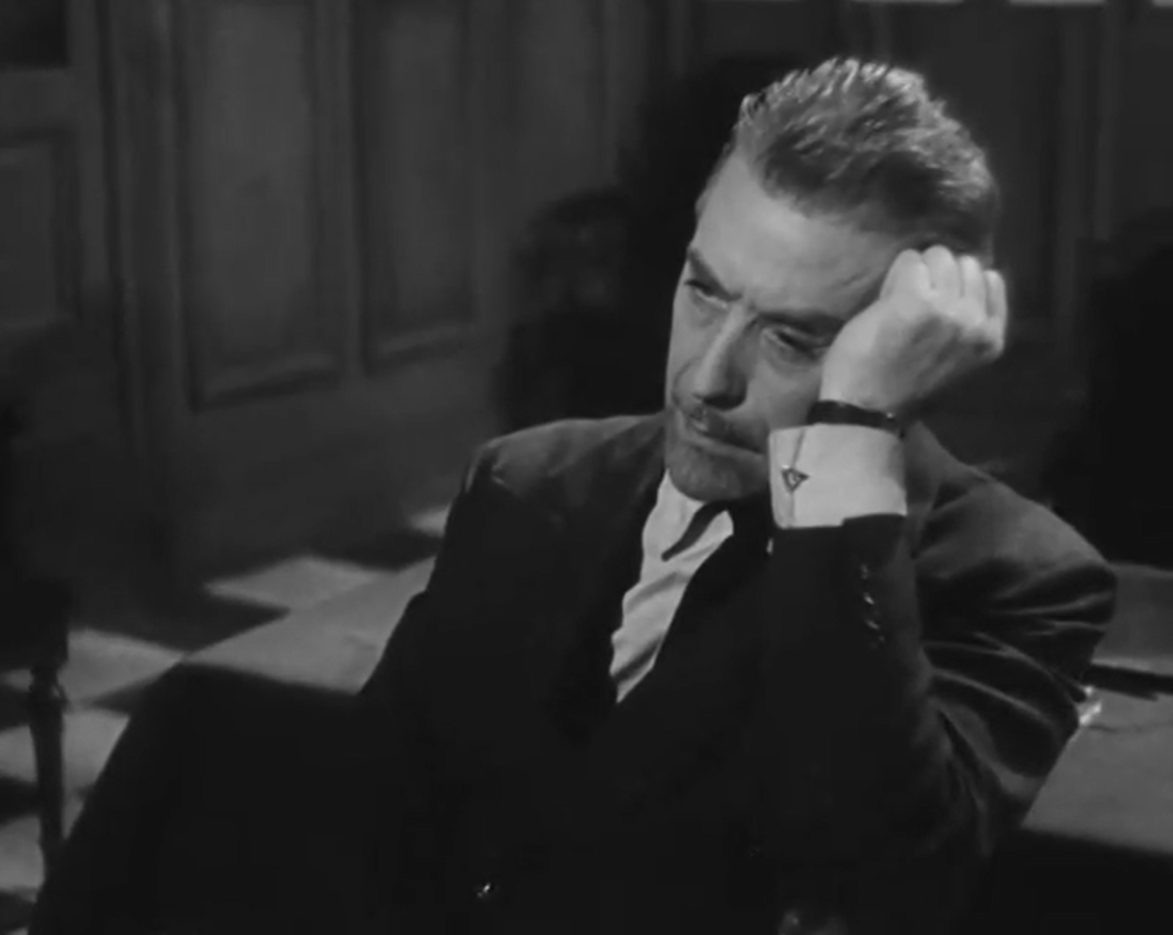
However, “most interesting” to Peary and many other critics is “the structure,” with “this four-character piece… broken down into several intimate two-character scenes”:


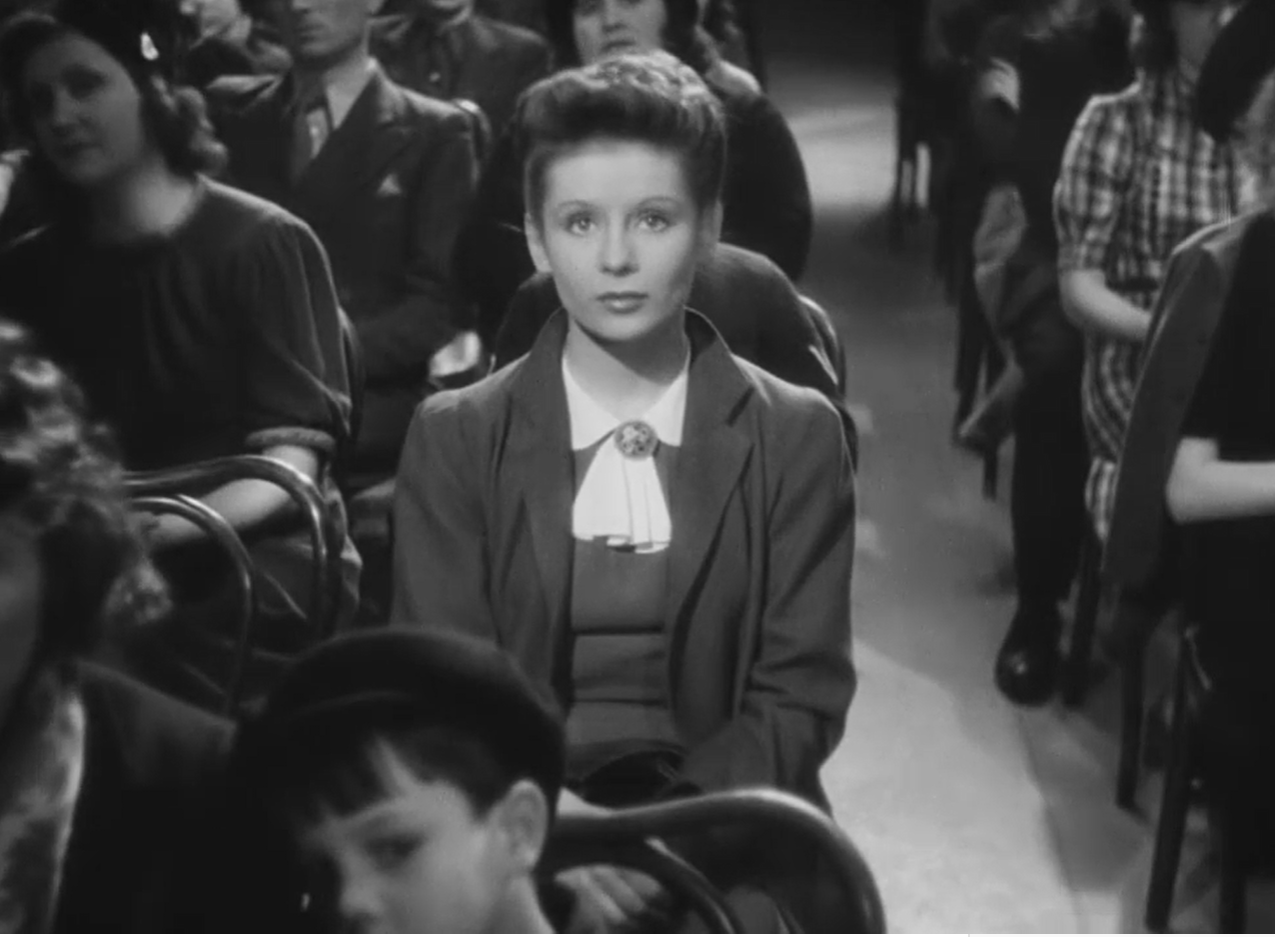
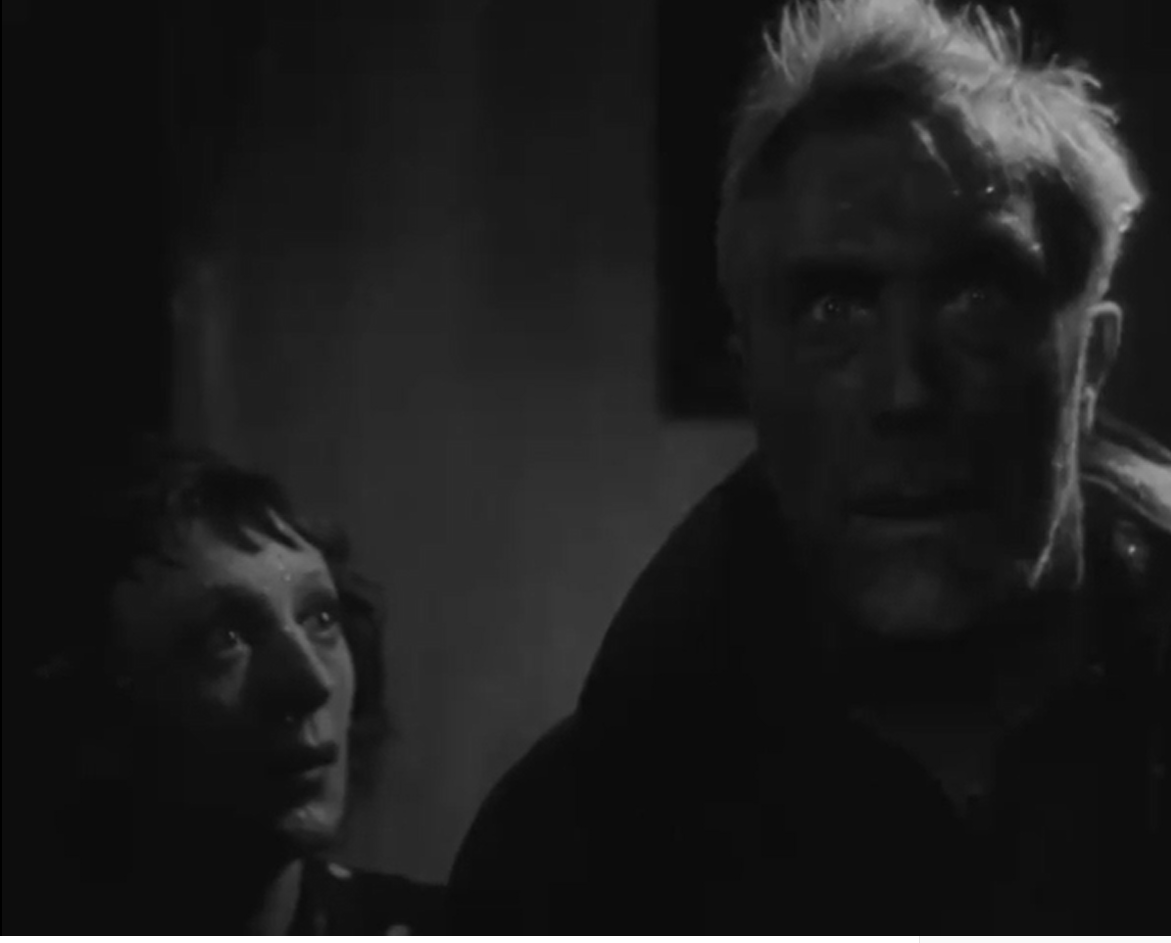
Significantly, however, “we never go behind closed doors to see what transpired between the most important combination [of characters], Berry and Laurent” — that is, the “relationship that drove Gabin to his destruction.” Indeed, the primary problem I have with the storyline is that Laurent’s character is somewhat of a boring cipher; we don’t understand why she turns down Gabin’s reasonable early offer of marriage (given that she seems to be in love with him), or her fascination with creepy Berry — unless we’re meant to believe that her status as an orphan has scarred her development.

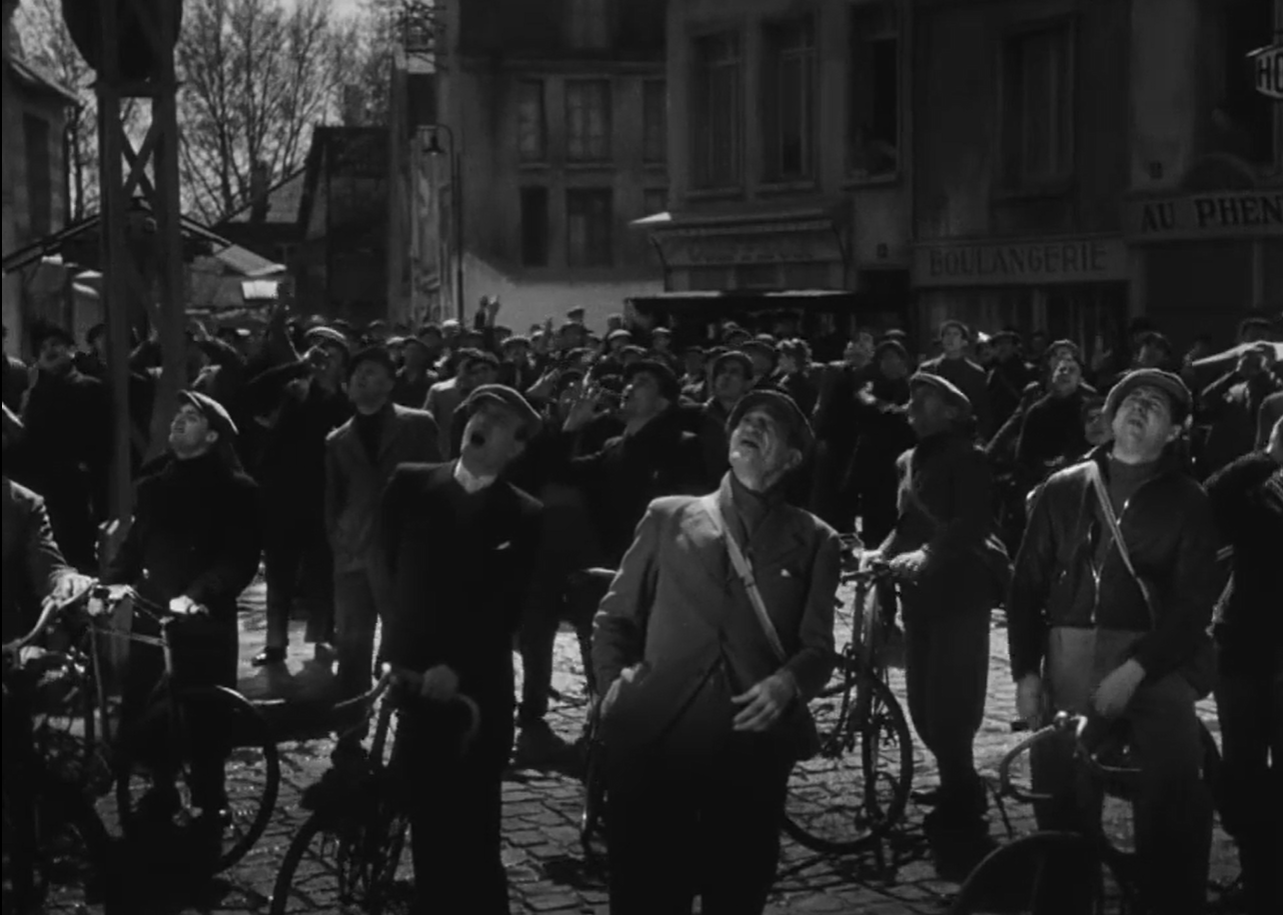
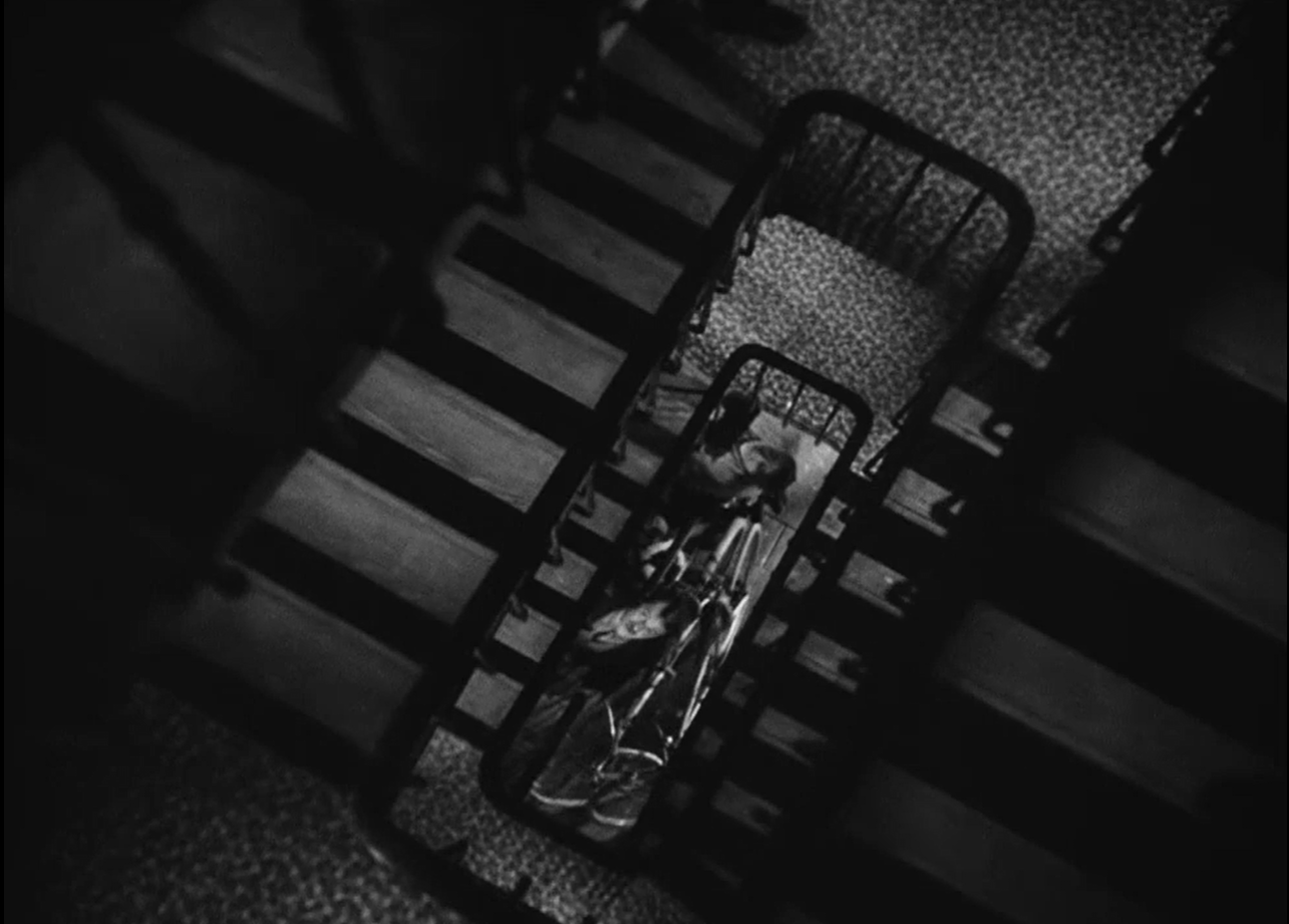
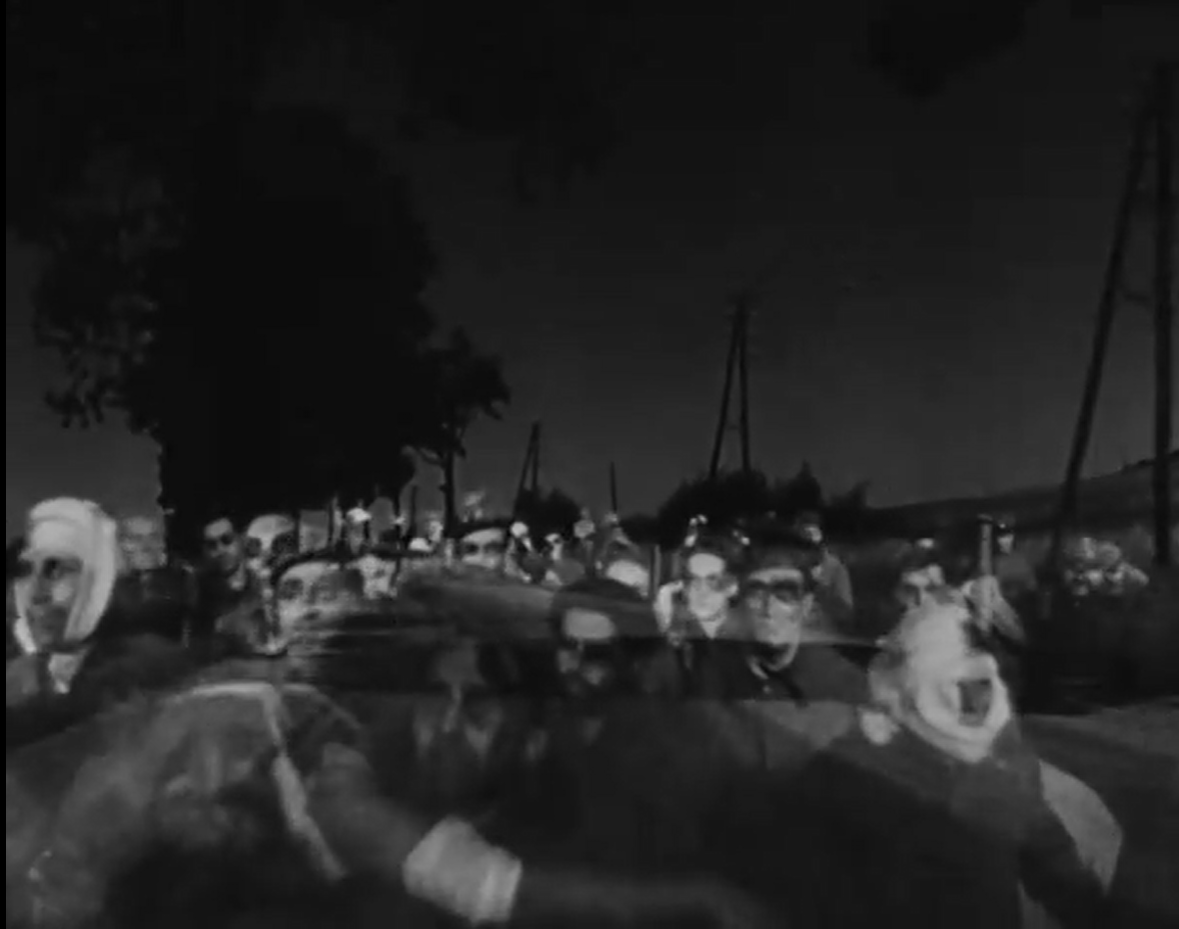
This film is perhaps best known for kicking off more regular cinematic use of flashbacks. To that end, since we know about the murder from the start, our interest revolves around learning how Gabin got into (and will ultimately emerge from) his increasingly tense situation — which involves being shot at repeatedly inside his apartment (real guns and bullets were used), barricading himself using a large armoire, and shouting down at hordes of spectators who have come to watch the stand-off (and, for what it’s worth, profess to be on his side):

We do know that Gabin’s ending will be dark; at least we are prepared for that.

Notable Performances, Qualities, and Moments:

  • Jean Gabin as Francois
  • Jules Berry as Valentin
  • Arletty as Clara
  • Atmospheric cinematography and production design

Must See?
Yes, for its historical relevance as a pioneering French noir.

Categories

  • Genuine Classic
  • Historically Relevant
  • Important Director

(Listed in 1001 Movies You Must See Before You Die)

Links:

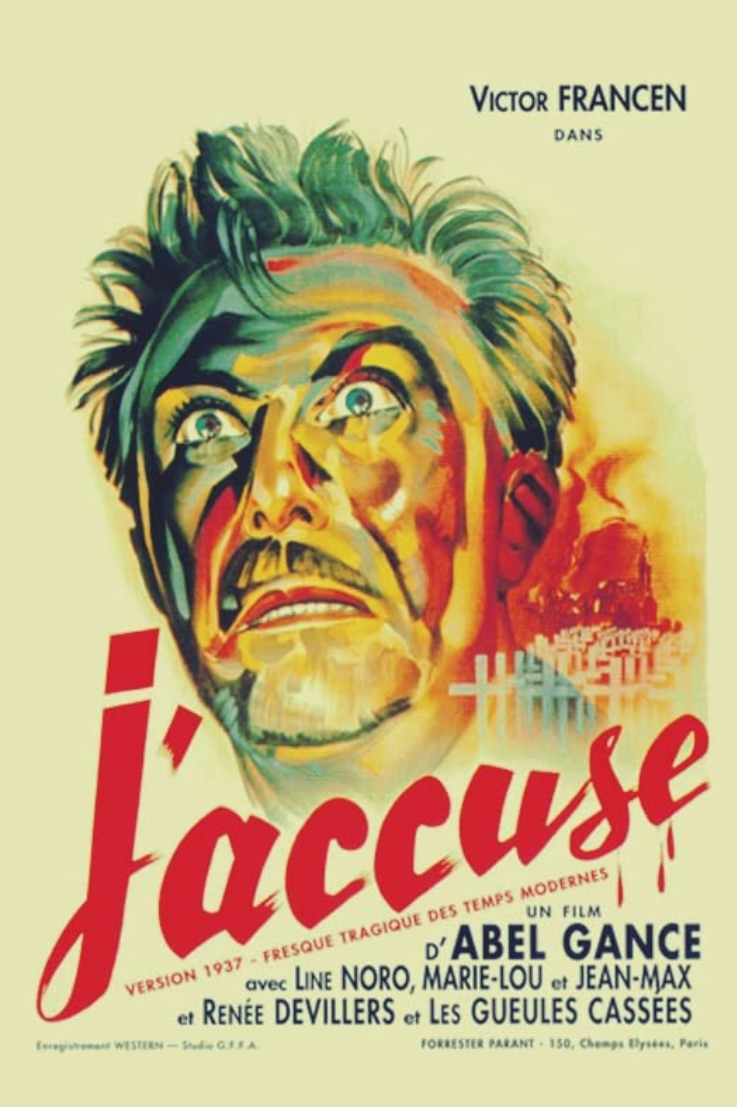
J’Accuse (1938)

J’Accuse (1938)

“I accuse yesterday’s war of creating today’s Europe. And I accuse tomorrow’s war of preparing its destruction.”

Synopsis:
A traumatized World War I veteran (Victor Francen) watches over the widow (Line Noro) and daughter (Renee Devillers) of his lost compatriot (Marcel Delaitre), vowing to create a machine that will prevent all future wars — but when his plans are foiled, he takes even more extreme measures to remind the world about the horrors of fighting.

Genres, Themes, Actors, and Directors:

  • Fantasy
  • French Films
  • Veterans
  • World War I

Review:
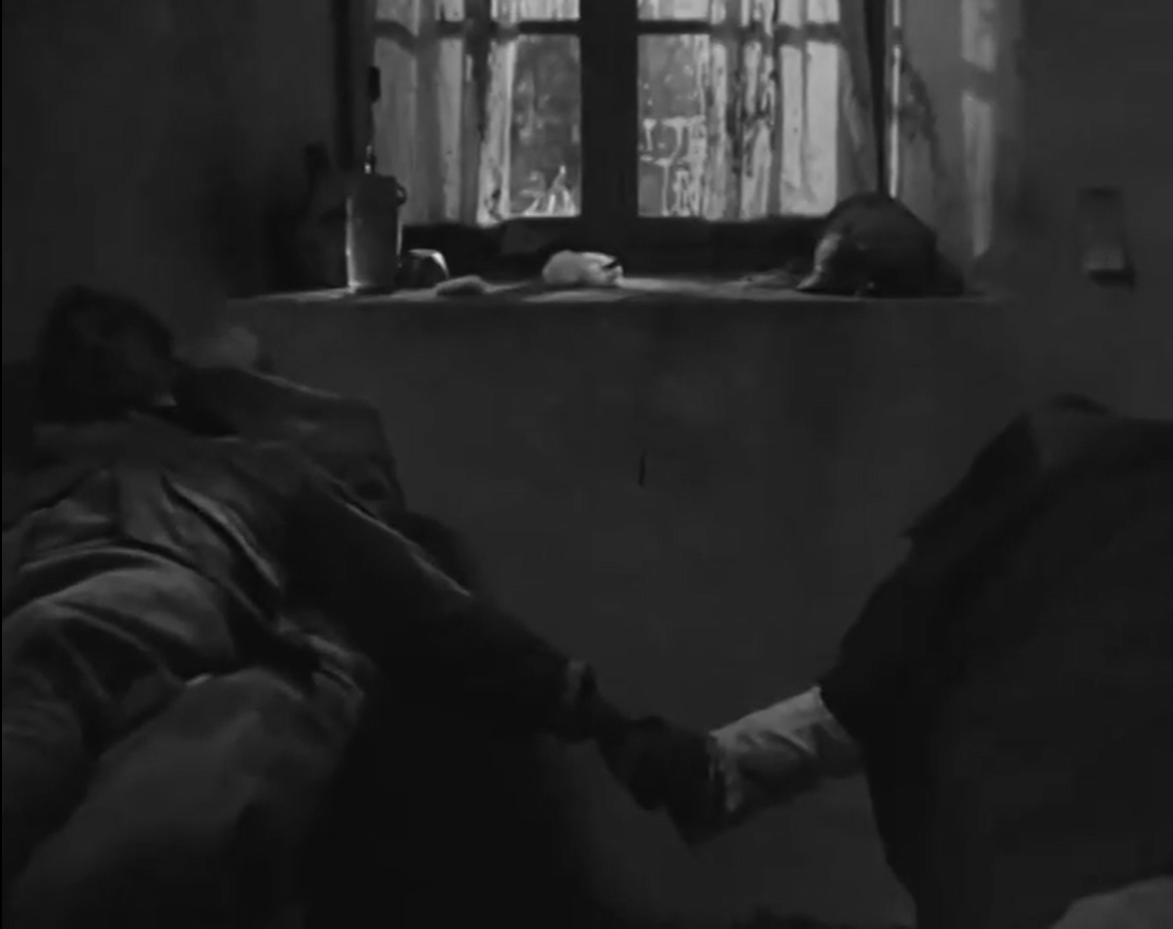
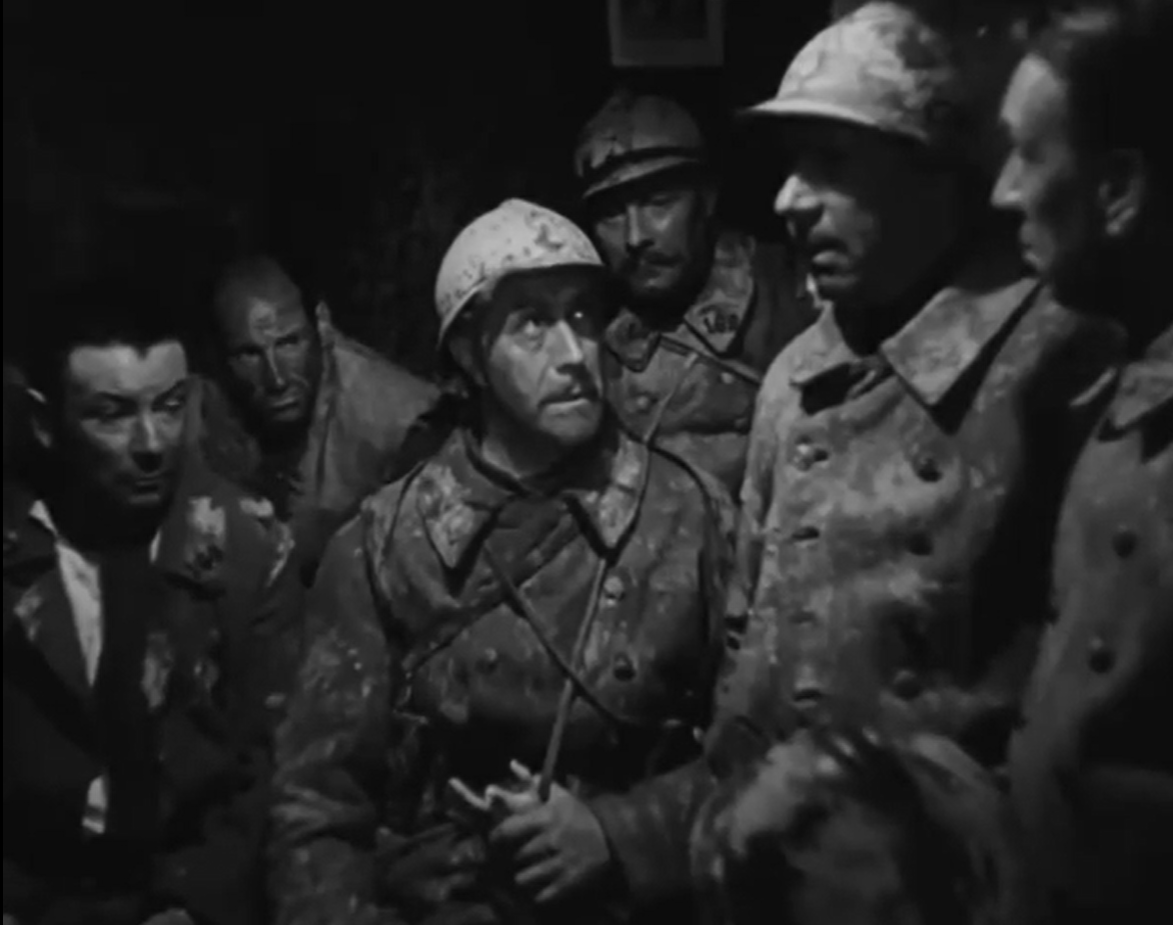
Abel Gance remade and expanded upon his 1919 silent film of the same name, this time spending much less time on the initial love triangle linking Francen’s character to cuckolded Delaitre (whose wife he had an affair with years earlier), though we do still see a powerful image of the two men (now friends; Delaitre has forgiven Francen) holding hands in solidarity while lying in recovery:

The primary focus of the first half-hour of the film is on how war is so horrible it can’t possibly happen again — right? (“There will never be another war, I’m telling you.”)

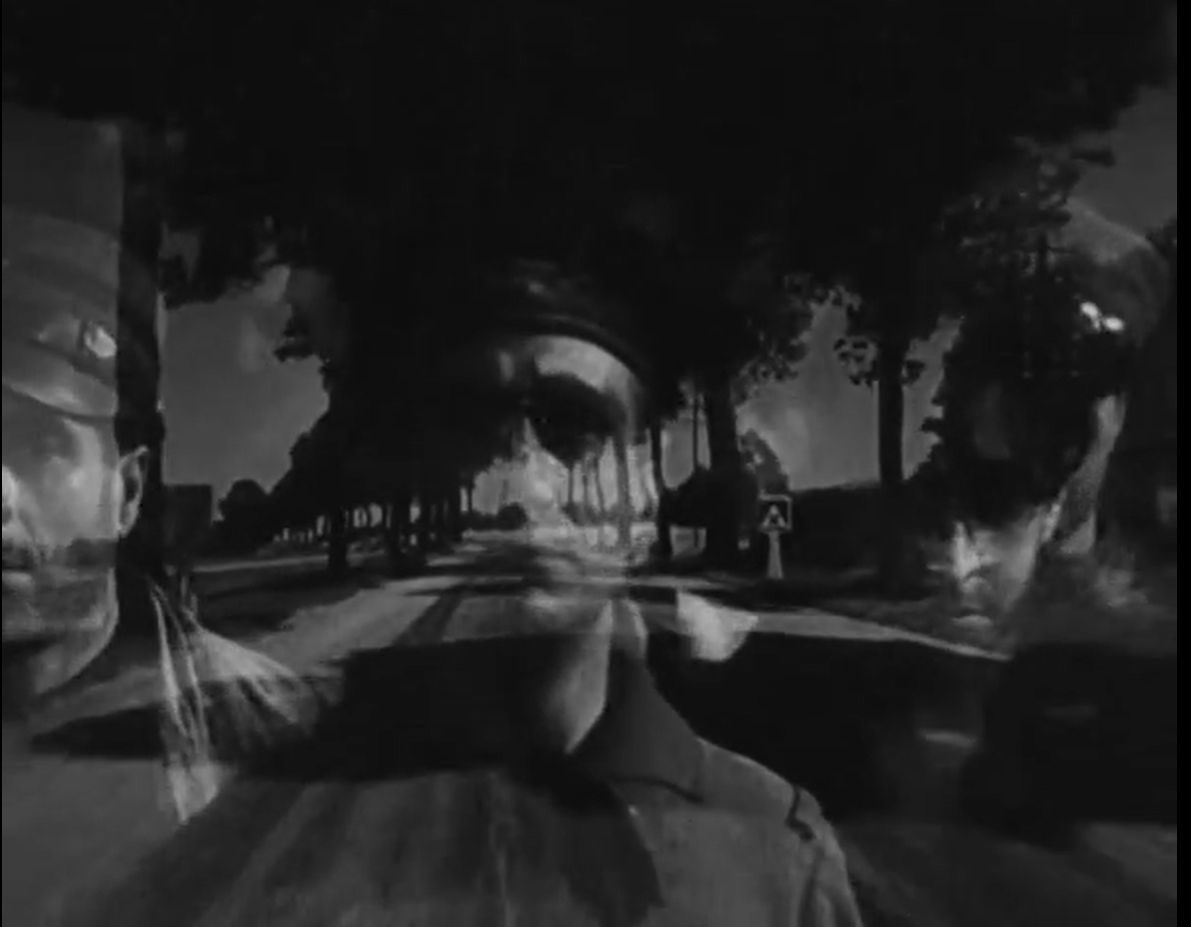
Because Delaitre is unable to keep his promise, he descends even further into his PTSD-induced madness, leading to the film’s evocative final act, when once again — as at the end of the 1919 version — the dead are risen from their graves.

It’s a powerful finale (“Immediate disarmament has been unanimously declared!”), and one only wishes it approximated the truth.

Notable Performances, Qualities, and Moments:

  • Victor Francen as Jean Diaz
  • Highly atmospheric cinematography
  • Powerful imagery and special effects in the final sequences

Must See?
No, but it’s certainly worth a look. Listed as a film with Historical Importance in the back of Peary’s book.

Links:

Baker’s Wife, The (1938)

Baker’s Wife, The (1938)

“How could I suspect something I can’t believe even now?”

Synopsis:
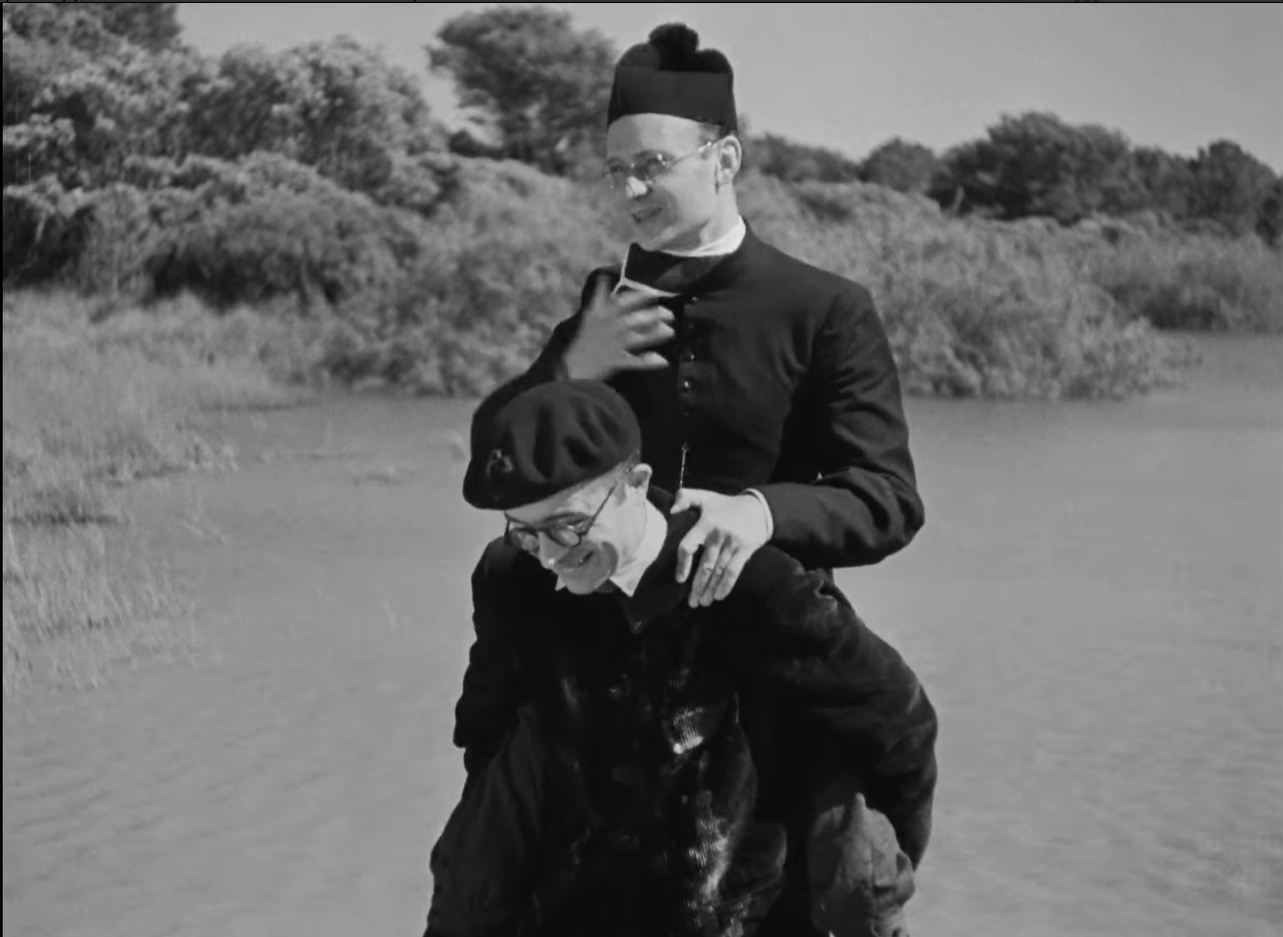
When the beautiful young wife (Ginette Leclerc) of a town’s new baker (Raimu) runs away with a handsome shepherd (Charles Moulin), Raimu is too depressed to bake bread. In response, a local marquis (Fernand Charpin) works together with a priest (Robert Vattier) and a schoolteacher (Robert Bassac) to plot to find Leclerc and bring her back, thus restoring Raimu’s will to bake.

Genres, Themes, Actors, and Directors:

  • Cuckolds
  • French Films
  • Infidelity
  • Village Life

Response to Peary’s Review:
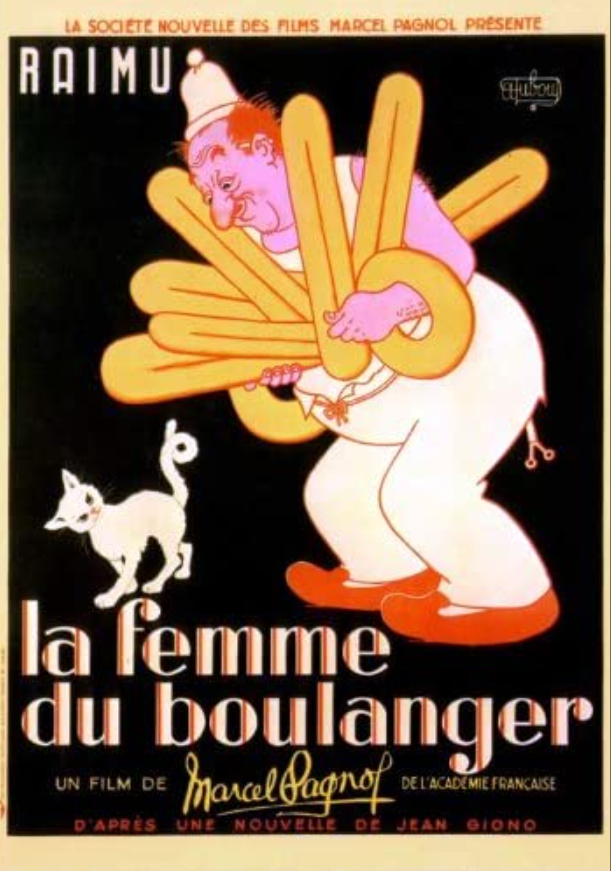
As Peary writes in his short review, “Marcel Pagnol directed and wrote this wonderful adaptation of an episode of Jean Giono’s novel Jean le Blue,” resulting in a film that “has humor, warmth, sentimentality, provincial flavor, and the special lovable characters one expects from Pagnol.”

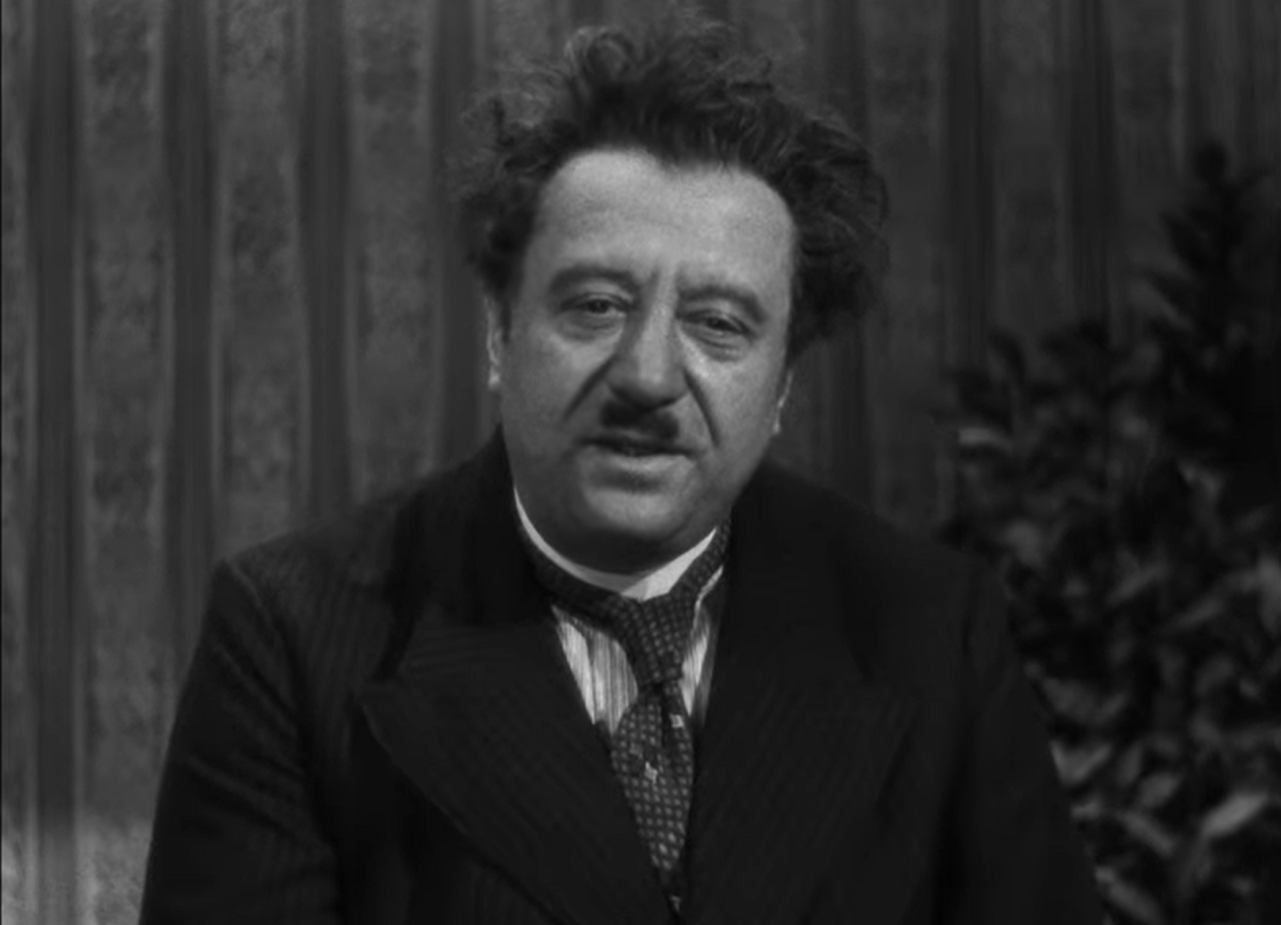
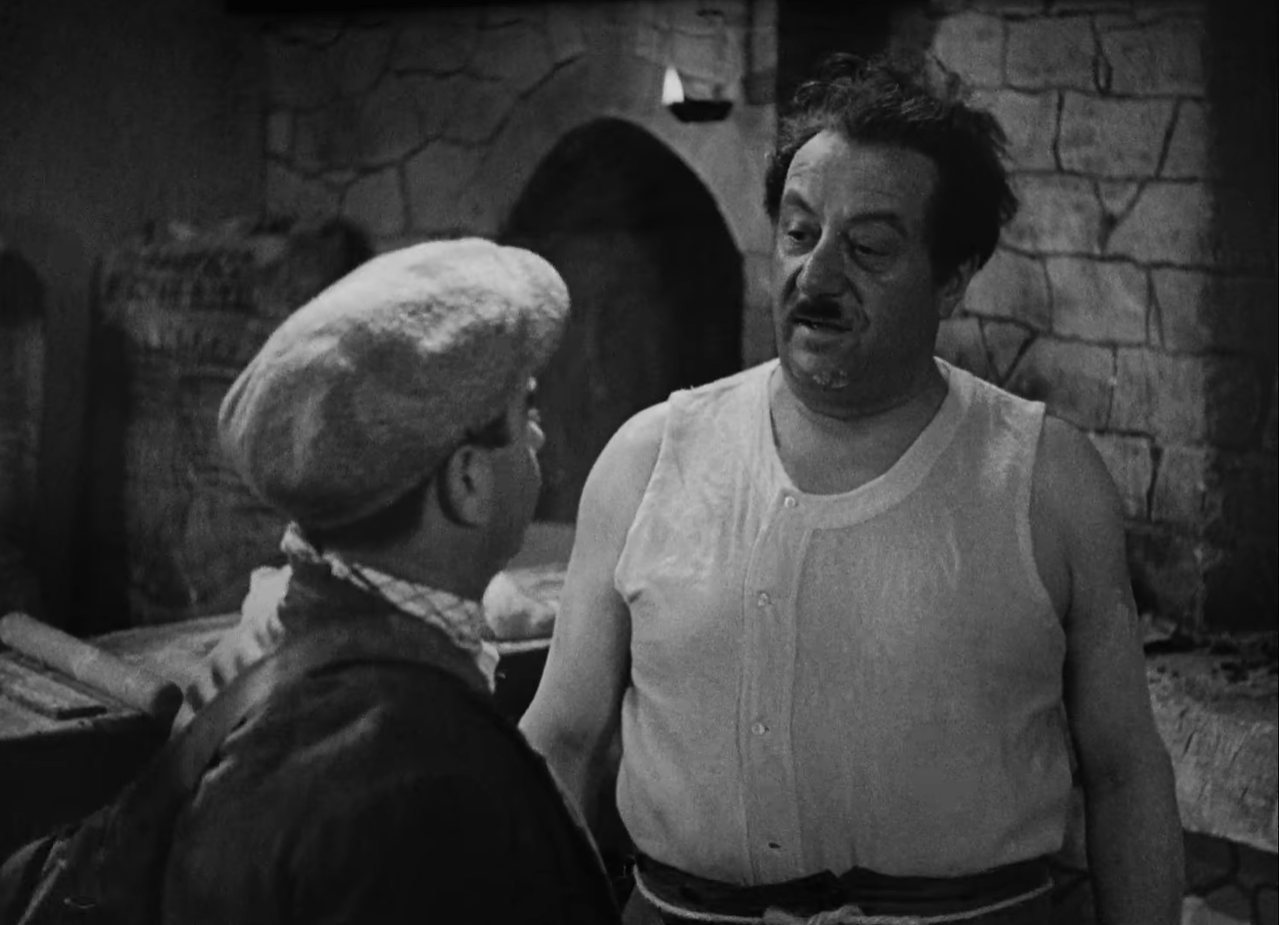
He notes that “the great Raimu” — star of his earlier trilogy Marius (1931), Fanny (1932), and Cesar (1936) — “creates such a kind, moral, understanding character”:

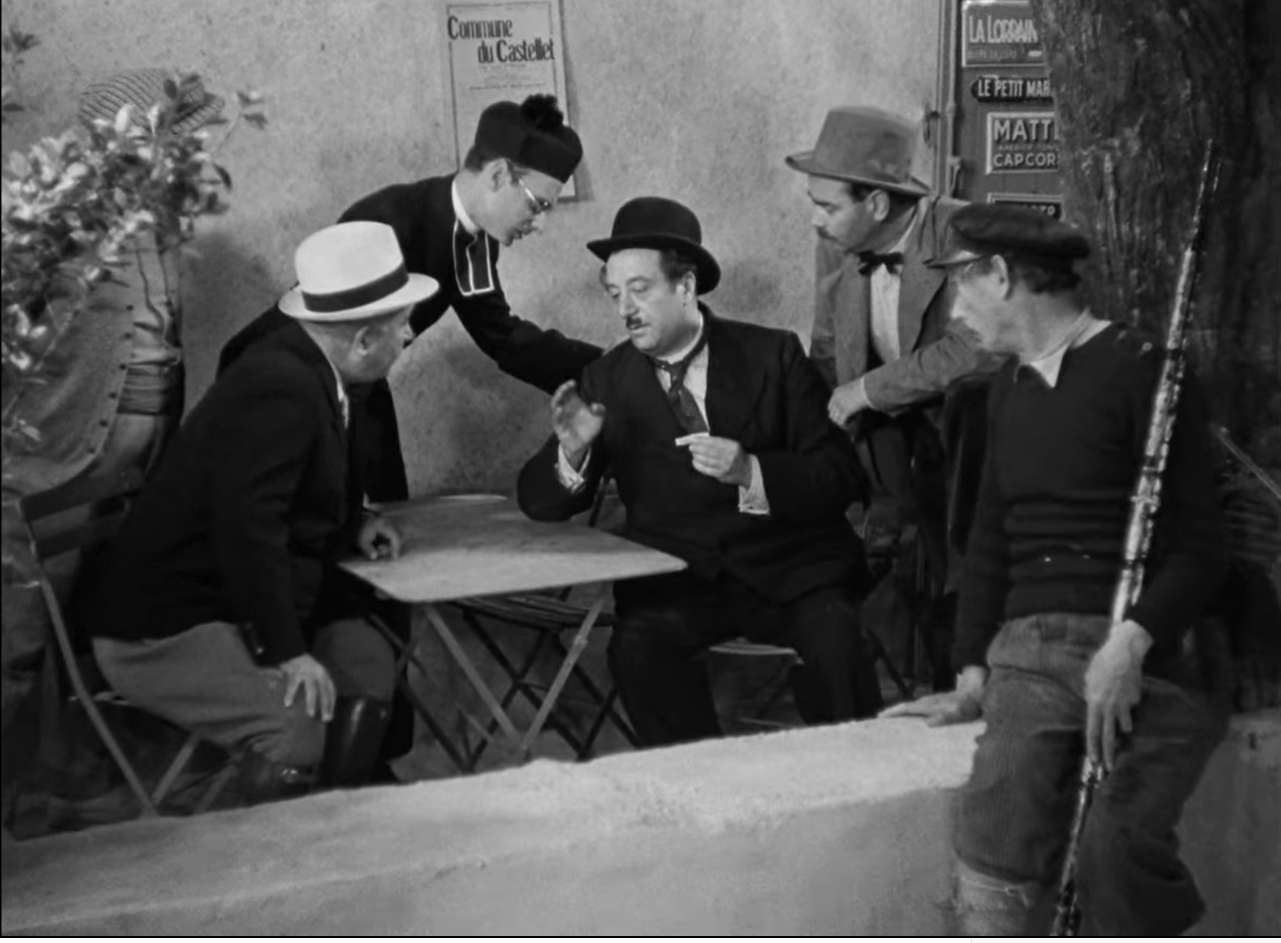
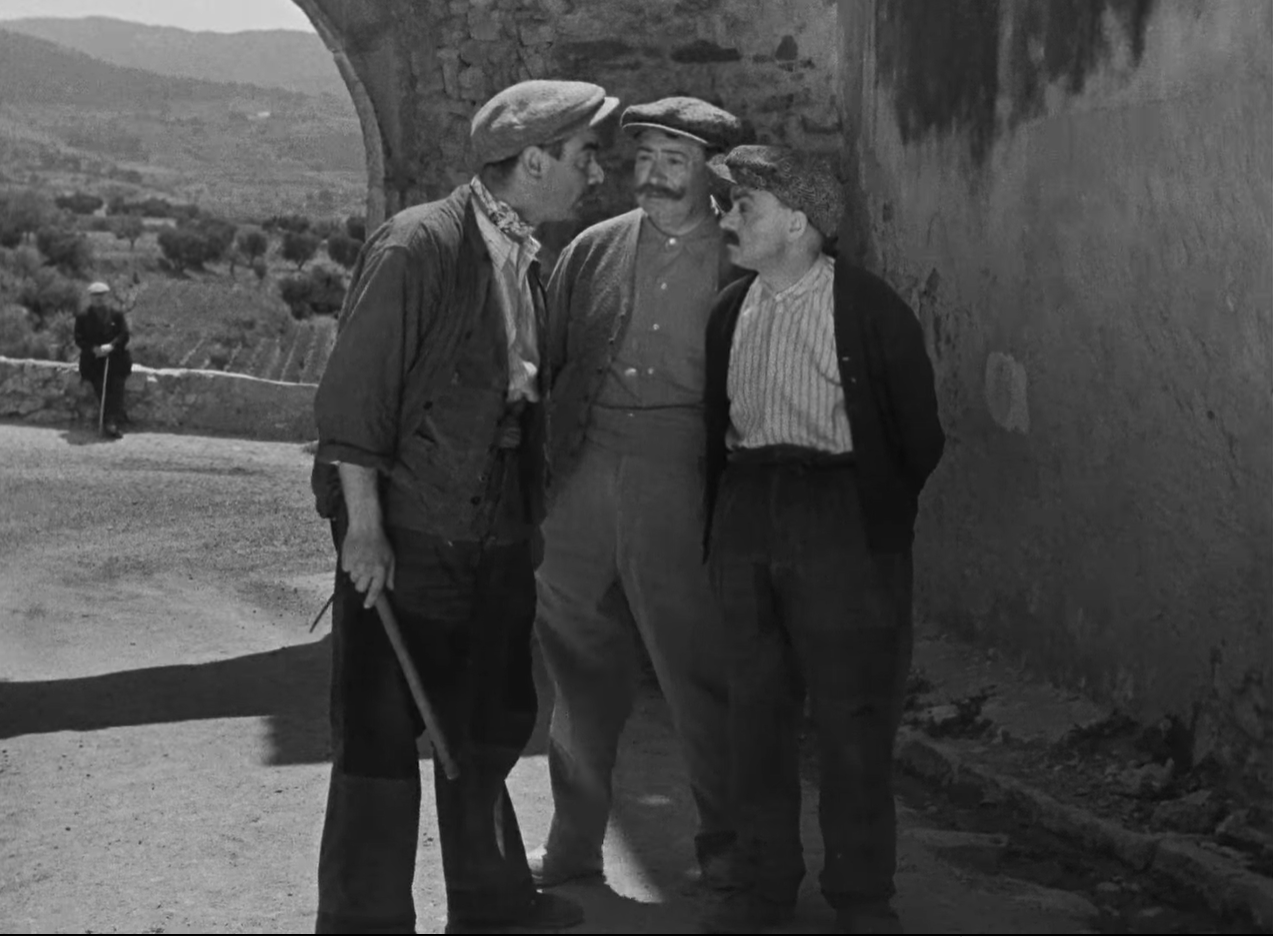
… that the ending (“one of the many splendid moments”) rings true, and he asserts that “you’ll believe all these characters truly live in this town.” Indeed, the screenplay is consistently delightful, beginning with a series of interactions that show us how divided the townsfolk have become over petty arguments (such as trees needing trimming):

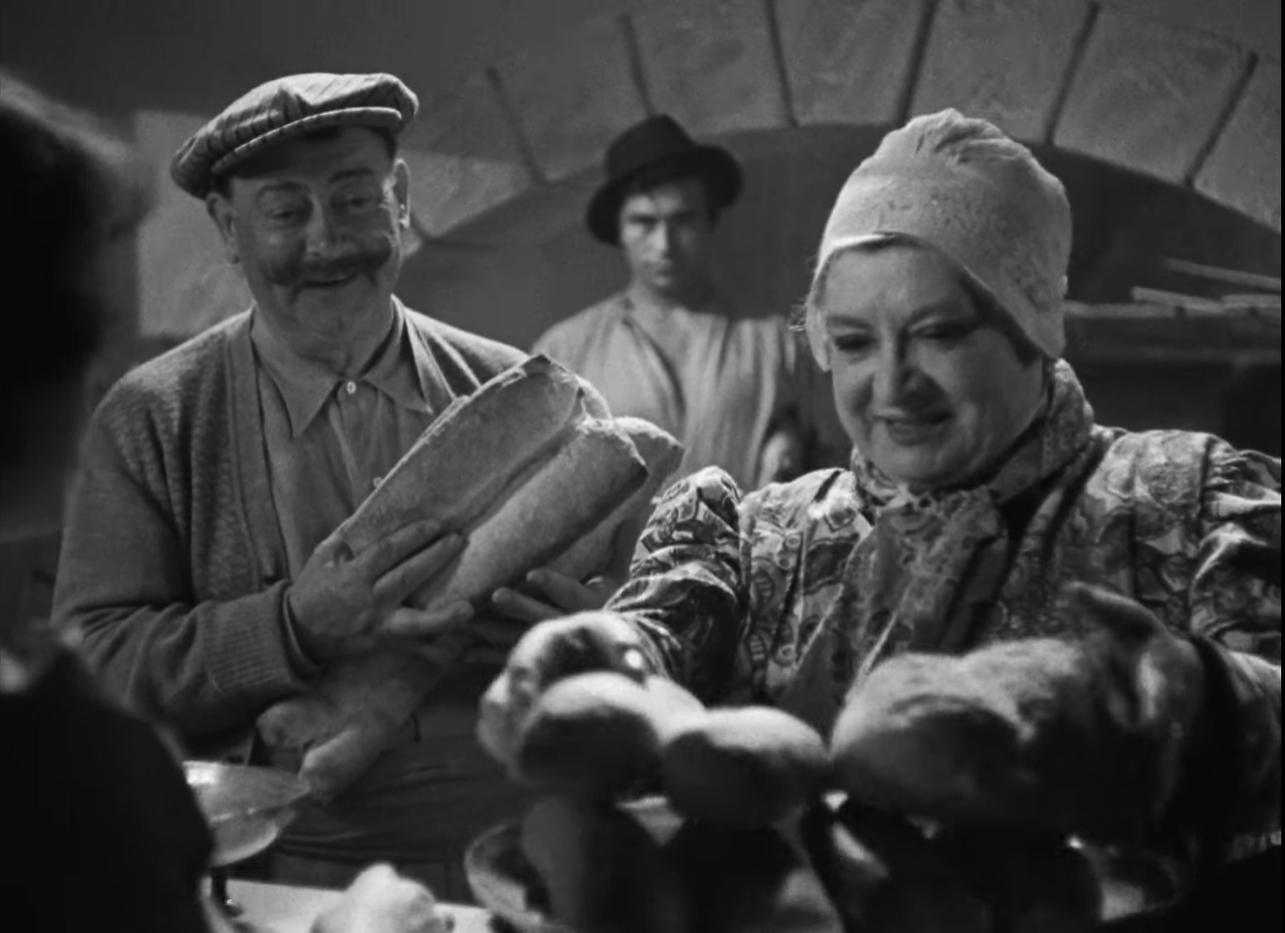
Meanwhile, they all desperately crave decent bread after months without any; and when they finally receive Raimu’s first loaves, we know a crucial element of life — bread itself — has been restored to their village:

However, this triumph is instantly threatened by another essential life source: love (or at least amorous desire).

Raimu is such a likable cuckold that it’s impossible not to feel for him as he makes up one excuse after another for why his wife may be gone — and even once he’s finally accepted the truth of her infidelity, he is depressed and melancholic rather than angry. How their situation finally becomes resolved — with other villagers’ relationships conveniently mended along the way — is the bulk of the storyline. This comedic tale, while slightly overlong at 2 hours and 13 minutes, remains a fine introduction to Pagnol’s work.

Notable Performances, Qualities, and Moments:

  • Raimu as the Baker
  • Fine performances by the supporting cast
  • Excellent use of location shooting near Marseilles
  • Pagnol’s humorous script

Must See?
Yes, as a foreign classic.

Categories

  • Foreign Gem

(Listed in 1001 Movies You Must See Before You Die)

Links: